Podcast
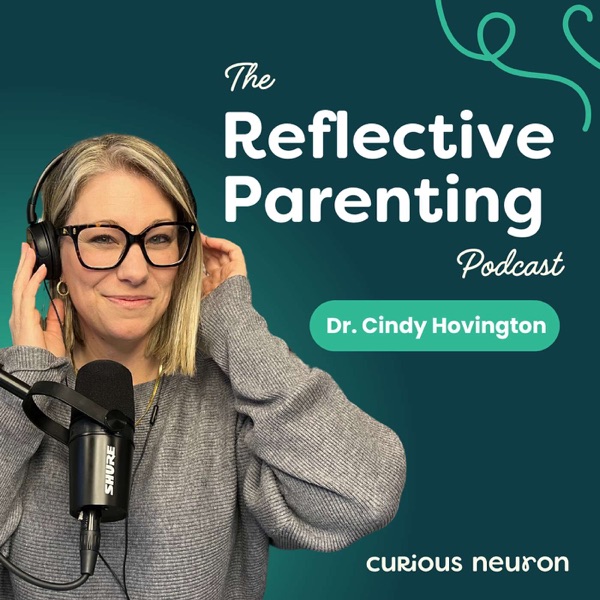
Reflective Parenting Podcast by Curious Neuron
You don’t snap at your kids because you’re a bad parent. You snap because your stress builds faster than your awareness, and no one ever taught you how to handle that.
I’m Dr. Cindy Hovington, a mom of three with a doctorate in neuroscience and founder of Curious Neuron. I created The Reflective Parenting Podcast for parents who care deeply, know a lot, and still find themselves overwhelmed in the real moments.
This is not a podcast where I tell you how to be a perfect parent. I’m in it with you.
Each week, I invite you into my own reflections:
• what I’m learning from scientific articles and books,
• what I’m noticing in my nervous system and emotions,
• and what real parents and experts teach me in conversation.
Together, we get curious about why we snap, shut down, or over-function in conflict, and what’s actually happening in our brain and body when we do. We talk about stress, shame, repair, boundaries, playfulness, and the quiet moments no one sees—so you can start to recognize your patterns and gently shift them.
By listening, you’ll learn to:
• notice your stress and body signals earlier,
• understand the lenses and stories that intensify hard moments,
• regulate your nervous system when parenting feels like “too much”,
• and handle conflict with more calm, clarity, and repair.
• But more than that, you’ll have a companion in the work.
I’ll share where I struggle, what I’m practicing, and how I’m trying to grow, so you don’t feel like the only parent who finds this hard.
If you’re ready to move away from “perfect” parenting and toward reflective parenting—where every tough moment becomes data, not failure—pull up a chair.
Let’s learn, feel, and grow together.
Find out which book I will be covering next month:
https://curiousneuron.com/podcast/
Join the private group on Facebook:
www.facebook.com/groups/reflectiveparentingpodcast/
Start training your emotional awareness for FREE:
https://tremendous-hustler-7333.kit.com/84371dc0b2
Purchase my course The Emotionally Aware Parent.
https://curiousneuron.com/reflective-parent-club/
Follow us on Instagram @drcindyhovington or Facebook @curiousneuronparenting
- Episodes
- 275
- Releases
- Weekly
- Typical length
- 27 min
- On air since
- 2019
- Latest episode
- 23 hours ago
Episodes
275 episodes, newest first
-
53 min
You Are the Parent: How to raising capable kids without overparenting with Dr. Siggie
Season 9, Episode 23
Show notes
Many of us have absorbed the message that emotions matter, then ended up stuck in the moment, rescuing, fixing, and working hard to keep our kids happy. In this episode, I talk with Dr. Siggie, author of the new book You Are the Parent, about the missing piece: recognizing and validating a child’s feelings without letting those feelings run the household.
We talk about why overparenting leaves parents exhausted and kids more anxious, and why looking inward at your own triggers matters so much. We also get into how a child’s temperament (feisty, flexible, or fearful) changes the way you need to show up, and how to turn disagreements with your co-parent into conversations. Along the way, we tackle rudeness, morning power struggles, and why “your power is in your restraint.”
In this episode:
• Validation, not accommodation: all emotions are okay, but not all behaviors are, and kids build resilience when we let them struggle safely with us beside them as their coach.
• Know your child: the “easy” child may just be agreeable by nature, the feisty child isn’t flawed, and comparing or questioning a child’s shyness or fear can backfire.
• Rudeness and power struggles: correct the trigger underneath the behavior, skip the long “because” speeches, and stay on task with a brief, calm “I hear you, now let’s go.”
• Pause and try again: slowing down helps us respond instead of react, and “let’s try that again” works for parents and kids alike.About our guest
Dr. Siggie is a parenting expert with over 1.6 million followers on Instagram and the author of You Are the Parent. She offers courses for parents of younger and older children, plus courses on siblings and anxiety, and a library of downloadable tips and tools.
Links
• You Are the Parent by Dr. Siggie US link: here
• Dr. Siggie’s website: here
• Dr. Siggie’s Instagram: here
• Join the Reflective Parenting Podcast Book Club to learn about her book all month: here• Join the Reflective Parent Book Club for only $9.99 for the year: https://reflectiveparentclub.circle.so/checkout/reflective-parenting-book-club
• Watch my Tedx Talk on YouTube called The Over-Educated, Emotionally Underprepared Parent: https://www.youtube.com/watch?v=nDYJFY_9K9E&t=19s
• Grab my course for $99, The Emotionally Aware Parent: https://curiousneuron.com/reflective-parent-club/
-
22 min
You've tried everything but bedtime is still hard: Try Tiny Experiments!
Season 9, Episode 22
Show notes
Have you tried everything to make bedtime easier, yet it still ends in frustration? Or do you find yourself snapping at your child and wondering why the same patterns keep repeating?
In this episode, I explore ideas from Tiny Experiments by Anne-Laure Le Cunff and how we can apply them to parenting. Instead of searching for one perfect solution, I share how collecting simple “field notes” can help us understand the many factors influencing our child's behaviour, including our own stress, energy, and connection at home.
In this episode, I explore:
• Why parenting struggles rarely have one quick fix.
• How our stress and emotional capacity influence our reactions.
• How to collect field notes to recognize patterns.
• How tiny experiments can help us try small changes without expecting perfection.A reflection to try: Choose one recurring parenting struggle and observe what happens before, during, and after it. What patterns do you notice? What is one small thing you could experiment with?
• Join the Reflective Parent Book Club for only $9.99 for the year: https://reflectiveparentclub.circle.so/checkout/reflective-parenting-book-club
• Watch my Tedx Talk on YouTube called The Over-Educated, Emotionally Underprepared Parent: https://www.youtube.com/watch?v=nDYJFY_9K9E&t=19s
• Grab my course for $99, The Emotionally Aware Parent: https://curiousneuron.com/reflective-parent-club/
-
29 min
How children learn to regulate emotions (and behaviours)
Season 9, Episode 21
Show notes
Hi Reflective Parents,
In today's episode, we chat about The Tripartite Model of Parental Socialization! Yes, that's nerd talk for "How do kids learn to regulate/cope with emotions?"
This is important for all of us to learn because has a significant impact on our children's behaviour, our stress, their success in school and in building friendships and even their future well-being.
Learn how to create the best home environment that lowers your stress, teaches your child how to cope with emotions and supports healthier behaviour from all members of your family!
Don't miss my 8-week program starting October 27th! We meet every Tuesday at 12pm ET or 8pm ET (join with your partner at no extra cost!)
https://curiousneuron.com/reflective-parent-club/
Past episodes you might enjoy:
• Supporting a child's emotional development through play with Tina Payne Bryson
• Understanding a child's emotional development with Amanda Sheffield MorisBlog post on curiousneuron.com
• Join the Reflective Parent Book Club for only $9.99 for the year: https://reflectiveparentclub.circle.so/checkout/reflective-parenting-book-club
• Watch my Tedx Talk on YouTube called The Over-Educated, Emotionally Underprepared Parent: https://www.youtube.com/watch?v=nDYJFY_9K9E&t=19s
• Grab my course for $99, The Emotionally Aware Parent: https://curiousneuron.com/reflective-parent-club/
-
26 min
Am I doing too much for my child (and is it impacting their confidence)?
Episode 20
Show notes
As parents, we often step in to help our children because we love them and want to make life easier for them. However, when we constantly solve their problems, prevent frustration, or take over tasks they could learn to manage, we may unintentionally limit their opportunities to develop emotional regulation, resilience, problem-solving skills, and confidence.
In this episode, I explore the research on over-parenting, Jessica Lahey's book The Gift of Failure, and reflect on why allowing children to experience uncomfortable emotions, make mistakes, and face appropriate consequences is an important part of their development.
Three reflections to consider:
• Is this truly a problem my child cannot handle, or a problem they are learning how to handle?
• What is happening inside me that makes me want to step in right now?
• What is the smallest amount of support I can offer my child that still lets them do the next part?The goal isn't to let our children fail at everything. It's to create opportunities for them to struggle, learn, recover, and discover that they are capable of handling life's challenges.
**Join our book below to discuss this week's topics in school-aged children and get some tips!
Sources:
• The Gift of Failure by Jessica Lahey
• Podcast episode with Jessica Lahey
• Science Article: Childhood self-regulation as a mechanism through which early overcontrolling parenting is associated with adjustment in preadolescence
• Curious Neuron blogpost: Doing too much for our kids is having a negative impact on their development• Join the Reflective Parent Book Club for only $9.99 for the year: https://reflectiveparentclub.circle.so/checkout/reflective-parenting-book-club
• Watch my Tedx Talk on YouTube called The Over-Educated, Emotionally Underprepared Parent: https://www.youtube.com/watch?v=nDYJFY_9K9E&t=19s
• Grab my course for $99, The Emotionally Aware Parent: https://curiousneuron.com/reflective-parent-club/
-
56 min
How understanding our nervous systems changes the way we parent | Laura Petix
Season 9, Episode 19
Show notes
I'm joined by occupational therapist and author Laura Petix to celebrate the launch of her new book, The Sensory Code. Laura shares the moment she took her own daughter to the ER because of daily meltdowns, and how that experience shaped her work with parents.
In this episode, we talk about:
• The difference between a tantrum and a meltdown, and why length and recovery time matter
• Why gentle parenting still matters even when it doesn't stop the meltdown
• The eight sensory systems, including interoception, and why hunger or worry can trigger a "zero to 100" reaction
• Laura's "zoom in, zoom out" tool for finding the patterns behind a behavior
• How to talk to your child about an ADHD diagnosis without making it feel like something is wrong
• Why a diagnosis explains behavior but doesn't excuse it
• How to help siblings feel seen, and my wish list for schools
• Why we need accommodations too, as parentsResources:
• Get The Sensory Code: [Canada link] | [US link]
• Join our book club, where we'll be discussing Laura's book all week: [link]• Join the Reflective Parent Book Club for only $9.99 for the year: https://reflectiveparentclub.circle.so/checkout/reflective-parenting-book-club
• Watch my Tedx Talk on YouTube called The Over-Educated, Emotionally Underprepared Parent: https://www.youtube.com/watch?v=nDYJFY_9K9E&t=19s
• Grab my course for $99, The Emotionally Aware Parent: https://curiousneuron.com/reflective-parent-club/
-
32 min
How do we teach kids to think critically in a world full of misinformation?
Season 9, Episode 18
Show notes
As parents, many of us want our children to do well in school, but what if one of the most important skills they need is not memorizing information, but learning how to question it?
In this episode, you and I reflect on what it means to raise critical thinkers in a world filled with headlines, social media experts, AI-generated information, and endless opinions. Together, we explore how curiosity, thoughtful questions, and open conversations at home can help our children learn not just what to think, but how to think.
Drawing from Julie Bogart’s book Raising Critical Thinkers (the book I will discuss inside the book club this week) and the research of Dr. Mary Helen Immordino-Yang, in today's podcast episode, we will reflect on:
• Why curiosity may be one of the most important skills we can protect in our children
• How emotions, beliefs, and experiences shape the way we understand information
• Simple questions parents can ask to help children think more deeply
• How family conversations and respectful debates strengthen reasoning skills
• Why education is not only about learning facts, but about helping children become thoughtful, reflective human beings
• How we can model curiosity and critical thinking in our own everyday livesYou do not need to know all the answers to help your child become a critical thinker. Sometimes the most powerful thing we can do is pause, get curious together, and ask: Who says this? How do we know? What else could be true?
I hope this episode gives you a moment to reflect, learn, and continue growing alongside your child.
Listen to my conversation with Julie here:
• Join the Reflective Parent Book Club for only $9.99 for the year: https://reflectiveparentclub.circle.so/checkout/reflective-parenting-book-club
• Watch my Tedx Talk on YouTube called The Over-Educated, Emotionally Underprepared Parent: https://www.youtube.com/watch?v=nDYJFY_9K9E&t=19s
• Grab my course for $99, The Emotionally Aware Parent: https://curiousneuron.com/reflective-parent-club/
-
32 min
Am I Disciplining or Threatening My Child? What Science Says About Verbal Abuse
Season 9, Episode 17
Show notes
I'm back with part two of the conversation sparked by my episode with Georgiana but this time digging into one of the most misunderstood words in parenting: discipline.
Pulling from Dan Siegel and Tina Payne Bryson's No-Drama Discipline, I challenge how most of us were taught to think about the word — punishment, stopping a behavior that's annoying us — versus what actually works: discipline as teaching.
I share a moment from my son's soccer practice that stopped me in my tracks: a dad switching to Italian mid-practice to threaten his seven-year-old with "wait until we get home." It's the kind of moment most of us have been in, on one side or the other and I use it to ask a harder question: is that discipline, or something else?
I also walk through a study most parents haven't heard of, showing that verbal abuse — yelling, threats, name-calling, belittling — can impact a child's development as significantly as physical discipline. Lastly, I introduce a simple framework — the aggressive tiger, the passive mouse, and the assertive owl — to help you recognize your own voice in the heat of the moment.
This episode isn't about guilt. It's an invitation to notice, reflect, and start showing your kids what accountability looks like... starting with yourself.
The 3 Reflections I Share
• Does my child still feel loved when I'm disciplining them (or when I'm angry)?
• Do I hold myself accountable for my own behavior in moments of discipline?
• What could my child have said or done differently? — the accountability question, turned outward, once everyone's calm.• Join the Reflective Parent Book Club for only $9.99 for the year: https://reflectiveparentclub.circle.so/checkout/reflective-parenting-book-club
• Watch my Tedx Talk on YouTube called The Over-Educated, Emotionally Underprepared Parent: https://www.youtube.com/watch?v=nDYJFY_9K9E&t=19s
• Grab my course for $99, The Emotionally Aware Parent: https://curiousneuron.com/reflective-parent-club/
-
54 min
The Difference Between Discipline and Punishment | Georgianna Karamitos
Season 9, Episode 16
Show notes
In this episode, I sit down with Georgianna Karamitos — a lawyer, educator, trauma-informed conflict resolution practitioner, and children's book author — to unpack the real difference between discipline and punishment. We dig into why repeating yourself doesn't work until a child feels heard, how power struggles hijack parent-child relationships, why "relational safety" is the missing piece in most conflict, and what the neuroscience actually says about spanking and harsh discipline. If you are a parent stuck in the loop of "I've said this ten times and nothing changes" then this episode is for you!
Resources:
Book: No Drama Discipline by Dan Siegal
Study: Spanking and Child Outcomes: Old Controversies and New Meta-Analyses
Guest Links:
• Join the Reflective Parent Book Club for only $9.99 for the year: https://reflectiveparentclub.circle.so/checkout/reflective-parenting-book-club
• Watch my Tedx Talk on YouTube called The Over-Educated, Emotionally Underprepared Parent: https://www.youtube.com/watch?v=nDYJFY_9K9E&t=19s
• Grab my course for $99, The Emotionally Aware Parent: https://curiousneuron.com/reflective-parent-club/
-
22 min
What if conflict were actually an invitation for intimacy?
Season 9, Episode 15
Show notes
Hi Reflective Parents, Ever feel stuck arguing about the same thing over and over with your partner? In this episode, I break down a key concept from the Gottmans' book Fight Right: that perpetual conflict often hides a deeper "dream" underneath it, and naming that dream can turn conflict into a chance for real intimacy.
I also reflect on what this means for parenting from bedtime battles to unrealistic expectations and how getting curious with your child, the same way you would with a partner, can change everything.
Come reflect with me!
Learn more from the Gottman Institute:
• Join the Reflective Parent Book Club for only $9.99 for the year: https://reflectiveparentclub.circle.so/checkout/reflective-parenting-book-club
• Watch my Tedx Talk on YouTube called The Over-Educated, Emotionally Underprepared Parent: https://www.youtube.com/watch?v=nDYJFY_9K9E&t=19s
• Grab my course for $99, The Emotionally Aware Parent: https://curiousneuron.com/reflective-parent-club/
-
29 min
Reflecting About the New School Year: Expectations, Slowing Down & Sparking Curiosity
Season 9, Episode 14
Show notes
Hi Reflective Parents! As we jump into a new school year, I wanted to take some time to pause with you and reflect on how we can make this year feel a little less stressful and a lot more connected. This episode was inspired by a question from a mom that emailed me and I'm bringing in some unexpected inspiration — including a quote from a romance novel (Yours Truly) that changed the way I think about how we relate to our kids.
I'm sharing three things I believe can make a real difference this year:
• Watch the expectations we place on our kids. It's okay to want your child to grow and push themselves but there's a difference between healthy goals and making them feel like they're constantly disappointing you. We'll talk about how to hold both.
• Slow down. Between homework, activities, and weekend plans, it's easy to feel like we're always reacting instead of connecting. I'll share small, doable ways to carve out real time with your family this year.
• Bring curiosity and learning into your home. Learning doesn't stop at the school doors. I'll walk you through how we use a "curiosity box" at home to keep that spark alive no matter how you school your kids.If you're feeling the back-to-school hustle already, I hope this episode gives you a moment to breathe, reflect, and reconnect with what really matters this year. Happy reflections, my friends! See you inside our new book club!
Interested in joining our 8-week cohort? Apply below! Classes start October 12th.
https://form.typeform.com/to/F9qIbzPT?typeform-source=curiousneuron.com
• Join the Reflective Parent Book Club for only $9.99 for the year: https://reflectiveparentclub.circle.so/checkout/reflective-parenting-book-club
• Watch my Tedx Talk on YouTube called The Over-Educated, Emotionally Underprepared Parent: https://www.youtube.com/watch?v=nDYJFY_9K9E&t=19s
• Grab my course for $99, The Emotionally Aware Parent: https://curiousneuron.com/reflective-parent-club/
-
25 min
Reflecting on how mental heath care is failing us all
Season 9, Episode 13
Show notes
Hi Reflective Parents,
In today's episode, I share my honest thoughts about mental health care and honestly, they are not that positive.
It's been feeling a little heavy these days with the Lindsay Clancy trial, a father that reached out who is struggle with depression and my own mental health from not having been in our home since January.
I share my thought and as always, I share what I am doing to work through this hard season.
Come reflect with me and if you want more of this, don't forget to join our Reflective Parenting Book Club below to join the conversation and reflections with other parents.
• Join the Reflective Parent Book Club for only $9.99 for the year: https://reflectiveparentclub.circle.so/checkout/reflective-parenting-book-club
• Watch my Tedx Talk on YouTube called The Over-Educated, Emotionally Underprepared Parent: https://www.youtube.com/watch?v=nDYJFY_9K9E&t=19s
• Grab my course for $99, The Emotionally Aware Parent: https://curiousneuron.com/reflective-parent-club/
-
18 min
Reflections on what we need to teach our kids about conflict (which also applies to adults)
Season 9, Episode 12
Show notes
In this episode, I reflect on what it really means to teach children how to handle conflict. Drawing from my own experience coaching my seven- and nine-year-old sons through months of sibling conflict, I share practical ways to help children slow down, communicate their needs, listen to one another, and take responsibility for their part.
Here are the 3 reflections you can discuss with your kids after they had conflict:
• What could I have said or done differently to de-escalate this argument?
• Did I give the other person space to talk and explain themselves?
• What part of this conflict do I need to own? (ways I escalated the argument)Don't miss my Tedx Talk!
https://www.youtube.com/watch?v=nDYJFY_9K9E&t=19s
• Join the Reflective Parent Book Club for only $9.99 for the year: https://reflectiveparentclub.circle.so/checkout/reflective-parenting-book-club
• Watch my Tedx Talk on YouTube called The Over-Educated, Emotionally Underprepared Parent: https://www.youtube.com/watch?v=nDYJFY_9K9E&t=19s
• Grab my course for $99, The Emotionally Aware Parent: https://curiousneuron.com/reflective-parent-club/
-
30 min
Reflections on Conflict: What If Conflict Is Actually Healthy?
Season 9, Episode 11
Show notes
What if conflict isn't something we need to avoid—but something we need to learn how to do?
In this episode, I reflect on Brené Brown's idea of “rumbling” from Dare to Lead and what it can teach us about conflict at home. Instead of trying to win an argument, what if the goal was to unravel—to get curious, understand each other's perspectives, own our part, and work through the messy middle together?
I share personal reflections on how my own experiences shaped the way I used to show up in conflict, why taking a timeout can actually be an act of love, and how we can teach our children that conflict doesn't have to mean disconnection.
Because our kids don't need to see a home without conflict. They need to see what healthy conflict can look like.
A rumble is a discussion, conversation or a meeting defined by a commitment to lean into vulnerability, to stay curious and generous, to stick with the messy middle of problem identification and solving, to take a break and circle back when necessary, to be fearless and own your own parts and to listen with the same passion which we want to be heard.
• Join the Reflective Parent Book Club for only $9.99 for the year: https://reflectiveparentclub.circle.so/checkout/reflective-parenting-book-club
• Watch my Tedx Talk on YouTube called The Over-Educated, Emotionally Underprepared Parent: https://www.youtube.com/watch?v=nDYJFY_9K9E&t=19s
• Grab my course for $99, The Emotionally Aware Parent: https://curiousneuron.com/reflective-parent-club/
-
30 min
Reflections on Daring to Lead as a Parent
Season 9, Episode 10
Show notes
In this episode, I reflect on Brené Brown’s Dare to Lead and what it means to bring the principles of daring leadership into parenting. I explore how courage, vulnerability, self-awareness, and connection show up in our homes and in the way we lead our children.
In this episode we reflect on:
• What it means to be a leader for our children and how parenting and leadership work overlap.
• The heart of daring leadership: courage, vulnerability, and “rumbling” with difficult conversations at home.
• How fear, self-awareness, and self-love shape the way we show up with our kids.
• Courage as contagious: modelling repair, honesty, and emotional growth so our children feel safe to do the same.Ready to join our new book club? Come reflect with me (even if you don't have time to read, I will do it for you)
https://reflectiveparentclub.circle.so/checkout/reflective-parenting-book-club
• Join the Reflective Parent Book Club for only $9.99 for the year: https://reflectiveparentclub.circle.so/checkout/reflective-parenting-book-club
• Watch my Tedx Talk on YouTube called The Over-Educated, Emotionally Underprepared Parent: https://www.youtube.com/watch?v=nDYJFY_9K9E&t=19s
• Grab my course for $99, The Emotionally Aware Parent: https://curiousneuron.com/reflective-parent-club/
-
23 min
Reflections on resilience, freedom & identity from the book In Order to Live
Season 9, Episode 9
Show notes
In this episode, I reflect on In Order to Live by Yeonmi Park and the deep questions it raised for me about freedom, identity, resilience, and what it means to think for ourselves. The book prompted powerful reflections on how we understand our own stories, how we support our children’s sense of self, and how freedom can feel both expansive and exhausting.
I also connect the book’s themes to parenting, especially around giving children room to explore who they are, make mistakes, ask questions, and develop their own identity. For parents, this episode is an invitation to pause and reflect on the mental load we carry, the freedoms we have, and the space we create for our children to become themselves.
Reflections for this week:
• What parts of your story have you kept private, and what might change if you shared them with the right person or community?
• In what ways are you helping your child build an identity that feels like their own?
• Are you giving your child enough freedom to make mistakes, get curious, and think for themselves?
• If someone asked you, “Who are you?” beyond your roles and titles, how would you answer?See you inside our Book Club (it is only $10 for the entire year!)
• Join the Reflective Parent Book Club for only $9.99 for the year: https://reflectiveparentclub.circle.so/checkout/reflective-parenting-book-club
• Watch my Tedx Talk on YouTube called The Over-Educated, Emotionally Underprepared Parent: https://www.youtube.com/watch?v=nDYJFY_9K9E&t=19s
• Grab my course for $99, The Emotionally Aware Parent: https://curiousneuron.com/reflective-parent-club/
-
19 min
Reflections on loving more deeply and being present
Season 9, Episode 8
Show notes
This week, I'm sharing six simple mantras from the book How to Love that made me stop, reflect, and think differently about the way I show up as a parent, partner, and person.
Together, we'll explore what it really means to be present, to recognize when someone we love is struggling, to ask for help when we're suffering, to notice the happy moments that are easy to overlook, and to remember that in conflict, two people can both be partly right.
These aren't parenting tips or book summaries. They're invitations to pause, reflect, and become more intentional in the way we connect with the people we love.
The six mantras we'll reflect on:
• I am here for you.
• I know you are there, and I am happy.
• I know you are suffering.
• I am suffering.
• This is a happy moment.
• You are partly right.I hope this conversation gives you something to carry with you throughout the week.
Join our book club this week to discuss other books or to dig deeper on that last mantra "you are partly right".
• Join the Reflective Parent Book Club for only $9.99 for the year: https://reflectiveparentclub.circle.so/checkout/reflective-parenting-book-club
• Watch my Tedx Talk on YouTube called The Over-Educated, Emotionally Underprepared Parent: https://www.youtube.com/watch?v=nDYJFY_9K9E&t=19s
• Grab my course for $99, The Emotionally Aware Parent: https://curiousneuron.com/reflective-parent-club/
-
32 min
Reflections on the Hidden Risks Inside Kids' Group Chats
Season 9, Episode 7
Show notes
What does Toy Story 5 have to do with raising emotionally healthy kids?
Trigger warning: masturbation is mentioned in this episode.
Much more than I expected. After watching the movie with my children, I found myself reflecting on something far bigger than screen time: the conversations we're not having about friendship, group chats, and cyberbullying.
In this episode, I share the true story of a Grade 6 classroom that left me speechless, explore what research tells us about the long-term impact of cyberbullying, and offer three simple reflection questions you can use to start meaningful conversations with your own child. If we're going to hand our children devices, we also need to help them build the emotional skills to navigate the digital world.
Join our book club for only $9.99 for an entire year!
https://reflectiveparentclub.circle.so/checkout/reflective-parenting-podcast-book-clubRead my blog post about cyberbullying:
Read the scientific article I shared with you here:
• Join the Reflective Parent Book Club for only $9.99 for the year: https://reflectiveparentclub.circle.so/checkout/reflective-parenting-book-club
• Watch my Tedx Talk on YouTube called The Over-Educated, Emotionally Underprepared Parent: https://www.youtube.com/watch?v=nDYJFY_9K9E&t=19s
• Grab my course for $99, The Emotionally Aware Parent: https://curiousneuron.com/reflective-parent-club/
-
24 min
3 reflections about how we take care of ourselves as parents
Season 9, Episode 6
Show notes
Why do so many parents feel like they don't have time to take care of themselves?
The answer isn't as simple as being busy.
This week, we're reflecting on a passage from the book How to Love by Thich Nhat Hanh and exploring why our own needs slowly disappear after becoming parents. I'll also share a simple reflection exercise that helped me reconnect with the things that brought me joy before having children—and why gratitude may be more powerful than we think.
In this episode, we reflect on:
• What brought me joy before I had children?
• How can I bring a small part of that back into my life?
• What moments of joy have I been overlooking?Sometimes the goal isn't finding more time.
It's learning to notice what already helps us feel more like ourselves.
Don't forget to join our NEW BOOK CLUB!
https://curiousneuron.com/reflective-parent-club/
This week's resources:
• This month's book: How to Love
• Article: The impact of gratitude on depression and anxiety: the mediating role of criticizing, attacking, and reassuring the self
• Article: The efficacy of seven gratitude interventions for promoting subjective well-beingRelated podcast episodes you might have missed:
https://podcasts.apple.com/ca/podcast/reflective-parenting-podcast/id1440533170?i=1000771848174
https://podcasts.apple.com/ca/podcast/reflective-parenting-podcast/id1440533170?i=1000720552759
Watch this episode on YouTube:
• Join the Reflective Parent Book Club for only $9.99 for the year: https://reflectiveparentclub.circle.so/checkout/reflective-parenting-book-club
• Watch my Tedx Talk on YouTube called The Over-Educated, Emotionally Underprepared Parent: https://www.youtube.com/watch?v=nDYJFY_9K9E&t=19s
• Grab my course for $99, The Emotionally Aware Parent: https://curiousneuron.com/reflective-parent-club/
-
39 min
Reflections on Radicalization: Could It Happen to My Child?
Season 9, Episode 5
Show notes
When we hear the word radicalization, we often think, "That could never happen to my family." But what if radicalization begins with something much more human—a need to belong, to feel understood, or to make sense of emotional pain?
In this episode, I sit down with men's coach and former counterterrorism professional James Stamatelos to explore why some young people become vulnerable to extremist ideas, how social media can amplify that vulnerability, and what parents can do to build stronger protective relationships with their children.
In this episode, we discuss:
• What radicalization really is.
• Why belonging and emotional pain matter.
• How social media can influence young people.
• Why curiosity is often more powerful than confrontation.
• How connection can help protect our children.Reflection Question:
If my child encountered harmful ideas online, would they feel safe enough to talk to me about them?Book James mentioned: How Minds Change: The Surprising Science of Belief, Opinion, and Persuasion (Amazon Canada)
Resources:
Connect with James or learn more from him:
James J. Stamatelos is a professional coach and Certified Level 3 Internal Family Systems (IFS) practitioner who specializes in helping men overcome what he calls “anxious insecurity”—the persistent feeling of being chronically “not enough” despite external success.
Before transitioning into coaching, James worked in high-pressure environments as an intelligence analyst for the Region 13 Counter-Terrorism Task Force Fusion Center and as a specialist for the City of Pittsburgh Office of Emergency Management & Homeland Security. His background gives him a unique perspective on stress, identity, and psychological resilience.
The Radicalization of Men (The Psychology of Feeling ‘Not Enough’) on the EZ Conversations Podcast
• Join the Reflective Parent Book Club for only $9.99 for the year: https://reflectiveparentclub.circle.so/checkout/reflective-parenting-book-club
• Watch my Tedx Talk on YouTube called The Over-Educated, Emotionally Underprepared Parent: https://www.youtube.com/watch?v=nDYJFY_9K9E&t=19s
• Grab my course for $99, The Emotionally Aware Parent: https://curiousneuron.com/reflective-parent-club/
-
24 min
3 reflections on how you experience unpleasant emotions
Season 9, Episode 4
Show notes
How do you allow yourself to feel, experience and move past unpleasant emotions?
In this episode, I share how unpleasant emotions like worry, sadness, or even boredom can lead to some behaviours we might want to be more aware of.
If you notice that you often get stuck in unpleasant emotions or that your anger or frustration leads to harder moments with loved ones, then this episode is for you.
Here are today's 3 reflections:
• Can I let myself feel an uncomfortable emotion without trying to fix it right away?
• What happens in my thoughts, feelings, and behavior when I’m feeling something unpleasant?
• Can I notice the good moments that may be happening alongside difficult emotions?Hope you are liking this new version of the podcast! You can email me info@curiousneuron.com to let me know.
In August, I will start focusing on a book of the month. Follow along on our private Facebook page or visit our website below!
• Join the Reflective Parent Book Club for only $9.99 for the year: https://reflectiveparentclub.circle.so/checkout/reflective-parenting-book-club
• Watch my Tedx Talk on YouTube called The Over-Educated, Emotionally Underprepared Parent: https://www.youtube.com/watch?v=nDYJFY_9K9E&t=19s
• Grab my course for $99, The Emotionally Aware Parent: https://curiousneuron.com/reflective-parent-club/
Parenting lists
More Parenting shows picked out from the charts







More in Parenting
Placed highest on Apple Podcasts' Parenting chart right now