Podcast
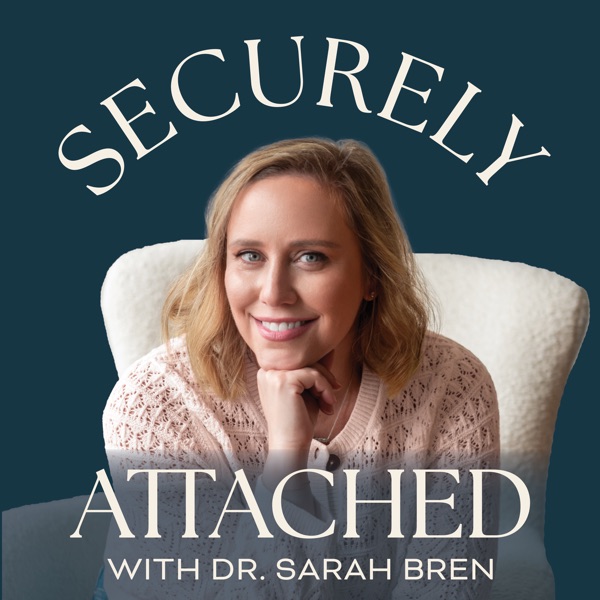
Securely Attached
Securely Attached is your go-to parenting podcast, supporting moms and dads from pregnancy all the way through their child's adolescence and every stage in between.
Join us every Tuesday as clinical psychologist and mom of two Dr. Sarah Bren shares her expertise and interviews top experts in the field, simplifying complicated concepts and pulling back the curtain on the brain science and psychology that drives and shapes the parent-child relationship.
And now, every Thursday, Dr. Sarah Bren is joined by Dr. Emily Upshur and Dr. Rebecca Hershberg for a special segment, Beyond The Sessions. We're answering YOUR parenting questions from the perspective of clinical psychologists highly trained in developmental science and real-life moms who get that parenting is messy, and sometimes we have to laugh, cry, and throw out the "rules."
From toddler tantrums, to effective discipline strategies, to leaning into the principles of respectful parenting, and to managing your own mental wellness as a parent—this podcast is your ultimate resource for judgment-free, research-backed information you know you can trust.
About Sarah Bren, PhD
Dr. Sarah Bren is a licensed clinical psychologist and mom of two who helps parents understand the building blocks of child development and how secure relationships form and thrive. Her work is focused on helping parents find their inner confidence so they can respond to any parenting problem that comes along and raise kids who are healthy, resilient, and kind.
- Parenting chart
- #157
- Episodes
- 436
- Releases
- Twice a week
- Typical length
- 24 min
- On air since
- 2021
- Latest episode
- 4 weeks ago
Episodes
436 episodes, newest first
-
11 min
Q&A: Am I wrong...or did my doctor give bad parenting advice?
Episode 446
Show notes
Beyond the Sessions is answering YOUR parenting questions! In this episode, Dr. Rebecca Hershberg, Dr. Emily Upshur, and I talk about...
•
What to make of advice that tells you not to comfort your child when they're distressed.
•
Why a frightened toddler at the doctor's office is communicating something very different than "bad behavior."
•
The common misunderstanding about reinforcement that leaves many parents second-guessing themselves.
•
Whether responding to your child's fears actually makes them more dependent or "too attached."
•
How to know when it's okay to trust your instincts, even when they conflict with advice from an authority figure.
•
What attachment research actually says about soothing, separation, and healthy independence.
•
Why one difficult interaction doesn't have to become something you worry about "damaging" your child.
If you've ever left a doctor's appointment feeling unsettled by advice that didn't sit right, or found yourself wondering whether comforting your child is helping or hurting, this episode will give you the confidence to better understand what's happening beneath your child's behavior and trust your instincts as a parent.
REFERENCES AND RELATED RESOURCES:
👉 Want extra support in your parenting journey? Upshur Bren Psychology Group offers therapy and coaching to give parents the tools to feel more grounded and confident as they navigate parenthood and learn how to most effectively support their child. Visit https://upshurbren.com/ to explore our services and schedule a free 30-minute consultation call to find the support that's right for your family.
🎧 Is it better for my kids if I send them to daycare, have a nanny, or become a stay-at-home mom?
CHECK OUT ADDITIONAL PODCAST EPISODES YOU MAY LIKE:
🎧 Listen to my podcast episode with the basics of attachment theory
WE WANT TO HEAR FROM YOU:
Go to https://drsarahbren.com/question to send us a question or a topic you want to hear us answer on Securely Attached - Beyond the Sessions!
-
50 min
Back by Popular Demand: How to support your child's secure attachment even if you didn't grow up with it with Dr. Miriam Steele
Episode 440
Show notes
As part of our 5-Year Anniversary Summer Series, we're bringing back one of the most meaningful and foundational conversations in Securely Attached history.
Many parents worry that if they didn't experience a secure attachment in their own childhood, they'll unknowingly repeat those same patterns with their children. But one of the most hopeful findings in attachment research is that our past does not have to determine our children's future.
In this conversation, I sit down with renowned attachment researcher Dr. Miriam Steele to explore how secure attachment develops, how insecure attachment patterns are passed from one generation to the next, and, most importantly, how we can break those cycles.
Together we discuss:
•
What secure and insecure attachment really mean, and some of the biggest misconceptions surrounding attachment theory.
•
How children develop different attachment strategies in response to their early caregiving experiences.
•
Why secure attachment is built through consistent responsiveness, not perfect parenting.
•
The surprising research showing that parents don't need to be attuned all the time for children to develop secure attachment.
•
What reflective functioning is and how it helps parents interrupt intergenerational cycles of insecure attachment.
•
Why understanding your own childhood experiences can transform the way you parent your children.
•
The difference between attachment science and popular "attachment parenting."
•
Why repair matters more than getting it right every time.
•
Practical ways to strengthen your relationship with your child, even if you didn't grow up with secure attachment yourself.
•
The hopeful message that it is never too late to create a more secure future for your family.
This conversation is a powerful reminder that secure attachment is not about perfection, nor is it determined by the childhood you had. It is built through thousands of ordinary moments of connection, curiosity, repair, and reflection. Dr. Steele's research offers tremendous hope that when we become more aware of our own patterns and learn to respond with greater understanding, we have the power to change the trajectory not only of our own lives, but of future generations.
⭐ Celebrating 5 Years of Securely Attached ⭐
If you've enjoyed the podcast over the years, we'd love your help celebrating this milestone. Our birthday wish is simple: five stars for five years. If these conversations have supported you and your family, please consider leaving a five-star review on Apple Podcasts, Spotify, or wherever you listen. Your support helps more parents discover the show and allows us to continue bringing these conversations to families around the world.
-
34 min
Q&A: What should I do if my child has intrusive thoughts?
Episode 439
Show notes
Beyond the Sessions is answering YOUR parenting questions! In this episode, Dr. Rebecca Hershberg, Dr. Emily Upshur, and I talk about...
• What intrusive thoughts actually are.
• How to recognize when a repetitive question or worry is more than ordinary curiosity, and the subtle clues that can help you tell the difference.
• The types of topics (like private parts, germs, or order) that are most common in intrusive thinking.
• The simple shift that can help your child stop identifying with the thought and begin seeing it as something separate from who he or she is.
• Why reassurance often brings only temporary relief, and what tends to work better in the long run.
• Practical, child-friendly strategies that can help kids feel more in control when their brains get "stuck" on a thought.
• How to respond in ways that reduce shame, build confidence, and help your child develop the skills to cope with intrusive thoughts over time.Whether your child is experiencing intrusive thoughts because of anxiety, OCD, PANS/PANDAS, or you're simply wondering if what you're seeing is developmentally typical, this episode will help you better understand what's happening inside your child's mind and give you practical tools to respond with confidence and compassion.
REFERENCES AND RELATED RESOURCES:
👉 Looking for support for a child struggling with anxiety, OCD, or intrusive thoughts? Upshur Bren Psychology Group offers evidence-based treatment for children and families, including SPACE (Supportive Parenting for Anxious Childhood Emotions), Cognitive Behavioral Therapy (CBT), and a combination of approaches tailored to your child's unique needs. Visit http://upshurbren.com to learn more or schedule a free 30-minute consultation with our care team. We'll listen carefully, answer your questions, and help you determine the best next step for your family.
📚 What to Do When Your Brain Gets Stuck: A Kid's Guide to Overcoming OCD by Dawn Huebner
CHECK OUT ADDITIONAL PODCAST EPISODES YOU MAY LIKE:
WE WANT TO HEAR FROM YOU:
Go to https://drsarahbren.com/question to send us a question or a topic you want to hear us answer on Securely Attached - Beyond the Sessions!
-
18 min
Q&A: How can I get my child to be potty trained at night?
Episode 437
Show notes
Beyond the Sessions is answering YOUR parenting questions! In this episode, Dr. Rebecca Hershberg, Dr. Emily Upshur, and I talk about...
•
Why staying dry overnight is very different from daytime potty training, and what many potty training books get wrong.
•
The surprising reason some children simply aren't biologically ready, no matter how motivated they or their parents are.
•
How to recognize the difference between a child who needs more practice and one who simply needs more time.
•
The low-pressure approach that can actually make nighttime potty training feel easier for everyone.
•
Small ways to build your child's confidence and independence, even if they're still waking up wet.
•
Why paying attention to your child's internal body signals may matter more than sticker charts or rewards.
•
When bedwetting is still completely within the range of typical development, and when it's worth bringing it up with your pediatrician.
If your child is still wearing pull-ups at night or nighttime potty training hasn't gone the way you expected, this episode will help you better understand the biology behind nighttime dryness and offer practical, compassionate strategies to support the process without adding unnecessary pressure.
REFERENCES AND RELATED RESOURCES:
👉 Want extra support in your parenting journey? Upshur Bren Psychology Group offers therapy and coaching to give parents the tools to feel more grounded and confident as they navigate parenthood and learn how to most effectively support their child. Visit https://upshurbren.com/ to explore our services and schedule a free 30-minute consultation call to find the support that's right for your family.
CHECK OUT ADDITIONAL PODCAST EPISODES YOU MAY LIKE:
🎧 Listen to my podcast episode with everything you need to know to successfully potty train your child
WE WANT TO HEAR FROM YOU:
Go to https://drsarahbren.com/question to send us a question or a topic you want to hear us answer on Securely Attached - Beyond the Sessions!
-
22 min
Q&A: Does my child have anxiety or are they just highly sensitive?
Episode 435
Show notes
Beyond the Sessions is answering YOUR parenting questions! In this episode, Dr. Emily Upshur and I talk about...
•
Why some children seem to worry about everything, from strange noises to monsters under the bed, even when nothing dangerous is happening.
•
How to tell the difference between anxiety, a highly sensitive temperament, and a nervous system that's simply taking in the world more intensely.
•
Why your response to your child's fears may matter more than finding the perfect explanation or reassurance.
•
The subtle ways parents can accidentally strengthen anxiety, and what to do instead.
•
What behaviors like lip picking, nail biting, or constantly chewing on things may actually be communicating.
•
Simple ways to help your child's nervous system feel calmer without making anxiety the center of attention.
•
When it's worth seeking professional guidance, and why getting support early doesn't necessarily mean something is wrong.
If your preschooler seems to worry about everyday things, startles easily, or always seems to be on high alert, this episode will help you better understand what's driving those behaviors and give you practical, compassionate strategies to help them feel safer, more regulated, and more confident.
REFERENCES AND RELATED RESOURCES:
👉🏻 Are you parenting a child with anxiety or OCD and looking for tools to support them? CLICK HERE to learn more about Upshur Bren Psychology Group's SPACE (Supportive Parenting for Anxious Childhood Emotions) program or SCHEDULE A FREE CALL to see if it's the right fit for your family.
CHECK OUT ADDITIONAL PODCAST EPISODES YOU MAY LIKE:
🎧 Listen to my podcast episode about the line between supporting your child and feeding their anxiety
WE WANT TO HEAR FROM YOU:
Go to https://drsarahbren.com/question to send us a question or a topic you want to hear us answer on Securely Attached - Beyond the Sessions!
-
41 min
Back by Popular Demand: What to do when your child says, "I'm stupid," "I hate myself," or "I'm a bad kid"
Episode 434
Show notes
As part of our 5-Year Anniversary Summer Series, we're bringing back one of the most impactful parenting conversations in Securely Attached history.
Few moments are more heartbreaking than hearing your child say, "I'm stupid," "I'm a bad kid," "I hate myself," or even, "I wish I wasn't here." Our instinct is often to reassure them, convince them they're wrong, or make those painful feelings disappear as quickly as possible. But what if those words are actually your child's way of communicating something much deeper?
In this conversation, Dr. Emily Upshur joins me to explore what negative self-talk is really telling us, how to respond in the moment, and how to help children build resilience, confidence, and a healthier inner voice over time.
Together we discuss:
•
What children are often trying to communicate when they use harsh or self-critical language.
•
Why our first instinct to reassure or correct may not be the most helpful response.
•
What to say in the moment when your child says, "I'm stupid," "I'm a bad kid," or "I hate myself."
•
How to respond differently with preschoolers, school-age children, and older kids.
•
Why it's important to look beneath the words to the feelings driving them.
•
How to recognize when negative self-talk is becoming a repeated pattern.
•
Why calm, connected debriefs are often more effective than trying to solve everything in the moment.
•
Practical ways to build resilience, confidence, and a growth mindset in everyday life.
•
How to model healthy self-talk and coping skills for your child.
•
Why these moments, while unsettling, can become powerful opportunities for connection and emotional growth.
This conversation offers a compassionate framework for responding to some of the most difficult things a child can say. Rather than reacting from fear or rushing to make the feelings disappear, we remind you that these moments are invitations to connect, understand what your child is really experiencing, and help them develop the emotional skills they'll carry with them for years to come.
⭐ Celebrating 5 Years of Securely Attached ⭐
If you've enjoyed the podcast over the years, we'd love your help celebrating this milestone. Our birthday wish is simple: five stars for five years. If these conversations have supported you and your family, please consider leaving a five-star review on Apple Podcasts, Spotify, or wherever you listen. Your support helps more parents discover the show and allows us to continue bringing these conversations to families around the world.
-
20 min
Q&A: What do I do when my child says "no" to everything?
Episode 433
Show notes
Beyond the Sessions is answering YOUR parenting questions! In this episode, Dr. Emily Upshur and I talk about...
•
Why children who are loving, sweet, and cooperative in many moments can still get stuck saying "no" to the smallest requests.
•
What your child's resistance may actually be communicating, and why it often has very little to do with the task itself.
•
A simple shift that can help break the cycle when every request seems to turn into a power struggle.
•
Why giving your child more opportunities for independence can actually make them more willing to cooperate when it really matters.
•
How to approach recurring battles, like tooth brushing, in a way that invites collaboration instead of more resistance.
•
The one conversation to have before trying another consequence, reward, or punishment.
•
Why sometimes the fastest way forward is to slow down and reset the relationship first.
If your child keeps saying "no" or seems to turn everyday routines into a battle of wills, this episode will help you understand what's really driving the behavior and give you practical strategies to build more cooperation without getting pulled into constant power struggles.
REFERENCES AND RELATED RESOURCES:
Dr. Ross Greene and Collaborative & Proactive Solutions (CPS)
💥 Tired of constant battles with your child? Watch my ✨FREE✨ workshop, Overcoming Power Struggles, where I'll teach you the exact strategies I use in my clinical practice to help parents break free from the cycle of yelling, threats, and negotiations—and instead foster cooperation, connection, and calm. Just visit https://drsarahbren.com/powerstruggles to get instant access to this workshop.
👉 Want to get my research-backed framework for increasing cooperation and emotion regulation skills in your sensitive child? Check out Parenting by Design, my guided program to help you parent your unique child in a way that increases cooperation, defuses power struggles, and rebuilds their trust in your authority–all while supporting your child's mental health and your own.
CHECK OUT ADDITIONAL PODCAST EPISODES YOU MAY LIKE:
WE WANT TO HEAR FROM YOU:
Go to https://drsarahbren.com/question to send us a question or a topic you want to hear us answer on Securely Attached - Beyond the Sessions!
-
19 min
Q&A: Is my 3-year-old being rude or just acting their age?
Episode 431
Show notes
Beyond the Sessions is answering YOUR parenting questions! In this episode, Dr. Rebecca Hershberg, Dr. Emily Upshur, and I talk about...
•
Why toddlers often sound rude or demanding without actually intending to be.
•
The developmental reason young children focus on getting their needs met rather than how their words affect others.
•
When to gently teach manners in the moment and when it's better to focus on connection instead.
•
How to model polite language without creating shame or turning every interaction into a correction.
•
Why understanding what's underneath your child's words can help you respond with more patience and less frustration.
•
How to tell the difference between a child who is simply being direct and one who is becoming overwhelmed or dysregulated.
•
Simple ways to encourage respectful communication through modeling, playfulness, and everyday practice.
Whether your toddler barks orders, interrupts constantly, or seems to demand things instead of asking politely, this episode will help you better understand what's driving those moments and show you how to teach respectful communication in a way that supports your child's development while strengthening your relationship.
REFERENCES AND RELATED RESOURCES:
👉 Want extra support in your parenting journey? Upshur Bren Psychology Group offers therapy and coaching to give parents the tools to feel more grounded and confident as they navigate parenthood and learn how to most effectively support their child. Visit https://upshurbren.com/ to explore our services and schedule a free 30-minute consultation call to find the support that's right for your family.
CHECK OUT ADDITIONAL PODCAST EPISODES YOU MAY LIKE:
🎧 Listen to my podcast episode about what to do when your child says "I hate you"
WE WANT TO HEAR FROM YOU:
Go to https://drsarahbren.com/question to send us a question or a topic you want to hear us answer on Securely Attached - Beyond the Sessions!
-
1 hr 8 min
Back by Popular Demand: The neuroscience of sleep training, bed sharing, and baby sleep with Dr. Greer Kirshenbaum
Episode 430
Show notes
As part of our 5-Year Anniversary Summer Series, we're bringing back one of the most downloaded and talked-about episodes in Securely Attached history.
Few parenting topics generate as much confusion, anxiety, and conflicting advice as sleep. In this conversation, neuroscientist, doula, and author of The Nurture Revolution, Dr. Greer Kirshenbaum, joins me to explore what the science actually tells us about infant sleep, sleep training, bed sharing, contact sleep, and the role responsiveness plays in early brain development.
Together we discuss:
•
Whether night waking is a normal and developmentally expected part of infant sleep.
•
What neuroscience tells us about how babies learn to feel safe during sleep.
•
What sleep training does and does not change about infant sleep.
•
The different approaches to sleep training and how they compare.
•
The science behind contact sleep, room sharing, and bed sharing.
•
How societal expectations around sleep can contribute to parental anxiety and guilt.
•
Ways to support your baby's sleep while honoring both your child's needs and your own.
•
How to think about sleep decisions without shame, fear, or pressure.
•
Why it is never too late to strengthen connection and secure attachment, regardless of the sleep choices you've made in the past.
This conversation offers a compassionate, science-backed perspective on one of parenting's most emotionally charged topics. Rather than telling parents what they should or should not do, Dr. Kirshenbaum empowers families with the information they need to make informed decisions that feel right for their unique child, their mental health, and their family. Most importantly, this episode reminds us that parenting is not about perfection. It is about understanding our children, responding with intention, and building connection one moment at a time.
⭐ Celebrating 5 Years of Securely Attached ⭐
If you've enjoyed the podcast over the years, we'd love your help celebrating this milestone. Our birthday wish is simple: five stars for five years. If these conversations have supported you and your family, please consider leaving a five-star review on Apple Podcasts, Spotify, or wherever you listen. Your support helps more parents discover the show and allows us to continue bringing these conversations to families around the world.
-
24 min
Q&A: How can I get my toddler to brush their teeth without a power struggle?
Episode 429
Show notes
Beyond the Sessions is answering YOUR parenting questions! In this episode, Dr. Emily Upshur and I talk about...
•
Why trying harder often makes tooth brushing harder, and what to focus on instead.
•
The surprising reason lowering your expectations in the short term can actually lead to better long-term habits.
•
How to tell whether your child is resisting because of autonomy, sensory sensitivities, or something else entirely.
•
Why treating tooth brushing like learning a brand-new skill, no matter your child's age, can completely change your approach.
•
Simple ways to use play, exposure, and curiosity to help your child feel more comfortable with brushing.
•
Small changes to your routine that can dramatically reduce bedtime power struggles.
•
Creative ideas to make tooth brushing feel less threatening and more engaging, even for children who have fought it every step of the way.
Whether your child refuses to open their mouth, insists on brushing independently, or runs away the moment the toothbrush comes out, this episode will help you move away from daily battles and toward a calmer, more connected approach that builds cooperation over time.
REFERENCES AND RELATED RESOURCES:
💥 Tired of constant battles with your child? Watch my ✨FREE✨ workshop, Overcoming Power Struggles, where I'll teach you the exact strategies I use in my clinical practice to help parents break free from the cycle of yelling, threats, and negotiations—and instead foster cooperation, connection, and calm. Just visit https://drsarahbren.com/powerstruggles to get instant access to this workshop.
CHECK OUT ADDITIONAL PODCAST EPISODES YOU MAY LIKE:
WE WANT TO HEAR FROM YOU:
Go to https://drsarahbren.com/question to send us a question or a topic you want to hear us answer on Securely Attached - Beyond the Sessions!
-
23 min
Q&A: How can I support my child with PANS or PANDAS through anxiety and OCD?
Episode 427
Show notes
Beyond the Sessions is answering YOUR parenting questions! In this episode, Dr. Emily Upshur and I talk about...
•
Whether parents should wait to address anxiety or OCD symptoms while their child is in a PANS or PANDAS flare.
•
How to tell the difference between supporting your child and unintentionally strengthening anxiety.
•
Why the SPACE (Supportive Parenting for Anxious Childhood Emotions) approach helps parents create lasting change without requiring their child to participate in therapy.
•
Why you don't have to start with the biggest or hardest challenge to see meaningful progress.
•
How reducing just a few anxiety-driven routines can lead to improvements across many different areas of your child's life.
•
Practical ways to help your child build confidence in handling anxiety while feeling deeply supported and understood.
•
Resources for parents who want to learn more about SPACE therapy and find trained providers.
Whether your child has PANS, PANDAS, OCD, or anxiety more broadly, this episode will help you better understand your role in the treatment process and give you practical, evidence-based strategies for supporting your child with confidence, compassion, and hope.
REFERENCES AND RELATED RESOURCES:
🔗Demystifying PANS/PANDAS Podcast with Nancy O'Hara MD
👉 Looking for support for a child struggling with anxiety or OCD? If your child is struggling with anxiety or OCD, Upshur Bren Psychology Group offers SPACE-based parent support through both a virtual group and individualized care. Go to https://upshurbren.com/space to learn more or book a free 30-minute consultation with our care team, who will listen carefully and help you determine the best support for your family.
CHECK OUT ADDITIONAL PODCAST EPISODES YOU MAY LIKE:
🎧 Listen to my podcast episode about PANS/PANDAS with Dr. Nancy O'Hara
🎧 Listen to my podcast episode about the line between supporting your child and feeding their anxiety
WE WANT TO HEAR FROM YOU:
Go to https://drsarahbren.com/question to send us a question or a topic you want to hear us answer on Securely Attached - Beyond the Sessions!
-
45 min
Back by Popular Demand: Teaching children emotion regulation through co-regulation with Dana Rosenbloom
Episode 426
Show notes
As part of our 5-Year Anniversary Summer Series, we're bringing back one of the most popular and foundational episodes in Securely Attached history.
When children are overwhelmed by big feelings, many parents wonder how to help them calm down, listen, or use the coping skills they've been taught. But before children can regulate themselves, they first need to experience regulation through relationships.
In this conversation, I sit down with early childhood specialist Dana Rosenbloom, founder of Dana's Kids, to explore the powerful role co-regulation plays in helping children develop emotional regulation skills, resilience, and self-awareness.
Together we discuss:
•
What co-regulation is and why it is the foundation of emotional development.
•
Why emotional dysregulation is often contagious for both parents and children.
•
How to stay grounded when your child is overwhelmed by big feelings.
•
Why the goal is not to be perfectly calm all the time.
•
How children learn emotional regulation through our modeling and presence.
•
Why getting comfortable with your child's discomfort can be one of the most important parenting skills.
•
The difference between being a detective and being a teacher during challenging moments.
•
How to respond when your child is upset about a limit you've set.
•
Why a child's rejection of a boundary is not a reflection of your effectiveness as a parent.
•
The role repair plays in building resilience, confidence, and connection.
This conversation offers a compassionate and practical framework for understanding children's behavior through the lens of regulation rather than compliance. Dana reminds us that emotional outbursts are not signs that we've failed as parents or that our children are failing. They are opportunities for connection, learning, and growth. Most importantly, this episode is a powerful reminder that before we can co-regulate with our children, we must first learn how to regulate ourselves.
⭐ Celebrating 5 Years of Securely Attached ⭐
If you've enjoyed the podcast over the years, we'd love your help celebrating this milestone. Our birthday wish is simple: five stars for five years. If these conversations have supported you and your family, please consider leaving a five-star review on Apple Podcasts, Spotify, or wherever you listen. Your support helps more parents discover the show and allows us to continue bringing these conversations to families around the world.
-
30 min
Q&A: How do I tell my children we're getting divorced?
Episode 425
Show notes
Beyond the Sessions is answering YOUR parenting questions! In this episode, Dr. Emily Upshur and I talk about...
• The best way parents can tell their children that they are planning to separate or get divorced.
• How to approach this conversation in a way that helps children feel safe, supported, and loved.
• What parents should share, what they should avoid sharing, and why it's important to focus on what you know rather than what you don't know yet.
• The key reassurances every child needs to hear, even if they never ask the questions out loud.
• Why children of different ages may react very differently to the news and how to tailor your approach to your child's developmental stage.
• How to respond when children react with sadness, anger, blame, resistance, or seemingly no reaction at all.
• Practical ways to help children adjust to changes in the family while maintaining a sense of stability and connection.
• When it may be helpful to involve a therapist or family professional for additional support.This episode will help you approach one of the most difficult conversations a family can face with greater confidence, compassion, and clarity while supporting your child's emotional well-being through the transition.
REFERENCES AND RELATED RESOURCES:
👉 Navigating separation or divorce? Upshur Bren Psychology Group offers specialized support at every stage of the process, including therapy and coaching, parenting and co-parenting support, family therapy, and weekly divorce groups for women and children. Whether you're in the middle of a split or adjusting to a new family structure, our team is here to help you and your children feel steady and supported. Visit upshurbren.com to learn more or schedule a free 30-minute consultation call to find the right support for your family.
CHECK OUT ADDITIONAL PODCAST EPISODES YOU MAY LIKE:
🎧 Listen to my podcast episode about whether "nesting" during a divorce better for your kids?
WE WANT TO HEAR FROM YOU:
Go to https://drsarahbren.com/question to send us a question or a topic you want to hear us answer on Securely Attached - Beyond the Sessions!
-
21 min
Q&A: Why does my child follow me from room to room?
Episode 423
Show notes
Beyond the Sessions is answering YOUR parenting questions! In this episode, Dr. Rebecca Hershberg, Dr. Emily Upshur, and I talk about...
• How to support a child who struggles with separation anxiety, even at home.
• Why some kids follow their parents from room to room and constantly want to stay close.
• How to respond when your child says "I miss you" without accidentally reinforcing anxiety.
• Why validating your child's feelings is important, but rescuing them from distress can sometimes make separation harder over time.
• Simple ways to help children build confidence tolerating small separations through play, connection, and gradual stretching.
• How to figure out your child's "stretch point" so you can support growth without overwhelming them.
• Creative ways to use timers, playfulness, collaboration, and connection to help kids practice independence.
• How parents can reduce accommodations around anxiety while still staying warm, supportive, and emotionally attuned.This episode will help you better understand what may be driving your child's clinginess or separation struggles and give you practical, compassionate strategies for helping them build confidence and independence over time.
ADDITIONAL REFERENCES AND RESOURCES:
👉 Want extra support in your parenting journey? Upshur Bren Psychology Group offers therapy and coaching to give parents the tools to feel more grounded and confident as they navigate parenthood and learn how to most effectively support their child. Visit https://upshurbren.com/ to explore our services and schedule a free 30-minute consultation call to find the support that's right for your family.
CHECK OUT ADDITIONAL PODCAST EPISODES YOU MAY LIKE:
🎧 Listen to my podcast episode about how you can have a smoother daycare or school drop-off
WE WANT TO HEAR FROM YOU:
Go to https://drsarahbren.com/question to send us a question or a topic you want to hear us answer on Securely Attached - Beyond the Sessions!
-
58 min
Back by Popular Demand: Using Presence as the Antidote to Trauma with Dr. Jacob Ham
Episode 422
Show notes
Dr. Jacob Ham, licensed clinical psychologist and Director of the Center for Trauma and Resilience at the Icahn School of Medicine at Mount Sinai, joins me for a profound conversation about trauma, attachment, presence, and the relational experiences that help us heal.
Together we explore:
• Why trauma is not defined solely by what happened to us, but by how those experiences continue to shape the way we relate to ourselves and others.
• The difference between living from a state of survival and living from a state of presence.
• How trauma can disrupt our natural capacity to move fluidly between connection, protection, openness, and autonomy.
• Why healing does not happen through insight alone, but through relationships that allow us to experience safety, reflection, and connection.
• The concept of reflective functioning and why it is one of the strongest predictors of secure attachment across generations.
• How becoming aware of our internal "chatter" can help us respond with greater compassion toward ourselves and our children.
• Why rupture and repair are a normal and necessary part of healthy relationships.
• How parents can begin breaking intergenerational cycles by cultivating curiosity, awareness, and presence.This conversation offers a powerful reminder that secure attachment is not built through perfection. It is built through our willingness to stay present, remain open to reflection, and continually return to connection with ourselves and the people we love. Dr. Ham shares a deeply hopeful perspective on how healing happens and how even small moments of awareness can begin to transform the patterns we pass on to the next generation.
-
17 min
Q&A: How can I help my child adjust to a big move?
Episode 421
Show notes
Beyond the Sessions is answering YOUR parenting questions! In this episode, Dr. Emily Upshur and I talk about...
• How to prepare young children for a big move without overwhelming them.
• Why moving can feel surprisingly emotional and disorienting for kids, even when the change is positive.
• Simple ways to help children understand what's changing, what's staying the same, and what they can expect in their new home.
• Why visual supports, transitional objects, and goodbye rituals can help kids feel more grounded during major transitions.
• How to help children stay connected to important relationships after moving away from friends, teachers, and familiar places.
• Why making new friends can feel especially stressful for some kids, and how parents can help them feel more confident socially.
• Practical ways parents can create emotional continuity, safety, and connection before, during, and after a move.This episode will help you better understand how children experience major transitions and give you thoughtful, practical ways to support your child emotionally through a move.
REFERENCES AND RELATED RESOURCES:
👉 Want extra support in your parenting journey? Upshur Bren Psychology Group offers therapy and coaching to give parents the tools to feel more grounded and confident as they navigate parenthood and learn how to most effectively support their child. Visit https://upshurbren.com/ to explore our services and schedule a free 30-minute consultation call to find the support that's right for your family.
CHECK OUT ADDITIONAL PODCAST EPISODES YOU MAY LIKE:
WE WANT TO HEAR FROM YOU:
Go to https://drsarahbren.com/question to send us a question or a topic you want to hear us answer on Securely Attached - Beyond the Sessions!
-
15 min
Q&A: How should I respond when my child touches herself?
Episode 419
Show notes
Beyond the Sessions is answering YOUR parenting questions! In this episode, Dr. Rebecca Hershberg, Dr. Emily Upshur, and I talk about...
• Why it is completely normal for young children to explore their bodies and engage in self-soothing behaviors.
• How parents can respond to self-touching in a calm, shame-free, developmentally appropriate way.
• The difference between setting healthy boundaries and unintentionally communicating shame around bodies or pleasure.
• Why some children may use self-touching as a form of sensory input, comfort, or emotional regulation, especially at bedtime.
• How to teach children about privacy and body boundaries using neutral, age-appropriate language.
• What to do when self-touching is happening in a shared bedroom or around siblings.
• Ways to help children expand their self-soothing toolbox with other calming sensory and bedtime supports.
• Why parents' own discomfort or cultural messaging around sexuality can sometimes shape how these moments feel.
• How to navigate sibling questions or reactions without making the behavior feel scary or secretive.
• The importance of helping children feel safe, accepted, and connected to their bodies while still maintaining appropriate boundaries.This episode will help you feel more confident responding to common childhood self-soothing and body exploration behaviors with calm, clarity, and compassion.
REFERENCES AND RELATED RESOURCES:
👉 Want extra support in your parenting journey? Upshur Bren Psychology Group offers therapy and coaching to give parents the tools to feel more grounded and confident as they navigate parenthood and learn how to most effectively support their child. Visit https://upshurbren.com/ to explore our services and schedule a free 30-minute consultation call to find the support that's right for your family.
CHECK OUT ADDITIONAL PODCAST EPISODES YOU MAY LIKE:
🎧 Listen to my podcast episode about what to do when your son always has his hands down his pants
🎧 Listen to my podcast episode about how to get your 3-year-old to do things they don't want to do
WE WANT TO HEAR FROM YOU:
Go to https://drsarahbren.com/question to send us a question or a topic you want to hear us answer on Securely Attached - Beyond the Sessions!
-
49 min
How collaborative divorce and positive psychology can reduce conflict and support your children with Andrea Vacca
Episode 418
Show notes
Collaborative divorce attorney and positive psychology practitioner Andrea Vacca joins me to talk about something many families don't realize is possible: a way to move through divorce without escalating conflict or damaging long-term relationships.
For many people, divorce is synonymous with battle. It's something to survive, something to win, or something to endure at all costs. But as Andrea explains, that model often makes an already painful experience even harder for both parents and children.
In this conversation, we explore how a more intentional, team-based approach can help families navigate divorce in a way that supports emotional well-being, preserves dignity, and sets the foundation for healthier co-parenting moving forward.
Together, we discuss:
• What collaborative divorce is and how it differs from traditional litigation.
• Why you don't need strong communication skills to start this process, just a willingness to try.
• How a team-based approach (including mental health and financial professionals) supports the whole family.
• The biggest myths about collaborative divorce, especially for high-conflict couples.
• How positive psychology can help shift your mindset from survival to growth during divorce.
• The concept of a "good enough" agreement and how it can reduce unnecessary conflict.
• How emotional regulation impacts decision-making during divorce.
• What it actually looks like to create a thoughtful, durable co-parenting plan.
• How to revisit and improve parenting plans, even after a divorce is finalized.
• How parents can protect their child's sense of stability during a major family transition.This conversation is about more than divorce. It's about how we navigate major life transitions, how we stay grounded in our values under stress, and how we make decisions that support not just short-term relief, but long-term well-being for ourselves and our children.
LEARN MORE ABOUT MY GUEST:
LEARN MORE ABOUT ME:
ADDITIONAL REFERENCES AND RESOURCES:
👉 Navigating separation or divorce? Upshur Bren Psychology Group offers specialized support at every stage of the process, including therapy and coaching, parenting and co-parenting support, family therapy, and weekly divorce groups for women and children. Whether you're in the middle of a split or adjusting to a new family structure, our team is here to help you and your children feel steady and supported. Visit upshurbren.com to learn more or schedule a free 30-minute consultation call to find the right support for your family.
https://www.collaborativepractice.com/
CHECK OUT ADDITIONAL PODCAST EPISODES YOU MAY LIKE:
🎧 Listen to my podcast episode about divorcing with less conflict with Katherine Miller
🎧 Listen to my podcast episode about whether "nesting" during a divorce is better for your kids
-
19 min
Q&A: How can I help my sensitive child stand up for themself to peers?
Episode 417
Show notes
Beyond the Sessions is answering YOUR parenting questions! In this episode, Dr. Rebecca Hershberg, Dr. Emily Upshur, and I talk about...
• How to support a sensitive, gentle child in becoming more confident using his voice with peers.
• The difference between helping your child build self-advocacy skills and trying to change their temperament.
• How to teach kids simple, effective boundary-setting tools that actually work in fast-paced peer interactions.
• Why "old soul" kids may naturally learn polite, sophisticated communication, but still need help practicing more direct forms of assertiveness.
• Playful ways to practice boundary-setting and self-advocacy skills at home through games and role play.
• How to know when to step in as a parent and when to allow kids space to navigate social challenges on their own.
• Why it's important to match a child's communication tools to the intensity and energy of the situation they're in.
• The importance of checking whether a child is actually distressed before assuming a social interaction is a major problem.This episode will help you feel more confident supporting your child's self-advocacy skills while still honoring their unique temperament, sensitivity, and personality.
REFERENCES AND RELATED RESOURCES:
👉 Want extra support in your parenting journey? Upshur Bren Psychology Group offers therapy and coaching to give parents the tools to feel more grounded and confident as they navigate parenthood and learn how to most effectively support their child. Visit https://upshurbren.com/ to explore our services and schedule a free 30-minute consultation call to find the support that's right for your family.
CHECK OUT ADDITIONAL PODCAST EPISODES YOU MAY LIKE:
🎧 Listen to my podcast episode about how you can parent your child to not be a people pleaser
WE WANT TO HEAR FROM YOU:
Go to https://drsarahbren.com/question to send us a question or a topic you want to hear us answer on Securely Attached - Beyond the Sessions!
-
53 min
A deep dive into strengthening your child's attachment as they grow: What children need from us at every stage of development
Episode 416
Show notes
In this deep dive episode, I explore how secure attachment evolves across development and what children are really needing from us emotionally at each stage of childhood and adolescence. Using Erik Erikson's stages of psychosocial development as a framework, we look at the core emotional tasks kids are navigating from infancy through young adulthood, and how our role as parents shifts alongside them.
Together, we explore:
• What secure attachment looks like at different developmental stages.
• How to stay connected to your child as their needs evolve over time.
• Why toddlers push for independence and what they need from us in those moments.
• How play, boredom, and curiosity support emotional development in early childhood
• Why school-age kids become more focused on achievement, perfectionism, and peer comparison.
• How social media can intensify insecurity during key developmental windows.
• Why adolescence can suddenly feel so emotionally intense and unpredictable.
• How to stay a secure base for your teen without escalating power struggles.
• What today's loneliness epidemic can teach us about raising emotionally connected kids.
• Why repair matters more than perfection in secure relationships.
• How understanding your child's developmental task can completely shift the way you respond to behavior.This episode is ultimately about learning to zoom out. Not to parent each stage perfectly, but to better understand what your child is actually working through underneath the behaviors, emotions, and developmental shifts that can sometimes leave us feeling confused or disconnected. Because when we understand the developmental needs driving our child's behavior, we can respond with more clarity, compassion, and connection.
LEARN MORE ABOUT ME:
📱IG: @drsarahbren
CHECK OUT ADDITIONAL PODCAST EPISODES YOU MAY LIKE:
🎧 02. Attachment Theory and Fostering Secure Attachment Relationships
On these lists
Securely Attached is one of the shows picked out on this list

More in Mental Health
Placed highest on Apple Podcasts' Mental Health chart right now