Podcast
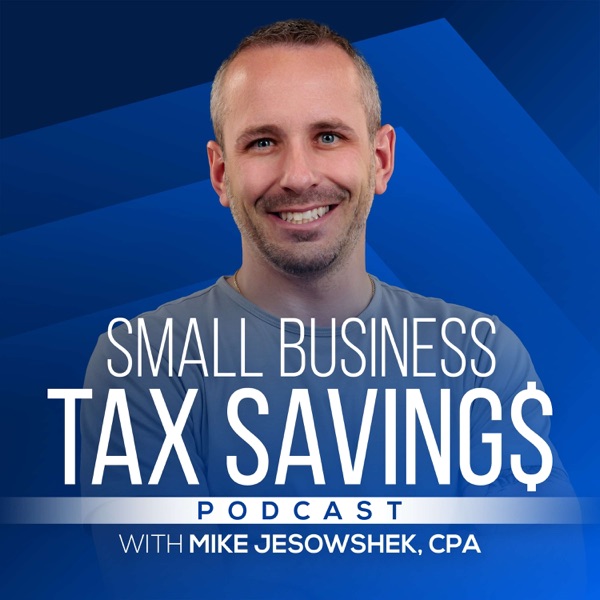
Small Business Tax Savings Podcast
The Small Business Tax Savings Podcast is designed specifically for small business owners. We focus on tax savings and ways to have a financially sound back bone to your small business. Our goal is to have you paying the least amount in taxes as legally possible.Hosted by by Mike Jesowshek, CPA, this is a quick hitting podcast aimed to get you important information without all the fluff. You can find episodes, blog posts, information on our software TaxElm and more on our website: www.TaxSavingsPodcast.com
- Entrepreneurship chart
- #189
- Episodes
- 435
- Releases
- Weekly
- Typical length
- 24 min
- On air since
- 2018
- Latest episode
- 1 week ago
Episodes
435 episodes, newest first
-
31 min
Your Tax Questions, Answered: S Corps, Deductions & Common Mistakes
Show notes
Can you deduct your home office if you rent? When does switching to an S Corp make sense? And what happens if you've made a mistake with your retirement contributions?
In this listener Q&A episode, Mike Jesowshek, CPA, answers common tax questions from small business owners and explains how to approach deductions, business structures, payroll, and retirement planning.
👉Find out how much your business could save in taxes:
TaxSavingsPodcast.com/scorecard
🚀 Book your free demo call today. Click here or visit:
01:00 Home Office Deductions & the Augusta Rule
Learn when home office spaces qualify for deductions, how renters can benefit, and how to document business meetings held at home.07:00 Starting a Business, LLCs & S Corp Elections
Explore business funding options, when electing S Corp status makes sense, and why separating business finances matters.13:00 S Corp Payroll & Reasonable Salary Requirements
Learn how to handle delayed payroll, catch-up payments, and reasonable compensation requirements for S Corp owners.16:00 Hiring Your Kids Through Your Business
Understand payroll taxes when employing your children and how different business structures affect your tax savings.19:00 Retirement Contributions & Estimated Tax Payments
Learn how to correct excess Roth IRA contributions, compare Solo 401(k)s and SEP IRAs, and avoid estimated tax penalties.24:00 Vehicle Expenses, Accountable Plans & Travel Deductions
Compare mileage versus actual expenses, learn how S Corp reimbursements work, and understand deductions for business trips involving family.28:30 Final Takeaway: Implementing Tax Strategies Correctly
Discover why proper documentation, timing, and implementation are essential to protecting your deductions and avoiding costly tax mistakes.Podcast Host:
Mike Jesowshek, CPA – Founder and Host of Small Business Tax Savings Podcast
Join TaxElm: https://taxelm.com🚀 Visit: https://www.taxsavingspodcast.com
🚀 Check Out TaxElm: https://taxelm.com/
🚀 Join our Free Facebook Group: https://www.facebook.com/groups/taxsavings/
🚀 YouTube: http://www.taxsavingstv.com
👋🏼 GET IN TOUCH
You can Tweet @MJesowshek with any feedback, ideas, or thoughts about the lessons you've learned from the episodes. We want to thank you personally for tuning in 🙏🙌LEAVE A REVIEW
If you enjoy the podcast, please leave a 5-star review on Apple Podcasts or Spotify—it helps more business owners find the show ⭐ -
35 min
How to Hire Your Family and Save on Taxes in 2026
Show notes
The money you're already spending on your family could help lower your business tax bill
If your family members perform legitimate work for your business, you may be able to turn some of that spending into tax-deductible wages.
In this episode, Mike Jesowshek, CPA, explains how hiring your kids and other family members can help reduce your taxes in 2026. He covers who you can hire, how the rules differ for sole proprietors and S corp owners, and how much your children can potentially earn tax-free. He also walks through reasonable wages, payroll requirements, the documentation you need, and common mistakes that could put your deductions at risk.
👉Find out how much your business could save in taxes:
TaxSavingsPodcast.com/scorecard
🚀 Book your free demo call today. Click here or visit:
00:00 How Hiring Your Family Can Help You Save on Taxes
Mike explains how paying family members for real work can turn everyday family support into business deductions. He also shares how one business owner saved $12,000 by hiring his kids.
04:00 How the Tax Savings Work
How hiring family members can lower your taxes, including the 2026 standard deduction of $16,100 and potential payroll tax savings.
07:00 Who Can You Hire? Kids, Spouses, and Other Relatives
The rules for hiring children, spouses, parents, and other relatives, and when each option makes financial sense.
13:00 The S Corp Workaround and Family Management Companies
Why S corp owners face different payroll tax rules and how a separate business may help them qualify for additional savings.
17:00 Setting Up Payroll and Documentation Correctly
How to choose appropriate work, pay reasonable wages, and keep the paperwork needed to support your deductions.
22:00 Reporting Family Wages and Calculating Your Tax Savings
How to report wages correctly, handle payroll taxes, and calculate potential savings using real client examples.
26:00 Using a Roth IRA to Build Tax-Free Retirement Savings
How children with earned income can contribute to a Roth IRA and start building retirement savings early.
29:00 Common Mistakes to Avoid and Key Takeaways
The biggest mistakes to avoid, including missing records, unreasonable wages, incorrect payroll reporting, and paying for personal chores.
Podcast Host:
Mike Jesowshek, CPA – Founder and Host of Small Business Tax Savings Podcast
Join TaxElm: https://taxelm.com🚀 Visit: https://www.taxsavingspodcast.com
🚀 Check Out TaxElm: https://taxelm.com/
🚀 Join our Free Facebook Group: https://www.facebook.com/groups/taxsavings/
🚀 YouTube: http://www.taxsavingstv.com
👋🏼 GET IN TOUCH
You can Tweet @MJesowshek with any feedback, ideas, or thoughts about the lessons you've learned from the episodes. We want to thank you personally for tuning in 🙏🙌LEAVE A REVIEW
If you enjoy the podcast, please leave a 5-star review on Apple Podcasts or Spotify—it helps more business owners find the show ⭐ -
23 min
How to Deduct Your Medical Bills Through Your Business (Section 105 Plan Explained)
Show notes
Stop paying your medical bills with after-tax dollars
You’re already paying for deductibles, prescriptions and co-pays. With the right setup, your business could pay you back for them, tax-free.
In this episode, Mike Jesowshek, CPA, explains how a medical expense reimbursement plan (also called an owner HRA or Section 105 plan) can turn out-of-pocket medical costs into business deductions. He covers who qualifies, which entity types work for single and married owners, and the workaround for S corp owners. He also walks through the paperwork you need, how to report the plan on your tax return, and the common mistakes that can cost you the deduction.
👉Find out how much your business could save in taxes:
TaxSavingsPodcast.com/scorecard
🚀 Book your free demo call today. Click here or visit:
00:00 Why Your Medical Costs Aren’t Fully Deductible
Mike explains who this strategy is for (owners with no employees outside the family) and why high out-of-pocket medical costs often get little or no deduction as itemized deductions, even in a costly year.03:00 What a Section 105 Plan Is and Who Qualifies
How a medical expense reimbursement plan lets your business reimburse an employee for qualified family medical costs, turning after-tax spending into pre-tax business deductions. It also covers the no-employee requirement and how other businesses you own could affect whether you qualify.06:00 Entity Type, Marital Status, and the S Corp Workaround
Why single owners need a C corp and married owners can hire their spouse through a sole proprietorship, partnership, C corp, or rental property. Mike also explains why the plan doesn’t work in an S corp and how moving part of your income into a separate entity can get around that.09:00 Setting Up the Plan and Reimbursing Expenses
The paperwork you need, including a written plan document, employment agreement, job description, and time log. Mike also covers which expenses qualify under IRS Publication 502 and how receipts, a reimbursement log, and payments from the business account support each claim.13:00 Reporting the Deduction on Your Tax Return
Where the deduction goes on a Schedule C, partnership return, C corp return, or Schedule E rental, why these costs no longer belong on Schedule A, and the Form 720 filing that goes with the plan.16:00 Is It Worth It? A Real Number Example
How $50,000 in qualified medical expenses could create more than $17,000 in tax savings. Mike also explains why the plan usually isn’t worth it under $5,000 in costs and when it starts to make sense.18:00 Mistakes to Avoid and Key Takeaways
The most common mistakes, including missing paperwork, a spouse who doesn’t do real work, outside employees, using an S corp, and improper reimbursements. Mike closes with why getting the structure right matters, especially for families with ongoing medical costs.Podcast Host:
Mike Jesowshek, CPA – Founder and Host of Small Business Tax Savings Podcast
Join TaxElm: https://taxelm.com🚀 Visit: https://www.taxsavingspodcast.com
🚀 Check Out TaxElm: https://taxelm.com/
🚀 Join our Free Facebook Group: https://www.facebook.com/groups/taxsavings/
🚀 YouTube: http://www.taxsavingstv.com
👋🏼 GET IN TOUCH
You can Tweet @MJesowshek with any feedback, ideas, or thoughts about the lessons you've learned from the episodes. We want to thank you personally for tuning in 🙏🙌LEAVE A REVIEW
If you enjoy the podcast, please leave a 5-star review on Apple Podcasts or Spotify—it helps more business owners find the show ⭐ -
24 min
Health Insurance Tax Savings for Business Owners
Episode 430
Show notes
Your health insurance could do more than cover medical emergencies. With the right strategy, it could also help you save on taxes.
In this episode, Mike Jesowshek, CPA, breaks down health insurance options for small business owners, from group plans to employee reimbursements and stipends. He explains the steps S corp owners need to take to deduct their health insurance premiums and how eligible business owners can use an HSA for tax savings and long-term growth.
👉Find out how much your business could save in taxes.
TaxSavingsPodcast.com/scorecard
🚀 Book your free demo call today. Click here or visit:
00:00 | Health Insurance as a Tax Strategy
How healthcare planning can help business owners protect themselves, offer employee benefits, and save on taxes.01:00 | Your Health Insurance Options
An overview of group plans, self-funded plans, HRAs, and stipends, plus how your needs differ when you’re self-employed.03:00 | The HSA’s Triple Tax Advantage
A look at tax-deductible contributions, tax-free growth, and tax-free withdrawals for qualified medical expenses.04:00 | Group Health Insurance Plans
How group plans work and how employers decide what portion of employee premiums to cover.05:00 | Self-Funded and Level-Funded Plans
How these plans differ from traditional group insurance, including potential savings and risks.07:00 | Health Reimbursement Arrangements
How HRAs let employers reimburse eligible healthcare costs and why employees need to document their expenses.08:00 | Stipends and Offering No Coverage
The tax tradeoffs of paying employees extra for healthcare and how benefits can help attract and retain talent.11:00 | Health Insurance for S Corp Owners
The payment, W-2 reporting, and personal tax return steps discussed for claiming the health insurance deduction.15:00 | HSA Eligibility and Contribution Limits
An explanation of qualifying health plans and the contribution limits covered in the episode.17:00 | Investing Your HSA and Saving Receipts
Why leaving funds invested may support long-term growth, and how saved medical receipts can support later reimbursements.19:00 | Review Your Healthcare Strategy Each Year
Bring coverage, deductions, employee benefits, and HSA planning together as your business grows.Podcast Host:
Mike Jesowshek, CPA – Founder and Host of Small Business Tax Savings Podcast
Join TaxElm: https://taxelm.com🚀 Visit: https://www.taxsavingspodcast.com
🚀 Check Out TaxElm: https://taxelm.com/
🚀 Join our Free Facebook Group: https://www.facebook.com/groups/taxsavings/
🚀 YouTube: http://www.taxsavingstv.com
👋🏼 GET IN TOUCH
You can Tweet @MJesowshek with any feedback, ideas, or thoughts about the lessons you've learned from the episodes. We want to thank you personally for tuning in 🙏🙌LEAVE A REVIEW
If you enjoy the podcast, please leave a 5-star review on Apple Podcasts or Spotify—it helps more business owners find the show ⭐ -
30 min
Documentation 101: How to Prepare for an IRS Audit
Show notes
Documentation 101: How to Prepare for an IRS Audit
You claimed the deduction. But if the IRS asks, can you prove it?
Mike Jesowshek, CPA, explains which records you need to support your business expenses. Learn how to document purchases, keep clean books, and organize your receipts so you’re prepared if the IRS comes knocking.
👉Find out how much your business could save in taxes.
TaxSavingsPodcast.com/scorecard
🚀 Book your free demo call today. Click here or visit:
Chapters:
00:00 Your Tax Deductions Need Documentation
Paying with a business card doesn’t automatically make a purchase deductible. You need records showing what you bought and why it was business related.03:00 Audit Selection vs. Audit Outcome
Even well-organized businesses can get audited. Good documentation helps you support your deductions if you’re selected.08:00 The Proof Behind a Business Deduction
Every deduction needs an actual transaction, a business purpose, and the correct tax treatment. Your supporting records should match.12:00 Clean Books and Separate Bank Accounts
Separate business and personal accounts, update your books regularly, and clearly label expenses, transfers, and owner activity.14:00 Business Structure, Payroll, and Reimbursements
Your tax filings and records should match your business structure. Payroll, accountable plans, and meeting records need proper implementation.17:00 What to Record Beyond the Receipt
Document the business purpose and who was involved. Supporting invoices, calendar entries, and emails can help explain the expense.19:00 Supporting Records for Mileage, Travel, and More
Mileage, travel, equipment, contractors, loans, and reimbursements each need records that support the transaction.20:00 Building an Audit-Ready Workflow
Capture receipts promptly, add context, categorize expenses consistently, and save your documents digitally.22:00 Testing Whether You Can Find Your Records
Choose an older transaction or five large expenses. Check whether you can quickly find the records supporting them.23:00 What to Do When an Audit Letter Arrives
Read the request carefully, meet deadlines, organize your response, and speak with a qualified tax professional.25:00 How Good Documentation Pays Off
Organized records make audit responses faster and deductions easier to defend. Clean books also help you make business decisions.27:00 Why Tax Strategies Need a Paper Trail
Putting a strategy into practice includes documenting it. Hiring your kids, for example, requires records of their work and payments.28:00 Key Takeaways and Next Steps
Clean books and timely documentation help you prepare for an audit. Learn where to find support implementing tax strategies.Podcast Host:
Mike Jesowshek, CPA – Founder and Host of Small Business Tax Savings Podcast
Join TaxElm: https://taxelm.com🚀 Visit: https://www.taxsavingspodcast.com
🚀 Check Out TaxElm: https://taxelm.com/
🚀 Join our Free Facebook Group: https://www.facebook.com/groups/taxsavings/
🚀 YouTube: http://www.taxsavingstv.com
👋🏼 GET IN TOUCH
You can Tweet @MJesowshek with any feedback, ideas, or thoughts about the lessons you've learned from the episodes. We want to thank you personally for tuning in 🙏🙌LEAVE A REVIEW
If you enjoy the podcast, please leave a 5-star review on Apple Podcasts or Spotify—it helps more business owners find the show ⭐ -
20 min
How to Claim the Home Office Deduction in 2026
Show notes
Are you missing out on the home office deduction because you think your workspace doesn’t qualify?
In this episode, Mike Jesowshek explains who qualifies for the home office deduction and how to calculate it using either the simplified or actual expense method. He also breaks down the regular and exclusive use rules, how the deduction differs for sole proprietors and S Corporation owners, and why a qualifying home office could unlock additional business mileage deductions.
You’ll learn how to choose the right calculation method, document your workspace, avoid common mistakes, and turn expenses you’re already paying into a legitimate business tax deduction.
👉Find out how much your business could save in taxes.
TaxSavingsPodcast.com/scorecard
🚀 Book your free demo call today. Click here or visit:
00:00 How the Home Office Deduction Works
The home office deduction allows business owners to turn a portion of expenses they’re already paying, including rent, utilities, insurance, and homeownership costs, into legitimate business deductions.02:20 Who Qualifies for a Home Office Deduction?
A qualifying workspace must be used regularly and exclusively for business. It doesn’t need to be an entire room, but the separation between business and personal use must be clear.04:15 What Counts as Your Principal Place of Business?
Your home doesn’t need to be the only place where you work. A home office may qualify if you regularly use it for administrative or management activities such as bookkeeping, scheduling, invoicing, planning, and customer follow-ups.06:30 The Simplified Home Office Deduction
The simplified method provides a deduction of $5 per qualifying square foot, up to 300 square feet. It requires less recordkeeping but limits the maximum annual deduction to $1,500.08:50 How the Actual Expense Method Works
The actual method calculates your deduction using the percentage of your home used for business. It may include a portion of rent, mortgage interest, property taxes, utilities, insurance, repairs, cleaning, and depreciation.10:50 Simplified vs. Actual Expenses
The simplified method may be easier, but the actual method can produce a significantly larger deduction. Business owners should calculate both methods each year before deciding which one to use.11:35 How to Claim the Deduction Based on Your Business Structure
Sole proprietors and single-member LLCs generally claim the deduction through Schedule C and Form 8829. S Corporation owners typically need an accountable plan to reimburse themselves properly for home office expenses.13:40 How a Home Office Can Unlock Business Mileage
A qualifying home office may establish the starting point of your business day. This can allow trips from your home office to clients, suppliers, job sites, or other business locations to qualify as deductible business mileage rather than commuting.15:30 Common Home Office Deduction Mistakes
Personal use of the workspace, estimated measurements, missing housing records, and incorrect treatment based on business structure can weaken or eliminate the deduction.16:30 Your Home Office Deduction Checklist
Photograph and measure your workspace, confirm your home’s total square footage, collect your annual housing expenses, compare both calculation methods, and document how the deduction will be handled based on your entity type.17:50 Equipment and Other Home Office Deductions
Computers, desks, cameras, microphones, and other business equipment should generally be analyzed separately. The home office calculation focuses on the cost of the qualifying physical space rather than the equipment used to operate the business.18:25 How to Make Your Home Office Deduction Defensible
The goal isn’t to claim your entire home as a business expense. It’s to identify the portion legitimately used for business, document it properly, choose the best calculation method, and revisit the deduction each year.Podcast Host:
Mike Jesowshek, CPA – Founder and Host of Small Business Tax Savings Podcast
Join TaxElm: https://taxelm.com🚀 Visit: https://www.taxsavingspodcast.com
🚀 Check Out TaxElm: https://taxelm.com/
🚀 Join our Free Facebook Group: https://www.facebook.com/groups/taxsavings/
🚀 YouTube: http://www.taxsavingstv.com
👋🏼 GET IN TOUCH
You can Tweet @MJesowshek with any feedback, ideas, or thoughts about the lessons you've learned from the episodes. We want to thank you personally for tuning in 🙏🙌LEAVE A REVIEW
If you enjoy the podcast, please leave a 5-star review on Apple Podcasts or Spotify—it helps more business owners find the show ⭐ -
25 min
Business Vehicle Tax Deductions: What You Can Write Off in 2026
Episode 427
Show notes
Are you missing out on a business vehicle deduction, or claiming more than you’re actually allowed?
In this episode, Mike Jesowshek explains how business vehicle deductions work, including the difference between the standard mileage and actual expense methods. He also breaks down the 6,000-pound vehicle rule, business versus personal mileage, vehicle ownership, and the records you need to protect your deduction.
You’ll learn how to choose the right deduction method, avoid costly mistakes, and turn legitimate business driving into a defensible tax strategy.
👉Find out how much your business could save in taxes.
TaxSavingsPodcast.com/scorecard
🚀 Book your free demo call today. Click here or visit:
00:00 How Business Vehicle Tax Deductions Work
Vehicle deductions should begin with a legitimate business purpose, not the type of vehicle you want to purchase. Business use determines the deduction, regardless of whose name is on the title or whether the vehicle displays your company logo.02:29 Standard Mileage vs. Actual Expenses
The standard mileage method provides a set deduction for each documented business mile. The actual expense method deducts the business-use portion of costs such as fuel, insurance, repairs, lease payments, interest, and depreciation.05:20 How to Choose the Right Deduction Method
Compare your expected mileage, business-use percentage, purchase price, operating costs, and potential deductions over several years.06:55 The 6,000-Pound Vehicle Tax Strategy
Vehicles with a gross vehicle weight rating above 6,000 pounds may qualify for different depreciation treatment. But the available deduction still depends on business use, vehicle classification, taxable income, and the depreciation method used.09:45 Should the Vehicle Be in Your Personal or Business Name?
A vehicle doesn’t always need to be titled in the company’s name to qualify for a deduction. Personally owned vehicles may be reimbursed for business use, while personal use of a company-owned vehicle may need to be treated as a taxable fringe benefit.12:30 What Counts as Business Mileage?
Driving between your home and regular office is generally considered commuting. Trips between business locations, client meetings, job sites, suppliers, and other qualifying destinations may count as deductible business mileage.15:15 The Records You Need to Protect Your Deduction
Business owners should track the date, destination, purpose, and mileage of every business trip. Mileage records are necessary even when using the actual expense method because they support the vehicle’s business-use percentage.19:00 How to Claim the Vehicle Deduction
Sole proprietors and single-member LLCs generally claim vehicle expenses on Schedule C. S Corporation owners may deduct a company-owned vehicle’s expenses through the business or use an accountable plan to reimburse business use of a personally owned vehicle.20:20 Business Vehicle Deduction Checklist
Establish the vehicle’s business purpose, estimate business and personal mileage, compare both deduction methods, check the vehicle’s weight rating, and consider whether buying or leasing makes more sense.22:00 Avoid This Expensive Vehicle Tax Mistake
A deductible vehicle isn’t free. Before purchasing an expensive truck or SUV for the write-off, calculate the actual tax savings and make sure the vehicle is something the business genuinely needs.Podcast Host:
Mike Jesowshek, CPA – Founder and Host of Small Business Tax Savings Podcast
Join TaxElm: https://taxelm.com🚀 Visit: https://www.taxsavingspodcast.com
🚀 Check Out TaxElm: https://taxelm.com/
🚀 Join our Free Facebook Group: https://www.facebook.com/groups/taxsavings/
🚀 YouTube: http://www.taxsavingstv.com
👋🏼 GET IN TOUCH
You can Tweet @MJesowshek with any feedback, ideas, or thoughts about the lessons you've learned from the episodes. We want to thank you personally for tuning in 🙏🙌LEAVE A REVIEW
If you enjoy the podcast, please leave a 5-star review on Apple Podcasts or Spotify—it helps more business owners find the show ⭐ -
26 min
Growing a Business: What Breaks at $250K, $500K, and $1M in Revenue?
Episode 426
Show notes
Is growing your business creating more stress instead of more freedom?
In this episode, Mike Jesowshek breaks down what commonly starts to fail as a business reaches $250,000, $500,000, and $1 million in revenue. He explains why your personal capacity, internal systems, financial visibility, and ability to delegate must evolve as the business grows.
You’ll learn how to stop becoming the bottleneck, protect profitability, build a team you can trust, and create the systems and proactive tax plan needed to scale without burning out.
👉Find out how much your business could save in taxes.
TaxSavingsPodcast.com/scorecard
🚀 Book your free demo call today. Click here or visit:
Chapters:
(03:00) Building Systems at $250,000 in Revenue
Informal processes and information stored in the owner’s head stop working as the business expands. Mike explains how simple checklists and screen recordings can create more consistent results without constant supervision.(07:00) Delegation Becomes Essential at $500,000
Hiring someone doesn’t automatically reduce the owner’s workload. Effective delegation requires clear outcomes, deadlines, decision-making authority, performance measures, and trust in the people you hire.(10:15) Making Tax Planning Proactive
As profit increases, reactive tax planning becomes more expensive. Mike covers estimated payments, entity structure, reasonable compensation, retirement opportunities, documentation, and other areas growing businesses should review throughout the year.(13:00) When the Owner Becomes the Bottleneck
At around $1 million in revenue, the business may have employees and systems but still depend on the owner for every major decision. Mike shares the warning signs that the company cannot operate without your constant involvement.(14:25) Building Leaders, Not Just Hiring Helpers
Every major function of the business needs clear ownership, measurable goals, and appropriate decision-making authority. Developing capable leaders allows the owner to step away from daily operations and focus on direction.(18:20) How the Owner’s Role Must Change
The habits that help start a business can become liabilities as it grows. Moving to the next stage requires the owner to spend less time completing tasks and more time planning, coaching, reviewing numbers, and developing people.(19:45) Mike’s Experience Scaling His Accounting Firm
Mike shares how keeping every process in his head and remaining involved in every client created problems as his firm grew. He explains how those lessons shaped the way he approached building his next company.(22:25) What Kind of Business Do You Actually Want?
Not every owner wants to build a $100 million company. Mike closes by encouraging business owners to define the business and lifestyle they want, then build the systems, team, financial structure, and tax plan required to support it.Podcast Host:
Mike Jesowshek, CPA – Founder and Host of Small Business Tax Savings Podcast
Join TaxElm: https://taxelm.com/🚀 Visit: https://www.taxsavingspodcast.com/
🚀 Check Out TaxElm: https://taxelm.com/
🚀 Join our Free Facebook Group: https://www.facebook.com/groups/taxsavings/
🚀 YouTube: http://www.taxsavingstv.com/
👋🏼 GET IN TOUCH
You can Tweet @MJesowshek with any feedback, ideas, or thoughts about the lessons you've learned from the episodes. We want to thank you personally for tuning in 🙏🙌LEAVE A REVIEW
If you enjoy the podcast, please leave a 5-star review on Apple Podcasts or Spotify—it helps more business owners find the show ⭐ -
36 min
Can Bitcoin Mining Lower Your Tax Bill?
Show notes
Could Bitcoin mining turn a major business expense into a tax-saving opportunity?
In this episode, Mike Jesowshek and Colin from Leverage Mining explore how owning mining equipment could help business owners earn Bitcoin and claim potential tax deductions. They break down the upfront costs, participation requirements, and why a tax write-off alone isn’t enough to make this investment worthwhile.
You’ll learn who this strategy might suit, what a four-year commitment involves, and the risks to consider before getting started.
🚀 Could Bitcoin mining fit into your tax strategy? Book a call with Leverage Mining to explore the costs, potential tax benefits, and what getting started would involve:
👉Find out how much your business could save in taxes.
TaxSavingsPodcast.com/scorecard
🚀 Book your free demo call today. Click here or visit:
Chapters:
(01:00) Bitcoin Mining vs. Buying Bitcoin
Bitcoin mining involves owning equipment that earns Bitcoin, rather than purchasing the asset directly. The discussion explains how mining machines work, why miners join pools, and how rewards are shared.(06:00) Bitcoin Mining as a Tax Strategy
Mining equipment may qualify for bonus depreciation, creating an upfront deduction while the business produces Bitcoin over time. The conversation explores how this fits into a broader strategy of purchasing income-producing assets.(08:00) Material Participation and Documentation
Using mining losses to offset wages or other business income involves more than purchasing equipment. The discussion covers material participation, tracking business activities, and planning ahead to meet the relevant requirements.(13:00) Equipment Costs and the Four-Year Commitment
Colin outlines packages that combine mining machines, hosting, and electricity over four years. They discuss upfront costs, operating arrangements, and why the value of the Bitcoin earned can fluctuate.(17:00) How Much of the Investment Is Deductible?
The full package price isn’t presented as a first-year deduction. Using a $100,000 example, they discuss an estimated $70,000 first-year deduction, with remaining electricity expenses spread over later years.(19:00) Bitcoin Halving and Long-Term Returns
Mining rewards change over time, and Colin explains why his approach depends heavily on Bitcoin appreciating. The discussion highlights the importance of evaluating potential returns beyond the initial tax benefit.(21:00) What Happens After the Mining Contract Ends?
As the four-year agreement ends, owners face decisions about older equipment and whether to purchase new machines. Colin discusses replacement, disposal, and the potential tax implications of selling depreciated equipment.(24:00) Accumulating Bitcoin Over Time
Mining produces Bitcoin gradually rather than through a single purchase. Colin explains his preference for holding the Bitcoin earned and taking a long-term approach to price fluctuations.(26:00) Understanding the Risks of Bitcoin Mining
Bitcoin prices, network difficulty, changing rewards, and equipment failures can affect results. The conversation also covers hosting fees, electricity contracts, downtime, and questions to ask when evaluating a provider.(31:00) Who Might Be a Good Fit for This Strategy?
The discussion focuses on high-income business owners who can commit funds for several years and tolerate volatility. It closes with the importance of participation requirements, documentation, and building a legitimate business strategy.Podcast Host:
Mike Jesowshek, CPA – Founder and Host of Small Business Tax Savings Podcast
Join TaxElm: https://taxelm.com🚀 Visit: https://www.taxsavingspodcast.com
🚀 Check Out TaxElm: https://taxelm.com/
🚀 Join our Free Facebook Group: https://www.facebook.com/groups/taxsavings/
🚀 YouTube: http://www.taxsavingstv.com
👋🏼 GET IN TOUCH
You can Tweet @MJesowshek with any feedback, ideas, or thoughts about the lessons you've learned from the episodes. We want to thank you personally for tuning in 🙏🙌LEAVE A REVIEW
If you enjoy the podcast, please leave a 5-star review on Apple Podcasts or Spotify—it helps more business owners find the show ⭐ -
2 min
MASTERCLASS: How to Cut Your Tax Bill by $15,000 or More
Show notes
Discover how you can save over 5 figures in taxes with my 3-step tax shift system in my upcoming masterclass on September 1st at 7PM EST
Join here: https://taxsavingspodcast.com/masterclass/
If your business earns between $50,000 and $750,000 in annual profit, you're probably paying thousands more in federal taxes than necessary.
But filing a tax return isn’t the same as tax planning.
Proactive tax planning helps you make smarter decisions while there’s still time to reduce your bill.
On Tuesday, September 1 at 7:00 PM Eastern Time, Mike Jesowshek, CPA, is hosting a free 90-minute live masterclass on how business owners can cut their tax bills by $15,000 or more.
During the training, you’ll learn:
💵 Mike’s three-step Tax Shift System
📊 How proactive planning can uncover missed tax savings
🧾 The difference between tax preparation and tax planning
🏢 How an S Corp election could save an $80,000-profit business around $5,300 per year
✅ Which strategies may apply to your business and incomeMike will also stay after the training for a live Q&A, where you can ask about your entity, income, children, rental properties, or other tax questions specific to your situation.
The training is completely free, but you’ll need to reserve your seat.
Register now at taxsavingspodcast.com/masterclass
See you there!
-
23 min
Opportunity Zones in 2026 vs. 2027: What Investors Need to Know
Show notes
🚀 Discover how you can save over 5 figures in taxes with my 3-step tax shift system in my upcoming masterclass on September 1st 7PM EST
Join here: https://taxsavingspodcast.com/masterclass/
Selling a business, rental property, or investment can create a significant capital gains tax bill. Could investing in an Opportunity Zone help you delay that tax and potentially eliminate taxes on future growth?
We cover how Qualified Opportunity Zones work, why the timing of your investment matters and all the rules for investments made in 2026 are very different from those beginning in 2027.
You’ll learn about the 180-day investment deadline, the limited deferral available in 2026, and the new five-year deferral beginning in 2027. Most importantly, you’ll learn why an Opportunity Zone investment should make financial sense before considering the tax benefits.
👉Find out how much your business could save in taxes.
http://taxsavingspodcast.com/scorecard
🚀 Book your free demo call today. Click here or visit:
https://taxelm.com/demo/Chapters:
(00:00) What Is an Opportunity Zone?
Opportunity Zones encourage investment in designated communities by offering tax benefits to investors who reinvest eligible gains through a Qualified Opportunity Fund.(02:00) The Two Main Opportunity Zone Tax Benefits
Investors may be able to defer tax on the original gain and exclude future appreciation from federal capital gains tax after holding a qualifying investment for at least 10 years.(04:00) What Happens to Opportunity Zone Investments in 2026?
Gains invested under the current rules generally become taxable by the end of 2026, but the investment may still qualify for the 10-year appreciation benefit.(06:00) Can You Move an Existing Gain Into the New Program?
A deferred Opportunity Zone gain recognized at the end of 2026 generally cannot be reinvested under the new rules beginning in 2027.(07:48) How the 180-Day Deadline Affects Late-2026 Gains
A new gain realized late in 2026 may qualify for the 2027 rules if the investment is made in 2027 within the required 180-day period.(09:37) What Changes for Opportunity Zones in 2027?
The new rules introduce a five-year deferral, a 10% basis increase after five years, and a potential 30% basis increase for qualifying rural investments.(12:04) Should You Invest in 2026 or Wait Until 2027?
The right timing depends on when the gain occurred, when the 180-day deadline expires, and whether the investment makes financial sense on its own.(14:04) Five Questions to Ask Before Investing
Confirm that the gain qualifies, calculate the exact deadline, identify which rules apply, consider the 10-year holding period, and evaluate the investment without the tax benefit.(16:43) Common Opportunity Zone Myths
Mike addresses misconceptions about eliminating the original gain, qualifying properties, reinvesting old gains, rural funds, and missing the 180-day deadline.Podcast Host:
Mike Jesowshek, CPA – Founder and Host of Small Business Tax Savings Podcast
Join TaxElm: https://taxelm.com🚀 Visit: https://www.taxsavingspodcast.com
🚀 Check Out TaxElm: https://taxelm.com/
🚀 Join our Free Facebook Group: https://www.facebook.com/groups/taxsavings/
🚀 YouTube: http://www.taxsavingstv.com
👋🏼 GET IN TOUCH
You can Tweet @MJesowshek with any feedback, ideas, or thoughts about the lessons you've learned from the episodes. We want to thank you personally for tuning in 🙏🙌LEAVE A REVIEW
If you enjoy the podcast, please leave a 5-star review on Apple Podcasts or Spotify—it helps more business owners find the show ⭐🎙 ABOUT THE PODCAST
The Small Business Tax Savings Podcast is your go-to resource for cutting-edge tax strategies to help entrepreneurs legally slash their tax bills. Hosted by Mike Jesowshek, CPA, this show breaks down complex tax topics into clear, no-fluff insights so you can keep more of your hard-earned money. -
23 min
Tax Q&A: Can I Deduct My Dog, Claim My Kitchen as a Home Office, and Ignore Venmo Income?
Show notes
Can you deduct your dog, pay your child tax-free, or claim the kitchen table as a home office? Tax rules for small business owners aren’t always straightforward. Wrong assumption could lead to missed deductions or problems with the IRS.
In this Q&A episode, Mike answersyour questions. He explains which expenses may qualify when a dog is used for marketing, how hiring children differs between an S corporation and a sole proprietorship, and what happens when a child turns 18.
He also covers mileage tracking, missing receipts, home office requirements, unreported Venmo income, retirement plan deadlines, college funding strategies, and whether health-sharing payments qualify for the self-employed health insurance deduction.
👉 Get the Free Tax Savings Starter Kit Built for Small Business Owners:
https://www.taxsavingspodcast.com/starterkit🚀 Book your free demo call today. Click here or visit:
https://taxelm.com/demo/Chapters
00:45 Hiring Your Children Through an S Corporation
Mike explains how a child’s age and the business entity affect income tax, FICA withholding, W-2 employment, and 1099 contractor treatment.05:03 Deducting Your Dog and Tracking Business Mileage
Learn which dog-related marketing expenses may qualify as deductions, which personal pet expenses typically don’t, and how to document business mileage.09:10 Missing Receipts and Paying for College Through Your Business
Mike covers the documentation needed for expenses under $75, reimbursing personally paid business costs, and hiring a child to help fund college.13:55 Retirement Deadlines and the Home Office Deduction
Review important retirement contribution deadlines and find out why working from the family kitchen table generally doesn’t qualify for a home office deduction.16:28 Hiring a Teenager and Reporting Venmo Income
Mike explains W-4 and payroll requirements when hiring a 15-year-old, along with why business income must be reported even when no 1099 is received.19:26 Health-Sharing Plans and Insurance Deductions
Find out whether health-sharing payments qualify for the self-employed health insurance deduction and how to compare their cost with potential tax savings.Podcast Host:
Mike Jesowshek, CPA – Founder and Host of Small Business Tax Savings Podcast
Join TaxElm: https://taxelm.com🚀 Visit: https://www.taxsavingspodcast.com
🚀 Check Out TaxElm: https://taxelm.com/
🚀 Join our Free Facebook Group: https://www.facebook.com/groups/taxsavings/
🚀 YouTube: http://www.taxsavingstv.com
👋🏼 GET IN TOUCH
You can Tweet @MJesowshek with any feedback, ideas, or thoughts about the lessons you've learned from the episodes. We want to thank you personally for tuning in 🙏🙌LEAVE A REVIEW
If you enjoy the podcast, please leave a 5-star review on Apple Podcasts or Spotify—it helps more business owners find the show ⭐🎙 ABOUT THE PODCAST
The Small Business Tax Savings Podcast is your go-to resource for cutting-edge tax strategies to help entrepreneurs legally slash their tax bills. Hosted by Mike Jesowshek, CPA, this show breaks down complex tax topics into clear, no-fluff insights so you can keep more of your hard-earned money. -
36 min
How Business Owners Use Life Insurance to Build Wealth
Show notes
Life insurance isn’t just a way to protect your family. For the right business owner, it can also provide tax-efficient growth, access to capital, and long-term financial flexibility.
In this episode, Mike and Matt explain how cash value life insurance works, including tax-deferred growth, policy loans, death benefits, and long-term care benefits. They also break down term, whole, and universal life insurance, who this strategy may benefit, and how to avoid choosing an expensive or poorly designed policy.
👉 Need a life insurance policy that fits your financial strategy? Connect with Matt for a policy review and personalized guidance based on your goals: https://lifeincrs.com/tax-savings-podcast
👉Find out how much your business could save in taxes.
TaxSavingsPodcast.com/scorecard
🚀 Book your free demo call today. Click here or visit:
Chapters:
(01:25) Life Insurance as a Wealth-Building Strategy
For some high-income earners and business owners, life insurance can provide more than financial protection. A properly structured policy may support tax-efficient growth, access to capital, and long-term financial stability.(03:25) The Tax Advantages of Cash Value Life Insurance
Policy contributions are generally made with after-tax money, but the cash value can grow tax-deferred. Beneficiaries may also receive the death benefit free from federal income tax.(05:20) Understanding Policy Costs and Commissions
Permanent life insurance can carry significant upfront commissions and insurance costs. Evaluating those expenses over the policy’s full lifetime provides a more useful comparison than looking only at the first year.(10:10) Accessing Cash Value Through Policy Loans
Policyholders may borrow against their cash value without creating an immediately taxable withdrawal. The remaining cash value can continue earning interest, while unpaid loans generally reduce the eventual death benefit.(15:35) Contribution Limits and Modified Endowment Contracts
Life insurance doesn’t have the same annual contribution limits as qualified retirement accounts. However, overfunding a policy can turn it into a modified endowment contract and change how withdrawals are taxed.(19:00) Term, Whole, and Universal Life Insurance Explained
Term insurance provides temporary protection without accumulating cash value. Whole and universal life policies offer permanent coverage, with different levels of cash value growth, investment exposure, cost, and flexibility.(22:15) Designing a Policy Around Your Financial Goals
A policy can be designed to prioritize accessible cash value or a larger death benefit. Additional features may include chronic care riders, participating loans, and fixed or net-zero loan options.(25:30) Who Should Consider Cash Value Life Insurance?
This strategy may fit profitable business owners who have already established emergency savings and funded their traditional retirement accounts. It generally shouldn’t be someone’s first savings or investment tool.(30:00) Why Life Insurance Is Often Misunderstood
Life insurance is complex and sometimes presented as a solution to every financial problem. Its value depends on whether the policy is properly explained, structured, and integrated into a broader financial plan.(32:10) Reviewing an Existing Life Insurance Policy
A policy audit can reveal whether existing coverage is healthy, appropriately designed, and aligned with the owner’s current goals. Before purchasing or changing a policy, review the numbers and consult a professional who understands multiple financial strategies.Podcast Host:
Mike Jesowshek, CPA – Founder and Host of Small Business Tax Savings Podcast
Join TaxElm: https://taxelm.com🚀 Visit: https://www.taxsavingspodcast.com
🚀 Check Out TaxElm: https://taxelm.com/
🚀 Join our Free Facebook Group: https://www.facebook.com/groups/taxsavings/
🚀 YouTube: http://www.taxsavingstv.com
👋🏼 GET IN TOUCH
You can Tweet @MJesowshek with any feedback, ideas, or thoughts about the lessons you've learned from the episodes. We want to thank you personally for tuning in 🙏🙌LEAVE A REVIEW
If you enjoy the podcast, please leave a 5-star review on Apple Podcasts or Spotify—it helps more business owners find the show ⭐ -
18 min
How Much Should You Pay Yourself as an S Corp Owner?
Episode 421
Show notes
Paying yourself the lowest possible S Corp salary might save taxes today, but it could create a much bigger tax bill later.
In this episode, Mike explains how to determine a reasonable S Corp salary based on your role, hours, local market wages, business profit, and cash flow. He also breaks down payroll timing, salary adjustments, documentation, and how to protect your S Corp tax savings while staying compliant with IRS rules.
👉Find out how much your business could save in taxes.
http://taxsavingspodcast.com/scorecard
🚀 Book your free demo call today. Click here or visit:
https://taxelm.com/demo/Chapters:
(01:00) What Is Reasonable Compensation?
An S Corp owner who actively works in the business must receive a reasonable W-2 salary based on what the business would pay someone else to perform the same work.(03:05) The Goal Is a Defensible, Documented Salary
A reasonable salary shouldn’t be unnecessarily high or aggressively low. It should be supported by a clear process and adjusted as the business changes.(04:05) Factors That Determine an S Corp Salary
The owner’s responsibilities, hours, industry, location, role in generating revenue, company profit, cash flow, and stage of growth all affect reasonable compensation.(05:40) The Percentage Method and 40/60 Split
Using 40% to 50% of business profit as salary can provide a starting point, but a percentage alone doesn’t replace a complete reasonable compensation analysis.(07:00) Using Market Wages and Replacement Cost
Breaking the owner’s work into technical, sales, marketing, and administrative duties can help calculate a salary using local market rates for each role.(10:05) Comparing Salary to Business Profit
Reasonable compensation must also make sense in relation to the company’s profit, the owner’s involvement, available cash flow, and whether money is being distributed or reinvested.(11:05) How Often Should an S Corp Owner Run Payroll?
Monthly or biweekly payroll is generally recommended, with a review later in the year to make any necessary adjustments or catch-up payments.(13:15) How to Document Reasonable Compensation
Keep a written salary analysis, description of duties, estimated hours, market-wage data, payroll records, profit information, and year-end review notes.(15:05) Two Businesses With Very Different Salaries
A real-world example shows why two owners with identical business profits can reasonably receive drastically different salaries based on their actual involvement.(16:35) Protecting Your S Corp Tax Savings
The strongest S Corp strategy uses a salary that is reasonable, defensible, and documented instead of simply chasing the lowest possible number.Podcast Host:
Mike Jesowshek, CPA – Founder and Host of Small Business Tax Savings Podcast
Join TaxElm: https://taxelm.com🚀 Visit: https://www.taxsavingspodcast.com
🚀 Check Out TaxElm: https://taxelm.com/
🚀 Join our Free Facebook Group: https://www.facebook.com/groups/taxsavings/
🚀 YouTube: http://www.taxsavingstv.com
👋🏼 GET IN TOUCH
You can Tweet @MJesowshek with any feedback, ideas, or thoughts about the lessons you've learned from the episodes. We want to thank you personally for tuning in 🙏🙌LEAVE A REVIEW
If you enjoy the podcast, please leave a 5-star review on Apple Podcasts or Spotify—it helps more business owners find the show ⭐🎙 ABOUT THE PODCAST
The Small Business Tax Savings Podcast is your go-to resource for cutting-edge tax strategies to help entrepreneurs legally slash their tax bills. Hosted by Mike Jesowshek, CPA, this show breaks down complex tax topics into clear, no-fluff insights so you can keep more of your hard-earned money. -
20 min
When Does an S Corp Actually Save You Money?
Episode 420
Show notes
Will electing S Corporation status ALWAYS save your business thousands in taxes? While that can be true, an S Corp also brings additional payroll requirements, tax filings, costs, and responsibilities.
In this episode, we break down how an S Corp reduces self-employment taxes, when the election usually makes financial sense, and which factors you need to consider before making the switch.
👉Find out how much your business could save in taxes.
http://taxsavingspodcast.com/scorecard
🚀 Book your free demo call today. Click here or visit:
https://taxelm.com/demo/Chapters:
(00:00) What Is an S Corporation?
An S Corp is a tax election for an existing LLC or corporation, not a separate type of business entity.(03:00) How an S Corp Can Reduce Your Taxes
Splitting business income between a reasonable salary and distributions can reduce the amount subject to self-employment taxes.(05:00) When Does an S Corp Start Making Sense?
An S Corp generally becomes worth exploring when a business consistently earns around $60,000 or more in annual profit.(08:00) Who Is a Good Candidate for an S Corp?
Consistent profit, active owner involvement, clean bookkeeping, and reliable cash flow are important signs that an S Corp could be a good fit.(10:00) When an S Corp May Not Save You Money
Low or inconsistent profit, high reasonable compensation, state-level taxes, and an existing high-paying W-2 job can change the calculation.(12:00) The Reasonable Salary Requirement
S Corp owners who actively work in the business must pay themselves reasonable W-2 compensation before taking distributions.(13:00) How Often Should an S Corp Owner Run Payroll?
Monthly or biweekly payroll is generally the safest approach, while waiting until the end of the year can create compliance and cash-flow problems.(14:00) Hidden S Corp Costs and Responsibilities
Payroll filings, W-2s, bookkeeping, accountable plans, health insurance reporting, and salary documentation must all be handled correctly.
(15:00) The S Corp Decision Framework
Use these questions to evaluate profitability, salary, payroll, state taxes, bookkeeping, and whether the potential savings exceed the added costs.Podcast Host:
Mike Jesowshek, CPA – Founder and Host of Small Business Tax Savings Podcast
Join TaxElm: https://taxelm.com🚀 Visit: https://www.taxsavingspodcast.com
🚀 Check Out TaxElm: https://taxelm.com/
🚀 Join our Free Facebook Group: https://www.facebook.com/groups/taxsavings/
🚀 YouTube: http://www.taxsavingstv.com
👋🏼 GET IN TOUCH
You can Tweet @MJesowshek with any feedback, ideas, or thoughts about the lessons you've learned from the episodes. We want to thank you personally for tuning in 🙏🙌LEAVE A REVIEW
If you enjoy the podcast, please leave a 5-star review on Apple Podcasts or Spotify—it helps more business owners find the show ⭐🎙 ABOUT THE PODCAST
The Small Business Tax Savings Podcast is your go-to resource for cutting-edge tax strategies to help entrepreneurs legally slash their tax bills. Hosted by Mike Jesowshek, CPA, this show breaks down complex tax topics into clear, no-fluff insights so you can keep more of your hard-earned money. -
34 min
Are Your Business Expenses Audit-Ready? With Shoeboxed Owner Doug Breaker
Episode 419
Show notes
👉 Ready to simplify your recordkeeping? Check out Shoeboxed to organize receipts, track mileage, and keep your business expenses audit-ready. Visit https://referrals.shoeboxed.com/mb4p7wl1ithi
You could qualify for thousands of dollars in tax deductions, but without the right documentation, the IRS could take them away.
Mike sits down with Doug Breaker, owner of Shoeboxed, to explain how proper recordkeeping helps business owners protect their tax deductions. They break down what to document for receipts, meals, mileage, home offices, and business travel, how long to keep your records, and how simple tracking systems can help you stay organized and audit-ready.
👉Find out how much your business could save in taxes.
http://taxsavingspodcast.com/scorecard
🚀 Book your free demo call today. Click here or visit:
https://taxelm.com/demo/Chapters:
01:00 Doug Breaker’s Journey to Owning Shoeboxed
Doug explains how he went from working as a corporate CEO to purchasing Shoeboxed and becoming a business owner.05:00 How Shoeboxed Simplifies Recordkeeping
Doug shares how Shoeboxed helps business owners digitize receipts, automatically collect expense information, and classify business mileage.06:00 What Counts as Proper Documentation?
Receipts should capture details such as the date, vendor, amount, and business purpose, while mileage logs require the date, destination, mileage, and purpose of the trip.11:00 How to Organize a Backlog of Receipts
Business owners with years of disorganized receipts should begin by digitizing recent records and creating a consistent process for tracking new expenses.15:00 What an Audit-Ready Mileage Log Should Include
A proper mileage log should record the date, destination, miles driven, and business purpose of each trip rather than relying on an annual estimate.19:00 How Long Should You Keep Business Tax Records?
Doug recommends keeping receipts, mileage logs, and supporting documentation for at least three years in a secure and accessible location.22:00 When Driving From Home Becomes Deductible Mileage
Driving from home to a regular workplace is generally commuting, but traveling from a qualifying home office to another business location can create deductible mileage.27:00 Deducting Expenses Before a Business Makes Money
Expenses incurred before a business begins operating may be treated as startup costs. Establishing a paying customer can help show that the business has moved into its operational stage.32:00 Why Better Recordkeeping Protects Your Tax Savings
Consistently tracking every receipt and business mile helps protect deductions, reduce audit anxiety, and keep more money in the business.Podcast Host:
Mike Jesowshek, CPA – Founder and Host of Small Business Tax Savings Podcast
Join TaxElm: https://taxelm.com🚀 Visit: https://www.taxsavingspodcast.com
🚀 Check Out TaxElm: https://taxelm.com/
🚀 Join our Free Facebook Group: https://www.facebook.com/groups/taxsavings/
🚀 YouTube: http://www.taxsavingstv.com
👋🏼 GET IN TOUCH
You can Tweet @MJesowshek with any feedback, ideas, or thoughts about the lessons you've learned from the episodes. We want to thank you personally for tuning in 🙏🙌LEAVE A REVIEW
If you enjoy the podcast, please leave a 5-star review on Apple Podcasts or Spotify—it helps more business owners find the show ⭐🎙 ABOUT THE PODCAST
The Small Business Tax Savings Podcast is your go-to resource for cutting-edge tax strategies to help entrepreneurs legally slash their tax bills. Hosted by Mike Jesowshek, CPA, this show breaks down complex tax topics into clear, no-fluff insights so you can keep more of your hard-earned money. -
23 min
How Rental Properties Create Tax-Free Cash Flow
Episode 418
Show notes
Can a rental property put $30,000 in your pocket without adding $30,000 to your taxable income? Let’s talk about rental property tax strategies
Mike explains how rental real estate can create tax savings even when you can’t use rental losses to offset your business or W-2 income.
He breaks down the difference between cash flow and taxable income, how depreciation can shelter rental income, and what happens to suspended passive losses. He also covers short-term rental rules, real estate professional status, common entity mistakes, and the key questions to ask before buying a rental property.
👉Find out how much your business could save in taxes.
http://taxsavingspodcast.com/scorecard
🚀 Book your free demo call today. Click here or visit:
https://taxelm.com/demo/Chapters:
00:00 How Rental Properties Create Tax Savings
Rental properties don’t need to generate a usable tax loss to provide tax benefits. Depreciation and other deductions can allow investors to earn positive cash flow without reporting the same amount as taxable income.02:15 What Happens When You Can’t Use a Rental Loss?
Rental losses are generally passive and can’t usually offset W-2 or active business income. Unused losses are suspended until they can offset passive income or be used when the property is sold.05:15 Rental Cash Flow vs. Taxable Income
Cash flow is the money that reaches your pocket, while taxable income is the amount the IRS taxes.06:15 How $30,000 of Rental Cash Flow Could Create No Taxable Income
A business owner earning $200,000 could receive another $30,000 in rental cash flow while still reporting around $200,000 of taxable income. Depreciation and rental deductions could shelter the additional income.08:45 When Rental Losses Can Offset Active Income
Short-term rental treatment, real estate professional status, and certain active participation rules can allow rental losses to offset W-2 or business income.12:30 How Rental Property Depreciation Works
Residential rental buildings are generally depreciated over 27.5 years, while commercial properties are depreciated over 39 years.14:45 Why You Shouldn’t Hold Rental Property in an S Corporation
Rental properties are commonly held in LLCs for liability protection, but generally shouldn’t be placed inside an S corporation. Active business operations and passive rental activities should also be kept legally separate.17:15 Building a Complete Rental Property Tax Strategy
A strong rental strategy combines positive cash flow, depreciation, expense tracking, appreciation, debt paydown, suspended losses, and potential strategies such as hiring your children or completing a 1031 exchange.19:15 Four Questions to Ask Before Buying a Rental Property
Before investing, determine whether the property makes sense without the tax benefits, what its cash flow will be after debt payments, how much income will be taxable, and whether any rental losses can be used immediately or will be suspended.Podcast Host:
Mike Jesowshek, CPA – Founder and Host of Small Business Tax Savings Podcast
Join TaxElm: https://taxelm.com🚀 Visit: https://www.taxsavingspodcast.com
🚀 Check Out TaxElm: https://taxelm.com/
🚀 Join our Free Facebook Group: https://www.facebook.com/groups/taxsavings/
🚀 YouTube: http://www.taxsavingstv.com
👋🏼 GET IN TOUCH
You can Tweet @MJesowshek with any feedback, ideas, or thoughts about the lessons you've learned from the episodes. We want to thank you personally for tuning in 🙏🙌LEAVE A REVIEW
If you enjoy the podcast, please leave a 5-star review on Apple Podcasts or Spotify—it helps more business owners find the show ⭐🎙 ABOUT THE PODCAST
The Small Business Tax Savings Podcast is your go-to resource for cutting-edge tax strategies to help entrepreneurs legally slash their tax bills. Hosted by Mike Jesowshek, CPA, this show breaks down complex tax topics into clear, no-fluff insights so you can keep more of your hard-earned money. -
31 min
Oil & Gas Tax Investing: The Strategy High-Income Business Owners Should Understand
Episode 417
Show notes
👉 Interested in learning more about oil and gas investing? Email us at ask@taxsavingspodcast.com and we’ll connect you with Nick White and the team at US Energy.
Big tax deduction or risky investment? Oil and gas investing can be a powerful tax strategy for high-income business owners, but it’s not something to jump into just because you want a write-off.
In this episode, Mike sits down with Nick White from US Energy to break down how oil and gas investing works, where the tax benefits come from, and why intangible drilling costs can create a large first-year deduction. They cover who is a good fit, how these investments can potentially offset W-2 income, business income, K-1 income, and capital gains, what the return and cash flow profile may look like, and the key risks investors need to understand before getting involved.
👉 Get the Free Tax Savings Starter Kit Built for Small Business Owners:
https://www.taxsavingspodcast.com/starterkit🚀 Book your free demo call today. Click here or visit:
https://taxelm.com/demo/Chapters:
01:00 How Oil and Gas Investing Creates Tax Benefits
Oil and gas investing is built around government incentives for domestic energy production. Investors who participate directly in drilling funds may be able to receive large first-year deductions through intangible drilling costs.06:00 Intangible Drilling Costs Explained
Intangible drilling costs include expenses tied to the drilling process that do not have a depreciation schedule, such as labor, roads, and hydraulic fracturing. These costs can help create a large year-one deduction for qualified investors.07:45 Offsetting W-2, Business, K-1, and Capital Gains Income
Unlike many real estate losses, oil and gas deductions may be able to offset active income, including W-2 income, business income, K-1 income, and capital gains. This is one reason the strategy is often discussed with high-income earners.09:15 Who is Oil and Gas Investing a Good Fit For?
Oil and gas investing is generally geared toward accredited investors, including individuals with at least $1 million in net worth excluding their primary residence, or income of at least $200,000 for single filers and $300,000 for joint filers.11:15 Key Risks Investors Need to Understand
Oil and gas investing comes with real risks, including drilling risk, pricing risk, concentration risk, and company structure risk. Look closely at debt levels, drilling strategy, diversification, and whether the company is focused on proven production areas.17:00 Timing Your Investment Before Year-End
While an investment may qualify if completed by December 31, starting earlier gives investors more time to understand the deal, plan properly, and avoid rushed year-end decisions.23:30 QBI, SALT, and Phaseout Planning
Oil and gas deductions may help business owners reduce taxable income enough to phase back into other tax benefits, such as the qualified business income deduction or state and local tax deductions.26:00 Common Mistakes When Evaluating Oil and Gas Deals
Not every deal is structured the same way. Investors should avoid chasing deductions blindly and instead evaluate the partnership structure, use of debt, drilling approach, technology, risk profile, and long-term cash flow potential.Disclaimer:
This episode was not sponsored. This conversation is for educational purposes only and is not investment, legal, or tax advice. It is not a recommendation or endorsement of any specific company, fund, security, or oil and gas offering. Oil and gas investments may involve substantial risk, illiquidity, commodity price volatility, operational risk, tax complexity, and possible loss of principal. Tax treatment depends on each taxpayer’s facts, investment structure, at-risk basis, passive activity rules, and professional advice. Past results do not guarantee future results.
Podcast Host:
Mike Jesowshek, CPA – Founder and Host of Small Business Tax Savings Podcast
Join TaxElm: https://taxelm.com🚀 Visit: https://www.taxsavingspodcast.com
🚀 Check Out TaxElm: https://taxelm.com/
🚀 Join our Free Facebook Group: https://www.facebook.com/groups/taxsavings/
🚀 YouTube: http://www.taxsavingstv.com
👋🏼 GET IN TOUCH
You can Tweet @MJesowshek with any feedback, ideas, or thoughts about the lessons you've learned from the episodes. We want to thank you personally for tuning in 🙏🙌LEAVE A REVIEW
If you enjoy the podcast, please leave a 5-star review on Apple Podcasts or Spotify—it helps more business owners find the show ⭐🎙 ABOUT THE PODCAST
The Small Business Tax Savings Podcast is your go-to resource for cutting-edge tax strategies to help entrepreneurs legally slash their tax bills. Hosted by Mike Jesowshek, CPA, this show breaks down complex tax topics into clear, no-fluff insights so you can keep more of your hard-earned money. -
19 min
Trump Accounts Explained: Gimmick or New Savings Tool for Kids?
Episode 416
Show notes
Free money for kids? Not so fast. Trump Accounts could become one of the newest long-term wealth-building tools for families, but you need to understand how they work, who qualifies, and how they fit into a bigger tax and investment strategy.
In this episode, Mike breaks down everything you need to know about the Trump Accounts. He covers the contribution rules, tax-deferred growth, employer contribution opportunities, Roth conversion planning, and how Trump Accounts compare to 529 plans, Roth IRAs, custodial accounts, and brokerage accounts.
👉 Get the Free Tax Savings Starter Kit Built for Small Business Owners:
https://www.taxsavingspodcast.com/starterkit🚀 Book your free demo call today. Click here or visit:
https://taxelm.com/demo/Chapters:
01:00 What Are Trump Accounts?
Trump Accounts are new savings vehicles for children under 18, created under the One Big Beautiful Bill Act. They are designed to encourage early investing, long-term compounding, and tax-deferred growth.02:25 The $1,000 Government Seed Contribution
Children born between 2025 and 2028 may qualify for a $1,000 federal contribution. This is not spending money; it is long-term investment capital placed into the child’s Trump Account.03:30 Contribution Rules and Tax Treatment
Families can contribute up to $5,000 per year until the child turns 18. Contributions are not tax-deductible, but the growth inside the account is tax-deferred.05:30 Roth Conversion Planning for Trump Accounts
Once the child reaches adulthood, the account transitions into a traditional IRA structure. Low-income years may create an opportunity to convert portions into a Roth IRA.09:15 Trump Accounts vs. 529 Plans and Roth IRAs for Kids
529 plans focus on education, while Trump Accounts focus on long-term wealth building. Roth IRAs are still a strong option for kids with earned income, but Trump Accounts can help fill the gap when a child does not qualify yet.
12:25 Downsides of Trump Accounts
Trump Accounts are not perfect for every family. Funds are locked up until adulthood, the child eventually controls the account, investment choices may be limited, and future taxation still needs to be planned for.13:35 The Stacking Strategy for Family Wealth Planning
Families do not have to rely on just one account type. A 529 plan, Roth IRA, Trump Account, brokerage account, or custodial account can each serve a different purpose depending on the family’s goals and cash flow.14:40 Final Strategy Thoughts on Trump Accounts
Trump Accounts may not be an automatic fit for everyone, but they should be considered as part of a larger family wealth plan, especially for children eligible for the $1,000 government contribution.Podcast Host:
Mike Jesowshek, CPA – Founder and Host of Small Business Tax Savings Podcast
Join TaxElm: https://taxelm.com🚀 Visit: https://www.taxsavingspodcast.com
🚀 Check Out TaxElm: https://taxelm.com/
🚀 Join our Free Facebook Group: https://www.facebook.com/groups/taxsavings/
🚀 YouTube: http://www.taxsavingstv.com
👋🏼 GET IN TOUCH
You can Tweet @MJesowshek with any feedback, ideas, or thoughts about the lessons you've learned from the episodes. We want to thank you personally for tuning in 🙏🙌LEAVE A REVIEW
If you enjoy the podcast, please leave a 5-star review on Apple Podcasts or Spotify—it helps more business owners find the show ⭐🎙 ABOUT THE PODCAST
The Small Business Tax Savings Podcast is your go-to resource for cutting-edge tax strategies to help entrepreneurs legally slash their tax bills. Hosted by Mike Jesowshek, CPA, this show breaks down complex tax topics into clear, no-fluff insights so you can keep more of your hard-earned money. -
19 min
The Mid-Year Tax Checkup Every Business Owner Needs
Episode 415
Show notes
Don’t wait until the last minute to start tax planning. Mid-year is one of the best times for business owners to review their tax situation. Most business owners wait until year-end to ask, “How can I lower my tax bill?” But by then, some of the best opportunities are already gone. Instead of making proactive tax-saving moves, you’re left doing damage control.
In this episode, Mike walks through a simple mid-year tax checkup every small business owner should do before December. He covers how to review your income, estimate your tax liability, clean up your bookkeeping, evaluate your entity structure, plan retirement contributions, think through major purchases, and identify tax strategies you still have time to implement before year-end.
👉 Get the Free Tax Savings Starter Kit Built for Small Business Owners:
https://www.taxsavingspodcast.com/starterkit🚀 Book your free demo call today. Click here or visit:
https://taxelm.com/demo/Chapters
01:00 Why Mid-Year Is the Sweet Spot for Tax Planning
Mid-year gives business owners two major advantages: enough real financial data to review and enough time left in the year to implement strategies.03:00 Grade Your Tax Planning Progress
Business owners should evaluate whether they’ve only learned about tax strategies or have actually started implementing them.04:00 Review Your Bookkeeping Before It Becomes a Problem
Accurate bookkeeping is the foundation of good tax planning. Mid-year is the time to catch missing transactions, miscategorized expenses, personal charges, payroll errors, and missed deductions.05:20 Review Your Entity Structure
Your business structure should match your current income, profit, and tax strategy. This includes reviewing whether an LLC, S corporation, or multi-entity setup makes sense.07:40 Review Retirement Contribution Opportunities
Mid-year is a good time to look at retirement plan options, contribution goals, employee benefits, and whether your current plan still fits your business.09:30 Analyze Big Purchases Before Making Them
Buying equipment or vehicles just for the write-off is not a good strategy. Business owners should review whether the purchase is needed, how it will be paid for, and whether this year or next year makes more sense.11:10 Look for Missed Tax Strategies
Mid-year still leaves time to implement strategies like hiring your kids, using the Augusta Rule, setting up an accountable plan, reviewing health insurance deductions, and timing income and expenses.13:20 Review Core and Advanced Tax Strategies
Business owners who already use tax strategies should review whether they’re getting the full benefit. Higher-income business owners may need to look at more advanced planning opportunities.16:00 Tax Planning Is Not a December Activity
The best tax-saving opportunities happen when business owners still have time to make decisions, fix mistakes, and plan strategically before year-end.Podcast Host:
Mike Jesowshek, CPA – Founder and Host of Small Business Tax Savings Podcast
Join TaxElm: https://taxelm.com🚀 Visit: https://www.taxsavingspodcast.com
🚀 Check Out TaxElm: https://taxelm.com/
🚀 Join our Free Facebook Group: https://www.facebook.com/groups/taxsavings/
🚀 YouTube: http://www.taxsavingstv.com
👋🏼 GET IN TOUCH
You can Tweet @MJesowshek with any feedback, ideas, or thoughts about the lessons you've learned from the episodes. We want to thank you personally for tuning in 🙏🙌LEAVE A REVIEW
If you enjoy the podcast, please leave a 5-star review on Apple Podcasts or Spotify—it helps more business owners find the show ⭐🎙 ABOUT THE PODCAST
The Small Business Tax Savings Podcast is your go-to resource for cutting-edge tax strategies to help entrepreneurs legally slash their tax bills. Hosted by Mike Jesowshek, CPA, this show breaks down complex tax topics into clear, no-fluff insights so you can keep more of your hard-earned money.
On these lists
Small Business Tax Savings Podcast is one of the shows picked out on each of these





More in Entrepreneurship
Placed highest on Apple Podcasts' Entrepreneurship chart right now