Podcast
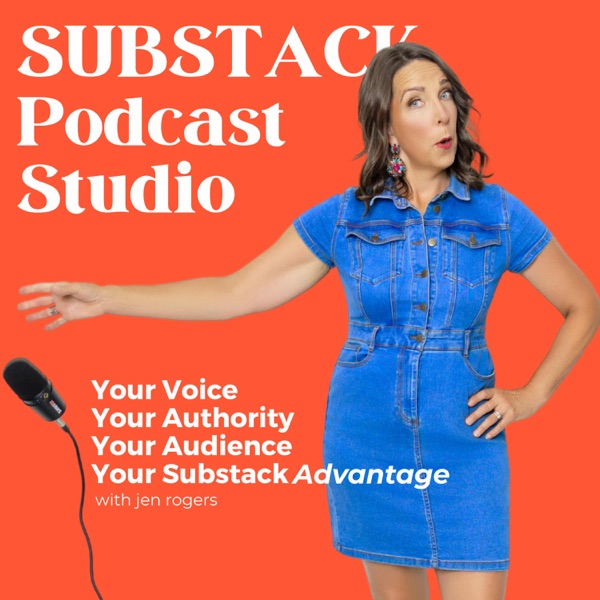
Substack Podcast Studio with Jen Rogers | Podcasting for Profits with Christian Entrepreneurs
Your ideal client is not lying awake at 3 in the morning. thinking, “I need a better podcast episode.” Nobody wakes up hoping for more content. They wake up wondering: • “Why does it feel like I have to constantly prove I’m the expert when I’ve already done the work?” • “Why am I pouring my heart into content that disappears before the right people even see it?” • "Why are people listening, liking, and cheering me on… but not becoming clients?” That dark hour is the conversation your podcast needs to enter. Not the content conversation. The 3:00 a.m. conversation. The one happening when your ideal client is anxiously asking, “What needs to change?” I’m Jen Rogers, Founder of The Virtual Podcast School. I help Christian entrepreneurs with proven offers turn their podcasts into trust-building business assets with Substack. Your podcast was never supposed to become the thing you dread on your content calendar. Instead, your podcast is the driver that increases leads, trust, visibility, and outcomes. Your podcast becomes the place where people get to know how you think. How you lead. How you develop solutions. How you build connection with them Isn’t that wonderful? No more chasing algorithms. No more creating content that gets consumed and forgotten. No more publishing episodes that sound impressive but never end in ROI. Your voice is one of the most powerful trust-building tools you own. A social post might get a glance. A podcast gets invited into someone's life. That's online marketing with a podcast. Your ideal clients are not just consuming information. They are building a relationship with you. And relationships create connections. Those connections build trust fast. Trust leads to DMs and profits. I learned this the hard way. My first year podcasting, I released 52 episodes. 1,066 downloads. Zero sales. So when someone says, “Just be consistent,” I want to lovingly throw a microphone. Consistency without strategy is punching a time clock for an extraordinarily negative return. You need a podcast that does its job – without you burning out. Inside the Substack Podcast Studio, you’ll build out your podcast that: ↳ Positions you as the trusted expert ↳ Connects your message to your offer ↳ Turns your listeners into leads and buyers ↳ Helps you grow without living on social media ↳ Builds deeper relationships with the right audience ↳ Creates content that compounds instead of disappears This is for the Christian entrepreneur who already has wisdom, experience, and something valuable to sell and want to create a marketing asset you own. That is why we are building on Substack. We are building podcasts that do more than get downloaded. They get remembered. They get referred. They get profits. Topics covered: Substack podcast strategy, podcast monetization, lead generation for Christian entrepreneurs, audio-first marketing, messaging for premium clients, evergreen content, podcast CTAs, private podcasting, sales funnel strategy, faith-based business growth, and scalable podcast systems. thevirtualpodcastschool.com/substack
- Episodes
- 62
- Releases
- Twice a week
- Typical length
- 24 min
- On air since
- 2026
- Latest episode
- 3 days ago
Episodes
62 episodes, newest first
-
23 min
The $100,000 Mistake Wasn’t the Whole Story | Newsletter #57
Show notes
I help people make decisions about their businesses. So admitting to a $100,000 loss came with a question I didn’t want to answer:
What would my clients think?
At a three-day intensive, Jenni Rae asked me about the first big mistake I remembered making. I’d expected business coaching. I hadn’t expected my answer to reach back to childhood, or to expose how quickly “I got this wrong” became “I have no value.”
In this episode, I explore what we risk when we let people hear the parts we usually edit out, and what it costs our businesses when we keep them hidden.
We get into:
What you remove to sound certain. The sentence that feels uncomfortable to publish may be where a potential client finally recognizes themselves.
The risk someone takes when they recommend you. Their friend has already paid for help and been disappointed. “I love her podcast” won’t be enough.
What “I don’t want another project” might mean. And why explaining your offer again can leave the most important part of the conversation untouched.
Plus, a chat prompt to uncover the real story in your next episode and reflective questions that make room for answers you won’t find in your coaching handbook.
What have you decided about yourself because something didn’t work out?
Mentioned in this episode
Substack Podcast Marketing: What Your Clients Haven’t Told You Yet | #26
Mic Drop Mastery Newsletter #57 (prompt inside)
Your next step
Bring your expertise, your offer, and the invitation you keep rewriting into the Substack Podcast Studio. Let’s help your right person understand why working with you comes next.
Take The Profitable Podcast Health Checkup: Use code SUBSTACKTLC to save 50%.
This is a public episode. If you'd like to discuss this with other subscribers or get access to bonus episodes, visit https://thejenrogers.substack.com/subscribe
-
13 min
The Podcast Decisions You Avoid Are Costing You Clients | #30
Episode 30
Show notes
You can have a full recording schedule and still be postponing the episode your next client needs to hear.
The one where you explain why the advice they’ve been following hasn’t worked. Or say the thing you find yourself repeating in private client sessions.
Somehow, another 'helpful' roundup gets recorded first.
I understand how easy it is to stay busy while leaving the bigger decision unresolved. When I enlisted in the Army, I knew exactly what I wanted to leave behind. What I wanted to build was considerably less clear.
That distinction follows us into business.
In this episode, I’m taking the frustration behind procrastination and reframing it.
We’ll explore:
- How podcast procrastination can hide inside a full production schedule.
- What a restaurant menu can teach you about choosing your show’s direction.
- Which buyer conversations belong in your episodes.
- How to connect what you love talking about to what people can hire you to do.
The outcome is a high-converting podcast, with each episode helping listeners understand their problem, trust your approach, and see a reason to work with you.
Bring the episode you keep postponing into the paid Substack Podcast Studio. We’ll work through what you want to say, why your listener needs it, and how your offer fits the conversation.
Join the paid Substack Podcast Studio for help connecting your message, stories, and offers. On November 2, subscribers can also join me and Adam Fraiel of Email Decided for Email on Easy Street, focused on preparing your email marketing and messaging for Black Friday Sales.
The Substack Podcast Studio: thevirtualpodcastschool.com/substack
Already know you want to launch with private support?
Book a consult for a podcast launch package. https://thevirtualpodcastschool.com/consult
Need focused podcast strategy?
Book a Mic Drop Mastery Power Hour:
https://thevirtualpodcastschool.com/podcastcoaching
Prefer a powerful self-diagnostic tool to earn faster with your pdocast?
Take the Profitable Podcast Health Checkup
https://thevirtualpodcastschool.com/healthcheckup
This is a public episode. If you'd like to discuss this with other subscribers or get access to bonus episodes, visit https://thejenrogers.substack.com/subscribe
-
20 min
A Sponsor Can Pay You and Still Cost You | Newsletter #56
Show notes
You finally get the message: a business wants to sponsor your podcast.
You’re already imagining saying, “This episode is sponsored by…” Then you read the requests. An extra interview. A dedicated email. A topic you wouldn’t otherwise cover.
You could make it work. You’re very good at making things work.
But where does your own offer fit after you’ve made room for theirs?
Substack has announced early-access signups for dynamic podcast sponsorships, with optional sponsorship marketplaces planned. Its broader sponsorship experiments could also let brands pay for readers to experience paid publications.
In Mic Drop Mastery Newsletter #56 of The Substack Podcast Studio, I explore what those possibilities could mean for entrepreneurs who have podcasts on Substack.
We start with the toilet paper hunt of 2020. Yes, really.
Then I share an idea I’m considering for highlighting my clients while honoring Commandment #8: Sell your own stuff.
Inside this episode:
• Why someone can love your podcast and still struggle to recommend you when a friend needs help.• What prospective buyers need to experience before paying for another subscription.• How to evaluate a sponsor beyond the check they’re offering.• One sentence to help you connect a collaboration to a paid next step.
If you’re considering a partnership but keep getting stuck on what to propose, bring that unfinished idea to a 1:1 strategy session. We’ll work through how it supports your offers and what to do next.
Book your podcast strategy session:https://thevirtualpodcastschool.com/podcastcoaching
Become Memorable, Referable + Profitable with Podcasting
Your next step
Bring your expertise, your offer, and the invitation you keep rewriting into the Substack Podcast Studio. Let’s help your ideal clients better understand why working with you is the next logical step.
This is a public episode. If you'd like to discuss this with other subscribers or get access to bonus episodes, visit https://thejenrogers.substack.com/subscribe
-
24 min
Substack Podcast Strategy: 3 Moves to Make Before 2027 | #29
Episode 29
Show notes
You’ve published enough episodes to prove you can stick with a podcast.
So why does turning those listeners into clients still feel like guesswork?
I had more than 300 episodes behind me and a show in the top 1% worldwide. When I first heard about podcasting on Substack, my response was: “Absolutely not.”
I had a plan. Learning another platform was nowhere on it.
Then I started questioning what staying put was costing me.
In this episode, I unpack why Substack changed how I think about podcast monetization, audience connection, and selling my own offers. We’ll get into:
- Why 100 listeners you can reach could be more valuable to your business than 10,000 downloads.
- The paid subscriber math worth doing before you chase a bigger audience.
- Two ways your existing podcast can live on Substack without starting over.
- Three decisions to make now so January doesn’t arrive with the same unanswered questions.
If your podcast helps people but you’re still waiting for it to help your business, press play - NOW.
Ready to work through your next move with me? Join the paid Substack Podcast Studio. We meet at least twice a month to work on the strategy behind your show. Listen for the invitation to ask me for a $99 annual membership code.
Referenced in this episode:
#2 Move your podcast to Substack
Join Podcasters in The Substack Podcast Studio: thevirtualpodcastschool.com/substack
Already know you want to launch with private support?
Book a consult for a podcast launch package. https://thevirtualpodcastschool.com/consult
Need focused podcast strategy?
Book a Mic Drop Mastery Power Hour:
https://thevirtualpodcastschool.com/podcastcoaching
Prefer a powerful self-diagnostic tool to earn faster with your pdocast?
Take the Profitable Podcast Health Checkup
https://thevirtualpodcastschool.com/healthcheckup
This is a public episode. If you'd like to discuss this with other subscribers or get access to bonus episodes, visit https://thejenrogers.substack.com/subscribe
-
15 min
How to Monetize Your Podcast: Stories, Referrals & CTAs That Sell | Newsletter #55
Show notes
Somewhere in your past is a story you’ve decided doesn’t belong in your business.
You weren’t especially wise in it. Your reasons weren’t impressive. And if you told it honestly, you’d have to admit you had no idea what you were doing.
Mine starts with my parents going on vacation.
I got bored. I joined the Army.
By the time I was standing in a cattle car at Fort Jackson, smiling a terrified smile at the last person I wanted noticing me, I would have happily accepted a ride home.
That story rarely makes it into a professional introduction. But “Army veteran” leaves quite a bit out.
What does your introduction leave out?
That could very well be the part that helps someone remember you and relate to you long after the episode ends.
In this episode, we’re following the connection between the stories you tell, the people who recommend you, and the offers your listeners consider buying.
Someone can love your podcast and still have no idea when to hire you. Let’s fix that.
You’ll hear:
- How to find the details in your own stories that a polished bio leaves behind.
- Why a potential client might never use the words you use to describe them, and how that makes referrals harder.
- How to finish “so the next time you ___, you can ___” with something your buyer wants to pay for.
I’ve included a guided storytelling prompt and two fill-in-the-blank exercises in newsletter #55 so you can put this to work on your next episode or invitation.
And if you recognize yourself in the part about teaching generously, then practically apologizing when it’s time to mention your offer, come inside The Substack Podcast Studio. We’ll help you connect what you teach to what you sell.
Hoping someone figures out how to become your client will leave you broke and calling out for your mama, too.
The Profitable Podcast Health Checkup: Use code SUBSTACKTLC to save 50%.
Your next step
Bring your expertise, your offer, and the invitation you keep rewriting into the Substack Podcast Studio. Let’s help your right person understand why working with you comes next.
This is a public episode. If you'd like to discuss this with other subscribers or get access to bonus episodes, visit https://thejenrogers.substack.com/subscribe
-
26 min
Podcast Marketing: Help Listeners Recognize Your Offer Is for Them | #28
Episode 28
Show notes
They’ve listened to your podcast for six months.
Then they say, “Oh! I didn’t realize you helped people with that.”
Your spouse could explain your offer from memory. But your ideal client - the person who needs it still can’t see how your offer would help them.
Before you record another explanation of your services, consider what your listener is trying to figure out.
In this episode of Substack Podcast Studio, I introduce two hypothetical listeners, Sarah and David. One thinks she needs a bigger audience. The other is considering a workshop but wants to know whether it will help with the work he’s already started.
Same episode. Same offer. Different questions standing between listening and buying.
I’m walking you through the five stages of buyer awareness and my Podcasting TLC framework: Trust, Leverage, and Conversion.
You’ll hear how to:
- Describe the moment your ideal client recognizes, including what they think has gone wrong.
- Make your episodes work together so listeners have a reason to keep listening.
- Connect your offer to the help someone is considering.
- Deliver an invitation with the same conviction you bring to your teaching.
We also revisit episode 14, “The Buyer Conversations Your Podcast Is Missing.”
Put your podcast trust to work in your email strategy.
On Friday, October 16, email expert Adam Fraiel joins me inside the Studio for Email on Easy Street. We’ll explore the Substack subscriber dashboard and how to identify groups within your audience so you can approach them with more relevant offers.
Join the Studio and upgrade to a paid tier for the session and its replay in the private podcast feed. Join live from your laptop with your dashboard open.
Join the paid Substack Podcast Studio for help connecting your message, stories, and offers. On October 16, paid subscribers can also join me and Adam Fraiel of Email Decided for Email on Easy Street, focused on preparing your email marketing and messaging for Black Friday Sales.
The Substack Podcast Studio: thevirtualpodcastschool.com/substack
Already know you want to launch with private support?
Book a consult for a podcast launch package. https://thevirtualpodcastschool.com/consult
Need focused podcast strategy?
Book a Mic Drop Mastery Power Hour:
https://thevirtualpodcastschool.com/podcastcoaching
Prefer a powerful self-diagnostic tool to earn faster with your pdocast?
Take the Profitable Podcast Health Checkup
https://thevirtualpodcastschool.com/healthcheckup
This is a public episode. If you'd like to discuss this with other subscribers or get access to bonus episodes, visit https://thejenrogers.substack.com/subscribe
-
32 min
Profitable Podcast Guesting: 3 Strategies That Turn Interviews Into Business | Newsletter #54
Show notes
What if your next client listened to your entire interview… and hired someone else?
They heard your expertise. They liked what you had to say.
But they never connected what you know to the problem they’re willing to pay to solve.
How does a good interview leave that much unsaid?
You can give thoughtful answers for an entire interview without helping someone recognize, “That’s what’s happening in my business. And this is who I need to talk to.”
In this edition of Mic Drop Mastery, I’m revisiting newsletter #45 to build on episode #27 of Substack Podcast Studio. Guesting questions have been picking up, and with new people joining the Studio, it’s time to bring this conversation back.
We’re digging into three parts of profitable podcast guesting: Become Memorable, Referable + Profitable.
You’ll hear how to:
- Use “You know when…” stories to help listeners recognize their own problem in your examples.
- Give the host a clear, repeatable way to describe your expertise when someone needs a recommendation.
- Close with one relevant next step so interested listeners know exactly where to go.
Because “Where can people find you?” deserves more preparation than a hurried list of everywhere you exist on the internet.
The listener who recognized themselves in your story shouldn’t have to become a detective to figure out how you can help.
Your next appearance can give someone a reason to remember your name, mention it in another room, or reach out about working together. Let’s prepare for that conversation.
Referenced in this episode:
Substack Podcast Studio #27: Preparing for podcast guesting.
Mic Drop Mastery Newsletter #34: Stop Getting Weird When It’s Time to Sell on Your Podcast.
Ready to put this to work in your own podcast business? Join us in the Substack Podcast Studio.
Best resources to podcast profitably:
The Profitable Podcast Health Checkup Go from “Content Chore” to a Podcast that earns its keep and compounds growth for your business. Use Code SUBSTACKTLC to save 50%.
Come join us in the Substack Podcast Studio!
This is a public episode. If you'd like to discuss this with other subscribers or get access to bonus episodes, visit https://thejenrogers.substack.com/subscribe
-
17 min
Podcast Guesting: How to Get Remembered, Referred & Profit | #27
Episode 27
Show notes
Five minutes after you say good-bye to your host, you give your best answer.
To your refrigerator.
During the interview, you answered the host’s questions, explained how you got into business, and waited for the opening to tell THAT story. The one that would have helped someone recognize their problem and understand where you could help.
The opening never came.
In this episode of Substack Podcast Studio, I’m sharing three ways to prepare for podcast guesting so your expertise is easier to remember, refer, and profit from.
I also share what I’m still working on in my own podcast business. Knowing how to create a converting episode doesn’t mean I’ve stopped figuring things out.
You’ll hear:
- How to choose a problem that fits both the host’s audience and the work you sell.
- How specific details help listeners recognize a situation they’ve struggled to explain.
- What a natural call to action sounds like when it leads to your offer (which must be the logical next step).
- How a memorable guest appearance can open the door to referrals and further collaborations.
Your refrigerator already believes in you, and I do, too! Listen to learn how to give the people listening a reason to hire you.
Work on your own stories and CTAs inside the Studio.
Join the paid Substack Podcast Studio for help connecting your message, stories, and offers. On October 16, paid subscribers can also join me and Adam Fraiel of Email Decided for Email on Easy Street, focused on preparing your email marketing and messaging for Black Friday Sales.
The Substack Podcast Studio: thevirtualpodcastschool.com/substack
Already know you want to launch with private support?
Book a consult for a podcast launch package. https://thevirtualpodcastschool.com/consult
Need focused podcast strategy?
Book a Mic Drop Mastery Power Hour:
https://thevirtualpodcastschool.com/podcastcoaching
Prefer a powerful self-diagnostic tool to earn faster with your pdocast?
Take the Profitable Podcast Health Checkup
https://thevirtualpodcastschool.com/healthcheckup
This is a public episode. If you'd like to discuss this with other subscribers or get access to bonus episodes, visit https://thejenrogers.substack.com/subscribe
-
14 min
Podcast & Substack Marketing: Do Your Listeners Know They Can Hire You? | Newsletter #53
Show notes
“Oh, you need to listen to… what’s her name?”
Somewhere, someone could be trying to recommend you.
They loved your episode. They know their friend needs your help.
And the introduction is falling apart before you’ve even been introduced.
At a leadership event, I took pages of notes. Months later, I can still tell you stories Anthony Trucks shared. A sponsor’s glittery yellow duck still has prime real estate on the page.
Another speaker’s name?
Give me a minute.
In Mic Drop Mastery #53, I’m exploring what makes your podcast and Substack content memorable enough to recommend, and how to connect that recognition to your offers.
Picture a listener sending you this:
“I feel like you recorded this just for me.”
You read it twice. This is who you were hoping to reach.
Then you see them asking for a coach recommendation. For the very thing you help people do.
You’re tempted to type, “Um. Hello?”
But think back to your last episode.
Did you tell them how you could help? Or did you give them one more tip and thank them for listening?
You’ll hear:
- How to find the small story that makes your listener feel caught in the act.
- What someone needs to remember before they can put your name into a conversation.
- The “one more tip” negotiation that keeps your offer out of your own episode.
- How to describe the next step so your listener can picture what they’re getting help with.
Plus, I’m sharing the change to our October Studio plans and how we’re preparing for Black Friday.
If you know how to help your clients but keep stumbling over how to invite your listeners to become one, join the paid Substack Podcast Studio.
Bring the episode you’re planning and the offer you want to sell for Black Friday. We'll cover it inside the Studio.
Your next step
Bring your expertise, your offer, and the invitation you keep rewriting into the Substack Podcast Studio. Let’s help your right person understand why working with you comes next.
This is a public episode. If you'd like to discuss this with other subscribers or get access to bonus episodes, visit https://thejenrogers.substack.com/subscribe
-
36 min
Substack Podcast Marketing: What Your Clients Haven’t Told You Yet | #26
Episode 26
Show notes
What are your clients trying to tell you while you’re busy giving them excellent advice?
Their unfinished answers could change your next podcast episode, your Substack content, and the offer you invite them into.
My daughter was twelve when she asked me to stop assuming I knew what she needed.
Sometimes she wanted advice. Sometimes she wanted me to listen. Sometimes she needed a good, swift kick in the pants.
I had been choosing for her.
That habit can follow you straight into your business. Someone starts explaining. You recognize the problem. Out comes your expertise.
They thank you. Later, they’re still having the conversation they meant to have with you.
In this episode, I show you how to turn client conversations into relevant podcast content and calls to action: ask what someone means, listen for what matters, and connect your invitation to the help they need next.
You’ll hear:
- How to turn “I need to publish more” into a specific decision that fits your capacity.
- The question that helps you define what a successful podcast guest appearance looks like.
- Why “I need to email more consistently” might conceal a fear another sending schedule won’t solve.
- How an author’s book-selling goals and boundaries shape her podcast guesting strategy.
- Two CTA examples that give someone a reason to take the next step.
- What you miss when you fill a thoughtful pause with a premature offer.
You don’t have to fill that space with everything you know.
Want help connecting what your audience tells you to your content and offers? Join the Studio as a paid subscriber. Bring a real exchange from your DMs, a question someone asked after an interview, or the invitation you keep rewriting.
Join the Substack Podcast Studio
If you are not inside the Studio yet, start with a free subscription and come peek around.
Fair warning: you won't stay free for long.
The Substack Podcast Studio: thevirtualpodcastschool.com/substack
Already know you want to launch with private support?
Book a consult for a podcast launch package. https://thevirtualpodcastschool.com/consult
Need focused podcast strategy?
Book a Mic Drop Mastery Power Hour:
https://thevirtualpodcastschool.com/podcastcoaching
Prefer a powerful self-diagnostic tool to earn faster with your pdocast?
Take the Profitable Podcast Health Checkup
https://thevirtualpodcastschool.com/healthcheckup
This is a public episode. If you'd like to discuss this with other subscribers or get access to bonus episodes, visit https://thejenrogers.substack.com/subscribe
-
16 min
Substack & Podcast Marketing: Content Not Converting? Start With Your Offer | Newsletter #52
Show notes
Twelve episodes recorded. Titles written. A month of content scheduled.
You lean back in your chair.
Finally.
Ahead.
Except… if your right person can’t recognize themselves in episode one, you’ve just scheduled the same problem eleven more times.
Well. At least it’s organized.
Before you create another episode, article, or Substack Live, I want you to answer this:
Which offer is this conversation helping someone move toward?
You can teach beautifully, hear “That was so helpful!” and still find yourself wondering why nobody asks to work with you. Your listener may understand your advice without understanding why they need YOUR help.
In this anniversary issue of Mic Drop Mastery, I’m revisiting the newsletter I wrote before I even knew Substack existed.
One year later, three questions still guide the work:
Will anyone remember what you said?Will they recommend you?Will they buy from you?
I’m showing you how I build content around those decisions, with examples from my own episodes and newsletters. You’ll hear what I wanted you to recognize, which assumption I wanted you to question, and why the invitation belonged in that conversation.
Inside this episode:
- Why your “I help” introduction may lose someone before they hear how you can help.
- Three questions to answer before you batch another episode.
- How to meet your listener in the moment they need you.
- Why your offer belongs in the planning, before you press record.
- Three sentence starters that connect a useful takeaway to working with you.
If you can teach all day but start mumbling when it’s time to invite someone to pay you, pull up a chair.
We have some words to work on (and belief to build!).
Chapters
00:00 I didn’t even know Substack existed
01:48 Three questions that still guide my business
03:47 Help people recognize your expertise before they hire you
05:38 Batching content won’t make you referable
06:59 What happened that made your listener need this today?
07:51 Which belief needs to change?
08:16 Give someone a reason to recommend your episode
09:24 Check the connection between your listener, content, and offer
10:10 Choose your offer before you choose your topic
11:15 Three sentence starters for a natural invitation
13:28 What you can start before you know how everything works
Mentioned in this episode
Episode #20: Turn Your Substack Into a Podcast Without Adding Another Full-Time Job
Newsletter #46: Stop Doing More: Build a Podcast With a Business Purpose
Newsletter #47: Substack Marketing With or Without a Podcast: Stop Chasing Attention
The Profitable Podcast Health Checkup: Use code SUBSTACKTLC to save 50%.
Your next step
Bring your expertise, your offer, and the invitation you keep rewriting into the Substack Podcast Studio. Let’s help your right person understand why working with you comes next.
This is a public episode. If you'd like to discuss this with other subscribers or get access to bonus episodes, visit https://thejenrogers.substack.com/subscribe
-
20 min
Substack Podcast Growth - What If You’re Aiming Too Small? | #25
Episode 25
Show notes
I expected my teacher to tell me I’d done a good job.
Instead, she handed back my essay with a C circled in red.
“Jennifer, you could do better than this. This might be someone else’s A level work, but it’s not yours.”
Well. So much for skating by with ease. School came easily to me. I’d put in enough effort to get by and expected her to congratulate me.
She saw what I was leaving on the table.
I wonder if you’ve had a moment like that with your podcast.
An idea shows up. For a second, you let yourself get excited. Then you start negotiating it down.
With my audience? With my schedule? Who am I to do that?
By the time you’ve finished being “realistic,” you’ve talked yourself out of finding out.
What if there’s room for your podcast to do more for your business without asking you to work yourself into the ground?
In episode #25 of Substack Podcast Studio, I’m applying six ideas from John C. Maxwell’s How Successful People Think to the possibilities we dismiss, the advice we follow, and the decisions we keep putting off.
You’ll hear:
· The question to ask when your first response is “That wouldn’t work for me.”
· How to hire an expert without handing over what makes your show yours.
· What a pantyhose display has to do with spotting an opportunity. Yes, really.
· Where “good enough” might be keeping you from trying something better.
· Why it matters who hears your idea while you’re still working up the nerve to pursue it.
Give your ideas enough attention to find out what it would require.
Have a bigger idea for your podcast, but keep getting stuck on what to do with it?
Bring it into the Substack Podcast Studio. As a paid subscriber, you can bring your questions into live coaching, where we can work through what makes sense for your show, your business, and the time you actually have.
You don’t have to arrive with the plan figured out. That’s something we work on together.
Join the Substack Podcast Studio
If you are not inside the Studio yet, start with a free subscription and come peek around.
Fair warning: you won't stay free for long.
The Substack Podcast Studio: thevirtualpodcastschool.com/substack
Already know you want to launch with private support?
Book a consult for a podcast launch package. https://thevirtualpodcastschool.com/consult
Need focused podcast strategy?
Book a Mic Drop Mastery Power Hour:
https://thevirtualpodcastschool.com/podcastcoaching
Prefer a powerful self-diagnostic tool to earn faster with your pdocast?
Take the Profitable Podcast Health Checkup
https://thevirtualpodcastschool.com/healthcheckup
This is a public episode. If you'd like to discuss this with other subscribers or get access to bonus episodes, visit https://thejenrogers.substack.com/subscribe
-
21 min
I Lit $7K on Fire: What Entrepreneurs Get Wrong About Podcast Marketing | Newsletter #51
Show notes
I lit $7K on fire. You can learn from that for considerably less.
Before you invest in another way to get seen, can the people already listening explain why someone should hire you?
In this Mic Drop Mastery Newsletter, I’m connecting your voice to the business you want to grow.
Whether you host a podcast, guest on someone else’s, add voiceovers to your Substack articles, or go Live, your message needs to give people something they recognize, remember, and act on.
You’ll discover:
- Why your business and your offers come before your podcast.
- How solving one specific problem in 30 minutes can create a natural opening into your paid work.
- How “You know when…” gives people language they can repeat when someone needs you.
- What to look for in your existing DM conversations before deciding what your audience needs next.
- Your voice can help you become memorable, referable, and profitable. Start with what your right client needs to hear.
Mentioned in this episode
Newsletter #47: Stop Chasing AttentionExamples to help people recognize when they need you and explain your work to someone else.
Newsletter #40: Stop Explaining. Turn Your Podcast Listeners Into ClientsThe “You know when…” framework for turning your introduction into a conversation.
Your Profit Work
Paid Studio members: revisit Day 5 of the Sprint in your private podcast feed or on Substack. Replays are available through September 20.
Then open your DMs. Look at the conversations you’re already having. What are people actually asking for help with? Start there.
If you want to build a podcast that becomes memorable, referable, and profitable without creating another full-time job, join the Substack Podcast Studio today!
Go to thevirtualpodcastschool.com/substack.
Related to this episode:
The Profitable Podcast Health Checkup Go from “Content Chore” to a Podcast that earns its keep and compounds growth for your business. Use Code SUBSTACKTLC to save 50%.
Come join us in the Substack Podcast Studio!
This is a public episode. If you'd like to discuss this with other subscribers or get access to bonus episodes, visit https://thejenrogers.substack.com/subscribe
-
26 min
Substack Podcast Strategy: 5 Decisions That Turn Listeners Into Clients | #24
Episode 24
Show notes
You sit down to plan your next episode. Forty minutes later, you’re studying someone else’s podcast, reconsidering your offers, and wondering whether you should go live instead.
You haven’t recorded a word. But somehow you’ve given yourself three more jobs.
When you have a business to run, those decisions cost more than recording time. They keep you busy creating things you’re still not sure how to sell from.
Today I’m answering five questions entrepreneurs brought into the Substack Podcast Sprint. Questions that sound like podcasting questions until we get underneath them and find the business decisions underneath them.
And if you never plan to host a show? Stay with me. Knowing how hosts think can change how you show up as a guest.
In this episode, I get into:
· Why a neat solo-versus-interview percentage could be completely wrong for your business
· What deserves a place in your podcast feed after a Substack Live
· How to choose which offer to talk about when you have several
· The five buyer conversations that impact how you sell your offers
· What your natural strengths reveal about hosting, guesting, and using your voice
· Why another round of research won’t solve the gap between understanding and doing
Plus, why I cannot be trusted around an eight-year-old’s lemonade stand. Apparently, floaties and a fourth-quarter strategy are an unusual combination.
Still deciding what to record, what to sell, or whether podcasting fits your business?
Come work through those decisions inside the Substack Podcast Studio. Join right now - paid subscribers have access to more than 10 hours of Sprint teaching and coaching, plus the accompanying profit books, through September 20.
Join the Substack Podcast Studio and Sprint
Inside this episode:
We went much deeper into all of this during The Substack Podcast Sprint, Replays up now through 9/20/26 for paid subscribers.
If podcasting has been sitting on your someday list because you cannot see how to add it without adding another full-time job, this episode is your first place to start.
If you are not inside the Studio yet, start with a free subscription and come peek around.
Fair warning: you may not stay free for long.
The Substack Podcast Studio: thevirtualpodcastschool.com/substack
September brought five days of live podcast-building profit work designed to help you add a podcast to your Substack without adding another full-time job. (This isn't theory - we're building it as we go.)
Already know you want to launch with private support?
Book a consult for a podcast launch package. https://thevirtualpodcastschool.com/consult
Need focused podcast strategy?
Book a Mic Drop Mastery Power Hour:
https://thevirtualpodcastschool.com/podcastcoaching
Prefer a powerful self-diagnostic tool to earn faster with your pdocast?
Take the Profitable Podcast Health Checkup
https://thevirtualpodcastschool.com/healthcheckup
This is a public episode. If you'd like to discuss this with other subscribers or get access to bonus episodes, visit https://thejenrogers.substack.com/subscribe
-
30 min
Your Podcast Is Not About Podcasting. It’s About Connection That Converts | Newsletter #50
Show notes
I thought Newsletter #50 would be something else.
Then I spent six days inside the Substack Podcast Sprint with savvy entrepreneurs who were not merely learning “podcast tips.”
They named what their podcast is responsible for producing.They found the words their clients use every day.They practiced CTAs out loud in the breakoutsThey began to learn how to make their message memorable, referable, and profitable without creating another full-time content job.
And somewhere in the middle of all the work since launching the Studio, I realized:
Your podcast is not about podcasting.
Your podcast is the outcome of your message, your offer, your point of view, your client language, your conviction, and your willingness to invite the right person to take the next step.
Because you can have the microphone.You can have the Substack.You can have the podcast feed.You can have 100,000 downloads.
But if your listener does not recognize themselves in what you say, remember what you do, or know where to go next?
That means your podcast is not doing the job. (And it’s certainly not profitable.)
In this issue of the Mic Drop Mastery Newsletter, I’m sharing some gems from inside the bonus Q+A from the Sprint, where we worked through what makes a podcast become a business asset.
Not in theory.
In the room.
With real entrepreneurs, real offers, real CTAs, real questions, and a few beautifully uncomfortable moments where the next step got a whole lot clearer.
In this episode, you'll hear:
Why your podcast is the outcome of your intellectual property, not the starting point
Why “I need more podcast ideas” is often a clarity problem in disguise
How to stop talking above your ideal client’s head
Why loyal listeners are not always buyers, but they can become powerful referrers
How “You Know When” language helps your listener recognize themselves before you invite them anywhere
Why connection takes reps, not just a better script
What I learned from running six intense days of the Substack Podcast Sprint with zero episodes in the hopper
Why slowing down may be the thing that lets you speed up
How CTAs become easier when they are connected to your listener’s actual lived experience
Why your guest strategy, solo episodes, and Substack Lives need to answer one question first: what is the job?
Why your listener needs one logical next step, not five places to wander off into Nowheresville
How to sell from your podcast naturally, authentically, and without the kerchunk of tacking on a CTA that just doesn’t fit
Know This!
We are not aiming for perfection.
We are aiming for connection.
That came up live in the Q+A, and I want you to sit with it.
Polished can still be forgettable.
Perfect can still be disconnected.
And “professional” can become the wall between the person you are called to serve and the help they need from you.
Your ideal client does not need you to sound impressive.
They need to know:
You see me.You understand what is happening.You know the next step.
That is what makes you memorable.
That is what makes you referable.
That is what makes your podcast profitable.
If you want to build a podcast that becomes memorable, referable, and profitable without creating another full-time job, join the Substack Podcast Sprint inside the Studio - All Annual Members are in the Sprint for Free!
Go to thevirtualpodcastschool.com/substack.
Related to this episode:
The Profitable Podcast Health Checkup Go from “Content Chore” to a Podcast that earns its keep and compounds growth for your business. Use Code SUBSTACKTLC to save 50%.
Come join us in the Substack Podcast Studio!
This is a public episode. If you'd like to discuss this with other subscribers or get access to bonus episodes, visit https://thejenrogers.substack.com/subscribe
-
16 min
Your Podcast Isn’t Making Money Because It Has No Job | #23
Episode 23
Show notes
Six Lessons You Need To Hear To Become Profitable Podcasting
In this short episode, I’m sharing six lessons from the first two days of the Substack Podcast Sprint inside The Substack Podcast Studio.
We worked on the pieces most entrepreneurs skip:
What podcasting is supposed to accomplish in your business.
Whether hosting, guesting, Lives, article audio, or a private feed is the right method.
Why your “I help” statement is not enough to make you referable.
How to use You Know When language so people can actually remember what you do.
Why Profit Work starts with one real conversation.
And why being memorable for the wrong thing is still very expensive.
Because your voice can build trust.
But if people cannot remember, repeat, and refer what you do, that trust has nowhere profitable to go.
Inside the Sprint, we are not creating podcast busy work.
We are doing Profit Work.
Listen if you’ve ever wondered:
Why people say, “That was so good,” but do not book, buy, or refer.
Whether you should host a podcast, guest on podcasts, record Substack articles, go Live, or create a private feed.
Why your message sounds clear in your head but forgettable out loud.
How to make podcasting support your business instead of becoming another unpaid job.
What it really means to become memorable, referable, and profitable with your voice.
The Substack Podcast Sprint is happening now inside The Substack Podcast Studio.
You’ll get the private feed, replays, Profit Books, and the rest of the Sprint.
Come do the Profit Work.
If your podcast is published everywhere and you’ve got downloads but hear crickets from your audience, bring that to the Substack Podcast Sprint September 7 through 11.
Come inside the Studio
Your podcast can be published everywhere and still leave listeners trying to work out what you help them do and why your offer is worth paying for.
During the Substack Podcast Sprint, September 7 through 11, paid Studio subscribers are bringing me their real podcast ideas, existing content, unclear promises, half-built plans, and CTAs that still feel separate from the episode.
We are not racing to manufacture a podcast in five days.
We are deciding what deserves your voice, what your right listener needs to hear, and what job podcasting should have in your business before it starts eating your calendar.
Join the Substack Podcast Studio and Sprint
Part 1 of our live interview: Why Broad Podcast Messaging Costs You Clients: Private Client Patrick LaRose #21
Join the Substack Podcast Studio and Sprint
Inside this episode:
We’re going much deeper into all of this during The Substack Podcast Sprint, September 7–11, with a bonus Saturday strategy Q&A.
If podcasting has been sitting on your someday list because you cannot see how to add it without adding another full-time job, this episode is your first place to start.
If you are not inside the Studio yet, start with a free subscription and come peek around.
Fair warning: you may not stay free for long.
The Substack Podcast Studio: thevirtualpodcastschool.com/substack
September is bringing five days of live podcast-building profit work designed to help you add a podcast to your Substack without adding another full-time job. (This isn't theory - we're building it as we go.)
Already know you want to launch with private support?
Book a consult for a podcast launch package. https://thevirtualpodcastschool.com/consult
Need focused podcast strategy?
Book a Mic Drop Mastery Power Hour:
https://thevirtualpodcastschool.com/podcastcoaching
Prefer a powerful self-diagnostic tool to earn faster with your pdocast?
Take the Profitable Podcast Health Checkup
https://thevirtualpodcastschool.com/healthcheckup
This is a public episode. If you'd like to discuss this with other subscribers or get access to bonus episodes, visit https://thejenrogers.substack.com/subscribe
-
1 hr 5 min
Your Listener Is Ready to Buy. Where are You Sending Them? | Newsletter #49
Show notes
Erica Voell was days away from a big podcast interview.
She had written her call to action. It sounded thoughtful. It even gave her chills.
And it still had one expensive problem:
The ideal listener would likely not respond to it.
Erica came to this Live ready to create converting CTAs. We ended up rebuilding the entire path from the first words of her introduction to the final invitation.
Your listener does not suddenly become ready to buy from you when the host asks, “Where can people find you?” (because they don't even know why you matter to them - YET).
Your stories, convictions, examples, and language have been preparing her for that moment throughout the conversation.
In this episode, Erica and I work through:
- Why sending podcast listeners to your website can kill the momentum you just created
- How to answer “Tell me about yourself” without leading with your résumé or “I help” statement
- Why speaking to one listener makes a podcast interview feel more personal
- How ordinary stories and specific images make your expertise memorable
- What people need to remember before they can confidently refer you
- Why your CTA should lead to one problem, one promise, and one next step
- How practicing your CTA aloud changes the confidence your listener hears
- When and how to ask a podcast host for your next guesting introduction
You will hear the fumbling. The rewrites. The ideas that do not quite fit. And the moment a childhood game gives Erica language people will remember and repeat.
Profitable podcasting does not come from finding one perfect script.
It comes from putting in the reps until your listener recognizes:
This is for me. She understands what I need. And I know exactly where to go next.
If you want to build a podcast that becomes memorable, referable, and profitable without creating another full-time job, join the Substack Podcast Sprint inside the Studio - All Annual Members are in the Sprint for Free!
Go to thevirtualpodcastschool.com/substack.
Related to this episode:
CTA Practice in Mic Drop Mastery Newsletter #34: Stop Getting Weird When It's Time To Sell On Your Podcast
The Profitable Podcast Health Checkup Go from “Content Chore” to a Podcast that earns its keep and compounds growth for your business. Use Code SUBSTACKTLC to save 50%.
Come join us in the Substack Podcast Studio!
This is a public episode. If you'd like to discuss this with other subscribers or get access to bonus episodes, visit https://thejenrogers.substack.com/subscribe
-
40 min
What Makes Podcast Listeners Trust You Enough to Buy: Private Client Patrick LaRose | #22
Episode 22
Show notes
Patrick LaRose got his first paid subscriber and stared at the screen.
“Why did she pay?”
That question did not diminish the win.
It marked the moment the strategy became evidence: a listener had consumed enough of Patrick's work to trust him and pay to go deeper.
In Episode 21, Patrick and I unpacked what changed when he stopped trying to speak to everyone and built The Second Shift for the nurse sitting in her car after three brutal shifts, trying to pull herself together before going inside.
Episode 22 begins with the next question:
Once the right listener recognizes herself, what makes her trust you enough to buy?
Your podcast can be on Apple Podcasts and Spotify. It can have strong artwork, original music, and a growing library of episodes. And your listener can still be left trying to work out what you help her do and why she should pay for it.
Distribution makes your podcast available.
Alignment makes your value easier to understand and buy.
Your title, artwork, music, stories, process, paid offer, and CTA should keep pointing toward the same transformation.
Patrick grounds his coaching process in language nurses already know: the nursing process, orientation, proximity, and integration.
That familiarity nurtures trust. Know this: A process is not valuable because you gave it a clever name. A process becomes valuable because it lowers uncertainty about what will happen after your ideal client says yes.
Then we reach the part that catches many experienced entrepreneurs.
Patrick describes his paid tier with an accurate list: resources, tools, workshops, and access.
But the buyer is still asking:
“What changes for me when I hand over my credit card?”
If you stop at the list, you make the buyer translate your features into a future she wants. Most buyers will not do that work for you.
Near the end of the interview, I coach Patrick's CTA in real time.
His first version tells the nurse to get off the fence. We bring the invitation back to the life she recognizes: leaving work exhausted, sitting in the parking lot, searching for jobs at two in the morning, and wondering whether coaching can help after she has been burned buy poor coaching investments before.
Your offer should not arrive as a separate sales message.
Your offer is the next logical step in the conversation you have already been having.
In this episode, Patrick and I talk about:
- Why being on Apple Podcasts and Spotify is a milestone, not a conversion strategy
- How your branding, process, and offer must point toward one clear result
- Why listing paid-tier Substack features instead of outcomes makes the buyer work too hard
- Why a recognizable process (Signature System) lowers the buyer's uncertainty about working with you
- How to build a CTA from the problem your listener already recognizes
This episode is not about making your podcast look more professional. In The Virtual Podcast School, we focus on helping the right listener answer three questions:
1. Why this podcast?
2. Why this person?
3. Why this next step?
Connect with Patrick LaRose The Second Shift.
Learn more about his coaching for nurses in transition at Patrick LaRose Coaching.
Come inside the Studio
Your podcast can be published everywhere and still leave listeners trying to work out what you help them do and why your offer is worth paying for.
During the Substack Podcast Sprint, September 7 through 11, paid Studio subscribers are bringing me their real podcast ideas, existing content, unclear promises, half-built plans, and CTAs that still feel separate from the episode.
We are not racing to manufacture a podcast in five days.
We are deciding what deserves your voice, what your right listener needs to hear, and what job podcasting should have in your business before it starts eating your calendar.
Paid annual Studio subscribers are in, and annual membership is currently $99 instead of $149.
Join the Substack Podcast Studio and Sprint
Part 1 of our live interview: Why Broad Podcast Messaging Costs You Clients: Private Client Patrick LaRose #21
Join the Substack Podcast Studio and Sprint
Inside this episode:
Follow Patrick’s writing and podcast at The Second Shift.
Learn more about his coaching for nurses in transition at Patrick LaRose Coaching.
Podcasting TLC: Trust, Leverage, Conversion.
We’re going much deeper into all of this during The Substack Podcast Sprint, September 7–11, with a bonus Saturday strategy Q&A.
If podcasting has been sitting on your someday list because you cannot see how to add it without adding another full-time job, this episode is your first place to start.
If you are not inside the Studio yet, start with a free subscription and come peek around.
Fair warning: you may not stay free for long.
The Substack Podcast Studio: thevirtualpodcastschool.com/substack
September is bringing five days of live podcast-building profit work designed to help you add a podcast to your Substack without adding another full-time job. (This isn't theory - we're building it as we go.)
Already know you want to launch with private support?
Book a consult for a podcast launch package. https://thevirtualpodcastschool.com/consult
Need focused podcast strategy?
Book a Mic Drop Mastery Power Hour:
https://thevirtualpodcastschool.com/podcastcoaching
Prefer a powerful self-diagnostic tool to earn faster with your pdocast?
Take the Profitable Podcast Health Checkup
https://thevirtualpodcastschool.com/healthcheckup
This is a public episode. If you'd like to discuss this with other subscribers or get access to bonus episodes, visit https://thejenrogers.substack.com/subscribe
-
33 min
Why Broad Podcast Messaging Costs You Clients: Private Client Patrick LaRose | #21
Episode 21
Show notes
Patrick LaRose told me he could stand in an ICU with multiple drips running and ventilators beeping in his ears and save a life.
But he couldn’t save his own business.
He had more than 40 years of nursing experience. Real coaching expertise. A Substack. A podcast.
And I still had to tell him:
“Patrick, I can’t refer you.”
Nothing to do with his qualifications; instead, it had everything to do with referability.
I couldn’t clearly tell someone who needed him, why they needed him, or what Patrick could help them become based on his Substack podcast and notes feed.
That is a much more unnerving problem than not having enough credentials.
Patrick was trying to keep every door open. He wanted to help anyone who came to him because that is what a nurse does.
Choosing nurses as a niche felt risky.
What if narrowing his podcast audience turned away someone he could have helped?
But the message protecting him from that possibility was creating a much more expensive problem:
The right people couldn’t recognize themselves in his work.
They weren’t rejecting Patrick.
They couldn’t see enough of themselves to decide whether they needed him.
And buyers are not going to gather your podcast title, bio, credentials, scattered stories, and seven vague, help anybody episodes, and figure out how you can help them.
In Part 1 of this edited Live interview, Patrick and I unpack what changed when he stopped recording for a lecture hall and started speaking to the nurse sitting in her car after three brutal shifts, trying to let the adrenaline drop before walking into her house.
That decision changed his notes, his podcast, his branding, and that decision changed the stories he was willing to (vulnerably) tell.
And it changed what happened when he finally invited listeners to take the next step.
In this episode, Patrick and I talk about:
- Why “I can help anyone” can make an experienced entrepreneur almost impossible to refer
- The fear underneath choosing a more specific podcast audience
- What Patrick meant when he said his business was “dying on the vine”
- Why lived details create more connection than polished, vanilla expertise
- How his podcast went from From Free to Fine to The Second Shift
- What happened when he rewrote an episode around the listener instead of himself
- Why a natural podcast CTA begins long before you make the invitation
- How Podcast TLC helped Patrick connect trust, leverage, and conversion
The difference between recording for 75 people in a lecture hall and speaking to one exhausted person who needs to feel understood and cared for.
This is not simply a conversation about niching down.
It is about the moment you realize your expertise may not be the problem.
The problem may be that your right listener still cannot tell you are meant for them.
Patrick did not need another training to save for later.
He needed somewhere to spread out his podcast, Substack, stories, audience, offer, and half-formed ideas and ask:
“Where is the disconnect?”
That is the work we’re doing during the Substack Podcast Sprint, September 7 through 11.
This is not a five-day race to slap together a podcast so you can announce it on Friday.
Bring your real questions.
Bring the episode that still sounds too broad.
Bring the article you think might deserve to be heard.
Bring the idea you cannot decide whether to build.
Paid annual Studio subscribers are in, and annual membership is currently $99 instead of $149.
Join the Substack Podcast Studio and Sprint
Inside this episode:
Follow Patrick’s writing and podcast at The Second Shift.
Learn more about his coaching for nurses in transition at Patrick LaRose Coaching.
Podcasting TLC: Trust, Leverage, Conversion.
We’re going much deeper into all of this during The Substack Podcast Sprint, September 7–11, with a bonus Saturday strategy Q&A.
If podcasting has been sitting on your someday list because you cannot see how to add it without adding another full-time job, this episode is your first place to start.
If you are not inside the Studio yet, start with a free subscription and come peek around.
Fair warning: you may not stay free for long.
The Substack Podcast Studio:thevirtualpodcastschool.com/substack
September is bringing five days of live podcast-building profit work designed to help you add a podcast to your Substack without adding another full-time job. (This isn't theory - we're building it as we go.)
Already know you want to launch with private support?
Book a consult for a podcast launch package. https://thevirtualpodcastschool.com/consult
Need focused podcast strategy?
Book a Mic Drop Mastery Power Hour:
https://thevirtualpodcastschool.com/podcastcoaching
Prefer a powerful self-diagnostic tool to earn faster with your pdocast?
Take the Profitable Podcast Health Checkup
https://thevirtualpodcastschool.com/healthcheckup
This is a public episode. If you'd like to discuss this with other subscribers or get access to bonus episodes, visit https://thejenrogers.substack.com/subscribe
-
25 min
Why Podcast Listeners Remember Stories and Refer the People Behind Them | Newsletter #48
Show notes
A thick accent. A flapping beach umbrella. And one wildly incorrect guess about where Paulette came from.
That was all it took to begin a conversation I’m still thinking about.
Because what started with, “Are you German?” led to something far more meaningful: a woman in her seventies recording the first entry in a journal her family may treasure long after she’s gone.
No studio.
No carefully constructed storytelling formula.
Just curiosity, connection, and one question that helped Paulette see a possibility she hadn’t considered.
That beachside encounter exposed something every entrepreneur with a podcast needs to understand:
People don’t refer you simply because you taught them something useful.
They refer what they remember.
They repeat the idea that finally clicked. The story that followed them into another conversation. The person who made them feel understood enough to believe they could do something differently.
You can welcome your audience beautifully, answer WIIFM📻, and deliver a logical CTA with every box properly checked.
Yet if your listener never feels your presence, all that polished podcasting can slip past them quickly.
In this episode, I’m taking you beneath the surface of what makes a podcast memorable enough to be repeated and trusted enough to become profitable.
We’ll explore:
- Why your voice carries far more than the words in your script
- How ordinary moments become stories listeners remember
- What makes an idea easy for someone to repeat and refer
- Why trust can begin quickly even though relationships cannot be rushed
- How Podcasting TLC turns connection into meaningful next steps
- Three practical ways to nurture memorability, referability, and profitability
You’ll also meet Paulette and Gary, the lovely Massachusettsan couple under the neighboring umbrella and hear why Paulette returned to the beach carrying her iPhone and wearing one enormously proud smile.
If your podcast is packed with valuable information but listeners aren’t sharing your episodes, referring your work, or becoming clients, you do not need more content.
You need the right content that meets them right where they are and creates a next conversation.
Referenced in this episode:
Podcasting TLC Trust, Leverage, and Conversation, Without Being Salesy
The Profitable Podcast Health Checkup Go from “Content Chore” to a Podcast that earns its keep and compounds growth for your business. Use Code SUBSTACKTLC to save 50%.
Come join us in the Substack Podcast Studio!
This is a public episode. If you'd like to discuss this with other subscribers or get access to bonus episodes, visit https://thejenrogers.substack.com/subscribe
On these lists
Substack Podcast Studio with Jen Rogers | Podcasting for Profits with Christian Entrepreneurs is one of the shows picked out on this list

More in Entrepreneurship
Placed highest on Apple Podcasts' Entrepreneurship chart right now