Podcast
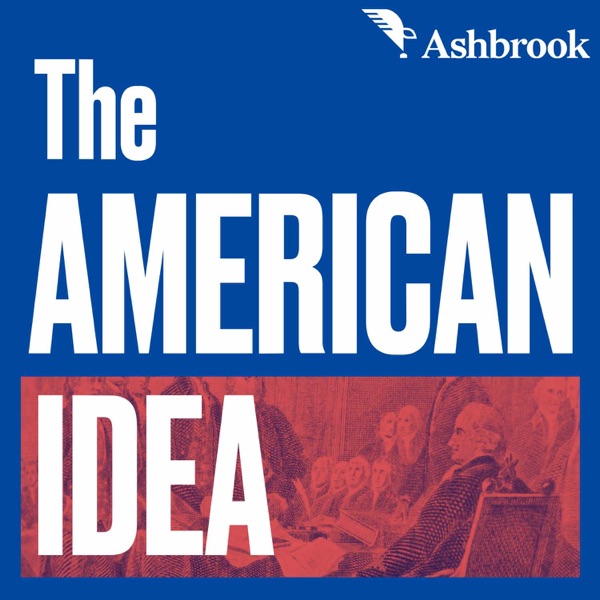
The American Idea
The American Idea explores America's history and principles and what they mean today. The podcast is a production of the Ashbrook Center and hosted by Dr. Jeff Sikkenga.
- Episodes
- 249
- Releases
- Weekly
- Typical length
- 41 min
- On air since
- 2021
- Latest episode
- 6 days ago
Episodes
249 episodes, newest first
-
40 min
Whom Can the President Fire? The Controversy Over the Removal Authority Bonus
Season 7
Show notes
It might seem like a topic deep in the constitutional or legal weeds, but the president’s authority to fire federal officials has been controversial since the first Washington administration, and still matters today. Given the vast expansion of the scope and power of the Executive branch, a president’s power to fire officials in various agencies is a policy and enforcement tool - or a check on presidential power.
Jeff is joined by Professor of Political Science Joseph Griffith to discuss the background and constitutional and legal dimensions of this important issue that often goes overlooked.
Host: Jeff Sikkenga
Executive Producer: Jeremy Gypton
Subscribe: https://linktr.ee/theamericanidea
-
42 min
Selective Obedience of the Law - Nullification Then, Sanctuary Cities Today
Season 7, Episode 10
Show notes
Do states have a constitutional right to nullify or ignore federal laws? Many in the South in the early 19th Century thought so, and argued against national tariffs on those grounds, even provoking a crisis between President Andrew Jackson and South Carolina. But the problem didn’t go away in the 1830s, rearing its head again during the Secession Crisis and in the last few years as states and cities resist federal laws and activities.
Professor Dan Monroe explains the Nullification Crisis in plain language, making sense of the complex politics, culture, and economics behind that moment in history, while drawing clear parallels with today’s battles between Washington and certain states.
Host: Jeff Sikkenga
Executive Producer: Jeremy Gypton
Subscribe: https://linktr.ee/theamericanidea
Homepage: https://ashbrook.org/the-american-idea-podcast/
Thank you for being part of The American Idea community.
-
35 min
Money and Politics: The National Bank, the Federal Reserve, and America’s Finances
Season 7, Episode 9
Show notes
We hear a lot about “The Fed,” interest rates, and America’s staggering national debt. But what do they each mean, how are they related, and how do they impact each of us today and in the future?
Jeff discusses these seemingly complicated issues in clear terms with John Popeo of the Gallatin Group, unpacking how America created a national bank, how federal borrowing works, and the connection between taxing, spending, and borrowing shape our country’s economy and our individual possibilities and plans.
Host: Jeff Sikkenga
Executive Producer: Jeremy Gypton
Subscribe: https://linktr.ee/theamericanidea
Homepage: https://ashbrook.org/the-american-idea-podcast/
Thank you for being part of The American Idea community.
Follow on Twitter https://x.com/amideapodcast
Follow on Facebook https://www.facebook.com/ashbrookcenter/
-
32 min
Rage and the Republic: The Unfinished Story of the American Revolution Bonus
Season 7, Episode 8
Show notes
Jeff is joined by Jonathan Turley - Georgetown University law professor, author, and constitutional law expert - to discuss the revolutionary roots of America, and how a few key distinctions between our revolution and that of France kept America from devouring itself, as so many revolutions do.
Get Jonathan Turley’s new book, Rage and the Republic, on Amazon: https://a.co/d/03CmA2CU
Host: Jeff Sikkenga
Executive Producer: Jeremy Gypton
Subscribe: https://linktr.ee/theamericanidea
Homepage: https://ashbrook.org/the-american-idea-podcast/
Thank you for being part of The American Idea community.
Follow on Twitter https://x.com/amideapodcast
Follow on Facebook https://www.facebook.com/ashbrookcenter/
-
45 min
Was the Supreme Court Supposed to Have This Much Power?
Season 7, Episode 7
Show notes
Typical civics and American Government courses teach that the Supreme Court has the final say in interpreting the Constitution - that is, determining its meaning and limits. Judicial Review, and other accepted powers of the court, are also taught as if the Founders built them that way.
But what if that’s not the case? What if the court’s powers and norms are the current state of a centuries-long evolution, one that isn’t necessarily, or supposed to ever be, complete?
Constitutional scholar Matthew Franck joins Jeff to discuss the evolution of the court’s powers, particularly that of judicial review, and how the view that they are a settled issue may not serve our republic well.
Read Federalist 78, mentioned in the episode: https://teachingamericanhistory.org/document/federalist-78/
Read Federalist 81: https://teachingamericanhistory.org/document/federalist-no-81/
Find Matt’s articles at the Public Discourse: https://www.thepublicdiscourse.com/
Host: Jeff Sikkenga
Executive Producer: Jeremy Gypton
Subscribe: https://linktr.ee/theamericanidea
Homepage: https://ashbrook.org/the-american-idea-podcast/
Thank you for being part of The American Idea community.
Follow on Twitter https://x.com/amideapodcast
Follow on Facebook https://www.facebook.com/ashbrookcenter/
-
40 min
The Last Adieu: Lafayette and Early America
Season 7, Episode 6
Show notes
The Marquis de Lafayette came to America at age 19, on his own dime, to earn glory on the battlefield. He quickly became one of the Revolution’s greatest believers, and spent the rest of his life admiring the spirit and goals of the American Revolution and the republic it birthed.
Author Ryan Cole joins us this week to discuss his book, The Last Adieu, which chronicles Lafayette’s tour of America 40 years after the Revolution. Visiting every state, and meeting with surviving veterans and leaders, along with the next generation of prominent Americans, his experience gave him a unique perspective on the country he helped create.
Read Ryan’s book: https://a.co/d/0fTFmzET
Host: Jeff Sikkenga
Executive Producer: Jeremy Gypton
Subscribe: https://linktr.ee/theamericanidea
Homepage: https://ashbrook.org/the-american-idea-podcast/
Thank you for being part of The American Idea community.
Follow on Twitter https://x.com/amideapodcast
Follow on Facebook https://www.facebook.com/ashbrookcenter/
-
48 min
Completing the Founding: The Northwest Ordinance of 1787
Season 7, Episode 5
Show notes
Written while the Constitutional Convention was taking place in 1787, the Northwest Ordinance was adopted fully by the new government, despite being a production of the Articles of Confederation. It also laid the foundation for many of the Founders’ priorities and aspirations in terms of governance, land usage, economics, and slavery. How would the new, expanding America look, and what would it be like? The Northwest Ordinance is an essential enabler for the America that came on the heals of the Revolution.
Jeff is joined by historian Peter Onuf to discuss this essential, yet largely overlooked, document.
Read the document: https://teachingamericanhistory.org/document/the-northwest-ordinance/
Host: Jeff Sikkenga
Executive Producer: Jeremy Gypton
Subscribe: https://linktr.ee/theamericanidea
Homepage: https://ashbrook.org/the-american-idea-podcast/
Thank you for being part of The American Idea community.
Follow on Twitter https://x.com/amideapodcast
Follow on Facebook https://www.facebook.com/ashbrookcenter/
-
36 min
Fact or Fiction? Historians Discuss Young Washington Bonus
Season 7
Show notes
Young Washington purports to tell the story of George Washington’s early life, and the choices, situations, and actions that defined him as a young man, and in the eyes of his countrymen. But how accurate is it, and considering how many people seem to get their history from films, what should we know about this movie when thinking about the story it tells?
Presidential historian Stephen Knott worked as an advisor for the movie, and sits down with Dr. Cara Rogers Stevens to discuss what’s fact, where the film took creative license, and how challenging it is to make a good historical film.
Read David Hackett Fischer’s book, as suggested by Steve: https://a.co/d/05GDbgbO
Host: Jeff Sikkenga
Executive Producer: Jeremy Gypton
Subscribe: https://linktr.ee/theamericanidea
Homepage: https://ashbrook.org/the-american-idea-podcast/
Thank you for being part of The American Idea community.
Follow on Twitter https://x.com/amideapodcast
Follow on Facebook https://www.facebook.com/ashbrookcenter/
-
36 min
America's First Citizen: Character Lessons from George Washington
Season 7, Episode 4
Show notes
First in war, first in peace, and traditionally first in the hearts of Americans - what can we learn from Washington, the man? What made him the person around whom history seemed to turn, and why is his character worth studying and, in many ways, emulating? Professor Stephen Knott, noted presidential historian, discusses Washington, the man, and three key moments in his life when his decisions and integrity shifted the arc of history.
Read David Hackett Fischer’s book, recommended by Steve: https://a.co/d/05GDbgbO
Host: Jeff Sikkenga
Executive Producer: Jeremy Gypton
Subscribe: https://linktr.ee/theamericanidea
Homepage: https://ashbrook.org/the-american-idea-podcast/
Thank you for being part of The American Idea community.
Follow on Twitter https://x.com/amideapodcast
Follow on Facebook https://www.facebook.com/ashbrookcenter/
-
40 min
Why Did the Founders Create a Republic?
Season 7, Episode 3
Show notes
America is often called a democracy, sometimes a democratic republic, and probably less-often a republic. But to be precise, the American system of constitutional government, first in the original 13 states, then in the general government, and since 1787, consists of a series of republics. Each state is a republic, and the national (or general, or federal) government is, as well.
But what exactly is a republic, and does it matter? What is republican (little R) government, and what did the Founders see in it that was superior to a democracy? What qualities did they see in their fellow Americans, and hope to see in their progeny - us?
Professor of Political Science Jim Stoner, of Louisiana State University, discusses the difference between a republic and a democracy, and how the Founders understood republicanism as both a system and a set of civic values.
Host: Jeff Sikkenga
Executive Producer: Jeremy Gypton
Subscribe: https://linktr.ee/theamericanidea
Homepage: https://ashbrook.org/the-american-idea-podcast/
Thank you for being part of The American Idea community.
Follow on Twitter https://x.com/amideapodcast
Follow on Facebook https://www.facebook.com/ashbrookcenter/
-
42 min
A Sober View of Human Nature: Federalist 10 and Factions
Season 7, Episode 2
Show notes
In Federalist 10, James Madison identified what he saw as one of the greatest dangers to popular government: factions. How did he define and understand them? Does his definition and his argument still stand up today? How can, by understanding the view on this issue at the Founding, better understand our current politics?
Read Federalist 10: https://teachingamericanhistory.org/document/federalist-no-10-3/
Read Madison’s “Consolidation”: https://teachingamericanhistory.org/document/consolidation/
Read Madison’s “A Candid State of Parties”: https://teachingamericanhistory.org/document/a-candid-state-of-parties-2/
Read Joe’s article on political parties: https://www.heritage.org/political-process/report/the-rise-and-fall-political-parties-america
Find American Covenant on Amazon: https://a.co/d/00voBuXV
Host: Jeff Sikkenga
Executive Producer: Jeremy Gypton
Subscribe: https://linktr.ee/theamericanidea
Homepage: https://ashbrook.org/the-american-idea-podcast/
Thank you for being part of The American Idea community.
Click to learn about how we're planning for America's 250th birthday! https://www.ashbrookfreedom250.org/
Follow on Twitter https://x.com/amideapodcast
Follow on Facebook https://www.facebook.com/ashbrookcenter/
-
41 min
More than a Document: Living the Declaration of Independence
Season 7, Episode 1
Show notes
The ideals, values, and aspirations in the Declaration of Independence aren’t just the words of an old document - they’re a statement of political and public faith in how we should see one another and how we should conduct ourselves as a political body.
In preparation for America’s 250th birthday, don’t just focus on the years and accomplishments - get in touch with the ideas that underpin them, and consider how you can live out the Declaration of Independence, and encourage others, as well, so that we can bequeath another 250 years of freedom to the generations that follow us.
Read the Declaration of Independence: https://teachingamericanhistory.org/document/declaration-of-independence/
Read Calvin Coolidge's speech about the DI: https://teachingamericanhistory.org/document/speech-on-the-occasion-of-the-one-hundred-and-fiftieth-anniversary-of-the-declaration-of-independence/
Host: Jeff Sikkenga
Executive Producer: Jeremy Gypton
Subscribe: https://linktr.ee/theamericanidea
-
45 min
Our Right to Privacy and the 4th Amendment
Season 6, Episode 25
Show notes
Our 4th Amendment rights to privacy, in various forms, has its origins before the Declaration of Independence, and is at the foundation of Americans’ understanding of natural rights. In this episode, Dr. Cara Rogers-Stevens discusses the importance and evolution of our privacy rights, and how they set us apart from so many other peoples in the world.
Host: Jeff Sikkenga
Executive Producer: Jeremy Gypton
Subscribe: https://linktr.ee/theamericanidea
-
50 min
Adam Smith's Wealth of Nations at 250 Years
Season 6, Episode 24
Show notes
Adam Smith’s “Wealth of Nations” was published in 1776, shortly before America’s Declaration of Independence. Smith famously described an “invisible hand” at work behind markets and exchanges, but what did he really mean, and how have so many people misunderstood his many ideas about trade, markets, and free enterprise?
Professor Brianne Wolf discusses Smith in surprising terms: he was first concerned with human morality and behavior, in the connections and community that individuals built with one another. Trade and economics were downstream of those fundamentals. Beyond that, Smith’s explanation of the advantages of markets over central planning or forced commerce are not well-known today - despite their relevance in the face of arguments in favor of government control of economic behavior.
Would you like to give us some feedback about this episode? Go to this short survey: https://tinyurl.com/ym6zktkk
Read Bri's article on Smith: https://tinyurl.com/5yuwsc9b
Host: Jeff Sikkenga
Executive Producer: Jeremy Gypton
Subscribe: https://linktr.ee/theamericanidea
-
38 min
Returning to First Principles: America's Machiavellian Moment?
Season 6, Episode 23
Show notes
Niccolo Machiavelli, is usually cast as something of a villain for supposedly promoting cut-throat politics. Regarded as the father of modern political theory and science, however, among his many ideas was that when regimes - governments - slip into a state of decline, a return to first principles was necessary to save them. Turning back to the ideas that were most pure at a founding was, he believed, essential to revive a country that had lost its way.
Is America at such a point today? Political theorist, commentator, and author Jay Cost believes we are, and discusses what a “Machiavellian Moment” is, and why America, especially as we approach our 250th birthday, is in need of one.
Read his article: https://tinyurl.com/3ytfx3fb
Host: Jeff Sikkenga
Executive Producer: Jeremy Gypton
Subscribe: https://linktr.ee/theamericanidea
-
42 min
Religious Liberty at the Founding and Today
Season 6, Episode 22
Show notes
Religious liberty is at the foundation of the American Idea - but how was it understood and protected at America’s Founding, and how what does this fundamental right look like today? Jeff and Dr. Vincent Phillip Munoz, of Notre Dame University, discuss the earliest state of religious freedom, and how it has evolved today.
Read the Virginia Declaration of Rights: https://teachingamericanhistory.org/document/virginia-declaration-of-rights-2/
Read the Virginia Statue for Religious Freedom: https://teachingamericanhistory.org/document/virginia-statute-for-religious-liberty/
Read Washington’s Letter to the Hebrew Congregation: https://teachingamericanhistory.org/document/letter-to-the-hebrew-congregation-at-newport/
Read JFK’s Speech to the Houston Ministerial Association: https://www.jfklibrary.org/learn/about-jfk/historic-speeches/address-to-the-greater-houston-ministerial-association
Host: Jeff Sikkenga
Executive Producer: Jeremy Gypton
Subscribe: https://linktr.ee/theamericanidea
-
40 min
The Voting Rights Act and the Callais Supreme Court Decision - Context and Analysis
Season 6, Episode 21
Show notes
The United States Supreme Court handed down its decision on Louisiana v. Callais in early May, and it’s impossible to understand this 6-3 ruling without having some background knowledge of the Voting Rights Act of 1965 and how courts between then and now have interpreted it. Don’t get lost in the political rhetoric surrounding this case; learn the background for yourself and make up your own mind.
Host: Jeff Sikkenga
Executive Producer: Jeremy Gypton
Subscribe: https://linktr.ee/theamericanidea
-
48 min
School Choice: The Past, Present, and Future of a Movement
Season 6, Episode 20
Show notes
School choice has moved to the forefront of national conversations and debates most notably since COVID; however the ‘educational choice’ movement is not new in America at all.
Jeff is joined by Shaka Mitchell, Senior Fellow at the American Federation for Children, to trace the history of school choice and schooling in America, drawing clear policy, political, and cultural connections between what was, what has been, and what is ‘normal’ now, and how that’s changing.
You can follow Shaka on his Substack: https://shakamitchell.substack.com/
Host: Jeff Sikkenga
Executive Producer: Jeremy Gypton
Subscribe: https://linktr.ee/theamericanidea
-
37 min
"Mischievous Cousins' - A British Perspective on the American Revolution
Season 6, Episode 19
Show notes
What’s taught in British schools about the American Revolution? How are Americans’ motivations during the Founding understood by our ‘cousins’ on the other side of the Atlantic? Jeff discusses the fascinating history of British history and perspectives on America with Liam Heffernan, host of America: The Story of the USA, a British podcast that seeks to explain American to the British.
You can find Liam's pod at https://tinyurl.com/puysecxp
Host: Jeff Sikkenga
Executive Producer: Jeremy Gypton
Subscribe: https://linktr.ee/theamericanidea
-
52 min
From 1776 to Civil Rights: How the Declaration Shaped the Struggle for Equality
Season 6, Episode 18
Show notes
The Abolition and Civil Rights movements are often presented as solutions to the failures of the American Founding, or replacements for its ideas. The relationship between the core ideas of America, as asserted in the Declaration of Independence and those of these two movements is complicated and has evolved over time. As we approach our 250th birthday, let’s take a look at how the Declaration is, in fact, the moral and intellectual foundation of both abolition and civil rights.
Jeff is joined by Dr. Peter Myers, Professor of Political Science and expert in the politics of abolition and civil rights.
Read Peter's book on Douglass: https://a.co/d/0b1TiSI3
Host: Jeff Sikkenga
Executive Producer: Jeremy Gypton
On Apple Podcasts: https://tr.ee/aTARALr9Gx
On Spotify: https://tr.ee/09Ca21CCp-
On iHeartRadio: https://www.iheart.com/podcast/269-the-american-idea-119582945/
On these lists
The American Idea is one of the shows picked out on this list

More in Education
Placed highest on Apple Podcasts' Education chart right now