Podcast
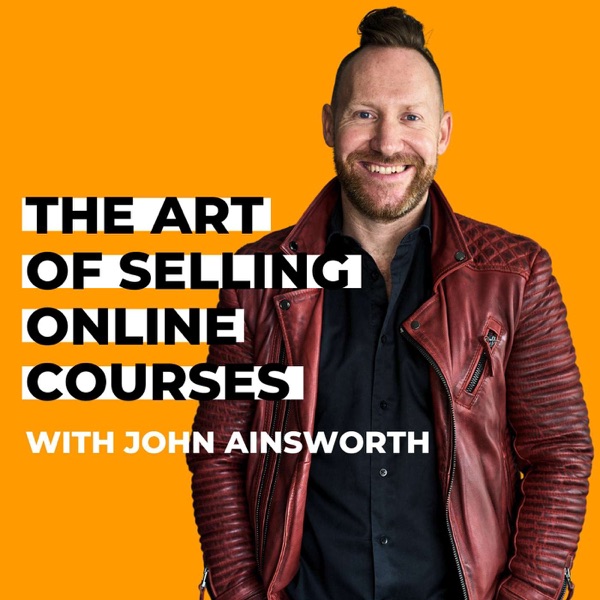
The Art of Selling Online Courses
The Art of Selling Online Courses is all about online courses.
The goal of this podcast is to share winning strategies and secret hacks from top performers in the online course industry. We are interviewing successful business owners, asking them questions on how they got to the point where they are right now, and checking how their ideas can help you improve your online course!
- Episodes
- 319
- Releases
- Daily
- Typical length
- 35 min
- On air since
- 2021
- Latest episode
- 11 hours ago
Episodes
319 episodes, newest first
-
39 min
318 Why Your Course Isn't Selling (It’s Not The Curriculum)
Season 1, Episode 318
Show notes
Want to 2-10x your email list size quickly? Download our FREE Lead Magnet Guide and increase your email list size by 2-10x, simply by following our proven step-by-step guide 👉🏼 https://datadrivenmarketing.co/lead-magnet
Anzhelika Tauba used to research cancer immunology. While she was still working in the lab, she grew her dog's Instagram to 45,000 followers, by accident. That led her to quit science, work at two startups, and eventually build a personal branding agency that works with founders, keynote speakers, and retiring Olympic athletes.
Dominik sat down with Anzhelika to dig into why a better course does not automatically mean more sales. Her answer is blunt: people are not buying your curriculum, they are buying you. She had a client sign up for her program without even asking what was in it. "You're offering something, I'm there," is what they said.
She walks through her three-part framework, positioning, proof, and origin story, and explains why imposter syndrome is the single biggest thing that keeps experts invisible. She also makes a strong case against content pillars, arguing they fragment your expertise and make it nearly impossible to stay consistent. Her alternative is what she calls the solar system model, one topic at the center, every piece of content just a different angle on the same thing.
She went from 2,000 to 5,000 LinkedIn followers in a few months using that approach, posting once or twice a day, no ads, no gimmicks.
There is a lot in this one that will make course creators rethink how they are showing up online. I think you'll enjoy it.
Check out Anzhelika's work:
🌐 https://www.linkedin.com/in/anzhelika-tauber/
📸 https://www.instagram.com/anzhelika.tauber/ -
48 min
317 No One Wants to Be Sold to, but Everyone Wants to Buy
Season 1, Episode 317
Show notes
Want to 2-10x your email list size quickly? Download our FREE Double Your Email List Guide 👉🏼 https://datadrivenmarketing.co/guide
Taylor Boone spent 25 years as a commercial photographer and director working with seven and eight figure brands and big ad agencies. She had a full career. And then she walked away from it to teach the one thing she kept watching every client skip.
Dominik sat down with Taylor to talk about brand messaging, not logos or color palettes, but the layer underneath where people decide in the first seven seconds whether something is for them. Taylor calls it the "who, what, and why," and the conversation gets specific fast. She walks through what happened when a client finally nailed their ideal customer, why AI is making distinct brand thinking more valuable rather than less, and how she uses her "triple seven" framework to think about buyer attention and follow-up timing.
A few things Taylor said that stuck with me: that most businesses don't have a niche problem, they have a point of view problem. That AI content is making people scroll faster, not slower, because everything is starting to look and sound the same. And that going back to the people who already bought from you is often the most overlooked growth move a creator can make.
She also talked honestly about her own visibility struggle, spending 25 years behind the camera and then suddenly having to be the face of the brand. That part of the conversation is worth staying for.
If you work with online courses or any kind of digital product and you've ever felt like your message isn't quite landing, I think you'll get a lot out of this one.
Check out Taylor's work:
🌐 https://www.taylorboone.com/
📸 https://www.instagram.com/1taylorboone/
▶️ https://www.youtube.com/@1TaylorBoone -
46 min
316 One $8K Student Beats a Lot of Little Courses
Season 1, Episode 316
Show notes
Get your tripwire product ideas here: 👉🏼 https://datadrivenmarketing.co/tripwire
Michael Gaeta got an email from Teachable in December 2022 congratulating him for being in the top 0.1% of course creators on their platform, having sold over a million dollars in courses. Two months later, they told him his school was being shut down in 48 hours.
Dominik sat down with Michael, a natural health practitioner and educator based in Boulder, Colorado, who has been treating patients for 36 years and teaching other practitioners for 33. He runs a clinic and an online school with more than 70 courses, and his flagship functional medicine certification program has been running since 2012 at around $8,000 a year.
What struck me most about this conversation was how honest Michael was about where he's been getting it wrong. He's been launching a new course nearly every month this year, and when Dominik pushed back on that, Michael said, right there in the conversation, that he's changing course for next year. Fewer launches, more focus on the flagship. It's not often you hear someone recalibrate their strategy in real time.
He also talks about why reputation has driven more of his growth than any marketing tactic, how he structures affiliate deals with co-teachers, and what it actually cost him when Teachable pulled the plug on his entire school. That last story alone is worth the listen if you host your courses on any major platform.
I think you'll find a lot in this one worth sitting with.
Check out Michael's work:
🌐 https://michaelgaeta.com/
📸https://x.com/gaetainstitute
📸 https://www.facebook.com/gaetainstitute
📫 https://t.me/gaetainstitute
📸 https://www.instagram.com/gaetainstitute/
▶️ https://vimeo.com/thegaetainstitute
▶️ https://www.youtube.com/GaetaCommunications
▶️ https://www.youtube.com/@gaetainstitute
🌐 https://rumble.com/user/GaetaInstitute
🌐 https://mewe.com/i/michaelgaeta
🌐 https://substack.com/@gaetainstitute -
21 min
315 Stop Waiting to Launch: How I Got 3,000 Students Before I Felt Ready
Season 1, Episode 315
Show notes
Grow your course revenue up to 30% in 7 days - no paid ads, no sales calls 📈https://datadrivenmarketing.co/roadmap
Bibby Gignilliat stopped painting at 12 after a critical art teacher left a mark that took decades to fade. She went on to build Parties That Cook, a mobile cooking events company that ran across four cities and grossed over a million dollars a year. Then someone called it a lifestyle business, and she realized she had no lifestyle left.
So she signed up for a painting class. She was, by her own admission, the worst one in the room. That was her starting point.
This episode with Dominik covers the whole journey: how Bibby went from a hundred square feet of studio space to a fifteen-hundred square foot Sausalito studio, how COVID pushed her online in 2020 with around 150 sign-ups on day one, and how she now has 3,000 people through her online programs. We talked about why she gives away around 80% of her content for free on Instagram, how she structures her self-paced courses to generate passive income, and what she'd tell any skilled person who has never taught online before.
The piece that stuck with me most was her answer on what to do when you feel stuck as a course creator. She said the more you change yourself, the more your class will change. Simple, but it lands differently when you hear the context behind it.
I think you'll enjoy this one.
Check out Bibby's work:
🌐 https://bibbyart.com/
📸 https://www.instagram.com/bibbygart/
📸 https://www.pinterest.com/bibbygart/ -
41 min
314 70K YouTube Views a Month, No New Videos in 2 Years
Season 1, Episode 314
Show notes
Looking for predictable revenue growth? Access our FREE 7-day roadmap to increase your income without paid ads or sales calls! 👉🏼 https://datadrivenmarketing.co/roadmap
Louise De Masi is one of the most-followed watercolour teachers online. Nearly 3,000 Patreon students, 184,000 YouTube subscribers, 70,000 monthly views, and a blog pulling close to 300,000 visits a year. And she hasn't uploaded a full YouTube video in almost two years.
I sat down with Louise and her business partner Dom to talk about how they built all of that, and what they're doing next.
Louise started on Skillshare after a cold email, having spent years as a primary school teacher and full-time artist. She never set out to build a course business. She just started sharing how she paints, and people kept showing up. Dom came on board to handle everything behind the scenes, from SEO to funnels, so Louise could focus entirely on teaching.
What struck me most was how deliberately they've avoided being aggressive about sales. Their newsletters are almost entirely informational. The promotional links are, as Dom put it, "very, very hidden." And yet the business keeps growing. We talked about what that's left on the table, and I walked them through how a different approach to email could work without compromising what makes their audience trust them.
We also got into their long-term vision, a searchable database of Louise's 300-plus classes, guest teachers, and eventually a business the next generation can take over.
I think you'll enjoy this one.
Check out Louise's work:
🌐 https://www.louisedemasi.com/
📸 https://www.instagram.com/louisedemasi/
▶️ https://www.youtube.com/@LouiseDeMasi -
26 min
313 You Can’t Give Away What You Don’t Own
Season 1, Episode 313
Show notes
Struggling with low conversions? Grab our FREE checklist of 15 must-have elements to optimize your sales pages! 👉🏼https://datadrivenmarketing.co/elements
Jeremy Siskind has won international jazz piano competitions, played on Arturo Sandoval's record, and written more than 20 instructional books. He also has 34,000 YouTube subscribers, around 5,000 people on his email list, and personally writes to every single customer who buys a book from his website.
Dominik sat down with Jeremy to find out how someone builds a real course business without a viral moment, without a big launch, and without ever feeling like they're chasing attention.
What came out of that conversation surprised me. Jeremy makes a strong case that you cannot teach well online until you have taught in person first, because the room reveals things a screen never will. He talked about posture, rhythm, the questions students ask when they feel safe enough to admit confusion. None of that shows up in your analytics.
He also talked about his "sloppy first draft" approach to creating, why he thinks beginners are the most underserved and most important audience in almost any field, and how he treats the third-party platforms he teaches on as breadcrumbs that lead people back to him.
And the thing about emailing every buyer personally? He explains exactly what that looks like and why some of those people end up staying connected to him for years.
If you've been wondering whether you need to be louder or more strategic online to grow, Jeremy's answer is worth hearing.
Hope you enjoy this one as much as Dominik did.
Check out Jeremy's work:
🌐 http://www.jeremysiskind.com
-
31 min
312 More Courses Won’t Grow Your Course Business
Season 1, Episode 312
Show notes
Janette Karaca has two million followers and built one of the biggest English learning brands online. She also came to believe that creating more courses was making things worse, not better, for her students.
Dominik sat down with Janette to dig into how she got there. She started from a pretty unlikely place — she used to hate English. She failed an audition for a publishing company's YouTube channel, went home frustrated, and her husband suggested she just start her own channel instead. That became English Era.
What's interesting about Janette's story isn't the audience size. It's what she noticed after building it. Year after year, the same comments kept appearing: "I know English but I can't speak it." "I freeze." "I'm scared people will judge me." And she realised she kept responding by making more courses, which gave people more content to consume passively, which was exactly the problem she was trying to solve.
So she stopped. She pivoted away from launches, narrowed her audience to a very specific type of learner, and started building toward something that actually made people use the English they already had.
She's honest about what she wishes she'd understood sooner, and her thinking on the difference between followers and buyers is worth sitting with if you have a large audience that isn't converting the way you expected.
I think you'll find this one genuinely useful.
Check out Janette's work:
Instagram: https://www.instagram.com/the_englishera
Facebook: https://www.facebook.com/englisherafb/
YouTube: https://www.youtube.com/c/ENGLISHERA
-
27 min
311 She Teaches One Thing. That’s the Whole Business.
Season 1, Episode 311
Show notes
Struggling with low conversions? Grab our FREE checklist of 15 must-have elements to optimize your sales pages! 👉🏼 https://datadrivenmarketing.co/elements
Anna Brick built her entire course business around one thing. Not a broad niche, not a category. One technique: flowers made out of wafer paper. And she did it on purpose.
Dominik sat down with Anna to talk about how that decision came about, what it took to actually turn it into a business, and why the last two years nearly sent her in the wrong direction entirely. Anna has over 100,000 followers, more than 6,500 students around the world, and has never paid for an ad. But the part of this conversation that will probably stick with you has nothing to do with those numbers.
Anna is one of the most clear-eyed people we've had on the show when it comes to the difference between building an audience and building a business. She talks about why she now sells in every single email she sends, three times a week, and why she thinks using the word "free" in your marketing trains people never to pay you. She also gets into her $9 thank you page offer, how she thinks about the first sale, and what happened when she spent two years trying to teach business strategy instead of wafer paper. Spoiler: her audience didn't want it, and going back felt like a relief.
If you've been wondering whether you're spending too much time making your course better and not enough time selling it, Anna has a lot to say about that.
Hope you enjoy this one as much as Dominik did.
Check out Anna's work:
🌐 https://floreacakes.com/
📸 https://www.instagram.com/floreacakes/?hl=en
▶️ https://www.youtube.com/@floreacakes -
28 min
310 51% Growth in a Year Without Going Viral
Season 1, Episode 310
Show notes
Grow your course revenue up to 30% in 7 days - no paid ads, no sales calls 📈https://datadrivenmarketing.co/roadmap
PJ Wren celebrated her 50th birthday teaching a fitness class. Seven days later, she shut her studio down for good and never went back.
That moment, March 2020, is where Over 50 Fitness really started. PJ had 32 years in the industry behind her, from rec center classes and home visits to cardiac rehab at St. Paul's Hospital to owning her own studio. But a lease technicality and a pandemic gave her an exit she didn't plan for, and she took it.
Dominik sat down with PJ to talk through what she built from there: a subscription app for women over 50 who want to get strong, not just move more. They got into a lot of specifics, the 14-day onboarding sequence, why she removed 17,000 people from her email list and felt good about it, how she words a discount offer so it outperforms a straight percentage off, and why she limits promo codes to twice a year on purpose.
What stuck with me most was her take on going viral. She's not against it exactly, but she's seen friends blow up and then watch it fall apart because the systems weren't there. Her line was simple: "Random workouts give you random results." She applies the same logic to growth.
If you're building something in a specific niche and wondering how to hold members long-term, there's a lot here worth your time. I think you'll enjoy this one.
Check out PJ's work:
🌐 www.overfiftness.co
📸 https://www.instagram.com/overfiftyfitness.co/
▶️ https://www.facebook.com/overfiftyfitness.co
🌐 www.fitnesswithpj.com
▶️ https://www.youtube.com/fitnesswithpj
📸 https://www.instagram.com/fitnesswithpj/
📸 https://www.facebook.com/fitnesswithpj -
44 min
309 7,000 Kids Taught to Code: How to Prepare Your Child for the AI Future
Season 1, Episode 309
Show notes
Get your tripwire product ideas here: 👉🏼 https://datadrivenmarketing.co/tripwire
Ali Nemati tried to get his nine-year-old nephew to give up. He handed him material he thought was far too complex, fully expecting the boy to get frustrated and walk away. Instead, the nephew nailed it. So did his eight-year-old sister. That moment quietly ended Ali's plan to build a training business for adults and started something he never intended: Software Academy, now one of the UK's most unusual academies for children.
Dominik sat down with Ali to talk through the whole story. How a university lecturer ended up teaching kids game design, animation, and coding using the same professional tools used in actual studios. Why a parent asking for a simple letter pushed Ali to pursue formal accreditation through the UK's oldest awarding body, making Software Academy the only one of its kind in the country. And what it actually means for a student when a qualification is something a college will accept, not just a certificate you printed yourself.
They also got into the business side: why Ali targets parents rather than children, why he thinks free PDFs have lost their power as lead magnets, how he structures his product ladder, and what he believes most course creators get badly wrong when they upsell. His take on hidden upsell tactics and what honest retention actually looks like is worth the listen on its own.
If you sell courses and you've been thinking about what makes your offer genuinely different, I think this one will give you a lot to chew on.
Check out Ali's work:
🌐 https://www.softwareacademy.co.uk/
📸 https://www.instagram.com/alicodemakers/
▶️ https://www.youtube.com/@SoftwareAcademy -
39 min
308 Mailing Twice a Month Is Hurting Your List
Season 1, Episode 308
Show notes
Want to 2-10x your email list size quickly? Download our FREE Lead Magnet Guide and increase your email list size by 2-10x, simply by following our proven step-by-step guide 👉🏼 https://datadrivenmarketing.co/lead-magnet
Ben Settle has been selling online since 2002. He runs a physical print newsletter called Email Players, prices some of his books above a thousand dollars, and has a sales page that actively tries to talk you out of buying. Dominik sat down with him to find out why any of that works.
What came out of the conversation surprised me. Ben's whole approach to email is built around one idea: proximity. The more often you show up in someone's inbox, the more they trust you, the more they remember you, and eventually, the more they buy from you. He's been sending daily emails for years and makes no apologies for it. His argument against mailing twice a month is hard to argue with: if people don't remember who you are, they hit spam. And at that point, you've done it to yourself.
He also talks through something most course creators never consider: the difference between a buyer and a customer. A buyer purchases once. A customer makes a habit of buying from you. His whole business is built around creating the second kind, which is partly why his sales page tells unqualified people to leave.
There's also a genuinely interesting section on where he thinks the AI wave is heading, and why he thinks right now is actually the moment to double down on relationships rather than automation.
If you're emailing your list twice a month and wondering why sales feel inconsistent, this one is worth your time.
Check out Ben's work:
🌐 http://www.bensettle.com/ -
31 min
307 A $925 Course Sold in 47 States by Word of Mouth
Season 1, Episode 307
Show notes
Grow your course revenue up to 30% in 7 days - no paid ads, no sales calls 📈https://datadrivenmarketing.co/roadmap
Freddie Fernandez spent 31 years at Miami Fire Rescue, retiring as a deputy fire chief overseeing 14 stations, 150 people per shift, and 250 emergency calls a day. Then he built a course business. No ads. No launches. No algorithm. Just word of mouth, challenge coins in the mail, and a $925 product that has reached 500 agencies across 47 states.
Dominik sat down with Freddie to figure out how that actually works.
What came out of the conversation surprised me. Freddie started teaching at 22 by volunteering to cover a canceled class for 30 veteran firefighters, with less than 24 hours' notice, on a topic he hadn't fully mastered yet. That same instinct, just jump in and figure it out, runs through everything he's built since.
His product ladder is worth paying attention to. He walks people into the right package based on timeline and need, not price. He'll actively steer someone away from his most expensive option if it's not what they need. And he thinks that's exactly why customers keep coming back, and why they send their colleagues.
His take on discovery calls is something I've been thinking about since we recorded this. He spends the first part of every call asking questions, not pitching. He says if you listen first, you can sell later, but only what they actually asked for.
Freddie also talked about refilming his entire course library in 2023, ten years after the originals, because he felt the material was getting stale. That kind of honesty about your own product is rare.
I think you'll enjoy this one.
Check out Freddie's work:
🌐 https://www.fireassessmentcenterprep.com/
📸 https://www.instagram.com/fireassessmentcenterprep
▶️https://www.youtube.com/channel/UCiCoJql6gw_KGQ7ZIS4fHfQ -
35 min
306 Why He Put Live Trainings Ahead of Online Courses
Season 1, Episode 306
Show notes
15 sales page elements you can't afford to miss - free checklist 📝 https://datadrivenmarketing.co/elements
Yogi Aaron built a retreat center in the Costa Rican jungle, wrote a book called Stop Stretching, and developed a method that says conventional yoga is actually hurting people. That contrarian position came from a personal crisis: in his mid-40s, after decades of aggressive stretching, he was told he needed spinal fusion surgery.
John sat down with Aaron to talk about how he turned that moment into a business — Blue Osa Yoga Retreat and Spa, a teacher training program he's scaling toward $500K a year, two books, a podcast, and an audience of over 160,000 on YouTube.
What made this conversation interesting was how candid Aaron was about what isn't working. He openly shared that around 80% of people who book sales calls don't show up. He talked about pulling back from online courses because he believes people want in-person experiences more than ever. And he made a pretty strong case that if you're going to spend money on ads, remarketing is where to put it, because some of his customers follow him for five years before booking.
There's a lot in here about long nurture cycles, hybrid course models, Facebook and Google ad strategy, and what it actually takes to run a location-based business around a contrarian idea. Aaron is thoughtful, funny, and genuinely not trying to be anyone else in his space.
I think you'll enjoy this one.
Check out Aaron's work:
🌐 https://www.yogiaaron.com/ & https://www.theyogi.club/ & https://www.blueosa.com/
📸 https://instagram.com/yogi_aaron
▶️ https://www.youtube.com/@yogiaaron -
29 min
305 4 Months Free Before His First Paid Client
Season 1, Episode 305
Show notes
2-10x your email list size in just 3 steps 📩 https://datadrivenmarketing.co/guide
Finbar Horgan spent nearly seven years playing solo acoustic gigs up to seven nights a week in Edinburgh before he ever tried to sell a coaching program. No studio setup. No microphone. Just his phone, a Zoom account, and a free School community he ran for four months without charging anyone a penny.
Dominik sat down with Finbar to talk through how he built the Pro Gig Academy from scratch, starting with zero audience and an 800-subscriber YouTube channel, and growing it to 5,000 community members and 19,000 people on his email list. They got into the real mechanics of it: how his funnel actually works, why most of his serious buyers never join the free community at all, what finally pushed him to quit gigging full-time and go all in on coaching, and why he set up a separate YouTube channel just for testimonials.
There's a moment in this conversation where Finbar talks about showing up on discovery calls and having people say, "You don't need to pitch me, when can we start?" He explains exactly how he got there, and it has nothing to do with clever sales scripts.
He's also refreshingly honest about what isn't working yet, including how uncomfortable he still finds selling through email and why he spent five months after his March launch not promoting anything at all.
I think you'll like this one.
Check out Finbar's work:
🌐 https://www.skool.com/@finbar-horgan-5856
📸 https://www.instagram.com/finbarhorganmusic/
▶️ https://www.youtube.com/c/FinbarHorgan -
36 min
304 The Fastest Way to Sell Online Is Offline
Season 1, Episode 304
Show notes
Add 30% to your revenue with order bumps in 3 simple steps 🏅 https://datadrivenmarketing.co/order-bumps
Courtney once sold a Christmas tree on Facebook Marketplace. Eight months pregnant, dragging trees out of her photography studio, a stranger asked if she could learn photography. Courtney handed her a discount code, and walked away having sold a course. That story says everything about how she sells.
Dominik sat down with Courtney, a professional family photographer in Australia who runs two businesses side by side: Blury Photography, where she shoots newborns and families, and Mum Nostalgia, where she teaches moms to photograph their own kids. She has a signature course, a brand new mini course, a podcast, three lead magnets, and a welcome email sequence. She is also studying psychology, and has small children at home.
What makes Courtney's approach unusual is that she deliberately uses her in-person photography business to sell her online courses, and it works because the trust is already there. She talked about why that matters, how she structures her two courses at very different price points, and what happened when she first launched and spent money on ads expecting the students to roll in.
She also shared something I thought was refreshing: she genuinely does not believe passive income is passive. Her words on that are worth hearing directly.
I think you'll like this one.
Check out Courtney's work:
Instagram: www.instagram.com/mamastalgia
The Art of Childhood Podcast: https://open.spotify.com/show/2GSRPWsWlBqCxuPKcgwOsd
Snap Mini-Course (learn photography from your phone): www.mamastalgia.co/snap
Don’t Say Cheese (learn photography on your big girl camera): www.mamastalgia.co/dontsaycheeseUse code ONLINE30 for 30% off either course.
-
56 min
303 Selling the Tool Is Easier Than Selling the Course
Season 1, Episode 303
Show notes
15 sales page elements you can't afford to miss - free checklist 📝 https://datadrivenmarketing.co/elements
Julie Posluns started with a dog that lunged at children and bit skateboarders. That sent her back to university to study behavioral ecology. Then a black kitten turned up at her back door, started joining the dog training sessions, and Cat School was born.
John sat down with Julie to trace the whole journey: from her first Instagram post about cat tricks catching fire on The Dodo, to building a YouTube channel with 88,000 subscribers, to creating a membership structured like an actual school with five grades, badges, and graduation.
What makes Julie's story different from most course creators is the physical product sitting at the center of her business. She sells a clicker training kit on Amazon, with a QR code inside that leads to a free course, which feeds into the paid membership. It started because she said yes to a conference booth with nothing to sell, ordered tools to a hotel room in the States, and showed up with brown paper bags. It grew from there.
Julie is genuinely candid in this one. She talks openly about the gap between her free course and her paid membership, why she's invested more in the product than the school lately, and the capacity problem she hasn't fully solved yet. She also goes deep on something most course creators never think about: how the science of animal training and the science of teaching humans are, in her words, exactly the same.
It's a warm, honest conversation and Julie is great. Hope you enjoy it as much as I did.
Check out Julie's work:
🌐 https://www.catschool.co
📸 http://instagram.com/cat.school
▶️ http://youtube.com/catschool -
48 min
302 Course Income Isn't Passive (And That's Fine)
Season 1, Episode 302
Show notes
Struggling with low conversions? Grab our FREE checklist of 15 must-have elements to optimize your sales pages! 👉🏼 https://datadrivenmarketing.co/elements
Jessica Russo Scherr holds a Fulbright Award, teaches Visual Art at one of the best international schools in Frankfurt, and somehow alongside all of that has built a gel plate printmaking course business that took around 2,000 students through her courses after launching in November 2024. She had no idea what gel plate printing was three or four years ago.
I talked with Jessica about how she got there and what the business actually looks like day to day. She runs five course launches a year and near-weekly live webinars where up to a thousand people show up to watch her demonstrate for 45 minutes, before she makes a short pitch and opens the floor for questions. She told me the webinars are some of the steadiest income she has, and that even selling two courses in a session feels like time well spent.
We also got into something she was honest about: she went in thinking this would be passive income. It has not been. It has required real, sustained work. And yet she has no plans to leave her teaching job, partly because she loves it, partly because she has a seven-sink art studio in Frankfurt and that, apparently, is non-negotiable.
Toward the end we worked through her email list growth, where I think there is a significant gap between what she is doing now and what is possible, and brainstormed what a lead magnet could look like for her niche.
I think you'll like this one.
Check out Jessica's work:
🌐 https://www.bluelavaart.com/
📸 https://www.instagram.com/bluelavaart
▶️ TikTok: https://www.tiktok.com/@bluelavaart
▶️ YouTube:https://www.youtube.com/bluelavaart
🌐 Newsletter: https://www.bluelavaartacademy.com/newsletter-form -
38 min
301 You Can Make a Lot of Money by Just Breaking Even
Season 1, Episode 301
Show notes
Add 30% to your revenue with order bumps in 3 simple steps 🏅 https://funnels.datadrivenmarketing.co/order-bump-blueprint
Annelies Espeel spent over 20 years treating patients in Brussels as a Chinese medicine practitioner and acupuncturist. Then she built an online masterclass, started running Meta ads, and found herself breaking even almost immediately. No backend, no upsell, no guarantee on the page. Just a solid product and a funnel that was halfway there.
In this episode, I sat down with Annelies and walked through her entire setup live. We looked at her sales page together, and she is already doing a lot of things right. She leads with the customer's pain, she has testimonials, she has an order bump that is actually converting. But there were some clear gaps, and we got into all of them. Headline placement, button copy written in the first person, adding a transformation section, why bonuses work best when they answer specific objections, and what an upsell could do for her return on ad spend.
What I found refreshing about Annelies is how honest she was about the learning curve. She came from Chinese medicine, not marketing. She said it plainly: "I have content, I just didn't see the wall behind it." That is such a common place to be, and she is already further along than she thinks.
If you are at the stage where your funnel kind of works but you are not sure why it is not scaling, this one is worth your time.
Check out Annelies's work:
🌐 www.sparkleyourvitalenergy.com
🌐
📸 instagram.com/anneliesespeel
▶️ https://kayanova.eu/en/sparkle-your-vital-energy/ -
48 min
300 The Truth About Lifetime Updates (And Why You Should Stop)
Season 1, Episode 300
Show notes
15 sales page elements you can't afford to miss - free checklist 📝 https://datadrivenmarketing.co/elements
Monica Froese built a multi-million dollar Pinterest ads course business, then shut it all down in a single conversation with her husband right after they signed the papers on their new house. That alone would make for a good episode. But Monica's story keeps going.
After pivoting to Empowered Business and launching her Digital Shop Experience to what she describes as her biggest launches ever, her marriage fell apart. She pulled back from the business, turned off her paid ads, and by 2024 her revenue had halved. Then in 2025 it halved again.
I talked with Monica about how she rebuilt from that. Not through a dramatic new launch or a big moment of inspiration, but through AI. Specifically, agentic AI. She talks about how tools like Claude, Fable 5, and MCPs allowed her to take back work she'd previously hired out, update a spreadsheet she'd been selling for ten years but never had time to improve, and relaunch a brand she'd been sitting on since 2013.
We also got into the lifetime updates problem, how she's rethinking course pricing as AI changes so fast, and the question she asks every new creator that stops them cold: what are you growing your audience for?
Monica is honest about the hard parts in a way that most people aren't. I think you'll get a lot out of this one.
Check out Monica's work:
🌐 https://monicafroese.com
🌐 https://www.skool.com/empowered-ai-collective/about
📸 https://instagram.com/monica.froese
▶️ Empowered Business Podcast® https://monicafroese.com/podcast -
30 min
299 Growing an Email List From YouTube Before Black Friday
Season 1, Episode 299
Show notes
2-10x your email list size in just 3 steps 📩 https://datadrivenmarketing.co/guide
Chandeep Chhabra left his job as an investment banking analyst in December 2013 with no backup plan and one idea: that he could sell his spreadsheet skills. Over a decade later, he runs Goodly, a business built around teaching Excel and Power BI to data professionals, with 137,000 YouTube subscribers, over 19 million views, corporate training clients, a consulting agency, and a bestselling book on Power Query.
John sat down with Chandeep for what turned into a live audit of his business. Chandeep has roughly 350,000 YouTube views per month and an email list of about 26,000 people, but only around 500 new subscribers joining each month. John walked through exactly why that gap exists, what his opt-in pages are doing wrong, where the lead magnet link is buried in the video description, and what changes would get that number to 3,000 or 4,000 new subscribers a month.
They also got into Black Friday. Chandeep went from $20,000 to $60,000 in Black Friday revenue after adding webinars and a more structured email sequence. John connected him with his head of funnel strategy to take it further.
And then the conversation drifted somewhere unexpected: writing books. Chandeep is working on his second, and both he and John reflected on why it's so hard, why you should publish anyway, and why Chandeep thinks books are written for craft and authority rather than money.
It's a really honest conversation, and I think you'll enjoy it.
Check out Chandeep's work:
🌐 http://products.goodly.co.in
📸 https://www.linkedin.com/in/chandeepchhabra/
▶️ https://www.youtube.com/@GoodlyChandeep
Entrepreneurship lists
More Entrepreneurship shows picked out from the charts








More in Entrepreneurship
Placed highest on Apple Podcasts' Entrepreneurship chart right now