Podcast
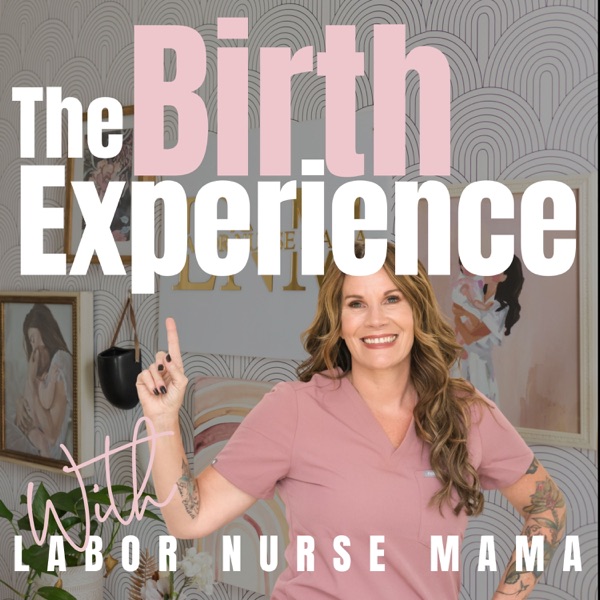
The Birth Experience with Labor Nurse Mama
How do I actually push during labor? Should I get an epidural? Why is breastfeeding so hard? What exactly is Pitocin, and how much will induce labor? Is there a secret to having a successful VBAC? What happens if I poop during labor *shudder*? And oh yeah, how do I take care of a newborn?
I know you’ve got a ton of questions and fears when it comes to giving birth. How? Because I’ve delivered thousands of babies as a labor nurse! I’ve seen it all...and as @labor.nurse.mama on IG, I’ve helped mamas all over the world stand up to their fears and walk into the labor room with confidence.
The Birth Experience with Labor Nurse Mama is here to guide you through every step of your pregnancy, labor, and delivery. I’ll show you how to embrace your inner feminine wisdom and teach you to feel totally comfortable owning the labor room.
Your body was made to deliver this baby, mama...let’s face all those fears and doubts and answer those nagging questions — so you can be ready for the most important day of your life!
- Episodes
- 281
- Releases
- Weekly
- Typical length
- 25 min
- On air since
- 2022
- Latest episode
- 4 days ago
Episodes
281 episodes, newest first
-
41 min
Babywearing Isn’t a Fad: Why Keeping Baby Close Changes Everything | 280
Season 1, Episode 280
Show notes
Thanks to our Sponsor Haakaa
What if the most powerful postpartum tool you own isn’t a gadget at all, but a piece of fabric that keeps your baby close?
This week, Trish sits down with Skye Amundsen and Mallory Bransfield, the best friends and co-founders behind hope&plum. They’re the size-inclusive baby carrier brand that moms across Trish’s community can’t stop talking about, and Trish’s own team happens to be full of fangirls. In 2018, Skye and Mallory were two new moms who were fed up with carriers that didn’t fit every body and brands that turned babywearing into a race to “score the drop.” So they built something better.
Skye shares how a ring sling became her first “faith purchase” during IVF, and how babywearing helped her reclaim her motherhood during her daughter’s two-week NICU stay. Mallory opens up about how it kept her connected to her baby through a hard breastfeeding journey. Trish, a mom of seven who has watched babywearing go in and out of style for nearly three decades, brings the real talk. Moms have been sold a myth, she says, that keeping baby close holds them back. It actually gives them more freedom.
In this episode:
• How a frustrating shopping experience turned into an eight-figure, size-inclusive brand
• Skye’s NICU story and why babywearing felt like a way to take back control
• Babywearing through breastfeeding struggles, triple feeds, and pumping
• The research-backed benefits: co-regulation, less crying, support for nursing, and lower rates of postpartum depression
• Why babywearing is a cultural practice, not a trend, and why education matters as much as the carrier
• Safety, the legal bar that’s “entirely too low,” and brands chasing a money grab
• Staying true to your mission as a founder (and a mom) when things get hard
• Two pieces of advice for expecting mamas: find your community, and trust your intuitionMore from Skye & Mallory:
• Website:https://www.hopeandplum.cohttps://www.hopeandplum.co
• Instagram:https://www.instagram.com/hopeandplum/@hopeandplum
• TikTok:https://www.tiktok.com/@hopeandplum@hopeandplumThanks to our Sponsor Haakaa: Grab the Haakaa Petal Soft Silicone Milk Collector and use code ‘LOVELNM10’ for 10% off!
Helpful Timestamps:
• 00:00 Hope and Plum
• 06:17 Skye’s NICU Babywearing Experience
• 08:27 Mallory’s Breastfeeding Struggles
• 14:45 Benefits of Babywearing
• 30:04 Business And Motherhood Never Pause
• 38:43 Where To Find Hope And PlumJoin The Calm Labor Birth Bundle - everything you need from bump to baby! Use code POD50 for $50 off!
Over 15k mamas have used our classes to prepare for a birth that they love 🤍
⭐ Download immediately ⭐App available ⭐Life-time access⭐
Connect w/ Trish:
For more pregnancy & birth education, subscribe to The Birth Experience on Spotify, Apple Podcasts, or wherever you listen to podcasts.
-
18 min
Labor Nurse Mama’s Adoption Birth Story: Stuck in India | 279
Season 1, Episode 279
Show notes
At 28, with four little boys at home, no money for the trip, and a stomach virus she couldn’t shake, Trish boarded a plane to India alone to bring her daughter home. She didn’t know if she’d leave with her. She definitely didn’t know that September 11th would happen while she was there, and that every flight to America would be grounded.
This episode is deeply personal. Trish’s adoption story went viral as an Instagram carousel, but she’s telling the parts a carousel couldn’t hold. There’s the courtroom, the embassy, the stranding in Mumbai, and the homecoming that still chokes her up. It’s a story about being scared and going anyway, and about the people who show up to carry you when you can’t see the whole path.
In this episode, Trish shares:
• Why she stopped waiting at home for a court date and decided she had to show up in person
• The surprise buddy pass that made the trip possible, first class, y’all
• Meeting her 15-month-old daughter, who screamed and ran the other way, and the lollipop that changed everything
• Getting in trouble in an Indian courtroom for crossing her legs
• A taxi door to the head, a very sick baby, and refusing to leave the American Embassy without her paperwork
• Being stranded in Mumbai on 9/11 with no flights and no phone lines home, and the one person she met that saved them
• Flying home with a plane full of military men passing her baby around, and the 50 people waiting in Chattanooga
• The three lessons from that trip that shaped who she is todayWhat Trish carries with her:
• You can make a meaningful decision without feeling confident about it.
• You can stick with something important when it gets complicated.
• You can take the next step without knowing the whole path, and let people come alongside you to help.If there’s a decision in front of you right now, ask yourself: what’s one thing you can do with what you know today, and who can come alongside you? Then take the scary step.
If this story moved you, share it with a mama who’s facing her own leap of faith.
Helpful Timestamps:
• 00:00 Adoption Leap Begins
• 04:23 First Meeting Sithara
• 05:55 Courtroom Culture Shock
• 09:58 9/11 & Stranded in Mumbai
• 10:52 Help from Shikha
• 14:21 Homecoming
• 15:03 Three Lessons from This TripJoin The Calm Labor Birth Bundle - everything you need from bump to baby! Use code POD50 for $50 off!
Over 15k mamas have used our classes to prepare for a birth that they love 🤍
⭐ Download immediately ⭐App available ⭐Life-time access⭐
Connect w/ Trish:
For more pregnancy & birth education, subscribe to The Birth Experience on Spotify, Apple Podcasts, or wherever you listen to podcasts.
-
30 min
How to Prepare Your Body for Breastfeeding (Before Baby Arrives) | 278
Season 1, Episode 278
Show notes
You spend months preparing for birth, but what about the feeding journey that starts the moment baby arrives? Breastfeeding isn’t just a “from the chest up” experience. It’s a whole-body journey for both mama and baby.
This week, Trish sits down with Melissa Bradley, a pediatric occupational therapist, certified lactation counselor, and mom of four. Together they talk through how to prepare your mind, body, and home for breastfeeding before baby gets here. They cover the emotional prep no one talks about, the “mommy injuries” that come from poor positioning, why the hospital’s Breastfeeding 101 class is only the beginning, and the few supplies Melissa says you truly need.
In this episode:
• Why breastfeeding is a whole-body experience for mom and baby
• How to plan for emotional regulation and support before you come home
• Setting boundaries around visitors without the guilt, and choosing your “village”
• Mommy shoulder, mommy wrist, and mommy thumb: what they are and how to prevent them
• Creating a comfortable, supportive feeding space
• Why the medical system is reactive, and how to have support ready before problems start
• Debunking breastfeeding myths from social media and even providers
• Pumping vs. nursing, wearable pumps, and choosing what works for you
• Melissa’s short list of must-have breastfeeding suppliesConnect with Melissa Bradley, OT, CLC:
Follow her on Instagram @mamababecharlotte
Helpful Timestamps:
• 00:00 Preparing for Breastfeeding
• 04:45 Emotional Prep And Support
• 08:26 Setting Boundaries
• 12:13 Physical Setup And Injuries
• 17:07 Get Proactive Lactation Help
• 21:59 Personalized Goals And Myths
• 26:52 Minimal Must Have SuppliesJoin The Calm Labor Birth Bundle - everything you need from bump to baby! Use code POD50 for $50 off!
Over 15k mamas have used our classes to prepare for a birth that they love 🤍
⭐ Download immediately ⭐App available ⭐Life-time access⭐
Connect w/ Trish:
For more pregnancy & birth education, subscribe to The Birth Experience on Spotify, Apple Podcasts, or wherever you listen to podcasts.
-
17 min
5 Things Every Pregnant Mama Should Know Before Labor and Delivery | 277
Season 1, Episode 277
Show notes
This episode is sponsored by Motif Medical
After 16 years as a high-risk labor and delivery nurse, Trish shares the five truths she wishes every mama heard before she puts on that hospital gown. Spoiler: you don't have to be the "good patient," and you don't have to prove a thing.
In this episode:
• You don't lose your autonomy in a hospital gown. Trish explains why "they won't let you" thinking starts in your head, and how to ask questions calmly without becoming combative.
• You don't need to prove anything in labor. There's no trophy for suffering. Unmedicated, epidural, or somewhere in between, it's your birth, and you're allowed to change your mind.
• Your support person needs to know their assignment. Trish shares what your partner should know before labor starts, from counterpressure to knowing when you want quiet.
• Labor doesn't look the same for everyone. Stalls, starts, long pushes, and short ones are all normal variations. Trish explains the difference between labor taking time and labor becoming unsafe.
• A good birth isn't one where everything went to plan. Trish talks about preparing without trying to control your birth, and why you're allowed to grieve the parts that didn't go how you hoped."Birth preparation is not about controlling your birth. It is about helping you feel prepared enough to navigate birth." - Trish
Send this episode to the person who'll be in the delivery room with you, or to a pregnant bestie. You shouldn't be the only one preparing for this birth.💗
Thanks to our sponsor Motif Medical: Go to https://motifmedical.com/ and use code ‘TRISH15’ for 15% off!
Helpful Timestamps:
• 00:00 5 Things Every Pregnant Mama Should Know
• 02:03 Autonomy
• 04:10 No Need To Prove Anything
• 06:33 Your Support Partner
• 09:47 Every Labor Looks Different
• 12:13 Redefining A Good Birth
• 14:52 The Right Birth PrepJoin The Calm Labor Birth Bundle - everything you need from bump to baby! Use code POD50 for $50 off!
Over 15k mamas have used our classes to prepare for a birth that they love 🤍
⭐ Download immediately ⭐App available ⭐Life-time access⭐
Connect w/ Trish:
For more pregnancy & birth education, subscribe to The Birth Experience on Spotify, Apple Podcasts, or wherever you listen to podcasts.
-
29 min
Vaginal Tearing Doesn't Have to Be Scary: How Your Pelvic Floor Can Help Reduce Tearing | 276
Season 1, Episode 276
Show notes
What if tearing isn't inevitable? There is so much more you can do than "hope for the best," and it starts with a part of your body nobody ever taught you about: your pelvic floor.
My friend Sarah Almodovar is a mom of three, a prenatal yoga teacher, and a pelvic floor expert. She started by teaching yoga on a rooftop in NYC, and now she helps moms all over the world show up to birth prepared, confident, and far less afraid.
We're talking about the thing you've all told me you're most scared of - vaginal tearing - and how to take the fear out of it with practical tips to lessen your chance of tearing.
What We Cover:
• Why vaginal tearing is such a hot topic (and why it's only a tiny part of your birth experience)
• Why the pelvic floor's real job is to release and open, not tense and push
• Sarah's 3 tips for moms worried about tearing
• Why "one, two, three, push" doesn't make sense, and what the research says about spontaneous pushing
• Why your birth team matters for your pelvic floor, too
• Red flags your body may be sending you now, like leaking when you sneeze, painful sex, or tailbone pain
• How learning to relax your pelvic floor can influence labor length, risk of tearing, and even C-section risk
• Why seeing a pelvic floor specialist and a Webster-certified chiropractor during pregnancy is worth itMore from Sarah Almodovar
• Birth-Ready Pelvic Floor Masterclass
• First 6 Weeks - use coupon code ‘TRISH’
• http://www.sarahjoalmo.com
• Follow her on Instagram & YouTube: @sarahjoalmoMentioned in this episode:
Listen to: Vaginal Tearing during Birth: Real & Gritty
Helpful Timestamps:
• 00:00 Is Tearing Inevitable?
• 01:30 Sarah’s No Tear Story
• 03:38 Mindset Over Outcomes
• 08:22 Three Tips To Prevent Tearing
• 15:33 Pelvic Floor Basics Explained
• 17:56 Advocacy And Red Flags
• 23:49 Masterclass And Programs
• 28:00 Where To Find SarahJoin The Calm Labor Birth Bundle - everything you need from bump to baby! Use code POD50 for $50 off!
Over 15k mamas have used our classes to prepare for a birth that they love 🤍
⭐ Download immediately ⭐App available ⭐Life-time access⭐
Connect w/ Trish:
For more pregnancy & birth education, subscribe to The Birth Experience on Spotify, Apple Podcasts, or wherever you listen to podcasts.
-
12 min
Prodromal Labor: It's Labor That Keeps Starting and Stopping, From a Labor Nurse | 275
Season 1, Episode 275
Show notes
This episode is sponsored by Haakaa
Prodromal labor is one of the most frustrating things you can go through at the end of pregnancy, and hardly anyone prepares you for it. I'm walking you through what it is, what your body may be doing, how to tell it apart from active labor, and what to do when you're up night after night. You'll leave with a plan and a lot less panic.
In This Episode:
• What prodromal labor is, and how it differs from Braxton Hicks
• Why it can be your body's rehearsal for the real thing
• How to tell prodromal contractions from real, active labor contractions
• The Miles Circuit, a 90-minute positioning sequence to try
• Whether an Epsom salt bath helps (honest answer inside)
• Why rest is your best strategy, and why ignoring prodromal labor as long as you can is a skillMore from this episode:
Read the Blog: The Miles Circuit: Here's How To Induce Labor and Birth at the End of Pregnancy
Listen to this FREE Mini Audio Birth Class: Birth Insider
Thanks to our Sponsor Haakaa: Grab the Haakaa Petal Soft Silicone Milk Collector and use code ‘LOVELNM10’ for 10% off!
Helpful Timestamps:
• 00:00 Prodromal Labor
• 02:32 What Prodromal Labor Is
• 03:31 What Your Body Is Doing
• 04:23 Prodromal Vs Active Labor
• 06:26 Mile Circuit Positions
• 08:20 Baths Walking And RestJoin The Calm Labor Birth Bundle - everything you need from bump to baby! Use code POD50 for $50 off!
Over 15k mamas have used our classes to prepare for a birth that they love 🤍
⭐ Download immediately ⭐App available ⭐Life-time access⭐
Connect w/ Trish:
For more pregnancy & birth education, subscribe to The Birth Experience on Spotify, Apple Podcasts, or wherever you listen to podcasts.
-
30 min
Low Iron in Pregnancy: Why ‘Normal’ Labs Could Still be Wrong | 274
Season 1, Episode 274
Show notes
This episode is sponsored by Snugghug
Have you ever been told your iron levels are "fine" and still felt exhausted, anxious, and completely off during pregnancy? I'm sitting down with Samantha Chandler of Wellness & Womb, a women's wellness coach who has completely changed the way I think about iron, minerals, and what our blood work is actually - and isn't - telling us.
Samantha's own journey started with a simple question during her second pregnancy: why were so many women around her low in iron? What she uncovered led her down a path most OBs never talk about - the difference between low iron in the blood and iron that's dysregulated in the body. And as someone who has stood at the bedside for a lot of hemorrhages, this conversation hit close to home for me.
We're getting into:
• Why "your iron is fine" doesn't tell the whole story - and what copper has to do with it
• The symptoms doctors write off as "just pregnancy" that may actually point to a mineral imbalance
• What the placenta can reveal about what was really happening in mom's body
• Why prenatal vitamins might not be doing what you think they're doing
• Practical, whole-food ways to support iron regulation - without supplements or infusions
• The "five minute rule" that helped Samantha decline an unnecessary inductionSamantha has worked with hundreds of women (and even coaches health providers) on this exact topic, and the results she's seen - including drastically reduced blood loss at birth - are the reason I wanted her on the show.
This one might change how you look at your next lab work.
More from Samantha Chandler:
Visit http://wellnessandwomb.com
Connect on Instagram, TikTok, and YouTube @wellnessandwomb
Thanks to our Sponsor Snugghug: Grab the Snugghug Nursing Cover and Nursing Shirt and use code 'LNMAMA10' for 10% off!
Helpful Timestamps:
• 00:00 Low Iron in Pregnancy
• 02:19 Samantha’s Health Journey
• 04:44 Iron Dysregulation Explained
• 06:34 Pregnancy Labs Misread
• 10:13 Testing Beyond Basics
• 17:45 Prenatals and Whole Foods
• 20:38 Labor and Birth SupportJoin The Calm Labor Birth Bundle - everything you need from bump to baby! Use code POD50 for $50 off!
Over 15k mamas have used our classes to prepare for a birth that they love 🤍
⭐ Download immediately ⭐App available ⭐Life-time access⭐
Connect w/ Trish:
For more pregnancy & birth education, subscribe to The Birth Experience on Spotify, Apple Podcasts, or wherever you listen to podcasts.
-
10 min
10 Things I Wish I Knew in My First Trimester (From a Labor Nurse) | 273
Season 1, Episode 273
Show notes
Just found out you're pregnant and wondering "now what?" Trish is breaking down the first trimester essentials - the stuff nobody tells you until you're six weeks in and suddenly flattened by exhaustion. From what's really happening in your baby's development to the food rules, spotting fears, and when (or if) to tell people your news, this episode is the guide Trish wishes every mama had the moment she saw two pink lines.
In this episode:
• Why folate (not folic acid) matters for your prenatal vitamin - and how the MTHFR gene variant plays a role
• The truth about first trimester fatigue and how to actually cope with it
• What to do if you experience spotting (and why it's more common than you think)
• How prenatal care is shifting toward telehealth in 2026
• Morning sickness vs. hyperemesis gravidarum - when to ask for help
• What genetic screening (NIPT) can tell you, and when it's offered
• Navigating the noise around pregnancy vaccines
• Food safety musts: what to skip and what's actually fine
• When to share your pregnancy news - and why it's nobody's call but yours
• Trish's own experience with nine pregnancies, six live births, and three lossesMentioned in this episode:
Grab our Free Third Trimester Prep Pack
Helpful Timestamps:
• 00:00 First Trimester Tips
• 02:10 Prenatal Folate Basics
• 02:53 Fatigue
• 03:48 Spotting and When to Call
• 04:23 Appointments and Telehealth
• 05:45 Morning Sickness Help
• 06:25 Genetic Screening NIPT
• 06:59 Vaccines and Food Safety
• 08:07 Sharing Pregnancy NewsJoin The Calm Labor Birth Bundle - everything you need from bump to baby! Use code POD50 for $50 off!
Over 15k mamas have used our classes to prepare for a birth that they love 🤍
⭐ Download immediately ⭐App available ⭐Life-time access⭐
Connect w/ Trish:
For more pregnancy & birth education, subscribe to The Birth Experience on Spotify, Apple Podcasts, or wherever you listen to podcasts.
-
39 min
Baby Eczema, Allergies & Colic? It Might Start in the Gut | 272
Season 1, Episode 272
Show notes
This Episode is Sponsored by Snugghug
Did you know 80% of your immune system lives in your gut - and your baby gets theirs from you? Whether you had a vaginal birth or a C-section, breastfed or formula fed, this episode is going to change the way you think about your baby's health from day one.
Trish sits down with Cheryl Hoy, CEO and founder of Tiny Health, the first at-home microbiome testing company for moms and babies. Cheryl's journey started with her own breech C-section birth and a mission to understand what that meant for her daughter's long-term health. What she found led her to build a company backed by scientists from Mayo Clinic, Johns Hopkins, and UCSF - and to become one of the loudest voices reminding moms that their birth mode isn't the end of the story. Trish and Cheryl dig into the science of the vaginal, gut, and skin microbiomes, why laboring (even before a C-section) still matters, and how the first 1,000 days of life set the stage for your child's immune system for years to come. This one is equal parts science lesson and permission slip - you are not powerless, no matter how your baby arrived earthside.
What You'll Learn Inside This Episode:
• Why babies born vaginally have a different gut microbiome than babies born via C-section - and how that connects to the "atopic march" (eczema → food allergies → asthma → hay fever)
• Why laboring - even if it ends in a C-section - still seeds your baby's microbiome with beneficial bacteria
• How vaginal exams during labor can introduce antibiotic-resistant hospital bacteria to your baby
• Why dads contribute up to 20% of a baby's microbiome in the first year (and even more with a C-section birth )
• What actually happens when you order a Tiny Health test, and how simple the process really is
• Why "failure to progress" might have less to do with your body and more to do with how supported you felt in the room
• How feeding mode (breast vs. formula) is the #1 most impactful lever for course-correcting gut health after a C-section
• Why the first 1,000 days - conception through age 2-3 - is the critical window for immune training, and what you can actually do about itMore from Tiny Health:
• Go to http://tinyhealth.com and use code LNM!
• Follow on Instagram: @tiny.health
• hello@tinyhealth.comThanks to our Sponsor Snugghug: Grab the Snugghug Nursing Cover and Nursing Shirt and use code 'LNMAMA10' for 10% off!
Mentioned in this episode:
• The VBAC Lab - Trish's course for vaginal birth after C-section
Helpful Timestamps:
• 00:00 Meet Cheryl from Tiny Health
• 07:04 What Is The Microbiome
• 12:46 Course Correcting In Early Life
• 19:07 Results, Support, And Dad’s Role
• 20:26 Microbiome Roles at Birth
• 23:07 Fighting for Breech Birth
• 33:30 Tiny Health Mission and Testing
• 36:09 Research Results and Future Care
• 37:26 Where to Find Tiny HealthJoin The Calm Labor Birth Bundle - everything you need from bump to baby! Use code POD50 for $50 off!
Over 15k mamas have used our classes to prepare for a birth that they love 🤍
⭐ Download immediately ⭐App available ⭐Life-time access⭐
Connect w/ Trish:
For more pregnancy & birth education, subscribe to The Birth Experience on Spotify, Apple Podcasts, or wherever you listen to podcasts.
-
18 min
Pushing Positions: What Nobody Tells You Before You're in That Bed | 271
Season 1, Episode 271
Show notes
You're 10 centimeters, and your nurse says "okay, let's push" - and without any discussion, you're guided into whatever position is easiest for everyone else in the room. Except it doesn't have to go that way. Trish is breaking down pushing positions, what the research actually says about each one, and exactly how to get the birth room to work with you - even if you have an epidural.
Trish pulls back the curtain on one of the most overlooked parts of birth prep: how you push. She traces the surprising (and slightly wild) history of why flat-on-your-back became the hospital default, walks through what the Cochrane Review actually found about upright versus lying-down pushing, and breaks down six different pushing positions - who each one is best for, what the research shows, and how to advocate for the one that's right for you. Whether you're planning unmedicated or you know an epidural is part of your plan, this episode makes sure you walk into your birth room already knowing your options.
What You'll Learn:
• The real history behind the "default" position - and why it has nothing to do with what's best for you
• What the Cochrane Review found when comparing upright vs. lying-down pushing - fewer interventions, fewer abnormal fetal heart patterns, and a shorter pushing stage
• The tearing nuance nobody explains - upright positions may carry a higher chance of minor tearing, but a lower chance of episiotomy
• Six pushing positions, including who each one is best for: Lithotomy (on your back), Semi-recumbent, Side lying (Sims position), Hands and knees, Squatting and supported squatting, & Leaning forward on a raised bed
• Which positions work with an epidural - yes, you still have options
• Exactly what to say to your nurse or provider if they default to what's easiest for them, not what's best for you
• How to put your pushing preferences in your birth map before you ever walk into the hospitalResources Mentioned
• Labor Like a Prohttps://learn.labornursemama.com/labor-like-a-pro-guide-pageGuide - Trish's illustrated labor positions guide, showing every pushing position and exactly when to use it.
• The Calm Birth Bundle - the full kit and caboodle, including the labor positions guide:https://labornursemama.com/calmhttps://labornursemama.com/calmThanks to our Sponsor Haakaa: Grab the Haakaa Gen.2 Plus Manual Breast Pump and use code ‘LNMAMA20’ for 20% off!
Offer available through 11/13/26
Helpful Timestamps:
• 00:00 Pushing Positions
• 03:11 What Research Shows
• 05:23 Lithotomy and Semi Recumbent
• 06:39 Side Lying for Control
• 07:46 Hands and Knees Benefits
• 09:25 Squatting for More Space
• 11:01 Leaning Forward Upright
• 11:58 Epidural Friendly Choices
• 13:21 How to Advocate EarlyJoin The Calm Labor Birth Bundle - everything you need from bump to baby! Use code POD50 for $50 off!
Over 15k mamas have used our classes to prepare for a birth that they love 🤍
⭐ Download immediately ⭐App available ⭐Life-time access⭐
Connect w/ Trish:
For more pregnancy & birth education, subscribe to The Birth Experience on Spotify, Apple Podcasts, or wherever you listen to podcasts.
-
35 min
She Prepared for a VBAC - Then Her Baby Flipped Breech in Labor | 270
Season 1, Episode 270
Show notes
What would it feel like to go into labor fully prepared for your VBAC - and then have your baby flip breech in the middle of it? That's exactly what happened to Kathryn May, a VBAC Lab student and stay-at-home mom of two from Charlotte, NC.
After a traumatic first birth that ended in an unplanned C-section, Kathryn was determined to do things differently the second time around. She switched to a VBAC-supportive practice, brought her husband fully into the process, and walked into labor informed and ready. Things were progressing beautifully - until a routine check revealed something no one expected: baby James had flipped breech.
Kathryn's story isn't about getting the birth she planned. It's about what happens when you're prepared enough to handle it when the plan changes anyway - and still walk away feeling like you were part of every decision, confident, and empowered.
In this episode:
• Why Kathryn's first C-section left her feeling like things were "happening to her" instead of with her
• How to spot red flags with a provider who isn't truly VBAC-supportive (and why body language matters as much as their words)
• Getting her husband trained as an active advocate, not just a bystander
• The moment her midwife said, "I don't feel a head" - and what came next
• How Kathryn made her unplanned C-section feel informed and participatory instead of traumatic
• Why "you can refuse anything, but should you?" became her guiding question in the moment that mattered mostIf Kathryn's story hit home for you - especially if your own birth didn't go the way you planned - be gentle with yourself. Whatever happened, you showed up, and that matters.
Share this episode with a mama preparing for her VBAC or preparing for birth. Hit subscribe, leave a review, and help us reach every mama who needs to hear this.
Connect with Kathryn:
Follow her on Instagram @drkathrynmay
More from this episode:
Join The VBAC Lab or explore The Calm Labor Birth Bundle
Helpful Timestamps:
• 00:00 VBAC Lab Student Birth Story
• 01:56 First Birth C-Section
• 05:26 Switching to Supportive Team
• 10:45 Labor Begins at Home
• 15:32 Baby is Breech
• 18:09 Redemptive C-Section Plan
• 20:16 Baby James Arrives
• 26:36 Advice for VBAC Moms
• 28:26 Why Education MattersJoin The Calm Labor Birth Bundle - everything you need from bump to baby! Use code POD50 for $50 off!
Over 15k mamas have used our classes to prepare for a birth that they love 🤍
⭐ Download immediately ⭐App available ⭐Life-time access⭐
Connect w/ Trish:
For more pregnancy & birth education, subscribe to The Birth Experience on Spotify, Apple Podcasts, or wherever you listen to podcasts.
-
11 min
Birth Vibes vs. Birth Map - Is Jen Hamilton Right? | 269
Season 1, Episode 269
Show notes
Birth vibes are everywhere right now - and Jen Hamilton's book earned every bit of its #1 spot. But vibes alone won't get you through a decision in the delivery room. This week, Trish breaks down what Jen gets so right, and why you need both the vibes and the map.
Jen Hamilton's Birth Vibes has taken over birth prep conversations everywhere, and moms keep asking Trish the same question: is it vibes over plans now? Trish's answer - Jen's right, but it's not the whole picture. In this episode, Trish unpacks what "birth vibes" actually means (mindset, values, and grounded adaptability - not just "good energy and hope for the best"), and why that emotional preparation matters so much.
As a 16-year L&D nurse, Trish has watched moms walk in with beautiful energy and zero information, and freeze the moment a real decision hits. Her take: vibes get you into the right headspace, but you still need to know your options - because if you don't know your options, you don't have any. That's why Trish calls it a birth map, not a birth plan - a living, "why-behind-it" version of your preferences that holds both your values and your knowledge.
What You'll Learn Inside This Episode:
• What Jen Hamilton's "birth vibes" concept really means - and why it's not just "hope for the best"
• Why mindset and grounded confidence genuinely change birth outcomes
• The difference between a birth plan (a checklist) and a birth map (values + knowledge + flexibility)
• Why "if you don't know your options, you don't have any"
• How to bring vibes and information together so you can advocate for yourself in the moment
• What Trish's Birth Mastery Workshop adds to your birth prep after reading Birth VibesMore from this episode:
Read Birth Vibesby Jen Hamilton
Helpful Timestamps:
• 00:00 Birth Vibes
• 01:26 What Jen Really Means
• 03:04 Why Vibes Need Knowledge
• 04:26 Birth Map, Not a Checklist
• 06:47 Birth Mastery Workshop
• 08:26 Personal Note to JenJoin The Calm Labor Birth Bundle - everything you need from bump to baby! Use code POD50 for $50 off!
Over 15k mamas have used our classes to prepare for a birth that they love 🤍
⭐ Download immediately ⭐App available ⭐Life-time access⭐
Connect w/ Trish:
For more pregnancy & birth education, subscribe to The Birth Experience on Spotify, Apple Podcasts, or wherever you listen to podcasts.
-
37 min
Let's Talk Pelvic Health: Common, But Not Normal with Dr. Brooke Kalisiak | 268
Season 1, Episode 268
Show notes
I'm joined by Dr. Brooke Kalisiak, a pelvic physical therapist and owner of Legacy Physical Therapy in St. Louis. We’re diving into one of the most overlooked - but incredibly important - parts of your birth and postpartum journey: your pelvic floor.
Dr. Brooke Kalisiak helps women prepare for birth, recover postpartum, and overcome pelvic health issues like pain and bladder leakage so they can feel strong and confident without relying on medications or surgery. She’s passionate about educating women on what’s normal, what’s not, and how to take control of their pelvic health.
In this episode, we talk about:
• The biggest misconceptions about pushing during labor
• Why your pelvic floor needs to relax - not tighten - for birth
• Common postpartum symptoms women are told to “just live with”
• What actually happens during a pelvic floor therapy appointment
• How pelvic floor health impacts pregnancy, birth, postpartum recovery, and even menopause
• Why bladder leakage is common, but not normal
• Simple breathing techniques that support your core and pelvic floor
• When to see a pelvic floor therapist (hint: it’s never too early or too late)If you've ever worried about tearing, leaking, painful recovery, or wondered whether pelvic floor therapy is right for you, this conversation is packed with practical information and reassurance.
Remember, mama: just because something is common doesn't mean it's normal. You deserve answers, support, and a body that feels strong and supported through every stage of motherhood.
More from Dr. Brooke Kalisiak:
Find her @legacyphysicaltherapystl on Instagram, FaceBook, & YouTube
Helpful Timestamps:
• 00:00 Pelvic Health
• 06:28 Practice Pushing Positions
• 09:57 Bladder Leakage And Stigma
• 12:21 When To See Pelvic PT
• 16:02 Pregnancy Core Breathing
• 20:59 Postpartum Visits Explained
• 29:21 Why a Baseline Matters
• 32:11 Hidden Pelvic Symptoms
• 34:40 Where to Find Dr BrookeJoin The Calm Labor Birth Bundle - everything you need from bump to baby! Use code POD50 for $50 off!
Over 15k mamas have used our classes to prepare for a birth that they love 🤍
⭐ Download immediately ⭐App available ⭐Life-time access⭐
Connect w/ Trish:
For more pregnancy & birth education, subscribe to The Birth Experience on Spotify, Apple Podcasts, or wherever you listen to podcasts.
-
20 min
GBS Positive - What It Actually Steals From You (Spoiler: Not Much)
Season 1, Episode 267
Show notes
You got your GBS results back and they're positive - and suddenly it feels like your entire birth plan just got ripped out of your hands. Does this mean induction? Antibiotics no matter what? Is an unmedicated birth even still on the table?
Before you spiral into a Google hole at midnight, Trish is here to set the record straight. As a 16-year high-risk L&D nurse who's been in the room with hundreds of GBS positive mamas, she's breaking down exactly what this diagnosis does - and doesn't - mean for your birth.
In this episode, Trish covers:
• What GBS actually is (and why it's not about hygiene or "doing something wrong")
• Myth #1: GBS positive means automatic induction - it doesn't
• Myth #2: No membrane sweeps allowed - what the Strip G Study really found
• Myth #3: You have to rush to the hospital the second contractions start - Trish's real timing rules for first-time and experienced moms
• Myth #4: You can't have an unmedicated birth - how the antibiotics actually work with your birth plan
• The real numbers behind antibiotic prophylaxis, and what happens if you decline
• What other countries do differently - and why that matters for how you think about your optionsThe bottom line: GBS positive is a piece of information, not a life sentence for your birth plan. You deserve a provider who explains the "why," shows you the evidence, and lets you be part of the decision. This is still your birth.
Loved this episode? Share it with a pregnant friend who just got her GBS results, or post it in your birth group - these are the conversations that should be happening at every 36-week appointment. And if you want more of Trish's no-fear-mongering, straight-from-research approach, hit subscribe so you never miss an episode.
More resources for GBS+ Pregnancy:
Read the blog: Here's What You Need to Know About GBS (Group B Strep) and Pregnancy
Listen to episode 196: Pregnancy Unpacked Week 36: Preparing For the Final Stretch
Listen to episode 189: Membrane Sweeps - What You Need to Know and How to Handle Them
Helpful Timestamps:
• 00:00 GBS Positive Pregnancy
• 02:24 What GBS Really Is
• 04:25 Myth One
• 05:19 Myth Two
• 07:14 Myth Three
• 09:42 Myth Four
• 11:37 Antibiotics Risks And Rights
• 15:03 Other Countries ApproachJoin The Calm Labor Birth Bundle - everything you need from bump to baby! Use code POD50 for $50 off!
Over 15k mamas have used our classes to prepare for a birth that they love 🤍
⭐ Download immediately ⭐App available ⭐Life-time access⭐
Connect w/ Trish:
For more pregnancy & birth education, subscribe to The Birth Experience on Spotify, Apple Podcasts, or wherever you listen to podcasts.
-
34 min
"Touched Out" & No Sex Drive After Baby? Here's What's Really Going On (Sex Therapist Explains) | 266
Season 1, Episode 266
Show notes
If your sex life basically disappeared after baby, this one's for you, mama.
You're touched out, running on fumes, and the LAST thing on your mind is sex - but your partner keeps bringing it up, and now you're stuck in this exhausting cycle of guilt, resentment, and disconnection. Sound familiar?
This week I'm sitting down with Dr. Rebecca Howard Eudy, a certified sex and couples therapist (and mama of two) who's spent 15 years helping couples navigate exactly this. We're getting real about why your desire disappears after baby, why "just fix the emotional connection and the sex will follow" is actually bad advice, and what's really going on when one partner pursues and the other withdraws.
We also dig into resentment, the mental load, reclaiming your body, and why accepting imperfect help from your partner might be the missing piece (pajama drama included 😂).
In this episode, we cover:
• Why low libido after baby is so common - and it's not "just about sex"
• The pursuer/withdrawer cycle and how to break it
• How resentment and mental load quietly kill intimacy
• Reclaiming your body after birth (even after trauma)
• 3 practical ways to reconnect with your partner, starting todayThis is such an honest, validating conversation - whether you're the one who's touched out or the one who feels rejected, you'll walk away with real tools (and a lot less shame).
More from Dr. Rebecca Howard Eudy, PhD, LMHC:
Grab her book: Parents in Love: A Guide to Great Sex After Kids
Follow her on Instagram: @RebeccaHowardEudy
Loved this episode? Leave a review and tell me - are you the pursuer or the withdrawer?
I read every single one. 💛
Helpful Timestamps:
• 00:00 Why Sex Drive Disappears Postpartum
• 02:43 Desire vs Connection After Baby
• 06:05 Pursuer Withdrawer Cycle
• 10:35 Birth Trauma and Triggers
• 15:15 When Sex Becomes a Chore
• 16:44 Resentment and Mental Load
• 23:49 Accepting Imperfect Help
• 28:09 Micro Moments Connection
• 30:26 What Holds Desire Back
• 33:14 Book And Where To FindJoin The Calm Labor Birth Bundle - everything you need from bump to baby! Use code POD50 for $50 off!
Over 15k mamas have used our classes to prepare for a birth that they love 🤍
⭐ Download immediately ⭐App available ⭐Life-time access⭐
Connect w/ Trish:
For more pregnancy & birth education, subscribe to The Birth Experience on Spotify, Apple Podcasts, or wherever you listen to podcasts.
-
20 min
The Epidural Episode: What Nobody Actually Explains Before You're in the Room | 265
Season 1, Episode 265
Show notes
You've probably already made a decision about your epidural. The problem? You made it before anyone walked you through what actually happens.
In this episode, I'm breaking down the entire epidural process from the moment you say "I think I want it" to the moment we pull the catheter out after delivery - the timing, the placement, what it actually feels like, the side effects nobody mentions, and the questions I get asked most as a 16+ year L&D nurse. Whether you're planning to get one, planning to go unmedicated, or you're a "let's see how I feel" mama, this episode is for you. Because pain management is part of every birth map, and knowing what's coming means you make the decision from education - not fear.
No horror stories. No agenda. Just what really happens in the labor room.
In this episode:
• When you can actually ask for an epidural (and why timing isn't as simple as "too early" or "too late")
• What has to happen behind the scenes before the anesthesiologist walks in
• The step-by-step placement process - and the one moment that actually hurts
• Common epidural side effects and how your nurse manages them
• What "recovery" looks like and why it's not the time for visitors
• How to know you're progressing once your epidural is inMore from this episode:
Grab our freeThird Trimester Birth Prep Bundleat http://labornursemama.com/third or comment "THIRD" on any Instagram post @labor.nurse.mama.
Listen to episode 245: Epidural or Unmedicated? How to Decide Without Regret
Helpful Timestamps:
• 00:00 Epidural Decision Reality
• 03:27 Why Preparation Matters
• 05:43 When To Request It
• 07:11 Hospital Prep Steps
• 08:58 Positioning And Placement
• 11:12 Recovery And Monitoring
• 12:44 Blood Pressure + Side Effects
• 14:58 What It Feels Like
• 16:53 Rest And Pushing Tips
• 18:08 Turning It Off And RemovalJoin The Calm Labor Birth Bundle - everything you need from bump to baby! Use code POD50 for $50 off!
Over 15k mamas have used our classes to prepare for a birth that they love 🤍
⭐ Download immediately ⭐App available ⭐Life-time access⭐
Connect w/ Trish:
For more pregnancy & birth education, subscribe to The Birth Experience on Spotify, Apple Podcasts, or wherever you listen to podcasts.
-
47 min
Your Vaginal Discharge is INFORMATION You Need to Know to Get Pregnant or Avoid it: Fertility Awareness Method | 264
Season 1, Episode 264
Show notes
Your discharge is not a problem to Google in a panic - it's one of the most powerful fertility signals your body produces. And yet, most of us were never taught that. In this episode, Trish sits down with Sabrina Nowicki, CEO of Cyclisity - the official charting app of the landmark book Taking Charge of Your Fertility - for a conversation about body literacy, fertility awareness, and why understanding your cycle might be the most empowering thing you do for your reproductive health.
Sabrina brings an engineering and product design background to her role as CEO of Cyclisity, the official charting app of Taking Charge of Your Fertility (TCOYF). Cyclisity was co-founded alongside Toni Weschler, MPH, the author of Taking Charge of Your Fertility and Sabrina's aunt. Built from the ground up to align with the TCOYF knowledge base, Cyclisity is designed to make the Fertility Awareness Method (FAM) as accessible as possible for women everywhere - without sacrificing the science or the agency that makes FAM so powerful.
What You'll Learn in This Episode
• What the Fertility Awareness Method (FAM) actually is
• The three biomarkers FAM uses to identify your fertile window: cervical fluid, basal body temperature (BBT), and optional cervical positioning
• What your cervical fluid is actually telling you - from dry to sticky to creamy to egg white - and why that progression matters
• How BBT confirms ovulation and why that temperature shift is your body's built-in confirmation system
• Why stress, illness, and lifestyle can delay ovulation
• The problem with predictive cycle apps and why apps that just calculate averages from past cycles are not the same as tracking your actual bodyMore from Sabrina Nowicki, CEO of Cyclisity:
• Cyclisity App - Available now on the Apple App Store (US & Canada); Android version coming soon
• Taking Charge of Your Fertilityby Toni Weschler, MPH
• Follow Cyclisity on Instagram: @Cyclisity & on TikTok: @Cyclisityapp
• Follow Sabrina personally: @wanderingsabrina on all platforms
• Visit http://cyclisity.comHelpful Timestamps:
• 00:00 Discharge as Fertility Signal
• 02:21 Why Fertility Awareness
• 05:56 FAM Basics Explained
• 13:04 Stress Delays Ovulation
• 16:48 Cycle Syncing Myths
• 22:07 Why Build Cyclisity App
• 27:39 Why Predictive Apps Fail
• 39:01 Regulating After Birth Control
• 45:35 Where To Find CyclisityJoin The Calm Labor Birth Bundle - everything you need from bump to baby! Use code POD50 for $50 off!
Over 15k mamas have used our classes to prepare for a birth that they love 🤍
⭐ Download immediately ⭐App available ⭐Life-time access⭐
Connect w/ Trish:
For more pregnancy & birth education, subscribe to The Birth Experience on Spotify, Apple Podcasts, or wherever you listen to podcasts.
-
24 min
6 Ways to Prepare for An Unmedicated Birth | 263
Season 1, Episode 263
Show notes
In this insightful podcast episode we focus on preparing for an unmedicated birth.
Emphasizing on how you can address your fears and the importance of understanding your “WHY” for choosing an unmedicated birth.
Join the Calm Mama Membership: https://labornursemama.com/cms
Leave a review and include your Instagram username for a chance to win our monthly raffle!
6 Ways to Prepare for An Unmedicated Birth:
• Mindset Matters: Addressing your fears and your mindset happens long before the labor room. Replace your fears with TRUTH, and having a clear “WHY” for choosing an unmedicated birth is essential for a positive mindset.
• Being Educated: Education gives you a sense of calm & peace to make the best decisions for your during your birth. Winging your birth is not an option.
• Preparing Your Body: Understanding the power of the pelvis and movement during birth is monumental to your birth experience.
• Creating a Supportive Birth Environment: If you create a birth environment that is supportive, you are going to feel safe while allowing the natural pain killers that we have flowing through our body to flow.
• Unmedicated Pain Management Tools & Techniques: Understanding the importance of various unmedicated pain management techniques, including breath work, hot/cold therapy, & the comb technique.
• Understanding Your Interventions & Your Birth Rights: Like I’ve said before, we don’t just refuse willy nilly. You need to know what this intervention is for, why it is used, and when it is appropriate. Should I say yes? Should I say no? You need to know your rights to navigate this.Helpful Timestamps:
• 00:00 Knowing your why
• 03:00 How fear can physically stall or stop labor progression
• 05:00 Why birth education is non-negotiable
• 08:30 Preparing your body for birth - why the pelvis is your most powerful tool
• 13:30 Creating a supportive birth environment and team
• 19:30 Understanding interventions, the cascade effect, and your rightsJoin The Calm Labor Birth Bundle - everything you need from bump to baby! Use code POD50 for $50 off!
Over 15k mamas have used our classes to prepare for a birth that they love 🤍
⭐ Download immediately ⭐App available ⭐Life-time access⭐
Connect w/ Trish:
For more pregnancy & birth education, subscribe to The Birth Experience on Spotify, Apple Podcasts, or wherever you listen to podcasts.
-
30 min
What No One Tells You About Having a Support Person in the Labor Room (And How to Fix It Before You Get There) | 262
Season 1, Episode 262
Show notes
Most birth prep focuses on you - your breathing, your birth plan, your body. But what about the person standing next to you? Because here's the truth: if your partner isn't prepared, they will default to the doctor. Every single time. And you'll be left feeling completely alone in one of the most intense, vulnerable moments of your life.
That's exactly why I brought Lena Athena onto the show. Lena is changing how the world understands boundaries. She created the Kind Boundaries framework to show that boundaries aren't a source of conflict, they're the foundation of every healthy relationship. She's a TEDx speaker, founder of the boundaries practice app HEARD, and author of a forthcoming book on belonging and boundaries. She specializes in supporting women in the most boundary-violated season of life: the transition into motherhood.
In this episode, we cover:
• Why partners shut down in the labor room
• The conversation you need to have before you ever go into labor
• How to have the hard conversations without blowing up your relationship
• The role relationship dynamics play in the birth room
• Three steps to get back on the same team if you've already drifted apartYou should not have to choose between advocating for yourself and keeping the peace. With the right preparation - and the right conversations ahead of time - you can have both.
More from Lena Athena:
Try the HEARD boundaries practice app free: https://heard.lenaathena.com/
Work with Lena privately: https://lenaathena.com/coaching
Follow Lena on Instagram & Threads @lenasathena
Helpful Timestamps:
• 00:00 Welcome Lena Athena
• 01:52 Boundaries in Motherhood
• 05:20 Why Advocacy Fails
• 08:14 Talk Before Labor
• 11:13 Align as Decision Makers
• 14:45 Practice Hard Talks
• 16:55 Team Based Conversations
• 24:45 Three Steps to Reconnect
• 28:19 Where to Find LenaJoin The Calm Labor Birth Bundle - everything you need from bump to baby! Use code POD50 for $50 off!
Over 15k mamas have used our classes to prepare for a birth that they love 🤍
⭐ Download immediately ⭐App available ⭐Life-time access⭐
Connect w/ Trish:
For more pregnancy & birth education, subscribe to The Birth Experience on Spotify, Apple Podcasts, or wherever you listen to podcasts.
-
14 min
You Wanted an Unmedicated Birth. Now They’re Saying You Need an Induction. Can You Still Do Both? | 261
Season 1, Episode 261
Show notes
You spent months preparing for an unmedicated birth - the classes, the breathing, the mindset. And then your provider says induction, and your stomach drops. You know it's medically the right call, but it feels like everything you planned just went out the window.
Here's what I need you to hear: induction and unmedicated birth are not mutually exclusive. I've done it three times myself, and I've helped countless students do it too.
In this episode, we're breaking down exactly what induction actually means, what your real options are, and how to stay in the driver's seat - even when the plan shifts.
Join the Calm Mama Membership: https://labornursemama.com/cms
Leave a review and include your Instagram username for a chance to win our monthly raffle!
💡 What We Cover:
• Why induction doesn't have to mean the end of your unmedicated birth map
• What cervical ripening and Bishop score actually mean - and why your cervix being "favorable" matters so much before anything else starts
• Why Trish recommends against breaking your water unless you're in active labor (6+ cm and contracting regularly)
• How Pitocin can be run low and slow - and even stopped once your body takes over
• The story of Ashley: a first-time mom with gestational diabetes and hypertension who got the induction and the unmedicated birth she wanted
• The questions to ask your provider before you ever say yes or no to an inductionMore from this episode:
• Listen to episode 227: Kelly’s Redemptive VBAC – From Induction & C-Section to Pulling Her Baby onto Her Chest
• Read the blog: Everything You Need to Know About Being Induced Everything You Need to Know About Being Induced
• Check out this Induction WorkshopHelpful Timestamps:
• 00:00 Inductions & Unmedicated Birth
• 02:22 Why Inductions Are Rising
• 03:56 A Student Induction Birth Story
• 04:57 Induction Methods Explained
• 06:53 Commitment And Pitocin Strategy
• 08:40 Mindset And Labor Pain
• 10:17 Questions To Ask Your Provider
• 11:07 Stack The Deck In Labor
• 12:43 You Can Still Have a Birth You LoveJoin The Calm Labor Birth Bundle - everything you need from bump to baby! Use code POD50 for $50 off!
Over 15k mamas have used our classes to prepare for a birth that they love 🤍
⭐ Download immediately ⭐App available ⭐Life-time access⭐
Connect w/ Trish:
For more pregnancy & birth education, subscribe to The Birth Experience on Spotify, Apple Podcasts, or wherever you listen to podcasts.
On these lists
The Birth Experience with Labor Nurse Mama is one of the shows picked out on each of these






More in Courses
Placed highest on Apple Podcasts' Courses chart right now