Podcast
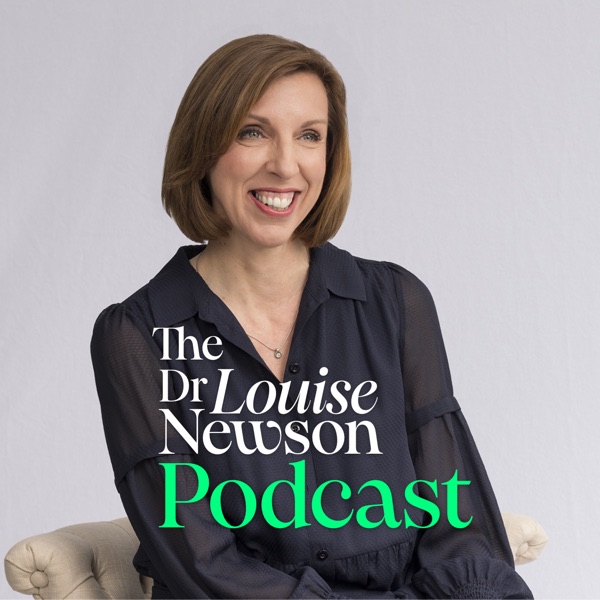
The Dr Louise Newson Podcast
Dr Louise Newson is an award-winning physician, respected women’s hormone specialist, educator, and author committed to increasing awareness and knowledge of perimenopause, menopause, and lifelong hormone health. Each week, Louise dives into the newest research, treatments and hot topic issues, providing accessible, evidence-based information to empower your future health. Joined by fellow experts and special guests, with answers to your burning questions, Louise explores how hormones impact every aspect of our lives.
Described as the “medic who kickstarted the menopause revolution”, Louise aims to empower a generation of women to have a greater understanding, choice and control over their treatment, bodies, minds and future health through their hormones. She is the creator of the award-winning free balance app, a Sunday Times bestselling author and the founder of the Newson Health clinic. With over three decades of clinical experience, Louise is a member of the Royal College of Physicians, a Fellow of the Royal College of GPs, a Visiting Fellow at Cambridge, a regular contributor to academic journals including the Lancet and the British Journal of General Practice, and has been awarded an honorary Doctorate of Health from Bradford University.
DISCLAIMER: The information provided in this podcast is for informational purposes only and is not intended as a substitute for professional medical advice, diagnosis, or treatment. Always seek the advice of your physician or other qualified health providers with any questions you may have regarding a medical condition. The views expressed by guests are their own and do not necessarily reflect the views of Dr Louise Newson or the Newson Health Group.
- Medicine chart
- #36
- Episodes
- 415
- Releases
- Twice a week
- Typical length
- 32 min
- On air since
- 2019
- Latest episode
- 1 day ago
Episodes
415 episodes, newest first
-
32 min
115 – Bleeding on HRT: why it happens and what it means
Season 2, Episode 115
Show notes
Is bleeding on HRT normal? It’s a common side effect that usually settles and there’s often a simple explanation.
Consultant gynaecologist Tony Chalhoub worked for years in a rapid-access clinic for postmenopausal bleeding and helped establish Newcastle’s accredited endometriosis centre. He shares how a health scare ofhis own changed the way he listens to patients.
In this episode, Dr Louise Newson and Tony Chalhoub talk about how a few missed days of progesterone, patch that didn’t stick or a urine infection can all lead to bleeding, why a careful history matters so much, and why stopping an evidence-based treatment can bring symptoms straight back.
They also discuss why Louise kept her ovaries at hysterectomy, why estrogen alone may not be enough after surgical menopause, and why women with endometriosis deserve to be believed even when their scans are normal.
If you have any bleeding on HRT, speak to your doctor so it can be properly assessed.
Follow Tony: @drtonychalhoub
Chapters
00:00 Why does listening to women matter so much?
00:22 Why aren't gynaecologists taught about HRT?
02:24 What did training across the UK teach Tony?
03:39 Can a hysteroscopy be done without going to sleep?
06:41 Why were women told fibroid surgery was too risky?
07:29 Does bleeding on HRT mean cancer?
10:25 Should you stop HRT if you have bleeding?
11:20 What did a cancer scare teach a gynaecologist?
12:40 Could bleeding after sex be vaginal dryness?
13:05 Why are doctors scared of vaginal oestrogen?
13:50 Can women have HRT after cancer?
15:17 Should you keep your ovaries with womb cancer?
16:39 Why would a breast cancer survivor try HRT?
17:22 Why did Louise keep her ovaries at hysterectomy?
19:18 Is oestrogen enough after surgical menopause?
21:26 Should HRT be part of gynaecology training?
22:31 Does oestradiol cause womb cancer?
24:06 Is it OK for doctors to say I don't know?
25:19 Why are women with endometriosis not believed?
27:13 Why doesn't endometriosis pain match the scan?
28:40 Can men get endometriosis?
30:36 What needs to change in endometriosis care?👉 Bleeding on HRT? Trackyour symptoms and treatment in the balance app so your doctor gets the fullpicture: https://balance-app.com/
👉 More from Dr Louise Newson: https://linkin.bio/drlouisenewson -
31 min
112 – What do I do if my doctor dismisses my menopause symptoms?
Season 2, Episode 114
Show notes
Doctor dismissing your menopause symptoms? Dr Phyllis Nsiah-Kumi explains how to get heard and get the right care.
Dr Phyllis Nsiah-Kumi, MD, MPH, is a US physician with more than 25 years in women’s health and public health, much of it with underserved communities. She regularly sees women for whom she is the third, fourth or fifth doctor, after years of being told their symptoms just come with age.
Dr Louise Newson explains why symptoms of hormonalimbalance, from night sweats and joint pain to low mood and memory problems, are so easily dismissed when they can’t be seen on a scan. She also explains why so many women are told the only option is an antidepressant, and why many are now learning about hormone treatments, including testosterone, fromeach other.
Phyllis closes with three take-home tips for women and the people supporting them: pause, pivot and proactivate.
Let’s connect👉 Take your symptoms to your next appointment: complete the free symptom questionnaire in the balance app: https://balance-app.com/utm_source=DLN&utm_medium=biolink&utm_campaign=crosspromo
👉Follow the podcast for more: https://open.spotify.com/show/7dCctfyI9bODGDaFnjfKhg
👉More from Dr Louise Newson: https://linkin.bio/drlouisenewsonChapters
00:00 Why is health information so confusing for women?
02:28 Why are people so scared of the word hormone?
02:45 Why is "Do you understand?" the wrong question?
03:27 What do you really want from your appointment?
04:09 How should you prepare for a doctor's appointment?
05:51 Why are women too scared to ask for an examination?
07:41 What happens when a doctor refuses to examine you?
08:42 Is it really "just your age"?
09:27 Why are so many women being dismissed?
10:27 Is it okay for a doctor to say "I'm not sure"?
11:09 What does "that's just how it is" really mean?
12:11 Why are hormone symptoms so easy to dismiss?
13:24 How can scoring your symptoms help you get heard?
14:43 Can a symptom questionnaire make you feel heard?
15:39 Why do so many women think it's just them?
16:47 Are women learning more from each other than doctors?
18:17 Should you crowdsource medical advice online?
21:06 How do we reach women in underserved communities?
24:29 How do your hormones affect your whole family?
25:23 How can partners and friends support you?
27:24 Why take someone with you to your appointment?
29:25 What are the three steps to advocate for yourself? -
32 min
113 – Does menopause speed up ageing? What estrogen does to inflammation
Season 2, Episode 113
Show notes
Does menopause speed up ageing? The science shows inflammation accelerates in perimenopause, and estrogen can slow it.
Nikolina Lauc is CEO of GlycanAge, which measures a marker of low-grade inflammation in our antibodies, building on research her father has dedicated his scientific career to. Nikolina’s research shows estrogen can prevent, and even reverse, the rise in inflammation that comes with menopause.
Dr Louise Newson explains why so many chronic diseases, from heart disease to dementia, are driven by inflammation, why estrogen is being overlooked in the longevity conversation and what happens to women whose ovaries are removed young and are never given hormones back. They also discuss why inflammation soars after childbirth, and how progesterone can be used to treat postnatal depression.
Nikolina closes with three things she wants research to answer next, from personalising HRT doses to whether therapy can calm inflammation.
Follow Nikolina: @nikolinalauc
Let’s connect
👉I've written a whole chapter on inflammation and hormones in my book, The Powerof Hormones: https://bio.to/ThePowerofHormones
👉 Follow the podcast on Spotify or Apple Podcasts so you never miss an episode
👉More from Dr Louise Newson: https://linkin.bio/drlouisenewsonChapters
00:00 Why does inflammation matter for women?
01:34 What is low-grade inflammation?
03:33 When does inflammation turn against us?
06:05 What is "inflammaging"?
08:12 What does a glycan test measure?
08:46 Does inflammation speed up in perimenopause?
10:43 Are oestrogen and testosterone really sex hormones?
12:12 Does inflammation change across the cycle?
13:31 What happens when ovaries are removed young?
15:35 Why does inflammation soar after birth?
16:29 Could progesterone help postnatal depression?
20:33 Can grief and divorce age your immune system?
21:30 Are hormones medicine's biggest advance?
24:19 Is HRT's benefit just placebo?
25:19 Can inflammation predict disease years early?
29:05 What makes some people resilient to disease?
30:05 Are women on the right dose of HRT?
31:26 What should hormone research answer next?
32:13 Does testosterone affect inflammation?
33:05 Can therapy reduce inflammation? -
37 min
112 – Primodos: the harmful hormone pill prescribed to millions of pregnant women
Season 2, Episode 112
Show notes
Primodos was the pregnancy test pill containingsynthetic hormones that was prescribed to millions of women during the 50s, 60s and 70s that caused severe congenital malformations, stillbirths and miscarriages.Primodos contained etihylestradiol and norethisterone - two synthetic hormones that are still prescribed every day as contraception to millions of women.
These risks were covered up by Schering, the drug company, and the Committee of Safety of Medicine decided not to warn people of the harms of these synthetic hormones as they did not want women to be “scared away” from taking contraceptive pills which contain the same synthetic hormones.
In 1970, Marie Lyon’s GP prescribed her Primodos tablets to find out whether she was pregnant with her first baby. Nobody mentioned any risks, and when her daughter Sarah was born with part of her arm missing, Marie was told “these things happen”.
She has campaigned for decades as chair of the Association for Children Damaged by Hormone Pregnancy Tests. Millions of women were prescribed Primodos with countless harms to these women’s babies until it was banned many years after the initial warnings were reported.
Louise explains why synthetic versions of estrogen and progesterone can be harmful and the problems with prescribing them to pregnant women without proper testing. They talk about the early warnings that were completely dismissed, why so many mothers still blame themselves, and why Marie believes an apology by the drug company is no longer enough.
If your mother took this synthetic hormone pregnancy test, Marie’s advice is to ask your GP for your records. She closes with the three changes she wants to see in how medicines are regulated.
Chapters
00:00 What was the Primodos scandal?
01:27 How were pregnancy tests done before Primodos?
02:30 Where did synthetic hormones come from?
05:13 How did the pill become a pregnancy test?
06:14 What did Marie's GP tell her?
08:01 Was Primodos ever tested in pregnancy?
09:20 Did the drug company know about the risks?
10:39 What happened when Sarah was born?
11:24 When did families make the connection?
12:20 Who was Dr Bill Inman?
16:01 Who was Dr Isabel Gal?
18:38 What does duty of care mean once you know?
19:17 Which birth defects were reported?
21:05 How do you find out if your mother took Primodos?
25:42 Are synthetic hormones still causing harm?
28:31 Why weren't condoms made free?
32:00 Why isn't an apology enough?
33:01 What three changes does Marie want?Let’s connect
👉 Understand the difference between synthetic and body-identical hormones in my book, The Power of Hormones:
👉 More from Dr Louise Newson:
-
35 min
111 – Can hormones help postpartum psychosis?
Season 2, Episode 111
Show notes
Can hormones help postpartum psychosis? Why the fall in estrogen and progesterone after birth is so often overlooked.
Jade Lloyd had her daughter in December 2020 after a three-day labour. Within months she was living with anxiety, intrusive thoughts and suicidal feelings, and when she asked her health visitor for help she was told to have a glass of wine, some chocolate and a bath. Weeks later she had her first psychotic episode and was admitted to a mother and baby unit, yet hormones were never once mentioned as part of her treatment.
Jade, now a maternal mental health advocate, talks to Dr Louise Newson about recovery, relapse and why her GP said it wasn't normal for a 32-year-old to take hormones. Louise explains the pioneering work of Dr Katharina Dalton, how some antipsychotics can lower hormone levels and where progesterone may help.
Jade closes with three take-home tips for spotting the signs and finding support.
Follow Jade: @jadealloyd
Let’s connect
👉 If hormones have never been part of the conversation about your postnatal mental health, the doctors at Newson Clinic can talk it through with you: https://shorturl.at/B0GIl
👉 Follow the podcast on Spotify or Apple Podcasts so you never miss an episode
👉 More from Dr Louise Newson: https://linkin.bio/drlouisenewson
Chapters
00:00 Why are hormones ignored after birth?
01:36 What happened after Jade's traumatic birth?
03:06 What did her six-week check miss?
04:24 What are intrusive thoughts after birth like?
06:01 Why was she told to have a glass of wine?
07:05 What are the early signs of mania after birth?
07:40 What does a psychotic episode feel like?
09:04 What happens in a mother and baby unit?
10:37 How did antipsychotics affect Jade's weight?
11:51 Can postpartum psychosis come back?
12:52 Did anyone ever mention her hormones?
15:29 Why did psychiatrists ignore hormones?
18:21 What is a therapeutic trial of hormones?
18:50 How does Jade feel on hormone treatment?
20:35 Why did her GP say hormones aren't 'normal' at 32?
22:32 How should doctors weigh benefits and risks?
26:16 Why is there a double standard on evidence?
27:51 Can progesterone prevent postpartum psychosis?
28:25 Can antipsychotics lower your hormone levels?
28:53 How do you ask for hormone treatment?
30:21 Are hormones safe while breastfeeding?
31:40 What are the signs of postpartum psychosis?
33:08 Where can families find support?This conversation covers postpartum (postnatal) psychosis, intrusive thoughts, antipsychotics and the role of estrogen, progesterone and testosterone after birth.
-
31 min
110 – Can't tolerate progesterone? It may be progestogens
Season 2, Episode 110
Show notes
Biochemist Dr Phyllis Bronson on why women who can't tolerate progesterone may actually be reacting to progestogens/progestins (the synthetic type of progesterone)
Phyllis has spent decades researching progesterone and mood, and her doctoral work looked at the molecular differences between body identical progesterone and the synthetic progestogens found in many contraceptive pills and older types of HRT. She joins Dr Louise Newson to share the primate study that changed how she saw synthetic hormones, and why a small change to a molecule can have such a big effect on the body.
They talk about progesterone as the "molecule of calm", how transdermal and oral progesterone work differently in the brain and why some women may simply need a higher dose. They also discuss progesterone's role in making cortisol, and why it's often the first hormone to decline, sometimes as early as your 20s and 30s.
-
31 min
109 - Can you take HRT with endometriosis?
Season 2, Episode 109
Show notes
Can you take HRT if you have endometriosis? Nicola Roberts feared it would bring her pain back. Now she takes estradiol, progesterone and testosterone and feels the best she has since she was 12.
Nicola's periods were agonising from the start, but she was put on the pill at 13 and told by nurses to take Anadin and use a hot water bottle. At 25 she was diagnosed with stage 4 endometriosis, then spent years on Depo-Provera, which left her with low mood, body aches and, at 40, osteoporosis.
Dr Louise Newson explains why synthetic contraceptives aren't the same as hormones, why Depo-Provera works "like giving you a menopause straight off", and how low testosterone is linked to endometriosis. They also talk about why so few women are offered testosterone, and how changing her diet and cutting sugar helped Nicola.
Nicola closes with her take-home advice for anyone with endometriosis who has been told hormones aren't an option.
Let’s connect
👉 Track your symptoms andunderstand hormones, download the Balance app: https://bit.ly/4yZty5A
👉 More from Dr LouiseNewson: https://linkin.bio/drlouisenewson
-
32 min
108 –The 'evidence-based bullies' silencing HRT education
Season 2, Episode 108
Show notes
Doctors are being taught to treat hormone guidance as if it's law, but according to retired GP and medical educator Dr Mark Coombe, that guidance is too often "at best very conservative, at worst wrong."
Mark spent two decades in education and assessment for the Royal College of GPs and founded FourteenFish, the training platform used by hundreds of thousands of clinicians. He and Louise previously built free hormone education for GPs together — education that was pulled from its hosting platform after a handful of doctors complained it didn't "run to the guidelines."
In this conversation, Mark and Louise unpack how guidance gets misused as law in consultations and courtrooms, why NICE menopause guidance mentions breast cancer over 20 times more often than osteoporosis, and why more female GPs take HRT than the general public despite so much hesitancy to prescribe it. They close with three take-home tips on why every healthcare professional has a duty of care to understand progesterone, estradiol and testosterone.
Let’s connect
👉 Track your symptoms andunderstand hormones, download the Balance app: https://bit.ly/4yZty5A
👉 More from Dr LouiseNewson: https://linkin.bio/drlouisenewson
-
33 min
107 – Menopause, testosterone & rowing the Atlantic at 50
Season 2, Episode 107
Show notes
In this really interesting episode, two ocean rowers over 50 share their menopause journeys. One of them takes all three hormones, and the other would love to but has been refused testosterone by so many doctors.
Gail Wolstenholme and Nicola Matthews are part of Team Old Enough to Row Better, a five-person crew aiming to become the oldest mixed team to row 3,000 miles across the Atlantic in the World's Toughest Row. Gail takes all three hormones and describes testosterone as "like the sun coming out." Nicola has tried the Mirena coil, gels and patches without feelinglike herself, was told by one GP she was too old for "that mucky stuff" and handed antidepressants, and still can't get testosterone prescribed in Scotland.
Dr Louise Newson explains why it's still so hard to access evidence-based hormone treatment, why testosterone matters for women's mood, energy and coordination, and why you can't exercise your way out of hormone deficiency.
They also share why taking up something new after 50 matters, from staying physically and mentally active to building confidence and widening your social circle, with four take-home tips.
Sponsor the crew: http://www.oldenoughtorowbetter.co.uk/
Follow: @old_enough_to_row_better
LET'S CONNECT
👉Been dismissed or offered antidepressants instead of hormones? Book with Newson Clinic: https://www.newsonhealth.co.uk/
👉 More from Dr Louise Newson: https://linkin.bio/drlouisenewson -
30 min
106 – Hormonal acne, hair loss & ageing skin with Dr Saj Rajpar
Season 2, Episode 106
Show notes
Consultant dermatologist Dr Saj Rajpar, making his fifth visit to the podcast, joins Louise to explain why acne, hair loss and ageing skin are so often driven by hormones rather than skincare.
Saj runs Midland Skin in Birmingham and has worked alongside Louise for years, since a shared patient's hair loss first brought them together. That collaboration runs through this conversation, from hormonal acne that flares before every period to a patient whose acne returned after switching from bioidentical progesterone to the Mirena coil.
They also discuss why "dermatologist" isn't a protected title and what to check before booking high-street laser treatments, how the contraceptive pill and synthetic progestogens can block oestrogen's benefits for skin, and why dramatic skin ageing can be a sign of unaddressed menopause rather than normal ageing.
Louise closes, as always, with three take-home tips — this time on why the skin matters more than you'd think.
Let’s connect
👉 Track your symptoms andunderstand hormones, download the Balance app: https://bit.ly/4yZty5A
👉 More from Dr LouiseNewson: https://linkin.bio/drlouisenewson
👉 Follow Saj:@dr.rajpar_dermatologist
-
34 min
105 – Mathilde Barker: endometriosis at 19, menopause at 23
Season 2, Episode 105
Show notes
Mathilde Barker was 23 when she finally understood why, since the age of 14, doctors had told her it was "just" muscle strain, put her on antidepressants, and once removed her appendix by mistake. It took five years to get a diagnosis of endometriosis, and two surgeries later, adenomyosis too.
She joins Dr Louise Newson to talk through her whole journey: the misdiagnoses, a scan result that was reversed by a phone call, being told by a doctor at 19 that having a baby would cure her symptoms, and the reality of being put into a medically induced menopause in her twenties just to manage the pain.
Louise explains what's actually happening in the body with endometriosis and adenomyosis, why low testosterone and progesterone are so common in women with these conditions, and why blocking hormones completely isn't always the right approach.
Louise ends, as always, with three take-home tips for anyone who suspects they — or someone they know — might have endometriosis or adenomyosis.
Lets connect
👉 Track your symptoms and understand hormones, download the Balance app: https://bit.ly/4yZty5A👉 More from Dr Louise Newson: https://linkin.bio/drlouisenewson👉 Follow Mathilde: @mathildebarker
-
32 min
104 – What the research shows about menopause and suicide risk
Season 2, Episode 104
Show notes
In this episode, Dr Louise Newson is joined by Dr Pooja Saini and psychologist Dr Olivia Hendriks to discuss their important research into perimenopause, menopause and suicide risk. Together, they explore why hormonal changes during perimenopause and menopause can have such profound impacts on mental health, and why this connection is still often overlooked in both research and clinical care.
They also discuss findings showing significant improvements in mental health and suicidal thoughts with appropriate hormone treatments, and why greater awareness, better research and more frequent prescribing of hormones are urgently needed to improve the health of women.
This is a really important episode highlighting the important link between menopause and suicide risk that can’t be ignored.
Let’s connect
👉 Read the full research paper discussed in this episode: https://www.drlouisenewson.co.uk/knowledge/hormone-related-suicide-risk-going-undetected
👉 More from Dr Louise Newson: https://linkin.bio/drlouisenewson
-
39 min
103 – A fighter pilot's menopause: HRT, testosterone & guilt with Jo Salter
Season 2, Episode 103
Show notes
Jo flew supersonic jets under extreme pressure for a living, but missed the menopause happening inside her own body.
This week Dr Louise Newson is joined by Jo Salter, Britain's first female fast jet pilot, who spent years pushing through severe menopause symptoms without realising what they were, until she found herself mentally ticking off a symptom checklist in the middle of a conference. They talk about why testosterone is still so hard for women to access even on an NHS prescription, and the guidelines that leave many women denied any hormones at all after a surgical menopause.
Louise also explains why breast cancer shouldn't automatically rule out HRT, the buried history of progesterone and postnatal depression, and shares a patient story that shows just how much hormones can transform a life.
Jo closes with her three take-home tips for building the confidence to advocate for your own health.
Let’s connect
👉 Track your symptoms and understand hormones, download the Balance app: https://bit.ly/4yZty5A
👉 More from Dr Louise Newson: https://linkin.bio/drlouisenewson
👉Follow Jo: @josaltermbe
-
33 min
102 – GLP-1s, hormones & the truth about weight gain with Rose Stokes
Season 2, Episode 102
Show notes
Rose Stokes, journalist and host of the Matter of Fat podcast, joins Dr Louise Newson to talk GLP-1 weight-loss drugs, the hormones behind weight gain and the shame around women's bodies.
Rose has lived with obesity on and off for thirty years and is currently taking GLP-1 medication herself, after months of exercise and calorie counting made no difference to her weight post-pregnancy. She and Louise talk candidly about what these drugs can and can't do, and why "easy" is the last word Rose would use to describe taking them.
Louise explains why women are so often told their weight is a food and exercise problem when the real cause can be hormonal. They also cover the research gaps around GLP-1s and women's hormones and why blame and shame make it harder to get the right help.
Rose closes with her three take-home tips for anyone rethinking their relationship with weight.
Let’s connect
👉 Track your symptoms and understand hormones, download the Balance app: https://bit.ly/4yZty5A
👉 More from Dr LouiseNewson: https://linkin.bio/drlouisenewson
👉 Follow Rose: Insta: @rosestokeshttps://podcasts.apple.com/us/podcast/a-matter-of-fat/id6805913565
https://open.spotify.com/show/469s4SFr3DNivfx1dQVyXR?si=9065a05ed85b4723
-
28 min
101 – Luteal Uglies - what does this mean?
Season 2, Episode 101
Show notes
Up to 80% of women with PMDD have suicidal thoughts. Online, it's being trivialised as the 'luteal uglies'.
In this solo episode, Dr Louise Newson explains what'sactually happening in the second half of your menstrual cycle. She describes the sharp drop in progesterone that can trigger low mood, anxiety, irritability, brain fog, fatigue and more, and why calling it the 'lutealuglies’ does women a disservice.
Louise traces how PMDD was made a psychiatric condition in the 1960s and 70s, sidelining the work of Dr Katharina Dalton, a GP whose research on natural progesterone was decades ahead of its time. She explains why hormonal contraception doesn't actually contain hormones, why low testosterone is so often mistaken for fibromyalgia or depression, and how a symptom questionnaire can help you track your own pattern across your cycle.
Louise closes with three take-home tips on getting the right diagnosis and treatment and why sharing this episode matters.
Let’s connect
👉 Track your symptoms andunderstand hormones, download the Balance app: https://bit.ly/4yZty5A
👉 More from Dr LouiseNewson: https://linkin.bio/drlouisenewson
-
32 min
100 – Sepsis, UTIs & quadruple amputation: Kim’s story
Season 2, Episode 100
Show notes
Kim Smith went on a family holiday to Spain with a UTI and woke up nine weeks later having lost all four limbs to sepsis.
Twice missed by Spanish doctors, Kim's kidney pain and uncontrollable shivering escalated so fast she doesn't remember being flown home. She tells Dr Louise Newson what actually happened, from the misdiagnosis to being told all four limbs would need amputating, and how she's rebuilt her life since as a quadruple amputee and sepsis awareness advocate.
Louise and Kim discuss the sepsis warning signs so often missed, why kidney pain and sudden shivering are red flags, and how around 30% of sepsis cases start as a urine infection. They also cover why vaginal hormones significantly cut UTI frequency and severity and are safe for almost everyone, including women who've had breast cancer, yet are still rarely prescribed.
Kim shares her three take-home tips on sepsis before the episode ends.
Follow Kim: @kims2ndchance
Let’s connect
👉 Track your symptoms andunderstand hormones, download the Balance app: https://bit.ly/4yZty5A
👉 More from Dr LouiseNewson: https://linkin.bio/drlouisenewson
-
27 min
99 – Gut health, hormones & food noise with Dominique Ludwig
Season 2, Episode 99
Show notes
Nutritionist Dominique Ludwig, author of No NonsenseNutrition, explains why your gut controls your hormones and hunger.
Dominique trained at King's College and has spent 20 years in clinical practice, working with around 4,500m people before writing the book that turns her clinic advice, and the recipes behind it, into something anyone can use at home.
Louise and Dominique talk through how your liver and gut clear out old hormones, why the wrong gut bacteria can impact your hormones and how the Contraceptive Pill can block your absorption of B12, zinc and folate. They also unpick why protein and fibre switch on the body's own satiety hormones (the same pathway GLP-1 medications work on) and why so many of Dominique's clients describe the disappearance of "food noise" as life-changing.
Follow Dominique: @dominiqueludwig_nutrition
Let’s connect
👉 Track your symptoms and understand hormones, download the Balance app: https://bit.ly/4yZty5A
👉 More from Dr LouiseNewson: https://linkin.bio/drlouisenewson
-
29 min
98 – Why the type of hormone matters for health and fitness - Davey Maher
Season 2, Episode 98
Show notes
Many women are told that all hormone treatments are essentially the same. But the reality is far more complex, and understanding the difference could have a significant impact on your health, fitness and wellbeing.
In this episode, Dr Louise Newson is joined by women’s health and fitness coach Davey Maher to discuss why bioidentical and synthetic hormones work differently in the body, how they influence inflammation, muscle, metabolism and long-term health, and why these differences are so often overlooked.
Together, they explore why so many women struggle with weight gain and muscle loss during midlife, why strength training and nutrition become increasingly important as hormone levels change, and how taking the right hormones alongside healthy lifestyle habits can help women stay stronger, healthier and more active for longer.
Let’s connect
👉 Track your symptoms and understand hormones, download the Balance app: https://bit.ly/4yZty5A
👉 More from Dr Louise Newson: https://linkin.bio/drlouisenewson
-
30 min
97 – PMDD, ADHD & autism: addiction as a coping mechanism
Season 2, Episode 97
Show notes
Natalie Sykes spent years using heroin and crack cocaine to self-medicate undiagnosed PMDD, autism and ADHD, and now finally understands why.
Natalie, founder of the PMDD & Neurodivergence Alliance, tells Dr Louise Newson how PMDD's crushing hormonal mood swings collided with undiagnosed autism and ADHD to leave her, in her words, "allergic to my own body." Misdiagnosed as bipolar for decades, she turned to substances that numbed what nobody could explain. While using heroin, her PMDD symptoms disappeared completely.
Louise explains that progesterone, estradiol and testosterone act directly on the brain's opioid and dopamine receptors, so when women are chronically short of these hormones, the body looks for relief elsewhere. They discuss why neurodivergent women are especially vulnerable to this pattern and why harm reduction has to be part of the conversation.
Natalie shares her three take-home tips for anyone who suspects PMDD, ADHD or autism might be behind their struggle to cope.
If you've experienced hormonal changes at any stage of life - from menstruation through to menopause - and have experience of addictive behaviours, coping strategies or gambling, you can help shape future support by taking part in this research survey: https://newson.qualtrics.com/jfe/form/SV_1YtaHkftP8GrSbc
Follow Natalie @pmddneurodivergencealliance
Let’s connect👉 Been dismissed or misdiagnosed? Book a consultation at Newson Health clinic: https://www.newsonhealth.co.uk/consultations👉 More from Dr Louise Newson: https://linkin.bio/drlouisenewson👉 Follow Natalie's work with the PMDD & Neurodivergence Alliance: https://www.facebook.com/share/1CzUafKyFt/?mibextid=wwXIfr
-
27 min
96 – How India is waking up to hormone health Sanjith Shetty
Season 2, Episode 96
Show notes
In India, one woman asked her gynaecologist about HRT and was told: "over my dead body." Dr Louise Newson travels to India to meet Sanjith Shetty, founder of the menopause community Miror and one of the country's most vocal male allies for women's hormone health. Sanjith built Miror after studying hundreds of femtech companies and finding that menopause, a phase every woman goes through, had almost no support compared to maternal and menstrual health. His community has since grown to thousands of Indian women openly discussing HRT, and he is now pushing corporates and government to take hormone health seriously.
Louise and Sanjith discuss why so many doctors in Indiaremain frightened of prescribing HRT, what it costs women's careers and confidence and the early signs that attitudes among doctors, employers and government are starting to shift.
They close with three things Sanjith wants to see happen in the next five years to improve hormone health for women across India.
Let’s connect
👉 To access hormoneinformation in India, download the Balance app: https://bit.ly/4yZty5A
👉 For global clinicianeducation, explore Newson Education: https://bit.ly/4g5V0ps
👉 More from Dr LouiseNewson: https://linkin.bio/drlouisenewson
On these lists
The Dr Louise Newson Podcast is one of the shows picked out on this list
More in Medicine
Placed highest on Apple Podcasts' Medicine chart right now