Podcast
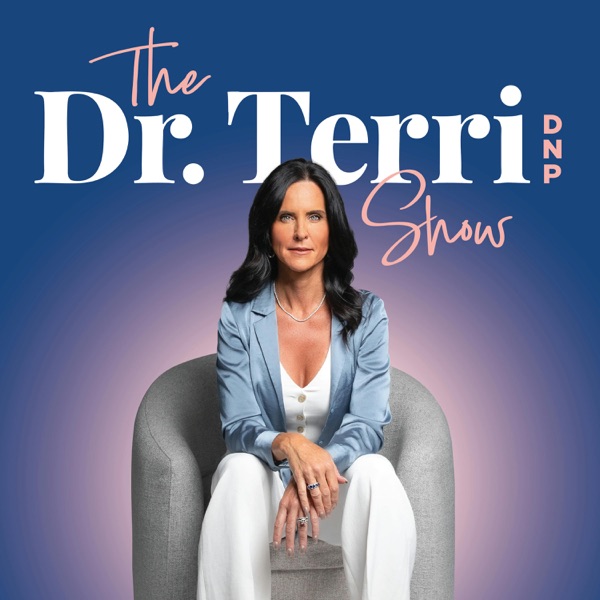
The Dr. Terri Show
Are you sick and tired of feeling sick and tired? Do you desire to live a life of abundance in your health? On the Dr. Terri Show, we cut through all the hype and fads to bring you real, vulnerable conversations about health, faith and life. We're not holding anything back, and we are taking on topics you are asking and wondering about. Along the way, we'll laugh, share stories and challenge cultural norms to help you have the healthiest most abundant life you can.
Terri DeNeui, DNP, APRN, ACNP-BC is the Founder of EVEXIAS Health Solutions, Creator of the Evexipel Method and owner of EVEXIAS Medical Center and a board-certified nurse practitioner, nationally renowned speaker, author, and entrepreneur. Her new book, “Hormone Havoc,” is the essential guide for patients and practitioners seek ing to understand hormone health and achieve true hormone optimization, and truly know why ignoring our hormones has been a detriment to health and quality of life. Dr. DeNeui holds advanced certifications in Hormone Replacement Therapy, Preventive Wellness Medicine, and Functional Medicine. Dr. DeNeui earned her bachelor’ s degree in nursing from Texas Women’ s University in Denton, Texas , and achieved both her master’ s and doctorate degrees in nursing from the University of Texas at Arlington in Arlington, Texas.
This podcast is for educational purposes only. It is not intended as a substitute for the diagnosis, treatment, and advice of a qualified licensed professional. This podcast offers people medical information and tells them their alternative medical options, but in no way should anyone consider that this podcast represents the practice of medicine. This podcast assumes no responsibility for how this material is used. The statements regarding alternative treatments for cancer have not been evaluated by the Food and Drug Administration.
- Medicine chart
- #57
- Episodes
- 124
- Releases
- Weekly
- Typical length
- 43 min
- On air since
- 2024
- Latest episode
- 17 hours ago
Episodes
124 episodes, newest first
-
59 min
Started Hormone Therapy and Feel Worse? This Might Be Why.
Show notes
Started hormone therapy and still feel tired, puffy, or dealing with heavy periods, tender breasts, or poor sleep? This conversation looks at what clinicians check beyond a single hormone number, and why the answer is rarely just "add a hormone."
Dr. Terri sits down with Mark Newman, MS, President and Founder of Precision Analytical, the laboratory behind the DUTCH Test (Dried Urine Test for Comprehensive Hormones), and Dr. Carrie Jones, ND, FABNE, MPH, MSCP, a naturopathic physician and the first Medical Director for Precision Analytical. Mark came to hormone testing as a lab chemist. Carrie came to it as a clinician running a large practice. Together they walk through where the test came from and how clinicians use it.
They start with the story of how the two of them began working together, then move into cortisol, thyroid hormones, androgens, and the way the body processes estrogen. Along the way they talk about why hormones are not magic, why a popular supplement like DIM involves more than one step, how they approach family-history conversations about breast cancer, a clinician's theory about GLP-1 medications and hormones, and what happens when someone runs their results through AI. Both guests keep returning to the same point: working with a provider who knows what they are doing matters.
What you'll discover
• How a lab chemist and a practicing clinician first came to work together: 00;02;25
• The difference between how much cortisol the body makes and how much is circulating, and why the two can tell different stories: 00;07;57
• How cortisol, T3, and reverse T3 interact: 00;10;31
• What testosterone does inside the cell, and what DHT and its metabolites add to the picture: 00;19;08
• A house-by-house analogy for what metabolites add to a standard hormone measurement: 00;22;07
• The three phases of estrogen processing, and why supplement choices like DIM and sulforaphane involve more than one step: 00;26;07
• Why Dr. Terri says hormones aren't magic: 00;32;03
• How the guests approach family-history conversations about breast cancer, and why they call cancer complicated: 00;32;50
• A clinician's theory on GLP-1 medications and hormones, and the questions it raises: 00;39;13
• What they look at when ferritin runs high: 00;46;28
• Alpha and beta progesterone pathways, and why women can respond to progesterone differently: 00;51;11
• Whether AI can interpret a hormone test, and where both guests say a provider comes in: 00;55;35Presented by EVEXIAS Health Solutionshttps://www.evexias.com
Connect with Dr. Terri Instagram: https://www.instagram.com/drterrideneui/ Facebook: https://www.facebook.com/DrTerriDeNeui Website: https://hormonehavoc.com/
Connect with Dr. Carrie Jones Website: https://www.drcarriejones.com Podcast: Hello Hormones with Dr. Carrie Jones Instagram: https://www.instagram.com/dr.carriejones
Learn more about the DUTCH Test Website: https://dutchtest.com
----
0:00 Intro
1:39 Why hormone breakdown (metabolites) matters
7:44 Cortisol, stress, and thyroid
25:50 How the body breaks down estrogen: heavy periods, PMS, tender breasts
31:21 Starting hormone therapy: why the foundation matters
51:14 Progesterone and sleep
54:44 Can AI read your hormone results?
Learn more about your ad choices. Visit https://megaphone.fm/adchoices
-
37 min
Are Avocado Oil Chips Actually Healthy?
Show notes
Half your feed says seed oils are poison. The other half says that’s nonsense. And you’re standing in the grocery store holding a bag of avocado oil chips, trying to figure out which one of them to believe.
Elizabeth DiMeo is back with Dr. Terri to take the fat debate apart with data instead of opinions. Elizabeth is a Certified Nutrition Specialist and Licensed Dietitian Nutritionist with more than 25 years in the field, and she serves as Director of Nutraceutical Development and Education at EVEXIAS Health Solutions.
They start with what a seed oil actually is, how it differs from a vegetable oil, and what industrial processing does to it. Then Elizabeth explains the part that rarely makes it into a social media post: how omega-6 and omega-3 fats behave inside your cells, why your body genuinely needs both, and what happens in your blood vessels when the balance tips too far one way. They look at why other countries eat these oils without the same consequences, trace the strange history of margarine from a wartime butter substitute to a heart-healthy marketing campaign, and find the seed oils hiding in foods you’d never suspect, including your peanut butter. They also get honest about the all-or-nothing instinct in American food culture, and why neither the chia seed camp nor the steak-and-butter camp has it figured out.
What you’ll discover
• What separates a seed oil from a vegetable oil, and how each is processed: 02:03
• What omega-6 and omega-3 fats actually do inside your cells: 03:19
• How oxidized fats affect your blood vessels, explained with a dump truck: 04:28
• Why other countries eat these oils without the same outcomes: 06:19
• How fast oil adds up across a single day of cooking: 07:37
• Where seed oils hide in the middle aisles of the grocery store: 09:55
• How margarine went from wartime butter substitute to “heart healthy”: 11:01
• The label rule that lets trans fats disappear from an ingredient list: 13:17
• Keto, paleo, carnivore, and the American all-or-nothing problem: 15:40
• What the Mediterranean diet includes besides food: 16:32
• A standard American breakfast, broken down ingredient by ingredient: 18:46
• The markers almost nobody tests for: 21:00
• Whether chia-and-blueberry eaters are getting enough omega-3: 21:42
• The woolly mammoth, foraging, and what fasting was supposed to be: 23:39
• Why even fresh produce isn’t what it used to be: 26:26
• Two camps, and the person stuck in the middle: 27:12
• Why eating well in this country is genuinely hard: 30:13
• How a palate for cheap food gets built, starting in childhood: 32:11
• Stress, screens, and the inflammation that isn’t about food at all: 34:18
• What to actually read on a label: 35:53
• The short list of oils worth cooking with: 37:00--
00:00 The Fat Debate Flipped
02:03 What a Seed Oil Actually Is
06:19 How Much Is Too Much, and Where It Hides
11:01 Margarine, Trans Fats, and How We Got Here
15:40 The All-or-Nothing Problem
27:12 The Snack Aisle, and What to Do Instead
--
Presented by EVEXIAS Health Solutions
https://www.evexias.comConnect with Dr. Terri Instagram: https://www.instagram.com/drterrideneui/ Facebook: https://www.facebook.com/DrTerriDeNeui Website: https://hormonehavoc.com/
Learn more about your ad choices. Visit https://megaphone.fm/adchoices
-
51 min
Hashimoto’s, Autoimmunity, and the Triggers Behind It.
Show notes
Most women diagnosed with low thyroid are treated for a thyroid problem. Dr. Heather Stone says many of them actually have an immune problem. In Hashimoto’s, as she puts it, “the thyroid is the victim.”
Dr. Terri sits down with Dr. Heather Stone, DC, a functional medicine practitioner who has spent more than twenty years helping women with hypothyroidism and Hashimoto’s. She is the author of The Thyroid Transformation Blueprint. Her path started with her own symptoms and a doctor who told her nothing was wrong. She joins from Italy to talk about what’s driving the immune system to attack the thyroid, and what changes when care looks past the thyroid numbers.
They start with the TSH: what it measures, where it comes from, and what a fuller thyroid panel adds, including the antibody tests that point to Hashimoto’s. Then they work through the triggers Dr. Stone looks for in every autoimmune patient: blood sugar, stress, gut health, and toxic load. Along the way, she explains why having one autoimmune condition raises the risk of developing others. She also describes a diabetes pattern she catches by looking for autoimmunity, which she calls type 1.5.
What you’ll discover
• What TSH actually measures, and why it comes from the pituitary instead of the thyroid
• The markers in a fuller thyroid panel, including the two antibody tests for Hashimoto’s
• Why Dr. Stone sees Hashimoto’s as an immune condition first and a thyroid condition second
• How blood sugar swings can keep the immune system in attack mode
• The role stress plays, even for people who say they aren’t stressed
• How the gut connects to autoimmunity, and why gluten matters for some Hashimoto’s patients
• How toxic load adds to the burden, and her phased approach to detox
• What type 1.5 diabetes is, and the clue that makes her look for itYour symptoms aren’t the problem. They’re the message.
Presented by EVEXIAS Health Solutions
https://www.evexias.comConnect with Dr. Terri Instagram: https://www.instagram.com/drterrideneui/ Facebook: https://www.facebook.com/DrTerriDeNeui Website: https://hormonehavoc.com/
Connect with Dr. Heather Stone Website: https://reversemycondition.com/ Book: https://thyroidtransformationblueprint.com/
---
00:00 Dr. Stone's story
04:00 Beyond the TSH: what a full thyroid panel shows
17:20 Hashimoto's and the triggers behind autoimmunity
26:00 Type 1.5 diabetes
35:00 Testing for root causes, optimal ranges, and detox
Learn more about your ad choices. Visit https://megaphone.fm/adchoices
-
32 min
Too Old to Start? She Won Her First Fitness Competition at 64
Show notes
What if your strongest years are still ahead of you?At 64, Mary Ann Butler entered her first fitness competition... and won. But her story didn't begin on a bodybuilding stage. It started years earlier, with a career in pain management, a growing curiosity about hormone health, and a personal experience that changed the direction of her medical practice.In this episode of The Dr. Terri Show, Dr. Terri sits down with Mary Ann Butler, ANP-C, a board-certified nurse practitioner with more than two decades of experience in medicine. From her wellness practice in Lumberton, Texas, to her role training and mentoring clinicians with EVEXIAS, Mary Ann has dedicated much of her career to exploring approaches to hormone health, pain management, and longevity.Together, they discuss how recognizing symptoms of testosterone deficiency in her husband—and hearing unexpected stories from pain patients receiving hormone therapy—led Mary Ann to rethink conventional approaches to care.They explore the often-overlooked role of testosterone in women's health, the relationship between hormones and pain, and how peptide therapies became part of Mary Ann's clinical practice. They also discuss why peptide therapy requires knowledgeable medical oversight rather than a do-it-yourself approach.Then the conversation turns personal.After a decade of consistent strength training alongside her husband, Mary Ann decided to challenge herself in an entirely new way. With just 16 weeks of competition preparation, she stepped onto the stage at 64 and won her first fitness competition.Her message? Age doesn't have to determine what you're capable of achieving.---- What you’ll discover:How the opioid crisis and a pain conference pointed her toward hormones (00;03;50)Her husband’s testosterone story, and what supplements can hide (00;04;19)Why testosterone in women was the missing puzzle piece (00;07;48)Why creams fell short for so many of their patients (00;08;29)How hormones play into pain and inflammation (00;09;37)How peptides entered her practice (00;12;13)Why peptide therapy is a medical specialty, not a DIY project (00;13;33)How peptides that support growth hormone signaling can help with sleep, recovery, and aging well (00;16;25)Deciding to compete, and what actually changed in her diet (00;19;40)What a 16-week contest prep looked like (00;25;24)“Muscle is currency,” and how to start where you are, even with injuries (00;27;08)It's never too late to set a new goal, build strength, or discover what your body is capable of.Join Dr. Terri and Mary Ann Butler for a conversation about hormones, peptides, longevity, and challenging the expectations that often come with aging. Presented by EVEXIAS Health Solutions https://www.evexias.com Connect with Dr. Terri Instagram: https://www.instagram.com/drterrideneui/ Facebook: https://www.facebook.com/DrTerriDeNeui Website: https://hormonehavoc.com/
Learn more about your ad choices. Visit https://megaphone.fm/adchoices
-
20 min
Getting Off the Hormone Roller Coaster
Show notes
Pellets, shots, creams, patches, pills, troches. If you're starting hormone therapy, or you're already on it and something still feels off, the number of options can be hard to sort through. It's one of the questions Dr. Terri hears most, from patients and from the clinicians she trains.
In this solo episode, Dr. Terri goes through each delivery method for testosterone, estrogen, and progesterone, drawing on 17 years of working with all of them. Her favorite is hormone pellets, and she explains her reasoning. She compares steady hormone levels with the peaks and drops of shots, creams, and tablets. She covers why the path a hormone takes through the body matters. She also explains where patches, vaginal estrogen, and oral progesterone still fit.
What you'll discover
• How few testosterone options exist for women, and how long pellets have been around (00;01;30)
• Why individualized dosing matters for testosterone (00;02;29)
• The lollipop analogy for how pellets release hormones (00;03;24)
• What the "roller coaster" of testosterone shots feels like, and how split dosing helps (00;04;47)
• Dr. Terri's least favorite modality (00;05;52)
• How troches and rapid dissolve tablets compare (00;07;54)
• What first pass metabolism means for oral hormones (00;09;23)
• Estrogen options for women, from pellets to patches to pills (00;10;40)
• Oral estradiol and blood clot risk (00;12;26)
• What an FSH lab can show about whether your estrogen dose is enough (00;14;54)
• Treating symptoms versus optimizing hormones (00;15;17)
• When vaginal estrogen is the right choice (00;16;50)
• Progesterone versus progestin, and why the difference matters (00;17;12)A clear map of your options to take to your next appointment.
Presented by EVEXIAS Health Solutions
https://www.evexias.comConnect with Dr. Terri
Instagram: https://www.instagram.com/drterrideneui/
Facebook: https://www.facebook.com/DrTerriDeNeui
Website: https://hormonehavoc.com/Learn more about your ad choices. Visit https://megaphone.fm/adchoices
-
55 min
Muscle Is the Currency of Aging
Show notes
Somewhere around 40, the workouts that always worked stop working. The belly shows up, the energy drops, and the instinct is to do more. Dr. Terri sits down with Dr. Eric Fete to hear his case for the opposite: lift a little, walk a lot, eat enough, and build muscle.
Dr. Fete, DO, is a former emergency physician and the founder of Prime-X in Zanesville, Ohio. He trained at the Chicago College of Osteopathic Medicine, is certified in Age Management Medicine, and now sees patients in person and by telemedicine. He calls his approach muscle medicine.
Together they get into what myokines are and why he treats muscle as more than looks. They cover the simple routine he starts most patients on, how he talks to women about testosterone, and why he puts sleep and stress ahead of peptides and other add-ons. They also talk about the difference between sex drive and erectile function, and why touch and oxytocin belong in the conversation.
What you'll discover
• How a career in the ER pushed him toward prevention, 10:44
• Why he treats muscle as an organ of longevity, 13:36
• What myokines are and what he says they do, 20:01
• A starter routine: short strength sessions plus daily walking, 23:10
• How he explains testosterone to women who worry about how it will change them, 31:16
• Why lifestyle is the foundation and peptides come last, 35:02
• The "double red S": sleep and stress, 43:30
• Why sleep medication is not the same as restorative sleep, 45:33
• How cystatin C can add context when creatinine looks high, 48:56
• Fertility questions to settle before starting testosterone, 51:01
• Sex drive, erectile function, and the oxytocin piece, 54:27Less heroic training, more sleep, and a foundation worth building on.
Presented by EVEXIAS Health Solutions
https://www.evexias.comConnect with Dr. Terri Instagram: https://www.instagram.com/drterrideneui/ Facebook: https://www.facebook.com/DrTerriDeNeui Website: https://hormonehavoc.com/
Connect with Dr. Eric Fete Website: https://www.drericprimex.com YouTube: https://www.youtube.com/@dr.eric-primexthefitnessph6601 Podcast, Dr. Eric's Relentless Vitality: https://podcasts.apple.com/us/podcast/dr-erics-relentless-vitality/id1484876926
Learn more about your ad choices. Visit https://megaphone.fm/adchoices
-
43 min
Can't Find Your Estrogen Patch? Don't Just Stop.
Show notes
Estrogen patches have gotten hard to find, and a lot of women are being told to just wait it out. That may be the riskiest option on the table.
Dr. Terri sat down with Dr. Carrie Jones, ND, FABNE, MPH, MSCP, at a national clinician conference the same week the FDA held its public meeting on testosterone in women. Dr. Jones is a naturopathic physician and Menopause Society Certified Practitioner known as the Queen of Hormones. She was the first medical director for the DUTCH test and the first head of medical education at Rupa Health, and she now hosts the Hello Hormones podcast.
Together they cover what's really behind the patch problem, why stopping hormones suddenly carries real risk, and how many more options exist than most women (and most prescribers) realize. They take on the reputation of compounding pharmacies: what compounding actually is, where the bad press came from, and why it keeps stepping in when supply runs short. They also get practical about quality, from "research only" peptides to supplements that don't match their labels. And they explain why estrogen, progesterone, and testosterone matter for your heart, brain, and bones long after the hot flashes are handled.
What you'll discover
• Why so few clinicians feel ready to prescribe testosterone for women: 00:03:02
• The lipstick rule for finding the hormone option that fits you: 00:04:56
• What happened at an HHS roundtable on the estrogen patch problem: 00:06:50
• What compounding pharmacies actually do, and what they don't: 00:09:37
• How one contaminated batch reshaped the compounding industry: 00:14:25
• How compounding filled the gap during the semaglutide shortage: 00:16:20
• The price red flag on peptides you find online: 00:19:11
• What "research only" on a label really means: 00:20:40
• How to vet a supplement company before you buy: 00:24:06
• The fish oil smell test: 00:26:08
• What to do if you can't fill your estrogen patch: 00:26:25
• The four long-term risks your hormones help protect against: 00:30:52
• Why testing and replacing all three sex hormones matters: 00:36:25
• Why waiting for more studies isn't good enough: 00:38:08Presented by EVEXIAS Health Solutions
https://www.evexias.comConnect with Dr. Terri Instagram: https://www.instagram.com/drterrideneui/ Facebook: https://www.facebook.com/DrTerriDeNeui Website: https://hormonehavoc.com/
Learn more about your ad choices. Visit https://megaphone.fm/adchoices
-
50 min
The FDA Is Finally Talking About Testosterone in Women
Show notes
[Special bonus episode in reaction to the FDA addressing testosterone use in women.]
For eighty years, clinicians have been using testosterone to treat women. There is still no FDA-approved testosterone product for women in the United States.
In September, the FDA convened a public workshop to examine that gap. In this conversation, recorded in the days beforehand, Dr. Terri sits down with Dr. Cassie Smith, MD, a dual board-certified endocrinologist and the founder of Modern Endocrine in Oklahoma City. Dr. Cassie trained at the Harold Hamm Diabetes Center and spent years running pharmaceutical clinical trials before building a telehealth practice that now serves patients across 45 states. She has seen the approval process from the inside, and she has opinions about it.
Together they take on what the hearing might actually accomplish, why the approval gap has persisted this long, and what it costs the women sitting in their exam rooms. They get into the money: why a hormone that pulls patients off statins, blood pressure medication, and antidepressants is not an attractive product to develop. They get into the paperwork: why testosterone sits on the controlled-substance schedule alongside opioids, what that does to access, and why a patient who forgets her prescription on vacation simply goes without. And they get into the part neither of them can let go of — that the people writing these rules have never spent a day in a clinic watching what happens when you get a woman's hormones right.
What you'll discover
• Why 2026 became the year women's health finally got regulatory attention — 00;06;17
• What the absence of an FDA-approved product actually does to patients and prescribers — 00;07;21
• What clinicians were already doing with testosterone in the 1940s — 00;12;18
• How a lab "reference range" gets set, and why normal and healthy are not the same thing — 00;16;53
• The risk that a badly dosed product sets the whole conversation back a decade — 00;18;34
• Where medical freedom ends and regulatory overreach begins — 00;24;41
• How testosterone ended up on the controlled-substance schedule in the first place — 00;31;10
• What a DEA license, 46 state databases, and one forgotten prescription look like from the prescriber's side — 00;34;47
• The symptoms of testosterone deficiency that start showing up as early as 30 — 00;47;04
• Whether either of them is actually optimistic about change — 00;49;10Two clinicians, one hormone, and a regulatory system that has not caught up to its own evidence.
Presented by EVEXIAS Health Solutions https://www.evexias.com
Connect with Dr. Terri Instagram: https://www.instagram.com/drterrideneui/ Facebook: https://www.facebook.com/DrTerriDeNeui Website: https://hormonehavoc.com/
--
00:00 Cold open and welcome
00:05:34 The approval gap
00:16:53 Reference ranges, dosing, and the risk of a bad rollout
00:24:41 Medical freedom and how testosterone became a controlled substance
00:39:24 Who's making these decisions, and who they're hearing from
Learn more about your ad choices. Visit https://megaphone.fm/adchoices
-
33 min
Hormones, Thyroid, and Vitamins: A Closer Look at Postpartum Depression
Show notes
Nobody Has an SSRI Deficiency: Rethinking Postpartum Depression
A new mother comes in for one visit, gets a diagnosis, leaves with a prescription, and comes back in a month. In a lot of practices that is first-line care for postpartum depression. The problem is that nothing on the list of things that actually crashed after delivery is an antidepressant.
Dr. Terri welcomes back Dr. Johnny J. Peet, MD, a gynecologist with nearly three decades in private practice, for a conversation about what is really happening in a woman's body after a baby, and why he treats postpartum depression almost nothing like he did twenty years ago. Progesterone and estrogen fall off a cliff. Thyroid drops at the same time. Vitamin levels that were fine before pregnancy quietly slip. Add a physical recovery, real anxiety, and no sleep, and his take is that the surprising thing is how many women come through it fine.
They open with the trend Dr. Terri is seeing in her own practice, young premenopausal women asking for estrogen because it is trending online, at the same time patches are getting hard to fill.
If you have been handed a prescription and told that is the answer, this is the conversation nobody had with you.
What you'll discover:
• What the removal of the estrogen and testosterone black box warnings actually changed, and where the fear came from [03:23]
• Why an empty hormone receptor in the brain produces symptoms [05:45]
• The decade-long decline in testosterone and thyroid that happens long before menopause gets the credit [07:25]
• The full list of what crashes after delivery, and why no single item explains it [09:30]
• The reason your brain lowers testosterone after the second baby on purpose [13:54]
• The questions a clinician has to ask before treating anyone's postpartum mood [15:55]
• What a partner, a grandmother, and four consecutive hours of sleep are actually worth [17:01]
• The treatment order most practices skip entirely [20:09]
• Thyroid, TSH, and why a normal-looking panel misses it [22:23]
• The symptom triad that points to low testosterone in women [26:57]Postpartum depression is common, it is treatable, and it is almost never one problem.
🔗 Find a provider trained in what we discussed: https://www.evexias.com
📱 Instagram: https://www.instagram.com/drterrideneui/
📱 Facebook: https://www.facebook.com/DrTerriDeNeui
💻 Website: https://hormonehavoc.com/This episode is for educational purposes and is not medical advice. Specific doses, lab targets, and treatment decisions discussed here are clinician-to-clinician and should not be applied without your own provider.
**If you or someone you know is having suicidal or harmful thoughts, please immediately reach out to someone or call 1-833-TLC-MAMA**
00:00 Introduction
00:44 A Real Shift in Women's Health This Year
02:21 Estrogen Trending Online and the Patch Shortage
03:23 What the Black Box Removals Actually Changed
05:45 Receptors, Deficiency, and Mood
07:25 The Four Hormonal Stages of a Woman's Life
09:30 What Actually Causes Postpartum Depression
13:54 Testosterone After the Second Baby
15:55 Screening First, Then Treating
17:01 Partners, Family, and the Village
18:51 An SSRI Is Not First Line
20:09 Progesterone, Estrogen, and Thyroid
22:23 Thyroid, TSH, and the Depression Link
24:05 B Vitamins, Vitamin D, and the Gut
26:57 Testosterone in Women: Mood, Energy, Sex
29:05 Injectable Progesterone and Follow-Up
30:12 Why Women Don't Talk About It
Learn more about your ad choices. Visit https://megaphone.fm/adchoices
-
1 hr 4 min
We Are Our Hormones: What Birth Control Does to the Female Brain
Show notes
If you are a woman, there is a good chance someone handed you a prescription at 15 or 16 and told you almost nothing. Maybe it was for acne. Maybe it was for cramps. Nobody sat you down and explained that it does not only turn off your ability to get pregnant, it turns off the hormones that were building your brain. We have never followed a generation of women long enough to find out what happens when you start at 13 and stay on it until you are 35. We just did it, and we called it health care.
Dr. Terri sits down with Dr. Sarah Hill, a research psychologist and professor at Texas Christian University who has spent more than 20 years studying women's hormones and neuroendocrinology. She is the author of This Is Your Brain on Birth Control and The Period Brain. Her interest in the subject started personally. After more than a decade on the pill, she went off it and, within three months, felt like parts of herself were coming back online. She went to the research literature to find out why, and found a body of evidence almost nobody was talking about. This conversation covers what hormonal contraception actually shuts down, why the alternatives are less studied than most women are led to believe, and what a generation of young women walking away from it are walking toward instead.
What you'll discover:
• What Dr. Hill noticed within three months of going off the pill, and why she went straight to the research [15:03]
• Why ovulation is not just about releasing an egg, and what stops when it stops [18:23]
• The cultural hypothesis about hormones, femininity, and how young women dress today [23:18]
• Why there is no such thing as a locally acting hormone, and what that means for the hormonal IUD [24:47]
• How synthetic progestins interact with androgen and cortisol receptors differently than your own progesterone does [30:49]
• The calming compound your body makes from progesterone that synthetic progestins never produce [34:19]
• What the research actually says about long-term birth control and fertility, including the caveat most women never hear [40:55]
• Dr. Hill's take on the growing number of premenopausal women being put on estrogen therapy [47:08]
• The percentage of healthy, regularly cycling college-age women in her lab's studies who are not ovulating, and the reason why [55:13]
• What we know, and mostly do not know, about starting hormonal contraception while the brain is still developing [1:01:47]The bottom line: We cannot make good decisions without good information. For an entire generation of women, the information was never on the table.
The Dr. Terri Show is presented by EVEXIAS Health Solutions. For more, visit: https://www.evexias.com
Connect with Dr. Terri: 📱 Instagram: https://www.instagram.com/drterrideneui/ 📱 Facebook: https://www.facebook.com/DrTerriDeNeui 💻 Website: https://hormonehavoc.com/
Connect with Dr. Sarah Hill: 📱 Instagram: https://www.instagram.com/sarahehillphd/ 💻 Website: https://www.sarahehill.com/
Learn more about your ad choices. Visit https://megaphone.fm/adchoices
-
38 min
Eating Less and Moving More with No Results? It Might be Lipedema.
Show notes
Lipedema: The Painful Fat Disorder Doctors Keep Calling Obesity
You've done the diets. You've done the exercise. Maybe you've done hormone therapy, and maybe you've even tried GLP-1 medications. And the weight in your legs will not move. It hurts to be touched. It bruises for no reason. And every doctor you've asked has looked at you and told you to eat less and move your body more.
There's a name for what might be happening, and it is not obesity and it is not your willpower.
Erika Schlick spent nearly a decade being told the same thing. She had already survived a two-year fight to get diagnosed with Lyme disease. Then, after stem cell therapy, she gained more than 50 pounds that no diet, no workout, and no medication would touch. It took eight more years to get an answer: lipedema, a connective tissue and adipose disorder that affects an estimated 1 in 9 women, was first described in 1940, and is still barely taught in medical school.
In this episode she walks Dr. Terri through the hallmark signs most doctors miss, why lipedema fat behaves nothing like ordinary fat, how surgical treatment differs from cosmetic liposuction, and what it actually takes to manage the condition long term.
What you'll discover:
• 04:35 — The tick bite in 2012 that started a fourteen-year health journey
• 05:27 — Lyme remission, and the weight gain that started right after stem cell therapy
• 06:18 — Eight more years, and why a second undiagnosable condition felt like a Rubik's Cube
• 07:16 — Four lipedema removal surgeries in 2024, and what recovery actually looked like
• 08:30 — What lipedema is, why researchers now suspect a connective tissue disorder, and why it resists diet and exercise
• 09:39 — The hallmark signs: disproportionate fat distribution, swelling, easy bruising, and hands and feet that are spared
• 10:52 — The nodular texture that gets dismissed as cellulite, and the blame patients absorb instead of a diagnosis
• 12:54 — Why lipedema surgery is circumferential and lymphatic-sparing, and why a cosmetic surgeon is the wrong choice
• 15:07 — Post-surgical management: compression, lymphatic drainage, pneumatic pumps, and an anti-inflammatory diet
• 17:16 — Hormones as the trigger, starting at puberty, and why the condition tracks life stage changes
• 18:53 — Mold, environmental toxins, and why men carry the gene but rarely express the condition
• 20:11 — The mast cell and Ehlers-Danlos overlap that keeps showing up in lipedema patients
• 22:36 — The gut as another layer of connective tissue
• 25:53 — Building muscle after surgery, identifying trigger foods, and a hotel room in Mexico that caused five pounds of swelling in 24 hours
• 27:36 — Why diagnosis is still clinical, and what a specialist actually looks for
• 28:39 — How to find a provider who can diagnose, operate, and manage aftercare
• 29:22 — Lipedema versus lymphedema, and why the distinction matters when choosing a doctor
• 35:24 — You know your body best. Why self-advocacy is still the deciding factor.If you have spent years being told your legs are a discipline problem, this episode gives you the language to ask a different question.
The Dr. Terri Show is presented by EVEXIAS Health Solutions. For more, visit: https://www.evexias.com
Connect with Dr. Terri:
📱 Instagram: https://www.instagram.com/drterrideneui/
📱 Facebook: https://www.facebook.com/DrTerriDeNeui
💻 Website: https://hormonehavoc.com/Connect with Erika Schlick: 💻 Website: https://thetrailtohealth.com 📱 Instagram: https://www.instagram.com/thetrailtohealth/ 🎟️ Lipedema Summit: https://event.lipedemasummit.com
Learn more about your ad choices. Visit https://megaphone.fm/adchoices
-
1 hr 2 min
Cortisol Isn't the Problem. It's the Response.
Show notes
How Long Does It Take You to Wake Up? The Cortisol Cheater Question
You hit snooze six times. You need two cups of coffee before you can hold a conversation. Or the opposite: your eyes open at a level ten, heart already going, anxiety already running.
There is a name for what is happening, and there is a test for it.
Dr. Terri sits down with Carrie Jones, ND, FABNE, MPH, MSCP, the naturopathic physician known as the Queen of Hormones, for a conversation about the hormone testing almost nobody is ordering. Not blood. Not saliva. Urine metabolites, which show you not just how much of a hormone you have, but where it goes after your body is finished with it.
Because that turns out to be the part that matters. Estrogen can travel down three different pathways, and one of them is protective while another is genotoxic. Testosterone can convert into something far more potent, which is why some women get hair loss and jawline acne on a dose that works beautifully for someone else. Progesterone can knock one woman out in ten minutes and do almost nothing for the woman next to her on an identical dose. None of that shows up on a standard panel.
They also spend real time on cortisol, which has become the most misunderstood hormone on the internet. Dr. Carrie makes the case that we are doing to cortisol exactly what we did to estrogen after the Women's Health Initiative: blaming the messenger, missing the message, and reaching for supplements to suppress something the body is doing on purpose.
This one is for anyone who has been told their hormones are fine, or who has tried hormone therapy and quit because of side effects nobody could explain.
What you'll discover:
• What urine metabolite testing actually measures, and why hormones have to go somewhere (02:03)
• The three estrogen pathways, and which one you want to push toward (04:45)
• The pathway that explains breast tenderness, spotting, and estrogen sensitivity (07:58)
• Why testosterone causes acne and hair loss in some women and not others (09:23)
• Alpha versus beta: why two women on the same progesterone dose have completely different nights (11:16)
• Whether the route you take progesterone changes the effect (14:20)
• What cortisol metabolites reveal about your thyroid that a TSH will not (19:39)
• Free T3, reverse T3, and reference ranges that are normal but not optimal (21:39)
• Poor, poor cortisol: what it is actually doing for you, and why we get it backward (26:29)
• The everyday medications quietly suppressing your cortisol results (30:11)
• Serum, saliva, or urine: which cortisol test answers which question (34:57)
• The cortisol awakening response, and the cheater question you can answer yourself (36:24)
• When a urine metabolite panel is worth the money, and when it is not (40:22)
• Cruciferous vegetables, DIM, and the caution nobody gives you before you start (42:39)
• Supplements that support the DHT pathway, and why sourcing decides whether they work (47:01)
• Alcohol as a bully: how the liver decides what gets detoxified first (52:55)You are not stuck with the hormone you were dealt. You are working with a pathway, and pathways are modifiable.
The Dr. Terri Show is presented by EVEXIAS Health Solutions. For more, visit: https://www.evexias.com
Connect with Dr. Terri:
📱 Instagram: https://www.instagram.com/drterrideneui/
📱 Facebook: https://www.facebook.com/DrTerriDeNeui
💻 Website: https://hormonehavoc.com/Learn more about your ad choices. Visit https://megaphone.fm/adchoices
-
32 min
Nutrition Myths vs Facts: Eat Real Food, Not Social Media Trends
Show notes
Discover the truth behind nutrition myths, intuitive eating, whole foods, sugar cravings, and simple strategies for healthier, sustainable eating.
Carrots are bad. Avocados are bad. Don't eat egg yolks. Eat every two hours. Go gluten free. Detox with tea. As long as you stay under your calories, you're fine.
Every single one of those is wrong. And Dr. Terri and Elizabeth DiMeo are done watching people make themselves miserable following food advice from people who have no business giving it.
In this episode they go myth by myth through the top ten dietary rules that need to be retired — and replace each one with what the science actually says. From why a calorie is absolutely not a calorie, to why your gluten sensitivity may disappear entirely when you travel to Italy, to why organic crackers are still just crackers — this is the food conversation your patients, your family, and your social media feed desperately need.
They close with a practical breakdown of the Dirty Dozen and Clean 15 — the Environmental Working Group's ranked list of which produce you should always buy organic and which ones you don't need to worry about — plus a simple baking soda and vinegar wash that removes pesticide residue from non-organic produce when organic isn't in the budget.
Simple. Practical. No nonsense. This is what intuitive eating actually means.
What you'll discover:
• Why a 230-calorie Snickers bar and a 230-calorie serving of broccoli are not remotely the same thing — and what "food is communication" actually means [03:20]
• Why fat doesn't make you fat — and what actually does [06:01]
• The difference between starchy and non-starchy carbohydrates — and why broccoli, arugula, and artichokes are all technically carbs [08:22]
• Why gluten sensitivity in the US may have nothing to do with gluten — and everything to do with glyphosate and hybridized wheat [13:36]
• Why skipping meals slows your metabolism — and what your body actually needs to detox every single day [17:45]
• The myth of eating every two to three hours — and what 100 years of human eating patterns tell us about snacking [19:59]
• Why organic automatically means healthy is one of the most dangerous myths in the grocery store [25:16]
• Why all inflammation does not come from food — and the overlooked sources most people never address [25:43]
• The Dirty Dozen and Clean 15: which produce to always buy organic, which ones you don't need to, and the $0 baking soda wash that removes pesticide residue [27:32]Real food. Not too much. Mostly plants. The rest is noise.
The Dr. Terri Show is presented by EVEXIAS Health Solutions.
Learn more and find a provider near you at https://www.evexias.comConnect with Dr. Terri:
📱 Instagram: https://www.instagram.com/drterrideneui/
📘 Facebook: https://www.facebook.com/DrTerriDeNeui
🌐 Website: https://hormonehavoc.com/CHAPTERS
00:00 — Intro & Why Food Myths Are Driving Us Crazy
03:20 — Myths 1–3: Calories, Fat & Carbs
10:32 — Myths 4–6: Eating at Night, Gluten Free & Skipping Meals
19:59 — Myths 7–10: Meal Frequency, Breakfast, Detox Teas & Organic
27:32 — The Dirty Dozen & Clean 15: What to Buy Organic and What to SkipLearn more about your ad choices. Visit https://megaphone.fm/adchoices
-
35 min
The New Name for PCOS, and the Six Types Most Doctors Never Diagnose
Show notes
PCOS Is Now PMOS. What the New Name Changes About How You Get Treated
For decades, the diagnosis pointed at your ovaries. Cysts. Fertility. Birth control to regulate the cycle, and a shrug for everything else. This year, that changed. Polycystic ovary syndrome was formally renamed polyendocrine metabolic ovarian syndrome, or PMOS, in a global consensus published in The Lancet. The point was not cosmetic. It was an admission that this was never really a gynecological problem.
Dr. Terri sits down with Dr. Cassie Smith, MD, dual board-certified endocrinologist, founder of Modern Endocrine, and author of Fix Your Gut, Fix Your Hormones, recorded on location at the EVEXIAS provider training. Dr. Smith has been making this argument for years, long before the literature caught up: the insulin, the inflammation, and the gut come first. The hormones are downstream. And if you only treat the hormones, you never actually fix anything.
The conversation runs from the patient who was thin, had no cysts, had one symptom, and whose insulin nobody ever checked, all the way to what is happening right now with GLP-1s, the telehealth prescribing free-for-all, and the muscle loss almost nobody is monitoring.
If you have been told your cycles are irregular and handed a prescription, if you are thin but feel metabolically off, or if you are on a GLP-1 and wondering whether you are doing it right, this one is for you.
What you'll discover:
• 00:00 PCOS is officially renamed PMOS, and why the shift moves the focus off the ovaries entirely
• 00:59 The six different presentations of PCOS, including lean patients with no cysts and normal testosterone
• 01:42 The thin patient with one symptom, an irregular cycle, and an insulin level nobody ever ordered
• 03:33 The metabolic dumpster fire: how gut dysfunction drives estrogen, progesterone, insulin, and cortisol out of balance
• 04:08 What actually happens when you come off birth control after years of symptom suppression
• 05:36 The lab panel Dr. Smith runs first, including Free T3, insulin, cortisol, and a gut study
• 06:28 The unsexy basics: sleep, real food, sunlight, walking, and getting off the phone at midnight
• 07:29 Delayed childbearing, coming off the pill at 33, and the fertility math nobody explains
• 09:29 Treating PMOS in perimenopause when fertility is no longer the goal
• 10:50 Low serum testosterone with high free testosterone, and what low SHBG is telling you
• 11:50 The estrobolome: the gut bacteria responsible for recycling your estrogen
• 13:39 Why endocrinology and gynecology both missed this for so long
• 15:32 Fat cells as a full endocrine organ, and the signals they send when they are overfull
• 17:29 Ten thousand smoke signals: how inflammatory cytokines confuse your immune system
• 19:51 Skinny fat explained, and how you can be thin with the metabolic profile of someone who isn't
• 22:09 GLP-1s: what they do well, and how they are being prescribed badly
• 22:53 There is no magic bullet, and why your health is rent, not something you own
• 24:34 Telehealth vial-and-titration prescribing, the gray market, and patients with no follow-up
• 26:52 Doing it correctly: body composition scans, protein, resistance training, realistic timelines
• 29:44 GLP-1s slow gut motility. What Dr. Smith does to protect the gut long term
• 30:05 Fiber, hydration, and the two steps that changed one patient's life before she lost a poundThe rename was the easy part. Now somebody has to start treating the whole system.
The Dr. Terri Show is presented by EVEXIAS Health Solutions. For more, visit: https://www.evexias.com
Connect with Dr. Terri:
📱 Instagram: https://www.instagram.com/drterrideneui/
📱 Facebook: https://www.facebook.com/DrTerriDeNeui
💻 Website: https://hormonehavoc.com/Learn more about your ad choices. Visit https://megaphone.fm/adchoices
-
55 min
Simple Nutrition - Intuitive Eating Tips For Everyone
Show notes
Are you tired of conflicting nutrition advice on social media? One day potatoes are "bad," the next day avocados are the problem. In this episode, we cut through the noise and explain why healthy eating doesn't have to be so complicated, and why intuitive eating makes so much sense.
• Why extreme diet trends are doing more harm than good
• The truth about intuitive eating and whole foods
• How social media influencers create confusion around nutrition
• Why sugar cravings and food addictions are more complex than willpower
• Simple strategies to build healthier eating habits that actually last
• Why meeting people where they are leads to sustainable lifestyle change
• How cooking at home and shopping for real food can transform your healthDr. Terri is joined by Elizabeth DiMeo, MS, CNS, LDN, Director of Education and Clinical Nutritionist at EVEXIAS Health Solutions. A Certified Nutrition Specialist and Licensed Dietitian Nutritionist with 25 years in clinical practice — and a former chef — Elizabeth has spent her career translating nutrition science for both practitioners and patients. She's also the person who will tell you, without apology, that a potato roasted in olive oil with chives and grass-fed butter is not the enemy.
This conversation started as a rant about Instagram and turned into something more useful: an honest look at what "intuitive eating" actually means, why restriction culture has made people afraid of real food, and how clinicians should actually counsel someone who wants to change — not with a list of things to quit, but with things to add. Along the way: the three-day food log that reveals everything, the patient drinking six Big Gulps a day who became migraine-free, what cravings are really signaling, and how reference ranges quietly normalized a metabolic epidemic.
If you're overwhelmed by conflicting food advice, tired of being told everything you enjoy is killing you, or you're a clinician trying to help patients who won't follow a perfect plan — this one's for you.
What you'll discover in this episode:
• [00:57] / 00;07;22 — The Instagram post that set this whole conversation off, and what it gets backwards about fat
• [05:38] / 00;12;03 — What intuitive eating actually means — and how it got confused with hedonistic eating
• [09:47] / 00;16;12 — Paleolithic man didn't just eat meat: why the carnivore framing misreads history
• [14:26] / 00;20;51 — Meeting people where they are: nutrition advice that works on a real budget
• [16:14] / 00;22;39 — The three-day food log, what patterns it reveals, and why shame has no place in it
• [20:19] / 00;26;44 — Cheese, rennet, and the serving size almost nobody is actually eating
• [23:56] / 00;30;21 — Add before you subtract: the counseling approach that makes change stick
• [24:39] / 00;31;04 — Six Big Gulps a day, chronic migraines, and a year-long taper that worked
• [29:05] / 00;35;30 — Cravings as nutrient deficiency: pica, ice chewing, and what salt is really telling you
• [31:11] / 00;37;36 — How shifting lab reference ranges quietly normalized fatty liver and elevated fasting insulin
• [41:54] / 00;48;19 — "If you can't pick it, pull it, or kill it" — the simplest food rule in the episode
• [48:03] / 00;54;28 — Farmers markets, teaching kids to cook, and making whole food a family habitFood was never supposed to be this complicated.
The Dr. Terri Show is presented by EVEXIAS Health Solutions.
EVEXIAS Health Solutions is an emerging leader in integrative medicine on a mission to positively impact people's lives through the transformation of health care. EVEXIAS educates and trains practitioners on new, innovative, integrative therapies that support a preventative care model that drives vitality as you age. Learn more and find a provider near you at https://www.evexias.comConnect with Dr. Terri:
📱 Instagram: https://www.instagram.com/drterrideneui/
📱 Facebook: https://www.facebook.com/DrTerriDeNeui
💻 Website: https://hormonehavoc.com/Learn more about your ad choices. Visit https://megaphone.fm/adchoices
-
41 min
The Truth Behind Peptide Stacks
Show notes
What Nobody Is Telling You About Peptide Stacks and GLP-1s
Peptides are everywhere. Stacks are trending. Influencers are dosing on camera. Clinicians are ordering compounds off websites. And somewhere in all of it, the actual science of how these molecules work — and what can go wrong when you combine them without testing — is getting completely lost.
Dr. Terri sits back down with Jim LaValle, RPh, CCN, for a no-nonsense conversation on the state of the peptide and GLP-1 landscape in 2025. They cover peptide stacking, why combining untested compounds in a single vial is not precision medicine, the black market GLP-1 problem, what retatrutide actually is and why so many people are injecting a version of it that has never been tested for human safety, and what's happening to patients — and clinicians — who cut corners.
They also go deep on GLP-1s done right: why 30% of Dr. Terri's patients are on one, why the ones who thrive are the ones who do the work, and why a thinner person can still be metabolically sicker than before they started.
If you or someone you love is using peptides or GLP-1s — or thinking about it — this is the episode to share.
What you'll discover:
• Why peptide stacks sound like precision medicine but are actually dartboard medicine without stability and efficacy data [04:02]
• What "research use only" and "physician use only" actually means on a label — and why injecting it is a gamble [09:34]
• The regulatory reality: why rogue labs are giving the FDA the ammunition to shut down all compounding [10:20]
• Retatrutide: what the three-mechanism GLP-1 actually is, why it's not legally available yet, and what patients are actually injecting when they think they're on it [25:31]
• Dr. Terri's clinical red flag: three postmenopausal patients on black market retatrutide all presenting with unexpected spotting [28:04]
• Why GLP-1s done wrong are creating scurvy, bone loss, hair loss, and skinny fat — and what done right actually looks like [33:14]
• How to protect gut integrity, lean mass, and metabolic rate while on a GLP-1 [32:48]
• Why food noise comes back every time the dose drops — and how addressing sympathetic dominance may be the real fix [38:07]
• The full circle: GLP-1s, nervous system, dopamine, and why stress is what created the craving in the first place [38:07]A tool used wrong is still a tool used wrong. Do this right or don't do it.
The Dr. Terri Show is presented by EVEXIAS Health Solutions.
Learn more and find a provider near you at https://www.evexias.comConnect with Dr. Terri:
📱 Instagram: https://www.instagram.com/drterrideneui/
📘 Facebook: https://www.facebook.com/DrTerriDeNeui
🌐 Website: https://hormonehavoc.com/Connect with Jim LaValle:
🌐 Website: https://www.jimlavalle.com
🔬 Metabolic Code: https://www.metaboliccode.comCHAPTERS
00:00 — Peptide Stacks: Why Combining Without Testing Is Dartboard Medicine
09:34 — Research Use Only: What That Label Actually Means
17:00 — The FDA Landscape, Rogue Labs & What's Coming
25:31 — Retatrutide, Black Market GLP-1s & Clinical Red Flags
32:21 — GLP-1s Done Right: Muscle, Gut Health & Metabolic ProtectionLearn more about your ad choices. Visit https://megaphone.fm/adchoices
-
1 hr 7 min
Your Body Has Been in Fight or Flight for Years. Here's How to Get Out.
Show notes
Your Nervous System Is the Vital Sign Nobody Is Checking
Blood pressure. Heart rate. Respiratory rate. These are the numbers medicine has built its entire screening system around. But what if the thing driving all of those numbers, the autonomic nervous system, is never actually assessed?
Dr. Terri sits down with returning guest Jim LaValle — internationally recognized clinical pharmacist, board-certified clinical nutritionist, and founder of the Metabolic Code platform — for a conversation that connects dots most clinicians never connect. The nervous system as a root driver of cardiovascular disease, thyroid dysfunction, gut permeability, autoimmune disease, blood sugar dysregulation, and sleep failure. If you're doing all the right things and still not getting results, this episode may be the missing piece.
They cover heart rate variability, what your wearable data is actually telling you, why 60% of people who die of a heart attack have no arterial disease present, and the specific supplements, adaptogens, theanine, holy basil, phospholipids, aged garlic extract, that can begin to calm a chronically activated sympathetic nervous system while you work on the root cause.
This is a masterclass in practical nervous system medicine. Bring a pen.
What you'll discover:
• Why heart rate variability is as important as blood pressure — and what it tells you about your cardiovascular risk [20:21]
• The shocking stat: 60% of people who die of a heart attack have no arterial disease present. What is actually killing them [22:22]
• How chronic sympathetic dominance suppresses T3, causes gut permeability, triggers autoimmune thyroiditis, and disrupts sleep — all from the same root cause [44:45]
• How to use your wearable data practically: what to look at in the morning, how to read your sleep data, and why your sleep score may be lying to you [50:32]
• Box breathing vs. meditation: why they are two different tools that work best together — and how to know when you've actually arrived in that meditative state [35:12]
• Why 5am boot camp may be the worst thing you can do for your nervous system — and what to do instead [59:15]
• The supplement protocol for calming sympathetic dominance: theanine, loric acid, holy basil, kava, phospholipids, magnesium threonate, and Kyolic aged garlic extract [1:12:24]
• How blood sugar directly drives sympathetic tone — and why people with diabetes almost always end up with heart disease [1:01:58]
• Why childhood stress and prenatal maternal stress can hardwire sympathetic dominance into the nervous system before a child is even born [1:06:13]You cannot optimize what you have not calmed.
The Dr. Terri Show is presented by EVEXIAS Health Solutions.
Learn more and find a provider near you at https://www.evexias.comConnect with Dr. Terri:
📱 Instagram: https://www.instagram.com/drterrideneui/
📘 Facebook: https://www.facebook.com/DrTerriDeNeui
🌐 Website: https://hormonehavoc.com/CHAPTERS
00:00 — The Nervous System as a Vital Sign & Heart Rate Variability
22:22 — Sympathetic Dominance: What It Looks Like and What It Causes
44:45 — Thyroid, Gut, Sleep & the Downstream Cascade
50:32 — Reading Your Wearables: HRV, Sleep Data & What to Track
1:12:24 — The Supplement Protocol for Calming the Nervous SystemLearn more about your ad choices. Visit https://megaphone.fm/adchoices
-
47 min
The Breast Cancer Scan That Replaces the Mammogram
Show notes
What Your Mammogram Is Missing, And the Technology That Changes Everything
Linda Creed wrote The Greatest Love of All. She wrote it in 1977, and when Whitney Houston released it in 1986 it spent fourteen weeks at the top of the charts. One month after it hit number one, Linda died of metastatic breast cancer. She was Dr. Jenn Simmons' hero. And that loss became the reason Dr. Jenn became Philadelphia's first fellowship-trained breast surgeon — and eventually, the reason she walked away from conventional oncology entirely.
Because what she found inside that system wasn't healing. It was pattern recognition, symptom suppression, and a mammography screening program that the American College of Physicians now says offers no survival benefit at any age.
In this episode, Dr. Terri sits down with Dr. Jenn Simmons, integrative oncologist, breast surgeon, and founder of PerfeQTion Imaging, for one of the most important conversations in the show's history. They cover what mammograms actually do and don't do, why thermograms are being misused, why stage zero is not cancer, why bioidentical hormones do not cause breast cancer and may actually be protective, and the FDA-cleared technology Dr. Jenn has built that screens for breast cancer without pain, compression, or radiation — with forty times the resolution of MRI.
Every woman needs to hear this episode. And so does every clinician still telling women they can't have hormones after a breast cancer diagnosis.
What you'll discover:
• The story of Linda Creed, writer of The Greatest Love of All, and how her death from metastatic breast cancer became Dr. Jenn's life mission [01:53]
• What the American College of Physicians published in April 2026 about mammogram screening — and why it confirms what integrative medicine has been saying for years [around 20:00]
• The mammogram math: screen 2,000 women for ten years, potentially extend one life, diagnose ten with cancer they never needed to know about, and subject 200 to unnecessary biopsies [around 22:00]
• Why thermograms are not a screening tool for breast cancer and what they should actually be used for [29:39]
• Why stage zero is not cancer — and why the breast cancer world hasn't renamed it the way other specialties have [38:53]
• The truth about bioidentical hormones and breast cancer: what the data actually shows, and why women who take hormones after a breast cancer diagnosis have better outcomes [42:01]
• How PerfeQTion Imaging uses sound waves through a warm water bath to create a 3D reconstruction of the breast — no pain, no compression, no radiation, 40x the resolution of MRI [34:29]
• How breast cancer is a metabolic disease — and why screening for metabolic dysfunction can identify risk years before it ever shows on imaging [34:29]
• What it means to give every patient a health plan, not just a treatment plan [around 23:00]Breast health is health. And now there's a better way to protect it.
The Dr. Terri Show is presented by EVEXIAS Health Solutions.
Learn more and find a provider near you at https://www.evexias.comConnect with Dr. Terri:
📱 Instagram: https://www.instagram.com/drterrideneui/
📘 Facebook: https://www.facebook.com/DrTerriDeNeui
🌐 Website: https://hormonehavoc.com/Connect with Dr. Jenn Simmons:
🌐 Website: https://www.realhealthmd.com
🔬 PerfeQTion Imaging: https://www.perfeqtionimaging.com
📚 Book: The Smart Woman's Guide to Breast CancerCHAPTERS
00:00 — Linda Creed, Whitney Houston & Dr. Jenn's Origin Story 10:25 — The Paradigm Shift: From Surgery to Functional Oncology 20:00 — The Truth About Mammograms, Thermograms & MRI 34:29 — PerfeQTion Imaging: The Technology Replacing Mammography 42:01 — Hormones, Breast Cancer & What the Data Actually Shows
Learn more about your ad choices. Visit https://megaphone.fm/adchoices
-
53 min
Girls Are Growing Up Faster. This Is What's Causing It.
Show notes
Your Daughter Shouldn't Be Starting Her Period at Nine
Something is happening to our girls. And the medical establishment's answer is to move the goalposts — lower the age, redefine normal, and call it a day. Dr. Terri isn't buying it.
In this episode, she sits down with Dr. Tara Scott, board-certified OB/GYN, integrative medicine physician, and nationally recognized women's hormone expert, to go deep on one of the most urgent and overlooked conversations in women's health: why young girls are entering puberty earlier than ever before, what's driving it, and what parents can actually do about it.
This isn't just about food or beauty products, though those matter. It starts in the womb. Researchers have found over 300 different chemicals in the umbilical cords of newborns — phthalates, parabens, forever chemicals, pesticide residues — all of them endocrine disruptors that mimic estrogen and tell the body to activate early. Both Dr. Terri and Dr. Scott watched this play out with their own daughters. Dr. Terri's first daughter, born before her integrative medicine shift, started her period at ten. Dr. Scott switched her twins to organic milk at age four after reading the research on hormones in conventional dairy and her younger daughter started her period at almost fourteen.
The data isn't abstract. It lived in their own homes. And it's pointing somewhere every parent needs to understand.
If you have daughters, granddaughters, or a young woman in your life this episode is for you.
What you'll discover:
• Why the American Academy of Pediatrics is considering moving the definition of normal puberty younger and why Dr. Scott says that's exactly the wrong response [07:29]
• How endocrine-disrupting chemicals enter the body before birth and compound every year of a child's life [01:33]
• The milk experiment: what happened when Dr. Scott bought organic milk for her daughters and conventional for her husband and son [09:24]
• Why melatonin is a selective estrogen receptor modulator and what screen time at night is doing to hormone development [13:04]
• The Hormone Zoomer: what it tests for, what Dr. Scott found when she ran it on herself, and why even people who've already cleaned up their lifestyle may be surprised [42:32]
• What a real endocrine detox looks like, sweating, water quality, sleep, cruciferous vegetables, and why sulforaphane is the one thing Dr. Scott would recommend across the board [47:41]
• Dr. Scott's message to every woman in her 20s and 30s: no woman is too young to get her hormones checked [50:19]
• How to have the generational conversation with mothers and grandmothers who grew up in a completely different era of food and medicine [03:47]The goalpost didn't move. Something changed. And we can fix it.
The Dr. Terri Show is presented by EVEXIAS Health Solutions.
Learn more and find a provider near you at https://www.evexias.comConnect with Dr. Terri:
📱 Instagram: https://www.instagram.com/drterrideneui/
📘 Facebook: https://www.facebook.com/DrTerriDeNeui
🌐 Website: https://hormonehavoc.com/Connect with Dr. Tara Scott:
🌐 Website: https://drtarascott.com
📱 Instagram: @drhormoneguruTesting mentioned in this episode:
🔬 Hormone Zoomer (Vibrant America): https://www.vibrant-america.comCHAPTERS
00:00 — Introduction & Why This Conversation Can't Wait
05:45 — Dr. Terri's Four Daughters and the Food Connection
12:18 — Epigenetics, Western Diet & What the Data Shows
22:00 — Endocrine Disruptors: From the Womb to the Beauty Shelf
46:01 — Toxic Load, Detox Basics & the Role of SulforaphaneLearn more about your ad choices. Visit https://megaphone.fm/adchoices
-
1 hr 10 min
Why Men Hide Their Weaknesses (And What to Do About It)
Show notes
Why won't he ever say he's wrong? Why does he hold everything close to the chest? Why does it feel like nothing you do no matter how reasonable actually gets through to him?
Dr. Terri's guest has a message that will change how you see every man in your life: he's not misbehaving. He's not broken. He's running on instinct, and once you understand the instinct, everything changes.
In this episode, Dr. Terri welcomes back longtime friend and relationship expert Alison Armstrong, author of The Queen's Code and founder of PAX Programs, for a deep, rich conversation about why men and women keep missing each other — and how to finally stop. Alison breaks down what she calls the journey "from furious to curious": the powerlessness that triggers manipulation and punishment in relationships, why men instinctively conceal rather than reveal, and why the very qualities women find frustrating in men are often acts of protection, not indifference.
The conversation goes even deeper into what Alison calls the "ever presence of death" — the quiet, unspoken awareness that drives men's need for purpose, and why a man without purpose can become dangerous to himself. Alison shares the moment this insight reframed her own relationship, and why men's drive to provide, protect, and be needed isn't a character flaw — it's wired into how they're built. She and Dr. Terri also unpack the appreciation equation, the danger of judging a partner by your own strengths, and why proving you don't need someone is the fastest way to lose their devotion.
This episode is for any woman who has ever wondered why her approach to her husband, son, or father "should" work and doesn't — and for anyone ready to trade righteous indignation for real partnership.
What you'll discover:
• The "from furious to curious" framework — and the powerlessness that drives the anger spectrum [07:31]
• Why dependency creates manipulation in everyone, and why it's not personal [13:04]
• What men are actually hunting for in a partner: complementary strength, not equality [16:33]
• The "ever presence of death" and why purpose is the thing that keeps men healthy [34:24]
• Why withholding appreciation is a form of emasculation — even when it doesn't look like one [24:23]
• The appreciation equation, the currencies of appreciation, and why your version may not match his [30:43]
• Where to start: Alison's free sample teachings on Understanding Women and Understanding Men [02:54]The bottom line: men aren't misbehaving — they're protecting, providing, and looking for someone who admires their strengths. Understanding the instinct changes the relationship.
Connect with Alison at https://www.alisonarmstrong.com/
---
The Dr. Terri Show is presented by EVEXIAS Health Solutions. For more, visit: https://www.evexias.com
Connect with Dr. Terri: 📱 Instagram: https://www.instagram.com/drterrideneui/ 📱 Facebook: https://www.facebook.com/DrTerriDeNeui 💻 Website: https://hormonehavoc.com/
Learn more about your ad choices. Visit https://megaphone.fm/adchoices
On these lists
The Dr. Terri Show is one of the shows picked out on this list
More in Medicine
Placed highest on Apple Podcasts' Medicine chart right now