Podcast
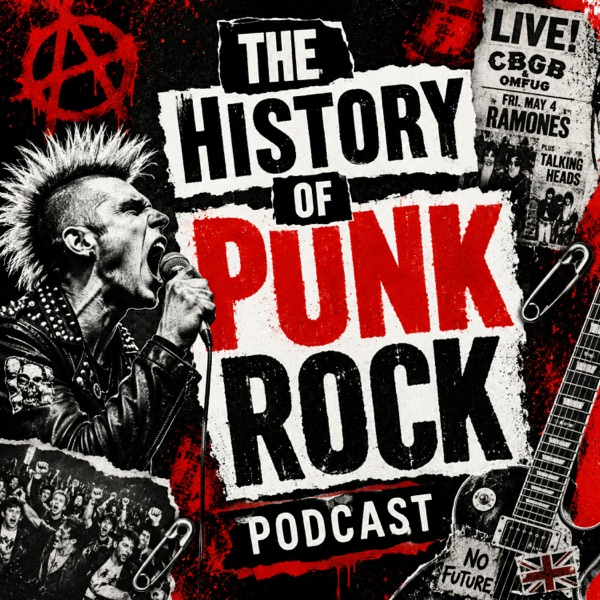
The History of Punk Rock Podcast: Bands, Scenes, Hardcore, DIY Culture, Record Labels, Clubs, and Punk Music History
The History of Punk Rock Podcast: Bands, Scenes, Hardcore, DIY Culture, Record Labels, Clubs, and Punk Music History explores the people, places, records, labels, venues, movements, controversies, and underground communities that shaped punk from its earliest roots through the modern era. Each episode examines how punk rock developed from the raw energy of 1960s garage rock and proto-punk into the explosive scenes of 1970s New York and London, the rise of American hardcore in the 1980s, the growth of independent labels and DIY touring networks, the global expansion of punk subcultures, and the later emergence of skate punk, pop punk, post-hardcore, riot grrrl, emo, street punk, crust punk, anarcho-punk, and countless regional variations.
The podcast dives into influential bands including the Ramones, Sex Pistols, The Clash, Dead Kennedys, Black Flag, Bad Brains, Minor Threat, Misfits, Descendents, Dead Boys, Buzzcocks, The Damned, X, Circle Jerks, Hüsker Dü, The Replacements, Fugazi, Operation Ivy, Rancid, Green Day, NOFX, Bikini Kill, and many others while exploring the scenes and communities that surrounded them. Episodes examine how different cities developed their own sounds, attitudes, venues, and networks, from CBGB and the early New York punk scene to London punk, Los Angeles hardcore, Washington, D.C. hardcore, San Francisco punk, Minneapolis alternative punk, Boston hardcore, Chicago underground music, Seattle's independent scene, and punk movements across Europe, Australia, Japan, Latin America, and beyond.
The History of Punk Rock Podcast also explores the independent record labels that helped punk survive and grow outside the traditional music industry. From SST Records, Dischord Records, Alternative Tentacles, Epitaph Records, Lookout! Records, Sub Pop, Fat Wreck Chords, Touch and Go Records, Slash Records, BYO Records, and countless smaller DIY operations, the show examines how labels, distributors, record stores, college radio stations, fanzines, promoters, photographers, and independent venues created an alternative infrastructure for music long before the internet made independent distribution commonplace.
Beyond the records themselves, the podcast investigates punk as a broader cultural movement. Episodes explore DIY ethics, underground publishing, political activism, anti-authoritarian ideas, fashion, visual art, album design, skateboarding, independent filmmaking, college radio, all-ages venues, squats, touring culture, scene rivalries, straight edge, anarcho-punk, riot grrrl, and the ongoing debate over what punk actually means. The show also looks at the conflicts that shaped punk history, including disputes between bands and labels, censorship battles, police confrontations, moral panics, accusations of selling out, major-label signings, scene divisions, and the tension between underground credibility and mainstream success.
From legendary albums and forgotten seven-inch singles to tiny clubs, basement shows, independent record stores, photocopied zines, regional scenes, influential producers, promoters, and musicians who never became household names, The History of Punk Rock Podcast tells the larger story behind one of modern music's most influential movements. Whether exploring the origins of hardcore, the rise of independent labels, the explosion of 1990s punk, the relationship between punk and alternative rock, or the continuing influence of DIY culture on modern artists, the show documents how generations of musicians and fans repeatedly rebuilt punk on their own terms.
For longtime punk fans, music-history listeners, record collectors, musicians, and anyone interested in underground culture, The History of Punk Rock Podcast provides a deep look at the bands, scenes, labels, clubs, records, personalities, and ideas that turned a rebellious underground movement into a global musical and cultural force.
- Episodes
- 1,045
- Releases
- Daily
- Typical length
- 16 min
- On air since
- 2026
- Latest episode
- 2 weeks ago
Episodes
1,045 episodes, newest first
-
14 min
How Punk Album Covers Revolutionized Visual Design
Episode 1043
Show notes
The episode explores how punk’s graphic pioneers—from Jamie Reid’s ransom‑note on Never Bollocks to Peter Saville’s white sine waves for Unknown Pleasures—upended commercial design standards, leveraged cheap printing techniques, and forged a DIY aesthetic that still informs indie art today. We unpack the legal squabbles, production hacks, and cultural messages behind iconic sleeves that turned albums into manifestos.
Learn more about your ad choices. Visit https://megaphone.fm/adchoices
-
11 min
Joan Jett & the Germs’ GI: From Garage Chaos to Hardcore Blueprint
Episode 1042
Show notes
In this episode we trace Joan Jett’s unexpected role as producer on the Germs’ 1980 album GI, examining how her studio choices sharpened their raw sound into a template for early hardcore. We explore how Jett balanced chaos with clarity, the record’s influence on bands like Bad Brains and Minor Threat, and its place within New Red Archives’ DIY legacy.
Learn more about your ad choices. Visit https://megaphone.fm/adchoices
-
11 min
The Pop‑Punk Revival: Why the Genre Keeps Re‑Emerging
Episode 1041
Show notes
From Green Day’s breakout on Reprise to Blink‑182’s hook‑laden hits, this episode follows each resurgence of pop‑punk by mapping its DIY touring networks, independent label strategies, and modern streaming ecosystems. We explore how bands leveraged all‑ages venues, mailing lists, and social media to keep the sound alive—and why every new wave feels fresh yet recognizably familiar.
Learn more about your ad choices. Visit https://megaphone.fm/adchoices
-
9 min
Buzzcocks, Manchester, and the Secret Sex Pistols Gigs That Sparked a City
Episode 1040
Show notes
This episode explores how the two 1976 Sex Pistols concerts at Manchester’s Lesser Free Trade Hall ignited a DIY punk scene that birthed the Buzzcocks, fueled Joy Division’s early ethos, and laid groundwork for The Smiths. By examining venue conditions, local audience reactions, and the ripple effects on nearby bands and labels, we trace how a handful of shows reshaped Manchester’s musical identity.
Learn more about your ad choices. Visit https://megaphone.fm/adchoices
-
18 min
The Battle Jacket: From War Gear to Punk‑Metal Identity
Episode 1039
Show notes
This episode traces the journey of the battle jacket, from its origins on WWII flight suits through skinhead and punk movements, into heavy metal fashion, and back into the DIY ethos that still shapes alternative music today. We explore how patches, studs, paint, and economic ingenuity turned a simple garment into an icon of belonging and rebellion across disparate scenes, separating myth from documented history along the way.
Learn more about your ad choices. Visit https://megaphone.fm/adchoices
-
20 min
The Cramps’ Asylum Riot: A Free Gig Inside Napa State Hospital
Episode 1038
Show notes
This episode dives into The Cramps’ 1978 free show inside California’s Napa State Psychiatric Facility, unpacking how the band, a nurse and an underground crew turned a hospital ward into a punk stage, the bootleg footage that sparked myth, and the ethical debates surrounding performances in institutional spaces.
Learn more about your ad choices. Visit https://megaphone.fm/adchoices
-
16 min
Punk and Streaming: How Digital Platforms Changed DIY Culture
Episode 1037
Show notes
From Spotify playlists to Bandcamp’s pay‑what‑you‑will model, this episode traces how streaming reshaped punk’s core values—distribution, revenue, and community. We dig into the data behind playlist placement, the economics of per‑stream payouts, and how bands are leveraging algorithms and social media to keep their DIY spirit alive in a global digital landscape.
Learn more about your ad choices. Visit https://megaphone.fm/adchoices
-
15 min
Minor Threat’s Breakup at the Peak – How a Tiny Band’s End Defined Washington, D.C. Hardcore
Episode 1036
Show notes
The episode traces Minor Threat from its 1979 debut through its rapid rise to DIY legend status and straight‑edge anthem fame, examining the band’s recordings, touring, and the internal tensions that culminated in a 1983 split. It explores how Dischord Records’ independent model enabled their self‑pressed releases while keeping punk politics front‑and‑center, and why the breakup—though brief—solidified the band’s influence on Washington, D.C.’s hardcore scene and beyond.
Learn more about your ad choices. Visit https://megaphone.fm/adchoices
-
21 min
Dave Vanian and the Dawn of Gothic Punk
Episode 1035
Show notes
This episode digs into how Dave Vanian’s theatrical, vampire‑inspired image and baritone vocals turned the early London punk band the Damned from a raw punk act into the progenitor of gothic rock. From the 1976 single “New Rose” to the atmospheric 1982 LP *Phantasmagoria*, we trace their DIY pressings, touring routes, underground fan networks, and the stylistic shift that fed future goth bands.
Learn more about your ad choices. Visit https://megaphone.fm/adchoices
-
16 min
Mudhoney & Touch Me I’m Sick: Seattle’s Raw Grunge Revolution
Episode 1034
Show notes
In this episode we dive into Mudhoney’s formation in early‑late '80s Seattle, their seminal 1988 single “Touch Me I’m Sick,” and the DIY ecosystem that brought a raw, fuzz‑heavy punk sound into the spotlight. We trace how the band worked with Sub Pop and producer Jack Endino to turn a boombox‑demo into a pressing that would influence a generation of grunge and alt‑rock musicians. The episode also examines the role of mail‑order networks, independent vinyl pressing, and underground venues in cementing Seattle’s reputation as a fertile ground for punk‑inspired experimentation.
Learn more about your ad choices. Visit https://megaphone.fm/adchoices
-
17 min
Punk in India: From Mumbai’s Riot Peddlers to Delhi’s DIY Revolution
Episode 1033
Show notes
This episode traces the emergence of hardcore punk in Mumbai and the spread of DIY culture across Delhi, Bangalore and other cities. It looks at early bands like The Riot Peddlers, Pacifist, and Death by Fungi, their makeshift studios, all‑ages venues, fanzine networks, and the shift to digital distribution on Bandcamp and Facebook. The story shows how regional politics, language diversity and internet access shaped a unique Indian punk scene.
Learn more about your ad choices. Visit https://megaphone.fm/adchoices
-
14 min
The Replacements' 1986 SNL Debut and Punk's Television Test
Episode 1032
Show notes
An in‑depth look at The Replacements’ chaotic January 1986 appearance on Saturday Night Live—how the band’s raw stage presence and on‑air outbursts created a punk milestone, forced NBC to tighten TV standards, and set the tone for how indie acts confront mainstream media. The episode unpacks why that single TV moment became both a curse and a catalyst in the band’s career—and what it reveals about punk’s tension with commercial institutions.
Learn more about your ad choices. Visit https://megaphone.fm/adchoices
-
13 min
Social Distortion: Mike Ness and the Rise of California Punk
Episode 1031
Show notes
This episode delves into Social Distortion’s journey from a Fullerton basement to mainstream acclaim, chronicling how frontman Mike Ness fused punk energy with country swagger. We trace the band’s DIY beginnings, label shifts, touring challenges, and evolving sound—showing why they remain a bridge between hardcore grit and melodic punk.
Learn more about your ad choices. Visit https://megaphone.fm/adchoices
-
33 min
Television, Punk, and the Battle for the Airwaves
Episode 1030
Show notes
This episode explores how punk bands navigated television’s constraints and opportunities—from the BBC’s censorship of the Sex Pistols to MTV’s low‑budget videos that broadened the scene—showing how the medium amplified punk’s sound while shaping its image and politics.
Learn more about your ad choices. Visit https://megaphone.fm/adchoices
-
21 min
From Mail Trains to Digital Streams: How Bandcamp Revived 80s DIY Distribution
Episode 1029
Show notes
We compare the gritty, paper‑packed mail‑order network that kept punk alive in the ’80s—think Columbia House, Dischord, SST—to Bandcamp’s online storefront that gives modern bands instant access to fans worldwide. The episode breaks down the logistics, economics, and community spirit behind both models, showing how each shaped the DIY ethic.
Learn more about your ad choices. Visit https://megaphone.fm/adchoices
-
17 min
Revolution Summer and the Birth of Emotional Hardcore
Episode 1028
Show notes
The episode traces Washington D.C.’s 1984–85 Revolution Summer, showing how Dischord’s DIY ethos helped bands like Rites of Spring, Embrace and Gray Matter turn raw hardcore into a new genre of emotional expression—laying the groundwork for emo, post‑hardcore, and the future of punk.
Learn more about your ad choices. Visit https://megaphone.fm/adchoices
-
15 min
Billy Idol: Punk’s Reimagined Rebel in the ’80s
Episode 1027
Show notes
The episode follows Billy Idol’s journey from the DIY London punk scene of the late ‘70s—via Chelsea and Generation X—to becoming an MTV‑dominated pop‑punk icon. We trace how his raw edge was blended with slick production, chart‑winning singles, and a theatrical persona that reshaped punk’s reach without abandoning its core ethos. The story examines the tensions between underground credibility and commercial ambition, the business moves behind his label deals, and the lasting influence on later pop‑punk acts.
Learn more about your ad choices. Visit https://megaphone.fm/adchoices
-
9 min
Punk and Moral Panic: How Media Turned Rebels Into Threats
Episode 1026
Show notes
This episode explores how mainstream newspapers, TV networks, police departments, and political groups turned punk’s raw energy into a national moral panic, using case studies from the UK, US, and beyond. It looks at specific incidents—like the Daily Mail’s “death squad” headline for the Ramones, the BBC ban on Sex Pistols’ ‘God Save the Queen’, police crackdowns on Dead Kennedys shows, and the 2000s Parents Music Resource Center campaigns—and how these narratives shaped public perception and policy. Through a balanced view of contemporary reporting, fan reactions, and subsequent fallout, we uncover the complex dynamics between punk’s DIY ethos and institutional power.
Learn more about your ad choices. Visit https://megaphone.fm/adchoices
-
18 min
Fresh Fruit for Rotting Vegetables: Dead Kennedys' Satirical Assault on Reagan‑Era America
Episode 1025
Show notes
This episode explores the 1980 debut of the Dead Kennedys, dissecting how its surf‑inspired guitar hooks, razor‑sharp political satire, and DIY production forged a new blueprint for American punk. We trace the band’s origins in San Francisco, the underground distribution network run by Alternative Tentacles, and the cultural impact that rippled from California to international shores.
Learn more about your ad choices. Visit https://megaphone.fm/adchoices
-
13 min
Team Dresch, Queercore, and the Riot Grrrl Connection
Episode 1024
Show notes
Team Dresch, formed in Olympia’s DIY scene, bridged queercore and riot grrrl activism through sharply lyrical, guitar‑driven records. The episode traces their self‑released releases on Chainsaw Records, touring networks that kept queer voices alive, and how the band’s intersectional stance influenced both feminist punk and LGBTQ+ representation within underground culture.
Learn more about your ad choices. Visit https://megaphone.fm/adchoices
Music Commentary lists
More Music Commentary shows picked out from the charts

More in Music Commentary
Placed highest on Apple Podcasts' Music Commentary chart right now