Podcast
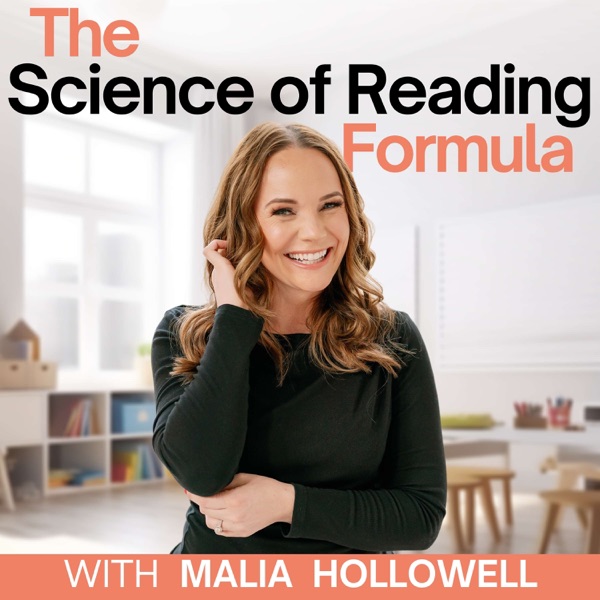
The Science of Reading Formula
Welcome to The Science of Reading Formula, the podcast that helps you simplify reading instruction, save time, and support every student’s success—without feeling like you’re running on empty.
I’m Malia Hollowell—a National Board Certified Teacher, author, and founder of Playdough to Plato. Over the past 20 years, I’ve honed my craft, combining science-backed practices with practical solutions to meet the real challenges educators face every day.
Each episode dives into essential pillars of teaching success:
• Smart strategies to meet the needs of every student without adding extra stress to your plate.
• Honest conversations and tips to tackle teacher burnout and find a balance between school and home life.
• Science-backed practices that actually work—saving you time and boosting student results.
• Practical tips to streamline your planning and free up time for what matters most.
This is your space to find encouragement, expert insights, and actionable ideas to create a classroom (and life) that works for you. Let’s get started!
- How To chart
- #79
- Episodes
- 124
- Releases
- Weekly
- Typical length
- 39 min
- On air since
- 2024
- Latest episode
- 2 days ago
Episodes
124 episodes, newest first
-
39 min
The Secret to Reading Comprehension No One Talks About with Doug Lemov
Season 3, Episode 15
Show notes
What if your comprehension lessons are missing the one thing that actually makes them work? In this episode, Doug Lemov joins us to reveal the science-backed—but often overlooked—key to reading comprehension: background knowledge.
You’ll learn how attention, fluency, vocabulary, and shared reading experiences shape your students’ ability to understand what they read—and what you can do to improve it starting tomorrow.
In this episode, we'll talk about:
• Why comprehension isn’t a skill you can teach in isolation
• The powerful role background knowledge plays in student success
• How to build fluency in a way that boosts understanding
• Simple ways to improve vocabulary instruction without wasting time
• Why reading aloud is more than just fun—it’s essentialShow Links
Teach Like a Champion Website / Book (Amazon affiliate link)
Join Malia on Instagram.
Become a Science of Reading Formula member!Rate, Review, and Follow
If you loved this episode, please take a minute to rate and review my show! That helps the podcast world know that this show is worth sharing with other educators just like you.
Scroll to the bottom, tap to rate with five stars, and select "Write a Review". Then let me know what you loved most about the episode!
While you're there, be sure to follow the podcast. I'm adding a bunch of bonus episodes to the feed and I don't want you to miss out!
-
39 min
Assessment Overload? Use These 3 Steps to Make It Count with Dr. Jan Hasbrouck
Season 3, Episode 14
Show notes
Do assessments feel like one more thing on your plate—with no clear payoff? In this episode, Dr. Jan Hasbrouck shares how to make assessments actually work for you by connecting them directly to instruction.
You’ll learn how to simplify your assessment process, use quick data checks to guide small group decisions, and stop wasting time on scores that don’t drive results.
In this episode, we'll talk about:
• Why more assessments aren’t the answer—and what actually is
• How to match assessments to the skills you’re teaching
• Quick, informal checks that help guide daily instruction
• How to group students based on skill needs—not reading levels
• The mindset shift that makes assessment feel empowering, not exhaustingShow Links
Jan's Website https://www.amazon.com/s?k=joan+sedita&language=en_US&crid=RCYR825ZYLTF&linkCode=sl2&linkId=b379f9b4d2e2e0e283e61a4bd5b33bea&sprefix=joan+sedita%2Caps%2C182&tag=playtoplat-20&ref=as_li_ss_tlJoin Malia on Instagram.
Become a Science of Reading Formula member!Rate, Review, and Follow
If you loved this episode, please take a minute to rate and review my show! That helps the podcast world know that this show is worth sharing with other educators just like you.
Scroll to the bottom, tap to rate with five stars, and select "Write a Review". Then let me know what you loved most about the episode!
While you're there, be sure to follow the podcast. I'm adding a bunch of bonus episodes to the feed and I don't want you to miss out!
-
45 min
The Secret to Better Comprehension? Use What Kids Already Know with Zaretta Hammond
Season 3, Episode 13
Show notes
What if the real key to comprehension isn’t in your curriculum — but in your students’ lived experiences?
Zaretta Hammond flips the script on traditional reading instruction in this episode of The Science of Reading Formula Podcast.
You’ll learn how activating what kids already know can dramatically improve comprehension, engagement, and equity — no fancy program required.
In this episode, we'll talk about:
• Why schema matters more than you think.
• How to help students “mix the new with the known”.
• Quick ways to build background knowledge during your regular block.
• How to make your reading lessons more meaningful — starting tomorrow.Show Links
Connect with Zaretta on LinkedIn
Zaretta's Book: Culturally Responsive Teaching and the Brain
Join Malia on Instagram.
Become a Science of Reading Formula member!Rate, Review, and Follow
If you loved this episode, please take a minute to rate and review my show! That helps the podcast world know that this show is worth sharing with other educators just like you.
Scroll to the bottom, tap to rate with five stars, and select "Write a Review". Then let me know what you loved most about the episode!
While you're there, be sure to follow the podcast. I'm adding a bunch of bonus episodes to the feed and I don't want you to miss out!
-
47 min
Structured Literacy Strategies That Actually Help with Dr. Lousie Spear-Swerling
Season 3, Episode 12
Show notes
Helping struggling readers can feel frustrating, but it doesn’t have to be a mystery. In this episode of The Science of Reading Formula Podcast, author and expert Louise Spear-Swerling breaks down the structured literacy strategies that actually move the needle for PreK–2 students. From spotting instructional mismatches to giving more effective feedback, this episode is packed with teacher-tested, science-backed insights.
In this episode, we'll talk about:
• What structured literacy really means (and why it works).
• How to use informal assessments to drive instruction.
• A smarter way to monitor student progress weekly.
• The most common myths about dyslexia in schools.
• How to build consistency across MTSS tiers.Show Links
Dr. Louise Spear-Swerling on LinkedIn
Dr. Spear-Swerling's book: Structured Literacy Interventions
Join Malia on Instagram.
Become a Science of Reading Formula member!Rate, Review, and Follow
If you loved this episode, please take a minute to rate and review my show! That helps the podcast world know that this show is worth sharing with other educators just like you.
Scroll to the bottom, tap to rate with five stars, and select "Write a Review". Then let me know what you loved most about the episode!
While you're there, be sure to follow the podcast. I'm adding a bunch of bonus episodes to the feed and I don't want you to miss out!
-
47 min
Teaching Writing is Essential to Reading Success with Dr. Steve Graham
Season 3, Episode 11
Show notes
What if the secret to stronger readers isn’t more reading instruction—but better writing instruction?
In this episode, literacy expert Dr. Steve Graham reveals why writing is often the missing piece in early reading success—and how you can use it to supercharge your phonics, fluency, and comprehension instruction.
We’re talking research-backed strategies you can actually use in your PreK–2 classroom, even if writing always feels rushed, messy, or squeezed into the last 10 minutes of the day.
In this episode, we'll talk about:
• Why writing instruction is a game-changer for early readers.
• How sentence construction helps build comprehension.
• What SRSD is (and why it works, even for first graders).
• Smart ways to teach writing—without a full writing block.
• What the science really says about the writing–reading connection.Show Links
Dr. Steve Graham's Faculty Page at ASU
National Writing Project
Join Malia on Instagram.
Become a Science of Reading Formula member!Rate, Review, and Follow
If you loved this episode, please take a minute to rate and review my show! That helps the podcast world know that this show is worth sharing with other educators just like you.
Scroll to the bottom, tap to rate with five stars, and select "Write a Review". Then let me know what you loved most about the episode!
While you're there, be sure to follow the podcast. I'm adding a bunch of bonus episodes to the feed and I don't want you to miss out!
-
44 min
Simple Moves That Supercharge Vocabulary Instruction with Blythe Anderson
Season 3, Episode 10
Show notes
What if teaching vocabulary didn’t mean adding more to your plate—but simply rethinking the words you already use? In this episode, Dr. Blythe Anderson shares simple talk moves that make a big impact. From classroom job titles to science experiments, you’ll learn how to turn everyday moments into powerful vocabulary instruction.
In this episode, we'll talk about:
• Why word lists aren’t enough—and what actually works.
• 8 talk moves that boost vocabulary in seconds.
• How to build word consciousness in your classroom.
• Why vocabulary supports decoding, not just comprehension.
• Practical tips for supporting multilingual learners.Show Links
Dr. Anderson's Faculty Profile at University of Buffalohttps://www.amazon.com/s?k=joan+sedita&language=en_US&crid=RCYR825ZYLTF&linkCode=sl2&linkId=b379f9b4d2e2e0e283e61a4bd5b33bea&sprefix=joan+sedita%2Caps%2C182&tag=playtoplat-20&ref=as_li_ss_tlJoin Malia on Instagram.
Become a Science of Reading Formula member!Rate, Review, and Follow
If you loved this episode, please take a minute to rate and review my show! That helps the podcast world know that this show is worth sharing with other educators just like you.
Scroll to the bottom, tap to rate with five stars, and select "Write a Review". Then let me know what you loved most about the episode!
While you're there, be sure to follow the podcast. I'm adding a bunch of bonus episodes to the feed and I don't want you to miss out!
-
51 min
Why Good Readers Still Struggle with Spelling & How to Fix It with Joanne Rudling
Season 3, Episode 9
Show notes
What if everything you’ve believed about spelling is only half the story?
In this episode, spelling expert Joanne Rudling reveals why even your strongest readers still misspell words like said, bottle, and shopping—and why the fix has nothing to do with more phonics worksheets.
Get ready for a conversation that will change the way you teach spelling forever.
In this episode, we'll talk about:
• The surprising reason reading and spelling don’t develop at the same pace.
• Why spelling rules have far fewer “exceptions” than you’ve been told.
• How history, morphology, and silent letters actually make spelling EASIER.
• Why mistakes aren’t setbacks—they’re shortcuts to mastery.
• A simple shift that instantly boosts student spelling confidence.Show Links
Joanne's Email Address // Books on Amazon
How to Spell Website
Join Malia on Instagram.
Become a Science of Reading Formula member!Rate, Review, and Follow
If you loved this episode, please take a minute to rate and review my show! That helps the podcast world know that this show is worth sharing with other educators just like you.
Scroll to the bottom, tap to rate with five stars, and select "Write a Review". Then let me know what you loved most about the episode!
While you're there, be sure to follow the podcast. I'm adding a bunch of bonus episodes to the feed and I don't want you to miss out!
-
47 min
My Child Couldn't Read and No One Noticed with Missy Purcell
Season 3, Episode 8
Show notes
Missy Purcell was a teacher. Her son went to a “good” school. But in third grade, she realized something no one else had: he couldn’t read.
In this powerful conversation, Missy shares the story that shocked her district—and later, the country—when she told it on Emily Hanford’s Sold a Story. What happens when a bright, well-behaved child falls through the cracks of a balanced literacy system? And what does it take to finally get him the instruction he deserved?
This episode is part personal wake-up call, part rally cry for educators who want to get it right. If you’ve ever wondered whether your reading block is working for all kids… don’t miss this one.
In this episode, we'll talk about:
• The moment Missy realized her son had been “passing” without reading.
• How balanced literacy hides real reading struggles.
• Why compliant kids are the easiest to overlook.
• What Sold a Story revealed about systemic failure.
• How teachers can shift without shame—and start making change now.Show Links
Missy's Website // Instagram // Facebookhttps://www.amazon.com/s?k=joan+sedita&language=en_US&crid=RCYR825ZYLTF&linkCode=sl2&linkId=b379f9b4d2e2e0e283e61a4bd5b33bea&sprefix=joan+sedita%2Caps%2C182&tag=playtoplat-20&ref=as_li_ss_tlJoin Malia on Instagram.
Become a Science of Reading Formula member!Rate, Review, and Follow
If you loved this episode, please take a minute to rate and review my show! That helps the podcast world know that this show is worth sharing with other educators just like you.
Scroll to the bottom, tap to rate with five stars, and select "Write a Review". Then let me know what you loved most about the episode!
While you're there, be sure to follow the podcast. I'm adding a bunch of bonus episodes to the feed and I don't want you to miss out!
-
33 min
The Surprising Science Behind Play-Based Learning with Kristen Day
Season 3, Episode 7
Show notes
Is play just for fun—or is it doing something deeper? In this episode, I sit down with Kristen Day, founder of Butterfly Hill Nature Preschool and a fierce advocate for honoring how young children actually learn. We dig into the real science behind play-based learning—what it does for the brain, how it shapes behavior, and why removing it from early childhood classrooms may be doing more harm than we realize.
Whether you're feeling pressure to “get more academic” or just need language to advocate for more play in your day, this episode will leave you feeling grounded, validated, and inspired to make small changes that matter.
In this episode, we'll talk about:
• What the research really says about play-based learning.
• Why risky play (yes, even stick sword fights!) builds essential life skills.
• What happens when children don’t get enough time to play.
• Practical ways to bring meaningful play back into your PreK–2 classroom.
• How to talk to admin about protecting playtime—using research, not guilt.Show Links
Kristen Day's Website // Instagram // Facebookhttps://www.amazon.com/s?k=joan+sedita&language=en_US&crid=RCYR825ZYLTF&linkCode=sl2&linkId=b379f9b4d2e2e0e283e61a4bd5b33bea&sprefix=joan+sedita%2Caps%2C182&tag=playtoplat-20&ref=as_li_ss_tlJoin Malia on Instagram.
Become a Science of Reading Formula member!Rate, Review, and Follow
If you loved this episode, please take a minute to rate and review my show! That helps the podcast world know that this show is worth sharing with other educators just like you.
Scroll to the bottom, tap to rate with five stars, and select "Write a Review". Then let me know what you loved most about the episode!
While you're there, be sure to follow the podcast. I'm adding a bunch of bonus episodes to the feed and I don't want you to miss out!
-
30 min
Stop Teaching Vocabulary the Wrong Way - Try This Instead with Natalie Wexler
Season 3, Episode 6
Show notes
Still asking your students to guess word meanings from context? It’s time for a change. In this episode, Natalie Wexler breaks down the science of how vocabulary really works—and why it’s the key to unlocking reading comprehension.
You’ll learn how to move beyond surface-level word lists and start building deep, long-term word knowledge using techniques grounded in cognitive science.
In this episode, we'll talk about:
• Why context clues often lead students away from true understanding.
• How long-term memory supports comprehension—and how to build it.
• The three-step process for helping students retain and apply new words.
• How to use writing and oral language to deepen vocabulary.
• Ways to integrate vocabulary across subjects—even in math and science.Show Links
Natalie Wexler's Website / Book / LinkedIn
Join Malia on Instagram.
Become a Science of Reading Formula member!Rate, Review, and Follow
If you loved this episode, please take a minute to rate and review my show! That helps the podcast world know that this show is worth sharing with other educators just like you.
Scroll to the bottom, tap to rate with five stars, and select "Write a Review". Then let me know what you loved most about the episode!
While you're there, be sure to follow the podcast. I'm adding a bunch of bonus episodes to the feed and I don't want you to miss out!
-
42 min
Why Kids Act Out and What Their Nervous System is Trying to Tell You with Kim Barthel
Season 3, Episode 5
Show notes
Why do some kids act out, melt down, or shut down—no matter how consistent or calm we are? In this powerful episode, I’m joined by internationally respected occupational therapist Kim Barthel, who helps us unpack the neuroscience of behavior. We talk about how trauma affects student behavior, what’s really happening when kids dysregulate, and why traditional behavior plans often miss the mark for the kids who need our help the most.
If you’ve ever felt helpless in the face of a child’s big emotions—or exhausted from trying to manage it all—this conversation will leave you feeling grounded, validated, and better equipped to support every learner in your room.
In this episode, we'll talk about:
• How trauma affects student behavior—and what we often miss
• Why some kids explode, while others shut down completely
• What “co-regulation” looks like in real-life classrooms
• How your own nervous system impacts your students
• What you can do tomorrow to create more safety and connectionShow Links
Kim's Course: Trauma Sensitive Education (Use MALIA20 for 20%off!)
Join Malia on Instagram.
Become a Science of Reading Formula member!Rate, Review, and Follow
If you loved this episode, please take a minute to rate and review my show! That helps the podcast world know that this show is worth sharing with other educators just like you.
Scroll to the bottom, tap to rate with five stars, and select "Write a Review". Then let me know what you loved most about the episode!
While you're there, be sure to follow the podcast. I'm adding a bunch of bonus episodes to the feed and I don't want you to miss out!
-
41 min
The Surprising Way Your Voice Can Calm a Dysregulated Classroom with Tracy Goodwin
Season 3, Episode 4
Show notes
What if your voice was the key to calming chaos in your classroom? In this episode, voice expert Tracy Goodwin shares how tone, pace, and presence can either soothe or activate a child’s nervous system—especially those who are dysregulated.
You’ll learn simple shifts you can make to use your voice as a powerful tool for connection, co-regulation, and classroom calm.
In this episode, we'll talk about:
• How your voice impacts student behavior and emotional safety.
• The science behind tone, cadence, and nervous system response.
• Why some calm voices still feel “tense” to kids—and how to fix it.
• Simple strategies to use your voice for co-regulation.
• How to build student trust without raising your volume.Show Links
Tracy Goodwin Website / Instagram / LinkedIn
Join Malia on Instagram.
Become a Science of Reading Formula member!Rate, Review, and Follow
If you loved this episode, please take a minute to rate and review my show! That helps the podcast world know that this show is worth sharing with other educators just like you.
Scroll to the bottom, tap to rate with five stars, and select "Write a Review". Then let me know what you loved most about the episode!
While you're there, be sure to follow the podcast. I'm adding a bunch of bonus episodes to the feed and I don't want you to miss out!
-
17 min
"I Couldn't Keep Reteaching... so I Tried Something Different" with Rose Crystal
Season 3, Episode 3
Show notes
What if your students could finally retain what you teach—and you could stop second-guessing every phonics lesson?
In this episode, veteran first grade teacher Rose shares how she went from overwhelmed and unsure… to confident and clear—thanks to her first step inside The Science of Reading Formula: our four-week bootcamp called The Reading Roadmap.
If you’re tired of piecing together your reading instruction, this conversation is the encouragement and direction you’ve been looking for.
In this episode, we’ll talk about:
• Why so many teachers feel stuck teaching reading—and how to break free.
• The very first step Rose took to start seeing real student growth.
• How the Reading Roadmap gives you just what you need (without the overwhelm).
• What changed in her confidence, planning time, and student results.
• How to know if you’re ready to join The Science of Reading Formula.Show Links
Preview the Vault of Tools & Trainingshttps://scienceofreadingformula.com/read-aloud-book-list/Join Malia on Instagram.
Become a Science of Reading Formula member!Rate, Review, and Follow
If you loved this episode, please take a minute to rate and review my show! That helps the podcast world know that this show is worth sharing with other educators just like you.
Scroll to the bottom, tap to rate with five stars, and select "Write a Review". Then let me know what you loved most about the episode!
While you're there, be sure to follow the podcast. I'm adding a bunch of bonus episodes to the feed and I don't want you to miss out!
-
42 min
How School Leaders Quietly Shape (or Sabotage) Reading Success with Dr. Terrie Noland
Season 3, Episode 2
Show notes
What if leadership is the reason your reading scores aren’t moving? You’ve trained your teachers. You’ve rolled out new curriculum. But something still isn’t working. In this episode, Terrie Noland reveals how leadership—yes, even well-meaning leadership—can quietly block or boost reading success. It’s not about blame. It’s about getting real.
In this episode, we'll talk about:
• Why literacy leadership is the missing link in most schools.
• The difference between knowledge, wisdom, and curiosity.
• How school leaders unintentionally block reading success.
• Small “micro-moves” that drive big culture change.
• How to inspire teachers and build buy-in without burning out.Show Links
Connect with Dr. Noland on LinkedInhttps://www.amazon.com/s?k=joan+sedita&language=en_US&crid=RCYR825ZYLTF&linkCode=sl2&linkId=b379f9b4d2e2e0e283e61a4bd5b33bea&sprefix=joan+sedita%2Caps%2C182&tag=playtoplat-20&ref=as_li_ss_tlJoin Malia on Instagram.
Become a Science of Reading Formula member!Rate, Review, and Follow
If you loved this episode, please take a minute to rate and review my show! That helps the podcast world know that this show is worth sharing with other educators just like you.
Scroll to the bottom, tap to rate with five stars, and select "Write a Review". Then let me know what you loved most about the episode!
While you're there, be sure to follow the podcast. I'm adding a bunch of bonus episodes to the feed and I don't want you to miss out!
-
29 min
Is Your Curriculum Aligned with the Science of Reading? with Kari Kurto
Season 3, Episode 1
Show notes
You’re told to teach with fidelity—but what if the curriculum itself isn’t aligned with the science of reading? In this episode, Kari Kurto from The Reading League breaks down how to evaluate your materials, spot red flags, and use the Curriculum Navigation Reports and Compass tools to make better instructional decisions—without starting from scratch.
In this episode, we'll talk about:
• How to tell if a curriculum is really SoR aligned.
• The top red flags to watch for in your materials.
• Why “fidelity” isn’t always the best approach.
• Free tools to help you evaluate and improve.
• How to make change—even if your district isn’t there yet.Show Links
The Reading League Website
Curriculum Decision Maker's Page
The Reading League's Evaluation Guidelines
Join Malia on Instagram.
Become a Science of Reading Formula member!Rate, Review, and Follow
If you loved this episode, please take a minute to rate and review my show! That helps the podcast world know that this show is worth sharing with other educators just like you.
Scroll to the bottom, tap to rate with five stars, and select "Write a Review". Then let me know what you loved most about the episode!
While you're there, be sure to follow the podcast. I'm adding a bunch of bonus episodes to the feed and I don't want you to miss out!
-
32 min
Behavior Management Strategies That Save Your Sanity with Allie Szczecinski
Show notes
Ever feel like one more behavior outburst might push you over the edge? You’re not alone. In this episode, we’re breaking down practical, real-life strategies that help K–2 teachers handle challenging behaviors without shame, power struggles, or burnout. If behavior’s been the hardest part of your day—you’re going to feel seen and supported here.
In this episode, we'll talk about:
• Why behavior feels harder than ever—and what’s really going on.
• Simple tools that help kids express needs before they escalate.
• How to build strong classroom systems that support every child.
• The one strategy you need for that student who always pushes back.
• Ways to stay calm (even when you feel like yelling).Show Links
Allie's Miss Behavior Blog / Instagramhttps://www.amazon.com/s?k=joan+sedita&language=en_US&crid=RCYR825ZYLTF&linkCode=sl2&linkId=b379f9b4d2e2e0e283e61a4bd5b33bea&sprefix=joan+sedita%2Caps%2C182&tag=playtoplat-20&ref=as_li_ss_tlYale Center for Emotional Intelligence RULERhttps://www.amazon.com/s?k=joan+sedita&language=en_US&crid=RCYR825ZYLTF&linkCode=sl2&linkId=b379f9b4d2e2e0e283e61a4bd5b33bea&sprefix=joan+sedita%2Caps%2C182&tag=playtoplat-20&ref=as_li_ss_tlJoin Malia on Instagram.
Become a Science of Reading Formula member!Rate, Review, and Follow
If you loved this episode, please take a minute to rate and review my show! That helps the podcast world know that this show is worth sharing with other educators just like you.
Scroll to the bottom, tap to rate with five stars, and select "Write a Review". Then let me know what you loved most about the episode!
While you're there, be sure to follow the podcast. I'm adding a bunch of bonus episodes to the feed and I don't want you to miss out!
-
1 hr 10 min
You Can't Teach Every Vocabulary Word, So Teach This Instead with Dr. Trina Spencer
Show notes
Teaching kids to decode words is essential, but what happens when they can read the words and still don’t understand what they’re reading? In this episode, we dive deep into the often overlooked role of academic language in reading comprehension. Language expert Trina Spencer joins us to explain why strong language skills are the true foundation of literacy and what teachers can start doing right away to help students build them. If you’ve ever had students who read fluently but struggle to make meaning from text, this conversation will shift the way you think about comprehension instruction.
In this episode, we'll talk about:
• Why spoken language, not phonics, is the true foundation of reading comprehension.
• What academic language really is and why it is much more than just vocabulary.
• The different types of academic vocabulary, including general academic words, domain-specific words, polysemous words, and morphologically complex words.
• A powerful 30-second strategy that helps students learn new words independently using inferential thinking.
• Why read-alouds alone are not enough for building strong language comprehension and what teachers can do instead.
• Simple shifts teachers can make to help students develop the language skills needed for reading success.Show Links
Dr. Trina Spencer's website // on LinkedIn // free resourceshttps://www.amazon.com/s?k=joan+sedita&language=en_US&crid=RCYR825ZYLTF&linkCode=sl2&linkId=b379f9b4d2e2e0e283e61a4bd5b33bea&sprefix=joan+sedita%2Caps%2C182&tag=playtoplat-20&ref=as_li_ss_tlJoin Malia on Instagram.
Become a Science of Reading Formula member!Rate, Review, and Follow
If you loved this episode, please take a minute to rate and review my show! That helps the podcast world know that this show is worth sharing with other educators just like you.
Scroll to the bottom, tap to rate with five stars, and select "Write a Review". Then let me know what you loved most about the episode!
While you're there, be sure to follow the podcast. I'm adding a bunch of bonus episodes to the feed and I don't want you to miss out!
-
39 min
Literacy is a Human Right with Dr. Tanji Reed Marshall
Season 2, Episode 49
Show notes
What if reading isn’t just a skill we teach—but a right we protect?
In this episode, I’m joined by Dr. Tanji Reed Marshall, a powerful voice in education who invites us to rethink what it really means to teach every child how to read. We go beyond the buzzwords and into the heart of why literacy matters—not just for achievement, but for identity, dignity, and opportunity.
This conversation will challenge you (in the best way), ground you in purpose, and give you the language to advocate for real change—without needing to overhaul your classroom.
In this episode, we'll talk about:
• What it really means to honor literacy as a human right.
• How to spot the invisible barriers some students face.
• Why representation in literacy materials matters more than we think.
• What small shifts can make your instruction more inclusive.
• How to keep growing—without guilt, overwhelm, or perfectionism.Show Links
Dr. Tanji Reed Marshall 's website // on LinkedIn // on X (formerly Twitter)https://www.amazon.com/s?k=joan+sedita&language=en_US&crid=RCYR825ZYLTF&linkCode=sl2&linkId=b379f9b4d2e2e0e283e61a4bd5b33bea&sprefix=joan+sedita%2Caps%2C182&tag=playtoplat-20&ref=as_li_ss_tlJoin Malia on Instagram.
Become a Science of Reading Formula member!Rate, Review, and Follow
If you loved this episode, please take a minute to rate and review my show! That helps the podcast world know that this show is worth sharing with other educators just like you.
Scroll to the bottom, tap to rate with five stars, and select "Write a Review". Then let me know what you loved most about the episode!
While you're there, be sure to follow the podcast. I'm adding a bunch of bonus episodes to the feed and I don't want you to miss out!
-
44 min
What No One Tells PreK-2 Teachers About Teaching Writing... Until Now with Joan Sedita
Season 2, Episode 48
Show notes
You’ve heard all about the science of reading—but what about the science of writing? Most K–2 teachers are handed phonics programs with zero guidance on how to actually teach writing. That changes today.
In this episode, Joan Sedita pulls back the curtain on what your teacher prep program never taught you. She introduces her powerful Writing Rope framework, shares why oral language matters more than perfect spelling in the early years, and gives you permission to start where your students are—scribbles, drawings, and all.
Whether you're teaching kinders who can’t write a sentence or second graders stuck in short, choppy responses, this episode will transform how you think about writing instruction.
In this episode, we'll talk about:
• The 5 strands of writing all K–2 teachers should be weaving into their day.
• Why “just wait until they can write” is the wrong advice for early learners.
• Easy ways to turn drawing and talking into real writing progress.
• How to make writing a daily routine—even in 15 minutes or less.Show Links
Keys to LiteracyJoan Sedita's Books on AmazonJoin Malia on Instagram.
Become a Science of Reading Formula member!Rate, Review, and Follow
If you loved this episode, please take a minute to rate and review my show! That helps the podcast world know that this show is worth sharing with other educators just like you.
Scroll to the bottom, tap to rate with five stars, and select "Write a Review". Then let me know what you loved most about the episode!
While you're there, be sure to follow the podcast. I'm adding a bunch of bonus episodes to the feed and I don't want you to miss out!
-
30 min
7 Mighty Moves That Transform Reading Instruction with Lindsay Kemeny
Season 2, Episode 47
Show notes
What happens when a veteran teacher discovers that her reading instruction isn’t working—not even for her own son?
In this episode, Lindsay Kemeny, author of 7 Mighty Moves, shares the pivotal moment that changed everything and walks us through the practical shifts she made to align her classroom with the science of reading.
In this episode, we'll talk about:
• The 7 Mighty Moves and how to apply them without a complete overhaul.
• Why decodable texts are helpful—but not forever.
• How to design a reading block that actually works for your students.
• The difference between engagement and entertainment.
• What to do if you’re overwhelmed and don’t know where to start.Show Links
Lindsay Kemeny Instagram // LinkedIn// Podcast // Website
7 Mighty MovesRock Your Literacy BlockJoin Malia on Instagram.
Become a Science of Reading Formula member!Rate, Review, and Follow
If you loved this episode, please take a minute to rate and review my show! That helps the podcast world know that this show is worth sharing with other educators just like you.
Scroll to the bottom, tap to rate with five stars, and select "Write a Review". Then let me know what you loved most about the episode!
While you're there, be sure to follow the podcast. I'm adding a bunch of bonus episodes to the feed and I don't want you to miss out!
On these lists
The Science of Reading Formula is one of the shows picked out on this list
More in Courses
Placed highest on Apple Podcasts' Courses chart right now