Podcast
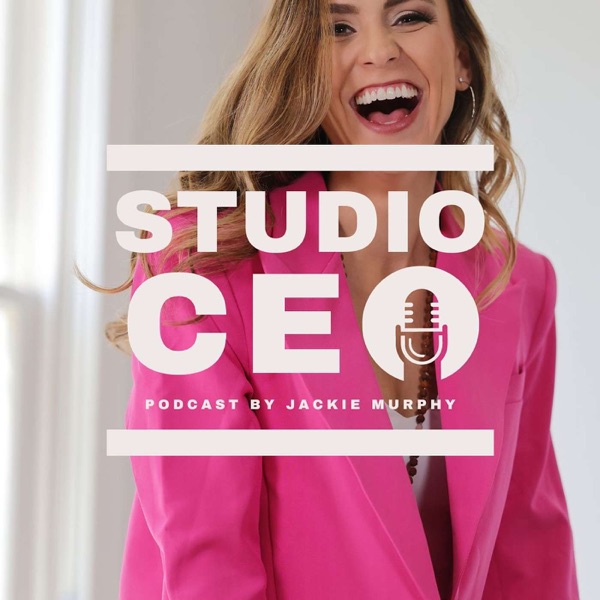
The Studio CEO: Business Coaching For Yoga & Pilates Teachers & Studio Owners
Welcome to The Studio CEO, the only podcast that empowers yoga and Pilates teachers and studio owners to step confidently into their roles as CEOs. If you're ready to take your business seriously, show up with passion, and scale your studio to new heights without burning out, you're in the right place.
I’m your host, Jackie Murphy, an award-winning, certified business coach with 12+ years in the yoga industry I’ve seen firsthand what it takes to turn your passion into a powerful, scalable business.
Join me as we dive into strategies, insights, and real-world advice to help you grow your revenue, build a thriving team, and create a business that serves you as much as you serve your clients. It's time to embrace your CEO mindset and make more money without working more.
- Episodes
- 316
- Releases
- Weekly
- Typical length
- 26 min
- On air since
- 2020
- Latest episode
- 1 week ago
Episodes
316 episodes, newest first
-
24 min
The 3 Content Types That Turn Warm Leads Into Clients
Episode 89
Show notes
If your emails are only telling people when your next class is… they’re probably not working.
Most yoga and Pilates studio owners think they’re nurturing their audience when they send a weekly newsletter. But logistics like schedules and price updates don’t build belief—and belief is what actually turns warm leads into paying clients.
In this episode of The Studio CEO, Jackie Murphy shares the three content types that bridge the gap between “interested” and “invested,” helping you turn subscribers into students, class-takers into members, and clients into lifers.
What You’ll Learn in This Episode:
• Why nurture content works (and why logistics emails fall flat)
• The psychology behind why warm leads need belief, not just information
• Practical examples of nurture content you can create right now
• How to shift your emails from “nice to know” → “necessary to read”
• 3 content types to start sending this week:• Behind-the-scenes belief building
• Your unique point of view (POV)
• Story-based content (yours + your clients’)Your audience is already warm. They’ve signed up, they’re curious, and they want change. But until you show them why it matters and help them believe transformation is possible, they won’t take the leap.
When you stop sending logistics and start sending belief-driven content, your nurture emails stop being ignored—and start creating conversions.
The next time you sit down to write an email, ask yourself:
"Am I just informing—or am I inspiring?"
Because your subscribers don’t need more information. They need transformation. And it starts with content that helps them believe it’s possible.
Work with Jackie Murphy
• Say Hi on Instagram@studioceoofficial
• Join The Studio CEO Program: https://www.jackiegmurphy.com/studioceo-new
• The Studio CEO Ads Agency: https://www.jackiegmurphy.com/agencyFree Workshop
• Your Next 100 Students Free Workshop: https://www.jackiegmurphy.com/next100og
-
1 hr 1 min
Opening a Yoga Studio and hitting $5k months with Tarah Mancl
Episode 88
Show notes
Welcome to Opening a Yoga Studio and hitting $5k months with Tarah Mancl.
Tarah Mancl is the owner of The Wellness Barn Studio. She is a 200- Registered Yoga Teacher, Board Certified Health Coach for private clients and group classes, a member of the American Association of Drugless Practitioners, small business owner, a Coaching Circle Coach at The Institute of Integrative Nutrition, Yoga Journal Conference Assistant, and BEST of all, a Mom to three amazing kids!
Tarah takes a holistic approach to Yoga and Health Coaching that includes nutrition, physical activity and movement, stress reduction and mindfulness, and strengthening of the mind + body connection. Her wellness approach is more than just being free from an illness it is a holistic process of change and growth from the inside out!
In this client interview we cover:
– Leaving a 'safe' job to follow her passion
– Trusting anxiety for a reason
– Finding an authentic offer
– Opening a studio
– Showing up and making decisions like a CEO
– Marrying health coaching and yoga together
– Learning how to put yourself out there and stick with itWebsite: www.thewellnessbarnstudio.com
Instagram: The Wellness Barn Studio or TMANCL
Work with Jackie Murphy
• Say Hi on Instagram@studioceoofficial
• Join The Studio CEO Program: https://www.jackiegmurphy.com/studioceo-new
• The Studio CEO Ads Agency: https://www.jackiegmurphy.com/agencyFree Workshop
• Your Next 100 Students Free Workshop: https://www.jackiegmurphy.com/next100og
-
29 min
The Productive Routine I Use to Grow My Business
Episode 87
Show notes
This is The Productive Routine I Use to Grow My Business.
What You'll Learn in This Episode:
• How the prefrontal cortex influences daily planning and helps beat procrastination
• The art of mindful scheduling and aligning daily actions with your bigger goals
• Why planning your day (the night before or weekly) clears mental clutter and reduces decision fatigue
• How to prioritize tasks, self-care, and client relationships in your routine
• Why tackling small, consistent tasks prevents overwhelming backlogs
• How to build a routine that stays flexible and stable through chaos — think toddlers or unexpected life events
• How personal workouts can recharge your energy and release stuck emotions
• How to turn transitional periods into opportunities for growthWork with Jackie Murphy
• Say Hi on Instagram@studioceoofficial
• Join The Studio CEO Program: https://www.jackiegmurphy.com/studioceo-new
• The Studio CEO Ads Agency: https://www.jackiegmurphy.com/agencyFree Workshop
• Your Next 100 Students Free Workshop: https://www.jackiegmurphy.com/next100og
-
20 min
Name Your Offer
Episode 86
Show notes
Today we are going to Name Your Offer.
It can be tough for yoga teachers and studio owners to come up with the perfect name for their offerings.
It's understandable that they may spend a lot of time and money trying to get it just right.
You want to attract more students.
In this episode I give you tips that will help you name your offer within ten minutes.
You will learn:
- Strategies for naming your offer
- The importance of naming your offer clearlyWork with Jackie Murphy
• Say Hi on Instagram@studioceoofficial
• Join The Studio CEO Program: https://www.jackiegmurphy.com/studioceo-new
• The Studio CEO Ads Agency: https://www.jackiegmurphy.com/agencyFree Workshop
• Your Next 100 Students Free Workshop: https://www.jackiegmurphy.com/next100og
-
27 min
Create A Profitable Yoga Business in One Hour A Day
Episode 85
Show notes
In this episode, I teach you how to Create A Profitable Yoga Business in One Hour A Day.
In today’s episode, we'll cover:
• Why you might think just doing more is the answer.
• How to stop overworking and create your business in one hour a day.
• How working one hour a day will improve your marketing and selling.This episode addresses my former program, The Profitable Yoga Boss Group. My newest program, The Studio CEO has replaced that program and you can find more information here: https://www.jackiegmurphy.com/studioceo-new
Work with Jackie Murphy
• Say Hi on Instagram@studioceoofficial
• Join The Studio CEO Program: https://www.jackiegmurphy.com/studioceo-new
• The Studio CEO Ads Agency: https://www.jackiegmurphy.com/agencyFree Workshop
• Your Next 100 Students Free Workshop: https://www.jackiegmurphy.com/next100og
-
19 min
5 Key Parts Of Marketing Your Yoga Business
Episode 84
Show notes
Today we're addressing the 5 Key Parts Of Marketing Your Yoga Business.
Yoga teachers know that marketing is essential for their yoga business to thrive.
But marketing is more than just posting on a social media channel or emailing a newsletter.
Instead of searching for marketing ‘tactics’, you must learn how to market a business of any size.
In this episode, I discuss the 5 key marketing parts you must have for your marketing to be intentional and effective.
IN THIS EPISODE, YOU’LL LEARN:
-What two marketing mistakes do most yoga teachers and studio owners make?
-The five key parts of a marketing strategy that will help you build a sustainable, profitable business.Work with Jackie Murphy
• Say Hi on Instagram@studioceoofficial
• Join The Studio CEO Program: https://www.jackiegmurphy.com/studioceo-new
• The Studio CEO Ads Agency: https://www.jackiegmurphy.com/agencyFree Workshop
• Your Next 100 Students Free Workshop: https://www.jackiegmurphy.com/next100og
-
19 min
Make Your After Class Announcement Effective
Episode 83
Show notes
In this episode, I teach you exactly what you should be doing in your after class announcements.
This will apply to you, whether you're teaching group Asana classes, a Meditation Teacher or a Studio Owner.
Here's why I'm so passionate about this: In my first year teaching yoga full-time, I drove 40,000 miles in one city, teaching class after class — and that year, I only made $15k.
Why? Because I didn't have the business skills I needed to make sure the time I spent teaching turned into more revenue.
I didn't have anyone telling me "You need marketing and selling skills, and you need to create an irresistible offer."
I was just hoping my after class announcement would make people want to do a Private Session with me, or join a Retreat with me.
But just saying the logistics of your next offer out loud will not generate revenue.
When you do these announcements right, your students will rave about their experience at your studio or in your class, they'll refer more people to you, and your sales will increase!
IN THIS EPISODE, YOU'LL LEARN:
• How to differentiate delivering from selling
• What most Yoga businesses do wrong here
• Why the Bystander Effect keeps people from jumping on your after class announcement
• Exactly what you need to make a clear, well-crafted offer
• How many logistics to include in your announcement (hint: zero)Work with Jackie Murphy
• Say Hi on Instagram@studioceoofficial
• Join The Studio CEO Program: https://www.jackiegmurphy.com/studioceo-new
• The Studio CEO Ads Agency: https://www.jackiegmurphy.com/agencyFree Workshop
• Your Next 100 Students Free Workshop: https://www.jackiegmurphy.com/next100og
-
31 min
What I Did to My Business Before I Went on Maternity Leave
Episode 82
Show notes
Most studio owners do not have a time problem. They have a dependency problem, and those two things have completely different solutions.
In this episode, Jackie Murphy walks through what she did to her business before her third maternity leave. She pulled herself out early, on purpose, so she could watch what broke while she was still there to fix it. You do not plan for your absence. You rehearse it.
She breaks down the five places she had to work: team (why she stopped hiring people who execute and started hiring people who build the system), decisions (handing off the call, not just the task), client delivery (building a bench instead of being the product), marketing (what keeps running when you stop), and money (funding a paid three month leave instead of chasing a bigger revenue number).
If you have ever answered a sub text from a pool chair on vacation, this one is for you. Your version of this deadline just has not landed on the calendar yet.
TIMESTAMPED OUTLINE
• [00:00] Why Jackie left her business before her leave started
• [02:00] What happens to the podcast during maternity leave
• [04:02] Why this matters even if you are not having a baby
• [06:08] Time problem or dependency problem: how to tell
• [07:43] Doing the job vs. building the system
• [11:00] Doubling the team and hiring builders instead of doers
• [14:20] Handing off decisions, not just tasks: the decision ladder
• [16:16] Client delivery: build a bench instead of being the product
• [19:52] Why marketing came fourth on the list
• [21:56] The money: funding a paid three month leave
• [25:02] The leadership work underneath all of itKEY TAKEAWAYS
✓ You do not plan for your absence. You rehearse it while you are still there to fix what breaks.
✓ Efficiency fixes a time problem. Only a different business fixes a dependency problem.
✓ Someone who executes gives you labor. Someone who documents while they execute gives you an asset.
✓ Handing off the task is not the same as handing off the decision. Write the decision ladder.
✓ If your marketing stops when you stop, you do not have a marketing system. You have a task you perform.
✓ A paid leave is a different goal than a bigger revenue year, and it takes a different plan.PULL QUOTES
"I wanted to know what would break while I was still here to fix it."
"You do not have a time problem. You have a dependency problem."
"One of those is labor. The other one is an asset."
"Do not just document the task. Document the decisions."
"The standard was not keep things running. The standard was keep clients growing."
"Sometimes bigger revenue is not the goal. A paid maternity leave is the goal."FAQs
How do I prepare my studio business for maternity leave?
Start early and remove yourself before you have to. Hand off decisions, document systems, and staff the gaps while you are still there to fix what breaks.What is the difference between a time problem and a dependency problem?
A time problem means you need to get more done in the hours you have. A dependency problem means the business cannot run without you. Efficiency fixes one. Team and systems fix the other.Should I hire someone to do the work or build the system?
Hire the person who documents how the work gets done while she does it. She costs more and is harder to find, and she is the one who makes the business less dependent on any one person.What is a decision ladder?
A one page document listing which decisions your team makes alone, which they bring to you, and which only you make. It stops the constant questions.Can a studio run without the owner teaching or coaching?
Yes, when results come from the business you built rather than your personal presence. Build a pipeline of people who deliver as well as you or better.What should my marketing do while I am away?
Keep awareness marketing running to find new people and nurture marketing running to serve the people already in your world. What you do today shows up in 90 days.Work with Jackie Murphy
• Say Hi on Instagram@studioceoofficial
• Join The Studio CEO Program: https://www.jackiegmurphy.com/studioceo-new
• The Studio CEO Ads Agency: https://www.jackiegmurphy.com/agencyFree Workshop
• Your Next 100 Students Free Workshop: https://www.jackiegmurphy.com/next100og
-
23 min
Nobody's Signed Up Yet: Why Your Training or Retreat Isn't Filling (And What Fixes It)
Episode 81
Show notes
"Jackie, not enough people have enrolled yet."
I have heard that sentence more than any other in the last few weeks. Teacher trainings. Fall retreats. Workshop weekends. And underneath it is always the same fear: if I don't fill this, what does that say about my offer, my students, my business, me?
So we opened up the numbers. Not one of those studio owners had the problem they thought they had.
One had 60 warm leads marked "interested" with no follow-up in a week and a half. Another had 200 people visit her teacher training sales page and only 3 fill out the form. Another had 25 leads and 3 enrollments. That is not a demand problem. People still want your training. They want your retreat.
In this episode I break down how to tell whether you have a lead problem or a conversion problem, the math behind how many leads you genuinely need, the one move most studio owners skip, and why "I'll think about it" is not a decision.
If you're selling a higher ticket offer this fall and it feels like crickets, this one is for you. It's a numbers game. Let's run the math.
TIMESTAMPED OUTLINE
• [00:00] The sentence I keep hearing on coaching calls
• [02:21] Fall momentum and what "high ticket" means
• [04:05] Why 30% of your revenue should come from a premium offer
• [06:04] The red flag: negotiating your goal down before you commit
• [10:52] What the real numbers showed on three coaching calls
• [12:48] Step 1: Lead problem or conversion problem?
• [14:16] Step 2: The personal invitation list
• [17:03] Step 3: Messaging, follow-up, and the close
• [20:00] Deadlines, urgency, and the summaryKEY TAKEAWAYS
• A lead problem and a conversion problem are two different problems with two completely different game plans.
• A genuine lead should convert between 20% and 30% for something like a teacher training. Want 8 people? You need about 27 leads.
• With 25 leads and 3 enrollments, going out to find new people is avoidance.
• The people you want to enroll are probably already on your list. Go through it name by name and personally invite them.
• If your sales page only speaks to the person who wants to teach, you are missing most of your buyers.
• "I'll think about it" is not a decision. Help people get to a yes or a no.
• No deadline, or a deadline months away, changes who enrolls this week.PULL QUOTES
"Not one of these owners had the problem that they thought they had."
"The moment that you know which problem you're solving, the fear can get replaced by arithmetic."
"How many people do you genuinely want before you start negotiating on what you think is realistic?"
"60 people are raising their hand. The demand is there."
"This move costs you nothing, it works quickly, and no one can do it for you."
"It really is just a numbers game. We have to run the math first."FAQs
Why isn't my yoga teacher training filling?
Usually it is not demand. It is either not enough leads to hit your goal, or leads that are not converting because no one followed up or asked them directly.How many leads do I need to fill a teacher training?
Assume a 20% to 30% conversion rate. For 8 students, you need roughly 27 leads. For 10, you need 30 or more.What is the difference between a lead problem and a conversion problem?
A lead problem means not enough people have raised their hand. A conversion problem means the right people are already interested and are not being moved to a decision.What counts as a high ticket offer for a yoga or Pilates studio?
Anything meaningfully above a class pack or membership: teacher training, retreats, private packages, mentorship, an intensive weekend. Roughly 30% of your revenue should come from this category.Do personal invitations really work for filling a retreat?
Yes. One client wrote down 12 names on a Monday and had 4 sales calls booked by Tuesday.Work with Jackie Murphy
• Say Hi on Instagram@studioceoofficial
• Join The Studio CEO Program: https://www.jackiegmurphy.com/studioceo-new
• The Studio CEO Ads Agency: https://www.jackiegmurphy.com/agencyFree Workshop
• Your Next 100 Students Free Workshop: https://www.jackiegmurphy.com/next100og
-
31 min
4 Beliefs That Are Keeping Your Ads From Growing
Episode 80
Show notes
Someone once told me, kind of proudly, that he scrolls right past every sponsored listing on Google. Like it was a small act of resistance. I've thought about it ever since, because I don't think he was talking about Google at all. He was telling me what he believed about paying to be seen.
A lot of you believe some version of that about your own advertising. You're just not saying it out loud. It shows up as the ad you keep not running.
This is the final episode of ads month, and we're going through the four beliefs you have to shift to grow your yoga or Pilates studio with paid advertising: that ads feel gross or "not who I am," that a $20 to $30 lead is too expensive, that your town or niche is too small, and that you couldn't handle the volume if it worked.
You'll get real numbers: what a healthy business puts toward marketing, what a normal cost per lead looks like on meta ads, and why $5 a day is working against you. If growth has felt hard, listen before busy season hits.
The Studio CEO Ads Agency application takes under two minutes. Link below.
TIMESTAMPED OUTLINE
• [00:00] The Google conversation I've never forgotten
• [03:41] What the data says your marketing budget should be
• [06:00] Running the math on a $300,000 studio
• [09:17] Belief 1: Ads feel gross, icky, or not who I am
• [11:30] Why an organic listing doesn't mean better teaching
• [14:58] Belief 2: A $20 to $30 lead is too expensive
• [20:17] Belief 3: My town is too small, my niche too narrow
• [22:28] Belief 4: What if I can't handle the volume
• [24:31] The four flipped beliefs and your next stepKEY TAKEAWAYS
✓ Every business pays to get new students. The question is whether you're doing it on purpose or whenever the local magazine calls about their January issue.
✓ Businesses under $5 million in revenue typically put 7 to 8 percent of gross revenue into marketing. Businesses going after growth run 10 to 12 percent.
✓ A healthy cost per lead on meta ads sits between $20 and $30. Dialed-in ads with strong creative can hit $12 to $18.
✓ Being the organic result doesn't mean your teachers are better. It means your website is set up the way the algorithm likes.
✓ Your ad buys visibility. Your landing page builds the trust.
✓ A small town or narrow niche is an advantage. You're not competing with national brands at national spend.PULL QUOTES
"You are not buying credibility. You're buying the chance to be seen."
"The route is never the point. The trust building, that's the point."
"The paid listing at the top is just a business owner who knows what they're doing."
"That's a next-level problem. That's a good problem to be solving."FAQs
How much should a yoga or Pilates studio spend on marketing?
The Small Business Administration recommends businesses under $5 million in revenue put 7 to 8 percent of gross revenue into marketing. Studios going after growth routinely run 10 to 12 percent.What is a good cost per lead for a yoga or Pilates studio?
$20 to $30 is normal and healthy on meta ads. Strong creative and close management can bring it to $12 to $18. Above $30 means something needs work.Do paid ads make my studio look less legitimate than organic?
No. How someone finds you doesn't determine what they experience once they're there. The ad buys visibility. Your testimonials and reviews build the trust.Will Facebook and Instagram ads work in a small town?
Yes, and a small market is an advantage. You're not competing with national brands at national budgets, so your ad gets seen well by people who can walk in your door.Why aren't my ads working when I only spend $5 or $10 a day?
Low budgets keep you in the platform's learning phase much longer. Meta and Google need data to figure out who buys from you, and small spend slows that down.What if I get more new students than I can handle?
That's an operational problem, not a reason to wait. You control the spend, so you can dial in how many new students you can serve well each month.Work with Jackie Murphy
• Say Hi on Instagram@studioceoofficial
• Join The Studio CEO Program: https://www.jackiegmurphy.com/studioceo-new
• The Studio CEO Ads Agency: https://www.jackiegmurphy.com/agencyFree Workshop
• Your Next 100 Students Free Workshop: https://www.jackiegmurphy.com/next100og
-
34 min
What Ads Really Cost: The Payroll-Savvy Way to Get New Students Every Month
Episode 79
Show notes
You want to be well known in your town. You want more bodies in the room, because a full class is more fun to teach. You want a predictable way to grow your membership instead of waiting on referrals. And you want fresh faces, because you have been rotating through the same people for a while now.
Paid ads are the growth lever that changes all of that. Money is what stops most studio owners from pulling it.
So this is the money episode. In week three of our month on paid advertising, I break down what running ads yourself really costs your yoga or Pilates studio, including the version you think is free. We run the hours, the skill decay, the cost per lead, and the four hurdles that drain your budget before a single new student walks in. The question was never whether you are smart enough to learn Meta ads. You are. The question is whether you can afford to keep being your own ads department.
TIMESTAMPED OUTLINE
• [00:00] What every studio owner tells me they want
• [03:01] Why the Studio CEO Ads Agency exists
• [05:57] The four blockers: budget, knowledge, "I'll do it myself," time
• [09:23] Five hours a week is six full work weeks a year
• [11:45] Why ads knowledge expires and your sales skills do not
• [14:53] Where do-it-yourself starts draining your budget
• [17:30] The lead that went cold and the winning ad you broke
• [19:45] You are the talent: how CEOs divide labor
• [21:11] $15 leads versus $200 leads
• [24:48] Why $5K agencies do not fit a studio payroll
• [27:48] The runway of warm leads you are burning through
• [29:18] Your next step, and why this window is closingKEY TAKEAWAYS
✓ The real question is not "can I afford an agency," it is "can I afford to keep being my own ads department."
✓ Five hours a week on ads is 250 hours a year, six full work weeks in ads manager, priced at your CEO rate.
✓ Boosting a post does not reach new people. It shows your post to the audience you already have.
✓ At $15 per lead, $1,000 brings 67 people in the door. At $200 per lead, it brings five.
✓ Every business runs on a runway of warm leads, and it shortens every month you skip cold traffic.PULL QUOTES
"Not what does an ad cost, but what did the whole machine cost, including the version that you think is free."
"You don't have six work weeks a year at your CEO rate to be an ads manager for 20 minutes on a Thursday."
"Not one thing on this list is about intelligence. It's a full-time attention problem happening to a part-time attention owner."
"Everything else you're doing will not matter if new students stop finding you."
"You are the talent. Your students and your team need you way more than the ads dashboard does."FAQs
• How many hours a week does it take to run your own studio ads?Owners running their own digital marketing report three to ten hours a week, roughly 250 hours a year at five hours. Professionals spend far more, with one media buyer describing 12-hour days in peak season.
• Does boosting an Instagram post count as running ads?
No. Boosting shows your post to your existing followers instead of the cold audience you need. That is why owners try it, see no new students, and write off ads entirely.
• What is a good cost per lead for a yoga or Pilates studio?
It varies by market. Jackie has clients paying $1 per lead online, $5 on Google, and $15 in studio markets. Unmanaged accounts can climb to $200 per lead.
• Why do my ads stop working after I change them?
Every change to the offer, audience, creative, or landing page resets the platform's learning phase. Excited owners break winning ads by improving them.
• What does ads management cost for a studio?
Many agencies start near $5,000 a month plus a $5,000 minimum spend. The Studio CEO Ads Agency is $1,000 a month with no minimum spend.
• How do I apply for the Studio CEO Ads Agency?
Head to the website, click Studio CEO Ads Agency, and fill out the two-minute application. Strong fits get a call with Jackie before maternity leave begins in September.Work with Jackie Murphy
• Say Hi on Instagram@studioceoofficial
• Join The Studio CEO Program: https://www.jackiegmurphy.com/studioceo-new
• The Studio CEO Ads Agency: https://www.jackiegmurphy.com/agencyFree Workshop
• Your Next 100 Students Free Workshop: https://www.jackiegmurphy.com/next100og
-
26 min
Ads Find Her, Your Content Convinces Her: The System That Fills Studios
Episode 78
Show notes
Ads Find Her, Your Content Convinces Her: The System That Fills Studios
Do I run ads, or do I just keep posting organically?
It's the question every studio owner asks... and it's not the right question.
In this episode, I'm sharing the one number that should reorganize your whole marketing plan: people who see your organic content AND your paid ads are 61% more likely to convert than people who only see the ads.
Ads and organic aren't competing for your budget, time, or energy.
They're two halves of one marketing machine — and running either half alone is the expensive version of both.
In this episode:
• Meta or Google? My honest answer in about a minute — and why your ad budget starts with Meta
• The real reach of your organic posts (the average Instagram post reaches about 3.5% of your own followers — and what that means for your growth plan)
• Why referrals and organic are a bonus, not a marketing plan
• The 61% multiplier: what happens when someone sees your ads and your content
• The halo effect — how running ads makes your organic content work harder, including the study where searches for a brand's name jumped over 400%
• Why the first thing a curious stranger does is tap your profile (and what she needs to find there)
• Warm audiences: how the people your content attracts convert at 5–10% vs. about 2% for cold traffic — and how that quietly lowers your cost per member every week
• Your one action this week: the two-question multiplier auditReady for ads?
The Studio CEO Ads Agency is enrolling a few new clients for August.
We only run ads for yoga and Pilates businesses; we're built to fit your payroll, and when you apply, we'll tell you honestly whether you're ready. The application takes less than two minutes.Work with Jackie Murphy
• Say Hi on Instagram@studioceoofficial
• Join The Studio CEO Program: https://www.jackiegmurphy.com/studioceo-new
• The Studio CEO Ads Agency: https://www.jackiegmurphy.com/agencyFree Workshop
• Your Next 100 Students Free Workshop: https://www.jackiegmurphy.com/next100og
-
29 min
Should Your Studio Run Ads Yet? The Cost of Waiting and the 5 Green Lights
Episode 77
Show notes
You've told yourself you'll grow organically first. Referrals, word of mouth, posting the right way. Ads are for later, when you're bigger. That sounds responsible, and it is costing you money every single month.
In this episode, Jackie Murphy breaks down the invisible invoice your yoga or Pilates studio pays while it stays invisible: the luck ceiling of referral-only growth, the empty spots in your classes that add up to five figures in missed lifetime value, the attention shift that moved your future members onto their phones, and the unpredictability tax that makes every month feel like a gamble.
Then she does the thing most people selling ads skip. She walks you through the five green lights that say your studio is ready for paid advertising, plus the one red light that means wait. By the end, you'll know exactly where you stand.
TIMESTAMPED OUTLINE
• [01:39] What's coming in this four-part August ads series
• [04:22] The invisible invoice: four costs of staying invisible
• [05:07] Line one: the luck ceiling of referral-only growth
• [06:30] Line two: missed member math and empty class spots
• [08:30] Line three: where new students are looking now
• [10:15] Line four: the unpredictability tax on your nervous system
• [11:46] What the data says about Meta and Google returns
• [13:36] Real math on a $280 monthly ad budget
• [15:12] Why organic content and paid ads multiply each other
• [16:21] Green lights one and two: a converting offer and knowing your numbers
• [18:20] Green lights three, four, and five: follow-up, capacity, budget
• [23:39] Inside the Studio CEO Ads Agency and what's nextKEY TAKEAWAYS
• Referrals are a bonus, not a marketing plan. Growth by referral is growth at the speed of luck.
• Ten empty spots at a $1,200 lifetime value each is $14,000 of revenue not walking in.
• 83% of people on Instagram discover new businesses in the app. Paid ads are how you show up there.
• An ad's job is to bring a stranger to your front step. Your offer's job is to open the door.
• People who see your organic content and your ads are 61% more likely to convert.
• You don't need all five green lights today. You need an offer you know converts.PULL QUOTES
"Being invisible is expensive."
"Referrals have to be a bonus, not a marketing plan."
"A business that grows on referrals is growing at the speed of luck, and luck has a ceiling."
"It might be costing you way more to not have ads on in your business."
"Ads are an amplifier. They make more people experience what is already happening in your business."
"Anyone who sells you ads without checking this first does not deserve your trust."
FAQs
• Do yoga and Pilates studios really need paid ads?
Referrals and word of mouth cap out at the size of your members' social circles. Ads are the channel that makes new student flow predictable instead of lucky.
• How do I know if my studio is ready to run ads?
Check the five green lights: an intro offer that converts, a lifetime value number, a follow-up process, capacity for new people, and a budget you can commit to without panicking.
• When should a studio owner wait on ads?
If you have no proof your intro offer converts, wait. Ads amplify what already works, so test the offer organically first.
• What kind of return do ads get for studios?
Across small businesses, Meta returns about $4.20 for every dollar spent, and yoga and Pilates is one of the strongest categories on the platform.
• How much should a studio spend on ads?
Clients in our agency spend anywhere from $5 a day to several hundred. Pick a number you can commit to for a few months without stress.Work with Jackie Murphy
• Say Hi on Instagram@studioceoofficial
• Join The Studio CEO Program: https://www.jackiegmurphy.com/studioceo-new
• The Studio CEO Ads Agency: https://www.jackiegmurphy.com/agencyFree Workshop
• Your Next 100 Students Free Workshop: https://www.jackiegmurphy.com/next100og
-
27 min
The Handbook Trap: Why a Handbook Won't Fix Your Team
Episode 76
Show notes
Everyone in the yoga and Pilates world is telling you the same thing right now: you need a handbook.
And they're right — until they let you believe the handbook is the fix. Because here's what the research shows: SOPs don't fail because they're badly written. They fail because nobody is holding the standard.
In this episode, Jackie names the trap almost every studio owner falls into — asking a document to do a manager's job — and gets precise about three words we throw around like they're interchangeable: leadership, management, and systems.
You lead the direction. You manage the standard. The system remembers it for you. Miss the middle layer, and even a beautiful forty-page handbook rots in a Google Drive folder while you keep re-fixing everything yourself.
In this episode:
• Why documents are inert — and why "I wrote it down" is not the same as "it's handled"
• The three layers defined: leadership (what matters and who you're being), management (accountability, feedback, and training — this week), and systems (the handbook, SOPs, and checklists that remember the standard)
• The story of a client, a Pilates studio owner, with forty-two pages of SOPs and a team following none of them — and the exact changes that made the handbook real
• The 90-second coaching conversation to use the next time a standard slips (word for word)
• How to onboard so the handbook actually lands: walk it, shadow it, teach it back
• Standard of the week, checklists, public praise, and handing ownership to your leads — the rhythms that keep standards alive
• The one rule you can't break: hold the standard the same way for your newest hire and your biggest superstarYour action step this week: pick one standard that keeps slipping. Don't rewrite the SOP. Give it an owner who isn't you, put it where it will be seen, and add it to your next team check-in. One standard, one owner, one rhythm.
A handbook tells your team what good looks like. Management is what makes it happen. Leadership is why they want to.
Work with Jackie Murphy
• Say Hi on Instagram@studioceoofficial
• Join The Studio CEO Program: https://www.jackiegmurphy.com/studioceo-new
• The Studio CEO Ads Agency: https://www.jackiegmurphy.com/agencyFree Workshop
• Your Next 100 Students Free Workshop: https://www.jackiegmurphy.com/next100og
-
23 min
The Profit Fix: Why 91% of Studios Are Broke (and the 3 Numbers That Change It)
Episode 75
Show notes
The Profit Fix: Why 91% of Studios Are Broke (and the 3 Numbers That Change It)
Roughly 91% of boutique studios aren't sustainably profitable — and most owners are convinced that's a revenue problem. It isn't. In this episode, Jackie breaks down the three numbers that actually decide whether your yoga or Pilates studio pays you or just keeps you busy: rent, payroll, and marketing. You'll hear what healthy looks like, the real (uncomfortable) reason owners avoid their numbers, and exactly what to do about each one — so your studio finally gives you the money, freedom, and life you built it for.
Because knowing your numbers isn't restriction, and it isn't fear. It's the most empowering thing you can do as an owner. Your numbers are the controls.
In this episode:
• Why "protect payroll, protect rent, cut marketing" is exactly backward — and what that instinct is quietly costing you
• The real reason we avoid our numbers (it feels disempowering, like opening a bill you're scared of) and how to flip it
• What healthy actually looks like: payroll, rent, and marketing as a percentage of revenue
• Rent: how to negotiate it down — and the bigger move most owners miss, monetizing your space with a Premium Value Offer (PVO)
• Payroll: cut low-attendance classes, tie raises to attendance and performance (not tenure or certifications), and pay well without overpaying to keep someone
• Marketing: why running Meta ads to find new people is non-negotiable, and how organic content supports it
• The one brave action to take this weekTakeaway quote: "You don't have a revenue problem. This is a numbers problem. A sustainable business isn't a bigger grind — it's a machine that gives back."
Your action this week: Pull your numbers and calculate three percentages — payroll, rent, and marketing, each as a percent of revenue. Just look at them honestly. It's the most CEO thing you'll do all year.
Work with Jackie Murphy
• Say Hi on Instagram@studioceoofficial
• Join The Studio CEO Program: https://www.jackiegmurphy.com/studioceo-new
• The Studio CEO Ads Agency: https://www.jackiegmurphy.com/agencyFree Workshop
• Your Next 100 Students Free Workshop: https://www.jackiegmurphy.com/next100og
-
23 min
More Than a Class: How to Become the Habit Members Can't Cancel
Episode 74
Show notes
Here's the deal: most studio owners pour time and money into the top of the funnel. New leads, new intro offers, new members. But if half of those new members quit within 90 days, you're filling a leaky bucket and going backwards.
In this episode, Jackie Murphy breaks down why retention, not acquisition, is what makes a yoga or Pilates studio sustainably profitable. You'll learn the six retention plays that turn a brand new member into a years-long member: why the first 90 days decide everything, how to stop selling classes and start selling transformation, and how to become so woven into a member's life that canceling never crosses her mind.
This isn't about being the best workout in town. Great workouts are everywhere now. It's about becoming irreplaceable. If you've ever signed up 40 new members and still felt stuck, this one is for you, y'all.
TIMESTAMPED OUTLINE
• [02:44] The unlimited membership confession (and the guilt trap it created)
• [03:54] Why retention beats acquisition every time
• [06:16] The retention data every studio owner needs to see
• [08:56] Play 1: The first 90 days decide who stays
• [12:12] Play 2: Stop selling classes, start selling transformation
• [15:59] Play 3: Become way more than a class
• [16:45] Play 4: Build a community that lives off the platform
• [18:00] Play 5: Become the daily habit
• [19:30] Play 6: Track the one number that matters
• [20:25] Your three-step retention action plan for this weekKEY TAKEAWAYS
✓ Half of all new members quit within the first 90 days. That window is where the habit is made or lost.
✓ Every additional visit a member makes in a month cuts her chance of cancelling next month by 33%.
✓ Stop selling classes. Start selling transformation. The number of classes is the prescription, not a quota.
✓ A structured onboarding (orientation plus three follow-up touch points) can keep 27% more of your members.
✓ Without an emotional bond and a community, you're just a great workout. And a great workout is replaceable.
✓ Nearly half of Gen Z says community, not the workout, is the number one reason they stick with fitness.
✓ Show up in your member's daily life, not just on the mat or the reformer. That's what makes you uncancelable.PULL QUOTES
"If all you sell is the class, you've already started to lose that person."
"Every class they take, every visit is a vote to stay."
"Stop letting the number of classes be the product and start letting it be the prescription."
"You're no longer a line item. You're part of who she is."
"When community spills out of your four walls and into their real lives, you've created the deepest stickiness there is."FAQ
Why is member retention more important than getting new members? Acquisition without retention is a leaky bucket. You can sign up 40 new members, but if they quit within three months, your studio goes backwards. Keeping the members you already have is what makes a studio sustainably profitable.
Why do so many new studio members quit in the first 90 days?
It takes around six months to wire in a fitness habit, and most people quit in month two or three, right before it locks in. The first 90 days are when the habit is either built or lost.How do I improve retention at my yoga or Pilates studio?
Build an onboarding system that drives frequency, sell the transformation instead of the class, and show up in your members' daily lives outside of class. Frequency builds the habit, and the habit keeps members for years.How many visits per month keep a member from cancelling?
Members who make four or more visits a month stay an average of seven months longer. Every extra visit in a given month cuts a member's chance of cancelling the next month by 33%.What does "stop selling classes" mean for a studio owner?
It means positioning your classes as the prescription for a result your member wants, not a quota she has to hit. When she's focused on the transformation, missing a class or two doesn't make her question her membership.Work with Jackie Murphy
• Say Hi on Instagram@studioceoofficial
• Join The Studio CEO Program: https://www.jackiegmurphy.com/studioceo-new
• The Studio CEO Ads Agency: https://www.jackiegmurphy.com/agencyFree Workshop
• Your Next 100 Students Free Workshop: https://www.jackiegmurphy.com/next100og
-
21 min
The 2027 Revenue Stream Almost No Studio Is Touching
Episode 73
Show notes
The recovery side of wellness (saunas, cold plunge, contrast therapy) is on track to nearly triple over the next decade to almost $27 billion, and almost nobody in the yoga and Pilates industry is moving on it yet. If you have been working harder than ever and growth has still stalled, this episode explains why.
Here is the shift: your members do not want just a workout anymore. They want a result. McKinsey surveyed more than 9,000 consumers and found wellness has become a daily practice, with people buying outcomes like sleep, recovery, and energy. Meanwhile, most people who quit a studio do not leave over price. They leave because they stopped seeing results or got bored, and half are gone within 90 days.
In this solo episode, Jackie Murphy breaks down what your members are really asking for, why studios are too slow to give it to them, and the one recovery move you can make this quarter to get a full year ahead of your market. Become the Studio CEO.
TIMESTAMPED OUTLINE
• [00:00] The $27 billion recovery wave nobody in yoga and Pilates is riding yet
• [01:57] Why this is a "where is this going" conversation, not a quick tip
• [03:56] The belief keeping you stuck: a great class is the whole product
• [06:31] What is opening now: cycling 4%, Pilates 46%, yoga 27%
• [09:26] Recovery: the fastest moving, least crowded category in wellness
• [11:11] Three reasons recovery works for a yoga or Pilates studio
• [13:40] Four ways to start small (no $200K build-out required)
• [16:48] The CEO question that changes how you run your business
• [18:18] What is coming in two weeks and where to connectKEY TAKEAWAYS
• Your members stopped buying activity. They are buying outcomes: sleep, recovery, energy, longevity.
• Price is rarely why people quit. They leave because they stopped seeing results or got bored, and half leave within 90 days.
• Recovery revenue does not require another instructor, so you add income without adding payroll.
• A $59 recovery add-on at 40% member adoption can mean roughly $60K in new recurring revenue per year.
• You do not need a $200K build-out. Start with one layer and prove demand first.
• The studios that move now own the next decade. The ones who wait spend it catching up.PULL QUOTES
"This is not a hustle problem. The market is moving underneath you, and this is the memo nobody sent.""A beautiful class used to be the whole product. It is not anymore."
"You never got to vote on that. Your customer just changed their mind."
"You do not have to build an empire to start. Pick the lightest version that fits your space and your brand."
"Stop operating as a teacher who owns a studio and start running a wellness brand."
FAQ
Is recovery a real opportunity for yoga and Pilates studios?
Yes. The fitness recovery market was about $8 billion last year and is projected to hit nearly $27 billion by 2035. Very few yoga and Pilates studios offer it yet, which is exactly why the window is open now.Do I need to build a sauna or cold plunge to start?
No. Start with a weekly recovery or restorative class, partner with a local sauna or cold plunge spot, or add a simple product like compression boots. Prove demand first, then scale.How much revenue can a recovery add-on generate?
As an example, 200 members at $129 a month with a $59 add-on adopted by 40% of members is about $5K in new monthly recurring revenue, or roughly $60K a year, without acquiring a single new member.Why do members really quit a studio?
Price is usually not the top reason. Most people leave because they stopped seeing results or got bored, and about half quit within the first 90 days.Connect with Jackie on Instagram @studioceoofficial for weekly industry insights.
Work with Jackie Murphy
• Say Hi on Instagram@studioceoofficial
• Join The Studio CEO Program: https://www.jackiegmurphy.com/studioceo-new
• The Studio CEO Ads Agency: https://www.jackiegmurphy.com/agencyFree Workshop
• Your Next 100 Students Free Workshop: https://www.jackiegmurphy.com/next100og
-
19 min
The Fear That It Will All Run Out
Episode 72
Show notes
She wants to plan a Black Friday sale--but is afraid it'll ruin her monthly recurring revenue...
That's where this episode starts — with a real conversation I had this week with a studio owner who is winning by every number you could name, and is still quietly afraid it's all about to run out. If you've ever talked yourself out of a sale, a price increase, or hiring the help you need because some part of you whispered "what if it dries up" — this one is for you.
We get into where that fear really comes from, why hitting a bigger number never makes it go away, and the loop it traps you in: the fear makes you play it safe, playing it safe keeps your studio small, and then you read your small numbers as proof the fear was right. I'll show you how to break that loop — not with a pep talk, but by becoming an evidence collector for a new belief. Plus the one simple practice you can start today that tells you whether it's safe to grow.
In this episode:
• Why the fear that it will "run out" lives in almost every studio owner — and why it's not a flaw
• The reason your best year doesn't quiet the fear (and can make it louder)
• The hidden loop where scarcity thinking quietly creates the exact result you're afraid of
• How a belief really changes — and why willpower and affirmations don't do it
• The evidence practice that retrains the belief at the root
• The one number that tells you you're cleared to make your next bold moveThe one thing to do this week: Start an evidence file. Write down how many brand-new people started a membership or intro offer in the last 30 days, plus three proofs that you can keep building. Read it every time the fear shows up.
A few lines worth replaying:
• "It's going to run out is a thought, not a fact."
• "Your brain wrote down every fear and never once wrote down the survival."
• "You survived the exact thing you're terrified of, and you're still standing."
• "A belief is just a thought you've practiced so many times it feels true."Work with Jackie Murphy
• Say Hi on Instagram@studioceoofficial
• Join The Studio CEO Program: https://www.jackiegmurphy.com/studioceo-new
• The Studio CEO Ads Agency: https://www.jackiegmurphy.com/agencyFree Workshop
• Your Next 100 Students Free Workshop: https://www.jackiegmurphy.com/next100og
-
20 min
Are you overpaying or mispaying?
Episode 71
Show notes
Most studio owners think overpaying is a money problem. It isn't.
This week I had the same conversation with four different studio owners. Different people, different numbers, but the same thing underneath every time. And not one of them was actually dealing with a pricing issue. They were mispaying, paying for a title when they were getting a task, paying for a role they weren't using yet, paying for a feeling instead of a result.
In this episode, I walk you through it the way I would on a coaching call. We start with the circumstance, get honest about the thought creating it, and look at what it's actually costing you to keep operating that way.
In this episode:
Why the dollar amount can never tell you if you're overpaying, and what actually does.
The five feelings that quietly drive every overpaying decision, and how to spot which one is running the show for you.
Why hiring a "savior" sets you and your new team member up to fail.
How you can end up overpaying and under-delegating at the same time.
The difference between full-time and committed, and why buying one to feel the other keeps you stuck.
The one question to ask yourself the next time you reach for your wallet that gets your money back on the spot.
Here's the truth underneath all of it: overpaying was never a money problem. It's a leadership-avoidance problem wearing a really kind face. And the fix isn't to go be stingy. It's to stop using money to buy your way out of leading.
Work with Jackie Murphy
• Say Hi on Instagram@studioceoofficial
• Join The Studio CEO Program: https://www.jackiegmurphy.com/studioceo-new
• The Studio CEO Ads Agency: https://www.jackiegmurphy.com/agencyFree Workshop
• Your Next 100 Students Free Workshop: https://www.jackiegmurphy.com/next100og
-
25 min
My Client Made More Money Last July Than in January. Here's How.
Episode 70
Show notes
Every summer, studio owners brace for the same thing: attendance drops, members travel, energy shifts. So you white-knuckle through it and wait for September.
Here's the problem—summer isn't your slow season. It's your setup quarter. What you do in your yoga or Pilates studio in June determines whether your fall is full of momentum or a slow climb back from a standstill.
In this solo episode, Jackie Murphy breaks down the misconception costing studio owners money: that when attendance drops, revenue has to drop too. It doesn't. She explains how a premium value offer can make summer one of your highest-revenue months, the schedule analysis every owner should run before the season, and the pause policy that keeps members coming back. If you've been treating summer as something to survive, this will change how you run your studio this quarter—and set up your strongest January yet.
TIMESTAMPED OUTLINE
• [00:00] Why we're talking about summer now
• [03:00] Summer is your setup quarter: June 2026 decides January 2027
• [05:00] The misconception: attendance drops, so revenue must too
• [07:00] The Premium Value Offer (PVO) and why summer is the time to sell it
• [09:30] Divorcing attendance from revenue in your head
• [11:00] Move #1: Run a schedule analysis on your real data
• [13:30] Knowing your break-even number for every class
• [16:00] Move #2: Tighten your pause policy
• [17:30] Pick one move and actually implement itKEY TAKEAWAYS
✓ Summer is your setup quarter—June 2026 determines January 2027.
✓ Attendance and revenue are not the same thing. Attendance can drop while revenue grows.
✓ A premium value offer (four figures+) grows summer revenue even when class numbers dip.
✓ Don't wait for attendance to drop and react—run a schedule analysis on your own data now.
✓ Booking software isn't always accurate. You usually have to collect the data yourself.
✓ A leaner, fuller schedule beats a robust, half-empty one—for your bottom line and your students.
✓ Lock in every pause with a start, end, and restart date from day one so members come right back.
✓ Pick one move and implement it. If you listen and don't take action, what's the point?QUOTES
"Summer is actually your setup quarter."
"What you're doing in June of 2026 determines what your January of 2027 looks like."
"Attendance and revenue are not the same thing. Summer is when that distinction matters most."
"Just because attendance drops doesn't mean your revenue has to."
"It can be your highest month of the whole year, and attendance could be the lowest."
"If you just listen to this and don't take action, what's the point, my friend?"FAQ
Can my studio revenue grow even if summer attendance drops? Yes. Attendance and revenue are two different numbers. With the right offer in place, summer can be one of your highest-revenue months even while attendance is at its lowest.
What is a premium value offer for a yoga or Pilates studio? A PVO is something outside your normal membership, typically four figures or higher, designed to help members reach a new result—often a teacher training, but not always.
Why is summer a good time to sell a high-ticket offer? Members often have more time and headspace in summer. If they're sticking with you through the season, that's when you have the capacity to extend a bigger offer.
Should I change my class schedule for the summer? Be proactive, not reactive. Review your schedule at the start of summer using the last six months of data, then make strategic adjustments instead of scrambling later.
How should a studio handle membership pauses over summer? Set a clear start, end, and restart date the moment a member requests a pause. Booking the restart from day one removes the "should I come back?" decision.
When should I start planning my summer strategy? Now. Your schedule, offers, and pause policy heading into summer determine your fall momentum and your following January.
Work with Jackie Murphy
• Say Hi on Instagram@studioceoofficial
• Join The Studio CEO Program: https://www.jackiegmurphy.com/studioceo-new
• The Studio CEO Ads Agency: https://www.jackiegmurphy.com/agencyFree Workshop
• Your Next 100 Students Free Workshop: https://www.jackiegmurphy.com/next100og
Entrepreneurship lists
More Entrepreneurship shows picked out from the charts








More in Entrepreneurship
Placed highest on Apple Podcasts' Entrepreneurship chart right now