Podcast
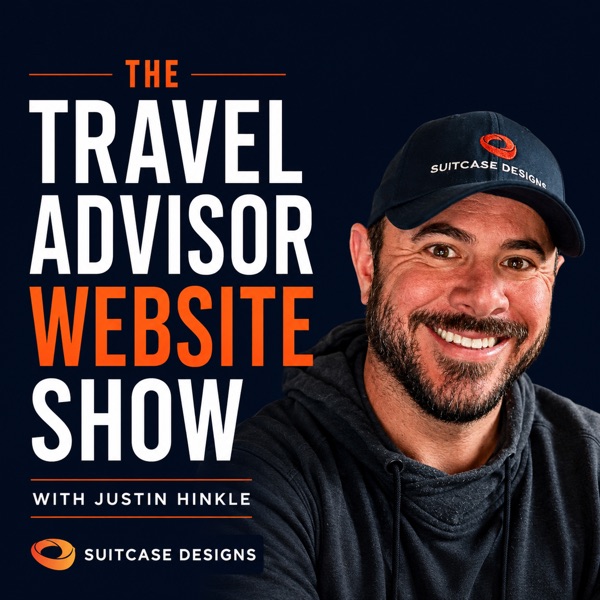
The Travel Advisor Website Show
If your travel advisor website looks fine but isn't generating leads, this show is for you.
Each episode covers the strategy behind travel advisor websites that actually work — homepage messaging, copy, navigation, calls-to-action, and the small decisions most advisors overlook.
Hosted by Justin Hinkle, Certified Travel Professional® and founder of Suitcase Designs. Justin has built 180+ websites for travel advisors and breaks down what he's learned in plain language.
New episodes twice weekly. Subscribe so you don't miss one.
- Episodes
- 28
- Releases
- Twice a week
- Typical length
- 16 min
- On air since
- 2026
- Latest episode
- 13 hours ago
Episodes
28 episodes, newest first
-
15 min
Why People Read Your Travel Advisor Website and Then Leave
Season 2, Episode 2
Show notes
A lot of travel advisor websites are built like brochures. Every destination gets a page and every trip type gets a section. It's all accurate, all attractive, and all given equal weight. Then the visitor is left to figure out what to do with it. That's a strange way to present a business whose whole value is helping people decide.
In this episode, Justin Hinkle explains the difference between a brochure site and a Guided Site: a website that has a point of view about where each visitor should go next, on every page. He covers how advisor sites end up as brochures without anyone deciding that, why equal weight is the clearest giveaway, and what guiding looks like on a homepage, a destination page, and a blog post. He also gets into how to match each next step to where a reader actually is, how the brochure pattern shows up in your analytics, and why guiding people isn't pushy. It's a preview of the exact service clients are hiring you for.
work with us: https://suitcasedesigns.com
-
16 min
What Clients Need to Believe Before They Contact a Travel Advisor
Season 2, Episode 1
Show notes
Before anyone fills out your inquiry form, a few things have to be true in their head. They don't run through a checklist, but they're forming beliefs the whole time they browse: about you, about whether this is for them, and about whether reaching out makes sense. When one of those beliefs is missing, they hesitate. On a website, hesitating usually means leaving.
In this episode, Justin Hinkle introduces the Inquiry Equation. A visitor has to believe four things before they reach out: that you understand them, that you can actually deliver, that it's worth hiring someone instead of planning it themselves, and that reaching out is a low-risk step. These beliefs multiply rather than add, so if any one is zero, the result is zero. Justin walks through where each belief gets built and where it breaks, why advisors keep polishing the belief they're already strongest at, and how to find the one that's missing.
work with me https://suitcasedesigns.com
-
16 min
Is Your Travel Advisor Website Showing Clients an Old Version of You?
Season 1, Episode 26
Show notes
Most travel advisors treat their website as a project: build it, check the box, revisit it when it gets bad enough. The problem is that the business keeps evolving — the specialty sharpens, the positioning gets clearer, the ideal client shifts — and the site doesn't automatically follow. Every visitor who lands on it meets the version of you from whenever it was last updated, not the current one.
In this episode, Justin Hinkle introduces the idea of the Living Site — a website that's designed to evolve with the business rather than drift behind it. He covers the stages most advisors move through and why each one requires a different kind of site, the specific signals that tell you the site has fallen behind, what a realistic maintenance rhythm actually looks like, how to use analytics to understand whether the site is doing its job, and how to position the site not just for where the business is now but for where you're taking it.
Work with us: https://www.suitcasedesigns.com
-
16 min
Travel Advisor Website Refresh vs. Redesign: How to Know Which You Actually Need
Season 1, Episode 25
Show notes
Should you redo your whole website or just update some things? It's a question that costs money in both directions when you get it wrong — redesign when a refresh would have done it and you've spent more than you needed to; refresh when the site has structural problems and six months later you're back wondering why it still isn't working.
In this episode, Justin Hinkle introduces a framework he calls Surface and Structure — the two categories every website problem falls into. Surface problems are about content and presentation: outdated copy, generic photos, design inconsistencies, a weak call to action. Structural problems are about the underlying architecture: how the site is organized, what the positioning is built around, how pages flow. He walks through what each looks like, the mistakes that happen when advisors misdiagnose which they're dealing with, the middle option between a full refresh and a full redesign, and a practical diagnostic you can run on your own site to figure out what you're actually working with.
Work with us: https://www.suitcasedesigns.com
-
17 min
How to Turn Your Travel Advisor Website Visitors Into Booked Clients
Season 1, Episode 24
Show notes
Most travel advisors know they want their website to produce clients — but the specific sequence a visitor moves through to actually get there is usually vague. In this episode, Justin Hinkle introduces what he calls the Booking Path: the stage-by-stage sequence from a stranger landing on your site to becoming a booked client.
He walks through every stage in order: the first impression that determines whether someone stays or leaves in the first ten seconds, the trust-building middle where content and credibility accumulate, the conversion moment and why it's more fragile than most advisors realize, what should happen in the window between booking and the call, and how to stay connected to visitors who weren't ready to reach out yet. He also covers where most advisor websites actually break down — and why knowing which stage is broken is what makes it possible to fix the right thing.
Work with us: https://www.suitcasedesigns.com
-
19 min
DIY Travel Advisor Website Mistakes That Make You Look Unprofessional
Season 1, Episode 23
Show notes
Building your own travel advisor website is completely reasonable — the tools available now are genuinely capable of producing something good. But there are specific things that happen in the process of building without a design background, and those things create a quality visitors pick up on even when they can't name it. In this episode, Justin Hinkle walks through what he calls the Amateur Signals: the visual and structural patterns that register in a visitor's mind as "a non-designer built this."
He covers ten signals in total — from font inconsistency and uneven spacing to generic copy, visibly stock photography, overcrowded navigation, and the page-to-page inconsistency that makes a site feel disjointed. For each one he explains not just what it looks like but why it happens, and what actually fixes it. He closes with a priority order for addressing them, so you know where to start rather than trying to fix everything at once.
Work with us: https://suitcasedesigns.com
-
15 min
Your Travel Advisor Website Should Be Finding New Clients. Here's How.
Season 1, Episode 22
Show notes
Most travel advisor websites are built for one kind of visitor: the referral. Someone who's already heard about you, wants to confirm you're legit, and needs to find your contact information. That job matters — but it's only half of what a website can do. In this episode, Justin Hinkle introduces what he calls the Second Job: the website's ability to introduce you to complete strangers who've never heard of you, through search, content, social, and directories.
He covers how cold discovery actually works — the specific channels that bring in strangers versus the warm traffic most advisors are used to — and what the site has to do differently for a visitor who starts with zero prior context. He also walks through local SEO basics, why blog content is the highest-leverage tool for building findability, how social and the website should work together, and where most advisors have gaps in their acquisition strategy. If your website is currently doing one job when it could be doing two, this episode lays out how to build the second one.
Work with me: https://suitcasedesigns.com
-
19 min
5 Lead Magnet Ideas That Actually Work for Travel Advisors
Season 1, Episode 21
Show notes
Most travel advisors have either tried a lead magnet that didn't do much, or they've heard they should have one and have no idea what it would even be. In this episode, Justin Hinkle explains why the standard lead magnet advice doesn't work for travel advisors — and introduces what he calls the Five Expert Offers: the five types of lead magnets that actually get signups and start real relationships with potential clients.
He walks through each type in detail — including the decision guide that helps someone choose between two specific options, the planning guide for a trip type you specialize in, the readiness checklist that signals expertise through specificity, the questions guide that pre-educates potential clients before they ever talk to you, and the insider take that demonstrates knowledge at a depth no about page can replicate. He also covers what tends not to work, what your follow-up sequence needs to do, and how to get the whole system set up without overcomplicating it.
If you've been putting off building your email list because you don't know what to offer, this episode gives you a concrete starting point.
Work with us: https://suitcasedesigns.com
-
15 min
5 Blog Posts Every Travel Advisor Should Have on Their Website
Season 1, Episode 20
Show notes
Most travel advisors who blog don't have a content plan — they have a vague intention to write more, which is different. In this episode, Justin Hinkle introduces the Five-Post Foundation: five specific types of blog posts that do the most work in terms of getting found, building trust with the right visitors, and moving serious prospects toward a conversation.
He walks through each type in detail — the right-fit post, the comparison post, the what-to-expect post, the destination deep dive, and the what-I-tell-my-clients post — explaining what each one is designed to do, why generic versions don't work, and how to write your version of each one grounded in your specialty and actual experience. These aren't five content ideas. They're the base layer that every other thing you publish can compound on top of.
If you've been blogging inconsistently or staring at a blank page wondering what to write, this episode gives you a concrete starting point.
Work with us: https://suitcasedesigns.com/contact
-
16 min
Why Your Travel Advisor Blog Isn't Getting You Clients (And How to Fix It)
Season 1, Episode 19
Show notes
Most travel advisor blogs aren't working — not because blogs don't work, but because of what's being written and why. In this episode, Justin Hinkle introduces what he calls the 4-Way Post: a framework for choosing blog topics that do four things simultaneously — get found in search, build authority with new visitors, pre-educate clients before their first call, and give you content you can actually use across email and social.
He covers why specificity is the difference between a post that gets found and one that doesn't, what "authority" actually looks like in a blog post versus what most advisors write, why your consultation questions are your best content ideas, and the honest truth about AI-generated travel content and why it fails the tests that matter most.
If you have a blog that isn't doing anything, or you've been thinking about starting one, this one will change how you approach it.
Work with us: https://suitcasedesigns.com/contact
-
17 min
Travel Advisor Logo Mistakes That Make Your Website Look Generic
Season 1, Episode 18
Show notes
Most travel advisors spend more time on their logo than almost anything else when building a website — and less time on the things that actually convert visitors into clients. In this episode, Justin Hinkle gets into what a logo can genuinely do for a travel advisory business, what it can't, and the specific mistake he calls the Everyone Symbol: the globe, compass, airplane, or anchor that says "travel business" without saying anything specific about yours.
He covers why there's a trust floor for logos but no real ceiling, what design choices like color and font are actually signaling to potential clients, when a DIY logo is fine versus when it's holding you back, and why the logo conversation is often a distraction from the messaging work that moves the needle.
If you've been spinning on your logo instead of your copy — or wondering whether it's time to rebrand — this one will help you figure out where to actually put your energy.
Work with us: https://suitcasedesigns.com/contact
-
16 min
How to Choose Photos for Your Travel Advisor Website
Season 1, Episode 17
Show notes
Travel is a visual category, and photos are doing more work on your site than most advisors realize — communicating your specialty, your level of experience, and whether your site feels real or assembled from a stock library. In this episode, Justin Hinkle introduces the Five-Site Test: one question you can apply to any image before it goes on your site. Could this photo, or one exactly like it, appear on five other travel sites?
He covers why generic travel photography undermines trust even when it's technically beautiful, what makes personal travel photos more effective than professionally shot stock imagery, how to use supplier photography without making your site look like everyone else's, and how to look at your photo collection as a whole — not just individual images. He also addresses the one photo on your site that has its own version of the test: yours.
Work with us: https://suitcasedesigns.com/contact
-
16 min
Travel Advisor Website Mobile Design: What You're Getting Wrong
Season 1, Episode 16
Show notes
Most travel advisors build their websites on a desktop and check them on a desktop. But the majority of visitors are arriving on a phone — often in a moment of inspiration, not intent. In this episode, Justin Hinkle introduces what he calls the Spark Moment: the specific point when someone first seriously considers a trip, which increasingly happens on mobile, in a distracted environment, with a short window before the thought passes.
He covers what it actually means for a site to be "mobile-friendly" beyond just technically fitting on a small screen, why the Spark Moment visitor is different from the ready-to-book visitor and needs a different experience, how load speed and thumb navigation affect whether someone stays or leaves, and why most advisor sites lose mobile visitors not because of bad design but because of design that was never really tested where it matters. If you've never walked through your own site the way a phone visitor would, this one will change that.
Work with us: https://suitcasedesigns.com/contact
-
18 min
Why a Fancy Travel Advisor Website Design Can Actually Hurt You
Season 1, Episode 15
Show notes
Advisors who want to attract premium clients often try to fix their website by making it look more high-end — more animations, more visual complexity, more production value. In this episode, Justin Hinkle explains why that instinct usually backfires, and introduces what he calls the Effort Trap: in luxury contexts, visible effort signals insecurity rather than confidence, and the harder a site tries to look expensive, the less premium it tends to feel.
He covers the difference between looking expensive and feeling premium, why photography specificity matters more than photography quantity, how breathing room communicates confidence, what copy hesitancy is doing to your positioning before a client ever gets on a call with you, and why the path to a more elevated site is almost always about removing things rather than adding them. He also makes the case for why fixing this has a direct effect on fee conversations — before you've said a word.
Work with us: https://suitcasedesigns.com/contact
-
17 min
What Makes a Travel Advisor Website Visitor Actually Book a Call
Season 1, Episode 14
Show notes
Your website can look great, cover all the right information, and still have almost nobody reaching out. In this episode, Justin Hinkle gets into why — and introduces what he calls the Three Yeses: the three things a visitor has to silently agree to before booking a call ever feels like the obvious next move.
He covers why credibility works differently for travel advisors than most other industries, what makes a site feel safe to reach out from versus one that feels subtly pushy, why a long contact form is quietly costing advisors more inquiries than they realize, and how the order information appears on a page either builds toward action or stalls it.
If your site feels solid but isn't generating the calls you'd expect, this one's worth a listen.
-
15 min
What a Host Agency President Thinks About Your Travel Advisor Website | Legato's Jonathan Morris
Season 1, Episode 13
Show notes
Most travel advisors think their website is for clients. In this episode, Jonathan Morris — owner and president of Legato, a host agency for independent travel advisors — explains why suppliers and host agencies are evaluating your website too, and what they're actually looking at when they do.
Jonathan covers what he looks up before a recruiting call with a prospective advisor, how marketing funds from suppliers get distributed and why a professional online presence factors into that, what a scattered or outdated website signals about an advisor's business (beyond just aesthetics), and how FAM trip opportunities and exclusive industry access are influenced by how seriously you appear to take your brand. He also talks about what makes Legato different as a host agency — including why they don't do preferred suppliers, how they built their own platform from scratch, and why they believe advisors should control their own destiny.
If you've ever assumed your website only matters to the clients looking at it, this episode will change that assumption.
Check out Legato at http://legatohost.com
Work with us: https://suitcasedesigns.com/contact
-
18 min
Travel Advisors Are Losing Leads From This One Website Mistake
Season 1, Episode 12
Show notes
Most travel advisor websites have a contact page. What they don't have is a way to take action anywhere else. In this episode, Justin Hinkle introduces what he calls the Lobby Problem: most advisor sites are built like a hotel with only one front desk — across the room — which means visitors who get ready to act in the middle of reading your about page, your specialty page, or a blog post have nowhere to go and often don't make the walk.
He walks through where the missed opportunities actually are on a typical advisor site — the hero section, the services overview, the testimonials, the about page, specialty pages, and blog posts — and explains why the fix is simpler than most people expect. He also makes the case for linking to a scheduler instead of a contact form, and why every field you add to that scheduler is friction you probably don't need.
If your site has a contact page but nothing else is converting, this is the episode.
Work with us: http://suitcasedesigns.com/contact
-
15 min
Should Travel Advisors List Prices on Their Website?
Season 1, Episode 11
Show notes
Most advisors land on one of two answers to this question: never list prices, or just be transparent and put the number out there. In this episode, Justin Hinkle makes the case that both of those are wrong — and walks through exactly what should and shouldn't be on your site when it comes to pricing.
He covers why listing trip prices creates more problems than it solves, the one exception where showing a number actually makes sense, why advisors should talk about their fees on their website without posting the specific dollar amount, and why that distinction isn't about being cagey — it's about making sure the number lands with the context it needs to actually mean something.
If you've ever stared at your website wondering whether to put your prices on it, this one will help you figure it out.
-
16 min
How to List Travel Specialties on Your Advisor Website
Season 1, Episode 10
Show notes
When your website lists ten different types of travel you book, you probably think it's helping people understand everything you can do. It's not. It's making you look like you're not exceptional at any of it.
In this episode, I get into what I call the Buffet Problem — what happens when a site tries to show everything instead of leading with what the advisor is actually best at. I cover what specialty really means (and why it doesn't mean turning away clients), how to show more than one specialty without letting the site turn into a list, why cruise advisors in particular are leaving a real opportunity on the table, and why getting specific about a destination is one of the highest-leverage things you can do on your site.
If someone could land on your homepage and not know what you're actually known for, this one's for you.
-
15 min
How to Write a Travel Advisor About Me Page That Gets You Clients
Season 1, Episode 9
Show notes
Your about page isn't there to prove you're qualified. It's there to answer one question — can I trust this person with something this important to me? And most advisor sites never actually answer it.
In this episode, I get into what I call the Trust Page — a different way of thinking about what this page is actually for. I cover why credentials matter in this industry but need real context to land, why your personal travel experience is one of the most underused things on most advisor sites, the right order to lay everything out in, why the photo matters more than people think, and why almost nobody puts a call to action where it actually belongs.
If your about page reads more like a bio than a reason to trust you, this one's worth a listen.
Entrepreneurship lists
More Entrepreneurship shows picked out from the charts










More in Entrepreneurship
Placed highest on Apple Podcasts' Entrepreneurship chart right now