Podcast
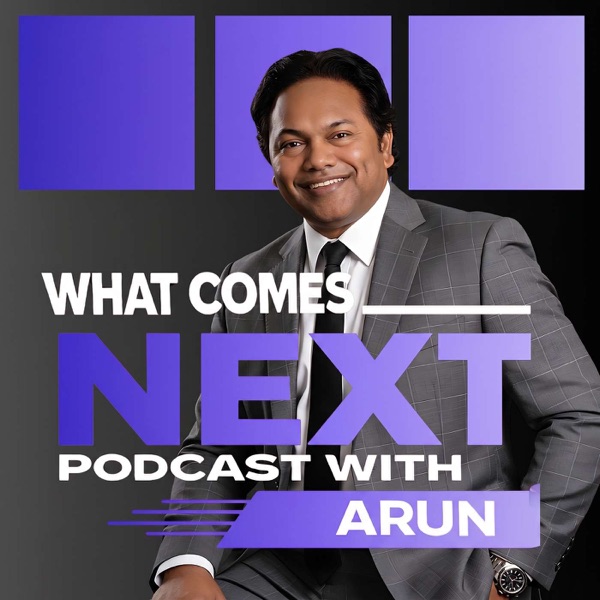
What Comes Next with Arun
Most conversations about AI are either too technical for business leaders or too generic to be useful. What Comes Next with Arun fills that gap. Each episode translates real-world data and AI strategy into the language of competitive advantage — drawing on Arun’s 20+ years inside the world’s most complex enterprises, six years as a Microsoft Data & AI Executive, and his experience building Tipsora into a platform serving more than 95,000 professionals worldwide. This is not a podcast about AI tools. It is a podcast about building the organizational intelligence that makes tools matter.
- Technology chart
- #5
- Episodes
- 17
- Releases
- Weekly
- Typical length
- 13 min
- On air since
- 2026
- Latest episode
- 4 days ago
Episodes
17 episodes, newest first
-
59 min
Don't Just Say No: Rebuilding Loan Underwriting with AI | Robert Stewart Jr.
Show notes
In mortgage lending, there's a saying: real underwriting doesn't happen until 72 hours before closing. By then, the borrower has paid for the appraisal, put earnest money at risk, and waited weeks — only to find out the deal never had a chance.
Robert S. Stewart Jr., founder and CEO of CR Equity AI, built his company to move that moment to minute one.
A former Air Force officer who came up through real estate sales and loan origination, Robert used the military's objective-based planning approach to design a 100% custom AI underwriting engine for non-QM and investor loans. The goal was simple: an actionable term sheet in under five minutes, with a decision borrowers can trust.
In this conversation, Robert and Arun cover:
• Why pre-approval only works for a narrow slice of borrowers — and what everyone else experiences
• Continuous ("Kaizen") underwriting: verifying from day one instead of the last three days
• Why CR Equity AI is deliberately not a loan marketplace — and how shotgunning applications damages credit
• AI agents that flag lender policy and compliance shifts in real time
• The two-gate compliance model: internal criteria plus note-buyer eligibility, or no deal
• Why he publishes his underwriting criteria openly
• Letting employees set their own salary, and the "pay once, cry once" rule
• Why he turned down an eight-figure acquisition offerViewed through the Durable Advantage Cycle, this episode is a case study in owning your nest before you branch out — and in turning transparency into a moat.
Connect with Robert:
linkedin.com/in/stewart-r | crequity.ai
Connect with Arun:
linkedin.com/in/arunansuspeaks | tipsora.com
Book: Future-Proof Your Business — https://www.amazon.com/FUTURE-PROOF-YOUR-BUSINESS-Strategic-Framework-ebook/dp/B0H8MKQTKCIf this episode changed how you think about AI in regulated industries, subscribe and leave a 5-star review — it helps more leaders find the show.
Book call with Arun:
https://go.tipsora.com/meet-with-arun -
52 min
The Human Edge: Why AI Makes Team Building Matter More | David Lengyel
Show notes
What happens to teams when everything around them gets automated?
David Lengyel has spent more than 40 years answering a version of that question. As Managing Director of Venture Up, one of the first team building companies in the U.S., he and his team have worked with more than 8,000 companies and 500,000 people across a dozen-plus countries — from Procter & Gamble, McKinsey, and Caterpillar to Microsoft and HP.
In this conversation, David traces Venture Up's unlikely start as a mountaineering guide service, explains why most "team building" is really just a happy hour, and shares why telling people to "communicate better" almost never works. He also previews his upcoming book, LEADERSHIP TRUTHS, and makes the case that as AI takes over more of the work, the companies that invest in human connection and emotional intelligence will pull ahead.
In this episode:
• Why every company is first in the business of people
• The one question to ask before planning any team event
• How we "qualify the messenger" instead of hearing the idea
• Why saying no to customization helped Venture Up scale
• Where platforms and AI help — and where they can't replace a real conversation
• Hiring for strengths and telling people the problem, not the solutionChapters
00:00 Intro
00:39 Meet David Lengyel
03:01 From mountain guides to team building
06:19 What makes team building actually work
10:14 Start with the goal, not the activity
13:51 Legacy companies vs. startups
16:25 Why "communicate better" is empty advice
18:09 How a program comes together
22:14 Diversifying without losing your core
26:42 The lesson of saying no
30:34 LEADERSHIP TRUTHS
36:12 Platforms, AI, and the human handoff
42:48 Hiring for strengths
46:27 AI and the future of team development
49:07 What Japan reveals about connectionConnect with David: https://ventureup.com/
Arun's book: Future-Proof Your Business — https://www.amazon.com/FUTURE-PROOF-YOUR-BUSINESS-Strategic-Framework-ebook/dp/B0H8MKQTKCIf this conversation was useful, subscribe and leave a 5-star review. It helps more leaders find the show.
FIRST EPISODE DROPS OCTOBER 30!
2029: The War for Our...
Listen on: Apple Podcasts Spotify
Book call with Arun:
https://go.tipsora.com/meet-with-arun -
54 min
The Game of Ten: Why High Performers Run on Outdated Code | Steve Barton
Show notes
Most leaders don't have a strategy problem. They have a noise problem.
Executive coach Steve Barton spent 30 years as a florist, grew his business from roughly $200K to $2M serving high-end destination weddings in Maine, and then had an experience 34 years ago that changed how he understood human potential. Today he coaches founders, CEOs and high performers with The Game of Ten®, a registered coaching process built to help leaders let go of fear, self-doubt, guilt and shame and act from clarity instead of pressure.
In this conversation, Arun and Steve explore:
• Why most people solve today's problems with yesterday's data, and what that costs leaders
• The six phrases Steve uses to quiet a racing mind, done live on the show
• The uncomfortable question every unhappy "successful" leader should ask themselves
• Why calling yourself an 8 out of 10 may be a form of arrogance
• What a good coach actually does (hint: accountability, not answers)
• Why intuition and creativity are still the human edge, even as AI gets better at logic
• Ben Franklin's trust-building habit and what it teaches about business relationshipsIf you lead a team, run a company, or feel like your mind never switches off, this episode offers a different way to think about performance.
Connect with Steve Barton
Website: https://www.stevebartoncoaching.com/
LinkedIn: https://www.linkedin.com/in/coach-steve-barton/Connect with Arun
Website: https://www.arunansupattanayak.com/
AI certification for you and your team: https://tipsora.com/catalog
LinkedIn: https://www.linkedin.com/in/arunansuspeaks/
Book, Future-Proof Your Business: https://www.amazon.com/FUTURE-PROOF-YOUR-BUSINESS-Strategic-Framework-ebook/dp/B0H8MKQTKCIf this episode was useful, subscribe and leave a 5-star review. It helps more business leaders find the show.
Book call with Arun:
https://go.tipsora.com/meet-with-arun -
44 min
The One-Man Accelerator: What Startups Actually Need to Scale | Christopher Hussain
Show notes
AI has made it possible to build a product in six to eight months. So here's the uncomfortable question: if you can build it that fast, why can't your competitor?
Christopher Hussain has spent more than 20 years answering versions of that question from the inside. He was the #1 mortgage originator in the U.S. for two consecutive years, co-founded Sindeo (one of the original modern online mortgage platforms), and founded RealKey, an AI and automation platform that grew to 3,600+ monthly users across 400+ companies. Today he works as a "one-man accelerator," a fractional C-suite operator helping startups and later-stage companies with product, go-to-market, sales, partnerships, and fundraising.
In this conversation, Arun and Christopher walk through the stages of building a durable company, and where most teams get stuck:
• Why startups hire salespeople first, then wonder why sales doesn't work
• What incubators and accelerators are missing: hands-on, cross-functional operators
• Vibe coding, speed to market, and why the moat question now comes up in nearly every acquisition conversation
• Why service businesses struggle to raise capital, and how they can scale anyway
• Full salary transparency as a tool for building an ownership mindset
• Using John Cleese's "open mode / closed mode" idea to make pivot decisions, and commit to them
• Why a scrappy two-week decision can beat three months of corporate R&DIf you're a founder, an operator, or a technology leader trying to turn a product into a company, this one is for you.
Chapters
00:00:00 Introduction
00:00:37 Meet Christopher Hussain
00:04:05 From the subprime sales floor to a digital mortgage office
00:06:16 Cameras on tow trucks: applying OCR before it was cool
00:07:43 Sindeo, RealKey, and the decision to go fractional
00:09:17 How RealKey tackled the mortgage coordination problem
00:11:37 One core, many branches
00:12:54 Why sales fails without marketing, CRM, and systems
00:15:53 What incubators and accelerators are missing
00:20:25 Can AI automate the startup playbook?
00:22:32 Vibe coding and the moat question
00:26:10 Can a service business raise capital?
00:28:27 Compensation, equity, and full salary transparency
00:32:10 Evaluating pivots: open mode vs. closed mode
00:36:38 Startup speed vs. corporate R&D
00:38:22 Structure and policy: scaling without breaking things
00:41:34 What Christopher is working on nowConnect with Christopher Hussain
LinkedIn: https://www.linkedin.com/in/christopherhussain/Connect with Arun
Website: https://www.arunansupattanayak.com/
LinkedIn: https://www.linkedin.com/in/arunansuspeaks/
Instagram: https://www.instagram.com/arunansuspeaks/
Book, Future-Proof Your Business: https://www.amazon.com/FUTURE-PROOF-YOUR-BUSINESS-Strategic-Framework-ebook/dp/B0H8MKQTKC
AI certification for you and your team: https://tipsora.com/catalogIf this episode gave you something to think about, subscribe and leave a 5-star review. It helps more founders and leaders find the show.
Book call with Arun:
https://go.tipsora.com/meet-with-arun -
36 min
Fluent in the Tools, Illiterate in the Tradeoffs — Frank Bravo on AI's Real Risk
Show notes
Most organizations aren't behind on AI. They're behind on the thinking required to use it. That's where this conversation with Frank Bravo starts — and it doesn't let up.
Frank is a Bay Area technologist who spent more than three decades leading technology through disruption. For 32 years he was CTO of Embarcadero Media, home of the Palo Alto Weekly, where his team published an entire newspaper's editorial content to the web in 1994 — before Google, before Yahoo, before most people had a browser. Today he's CTO of ProLegal, a legal-services startup, principal of Bravo IT Consulting, and host of the Your Tech Makeover podcast.
Arun and Frank dig into what watching one industry get disrupted for 30 years actually teaches you about this AI moment — including the uncomfortable part, that being early with the tool was never the advantage everyone assumed. They talk about why Frank now builds software faster than ever with AI but lets none of it ship without human review, how a 15-person startup went from idea to launched product in under three months, why every law firm is sitting on the same unsolved problem, and why the hardest part of any technology shift was never the technology.
Frank's throughline is simple and hard to argue with: companies are fluent in the tools and illiterate in the tradeoffs. Clarity isn't decoration on top of strategy — it is the strategy.
Chapters
• (0:00) The thinking gap
• (0:40) Meet Frank Bravo
• (1:50) Common ground — the Future-Proof framework
• (3:13) From a computer in the house to CTO of a newspaper
• (4:44) Publishing to the web in 1994
• (5:33) Leaving a 32-year career for a startup
• (6:11) Media to legal: technology is technology
• (8:00) Remote work, and seeing it coming before COVID
• (10:00) How Your Tech Makeover was born
• (14:30) ProLegal as a platform for law firms
• (15:13) ProLegal Talent — idea to launch in under 3 months
• (17:44) Can AI give legal advice? Where Frank drew the line
• (18:41) Building fast with AI — and why nothing ships unreviewed
• (20:34) AI behind the scenes: funding personal-injury cases
• (22:20) Autonomy, ownership, and a small team that ships
• (25:11) Unlimited R&D: the tool that runs a law firm
• (29:05) Open source, standards, and data you can actually move
• (31:15) Regulation, education, and building things people understand
• (33:42) What's launching, and where to find FrankIf this shifted how you think about AI in your organization, follow What Comes Next with Arun and leave a 5-star review — it genuinely helps the show reach more leaders.
Guest — Frank Bravo
Your Tech Makeover: https://www.yourtechmakeover.com
Bravo IT Consulting: https://www.bravoitc.com
LinkedIn: https://www.linkedin.com/in/fabravo/
Newsletter: https://yourtechmakeover.substack.comHost — Arun
Website: https://www.arunansupattanayak.com/
LinkedIn: https://www.linkedin.com/in/arunansuspeaks/
Book — Future-Proof Your Business: https://www.amazon.com/FUTURE-PROOF-YOUR-BUSINESS-Strategic-Framework-ebook/dp/B0H8MKQTKCBook call with Arun:
https://go.tipsora.com/meet-with-arun -
48 min
The Trust Layer for AI Agents — Ravi Bijlani, KYXStart.Ai
Show notes
Your AI agent can book a flight, move money, and open accounts on your behalf. But it can't take a selfie or hold a driver's license — so how does anyone know it's really acting for you?
Arun sits down with Ravi Bijlani, founder and CEO of KYXStart.Ai, who is building the trust and verification layer for the agentic era. Ravi spent 24 years in identity and payments before betting that the real bottleneck in AI wouldn't be intelligence — it would be trust.
In this conversation:
– Why "card-not-present" is becoming "human-not-present"
– KYC for AI agents (KYCA): verifying who — or what — is on the other end of a transaction
– Binding an agent to a device and a verified human, with guardrails ("don't book a flight over $500")
– The coming protocol wars between Google, Stripe, Mastercard, and Visa — and why KYXStart sits above all of them
– How the business actually makes money when the underlying standard is open
– The financial-inclusion endgame: identity with nothing but a phone number and a selfieChapters
00:00 – Most organizations aren't behind on AI — they're behind on the thinking
00:41 – Meet Ravi Bijlani and KYXStart.Ai
02:50 – The gap Ravi saw: 24 years in identity and payments
05:10 – Why agents need a trust layer
06:27 – The scale: 180+ countries, billions of identities
07:50 – How this differs from managed identity and RBAC
09:30 – Static identity → signal-based identity; "human-not-present"
11:20 – Guardrails and the $500 flight: KYC for agents
13:50 – Accountability and the agent registry
15:00 – Is there a global standard? The protocol wars
18:00 – Where KYXStart plays: the trust layer on top
21:00 – Monetizing an open standard
26:40 – Diversifying: agent onboarding for banks today
30:00 – Turning it into a platform: AML and risk scoring
33:25 – Team structure: 21 people, founder's mentality
38:20 – The R&D vision: a golden record and financial inclusion
42:00 – Partnerships, the ecosystem, and the tipping point
46:20 – CloseSubscribe to What Comes Next with Arun and leave a 5-star review — it genuinely helps new listeners find the show.
🎧 Apple: https://podcasts.apple.com/us/podcast/what-comes-next-with-arun/id6788060249
🎧 Spotify: https://open.spotify.com/show/033KRXb9RHJJIDSoE2KjYF
▶️ YouTube: https://www.youtube.com/playlist?list=PLDBiRxvJWaSA
🌐 Website: https://www.arunansupattanayak.com/
📘 Future-Proof Your Business: https://www.amazon.com/FUTURE-PROOF-YOUR-BUSINESS-Strategic-Framework-ebook/dp/B0H8MKQTKCConnect with Ravi Bijlani: https://www.linkedin.com/in/ravibijlani/
Company site: https://www.kyxstart.ai/
Book call with Arun:
https://go.tipsora.com/meet-with-arun -
37 min
The AI Family Office: Financial Advice for High Earners — with Lord Munjal
Show notes
High earners rarely lose money because they make bad decisions. They lose it in the gaps — between a financial advisor who only sees stocks and bonds, a CPA who shows up 60 days before the deadline, an insurance agent working a different angle, and an estate plan that's either missing or out of date. Nobody is coordinating the whole picture.
In this episode, Arun sits down with Lord Munjal, Founder & CEO of Alpheva AI, who is building a financial operating system for high earners — an "AI family office" for the people who earn well but were never big enough to afford the real thing.
Using the five stages of the Double Advantage Cycle from Arun's book Future Proof Your Business, they trace how Alpheva found its nest, diversified into education, opened its platform to advisors, built an ownership-minded team, and is now moving toward agentic execution of your money.
In this episode:
00:00 Cold open: behind on AI, or behind on the thinking?
00:38 Meet Lord Munjal and Alpheva AI
01:08 The Double Advantage Cycle framework
02:46 Finding the niche: the origin of Alpheva
03:53 The hidden problem — high earners lose money in the silos
07:05 Democratizing the family office for $400K+ earners
11:55 How the AI and human experts actually coordinate
15:56 AFI vs AGI: vertical intelligence, not general
16:29 Diversifying into education and a future social layer
22:26 Opening the platform to CPAs and advisors
25:18 Build Your Own Alpha: an ownership-minded team
28:02 R&D: agentic execution of your money
31:08 Crypto, metals, and surfacing opportunities
33:00 Shaping the external environment
35:13 Where to find Lord and a listener offer🔗 Connect with Lord Munjal LinkedIn: https://www.linkedin.com/in/lordmunjal/
Alpheva: https://alpheva.com
Listener offer: use code Arun100 for 10% offSubscribe and leave a 5-star review — it helps more builders find the show.
Book call with Arun:
https://go.tipsora.com/meet-with-arun -
48 min
Building an AI-Native Platform to Take On the Bloomberg Terminal — with Aidan McConnell
Show notes
Most conversations about AI in finance stop at "we use AI." This one goes deeper.
Aidan McConnell started as a data science intern at Sezzle in 2019, worked his way up to Head of AI/ML, then left to build QuantLink AI — a vertically integrated data and analytics platform for investors. Think premium market data, quant workflows, and institutional-grade charts, made accessible enough that a first-time investor can actually use them.
In this episode, Arun and Aidan trace the build using Arun's five-stage framework for sustainable success — and Aidan gets specific about the decisions most founders gloss over:
• Why 100% of QuantLink's software is written by AI — and the ontology and deterministic validation that stops it from hallucinating "slop"
• The gap he saw in a market already crowded with Bloomberg, Merrill, and Schwab
• Why exposing all of their code became a trust strategy for a young company with no institutional track record
• The surprise: customers didn't come for the AI — they came for the charts and the reports
• Where the platform goes next: an open marketplace for data, models, agents, and templates
• His bet on the future of AI architecture — deterministic graphs over generated codeChapters
00:00 — The thinking gap: why organizations fall behind on AI
00:28 — Meet the guest: Aidan McConnell, QuantLink AI
01:08 — Arun's five-stage framework for sustainable success
02:34 — Finding the niche: the gap in a saturated market
05:49 — Flipping the game: letting users build their own signals
08:30 — The B2B shift and user responsibility
09:51 — Transparency as a trust strategy
11:27 — Building the core: AI-first, human layer on top
12:24 — Ontologies and deterministic validation
16:00 — The eval harness: data-fetching vs. product layer
21:30 — Diversification: charts, reports, and the "boring" wins
28:28 — Becoming a platform: the open marketplace vision
31:20 — People and the ownership mindset
35:10 — Affiliates and incentives
36:37 — R&D: vertical models and the future of AI architecture
41:03 — The external environment: regulation and consumer education
44:21 — What's shipping next + how to try itListen, then send it to one person building in the intelligence economy.
Subscribe and leave a 5-star review — it genuinely helps the show reach more builders.
🎧 Apple: https://podcasts.apple.com/us/podcast/what-comes-next-with-arun/id6788060249
🎧 Spotify: https://open.spotify.com/show/033KRXb9RHJJIDSoE2KjYF
▶️ YouTube: https://www.youtube.com/playlist?list=PLDBiRxvJWaSA
🌐 arunansupattanayak.com
📘 Future Proof Your Business: https://www.amazon.com/FUTURE-PROOF-YOUR-BUSINESS-Strategic-Framework-ebook/dp/B0H8MKQTKCGuest: Aidan McConnell
QuantLink AI (https://www.quantlink.ai/) ·
LinkedIn: https://www.linkedin.com/in/aidan-mcconnell-341259108/ ·
X: https://x.com/Aidan_mcconnellBook call with Arun:
https://go.tipsora.com/meet-with-arun -
8 min
Competitive Intelligence Architecture: The Real Source of AI Advantage
Show notes
In the finale of this series, Arunansu Pattanayak brings together every framework from the show into a single worldview — one he argues is the most important strategic idea for any leader heading into the next decade.
The claim is simple and uncomfortable: the winners won't be the organizations with the best AI. They'll be the ones that build the most intelligent architecture underneath it. Tools are commoditized. Buying the same software as your competitor gets you the same capability as your competitor. What compounds — and what can't be quickly copied — is the intelligence architecture beneath the tools.
This episode names that idea directly: competitive intelligence architecture — the invisible infrastructure of the intelligence economy, as decisive now as electricity and transportation networks were in the 20th century.
In this episode:
• Why more AI alone doesn't make you more competitive
• The one shift every leader should make: from "what tools?" to "what architecture?"
• Technology-first vs. architecture-first thinking — and why the reversal matters
• The three sources of durable advantage that can't be reverse-engineered
• Three concrete things to do after nine episodes of frameworksChapters
• 00:00 — Behind on the thinking, not the tools
• 00:38 — One complete worldview
• 01:08 — Pulling the threads together (the series recap)
• 02:25 — Naming it: competitive intelligence architecture
• 03:07 — Intelligence as the new invisible infrastructure
• 03:35 — The one shift: from tools to architecture
• 04:14 — Durable advantage: three things that can't be copied
• 05:27 — Three things to do now
• 06:29 — The question underneath everything
• 07:23 — Where to go nextSubscribe and leave a 5-star review — it's the fastest way to help another leader find the show.
🎧 Apple: https://podcasts.apple.com/us/podcast/what-comes-next-with-arun/id6788060249 🎧 Spotify: https://open.spotify.com/show/033KRXb9RHJJIDSoE2KjYF ▶️ YouTube: https://www.youtube.com/playlist?list=PLDBiRxvJWaSA 🌐 https://www.arunansupattanayak.com/
Book call with Arun:
https://go.tipsora.com/meet-with-arun -
8 min
Why Your AI Strategy Is Already Obsolete
Show notes
Most organizations aren't behind on AI. They're behind on the thinking required to use it.
In this solo episode, Arunansu Pattanayak makes a prediction: if your AI strategy is built around specific tools, platforms, and vendors, most of that document will be obsolete within 12 months — not because your team planned badly, but because you built on the fastest-moving layer of the stack instead of the slowest.
Arun breaks down why vendor-driven thinking feels like strategy but quietly hands your direction to someone else's roadmap, why technology roadmaps fail for a structural reason, and how to reframe the whole thing around durable capabilities: evaluating and integrating new tools fast, governing your data well no matter the platform, and retraining teams as workflows shift.
You'll walk away with a one-exercise action item you can run on your current strategy doc this week — and a simple test for whether you have a real strategy or just a procurement list.
Build the long-term intelligence system first. Let the tools rotate through it.
Subscribe and leave a 5-star review.
Book call with Arun:
https://go.tipsora.com/meet-with-arun -
8 min
The Technology Was Never the Problem
Show notes
Most organizations bought the AI. What they skipped was the thinking required to make it matter.
In this solo episode, Arunansu Pattanayak sets aside the frameworks and tells one story — the moment, after 20+ years inside Merrill Lynch, Citibank, Credit Suisse, JP Morgan, TD Bank, and Microsoft, when he finally understood what actually breaks in transformation. It was never the technology.
He unpacks why technically excellent systems fail to change anything: people keep using old workarounds no one asked about, leadership announces "data-driven decisions" while the culture keeps making the same instinct-driven calls, and departments quietly guard their own version of the truth because controlling the data means controlling influence. None of those are technology problems. They're organizational behavior problems wearing a technology costume.
The episode closes on the realization that reshaped how Arun works: intelligence architecture isn't a technical framework — it's a sequencing philosophy. Governance, culture, and decision-making readiness, built deliberately in the right order, alongside the technical build rather than bolted on after.
This week's action item is inside.
Subscribe and leave a 5-star review if this shifted how you think about AI in your organization.
Book call with Arun:
https://go.tipsora.com/meet-with-arun -
8 min
Future-Proofing Is a Myth. Build Change Fitness Instead
Show notes
Most organizations aren't behind on AI. They're behind on the thinking required to use it.
In this solo episode, Arunansu Pattanayak makes an uncomfortable argument for anyone who has ever built a five-year strategic plan: future-proofing, as most people define it, is a myth. Complex systems don't behave predictably over multi-year horizons — and the further out you forecast, the more confident the prediction sounds and the less likely it is to be right.
That combination of high confidence and low accuracy is what makes long-range prediction dangerous as a strategic foundation. When leadership bets three years of investment on a confident call, they don't just risk missing a target. They allocate resources, build org charts, and architect systems around an assumed future — and end up with a structure that actively resists the future that actually arrives.
The alternative is what Arun calls change fitness. Borrowed deliberately from physical fitness: you don't train for one specific challenge you're certain is coming. You build general strength, flexibility, and conditioning so your body can respond to whatever shows up.
In this episode:
• Why forecasting and adaptability are different questions that lead to different investments
• The strategic rigidity trap — how confident predictions get hard-coded into org charts and architecture
• What change-fit organizations actually build: modular architecture, short feedback loops, distributed decision authority
• Why strategic plans should be treated as living hypotheses, not fixed commitments to be defended
• The one question worth more than any five-year forecastThe question to sit with: What capability would make us stronger — regardless of what happens next?
Subscribe and leave a 5-star review to help more leaders find the show.
Get certified and explore what we're building at tipsora.com Connect with Arun: arunansupattanayak.com
Book call with Arun:
https://go.tipsora.com/meet-with-arun -
8 min
More AI Won't Make You More Competitive — Here's What Will
Show notes
Most organizations are not behind on AI. They are behind on the thinking required to use it.
In this solo episode, Arunansu Pattanayak — ex-Microsoft Data and AI executive and CEO of Tipsora — makes an argument that might sound strange coming from someone who has spent his career in AI: more AI is not going to make your organization more competitive.
The large language models, copilots, and agentic systems everyone is racing to adopt are becoming commodities. Your competitor can license the same tools, read the same case studies, and hire the same talent. If you can buy it, it cannot be the source of your edge.
Arun breaks down what actually creates durable competitive advantage in an intelligence-driven economy:
• Why tools, use cases, and even talent are copyable — often within a single quarter
• The three things competitors cannot replicate: proprietary data, decision culture, and architecture
• The first-mover myth: why being first with a new AI tool buys you headlines, not advantage
• The difference between organizational intelligence and AI dependency — and why one is durable while the other is rented
• A practical action item: how to identify the one advantage AI alone cannot create for your competitorsIf this episode shifts how you think about AI strategy, share it with someone who needs to hear it — and subscribe and leave a 5-star review so more leaders can find the show.
Connect with Arun:
• Website: https://www.arunansupattanayak.com/
• LinkedIn: https://www.linkedin.com/in/arunansuspeaks/
• AI certifications for you and your team: tipsora.comBook call with Arun:
https://go.tipsora.com/meet-with-arun -
11 min
The 5 Layers Every AI-Ready Organization Needs (In Order)
Show notes
Most organizations don't have an AI problem — they have a sequencing problem. They're building layer four before laying layer one.
In this solo episode, Arunansu Pattanayak, ex-Microsoft Data & AI executive and CEO of Tipsora, draws on 20+ years across financial services, enterprise technology, and beyond to lay out a five-layer framework for building an organization that actually wins in an intelligence-driven economy:
• Layer 1: Data governance and architecture — the unsexy foundation everything else inherits
• Layer 2: Intelligence infrastructure — ending the "three departments, three versions of the truth" problem
• Layer 3: Data as a business model — turning data from cost center to profit center
• Layer 4: AI-driven decision culture — a human transformation, not a technical one
• Layer 5: Competitive durability — the outcome you can't buy, only buildPlus the one question every leader should answer before this episode ends: which layer is your organization's weakest link?
Ready to move from thinking to building? Get certified at tipsora.com or connect at arunansupattanayak.com.
If this episode shifted how you think about AI readiness, subscribe and leave a 5-star review.
Book call with Arun:
https://go.tipsora.com/meet-with-arun -
13 min
Why Most AI Investments Fail — Architecture, Not Tools
Show notes
Only 14% of CFOs report measurable ROI from their AI investments — yet 66% of business leaders expect significant AI impact within two years. Why is nearly everyone betting on AI while so few are seeing it work?
In this debut episode of What Comes Next, former Microsoft Data & AI executive Arunansu (Arun) Pattanayak draws on 20+ years of building enterprise data and AI systems for organizations including EY, KPMG, Deloitte, Citibank, JPMorgan Chase, and Credit Suisse to answer that question — and the answer isn't "move faster."
You'll learn:
• The three assumptions that quietly kill enterprise AI ROI — including why deploying AI is the easy part and building the data foundation is the hard part
• Why AI is a business architecture project, not a technology project — and what happens when it's handed entirely to IT
• Why AI alone creates no competitive advantage: AI is the engine, data is the fuel
• Intelligence Architecture: the deliberate decisions about how data is collected, governed, connected, and activated before a single model is deployed
• The Data Foundation Test: three questions every leader should ask before making any significant AI investment
• Why agentic AI raises the governance bar — and how scaling AI without governance scales risk, not intelligence
• One action to take this week to assess your organization's real AI readinessWhether you're a CEO, CIO, CDO, or founder planning your AI strategy, this episode gives you a working edge in the language of strategy, not speculation.
Next episode: how to turn your organization's data from a cost center into a competitive product.
Book call with Arun:
https://go.tipsora.com/meet-with-arun -
12 min
How to Turn Your Data into a Product and a Revenue Stream
Show notes
If your organization burned to the ground tomorrow and you could save one thing, what would you save? The most strategic leaders always give the same answer: the data. Everything else can be rebuilt — the data is irreplaceable. So why do most organizations treat it like a filing cabinet?
In this episode of What Comes Next, former Microsoft Data & AI executive and Tipsora founder Arunansu (Arun) Pattanayak makes the case that the most valuable thing you can do with your data isn't analyzing it better — it's productizing it. With the global data monetization market projected to exceed $700 billion by the end of the decade, the organizations that treat data as a business are building competitive moats no one can copy.
You'll learn:
• The critical difference between data analytics and data as a business — and why so few companies make the leap
• The three patterns that keep organizations from monetizing their data: they don't see it, they overestimate the regulatory risk, and they lack a framework
• The three types of data products: insight products (think Bloomberg terminals and credit bureau reports), benchmark products, and platform products (the AWS model)
• The five-step data productization blueprint: data inventory, value mapping, compliance architecture, product design, and go-to-market
• Why governance for monetized data is different from internal data governance — re-identification risk, contractual obligations, and multi-geography regulation
• Your one action this week: the whiteboard exercise that starts everythingIf you lead data strategy, product, or P&L in any data-rich organization — especially financial services, healthcare, retail, or logistics — this episode is your starting blueprint.
Next episode: AI and the future of work — the strategic version, not the fear version.
data monetization, data products, data as a business, data strategy, data governance, enterprise AI, data productization, revenue from data, chief data officer, data compliance, agentic AI, competitive advantage, digital transformation
Book call with Arun:
https://go.tipsora.com/meet-with-arun -
12 min
The Future of Work Is an Architecture Problem, Not a Threat
Show notes
AI doesn't make humans less valuable. It makes the wrong humans — people doing the wrong work — less valuable, and the right humans dramatically more valuable. The question for every leader: are you designing an organization where your people are doing the right work?
In this episode of What Comes Next, former Microsoft Data & AI executive and Tipsora founder Arunansu (Arun) Pattanayak takes on the future of work conversation — not the fear version, and not the hype version, but the strategic version. Drawing on decades in financial services and enterprise AI, Arun explains why both dominant narratives tell half the truth, and why half-truths lead to whole mistakes.
You'll learn:
• Why AI replaces tasks, not roles — and what that distinction means for workforce planning
• What happened when AI automated fraud detection, loan processing, and regulatory reporting in financial services — and why identical technology produced opposite outcomes at different organizations
• The Three-Layer Workforce Model: the automation layer, the augmentation layer, and the innovation layer
• The most counterintuitive idea in enterprise AI: as AI gets better at processing information, the value of human judgment goes UP, not down
• The five moves leading organizations are making right now: strategic AI literacy, workflow redesign before deployment, explicit AI governance, building "change fitness," and protecting layer-three humans
• Why capability multiplier vs. headcount tool is the leadership choice that determines whether AI builds advantage or capability gapsIf you lead people, strategy, or transformation in any organization navigating AI adoption, this is the framework for designing the future of work instead of reacting to it.
Next episode: a deep dive into the layers of Intelligence Architecture — the framework Arun uses to help organizations become AI-enabled.
future of work, AI and jobs, AI workforce strategy, AI adoption, workforce transformation, human judgment, AI governance, change management, enterprise AI, AI leadership, augmentation, automation, organizational design, AI literacy
Book call with Arun:
https://go.tipsora.com/meet-with-arun
On these lists
What Comes Next with Arun is one of the shows picked out on each of these





More in Entrepreneurship
Placed highest on Apple Podcasts' Entrepreneurship chart right now