Podcast
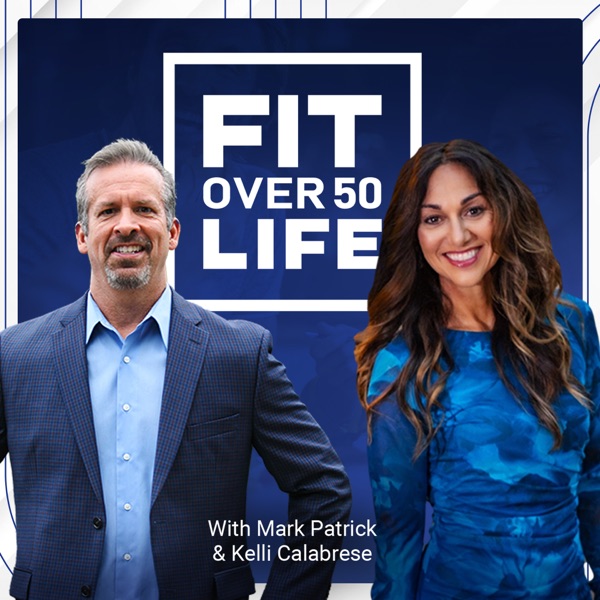
Fit Over 50 Life
Mark Patrick and Kelli Calabrese are two 50 something's, obsessed with helping people be healthy and have fun. They are fit, divorced, have had panic attacks, raised kids, started and sold businesses, authored best selling books and transformed tens of thousands of lives through their seminars, coaching and health programs. In this podcast they talk with leading experts on natural ways to age youthfully, look sexy and live an amazing bonus life at 50 and beyond. Guests are top specialists in the wellness field and share their best body and mind tips and hacks for fitness, fun and even fearlessness to get you unstuck so you can make the rest of your life the best of your life. New episodes every Wednesday afternoon.
- Episodes
- 88
- Releases
- Weekly
- Typical length
- 1 hr 5 min
- On air since
- 2021
- Latest episode
- 5 days ago
Episodes
88 episodes, newest first
-
1 hr 5 min
Why Chronic Stress Can Feel Normal and How to Break the Pattern | Dr. Doni Wilson
Episode 91
Show notes
What if the stress you're trying to escape has become so familiar that your nervous system now thinks it's normal?
In this episode of Fit Over 50 Life, Mark Patrick and Kelli Calabrese sit down with Dr. Doni Wilson, naturopathic doctor, clinical nutritionist, professional midwife, bestselling author of Master Your Stress, Reset Your Health, and creator of the Stress Recovery Protocol.
Dr. Doni shares her own journey from chronic migraines, exhaustion, and years of stress to finally understanding the deeper patterns that were affecting her health.
And the conversation goes somewhere we haven't explored much before:
Narcissistic abuse, people-pleasing, trauma responses, and what happens when your nervous system becomes accustomed to living in a constant state of stress.
Dr. Doni explains how patterns learned early in life can make unhealthy relationships, perfectionism, people-pleasing, and chronic stress feel strangely familiar—even when they're hurting us.
We also get into:
•
Why stress can become part of your identity
•
The connection between people-pleasing and the nervous system
•
Fight, flight, freeze, and fawn responses
•
Why narcissistic relationships can leave you constantly walking on eggshells
•
How chronic stress may show up emotionally and physically
•
Why eliminating all stress isn't the goal
•
The importance of recovery while you're still living through stressful circumstances
•
Cortisol, adrenaline, sleep, nutrition, movement, and recovery
•
Why small changes may be more sustainable than trying to overhaul your entire life
•
Dr. Doni's personal journey out of a long-term unhealthy relationship
•
How she eventually found peace, freedom, and a life she actually enjoys living
One of the biggest messages from this conversation is simple:
You don't have to wait until every stressful situation disappears before you start healing.
You can begin changing the way you respond, care for yourself, and relate to your own body right now.
And for anyone over 50 who has spent years taking care of everyone else, this episode may be an important reminder:
Taking care of yourself isn't selfish. The people you love don't need what's left of you. They need the best of you.
Connect with Dr. Doni Wilson
Website: https://doctordoni.com/
Instagram: https://www.instagram.com/drdoniwilson/
Facebook: https://www.facebook.com/drdoniwilson/
-
1 hr 9 min
Feeling Healthy Doesn't Mean You're Healthy | David Potenza
Episode 90
Show notes
You feel good. You exercise. You eat pretty well. You're active. Nothing hurts. And you haven't been sick in years.
So you assume you're healthy.
David Potenza made that exact assumption and it nearly cost him.
In this episode of the Fit Over 50 Life Podcast, Mark Patrick and Kelli Calabrese sit down with healthcare executive, longevity advocate, health coach, and cancer survivor David Potenza for an important conversation about the difference between feeling healthy and actually knowing what may be happening inside your body.
David spent nearly 30 years working in healthcare. He understood the statistics. He knew the importance of early detection. Cancer even ran in his family.
But in his early 50s, he was fit, active, eating well, skiing, golfing, and feeling great.
So when a friend repeatedly encouraged him to get screened, David kept putting it off.
He was busy. He felt fine. He assumed he was healthy.
Then a routine trip to the dentist changed everything.
An X-ray revealed something that didn't look right. David finally scheduled the screening he had been avoiding—and doctors discovered cancer in a lymph node.
Within days, his life went from planning a golf trip to undergoing surgery and preparing for radiation.
David has now been cancer-free for more than a decade, but the experience completely changed how he thinks about health, prevention, and the assumptions many of us make as we get older.
In this episode, Mark, Kelli, and David discuss:
•
Why feeling healthy doesn't necessarily tell you what's happening beneath the surface
•
The procrastination and denial that can keep people from preventive care
•
Why men in particular may wear avoiding the doctor as a badge of honor
•
How David's cancer diagnosis changed his priorities around work, family, and health
•
Why basic annual blood work may only tell part of the story
•
The growing interest in comprehensive blood testing and personalized health data
•
David's perspective on genetic testing and understanding individual risk
•
What consumers should know before spending money on full-body scans
•
The differences David considers when evaluating CT and MRI screening options
•
Why more testing isn't automatically better—and why understanding what the results actually mean matters
•
How family history, lifestyle, environmental exposures, and other factors can contribute to your overall health picture
•
Why the explosion of longevity technology can be both exciting and confusing
•
How to become a more informed participant in your own healthcare
One of David's biggest messages is simple:
Don't convince yourself you're healthy just because you feel healthy.
His story isn't about living in fear or searching for something wrong with you.
It's about paying attention, asking better questions, discussing appropriate screening with qualified healthcare professionals, and not assuming that the absence of symptoms automatically means there's nothing worth checking.
David got another chance.
And today, he uses his experience to encourage others not to wait for a frightening diagnosis before becoming more proactive about their health.
If you've been putting off a physical, blood work, recommended screening, or a conversation with your doctor because "I feel fine," this episode may make you rethink that assumption.
Because after 50, taking care of your health isn't only about what you do at the gym or what you eat.
Sometimes it's about finding out what you don't yet know.
Connect with David Potenza
LinkedIn:
https://www.linkedin.com/in/davidpotenza/
Strategyn Management Group:
-
1 hr 6 min
The Anxiety Trap: Why Trying to Control It Can Make It Worse | Drew Linsalata
Episode 89
Show notes
What if everything you're doing to control your anxiety is actually keeping you stuck in it?
When anxiety shows up, the natural response is to make it stop. We avoid the situation. Check our symptoms. Search for reassurance. Distract ourselves. Try to calm down. And if we're good at solving problems, we may work even harder to figure out exactly why we feel this way.
But therapist and anxiety specialist Drew Linslata says anxiety can be strangely backwards.
Sometimes the harder you fight it, the more important and dangerous you teach your brain that feeling is.
In this episode of the Fit Over 50 Life Podcast, Mark Patrick and Kelli Calabrese sit down with Drew, creator of The Anxious Truth and co-host of the Disordered podcast, for a very different conversation about anxiety, panic, fear, and what recovery can actually look like.
Drew understands this from both sides.
At 19, he experienced his first panic attack and thought he was dying. What followed were years of panic disorder, agoraphobia, OCD symptoms, depression, avoidance, and repeatedly trying to control what was happening inside his own body and mind.
Eventually, he realized something that changed the direction of his life:
If you want to become less afraid of anxiety, you may first have to become better at experiencing it without immediately trying to make it disappear.
That doesn't mean liking anxiety or wanting it.
It means learning that an uncomfortable thought, sensation, or feeling doesn't automatically have to become an emergency.
Mark, Kelli, and Drew explore:
•
Why constantly trying to control anxiety can sometimes reinforce the fear of it
•
The difference between normal stress and an anxiety disorder
•
Why panic can feel dangerous even when there's no immediate external threat
•
How avoidance can slowly make your life smaller
•
Why successful, driven, high-achieving people can still struggle with anxiety
•
Why trying to think or reason your way out of panic often doesn't work
•
How excitement and anxiety can produce surprisingly similar physical sensations
•
Why repeatedly asking "Why am I anxious?" can sometimes keep the loop going
•
What Drew means by developing psychological flexibility
•
Why recovery may involve learning to tolerate uncomfortable feelings instead of constantly trying to eliminate them
•
How to support someone with anxiety without always trying to fix or reassure them
•
Why anxiety can affect sleep, relationships, identity, hobbies, work, and everyday life
Drew also shares a perspective that may be especially important for anyone who has spent years believing they should simply be able to "get over it."
You may not have a weakness problem. You may have a strategy mismatch problem.
The strategies that work well in other areas of your life pushing harder, controlling the situation, solving the problem, avoiding risk may not always work when the thing you're trying to control is your own internal experience.
And that means a different strategy can be learned.
If anxiety, panic, overthinking, or fear has been making your world smaller, this episode offers a completely different way to look at what may be happening.
Because the goal isn't necessarily to build a life where you never experience anxiety again.
It's to build a life where anxiety no longer gets to make all the decisions.
Connect with Drew Linsalata
The Anxious Truth: https://theanxioustruth.com/
Instagram: https://www.instagram.com/the.anxious.truth/
Disordered Podcast: https://www.disordered.fm/
-
1 hr 7 min
Normal Labs Don't Mean Optimal Health | Jim LaValle
Episode 88
Show notes
You get your annual blood work done, your doctor tells you everything looks "normal," and yet you still don't feel like yourself.
Your energy is off. Sleep isn't great. Weight is harder to manage. Brain fog creeps in. Recovery takes longer. And somewhere along the way, you start wondering if this is simply what getting older feels like.
Jim LaValle believes we need to ask a better question: Are your numbers simply normal—or are they actually helping explain how you feel?
In this episode of the Fit Over 50 Life Podcast, Mark Patrick and Kelli Calabrese sit down with Jim LaValle, a clinical pharmacist, board-certified clinical nutritionist, author, creator of the Metabolic Code®, and an expert with more than 40 years of experience in metabolic and precision health.
Jim explains why looking at isolated lab values may not tell the entire story. Instead, he looks at patterns across blood work, symptoms, lifestyle, wearable data, stress, hormones, metabolic health, and body composition to better understand where potential roadblocks may be hiding.
The conversation goes far beyond blood work.
Mark, Kelli, and Jim explore how the rapidly changing world of longevity medicine is giving people access to more information about their bodies than ever before and why having more data doesn't automatically mean knowing what to do with it.
They discuss:
•
Why Jim believes comprehensive blood work can provide useful context beyond a basic annual panel
•
The difference between being inside a laboratory reference range and understanding your individual health patterns
•
How wearables can help track sleep, recovery, resting heart rate, HRV, and stress
•
Why chronic stress and a constantly activated nervous system may affect how you feel
•
Simple tools Jim uses with patients, including box breathing
•
Why maintaining muscle and strength becomes increasingly important with age
•
What people using GLP-1 medications should know about protein, resistance training, body composition, and preserving lean mass
•
Why the number on the scale tells only part of the story
•
Jim's perspective on peptides and why he doesn't see them as a replacement for sleep, nutrition, movement, and foundational health habits
•
Why the future of longevity may be less about chasing the newest biohack and more about figuring out what your individual body actually needs
Jim also shares an important reminder for anyone trying to improve their health after 50: the goal isn't simply to collect better numbers on a lab report.
It's to have the energy, strength, resilience, and health to continue doing the things you love.
Because living longer is one thing.
Feeling well enough to enjoy those years is something entirely different.
Connect with Jim LaValle
Website:
Metabolic Code:
https://www.metaboliccode.com/
Instagram:
https://www.instagram.com/therealjimlavalle/
YouTube — Metabolic Code:
-
1 hr 5 min
Stop Waiting for Someday: Your Life Is Happening Now | Ann Wax
Episode 87
Show notes
There's always a reason to wait.
When I have more time. When things calm down. When I feel better. When the timing is right. Someday.
But after more than 50 years in nursing, much of it spent caring for people with cancer, Ann Wax has learned something the rest of us tend to forget:
None of us are guaranteed someday.
In this episode of the Fit Over 50 Life Podcast, Mark Patrick and Kelli Calabrese sit down with Ann, an oncology doula, author, and longtime advocate for the human side of healthcare, to talk about what really matters when you stop taking time for granted.
This isn't an episode about dying. It's about how you're living right now.
Ann shares what decades of caring for people during some of the most vulnerable moments of their lives taught her about health, relationships, purpose, regret, caregiving, self-worth, and speaking up for what you want.
Mark, Kelli, and Ann explore why we shouldn't wait for a health crisis to start taking care of ourselves, why movement becomes even more important as we age, what caregivers need to know about protecting themselves, and why difficult conversations are often better had today than at someone's graveside.
They also get into Ann's philosophy of "Be Your Own Lifeguard"—learning to protect your health, time, energy, and boundaries without feeling guilty about it.
And perhaps most importantly, they talk about legacy.
It doesn't have to be money, fame, or having your name remembered by thousands of people.
Sometimes your legacy is a conversation. A person you helped. A hand you extended. Or simply leaving someone's life a little better because you were in it.
If there's something you've been saying you'll do "someday," this conversation may make you look at that word very differently.
Your life isn't waiting to begin. It's happening right now.
Connect with Ann Wax:
LinkedIn:Ann Wax
Book: Be Your Own Lifeguard
-
59 min
Do You Have Lyme Disease and Not Know It? | Dr. Bill Rawls
Episode 86
Show notes
You don't remember being bitten by a tick.
You never saw the classic bull's-eye rash.
Maybe you've even been tested for Lyme disease and the test came back negative.
Yet you're dealing with brain fog, exhaustion, aching joints, gut problems, neurological symptoms, or simply the feeling that something isn't right.
Could there be more going on?
In this episode of the Fit Over 50 Life Podcast, Mark Patrick and Kelli Calabrese sit down with Dr. Bill Rawls, a fourth-generation physician, bestselling author, and co-founder and medical director of Vital Plan, to explore Lyme disease, stealth microbes, cellular health, and why chronic symptoms can sometimes be so difficult to understand.
For Dr. Rawls, this subject is personal.
After decades practicing medicine, his own health began deteriorating in his late 40s. He experienced cardiac symptoms, neurological issues, joint problems, gut problems, and eventually received a diagnosis of fibromyalgia.
But he kept searching.
Dr. Rawls says he eventually discovered he had Lyme disease. His experience led him to spend years researching chronic illness, cellular stress, microbes, and herbal therapies and dramatically changed the way he thought about health. (Vital Plan)
Mark, Kelli, and Dr. Rawls explore:
•
Why some people with Lyme disease don't remember a tick bite or bull's-eye rash
•
Why Lyme testing can be challenging, particularly outside an acute infection
•
Dr. Rawls' theory about dormant or "stealth" microbes and chronic illness
•
Why periods of significant stress may coincide with worsening symptoms
•
The connection Dr. Rawls sees between cellular stress and chronic illness
•
Lyme disease versus other tick-borne illnesses, including babesiosis
•
When Dr. Rawls believes antibiotics have an important role—and why he takes a different approach to some chronic situations
•
Why sleep, diet, stress, gut health, movement, and environmental exposures matter
•
How Dr. Rawls incorporates adaptogenic herbs into his approach
•
Why he believes restoring health requires looking beyond simply managing individual symptoms
•
The three phases behind his restoration approach: calming the nervous system, supporting gut and detoxification function, and optimizing cellular health
One important point throughout the conversation: Dr. Rawls is sharing his clinical perspective and interpretation of the evidence, and some of his views on chronic Lyme disease, testing, persistent microbes, and treatment remain debated within medicine.
If you've been struggling with unexplained fatigue, brain fog, joint pain, or other chronic symptoms or you're simply fascinated by the connection between microbes, stress, and cellular health you don't want to miss this conversation.
Because sometimes the most important question isn't simply:
"What symptom do I have?"
It may be:
"What is putting my body under stress in the first place?"
Connect with Dr. Bill Rawls
-
1 hr 9 min
Your Feet May Be Aging You Faster Than You Think | Dr. Jonathan Schutza
Episode 85
Show notes
When your feet hurt, you don't just have sore feet.
You walk less. Exercise less. Travel less. You may even start saying "no" to things you used to enjoy.
And little by little, your world can get smaller.
In this episode of the Fit Over 50 Life Podcast, Mark Patrick and Kelli Calabrese sit down with Dr. Jonathan Schutza, PT, DPT, a physical therapist specializing in foot and ankle rehabilitation and persistent heel pain. He's also the creator of the Foot Capacity System, a structured approach designed to help people rebuild strength, mobility, and confidence in their feet. (The Foot Capacity System)
Dr. Jonathan's message is especially important after 50:
Pain doesn't automatically mean you should stop moving.
In fact, appropriately dosed movement may be an important part of rebuilding your body's ability to handle more.
Mark, Kelli, and Jonathan get into:
•
Why foot pain can affect far more than your feet
•
The footwear mistakes many people make as they get older
•
Wide toe boxes, zero-drop shoes, cushioning, and barefoot shoes
•
Why the natural cushioning in your feet changes with age
•
Plantar fasciitis and persistent heel pain
•
When orthotics can help and when they may become a crutch
•
How neuropathy can affect balance and movement
•
Three simple ways to test your foot and ankle function
•
Why movement is one of Jonathan's most important tools for persistent pain
•
How to build capacity without constantly triggering flare-ups
•
Why your nervous system can continue producing pain even after an injury has healed
•
What to consider before jumping straight to surgery
Jonathan also shares an incredible personal story from struggling with drug and alcohol addiction in his early 20s to more than 16 years of sobriety, becoming a Doctor of Physical Therapy, meeting his future wife at an airport, and building a career around helping others move again.
If foot pain is causing you to walk less, exercise less, or simply participate less in life, you don't want to miss this conversation.
Because staying strong, agile, balanced, and independent as you age requires movement.
And movement starts with your feet.
Connect with Dr. Jonathan Schutza
-
1 hr 12 min
Anxiety Is a Messenger: What Is Your Body Trying to Tell You? | Dr. Nicole Cain
Episode 84
Show notes
Anxiety after 50 can show up in ways that are hard to ignore.
A racing heart. Insomnia. Nausea. A mind that won't shut off. That uneasy feeling that something just isn't right.
But what if anxiety isn't simply something you need to suppress?
What if it's a message?
In this episode of the Fit Over 50 Life Podcast, Mark Patrick and Kelli Calabrese sit down with Dr. Nicole Cain, a licensed naturopathic physician and EMDR-trained psychotherapist who specializes in anxiety, panic disorder, and trauma. She's also the author of Panic Proof: The New Holistic Solution to End Your Anxiety Forever.
Dr. Nicole brings a unique perspective to anxiety because she has experienced it herself. After years of treating patients while managing her own anxiety with multiple medications, she eventually experienced severe panic and anxiety that forced her to look much deeper at what was happening in her own mind and body.
Together, Mark, Kelli, and Dr. Nicole explore:
•
Why anxiety may be a messenger rather than a malfunction
•
How experiences from childhood can shape the nervous system decades later
•
The six stress responses: fight, flight, freeze, flop, fawn, and fracture
•
Why people-pleasing and perfectionism can become adaptive responses
•
What actually happens in your brain and body during a panic attack
•
Why fighting anxiety can sometimes intensify it
•
Dr. Nicole's four-step approach for responding when anxiety strikes
•
How EMDR may help process memories and nervous-system patterns
•
The connection between anxiety and the gut, thyroid, cortisol, blood sugar, inflammation, and nutrient status
•
What Dr. Nicole looks for in comprehensive blood work
•
Simple lifestyle factors that may be adding unnecessary stress to your nervous system
•
Why learning to sit with uncomfortable emotions may be an important part of changing your relationship with anxiety
Mark and Kelli also share their own experiences with panic attacks during some of the most stressful periods of their lives and what those experiences ultimately taught them.
One of Dr. Nicole's most memorable ideas from the conversation is:
"Your biography becomes your biology."
What you've lived through can influence how your body responds today. But that doesn't mean you have to spend the rest of your life afraid of how you feel.
If anxiety, panic, worry, or unexplained physical symptoms have been making your world smaller, you don't want to miss this conversation.
Because instead of only asking, "How do I make this feeling stop?"
Dr. Nicole encourages us to ask a different question:
"What is my body trying to tell me?"
Connect with Dr. Nicole Cain *]:pointer-events-auto R6Vx5W_threadScrollVars scroll-mb-[calc(var(--scroll-root-safe-area-inset-bottom,0px)+var(--thread-response-height))] scroll-mt-[calc(var(--header-height)+min(200px,max(70px,20svh)))]" dir="auto" data-turn-id= "request-69dbe128-ccd4-8330-9b1f-6aa229002cca-3" data-turn-id-container= "request-69dbe128-ccd4-8330-9b1f-6aa229002cca-3" data-testid= "conversation-turn-18" data-turn="assistant">
Website: https://drnicolecain.com/
Instagram: @drnicolecain
YouTube: Dr. Nicole Cain
Panic Proof: https://www.panicproof.com/
Podcast: The Holistic Inner Balance Podcast
-
58 min
Why You Eat When You're Not Hungry | Tricia Nelson
Episode 83
Show notes
Have you ever found yourself standing in the pantry even though you weren't physically hungry?
Maybe you were stressed. Bored. Anxious. Lonely. Exhausted.
You know the salad is probably the better choice.
But you want the pizza and ice cream.
Why?
In this episode of the Fit Over 50 Life Podcast, Mark Patrick and Kelli Calabrese sit down with emotional eating expert Tricia Nelson, author of Heal Your Hunger and host of The Heal Your Hunger Show, to explore why our struggles with food may have much less to do with nutritional knowledge—and much more to do with what's happening underneath the surface.
Tricia knows this struggle personally. After years of binge eating, dieting, losing weight and gaining it back, she eventually lost 50 pounds by addressing what she believes were the underlying emotional drivers behind her eating.
Together, Mark, Kelli, and Tricia explore:
•
Why knowing what to eat doesn't necessarily change why you eat
•
The connection between emotional eating, stress, buried emotions, and habit
•
Tricia's PEP Test: using food as a Painkiller, Escape, or Punishment
•
Why people-pleasing can unexpectedly contribute to overeating
•
How "food noise" may sometimes be connected to emotions rather than physical hunger
•
Why changing your body without changing your identity can make lasting weight loss more difficult
•
How rapid weight loss can affect self-image and relationships
•
Why GLP-1 medications may quiet food noise without necessarily addressing the behaviors that existed before the medication
•
Tricia's simple "Three Meal Magic" strategy for becoming more aware of physical versus emotional hunger
•
Why she believes lasting change starts with looking at how you're living, not simply what you're eating
One of the most powerful ideas from the conversation:
You may not have an eating problem. You may have a living problem that's showing up through food.
If you've spent years jumping from diet to diet, blaming your willpower, or wondering why you know exactly what you should do but still can't seem to do it consistently, this episode offers a very different place to start.
Because losing weight can change your body.
Understanding why you eat may change much more.
Connect with Tricia Nelson
Website: https://www.healyourhunger.com/
Instagram: @tricianelson_
Facebook: Heal Your Hunger
-
57 min
The Toxins Hiding Behind Fatigue, Brain Fog & Weight Gain | Kyle Hulbert
Episode 82
Show notes
What if the fatigue, brain fog, inflammation, stubborn weight gain, or poor sleep you've been blaming on getting older isn't simply aging?
In this episode of the Fit Over 50 Life Podcast, Mark Patrick and Kelli Calabrese sit down with Kyle Hulbert, CEO of the Longevity Centers of America and co-host of the Longevity Unlocked Podcast, to explore a factor many of us rarely think about:
Our toxic burden.
Kyle knows this subject personally.
For years, he was doing what we're told to do—exercising, eating well, drinking water, and getting plenty of sleep.
Yet he was exhausted.
Then came brain fog, joint pain, allergies, weight gain, anxiety, and depression.
Doctors couldn't give him an answer.
Eventually, deeper testing uncovered extremely low testosterone and later a high mercury burden. That discovery sent Kyle down the path of studying detoxification, integrative health, and longevity—and ultimately led him to help build the Longevity Centers of America.
In this conversation, Mark, Kelli, and Kyle dig into:
•
The everyday toxins we may be exposed to through our food, water, homes, and environment
•
Why Kyle believes comprehensive blood work can reveal things basic testing may miss
•
Heavy metals, mold, pesticides, PFAS, and microplastics
•
Why you should test before starting a detox
•
Simple ways to begin reducing your exposure at home
•
The potential connections between toxic burden, inflammation, energy, sleep, and metabolic health
•
Chelation, ozone, EBOO, infrared sauna, and other therapies used in Kyle's clinics
•
Why water quality may matter more than you realize
•
What Kyle believes the future of longevity medicine will look like
The biggest takeaway?
Don't automatically assume everything you're feeling is "just getting older."
Your body may be giving you information.
The question is whether you're looking deeply enough to understand what it's telling you.
If you're over 50 and dealing with unexplained fatigue, brain fog, inflammation, stubborn weight, or simply want to become more proactive about your health, this is a conversation you'll want to hear.
Connect with Kyle
-
57 min
The Mobility Mistake That Could Make You Age Faster | Dean Pohlman
Episode 81
Show notes
You can build muscle, eat well, and stay active but if you lose your ability to move well, how healthy will you really feel at 60, 70, or 80?
In this episode of the Fit Over 50 Life Podcast, Mark Patrick and Kelli Calabrese sit down with Dean Pohlman, founder of Man Flow Yoga, to explore one of the most overlooked pieces of healthy aging: mobility.
Dean started yoga as a collegiate lacrosse player and quickly discovered weaknesses that traditional strength training wasn't addressing. That experience eventually led him to create a fitness-focused approach to yoga designed especially for men who may not be flexible or comfortable walking into a traditional yoga studio.
Together, Mark, Kelli, and Dean explore:
•
Why strength without mobility may eventually limit what your body can do
•
How balance, core strength, and flexibility become increasingly important after 50
•
Why aches and pains shouldn't automatically be accepted as part of getting older
•
How mobility work can complement strength training
•
The connection between yoga, stress, mindfulness, and recovery
•
Why pelvic-floor health matters for men
•
How beginners can start with just 5–10 minutes
•
Why the movements you're avoiding may be exactly the ones your body needs
Dean also challenges men who think yoga isn't for them:
Being strong isn't just about how much weight you can lift. It's about having a body capable of doing what you want it to do.
Because the real goal isn't mastering a yoga pose.
It's being able to get off the floor. Carry the groceries. Play with your grandchildren. Travel. Exercise. Maintain your balance. And keep doing the things you love for decades to come.
If you want to move better, feel stronger, reduce limitations, and stay active as you age, this conversation is for you.
This isn't about becoming good at yoga. It's about becoming better at life.
Connect with Dean
Website: Man Flow Yoga
Instagram: @ManFlowYoga
YouTube: Man Flow Yoga YouTube
Facebook: Man Flow Yoga Facebook
-
1 hr 11 min
How to Age 34% Slower: Kelli's Longevity Blueprint
Episode 80
Show notes
What if your chronological age didn't have to match the rate at which your body is actually aging?
In this special episode of the Fit Over 50 Life Podcast, Mark Patrick turns the spotlight on co-host Kelli Calabrese to uncover the habits, strategies, and longevity protocols behind her remarkable biological-age results.
Kelli's testing showed an aging rate of 0.66 meaning for every 12 months that passed, her body was aging approximately eight months.
So what is she doing differently?
The answer isn't one magic supplement, workout, or expensive biohack.
Kelli shares the personal story behind those numbers, including one of the darkest periods of her life, when divorce, loss, isolation, and enormous stress turned her world upside down and how small, consistent choices helped her rebuild her health and her life.
Mark and Kelli break down:
• Why sleep and recovery come first • Strength training, cardio, balance, and VO2 max • Fasting and the nutrition habits Kelli follows • The importance of clean water, community, gratitude, and lifelong learning • Sauna and red-light therapy • Biological-age testing and advanced blood work • BrainTap and brain-frequency training • Hormone optimization • Advanced longevity therapies Kelli has discovered through her work with Dr. Jeffrey Gladden • Why Kelli believes you should test instead of guess when it comes to supplements and longevity protocols
Whether you're already in your 50s, 60s, 70s and beyond or you want to start preparing today for the person you'll be decades from now this conversation offers a different way to think about aging.
Because the biggest takeaway may also be the simplest:
Longevity isn't one supplement, one workout, or one biohack.
It's compound interest from the choices you make over a lifetime.
-
1 hr 6 min
The Truth About Fructose: Could It Be Driving Your Cravings & Weight Gain? | Chris Mearns
Episode 79
Show notes
What if everything you've been told about sugar is only half the story?
In this eye-opening episode of the Fit Over 50 Life Podcast, Mark Patrick and Kelli Calabrese sit down with Chris Mearns, founder of Live3 Health and creator of the Fructose Model, to explore a fascinating perspective on how fructose may be affecting your metabolism, cravings, cellular energy, and long-term health.
Chris explains why fructose may be more than just another sugar—it may act as a powerful metabolic signal that influences fat storage, hunger, inflammation, insulin resistance, and even fatty liver disease. You'll also hear practical strategies to help improve metabolic health and regain energy.
In This Episode, You'll Discover:
• Why fructose may affect your metabolism differently than glucose
• The connection between fructose, cravings, and stubborn weight gain
• How cellular energy influences hunger and metabolic health
• The surprising relationship between fructose and fatty liver disease
• Hidden sources of sugar that may be sabotaging your health
• Practical ways to support your metabolism and reduce sugar cravingsIf you've ever wondered why you're doing "everything right" but still struggle with cravings, low energy, or stubborn weight gain, this conversation may give you a completely new perspective.
About Chris Mearns
Chris Mearns is the founder of Live3 Health, a metabolic researcher, and the creator of the Fructose Model. His work explores the role of fructose metabolism in cellular energy, insulin resistance, metabolic dysfunction, and healthy aging. Chris is passionate about translating complex scientific research into practical strategies that help people better understand and optimize their health.
Connect with Chris Mearns
Website: https://liv3health.com
YouTube: https://www.youtube.com/@thefructosemodel
Instagram: https://www.instagram.com/tryliv3/
LinkedIn: https://www.linkedin.com/in/chrismearns
If you enjoyed this episode, please subscribe, follow, and leave us a review. Every like, comment, and share helps us reach more people who are committed to living stronger, healthier, and happier after 50. We'll see you in the next episode!
-
59 min
At 49 He Was 55 Pounds Overweight. At 55 He Landed on the Cover of Men's Fitness | Jason Smith
Episode 78
Show notes
Can you completely transform your body after 50?
Jason Smith proves you can.
At 49, Jason was 55 pounds overweight, prediabetic, battling high blood pressure, high cholesterol, fatty liver disease, depression, and relying on multiple medications. He believed his healthiest years were behind him—until one decision changed everything.
Today, he's medication-free, coaches clients around the world, and built the kind of physique that earned him the cover of Men's Fitness magazine.
In this inspiring episode of the Fit Over 50 Life Podcast, Mark Patrick and Kelli Calabrese uncover the mindset, habits, and strategies Jason used to completely reinvent his life.
In this episode, you'll discover:
•
Why your identity matters more than your diet
•
How to lose your first 10 pounds—and your last 10 pounds
•
Why most people quit before their body starts responding
•
The power of visualization and creating a compelling future
•
Why strength training becomes even more important after 50
•
How building muscle helps improve metabolism and long-term health
•
The mindset shift that turns temporary weight loss into a permanent lifestyle
•
Why focusing on the process—not the scale—is the key to lasting success
Whether you're trying to lose weight, regain your energy, build muscle, or simply become healthier for your family, this conversation will remind you that it's never too late to change the direction of your life.
Connect with Jason Smith
Here are Jason Smith's verified Fit in Midlife social profiles:
•
•
•
•
•
YouTube – Jason Smith | Fit in Midlife
•
Website - https://www.fitinmidlife.com
If you enjoyed this episode, please subscribe, follow, and leave a review. Together, let's prove your best years can still be ahead of you.
-
1 hr 3 min
She Lost Over 100 Pounds, Reversed Chronic Disease & Is Redefining Life After 50 | Lori Balue
Episode 77
Show notes
What if the healthiest, strongest, and most adventurous years of your life are still ahead of you?
In this inspiring episode of the Fit Over 50 Life Podcast, Mark Patrick and Kelli Calabrese sit down with Lori Balue, founder of Aging Adventurously™, Functional Diagnostic Nutrition Practitioner, and Metabolic Restoration Practitioner, whose incredible journey proves it's never too late to transform your health or your life.
After decades of struggling with obesity, depression, chronic inflammation, asthma, prediabetes, and failed diets, Lori discovered the root causes that had been keeping her trapped in a cycle of weight gain and poor health. She went on to lose more than 100 pounds, reverse multiple chronic health conditions, and completely reinvent herself.
Today, in her 60s, Lori is hiking the Grand Canyon Rim-to-Rim, running half marathons, training to climb Mount Whitney, and inspiring others over 50 to reclaim their health, confidence, and sense of adventure.
This conversation goes far beyond weight loss.
It's about restoring your metabolism, reducing inflammation, healing your gut, rebuilding your body, and creating the energy and freedom to truly enjoy life.
In This Episode You'll Discover:
•
How Lori lost over 100 pounds and kept it off
•
Why traditional dieting often fails
•
The hidden role of insulin resistance in stubborn weight gain
•
How chronic inflammation affects energy, pain, and brain fog
•
Why gut health is often the missing link to lasting wellness
•
The importance of protein and metabolic restoration after 50
•
Why standard blood work may miss what's really happening
•
How functional testing uncovers hidden healing opportunities
•
What it really means to Age Adventurously™
•
Why small, consistent lifestyle changes can completely transform your future
A Powerful Takeaway
Lori believes weight loss is often the side effect not the goal.
When you reduce inflammation, nourish your body, restore your metabolism, and address the root causes of poor health, your body begins to work with you instead of against you. The result isn't just losing weight it's gaining energy, confidence, strength, and a life you can fully enjoy.
About Lori Balue
Lori Balue is the Founder of Aging Adventurously™, a Functional Diagnostic Nutrition Practitioner, and a Metabolic Restoration Practitioner. She specializes in helping adults over 50 uncover hidden healing opportunities through functional lab testing, personalized nutrition, gut health optimization, and lifestyle interventions. Her mission is to help people restore their metabolism, reduce inflammation, regain their energy, and build a body that supports a lifetime of adventure.
Connect with Lori Balue
Website: https://loribalue.com/
Free Recipe Book: https://contact.loribalue.com/recipebook
Instagram: https://www.instagram.com/loribalueweightloss/
YouTube: https://www.youtube.com/@loribalueweightloss
Facebook: https://www.facebook.com/lori.balue.2025/
If you enjoyed this episode, please subscribe, follow, and leave a review. Together, let's prove your best years can still be ahead of you.
-
1 hr 1 min
Reverse Your Biological Age? The Science of Living Longer, Stronger & Better | Laura Comfort
Episode 76
Show notes
What if aging isn't something you have to accept...
But something you can influence?
In this inspiring episode of the Fit Over 50 Life Podcast, Mark Patrick and Kelli Calabrese sit down with Laura Comfort longevity expert, entrepreneur, author of The Comfort Code, founder of Laura Comfort Labs, and host of the Peak Vitality Podcast.
After overcoming PCOS, fertility challenges, burnout, and chronic stress, Laura became fascinated by the science of longevity. Through decades of studying nutrition, hormones, stress management, movement, and lifestyle medicine, she has reversed her biological age by nearly 20 years and even welcomed twins in her 50s challenging conventional beliefs about what's possible.
This episode isn't just about living longer.
It's about increasing your "fun span" the years you feel energetic, vibrant, purposeful, and truly alive.
In This Episode, We Cover:
• Can you actually reverse your biological age?
• Laura's "SMILED" framework for healthy aging
• The role of hormones in longevity and vitality
• Why stress management may be one of the most powerful anti-aging tools
• The importance of muscle, movement, and recovery
• Supplements Laura believes support healthy aging
• Why healthy fats matter especially for women
• The connection between fertility, hormones, and longevity
• How your environment influences the aging process
• Why community, purpose, and joy are essential for a longer, healthier life
• The difference between lifespan, healthspan... and fun span
One of the Biggest Takeaways
Your best years don't have to be behind you.
Healthy aging isn't about chasing youth it's about creating a lifestyle that helps you stay strong, energized, mentally sharp, and full of purpose for as long as possible.
Small, consistent changes made today can dramatically influence how you feel years from now.
Guest Laura Comfort
Laura Comfort is the founder and CEO of Laura Comfort Labs, host of the Peak Vitality Podcast, author of The Comfort Code, and one of Forbes' Entrepreneurs to Watch (2026). She is an internationally recognized advocate for longevity, women's health, and biological age optimization, helping people create healthier, longer, and more vibrant lives.
Connect With Laura Comfort
Website: https://lauracomfort.com/
Instagram: https://www.instagram.com/laura_comfort
Peak Vitality Podcast: https://lauracomfort.com/
Book: The Comfort Code: Rewriting the Rules of Aging
If you've ever wondered whether you can take control of how you age and whether it's possible to feel stronger, healthier, and more vibrant after 50 this episode will challenge your assumptions and leave you inspired to start today.
-
1 hr 1 min
Sick Care Is Broken: How to Take Control of Your Health Before Disease Starts | John Goldman
Episode 75
Show notes
What if the biggest problem with modern healthcare...
Is that it waits until you're sick?
In this eye-opening episode of the Fit Over 50 Life Podcast, Mark Patrick and Kelli Calabrese sit down with John Goldman, founder and CEO of Rebel Health Alliance, to explore why today's healthcare system is built to manage disease not prevent it.
After years of being told his abnormal lab results were "nothing to worry about," John found himself with prediabetes, non-alcoholic fatty liver disease, high inflammation, elevated cholesterol, and nearly five pounds of dangerous visceral fat. Rather than accepting this as "normal aging," he took control of his health, reversed his metabolic dysfunction, and built a new model of healthcare focused on prevention, optimization, and longevity.
This conversation challenges conventional healthcare and explains why waiting for disease to develop may be one of the biggest mistakes we make.
In This Episode, We Cover:
• Why our healthcare system focuses on treating disease instead of preventing it
• The difference between "normal" lab work and optimal health
• Why comprehensive testing can uncover hidden health risks years before symptoms appear
• The truth about visceral fat, inflammation, insulin resistance, and fatty liver disease
• Why movement, muscle, sleep, and nutrition are the foundation of longevity
• The seven pillars of healthy aging
• Why community and purpose are just as important as diet and exercise
• How to become proactive instead of reactive with your health
• John's ambitious "Project Unreasonable" to qualify for the Boston Marathon at age 50
• Why your best years may still be ahead of you
One of the Biggest Takeaways
Don't accept feeling older as "just part of aging."
Many of the conditions we associate with getting older are actually the result of years of metabolic dysfunction, poor sleep, inactivity, and missed opportunities for prevention. The earlier you take ownership of your health, the greater your opportunity to improve your quality of life.
Guest
John Goldman
John Goldman is the founder and CEO of Rebel Health Alliance, a high-performance primary care and longevity practice that combines physicians, dietitians, strength coaches, and health specialists to help people prevent chronic disease and optimize their health. He is also the creator of Project Unreasonable, a public health transformation experiment documenting his journey from metabolic disease to qualifying for the Boston Marathon before age 50.
Connect With John Goldman
Website:
Instagram:
If you've ever felt like the healthcare system is waiting for you to get sick before helping you get healthy, this episode will challenge the way you think about prevention, longevity, and what it truly means to take control of your health.
-
54 min
Are You Actually Hungry… Or Metabolically Broken? | Dr. Tro Kalayjian
Episode 74
Show notes
You've been told to eat less.
Count calories.
Exercise more.
And if that doesn't work...
Take another medication.
But what if we've been treating the symptoms instead of the root cause?
In this episode of the Fit Over 50 Life Podcast, Mark Patrick and Kelli Calabrese sit down with Dr. Tro Kalayjian, board-certified physician in Internal Medicine and Obesity Medicine, founder of Toward Health, and one of the leading voices in reversing metabolic disease through nutrition, lifestyle, and accountability not medications.
After struggling with obesity himself and reaching nearly 350 pounds, Dr. Tro transformed his own health and has since helped thousands of patients lose weight, reverse insulin resistance, and reclaim their lives.
This conversation challenges conventional weight loss advice and explains why lasting results have far more to do with hormones, metabolism, cravings, and behavior than simply cutting calories.
In This Episode, We Cover:
• Why calorie counting fails so many people
• The real driver behind cravings and constant hunger
• How insulin resistance fuels weight gain
• Why stable blood sugar is one of the biggest predictors of weight loss success
• The difference between treating obesity and treating metabolic health
• Continuous glucose monitors (CGMs): who should use them and why
• Ketones, metabolic flexibility, and becoming a fat burner
• Adaptive thermogenesis and why weight loss plateaus happen
• The importance of protein after 50
• Why "diet holidays" may be more effective than constant restriction
• How to recover quickly after setbacks instead of starting over
• Practical strategies anyone can begin using today
One of the biggest takeaways?
Don't delay recovery.
One unhealthy meal doesn't derail your progress—but allowing one meal to become one day, one week, or one month often does. The next meal is always an opportunity to get back on track.
Guest
Dr. Tro Kalayjian
Dr. Tro Kalayjian is a board-certified physician in Internal Medicine and Obesity Medicine, founder and Chief Medical Officer of Toward Health, and a nationally recognized expert in metabolic health. After overcoming obesity himself, he now helps patients reverse insulin resistance, obesity, type 2 diabetes, and metabolic disease through evidence-based lifestyle interventions.
Connect With Dr. Tro Kalayjian
Website:
Toward Health App:
Instagram:
@doctortro
YouTube:
Doctor Tro
If you've struggled with cravings, weight regain, high blood sugar, or have been told that obesity is simply a matter of willpower, this episode may completely change the way you think about weight loss and show you that lasting change starts with improving your metabolic health, not counting every calorie.
-
1 hr 11 min
Is AI Aging Your Brain Faster? The Science Behind Brain Health, Memory & Longevity | Dr Kavin Mistry
Episode 73
Show notes
Artificial intelligence is changing the way we live.
But could it also be changing the way our brains age?
In this eye opening episode of the Fit Over 50 Life Podcast, Mark Patrick and Kelli Calabrese sit down with board certified neuroradiologist Dr. Kavin Mistry, who has spent more than two decades interpreting hundreds of thousands of brain scans. What he's seeing is both fascinating and concerning.
Dr. Mistry explains why many people are biologically aging faster than their chronological age, how modern technology may be accelerating cognitive decline, and what you can do today to protect your brain for decades to come.
From sleep and posture to gut health, exercise, and our growing dependence on AI, this conversation explores practical strategies to help you build a healthier, more resilient brain.
In This Episode, We Cover:
• Is AI making us think less and age faster?
• Why some 40-year-olds have brains that look decades older
• The surprising connection between posture, technology, and brain health
• How sleep helps "clean" your brain every night
• Why your gut microbiome plays a critical role in cognitive health
• The power of circadian rhythms and living in alignment with your biology
• How exercise can help preserve memory and brain function
• The difference between biological age and chronological age
• The 7 Paradigms of Primal Health Design
• Dr. Mistry's "HUMAN" framework for protecting your cognitive edge in the age of AI
One of the biggest takeaways?
The future of brain health isn't about avoiding technology.
It's about learning how to use technology without losing the human qualities that make us think, create, connect, and thrive.
Guest:
Dr. Kavin Mistry
Dr. Kavin Mistry is a board-certified neuroradiologist, author, and expert in neuroscience, longevity, and human performance. He is the creator of Primal Health Design, the Primal Alignment Index, and the 21-Day Primal Reset Program, helping people optimize their brain and body for healthier aging.
Connect With Dr. Kavin Mistry
Website: https://kavinmistrymd.com/
Book: Primal Health Design
Instagram @kavinmistry.md
Facebook @kavinmistry.md
If you're concerned about brain fog, memory, healthy aging, or simply want to protect your most valuable asset, your brain this is an episode you won't want to miss.
-
1 hr 9 min
Peptides: Hype Or The Biggest Breakthrough In Longevity? | Linda McIver
Episode 72
Show notes
Peptides are everywhere right now.
Social media is talking about them.
Influencers are promoting them.
Clinics are popping up on every corner.
But what are peptides really... and are they safe?
In this episode of the Fit Over 50 Life Podcast, Mark Patrick and Kelli Calabrese sit down with Linda McIver, founder of AgeBlu, concierge medicine expert, longevity practitioner, and functional medicine fellow specializing in helping people expand their healthspan not just their lifespan.
Linda shares her personal journey into longevity medicine after losing her mother to cancer at age 16 and explains why living longer isn't enough we need to live stronger, healthier, and with more vitality.
This episode cuts through the noise and explores one of the fastest-growing frontiers in longevity medicine: peptides.
You'll learn which peptides may help support muscle, fat loss, immunity, brain health, inflammation, recovery, and healthy aging and why this isn't something you should do on your own.
In This Episode, We Cover:
• What peptides are and how they work
• Why peptides are exploding in popularity
• The difference between safe medical guidance and the "Wild West" of online peptides
• Linda's 4 pillars of longevity: Detox, Boost, Support, and Enhance
• How toxins, inflammation, and hormones impact aging
• Peptides that may support muscle growth, recovery, and fat loss
• The connection between longevity and immune health
• Brain health, memory, and cognitive-support peptides
• Why biological age matters more than chronological age
• The role of hormone optimization after 50
• The truth about GLP-1 medications and longevity
• How to safely approach peptides and longevity therapies
One of the biggest takeaways?
You're never too young to think about aging well...
And it's never too late to get started.
Guest:
Linda McIver
Founder of AgeBlu, concierge medicine practitioner, longevity specialist, and functional medicine fellow dedicated to helping people extend their healthspan and optimize their quality of life.
Connect With Linda
Website: https://ageblu.com/
Instagram:
LinkedIn: Linda McIver
If you've been curious about peptides, longevity, or what healthy aging could actually look like after 50...
This is an episode you won't want to miss.
On these lists
Fit Over 50 Life is one of the shows picked out on this list

More in Fitness
Placed highest on Apple Podcasts' Fitness chart right now