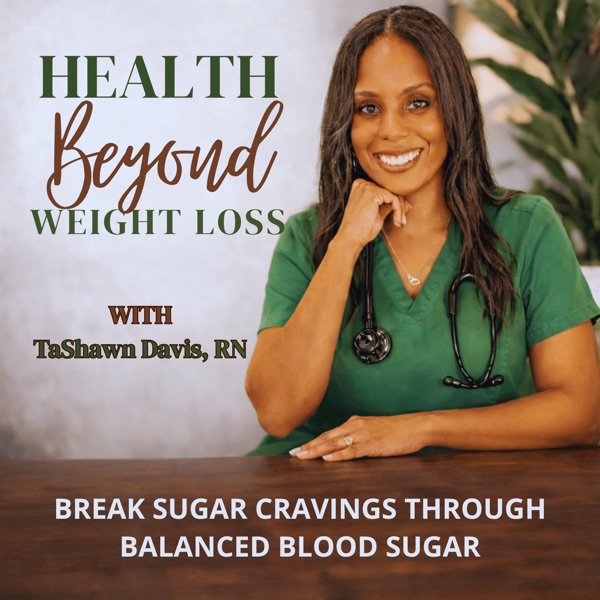
Podcast
Health Beyond Weight Loss |Insulin Resistance, Blood Sugar, Brain fog, Natural Remedies, Ketosis, Faith
*** Top 5% Globally Ranked***
Do you struggle with constant sugar cravings, afternoon energy crashes, or brain fog that makes it hard to focus on the things that matter most?
If you’ve ever wondered why your health seems to be getting worse even when you’re trying to do the right things, you’re not alone.
Welcome to Health Beyond Weight Loss, the podcast that helps you break sugar cravings through balanced blood sugar so you can regain steady energy, think clearly, and take control of your health. Through holistic health that focuses on faith, physiology, common sense, and a little humor, I help you understand and battle chronic health conditions.
I’m TaShawn Davis, Registered Nurse and Holistic Health Coach, and after more than two decades working in healthcare, I began to see a pattern. Many people are struggling with fatigue, brain fog, weight gain, type 2 diabetes, and insulin resistance, yet very few understand the simple physiology behind what’s happening inside their bodies.
On this podcast, I break down complex health topics into simple, practical conversations so you can understand how sugar, insulin resistance, and metabolic health affect the way your body functions.
Each episode helps you connect the dots between what you eat, how your body responds, and how to stabilize your blood sugar for lasting results. You’ll learn how insulin resistance impacts your energy, weight, and overall health—and how to improve it using practical strategies like intermittent fasting, low-carb, ketosis, carnivore, stress reduction, and any dietary preference, and more, so you can restore your energy and support long-term health.
If you’re ready to understand your body, break the cycle of sugar cravings, and start building real health beyond weight loss, with faith and confidence, you’re in the right place.
So grab your favorite sugar-free drink, settle in, and let’s chat about it!.
- Episodes
- 57
- Releases
- Twice a week
- Typical length
- 15 min
- On air since
- 2026
- Latest episode
- 2 days ago
Episodes
57 episodes, newest first
-
17 min
56. Could Insulin Resistance Be Affecting Your Brain? What Diabetes and Alzheimer’s Research Is Teaching Us
Episode 56
Show notes
*** Top 5% Globally Ranked***
Insulin Resistance and Brain Health
Could insulin resistance affect more than your blood sugar? What does metabolic health have to do with brain fog, memory, and Alzheimer’s disease?
In this episode of the Health Beyond Weight Loss Podcast, TaShawn Davis, RN, explores the connection between insulin resistance and brain health—and why understanding your metabolic health matters beyond the number on the scale.
TaShawn also shares her personal experience with memory difficulties and the changes she noticed after reducing sugar and carbohydrates. Her story is a reminder that health is personal, and that asking questions can be the beginning of understanding what your body needs.
During National Diabetes Month, this conversation invites you to look beyond blood sugar alone and consider the bigger picture of metabolic health.
In This Episode
• How insulin resistance relates to metabolic health
• Why researchers are studying the connection between blood sugar and brain health
• What TaShawn noticed about her own memory and dietary changes
• The connection between diabetes and Alzheimer’s risk
• Why brain fog and memory concerns deserve attention—not dismissal
• How understanding your body can help you have informed conversations with your healthcare professionalA Message of Hope
Experiencing brain fog or forgetfulness does not automatically mean you have insulin resistance or Alzheimer’s disease. Many things can affect memory and concentration, which is why it’s important to discuss new, persistent, or worsening symptoms with a qualified healthcare professional.
You don’t have to understand everything overnight. Start by asking questions, learning about your body, and taking one step at a time.
Research
•
Insulin resistance and brain glucose metabolism systematic review:
https://pubmed.ncbi.nlm.nih.gov/39185744/•
Ketogenic drink and mild cognitive impairment randomized controlled trial:
https://pubmed.ncbi.nlm.nih.gov/33103819/•
Modified ketogenic diet randomized crossover trial in Alzheimer’s disease:
https://pubmed.ncbi.nlm.nih.gov/33622392/•
Modified ketogenic diet pilot study in adults at risk for Alzheimer’s disease:
https://pubmed.ncbi.nlm.nih.gov/31757576/•
NIA study on diet, insulin resistance, and brain health:
https://www.nia.nih.gov/news/diet-may-improve-brain-health-older-adults-obesity•
CDC National Diabetes Statistics Report:
https://www.cdc.gov/diabetes/php/data-research/•
CDC youth diabetes trends:
https://www.cdc.gov/diabetes/data-research/research/trends-new-diabetes-cases-young-people.htmlFollow, Review & Share
If this episode encouraged you or helped you think differently about metabolic health, follow the Health Beyond Weight Loss Podcast and leave a review on Apple Podcasts.
Share this episode with someone who wants to understand more about blood sugar, insulin resistance, and brain health.
Follow and review on Apple Podcasts
Learn More & Join the Community
Explore metabolic health education and coaching at https://www.healthbeyondweightloss.com/.
Join the Health Beyond Weight Loss Facebook community
Books by TaShawn Davis, RN
Sugar Deception: Full Body System Review
Uproot The Cravings: 21-Day Sugar Detox Devotional & Journal
Connect with TaShawn
Email: tashawndavisrn@gmail.com
About Health Beyond Weight Loss
TaShawn Davis, RN, is a registered nurse, holistic health coach, metabolic health educator, author, speaker, and podcast host. Through education, faith, and practical support, she helps people better understand insulin resistance, blood sugar, and metabolic health.
Get healthy first, and the weight will follow.
Medical disclaimer: This podcast is for educational and informational purposes only. It is not medical advice, diagnosis, or treatment. Personal experiences do not guarantee the same outcome for others. Do not start, stop, or change medications based on this episode. Discuss memory concerns, blood sugar readings, dietary changes, and your individual health needs with a qualified healthcare professional.
-
11 min
55. Why Am I Still Hungry After Eating? The Insulin Resistance Connection
Episode 55
Show notes
***Top 5% Globally Ranked*** Why Am I Still Hungry After Eating? The Insulin Resistance Connection
Have you ever finished a meal but still felt hungry shortly afterward?
Persistent hunger and cravings can be frustrating—especially when you feel like you are eating enough but never feel satisfied. Many people assume constant hunger is simply a discipline or willpower problem, but blood sugar, insulin, sleep, stress, medications, meal composition, and overall metabolic health can influence appetite.
In Episode 55 of the Health Beyond Weight Loss Podcast, TaShawn Davis, RN, explores what persistent hunger may be communicating and why understanding your body can help you make more informed health decisions.
In This Episode
•
Why you may still feel hungry after eating
•
The difference between hunger and cravings
•
How meal composition may influence fullness
•
The possible connection between persistent hunger and insulin resistance
•
How blood sugar changes may affect appetite for some people
•
Why sleep and stress can influence hunger and cravings
•
How medications and health conditions may affect appetite
•
Why hunger should not automatically be treated as a lack of discipline
•
What questions to ask when you are hungry shortly after eating
•
How to track hunger patterns without shame
•
When persistent hunger may need to be discussed with a healthcare professional
What Is Your Hunger Telling You?
The next time you feel hungry shortly after eating, pause and ask:
•
What did I eat?
•
What did I drink?
•
How long did I feel satisfied?
•
Am I experiencing a specific craving?
•
How did I sleep?
•
What is my stress level?
•
Am I experiencing any unusual symptoms?
•
Could a medication or health condition be affecting my appetite?
This is not about blaming yourself. It is about learning to recognize patterns.
A Message of Encouragement
If you are constantly hungry, you are not automatically lazy, weak, or lacking discipline.
You may need more information, a more structured approach, or support from a qualified healthcare professional. Understanding your physiology can help you move from shame to clarity and from confusion to action.
Continue Learning
Subscribe to the Health Beyond Weight Loss newsletter for weekly encouragement and practical metabolic-health education:
https://www.healthbeyondweightloss.com/
Join the Health Beyond Weight Loss Facebook community:
https://www.facebook.com/groups/healthbeyondweightloss
Books by TaShawn Davis, RN
Sugar Deception: Full Body System Review
https://a.co/d/0eVtBjg7Uproot The Cravings: 21-Day Sugar Detox Devotional & Journal
https://a.co/d/0j2BDw2jConnect With TaShawn
Website: https://www.healthbeyondweightloss.com/
Facebook: https://www.facebook.com/TaShawnDavisRNHealthCoach
Instagram: https://www.instagram.com/tashawndavisrnhealthcoach
Email: tashawndavisrn@gmail.com
About Health Beyond Weight Loss
Health Beyond Weight Loss helps people understand insulin resistance, blood sugar, A1C, cravings, metabolic health, and sustainable lifestyle change through education, understanding, and hope.
TaShawn Davis, RN, is a Registered Nurse, Holistic Health Coach, Metabolic Health Educator, author, speaker, and podcast host.
Get healthy first, and the weight will follow.
Medical Disclaimer
This podcast is for educational and informational purposes only. It is not medical advice, diagnosis, or treatment. Do not stop, start, or change medications or supplements based on this episode. Speak with your qualified healthcare professional about persistent hunger, symptoms, medications, blood sugar readings, and your individual medical history.
-
15 min
54. Can You Have Insulin Resistance With Normal Blood Sugar? What Your Body May Be Telling You
Episode 54
Show notes
*** Top 5% Globally Ranked*** Can You Have Insulin Resistance With Normal Blood Sugar? What Your Body May Be Telling You
Can you have insulin resistance even when your blood sugar appears normal?
Many people assume that a normal fasting glucose means everything is working properly. However, the body may sometimes produce more insulin to keep blood sugar within a normal range—even when the cells are becoming less responsive to insulin.
In Episode 54 of the Health Beyond Weight Loss Podcast, TaShawn Davis, RN, explains the connection between normal blood sugar, insulin resistance, compensatory insulin production, and metabolic health.
This episode will help you understand why one blood sugar number may not tell the entire story.
In This Episode
• Whether insulin resistance can exist with normal blood sugar
• How insulin helps move glucose into the body’s cells
• What happens when muscle, liver, and fat cells become less responsive to insulin
• How the pancreas may compensate by producing more insulin
• Why normal glucose does not always mean normal insulin sensitivity
• The difference between blood sugar and insulin levels
• Why fasting insulin may be worth discussing with your healthcare professional
• How A1C, triglycerides, HDL, waist circumference, and blood sugar patterns may provide additional context
• Why cravings, fatigue, weight changes, and energy patterns should not be ignored
• Why one lab result should not be used to diagnose or dismiss insulin resistance
• How real-food choices, movement, sleep, and stress management support metabolic health
• Why understanding your physiology can help you make better decisions without fearNormal Blood Sugar Does Not Always Tell the Whole Story
A person may have a normal glucose reading because the pancreas is producing enough insulin to help manage that glucose.
Over time, the body may require more insulin to maintain a similar blood sugar level. This is one reason insulin resistance may develop before blood glucose becomes clearly elevated.
Research has examined people with normal glucose tolerance but elevated insulin levels and found evidence of reduced insulin sensitivity in that group. pubmed.ncbi.nlm.nih.gov
This does not mean that everyone with normal blood sugar has insulin resistance. It means that glucose is only one part of the metabolic picture.
Questions to Discuss With Your Healthcare Professional
Depending on your health history, your healthcare professional may determine whether additional information is appropriate, such as:
• Fasting insulin
• A1C
• Fasting glucose
• Triglycerides
• HDL cholesterol
• Waist circumference
• Liver-related markers
• Blood sugar response after meals
• Other tests based on your individual needsThere is no single perfect routine test for insulin resistance. Research methods and clinical markers have different strengths and limitations, so results should be interpreted in context. pubmed.ncbi.nlm.nih.gov
What You Can Do
Do not panic over one number—and do not dismiss ongoing concerns.
Begin by observing patterns and discussing them with your healthcare professional.
Practical areas to consider may include:
• Eating more real, minimally processed foods
• Reducing added sugar and refined carbohydrates
• Building meals around protein and non-starchy vegetables
• Moving regularly, when medically appropriate
• Supporting better sleep
• Managing stress
• Avoiding unnecessary all-or-nothing changesSmall, consistent actions can help you move from confusion to greater understanding.
Research Mentioned
•
Reaven GM. “Compensatory Hyperinsulinemia and the Development of an Atherogenic Lipoprotein Profile: The Price Paid to Maintain Glucose Homeostasis in Insulin-Resistant Individuals.” Endocrinology and Metabolism Clinics of North America. PMID: 15752921.
https://pubmed.ncbi.nlm.nih.gov/15752921/•
Yang G, et al. “Assessment of Insulin Resistance in Subjects with Normal Glucose Tolerance, Hyperinsulinemia with Normal Blood Glucose Tolerance, Impaired Glucose Tolerance, and Newly Diagnosed Type 2 Diabetes.” Journal of Diabetes Research. 2016. PMID: 26770991.
https://pubmed.ncbi.nlm.nih.gov/26770991/Continue Learning
Subscribe to the Health Beyond Weight Loss newsletter for weekly encouragement and practical metabolic-health education:
https://www.healthbeyondweightloss.com/
Join the Health Beyond Weight Loss Facebook community:
https://www.facebook.com/groups/healthbeyondweightloss
Books by TaShawn Davis, RN
Sugar Deception: Full Body System Review
https://a.co/d/0eVtBjg7Uproot The Cravings: 21-Day Sugar Detox Devotional & Journal
https://a.co/d/0j2BDw2jConnect With TaShawn
Website: https://www.healthbeyondweightloss.com/
Facebook: https://www.facebook.com/TaShawnDavisRNHealthCoach
Instagram: https://www.instagram.com/tashawndavisrnhealthcoach
Email: tashawndavisrn@gmail.com
About Health Beyond Weight Loss
Health Beyond Weight Loss helps people understand insulin resistance, blood sugar, A1C, cravings, metabolic health, and sustainable lifestyle change through education, understanding, and hope.
TaShawn Davis, RN, is a Registered Nurse, Holistic Health Coach, Metabolic Health Educator, author, speaker, and podcast host.
Get healthy first, and the weight will follow.
Medical Disclaimer
This podcast is for educational and informational purposes only. It is not medical advice, diagnosis, or treatment. Do not stop, start, or change medications based on this episode. Speak with your qualified healthcare professional about your blood sugar readings, insulin levels, symptoms, medications, and individual medical history.
-
9 min
53. Why Is Your Blood Sugar High in the Morning Even When You Haven’t Eaten?
Episode 53
Show notes
***Top 5% Globally Ranked*** Why Is Your Blood Sugar High in the Morning Even When You Haven’t Eaten?
Have you ever checked your blood sugar in the morning and wondered how it could be elevated when you had not eaten?
Morning blood sugar can be confusing, especially when you are making healthier lifestyle changes. In Episode 53 of the Health Beyond Weight Loss Podcast, TaShawn Davis, RN, explains why blood sugar may rise during the overnight and early-morning hours and why one unexpected reading does not tell the entire story.
You will learn how to look at your glucose patterns with greater understanding instead of immediately assuming that your health changes are not working.
In This Episode
•
Why blood sugar can be high in the morning without eating
•
How fasting blood sugar is influenced by the liver
•
Why the body may release or produce glucose overnight
•
How morning hormones may affect blood sugar
•
The connection between morning blood sugar and insulin resistance
•
How stress and poor sleep may influence glucose levels
•
Why illness, inflammation, medications, and evening meals may affect readings
•
Why one high blood sugar reading does not explain the entire pattern
•
What information to track before drawing conclusions
•
Why talking with your healthcare professional is important
•
How safe movement may support glucose use by the muscles
Morning Blood Sugar Is a Pattern to Understand
A high morning blood sugar reading may be connected to several factors, including fasting, overnight glucose production, hormones, insulin resistance, sleep, stress, illness, medication, or food consumed the night before.
The goal is not to dismiss an elevated reading or panic over one number.
The goal is to ask better questions:
•
Is this happening repeatedly?
•
What happened the night before?
•
How did I sleep?
•
Was I under unusual stress?
•
Was I sick or experiencing symptoms?
•
What do my fasting and after-meal patterns show?
A Message for Anyone Feeling Discouraged
If your morning blood sugar is not changing as quickly as you hoped, do not immediately assume that your effort was wasted.
Observe the pattern, write down what may be influencing your numbers, and discuss your findings with your qualified healthcare professional.
Your number is information—but it may require context before you know what it means.
Continue Learning
Subscribe to the Health Beyond Weight Loss newsletter for weekly encouragement and practical metabolic-health education:
https://www.healthbeyondweightloss.com/
Join the Health Beyond Weight Loss Facebook community:
https://www.facebook.com/groups/healthbeyondweightloss
Books by TaShawn Davis, RN
Sugar Deception: Full Body System Review
https://a.co/d/0eVtBjg7Uproot The Cravings: 21-Day Sugar Detox Devotional & Journal
https://a.co/d/0j2BDw2jConnect With TaShawn
Website: https://www.healthbeyondweightloss.com/
Facebook: https://www.facebook.com/TaShawnDavisRNHealthCoach
Instagram: https://www.instagram.com/tashawndavisrnhealthcoach
Email: tashawndavisrn@gmail.com
About Health Beyond Weight Loss
Health Beyond Weight Loss helps people understand insulin resistance, blood sugar, A1C, cravings, metabolic health, and sustainable lifestyle change through education, understanding, and hope.
TaShawn Davis, RN, is a Registered Nurse, Holistic Health Coach, Metabolic Health Educator, author, speaker, and podcast host.
Get healthy first, and the weight will follow.
Medical Disclaimer
This podcast is for educational and informational purposes only. It is not medical advice, diagnosis, or treatment. Do not stop, start, or change medications based on this episode. Speak with your qualified healthcare professional about your blood sugar readings, medications, symptoms, sleep, stress, and individual medical history.
-
12 min
52. Why Isn’t Your Blood Sugar or A1C Improving—Even After Changing Your Lifestyle?
Episode 52
Show notes
*** Top 5% Globally Ranked*** Why Isn’t Your Blood Sugar or A1C Improving—Even After Changing Your Lifestyle?
Have you changed your eating habits and lifestyle but still wonder why your blood sugar or A1C is not improving?
An elevated number does not always tell the whole story. In this episode of the Health Beyond Weight Loss Podcast, TaShawn Davis, RN, explains how to think more carefully about blood sugar, A1C, physiology, pathophysiology, and the factors that may influence your numbers.
You will learn why understanding the body’s response is important before assuming you have failed—or ignoring a persistent pattern.
In This Episode
•
Why blood sugar may remain elevated after lifestyle changes
•
The difference between physiology and pathophysiology
•
How fasting and gluconeogenesis may affect blood glucose
•
How stress, sleep, illness, inflammation, and exercise can influence blood sugar
•
How insulin resistance may disrupt normal glucose regulation
•
Why persistent high blood sugar may require further investigation
•
What glycation is and why it matters
•
How elevated glucose can contribute to glycated hemoglobin and A1C
•
Why A1C should be interpreted in context
•
How blood donation and red blood cell changes may affect A1C interpretation
•
Why movement may support glucose use by the muscles
•
How to observe patterns without immediately blaming yourself
The Question to Ask
Instead of asking only, “Why is my number high?” consider asking:
Is this a temporary physiological response, or is there an ongoing pathophysiological pattern that needs attention?
This distinction can help you move from fear and frustration toward better questions, appropriate evaluation, and more informed action.
A Simple Next Step
Begin observing your patterns, including:
•
Blood sugar readings
•
Meals and fasting periods
•
Sleep
•
Stress
•
Illness or symptoms
•
Movement
•
Medications and supplements
If your blood sugar or A1C remains elevated, discuss your results and patterns with your qualified healthcare professional.
Continue Learning
Subscribe to the Health Beyond Weight Loss newsletter for weekly encouragement, practical metabolic-health education, and this week’s lower-sugar Starbucks fall drink ordering suggestion:
https://www.healthbeyondweightloss.com
Join the Health Beyond Weight Loss Facebook community:
https://www.facebook.com/groups/healthbeyondweightloss
Books by TaShawn Davis, RN
Sugar Deception: Full Body System Review
https://a.co/d/0eVtBjg7Uproot The Cravings: 21-Day Sugar Detox Devotional & Journal
https://a.co/d/0j2BDw2jConnect With TaShawn
Website: https://www.healthbeyondweightloss.com
Facebook: https://www.facebook.com/TaShawnDavisRNHealthCoach
Instagram: https://www.instagram.com/tashawndavisrnhealthcoach
Email: tashawndavisrn@gmail.com
About Health Beyond Weight Loss
Health Beyond Weight Loss helps people understand insulin resistance, blood sugar, A1C, metabolic health, cravings, and sustainable lifestyle change through education, understanding, and hope.
TaShawn Davis, RN, is a Registered Nurse, Holistic Health Coach, Metabolic Health Educator, author, speaker, and podcast host.
Get healthy first, and the weight will follow.
Medical Disclaimer
This podcast is for educational and informational purposes only. It is not medical advice, diagnosis, or treatment. Do not stop, start, or change medications or supplements based on this episode. Speak with your qualified healthcare professional about your blood sugar, A1C, medications, symptoms, recent blood donation, and individual medical history.
-
21 min
51. Are GLP-1 Medications Enough? What Your Body Still Needs for Metabolic Health
Episode 51
Show notes
*** Top 5% Globally Ranked*** Are GLP-1 Medications Enough? What Your Body Still Needs for Metabolic Health
Are GLP-1 medications enough to restore metabolic health—or do they only address part of the problem?
In Episode 51 of the Health Beyond Weight Loss Podcast, TaShawn Davis, RN, explains what GLP-1 medications such as semaglutide may do for appetite, blood sugar, insulin, and weight loss—and what they do not necessarily repair.
This balanced conversation explores the difference between managing a health marker and understanding the physiology behind it. TaShawn also discusses common side effects, pancreatic concerns, hormone signaling, muscle preservation, diabetic retinopathy, vision concerns, and the current research surrounding cognitive and neurological outcomes.
In This Episode
• What GLP-1 medications are designed to do
• How GLP-1 medications affect insulin, glucagon, appetite, and digestion
• Why improved blood sugar does not automatically mean the pancreas has been repaired
• Why GLP-1 medications do not correct every hormone involved in metabolism
• The difference between appetite suppression and improved metabolic health
• Common gastrointestinal side effects
• Important concerns related to pancreatitis, gallbladder disease, kidney injury, and diabetic retinopathy
• What current research says about possible vision risks
• Why cognitive decline should not be presented as a proven effect
• The importance of protein, nutrition, strength, and sustainable habits
• How medication and lifestyle education can work together
• Questions to ask before viewing medication as the entire solutionThe Bigger Question
A GLP-1 medication may be a valuable medical tool for some people.
But a tool is not the same as a complete foundation.
The medication may help reduce appetite, improve blood glucose, or support weight loss. Your body may still need adequate nutrition, protein, strength, sleep, stress support, and education about insulin resistance and blood sugar.
The goal is not to create fear around medication.
The goal is to understand what the medication may be helping with—and what you may still need to learn and address.
Current Research Discussed
This episode references current research and prescribing information related to GLP-1 medications, neurological outcomes, and vision concerns.
A 2025 study of U.S. veterans reported a possible association between semaglutide use and non-arteritic anterior ischemic optic neuropathy, a rare condition that can cause sudden vision loss. Because this was an observational study, it cannot prove that semaglutide caused the condition. jamanetwork.com
A separate pooled analysis of randomized clinical trials did not find an increased incidence of non-arteritic anterior ischemic optic neuropathy with semaglutide or liraglutide compared with placebo. This demonstrates why emerging safety concerns must be discussed carefully and in context. pubmed.ncbi.nlm.nih.gov
Key Takeaways
• GLP-1 medications may influence appetite, blood glucose, insulin, glucagon, and stomach emptying.
• They do not automatically repair the pancreas or resolve every cause of insulin resistance.
• Improved numbers while taking medication do not always mean the underlying metabolic problem has been permanently corrected.
• Reduced appetite can make adequate protein and nutrient intake more important.
• Muscle preservation should remain part of the weight-loss conversation.
• Vision and neurological concerns deserve attention, but emerging associations are not the same as proven causation.
• Never stop or change medication without speaking with your qualified healthcare professional.
• Understanding your body helps you make better decisions with less fear and more clarity.Continue Learning
Health Beyond Weight Loss helps people understand insulin resistance, blood sugar, metabolic health, cravings, low-carbohydrate nutrition, and sustainable lifestyle change.
Visit:
https://www.healthbeyondweightloss.comJoin the Health Beyond Weight Loss community:
https://www.facebook.com/groups/healthbeyondweightlossBooks by TaShawn Davis, RN
Sugar Deception: Full Body System Review
https://a.co/d/0eVtBjg7Uproot The Cravings: 21-Day Sugar Detox Devotional & Journal
https://a.co/d/0j2BDw2jConnect With TaShawn
Facebook:
https://www.facebook.com/TaShawnDavisRNHealthCoachInstagram:
https://www.instagram.com/tashawndavisrnhealthcoachEmail:
tashawndavisrn@gmail.comAbout TaShawn Davis, RN
TaShawn Davis is a Registered Nurse, Holistic Health Coach, Metabolic Health Educator, author, speaker, and host of the Health Beyond Weight Loss Podcast.
Her mission is to help reverse one million cases of Type 2 diabetes and insulin resistance through education, understanding, and hope.
Get healthy first, and the weight will follow.
Medical Disclaimer
This podcast is for educational and informational purposes only. It is not medical advice, diagnosis, or treatment. Do not stop, start, or change medications or supplements based on this episode. Speak with your qualified healthcare professional about your individual health needs, symptoms, lab results, medication questions, pregnancy, diabetes, vision changes, or other complex health conditions.
#GLP1 #MetabolicHealth #InsulinResistance #WeightLoss #reverse1milliontype2diabetes
-
14 min
50. Can Your Triglycerides Reveal Insulin Resistance? The Overlooked Blood-Sugar Clue
Episode 50
Show notes
***Top 5% Globally Ranked** Can Your Triglycerides Reveal Insulin Resistance? The Overlooked Blood-Sugar Clue
What if your triglycerides are revealing something about insulin resistance that your fasting glucose alone does not show?
In Episode 50 of the Health Beyond Weight Loss Podcast, TaShawn Davis, RN, explains the relationship between triglycerides, fasting glucose, blood sugar, and metabolic health.
She introduces the triglyceride-glucose index, also called the TyG index, and explains how this calculation may provide an additional clue about insulin resistance.
The TyG index is not a diagnosis. It is one tool that may help healthcare professionals evaluate patterns related to metabolic health.
In This Episode
• What triglycerides are
• How triglycerides may relate to insulin resistance
• Why fasting glucose does not always tell the complete story
• What the triglyceride-glucose index, or TyG index, is
• How the TyG index is calculated
• Why the TyG index should not be used as a self-diagnosis
• The relationship between blood sugar, insulin, and triglycerides
• Why “normal” glucose does not always mean optimal metabolic health
• How fatty liver, high triglycerides, low HDL, and elevated blood sugar may occur together
• How low-carbohydrate and ketogenic eating may support improved metabolic health
• Which questions to ask about your laboratory results
• Why your lab results should be viewed as a pattern rather than isolated numbersWhat Is the TyG Index?
The triglyceride-glucose index combines fasting triglycerides and fasting glucose into one calculation.
The commonly used formula is:
TyG index = natural log of fasting triglycerides × fasting glucose ÷ 2
The TyG index has been studied as a surrogate marker of insulin resistance. However, research has found that cutoff points vary among studies and populations.
This means the TyG index may offer a helpful clue, but it should not be used alone to diagnose insulin resistance.
Questions to Ask About Your Labs
When reviewing your laboratory results, consider asking your healthcare professional:
• What is my fasting glucose?
• What are my triglycerides?
• What is my HDL?
• What is my A1C?
• Do these results suggest a pattern of metabolic risk?
• Should I be evaluated for insulin resistance?
• Could medication, genetics, thyroid function, liver health, or another condition be affecting my results?
• When should I repeat my laboratory testing?Research Referenced
Sánchez-García A, et al. “Diagnostic Accuracy of the Triglyceride and Glucose Index for Insulin Resistance: A Systematic Review.”
https://pubmed.ncbi.nlm.nih.gov/32256572/
The review included 15 studies involving nearly 70,000 participants. Researchers found that the TyG index may have value as a surrogate marker of insulin resistance, but the evidence quality varied, and standardized cutoff points are still needed.
Learn More
Health Beyond Weight Loss:
https://www.healthbeyondweightloss.comJoin the Health Beyond Weight Loss community:
https://www.facebook.com/groups/healthbeyondweightlossBooks by TaShawn Davis, RN
Sugar Deception: Full Body System Review
https://a.co/d/0eVtBjg7Uproot The Cravings: 21-Day Sugar Detox Devotional & Journal
https://a.co/d/0j2BDw2jConnect With TaShawn
Facebook:
https://www.facebook.com/TaShawnDavisRNHealthCoachInstagram:
https://www.instagram.com/tashawndavisrnhealthcoachEmail:
tashawndavisrn@gmail.comAbout Health Beyond Weight Loss
Health Beyond Weight Loss helps people understand insulin resistance, blood sugar, cravings, ketogenic nutrition, fatty liver, and metabolic health through education, coaching, faith, and hope.
TaShawn Davis, RN, is a Registered Nurse, Holistic Health Coach, Metabolic Health Educator, author, speaker, and host of the Health Beyond Weight Loss Podcast.
Get healthy first, and the weight will follow.
Medical Disclaimer
This podcast is for educational and informational purposes only. It is not medical advice, diagnosis, or treatment. The TyG index is not a diagnosis of insulin resistance. Do not stop, start, or change medications based on this episode. Speak with your qualified healthcare professional about your laboratory results, medications, symptoms, and individual health needs.
-
16 min
49. Can Six Weeks Improve Insulin Resistance? What Our Metabolic Intensive Taught Me
Episode 49
Show notes
***Top 5% Globally Ranked*** Can Six Weeks Improve Insulin Resistance? What Our Metabolic Intensive Taught Me
Can a low-carbohydrate ketogenic lifestyle improve insulin resistance, blood sugar, fatty liver, and metabolic health in only six weeks?
In Episode 49 of the Health Beyond Weight Loss Podcast, TaShawn Davis, RN, explains what the six-week Metabolic Intensive taught her about her clients while she taught about carbohydrate restriction, insulin sensitivity, liver fat, hunger cues, sugar cravings, and measurable metabolic progress.
This episode is not based on a low-calorie starvation plan. It focuses on understanding how reducing processed carbohydrates and eating real, nutrient-dense foods may change the body’s metabolic environment.
TaShawn also discusses research involving a controlled carbohydrate-restricted diet and fatty liver disease. In that study, liver fat decreased by approximately 44% after two weeks. The study provides an important scientific insight, but individual results vary, and the findings should not be treated as a guarantee for every person following a ketogenic or low-carbohydrate diet.
In This Episode
• What six weeks may reveal about insulin resistance
• How a low-carbohydrate ketogenic lifestyle differs from a low-calorie diet
• Why insulin sensitivity matters
• How the liver is connected to blood sugar regulation
• The relationship between fatty liver and metabolic health
• What research found about liver-fat reduction after two weeks of carbohydrate restriction
• Why reducing carbohydrates may reduce insulin demand
• How hunger and fullness cues can become clearer
• Why sugar cravings may change when processed foods are reduced
• Why A1C may take longer to reflect recent progress
• Which changes may be noticed before they are confirmed through laboratory testing
• Why individual experiences are not the same as clinical research results
• How to evaluate progress beyond the number on the scaleWhat Can Change in Six Weeks?
Six weeks is not a guaranteed deadline for reversing insulin resistance.
However, it may provide enough time to begin observing changes in:
• Hunger and fullness
• Sugar cravings
• Energy
• Post-meal blood sugar
• Waist measurement
• Weight
• Food behaviors
• Sleep and daily consistencySome changes may be noticeable, while others require laboratory testing or medical evaluation.
Fatty Liver, Liver Fat, and Insulin Resistance
The liver helps regulate blood sugar and plays an important role in insulin sensitivity.
When excess fat accumulates in the liver, it may contribute to a larger pattern of metabolic dysfunction, including insulin resistance, elevated blood sugar, high triglycerides, and prediabetes.
A published human study examined a controlled, isocaloric, carbohydrate-restricted diet in people with obesity and fatty liver disease. After two weeks, liver fat decreased by approximately 44% on average.
This was a specific controlled research intervention. It was not the same as the Health Beyond Weight Loss Metabolic Intensive, and it does not guarantee that every person will experience the same result.
Read the study:
https://pubmed.ncbi.nlm.nih.gov/29456073/Why A1C May Take Longer
A1C reflects an average of blood glucose over approximately the previous two to three months.
Because of this, six weeks of progress may not show the full effect of recent lifestyle changes.
Depending on an individual’s health needs, other markers may also be important, including:
• Fasting glucose
• Post-meal glucose
• Fasting insulin
• C-peptide
• Triglycerides
• HDL cholesterol
• Liver enzymes
• Waist circumference
• Blood pressureLaboratory testing should be ordered and interpreted by a qualified healthcare professional.
A Practical Reflection
If you have been following a low-carbohydrate or ketogenic lifestyle, consider asking:
• Are my cravings changing?
• Am I satisfied longer after meals?
• Is my hunger more predictable?
• Are my energy levels different?
• Are my glucose readings changing, if I monitor them?
• Has my waist measurement changed?
• What do my follow-up labs show?
• What still needs attention?Progress is not always visible immediately, but careful observation can help you understand your body and make more informed decisions.
Learn More
Visit Health Beyond Weight Loss:
https://www.healthbeyondweightloss.com/Join the Health Beyond Weight Loss community:
https://www.facebook.com/groups/healthbeyondweightlossBooks by TaShawn Davis, RN
Sugar Deception: Full Body System Review
https://a.co/d/0eVtBjg7Uproot The Cravings: 21-Day Sugar Detox Devotional & Journal
https://a.co/d/0j2BDw2jConnect with TaShawn
Facebook:
https://www.facebook.com/TaShawnDavisRNHealthCoachInstagram:
https://www.instagram.com/tashawndavisrnhealthcoachEmail:
tashawndavisrn@gmail.comAbout Health Beyond Weight Loss
Health Beyond Weight Loss helps people understand insulin resistance, blood sugar, fatty liver, cravings, ketogenic nutrition, and metabolic health through education, coaching, faith, and hope.
TaShawn Davis, RN, is a Registered Nurse, Holistic Health Coach, Metabolic Health Educator, author, speaker, and host of the Health Beyond Weight Loss Podcast.
Get healthy first, and the weight will follow.
Medical Disclaimer
This podcast is for educational and informational purposes only. It is not medical advice, diagnosis, or treatment. Do not stop, start, or change medications based on this episode. If you have diabetes, take glucose-lowering medication, experience hypoglycemia, are pregnant, or have liver, kidney, pancreatic, or other complex health conditions, speak with your qualified healthcare professional before changing your eating pattern.
-
15 min
48. How Do You Maintain Weight Loss? The Habits That Help Protect Your Metabolic Health
Episode 48
Show notes
*** Top 5% Podcast*** How Do You Maintain Weight Loss? The Habits That Help Protect Your Metabolic Health
What happens after you lose weight, reduce cravings, improve your energy, or begin seeing positive changes in your health?
Many people learn how to start a weight-loss journey—but they are not taught how to maintain their progress.
In Episode 48 of the Health Beyond Weight Loss Podcast, TaShawn Davis, RN, reflects on the graduation of eight participants from the six-week Metabolic Intensive and the testimonies they shared about improved energy, fewer sugar cravings, better clarity, improved memory, a flatter belly, and weight loss.
This episode explores why weight loss is not the finish line and why protecting your metabolic health requires continued understanding, consistency, support, and realistic habits.
In This Episode
• Why weight loss is not the end of the health journey
• What weight-loss maintenance really means
• Why people may return to old habits after completing a program
• How insulin resistance and blood-sugar patterns relate to long-term health
• Why improved energy and reduced cravings are meaningful signs of progress
• How hunger and fullness awareness can support maintenance
• Why accountability and community matter after a program ends
• How to prepare for stressful or difficult seasons
• Why one difficult day does not have to become a complete setback
• How to return to your foundation after getting off track
• Why maintenance does not require perfection
• How continued education can help protect your progressWhat Does Maintenance Mean?
Maintaining weight loss is not about following a rigid plan perfectly forever.
It means continuing to practice the habits that support your health, such as:
• Eating meals that help you stay satisfied
• Paying attention to hunger and fullness
• Recognizing foods that trigger intense cravings
• Supporting more stable blood-sugar patterns
• Staying connected to accountability and encouragement
• Returning to healthy routines after an interruptionWeight is one measurement, but it is not the only measure of progress. Energy, clarity, cravings, sleep, mobility, confidence, and metabolic markers also matter.
The Bigger Lesson
Completing a program is not the same as completing your health journey.
The goal is not to return to the habits that made you feel unwell. The goal is to understand what helps your body and learn how to make those choices part of your lifestyle.
You do not have to be perfect to protect your progress.
You need awareness, support, consistency, and the willingness to return to your foundation.
A Simple Reflection
Ask yourself:
• What health improvement am I most grateful for?
• Which habit helped create that improvement?
• What will I do to protect it?
• Who can help me stay accountable?Your progress deserves your attention.
Join the Health Beyond Weight Loss Community
Join the Health Beyond Weight Loss community for encouragement and practical education about insulin resistance, blood sugar, sugar cravings, weight loss, and metabolic health.
https://www.facebook.com/share/g/1UQBvQZ51j/
Learn more:
https://www.healthbeyondweightloss.com/
Books by TaShawn Davis, RN
Uproot The Cravings: 21-Day Sugar Detox Devotional & Journal
https://a.co/d/0j2BDw2jSugar Deception: Full Body System Review
https://a.co/d/0eVtBjg7Connect With TaShawn
Facebook:
https://www.facebook.com/TaShawnDavisRNHealthCoachInstagram:
https://www.instagram.com/tashawndavisrnhealthcoachEmail:
tashawndavisrn@gmail.comAbout Health Beyond Weight Loss
Health Beyond Weight Loss helps people understand insulin resistance, blood sugar, cravings, prediabetes, Type 2 diabetes, and sustainable metabolic-health strategies through education, coaching, community, faith, and hope.
TaShawn Davis, RN, is a Registered Nurse, Holistic Health Coach, Metabolic Health Educator, author, speaker, and host of the Health Beyond Weight Loss Podcast.
Get healthy first, and the weight will follow.
Medical Disclaimer
This podcast is for educational and informational purposes only. It is not medical advice, diagnosis, or treatment.
Do not stop, start, or change medications or supplements based on this episode. Speak with your qualified healthcare professional before changing your eating pattern or treatment plan, especially if you have diabetes, take glucose-lowering medication, experience hypoglycemia, are pregnant, or have kidney, liver, or other complex health conditions.
weight loss maintenance, maintain weight loss, sustainable weight loss, insulin resistance, metabolic health, blood sugar, sugar cravings, healthy lifestyle, Type 2 diabetes, weight loss support.
-
13 min
47. Do You Need a Diet to Reverse Insulin Resistance? What Matters More Than the Diet Name
Episode 47
Show notes
*** Top 5% Globally Ranked*** Do You Need a Diet to Reverse Insulin Resistance? What Matters More Than the Diet Name
Do you need a specific diet to reverse insulin resistance?
With so many labels—keto, low-carb, carnivore, Mediterranean, fasting, paleo, and more—it can be easy to focus on the name of the plan instead of understanding what is happening inside the body.
In Episode 47 of the Health Beyond Weight Loss Podcast, TaShawn Davis, RN, explores why the diet name may matter less than how a way of eating affects hunger, cravings, energy, blood sugar, and metabolic health.
She also shares a coaching moment that raises an important question:
What happens when we stop thinking of healthy eating as a temporary diet and begin viewing it as a sustainable lifestyle?
In This Episode
•
Why people often view healthy eating as temporary
•
How diet labels can create an “on-plan” and “off-plan” mindset
•
Why the name of a diet does not tell the entire story
•
What insulin resistance has to do with hunger, cravings, and energy
•
Why your body’s response provides important information
•
How to recognize hunger, fullness, energy, and craving patterns
•
Why sustainable weight loss requires more than following rules
•
The difference between a temporary diet and a lifestyle
•
Why changing too many things at once can create confusion
•
How understanding physiology can support better decisions
•
Why progress should not automatically lead you back to old habits
•
How to think about food without shame or fear
•
Why consistency and understanding matter more than perfection
The Coaching Question That Stayed With Me
One of TaShawn’s clients said:
“I know this will work—but what will it look like when I go back?”
That question revealed how easily we can think of healthier eating as something temporary.
But what if the goal is not to return to the habits that made us feel unwell?
What if the goal is to understand what supports your body and make those choices part of your lifestyle?
What Matters More Than the Diet Name?
Instead of asking only, “What diet am I on?” consider asking:
•
Am I staying satisfied after meals?
•
Are my cravings becoming easier to manage?
•
Is my energy more consistent?
•
What happens to my blood sugar after certain meals?
•
Am I learning my hunger and fullness cues?
•
Can I realistically continue these habits?
•
What is this way of eating doing inside my body?
A label may describe an approach, but your body’s response provides valuable information.
The Bigger Lesson
You may need structure, education, coaching, or accountability to begin improving insulin resistance.
But the goal is not to spend your life starting over.
The goal is to understand the principles that support your health and learn how to apply them in real life.
Healthy eating does not have to be perfect to be meaningful. It must be consistent enough to help you learn, adapt, and continue moving forward.
Continue Learning With Health Beyond Weight Loss
Health Beyond Weight Loss helps people understand insulin resistance, blood sugar, cravings, prediabetes, Type 2 diabetes, and practical metabolic-health strategies through education, coaching, community, faith, and hope.
Learn more:
https://www.healthbeyondweightloss.com/
Join the Health Beyond Weight Loss community:
https://www.facebook.com/share/g/1UQBvQZ51j/
Books by TaShawn Davis, RN
Uproot The Cravings: 21-Day Sugar Detox Devotional & Journal
https://a.co/d/0j2BDw2jSugar Deception: Full Body System Review
https://a.co/d/0eVtBjg7Connect With TaShawn
Facebook:
https://www.facebook.com/TaShawnDavisRNHealthCoachInstagram:
https://www.instagram.com/tashawndavisrnhealthcoachEmail:
tashawndavisrn@gmail.comAbout TaShawn Davis, RN
TaShawn Davis is a Registered Nurse, Holistic Health Coach, Metabolic Health Educator, author, speaker, and host of the Health Beyond Weight Loss Podcast.
Her mission is to help reverse one million cases of Type 2 diabetes and insulin resistance through education, understanding, and hope.
Get healthy first, and the weight will follow.
Medical Disclaimer
This podcast is for educational and informational purposes only. It is not medical advice, diagnosis, or treatment.
Do not stop, start, or change medications or supplements based on this episode. Speak with your qualified healthcare professional before changing your eating pattern or treatment plan, especially if you have diabetes, take glucose-lowering medication, experience hypoglycemia, are pregnant, or have kidney, liver, or other complex health conditions.
#InsulinResistance #MetabolicHealth #BloodSugar #HealthyLifestyle #reverse1milliontype2diabetes
-
18 min
46. How Long Does It Take to Reverse Insulin Resistance? What Changes First?
Episode 46
Show notes
***Top 5% Globally Ranked*** How Long Does It Take to Reverse Insulin Resistance? What Changes First?
How long does it take to reverse insulin resistance?
Many people expect a quick answer: days, weeks, or months. But metabolic health does not improve on the same timeline for everyone.
In Episode 46 of the Health Beyond Weight Loss Podcast, TaShawn Davis, RN, explains what may change first when the body begins responding to healthier habits—and why progress may appear before the scale or A1C reflects the full picture.
You may notice changes in hunger, cravings, energy, blood-sugar patterns, or consistency before seeing a major change in your weight.
This episode offers practical encouragement for anyone managing insulin resistance, prediabetes, Type 2 diabetes, or metabolic health concerns.
In This Episode
•
What insulin resistance means
•
Why improving insulin sensitivity takes time
•
Why there is no universal reversal timeline
•
What may change before weight loss occurs
•
How cravings and hunger cues may improve
•
Why energy and blood-sugar patterns can provide useful information
•
Why A1C does not immediately reflect recent changes
•
How stress, sleep, hormones, medications, and health history affect progress
•
Why comparison can create unnecessary discouragement
•
How to track progress beyond the scale
•
Why consistency matters more than trying to change everything at once
•
The difference between improvement, remission, and a guaranteed cure
•
When to involve your healthcare professional
What May Change First?
Your body may begin showing signs of progress through:
•
More stable hunger
•
Fewer intense sugar cravings
•
Improved energy
•
Better fullness after meals
•
More predictable blood-sugar readings
•
Changes in waist measurement or clothing fit
•
Greater consistency with healthy habits
A1C is a longer-term marker and may take several weeks or months to reflect meaningful changes. One recent reading does not tell the entire story.
A Better Question to Ask
Instead of asking only, “How fast can I reverse insulin resistance?” consider asking:
“What consistent step can I take today that gives my body a better opportunity to respond?”
Progress may not always be visible immediately, but consistent choices can help you learn how your body responds over time.
Continue Learning With Health Beyond Weight Loss
Health Beyond Weight Loss helps people understand insulin resistance, blood sugar, prediabetes, Type 2 diabetes, cravings, and practical metabolic-health strategies through education, coaching, and hope.
Learn more:
https://www.healthbeyondweightloss.com/
Join the Health Beyond Weight Loss community:
https://www.facebook.com/groups/healthbeyondweightloss
Books by TaShawn Davis, RN
Uproot The Cravings: 21-Day Sugar Detox Devotional & Journal
https://a.co/d/0j2BDw2jSugar Deception: Full Body System Review
https://a.co/d/0eVtBjg7Connect With TaShawn
Facebook:
https://www.facebook.com/TaShawnDavisRNHealthCoachInstagram:
https://www.instagram.com/tashawndavisrnhealthcoachEmail:
tashawndavisrn@gmail.comAbout TaShawn Davis, RN
TaShawn Davis is a Registered Nurse, Holistic Health Coach, Metabolic Health Educator, author, speaker, and host of the Health Beyond Weight Loss Podcast.
Her mission is to help reverse one million cases of Type 2 diabetes and insulin resistance through education, understanding, and hope.
Get healthy first, and the weight will follow.
Verified Research and Education
•
NIDDK: Prediabetes and Insulin Resistance
Medical Disclaimer
This podcast is for educational and informational purposes only. It is not medical advice, diagnosis, or treatment.
Do not stop, start, or change medications or supplements based on this episode. Speak with your qualified healthcare professional before changing your eating pattern or treatment plan, especially if you have diabetes, take glucose-lowering medication, experience hypoglycemia, are pregnant, or have kidney, liver, or other complex health conditions.
-
36 min
45. Can Health Coaching Help Wih Hypoglycemia? Sarah's Journey Through Sugar Cravings and Healthier Eating
Episode 45
Show notes
***Top 5% Globally Ranked*** Can Health Coaching Help With Hypoglycemia? Sarah’s Journey Through Sugar Cravings and Healthier Eating
Could changing your eating habits and receiving the right support affect the way you experience recurring hypoglycemia and sugar cravings?
In Episode 45 of the Health Beyond Weight Loss Podcast, TaShawn Davis, RN, speaks with coaching client Sarah Rodriguez about her personal health journey.
Sarah shares how health coaching helped her develop greater discipline, make healthier food choices, reduce her dependence on sugary foods, and better understand how her body responded to changes in her eating pattern.
She also discusses what surprised her most: she expected reducing sugar and carbohydrates to make her hypoglycemia worse, but her experience was different.
Sarah’s story is a personal testimony—not a guarantee that every person will experience the same results. However, it offers encouragement for anyone who feels trapped in a cycle of sugar cravings, blood-sugar fluctuations, and frustrating eating habits.
In This Episode
•
Sarah’s personal experience with hypoglycemia
•
How recurring blood-sugar symptoms affected her daily life
•
Why she decided to begin health coaching
•
The role of discipline and accountability in changing eating habits
•
How sugar cravings influenced her food choices
•
What surprised Sarah about reducing sugar and carbohydrates
•
How healthier eating affected the way she felt
•
Why individual health experiences can vary
•
How coaching can provide education, support, and accountability
•
Why sustainable change does not require perfection
•
The importance of working with a qualified healthcare professional when experiencing hypoglycemia
Sarah’s Coaching Journey
Changing long-standing eating habits can be difficult, especially when someone is already worried about blood-sugar drops.
Sarah expected that reducing sugar and carbohydrates might make her symptoms worse. Through her coaching experience, she learned to approach food and health changes with greater awareness, consistency, and support.
Her testimony highlights an important principle:
You do not always need more information. Sometimes you need guidance and accountability to apply what you are learning consistently.
A Personal Testimony, Not Medical Advice
Hypoglycemia can have different causes, including medications, medical conditions, hormonal factors, meal timing, alcohol use, and other health concerns.
Anyone experiencing frequent or severe blood-sugar drops should speak with a qualified healthcare professional for proper evaluation.
Do not stop, start, or change medication based on a podcast episode or another person’s testimony.
Continue Learning With Health Beyond Weight Loss
Health Beyond Weight Loss helps people understand insulin resistance, blood sugar, metabolic health, cravings, nutrition, and sustainable lifestyle change through education, coaching, faith, and hope.
Visit:
https://www.healthbeyondweightloss.com/
Join the Health Beyond Weight Loss Facebook community:
https://www.facebook.com/share/g/1UQBvQZ51j/
Books by TaShawn Davis, RN
Uproot The Cravings: 21-Day Sugar Detox Devotional & Journal
https://a.co/d/0j2BDw2jSugar Deception: Full Body System Review
https://a.co/d/0eVtBjg7About TaShawn Davis, RN
TaShawn Davis is a Registered Nurse, Holistic Health Coach, Metabolic Health Educator, author, speaker, and host of the Health Beyond Weight Loss Podcast.
Her mission is to help reverse one million cases of Type 2 diabetes and insulin resistance through education, understanding, and hope.
Get healthy first, and the weight will follow.
Medical Disclaimer
This podcast is for educational and informational purposes only. It is not medical advice, diagnosis, treatment, or a substitute for individualized medical care.
Hypoglycemia may require medical evaluation. Speak with your qualified healthcare professional about recurring symptoms, blood-sugar readings, medications, and your personal health history. Do not stop, start, or change medications or supplements based on this episode.
-
20 min
44. Does Red Meat Cause Cancer? What the Research Actually Says About Meat, Nitrates, and Metabolic Health
Episode 44
Show notes
***Top 5% Globally Ranked** Does Red Meat Cause Cancer? What the Research Actually Says About Meat, Nitrates, and Metabolic Health
Does red meat cause cancer—or has a complicated research conversation been reduced to one frightening headline?
In Episode 44 of the Health Beyond Weight Loss Podcast, TaShawn Davis, RN, takes a closer look at the claims surrounding red meat, processed meat, nitrates, cooking methods, cancer risk, and metabolic health.
This episode is not about fear, arguing, or ignoring legitimate research. It is about learning how to ask better questions before allowing a health headline to influence your daily decisions.
In This Episode
•
The difference between red meat and processed meat
•
Why one category should not automatically be treated as the other
•
What the word “carcinogenic” actually means
•
The difference between hazard and risk
•
Why observational studies require careful interpretation
•
How association differs from proof of causation
•
Why ingredients and preparation methods matter
•
How nitrates, nitrites, and high-temperature cooking enter the conversation
•
Why the entire dietary pattern matters
•
How insulin resistance and metabolic health add important context
•
Questions to ask before accepting a viral nutrition claim
•
Why it is okay to learn, pivot, or change your mind
Look Beyond the Headline
Nutrition research is often summarized in one sentence:
“Red meat causes cancer.”
But good health education requires us to ask:
What type of meat was studied?
Was it fresh meat or processed meat?
How was it prepared?
What other foods and beverages were consumed?
Was the study observational or randomized?
Did the research show an association—or prove causation?
The goal is not to dismiss research. The goal is to understand what the research actually examined.
Why This Conversation Matters
Health information influences what people eat, what they avoid, and how they care for their bodies.
When information is repeated long enough, it can begin to sound like unquestionable truth—even when the original evidence is more nuanced.
You are allowed to ask questions.
You are allowed to investigate.
You are allowed to discover that a topic is more complicated than you were originally told.
You are even allowed to change your mind as your understanding grows.
Continue Learning
Join the Health Beyond Weight Loss Facebook community:
https://www.facebook.com/share/g/1UQBvQZ51j/
Learn more about Health Beyond Weight Loss:
https://www.healthbeyondweightloss.com/
Books by TaShawn Davis, RN
Uproot The Cravings: 21-Day Sugar Detox Devotional & Journal
https://a.co/d/0j2BDw2jSugar Deception: Full Body System Review
https://a.co/d/0eVtBjg7Research Referenced
•
IARC: Red Meat and Processed Meat
•
IARC Evaluation of Red Meat and Processed Meat
•
The Case of Meat and Colorectal Cancer
•
Red Meat and Processed Meat and Colorectal Cancer Incidence
About Health Beyond Weight Loss
Health Beyond Weight Loss helps people understand insulin resistance, blood sugar, metabolic health, nutrition, and sustainable lifestyle change through education, coaching, faith, and hope.
TaShawn Davis, RN, is a Registered Nurse, Holistic Health Coach, Metabolic Health Educator, author, speaker, and host of the Health Beyond Weight Loss Podcast.
Get healthy first, and the weight will follow.
Medical Disclaimer
This podcast is for educational and informational purposes only. It is not medical advice, diagnosis, or treatment.
Do not stop, start, or change medications, cancer treatment, or supplements based on this episode. Speak with your qualified healthcare professional about your individual health needs, medical history, medications, and treatment plan.
-
16 min
43. Can Stress Make Weight Loss Harder? The Mindset Shift That Supports Better Metabolic Health
Episode 43
Show notes
***Top 5% Globally Ranked*** Can Stress Make Weight Loss Harder? The Mindset Shift That Supports Better Metabolic Health
Can stress make weight loss and blood-sugar management more difficult?
In Episode 43 of the Health Beyond Weight Loss Podcast, TaShawn Davis, RN, explores the connection between chronic stress, emotional eating, blood sugar, insulin resistance, and mindset.
A client’s real-life experience revealed how stressful circumstances and changes in eating habits can affect blood-sugar patterns and A1C results. This episode offers a compassionate reminder that health challenges are not a reason for shame—but they are an invitation to pause, gain clarity, and choose the next helpful step.
You’ll also hear how a simple perspective shift, inspired by TaShawn’s father and the Serenity Prayer, can help reduce overwhelm and support more consistent healthy habits.
In This Episode
•
How stress may affect eating habits, cravings, and blood sugar
•
Why weight loss can feel harder during stressful seasons
•
The connection between stress, insulin resistance, and metabolic health
•
How changes in eating patterns may influence A1C over time
•
Why one client’s experience should be viewed as information—not failure
•
How perspective can change the way you respond to difficult circumstances
•
The Serenity Prayer as a practical decision-making tool
•
Why changing your thoughts does not mean denying reality
•
How repeated thoughts and actions can become familiar patterns
•
Simple ways to separate what you can control from what you need to release
•
Why small, consistent steps are more sustainable than overwhelm
A Healthier Perspective
Stress does not mean you have failed.
A difficult season may affect your sleep, appetite, food choices, energy, and ability to stay consistent. Instead of responding with shame, you can pause and ask:
“What is happening?”
“What part of this can I change?”
“What support do I need?”
“What do I need to release?”
Your health journey does not require perfection. It requires awareness, support, and the willingness to take the next step.
Listen and Share
If this episode encourages you, follow the Health Beyond Weight Loss Podcast, leave a review, and share it with someone who may be struggling with stress, emotional eating, insulin resistance, or weight loss frustration.
Join the Health Beyond Weight Loss Facebook community:
https://www.facebook.com/share/g/1UQBvQZ51j/Learn more:
https://www.healthbeyondweightloss.com/Continue Learning
Uproot The Cravings: 21-Day Sugar Detox Devotional & Journal
https://a.co/d/0j2BDw2jSugar Deception: Full Body System Review
https://a.co/d/0eVtBjg7Verified Research
•
•
Stress-Induced Hyperglycemia: Consequences and Management
•
Molecular Mechanisms Linking Stress and Insulin Resistance
•
Making Health Habitual: The Psychology of Habit Formation
•
Time to Form a Habit: A Systematic Review and Meta-Analysis
About TaShawn Davis, RN
TaShawn Davis is a Registered Nurse, Holistic Health Coach, Metabolic Health Educator, author, speaker, and host of the Health Beyond Weight Loss Podcast.
Her mission is to help reverse one million cases of Type 2 diabetes and insulin resistance through education, understanding, and hope.
Get healthy first, and the weight will follow.
Medical Disclaimer
This podcast is for educational and informational purposes only and is not medical advice, diagnosis, or treatment. Do not stop, start, or change medications or supplements based on this episode. Speak with your qualified healthcare professional about your individual health needs, medications, symptoms, and blood sugar readings.
-
15 min
42. What Do Your Blood Sugar Numbers Really Mean? The Metabolic Test That Reveal Insulin Resistance
Episode 42
Show notes
*** Top5% gobally ranked*** What Do Your Blood Sugar Numbers Really Mean? The Metabolic Tests That Reveal Insulin Resistance
What do your blood sugar numbers really mean—and what happens when you receive a metabolic diagnosis without a clear explanation of what to do next?
Many people are told they have prediabetes, fatty liver, PCOS, or insulin resistance but leave the appointment with unanswered questions. Understanding your A1C, fasting glucose, fasting insulin, and other metabolic health markers can help you have more informed conversations with your healthcare professional.
In Episode 42 of the Health Beyond Weight Loss Podcast, TaShawn Davis, RN, shares a powerful moment from a recent Metabolic Intensive class and explains why a diagnosis should be the beginning of understanding—not the end of the conversation.
In This Episode
•
Why your laboratory results are more than isolated numbers
•
What A1C generally tells you about blood sugar
•
How fasting glucose differs from fasting insulin
•
Why one “normal” number may not tell the entire metabolic story
•
How prediabetes and fatty liver may relate to metabolic health
•
Why PCOS may involve both reproductive and metabolic concerns
•
Why trends and context matter
•
What questions to ask after receiving a diagnosis
•
How understanding your numbers can help you participate more confidently in your healthcare
•
Why you do not need to memorize every laboratory value to become more informed
A Diagnosis Should Come With Understanding
During a recent class, several participants shared that they had been diagnosed with prediabetes or fatty liver but were never clearly told what to do next.
That experience is more common than many people realize.
A diagnosis can feel frightening or confusing when it is not accompanied by education, context, and a practical next step.
This episode is not about diagnosing yourself or interpreting laboratory results without professional guidance. It is about learning how to ask better questions and understand the role your metabolic numbers may play in the larger picture.
Three Questions to Ask
After receiving a diagnosis or reviewing your laboratory results, consider asking:
•
What does this diagnosis mean for me?
•
Which numbers or trends should I understand?
•
What is my next appropriate step?
You do not need to become your own doctor.
But you can become an informed participant in your care.
Key Takeaways
•
A1C, fasting glucose, fasting insulin, triglycerides, and HDL provide different types of information.
•
One laboratory value does not always explain the full metabolic picture.
•
Prediabetes and fatty liver deserve more than a vague instruction to “watch your sugar.”
•
MASLD is a newer term commonly used for metabolic dysfunction-associated steatotic liver disease.
•
PCOS can involve metabolic concerns for many people, although each person’s situation is different.
•
Understanding your results can help you communicate more effectively with your healthcare professional.
•
You do not have to understand every number today. Start with one question.
Your One Action
Find one recent laboratory result and ask:
What is this test measuring, and what question should I ask about it?
Start there.
Clarity does not require learning everything at once.
Join the Health Beyond Weight Loss Community
For encouragement and ongoing conversations about insulin resistance, blood sugar, cravings, and metabolic health, join the Health Beyond Weight Loss Facebook community:
https://www.facebook.com/groups/healthbeyondweightloss
Follow Metabolic Monday
Follow the Metabolic Monday series, where we examine familiar foods and health choices and ask:
“It may be good—but is it good for you and your metabolism?”
Uproot The Cravings
If sugar cravings are part of your health journey, Uproot The Cravings: 21-Day Sugar Detox Devotional & Journal walks you through a day-by-day process of reducing sugar and becoming more intentional about your choices.
Learn More
Health Beyond Weight Loss:
https://www.healthbeyondweightloss.com/Connect with TaShawn
Facebook:
https://www.facebook.com/TaShawnDavisRNHealthCoachInstagram:
https://www.instagram.com/tashawndavisrnhealthcoachEmail:
tashawndavisrn@gmail.comAbout Health Beyond Weight Loss
Health Beyond Weight Loss helps people understand insulin resistance, blood sugar, metabolic health, cravings, and sustainable lifestyle change through education, coaching, community, faith, and hope.
TaShawn Davis, RN, is a Registered Nurse, Holistic Health Coach, Metabolic Health Educator, author, speaker, and host of the Health Beyond Weight Loss Podcast.
Get healthy first, and the weight will follow.
Medical Disclaimer
This podcast is for educational and informational purposes only. It is not medical advice, diagnosis, or treatment. Do not stop, start, or change medications, supplements, or treatment plans based on this episode. Speak with your qualified healthcare professional about your laboratory results and individual health needs, especially if you have diabetes, take glucose-lowering medication, are pregnant, or have kidney, liver, or other complex health conditions.
#InsulinResistance #BloodSugar #MetabolicHealth #Prediabetes #reverse1milliontype2diabetes
-
16 min
41. Why Is It So Hard to Change One Thing? How Small Steps Can Help Improve Insulin Resistance
Episode 41
Show notes
Why Is It So Hard to Change One Thing? How Small Steps Can Help Improve Insulin Resistance
Why is it so difficult to change one thing when you genuinely want better health?
When people are trying to improve insulin resistance, blood sugar, energy, weight, sleep, exercise, stress, and nutrition all at once, the process can quickly become overwhelming.
In Episode 41 of the Health Beyond Weight Loss Podcast, TaShawn Davis, RN, explores the psychology of behavior change and explains why focusing on one clear health instruction at a time may help people build consistency, recognize patterns, and create a more sustainable lifestyle.
She also shares a personal story from her first semester of nursing school—and the lesson that taught her to stop looking too far ahead and pay attention to the step directly in front of her.
In This Episode
•
Why trying to change everything at once can create overwhelm
•
How cognitive overload and decision fatigue may affect healthy habits
•
Why a simple instruction does not mean an insignificant instruction
•
How focusing on one health habit can make it easier to observe patterns
•
Why gradual behavior change may be more sustainable than an all-or-nothing approach
•
The importance of learning your hunger, fullness, energy, and craving patterns
•
How consistency can help you build confidence before adding more complexity
•
Why the best health step is often the one you will actually practice
•
How faith, patience, and stewardship connect to health
•
Why you do not need to see the entire staircase before taking the next step
The Nursing-School Lesson That Stayed With Me
TaShawn shares two lessons from her first day of nursing school:
“C-minus equals RN.”
And:
“If you are looking at the stoplight two lights ahead, you may miss the one right in front of you.”
These lessons helped her understand that she did not need to know everything immediately. She needed to learn what was in front of her, practice consistently, and keep moving forward.
One Step Before the Next Step
Improving insulin resistance and metabolic health is not about finding one magical food or changing your entire life overnight.
A sustainable health journey may require learning how your body responds to meals, hunger, fullness, cravings, sleep, stress, and daily routines.
When too many changes happen at once, it may become difficult to determine what is helping or what needs to be adjusted.
A focused starting point can provide space to learn before adding more strategies.
Key Takeaways
•
You may not lack discipline—you may be overwhelmed by too many instructions.
•
Simple does not mean insignificant.
•
Changing everything at once can make it harder to identify what is working.
•
Sustainable behavior change often requires repetition and patience.
•
The best next step is the one you can realistically practice.
•
You do not have to complete your entire health journey today.
•
Focus on the one healthy action directly in front of you.
A Question to Consider
What is the one health step in front of you right now?
Do not choose the step that sounds the most impressive.
Choose the step you are most likely to practice consistently.
Uproot The Cravings
If you want a day-by-day approach to reducing sugar and working through cravings, TaShawn’s devotional and journal, Uproot The Cravings: 21-Day Sugar Detox Devotional & Journal, walks you through the process one day at a time.
Read more or get your copy here:
Join the Health Beyond Weight Loss Community
For encouragement, support, and ongoing conversations about insulin resistance, blood sugar, cravings, and metabolic health, join the Health Beyond Weight Loss Facebook community:
https://www.facebook.com/groups/healthbeyondweightloss
Follow Metabolic Monday
Follow the new Metabolic Monday series, where TaShawn looks at familiar foods and health choices and asks:
“It may be good—but is it good for you and your metabolism?”
Listen, Follow, and Share
Listen to the Health Beyond Weight Loss Podcast on Apple Podcasts:
If this episode encouraged or educated you, please:
•
Follow the podcast
•
Leave a review
•
Share this episode with someone who feels overwhelmed
•
Join the Health Beyond Weight Loss Facebook community
Your review may help someone realize they do not have to change everything today. They can begin with the next step.
Learn More About Health Beyond Weight Loss
https://www.healthbeyondweightloss.com/
Connect with TaShawn
Facebook:
https://www.facebook.com/TaShawnDavisRNHealthCoachInstagram:
https://www.instagram.com/tashawndavisrnhealthcoachEmail:
tashawndavisrn@gmail.comAbout Health Beyond Weight Loss
Health Beyond Weight Loss helps people understand insulin resistance, blood sugar, cravings, metabolic health, and sustainable lifestyle change through education, coaching, community, faith, and hope.
TaShawn Davis, RN, is a Registered Nurse, Holistic Health Coach, Metabolic Health Educator, author, speaker, and host of the Health Beyond Weight Loss Podcast.
Get healthy first, and the weight will follow.
Medical Disclaimer
This podcast is for educational and informational purposes only. It is not medical advice, diagnosis, or treatment. Do not stop, start, or change medications or supplements based on this episode. Speak with your qualified healthcare professional before changing your eating pattern, especially if you have diabetes, take glucose-lowering medication, are pregnant, or have kidney, liver, or other complex health conditions.
#InsulinResistance #BloodSugar #BehaviorChange #MetabolicHealth #reverse1milliontype2diabetes
-
10 min
40. Too Tired to Keep Going in Your Health Journey? What One Prayer Reminded Me About Purpose
Episode 40
Show notes
***Top 5% Globally Ranked Podcast***
Too Tired to Keep Going in Your Health Journey? What One Prayer Reminded Me About Purpose
Are fatigue, illness, blood sugar struggles, or everyday responsibilities making it difficult to pursue the life you believe you were called to live?
In Episode 40 of the Health Beyond Weight Loss Podcast, TaShawn Davis, RN, shares a powerful moment from the first class of the Metabolic Intensive. A prayer unexpectedly opened the door for people to acknowledge how health challenges and exhaustion had affected their purpose, confidence, and ability to move forward.
This episode offers encouragement for anyone who feels stuck, discouraged, or unsure whether they have the strength to continue making changes for better health.
You may not need to have everything figured out today. You may simply need the courage to take the next step.
In This Episode
•
Why health struggles can affect more than the body
•
How fatigue and daily responsibilities can disconnect us from purpose
•
The relationship between encouragement, community, faith, and health change
•
Why you do not have to feel fully prepared before beginning again
•
How small, consistent steps can support a healthier lifestyle
•
Why caring for your body can be an act of stewardship
•
What to remember when you feel too tired to keep going
A Message for Your Health Journey
Health change is not about perfection.
There may be days when you feel motivated and days when you feel uncertain. There may be moments when you need to encourage yourself, moments when God reminds you of your purpose, and moments when someone else gives you the encouragement to continue.
You are not disqualified because you are tired.
You are not a failure because you need support.
Take the next faithful step in front of you.
Celebrate Episode 40
If the Health Beyond Weight Loss Podcast has encouraged you, educated you, or helped you see your health differently, please follow the podcast and leave a review on Apple Podcasts.
Your review helps more people find practical education and hope for insulin resistance, metabolic health, blood sugar balance, and sustainable lifestyle change.
Learn More
Visit Health Beyond Weight Loss:
https://www.healthbeyondweightloss.com/Join the Health Beyond Weight Loss community:
https://www.facebook.com/groups/healthbeyondweightlossResources
Sugar Deception: Full Body System Review
https://a.co/d/0eVtBjg7Uproot The Cravings: 21-Day Sugar Detox Devotional & Journal
https://a.co/d/0j2BDw2jConnect with TaShawn
Facebook:
https://www.facebook.com/TaShawnDavisRNHealthCoachInstagram:
https://www.instagram.com/tashawndavisrnhealthcoachEmail:
tashawndavisrn@gmail.comAbout Health Beyond Weight Loss
Health Beyond Weight Loss helps people understand insulin resistance, blood sugar, metabolic health, and sustainable lifestyle change through education, coaching, faith, and hope.
TaShawn Davis, RN, is a Registered Nurse, Holistic Health Coach, Metabolic Health Educator, Author, Speaker, and Podcast Host.
Get healthy first, and the weight will follow.
Medical Disclaimer
This podcast is for educational and informational purposes only. It is not medical advice, diagnosis, or treatment. Do not stop, start, or change medications or supplements based on this episode. Speak with your qualified healthcare professional about your individual health needs, symptoms, medications, blood sugar readings, and medical history.
-
15 min
39. What If Your Breakfast Is Spiking Your Blood Sugar? A Better Food Replacement for Busy People
Episode 39
Show notes
***Top 5% Globally Ranked*** What If Your Breakfast Is Spiking Your Blood Sugar? A Better Food Replacement for Busy People
Could your morning routine be affecting your blood sugar, energy, cravings, and focus before the day even begins?
Many busy parents, professionals, and business owners reach for coffee, cereal, oatmeal, pastries, or other convenient breakfast choices without realizing how quickly some options may influence blood sugar and hunger later in the day.
In this episode, TaShawn Davis, RN, explores the connection between common breakfast habits, insulin resistance, blood sugar fluctuations, and the search for a better food replacement when life is busy.
She also shares a surprising food-and-drink example that stayed with her during her research and explains why understanding what you put into your body matters more than simply following another diet label.
In This Episode
•
Why some breakfast choices may leave you tired, hungry, or craving more
•
How blood sugar changes can affect energy and concentration
•
Why popular coffee drinks may contain far more sugar than expected
•
How to think about breakfast when you are managing insulin resistance
•
A practical, protein-forward replacement for busy mornings
•
Easy ways to use one simple food idea beyond breakfast
•
Why small, realistic changes can support better metabolic health
The Bigger Lesson
This episode is not about perfection or removing every food you enjoy.
It is about slowing down long enough to ask:
“What is this food doing in my body?”
When you understand how food affects blood sugar, insulin, cravings, and energy, you can make more informed choices without feeling overwhelmed.
Listen, Follow, and Share
If this episode helps you see your morning routine differently, follow the Health Beyond Weight Loss Podcast and leave a review. Your review helps more people find practical education about insulin resistance and metabolic health.
Learn more about Health Beyond Weight Loss:
https://www.healthbeyondweightloss.com/Join the Health Beyond Weight Loss community:
https://www.facebook.com/groups/healthbeyondweightlossResources
Sugar Deception: Full Body System Review
https://a.co/d/0eVtBjg7Uproot The Cravings: 21-Day Sugar Detox Devotional & Journal
https://a.co/d/0j2BDw2jConnect with TaShawn
Facebook:
https://www.facebook.com/TaShawnDavisRNHealthCoachInstagram:
https://www.instagram.com/tashawndavisrnhealthcoachEmail:
tashawndavisrn@gmail.comAbout Health Beyond Weight Loss
Health Beyond Weight Loss helps people understand insulin resistance, blood sugar, metabolic health, and sustainable lifestyle change through education, coaching, and hope.
TaShawn Davis, RN, is a Registered Nurse, Holistic Health Coach, Metabolic Health Educator, Author, Speaker, and Podcast Host.
Get healthy first, and the weight will follow.
Medical Disclaimer
This podcast is for educational and informational purposes only. It is not medical advice, diagnosis, or treatment. Do not stop, start, or change medications or supplements based on this episode. Speak with your qualified healthcare professional about your individual health needs, blood sugar readings, medications, symptoms, and medical history.
-
12 min
38. Trying to Fix Insulin Resistance Alone? Why Community Coaching Can Help You Stay Consistent
Episode 38
Show notes
*** Top 5% Globally Ranked*** Trying to Fix Insulin Resistance Alone? Why Community Coaching Can Help You Stay Consistent
Have you been trying to improve your health for years but keep finding yourself starting over?
You may have tried reducing sugar, changing your diet, using supplements, or managing blood sugar on your own. But when headaches, fatigue, cravings, uncertainty, or discouragement appear, it can be difficult to know whether your body is adjusting—or whether something needs attention.
In this episode of the Health Beyond Weight Loss Podcast, TaShawn Davis, RN, shares what she learned from people attending the final Summer Metabolic Tour. Many admitted they had tried for years to improve their health alone, but realized they needed education, accountability, and community support to follow through.
You’ll learn why community coaching may help people stay consistent while addressing insulin resistance and improving metabolic health.
In This Episode
•
Why information alone does not always create lasting health change
•
How trying to manage insulin resistance alone can lead to frustration and repeated setbacks
•
Why people may quit when they experience headaches, fatigue, cravings, or low energy after reducing sugar and refined carbohydrates
•
Why early dietary changes should be approached with education rather than fear or guesswork
•
How hydration, sleep, sodium, caffeine, stress, and medications may influence symptoms
•
Why people taking glucose-lowering medication need individualized medical guidance
•
How community accountability supports consistency
•
Why observing other people’s healthy behaviors can build confidence
•
What researchers are studying about the mirror neuron system and social learning
•
Why peer support and diabetes self-management education may improve health behaviors
•
How group coaching can help people understand their bodies and recover after setbacks
•
Why sustainable metabolic health requires patience and support
•
How faith, humility, and community can strengthen a health journey
Why People Often Quit Too Soon
When someone reduces sugar and refined carbohydrates, they may experience temporary changes such as headaches, fatigue, irritability, cravings, lightheadedness, or digestive changes.
These symptoms can have multiple causes, including changes in food intake, hydration, sodium, caffeine, sleep, stress, or medication. They should not automatically be interpreted as proof that a program is working—or failing.
Education and appropriate professional support can help people understand what they are experiencing and determine their next step safely.
The Power of Community Accountability
A supportive community can provide:
•
Regular check-ins
•
Encouragement without shame
•
Practical problem-solving
•
A place to ask questions
•
Shared experiences
•
Support after setbacks
•
Structure for building consistent habits
Research on peer support and diabetes self-management education suggests that combining education with peer support may improve self-management and glycemic outcomes, although results vary by program and individual. Read a systematic review on peer support and diabetes self-management.
Researchers have also studied the mirror neuron system, a network involved in observing and mapping other people’s actions. This may help explain part of why people learn through modeling and observation, but community behavior change involves much more than mirror neurons alone—including social support, repetition, confidence, identity, and structure. Review of the mirror neuron system.
Key Takeaways
•
You may not lack discipline—you may lack support and structure.
•
One difficult day does not erase your progress.
•
Understanding the adjustment process can help you avoid quitting prematurely.
•
Community accountability is not about shame; it is about support and follow-through.
•
It did not take two weeks to develop years of metabolic dysfunction, so give your body time to learn a different pattern.
•
You do not have to pursue better health alone.
Final Enrollment Opportunity: The Metabolic Intensive
Enrollment closes Wednesday, August 19—the final day to join the next six-week Metabolic Intensive cohort.
The cohort begins Saturday, August 22, at The 5th Floor in Avalon Park.
Inside this guided community, you’ll learn about insulin resistance, blood sugar, food choices, cravings, labs, and sustainable metabolic-health habits.
Learn more at:
https://www.healthbeyondweightloss.com/Support the Podcast
If this episode encouraged you:
•
Follow the Health Beyond Weight Loss Podcast
•
Leave a review
•
Share this episode with someone who has been trying alone
•
Join the Health Beyond Weight Loss community
Facebook Community:
https://www.facebook.com/groups/healthbeyondweightlossBooks by TaShawn Davis, RN
Sugar Deception: Full Body System Review
https://a.co/d/0eVtBjg7Uproot The Cravings: 21-Day Sugar Detox Devotional & Journal
https://a.co/d/0j2BDw2jConnect With TaShawn
Website:
https://www.healthbeyondweightloss.com/Facebook:
https://www.facebook.com/TaShawnDavisRNHealthCoachInstagram:
https://www.instagram.com/tashawndavisrnhealthcoachEmail:
tashawndavisrn@gmail.comAbout Health Beyond Weight Loss
Health Beyond Weight Loss helps people understand insulin resistance, blood sugar, cravings, prediabetes, Type 2 diabetes, and practical lifestyle strategies through education, understanding, and hope.
Get healthy first, and the weight will follow.
Medical Disclaimer
This episode is for educational purposes only and is not medical advice, diagnosis, or treatment. Do not stop, start, or change medications or supplements based on this episode. Speak with your qualified healthcare professional before changing your eating pattern, especially if you have diabetes, take glucose-lowering medication, are pregnant, or have kidney, liver, or other complex health conditions.
-
12 min
37. Trying to Fix Insulin Resistance? Why You Should Slow Down Before Taking Supplements
Episode 37
Show notes
**Top 5% Globally Ranked Podcast** Trying to Fix Insulin Resistance? Why You Should Slow Down Before Taking Supplements
Are you searching for the best supplements for diabetes, insulin resistance, weight loss, fatigue, or metabolic health?
Before adding another pill, powder, or protocol, what if you slowed down long enough to see what your body can do with the right foundation?
In this episode of the Health Beyond Weight Loss Podcast, TaShawn Davis, RN, explains why she often encourages clients to begin with fewer changes—not more. You’ll learn why quick-fix solutions can distract from the root causes of insulin resistance and why understanding your body’s response is essential for sustainable metabolic health.
TaShawn also shares a personal lesson she received from one of her pastors: “Slow down.” That simple advice has shaped the way she approaches her own life and teaches clients who are trying to improve blood sugar, cravings, energy, hormones, and long-term health.
In This Episode
• Why people often ask for supplements before addressing the root cause
• Why insulin resistance requires more than a blood-sugar-focused solution
• How adding too many changes at once can make reactions difficult to identify
• Why people may mistakenly credit a supplement for improvements caused by foundational lifestyle changes
• The connection between metabolic health, hunger, cravings, leptin, and ghrelin
• Why vitamin D should be evaluated within the context of a person’s overall health
• Why testing, medication review, and individualized care matter
• How slowing down can help you observe your body more clearly
• Why sustainable health requires patience, understanding, and consistency
• How faith, stewardship, and health are connectedThe Slow Down Approach
Instead of immediately adding multiple supplements, begin by asking:
• What metabolic stressors can I reduce?
• What happens to my hunger, cravings, sleep, energy, and blood sugar?
• What information do my labs and healthcare team provide?
• What needs to be added strategically—and what may not be necessary?The goal is not to reject supplements. The goal is to use them thoughtfully, based on individual needs, appropriate testing, and professional guidance.
Key Takeaways
• More supplements do not automatically mean better health.
• Making too many changes at once can make it difficult to identify what is helping or causing a reaction.
• Insulin resistance involves hormones, energy regulation, hunger, and nutrient signaling—not just glucose.
• Foundational habits deserve time and attention before quick fixes are added.
• Slow progress can still be meaningful progress.
• You are not behind, and you do not have to change everything at once.Sometimes the most powerful next step is to slow down, listen to your body, and give it the opportunity to respond.
Join the Metabolic Intensive Orientation and Celebration
The final opportunity to join the Metabolic Intensive Orientation and Celebration is this Saturday, August 15, from 12:00–4:00 p.m. at Encore of Avalon.
This power-packed afternoon will include:
• Practical metabolic-health education
• Testimonies from people who have worked with TaShawn
• An introduction to the upcoming Metabolic Intensive
• A low-carbohydrate barbecue
• A celebration of TaShawn’s one-year book anniversaryLearn more and register at:
https://www.healthbeyondweightloss.comSupport the Podcast
If this episode helped you think differently about insulin resistance, supplements, or your health journey:
• Follow the Health Beyond Weight Loss Podcast
• Leave a review
• Share this episode with someone who is searching for a quick fix but needs hope and understanding
• Join the conversation in the Health Beyond Weight Loss communityFacebook Community:
https://www.healthbeyondweightloss.comFacebook:
https://www.instagram.com/tashawndavisrnhealthcoachEmail:
tashawndavisrn@gmail.comAbout Health Beyond Weight Loss
Health Beyond Weight Loss helps people understand insulin resistance, blood sugar, metabolic health, cravings, prediabetes, Type 2 diabetes, and practical lifestyle strategies.
The mission is to help reverse one million cases of Type 2 diabetes and insulin resistance through education, understanding, and hope.
Get healthy first, and the weight will follow.
Medical Disclaimer
This episode is for educational purposes only and is not medical advice, diagnosis, or treatment. Do not stop, start, or change medications or supplements based on this episode. Speak with your qualified healthcare professional before making changes, especially if you have diabetes, kidney disease, liver disease, are pregnant, take glucose-lowering medication, or have a complex medical history.
Keywords: insulin resistance, supplements for diabetes, metabolic health, blood sugar control, insulin resistance treatment, vitamin D and insulin resistance, leptin and ghrelin, diabetes education, root cause health, holistic health coaching, Type 2 diabetes support, metabolic health educator
On these lists
Health Beyond Weight Loss |Insulin Resistance, Blood Sugar, Brain fog, Natural Remedies, Ketosis, Faith is one of the shows picked out on this list



More in Alternative Health
Placed highest on Apple Podcasts' Alternative Health chart right now