Podcast
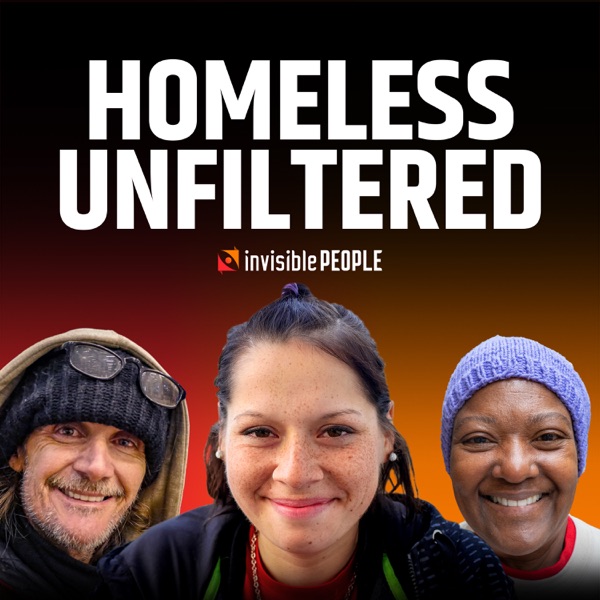
Homeless Unfiltered from Invisible People
Welcome to the Homeless Unfiltered Podcast, hosted by Mark Horvath—the most raw, unfiltered podcast on homelessness you'll find. Get ready for real stories from people with lived and living experiences of homelessness, along with eye-opening insights from service providers, policymakers, and advocates. We dive deep into the hard truths, exposing both wins and failures in the fight against homelessness. This podcast will challenge you, inspire action, and spark change. Tune in and learn how to be part of the solution for positive change!
- Episodes
- 85
- Releases
- Every two weeks
- Typical length
- 46 min
- On air since
- 2024
- Latest episode
- 2 weeks ago
Episodes
85 episodes, newest first
-
55 min
Why Great Content Fails on YouTube (And What Actually Works)
Episode 85
Show notes
Why do some videos attract millions of views while great content goes unnoticed?
The truth is, creating good content isn't enough. You have to understand what makes people click, watch, and share.
In this episode, I sit down with Leslie Morgan, CEO of ClockwiseTV, who brings 18 years of experience in the creator economy, working with creator-led businesses and global production companies.
We explore what successful YouTubers understand about capturing attention, why nonprofits often struggle to reach audiences, and how better storytelling, titles, thumbnails, and distribution can make all the difference. We also discuss AI and the changing creator economy.
Whether you're a nonprofit leader, filmmaker, journalist, or content creator, this conversation will challenge how you think about making videos people actually want to watch.
-
51 min
We Can End Homelessness. We Just Haven’t Chosen To.
Episode 84
Show notes
Barbara Poppe has spent more than 40 years fighting homelessness, helped lead the Obama administration’s historic effort to end it, and today she has something most people in public service rarely have: the freedom to tell the truth.
Barb is one of the smartest people I know on homelessness and someone I’m honored to call a friend. In this deeply personal conversation, we talk about how America once moved toward ending homelessness, why we’re now going backwards, and the painful reality that the solutions we knew 40 years ago are largely the same solutions we know today.
Barb takes on criminalization, misinformation, lived experience, affordable housing, and the policy choices that keep people homeless.
Her message is both devastating and hopeful: We know how to house every single person. We could do it. We’re choosing not to.
Effective Homelessness Advocacy Messaging Toolkit https://invisiblepeople.tv/toolkit
-
46 min
What If We Treated Homelessness Like a Business Problem?
Episode 83
Show notes
A for-profit company working to end homelessness sounds like a contradiction. For Mike Shore, it’s been his family’s work for more than 30 years.
Mike runs HOM Inc., a mission-driven for-profit company helping communities manage the complicated work of getting homeless people into housing. We talk about whether profit can actually be a force for good, why homeless services have become so complicated, and whether business, technology, and a different way of organizing the work could help us do better.
Mike and I go way back, all the way to the early days of Twitter, when social media was actually fun. We were experimenting with a new way to talk about homelessness, building unlikely communities online, breaking some rules, and occasionally getting ourselves into trouble.
We talk about whether profit can actually be a force for good, why homeless services can be so frustratingly complicated, what business and technology can bring to the fight against homelessness, and what we lost when social media stopped feeling social.
Today’s Homeless Unfiltered podcast is sponsored by Padmission Journey:https://padmission.com/invisiblepeople
Padmission Journey is an end-to-end housing program management platform built specifically for homeless housing programs. It helps organizations manage rental assistance, rent calculations, inspections, payments, and other complex housing processes in one place, replacing spreadsheets and disconnected systems with modern tools that make the work easier.
-
45 min
The Fight to Stop Trump’s Homelessness Policy From Hurting People
Episode 82
Show notes
What happens when the systems meant to prevent homelessness start failing the very people they were built to help?
Mary Francis Kenyon, Chief Equity Officer at the National Alliance to End Homelessness, joins me for a deeply personal conversation that starts with her own journey through addiction and recovery and expands into a much bigger story about homelessness in America.
We talk about the safety net that helped Mary Francis recover, why rural homelessness is so often invisible, the growing crisis facing older adults and people with disabilities, and why housing, treatment, harm reduction, recovery housing, and other solutions shouldn’t be pitted against each other.
Then we get into the political and legal fight over the Trump administration’s homelessness policies and what could happen to people who have already fought their way out of homelessness.
At the heart of our conversation is a simple idea: leave no one behind.
UPDATE: Since this conversation was recorded, a federal judge vacated HUD’s 2026 Continuum of Care funding notice. The Trump administration and HUD have appealed that ruling, so the legal fight continues.
-
1 hr
Art From Surviving Homelessness
Episode 81
Show notes
Justin and Denise both turned their pain into art, and their art into a way to help others. Justin, who performs as Surfing Sofas, spent over a decade bouncing between friends' couches, night shelters, and temporary housing before moving into his first flat just weeks ago. Denise built a career as a writer and filmmaker after years battling addiction and homelessness of her own, work that eventually became the award-winning short film This Is Depression.
They talk about what actually happens after the emergency ends, or in Justin's case, what it feels like when it's only just starting to. Denise is years out from her own homelessness and still carries it with her. Justin is brand new to having his own front door and still isn't sure he believes it's real. Justin recites two original poems, including one written from inside a night shelter. Denise opens up about the PTSD that still catches her off guard, and the recovery handbook she wrote for people going through what she went through, which later led her into prison workshops writing a book with incarcerated men that's now shortlisted for two national crime writing awards.
This episode is about the realities of homelessness, why listening to people with lived experience matters, and how art can turn the dark into hope.
Watch Denise's film This Is Depression here: https://youtu.be/loHMurD0jGU?si=kTtI8OOiNZZYCkbt
Order Denise's book Sparks in the Dark here: https://www.amazon.co.uk/Sparks-Dark-Prison-Project-1/dp/1917061730
The Good Work – a poem by Surfing Sofas: https://homewards.org.uk/the-good-work-by-surfing-sofas
Listen to Surfing Sofas' poem "Till the Day We Meet Again" on the Museum of Homelessness website: https://museumofhomelessness.org/news/poet-in-residence
-
37 min
We're Reversing Homelessness Progress and Nobody's Talking About It
Episode 80
Show notes
What does it actually take to end homelessness in America? And why is that progress getting erased right now? Julián Castro has been in this fight at the local and federal level: as Mayor of San Antonio, and as HUD Secretary under President Obama, where he helped cut veteran homelessness by 47 percent. Today he leads the Latino Community Foundation, focused on civic engagement and economic opportunity in Latino communities.
Today on Homeless Unfiltered, Castro talks Housing First versus criminalization, why the federal government's role is absolutely critical, and how policy driven by ideology instead of evidence is putting already-housed people back on the street, while gutting the programs proven to actually work. He also gets real about what advocacy looks like and where he still finds hope.
Thanks to Ann Oliva and the National Alliance to End Homelessness for helping make this conversation happen.
-
59 min
What a Psychiatric Ward Taught Vijay Gupta About Music
Episode 79
Show notes
Vijay Gupta was 19 years old when he became the youngest violinist ever to join the LA Philharmonic. On the night he turned 20, he was playing the Hollywood Bowl with John Williams in front of 18,000 people waving lightsabers. By every measure, he had made it.
Then he took a wrong turn while learning to drive and ended up on Skid Row. His father was in the passenger seat, screaming at him to get out of there. Less than a mile from Disney Hall.
He couldn't stop thinking about it.
What followed was 18 years of showing up at Skid Row shelters, county jails, state hospitals, and VA clinics, convinced he was there to heal people through music. It took a long time before he understood that the people he came to help were the ones healing him.
Vijay Gupta is the founder of Street Symphony, a 2018 MacArthur Genius Grant recipient, and the author of the new memoir Restrung. In this conversation, he and Mark talk about what it really costs to see people who have been made invisible, why homelessness is an epidemic of spiritual alienation, and what a man in a psychiatric ward taught a Juilliard-trained violinist about music when nobody applauded.
Some conversations deserve more than a listen. They deserve to be passed on. Share this episode with someone you care about, and if you want to go deeper into Vijay's remarkable journey, pick up a copy of Restrung https://www.vijaygupta.com/book.
-
58 min
The UK Once Housed 39,000 in Days. Now Rough Sleeping Hits Record Highs.
Episode 78
Show notes
Rough sleeping in London and across the UK just hit a record high. Every measure of homelessness is at its worst level ever recorded. And yet during the COVID pandemic, the UK government got roughly 39,000 homeless people off the streets in a matter of days. The political will existed. The problem got solved. Then it stopped.
Matt Downie is the Chief Executive of Crisis, the UK's national charity for people experiencing homelessness. He's been inside this fight for over a decade, watching rough sleeping numbers climb while proven solutions go ignored. In this conversation we get into why the homelessness sector's own fundraising messaging helped build the very stereotypes that make the public look away, what Finland and Japan did to dramatically reduce homelessness and why those lessons aren't being applied, how the UK just abolished a law criminalizing rough sleeping while the US moves in the opposite direction, and what it's actually going to take to change the narrative around homelessness for good.
Whether you're in London, across the UK, in Canada, or anywhere in the United States, homelessness is growing. And the solutions already exist. Share this podcast with everyone you know. Talk about it in your community. Because the only thing missing is the will to act.
-
45 min
He Went From Skid Row Homeless to CEO. Here's How.
Episode 78
Show notes
Thirty years ago, Troy Vaughn was homeless, struggling with addiction, and trying to survive on Skid Row in Los Angeles. Today, he's a CEO, author, pastor, and nationally recognized leader helping others rebuild their lives.
In this powerful conversation, Troy and Mark Horvath reconnect for the first time in years and reflect on their shared experience at the Hollywood Vine Recovery Center. Troy shares how homelessness, recovery, faith, education, and community transformed his life, leading him from Skid Row to leadership roles that are changing how homelessness is addressed across Los Angeles and beyond.
They also discuss the importance of lived experience, leadership, housing, recovery, and why people who have experienced homelessness should have a greater voice in shaping solutions.
Troy's story is a powerful reminder that transformation is possible and that people experiencing homelessness are capable of far more than society often imagines.
-
42 min
Warehousing People Is Not a Housing Policy
Episode 76
Show notes
Warehousing people in shelters is not a housing policy. But that's exactly what decades of misplaced investment have created.
In this episode of Homeless Unfiltered, we sit down with Gary P. Jenkins, CEO of Urban Pathways, and Pascale Leone, Executive Director of the Supportive Housing Network of New York. Gary has lived experience with homelessness and worked his way up through New York City's Department of Social Services to become its Commissioner. Pascale leads statewide advocacy efforts that this past year included seven rallies, fights to protect HUD funding, and a meeting between domestic violence survivors and state legislators that resulted in an $18 million increase for supportive housing.
We talk about why shelter maintains homelessness instead of ending it, why investments keep going to the wrong places, and what it actually takes to change policy when the system feels impossible to move.
-
56 min
More Than a Museum: How Love, Art, and Community Is Transforming Homelessnes
Episode 75
Show notes
Jessica Turtle was born into a community of homeless people in Cardiff, Wales, set up by her own parents. Her father had spent years sleeping rough on the streets of London. That's where this story begins.
But this isn't a story about poverty or pity. It's about love, art, and a community that refuses to be invisible. The Museum of Homelessness in London isn't just a museum. It's a shelter in winter, a gallery, a campaign headquarters, and a home for people society has tried to forget.
Jess and her co-founder Matt built something the world told them it didn't want. They were offered a morgue. A closed women's prison. They almost gave up. Then they found a park keeper's lodge in North London and a community that made it their own.
In this conversation, we talk about what it really takes to change how the world sees homelessness, why babies are still freezing to death in one of the world's richest cities, and why love, not policy, not charity, might be the most powerful strategy of all.
For more information and to support the Museum of Homelessness, visit https://museumofhomelessness.org
Their current exhibition, Criminal: An Untold History of Homelessness, Resistance and Survival, is open now. Check the website for dates, hours, and how to visit.
-
49 min
Those Most Affected by Homelessness Should Be in Power
Episode 74
Show notes
Youth homelessness is growing. And most people have no idea how bad it really is.
Right now, young people are aging out of foster care with nowhere to go. They are couch surfing, sleeping in cars, and falling through cracks in a system that was supposed to protect them. And the data we have does not even capture the full picture.
Marcella Middleton knows this firsthand. She aged out of foster care at 21, went through 16 placements, and experienced homelessness in college. Today she is the CEO of Away Home America, leading a national movement to end youth homelessness.
Marcella believes that those closest to the pain should lead the solution. That the people most affected by homelessness should be the ones in power. And she is living proof that it works.
She breaks down why youth homelessness keeps growing despite years of effort, why lived experience belongs in the boardroom not just the committee room, and what it really takes to change a system that was never built for you.
If you work in social services, policy, advocacy, or you just care about young people, this one is for you.
To learn more about Marcella and Away Home America, visit https://awayhomeamerica.org
-
58 min
Research, Messaging, and the Fight Over Homelessness Policy
Episode 73
Show notes
We have more research on homelessness than ever before. So why isn’t it leading to better policy outcomes?
In this episode, I’m joined by Joy Moses from the National Alliance to End Homelessness and Samantha Batko from the Urban Institute to talk about the growing disconnect between data, messaging, and real-world impact.
We discuss why some research fails to influence policymakers, how homelessness messaging is losing ground, why supportive housing is facing backlash despite overwhelming evidence, and how researchers can better design studies that actually shape public opinion and policy.
This conversation also explores AI, misinformation, public trust, underfunding, and the future of homelessness research in an increasingly polarized world.
Effective Homelessness Advocacy Messaging Toolkit mentioned in the episode: https://invisiblepeople.tv/toolkit
-
39 min
How a Parking Lot Is Helping Solve Homelessness
Episode 72
Show notes
As rents continue to skyrocket across America, more people are being pushed into homelessness—and for many, their car is the last stop before the street. Families, seniors, and working people are increasingly living in vehicles simply because housing has become unaffordable.
In this episode, Teresa Smith, CEO of Dreams for Change, explains how Safe Parking programs provide people living in their cars with a safe place to sleep, access to services, and a pathway back to housing. We discuss the growing crisis of vehicle homelessness, why traditional systems are failing, and how simple community solutions like Safe Parking can help prevent homelessness before people end up on the street.
When LIVING IN A CAR is Your Last Choice: "Mobile" a Social Impact Film https://youtu.be/dMBVtPx2B_M?si=ARb4L9B7s9iFwRzZ
-
57 min
If We Want to End Homelessness, We Have to Change
Episode 71
Show notes
Everyone keeps arguing about how to solve homelessness. Housing First. Treatment First. More shelters. More police.
But what if we're asking the wrong question?
In this conversation with Iain De Jong, his eighth on Invisible People, something shifts.
We get real about what's actually happening right now in the homelessness sector. Why the Housing First versus Treatment First debate completely misses the point. Why organizations under pressure keep reaching backward toward approaches that felt like they worked, what Iain calls the nostalgia loop. And why, for the first time in a long time, people are finally starting to say the quiet parts out loud.
We're entering a reckoning.
Not the kind that makes people comfortable. The kind that forces you to admit what's not working, and why we've been so slow to say it out loud. The homelessness sector has spent years protecting narratives instead of fixing systems. That's changing.
And if we're honest about that…Then we have to ask a much harder question: What are we going to build that's completely different?
Stay to the end, because that's where this conversation lands. Reckoning. Renewal. Rebirth. A framework that emerged organically from this discussion that we think is worth sitting with, worth sharing, and maybe worth building on.
Here's Iain's Substackhttps://iaindejong.substack.com
Playlist of all Homeless Unfiltered episodes with Iain https://youtube.com/playlist?list=PL51CPD51hq2RnsaSDVNP8DfVv8TZnowfj&si=p2aj2gOV2AExjITC
-
51 min
Faith-based prioritize conversion, and that’s why they fail to solve homelessness.
Episode 70
Show notes
What role should faith-based organizations play in solving homelessness, and why are so many failing?
In this episode, I sit down with Kevin Nye, a leading voice examining how religion intersects with homelessness in America.
Kevin explains why many faith-based programs prioritize conversion over outcomes, while proven solutions like Housing First are often ignored.
We talk about the history of rescue missions, the tension between faith and harm reduction, and what it will actually take to prevent and solve homelessness.
Gospel rescue missions make up a large share of homeless services in America, especially in rural communities. It is going to take all of us, churches, synagogues, mosques, rescue missions, business leaders, and nonprofits, working together to prevent and solve homelessness.
That starts with honest conversations like this one. Please watch, listen, and share.
You can learn more about Kevin and find his books here: https://kevinmnye.com
I wrote a cover story for the American Gospel Rescue Mission Association magazine, now Citygate Network, titled “Speaking to the Faith Community About Housing First: Rescue Missions of the Future”: https://invisiblepeople.tv/speaking-to-the-faith-community-about-housing-first/
-
46 min
The Evidence on Homelessness Is Clear. Why Isn’t It Being Solved?
Episode 69
Show notes
I’m really excited to share this conversation with Jennifer Ho. When we were producing our documentary on Hennepin County, several people told me we needed to talk to Jennifer because of her leadership in housing and homelessness. Our schedules never lined up during filming, so I’m really glad we finally got the chance to sit down together for the Homeless Unfiltered podcast.
There are some people you just connect with. Jennifer is one of those people. She’s incredibly smart and thoughtful. She brings a unique perspective shaped by both healthcare and housing, and you can feel that throughout this conversation.
Jennifer is the Commissioner of Minnesota Housing and previously served at the United States Interagency Council on Homelessness and the U.S. Department of Housing and Urban Development. She also comes out of for-profit healthcare, working in managed care, where she saw firsthand how homelessness drives costs and impacts health outcomes.
We talk about homelessness, housing, and healthcare. But this conversation goes deeper. At times it turns philosophical, and it challenged me. I think it will challenge you too.
One of the biggest takeaways is simple. We know what works. The question is why we have not committed to doing it at the scale needed to actually solve homelessness.
Watch our Hennepin County documentary here: Can We End Homelessness? Hennepin County Shows How https://youtu.be/yq1C8l4uSZc?si=J6TxnwAyJD00Ps-D
-
45 min
Dangerous Policies That Will Make Homelessness Worse
Episode 68
Show notes
Right now, dangerous federal policy changes could make homelessness in America dramatically worse. Instead of working together to prevent and solve homelessness, we’re now spending enormous energy fighting ideology and policies that experts warn will only push more people onto the streets.
In this episode, I sit down with Ann Oliva, CEO of the National Alliance to End Homelessness, to explain what’s happening right now inside the federal government and why the homelessness sector is deeply alarmed.
Since the Trump administration took office, new executive orders and federal directives have targeted core homelessness policies. These changes are being implemented through the U.S. Department of Housing and Urban Development (HUD) and could roll back evidence-based approaches like Housing First while expanding policies like criminalization, forced institutionalization, and arrests of people living outside.
Even more alarming, some proposed funding changes could cut housing support for people who were previously homeless and are now stably housed — potentially pushing as many as 170,000 people back onto the streets.
Instead of helping communities solve homelessness, these policies could make the crisis worse in cities and neighborhoods across America.
That’s why the National Alliance to End Homelessness and other organizations have taken the extraordinary step of filing lawsuits against HUD to stop policies they believe are unlawful and dangerous.
This conversation breaks down what’s actually happening behind the headlines — and why the stakes are so high.
In this episode, we discuss:
• The Trump administration’s homelessness policies
• Dangerous changes at the Department of Housing and Urban Development (HUD)
• The rollback of Housing First
• LGBTQ Homelessness
• Criminalization of homelessness and arrests of people living outside
• Lawsuits filed to stop harmful federal policies
• Harm reduction and why forced treatment does not work
• Why these policies will make homelessness worse for everyoneAt the end of the day, homelessness is a complex problem that requires communities, nonprofits, healthcare providers, and government to work together.
Instead, we’re fighting each other.
And that’s not just tragic — it’s dangerous.
Because policies that make homelessness worse don’t just hurt people experiencing homelessness. They hurt our communities, our cities, and all of us.
Support NAEH here https://endhomelessness.org
-
35 min
The Hidden Homeless: America’s Growing Family Crisis
Episode 67
Show notes
Family homelessness is rising in America, but most people do not see it.
While public attention focuses on tents and encampments, thousands of families are living in hotels, doubled up with relatives, or moving from place to place just to stay afloat. This hidden homelessness often goes uncounted, and when systems respond too late, families are pushed deeper into crisis.
In this episode, KerryAnn Henry, Assistant Director at the New Jersey Department of Children and Families, and Pamela Lilleston, PhD, Director of Applied Research and Evaluation at the New Jersey Department of Children and Families, discuss how family homelessness intersects with child welfare and what it takes to keep families safely housed. We explore the Keeping Families Together model, which pairs housing subsidies with support services, and the data showing it keeps families stable and children with their parents.
Preventing family homelessness keeps families together, protects children from unnecessary trauma, and costs far less than responding after the damage is done.
-
28 min
Why Housing Reduces Crime and Saves Taxpayer Money
Episode 66
Show notes
When people leave prison with nowhere to go, the outcome is predictable. Homelessness. Survival. And too often, a return to jail.
One of the leading drivers of homelessness is people exiting the criminal justice system without housing — especially when mental illness or addiction is involved. The cycle is expensive, inhumane, and preventable.
In this episode, Terri Power and Jenee Jenkins from CSH join me to talk about Returning Home Ohio, a cutting-edge collaboration with the Ohio Department of Rehabilitation and Correction. The program uses supportive housing to reduce recidivism, improve public safety, and save taxpayer money.
This conversation goes beyond theory. It’s about what actually works.
We also produced a powerful documentary on this work — sparked by Jenee’s idea — that you can watch in the link below.
Prison, Homelessness, or Housing? The Choice That Changes Everythinghttps://youtu.be/xZngGA7xfuc?si=BMAWI9GyWm_PqC_6
Listen to the episode. Watch the film. And share it.
On these lists
Homeless Unfiltered from Invisible People is one of the shows picked out on this list



More in Documentary
Placed highest on Apple Podcasts' Documentary chart right now