Podcast
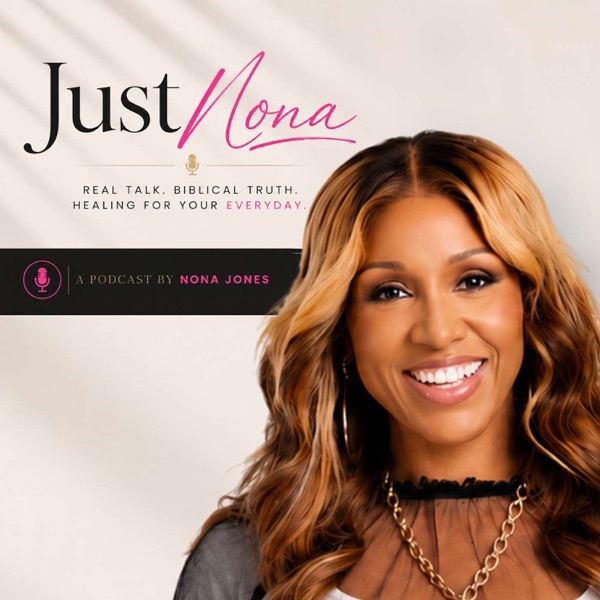
Just Nona
Just Nona is a faith-anchored, emotionally honest, and psychologically grounded podcast for women who are ready to do the deeper work of healing. This evolved format moves beyond interviews into focused, heart-level conversations centered around one powerful question at a time—questions about identity, unworthiness, rejection, resilience, purpose, and the quiet battles women fight while succeeding publicly.
Host Nona Jones—author, CEO, preacher, and leadership coach—draws from personal testimony, biblical truth, and behavioral science to help listeners confront what’s shaping them beneath the surface and re-form their identity from the inside out. Through intentional teaching, “Heart Question” segments, and practical frameworks, Just Nona challenges internalized lies, disrupts cultural narratives, and equips women to live from wholeness rather than performance.
- Episodes
- 81
- Releases
- Weekly
- Typical length
- 37 min
- On air since
- 2024
- Latest episode
- 1 day ago
Episodes
81 episodes, newest first
-
35 min
How Do You Heal From Church Betrayal? | Just Nona with Nona Jones
Season 4, Episode 27
Show notes
How do you heal from church hurt when the very place you trusted becomes the place that rejects you?
In this episode of Just Nona, I'm answering a heartfelt question from Diane, who spent five decades loving and serving the church before experiencing painful rejection.
Church hurt can leave us questioning our worth, our identity, and even our calling. But the rejection of a church does not mean the rejection of God.
Together, we're unpacking:
Why church rejection can wound us so deeply
The difference between God's design for the church and human institutions
How church hurt can distort our identity
What Scripture says about our worth and calling
Six practical ways to heal from church hurt without becoming bitter
How to find community and continue serving God after rejection
If you've ever felt unwelcome, unwanted, or unworthy in a place you once called home, this conversation is for you.
Scripture references: 1 Peter 2:9–10, Acts 15, 1 Corinthians 1, Revelation 2–3, and Hebrews 12:15.
My new book, The Power of Petty Prayers, is available now: https://www.nonajones.com/books
Subscribe to Just Nona for weekly conversations about faith, emotional healing, relationships, and spiritual growth.
Let's talk: Have you ever experienced church hurt? What has helped you begin healing?
-
42 min
How Do You Grieve Someone Who's Still in Your Life? | Just Nona with Nona Jones
Season 4, Episode 26
Show notes
How do you grieve someone who is still in your life, but the relationship you once hoped for no longer exists?
Not because you stopped loving them.
Not because you haven't forgiven them.
Not because you haven't surrendered the pain to God.
But because the person is still there, and the relationship is no longer what you needed, expected, or prayed it would be.
And now you're grieving someone who hasn't actually left your life.
In this new episode of Just Nona, I'm answering this question with insights from my new book, The Power of Petty Prayers, which is now available wherever books are sold.
Felicity from Jacksonville, Florida, asked how to navigate the pain that remains after genuine forgiveness and surrender. After experiencing years of hurt, disappointment, and broken expectations in a relationship, she made the difficult decision to limit access to someone she still loves. Although she's worked through the anger and resentment, the grief remains.
This is a real conversation about ambiguous loss, forgiveness, unresolved grief, emotional healing, boundaries, broken relationships, and learning how to love someone without losing yourself in the process.
I also share deeply personal experiences from my relationship with my mother and how God has helped me navigate the grief of loving someone who is physically present but emotionally and relationally absent.
Because sometimes the pain that remains after forgiveness isn't evidence that you haven't forgiven.
It's evidence that you're grieving.
And grief and forgiveness are not the same thing.
You can forgive someone completely and still grieve the relationship you hoped you would have.
You can love someone deeply and still establish healthy boundaries.
You can surrender your pain to God and still need His grace to heal the wounds that remain.
The goal isn't to pretend that the loss doesn't hurt.
It's to learn how to invite God's grace into the places where the pain still lives.
And sometimes healing means learning how to love someone according to the relationship you actually have, not the relationship you wish you had.
The Power of Petty Prayers is OUT NOW!
If you've genuinely forgiven someone but still carry the pain of what happened, this book will help you understand what remains after forgiveness and begin the deeper work of healing.
Order your copy TODAY:
https://www.nonajones.com/books -
30 min
How Do I Forgive an Employee Who Hurt Me? | Just Nona with Nona Jones
Season 4, Episode 25
Show notes
What do you do when someone you treated like family hurts you, and you're left wondering how to forgive them without letting them back into your life?
Not because you stopped loving them.
Not because you want to hold on to resentment.
Not because you don't believe in forgiveness.
But because the relationship was more than professional. You invested in them. You cared about their family. You opened your heart to them. And when things fell apart, you weren't just losing an employee. You were grieving someone you loved.
In this new episode of Just Nona, I'm answering this question with insights from my new book, The Power of Petty Prayers, which is now available wherever books are sold.
A listener named Bettrena, a business owner in Georgia, asked how to navigate workplace forgiveness after experiencing disappointment from employees she treated like family. One relationship in particular involved a young woman she considered a daughter, whose children felt like her own grandchildren. Although they've parted ways, she still loves them deeply but struggles with whether she can trust them again.
This is a real conversation about workplace forgiveness, leadership, betrayal, grief, personal boundaries, accountability, rebuilding trust, and learning how to love people without losing yourself in the process.
I also share a personal experience that taught me how easily the lines between professional and personal relationships can become blurred, and why loving people deeply doesn't mean abandoning the boundaries that protect both the relationship and the business.
Because forgiveness does not mean reemployment.
Loving someone does not mean giving them unlimited access to your life.
And being a compassionate leader does not mean you have to carry responsibility for everyone you care about.
You can forgive someone and still let them go.
You can love someone and still establish boundaries.
You can keep your heart open without allowing past disappointments to change who God created you to be.
The answer is not to stop loving people.
It's to learn how to love with wisdom, structure, and accountability.
The Power of Petty Prayers is OUT NOW!
If you've forgiven someone but are still carrying the pain of what happened, this book will help you begin the deeper work of healing.
Order your copy TODAY:
https://www.nonajones.com/books -
36 min
How Do I Heal From Sabotage? | Just Nona with Nona Jones
Season 4, Episode 24
Show notes
What do you do when someone you trusted was secretly working against you?
Not a stranger.
Not an enemy.
But someone you looked up to. Someone who had influence, access, experience, and the ability to support your future.In this new episode of Just Nona, Nona Jones is answering this question with insights from her new book, The Power of Petty Prayers, available tomorrow, October 13th.
Amuche asked how to heal after being deeply hurt by a mentor who told her he supported her promotion, only for her to find out he was actively working behind closed doors against it.
That kind of betrayal does not just make you question the person who hurt you.
It can make you question your judgment.
It can make you question your worth.
It can make you wonder if you were truly valued — or simply useful.This is a real conversation about sabotage, mentor betrayal, workplace hurt, broken trust, discernment, usefulness, identity, guardedness, and how to heal without becoming cynical, closed off, or afraid to trust again.
Because one person’s betrayal does not mean everyone is unsafe.
And being used by someone does not mean you are only useful.
You are still worthy of being seen, known, loved, and valued for who you are — not just for what you can produce.
Order The Power of Petty Prayers, available tomorrow, October 13th, wherever books are sold:
https://www.nonajones.com/books -
40 min
How Do I Heal A Leader Wound? | Just Nona with Nona Jones
Season 4, Episode 23
Show notes
What do you do when the person who hurt you is also the person in authority over you? In this new episode of Just Nona, Nona Jones is answering this question with insights from her new book, The Power of Petty Prayers. A listener named Kellee asked how to pray for vindication, justice, and God’s defense while still making room for submission and honor when the people causing harm are in authority over her.
This is a real conversation about authority, justice, submission, accountability, spiritual abuse, workplace hurt, church leadership, vindication, and how to pray honestly when honoring the position and seeking justice feel like they are pulling in opposite directions.
Because honoring authority does not mean excusing harm.
Submission does not mean silence.
And praying for justice does not mean you are dishonoring God.
Sometimes the most faithful thing you can do is bring the whole tension to God honestly and trust Him to defend, correct, expose, heal, and guide you with wisdom.
Order The Power of Petty Prayers TODAY by clicking here:
https://www.nonajones.com/books -
29 min
How Do I Heal From Betrayal? | Just Nona with Nona Jones
Season 4, Episode 22
Show notes
What do you do when you forgave them; but it still stings?
Not because your forgiveness was fake.
Not because you are bitter.
Not because you did not “forgive for real.”But because forgiveness and healing are not the same thing. You can release the debt, release the anger, release the right to retaliation, and still feel the sting of what happened because forgiveness is the decision; healing is the process.
In this new episode of Just Nona, I’m answering this question with insights from my new book, The Power of Petty Prayers. Dr. Chanté, a physician and resilience coach, asked how to rebuild when there are still remnants of betrayal — especially betrayal from people she deeply loved and trusted.
This is a real conversation about forgiveness, healing, betrayal, empathy, rebuilding trust, grieving what was lost, and understanding why the pain may still remain even after you have genuinely forgiven.
Because sometimes the issue is not that you have not forgiven.
Sometimes the issue is that no one taught you how to heal from the hurt that remained.
Order The Power of Petty Prayers TODAY by clicking here:
https://www.nonajones.com/booksThis conversation also connects to my new free webinar, When Forgiveness Doesn’t Heal, where I share principles from The Power of Petty Prayers to help you heal when you’re wounded, weary, and still carrying pain after forgiveness.
Register for the first FREE session here:
https://insideoutleadership.easywebinar.live/WFDH -
38 min
Why Am I Still Hurt After Forgiving Them? | Just Nona with Nona Jones
Season 4, Episode 21
Show notes
What do you do when you forgave them; but you are still hurt?
Not because you are bitter.
Not because you are immature.
Not because you did not “forgive for real.”But because they never acknowledged what they did. They never showed remorse. They never took accountability. They never tried to repair the damage. And now you are left trying to keep your heart soft while carrying pain they may never admit they caused.
In this new episode of Just Nona, I’m answering this question with insights from my new book, The Power of Petty Prayers. A podcast listener named Peju asked how to sustain forgiveness after a significant betrayal when the person who hurt her has no remorse; especially while still being in close proximity to them.
This is a real conversation about forgiveness, remorse, repentance, trust, boundaries, and the pain that remains when the person who wounded you keeps living like nothing happened.
Order The Power of Petty Prayers TODAY by clicking here: https://www.nonajones.com/books
-
43 min
Why Do I Keep Getting Used? | Just Nona with Nona Jones
Season 4, Episode 20
Show notes
There is a particular kind of exhaustion that belongs to people who are genuinely gifted.
Not the exhaustion of someone struggling to keep up. But the exhaustion of someone who keeps getting asked — because they are capable, because they show up, because the joy they carry makes people want them in the room.
And so the invitations keep coming. The boards. The committees. The volunteer roles. The ministry assignments. The professional responsibilities. Until the weight of everything feels less like purpose and more like pressure.
In this new episode of Just Nona, I am answering a heart question from a listener named Genile, who carries joy as a God-given gift — and has found that the very gift that draws people to her has also drawn her into more responsibility than feels sustainable. She is asking the question so many gifted, called, loving people carry quietly: how do you balance all of it without letting any of the pieces fall to the wayside?
This is a real conversation about calling, capacity, and the difference between what God assigned and what we accumulated. You are not called to carry everything. You are called to carry what is specifically yours. And the most faithful thing you can do is not say yes to everything — it is say yes to the right things.
-
43 min
Why Did Everyone Abandon Me… Including God? | Just Nona with Nona Jones
Season 4, Episode 19
Show notes
There is a particular kind of loneliness that belongs to the trial season.
Not the loneliness of being unknown. But the loneliness of being known — by people who have walked with you for years — and discovering, in the moment you needed them most, that they are nowhere to be found. And then there is the silence. Not just from people. But from God. The prayers that feel like they are hitting the ceiling. The quietness where you expected a word.In this episode of Just Nona, I am answering a heart question from a listener named Ellen from McDonough, Georgia, who is navigating a trial season in which both things are true at the same time: God feels silent, and the people she counted on are absent. She is also raising a deeper question about what it actually means for the body of Christ to carry each other's burdens — and why it so rarely looks like what Scripture describes.
This is a real, honest, pastoral conversation about two of the hardest experiences a person of faith can face simultaneously.
We talk about:
What God's silence actually is — and the critical difference between God being quiet and God being gone
Why silence is often the environment in which the deepest formation happens — and what it is producing beneath the surface that noise would have drowned out
The story of Elijah in 1 Kings 19 — and what God did before He spoke, and how He spoke when He finally did
Why some people are absent in your trial season — and what God may be revealing through their absence
What genuine burden-bearing actually looks like in practice — and why so many people help in the way that is comfortable for them rather than the way that is actually neededThe identity distortion that happens when silence and human absence arrive together — and why the conclusion it produces is not the truth
And the practical steps for staying engaged with God when He feels quiet and rebuilding the right support when the wrong people have disappeared
God is not gone. The silence is not empty. And what He is forming in you in this season is worth the cost of the quiet. -
37 min
How Do I Keep Hope When Everything Falls Apart? | Just Nona with Nona Jones
Season 4, Episode 18
Show notes
There is a particular kind of pain that comes when you do everything right and it still falls apart.
Not the pain of consequences. Not the result of a bad decision. But the pain of obedience. Of following what you genuinely believed God told you to do; and finding yourself in the hardest season of your life as a result.
In this episode of Just Nona, I am answering a heart question from a listener named Sonya, who left a position of affirmed leadership after what she believed was God's instruction; only to find herself in a prolonged wilderness marked by public humiliation, mischaracterization, depleted savings, strain on her marriage, and a genuine identity crisis about whether she is meant to rebuild in corporate leadership or step into entrepreneurship. She knows God has not forgotten her. And she is asking the most practical question a person in the wilderness can ask: what do I actually do while I am here?
This is a real answer. Not a motivational pep talk. A practical, honest, scripturally grounded guide to navigating the wilderness with intention.
We talk about:
Why the wilderness is not a detour from God's plan; and what it is specifically designed to produce that no other season canThe psychological reality of a meaning crisis and why it cannot be resolved by effort, hustle, or thinking harder
The particular grief of the person whose obedience led them into the wilderness — and why that grief matters
What Jeremiah 29:5–7 says God told exiles to do while they were waiting and what it means for Sonya right now
Seven practical steps for navigating the wilderness with intention; including how to grieve, how to protect your marriage, how to separate the injustice from the narrative, and how to build while you wait
Why the corporate versus entrepreneurship question may not be answerable yet and what to do instead of forcing it
And what Isaiah 43:19 means when God says He is making a way in the wilderness; even when you cannot perceive it yet
-
44 min
How Do I Let Go When I Don't Want To? | Just Nona with Nona Jones
Season 4, Episode 17
Show notes
There is a grief that does not get talked about enough.
Not the grief of losing someone to death. Not the grief of a dramatic betrayal. But the quieter, more confusing grief of losing someone whose season in your life simply ended. Someone you loved deeply. Someone you assumed would be there for the long haul. Someone you never imagined having to release.In this episode of Just Nona, I am answering a heart question from a listener named Marcella, who loves people with her whole heart, and keeps finding that the people she loves most are the ones whose departure hurts the deepest. She is asking: how many layers of the heart are going to get hurt? And how do you loosen your grip and release the people who cannot go with you into the next season, without closing your heart in the process?
This is one of the most tender and important questions a passionate person can ask. And it deserves a real answer.
We talk about:
Why the people closest to us have the deepest access, and why that is exactly why their loss hurts the most
What the grip actually is and the difference between holding tightly out of love and holding tightly out of fear
Why seasonal relationships are not failures and what it means when God determines a relationship is complete
What John 15:2 says about pruning and why it always feels like loss before it feels like growth
The identity distortion that happens when relational separation leads us to conclude that we loved wrongly or should love less
The direct answer to how many layers will get hurt and what changes with each one that is navigated well
What a healed heart with boldness and boundaries actually looks like in practice and how it reflects Christ more fully than a guarded one ever couldThe goal is not to reach a point where the heart no longer gets hurt. The goal is to reach a point where the hurt no longer produces a grip.
-
37 min
How Do I Follow God When I’m Afraid? | Just Nona with Nona Jones
Season 4, Episode 16
Show notes
There is a particular tension nobody prepares you for when God calls you.
Not the tension of not knowing what to do. But the tension of knowing — feeling it clearly in your spirit, celebrating it in your soul — and still feeling afraid to fully step into it. Still scanning the horizon for what might go wrong. Still worrying about the people you love who might be affected by the yes you said to God.
In this episode of Just Nona, I am answering a heart question from a listener named Syrone, who has been called to ministry, whose heart and soul celebrate that call — and who also lives with anxiety, worries about the cost her obedience might bring to her family, and is asking a question many people carry but rarely say out loud: Am I the only one who desires to serve but has fear always in the background?
The answer is no. And this episode is proof.
We talk about:
Why fear and calling almost always arrive together — and what that means for people who already live with anxiety
Why the target that comes with purpose is confirmation, not condemnation — and what it actually signals about what God has placed in you
The identity distortion that disguises fear as wisdom and keeps people in preparation indefinitely
What it means that God told Joshua to be courageous not once but three times in the same chapter — and why He had to
What 2 Timothy 1:7 and Isaiah 41:10 say about the spirit of fear and the presence of God in the middle of it
What spiritual anxiety is — and practical tools for managing it alongside an active calling
The specific worry about family — and what Matthew 6:33 promises to the household of the one who seeks His kingdom first
And the reframe that changes everything: courage is not the absence of fear — it is obedience in the presence of it
You do not have to be fearless to be faithful. You just have to take the next step. And God will meet you in every single one. -
43 min
Why Doesn’t God Care About Women? Trauma and Silence in the Church | Just Nona
Season 4, Episode 15
Show notes
If you read the Bible with open eyes you will notice that most of the heroes are men, that women in the Old Testament were often defined by their ability to bear children, that polygamy was practiced by men called righteous while women were shamed for far less.
In this episode of Just Nona, we talk about:
The critical difference between what the Bible describes and what God endorses — and why understanding this changes everything
What the ancient Near Eastern world actually looked like for women — and how radically Scripture interrupts it
The Hebrew word ezer — translated as helper — and what its 21 uses in the Old Testament actually reveal about what God meant when He designed woman
Why God chose women as the first witnesses of the resurrection in a culture where women could not legally testify
Deborah, Huldah, Esther, Ruth, Mary of Magdala — and what their stories reveal about how God has always seen women and much more
You were not made to be a footnote. You were not created as a supporting character in someone else's story. You bear the image of God — fully, completely, without qualification.
-
42 min
Can Addiction Keep Me Out of Heaven? | Just Nona
Season 4, Episode 14
Show notes
There are some questions that reveal just how much pain a person is carrying.
Not because the question is wrong, but because of what it takes to finally ask it out loud.
What does it mean when someone has been sitting alone with this kind of weight — wondering, in their darkest moments, not just whether life is worth living, but whether God still wants them at all?
In this episode of Just Nona, I am answering a heart question from Jessalyn, who is living with severe spine issues, depression, anxiety, and a recurrence of addiction — and is asking one of the most honest questions a person can bring to God:
Can a struggle with addiction and suicidal thoughts be forgiven?
Or am I not going to heaven?
Before anything else — if you are struggling with thoughts of ending your life right now, please reach out. Call or text 988. Your life matters. And you do not have to carry this alone.
This is not a theological lecture.
It is a pastoral conversation about what grace actually covers — and what it does not require of you before it applies.
We talk about:
• Why chronic physical pain can affect the brain, mood, sleep, and emotional regulation
• Why depression, anxiety, and addiction are not simply moral failures
• The lie that God’s acceptance is conditional on performance
• What Romans 8:38–39 says about whether anything can separate you from God’s love
• The difference between salvation and sanctification
• Why suicidal thoughts are not proof that you want to die, but often proof that you want pain to stop
• Why needing help is not a failure of faith
• The practical support someone may need when carrying addiction, depression, chronic pain, or suicidal thoughtsYou are not too far gone.
You were never too far gone.
Grace was not designed for the person who has it all together. It was designed for the person who knows they need Jesus right now.
Order my books at:
https://www.nonajones.com/booksIf you or someone you know is struggling with thoughts of self-harm or suicide, please reach out immediately. Call or text 988 — you are not alone, and help is available.
Listen to Just Nona Podcast
New episodes drop every Monday!
https://nonajones.com/apple
https://nonajones.com/spotify
https://nonajones.com/amazonPartner with Nona Jones Ministries:
If God moves you to support this ministry, you can give here:
https://www.nonajones.com/giveFor questions, email lola@nonajones.com.
Connect with me:
https://www.nonajones.com
https://www.instagram.com/nonanotnora
https://www.facebook.com/NonaNotNora -
39 min
Divorce and Abandonment. What the Bible Actually Says | Just Nona
Season 4, Episode 13
Show notes
There are some questions people of faith are afraid to ask out loud.
Not because they do not feel them, but because they are afraid of being judged, misunderstood, or confronted with what the answer might require.
One of those questions is this:
Is it okay for me to divorce?
In this episode of Just Nona, I am answering a heart question from Shonda, who is wrestling with what faithfulness looks like when a marriage still exists legally, but no longer functions as a covenant in daily life.
This is not a conversation about giving up on marriage.
It is a conversation about what happens when one spouse is left carrying the full weight of the household, the finances, the children, the grief, and the future alone.
We talk about:
• What the Bible actually says about divorce
• Why God’s heart is for covenant
• The context of Malachi 2:16
• The exception clause in Matthew 19
• What 1 Corinthians 7:15 says about abandonment
• Whether incarceration can be a form of functional abandonment
• The identity distortion that makes people fear God’s disappointment
• Why peace is not just the absence of conflict, but the presence of wholeness
• The practical steps to take before making a decision this significantGod’s heart is always for covenant.
But God is also a God of compassion.
And He would not want covenant to become a prison that keeps you wounded.
You are not a failure for asking the question.
You are a person of faith bringing one of the hardest questions of your life to God, and that is exactly where it belongs.
Order my books at:
https://www.nonajones.com/booksListen to Just Nona Podcast
New episodes drop every Monday!
https://nonajones.com/apple
https://nonajones.com/spotify
https://nonajones.com/amazonPartner with Nona Jones Ministries:
If God moves you to support this ministry, you can give here:
https://www.nonajones.com/giveFor questions, email lola@nonajones.com.
Connect with me:
https://www.nonajones.com
https://www.instagram.com/nonanotnora
https://www.facebook.com/NonaNotNora -
38 min
Why You Keep Choosing The Wrong People | Just Nona
Season 4, Episode 12
Show notes
There are some relational tensions that don't have clean answers.
Not because you don't want resolution — but because the path to resolution isn't fully in your control. And if you have ever experienced a strained relationship with a parent, you know the weight that comes with it. The history. The repeated attempts. The hope that this time will be different — followed by disappointment when it isn't.
And then grief happens. And you simply don't have the capacity to keep showing up the same way you always have. So you pull back. Not as a statement — but as survival. And over time, that distance starts to raise questions: Should I be doing more? Am I wrong for not reaching out? Is this a boundary — or is this disobedience?
In this episode of Just Nona, I'm answering a heart question from a listener named Candy, who went no contact with her mother after the death of her youngest son — not as a decision, but as a response to grief. Two years later, she is carrying guilt and shame for not initiating reconciliation, while also holding a quiet word from God to be still.
This is one of the most layered conversations we have had on this show. And it deserves a real, honest answer.
We talk about:
Why grief diminishes your relational capacity in ways that are neurological, not just emotional
The critical difference between reconciliation and repair — and why confusing the two keeps people stuck in cycles
Why the absence of repair is actually the absence of repentance — and what that means for the relationship
How guilt and shame distort identity by convincing you that access equals obedience
What Romans 12:18 and Ecclesiastes 3:7 actually say about the conditions for peace and the wisdom of silence
How to discern the difference between conviction from God and conditioning from your past
And what obedience actually looks like when God says be stillYou are not a bad daughter for having limits. You are a grieving person who ran out of capacity. And distance is not always disobedience — sometimes it is exactly what God ordered.
Order my books at:
https://www.nonajones.com/booksListen to Just Nona Podcast
New episodes drop every Monday!
https://nonajones.com/apple
https://nonajones.com/spotify
https://nonajones.com/amazonPartner with Nona Jones Ministries:
If God moves you to support this ministry, you can give here:
https://www.nonajones.com/giveFor questions, email lola@nonajones.com.
Connect with me:
https://www.nonajones.com
https://www.instagram.com/nonanotnora
https://www.facebook.com/NonaNotNora -
41 min
How Long Are You Responsible for Their Pain? | Just Nona
Season 4, Episode 11
Show notes
You did the work. You had the hard conversation. You acknowledged the hurt. You apologized — more than once. And you meant it.
But no matter what you do, it is not enough. The wound keeps coming back up. The tension keeps showing up at the table. And the relationship stays frozen in a moment that happened years ago — a moment that has now become the defining story of how this person sees you.
In this episode of Just Nona, I am answering one of the most layered heart questions this show has received. A listener is navigating a seven-year relational wound with her family member — a wound that began when her family member came out at 16 and she asked a question that came directly from her own trauma history. The question landed as rejection. She has apologized twice. They have talked three times. And the hurt keeps returning — while her husband absorbs the tension in the middle.
This is not a simple conflict. It is a layered wound with multiple origins. And it deserves an honest, careful answer.
We talk about:
Why a sincere apology cannot always reach the root of a layered wound — and what that means for your responsibilityThe critical difference between guilt and ongoing responsibility — and why staying in indefinite guilt helps no one heal
How unresolved relational conflict quietly distorts the identity of everyone involved
What Romans 12:18 actually says about the conditions for peace — and the permission it gives you when peace is not being received
The difference between a peacemaker and a peacekeeper — and why one sustains you and the other slowly drains you
What faithfulness looks like in a stalled reconciliation — and what you are and are not responsible for at this point
And the conversation that may still need to happen — not another apology, but an honest adult reckoning with the current dynamic
You cannot complete someone else's healing. You can only steward your side of the relationship with honesty, dignity, and grace.
Order my books at:
https://www.nonajones.com/booksConnect with me:
https://www.nonajones.com
https://www.instagram.com/nonanotnora
https://www.facebook.com/NonaNotNoraIf you or someone you know is struggling with thoughts of self-harm, please reach out. Call or text 988 (Suicide & Crisis Lifeline) — you are not alone, and strength is not suffering in silence.
Listen to Just Nona Podcast
New episodes drop every Monday!
https://nonajones.com/apple
https://nonajones.com/spotify
https://nonajones.com/amazonPartner with Nona Jones Ministries:
If God moves you to support this ministry, you can give here:
https://www.nonajones.com/giveFor questions, email lola@nonajones.com.
-
34 min
Why No Contact Can Be Protection | Just Nona
Season 4, Episode 10
Show notes
There are some relational tensions that don't have clean answers.
Not because you don't want resolution — but because the path to resolution isn't fully in your control. And if you have ever experienced a strained relationship with a parent, you know the weight that comes with it. The history. The repeated attempts. The hope that this time will be different — followed by disappointment when it isn't.
And then grief happens. And you simply don't have the capacity to keep showing up the same way you always have. So you pull back. Not as a statement — but as survival. And over time, that distance starts to raise questions: Should I be doing more? Am I wrong for not reaching out? Is this a boundary — or is this disobedience?
In this episode of Just Nona, I'm answering a heart question from a listener named Candy, who went no contact with her mother after the death of her youngest son — not as a decision, but as a response to grief. Two years later, she is carrying guilt and shame for not initiating reconciliation, while also holding a quiet word from God to be still.
This is one of the most layered conversations we have had on this show. And it deserves a real, honest answer.
We talk about:
Why grief diminishes your relational capacity in ways that are neurological, not just emotional
The critical difference between reconciliation and repair — and why confusing the two keeps people stuck in cycles
Why the absence of repair is actually the absence of repentance — and what that means for the relationship
How guilt and shame distort identity by convincing you that access equals obedience
What Romans 12:18 and Ecclesiastes 3:7 actually say about the conditions for peace and the wisdom of silence
How to discern the difference between conviction from God and conditioning from your past
And what obedience actually looks like when God says be still
You are not a bad daughter for having limits. You are a grieving person who ran out of capacity. And distance is not always disobedience — sometimes it is exactly what God ordered.
If you or someone you know is struggling with thoughts of self-harm, please reach out. Call or text 988 (Suicide & Crisis Lifeline) — you are not alone, and strength is not suffering in silence.
Order my books at:
https://www.nonajones.com/booksListen to Just Nona Podcast
New episodes drop every Monday!
https://nonajones.com/apple
https://nonajones.com/spotify
https://nonajones.com/amazonPartner with Nona Jones Ministries:
If God moves you to support this ministry, you can give here:
https://www.nonajones.com/giveFor questions, email lola@nonajones.com.
Connect with me:
https://www.nonajones.com
https://www.instagram.com/nonanotnora
https://www.facebook.com/NonaNotNora -
35 min
How to Heal a Broken Heart When Life Keeps Hurting | Just Nona
Season 4, Episode 9
Show notes
You're praying. You're showing up with faith. You're doing the work. And yet — disappointment keeps showing up too. Heartache. Loneliness. Unmet expectations. Emotional fatigue.
And after a while, a tension begins to build. Because you want your heart to stay open and surrendered. But the hurt is real. The loneliness is real. The ache is real. And if you were honest, you might find yourself asking: How do I keep my heart aligned with God when it keeps getting broken?
In this episode of Just Nona, I'm answering a heart question from a listener named Lanika, who is trying to hold both honesty and faith at the same time — and is asking one of the most important questions in the life of a believer: How do you address your feelings honestly and still anchor into God's steadfast love? How do you battle loneliness without just spiritualizing it away?
This is not a conversation about performing faith. It is a conversation about what it looks like to bring your whole heart to God — not the edited version.
We talk about:
Why your feelings are not the problem — and what they are actually trying to tell you
The unique exhaustion that comes from repeated emotional hits, not one big moment but many small ones
How spiritualizing pain instead of processing it quietly disconnects you from God and from yourself
What David's raw, unfiltered prayer in Psalm 13 reveals about honesty as a form of faith
Why God's love is not fragile — and what that means for the real version of you
The practical pattern of feel, express, and anchor — and why suppressing skips the most important step
And what loneliness is actually an invitation to, beyond just human connectionYou are not too emotional. You are not weak. And you are not failing spiritually because you feel deeply.
Healing doesn't happen in what you hide. It happens in what you bring.
Order my books at
https://www.nonajones.com/booksConnect with me:
https://www.nonajones.com
https://www.instagram.com/nonanotnora
https://www.facebook.com/NonaNotNoraIf you or someone you know is struggling with thoughts of self-harm, please reach out. Call or text 988 (Suicide & Crisis Lifeline) — you are not alone, and strength is not suffering in silence.
Listen to Just Nona Podcast
New episodes drop every Monday!
https://nonajones.com/apple
https://nonajones.com/spotify
https://nonajones.com/amazon -
33 min
How Do I Stay Grateful After Loss? | Just Nona
Season 4, Episode 8
Show notes
There are some seasons that don't just stretch you — they strip you.
Not all at once, but layer by layer. Things you built. Things you trusted. Things you thought were secure. And suddenly what once felt stable feels uncertain. What once felt full now feels empty. And somewhere in the middle of that grief, a question begins to form: How do I stay grateful when I don't feel grateful? How do I stay hopeful when the future feels uncertain?
In this episode of Just Nona, I'm answering a heart question from a listener named Jennifer, who is navigating material loss and is honestly asking: How do you stay grateful and hopeful about the future in a season of loss?
This is not a conversation about forced positivity. It is a conversation about what gratitude actually looks like when you are genuinely grieving.
We talk about:
Why material loss is never just about things — and what it actually represents when it's goneThe psychological reality of loss and why your whole body processes it, not just your emotions
How loss quietly reshapes identity when you anchor your security in what you had instead of who God is
What Job's response in Job 1:21 and Habakkuk 3:17-18 reveal about gratitude that is rooted in conviction, not circumstance
The difference between gratitude and pretending — and why grief and faith are not opposites
The difference between hope and optimism — and how to hold onto one when you have lost the other
And the question to ask yourself when you cannot figure out how to feel grateful
You are allowed to grieve what you lost without disqualifying your faith. Grief and gratitude can coexist.
You lost something. But you have not lost everything. And God is not finished writing this story.
Order my books at
https://www.nonajones.com/booksConnect with me:
https://www.nonajones.com
https://www.instagram.com/nonanotnora
https://www.facebook.com/NonaNotNoraIf you or someone you know is struggling with thoughts of self-harm, please reach out. Call or text 988 (Suicide & Crisis Lifeline) — you are not alone, and strength is not suffering in silence.
Listen to Just Nona Podcast
New episodes drop every Monday!
https://nonajones.com/apple
https://nonajones.com/spotify
https://nonajones.com/amazon
Self-Improvement lists
More Self-Improvement shows picked out from the charts








More in Self-Improvement
Placed highest on Apple Podcasts' Self-Improvement chart right now