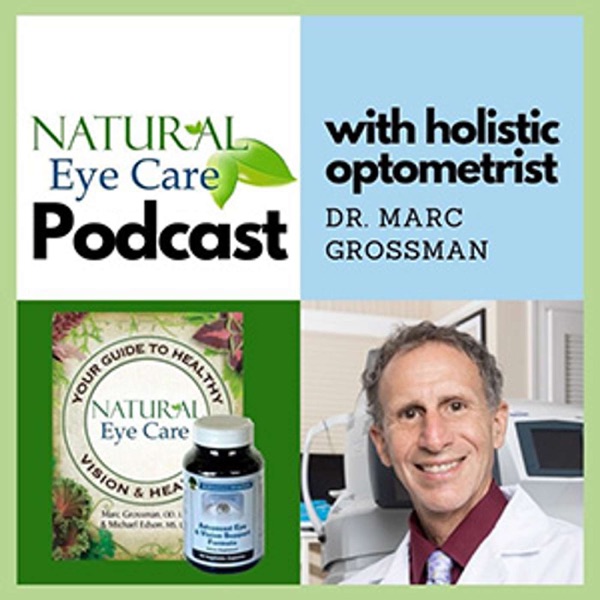
Podcast
Natural Eye Care with Dr. Marc Grossman, Holistic Optometrist
Leading Holistic Optometrist Dr. Marc R. Grossman, O.D., L.Ac. hosts the Natural Eye Care Podcast: approaches to vision problems, eye health, and overall health backed by research and his 40+ years of experience with patients. Most eye diseases strike seniors. Find out how lifestyle, diet, and nutrition can help maintain healthy vision and even improve eyesight. An Holistic Eye Doctor is dedicated to helping people with such conditions ranging from myopia and dry eyes to potentially vision-threatening diseases like macular degeneration and glaucoma. Dr. Grossman's podcasts cover a multi-disciplinary approach including nutrition, eye exercises, lifestyle changes, and Chinese Medicine. Dr. Grossman founded the Rye Learning Center in 1980, a multidisciplinary center for learning problems, in 1996 co-founded Integral Health Associates in New Paltz, New York, and in 1999 co-founded Natural Eye Care, Inc. His background includes degrees in Optometry, Biology, Physical Education and Learning Disabilities, coupled with yoga, bioenergetics, nutrition, Chinese medicine and acupuncture, the Alexander technique and Feldenkrais. He is co-author of half a dozen books on vision, including "Natural Eye Care: Your Guide to Health Vision and Healing" in 2019. Dr. Grossman takes an integrated approach to vision and its influence on the body, mind, and spirit. His lectures and private consultations are in high demand.
- On air since
- 2020
- Episodes
- 198
- Releases · typical length
- Every two weeks · 7 min
- Latest episode
- 1 week ago
Episodes
198 episodes, newest first
-
6 min
Omega-3s And Macular Degeneration
Season 7, Episode 16
Show notes
Fish oil is a popular supplement, but the real question for your eyes is: do omega-3-rich foods protect your vision better than supplements? We dig into the science behind omega-3 fatty acids and age-related macular degeneration (AMD), using a 2026 study. It showed that people who consume more omega-3s are less likely to have macular degeneration.
We also walk through what AMD actually affects in the eye, including the macula’s role in sharp, detailed vision, and why different forms of AMD matter when you’re reading headlines. You’ll hear how dry AMD, wet AMD (with abnormal blood vessel growth), and geographic atrophy fit into the bigger picture, plus why the retina depends so heavily on DHA as a key structural fat in photoreceptors. We connect the dots between DHA, EPA, inflammation regulation, and what “retinal nutrition” really means beyond buzzwords.
Then we tackle the frustrating part: why a major AREDS supplement study didn’t show the added protection many people expected from omega-3 capsules. From there, we shift into practical, real-life strategies you can use right away: aiming for two servings a week of salmon, sardines, trout, herring, or mackerel, choosing budget-friendly canned options, and building a plant-based omega-3 routine with flaxseed, chia seeds, walnuts, or algae-derived supplements if needed. If you care about preventing macular degeneration and supporting long-term eye health, this is a food-first conversation with clear next steps.
If this helped you, subscribe, share it with a friend who worries about AMD, and leave a review so more people can find trustworthy eye nutrition guidance. And, visit our website at https://naturaleyecare.com/
-
6 min
Protecting The Aging Retina with Anthocyanins from Bilberries
Season 7, Episode 15
Show notes
As we age, the balance between free radical load, antioxidant defenses, and inflammation can shift in the wrong direction, which is one reason the retina becomes more vulnerable over time. We walk through what the retina does, why it needs constant oxygen and nutrients, and how oxidative stress and chronic inflammation may contribute to long-term retinal wear and tear.
We also dig into why anthocyanins are getting so much attention in natural eye care and integrative optometry. These plant antioxidants found in blueberries, bilberries, and other deeply colored foods are being studied for their effects on inflammation, circulation, energy production, and even brain health. We highlight research on concentrated blueberry or bilberry extracts for visual fatigue and computer-related eye discomfort, including findings from placebo-controlled trials that report improvements in symptoms like heaviness and fatigue. Then we take a clear-eyed look at the night vision reputation of bilberry and what higher-quality evidence does and does not support for people with normal eyesight.
Finally, we connect the dots between nutrition and the rest of your daily habits. We share a food-first approach built around colorful plants, a vision-friendly diet pattern with healthy fats, consistent movement like walking or swimming, better sleep protection, and practical stress management. If you want a simple, realistic plan for supporting the aging retina while also supporting the brain, this conversation gives you a grounded starting point. Subscribe, share this with a friend who spends long hours on screens, and leave a review with your biggest question about protecting vision as you age.
-
8 min
Glaucoma Patients: Your Eye Pressure Number Is Not The Villain
Season 7, Episode 14
Show notes
Eye pressure is the number everyone remembers from an eye exam, but it’s not the whole glaucoma story. We dig into a question patients ask all the time: when is it actually important to lower intraocular pressure, and when is the bigger issue the health of the optic nerve itself? We use a simple picture to make it stick. Pressure is like water pushing on a basement wall, and the wall is your optic nerve. Lowering pressure can help, but strengthening and protecting the “wall” matters too.
We walk through what “normal” eye pressure really means (often 10 to 22 mmHg), why a reading above the range can raise concern, and why some people can still have glaucoma even when their pressure looks normal. That’s where OCT testing comes in. We explain why OCT imaging of the optic nerve is one of the most useful tools for catching thinning and early damage, and why we believe you should ask your eye doctor about it if you’re monitoring glaucoma risk.
We also break down the research that shaped modern glaucoma care, including major studies on normal tension glaucoma and advanced glaucoma, plus the idea of personalized target pressures rather than one magic number for everyone. We touch on real-life details that change decisions, like corneal thickness, cataracts, and daily IOP fluctuations, and we share why we’re excited about the future of at-home eye pressure monitoring. Finally, we talk about complementary, natural eye care options, including nutrients that may support circulation and optic nerve health and potentially help lower IOP alongside prescribed drops.
If this helps you see your eye pressure differently, subscribe, share the show with a friend, and leave a review so more people can protect their vision.
For more information, visit https://naturaleyecare.com/ and https://www.drgrossman2020.com/
Our email address is info@naturaleeycare.com.
-
7 min
B Vitamins and Multivitamins For Healthy Vision
Season 7, Episode 13
Show notes
Aging puts real pressure on the retina, optic nerve, and tear system. We dig into a practical question many people over 60 are asking: can a daily multivitamin actually support healthy aging and day-to-day function, and does that translate into meaningful support for vision? We walk through new research on multivitamins and functional health, what the results do (and do not) prove, and why a basic supplement may help when appetite, food choices, medications, or digestion make it harder to cover nutrient needs.
From there, we connect the dots between eye health and the nervous system. We explain why B vitamins matter for cellular energy, DNA support, and homocysteine balance, and why vitamin B12 gets special attention when you’re thinking about the optic nerve and glaucoma risk. You’ll hear how the retina and optic nerve rely on mitochondria, why NAD is a hot topic in aging science, and where compounds like nicotinamide, NMN, and NR fit into the conversation. We keep it grounded: promising mechanisms are not the same as proven treatments, and megadoses are not a shortcut.
We also highlight research signals tied to age-related macular degeneration, glaucoma, diabetic retinopathy, and dry eye, including observational findings that link higher B12 intake with fewer dry eye symptoms. If you want a clear, realistic roadmap for natural eye care, nutrition for healthy vision, and targeted supplement thinking, you’ll leave with stronger questions to ask and smarter next steps to take. Subscribe, share this with someone focused on healthy aging, and leave a review so more people can find the show.
Products mentioned in this episode:
-
9 min
How Does Cataract Surgery Work? The Basics
Season 7, Episode 12
Show notes
Blurry, hazy vision that feels like you are looking through a dusty windshield can be more than “just getting older.” We walk through cataract surgery in plain language, starting with what a cataract actually is: the natural lens turns cloudy as proteins clump together, making colors look muted and lights at night feel harsh. When that cloudiness starts blocking daily life, surgery becomes the real solution, and understanding the steps can take a lot of the fear out of the decision.
We explain what happens before the procedure, including the measurements used to pick the right intraocular lens (IOL) power and the eye drops that help prevent infection and control swelling. We also unpack common IOL options such as monofocal lenses, blended or progressive-style choices, and toric lenses for astigmatism, so you can show up to your consult with better questions and clearer priorities. Then we give you the play-by-play of the outpatient surgery itself: numbing drops, tiny corneal incisions, removing the cloudy lens, and placing a clear artificial lens, often without stitches.
Recovery matters just as much as the procedure, so we cover practical cataract surgery recovery rules: use your drops as directed, avoid water and soap directly in the eye, do not rub or press, and protect the eye with a shield or glasses when advised. We also talk honestly about cataract surgery risks and side effects, including dry eye, glare and halos, and less common but serious complications. Finally, we explain “secondary cataracts,” also known as posterior capsular opacification, and how a quick YAG laser capsulotomy can restore clear vision. If you want more guidance, including integrative eye care ideas and help advocating for the best lens choice, subscribe, share this episode with someone considering cataract surgery, and leave a review with your biggest question.
Old Intro
On these lists
Natural Eye Care with Dr. Marc Grossman, Holistic Optometrist is one of the shows picked out on this list