Podcast
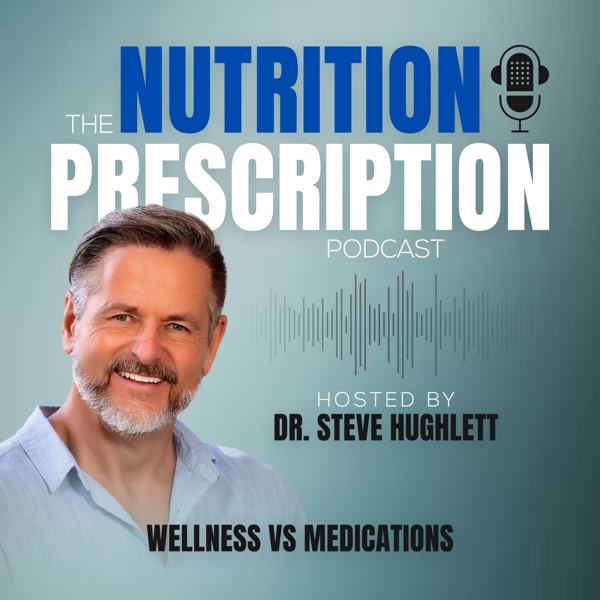
Nutrition Prescription: Wellness vs Medications
Join us for practical tips, and inspiring success stories—all designed to help listeners unlock more energy, confidence, and lasting health through nutrition, not restrictive diets or expensive supplements. Whether you're overwhelmed by feeling stuck, interested in getting off medication, or looking for a balanced approach to eating, this show is your trusted guide for healthier habits and sustainable wellness.
Hosted by Dr. Steve Hughlett, a Doctor of Pharmacy turned nutrition advocate, every episode explores the power of natural foods, simple lifestyle changes, and holistic health solutions that help people reduce or eliminate the need for medication.
Tune in each week to learn how real food, holistic methods, and a brighter mindset can transform your health—one episode, one meal, and one simple choice at a time.
This podcast is for you if you are searching for answers to questions such as:
How to lose weight and keep it off?
Is the keto diet right for me?
Should I use a low carb diet?
What foods are best for weight loss?
What are the best exercises for weight loss?
Why can't I lose weight?
Which diet is the best one for me?
Is cholesterol bad?
Are statins safe?
How can I get off my diabetes medication?
- On air since
- 2022
- Episodes
- 210
- Releases · typical length
- Weekly · 37 min
- Latest episode
- 1 day ago
Chart history since Oct 26
| Now | Chart | Peak | Since Oct 26 |
|---|---|---|---|
| 158 Up5 since Nov 17 | Medicine Arrived Nov 10 | #158 |
Episodes
210 episodes, newest first
-
52 min
210: The True Cost of Eating Processed Food with Lindsay Allen
Show notes
Is cheap food really cheap—or are we paying for it later?
In this episode of Nutrition Prescription: Wellness vs. Medications, Dr. Steve Hughlett sits down with health economist Lindsay Allen to explore the costs of ultra-processed foods beyond the grocery bill. They discuss what these foods may mean for medical expenses, years spent managing illness, and quality of life.
Lindsay breaks down her analysis estimating roughly $360,000 in added lifetime economic costs when comparing diets high in ultra-processed foods with lower-intake diets. She explains an important detail: that number is not simply extra medical bills. Much of the estimate reflects the economic value assigned to shorter life expectancy, along with costs related to illness and leaving work early. The model draws on observational research, which shows links—not proof of cause and effect.
Steve and Lindsay also explore the difference between processed and ultra-processed foods, why some convenient products marketed as healthy deserve a closer look, and how taste and texture can make certain foods hard to put down. Lindsay shares how this research changed her own shopping habits, plus simple ways she makes meals at home without spending hours in the kitchen.
This conversation is about awareness, not guilt. From frozen vegetables to simple homemade meals, Lindsay shares affordable options and reminds listeners that feeding a family well does not have to mean buying the most expensive food.
•
The price tag is only part of the cost. Lindsay explains how her model accounts for medical care, lost earnings from leaving work early, and the economic value of shorter life expectancy—not just what you pay at the store.
•
The comparison was not a perfect diet versus a poor diet. Lindsay's model compared people getting about 38% of their calories from ultra-processed foods with those getting 70% or more. Even the lower-intake group still ate these foods regularly.
•
Food choices are about more than willpower. Steve and Lindsay discuss how product design, marketing, convenience, and busy schedules can shape what families eat—and why shame does not help.
•
Simple swaps can fit a busy life. Lindsay shares changes she made at home, including using a bread maker and keeping frozen vegetables on hand to make meal prep easier.
• Disclaimer: The information provided on this channel/podcast/publication is for educational and informational purposes only and is not intended as a substitute for advice from your physician or other qualified healthcare provider. Always consult your doctor before making any changes to your diet, exercise routine, or medications.
• -
28 min
209: Blocked - The Constipation Conversation
Show notes
Click here to Book A Call
Feeling backed up, bloated, or uncomfortable—but too embarrassed to talk about it? You're not alone. In this episode of Nutrition Prescription: Wellness vs. Medications, Dr. Steve Hughlett tackles constipation with a straightforward conversation about bathroom habits and digestive health.
Constipation isn't just about how often you go. Dr. Steve discusses hard stools, straining, discomfort, and feeling like you haven't fully emptied your bowels. He also explores changes you may notice after switching to a low-carb eating plan, along with the roles of hydration, food choices, movement, stress, and daily routines.
You'll hear practical ideas discussed in the episode, including walking after meals, responding to your body's urge to go, and using a footstool for bathroom positioning. Dr. Steve also covers over-the-counter options and warning signs—such as blood in the stool, worsening pain, unexplained weight loss, vomiting, or trouble passing gas—that call for medical attention.
5 Topics Covered
•
Beyond bathroom frequency: Why stool texture, straining, and discomfort belong in the constipation conversation.
•
Food and digestive changes: Dr. Steve's perspective on low-carb eating, dietary fat, fiber, and dairy.
•
Hydration and magnesium: Where they fit into the discussion of bowel habits and over-the-counter options.
•
Everyday habits: How movement, stress, bathroom timing, and toilet positioning fit into the picture.
•
When to get checked: Warning signs and why ongoing symptoms deserve a conversation with your healthcare provider.
Connect With Us
Ready for support as you work toward your health goals? Visit drstevehughlett.com and click "Book a Call" to learn about The Metabolic Reset Experience or book a free call. If this episode helped you, subscribe to the podcast and share it with someone who could use an honest conversation about digestive health.
• Disclaimer: The information provided on this channel/podcast/publication is for educational and informational purposes only and is not intended as a substitute for advice from your physician or other qualified healthcare provider. Always consult your doctor before making any changes to your diet, exercise routine, or medications.
-
37 min
208: Don't Just Eat: Nourish Your Body
Show notes
Are you eating just to fill your stomach—or to nourish your body?
In this episode of Nutrition Prescription: Wellness vs. Medications, Dr. Steve Hughlett shares a different way to look at your plate. Instead of only asking, "How many calories does this have?" start asking, "What nutrients is this giving my body?"
Steve breaks down protein, fats, carbohydrates, vitamins, and minerals in simple terms. He shares his whole-food, low-carb approach and explains how he uses it to choose meals at home and at restaurants. From breakfast to burgers to Mexican food, you'll hear practical examples of how he builds meals around protein and cuts back on added sugar and refined flour.
If you're tired of confusing food rules, this episode offers a simple starting point: pay more attention to what your food provides—not just how much it fills you up.
In This Episode, You'll Learn:
•
The difference between filling your stomach and giving your body nutrients.
•
How Steve explains the roles of protein, fat, carbohydrates, vitamins, and minerals.
•
Why he puts protein at the center of his meals.
•
How he spots added sugar, refined flour, and other ingredients he chooses to limit.
•
His go-to ordering strategies for burgers, barbecue, Mexican food, and more.
Take the Next Step
Want help putting Steve and Theresa's whole-food approach into practice? Visit drstevehughlett.com and click "Book a Call" to discuss your goals. Subscribe to the podcast and share this episode with someone who wants to rethink what's on their plate.
• Disclaimer: The information provided on this channel/podcast/publication is for educational and informational purposes only and is not intended as a substitute for advice from your physician or other qualified healthcare provider. Always consult your doctor before making any changes to your diet, exercise routine, or medications.
-
30 min
207: Think Differently, Live Differently: Health and Wealth with Eileen Wilder
Show notes
What if the story you keep telling yourself is keeping you stuck—in your health, your finances, or your life?
In this episode of Nutrition Prescription: Wellness vs. Medications, Dr. Steve sits down with speaker, author, and business mentor Eileen Wilder to explore how changing your thinking can help you start taking action. Eileen shares her journey from ministry and $48,000 in debt to building a coaching business—and how faith, forgiveness, and mentorship shaped that journey.
Together, they discuss the connection between health and wealth, why your past does not have to define your future, and how your environment can shape what you believe is possible. They also explore why waiting until you feel ready can keep you from making the changes you want.
At the heart of this conversation is one simple message: Act. You do not have to have everything figured out to take your next step. Whether you want to improve your health, build a business, or stop putting yourself last, Dr. Steve and Eileen encourage you to trade "I should" for "do it now.
•
Change your story. Eileen explains how to replace labels like "I have no willpower" with a new story that supports the person you want to become.
•
Forgive yourself and move forward. Past mistakes do not have to keep you stuck. The conversation explores letting go of self-judgment while taking responsibility for your next step.
•
Choose an environment that helps you grow. Dr. Steve and Eileen share how mentors, events, and supportive people can open your eyes to new possibilities.
•
Recognize the value of what you know. Eileen shares how she turned her ability to encourage others into a coaching offer and grew her business over time.
•
Stop waiting for perfect. Hear why they encourage small, imperfect steps—and how the phrase "do it now" became a reminder to stop delaying.
-
34 min
206: Your Cholesterol Medicine: What You Need to Know
Show notes
Book a Call with Dr Steve. Book a Call with Dr Steve
In this episode of Nutrition Prescription: Wellness vs Medications, Dr. Steve Hughlett draws on more than 35 years as a Doctor of Pharmacy to share his perspective on statins, cholesterol testing, and the role of nutrition in better health.
Steve breaks down how cholesterol travels through your body, explains the difference between LDL particles, and discusses the pathway statins block to lower cholesterol. He also shares his concerns about how these medications affect other substances involved in cell function.
The conversation goes beyond a single cholesterol number. Steve walks through triglycerides, HDL, and two cholesterol ratios he discusses with clients. He then shares his approach to food and movement, with a focus on cutting back on added sugar and ultra-processed foods and adding resistance training.
•
What statins are, how they work, and why your doctor may prescribe one.
•
Why your body needs cholesterol for hormones, cell health, and other important functions.
•
The difference between large, buoyant LDL and small, dense LDL—and why Dr. Steve discusses particle size.
•
What triglycerides, HDL, and cholesterol ratios can reveal about your health.
•
Dr. Steve's approach to nutrition and lifestyle, including fewer ultra-processed foods, less added sugar, and resistance training
Whether you recently received a prescription or simply want to better understand your lab results, this episode offers topics and questions to bring to a conversation with your healthcare provider.
• Disclaimer: The information provided on this channel/podcast/publication is for educational and informational purposes only and is not intended as a substitute for advice from your physician or other qualified healthcare provider. Always consult your doctor before making any changes to your diet, exercise routine, or medications.
Medicine lists
More Medicine shows picked out from the charts