Podcast
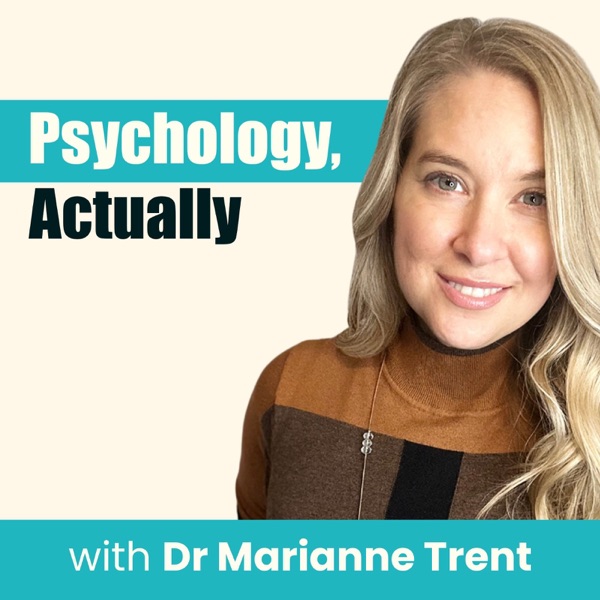
Psychology, Actually
🎙️ Psychology, Actually with Dr Marianne Trent is a podcast about what’s really going on beneath the surface of our lives.
Through conversations with psychologists, professionals, and inspiring guests, we explore the psychology shaping our work, our relationships, and our inner worlds bringing together clinical insight with genuine human understanding.
This show was previously known as The Aspiring Psychologist Podcast, and while it continues to support aspiring and qualified psychologists, it has grown into something broader. Because psychology doesn’t just shape our careers, it influences how we parent, how we grieve, how we connect, and how we cope when life doesn’t go to plan.
Alongside expert interviews, Dr Marianne Trent shares reflective solo episodes - making sense of complex human experiences with compassion, curiosity, and clarity.
Featuring conversations with leading voices in psychology including Professor Paul Gilbert, Dr Lucy Johnstone, and Dr Martha Deiros Collado - the podcast brings together a range of perspectives on what it means to live, work, and think psychologically.
New episodes are released every Monday at 6am (UK time).
Whether you’re an aspiring psychologist, a qualified practitioner, or simply someone interested in understanding yourself and others more deeply, this podcast offers thoughtful conversations that stay with you.
If you value the show please rate and review on Apple Podcasts or Spotify.
- Episodes
- 267
- Releases
- Weekly
- Typical length
- 26 min
- On air since
- 2021
- Latest episode
- 4 days ago
Episodes
267 episodes, newest first
-
52 min
Do You Have More Than One Personality? The Psychology of Who You Are
Episode 256
Show notes
Are you the same person at work, at home and around your closest friends? The psychology of personality is far more complex than simply putting people into categories or personality types. In this episode of Psychology, Actually, Dr Marianne Trent is joined by Dr Martyn Quigley to explore what personality really means, whether it can be measured, and how much our behaviour is shaped by the situations we find ourselves in.
They discuss the person–situation debate, individual differences, implicit personality theories, the Big Five, Myers-Briggs, and why our everyday judgements about other people can sometimes be surprisingly accurate. They also explore how personality can change over time and why understanding individual differences can help us better understand ourselves and others.
Complete your FREE Big 5 personality Test here: https://ipipneo.com/en/ipip-neo-120?res=1f45DA0EBwgJEgwQEggQDgsTCxENEBEUEwoTDgcTFA8PFw Why not comment to let us know your results?!
#PersonalityPsychology #Psychology #BigFive
Connect with Dr Martyn Quigley: https://www.linkedin.com/in/dr-martyn-quigley-a6381936/?isSelfProfile=false
Highlights
• 00:00 Introduction: What is personality?
• 00:41 Are people more similar than different?
• 02:21 Nomothetic vs idiographic approaches
• 04:08 Can personality be measured?
• 06:41 Is personality stable or situation-dependent?
• 10:33 How situations change our behaviour
• 12:29 Are our judgements about personality accurate?
• 15:24 Can we spot personality from short interactions?
• 16:48 Is there one definition of personality?
• 19:14 Type A vs Type B personality
• 22:03 What are individual differences?
• 24:18 Why understanding personality matters
• 26:22 What does it mean to have a “great personality”?
• 28:18 Implicit personality theories explained
• 33:22 Are we all amateur psychologists?
• 35:30 How context can change relationships
• 38:39 Is Myers-Briggs scientifically valid?
• 42:45 Personality in structured situations
• 45:13 What should we understand about personality?
• 47:05 How trauma can affect personality
• 48:03 Where to learn more about Dr Martyn Quigley🎧 Listen to the episodes I mentioned in this episode: Dr Marytn Quigley Extinction Learning: https://player.captivate.fm/episode/7f2e0254-6879-4d36-8dc5-c2033e067436/ The Psychopathy Episode: https://player.captivate.fm/episode/18bda108-fc14-4d33-9f8c-a4d6e038f4b3/ and The Psychology of The Traitors: https://player.captivate.fm/episode/9b7ed2bd-3e9e-46ee-b5d9-cc5f3949aa90/
Links:
🫶 To join my podcast membership to get early access to episodes and support the show head to: https://the-aspiring-psychologist.captivate.fm/support or to the Apple Podcasts App: https://podcasts.apple.com/gb/podcast/the-aspiring-psychologist-podcast/id1605628278
📚 To check out The Clinical Psychologist Collective Book: https://amzn.to/3jOplx0
📖 To check out The Aspiring Psychologist Collective Book: https://amzn.to/3CP2N97
💡 To check out or join the aspiring psychologist membership for just £30 per month head to: https://www.aspiring-psychologist.co.uk/membership
🖥️ Check out my short courses for aspiring psychologists and mental health professionals here: https://www.aspiring-psychologist.co.uk/online-courses
Ask Marianne your most pressing psychology career question and she will send you a FREE bespoke reply! Grab your free psychology success guide here and fill in the most pressing concern box: https://www.aspiring-psychologist.co.uk (scroll to the bottom of the page)
✍️ Get your FREE Supervision Shaping Tool now: https://www.aspiring-psychologist.co.uk/free-resources
📱Connect socially with Marianne and check out ways to work with her, including the Aspiring Psychologist Book, Clinical Psychologist book and The Aspiring Psychologist Membership on her Link tree: https://linktr.ee/drmariannetrent
💬 To join my free Facebook group and discuss your thoughts on this episode and more: https://www.facebook.com/groups/aspiringpsychologistcommunity
Like, Comment, Subscribe & get involved:
If you enjoy the podcast, please do subscribe and rate and review episodes.
⚠️ Disclaimer
This content is for informational and educational purposes only. It does not constitute medical, psychological, or professional advice. Any actions taken based on this content are at your own risk.
© Dr Marianne Trent
Mentioned in this episode:
The Race to Recurring Revenue Challenge 2026
Could you earn money in ways that aren't directly tied to your time? Whether you're a psychologist, another professional, a business owner or simply someone curious about creating an additional income stream, this FREE four-day challenge could be a brilliant place to start! Race to Recurring Revenue, hosted by Sophie Foote, runs from 2–5 November 2026 and explores how you could develop ideas for passive and recurring income. Across four days, you'll explore: - Different ways to create income beyond one-to-one work. - How to develop an idea that could become a product, service or recurring income stream. - Ways to attract the right people and build trust. - How to start thinking about marketing and launching your ideas. It's completely FREE, with short daily training sessions and practical activities to help you get started. I completed the One to Many programme back in 2022, and it helped transform the way I think about my own business and career. I've since developed books, courses, memberships and other ways to share my knowledge beyond individual appointments. I'd love you to come along and explore what's possible for you too! Sign up for FREE using my link:* https://sophiefoote.com/landing-page?am_id=marianne4238 *This is my affiliate link. If you subsequently choose to purchase a paid programme through my referral, I may earn a commission at no additional cost to you. The challenge itself is completely free.
-
49 min
Can Babies Have Mental Health? Infant Mental Health and Attachment Explained
Episode 255
Show notes
Can a baby have mental health before they can even talk? The earliest months of life may shape far more than most of us realise. In this episode of Psychology, Actually, Dr Marianne Trent is joined by Dr Charlotte Dunster-Page to explore infant mental health, attachment and bonding, and what can happen when early parenting doesn't go to plan. They discuss why the first 1,001 days matter, how to spot when a parent or baby might need extra support, and why bonding often takes time. Charlotte also explains the treatment options available, including video interaction guidance and Circle of Security, and busts common myths about baby sleep. If you're worried about your bond with your baby, this conversation is a reassuring reminder that you are not alone.
#InfantMentalHealth #Attachment #ParentingSupport
Learn more about Dr Charlotte Dunster-Page and her work here: https://www.borntobond.co.uk/about
Highlights
• 00:00 Introduction
• 00:27 Quickfire round: can an infant have their own mental health?
• 02:15 Can a child have a different experience from their parent's?
• 03:14 Do you need to be a parent to work in infant mental health?
• 04:09 Infant mental health and care-experienced people
• 05:46 Why the first 1,001 days matter
• 07:38 Signs a parent or baby may need support
• 11:28 Bonding with a first baby vs a second baby
• 13:54 When birth and early days don't go to plan
• 17:59 Treatment options for parent-infant relationship difficulties
• 23:58 How Charlotte moved from forensic psychology to infant mental health
• 28:56 Conflicting parenting advice and baby sleep
• 31:23 Reducing shame and stigma around referrals for support
• 35:40 Why parents need a village
• 38:34 Exhaustion and self-compassion in early parenthood
• 39:30 Baby sleep myths
• 42:11 Practical tips for professionals and parents
• 44:17 Where to find Charlotte's work🎧 Listen to the Dr Jade Redfern how to shout less at your children episode mentioned in this episode here: https://player.captivate.fm/episode/e5cede81-8c93-449a-b663-4d60a99b92a2/ Or Watch on YouTube here: https://youtu.be/boRYKdPYZ2w
Links:
🫶 To join my podcast membership to get early access to episodes and support the show head to: https://the-aspiring-psychologist.captivate.fm/support or to the Apple Podcasts App: https://podcasts.apple.com/gb/podcast/the-aspiring-psychologist-podcast/id1605628278
📚 To check out The Clinical Psychologist Collective Book: https://amzn.to/3jOplx0
📖 To check out The Aspiring Psychologist Collective Book: https://amzn.to/3CP2N97
💡 To check out or join the aspiring psychologist membership for just £30 per month head to: https://www.aspiring-psychologist.co.uk/membership
🖥️ Check out my short courses for aspiring psychologists and mental health professionals here: https://www.aspiring-psychologist.co.uk/online-courses
Ask Marianne your most pressing psychology career question and she will send you a FREE bespoke reply! Grab your free psychology success guide here and fill in the most pressing concern box: https://www.aspiring-psychologist.co.uk (scroll to the bottom of the page)
✍️ Get your FREE Supervision Shaping Tool now: https://www.aspiring-psychologist.co.uk/free-resources
📱Connect socially with Marianne and check out ways to work with her, including the Aspiring Psychologist Book, Clinical Psychologist book and The Aspiring Psychologist Membership on her Link tree: https://linktr.ee/drmariannetrent
💬 To join my free Facebook group and discuss your thoughts on this episode and more: https://www.facebook.com/groups/aspiringpsychologistcommunity
Like, Comment, Subscribe & get involved:
If you enjoy the podcast, please do subscribe and rate and review episodes.
⚠️ Disclaimer
This content is for informational and educational purposes only. It does not constitute medical, psychological, or professional advice. Any actions taken based on this content are at your own risk.
© Dr Marianne Trent
Mentioned in this episode:
The Race to Recurring Revenue Challenge 2026
Could you earn money in ways that aren't directly tied to your time? Whether you're a psychologist, another professional, a business owner or simply someone curious about creating an additional income stream, this FREE four-day challenge could be a brilliant place to start! Race to Recurring Revenue, hosted by Sophie Foote, runs from 2–5 November 2026 and explores how you could develop ideas for passive and recurring income. Across four days, you'll explore: - Different ways to create income beyond one-to-one work. - How to develop an idea that could become a product, service or recurring income stream. - Ways to attract the right people and build trust. - How to start thinking about marketing and launching your ideas. It's completely FREE, with short daily training sessions and practical activities to help you get started. I completed the One to Many programme back in 2022, and it helped transform the way I think about my own business and career. I've since developed books, courses, memberships and other ways to share my knowledge beyond individual appointments. I'd love you to come along and explore what's possible for you too! Sign up for FREE using my link:* https://sophiefoote.com/landing-page?am_id=marianne4238 *This is my affiliate link. If you subsequently choose to purchase a paid programme through my referral, I may earn a commission at no additional cost to you. The challenge itself is completely free.
The Race to Recurring Revenue Challenge 2026
Could you earn money in ways that aren't directly tied to your time? Whether you're a psychologist, another professional, a business owner or simply someone curious about creating an additional income stream, this FREE four-day challenge could be a brilliant place to start! Race to Recurring Revenue, hosted by Sophie Foote, runs from 2–5 November 2026 and explores how you could develop ideas for passive and recurring income. Across four days, you'll explore: - Different ways to create income beyond one-to-one work. - How to develop an idea that could become a product, service or recurring income stream. - Ways to attract the right people and build trust. - How to start thinking about marketing and launching your ideas. It's completely FREE, with short daily training sessions and practical activities to help you get started. I completed the One to Many programme back in 2022, and it helped transform the way I think about my own business and career. I've since developed books, courses, memberships and other ways to share my knowledge beyond individual appointments. I'd love you to come along and explore what's possible for you too! Sign up for FREE using my link:* https://sophiefoote.com/landing-page?am_id=marianne4238 *This is my affiliate link. If you subsequently choose to purchase a paid programme through my referral, I may earn a commission at no additional cost to you. The challenge itself is completely free.
-
39 min
Gender Disappointment Isn't What You Think | The Truth About Grief & Hope
Episode 254
Show notes
Can you deeply love the child you have and still grieve the child you imagined? That shame-filled question is far more common than you think. In this episode of Psychology, Actually, Dr Marianne Trent is joined by Dr Nina Francis to explore why gender disappointment might be the wrong term and how RIFIs, Rupture of an Imagined Future due to infant sex, better explain the grief, identity, dark hope, and limerence many parents experience. Dr Nina shares her personal story, her PhD research, the 7-stage model towards acceptance, and what a truly helpful response from a GP, midwife or psychologist sounds like.
Learn more about Dr Nina and her work here: https://www.gender-disappointment.com/ Free Guide & Webinar Dr Nina mentioned is here: https://www.gender-disappointment.com/free-webinar
#GenderDisappointment #ParentalMentalHealth #Grief #griefsupport
🎧 Listen to the What is EMDR episode mentioned in this episode here: https://www.youtube.com/watch?v=z31WJPk8jjk&t=1s or listen here: https://player.captivate.fm/episode/5354da94-8907-4654-b17b-000862a790e5/
Highlights
• 00:00 Introduction: Loving your child while grieving the child you imagined
• 00:34 Quick-fire questions about gender disappointment
• 02:08 What not to say to someone experiencing it
• 02:56 Stigma, misunderstanding and shame
• 03:09 Why “gender disappointment” may be the wrong term
• 05:00 The rupture of an imagined future
• 07:12 Why imagined futures can be so powerful
• 08:27 Grief, longing and bargaining
• 09:54 Nina’s personal experience
• 14:39 Why gender disappointment can create shame
• 16:44 Cultural expectations around boys and girls
• 18:22 Grief, hope, dark hope and limerence
• 19:00 Understanding grief 20:00 When hope becomes dark
• 21:30 What is limerence?
• 22:57 The imagined future and identity
• 24:32 How healthcare professionals can respond
• 27:49 A compassionate question to ask
• 28:53 Nina’s model and moving towards acceptance
• 32:01 What parents experiencing this need to hear
• 33:40 About Nina’s book, Gender Disappointment
• 35:19 Final thoughtsLinks:
📲 Connect with Dr Nina Francis: https://www.drninafrancis.co.uk
🫶 To join my podcast membership to get early access to episodes and support the show head to: https://the-aspiring-psychologist.captivate.fm/support or to the Apple Podcasts App: https://podcasts.apple.com/gb/podcast/the-aspiring-psychologist-podcast/id1605628278
📚 To check out The Clinical Psychologist Collective Book: https://amzn.to/3jOplx0
📖 To check out The Aspiring Psychologist Collective Book: https://amzn.to/3CP2N97
💡 To check out or join the aspiring psychologist membership for just £30 per month head to: https://www.aspiring-psychologist.co.uk/membership
🖥️ Check out my short courses for aspiring psychologists and mental health professionals here: https://www.aspiring-psychologist.co.uk/online-courses
Ask Marianne your most pressing psychology career question and she will send you a FREE bespoke reply! Grab your free psychology success guide here and fill in the most pressing concern box: https://www.aspiring-psychologist.co.uk (scroll to the bottom of the page)
✍️ Get your FREE Supervision Shaping Tool now: https://www.aspiring-psychologist.co.uk/free-resources
📱Connect socially with Marianne and check out ways to work with her, including the Aspiring Psychologist Book, Clinical Psychologist book and The Aspiring Psychologist Membership on her Link tree: https://linktr.ee/drmariannetrent
💬 To join my free Facebook group and discuss your thoughts on this episode and more: https://www.facebook.com/groups/aspiringpsychologistcommunity
Like, Comment, Subscribe & get involved:
If you enjoy the podcast, please do subscribe and rate and review episodes.
⚠️ Disclaimer
This content is for informational and educational purposes only. It does not constitute medical, psychological, or professional advice. Any actions taken based on this content are at your own risk.
© Dr Marianne Trent
Mentioned in this episode:
The Race to Recurring Revenue Challenge 2026
Could you earn money in ways that aren't directly tied to your time? Whether you're a psychologist, another professional, a business owner or simply someone curious about creating an additional income stream, this FREE four-day challenge could be a brilliant place to start! Race to Recurring Revenue, hosted by Sophie Foote, runs from 2–5 November 2026 and explores how you could develop ideas for passive and recurring income. Across four days, you'll explore: - Different ways to create income beyond one-to-one work. - How to develop an idea that could become a product, service or recurring income stream. - Ways to attract the right people and build trust. - How to start thinking about marketing and launching your ideas. It's completely FREE, with short daily training sessions and practical activities to help you get started. I completed the One to Many programme back in 2022, and it helped transform the way I think about my own business and career. I've since developed books, courses, memberships and other ways to share my knowledge beyond individual appointments. I'd love you to come along and explore what's possible for you too! Sign up for FREE using my link:* https://sophiefoote.com/landing-page?am_id=marianne4238 *This is my affiliate link. If you subsequently choose to purchase a paid programme through my referral, I may earn a commission at no additional cost to you. The challenge itself is completely free.
The Race to Recurring Revenue Challenge 2026
Could you earn money in ways that aren't directly tied to your time? Whether you're a psychologist, another professional, a business owner or simply someone curious about creating an additional income stream, this FREE four-day challenge could be a brilliant place to start! Race to Recurring Revenue, hosted by Sophie Foote, runs from 2–5 November 2026 and explores how you could develop ideas for passive and recurring income. Across four days, you'll explore: - Different ways to create income beyond one-to-one work. - How to develop an idea that could become a product, service or recurring income stream. - Ways to attract the right people and build trust. - How to start thinking about marketing and launching your ideas. It's completely FREE, with short daily training sessions and practical activities to help you get started. I completed the One to Many programme back in 2022, and it helped transform the way I think about my own business and career. I've since developed books, courses, memberships and other ways to share my knowledge beyond individual appointments. I'd love you to come along and explore what's possible for you too! Sign up for FREE using my link:* https://sophiefoote.com/landing-page?am_id=marianne4238 *This is my affiliate link. If you subsequently choose to purchase a paid programme through my referral, I may earn a commission at no additional cost to you. The challenge itself is completely free.
-
1 hr 8 min
What Does Your IQ Score Actually Tell You? | WAIS-5 Explained
Episode 253
Show notes
What does an IQ score actually tell us about a person and what can it miss? The answer is far more complicated than a single number, especially when we consider strengths, weaknesses, culture, education and real-world ability.
In this episode of Psychology, Actually, Dr Marianne Trent joins Dr Keith Jenkins to explore the history and evolution of the Wechsler Adult Intelligence Scale (WAIS), what IQ scores really measure, and how the WAIS-5 can provide a more detailed picture of cognitive abilities. They discuss cognitive assessment, working memory, processing speed, reasoning, dyslexia, traumatic brain injury, dementia and the impact of factors such as anxiety, fatigue, sleep and language. They also explore why two people can have the same IQ but very different cognitive profiles, and why IQ alone cannot determine how successful someone will be. The conversation looks at WAIS-5 UK, cultural and linguistic considerations, practice effects, and the future of intelligence testing.
Thanks to Pearson for sponsoring this video. To check out the WAIS-V head to: https://www.pearsonclinical.co.uk/featured-topics/from-podcast-insight-to-clinical-practice.html
#IQTest #WAIS5 #psychology
Highlights
• 00:00 Introduction
• 01:31 Quickfire: What is the WAIS?
• 02:16 Who gets referred for WAIS assessment?
• 04:22 Is the WAIS just an IQ test? 05:12 Can results inform care or treatment?
• 08:43 How long will it take to become skilled at administering it?
• 11:16 Clinical oversight and supervision
• 13:24 Strengths, weaknesses and dyslexia
• 16:16 Same IQ, different profiles
• 17:53 How anxiety, fatigue and substances affect scores
• 20:03 Paper testing vs Q-interactive tablets
• 22:53 History of intelligence testing (Galton to Wechsler)
• 27:44 First experiences administering the WAIS
• 32:26 What's new in the WAIS-5 model
• 34:23 Sternberg's Triarchic theory of intelligence
• 38:28 When strengths mask hidden difficulties
• 39:50 Case study: Jazz and traumatic brain injury
• 44:56 Cultural norms and testing across backgrounds
• 47:51 Using interpreters during assessment
• 51:08 New WAIS-5 subtests
• 53:19 The practice effect and preparing for tests
• 56:12 Biggest misconceptions about IQ
• 58:10 Does high IQ mean you'll thrive?
• 59:21 The future of intelligence testing
• 1:00:34 How AI may be affecting our IQ (Flynn effect)
• 1:02:43 Final thoughtsLinks:
🫶 To join my podcast membership to get early access to episodes and support the show head to: https://the-aspiring-psychologist.captivate.fm/support or to the Apple Podcasts App: https://podcasts.apple.com/gb/podcast/the-aspiring-psychologist-podcast/id1605628278
📚 To check out The Clinical Psychologist Collective Book: https://amzn.to/3jOplx0
📖 To check out The Aspiring Psychologist Collective Book: https://amzn.to/3CP2N97
💡 To check out or join the aspiring psychologist membership for just £30 per month head to: https://www.aspiring-psychologist.co.uk/membership
🖥️ Check out my short courses for aspiring psychologists and mental health professionals here: https://www.aspiring-psychologist.co.uk/online-courses
Ask Marianne your most pressing psychology career question and she will send you a FREE bespoke reply! Grab your free psychology success guide here and fill in the most pressing concern box: https://www.aspiring-psychologist.co.uk (scroll to the bottom of the page)
✍️ Get your FREE Supervision Shaping Tool now: https://www.aspiring-psychologist.co.uk/free-resources
📱Connect socially with Marianne and check out ways to work with her, including the Aspiring Psychologist Book, Clinical Psychologist book and The Aspiring Psychologist Membership on her Link tree: https://linktr.ee/drmariannetrent
💬 To join my free Facebook group and discuss your thoughts on this episode and more: https://www.facebook.com/groups/aspiringpsychologistcommunity
Like, Comment, Subscribe & get involved:
If you enjoy the podcast, please do subscribe and rate and review episodes.
⚠️ Disclaimer
This content is for informational and educational purposes only. It does not constitute medical, psychological, or professional advice. Any actions taken based on this content are at your own risk.
© Dr Marianne Trent
Mentioned in this episode:
The Clinical Psychologist Collective Book
This episode is brought to you by The Clinical Psychologist Collective Book. Check it out, leave a review or buy your copy here: https://amzn.to/3jOplx0
-
18 min
When a Career Step Back Is Actually a Step Forward
Episode 252
Show notes
Would you take a pay cut for a job that looks worse on paper? Sometimes the move that feels like a step backwards is exactly what your career needs next. In this episode of Psychology, Actually, Dr Marianne Trent explores when a sideways or seemingly backwards career move, like dropping from a Band 5 to a Band 4 assistant psychologist role, could actually help you grow. Drawing on a real Reddit case study and her own career journey, including nearly two years spent away from psychology altogether, Marianne unpacks how to weigh pay, experience, wellbeing and life circumstances when deciding your next move. She shares a practical framework for working out what you're really optimising for, whether that's money, learning, time or relationships, plus reflective questions to help you decide with confidence.
#CareerAdvice #AssistantPsychologist #ClinicalPsychology
Highlights
• 00:00 Introduction - When a step back moves you forward
• 01:15 Why I made this episode - The Reddit post that inspired it
• 02:28 The Band 5 to Band 4 AP dilemma explained
• 04:05 Have you reached a plateau in your current role?
• 07:12 Energy, grief and life circumstances - when you can't do more
• 09:30 Money, cost of living crisis and travel expenses
• 11:55 My 2 years away from psychology - home care to office temping
• 15:40 Banding isn't everything - Band 4 vs Band 5 AP roles
• 18:42 What are you optimising for? Money, learning, time, wellbeing
• 21:10 How to manage your six career priorities
• 22:45 Breadth versus depth of experience for DClinPsy
• 24:50 Pay, overtime, shift allowances and pensions
• 26:30 6 Decision-making questions to ask yourself before you move
• 30:15 Final thoughts - Your life gets a vote too🎧 Listen to the Pensions episode mentioned in this episode here: https://player.captivate.fm/episode/63990610-9942-4287-bcb6-cef9be814b2d/ Or Watch on YouTube here: https://www.youtube.com/watch?v=8lv5QFsNVCQ
Links:
🫶 To join my podcast membership to get early access to episodes and support the show head to: https://the-aspiring-psychologist.captivate.fm/support or to the Apple Podcasts App: https://podcasts.apple.com/gb/podcast/the-aspiring-psychologist-podcast/id1605628278
📚 To check out The Clinical Psychologist Collective Book: https://amzn.to/3jOplx0
📖 To check out The Aspiring Psychologist Collective Book: https://amzn.to/3CP2N97
💡 To check out or join the aspiring psychologist membership for just £30 per month head to: https://www.aspiring-psychologist.co.uk/membership
🖥️ Check out my short courses for aspiring psychologists and mental health professionals here: https://www.aspiring-psychologist.co.uk/online-courses
Ask Marianne your most pressing psychology career question and she will send you a FREE bespoke reply! Grab your free psychology success guide here and fill in the most pressing concern box: https://www.aspiring-psychologist.co.uk (scroll to the bottom of the page)
✍️ Get your FREE Supervision Shaping Tool now: https://www.aspiring-psychologist.co.uk/free-resources
📱Connect socially with Marianne and check out ways to work with her, including the Aspiring Psychologist Book, Clinical Psychologist book and The Aspiring Psychologist Membership on her Link tree: https://linktr.ee/drmariannetrent
💬 To join my free Facebook group and discuss your thoughts on this episode and more: https://www.facebook.com/groups/aspiringpsychologistcommunity
Like, Comment, Subscribe & get involved:
If you enjoy the podcast, please do subscribe and rate and review episodes.
⚠️ Disclaimer
This content is for informational and educational purposes only. It does not constitute medical, psychological, or professional advice. Any actions taken based on this content are at your own risk.
© Dr Marianne Trent
Mentioned in this episode:
The Clinical Psychologist Collective Book
This episode is brought to you by The Clinical Psychologist Collective Book. Check it out, leave a review or buy your copy here: https://amzn.to/3jOplx0
-
18 min
Why We Can't Stop Replaying Our Worst Interview Answers
Show notes
Replaying your worst interview answer on a loop? You're not alone and it probably says less about you than you think. In this episode of Inner Work, Dr Marianne Trent explores why we ruminate over interview mistakes, the difference between a poor answer and a poor candidate, and how to use post-interview embarrassment as information rather than punishment.
🎧 Listen to the Professor Paul Gilbert Lessons in Psychology Compassion episode here: https://player.captivate.fm/episode/8b8a45e2-aa6a-4802-8e01-26ebd2d6a412/ Watch on YouTube: https://www.youtube.com/watch?v=N40b5TmxQko
#InterviewAnxiety #SelfCompassion #InnerWorkPodcast
💡 Want to support the channel? Like, comment, and share this episode!
#psychologypodcast #chooseyourself
📩 Business & Collaboration Enquiries
✉️ Email: Info@GoodThinkingPsychology.co.uk
🎧 Stay Connected With Me
• 🌍 Aspiring Psychologists Website: www.aspiring-psychologist.co.uk
• 🌍 Good Thinking Psychology Website: www.goodthinkingpsychology.co.uk
• 💼 LinkedIn: Dr Marianne Trent: https://www.linkedin.com/in/dr-marianne-trent-psychology/
• 📘 Facebook: https://www.facebook.com/GoodThinkingPsychologicalServices
• 🐦 Twitter/X: @DrMarianneTrent
• 📸 Instagram: @DrMarianneTrent
• 🎵 TikTok: @DrMarianneTrent.📚 My Books on Amazon
• 📖 The Grief Collective → https://amzn.to/4hNHru5
• 📖 The Clinical Psychologist Collective → https://amzn.to/3ErIEJs
• 📖 The Aspiring Psychologist Collective → https://amzn.to/4jSxc9N
• 📖 Talking Heads: Stories of Psychology & Mental Health → https://amzn.to/3EvbKaN
• 📖 An Autistic Anthology: Neuro-Narratives of Mental Health Professionals → https://amzn.to/3WXBpz9⚠️ Disclaimer
This content is for informational and educational purposes only. It does not constitute medical, psychological, or professional advice. Any actions taken based on this content are at your own risk.
© Dr Marianne Trent
Mentioned in this episode:
The Clinical Psychologist Collective Book
This episode is brought to you by The Clinical Psychologist Collective Book. Check it out, leave a review or buy your copy here: https://amzn.to/3jOplx0
-
26 min
Stressed All the Time? A Psychologist Explains What's Really Going On
Episode 251
Show notes
Ever wonder how much of your stress is actually yours or whether you've quietly picked up someone else's expectations along the way? In this episode of Psychology, Actually, Dr Marianne Trent explores where stress really comes from, the difference between acute and chronic stress, and the hidden costs of ignoring it, from sleep and relationships to burnout. She shares practical ways to audit your own pressure points, spot the "shoulds" driving your decisions, and figure out what's genuinely within your control.
#StressManagement #PsychologyActually #MentalHealthPodcast
Highlights
• 00:00 Introduction
• 01:10 Where is your stress really coming from?
• 03:40 Peer pressure and the comparison trap
• 06:15 Are you ready, or just chancing it?
• 08:20 The "shoulds" that add up
• 10:05 Auditing what you can actually control
• 12:30 Acute vs chronic stress
• 15:50 Noticing stress in your body and mind
• 17:40 A quick physical health check-in
• 19:15 The real cost of ignoring stress: sleep
• 23:00 The real cost of ignoring stress: relationships and joy
• 25:50 Burnout and taking time off
• 27:45 Quick-fire reflections
• 30:20 Closing thoughts🎧 Listen to this episode What is the difference between stress and burnout? https://player.captivate.fm/episode/a1592990-4561-48b4-b115-6809a77a2c84/ or watch on YouTube: https://www.youtube.com/watch?v=uXjnKewNstM
Links:
🫶 To join my podcast membership to get early access to episodes and support the show head to: https://the-aspiring-psychologist.captivate.fm/support or to the Apple Podcasts App: https://podcasts.apple.com/gb/podcast/the-aspiring-psychologist-podcast/id1605628278 or to YouTube: https://www.youtube.com/channel/UCOwjrIP_jatiqlAivJE2mgQ/join
📚 To check out The Clinical Psychologist Collective Book: https://amzn.to/3jOplx0
📖 To check out The Aspiring Psychologist Collective Book: https://amzn.to/3CP2N97
💡 To check out or join the aspiring psychologist membership for just £30 per month head to: https://www.aspiring-psychologist.co.uk/membership
🖥️ Check out my short courses for aspiring psychologists and mental health professionals here: https://www.aspiring-psychologist.co.uk/online-courses
Ask Marianne your most pressing psychology career question and she will send you a FREE bespoke reply! Grab your free psychology success guide here and fill in the most pressing concern box: https://www.aspiring-psychologist.co.uk (scroll to the bottom of the page)
✍️ Get your FREE Supervision Shaping Tool now: https://www.aspiring-psychologist.co.uk/free-resources
📱Connect socially with Marianne and check out ways to work with her, including the Aspiring Psychologist Book, Clinical Psychologist book and The Aspiring Psychologist Membership on her Link tree: https://linktr.ee/drmariannetrent
💬 To join my free Facebook group and discuss your thoughts on this episode and more: https://www.facebook.com/groups/aspiringpsychologistcommunity
Like, Comment, Subscribe & get involved:
If you enjoy the podcast, please do subscribe and rate and review episodes.
Hashtags:
⚠️ Disclaimer
This content is for informational and educational purposes only. It does not constitute medical, psychological, or professional advice. Any actions taken based on this content are at your own risk.
© Dr Marianne Trent
Mentioned in this episode:
The Clinical Psychologist Collective Book
This episode is brought to you by The Clinical Psychologist Collective Book. Check it out, leave a review or buy your copy here: https://amzn.to/3jOplx0
-
9 min
Why You've Stopped Trusting Yourself (And How to Start Again)
Show notes
What if the person you've stopped trusting is yourself? In this episode of Inner Work, Dr Marianne Trent explores why self-doubt often traces back to childhood experiences, and how to gently begin trusting your own judgement, hopes, and dreams again.
#InnerWork #TrustYourself #mentalhealthawareness
Grab Simon Squibb’s What’s Your Dream book: https://amzn.to/4d57H3c
Another Inner Work Episode I think you’ll love: https://player.captivate.fm/episode/bd386694-3b7e-4400-b628-b7bad1bedd74/ or on YouTube: https://www.youtube.com/watch?v=PvlVQo3ORrs
💡 Want to support the channel? Like, comment, and share this episode!
#psychologypodcast #chooseyourself
📩 Business & Collaboration Enquiries
✉️ Email: Info@GoodThinkingPsychology.co.uk
🎧 Stay Connected With Me
• 🌍 Aspiring Psychologists Website: www.aspiring-psychologist.co.uk
• 🌍 Good Thinking Psychology Website: www.goodthinkingpsychology.co.uk
• 💼 LinkedIn: Dr Marianne Trent: https://www.linkedin.com/in/dr-marianne-trent-psychology/
• 📘 Facebook: https://www.facebook.com/GoodThinkingPsychologicalServices
• 🐦 Twitter/X: @DrMarianneTrent
• 📸 Instagram: @DrMarianneTrent
• 🎵 TikTok: @DrMarianneTrent.📚 My Books on Amazon
• 📖 The Grief Collective → https://amzn.to/4hNHru5
• 📖 The Clinical Psychologist Collective → https://amzn.to/3ErIEJs
• 📖 The Aspiring Psychologist Collective → https://amzn.to/4jSxc9N
• 📖 Talking Heads: Stories of Psychology & Mental Health → https://amzn.to/3EvbKaN
• 📖 An Autistic Anthology: Neuro-Narratives of Mental Health Professionals → https://amzn.to/3WXBpz9⚠️ Disclaimer
This content is for informational and educational purposes only. It does not constitute medical, psychological, or professional advice. Any actions taken based on this content are at your own risk.© Dr Marianne Trent
Mentioned in this episode:
The Clinical Psychologist Collective Book
This episode is brought to you by The Clinical Psychologist Collective Book. Check it out, leave a review or buy your copy here: https://amzn.to/3jOplx0
-
11 min
Why Do I Feel Guilty When I’m Off Sick From Work?
Show notes
Why can being signed off work feel like you're doing something wrong, even when you know you're genuinely unwell? Resting can become tangled up with guilt, productivity, and self-worth. In this episode of Inner Work, Dr Marianne Trent explores why we compare ourselves to colleagues, feel the need to prove we're ill, struggle to switch off from work, and find it difficult to give ourselves permission to rest and recover.
#WorkplaceMentalHealth #BurnoutRecovery #SelfWorth
Listen or watch next: https://player.captivate.fm/episode/9883f9ec-d1f3-4669-b3aa-57b191b26507/ or YouTube: https://www.youtube.com/watch?v=Lp_61T3Jf8I
💡 Want to support the channel? Like, comment, and share this episode!
📩 Business & Collaboration Enquiries
✉️ Email: Info@GoodThinkingPsychology.co.uk
🎧 Stay Connected With Me
• 🌍 Aspiring Psychologists Website: www.aspiring-psychologist.co.uk
• 🌍 Good Thinking Psychology Website: www.goodthinkingpsychology.co.uk
• 💼 LinkedIn: Dr Marianne Trent: https://www.linkedin.com/in/dr-marianne-trent-psychology/
• 📘 Facebook: https://www.facebook.com/GoodThinkingPsychologicalServices
• 🐦 Twitter/X: @DrMarianneTrent
• 📸 Instagram: @DrMarianneTrent
• 🎵 TikTok: @DrMarianneTrent.📚 My Books on Amazon
• 📖 The Grief Collective → https://amzn.to/4hNHru5
• 📖 The Clinical Psychologist Collective → https://amzn.to/3ErIEJs
• 📖 The Aspiring Psychologist Collective → https://amzn.to/4jSxc9N
• 📖 Talking Heads: Stories of Psychology & Mental Health → https://amzn.to/3EvbKaN
• 📖 An Autistic Anthology: Neuro-Narratives of Mental Health Professionals → https://amzn.to/3WXBpz9⚠️ Disclaimer
This content is for informational and educational purposes only. It does not constitute medical, psychological, or professional advice. Any actions taken based on this content are at your own risk.© Dr Marianne Trent
Mentioned in this episode:
The Clinical Psychologist Collective Book
This episode is brought to you by The Clinical Psychologist Collective Book. Check it out, leave a review or buy your copy here: https://amzn.to/3jOplx0
-
44 min
The Psychology Behind The Traitors: Trust, Lies & Human Behaviour - with Dr Ellie
Episode 250
Show notes
The Traitors is a game of lies, but what does it really reveal about how our brains decide who to trust? In this episode of Psychology, Actually, Dr Marianne Trent is joined by Dr Ellie Buckley to explore first impressions, thin slice judgements, confidence versus competence, and why our instincts often fail us. From roundtable pressure to the risks of over-trusting AI, they unpack how trust is built, broken, and manipulated both on reality TV and in everyday life. #PsychologyActually #TheTraitors #TrustAndDeception
Timestamps
• 00:00 Introduction: The Psychology Behind The Traitors
• 01:09 Meet Dr Ellie Buckley
• 01:41 Quick-Fire Round: Life Inside The Traitors
• 04:03 Ellie and Ross: The Secret Couple
• 06:50 Life Inside the Castle
• 09:29 Trusting Your Own Instincts
• 12:19 Thin-Slice Judgements and First Impressions
• 14:46 In-Group Bias and Social Influence
• 16:28 Suggestibility and Psychological Safety
• 17:31 How Likeability Builds Trust
• 18:20 Confidence vs Competence
• 20:47 Why Our Judgements Can Be Wrong
• 22:21 Trust, Mistakes and Real Relationships
• 23:31 How Trust Is Built Through Evidence
• 24:02 The Psychology of Team Building
• 25:29 Trust After The Traitors
• 26:18 Can We Trust AI?
• 27:16 AI Therapy and Overtrusting AI
• 29:16 Why Expertise Helps Spot AI's Mistakes
• 30:39 Can We Trust People in Research?Other episode I think you’ll love: https://player.captivate.fm/episode/18bda108-fc14-4d33-9f8c-a4d6e038f4b3/ or on YouTube: https://www.youtube.com/watch?v=pwb4Llv0hZc
Links:
📲 Connect with Dr Ellie Buckley https://www.instagram.com/dr_ellieb/?hl=en
🫶 To join my podcast membership to get early access to episodes and support the show head to: https://the-aspiring-psychologist.captivate.fm/support or to the Apple Podcasts App: https://podcasts.apple.com/gb/podcast/the-aspiring-psychologist-podcast/id1605628278 or to YouTube: https://www.youtube.com/channel/UCOwjrIP_jatiqlAivJE2mgQ/join
📚 To check out The Clinical Psychologist Collective Book: https://amzn.to/3jOplx0
📖 To check out The Aspiring Psychologist Collective Book: https://amzn.to/3CP2N97
💡 To check out or join the aspiring psychologist membership for just £30 per month head to: https://www.aspiring-psychologist.co.uk/membership
🖥️ Check out my short courses for aspiring psychologists and mental health professionals here: https://www.aspiring-psychologist.co.uk/online-courses
Ask Marianne your most pressing psychology career question and she will send you a FREE bespoke reply! Grab your free psychology success guide here and fill in the most pressing concern box: https://www.aspiring-psychologist.co.uk (scroll to the bottom of the page)
✍️ Get your FREE Supervision Shaping Tool now: https://www.aspiring-psychologist.co.uk/free-resources
📱Connect socially with Marianne and check out ways to work with her, including the Aspiring Psychologist Book, Clinical Psychologist book and The Aspiring Psychologist Membership on her Link tree: https://linktr.ee/drmariannetrent
💬 To join my free Facebook group and discuss your thoughts on this episode and more: https://www.facebook.com/groups/aspiringpsychologistcommunity
Like, Comment, Subscribe & get involved:
If you enjoy the podcast, please do subscribe and rate and review episodes.
⚠️ Disclaimer
This content is for informational and educational purposes only. It does not constitute medical, psychological, or professional advice. Any actions taken based on this content are at your own risk.
© Dr Marianne Trent
Mentioned in this episode:
The Clinical Psychologist Collective Book
This episode is brought to you by The Clinical Psychologist Collective Book. Check it out, leave a review or buy your copy here: https://amzn.to/3jOplx0
-
25 min
5 One-Minute Habits That Help With Depression
Episode 249
Show notes
When depression makes even the smallest things feel enormous, knowing where to start can feel impossible. But sometimes, one minute is enough to begin making a small shift. In this episode of Psychology, Actually, Dr Marianne Trent explores five one-minute habits that helped her with depression and low mood. She discusses behavioural activation and why you may need to take action before motivation returns. You'll discover simple ways to clean something, go outside, connect with another living thing, complete one tiny task and practise purposeful self-care. Dr Marianne also explores sick leave, all-or-nothing thinking, self-worth and how small everyday actions can support recovery from depression.
#Depression #MentalHealth #Psychology
Highlights
• 00:00 Introduction: Why Small Things Feel Enormous
• 02:05 Behavioural Activation: You Don't Need to Feel Better First
• 04:18 My Own Experience With Low Mood
• 05:32 Technique 1: Clean Something, Clean Anything
• 09:14 Technique 2: Go Outside
• 13:42 Technique 3: Interact With Another Living Thing
• 17:08 Technique 4: Complete One Tiny Task
• 19:45 Technique 5: Treat Yourself Purposefully
• 23:12 A Personal Audit: Is Your Time Off Actually Helping?
• 26:18 All-or-Nothing Thinking and Self-Worth
• 28:55 Closing ThoughtsWatch next: https://www.youtube.com/watch?v=N40b5TmxQko Also: https://www.youtube.com/watch?v=WOXhljPY558
Links:
🫶 To join my podcast membership to get early access to episodes and support the show head to: https://the-aspiring-psychologist.captivate.fm/support or to the Apple Podcasts App: https://podcasts.apple.com/gb/podcast/the-aspiring-psychologist-podcast/id1605628278 or to YouTube: https://www.youtube.com/channel/UCOwjrIP_jatiqlAivJE2mgQ/join
📚 To check out The Clinical Psychologist Collective Book: https://amzn.to/3jOplx0
📖 To check out The Aspiring Psychologist Collective Book: https://amzn.to/3CP2N97
💡 To check out or join the aspiring psychologist membership for just £30 per month head to: https://www.aspiring-psychologist.co.uk/membership
🖥️ Check out my short courses for aspiring psychologists and mental health professionals here: https://www.aspiring-psychologist.co.uk/online-courses
Ask Marianne your most pressing psychology career question and she will send you a FREE bespoke reply! Grab your free psychology success guide here and fill in the most pressing concern box: https://www.aspiring-psychologist.co.uk (scroll to the bottom of the page)
✍️ Get your FREE Supervision Shaping Tool now: https://www.aspiring-psychologist.co.uk/free-resources
📱Connect socially with Marianne and check out ways to work with her, including the Aspiring Psychologist Book, Clinical Psychologist book and The Aspiring Psychologist Membership on her Link tree: https://linktr.ee/drmariannetrent
💬 To join my free Facebook group and discuss your thoughts on this episode and more: https://www.facebook.com/groups/aspiringpsychologistcommunity
Like, Comment, Subscribe & get involved:
If you enjoy the podcast, please do subscribe and rate and review episodes.
⚠️ Disclaimer
This content is for informational and educational purposes only. It does not constitute medical, psychological, or professional advice. Any actions taken based on this content are at your own risk.
© Dr Marianne Trent
Mentioned in this episode:
The Clinical Psychologist Collective Book
This episode is brought to you by The Clinical Psychologist Collective Book. Check it out, leave a review or buy your copy here: https://amzn.to/3jOplx0
-
14 min
Why One Piece of Criticism Can Make You Question Everything
Show notes
One piece of criticism. A thousand catastrophic thoughts. Sound familiar? In this episode of Inner Work, Dr Marianne Trent unpacks why work feedback can spiral into self-doubt, how to separate thoughts from facts, and practical ways to steady yourself, from breathing techniques to knowing when to lean on a union, HR, or a trusted person in your corner.
#InnerWork #WorkplaceCriticism #mentalwellbeing
Watch next: https://www.youtube.com/watch?v=hcP4SZto1Ww
💡 Want to support the channel? Like, comment, and share this episode!
📩 Business & Collaboration Enquiries
✉️ Email: Info@GoodThinkingPsychology.co.uk
🎧 Stay Connected With Me
• 🌍 Aspiring Psychologists Website: www.aspiring-psychologist.co.uk
• 🌍 Good Thinking Psychology Website: www.goodthinkingpsychology.co.uk
• 💼 LinkedIn: Dr Marianne Trent: https://www.linkedin.com/in/dr-marianne-trent-psychology/
• 📘 Facebook: https://www.facebook.com/GoodThinkingPsychologicalServices
• 🐦 Twitter/X: @DrMarianneTrent
• 📸 Instagram: @DrMarianneTrent
• 🎵 TikTok: @DrMarianneTrent.📚 My Books on Amazon
• 📖 The Grief Collective → https://amzn.to/4hNHru5
• 📖 The Clinical Psychologist Collective → https://amzn.to/3ErIEJs
• 📖 The Aspiring Psychologist Collective → https://amzn.to/4jSxc9N
• 📖 Talking Heads: Stories of Psychology & Mental Health → https://amzn.to/3EvbKaN
• 📖 An Autistic Anthology: Neuro-Narratives of Mental Health Professionals → https://amzn.to/3WXBpz9⚠️ Disclaimer
This content is for informational and educational purposes only. It does not constitute medical, psychological, or professional advice. Any actions taken based on this content are at your own risk.© Dr Marianne Trent
Mentioned in this episode:
The Clinical Psychologist Collective Book
This episode is brought to you by The Clinical Psychologist Collective Book. Check it out, leave a review or buy your copy here: https://amzn.to/3jOplx0
-
51 min
Fitness to Practice for Trainee Psychologists: What No One Tells You
Episode 248
Show notes
Could one badly judged email, social media post, or rough patch at work put your psychology career at risk before it even begins? In this episode of Psychology, Actually, Dr Marianne Trent joins Nicholas Stöckling to explore fitness-to-practice proceedings for trainee psychologists and other pre-qualified healthcare professionals.
They unpack what actually triggers FTP concerns, how the process differs across universities, why communication issues and unmanaged health conditions are common flashpoints, and how neurodivergent trainees can be disproportionately affected. Nicholas shares practical advice on social media conduct, self-disclosure, engaging with proceedings, and when to seek legal support. A must-listen for trainees, supervisors, and anyone supporting students through clinical training.
#FitnessToPractice #TraineePsychologist #ClinicalPsychology #FitnessToPractise
Highlights
• 00:00 Introduction
• 00:20 The pre-qualification "grey zone" explained
• 01:52 Why there's no standardised university FTP process
• 04:15 Juggling training, placements and personal life
• 05:34 Common examples of FTP issues for trainees
• 11:01 What kind of psychologist should training produce?
• 12:20 Cultural norms, swearing and miscommunication
• 15:44 The stress of undergoing an FTP investigation
• 16:51 Are universities there to support or to protect the public?
• 20:09 Why FTP processes vary so much between universities
• 22:01 Employer vs university: who's really accountable?
• 27:01 Can stage one concerns be resolved without escalating?
• 27:45 How careful do trainees need to be on social media?
• 29:31 Does a "views are my own" disclaimer protect you?
• 31:15 Do failed assignments lead to fitness to practise?
• 34:11 AI note-taking: help or new FTP risk?
• 36:16 Can a trainee refuse to engage with proceedings?
• 37:57 Should you self-disclose struggles early?
• 42:08 Advice for trainees facing FTP concerns
• 45:49 Where to find Nicholas SterlingLinks:
📲 Connect with Nicholas Stöckling https://www.linkedin.com/in/nicholas-st%C3%B6ckling-94b23a137/
🫶 To join my podcast membership to get early access to episodes and support the show head to: https://the-aspiring-psychologist.captivate.fm/support or to the Apple Podcasts App: https://podcasts.apple.com/gb/podcast/the-aspiring-psychologist-podcast/id1605628278 or to YouTube: https://www.youtube.com/channel/UCOwjrIP_jatiqlAivJE2mgQ/join
📚 To check out The Clinical Psychologist Collective Book: https://amzn.to/3jOplx0
📖 To check out The Aspiring Psychologist Collective Book: https://amzn.to/3CP2N97
💡 To check out or join the aspiring psychologist membership for just £30 per month head to: https://www.aspiring-psychologist.co.uk/membership
🖥️ Check out my short courses for aspiring psychologists and mental health professionals here: https://www.aspiring-psychologist.co.uk/online-courses
Ask Marianne your most pressing psychology career question and she will send you a FREE bespoke reply! Grab your free psychology success guide here and fill in the most pressing concern box: https://www.aspiring-psychologist.co.uk (scroll to the bottom of the page)
✍️ Get your FREE Supervision Shaping Tool now: https://www.aspiring-psychologist.co.uk/free-resources
📱Connect socially with Marianne and check out ways to work with her, including the Aspiring Psychologist Book, Clinical Psychologist book and The Aspiring Psychologist Membership on her Link tree: https://linktr.ee/drmariannetrent
💬 To join my free Facebook group and discuss your thoughts on this episode and more: https://www.facebook.com/groups/aspiringpsychologistcommunity
Like, Comment, Subscribe & get involved:
If you enjoy the podcast, please do subscribe and rate and review episodes.
Hashtags:
⚠️ Disclaimer
This content is for informational and educational purposes only. It does not constitute medical, psychological, or professional advice. Any actions taken based on this content are at your own risk.
© Dr Marianne Trent
Mentioned in this episode:
The Clinical Psychologist Collective Book
This episode is brought to you by The Clinical Psychologist Collective Book. Check it out, leave a review or buy your copy here: https://amzn.to/3jOplx0
-
10 min
Why Charisma Makes It Hard to See Red Flags
Show notes
Why did no one see who he really was sooner? The answer might be charisma itself.
In this episode of Inner Work, Dr Marianne Trent reflects on Netflix's Worst Ex Ever and unpacks why charm, confidence, and love bombing can quietly shut down our ability to spot red flags.
#Charisma #RedFlags #LoveBombing
📚 Get your copy of The Psychopath Effect by Dr Emma Kavanagh: https://amzn.to/455qlUu
💡 Want to support the channel? Like, comment, and share this episode!
📩 Business & Collaboration Enquiries
✉️ Email: Info@GoodThinkingPsychology.co.uk
🎧 Stay Connected With Me
• 🌍 Aspiring Psychologists Website: www.aspiring-psychologist.co.uk
• 🌍 Good Thinking Psychology Website: www.goodthinkingpsychology.co.uk
• 💼 LinkedIn: Dr Marianne Trent: https://www.linkedin.com/in/dr-marianne-trent-psychology/
• 📘 Facebook: https://www.facebook.com/GoodThinkingPsychologicalServices
• 🐦 Twitter/X: @DrMarianneTrent
• 📸 Instagram: @DrMarianneTrent
• 🎵 TikTok: @DrMarianneTrent.📚 My Books on Amazon
• 📖 The Grief Collective → https://amzn.to/4hNHru5
• 📖 The Clinical Psychologist Collective → https://amzn.to/3ErIEJs
• 📖 The Aspiring Psychologist Collective → https://amzn.to/4jSxc9N
• 📖 Talking Heads: Stories of Psychology & Mental Health → https://amzn.to/3EvbKaN
• 📖 An Autistic Anthology: Neuro-Narratives of Mental Health Professionals → https://amzn.to/3WXBpz9⚠️ Disclaimer
This content is for informational and educational purposes only. It does not constitute medical, psychological, or professional advice. Any actions taken based on this content are at your own risk.© Dr Marianne Trent
Mentioned in this episode:
The Clinical Psychologist Collective Book
This episode is brought to you by The Clinical Psychologist Collective Book. Check it out, leave a review or buy your copy here: https://amzn.to/3jOplx0
-
58 min
Why Psychopaths Are So Charming (And Why That's Dangerous)
Episode 247
Show notes
Could you spot a psychopath before it's too late, or does their charm switch off the very part of your brain that would warn you?
In this episode of Psychology, Actually, Dr Marianne Trent is joined by Dr Emma Kavanagh to explore the psychology of psychopathy, why charismatic people can trigger the "guru effect" in our brains, and how love bombing, gaslighting, and trauma bonding trap people in damaging relationships.
Emma, author of The Psychopath Effect, explains the real traits behind psychopathy, meanness, boldness, and disinhibition and why psychopaths are far more likely to be charming colleagues or partners than violent criminals.
They discuss what it's like growing up with a psychopathic parent, how psychopaths behave differently depending on your value to them, and the subtle nonverbal signals that can give them away. A fascinating, myth-busting conversation for anyone interested in psychology, relationships, and personal safety.
#Psychopathy #Psychology #LoveBombing
• 00:00 Introduction
• 00:37 Psychopathy myth vs fact quickfire round
• 01:51 What is the Psychopath Effect?
• 05:37 Why subclinical psychopathic traits affect everyone
• 07:34 Growing up with a psychopathic parent
• 11:37 Setting boundaries as an adult child
• 14:10 Why individuation threatens psychopaths
• 17:03 Can you spot a psychopath immediately?
• 20:32 The "guru effect" and charisma on the brain
• 22:54 Warning signs and interpersonal space
• 23:54 Why psychopaths can be selectively empathic
• 25:24 Upward licking, downward kicking at work
• 25:55 Hand gestures, cognitive load and persuasion
• 29:31 Nonverbal cues: the Duchenne smile
• 31:35 Psychopathy, personality disorders and diagnosis
• 37:09 Love bombing explained
• 41:41 Recognising patterns in true crime documentaries
• 45:35 Quickfire: common myths about psychopathy
• 46:09 Why it's hard to leave a psychopathic partner
• 46:57 Understanding trauma bonding
• 50:22 Why psychopaths can't sustain kindness
• 52:39 Where to find Dr Emma Kavanagh📚 Get your copy of The Psychopath Effect by Dr Emma Kavanagh: https://amzn.to/455qlUu
Links:
Connect with Dr Emma Kavanagh here: https://www.instagram.com/dremmakavanaghauthor/
🫶 To join my podcast membership to get early access to episodes and support the show head to: https://the-aspiring-psychologist.captivate.fm/support or to the Apple Podcasts App: https://podcasts.apple.com/gb/podcast/the-aspiring-psychologist-podcast/id1605628278 or to YouTube: https://www.youtube.com/channel/UCOwjrIP_jatiqlAivJE2mgQ/join
📚 To check out The Clinical Psychologist Collective Book: https://amzn.to/3jOplx0
📖 To check out The Aspiring Psychologist Collective Book: https://amzn.to/3CP2N97
💡 To check out or join the aspiring psychologist membership for just £30 per month head to: https://www.aspiring-psychologist.co.uk/membership
🖥️ Check out my short courses for aspiring psychologists and mental health professionals here: https://www.aspiring-psychologist.co.uk/online-courses
Ask Marianne your most pressing psychology career question and she will send you a FREE bespoke reply! Grab your free psychology success guide here and fill in the most pressing concern box: https://www.aspiring-psychologist.co.uk (scroll to the bottom of the page)
✍️ Get your FREE Supervision Shaping Tool now: https://www.aspiring-psychologist.co.uk/free-resources
📱Connect socially with Marianne and check out ways to work with her, including the Aspiring Psychologist Book, Clinical Psychologist book and The Aspiring Psychologist Membership on her Link tree: https://linktr.ee/drmariannetrent
💬 To join my free Facebook group and discuss your thoughts on this episode and more: https://www.facebook.com/groups/aspiringpsychologistcommunity
Like, Comment, Subscribe & get involved:
If you enjoy the podcast, please do subscribe and rate and review episodes.
⚠️ Disclaimer
This content is for informational and educational purposes only. It does not constitute medical, psychological, or professional advice. Any actions taken based on this content are at your own risk.
© Dr Marianne Trent
Mentioned in this episode:
The Clinical Psychologist Collective Book
This episode is brought to you by The Clinical Psychologist Collective Book. Check it out, leave a review or buy your copy here: https://amzn.to/3jOplx0
-
10 min
Why We Believe Rejection So Quickly (And What To Do Instead)
Show notes
What if the answer that changed your life wasn't actually the final answer? Sometimes the biggest breakthrough begins with questioning a single "no".
In this episode of Inner Work, Dr Marianne Trent explores why rejection hurts, how our brains respond to hearing "no", and why curiosity, perseverance, and self-reflection can sometimes open doors you thought were closed.
#Rejection #PersonalGrowth #InnerWork
💡 Want to support the channel? Like, comment, and share this episode!
📩 Business & Collaboration Enquiries
✉️ Email: Info@GoodThinkingPsychology.co.uk
🎧 Stay Connected With Me
• 🌍 Aspiring Psychologists Website: www.aspiring-psychologist.co.uk
• 🌍 Good Thinking Psychology Website: www.goodthinkingpsychology.co.uk
• 💼 LinkedIn: Dr Marianne Trent: https://www.linkedin.com/in/dr-marianne-trent-psychology/
• 📘 Facebook: https://www.facebook.com/GoodThinkingPsychologicalServices
• 🐦 Twitter/X: @DrMarianneTrent
• 📸 Instagram: @DrMarianneTrent
• 🎵 TikTok: @DrMarianneTrent.📚 My Books on Amazon
• 📖 The Grief Collective → https://amzn.to/4hNHru5
• 📖 The Clinical Psychologist Collective → https://amzn.to/3ErIEJs
• 📖 The Aspiring Psychologist Collective → https://amzn.to/4jSxc9N
• 📖 Talking Heads: Stories of Psychology & Mental Health → https://amzn.to/3EvbKaN
• 📖 An Autistic Anthology: Neuro-Narratives of Mental Health Professionals → https://amzn.to/3WXBpz9⚠️ Disclaimer
This content is for informational and educational purposes only. It does not constitute medical, psychological, or professional advice. Any actions taken based on this content are at your own risk.© Dr Marianne Trent
Mentioned in this episode:
The Clinical Psychologist Collective Book
This episode is brought to you by The Clinical Psychologist Collective Book. Check it out, leave a review or buy your copy here: https://amzn.to/3jOplx0
-
31 min
How Does the BPS Assessment of Equivalence Help You Get GBC?
Episode 246
Show notes
What if the biggest obstacle to becoming a psychologist isn't your qualifications, but simply not knowing all your options? This little-known route could save aspiring psychologists years of time, money, and unnecessary setbacks.
In this episode of Psychology, Actually, Dr Marianne Trent is joined by Esther Teo to explore the BPS Assessment of Equivalence, how it can provide an alternative route to Graduate Basis for Chartered Membership (GBC), and why perseverance can make all the difference. Esther shares her personal journey, explains who may be eligible, discusses common application pitfalls, and reveals how one phone call changed the course of her psychology career. Whether you're considering clinical psychology or another HCPC practitioner psychologist pathway, this episode offers valuable guidance for aspiring psychologists.
#PsychologyCareers #ClinicalPsychology #BPS #GBC
Highlights:
• 00:00 Introduction
• 00:59 What is the BPS Assessment of Equivalence?
• 02:10 What is GBC and why does it matter?
• 03:59 Why Esther didn't have GBC
• 05:07 Neuroscience to psychology
• 06:36 Discovering the Assessment of Equivalence
• 08:40 Why more psychologists should know about this route
• 09:23 Esther's free GBC guide
• 10:26 What Esther wishes she'd known sooner
• 11:01 Rejection, perseverance and getting GBC
• 15:03 Why giving up could cost you your dream career
• 17:03 Managing the emotional impact of career decisions
• 17:56 Applying for Clinical Psychology training
• 20:30 Why perseverance matters in psychology
• 21:51 Finding the right career path
• 22:52 Connecting with people as a psychologist
• 24:59 Final thoughts🎓 Download your free BPS GBC Equivalence Guide here: https://gtps.kartra.com/page/BPS-Guide
Links:
🫶 To join my podcast membership to get early access to episodes and support the show head to: https://the-aspiring-psychologist.captivate.fm/support or to the Apple Podcasts App: https://podcasts.apple.com/gb/podcast/the-aspiring-psychologist-podcast/id1605628278 or to YouTube: https://www.youtube.com/channel/UCOwjrIP_jatiqlAivJE2mgQ/join
📚 To check out The Clinical Psychologist Collective Book: https://amzn.to/3jOplx0
📖 To check out The Aspiring Psychologist Collective Book: https://amzn.to/3CP2N97
💡 To check out or join the aspiring psychologist membership for just £30 per month head to: https://www.aspiring-psychologist.co.uk/membership
🖥️ Check out my short courses for aspiring psychologists and mental health professionals here: https://www.aspiring-psychologist.co.uk/online-courses
Ask Marianne your most pressing psychology career question and she will send you a FREE bespoke reply! Grab your free psychology success guide here and fill in the most pressing concern box: https://www.aspiring-psychologist.co.uk (scroll to the bottom of the page)
✍️ Get your FREE Supervision Shaping Tool now: https://www.aspiring-psychologist.co.uk/free-resources
📱Connect socially with Marianne and check out ways to work with her, including the Aspiring Psychologist Book, Clinical Psychologist book and The Aspiring Psychologist Membership on her Link tree: https://linktr.ee/drmariannetrent
💬 To join my free Facebook group and discuss your thoughts on this episode and more: https://www.facebook.com/groups/aspiringpsychologistcommunity
Like, Comment, Subscribe & get involved:
If you enjoy the podcast, please do subscribe and rate and review episodes.
⚠️ Disclaimer
This content is for informational and educational purposes only. It does not constitute medical, psychological, or professional advice. Any actions taken based on this content are at your own risk.
© Dr Marianne Trent
Mentioned in this episode:
The Clinical Psychologist Collective Book
This episode is brought to you by The Clinical Psychologist Collective Book. Check it out, leave a review or buy your copy here: https://amzn.to/3jOplx0
-
8 min
Why You're Looking for Safety (Not Confidence)
Show notes
What if the thing you've been searching for isn't confidence or happiness, but a genuine sense of safety? Feeling safe can transform how you think, connect, and experience the world.
In this episode of Inner Work, Dr Marianne Trent explores why psychological safety is essential for emotional wellbeing, how our nervous system learns to expect danger, and why finding moments of safety can be the first step towards healing.
#PsychologicalSafety #MentalHealth #InnerWork
💡 Want to support the channel? Like, comment, and share this episode!
📩 Business & Collaboration Enquiries
✉️ Email: Info@GoodThinkingPsychology.co.uk
🎧 Stay Connected With Me
• 🌍 Aspiring Psychologists Website: www.aspiring-psychologist.co.uk
• 🌍 Good Thinking Psychology Website: www.goodthinkingpsychology.co.uk
• 💼 LinkedIn: Dr Marianne Trent: https://www.linkedin.com/in/dr-marianne-trent-psychology/
• 📘 Facebook: https://www.facebook.com/GoodThinkingPsychologicalServices
• 🐦 Twitter/X: @DrMarianneTrent
• 📸 Instagram: @DrMarianneTrent
• 🎵 TikTok: @DrMarianneTrent.📚 My Books on Amazon
• 📖 The Grief Collective → https://amzn.to/4hNHru5
• 📖 The Clinical Psychologist Collective → https://amzn.to/3ErIEJs
• 📖 The Aspiring Psychologist Collective → https://amzn.to/4jSxc9N
• 📖 Talking Heads: Stories of Psychology & Mental Health → https://amzn.to/3EvbKaN
• 📖 An Autistic Anthology: Neuro-Narratives of Mental Health Professionals → https://amzn.to/3WXBpz9⚠️ Disclaimer
This content is for informational and educational purposes only. It does not constitute medical, psychological, or professional advice. Any actions taken based on this content are at your own risk.© Dr Marianne Trent
Mentioned in this episode:
The Clinical Psychologist Collective Book
This episode is brought to you by The Clinical Psychologist Collective Book. Check it out, leave a review or buy your copy here: https://amzn.to/3jOplx0
-
38 min
Knitting, Crochet & Mental Health: The Science Explained
Episode 245
Show notes
Could one of the most effective wellbeing tools already be sitting in a knitting bag? Sometimes the simplest habits can have a bigger psychological impact than we expect. In this episode of Psychology, Actually, Dr Marianne Trent is joined by Dr Mia Hobbs and Dr Paula Redmond to explore how knitting and crochet can support mental health, emotional wellbeing and self-care through evidence-informed psychological principles.
#MentalHealth #Knitting #Psychology
• Highlights: 00:00
• Introduction
• 00:36 Why knitting benefits mental health
• 04:19 The rise of analogue hobbies
• 05:00 Why younger people are embracing knitting
• 09:13 Learning to knit from childhood
• 11:23 Knitting, safety and self-compassion
• 15:40 Knitting during grief and psychological distress
• 16:25 Is knitting an affordable wellbeing tool?
• 18:18 The evidence for knitting and mental health
• 20:38 Challenging the "grandma hobby" stereotype
• 21:58 Can knitting support hand health?
• 23:36 Creative Restoration and therapeutic knitting
• 25:54 Knitting, attention and screen time
• 29:39 Why I Knit podcast
• 30:43 When Work Hurts podcast
• 32:10 Where to learn moreLinks:
📲 Connect with Dr Mia and Dr Paula Redmond here: https://www.instagram.com/knittingistherapeutic/ https://www.instagram.com/drpaularedmond/
Creative Restoration Webpage: https://creativerestoration.org/about-us/
🫶 To join my podcast membership to get early access to episodes and support the show head to: https://the-aspiring-psychologist.captivate.fm/support or to the Apple Podcasts App: https://podcasts.apple.com/gb/podcast/the-aspiring-psychologist-podcast/id1605628278 or to YouTube: https://www.youtube.com/channel/UCOwjrIP_jatiqlAivJE2mgQ/join
📚 To check out The Clinical Psychologist Collective Book: https://amzn.to/3jOplx0
📖 To check out The Aspiring Psychologist Collective Book: https://amzn.to/3CP2N97
💡 To check out or join the aspiring psychologist membership for just £30 per month head to: https://www.aspiring-psychologist.co.uk/membership
🖥️ Check out my short courses for aspiring psychologists and mental health professionals here: https://www.aspiring-psychologist.co.uk/online-courses
Ask Marianne your most pressing psychology career question and she will send you a FREE bespoke reply! Grab your free psychology success guide here and fill in the most pressing concern box: https://www.aspiring-psychologist.co.uk (scroll to the bottom of the page)
✍️ Get your FREE Supervision Shaping Tool now: https://www.aspiring-psychologist.co.uk/free-resources
📱Connect socially with Marianne and check out ways to work with her, including the Aspiring Psychologist Book, Clinical Psychologist book and The Aspiring Psychologist Membership on her Link tree: https://linktr.ee/drmariannetrent
💬 To join my free Facebook group and discuss your thoughts on this episode and more: https://www.facebook.com/groups/aspiringpsychologistcommunity
Like, Comment, Subscribe & get involved:
If you enjoy the podcast, please do subscribe and rate and review episodes.
⚠️ Disclaimer
This content is for informational and educational purposes only. It does not constitute medical, psychological, or professional advice. Any actions taken based on this content are at your own risk.
© Dr Marianne Trent
Mentioned in this episode:
The Clinical Psychologist Collective Book
This episode is brought to you by The Clinical Psychologist Collective Book. Check it out, leave a review or buy your copy here: https://amzn.to/3jOplx0
-
9 min
Why We Numb Our Pain | Trauma, Alcohol & Emotional Avoidance
Show notes
Trauma doesn't always look the way people expect. Sometimes it shows up as anxiety, depression, emotional numbness or unhealthy coping strategies instead.
In the Episode, Dr Marianne Trent explores why we avoid emotional pain, how trauma affects the brain, and why therapies such as EMDR can help you reconnect with yourself and move towards healing.
#Trauma #EMDR #MentalHealth
💡 Want to support the channel? Like, comment, and share this episode!
📩 Business & Collaboration Enquiries
✉️ Email: Info@GoodThinkingPsychology.co.uk
🎧 Stay Connected With Me
• 🌍 Aspiring Psychologists Website: www.aspiring-psychologist.co.uk
• 🌍 Good Thinking Psychology Website: www.goodthinkingpsychology.co.uk
• 💼 LinkedIn: Dr Marianne Trent: https://www.linkedin.com/in/dr-marianne-trent-psychology/
• 📘 Facebook: https://www.facebook.com/GoodThinkingPsychologicalServices
• 🐦 Twitter/X: @DrMarianneTrent
• 📸 Instagram: @DrMarianneTrent
• 🎵 TikTok: @DrMarianneTrent.📚 My Books on Amazon
• 📖 The Grief Collective → https://amzn.to/4hNHru5
• 📖 The Clinical Psychologist Collective → https://amzn.to/3ErIEJs
• 📖 The Aspiring Psychologist Collective → https://amzn.to/4jSxc9N
• 📖 Talking Heads: Stories of Psychology & Mental Health → https://amzn.to/3EvbKaN
• 📖 An Autistic Anthology: Neuro-Narratives of Mental Health Professionals → https://amzn.to/3WXBpz9⚠️ Disclaimer
This content is for informational and educational purposes only. It does not constitute medical, psychological, or professional advice. Any actions taken based on this content are at your own risk.© Dr Marianne Trent
Mentioned in this episode:
The Clinical Psychologist Collective Book
This episode is brought to you by The Clinical Psychologist Collective Book. Check it out, leave a review or buy your copy here: https://amzn.to/3jOplx0
On these lists
Psychology, Actually is one of the shows picked out on each of these





More in Mental Health
Placed highest on Apple Podcasts' Mental Health chart right now