Podcast
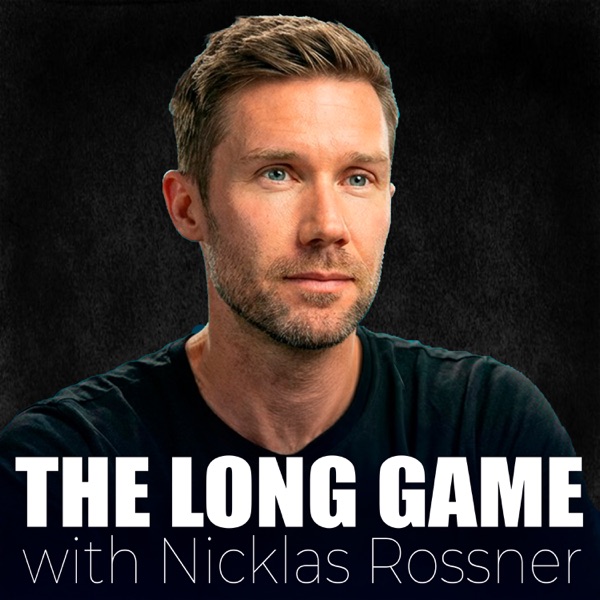
The Long Game with Nicklas Rossner
On this show I break down the science of running performance so you can run faster, stay injury-free, and train smarter.
Each episode explores the latest research on topics like endurance training, VO₂ max, running economy, strength training for runners, recovery, nutrition, and injury prevention.
You’ll learn how elite athletes actually train and how to apply the same science-based principles to your own running.
New episodes every week
- On air since
- 2026
- Episodes
- 12
- Releases · typical length
- Weekly · 12 min
- Latest episode
- 1 hour ago
Episodes
12 episodes, newest first
-
12 min
It's Boring, But It'll Blow Up Your VO2 Max
Show notes
Are you frustrated with slow VO2 max progress and drowning in conflicting advice about the "best" workout? Former pro triathlete Nicklas reveals what the science says about how much VO2 max can really improve, how to boost it fast, and the boring approach that keeps it climbing for years.
Nicklas is a former professional triathlete and national team athlete with degrees in Sports Science and Physiotherapy. He has spent years working with world-class athletes across multiple sports, finding the small percentages that give them an edge, and now breaks down the research so everyday runners can build a bigger, more durable engine.
Find the #1 thing holding your running back: https://fastlanerunner.com
In this episode, he explains:
■ The Reality Check: how much your VO2 max can actually improve, and why most runners think they're failing when they're not
■ The Intervals vs. Easy Debate: what happened when the 4x4 era met the high-volume era, and which side was right
■ The 14-Day Boost: the type of training that showed meaningful VO2 max gains in just two weeks
■ The 10-Week Wall: why VO2 max work stops paying off, and what to do instead
■ The Speed Limit Problem: the new sports science concept that can make your VO2 max drop mid-race
REFERENCES
Bassett DR et al. (2000). Med Sci Sports Exerc, 32(1), 70–84.
Bacon AP et al. (2013). PLoS One, 8(9), e73182.
Milanović Z et al. (2015). Sports Med, 45, 1469–1481.
Crowley E et al. (2022). Transl Sports Med, 2022, 9310710.
Mølmen KS et al. (2024). Appl Physiol Nutr Metab, 49(7), 1008–1013.
Yang Q et al. (2025). BMC Sports Sci Med Rehabil, 17(1), 156.
Silva Oliveira P et al. (2024). Sports Med, 54(8), 2071–2095.
Maunder EA et al. (2021). Sports Med, 51, 1619–1628.
Jones AM et al. (2025). Scand J Med Sci Sports, 35(3), e70032.
-
14 min
I Trained 1,000 Athletes. Here's How To Win.
Show notes
Are you training hard but still wondering why others keep pulling ahead, even when you put in more work? Former pro triathlete Nicklas reveals the four things he saw separate Olympians and world champions from everyone else after working with more than 1,000 elite athletes across 20 sports, and how you can use them in your own training.
Nicklas is a former professional triathlete and national team athlete with degrees in Sports Science and Physiotherapy. He has spent years working with world-class athletes across multiple sports, finding the small percentages that give them an edge, and now breaks down what the best performers do differently so everyday runners can stay in the game long enough to reach their potential.
Find the #1 thing holding your running back: https://fastlanerunner.com
In this episode, he explains:
■ The Pyramid of Peak Performance: The four-level framework Nicklas built as a physio in elite soccer, and the panic move most athletes make the moment they feel a niggle.
■ The Genetics Trap: What a 2-metre, 95 kg teammate taught him about speed, and why believing in your genes can quietly cap your potential.
■ The Push/Pull Personalities: The two mindsets that drive elite athletes, why each one fails on its own, and the combination the truly great ones share.
■ The Well-being Edge: How a burned-out swimmer cut his training by more than half and broke a national record within six months.
-
14 min
The Psychology Of People Who Love Running
Show notes
Ever wondered why some people quit running after three tries, while others happily get up at 5am to squeeze in five miles? Former pro triathlete Nicklas reveals the psychology behind people who fall in love with running, the dark side nobody talks about, and how you can train your own brain to love it too.
Nicklas is a former professional triathlete and national team athlete with degrees in Sports Science and Physiotherapy. He has spent years working with world-class athletes across multiple sports, finding the small percentages that give them an edge, and now breaks down the research so everyday runners can build a healthier, longer-lasting relationship with running.
Find the #1 thing holding your running back: https://fastlanerunner.com
In this episode, he explains:
■ The Starter vs. Keeper Split: why the reasons people start running aren't the ones that keep them going
■ The Runner's Loop: the psychological cycle that turns someone who goes running into a runner
■ The Runner's High Formula: what's really happening in your brain, and why some people never feel it
■ The Dark Side: how the same loops that make running addictive can push runners into training through injury
■ The Identity Trap: why tying your whole self-worth to running can backfire when you need it most
■ The One-Word Shift: a simple mindset change that makes training far more enjoyable
REFERENCES
Pereira HV et al. (2021). Front Psychol, 12.
Umakantha M et al. (2024). Indian J Psychol Sci, 19(2).
Gayton WF et al. (2016). Ann Sports Med Res, 3(7), 1085.
-
12 min
Why Everyone Is Suddenly Running Threshold To Get Faster
Show notes
Are you hearing about threshold training everywhere and wondering if you're missing out on the fastest way to get faster? Former pro triathlete Nicklas reveals what threshold training actually is, how to find your zone without a lab, and whether it's the right approach for you.
Nicklas is a former professional triathlete and national team athlete with degrees in Sports Science and Physiotherapy. He has spent years working with world-class athletes across multiple sports, finding the small percentages that give them an edge, and now breaks down the research so everyday runners can train smarter at threshold.
Find the #1 thing holding your running back: https://fastlanerunner.com
In this episode, he explains:
■ The Two-Threshold Problem: why "threshold" means two very different efforts, and which one the Norwegian method is really built on
■ The 18 mmol Mistake: how a lactate meter can make your training worse instead of better
■ The 30-Minute Shortcut: the simple lab-free test he uses most with his own athletes
■ The Double Threshold Day: how experienced runners stack sessions, and the one rule that makes or breaks it
■ The Marathon Mismatch: why threshold training suits some distances far better than others
■ The Mechanism Nobody Talks About: what actually makes threshold training work, and why it's not the only way to get there
REFERENCES
Silva Oliveira P et al. (2024). Sports Med, 54, 2071–2095.
Rosenblat MA et al. (2025). Sports Med, 55(3).
Casado A et al. (2023). Int J Environ Res Public Health, 20(5), 3782.
Campos Y et al. (2022). Int J Sports Med, 43(4), 305–316.
Haugen T et al. (2022). Sports Med Open, 8, 46.
Bakken M. The Norwegian Method Applied.
-
14 min
This Is What It Takes To Run a Sub-20 5K (Science Explained)
Show notes
Are you stuck above the 20-minute mark on your 5K no matter how hard you train? Former pro triathlete Nicklas reveals what it really takes to break 20 minutes, what the latest science says, and the five things you need to master to get there.
Nicklas is a former professional triathlete and national team athlete with degrees in Sports Science and Physiotherapy. He has spent years working with world-class athletes across multiple sports, finding the small percentages that give them an edge, and now breaks down the research so everyday runners can chase big milestones like the sub-20 5K.
Find the #1 thing holding your running back: https://fastlanerunner.com
In this episode, he explains:
■ The Strava Illusion: what 2.2 million race results reveal about how rare a sub-20 5K actually is — and why it's still within your reach
■ The 7x Factor: the single training habit that made elite athletes seven times more likely to hit their performance goals
■ The Frustrating Truth: what a brand-new systematic review concluded about the "best" 5K training plan — and what to do instead
■ The Elite Blueprint: how world-class 5K runners actually structure their weeks, translated into a sample plan for everyday runners
■ The Spring Effect: the training most runners skip that has been proven to make every stride more efficient
■ The Shoe-Store Secret: what Nicklas learned about how running stores really fit shoes — and a free DIY test that gets you close to a lab result
REFERENCES
Swanepoel CD et al. (2026). Sports (Basel), 14(9), 397.
Haugen T et al. (2022). Sports Med Open, 8(1), 46.
Llanos-Lagos C et al. (2024). Sports Med, 54(4), 895-932.
Xiao Y et al. (2026). Int J Sports Med, 47(2), 81-94.
Raysmith BP & Drew MK. (2016). J Sci Med Sport, 19(10), 778-83.
Running lists
More Running shows picked out from the charts