Podcast
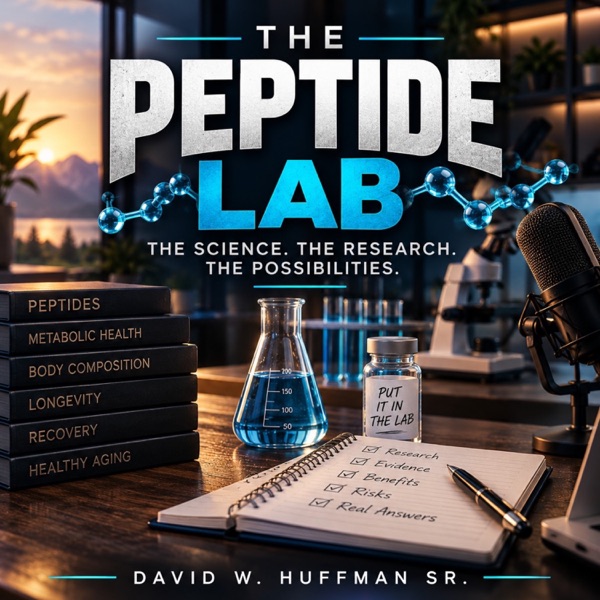
The Peptide Lab
The Peptide Lab explores the rapidly evolving world of peptides, metabolic health, body composition, recovery, longevity, performance, and healthy aging.
Each episode takes a peptide, therapy, claim, or emerging area of research and puts it in the lab. What is it? How is it believed to work? What does the research actually show? What are people claiming it can do? Where is the evidence strong, where is it preliminary, and where does the hype get ahead of the science?
From GLP-1 medications and metabolic health to growth-hormone pathways, recovery research, mitochondrial biology, sleep, body composition, and longevity science, The Peptide Lab translates complicated subjects into conversations ordinary people can understand.
No miracle claims. No pretending experimental research is settled science. Just curiosity, evidence, intelligent discussion, and better questions.
When the claims get complicated, take it to the lab.
- Episodes
- 31
- Releases
- Daily
- Typical length
- 10 min
- On air since
- 2026
- Latest episode
- 4 hours ago
Episodes
31 episodes, newest first
-
12 min
The Hormone Messenger: Can Peptide Therapies Mimic Growth Hormone Signaling Without the Risks?
Episode 31
Show notes
Growth hormone is the body's master repair signal, but synthetic HGH carries real risks and a heavy regulatory footprint. Enter growth hormone-releasing peptides (GHRPs) and growth hormone secretagogues—molecules designed to nudge your own pituitary into action rather than flooding the system with exogenous hormone. In this episode, Ethan and Rachel put the popular claim that these peptides can mimic the benefits of growth hormone—more lean mass, better recovery, improved sleep, and favorable body composition—without the downsides into the lab. They explore the actual signaling pathway, from the hypothalamus to the pituitary to the liver, and separate what human trials show from what bodybuilders and longevity influencers claim. They examine the evidence hierarchy: established clinical use in diagnostics and deficiency states, off-label and compounded use in wellness clinics, and the largely anecdotal world of performance enhancement. They also tackle the uncomfortable questions: Do these peptides really spare you from side effects like insulin resistance and water retention? Is the 'pulse' of natural GH release meaningfully different from exogenous injections? And how should a thoughtful person weigh the appeal of a 'natural' signal amplifier against the unknowns? The episode ends with What We Know, What We Don't Know, and The Bottom Line—a clear-eyed take on whether GHRPs are a smarter lever or just a different flavor of the same risk.
-
10 min
The Leaky Gut Fix: Can Gut Barrier Peptides Actually Heal the Lining or Just Feed the Trend?
Episode 30
Show notes
Everywhere you look, someone is talking about 'leaky gut'—and now peptide enthusiasts claim that specific peptides can tighten the intestinal barrier, reduce systemic inflammation, and even support metabolic health. But what does the evidence actually say? In this episode, Ethan breaks down the biology of the intestinal barrier: what it is, how tight junctions work, and why zonulin and other peptides have become the center of attention. Rachel brings the practical questions an intelligent non-scientist would ask: Can you test for leaky gut? Do oral peptides survive digestion? And is this about treating a condition or optimizing a system that's already working? Together they examine the difference between lab-bench findings, animal studies, and human clinical data—and they tackle the big gap between using peptides as research tools versus using them as therapies. By the end, listeners will know what 'leaky gut' really means, where the evidence is strong, where it's speculative, and how to think about gut barrier health beyond the hype.
-
10 min
The Hunger Switch: Can GLP-1 and Blood Sugar Peptides Quiet Noisy Metabolic Signaling?
Episode 29
Show notes
This episode takes a popular but fuzzy idea—that peptides can act like a 'hunger switch' by calming the body's metabolic signaling—and runs it through the lab. Ethan breaks down how GLP-1, GIP, and other incretin peptides interact with the brain and gut to influence appetite, blood sugar, and energy stability. Rachel brings the practical lens: what does 'metabolic noise' actually mean for someone struggling with cravings, energy swings, or weight plateaus? Together they explore where the evidence is strong (GLP-1-based medications for diabetes and obesity), where it's preliminary (combinations and analogs), and where the hype outpaces the science (peptide stacks sold as metabolic resets). They distinguish between FDA-approved therapies, compounded versions, and unapproved research peptides, and discuss the real-world tradeoffs of suppressing hunger versus addressing the root causes of metabolic dysfunction. The episode ends with a clear framework for evaluating any peptide claim about appetite and metabolism, plus a practical takeaway for listeners navigating their own health decisions.
-
10 min
The Skin Clock: Can Collagen Peptides and Signaling Pathways Really Turn Back Skin Aging?
Episode 28
Show notes
Aging skin is big business. From collagen powders to peptides that supposedly mimic growth factors, the promise is everywhere: smoother, firmer, younger-looking skin. But what does the evidence actually say? In this episode, we take the skin aging claim into the lab. Ethan breaks down the biology of skin aging—collagen loss, elastin breakdown, and the role of matrix metalloproteinases—and explains how oral collagen peptides and topical peptide signaling molecules are believed to work. Rachel brings the practical questions: Do collagen supplements survive digestion? Can a cream really rebuild the dermis? What is the difference between a cosmetic peptide and an investigational therapy? We walk through the evidence hierarchy—cell studies, animal models, small human trials, and what dermatology guidelines actually recommend—and we separate FDA-approved uses from compounded and cosmetic products. We also look at the hype: influencers selling miracle creams and powders without evidence. By the end, you will know what is proven, what is promising, and what is just expensive hope. When the claims get complicated, take it to the lab.
-
8 min
The Recovery Window: Can Peptide Therapies Actually Speed Up Healing or Just Shorten the Perceived Downtime?
Episode 27
Show notes
In this episode of The Peptide Lab, hosts Ethan Cole and Rachel Bennett tackle the popular claim that peptide therapies can significantly accelerate recovery from workouts, injuries, and everyday wear and tear. Ethan breaks down the biological mechanisms behind tissue repair, focusing on peptides that influence collagen synthesis, inflammation resolution, and cellular signaling. Rachel asks the practical questions: Can these therapies actually get you back to the gym sooner, or do they just reduce perceived soreness? The conversation carefully distinguishes between established clinical uses, such as specific peptides used in controlled medical settings for wound healing, and the unregulated supplements and compounded products marketed to athletes and fitness enthusiasts. They explore what evidence comes from laboratory models, what comes from human trials, and where anecdotal reports drive hype. The episode emphasizes that faster recovery is a complex outcome influenced by nutrition, sleep, and training load, not just a single peptide. Ethan and Rachel also address the risks of using unapproved products, the importance of evidence hierarchies, and why 'feeling better' doesn't always mean 'healed better.' The episode concludes with a clear summary: What We Know, What We Don’t Know, and The Bottom Line—empowering listeners to evaluate recovery claims with a more critical eye.
-
8 min
The Mitochondrial Reboot: Can Peptide Therapies Really Boost Cellular Energy and Slow Aging?
Episode 26
Show notes
Ever feel like your energy runs out before your day does? Mitochondria are the power plants inside nearly every cell, and their decline is linked to fatigue, metabolic slowdown, and aging itself. Now, a wave of online claims suggests that certain peptides can 'reboot' these organelles, restore cellular energy, and even extend healthspan. But how much of that is grounded in real science? In this episode, Ethan and Rachel put mitochondrial-targeting peptides under the microscope. They start with the basics: what mitochondria actually do and why they matter for energy, metabolism, and healthy aging. Then they explore the peptide candidates generating the most buzz—what they are, how they're believed to work, and where the research stands, from lab studies to human trials. They tackle the evidence hierarchy head-on, explaining what's FDA-approved, what's investigational, what's compounded, and what's purely speculative. With a healthy dose of skepticism and curiosity, they discuss potential benefits, known risks, and what questions you should ask before believing any 'energy peptide' promise. No miracle claims, just clear thinking about cellular power.
-
11 min
The Sleep Reset: Can Peptide Therapies Improve Deep Sleep and Recovery?
Episode 25
Show notes
Sleep is the foundation of recovery, metabolic health, and longevity—yet millions of people struggle to get enough deep, restorative rest. In this episode, we explore the emerging science of peptides that target sleep pathways, including those that influence orexin, GABA, and growth hormone release during sleep. Ethan breaks down what we actually know about how these peptides are believed to work, the difference between FDA-approved sleep medications and investigational peptides, and where the evidence comes from—whether it's animal studies, small human trials, or anecdotal reports. Rachel asks the practical questions: Can these peptides really improve sleep quality, or are we chasing a quick fix for a problem that's often behavioral? We separate the promising research from the hype, discuss the risks and unknowns, and end with a clear summary of what we know, what we don't know, and the bottom line for anyone curious about optimizing their sleep.
-
10 min
The Muscle-Keeper: Can Targeted Peptide Therapies Prevent Muscle Loss During Rapid Weight Loss?
Episode 24
Show notes
Rapid weight loss often comes with an unwanted side effect: losing muscle along with fat. A growing number of peptide therapies and compounded products claim to solve this by selectively preserving lean mass while accelerating fat loss. But can any peptide really do that, or is this another case of hope outpacing evidence? In this episode, Ethan and Rachel break down the biology of muscle preservation during a calorie deficit, exploring pathways like GLP-1, growth hormone secretagogues, and myostatin inhibitors. They examine what randomized trials show, what remains preclinical, and why the FDA approval status of a compound matters when evaluating safety and efficacy. Rachel pushes back on the idea that a single injection can replace resistance training and adequate protein, while Ethan explains the difference between approved medications and compounded products that have not been reviewed for safety or effectiveness. Listeners will leave with a clearer framework for evaluating muscle-preservation claims and understanding the real trade-offs of rapid weight loss.
-
10 min
The Heart-Brain Connection: Can Peptide Signaling Reduce Inflammation and Protect Cognition?
Episode 23
Show notes
In this episode of The Peptide Lab, hosts Ethan Cole and Rachel Bennett explore the intriguing intersection of inflammation, cardiovascular health, and cognitive decline. Popular wellness content increasingly suggests that specific peptides can 'quiet' inflammation and shield the brain from age-related damage. But how much of that is grounded in peer-reviewed research versus clever marketing? Ethan breaks down the biology of inflammatory signaling pathways—like cytokines and the vagus nerve—and explains where peptide-based interventions are being studied in animal models and early human trials. Rachel asks the practical questions: Could this matter for someone worried about heart health or memory? What should consumers know before considering any peptide product? The hosts carefully distinguish between FDA-approved therapies, compounded products, and unapproved research chemicals. They also discuss the evidence hierarchy, known risks, and why the leap from lab bench to daily supplement is a massive one. The episode closes with a clear summary: What We Know, What We Don’t Know, and The Bottom Line—empowering listeners to evaluate future headlines with sharper skepticism.
-
9 min
The Hydration Signal: Can Vasopressin-Targeting Peptides Rewire Thirst, Fluid Balance, and Recovery?
Episode 22
Show notes
Thirst, fluid balance, and recovery sound simple—until you dig into the hormones that actually run the show. In this episode, Ethan and Rachel explore vasopressin, the peptide hormone that tells your kidneys to hold onto water, raises blood pressure, and influences everything from endurance performance to hangovers to chronic disease risk. They break down how vasopressin works, what happens when it goes too high or too low, and why synthetic versions and antagonists are used in hospitals for conditions like diabetes insipidus and certain fluid-retention problems. Then they tackle the wellness space: influencers promoting 'hydration peptides' or vasopressin-modulating stacks for better recovery, clearer skin, or anti-aging. Where is the science strong? Where is it purely speculative? And why is messing with a hormone that controls blood pressure and kidney function not something to DIY? The hosts walk through the evidence hierarchy, distinguish FDA-approved uses from compounded products and unregulated peptides, and end with clear takeaways about what we actually know, what we don't, and the bottom line for anyone curious about optimizing hydration and recovery.
-
11 min
The Bone Builder: Can Parathyroid Hormone-Related Peptides Rebuild Skeleton Strength or Just Boost Lab Numbers?
Episode 21
Show notes
Bone health is one of the most overlooked pillars of healthy aging, yet every second bone loss goes unchecked, the harder it becomes to reverse. In this episode of The Peptide Lab, Ethan and Rachel examine parathyroid hormone-related peptides (PTHrP) and the emerging claims that they can rebuild bone density, improve skeletal strength, and reduce fracture risk. They start with the basic biology—how PTHrP signaling influences bone remodeling and why it matters beyond osteoporosis. Then they walk through the evidence hierarchy: what we know from laboratory studies, animal models, and early human trials, versus what remains speculative. They also address the reality of FDA-approved PTH-based therapies like teriparatide, how compounded and research versions differ, and why the distinction matters for anyone considering these therapies. Throughout the conversation, they separate bone density as a surrogate marker from actual fracture outcomes, and they explore practical lifestyle factors—protein, resistance training, vitamin D—that still form the foundation of bone health. The episode closes with a clear summary of what we know, what we don't know, and the bottom line for listeners.
-
13 min
The Skin-Gut Axis: Can Collagen Peptides and Gut Barrier Peptides Actually Transform Your Skin and Health?
Episode 20
Show notes
Collagen peptides are everywhere—powders, drinks, gummies—promising glowing skin, stronger joints, and better gut health. But do they actually work? In this episode, we take the skin-gut axis into the lab. Ethan breaks down the biology of collagen peptides, how they're absorbed, and whether they can truly reach the skin or joints. Then we explore the emerging research on gut barrier peptides—like zonulin and defensins—and the claim that a 'leaky gut' drives inflammation, aging, and skin conditions. Rachel asks the practical questions: Should you spend money on collagen supplements? What does the evidence really show for skin elasticity, wrinkles, and joint pain? And where do gut barrier tests and peptide therapies fit into the picture? We separate FDA-approved uses from cosmetic claims, discuss what human trials show versus animal studies, and highlight what's still speculative. No miracle promises—just a clear-eyed look at what these peptides can and can't do, and how to think about the hype.
-
14 min
The Longevity Peptide: Does Human Growth Hormone-Releasing Therapy Slow Aging or Just Sell Hope?
Episode 19
Show notes
In this episode of The Peptide Lab, hosts Ethan Cole and Rachel Bennett tackle one of the most seductive and controversial claims in the peptide world: that growth hormone-releasing peptides can slow, reverse, or even turn back the clock on aging. Ethan breaks down the actual biology—how the growth hormone axis changes with age, what ghrelin mimetics and other secretagogues do in the body, and the difference between restoring youthful hormone levels and treating a disease. Rachel asks the practical questions: Who is this for? What do real clinical trials show about muscle, bone, and metabolic outcomes? And what are the known risks—from water retention and joint pain to the more serious concerns about glucose metabolism and cancer pathways? Together, they separate the established endocrinology from the speculative longevity claims, walk through the evidence hierarchy, and help listeners understand why a peptide that boosts growth hormone is not a fountain of youth. The episode ends with a clear summary of what we know, what we don’t, and the bottom line for anyone considering these therapies.
-
12 min
The Recovery Paradox: Can Peptide Stacks Accelerate Healing or Just Amplify Risk?
Episode 18
Show notes
Injuries are frustrating, and the promise of faster healing is seductive. Across social media and wellness clinics, peptide stacks—combinations of things like BPC-157, TB-500, and growth hormone releasing peptides—are being promoted as the ultimate recovery hack. But what does the research actually show? In this episode, Ethan and Rachel dissect the biology of tissue repair, from inflammation to collagen deposition, and examine where these peptides fit—or don't—in that process. They separate what's been studied in animal models from what's been shown in humans, and why stacking multiple experimental compounds multiplies unknowns, not just potential benefits. Rachel pushes Ethan on the practical questions: If someone is injured, should they consider this? What about the risks? And how do you evaluate a clinic or product when there's no FDA oversight? The conversation closes with a clear-eyed framework for thinking about recovery science, the limits of anecdote, and why the most boring interventions often have the best evidence. No miracle claims. Just the lab.
-
11 min
The Insulin Sensitivity Puzzle: Can Peptide Therapies Really Fix Metabolic Flexibility?
Episode 17
Show notes
Insulin resistance is at the heart of metabolic health conversations, and a growing number of peptide products claim to improve insulin sensitivity, fix metabolic flexibility, and even reverse prediabetes. But what does the science actually say? In this episode, Ethan and Rachel take the concept of insulin sensitivity into the lab, starting with the basics: what insulin does, what metabolic flexibility really means, and why these terms are often used loosely in wellness marketing. They explore the peptides that have genuine research behind them—like GLP-1-based medications—and contrast them with investigational peptides and compounded products that are promoted online without FDA review. The conversation walks through the evidence hierarchy, from laboratory studies to randomized human trials, and discusses the risks, uncertainties, and red flags. By the end, listeners will understand how to evaluate peptide claims about insulin sensitivity and why lifestyle factors like exercise and sleep remain foundational. No miracle claims, just clear science and better questions.
-
10 min
The Appetite Switch: What Ghrelin Actually Tells Us About Hunger, Cravings, and Weight Loss Plateaus
Episode 16
Show notes
In this episode of The Peptide Lab, Ethan and Rachel tackle one of the most misunderstood signals in metabolic health: ghrelin. You've heard it called the 'hunger hormone' and seen influencers claim that peptides can 'reset' it. But what does the science actually show? Ethan breaks down how ghrelin is produced in the gut, how it talks to the brain, and why it doesn't simply rise before meals—it also responds to sleep, stress, and even what you ate yesterday. Rachel brings the practical lens: Can you actually lower ghrelin with diet, exercise, or a peptide? What about the interaction with GLP-1 medications? And why do people hitting weight-loss plateaus suddenly feel hungrier? The hosts separate established physiology from speculative research, explain the difference between ghrelin mimetics in clinical trials and compounded 'ghrelin blockers' sold online, and end with a clear-eyed summary of what we know, what we don't, and how to think about hunger in a world of miracle claims. No prescriptions, no promises—just the biology, the evidence, and better questions.
-
9 min
The Mitochondrial Boost: Can Peptide Therapies Really Recharge Your Cells?
Episode 15
Show notes
In this episode of The Peptide Lab, Ethan and Rachel tackle one of the most seductive claims in the wellness world: that certain peptides can 'boost' or 'recharge' your mitochondria, the powerhouses of your cells. From trendy compounds like MOTS-c and humanin to the broader talk of mitochondrial peptides as longevity tools, they break down what mitochondria actually do, how peptides might interact with them, and where the evidence stands—from test-tube studies to animal models to the very few human trials. They discuss why mitochondrial health matters for aging, energy, and metabolism, and why a peptide that works in a petri dish isn't the same as one that works in your body. Rachel asks the practical questions: Can you buy these peptides? Are they legal? What are the risks? Ethan clarifies the difference between FDA-approved drugs, compounded products, and research chemicals, and they both emphasize that no peptide is a shortcut to cellular vitality. The episode ends with a clear summary of what we know, what we don't, and why lifestyle factors like sleep and exercise remain the most evidence-backed 'mitochondrial boosters' we have.
-
8 min
The Sleep-Metabolism Loop: Can Peptide Signaling Fix Your Fatigue?
Episode 14
Show notes
Everyone is tired. But the connection between poor sleep and metabolic health runs deeper than willpower or caffeine. In this episode, we explore how peptides—including orexin, ghrelin, and the melanocortin system—are believed to influence sleep-wake cycles, appetite, and energy regulation. Ethan breaks down the biology: how these signaling molecules interact with circadian rhythms, why sleep deprivation alters hunger hormones, and where the evidence stands on targeting these pathways for better sleep or metabolic outcomes. Rachel brings the practical lens: Can a peptide actually improve sleep quality? What about the popular claims around 'sleep peptides' in wellness circles? We discuss what is FDA-approved, what is investigational, what is purely anecdotal, and why the research on orexin receptor antagonists (like suvorexant) is different from unregulated peptide products. The episode emphasizes that sleep is foundational to metabolic health, but there is no peptide shortcut to good sleep hygiene. We end with What We Know, What We Don't Know, and The Bottom Line—offering listeners a science-first framework for evaluating sleep-related peptide claims.
-
13 min
The Muscle Preservation Protocol: Can GLP-1 Weight Loss Spare Lean Mass?
Episode 13
Show notes
GLP-1 medications are transforming weight management, but a growing concern is stealing the spotlight: the loss of lean muscle along with fat. In this panel episode, Ethan and Rachel dig into the science of body composition during rapid weight loss. What does the research actually show about how much muscle people lose on GLP-1 therapies? Why does lean mass matter for metabolic health, longevity, and everyday function? And can protein, resistance training, or investigational peptides like tesamorelin or other growth hormone secretagogues meaningfully blunt that loss? The hosts separate FDA-approved uses from compounded and off-label territory, explain the evidence hierarchy from animal studies to randomized trials, and give listeners a clear-eyed framework for evaluating muscle-preservation claims. No miracle fixes—just the science, the uncertainty, and the practical questions anyone on a weight-loss journey should ask.
-
13 min
The Creatine Kinase Question: Why the Most Studied Supplement in Sports Science Is Suddenly Everywhere
Episode 12
Show notes
Creatine is having a renaissance. Once relegated to gym bags and pre-workout stacks, it’s now being discussed in the same breath as peptides for muscle preservation, cognitive function, and healthy aging. But why? In this episode, Ethan and Rachel put creatine in the lab. They break down what creatine actually is—a tripeptide of arginine, glycine, and methionine—and how it powers cellular energy through the phosphocreatine system. They explore the robust evidence base for strength and muscle gains, the emerging research on brain health and depression, and the growing interest in creatine as a potential adjunct for people on GLP-1 medications who want to protect lean mass. They also tackle the controversies: is it safe for kidneys? Does it cause bloating? And why are some clinics now recommending it alongside peptide protocols? The conversation carefully distinguishes between FDA-approved uses (as a dietary supplement ingredient, not a drug), clinical evidence, and hype. Listeners walk away with a clear-eyed view of what creatine can and cannot do, and how to evaluate the claims they see online.
On these lists
The Peptide Lab is one of the shows picked out on this list


More in Health & Fitness
Placed highest on Apple Podcasts' Health & Fitness chart right now