Podcast
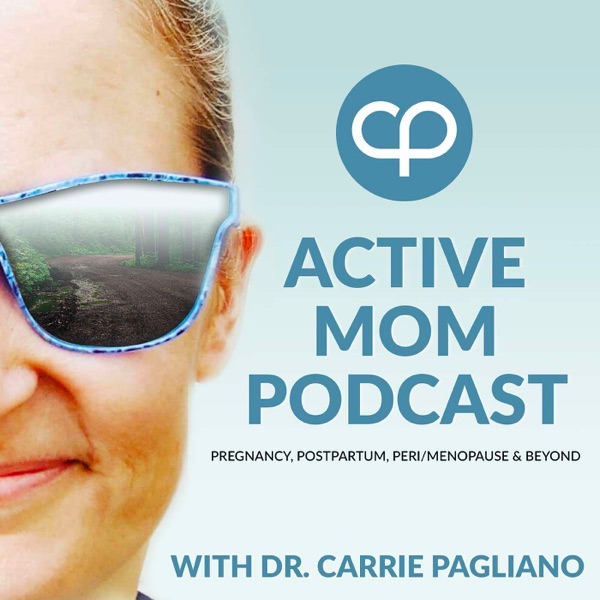
Active Mom Podcast: Pregnancy, Postpartum, Perimenopause, Menopause & Beyond
Welcome to the Active Mom Podcast — where real motherhood stories meet real science.
Hosted by Dr. Carrie Pagliano, double board-certified physical therapist, runner, mom of two, and internationally recognized expert in pregnancy, postpartum, pelvic floor, and perimenopause performance.
Whether you’re a mom navigating running with prolapse or leakage, a clinician supporting active women, or a lifelong athlete trying to stay strong through every hormonal season — this show gives you evidence-based guidance and real life mom stories without the fear, confusion, or shame.
Each week, Dr. Carrie brings candid conversations with researchers, clinicians, elite athletes, and everyday moms to explore what it actually takes to run, lift, jump, and live confidently through pregnancy, postpartum, perimenopause, and beyond.
We talk about:
• Postpartum return to running & lifting
• Pelvic floor symptoms (leakage, prolapse, pain)
• Pregnancy exercise myths & safety
• Strength training at every age
• Perimenopause performance & hormone changes
• Mental health, identity shifts & motherhood
• The realities of being an active mom in a busy life
Real talk. Real science. Real moms.
Because you deserve to feel strong and supported — at every stage of your active life.
- Episodes
- 268
- Releases
- Weekly
- Typical length
- 57 min
- On air since
- 2022
- Latest episode
- 5 days ago
Episodes
268 episodes, newest first
-
57 min
Still Leaking When You Run? Should We Be Looking at the Ankle and Hip? | Natália Campos
Season 5, Episode 267
Show notes
Same run. Same treadmill. Same impact. So why do some women leak and others don’t?
That’s the question Natália Cardoso Campos, PT, MSc, couldn’t let go of. She’s a physio and PhD researcher from the Federal University of Minas Gerais (UFMG) in Brazil, here in the US for ten months at UMass Motor Control Lab, Amherst on a Fulbright Scholarship under the supervision of Dr. Richard Van Emmerick to analyze new data.
Her Master's study put 32 female runners on a treadmill with force plates built in and had them run for 30 minutes. Half of them leak and half did not.
The runners who leaked had pelvic floors just as strong as the ones who didn’t. The difference showed up further down the chain, in how their ankles and hips handled impact.
(We recorded this right before we finally got to meet in person at ICS 2026 in Maastricht!)
We talked about:
🔹 How a biomechanics lab full of male runners led her to study women who leak
🔹 What “high impact” even means when everyone is doing the exact same run
🔹 Less energy absorbed at the ankle, more at the hip. What that might mean for the pelvis
🔹 Do women who leak hit the ground harder? (Nope.)
🔹 Equifinality: why your leak and my leak can have totally different recipes
🔹 What you can and CAN’T take into the clinic from one study
🔹 What her PhD is chasing nextIf you’ve been told your pelvic floor is strong and you’re still leaking on your runs, this one is for you. And if you’re a PT treating runners, Natália put it best: “We need to stop treating symptoms and start treating women.”
📄 Campos NC et al. Inefficient impact absorption and reduced shock attenuation in female runners with stress urinary incontinence. Journal of Biomechanics, 2025. https://doi.org/10.1016/j.jbiomech.2025.112753
👋 Find Natália: Instagram @nataliacardosofisio · ResearchGateThis episode is education, not medical advice.
The Active Mom Podcast — a real mom's guide to pregnancy, postpartum, perimenopause & beyond, for active moms and the professionals who help them get there.
Quick-hit conversations with moms, providers, and researchers... because you don't have a lot of free time (you're probably listening at 1.5x right now).
Follow so you don't miss an episode. Rate & review ⭐⭐⭐⭐⭐ — it's how the next mom searching for these answers actually finds them. Share it with the friend who needs it.
Questions or topic requests? DM me 💌
-
55 min
Return to Duty After Baby: Pregnancy and Postpartum for Military Women and Tactical Athletes | Dr. Chris Edwards
Season 5, Episode 266
Show notes
What do you do when there’s no evidence to build evidence-based practice?
Dr. Chris Edwards has an answer: “We have conversations.”
Chris, PhD, clinical exercise physiologist and researcher, works with tactical athletes: military, police, fire and paramedic teams. She once sold her company and her house, packed her car with her dog, and drove across Canada to do this work. Her PhD asked a question almost nobody was asking: does having a baby change injury risk for women whose job is to carry heavy things, fast, under pressure?
Spoiler alert, in her words: it does.
In this episode we get into:
🔹 How patterns she saw in veterans’ movement sent her across the country
🔹 What her research found about childbirth and repetitive strain injuries
🔹 Why telling your chain of command you’re pregnant still feels risky for a lot of servicewomen
🔹 What return to duty looks like after a baby, and who gets to decide
🔹 Leakage, prolapse and the pelvic floor demands of rucks, fitness tests and parachute jumps
🔹 Why a trauma-informed approach matters with this population
🔹 Where her research goes next, including menopauseWhether you wear a uniform, carry a toddler, or treat the women who do both, this one’s for you.
Find Chris: Instagram @drchrismedwards | drchrismedwards.com
The Active Mom Podcast — a real mom's guide to pregnancy, postpartum, perimenopause & beyond, for active moms and the professionals who help them get there.
Quick-hit conversations with moms, providers, and researchers... because you don't have a lot of free time (you're probably listening at 1.5x right now).
Follow so you don't miss an episode. Rate & review ⭐⭐⭐⭐⭐ — it's how the next mom searching for these answers actually finds them. Share it with the friend who needs it.
Questions or topic requests? DM me 💌
-
51 min
Leaking Isn’t Just a Bladder Thing. What the Research Says About Heart and Mental Health | Dr. Lisa VanWiel
Season 5, Episode 265
Show notes
Brand new PT. Skilled nursing. Asking her patients what kind of exercise they enjoy. Women there for heart disease, osteoporosis, a broken hip.
And over and over, the same answer. They hadn't exercised since they had a baby.
That's where Dr. Lisa VanWiel's research started. She's a pelvic health PT and researcher at the University of Wisconsin La Crosse, and her work links leaking to a lot more than your bladder. Mental health. How women see themselves. Even heart health.
Not to scare you. Because if leaking is a signal, it's also a chance to get in early.
What we get into:
🔹 Why Lisa sees leaking as a signal about the whole body, not just the pelvic floor
🔹 What her research found about leaking, postpartum mental health, and how women see themselves
🔹 Whether every mom actually needs pelvic floor PT (my answer might surprise you)
🔹 Why nobody needs permission to move their own body
🔹 20,000 medical records and a surprising link between leaking and heart health
🔹 Association vs causation, in plain EnglishIf you've ever wondered whether leaking means you should stop moving, press play. Then tell me: did anyone talk to you about your pelvic floor before you had your baby?
Find Lisa on Instagram at @empower_lab.
This episode is education, not individualized medical advice. Talk with your own provider or pelvic floor PT about your situation.
Chapters:
00:00 Welcome
00:36 Meet Lisa
02:19 Taking PT boards eight months pregnant
03:20 From pediatrics to pelvic health
05:50 Why prevention became the mission
10:04 Reproductive transitions and lifespan health
12:21 Leaking as an alarm signal, not the ending
14:21 Leaking and postpartum mental health
17:32 Leaking and identity
20:57 Active moms, and a system not built for them
22:28 Awareness vs actually getting care
27:01 Does every mom need pelvic floor PT?
28:53 Why gatekeeping activity is paternalistic
33:55 Pelvic floor PT is strength training
36:05 20,000 charts: leaking and heart health
39:12 Association vs causation, explained
41:25 The two competing theories
42:45 What’s next: female athletes and return to exercise
44:39 Teaching our daughters about their bodies
47:53 What it means to be an active mom
49:24 Where to find LisaThe Active Mom Podcast — a real mom's guide to pregnancy, postpartum, perimenopause & beyond, for active moms and the professionals who help them get there.
Quick-hit conversations with moms, providers, and researchers... because you don't have a lot of free time (you're probably listening at 1.5x right now).
Follow so you don't miss an episode. Rate & review ⭐⭐⭐⭐⭐ — it's how the next mom searching for these answers actually finds them. Share it with the friend who needs it.
Questions or topic requests? DM me 💌
-
1 hr
It Can't Just Be Motivation: New Research on Pelvic Floor Apps and What Actually Helps Moms Stick With It | SÓNIA COELHO CRISTÓVÃO
Season 5, Episode 264
Show notes
She booked the appointment. She showed up. She wants something to change. And she still hasn't done her exercises.
Sónia Coelho Cristóvão, physiotherapist and PhD researcher at the University of Gothenburg, kept seeing that in her clinic. So when she started building a digital pelvic floor program for Sweden's public healthcare system, she went to the research first. Her new review pulled together 18 studies to ask two questions: do digital pelvic floor programs actually work in pregnancy and postpartum, and what do women say helps or gets in the way?
🔹 Why pregnancy and postpartum told two different stories in the research
🔹 The surprise: women using digital programs stuck with their training more, and got stronger
🔹 The 5 things women say make or break their pelvic floor training (spoiler: they WANT to do it)
🔹 Why tracking features can turn into one more burden
🔹 Why women still want a real person in their care, not just an app
🔹 Where AI could help programs adapt to YOU, and why she's a little more cautious lately
🔹 Kegels vs no Kegels, and why that's the wrong fight
🔹 What's next: exercise dosing and C-section recoveryIf your home exercise program lives in a drawer somewhere, press play. And clinicians… when a patient tells you she didn't do her exercises, what do you say next?
This episode is education, not medical advice. Talk with your own maternity care team or pelvic floor PT about your situation.
The Active Mom Podcast — a real mom's guide to pregnancy, postpartum, perimenopause & beyond, for active moms and the professionals who help them get there.
Quick-hit conversations with moms, providers, and researchers... because you don't have a lot of free time (you're probably listening at 1.5x right now).
Follow so you don't miss an episode. Rate & review ⭐⭐⭐⭐⭐ — it's how the next mom searching for these answers actually finds them. Share it with the friend who needs it.
Questions or topic requests? DM me 💌
-
57 min
Intra-Abdominal Pressure: Is Running Worse Than a Cough? Are We Even Measuring What We Think We're Measuring? | DR. SABINE VESTING
Season 5, Episode 263
Show notes
Don't jump. Don't lift heavy. Exhale on the way up. Protect your pelvic floor from all that pressure.
Funny thing, though. Nobody ever tells you not to cough.
So where did the "too much pressure" advice actually come from? Dr. Sabine Vesting, a physio in Gothenburg, Sweden, and researcher with the MFM lab at the University of Ottawa, went back through studies dating to 1978 to find out. More than 4,000 papers screened. 52 that measured it. And not one measured it directly inside the abdomen.
She's back on the show (Ep 184 was her first visit), and we get into:
🔹 What a sensor in the vagina, rectum, stomach or bladder is really picking up when you move
🔹 Why the scary jumping numbers don't mean what you've been told
🔹 Coughing vs running, and why how LONG matters as much as how high
🔹 What the pressure data can and can't tell us about leaking on the run
🔹 How urethral support changes after a run, in runners who leak AND runners who don't
🔹 Why passive support may matter more than strength for some runners who leak
🔹 Pessaries for active women, and why "isn't that for old women?" needs to retire
🔹 Over-the-counter devices, sizing kits, and why bigger isn't betterIf you've ever been told to skip something "because of the pressure," press play before you take that advice.
What's one thing you've been told to avoid because of pressure?
Find Sabine on Instagram: @BineVesting
Research mentioned:
-Vesting S, Rodrigues MP, McLean L. Measurement and interpretation of intra-abdominal pressure during physical activity: a scoping review. Int Urogynecol J. 2026. doi:10.1007/s00192-026-06635-2-Rodrigues MP, Vesting S, Bérubé MÈ, Collins G, McLean L. The posterior urethrovesical angle in continent and incontinent women before and after a treadmill run. Int Urogynecol J. 2025. doi:10.1007/s00192-025-06460-z
This episode is education, not medical advice. Talk with your own care team or pelvic floor PT about what's right for you.
The Active Mom Podcast — a real mom's guide to pregnancy, postpartum, perimenopause & beyond, for active moms and the professionals who help them get there.
Quick-hit conversations with moms, providers, and researchers... because you don't have a lot of free time (you're probably listening at 1.5x right now).
Follow so you don't miss an episode. Rate & review ⭐⭐⭐⭐⭐ — it's how the next mom searching for these answers actually finds them. Share it with the friend who needs it.
Questions or topic requests? DM me 💌
-
47 min
My Personal Pessary Search: 5 Miles Downhill in the Dark, Maybe Bears | Solo Episode
Season 5, Episode 262
Show notes
In June, my very first mom friend texted me about a relay for her 50th. I said yes. THEN I asked what I'd signed up for.
3 running legs in less than 24 hours including night running. And I'm a morning runner, because over the years, evenings are exactly when leakage sneaks in for me, even on a walk.
So I did what I'd do with any patient. I fit myself for a pessary. It took 4 devices, a lot of frustration, self-talk, and a brain trust of PT friends talking me off the ledge.
This is a solo, fully TMI episode (you've been warned) about the whole process, start to finish line.
What we get into:
🔹 Why I stopped blaming "endurance" for leakage that shows up later in the day
🔹 Support pessaries vs space-occupying pessaries, and why that difference ended up mattering for me
🔹 The dish, the ring, the Soma and the cube: what each one did (and didn't do) for MY anatomy
🔹 Why "that didn't work for me" says nothing about what will work for you
🔹 What it was actually like wearing a cube through a relay, including the one gravel stretch where I wondered if I was about to lose it (literally)
🔹 The running research out of Linda McLean's lab in Ottawa that changed how I looked at my own problemIf you've ever been offered a pessary and thought "not for me," or tried one, hated it and quit... listen to this one. And clinicians, this one's for you too.
Oh, and our team of masters women came in second. We also brought the music. Leave it to the moms to make it fun.
Have you ever been offered a pessary? Tell me how that conversation went.
Questions about my pessary journey, or trying to find someone near you who fits them? Email me at carrie@carriepagliano.com or DM me on Instagram @carriepagliano. I'm happy to help.
This episode is education, not individualized medical advice. My anatomy, my solution. Yours may be completely different.
Chapters (approximate)
00:00 Why a solo pessary episode
02:21 How I learned to fit pessaries
05:30 My history: 2 C-sections, perimenopause, evening leakage
07:40 Is later-day leakage really just endurance?
09:40 Support vs space-occupying pessaries
12:00 Trial 1: the dish
13:00 Trial 2: the ring
18:00 Trial 3: the Soma, and why "it didn't work for me" isn't a verdict
20:30 Trial 4: the cube
24:00 Race logistics: when to put it in and take it out
27:25 Night leg: 5 miles downhill in the dark
30:30 A 5:30 a.m. porta potty and posterior wall support
34:36 Final leg: 7 miles uphill
37:00 Awareness vs discomfort
38:30 The research that changed how I saw my own problem
41:54 Your story isn't my story, and where to get help
44:16 Next up: the DC halfThe Active Mom Podcast — a real mom's guide to pregnancy, postpartum, perimenopause & beyond, for active moms and the professionals who help them get there.
Quick-hit conversations with moms, providers, and researchers... because you don't have a lot of free time (you're probably listening at 1.5x right now).
Follow so you don't miss an episode. Rate & review ⭐⭐⭐⭐⭐ — it's how the next mom searching for these answers actually finds them. Share it with the friend who needs it.
Questions or topic requests? DM me 💌
-
1 hr 14 min
Kegels to CrossFit: A Pregnancy & Postpartum Exercise History | Crossover with Practice Brave, Brianna Battles
Season 5, Episode 261
Show notes
Carrie was taught to go gentle. Brianna was taught to go harder. Neither one worked.
Bri Battles reached out and said let's chat about history. I said okay. So here we are, two podcasts running as one episode, looking back at the last 10, 15, 20 years of how pregnant and postpartum athletes have been advised. And I promise you, we barely scratch the surface.
Bri came up through the barbell side. I came up through the clinic side. Same women, opposite ends of the field, and for most of those years the two sides were not talking to each other at all.
So we get into where we've come from and what's ahead. Which is funny timing, because I'm already in peri and Bri is over there hoping we get it figured out by the time she gets here.
🔷 The Theraband-around-the-belly era of diastasis "rehab," and the logic that made grown clinicians think it would work
🔷 Where the six week rule got its power (hint: it was a paperwork problem before it was a healing timeline)
🔷 Kegels, SI belts, and what pelvic health looked like when it was its own silo
🔷 The CrossFit video that pulled pelvic PTs into the conversation, and why "that's bad" was all we had
🔷 Performative pregnancy, performative postpartum, and what I'm calling performative perimenopause
🔷 Why some women need a kick in the ass to do MORE, while athletes need permission to adapt, and why those are two completely different conversations
🔷 The trouble with "listen to your body" when you've trained yourself to override it
🔷 What I'm screening for now that I wasn't asking about a year and a half ago
🔷 The weighted vest conversation I had with my neighbor, and what it says about all of thisHistory matters here because it repeats. If you want to know whether the rule you were handed is current or just old, you have to know where it came from.
Bri is at @briannabattles and @pregnant.postpartum.athlete. Her show is Practice Brave.
So what decade is YOUR advice from? Come tell us.
The Active Mom Podcast — a real mom's guide to pregnancy, postpartum, perimenopause & beyond, for active moms and the professionals who help them get there.
Quick-hit conversations with moms, providers, and researchers... because you don't have a lot of free time (you're probably listening at 1.5x right now).
Follow so you don't miss an episode. Rate & review ⭐⭐⭐⭐⭐ — it's how the next mom searching for these answers actually finds them. Share it with the friend who needs it.
Questions or topic requests? DM me 💌
-
1 hr 15 min
The First Real Data On Climbing While Pregnant | JOY BLACK
Season 5, Episode 260
Show notes
Three years ago Joy Black came on this show to talk about climbing in pregnancy and postpartum, and quite honestly, we had almost no research to point at. She came back this time as a published researcher. Two papers, both in Sports Medicine, both with Dr. Margie Davenport's lab at University of Alberta.
So we sat down and broke them open.
The first is qualitative: 11 elite climbers, Olympic and World Cup level, on how they actually made decisions while pregnant. Not "is climbing risky, yes or no." Something much more interesting. They're assessing risk continuously, move to move, inside a single climb.
The second one is big. 692 climbers. Roughly 64,000 hours of climbing during pregnancy. And it gives us numbers we have never had before.
More than half of those climbers were never given a single recommendation about climbing during pregnancy by a practitioner. Not "here's how to modify." Not "here's what to watch." Nothing. And fewer than 40% were offered any rehab at all postpartum.
We did not tell them no. We said nothing. Which they heard, correctly, as we have no idea what you do.
🔹 Why a fall in climbing is not what you think it is, and why that distinction changes everything
🔹 What the fall rate and adverse event rate actually were across 64,000 hours
🔹 The modifications climbers make on their own, top roping, vertical over steep, lower grades, not topping out
🔹 Controlled impact versus chaotic impact, and why a six week okay is not clearance for either
🔹 What to ask a climber in your clinic when you have never climbed in your life
🔹 The prolapse story that made me want to stand up and cheer, and maybe throw somethingI promise you, you do not have to be a climber to help a climber. Joy says it better than I do, and she says it about halfway in.
Guest: Joy Black, climbing coach for pregnant and postpartum climbers, @climbingwithjoy, trainedbyjoy.com.
Her first time on the show was Season 2, Episode 12.
Research collaborator: Dr. Margie Davenport, @drmargiedavenportStudies discussed:
🔹Davenport MH, Ray L, Black J, McHugh TL. "An Informed Risk Assessment": A Qualitative Exploration of Elite Climbers' Experiences During Pregnancy and the Postpartum Period. Sports Medicine. 2025.
🔹Davenport MH, Osachoff L, Ray L, Black J, Cheung NKY, McHugh TL. To Climb or Not to Climb: A Cross-Sectional Investigation of Risks and Benefits During Pregnancy and Postpartum. Sports Medicine. 2026.The Active Mom Podcast — a real mom's guide to pregnancy, postpartum, perimenopause & beyond, for active moms and the professionals who help them get there.
Quick-hit conversations with moms, providers, and researchers... because you don't have a lot of free time (you're probably listening at 1.5x right now).
Follow so you don't miss an episode. Rate & review ⭐⭐⭐⭐⭐ — it's how the next mom searching for these answers actually finds them. Share it with the friend who needs it.
Questions or topic requests? DM me 💌
-
57 min
REWIND Summer Finale// Pregnancy And Postpartum Exercise Research Is Years Ahead Of What You're Being Told: Why It Isn't Reaching You | MARGIE DAVENPORT, PhD
Season 5, Episode 259
Show notes
Labor Day is in the rearview, the temps are finally doing what they're supposed to do, and this is the last rewind of the summer. Quite honestly, this is the one I wanted to close out on.
When Margie came on for this one, she spent a good chunk of the hour telling me she couldn't tell me things. I'd ask, she'd dodge. I'd ask sideways, she'd dodge nicer. At one point I told her she was like a mystery novel and I just wanted to know what happened on the next page. She said she'd love to tell me, but she can't.
She wasn't being precious about it. The Canadian postpartum guidelines were still in peer review, and she walked me through exactly why researchers go quiet. Until a paper has been through that process, she is not going to stand up and tell you something is safe. She also told me the first draft went out to postpartum women for feedback and came back with a note that it was going to cause a lot of mom guilt. So they went back and reworked the messaging. As a mom herself, that was not a message she was willing to send.
Listening back now, with the guideline published and Margie already back on the show this past summer to walk us through it, this one plays completely differently. This is the hour right before.
🔹 Why the assumption that elite athletes have the best of everything is mostly wrong, and what happens to the ones who get told they're done at the first trimester
🔹 The athletes nobody has studied: the ones who wanted to come back and couldn't. Margie's team put out the invitation and got almost nothing back.
🔹 The one thing Margie says she'd go back and do more of, in pregnancy, in postpartum, and now heading into perimenopause
🔹 Postpartum and perimenopause showing up in the same body at the same time, and how little we currently have to offer either one
🔹 In Canada, 7% of all grant funding goes to women's health. The postpartum guideline got none of it. It got built by volunteers and undergrads.
🔹 The PhD student she says to watch, and why sleep may turn out to matter as much as exercise in this windowMargie is one of my favorite people to just throw questions at, and this is her at her most honest about what we still don't know.
Margie first came on the show back in Ep 38 in 2022, and she was back this summer on Ep 252 to walk through the guideline once it published. If this one leaves you wanting the answers, that's the episode with them.
Find her on Instagram at @drmargiedavenport.
One thing this whole hour keeps circling: screening before somebody hands you a program. Nobody can tell you what your body is ready for without looking at it first. If you're in the Arlington area, come see me in the clinic. If you're anywhere else, telehealth and virtual consults are open.
This is education, not individualized medical advice. If you're having symptoms, get eyes on it.
The Active Mom Podcast — a real mom's guide to pregnancy, postpartum, perimenopause & beyond, for active moms and the professionals who help them get there.
Quick-hit conversations with moms, providers, and researchers... because you don't have a lot of free time (you're probably listening at 1.5x right now).
Follow so you don't miss an episode. Rate & review ⭐⭐⭐⭐⭐ — it's how the next mom searching for these answers actually finds them. Share it with the friend who needs it.
Questions or topic requests? DM me 💌
-
46 min
12 Weeks to Return to Run isn't Set in Stone - Solo episode
Episode 258
Show notes
Somewhere between 2019 and now, "wait 12 weeks" turned into a rule. It is not a rule. It never was.
I have been in pelvic health for 26 plus years, and right now I am watching that number get handed around in Facebook groups, on social, and quite honestly by a lot of professionals who are leaning really hard on it. I don't know that the foundation exists to do that. So this is a solo episode where I walk you back through how we got here.
🔹 Why the six week visit was a medical checkpoint, not a green light to run
🔹 What the 2019 UK document really is, and what it isn't
🔹 The 2024 international Delphi: 95 professionals, 12 countries, seven professions, and what they actually agreed on
🔹 Why "returning before 12 weeks is possible" is the line that keeps getting missed
🔹 The one in a hundred outlier, and why I will not shut her down
🔹 Gatekeeping. My own profession has been doing it, and I was a product of it
🔹 The 2025 Canadian postpartum guidelines, including why sleep got named a movement behavior
🔹 The four variables nobody puts on a timeline: sleep, fueling, support, mental health
🔹 What you control and what you absolutely do not
🔹 The line a kindergarten teacher gave me that I now use with patientsIf you are a mom trying to figure out when, this one gives you better questions than a date on the calendar. If you are a pro who has been leaning hard on 12 weeks, this one is an invitation to step back.
And if what you really want to know is where YOU are right now, that is what the free Return to Run Readiness Screen is for. Balance, strength, impact. https://course.carriepagliano.com/R2Rreadyscreen
IN THIS EPISODE
(00:00) Why we are talking about 12 weeks right now
(02:44) Where the six week mark came from
(03:55) The 2019 UK document that was never a guideline
(05:22) ACOG moved off six weeks in 2018
(08:50) The 2024 Delphi: what 95 professionals agreed on
(11:16) The one in a hundred outlier
(14:07) Gatekeeping movement in pregnancy and postpartum
(16:08) The 2025 Canadian postpartum guidelines
(18:06) Phase based instead of date based
(20:26) All roads end up in the same place
(22:03) Sleep
(22:50) Fueling and energy availability
(25:13) Support, childcare and logistics
(28:32) Mental health, and what is going on physically
(31:51) What you control and what you do not
(39:28) Episodes to listen to nextSTUDIES MENTIONED
Christopher SM, et al. Br J Sports Med. 2024;58(6):299-312.
Deering RE, et al. Br J Sports Med. 2024;58(4):183-195.
Davenport MH, et al. Br J Sports Med. 2025;59:515-526.
Schulz JM, Thornton JS. Br J Sports Med. 2024;58:511-512.
Christopher SM, Cook CE, Snodgrass SJ. PLoS One. 2021;16(8):e0255383.
ACOG Committee Opinion No. 736. Obstet Gynecol. 2018;131(5):e140-e150.The Active Mom Podcast — a real mom's guide to pregnancy, postpartum, perimenopause & beyond, for active moms and the professionals who help them get there.
Quick-hit conversations with moms, providers, and researchers... because you don't have a lot of free time (you're probably listening at 1.5x right now).
Follow so you don't miss an episode. Rate & review ⭐⭐⭐⭐⭐ — it's how the next mom searching for these answers actually finds them. Share it with the friend who needs it.
Questions or topic requests? DM me 💌
-
1 hr 19 min
REWIND // "Cleared at 6 weeks" doesn't mean cleared to run — what the research actually says — DR. SHEFALI CHRISTOPHER
Episode 257
Show notes
Shefali got hate mail.
Not a snarky comment on a post. Emails. From other people who work with postpartum runners, coming at her over a single number in a consensus paper.
The number was three. As in, after a minimum three week period of rest and recovery, some people might be ready to start doing some things. Drills. Not a 5K. Not a race. Some things.
And she wasn't even giving her opinion. She surveyed clinicians and exercise professionals, coded what they said, and reported it back. That is the entire job of a Delphi.
I'm bringing this one back for the Summer Rewind because there are so many new moms getting back to running right now, and the six week clearance conversation has not moved an inch. It is still the default. It is still a date instead of a plan. And I promise you it is still costing women the strength they walked in with.
🔹 What a Delphi study actually is, and why it exists when the research is thin
🔹 Where the six week rule came from and what it never accounted for
🔹 The consensus on what "postpartum" means, and on who gets to call herself a runner (you'll like this one)
🔹 Why detraining is a real cost and not a theoretical one
🔹 The bias every one of us carries: the moms who were doing great were never in your caseload
🔹 Shefali on her own two pregnancies, and what changed between themIf you have ever been handed a date instead of a plan, press play. And if you're the one handing out the dates, I especially want you in this one.
Which date were you given, and did anybody explain it?
The Active Mom Podcast — a real mom's guide to pregnancy, postpartum, perimenopause & beyond, for active moms and the professionals who help them get there.
Quick-hit conversations with moms, providers, and researchers... because you don't have a lot of free time (you're probably listening at 1.5x right now).
Follow so you don't miss an episode. Rate & review ⭐⭐⭐⭐⭐ — it's how the next mom searching for these answers actually finds them. Share it with the friend who needs it.
Questions or topic requests? DM me 💌
-
45 min
Do Hypopressives Lower Intra-Abdominal Pressure? Here's What the Research Says with Silvia Saraiva
Season 5, Episode 256
Show notes
This one is going to ruffle some feathers.
Hypopressives. Low pressure fitness. Whatever your algorithm is calling them this week. The theory has been the same since 1984: you do the breath, you hold the posture, your intra-abdominal pressure drops, and your pelvic floor switches on because of that pressure drop.
Nobody had measured the pressure.
Silvia Saraiva did. She trained 36 women who had never done a hypopressive in their lives, gave them two weeks to practice, then brought them into the Motor Function Measurement lab at the University of Ottawa with an intra-abdominal pressure sensor, EMG inside and out, and ultrasound running. Supine and standing. With the hypopressive posture and without it.
The pressure didn't drop.
The pelvic floor did turn on. Just not through the mechanism we have all been teaching.
Here's what makes this conversation worth your time: Silvia is hypopressives-trained. She still teaches them. She has patients who seek her out specifically to learn them. She is not here to tell you to stop. She is here to tell you the explanation doesn't hold up.
🔹 What a hypopressive actually is, broken all the way down
🔹 The theory, and where it came from
🔹 Why the measurement tools matter more than most of us want to admit
🔹 What happened to intra-abdominal pressure lying down versus standing
🔹 How hard the pelvic floor actually worked, compared to a max contraction
🔹 Whether nailing the posture changed anything
🔹 If the pressure didn't drop, what IS causing the contraction
🔹 What Silvia tells the patients who ask her to teach them
🔹 Where hypopressives fit if strength is the goalSilvia Saraiva, BScPT, MScHK, is a pelvic health physiotherapist and researcher who completed her Master of Science in Human Kinetics at the University of Ottawa under Dr. Linda McLean. Her paper is out now in Physiotherapy, and there is a second one coming.
When you learned hypopressives, or taught them, was the pressure drop the whole point? I want to know what you were told and what you think after listening to the pod!
Saraiva S, McLean L. Intra-abdominal pressure and pelvic floor muscle activation observed during hypopressive exercises performed in supine and standing: An observational cohort study. Physiotherapy. 2026 Sep;132:102316.
Silvia on Instagram: @thepelvicgirl
The lab: @mfm_lab00:00 Intro
01:00 Why we have never covered hypopressives
01:45 Meet Silvia Saraiva
02:25 Ottawa to northern Ontario
05:45 How far the nearest pelvic floor physio really is
06:55 Why hypopressives are big in Brazil, Spain and France
07:35 What a hypopressive actually is, step by step
09:00 The theory: pressure drops, pelvic floor turns on
10:00 Why how you measure it matters
10:50 The tools: pressure sensor, EMG, ultrasound, dynamometry
14:40 Crosstalk, motion artifact, and the problem with earlier studies
16:15 What clinicians miss when we skim to the conclusion
18:45 Who was in the study
21:05 Training beginners, and the expert who flew in
23:45 Are hypopressives easy? No.
28:15 The findings
30:00 Did position or posture matter?
31:30 If the pressure didn't drop, what is causing the contraction?
32:40 "You're just not doing it right"
33:30 What Silvia tells patients now
35:35 What about a high tone pelvic floor?
37:40 Prolapse and first line care
38:20 What she would study next
42:30 When the explanation is wrong but the results are real
43:40 Where to find SilviaThe Active Mom Podcast — a real mom's guide to pregnancy, postpartum, perimenopause & beyond, for active moms and the professionals who help them get there.
Quick-hit conversations with moms, providers, and researchers... because you don't have a lot of free time (you're probably listening at 1.5x right now).
Follow so you don't miss an episode. Rate & review ⭐⭐⭐⭐⭐ — it's how the next mom searching for these answers actually finds them. Share it with the friend who needs it.
Questions or topic requests? DM me 💌
-
50 min
REWIND // You're Not Running Wrong: Running Myths Debunked | RICH WILLY, PT, PhD
Season 5, Episode 255
Show notes
Okay, so this one is a Summer Rewind, and I'll be honest with you, I went back and forth on which episodes to bring back. This one wasn't a hard call.
The original aired in September 2022. I re-listened before we re-ran it and quite honestly? I'm still hearing every single one of these myths in clinic. Every one. A couple of years later.
Rich Willy has spent 20+ years treating injured runners and publishing the research the rest of us end up citing. And the thing I love about him is that he opens by admitting he used to believe most of these myths himself. That's the whole reason it holds up.
So I asked him to name the running myths he most wishes would just disappear. Stretch more. Strengthen your glutes. Land softer. You're running wrong.
Here's what we get into:
🔹 Why stretching isn't the thing standing between you and an injury, and what to do with that warm-up time instead
🔹 The calf, not the glute. Running is a plantar flexor sport, and Rich tells you exactly where to spend your strength minutes if you only have a few
🔹 The bone force number that flips "just land soft" completely on its head (this one genuinely changed how I talk to runners)
🔹 Why your single biggest injury risk factor is the injury you already had, back in your 20s, in high school, in a body you don't have anymore
🔹 REDs, energy availability, and why a normal body weight tells you almost nothing
🔹 Return to participation, return to sport, return to performance. The three-stage model most of us skip right past
🔹 What actually happens when you tell a runner to change the way she runsAnd I promise you, this is a pelvic health episode. If the calf and the quad and the hip aren't holding up their end of the bargain, the pelvic floor is left holding the ball. You can hyperfocus on the pelvic floor and still completely miss the boat.
So if you're a mom who's five or ten years out and still hasn't gotten back to running, this is for you. And if you're a clinician who's been quietly wondering whether the thing you've taught for a decade is actually still true... this one's for you too. No judgment. I've been there.
Come find Rich on Instagram: @montanarunninglab
The Active Mom Podcast — a real mom's guide to pregnancy, postpartum, perimenopause & beyond, for active moms and the professionals who help them get there.
Quick-hit conversations with moms, providers, and researchers... because you don't have a lot of free time (you're probably listening at 1.5x right now).
Follow so you don't miss an episode. Rate & review ⭐⭐⭐⭐⭐ — it's how the next mom searching for these answers actually finds them. Share it with the friend who needs it.
Questions or topic requests? DM me 💌
-
1 hr 8 min
STILL A RUNNER, NOW A MASTERS HYROX ATHLETE, AND NOT SLOWING DOWN AT 55 | HILARY CAIRNS
Season 5, Episode 254
Show notes
Hilary Cairns races Hyrox at the pro weights, which means the farmer's carry is a pair of 53 pound kettlebells and she is essentially hauling her own body weight down the floor. She is the top ranked American in her age group. She also has three kids in their twenties and has been racing in DC since 1993.
Now the part nobody handed her. She nursed all three kids for years and trained hard the whole time. She got a stress fracture after her second. Nobody sat her down and talked to her about how to eat while doing both, because back then almost nobody was having that conversation at all.
This is the first in a new series where we sit down with the athletes in our own backyard here in the DMV. Hilary is a very good place to start.
🔹 What running through three pregnancies looked like when there was no information to work with
🔹 The stress fracture after baby two, and what she says she would eat differently now
🔹 The eating disorder she had in high school and college, what doctors offered her instead of answers, and what she wishes she had understood about long term cost
🔹 The commute stacking trick that made training possible when the kids were small
🔹 Going through menopause and having no idea what to attribute anything to
🔹 Raising a 26 year old competitive runner and hoping she gets the longevity without the glitches
🔹 Starting the Aging Athletically podcast with ultrarunner Michael Wardian, and the one question they keep asking older athletesIf you are deep in the baby years doing the math on whether you get to keep any of this, Hilary is what the far side can look like. Not because she got lucky. She will tell you she has been fortunate on injuries, and then she will tell you about 30 years of showing up.
Come find me after and tell me which part of her week you would steal first!
CHAPTERS
0:00 A new DC series, and meet Hilary Cairns
0:58 Minnesota to DC, tennis to track to triathlon to Hyrox
2:22 Ranking the three sports she is doing right now
4:08 The workout you dread is usually the one you need
5:38 Ten kinds of gel and the old school one she keeps picking
7:36 What she eats after: chocolate milk and salty things
8:29 Running in DC, Rock Creek and the Tilden hill
9:48 Banneker track and the free Wednesday workout
10:57 What she has now that her 30 year old self did not
12:08 Her Cherry Blossom result this year
12:34 Running through three pregnancies with no information
15:39 What changed in 26 years of postpartum advice
19:12 A stress fracture after baby two and the fueling gap
20:37 Strength training before it was standard
22:13 Energy availability, REDs and lactation
23:31 Going through menopause and not knowing what to attribute
25:36 Why peers stop racing, and why she has not
27:23 Eight ten mile races, all within 80 seconds
29:12 Her full training week, including the 100 burpees
32:05 What training looked like when the kids were little
34:04 Commute stacking and being the low maintenance queen
36:05 The eating disorder in high school and college, and what she wishes she had known about REDs
39:17 Raising a competitive 26 year old runner
40:24 The mental piece she works on with her kids
45:13 Starting Aging Athletically with Michael Wardian
49:05 Feeling 30 at 55
50:41 Why Hyrox, and what a first race is like
53:41 Pro weights, world championships and top American times
55:01 Station by station: erg, farmer's carry, sled, burpee broad jump
59:25 Shoes, and why not Alpha Flies
1:02:08 The thing she never could have planned
1:04:51 Where to find Aging Athletically and Track Pack DCLINKS
Pelvic floor assessment, Arlington VA clinic
Telehealth PT and virtual consults
All free resources and courses
Hilary Cairns on InstagramThis podcast is education, not medical advice. Always consult your healthcare provider with medical questions.
The Active Mom Podcast — a real mom's guide to pregnancy, postpartum, perimenopause & beyond, for active moms and the professionals who help them get there.
Quick-hit conversations with moms, providers, and researchers... because you don't have a lot of free time (you're probably listening at 1.5x right now).
Follow so you don't miss an episode. Rate & review ⭐⭐⭐⭐⭐ — it's how the next mom searching for these answers actually finds them. Share it with the friend who needs it.
Questions or topic requests? DM me 💌
-
1 hr 10 min
REWIND // Pelvic Girdle Pain, Relaxin & Pregnancy Support: What Women Really Need to Know — with DR. SINEAD DUFOUR
Episode 253
Show notes
Relaxin is one of the first words you learn when you find out you're pregnant. Somebody hands it to you like a fact. Your joints are loose, your pelvis is unstable, be careful, this is just what pregnancy does.
Here's the problem. Everyone has relaxin. Not everyone has pelvic girdle pain.
This Summer Rewind is with Dr. Sinead Dufour, a Canadian pelvic health physiotherapist, researcher and co-founder of The Womb, and she has spent years trying to drag the actual state of the science on pregnancy-related pelvic girdle pain out of the journals and into somebody's treatment room. The systematic review on relaxin and pain has been sitting there since 2012. The authors of the guideline that made the relaxin story famous have since gone back and said they didn't interpret the data correctly. And moms are still being told their pelvis is coming apart.
Sinead also gets into virtual pelvic health care (she was doing it well before 2020, and no, it is not the discount version), the new Canadian guidelines on obstetrical anal sphincter injuries, and the fact that cesarean birth is the number one surgery performed in Canada and was not in the physio curriculum until last year. That one still gets me going.
🔹 Where the relaxin theory came from, and why it will not die
🔹 What the 2017 antepartum guideline said we should assess first (it is not a joint)
🔹 The guideline update Sinead is leading right now
🔹 Virtual care: who it actually serves best, and where it genuinely falls short
🔹 Third and fourth degree tears, and the new Canadian recommendation to refer to pelvic health PT
🔹 Why she thinks women should understand their pelvic floor long before they're pregnantIf you've carried pelvic pain through a pregnancy and been told it's just relaxin and it'll go away when the baby comes, trust me, there is more to it than that. And if you're a physio, this one is for you too.
If you're pregnant right now and someone blamed relaxin for your pain, what did they tell you to do about it?
CHAPTERS
0:00 Summer Rewind intro
1:19 Meet Dr. Sinead Dufour
1:38 The Womb, and how a twin pregnancy changed her career
4:46 Virtual pelvic health care before the pandemic
9:28 Treating with your hands behind your back
11:39 What patients say after the first virtual visit
14:37 Pattern recognition, distance, and the licensure compact
19:46 Snow days, sick kids, and moms who stop cancelling on themselves
21:43 Pregnancy-related pelvic girdle pain
24:21 Why pain science gets dropped the second the patient is pregnant
25:37 The relaxin myth, unpacked
31:35 The antepartum guideline update Sinead is leading
32:11 We underdosed exercise in pregnancy for years
33:51 Symptoms are not damage: FIFA, athletes, and diastasis fear
37:23 Sport, sponsors, and the fear of being pregnant in public
42:17 When postpartum and perimenopause overlap
43:56 OASIS injuries: what third and fourth degree tears mean
45:57 The new Canadian guidelines and the referral recommendation
48:17 What ACOG's fourth trimester guidance left out
52:11 How access to pelvic PT actually works in Canada
56:49 Cesarean is the number one surgery. It wasn't in the curriculum.
59:49 Rapid fire: podcast pick, trail walks, one piece of advice
1:08:13 What it means to be an active momLINKS
Pelvic floor assessment, Arlington VA clinic: https://carriepagliano.com/
Telehealth PT and virtual consults: https://carriepagliano.com/
All free resources and courses: carriepagliano.com
Dr. Sinead Dufour on Instagram: dr.sineadThis podcast is education, not medical advice. Always consult your healthcare provider with medical questions.
The Active Mom Podcast — a real mom's guide to pregnancy, postpartum, perimenopause & beyond, for active moms and the professionals who help them get there.
Quick-hit conversations with moms, providers, and researchers... because you don't have a lot of free time (you're probably listening at 1.5x right now).
Follow so you don't miss an episode. Rate & review ⭐⭐⭐⭐⭐ — it's how the next mom searching for these answers actually finds them. Share it with the friend who needs it.
Questions or topic requests? DM me 💌
-
1 hr 2 min
THE POSTPARTUM EXERCISE GUIDELINES MOMS ACTUALLY ASKED FOR | DR. MARGIE DAVENPORT
Season 5, Episode 252
Show notes
This should not be revolutionary in 2026.
They asked the women. Went out across Canada, asked postpartum women what they were actually desperate to know, and let the answers drive it. What came back was mental health and sleep.
That's the 2025 Canadian postpartum guideline.
Dr. Margie Davenport, PhD, was primary author on it. She's the director of the Program for Pregnancy and Postpartum Health at the University of Alberta, and this is her fourth time on the show.
(Yes, we're already talking about Green Jacket choices)
Quite honestly this one turned into a state of the union on pregnancy and postpartum exercise guidance. What we finally have. What changed. And the part she says nobody ever asks her about.
The how.
Not "is it safe." We have a LOT of that now. HOW do I use it. On Monday morning. With this patient. At mile two. On the pitch, in the moment, when you've got about four seconds to decide.
🔹 What the 2025 Canadian postpartum guideline actually changed, and how they built it
🔹 Why six weeks was never the right number, for anybody
🔹 The Get Active Questionnaire for Postpartum, and what changed about needing clearance before you move
🔹 The 140 beats per minute rule in PREGNANCY: ACOG put it out in 1985, pulled it in 1994, and women still hear it in 2026. Margie has more heart rate data coming.
🔹 Sleep and mental health, in a guideline instead of a footnote
🔹 Vaginal vs cesarean, and the gap researchers hadn't thought to split out
🔹 Informed risk: how you counsel climbing, soccer, cycling, skiing
🔹 Inside the IOC consensus meeting she chaired this year
🔹 FIFA's Female Health and Performance Project, free, with a pelvic health module in it
🔹 Margie as an athlete on her national team years, and the label she gives herself now (which I did not accept)Dr. Davenport's whole personality is: tell me why. And if you can't give her a good reason, she's doing it anyway. I love that about her.
Press play. And then tell me, what's the postpartum question you've been trying to get answered that nobody will answer?
TIME STAMPS:
00:00 Fourth time on the show
01:59 Why she left the lab for social media
03:32 The 140 rule that will not die
05:51 The question nobody asks: the how
06:44 Frameworks instead of hard timelines
08:44 Two C-sections, same day, two very different postpartums
10:48 2021: the first heavy lifting in pregnancy study
14:24 What the 2025 Canadian postpartum guideline changed
15:37 Sleep and mental health, because that's what women asked for
16:00 Vaginal vs cesarean, and the gap nobody had split out
18:17 The Get Active Questionnaire for Postpartum
19:54 The six week clearance problem
23:50 Informed risk
27:41 Three points of contact on the wall
33:58 Inside the IOC consensus meeting
38:03 FIFA's Female Health and Performance Project
43:06 Where physios can actually be effective
46:20 Margie on her own athlete journey
55:37 What's coming out of her labThe Active Mom Podcast — a real mom's guide to pregnancy, postpartum, perimenopause & beyond, for active moms and the professionals who help them get there.
Quick-hit conversations with moms, providers, and researchers... because you don't have a lot of free time (you're probably listening at 1.5x right now).
Follow so you don't miss an episode. Rate & review ⭐⭐⭐⭐⭐ — it's how the next mom searching for these answers actually finds them. Share it with the friend who needs it.
Questions or topic requests? DM me 💌
-
1 hr 15 min
REWIND // EP 251: POSTPARTUM RUNNING RESEARCH YOU ACTUALLY NEED: WHAT SCIENCE SAYS ABOUT RETURNING TO SPORT | RITA DEERING
Season 5, Episode 251
Show notes
Not everybody has time to sit down and read the whole paper. Not everybody wants to. I get it. But you do need to read beyond the abstract, so let's do it together.
For this summer rewind episode, I'm bringing back my 2024 conversation with Dr. Rita Deering, PT, DPT, PhD, one of the authors on the two international Delphi studies and consensus statements on postpartum return to running. This is the one where we take the research apart.
Rita walks through what a Delphi study actually is and how this one ran. Over 100 clinicians and coaches from around the world, three rounds, anonymous voting so nobody gets swayed by a name they respect, and a 75% bar for consensus. Then the piece that made these two papers different: once the panel agreed, the authors went and checked those recommendations against the published literature. Sometimes the literature did not cooperate.
(Her explanation for why they couldn't just put everybody in one room together is one of my favorite things anybody has said on this show. You'll know it when you hear it.)
🔹 What a Delphi study is, and why that literature check after the vote matters so much
🔹 What everyone agreed on: a period of relative rest, gradual increases in duration and intensity, starting with a walk-run, strength training all the way through
🔹 The variables that have nothing to do with mileage: sleep, fatigue, lactation, fueling, hydration, mental health, social support
🔹 Where it got contentious: support belts, back extensors, lower extremity strengthening, and the honest problem that for some of it there just isn't literature yet
🔹 The hardest line in the whole paper. Somebody can be ready to return before 12 weeks AND still deserve protected parental leave. Both are true.
🔹 Why so many people getting this care are self-referred and paying out of pocket, and who that leaves out
🔹 Screening for REDs in a lactating athlete, when a missing period may be completely normal
🔹 The question that lives in my DMs: does running early postpartum increase your risk of prolapse?Both consensus statements were selected as editor's choice and are open access, so when we're done you can go read them yourself. No paywall, no institutional login, no favors required.
Rita's on Instagram at @ritadeeringphd.
If you could get one research question answered tomorrow, funding no object, what would you ask?
The Active Mom Podcast — a real mom's guide to pregnancy, postpartum, perimenopause & beyond, for active moms and the professionals who help them get there.
Quick-hit conversations with moms, providers, and researchers... because you don't have a lot of free time (you're probably listening at 1.5x right now).
Follow so you don't miss an episode. Rate & review ⭐⭐⭐⭐⭐ — it's how the next mom searching for these answers actually finds them. Share it with the friend who needs it.
Questions or topic requests? DM me 💌
-
1 hr 2 min
Everything We Now Know About Women's Health. Nobody Told the Women. | MEGHAN RABBITT
Season 5, Episode 250
Show notes
Meghan Rabbitt has been a health journalist for 25 years. And the thing she said to me about reporting this book was: why don't I know this?
If she didn't know it, what are the rest of us working with?
Meghan writes about women's health for Women's Health, Oprah Daily, Prevention, and Maria Shriver's Sunday Paper. Her book, The New Rules of Women's Health, came out of years of interviews with the people actually doing the research. Her phrase for what she wants for all of us is that we become our own health journalists.
🔹 Your pregnancy history is heart information. Preeclampsia, gestational diabetes, even recurrent miscarriage. Pregnancy is the heart's first stress test, and the results don't expire when the baby arrives.
🔹 The lifetime breast cancer risk number you can calculate yourself. Meghan ran hers, brought it in, and that is the only reason she got her first MRI.
🔹 Why joining a research study can mean free care. She got a thousand dollars of genetic testing out of one.
🔹 Vaginal estrogen, and the applicator that was clearly invented by a dude. Zero instructions in the box. I spend real time counseling people through this.
🔹 What happened when she finally went to pelvic floor PT, and why "just do your Kegels" was never an assessmentSomething I say on air and mean: ask us. We will talk to you for days. Nobody has to pry this out of us.
What questions have YOU been waiting to have answered?
Meghan's book: newrulesofwomenshealth.com · Instagram: @MeghanRabbitt
The Active Mom Podcast — a real mom's guide to pregnancy, postpartum, perimenopause & beyond, for active moms and the professionals who help them get there.
Quick-hit conversations with moms, providers, and researchers... because you don't have a lot of free time (you're probably listening at 1.5x right now).
Follow so you don't miss an episode. Rate & review ⭐⭐⭐⭐⭐ — it's how the next mom searching for these answers actually finds them. Share it with the friend who needs it.
Questions or topic requests? DM me 💌
-
40 min
REWIND // Everything you've been afraid to ask about prolapse — answered by a urogynecologist — DR. CHERYL IGLESIA, MD
Season 5, Episode 249
Show notes
Prolapse might be the single most fear-loaded word in postpartum health. Not because of what it is. Because of how little anybody tells you about it.
This week we're rewinding to one of our season one conversations, with Dr. Cheryl Iglesia, MD, urogynecologist here in Washington DC and one of the very first mentors I had in pelvic health.
My first pelvic health job was at National Rehab Hospital back in 2001, and a couple days a week I was over in her office with absolutely no idea that I was standing next to a LEGEND in the field. (I figured that out later. Much later.)
Here's what I want you to hear in this one. She says out loud that part of being a good surgeon is knowing when NOT to operate. Then she spends the rest of the hour showing you what that actually looks like.
🔹 What prolapse is, and how urogynecologists actually grade it
🔹 Why "elective" does not mean "cosmetic"
🔹 How much bigger conservative care is than most people realize: pelvic floor PT, pessaries, local hormones, bulking agents
🔹 What changed in prolapse surgery over 30 years, and the honest version of the mesh story
🔹 The average age of a prolapse surgery patient, which is younger than you're picturing
🔹 Why two women with the same exam can have completely different symptoms, and what muscle tone has to do with that
🔹 How to tell whether the provider in front of you is actually listeningIf you've been handed a diagnosis and a surgery date and not a whole lot in between, this is the conversation I want in your ears. You are not doomed to a life in an armchair. You have options, and you're allowed to ask for all of them.
Which option did nobody explain to you?
ABOUT OUR GUEST
Dr. Cheryl Iglesia, MD, FACOG, FPMRS is Director of the Section of Female Pelvic Medicine and Reconstructive Surgery at MedStar Washington Hospital Center and Director of the National Center for Advanced Pelvic Surgery at MedStar Health. She is also Professor of Obstetrics/Gynecology and Urology at Georgetown University School of Medicine, and is double board-certified in Ob/Gyn and female pelvic medicine and reconstructive surgery with more than 30 years in the field. Find her on X at @cheryliglesia.Free resources for pregnancy, postpartum and perimenopause are at carriepagliano.com.
Time Stamps
1:00 introduction
3:15 fear surrounding pelvic organ prolapse
10:00 conservative care before surgery
18:14 pelvic floor prolapse or decreased tone
26:45 recommendations for getting additional care
28:45 tissue healing and RED-S
30:10 PTs collaborating with surgeons
CONNECT WITH CARRIE
IG: https://www.instagram.com/carriepagliano/
Website: https://carriepagliano.com
CONNECT WITH CHERYL
IG: https://www.instagram.com/cbiglesia/
Website: https://www.medstarhealth.org/doctors/cheryl-bernadette-iglesia-md
The Active Mom Podcast is A Real Moms' Guide to pregnancy, postpartum, perimenopause & beyond for active moms & the professionals who help them in their journey.
This show has been a long time in the making!
You can expect conversation with moms and professionals from all aspects of the industry.
If you're like me, you don't have a lot of free time (heck, you're probably listening at 1.5x speed), so theses interviews will be quick hits to get your the pertinent information FAST!
If you love what you hear, share the podcast with a friend and leave us a 5 start rating and review. It helps us become more visible in the search algorithm! (Helps us get seen by more moms that need to hear these stories!!!!)
The Active Mom Podcast — a real mom's guide to pregnancy, postpartum, perimenopause & beyond, for active moms and the professionals who help them get there.
Quick-hit conversations with moms, providers, and researchers... because you don't have a lot of free time (you're probably listening at 1.5x right now).
Follow so you don't miss an episode. Rate & review ⭐⭐⭐⭐⭐ — it's how the next mom searching for these answers actually finds them. Share it with the friend who needs it.
Questions or topic requests? DM me 💌
-
1 hr
Pulmonary Embolism in Pregnancy: Symptoms You Shouldn’t Ignore — with RACHEL ROSOVSKY, MD
Season 5, Episode 248
Show notes
"It is probably nothing."
The swelling is probably the third trimester. The breathlessness is probably the stairs. The ache in your calf is probably that run you should not have done. And most of the time, all of that is exactly right.
Most of the time is doing a lot of work in that sentence.
Dr. Rachel Rosovsky is a hematologist at Massachusetts General Hospital, where she has spent twenty years on blood clots, and she co-authored the first ever AHA/ACC guideline on acute pulmonary embolism.
The American Heart Association reached out about this one, and I said yes immediately, because this is the conversation I do not think most of us have ever actually had.
🔹 What a blood clot actually is, explained the way a former math and science teacher explains it
🔹 Why the symptoms of a clot and the symptoms of a normal pregnancy look almost identical
🔹 The risk factors worth raising before you are pregnant, not after
🔹 Why the postpartum window is the highest risk stretch, and also the one with the fewest appointments
🔹 Why the standard D dimer cutoff does not work in pregnancy, and what the guideline uses instead
🔹 Whether imaging is actually off limits when you are pregnant, and the honest answer
🔹 Blood clot history and hormones later on, including what the evidence says about the patch
🔹 Dr. Rachel Rosovsky's rule: take it out of your hands and put it in mineThis is not an episode about being afraid of your body. It is an episode about being allowed to ask a question without needing a good enough reason first.
Most of the women in the largest survey we have on this were never told what to watch for. That part is fixable. That is the whole reason this conversation exists.
Guest: Dr. Rachel Rosovsky, MD, MPH, hematologist, Massachusetts General Hospital. With thanks to @american_heart.
Time Stamps
0:00 introduction
3:10 from math teacher to hematologist
6:13 having a baby during med school
10:10 choosing hematology
12:31 explaining blog clots
17:11 addressing the guidelines for pregnancy
20: are you at higher risk if you’re pregnant?
24:41 potential problematic symptoms
31:47 seeing a rise in risk postpartum
35:53 where to seek care
40:23 what care can look like
47:12 looking ahead to perimenopause and menopause
52:50 follow your intuition
CONNECT WITH CARRIE
IG: https://www.instagram.com/carriepagliano/
Website: https://carriepagliano.com
Course waitlist: https://course.carriepagliano.com/RSAWL
R2R Screen: https://course.carriepagliano.com/R2Rreadyscreen
CONNECT WITH RACHEL:
LinkedIn: https://www.linkedin.com/in/rachel-rosovsky
Website: https://www.massgeneral.org/doctors/17898/rachel-rosovsky
Guidelines: https://pubmed.ncbi.nlm.nih.gov/41712898/
The Active Mom Podcast is A Real Moms' Guide to pregnancy, postpartum, perimenopause & beyond for active moms & the professionals who help them in their journey.
This show has been a long time in the making!
You can expect conversation with moms and professionals from all aspects of the industry.
If you're like me, you don't have a lot of free time (heck, you're probably listening at 1.5x speed), so theses interviews will be quick hits to get your the pertinent information FAST!
If you love what you hear, share the podcast with a friend and leave us a 5 start rating and review. It helps us become more visible in the search algorithm! (Helps us get seen by more moms that need to hear these stories!!!!)
The Active Mom Podcast — a real mom's guide to pregnancy, postpartum, perimenopause & beyond, for active moms and the professionals who help them get there.
Quick-hit conversations with moms, providers, and researchers... because you don't have a lot of free time (you're probably listening at 1.5x right now).
Follow so you don't miss an episode. Rate & review ⭐⭐⭐⭐⭐ — it's how the next mom searching for these answers actually finds them. Share it with the friend who needs it.
Questions or topic requests? DM me 💌
Medicine lists
More Medicine shows picked out from the charts








More in Medicine
Placed highest on Apple Podcasts' Medicine chart right now