Podcast
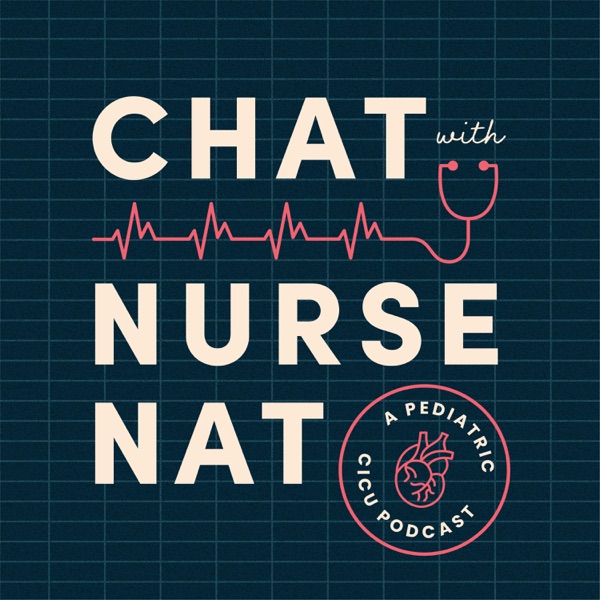
Chat with Nurse Nat
CICU bedside nursing demands a high level of critical thinking, characterized by proactive clinical judgment and vigilant monitoring for even the slightest changes in patient status. This podcast explores all aspects of pediatric cardiac critical care, focusing on practical bedside application.
Join Nurse Nat, CCRN, CPN, along with expert healthcare professionals, as they lead insightful conversations designed to educate and empower nurses at the bedside. Calling nurses to amplify their voice and foster more nursing-led teaching!
Follow on Instagram @chatwithnat_rn
- Episodes
- 24
- Releases
- Monthly
- Typical length
- 48 min
- On air since
- 2023
- Latest episode
- 1 month ago
Episodes
24 episodes, newest first
-
59 min
Balancing QP/QS 04 | CICU Bedside Foundations
Show notes
In the final episode of the CICU Bedside Foundations series, we’re putting it all together with Balancing Qp/Qs.
When caring for patients with single-ventricle physiology, understanding pulmonary and systemic blood flow is about more than memorizing numbers. This episode introduces a practical bedside framework built around five key components:
• Unobstructed systemic output
• Controlled pulmonary blood flow
• Unobstructed pulmonary venous return
• Ventricular function
• AV valve regurgitationWe’ll walk through each component and discuss how these pieces work together to help you interpret your patient’s physiology, recognize changes in circulation, and connect bedside assessment with the bigger picture.
The framework is informed by concepts described in Dr. Francis Fontan’s work on single-ventricle circulation (resource below)
This episode is designed to help you move beyond simply asking, “What’s the Qp/Qs?” and instead ask, “What is driving the balance in this patient—and what is changing?”
🎧 CICU Bedside Foundations
Where pediatric CICU bedside education meets everyday practice with clinical insight.Resources:
Stern, H.J. Fontan “Ten Commandments” Revisited and Revised. Pediatr Cardiol 31, 1131–1134 (2010). https://doi.org/10.1007/s00246-010-9811-9
-
1 hr 4 min
Shunt Physiology 03 | CICU Bedside Foundations
Show notes
In Episode 3 of the CICU Bedside Foundations series, we’re building on cardiac output and single ventricle physiology to talk shunts—and what they mean at the bedside.
Rather than simply memorizing different shunt types, this episode introduces a practical framework for understanding why your patient needs a shunt in the first place, where the blood is flowing, what is driving that flow, and what could cause it to change.
We discuss common shunt pathways, including the BTT shunt, Sano conduit, and the PDA, and connect the anatomy back to the physiology you see at the bedside.
The goal: when you hear, “this patient has a shunt,” you know the next questions to ask.
Because understanding why the shunt is there helps you recognize what your patient needs—and what deterioration might look like—before the numbers tell the whole story.
🎙️ CICU Bedside Foundations
Episode 1: Cardiac Output
Episode 2: Single Ventricle Physiology
Episode 3: Shunt Physiology
Next up: Balancing Qp/Qs -
43 min
Single Ventricle Physiology 02 | CICU Bedside Foundations
Show notes
What changes when one ventricle has two workloads?
In the second episode of the CICU Bedside Foundations Series, we break down single ventricle physiology through a practical bedside lens—moving beyond the anatomy to understand where the blood is going, how well the single ventricle is functioning, and what your patient needs from you.
We’ll explore the key questions every bedside nurse should be asking:
❤️ Is my patient currently in a one-ventricle or two-ventricle circulation?
❤️ How well is the single ventricle functioning?
❤️ How much AV valve regurgitation is present, and how is that affecting the workload?
❤️ Is my patient telling me I need to increase pulmonary blood flow, improve systemic blood flow, or increase overall cardiac output?Because in single ventricle physiology, one pump is supporting two competing circulations. Understanding that relationship helps us move beyond chasing a saturation and start asking the bigger question:
Where does the blood need to go—and does the heart have enough total cardiac output to support both the lungs and the body?
-
56 min
Cardiac Output 01 | CICU Bedside Foundations
Show notes
What does cardiac output actually look like at the bedside—and how do we recognize when it’s starting to fall?
In Episode 1 of the CICU Bedside Foundations Series, we break cardiac output down into the pieces that matter most for bedside pediatric cardiac nurses. We’ll connect heart rate and stroke volume with the factors that influence forward flow, including preload, afterload, and contractility.
We also take it one step further by connecting cardiac output to oxygen delivery and oxygen consumption —because moving blood forward only matters if we’re delivering enough oxygen to meet the body’s needs.
Most importantly, we bring it back to the bedside: What does low cardiac output syndrome (LCOS) actually look like? We discuss the assessment findings, trends, and early signs that should make you pause, reassess, and escalate concern before your patient significantly deteriorates.
This episode kicks off our 4-part CICU Bedside Foundations Series, created in collaboration with Heart University (HU), where we’re building the physiologic foundation needed to understand increasingly complex congenital heart disease.
Learn more about HU here! Heart University
-
29 min
04 ~ Cardiac Anesthesia "Cocktails" (Part 1)
Season 1, Episode 4
Show notes
What is anesthesia? Just a bunch of different medications that put people to sleep? Maybe, but if you would like to learn more from two Cardiac Anesthesiologists, please join us in a valuable discussion around the teamwork between ICU bedside RNs and Cardiac Anesthesiologists. Oh did I mention that this is just Part 1 of a 2 Part series?
-
49 min
20 ~ Beyond the Numbers: ABGs and Cardiac Output in the CICU
Show notes
An arterial blood gas (ABG) isn’t just numbers—it’s how the heart and lungs are coping right now. In cardiac kids, tiny shifts in pH, CO₂, and oxygen can completely change physiology.
ABGs don’t just tell us how the lungs are ventilating—they tell us how the heart is surviving. Join Ryan and I as we break down the ABG!
•
Turn Podcasts into reflective learning opportunities that reward you with CME/CE with SapienCE.
•
•
-
53 min
19 ~ Two Nurses. Two Journeys. Healing Little Hearts
Show notes
In this episode, two experienced CICU nurses, Katie and Ashley, share their journeys from bedside RN to heart mom, opening up about diagnosis, surgery, and the emotional complexity of caring deeply while letting go of control. A raw and meaningful conversation about empathy, resilience, and the power of lived experiences.
Disclaimer: This episode reflects personal experiences and is not intended as medical advice.
-
59 min
18 ~ Surgeon to RN: One Shift That Changed Perspective
Season 3, Episode 1
Show notes
What happens when a pediatric CT surgeon steps into the CICU bedside for a full 12-hour shift?
In this episode, I’m joined by a Pediatric Cardiothoracic Surgeon and a DNP APRN as we discuss the shadow experience of the CICU bedside role—to explore perspectives across roles and the power of true collaboration. We talk about the surgeon’s mindset, what surprised them most about bedside nursing, and how to maximize the medical team to change patient's outcomes.
We also dive into the often-unseen work of CICU nurses and the “X factor” that sets exceptional bedside nurses apart—intuition, adaptability, and presence in high-stakes moments. This episode is about shared respect, learning each other’s worlds, and strengthening the team around our most vulnerable patients.
•
•
Instagram
•
Did you know??? Today, 75% of Healthcare Professionals listen to podcasts for educational learning. Turn Podcasts into reflective learning opportunities that reward you with CME/CE with SapienCE.
•
-
49 min
17 ~ Glenn Physiology at the Bedside
Season 2, Episode 9
Show notes
Let’s talk Glenn—from the bedside. This episode walks through Glenn physiology in a way that actually makes sense when you’re standing at the bedside, watching sats hover in the 70s, and wondering “is this expected or is something wrong?” We connect the dots between anatomy, circulation, and bedside nursing decisions—what to watch, what to question, and how to advocate with confidence.
•
Did you know??? Today, 75% of Healthcare Professionals listen to podcasts for educational learning. Turn Podcasts into reflective learning opportunities that reward you with CME/CE with SapienCE.
•
•
-
47 min
16 ~ Reflective Learning to Improve Patient Outcomes
Season 2, Episode 8
Show notes
Today, 75% of Healthcare Professionals listen to podcasts for educational learning. Turn Podcasts into reflective learning opportunities that reward you with CME/CE with SapienCE.
SapienCE is a nurse-centric learning platform transforming how you learn, think, and grow. Listen to this episode as I chat with Wendy and Karen about "the Act of Reflection" in your everyday nursing practice.
•
Research Discussed: https://doi.org/10.1016/j.nepr.2022.103481
•
•
•
-
37 min
15 ~ A Day in the Life
Season 2, Episode 7
Show notes
In this conversation with Laura Valido, a CTICU Nurse Educator, we explore her project "A Day in the Life" where nurses were able to bring their support people into a simulated CICU environment and share a glimpse of their everyday bedside shift. This episode highlights the importance of connection and validation for a nurse and their support system.
Connect with Natalie
•
Email me! chatwithnatrn@gmail.com
•
Connect with Laura
•
Laura.Valido@nationwidechildrens.org
-
1 hr 1 min
14 ~ ECMO in the CICU: Bedside Application
Season 2, Episode 6
Show notes
In this episode, we dive into the nursing application for VA and VV ECMO—where critical thinking meets precision at the bedside.
We’ll break down ECMO circuits in a way that makes sense for nurses: from understanding sweep, oxygenator function, and scuff, to managing anticoagulation, and maintaining neuro precautions.
We’ll also cover how to respond during emergency situations at the bedside, ensuring safety and teamwork remain at the center of care.
Tune in for practical pearls and real-world insights to help you feel confident managing the most complex patients on ECMO support.
-
54 min
13 ~ Cardiac Catheterization Must Knows for the CICU RN
Season 2, Episode 5
Show notes
Today we’re diving into the world of Cardiac Catheterization—an area that can feel intimidating if you don’t work with it every day. Whether it’s diagnostic caths, interventional procedures, or understanding what happens before and after your patient goes to the lab, this episode is here to break it down.
We’ll cover what nurses need to know at the bedside, how to anticipate complications, and how to advocate for your patients through every step of the cath process. By the end, you’ll feel more confident in connecting the why behind the procedure with the care you give.
-
49 min
12 ~ PodSwap with Rapid Response RN: Cardiogenic Shock
Season 2, Episode 4
Show notes
On this PodSwap episode, you will be hearing from Sarah Lorenzini from Rapid Response RN and myself as we navigate Cardiogenic Shock. This is a collaboration of care from the time this baby was admitted to the ED and then transferred to the CICU for further management of care.
Listen to Rapid Response RN on Spotify:
https://open.spotify.com/show/55LQqeDg6XFeixvZLEp4xE?si=3B_EnZxzT0CVn6GwHE3NOw
Connect with Sarah on Instagram:
https://www.instagram.com/therapidresponsern/
Connect with me on Instagram!
-
55 min
11 ~ Cardiac Arrest Prevention (CAP)
Season 2, Episode 3
Show notes
Articles to check out for Cardiac Arrest Prevention!
Epidemiology and Outcomes of Cardiac Arrest in Pediatric Cardiac Intensive Care Units:
https://pmc.ncbi.nlm.nih.gov/articles/PMC5628130/
Preventing Cardiac Arrest in the Pediatric Cardiac Intensive Care Unit Through Multicenter Collaboration:
https://pmc.ncbi.nlm.nih.gov/articles/PMC9257678/
Cardiac Arrest in Children Following Cardiac Surgery: A Scoping Review of Contributing Factors:
https://pubmed.ncbi.nlm.nih.gov/35757944/
Sustained Performance of Cardiac Arrest Prevention in Pediatric Cardiac Intensive Care Units:
-
50 min
10 ~ Hypoplastic Left Heart Syndrome
Season 2, Episode 2
Show notes
Hypoplastic left heart syndrome (HLHS) is a rare congenital heart defect in which the left side of the heart is severely underdeveloped and incapable of supporting the systemic circulation. Lets dive in to get the "bedside pro tips" on how to take care of this complex defect at the bedside!
-
44 min
09 ~ New Year with my New Grads
Season 2, Episode 1
Show notes
Lets start this year off with some fresh takes on practicing at the bedside. We were all new grads at one point in our nursing careers, and there is extreme benefit in going back to the roots to remind ourselves of their "newness" from school to practice. Welcome two new grads that get to share their story of their first year in a CICU.
-
38 min
08 ~ TET, D-TGA, & TAPVR
Season 1, Episode 8
Show notes
Being a Cardiac ICU RN requires you to learn a language of acronyms, aka, TET, D-TGA, & TAPVR. In today's episode we are going break down cardiac defects that are considered "common life-threatening conditions."
-
37 min
07 ~ Resilience: What's the big deal?
Season 1, Episode 7
Show notes
Nurses possess the ability to transform, adapt, and persist in the face of difficulty. Everyday at the bedside brings a new opportunity to build and sustain your resilience. As a healthcare team, resilience is how we succeed in changing our patient's trajectory and improve their quality of life.
-
31 min
06 ~ Cardiac Mechanical Ventilation: Advanced Basics
Season 1, Episode 6
Show notes
Starting the chat with a CICU Respiratory Educator, Ryan Hall, on the advanced basics of mechanical ventilation in a pediatric CICU. We dive into ventilator modes, acidosis, and a side of peak pressures. Oh wait, don't forget the pulmonary toilets too! Enjoy :)
Medicine lists
More Medicine shows picked out from the charts







More in Medicine
Placed highest on Apple Podcasts' Medicine chart right now