Podcast
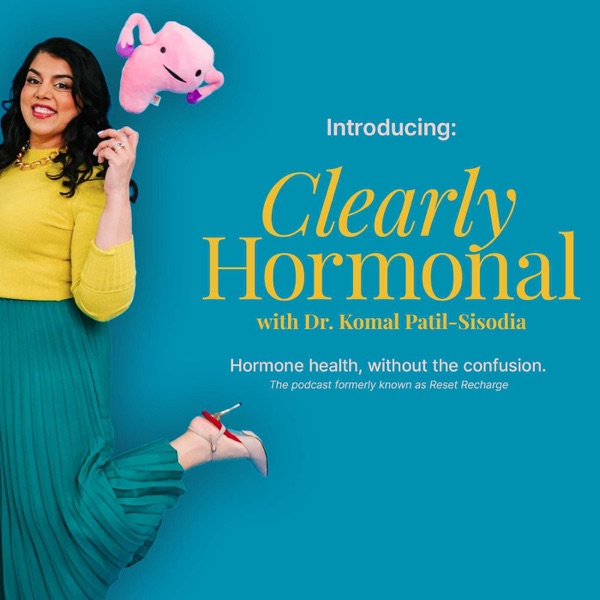
Clearly Hormonal
Have you ever wondered why your body feels like it's falling apart just as you're hitting your stride in other areas of your life? Join Dr. Komal Patil-Sisodia as she explores women’s metabolic health changes that start in perimenopause. The episodes center around educating and empowering women to have open dialogue with their doctors so that they can achieve their best metabolic health. Dr. Patil-Sisodia is board certified in Endocrinology, Obesity Medicine and Internal Medicine. She is also a Menopause Society Certified Practitioner. Any medical discussion on this podcast is purely for educational purposes and is not individualized medical advice. Please consult with your doctor to discuss any health concerns you may have.
- Episodes
- 69
- Releases
- Weekly
- Typical length
- 22 min
- On air since
- 2024
- Latest episode
- 6 days ago
Episodes
69 episodes, newest first
-
22 min
Menopause Society Conference Recap: Why Midlife Care Must Be Individualized
Season 2, Episode 28
Show notes
I just got back from the Menopause Society annual meeting in San Diego, and in this episode I share what I am bringing back to my clinic and my patients. Women's health is having a moment, and with that attention has come a lot of polarization. My take as an endocrinologist is simple: there is no one-size-fits-all menopause, and good care combines the data we have with clinical nuance, your symptoms, and your goals.
We walk through the biggest themes from the meeting: how body composition and bone change during the transition, where exercise and hormone therapy fit, what the FDA label changes do and do not mean, nonhormonal options for hot flashes, sleep and mood, heart health screening, sexual health, hair loss, supplements, and why bleeding after menopause always needs evaluation. You will leave with clear questions to bring to your next visit.
TIMESTAMPS
00:00 | Podcast welcome
01:03 | Conference context
01:56 | Nuance over hype
03:42 | Key themes recap
05:35 | Body changes explained
07:17 | Bone loss window
08:18 | Exercise practicalities
09:14 | Hormones' role
10:09 | Hormone therapy labels
12:56 | Sleep and insomnia
14:15 | Mood and brain fog
15:09 | Heart health screening
16:33 | Sex, hair, and skin
18:19 | Supplements and safety
18:48 | Postmenopausal bleeding
19:18 | Care that fits your life
20:26 | Wrap up and takeawaysThanks for listening. Find more info about Clearly Hormonal on the website or Instagram.
-
19 min
Hormone Therapy and Breast Cancer: What the WHI Really Found
Season 2, Episode 27
Show notes
"Hormones cause breast cancer" is the sentence that keeps many women from even asking about hormone therapy. In episode three of our Menopause Awareness Month series, Dr. Komal Patil-Sisodia takes it apart using what the Women's Health Initiative really found, and shows why the real question is which hormone, for whom, for how long, and compared to what.
You will hear who was actually studied, what the numbers mean in absolute terms, what the FDA label changes do and do not mean, and how body fat, screening, and breast density fit in, plus options for women with a breast cancer history. Whatever you decide, you deserve to make that decision with facts, not fear.
Timestamps
00:00 | Welcome to Clearly Hormonal
01:03 | The fear statement
02:02 | Why this episode now
02:56 | WHI study context
04:39 | Two trials, two outcomes
06:31 | What the WHI missed
07:25 | FDA label changes
08:41 | Absolute risk numbers
10:35 | Four common myths
12:09 | Body fat and estrogen
14:03 | Screening and density
15:40 | High risk and survivors
17:28 | Key takeaways and what is nextThanks for listening. Find more info about Clearly Hormonal on the website or Instagram.
-
20 min
Why Your Body Composition Changes in Midlife (Even If the Scale Doesn't)
Show notes
Your weight has not changed, but your body has. In this episode, Dr. Komal Patil-Sisodia explains why body composition shifts during the menopause transition, why the scale cannot tell the whole story, and what you can do about it. She shares her own experience after a hysterectomy, breaks down the difference between subcutaneous and visceral fat, explains insulin resistance with a classic TV analogy, and walks through a realistic foundation of strength, nutrition, sleep, and sustainable planning. She also covers where menopause hormone therapy and obesity medications fit, and why higher body fat after menopause is linked to breast cancer risk without placing blame on anyone.
Clearly Hormonal is for education and is not personalized medical advice. Take what resonates and discuss it with your own healthcare team.
IN THIS EPISODE
• Why you can gain fat and lose lean tissue without a big change on the scale
• What body composition is, and why lean tissue is more than muscle
• What the SWAN study found about fat and lean mass during the menopause transition
• Why abdominal fat storage can shift before your periods stop
• Other contributors beyond hormones: aging, activity, sleep, stress, medications, and conditions like hypothyroidism, prediabetes, and insulin resistance
• Subcutaneous versus visceral fat, and what a changing waist measurement may signal
• Insulin resistance explained, and why less muscle means less sugar used up
• Strength training at least twice a week, plus building toward 150 to 300 minutes of moderate activity
• Protein and fiber at meals, personalized protein needs, and why restriction is not the goal
• Sleep, night sweats, sleep apnea, and when to ask about a sleep study
• Menopause hormone therapy and body composition: what the evidence does and does not say
• When obesity medications may be appropriate
• The breast health connection, discussed without blameTIMESTAMPS
00:00 | Welcome to Clearly Hormonal
01:03 | PMOS Course Announcement
01:41 | Midlife Body Changes
03:41 | What Is Body Composition
05:03 | Hormones and Other Factors
06:59 | Visceral Fat and Waist
07:58 | Insulin Resistance Explained
10:59 | What Helps Most
11:06 | Strength and Movement
12:36 | Nutrition Basics
13:58 | Sleep and Barriers
15:25 | Hormone Therapy and Meds
18:11 | Breast Health Connection
19:01 | Key Takeaways and Next WeekCourse announcement
The PMOS Conversation You Deserve is Dr. Komal’s patient course on understanding PMOS and advocating for yourself in the doctor’s office. It includes three months of access plus a monthly live Q&A webinar with Dr. Komal. Introductory pricing runs through October 13, with regular pricing beginning October 20. Monthly webinar calls begin October 21, 2026.Details and enrollment: The Perimenopause Conversation You Deserve
Connect
• Instagram and TikTok: @drpatilsisodia
• Website: eastsidemm.com
• Questions about the course: send a message through the website or DM on socialThanks for listening. Find more info about Clearly Hormonal on the website or Instagram.
-
20 min
Perimenopause Is Not a Lab Value: How to Recognize It and Get the Right Care
Season 2, Episode 25
Show notes
Perimenopause is often missed because the most common symptom is vague (“I just don’t feel like myself”) and hormone tests can look normal. In this episode of Clearly Hormonal, Dr. Komal Patil-Sisodia walks through how perimenopause is actually recognized: from your age, your menstrual pattern, and your symptoms over time.
This is Episode 1 of our Menopause Awareness Month series.
In this episode you will learn
• Why a normal hormone result does not rule out perimenopause
• The three things Dr. Komal focuses on: age, periods, and symptoms
• How cycles differ in early and late perimenopause, using the STRAW+10 framework
• What can make perimenopause harder to recognize: birth control, hysterectomy, and PMOS (formerly PCOS)
• Why FSH and estradiol are a snapshot, and when blood tests do help
• Why pregnancy testing should be one of the first tests if you miss a period
• Four symptom groups: sleep, mood and thinking, physical comfort, and sexual and urinary health
• Other conditions to rule out: thyroid disease, anemia, sleep apnea or insomnia, medication effects, and worsening anxiety or depression
• What a useful perimenopause appointment includes, and how to prepare for itTimestamps
00:00 | Could This Be Perimenopause?
01:06 | Why Labs Miss It
02:16 | Three Diagnosis Clues
03:45 | Cycle Changes Explained
04:49 | Early vs. Late Transition
06:36 | When Cycles Mislead
07:32 | Hormone Testing Myths
08:50 | When Bloodwork Helps
10:12 | Symptom Categories
11:53 | Rule Out Other Causes
13:02 | Differences Across Women
15:38 | What a Good Visit Includes
16:52 | Three Key Takeaways
17:26 | Prep for Your Appointment
18:17 | Series Wrap and Course AnnouncementCourse announcement
The PMOS Conversation You Deserve is Dr. Komal’s patient course on understanding PMOS and advocating for yourself in the doctor’s office. It includes three months of access plus a monthly live Q&A webinar with Dr. Komal. Introductory pricing runs through October 13, with regular pricing beginning October 14. Monthly webinar calls begin October 21, 2026.Details and enrollment: The Perimenopause Conversation You Deserve
Connect
• Instagram and TikTok: @drpatilsisodia
• Website: eastsidemm.com
• Questions about the course: send a message through the website or DM on socialThanks for listening. Find more info about Clearly Hormonal on the website or Instagram.
-
11 min
You Deserve More Than a Diagnosis: Turning PMOS Knowledge Into Better Care
Show notes
About one in eight women lives with PMOS, polyendocrine metabolic ovarian syndrome, formerly called PCOS. It is one of the most common hormone conditions there is, and still one of the most misunderstood, by patients and by many clinicians.
In this final episode of September PMOS Awareness Month, Dr. Komal Patil-Sisodia explains why the name changed, why the condition is about far more than ovarian cysts, and why the metabolic and cardiovascular pieces so often get missed when a visit stays focused on periods, acne, or hair growth. She also shares what the data shows about diagnosis delays and disparities, and a piece of her own story.
Then she moves from the science to the practical: what to ask, what to track, and what to do when you raise a reasonable concern and do not get a useful answer. She introduces her new six-module course, The PMOS Conversation You Deserve, built to help you walk into your next appointment better informed and better prepared.
IN THIS EPISODE
• Why PMOS stands for polyendocrine metabolic ovarian syndrome, and why the change from PCOS was more than a rebrand
• How PMOS can show up across the lifespan, from adolescence through the reproductive years, perimenopause, and beyond
• The metabolic side of PMOS: insulin resistance, blood sugar, cholesterol, blood pressure, and long-term cardiovascular risk
• What one large international study found about diagnostic delays: about one in three women waited more than two years, and nearly half saw at least three healthcare professionals
• Disparities in who gets diagnosed, including findings in a safety net health system study for Black women and patients on Medicaid or charity care
• Why knowing the science is not the same as knowing how to use it in an appointment
• A first look at The PMOS Conversation You Deserve, including the pushback module, the workbook, and three months of live Q&ATIMESTAMPS
00:00 Welcome to Clearly Hormonal
01:08 PMOS: Why It Matters
02:22 PMOS Name Change Explained
02:57 Symptoms and Lifespan Impact
04:04 Diagnosis Delays and Disparities
05:51 Turning Knowledge Into Care
07:17 Course: The Conversation You Deserve
08:53 Enrollment Dates and Details
09:45 Final Takeaways and Wrap Up
COURSE DATES
• Pre-order opens: October 7
• Introductory pricing through: October 13
• Regular price begins: October 14
• First live Q&A: October 21LINKS AND RESOURCES
• The PMOS Conversation You Deserve (pre-order opens October 7): Sign up here to get on the list.
• Eastside Menopause & Metabolism: https://eastsidemm.com
• Follow Dr. Patil-Sisodia on Instagram and TikTok: @drpatilsisodiaDISCLAIMER
This podcast is for education and is not personalized medical advice. Please discuss what resonates with your own healthcare team.
Thanks for listening. Find more info about Clearly Hormonal on the website or Instagram.
-
12 min
The Long Road to Diagnosis: PMOS and Mental Health
Season 2, Episode 23
Show notes
In the final episode of PMOS Awareness Month, I focus on something that does not get talked about enough: the mental health toll of PMOS and the harm caused by waiting years for a diagnosis. We walk through what weight-matched studies show about depression, anxiety, and eating disorders, why so many people carry these burdens long before anyone connects them to PMOS, and what real care should look like.
In this episode
• Why people with PMOS are about four times more likely to have depression and more than five times more likely to have anxiety
• Why a PMOS diagnosis often comes before a new diagnosis of depression, anxiety, or sleep problems
• How eating disorder risk rises with PMOS, and why it is not limited to larger bodies
• How years of scattered symptoms and "it is just stress" responses make things worse
• Why body image distress from visible symptoms is a real pathway to disordered eating
• What good care includes: screening at diagnosis, CBT as a first step, careful medication choices, treating physical symptoms, and mind-body approachesTimestamps
00:00 Welcome to Clearly Hormonal01:01 PMOS Series Finale Setup
02:04 Mental Health Stats in PMOS
03:24 Eating Disorders and PMOS
04:00 Why Diagnosis Takes Years
05:37 Body Image and Visible Symptoms
06:56 What Good Care Looks Like
08:50 What This Means for You
09:51 Series Wrap Up and Resources
11:02 PMOS Mini Course Announcement
Key numbers from the episode
• About 4 times more likely to have depression with PMOS, in weight-matched studies
• More than 5 times more likely to have anxiety with PMOS
• About 1 in 3 people with PMOS have moderate to severe depression; more than 4 in 10 have real anxiety symptoms; well under 15 percent without PMOS
• About 1.5 times more likely to have an eating disorder, with the biggest increases in binge eating disorder and bulimiaThe full PMOS Awareness Month series
• Episode 1: What happens in PMOS after your childbearing years
• Episode 2: Why PMOS gets missed in people with a normal BMI (lean PMOS)
• Episode 3: Where GLP-1 medications fit into PMOS treatment
• Episode 4: PMOS and mental health (this episode)A note on support
If anything in this episode brought up something personal for you, especially around food, body image, or how you have been feeling emotionally, please do not sit with that alone. Talk to your doctor or a mental health professional. If you are in crisis in the US, you can call or text 988 at any time.
Connect
• Instagram and TikTok: @drpatilsisodia
• eastsidemm.comThis episode is for education and is not a substitute for individual medical advice.
Thanks for listening. Find more info about Clearly Hormonal on the website or Instagram.
-
52 min
Why We Withdrew From the ADA Webinar, and Why Peer & Lived Experience Must Be Central to Obesity Care
Season 2, Episode 22
Show notes
Dr. Komal Patil-Sisodia, obesity advocate Michael Donnelly-Boylen, and Dr. Matthea Rentea explain why they withdrew from a planned ADA-hosted webinar in support of a broader boycott, after an ADA Scientific Sessions keynote by a MAHA representative and the removal of peacefully protesting scientists were followed by an organizational response the three of them found unsatisfying.
They still share the content they had planned to present: integrating peer and lived experience into obesity care, to address a trust gap driven by weight stigma, shaming language, and oversimplified messaging that can delay or derail care, including preventive screening and procedures. They talk through curiosity, person-first language, motivational interviewing, and acknowledging medical trauma, along with practical solutions such as moderated peer support groups, credible online resources, and comprehensive programs that combine lifestyle foundations, medications, bariatric pathways, and clinic infrastructure shaped by patient input.
Timestamps
00:00 Why This Episode Changed
00:47 ADA Boycott Context
02:15 Meet The Panel
03:26 Inside The Keynote Fallout
06:41 Protest And Conference Mood
10:01 Choosing To Withdraw
11:18 Webinar Topic And Roadmap
13:47 Trust Gap And Weight Stigma
18:37 Language That Builds Safety
23:23 Peer Support And Community
25:09 Social Media And Group Coaching
27:19 Why I Started Posting
28:43 Building a Comprehensive Program
30:32 Three Pathways of Care
33:32 Designing for Real Bodies
35:54 Practical Clinician Changes
37:48 Mountain Dew Lesson
41:30 Trauma and Safe Spaces
42:25 Peer Support Communities
44:20 Insurance and Advocacy
46:27 Fighting Wellness Misinformation
47:55 How to Build Support Groups
50:53 Wrap Up and Where to Find Us
Connect
Dr. Komal Patil-Sisodia: Instagram and TikTok @drpatilsisodia. Podcast: Clearly Hormonal.
Dr. Matthea Rentea: Instagram, TikTok, and YouTube. Podcast: The Obesity Guide with Matthea Rentea, MD, at renteaclinic.com.
Michael Donnelly-Boylen: Instagram and TikTok as Mike On A Mission. Podcast: Weight and Measure with Mike and Zach, at weightandmeasurepod.com.
Thanks for listening. Find more info about Clearly Hormonal on the website or Instagram.
-
10 min
Beyond the Buzz: Where GLP-1s Really Fit in PMOS Care
Season 2, Episode 21
Show notes
Dr. Komal Patil-Sisodia continues the PMOS Awareness Month series by walking through where GLP-1 medications, like semaglutide and tirzepatide, fit into PMOS treatment. She explains what GLP-1s actually do in the body, who is likely to benefit, who they are not built for, and why they are never a stand-alone treatment plan for PMOS.
In This Episode
• What a GLP-1 is and the three main effects these medications have on the body
• Why insulin resistance sits at the center of PMOS for so many patients, and how that connects to androgen levels and symptoms like acne and excess hair growth
• Who is the clearest fit for a GLP-1: patients with insulin resistance or higher body weight, and those who haven't seen enough improvement from metformin or lifestyle changes alone
• Who GLP-1s are not built for: lean PMOS patients without insulin resistance, and anyone trying to conceive soon
• Why GLP-1s only work well alongside lifestyle change, and the real risks of low protein and fiber intake while on these medications
• What a GLP-1 does not replace: ongoing metabolic monitoring, fertility treatment, and androgen-targeted treatments like birth control pills or spironolactone
• The four questions Dr. Patil-Sisodia asks herself before recommending a GLP-1 for a PMOS patientTimestamps
• 00:00 Podcast Intro
• 01:01 Series Setup
• 02:13 GLP-1 Basics
• 02:45 Why It Matters
• 03:28 Who Benefits
• 04:32 Who Should Avoid
• 05:27 Lifestyle and Safety
• 06:15 What GLP-1s Don't Replace
• 07:40 How I Decide
• 08:29 Wrap Up and Next Week
• 09:36 Mini Course PromoLinks Mentioned
• Newsletter sign-up: eastsidemm.com/newsletter
• Follow Dr. Patil-Sisodia: @drpatilsisodia on Instagram and TikTokThanks for listening. Find more info about Clearly Hormonal on the website or Instagram.
-
11 min
Lean PMOS: Why the Diagnosis Gets Missed Without Weight Gain
Season 2, Episode 20
Show notes
Many people picture PMOS (polyendocrine metabolic ovarian syndrome, formerly known as PCOS) as a condition tied to weight gain. But the diagnostic criteria never mention body size at all, and a significant number of people with PMOS have a completely normal BMI. In part two of our PMOS Awareness series, Dr. Patil-Sisodia breaks down “lean PMOS”: what it looks like, why it is so often missed, and why the metabolic risk is just as real even when the outside doesn't show it.
In This Episode
• Why PMOS became associated with a specific body type, and why that picture was never the diagnosis itself
• The three actual diagnostic criteria: irregular or anovulatory cycles, elevated androgens (DHEAS, testosterone), and polycystic ovarian morphology on ultrasound
• What lean PMOS symptoms look like: irregular periods, acne, facial and body hair growth, scalp thinning
• “Normal weight obesity”: how insulin resistance and visceral fat can hide behind a normal-looking exterior
• The three-part pattern that causes lean PMOS to slip through the cracks in clinical practice
• Why an undiagnosed lean PMOS patient loses out on cardiometabolic monitoring, not just a menstrual explanation
• What needs to change: for clinicians, dropping body size as a screening filter; for patients, presenting symptoms as a pattern instead of one at a timeTimestamps
00:00 | Welcome to Clearly Hormonal
01:01 | Series Setup: Lean PMOS
02:09 | Why PMOS Has a Body Type
02:42 | Diagnosis Criteria, Not Weight
03:39 | Lean PMOS Symptoms
04:05 | Hidden Insulin Resistance
05:01 | Why Lean PMOS Gets Missed
06:51 | Why Diagnosis Matters
08:05 | What Should Change
09:24 | Wrap Up and Next Week
10:03 | Mini Course AnnouncementComing up next week: Episode three of the series looks at treatment, including where GLP-1 medications and other weight management tools fit into PMOS care, and who they actually make sense for.
Sign up for the newsletter at eastsidemm.com/newsletter, and follow along on Instagram or TikTok @drpatilsisodia.
This podcast is for education, not personalized medical advice. Please discuss anything you hear here with your own healthcare team.
Thanks for listening. Find more info about Clearly Hormonal on the website or Instagram.
-
14 min
PMOS After the Reproductive Years: Why It Doesn't Go Away
Season 2, Episode 19
Show notes
PMOS Awareness Month kicks off with a reframe: PMOS is not a condition that resolves once your cycles regulate or once you're done having kids. It is a lifelong cardiometabolic condition that happens to announce itself first through reproductive symptoms. Dr. Komal Patil-Sisodia walks through the three diagnostic criteria (irregular periods, high androgens, and polycystic ovarian morphology) and explains why the biology underneath, insulin resistance, visceral fat, and unfavorable cholesterol, persists even when periods look normal. She unpacks what worsens in perimenopause, the clinical blind spot that causes PMOS histories to get dropped from the chart, and what she actually changes in her own practice: earlier and trend-based lab monitoring, a shift in treatment goals from fertility to long-term metabolic and heart protection, and more individualized hormone therapy decisions.
In This Episode
• Why the three PMOS diagnostic criteria are not the whole disease
• The underlying biology: insulin resistance, visceral fat, and cholesterol changes that often start in the teenage years
• What worsens at perimenopause: insulin resistance, LDL and triglycerides, and belly fat
• The missed clinical question that keeps PMOS histories from shaping midlife care
• Why 20+ years of a less favorable metabolic starting point matters for heart disease risk
• What changes in practice: trend-based monitoring, shifting treatment goals, and individualized hormone therapy
• A preview of the rest of the PMOS Awareness Month seriesTimestamps
• 00:00 — Welcome to Clearly Hormonal
• 01:03 — PMOS Beyond Fertility
• 02:14 — PMOS Is Lifelong
• 04:05 — Perimenopause Metabolic Shifts
• 06:17 — The Missed Clinical Question
• 07:52 — Heart Risk Over Decades
• 09:38 — What To Do In Practice
• 11:34 — Key Takeaways & Next Episodes
• 12:46 — Mini Course InvitationComing Up in This Series
• Episode 2 — Lean PMOS (sometimes called "skinny PMOS") and why it gets missed
• Episode 3 — Where GLP-1s and other weight management tools fit into PMOS care
• Episode 4 — The long road to diagnosis and its toll on mental healthLinks
• Join the email list for the PMOS mini-course: https://eastsidemm.com/newsletter
Thanks for listening. Find more info about Clearly Hormonal on the website or Instagram.
-
38 min
Equality & the Executive Suite: The Menopause Penalty Revisited
Show notes
On Women's Equality Day, host Dr. Komal Patil-Sisodia revisits an idea from an early episode of Clearly Hormonal: the menopause penalty, the disproportionate income loss, leadership attrition, and career disruption that midlife women face. This episode goes past the data to ask what it actually feels like to lead through sleep disruption, cognitive overload, and hormonal change while carrying the weight of an executive role.
Guest Dr. Brooke Buckley traces her path from a punishing early surgical practice through hospital operations, an MBA negotiated into her first CMO contract, and a system-level leadership role she stepped into during the pandemic. She speaks candidly about infertility and loss, being the only woman in her surgical residency class, and the coaching and community that carried her through. The conversation moves into trauma-informed leadership, why physiology cannot be negotiated away, and the hard pivot Buckley made in walking away from the operating room to protect her own health.
Audio Stamps
00:00 Why Equality Still Lags
01:48 The Menopause Penalty
02:34 Meet Dr. Brooke Buckley
04:04 From Surgeon to Executive
07:32 Lessons From Organized Medicine
11:44 Midlife Friction and Storytelling
15:13 Boundaries as Superpower
18:07 Leading Through the Pandemic
21:29 Community, Coaching, and Accountability
27:20 Trauma-Informed Leadership
32:07 AI, Physiology, and the Future of Work
35:05 Hard Pivots and Closing Takeaways
Guest Bio
Dr. Brooke Buckley is a board-certified general surgeon and physician executive, board-certified in lifestyle medicine, and currently serves as System Vice President of Medical Affairs for Henry Ford Health. She previously served as chief medical officer and holds an MBA from Johns Hopkins. She has held national leadership roles with the American Hospital Association and The Joint Commission and is a widely followed voice on physician wellness, trauma-informed leadership, and healthcare system transformation.
Instagram: play_your_story
Thanks for listening. Find more info about Clearly Hormonal on the website or Instagram.
-
17 min
Same Diagnosis, Different Bodies: The Four PMOS Phenotypes
Show notes
Two women get the same diagnosis, PMOS (formerly known as PCOS), and end up with completely different symptoms. One has irregular periods, acne, and high androgens. The other has none of that, just an ultrasound finding. How can that be the same condition?
In this episode, Dr. Komal Patil-Sisodia breaks down the Rotterdam criteria, the three features used to diagnose PMOS, and explains why you only need two of the three to qualify. That single fact is the reason PMOS shows up as four distinct phenotypes (A, B, C, and D), each with its own symptom pattern and metabolic risk profile.
You'll learn:
• What hyperandrogenism, ovulatory dysfunction, and polycystic ovarian morphology actually mean (without the jargon)
• The four PMOS phenotypes and which one carries the highest, and lowest, metabolic risk
• Why insulin resistance, not BMI, may be the real driver of your risk
• Why phenotype D ("the mild one") still deserves your attention
• Three questions to bring to your next appointment to get more personalized careWhether you were diagnosed years ago or are newly navigating a PMOS diagnosis, this episode gives you language to better understand your own body, and better questions to ask the people caring for it.
Audio Stamps:
00:00 Welcome to Clearly Hormonal
01:03 Why PMOS Looks Different
02:43 Rotterdam Criteria Explained
05:15 Phenotype A: Full House
06:03 Phenotypes B Through D
08:27 Why Phenotype Matters
11:00 Phenotype D Still Counts
12:44 Three Takeaways and Next Steps
14:39 Recap and Final MessageThis podcast is for educational purposes only and is not a substitute for personalized medical advice. Please discuss your own care with your healthcare team.
Thanks for listening. Find more info about Clearly Hormonal on the website or Instagram.
-
26 min
Perimenopause or Something Else? Bringing Nuance Back to Midlife Symptoms
Season 2, Episode 16
Show notes
Perimenopause is having a cultural moment, and endocrinologist Dr. Komal Patil-Sisodia is glad it is, but in this launch episode of Clearly Hormonal, she pushes back on social media's habit of attributing nearly any midlife symptom to hormones. She defines perimenopause as the years leading up to menopause (recognized after 12 months without a period, average age ~51) and explains that it's marked by hormonal variability, not simply “low estrogen,” with menstrual-cycle changes serving as an important clinical clue.
She walks through why most women don't need single-point hormone testing, since levels fluctuate day to day, per current ACOG guidance. Using a composite patient example (“Jen”), she shows how fatigue, sleep issues, hair loss, and weight gain may reflect iron deficiency, thyroid disease, sleep apnea, nutrition, stress, medications, or life changes, not hormones by default.
She closes with a four-question framework for sorting it out: where you are in the reproductive transition, whether a symptom is plausibly related to it, what else could explain it, and whether treating perimenopause would actually help. Taking symptoms seriously, she argues, requires evidence and continued curiosity, not a single convenient explanation.
Timestamps
00:00 Welcome to Clearly Hormonal
01:03 Perimenopause Everywhere
01:32 Why Nuance Matters
03:24 How Social Media Shaped It
05:22 Defining Perimenopause
07:51 Hormone Testing Reality
09:29 Patient Example: Jen
11:51 Fatigue and Weight Gain
13:58 Brain Fog and Mood
15:35 Hair, Sleep, Libido, Joints
18:54 When “It's Just Perimenopause” Becomes a Problem
21:38 The Four-Question Framework
23:33 Key Takeaways and Invite
25:26 Quick Question: 3 AM Wakeups
Key Takeaways
• Perimenopause is hormonal variability, not simply low estrogen: levels fluctuate rather than steadily decline in the early transition.
• Menopause is recognized after 12 consecutive months without a period; average age in the U.S. is around 51.
• Most women don't need a single hormone test to identify perimenopause: age, symptoms, and menstrual changes usually tell us more (ACOG).
• Common midlife symptoms (fatigue, weight change, hair loss, brain fog, mood shifts, low libido, joint pain) can have multiple causes beyond hormones.
• The four-question framework: (1) Where am I in the reproductive transition? (2) Is this symptom plausibly related to perimenopause? (3) Is there another explanation to consider? (4) Would treating perimenopause actually improve it?
• Taking a symptom seriously and attributing it to hormones by default are not the same thing.Resources & Links
• ACOG: Do I need to have testing of my hormone levels during perimenopause? (acog.org)
• Follow along: Instagram & TikTok @drpatilsisodia
• Got a question for “Is This Actually Hormonal?”: DM @drpatilsisodia or send a note through the show's fan mail link.Thanks for listening. Find more info about Clearly Hormonal on the website or Instagram.
-
15 min
Peptides: Evidence-Based Medicine vs. Social Media Hype
Season 2, Episode 15
Show notes
Endocrinologist Dr. Komal Patil-Sisodia defines peptides as short amino-acid chains (with examples like insulin) and notes that any package or claim stating “contains peptides” is meaningless without knowing which peptide, how it was tested, and what it's proven to do.
She outlines the FDA approval pathway from preclinical work through Phase 1–3 trials and FDA review, then lists the FDA-approved peptides she prescribes for metabolic health (insulin analogs, GLP-1/GIP agents, glucagon, pramlintide), osteoporosis and calcium disorders (teriparatide, abaloparatide, palopegteriparatide, calcitonin), and reproductive/pituitary conditions (GnRH agonists, somatostatin analogs, vasopressin/desmopressin, cosyntropin, setmelanotide, bremelanotide).
She contrasts these with trending “gray market” peptides (e.g., BPC-157, TB-500, GHK-Cu), noting most lack published peer-reviewed randomized human trials and are often sold as “research chemicals” without purity oversight. Her key filter: ask what high-quality human evidence supports a claim — emphasizing informed choices, doctor-guided decisions, and evidence over hype.
In This Episode
• What a peptide actually is — and why the word alone doesn't mean anything
• The FDA's Phase 1–3 approval pathway, explained in plain language
• The full list of FDA-approved peptides Dr. Patil-Sisodia prescribes, organized by condition
• Why trending “gray market” peptides like BPC-157, TB-500, and GHK-Cu haven't cleared that same evidence bar
• The backlash from a recent social post — and what it revealed about asking for sources
• The one question to ask before trying any new treatmentTimestamps
00:00 | Welcome to Clearly Hormonal
01:03 | Peptides Everywhere Now
01:51 | Peptides Explained Simply
02:47 | How FDA Approval Works
05:13 | Peptides I Prescribe
08:42 | Social Media Peptide Hype
10:43 | My Viral Post Backlash
12:53 | Spotting Real Evidence
13:46 | Final Takeaways and WrapConnect
• Practice: eastsidemm.com
• Instagram & TikTok: @drpatilsisodiaThanks for listening. Find more info about Clearly Hormonal on the website or Instagram.
-
18 min
The Peptide Vote: What the FDA's Advisors Just Recommended
Season 2, Episode 14
Show notes
Dr. Komal Patil-Sisodia explains that headlines claiming “FDA approves peptides” are misleading: an FDA advisory committee narrowly voted to recommend adding six peptides (BPC-157, TB-500, KPV, MOTS-c, Epitalon, Semax) to a compounding list, a step that is not FDA approval and still faces a formal FDA process. She notes FDA scientists opposed adding all six and that some voting members sell these peptides.
Reviewing the evidence, she explains that BPC-157 has only three small, weak human studies; TB-500 has zero human trials for the injury uses it's marketed for (while full thymosin beta-4 has some real human data); KPV has no human studies at all; MOTS-c has an unpublished Phase 1b trial and only observational, exercise-related human data; Epitalon lacks Western peer-reviewed human trials; and Semax is approved in Russia but with limited-quality stroke data.
She emphasizes that all six are synthetic despite being marketed as "natural," that marketing to midlife women is running well ahead of the evidence, that contamination and mislabeled dosing have been documented in online peptide products, that compounded drugs bypass typical FDA review, and that proven options already exist for symptoms like hot flashes, bone loss, and metabolic changes.
Time Stamps:
00:00 Welcome to Clearly Hormonal
01:03 The FDA Vote Explained
03:09 BPC-157 Evidence Check
04:31 TB-500 vs. Thymosin Beta-4
06:01 KPV and Animal Data Limits
07:25 MOTS-c, Epitalon, Semax
11:32 Midlife Marketing Reality
13:37 What the List Means
14:23 Safety and Contamination Risks
16:06 Bottom Line and Next Steps
17:31 Wrap Up and Where to Follow
Resources & Mentions
• Follow Dr. Patil-Sisodia on Instagram and TikTok: @drpatilsisodia
• JAMA: “Under FDA, Unapproved Peptides Likely to Become More Widely Available” (Rita Rubin, MA, 2026)
• ABC News: “FDA advisers narrowly vote to add 6 peptides to a drug compounding list. What's next?” (July 24, 2026)
• Talanta (2018): impurity analysis of falsified peptide drugs seized from online pharmacies
• Expert Opinion on Drug Safety (2026): FAERS pharmacovigilance study on compounded GLP-1 receptor agonists
• Journal of Cellular and Molecular Medicine (2021): Phase I dose-escalation trial of recombinant human thymosin beta-4
• Zhurnal Nevrologii I Psikhiatrii (2018): Semax post-stroke rehabilitation studyThanks for listening. Find more info about Clearly Hormonal on the website or Instagram.
-
27 min
The Biggest Myths About Type 1 Diabetes (and the Truth Behind Them)
Season 2, Episode 13
Show notes
Type 1 diabetes isn't just a childhood disease, and it isn't caused by sugar, weight, or lifestyle. In this episode, Dr. Komal Patil-Sisodia breaks down why type 1 diabetes is so often missed in adults, especially in people mislabeled as type 2, and introduces LADA (latent autoimmune diabetes in adults), a slow-moving form of type 1 that may account for up to a quarter of adult diagnoses. She walks through the clues that should prompt testing, the two blood tests that can change a diagnosis, and how perimenopause and menopause complicate blood sugar control for women living with type 1. The episode also covers pregnancy planning, the real (and often overstated) genetic risk to children, the underappreciated heart disease risk in women with type 1, and why needing insulin is never a sign of failure.
In This Episode
• Why type 1 diabetes has nothing to do with sugar, weight, or lifestyle
• How adult-onset type 1 gets misdiagnosed as type 2, and why
• LADA (type 1.5): what it is and why it hides in plain sight
• The clues that should prompt a GAD antibody and C-peptide test
• How perimenopause and menopause make blood sugar harder to control
• Pregnancy with type 1 diabetes: what's actually true
• The real genetic risk to children (it's lower than you think)
• Why heart disease risk is elevated and underdiscussed in women with type 1
• Why insulin is not a “last resort” and never a sign you did something wrong
• The technology (CGMs and automated insulin delivery) changing type 1 careTimestamps:
00:00 Why Type 1 Gets Missed
00:30 A Misdiagnosed Patient Story
02:52 Myth: Sugar Causes Type 1
05:31 Myth: Only Kids Get It
06:29 Adult Onset and the Honeymoon Period
08:41 LADA (Type 1.5) Explained
10:13 Perimenopause Makes It Harder
11:53 When to Test for Type 1
14:34 Pregnancy Myths and Facts
16:41 Heart Risk in Women
18:24 Insulin Shame and Stigma
20:44 Tech That Changed Diabetes Care
22:01 Perimenopause Management Tips
22:49 Key Takeaways and Next Steps
25:14 Final Thoughts and Share
Resources Mentioned:
• GAD antibody test (glutamic acid decarboxylase antibody): the key immune marker for LADA
• C-peptide test: measures how much insulin your body is still producing on its own
• Continuous glucose monitors (CGMs) and automated insulin delivery systems
• Maternal-fetal medicine (perinatology) preconception counseling for planned pregnanciesDisclaimer:
This podcast is for education, not personalized medical advice. Please discuss anything that resonates with your own healthcare team.
Thanks for listening. Find more info about Clearly Hormonal on the website or Instagram.
-
26 min
Type 2 Diabetes Isn't a Moral Failing: Genetics, Hormones, Stigma, and the Truth About Insulin
Season 2, Episode 12
Show notes
Type 2 Diabetes Isn't a Moral Failing: Genetics, Hormones, Stigma, and the Truth About Insulin
If you've ever been told — or told yourself — that your type 2 diabetes is something you caused and something you could fix if you just tried a little harder, this episode is for you.
Dr. Komal Patil-Sisodia spends 17 years of clinical experience (and personal family history) dismantling one of the most damaging narratives in medicine: that type 2 diabetes is a lifestyle disease you can will your way out of. In reality, it's a complex, progressive metabolic condition shaped by genetics, hormones, sleep, stress, and — for women specifically — perimenopause and menopause.
This episode covers the real biology behind insulin resistance and beta-cell decline, why stigma is measurably making patient outcomes worse, why so many people misunderstand what insulin actually does, and why "remission" — not "reversal" — is the accurate, honest term for what's possible.
In this episode:
• 00:00 — Welcome and Mission Introduction to Clearly Hormonal and why this particular episode is personal.
• 01:00 — Diabetes Myths and Stigma The core myth — that diabetes is caused by bad choices and reversible through willpower — and the data on how stigma affects A1C, depression, and self-care engagement.
• 03:18 — A Patient Story: A Midlife Shift A composite patient story of someone doing everything "right" whose A1C climbs anyway once perimenopause hits.
• 04:15 — What Type 2 Diabetes Actually Is Insulin resistance, beta-cell decline, and why genetics account for 40–80% of risk.
• 05:31 — Hormones, Sleep, and PMOS Estrogen as an insulin sensitizer, cortisol and chronic stress, the impact of poor sleep, and PMOS (formerly PCOS) as a major independent risk factor.
• 08:52 — Type 1 vs. Type 2 Clarifier A quick, important distinction — type 1 diabetes is autoimmune and not the topic of this episode.
• 09:15 — CGMs and the "I Can Feel It" Myth Why 64% of patients believe they can feel high blood sugar — and the story of using a CGM to show her dad he couldn't.
• 12:48 — Insulin Fear and Complications Why so many patients believe insulin causes kidney damage, blindness, or amputations — and what actually causes those complications.
• 15:07 — Diet Myths and Shame Vegetarian diets, "only sugar counts," and how internalized shame changes patient behavior.
• 17:32 — Remission, Not Reversal The real data on remission rates over time, and why relapse is disease progression, not failure.
• 19:59 — What Patients Deserve A call for full access to treatment — metformin, GLP-1s, SGLT2 inhibitors, insulin — without having to "earn" it first.
• 22:38 — Menopause and the Diabetes Care Gap Why standard diabetes care ignores perimenopause and menopause, and what should be asked instead.
• 23:48 — Key Takeaways and Share A recap and an invitation to pass this along to anyone who's been made to feel like their diabetes is their fault.Resources & Mentions:
• Continuous glucose monitors (CGMs) as standard-of-care discussion
• PMOS (formerly known as PCOS)
• Type 2 diabetes remission criteria (A1C <6.5% for 3+ months without medication)Disclaimer: This podcast is for educational purposes only and is not personalized medical advice. Please discuss anything you hear here with your own healthcare team.
Thanks for listening. Find more info about Clearly Hormonal on the website or Instagram.
-
24 min
Thyroid Myth Busting (Part 2): What Actually Helps and What Doesn't
Season 2, Episode 11
Show notes
Getting diagnosed with Hashimoto's can feel overwhelming, especially after spending five minutes online. Suddenly you're told to eliminate gluten, avoid broccoli, stop eating soy, buy expensive supplements, and ask your doctor for desiccated thyroid. But how much of that advice is actually supported by evidence?
In Part 2 of the Thyroid Myth Busting series, endocrinologist Dr. Komal Patil-Sisodia separates fact from fiction using current medical research.
You'll learn:
• Why cruciferous vegetables are not harming your thyroid
• When soy actually matters (hint: it's about medication timing)
• Who should—and shouldn't—consider a gluten-free diet
• Why iodine supplements can actually worsen thyroid disease
• Which thyroid supplements have evidence (and which don't)
• The truth about desiccated thyroid versus levothyroxineIf you've ever felt overwhelmed by thyroid advice on social media, this episode is your evidence-based guide.
Timestamps
00:00 Welcome to Clearly Hormonal
01:03 Why thyroid wellness advice can become overwhelming
02:04 Cruciferous vegetables, iodine, and what actually affects thyroid function
05:03 Soy consumption and levothyroxine timing
06:16 Hashimoto's, gluten, and when celiac testing matters
09:35 The dangers of iodine supplements and seaweed products
13:08 Fact-checking popular thyroid supplements:
• Ashwagandha
• Vitamin B12
• Low-dose naltrexone (LDN)
• Selenium17:05 Desiccated thyroid vs levothyroxine: What the evidence says
23:05 Key takeaways and what's next
Resources & Links:
• Catch up on Part 1 (testing myths, TSH, subclinical hypothyroidism)
• Follow @drpatilsisodia on Instagram and TikTokDisclaimer: This podcast is for education, not personalized medical advice. Talk to your own healthcare team about what's right for you.
Thanks for listening. Find more info about Clearly Hormonal on the website or Instagram.
-
36 min
Think It's Your Thyroid? Midlife Fatigue, Weight Gain, and the Myths Behind "Normal" Labs
Season 2, Episode 10
Show notes
One in four women will have some degree of thyroid dysfunction after menopause — so it's not unreasonable to test it. But Dr. Komal Patil-Sisodia says the real problem isn't whether we test, it's what we do (or don't do) after the results come back "normal." In this episode, she breaks down the most common thyroid myths she hears in clinic: that fatigue and weight gain automatically mean thyroid disease, that everyone needs a full thyroid panel, and that a slightly elevated TSH always means you need medication. She walks through what TSH actually measures, when free T4 and T3 testing adds value, why antibody testing isn't a default screen, and the real risks of over-treating with levothyroxine. Then she dives into the part almost no one explains: how perimenopause and menopause change the way we interpret thyroid labs, why your TSH reference range shifts with age, and how starting estrogen therapy can change your thyroid medication needs.
Timestamps
• 00:00 — Welcome to Clearly Hormonal
• 01:03 — Is It Really Thyroid?
• 02:27 — Myth 1: Symptoms Automatically Equal Thyroid Disease
• 05:22 — Myth 2: Everyone Needs a Full Thyroid Panel
• 06:04 How TSH Testing Works
• 11:18 — When Extra Testing Actually Matters (pituitary, pregnancy, illness, med changes)
• 18:32 — Thyroid Antibodies: What They Are and When to Check Them
• 19:45 — Myth 3: Subclinical Hypothyroidism Always Needs Treatment
• 23:07 — The Real Risks of Overtreatment (and What the Evidence Shows)
• 26:56 — The Menopause–Thyroid Overlap No One Explains
• 30:51 — How Estrogen Therapy Changes Your Thyroid Labs
• 33:37 — Questions to Ask Your Doctor
• 35:21 — Next Episode Preview & Wrap-UpResources & Studies Mentioned
• 2017 TRUST Trial (New England Journal of Medicine) — levothyroxine vs. placebo in adults 65+
• 2025 Annals of Internal Medicine analysis of NHANES data on age/sex/race-specific TSH ranges
• 2026 Hong Kong population study on age- and sex-specific TSH reference ranges
• Korean cohort study of 50,000+ women on thyroid dysfunction across the menopause transition
• JAMA study on successful levothyroxine discontinuation in older adults on low-dose therapyConnect
• Instagram & TikTok: @drpatilsisodia
• Podcast: Clearly Hormonal
• Practice: eastsidemm.com
• If this episode resonated, share it with a woman in your life who’s been searching for answers. Leave a review so more women can find this podcast.Disclaimer: This podcast is for educational purposes only and is not a substitute for personalized medical advice. Please discuss your own labs and symptoms with your healthcare team.
Thanks for listening. Find more info about Clearly Hormonal on the website or Instagram.
-
25 min
Spit Happens: The Truth About Cortisol Testing
Season 2, Episode 9
Show notes
Picture three women. One is spitting into four little tubes throughout the day, mailing them off to a lab, hoping to finally get answers about her "adrenal fatigue." Another has been on a steroid inhaler for years, or just got a cortisone shot in her knee, and has never once had her adrenal glands checked — even though statistically, she has roughly a coin-flip's odds of an abnormal result if anyone bothered to look. And a third, in her late forties, is being told her exhaustion and brain fog are adrenal fatigue, when what she actually needs is a conversation about perimenopause.
Same hormone. Same small gland sitting on top of each kidney. Three completely different ways we get this wrong — and in this episode, Dr. Patil-Sisodia untangles all three.
She starts with the myth: why multi-sample "adrenal fatigue" saliva and urine kits run on real, legitimate lab technology in service of a diagnosis that doesn't medically exist — and why that combination is exactly what makes them so convincing. Then comes the plot twist she didn't expect to be making: that same multi-sample saliva format is actually a gold-standard tool, just for something else entirely — screening for Cushing's syndrome, when cortisol runs too high instead of too low. From there, she walks through the tests that genuinely work for Cushing's, the pseudo-Cushing's patterns (depression, alcohol use, obesity, PCOS/PMOS, illness, and more) that can mimic it on paper, and the condition she says gets missed more than any other: steroid-related adrenal insufficiency, which affects about half of long-term steroid users — inhalers, creams, sprays, and injections included — while fewer than 1% are ever tested for it.
The episode closes on something close to home for this show's listeners: how easily perimenopause gets relabeled as adrenal fatigue, what that mislabeling actually costs women, and three simple questions you can run any cortisol test through before you trust it.
Time Stamps:
[00:00] Medicine Gets Cortisol Wrong — the three-part setup: wrong tests, wrong people, and the people who need testing but never get it.
[01:07] Adrenal Fatigue Myth — why multi-sample saliva/urine kits use real lab technology to chase a diagnosis with no recognized normal range.
[03:08] Real Use for Saliva — the plot twist: late-night saliva testing is legitimate gold-standard science, just for a different question.
[06:19] Cushing Syndrome Basics — the three tests that actually work: late-night saliva, 24-hour urine cortisol, and overnight dexamethasone suppression.
[07:34] Pseudo Cushing Pitfalls — how depression, heavy alcohol use, obesity, poorly controlled diabetes, PCOS/PMOS, illness, pain, eating disorders, and intense exercise can mimic Cushing's without being it.
[09:19] Steroid Induced Adrenal Suppression — the condition affecting roughly half of long-term steroid users (inhalers, creams, sprays, injections, possibly Depo-Provera) while under 1% get tested.
[12:57] Menopause Misdiagnosed — why perimenopause symptoms get scooped up under the adrenal fatigue umbrella, and what the research does and doesn't show.
[17:06] Testing Adrenal Insufficiency — the real diagnostic pathway: tapering first, the 8–9 a.m. blood draw, and how to read the result range.
[18:55] Cosyntropin Test Myths — the standard 250-microgram test versus the unvalidated low-dose version some sources still promote.
[21:06] Recovery and Reassurance — why an abnormal cortisol number is far more common than a true adrenal crisis, and why recovery can take months to over a year.
[22:21] Three Questions for Testing — what to ask before trusting any cortisol test: proven diagnosis, meaningful timing, gold-standard validation.
[24:19] Final Takeaways and Outro.
Key Takeaways
• "Adrenal fatigue" and "chronic stress" are not recognized medical diagnoses — there is no validated normal range for the multi-sample panels marketed to diagnose them.
• The same multi-sample saliva testing format is legitimate gold-standard science — when it's used correctly, at the right time of night, repeated 2–3 nights, to screen for Cushing's syndrome.
• About half of people on long-term steroids (any form — pills, inhalers, creams, sprays, injections) have some degree of adrenal insufficiency. Fewer than 1% are ever tested.
• Perimenopause symptoms (fatigue, brain fog, anxiety, low libido) overlap heavily with the symptoms marketed as "adrenal fatigue" — and that overlap can delay real menopause care.
• Before trusting a cortisol test: ask what it's proven to diagnose, whether the timing matches the question, and whether it's been validated against the gold standard.Resources & Links
• Follow Dr. Patil-Sisodia: @drpatilsisodia on Instagram and TikTok
• Send fan mail / episode questions via Buzzsprout
• Catch up on the related myth-busting episode referenced in this one (adrenal fatigue supplements)Thanks for listening. Find more info about Clearly Hormonal on the website or Instagram.
Medicine lists
More Medicine shows picked out from the charts




More in Medicine
Placed highest on Apple Podcasts' Medicine chart right now