Podcast
Exam Room Nutrition: Practical Nutrition for Healthcare Professionals
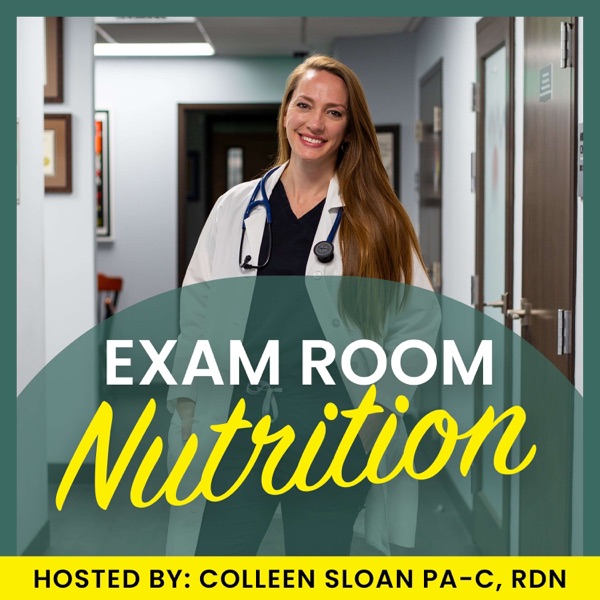
Nutrition advice is everywhere. Your patients need help sorting through misinformation, and you need practical guidance for communicating nutrition clearly and compassionately. Exam Room Nutrition is the podcast for physician associates, registered dietitians, and healthcare professionals who want to stay current on nutrition and feel more confident counseling patients. Hosted by Colleen Sloan, PA-C, RDN, each episode breaks down evidence-based topics including pediatric nutrition, weight management, diabetes, supplements, sports nutrition, and more. You’ll learn how to translate the evidence into realistic recommendations without judgment, shame, or overwhelming your patients.
Whether you are a PA strengthening your nutrition knowledge or an RD sharpening your counseling skills, Exam Room Nutrition will help you bring practical, compassionate nutrition care into every patient conversation.
- Nutrition chart
- #99
- Episodes
- 187
- Releases
- Weekly
- Typical length
- 27 min
- On air since
- 2023
- Latest episode
- 6 days ago
Episodes
187 episodes, newest first
-
20 min
174 | Folate, Choline & the Fertility Supplement Hype
Show notes
Folic Acid, Inositol, and Choline Explained
Folic acid or methylfolate? Does inositol actually help with PMOS? And why is choline missing from so many prenatal vitamins? Prenatal nutrition has become surprisingly controversial, and social media isn't making it any easier for clinicians to separate evidence from marketing.
In this episode, I'm joined by Ayla Barmmer, MS, RDN, founder, formulator, and CEO of FullWell, to unpack the nutrients that matter most before and during pregnancy.
Key takeaways:
• Why nutrition matters 3–6 months before conception, not just after a positive pregnancy test
• Folic acid vs. methylfolate: what's the difference, and why it matters?
• The role of inositol in PMOS, insulin resistance, and fertility
• Why choline is essential for fetal brain development and often overlooked in prenatal counseling
• What to look for when evaluating prenatal supplements, including nutrient forms, dosing, and absorption
• How Ayla's clinical experience inspired the development of FullWell's reproductive health supplementsThis episode is sponsored by FullWell, a registered dietitian-founded supplement company specializing in prenatal and reproductive health.
Learn more about FullWell:https://fullwellfertility.com/
Connect with FullWell: Instagram @fullwellfertility
Any Questions? Send Me a Message
Connect with Colleen:
Instagram
LinkedIn
Sign up for my FREE Newsletter - Nutrition hot-topics delivered to your inbox each week.Disclaimer: This podcast is a collection of ideas, strategies, and opinions of the author(s). Its goal is to provide useful information on each of the topics shared within. It is not intended to provide medical, health, or professional consultation or to diagnosis-specific weight or feeding challenges. The author(s) advises the reader to always consult with appropriate health, medical, and professional consultants for support for individual children and family situations. The author(s) do not take responsibility for the personal or other risks, loss, or liability incurred as a direct or indirect consequence of the application or use of information provided. All opinions stated in this podcast are my own and do not reflect the opinions of my employer.
-
19 min
173 | The Dancer Looks Healthy. But Is She?
Show notes
Nutrition Red Flags in Young Dancers
In this episode, I'm joined by registered dietitian and former ballet dancer Maura Fowler to talk about relative energy deficiency in sport (RED-S) and the unique pressures young dancers face around food, performance, and body image.
You'll Learn:
• Why RED-S can affect both male and female dancers, even when they don't have an eating disorder.
• The link between low energy availability and frequent illness, fatigue, dizziness, and recurring injuries
• Why changes in menstruation can be an important early warning sign, even when an athlete appears healthy.
• When "clean eating" becomes concerning
• How to approach dancers who are afraid that eating more will lead to unwanted changes in their bodies or performance.Connect with Maura Fowler
• Instagram: @maura.thedancedietitian
• http://www.beyondthebarrenutrition.com/Related Episodes
• 166 | Think You Can Spot an Eating Disorder? with Jessica Setnick
• 158 | The Nutrition Mistake Every Injured Athlete Makes with Emily BarnhartAny Questions? Send Me a Message
Connect with Colleen:
Instagram
LinkedIn
Sign up for my FREE Newsletter - Nutrition hot-topics delivered to your inbox each week.Disclaimer: This podcast is a collection of ideas, strategies, and opinions of the author(s). Its goal is to provide useful information on each of the topics shared within. It is not intended to provide medical, health, or professional consultation or to diagnosis-specific weight or feeding challenges. The author(s) advises the reader to always consult with appropriate health, medical, and professional consultants for support for individual children and family situations. The author(s) do not take responsibility for the personal or other risks, loss, or liability incurred as a direct or indirect consequence of the application or use of information provided. All opinions stated in this podcast are my own and do not reflect the opinions of my employer.
-
34 min
172 | Alpha-Gal Syndrome: Symptoms, Diagnosis, and Diet
Show notes
Tick Bites, GI Symptoms, and Hidden Triggers
A patient comes in with recurrent diarrhea, abdominal pain, or unexplained hives. Could a tick bite be responsible?
Alpha-gal syndrome is an unusual food allergy that can develop after a tick bite, causing delayed reactions to mammalian meat and sometimes other animal-derived products. But recognizing it isn't always straightforward, especially when patients have GI symptoms without the typical signs of an allergic reaction.
In this episode, I'm joined by Jerry Simons, PA-C, a nationally recognized medical educator with more than 25 years of experience treating complex GI disorders and tick-borne diseases. Jerry walks us through the diagnostic clues clinicians should know, how he approaches testing and dietary management, and why unnecessarily restricting foods can sometimes do more harm than good.
In This Episode, You'll Learn:
• Why alpha-gal reactions can occur hours after eating
• How to interpret alpha-gal IgE testing alongside the patient's clinical history
• A stepwise approach to dietary management
• Hidden sources of mammalian ingredients in supplements, medications, and foods that clinicians should know aboutResources Mentioned
Any Questions? Send Me a Message
Connect with Colleen:
Instagram
LinkedIn
Sign up for my FREE Newsletter - Nutrition hot-topics delivered to your inbox each week.Disclaimer: This podcast is a collection of ideas, strategies, and opinions of the author(s). Its goal is to provide useful information on each of the topics shared within. It is not intended to provide medical, health, or professional consultation or to diagnosis-specific weight or feeding challenges. The author(s) advises the reader to always consult with appropriate health, medical, and professional consultants for support for individual children and family situations. The author(s) do not take responsibility for the personal or other risks, loss, or liability incurred as a direct or indirect consequence of the application or use of information provided. All opinions stated in this podcast are my own and do not reflect the opinions of my employer.
-
27 min
171 | Food Rules We Carry Into Adulthood
Show notes
Picky Eating, Food Pressure & Body Trust
“Just take one more bite.” “Finish your vegetables, then you can have dessert.” “That’s junk food.”
These comments may seem harmless, but the messages kids hear around food can shape how they eat and think about their bodies years later.
In this episode, I’m joined by registered dietitian Kerry Miller to talk about how parents and clinicians can help kids build body trust and a healthier relationship with food.
Key takeaways:
• Why pressure to eat can actually increase picky eating
• How to balance mealtime structure with hunger and fullness cues
• Why using dessert as a reward can backfire
• How childhood food and body messages can follow us into adulthood
• One simple question clinicians can ask families during a busy well visitResources Mentioned:
• Website: http://www.violetlearns.com/
• Companion resources for professionals: https://professionals.violetlearns.com/
• Instagram: @kerry.millerrdAny Questions? Send Me a Message
Connect with Colleen:
Instagram
LinkedIn
Sign up for my FREE Newsletter - Nutrition hot-topics delivered to your inbox each week.Disclaimer: This podcast is a collection of ideas, strategies, and opinions of the author(s). Its goal is to provide useful information on each of the topics shared within. It is not intended to provide medical, health, or professional consultation or to diagnosis-specific weight or feeding challenges. The author(s) advises the reader to always consult with appropriate health, medical, and professional consultants for support for individual children and family situations. The author(s) do not take responsibility for the personal or other risks, loss, or liability incurred as a direct or indirect consequence of the application or use of information provided. All opinions stated in this podcast are my own and do not reflect the opinions of my employer.
-
27 min
170 | What Does “Healthy” Actually Mean?
Show notes
Help Patients Define They're WHY
What does your patient actually mean when they say, “I just want to be healthy?” Because “healthy” can mean something completely different to the clinician, the patient, and the parent sitting next to them. In this episode, I’m talking with registered dietitian Allison McKeany about why defining health may be one of the most important steps in nutrition counseling.
Key takeaways:
• Why clinicians should define what “healthy” means before giving nutrition advice
• How to uncover a patient’s deeper “why” and use it to support behavior change
• Allison’s four areas of health: physical, functional, cognitive, and emotional
• Strategies for navigating different health goals between parents and childrenResources Mentioned:
What Does it Mean to Be Healthy, Anyway?
Listen to this episode next- Helping patients change
Any Questions? Send Me a Message
Connect with Colleen:
Instagram
LinkedIn
Sign up for my FREE Newsletter - Nutrition hot-topics delivered to your inbox each week.Disclaimer: This podcast is a collection of ideas, strategies, and opinions of the author(s). Its goal is to provide useful information on each of the topics shared within. It is not intended to provide medical, health, or professional consultation or to diagnosis-specific weight or feeding challenges. The author(s) advises the reader to always consult with appropriate health, medical, and professional consultants for support for individual children and family situations. The author(s) do not take responsibility for the personal or other risks, loss, or liability incurred as a direct or indirect consequence of the application or use of information provided. All opinions stated in this podcast are my own and do not reflect the opinions of my employer.
-
30 min
169 | An Obesity Doctor on GLP-1s, Cortisol & Peptides
Show notes
Hunger, Habits and Sustainable Weight Care
In this episode, I sit down with Dr. Rees Checketts, an internal medicine physician specializing in metabolic and obesity medicine, to talk about what nutrition education in medical training gets right, and where it still falls short. We also dig into the conversations clinicians are having every day about weight, hunger, GLP-1 medications, cortisol, processed foods, and the latest wellness trends.
You’ll learn:
• How genetics, environment, hunger and fullness cues can influence weight
• Why Dr. Checketts uses a “thoughtful indulgence” approach with patients
• How he decides when weight loss medications and GLP-1s may, or may not, make sense
• What clinicians and patients should understand about compounded GLP-1 medications
• Whether cortisol and “hormone imbalance” are really driving weight gain
• Why he’s cautious about the growing popularity of peptidesResources mentioned:
Peas and Hoppy Meal Guide- use EXAMROOM for 20% off.
Other related episodes:
160: Inside an Obesity Clinic: GLP-1 Dosing, Plateaus, and Prior Auths
Any Questions? Send Me a Message
Connect with Colleen:
Instagram
LinkedIn
Sign up for my FREE Newsletter - Nutrition hot-topics delivered to your inbox each week.Disclaimer: This podcast is a collection of ideas, strategies, and opinions of the author(s). Its goal is to provide useful information on each of the topics shared within. It is not intended to provide medical, health, or professional consultation or to diagnosis-specific weight or feeding challenges. The author(s) advises the reader to always consult with appropriate health, medical, and professional consultants for support for individual children and family situations. The author(s) do not take responsibility for the personal or other risks, loss, or liability incurred as a direct or indirect consequence of the application or use of information provided. All opinions stated in this podcast are my own and do not reflect the opinions of my employer.
-
10 min
From First Foods to Family Meals
Show notes
This episode is part of our four-part Avocados in Practice mini-series, sponsored by Avocados – Love One Today®. Today, we're exploring practical family nutrition strategies from first foods to family meals. Helping families eat well isn't about creating the perfect meal, it's about finding realistic strategies that work through every stage of childhood. In this final episode of our mini-series, Patricia Bannan, MS, RDN, and I discuss common nutrition gaps, first foods, picky eating, and practical approaches to building family meals that support healthy eating without becoming short-order cooks, including simple ways versatile foods like avocados can fit across ages and stages.
We Cover
• Nutrients children and families commonly fall short on
• What we know about maternal nutrition and infant outcomes
• Characteristics of a nutritious first food
• Practical strategies for navigating picky eating
• How to build family meals that work for every age and stageResources Mentioned:
The Role of Lutein in Child Development: From Prenatal to Early Childhood
How to Freeze Avocados for Smoothies
Don't miss the rest of the series:
• Episode 1: Why Feeling Full Matters for Weight Loss
• Episode 2: Rethinking Cholesterol Counseling
• Episode 3: The Bigger Picture of Blood SugarAbout Today's Sponsor
Avocados – Love One Today® is a leading source of the healthiest reasons and tastiest ways to enjoy fresh avocados. Backed by science, Love One Today provides turnkey solutions that make it easy for health professionals to stay on top of the latest research and confidently recommend fresh avocados to patients. Embracing the diversity of Latin flavors and traditions while promoting a healthier lifestyle, Aguacates - Love One Today® also offers culturally inspired recipes, tips, and educational handouts para Latinos. Visit https://loveonetoday.com/ for free evidence-based resources, recipes and patient education materials.
Any Questions? Send Me a Message
Connect with Colleen:
Instagram
LinkedIn
Sign up for my FREE Newsletter - Nutrition hot-topics delivered to your inbox each week.Disclaimer: This podcast is a collection of ideas, strategies, and opinions of the author(s). Its goal is to provide useful information on each of the topics shared within. It is not intended to provide medical, health, or professional consultation or to diagnosis-specific weight or feeding challenges. The author(s) advises the reader to always consult with appropriate health, medical, and professional consultants for support for individual children and family situations. The author(s) do not take responsibility for the personal or other risks, loss, or liability incurred as a direct or indirect consequence of the application or use of information provided. All opinions stated in this podcast are my own and do not reflect the opinions of my employer.
-
9 min
The Bigger Picture of Blood Sugar
Show notes
This episode is part of our four-part Avocados in Practice mini-series, sponsored by Avocados – Love One Today®. Today, we're asking whether we're focusing on the right things when it comes to diabetes nutrition.
When someone is diagnosed with prediabetes or type 2 diabetes, nutrition conversations often become all about sugar and carbohydrates. But are we missing the bigger picture? In this episode, Patricia Bannan, MS, RDN, joins me to discuss glycemic load, diet quality, and why overall eating patterns deserve just as much attention as individual nutrients when supporting healthy blood sugar management and type 2 diabetes risk reduction.
What You’ll Learn
• How to shift the conversation from restriction toward overall diet quality
• The difference between glycemic index and glycemic load
• Nutrients to consider beyond total carbohydrates, such as unsaturated fats and fiber
• Research exploring avocados, diet quality, blood sugar management, and diabetes risk
• Practical ways patients can incorporate avocados into balanced mealsResources Mentioned:
The Role of Avocados in Managing Type 2 Diabetes
Know the Difference: Natural Sugars vs. Added Sugars (Handout)
Avocado Banana Dairy-Free Ice Cream (Recipe)
Don't miss the rest of the series:
• Episode 1: Why Feeling Full Matters for Weight Loss
• Episode 2: Rethinking Cholesterol CounselingAbout Today's Sponsor
Avocados – Love One Today® is a leading source of the healthiest reasons and tastiest ways to enjoy fresh avocados. Backed by science, Love One Today provides turnkey solutions that make it easy for health professionals to stay on top of the latest research and confidently recommend fresh avocados to patients. Embracing the diversity of Latin flavors and traditions while promoting a healthier lifestyle, Aguacates - Love One Today® also offers culturally inspired recipes, tips, and educational handouts para Latinos. Visit https://loveonetoday.com/ for free evidence-based resources, recipes and patient education materials.
Any Questions? Send Me a Message
Connect with Colleen:
Instagram
LinkedIn
Sign up for my FREE Newsletter - Nutrition hot-topics delivered to your inbox each week.Disclaimer: This podcast is a collection of ideas, strategies, and opinions of the author(s). Its goal is to provide useful information on each of the topics shared within. It is not intended to provide medical, health, or professional consultation or to diagnosis-specific weight or feeding challenges. The author(s) advises the reader to always consult with appropriate health, medical, and professional consultants for support for individual children and family situations. The author(s) do not take responsibility for the personal or other risks, loss, or liability incurred as a direct or indirect consequence of the application or use of information provided. All opinions stated in this podcast are my own and do not reflect the opinions of my employer.
-
10 min
Rethinking Cholesterol Counseling
Show notes
This episode is part of our four-part Avocados in Practice mini-series, sponsored by Avocados – Love One Today®. Today, we're tackling one of the most common nutrition conversations in practice: cholesterol. Nutrition counseling often focuses on what patients should stop eating, but what should we encourage them to eat more of? Patricia Bannan, MS, RDN, joins me to discuss the types of food substitutions that can impact cholesterol, how current heart health guidelines support a food-first approach, and what the latest research tells us about improving cholesterol through practical, sustainable nutrition changes such as swapping foods with saturated fat for avocado
We Cover
• Why restriction alone often isn't enough for cholesterol counseling
• The science behind swapping saturated fat with unsaturated fats
• The types of food swaps that may improve cholesterol and triglyceride levels
• Nutrients that support cholesterol management and overall heart health, including fiber and unsaturated fats
• Creative ways patients can incorporate avocados to get more unsaturated fats and fiber beyond avocado toastResources Mentioned:
Reduce Saturated Fat Intake With Fresh Avocados
Avocados, Cholesterol and You (Handout)
Don't miss the rest of the series:
• Episode 1: Why Feeling Full Matters for Weight Loss
About Today's Sponsor
Avocados – Love One Today® is a leading source of the healthiest reasons and tastiest ways to enjoy fresh avocados. Backed by science, Love One Today provides turnkey solutions that make it easy for health professionals to stay on top of the latest research and confidently recommend fresh avocados to patients. Embracing the diversity of Latin flavors and traditions while promoting a healthier lifestyle, Aguacates - Love One Today® also offers culturally inspired recipes, tips, and educational handouts para Latinos. Visit https://loveonetoday.com/ for free evidence-based resources, recipes and patient education materials.
Any Questions? Send Me a Message
Connect with Colleen:
Instagram
LinkedIn
Sign up for my FREE Newsletter - Nutrition hot-topics delivered to your inbox each week.Disclaimer: This podcast is a collection of ideas, strategies, and opinions of the author(s). Its goal is to provide useful information on each of the topics shared within. It is not intended to provide medical, health, or professional consultation or to diagnosis-specific weight or feeding challenges. The author(s) advises the reader to always consult with appropriate health, medical, and professional consultants for support for individual children and family situations. The author(s) do not take responsibility for the personal or other risks, loss, or liability incurred as a direct or indirect consequence of the application or use of information provided. All opinions stated in this podcast are my own and do not reflect the opinions of my employer.
-
11 min
Why Feeling Full Matters for Weight Loss
Show notes
Many patients believe that feeling hungry is simply part of losing weight, but it doesn't have to be. In this episode of our Avocados in Practice mini-series, sponsored by Avocados - Love One Today®, Patricia Bannan, MS, RDN, joins me to discuss why satiety matters, what the research says about fullness and foods and nutrients that influence it, and how clinicians can help patients build meals that are both satisfying and nutrient-dense. We also explore common misconceptions about higher-fat foods, practical nutrition strategies for patients taking GLP-1 medications, and simple ways to incorporate avocados into everyday meals to support fullness and satisfaction.
What You’ll Learn
• Why hunger is one of the biggest barriers to sustainable weight loss
• The role of satiety and meal satisfaction in weight management
• What research tells us about avocados, weight, and body composition
• Why fiber and unsaturated fats matter alongside protein, especially for patients eating less overall
• Practical ways to incorporate avocados for satisfying meals and snacksResources Mentioned
Avocados, GLP-1 and Weight Loss Medications: Making Every Bite Count
Avocados and Satiety: A Deep Dive Into Fullness and Weight Management
About Today's Sponsor
Avocados – Love One Today® is a leading source of the healthiest reasons and tastiest ways to enjoy fresh avocados. Backed by science, Love One Today provides turnkey solutions that make it easy for health professionals to stay on top of the latest research and confidently recommend fresh avocados to patients. Embracing the diversity of Latin flavors and traditions while promoting a healthier lifestyle, Aguacates - Love One Today® also offers culturally inspired recipes, tips, and educational handouts para Latinos. Visit https://loveonetoday.com/ for free evidence-based resources, recipes and patient education materials.
Any Questions? Send Me a Message
Connect with Colleen:
Instagram
LinkedIn
Sign up for my FREE Newsletter - Nutrition hot-topics delivered to your inbox each week.Disclaimer: This podcast is a collection of ideas, strategies, and opinions of the author(s). Its goal is to provide useful information on each of the topics shared within. It is not intended to provide medical, health, or professional consultation or to diagnosis-specific weight or feeding challenges. The author(s) advises the reader to always consult with appropriate health, medical, and professional consultants for support for individual children and family situations. The author(s) do not take responsibility for the personal or other risks, loss, or liability incurred as a direct or indirect consequence of the application or use of information provided. All opinions stated in this podcast are my own and do not reflect the opinions of my employer.
-
28 min
168 | Can You Starve Cancer? What the Evidence Says
Show notes
Apricot Kernels, Amino Acid Diet & Fasting in Cancer Care.
In this episode, I’m joined by oncology dietitian Ginger Hultin to break down some of the biggest cancer nutrition myths circulating online and explain what clinicians should actually be telling patients.
We discuss:
• Whether sugar really “feeds” cancer and what the Warburg effect actually means
• The truth about soy, phytoestrogens, and hormone-sensitive cancers
• Processed meat, red meat, and which foods are actually linked to cancer risk
• Aspartame, artificial sweeteners, and what “possibly carcinogenic” really means
• Alcohol and cancer risk—and why there seems to be some discrepancy
• Whether fasting during chemotherapy improves treatment outcomes
• Emerging research on restricting amino acids to slow cancer growth
• Apricot kernels and the serious risks behind viral “natural cancer cure” claims
• Supplements during cancer treatment, including potential interactions, over-supplementation, and when supplements may actually be helpful
• How clinicians can address cancer nutrition misinformation without dismissing or shaming patientsNutrition absolutely matters in cancer care. But restrictive “anti-cancer diets” and viral food cures can distract patients from what may help most: adequate protein, maintaining nutrition status, eating more fiber-rich plant foods, managing treatment side effects, and getting individualized support.
Resources Mentioned:
Episode 57: Cancer Survivorship and Nutrition
Episode 75: Are Your Patients Taking Too Many Supplements?
The Good Clean Nutrition Podcast
Any Questions? Send Me a Message
Connect with Colleen:
Instagram
LinkedIn
Sign up for my FREE Newsletter - Nutrition hot-topics delivered to your inbox each week.Disclaimer: This podcast is a collection of ideas, strategies, and opinions of the author(s). Its goal is to provide useful information on each of the topics shared within. It is not intended to provide medical, health, or professional consultation or to diagnosis-specific weight or feeding challenges. The author(s) advises the reader to always consult with appropriate health, medical, and professional consultants for support for individual children and family situations. The author(s) do not take responsibility for the personal or other risks, loss, or liability incurred as a direct or indirect consequence of the application or use of information provided. All opinions stated in this podcast are my own and do not reflect the opinions of my employer.
-
30 min
167 | Type 1 Diabetes Update: Screening, Staging and Tech
Show notes
CGMs, Carb Counting and GLP-1s in Type 1 Diabetes
Type 1 diabetes care has changed a lot. From earlier screening and diabetes staging to diabetes technology, clinicians have more tools than ever, but also more to keep up with.
In this episode, I’m joined by Sarah Hormachea, RDN, CDCES, to break down what clinicians need to know about modern type 1 diabetes management.
Key takeaways:
• Who should be screened for type 1 diabetes and what autoantibodies to look for
• The difference between stage 1, stage 2, and stage 3 type 1 diabetes
• Why diabetes technology is changing how we teach carbohydrate counting
• How to interpret CGM data without making patients fear every glucose spike
• Where low- and non-nutritive sweeteners fit into diabetes care
• Why weight management is different for patients with type 1 diabetes
• What clinicians should know about GLP-1 medications in type 1 diabetesIf it’s been a while since you reviewed type 1 diabetes, this episode will get you caught up on what’s changing and what matters most in clinical practice.
Peas and Hoppy Meal Guide - use EXAMROOM for 20% off.
Resources Mentioned:
ADA Guide to Nutrition Therapy for Diabetes 4th Edition
Any Questions? Send Me a Message
Connect with Colleen:
Instagram
LinkedIn
Sign up for my FREE Newsletter - Nutrition hot-topics delivered to your inbox each week.Disclaimer: This podcast is a collection of ideas, strategies, and opinions of the author(s). Its goal is to provide useful information on each of the topics shared within. It is not intended to provide medical, health, or professional consultation or to diagnosis-specific weight or feeding challenges. The author(s) advises the reader to always consult with appropriate health, medical, and professional consultants for support for individual children and family situations. The author(s) do not take responsibility for the personal or other risks, loss, or liability incurred as a direct or indirect consequence of the application or use of information provided. All opinions stated in this podcast are my own and do not reflect the opinions of my employer.
-
38 min
166 | Think You Can Spot an Eating Disorder?
Show notes
We Were Taught Eating Disorders Wrong
A patient can be purging, restricting, hiding food, or obsessing over their body and still have a “normal” weight and normal labs. That’s exactly why eating disorders are so easy to miss.
In this episode, I sit down with eating disorder expert and dietitian Jessica Setnick for a conversation that completely challenges the way many of us were trained to recognize disordered eating. We talk about the stereotypes that keep patients from getting diagnosed, the well-intended things adults say and do around food that can backfire, and the subtle signs clinicians should be paying attention to long before the weight or labs change.
Key takeaways:
• Why weight is not a reliable screening tool for eating disorders
• Why restricting sweets, controlling portions, or labeling foods can make certain foods even more desirable
• What you need to ask when a parent says their child "sneaks food"
• Simple screening questions clinicians can use during a well visit
• What to say when a patient discloses purging, restriction, or body image concernsResources Mentioned:
Any Questions? Send Me a Message
Connect with Colleen:
Instagram
LinkedIn
Sign up for my FREE Newsletter - Nutrition hot-topics delivered to your inbox each week.Disclaimer: This podcast is a collection of ideas, strategies, and opinions of the author(s). Its goal is to provide useful information on each of the topics shared within. It is not intended to provide medical, health, or professional consultation or to diagnosis-specific weight or feeding challenges. The author(s) advises the reader to always consult with appropriate health, medical, and professional consultants for support for individual children and family situations. The author(s) do not take responsibility for the personal or other risks, loss, or liability incurred as a direct or indirect consequence of the application or use of information provided. All opinions stated in this podcast are my own and do not reflect the opinions of my employer.
-
11 min
165 | Fiber and Gut Health: Why “Eat More Fiber” Isn’t Enough
Show notes
Fiber, Fermentation, and the Gut Microbiome
Healthcare practitioners can request free samples of NeuroFiber here
We’re all guilty of telling patients to “eat more fiber,” but that recommendation is often too basic. Fiber type, diversity, tolerance, and the patient’s specific health goal all matter.
In this sponsored episode, with support fromNeuroFiber, you’ll learn why relying on one isolated fiber may not provide the same benefits as eating a variety of fiber-rich foods and how to give patients more practical, targeted guidance.
Key takeaways:
• A better way to classify different types of fiber
• How viscosity and fermentability affect what fiber does in the body
• Why fiber diversity may help support microbiome diversity
• How to make fiber recommendations more specific and practical
• When a convenient fiber product can help bridge the gapThis episode was sponsored by NeuroFiber, a bar that provides 11 grams of fiber from 14 prebiotic and whole-food fiber sources, including a five-fiber prebiotic blend. NeuroFiber bars are gluten-free and made with real, whole food ingredients. Their formula was developed to support digestive health, microbiome diversity, and the gut-brain axis while offering a convenient option for patients who struggle to consistently meet their fiber needs through food alone.
Any Questions? Send Me a Message
Connect with Colleen:
Instagram
LinkedIn
Sign up for my FREE Newsletter - Nutrition hot-topics delivered to your inbox each week.Disclaimer: This podcast is a collection of ideas, strategies, and opinions of the author(s). Its goal is to provide useful information on each of the topics shared within. It is not intended to provide medical, health, or professional consultation or to diagnosis-specific weight or feeding challenges. The author(s) advises the reader to always consult with appropriate health, medical, and professional consultants for support for individual children and family situations. The author(s) do not take responsibility for the personal or other risks, loss, or liability incurred as a direct or indirect consequence of the application or use of information provided. All opinions stated in this podcast are my own and do not reflect the opinions of my employer.
-
31 min
164 | What Actually Helps Chronic Pain?
Show notes
Nutrition, supplements, and what the evidence says
In this episode, I’m joined by Chelsey Hoffmann, PA-C, RDN, who specializes in pain medicine at Mayo Clinic, to break down where nutrition fits into chronic pain management and how to evaluate supplements without overpromising results.
We cover:
• Why a Mediterranean-style diet should come before supplements for pain
• Supplements with evidence for neuropathic pain vs. musculoskeletal pain
• What we know about alpha-lipoic acid, turmeric/curcumin, glucosamine, chondroitin, collagen, omega-3s, magnesium, vitamin D, and PEA
• Chelsey's algorithm for experimenting with supplements
• How to define whether a supplement is actually “working”
• Medication interactions and patient populations that require extra caution
• When nutrient deficiencies should be investigated before adding another supplementResources mentioned:
• Episode 75: Are Your Patients Taking Too Many Supplements and Don’t Even Know It?
• Episode 73: Is That Supplement Worth It?
• Connect with Chelsey Hoffmann on LinkedInAny Questions? Send Me a Message
Connect with Colleen:
Instagram
LinkedIn
Sign up for my FREE Newsletter - Nutrition hot-topics delivered to your inbox each week.Disclaimer: This podcast is a collection of ideas, strategies, and opinions of the author(s). Its goal is to provide useful information on each of the topics shared within. It is not intended to provide medical, health, or professional consultation or to diagnosis-specific weight or feeding challenges. The author(s) advises the reader to always consult with appropriate health, medical, and professional consultants for support for individual children and family situations. The author(s) do not take responsibility for the personal or other risks, loss, or liability incurred as a direct or indirect consequence of the application or use of information provided. All opinions stated in this podcast are my own and do not reflect the opinions of my employer.
-
24 min
Summer School | What to Eat for Fertility
Show notes
Fertility Care for Both Partners
Infertility affects both partners, yet fertility evaluations and lifestyle advice often focus primarily on women. In this Summer School replay, Colleen talks with infertility PA Jessica Booneabout taking a more complete, compassionate approach to fertility care.
They discuss why both partners should be evaluated, what may be missing from a standard infertility workup, and how nutrition, sleep, movement, hydration, and environmental exposures can support overall reproductive health. Jessica also shares practical questions clinicians can ask to better understand a couple’s history, family-building goals, and next steps.
Resources mentioned:
Episode 47: Nutrition and Infertility- Is Your Diagnosis Wrong?
Any Questions? Send Me a Message
Connect with Colleen:
Instagram
LinkedIn
Sign up for my FREE Newsletter - Nutrition hot-topics delivered to your inbox each week.Disclaimer: This podcast is a collection of ideas, strategies, and opinions of the author(s). Its goal is to provide useful information on each of the topics shared within. It is not intended to provide medical, health, or professional consultation or to diagnosis-specific weight or feeding challenges. The author(s) advises the reader to always consult with appropriate health, medical, and professional consultants for support for individual children and family situations. The author(s) do not take responsibility for the personal or other risks, loss, or liability incurred as a direct or indirect consequence of the application or use of information provided. All opinions stated in this podcast are my own and do not reflect the opinions of my employer.
-
26 min
Summer School | What To Eat for Brain Health
Show notes
Foods to support focus, memory, and long-term brain health
In this Summer School replay, I talk with Dr. Jenna Stedman, a cognitive performance dietitian, about the connection between nutrition and cognitive health across the lifespan.
You’ll learn:
• Which nutrients matter most for cognitive health
• Whether blending fruit changes its nutrition or blood sugar impact
• How to build a simple Brain Power Plate
• Specific foods that promote brain healthResources Mentioned:
Episode 150: How to reduce dementia risk with daily habits
Dr. Stedman’s Brain Power Plate breakdown
Blog: 9 Questions to Ask About Cognitive Health
Any Questions? Send Me a Message
Connect with Colleen:
Instagram
LinkedIn
Sign up for my FREE Newsletter - Nutrition hot-topics delivered to your inbox each week.Disclaimer: This podcast is a collection of ideas, strategies, and opinions of the author(s). Its goal is to provide useful information on each of the topics shared within. It is not intended to provide medical, health, or professional consultation or to diagnosis-specific weight or feeding challenges. The author(s) advises the reader to always consult with appropriate health, medical, and professional consultants for support for individual children and family situations. The author(s) do not take responsibility for the personal or other risks, loss, or liability incurred as a direct or indirect consequence of the application or use of information provided. All opinions stated in this podcast are my own and do not reflect the opinions of my employer.
-
25 min
Summer School | What to Eat After Surgery
Show notes
Nutrition To Support Post-Operative Healing
In this Summer School replay, Colleen talks with Erin Scherer, a surgical PA and registered dietitian, about the role nutrition plays in tissue repair, infection prevention, and recovery. They discuss which patients may need additional nutrition support, the key nutrients clinicians should prioritize, and simple opportunities to bring nutrition into the conversation.
Grab the FREE Post-Surgical Nutrition Guide Here
You’ll learn:
• Why protein needs increase after surgery or injury
• The roles of vitamin A, vitamin C, zinc, and omega-3 fats
• How hydration supports the healing process
• When supplements may be helpful
• Practical strategies for nausea, constipation, and low appetite during recoveryResources Mentioned
Episode 75 | Are you patients taking too many supplements?PA Foundation Handoutshttps://youtu.be/mIsnrEh84LA - Nutrition to Improve Recovery after Surgery
https://youtu.be/lY53LwjS_X4 - Nutrition to support Wound HealingSkip navigation
Create
Nutrition to Support Wound Healing
Any Questions? Send Me a Message
Connect with Colleen:
Instagram
LinkedIn
Sign up for my FREE Newsletter - Nutrition hot-topics delivered to your inbox each week.Disclaimer: This podcast is a collection of ideas, strategies, and opinions of the author(s). Its goal is to provide useful information on each of the topics shared within. It is not intended to provide medical, health, or professional consultation or to diagnosis-specific weight or feeding challenges. The author(s) advises the reader to always consult with appropriate health, medical, and professional consultants for support for individual children and family situations. The author(s) do not take responsibility for the personal or other risks, loss, or liability incurred as a direct or indirect consequence of the application or use of information provided. All opinions stated in this podcast are my own and do not reflect the opinions of my employer.
-
26 min
Summer School | What to Eat for Migraines
Show notes
Food Triggers, Hydration, and Supplements
Welcome to Summer School! In this Summer School replay, Colleen talks with Kelly, a registered dietitian specializing in migraine nutrition, about the complicated relationship between food and migraines. They discuss why there is no universal list of “migraine trigger foods,” how hydration and caffeine may influence symptoms, and why overly restrictive elimination diets can create more confusion than relief.
You’ll learn:
• How to help patients identify their individual migraine triggers
• Why balanced meals and consistent eating may support migraine management
• Practical nutrition strategies for nausea, pain, and low appetite
• How hydration, caffeine, and blood sugar fluctuations may affect symptoms
• Which supplements are commonly considered for migraine prevention
• Why a food and symptom journal may be more useful than a long avoidance listAny Questions? Send Me a Message
Connect with Colleen:
Instagram
LinkedIn
Sign up for my FREE Newsletter - Nutrition hot-topics delivered to your inbox each week.Disclaimer: This podcast is a collection of ideas, strategies, and opinions of the author(s). Its goal is to provide useful information on each of the topics shared within. It is not intended to provide medical, health, or professional consultation or to diagnosis-specific weight or feeding challenges. The author(s) advises the reader to always consult with appropriate health, medical, and professional consultants for support for individual children and family situations. The author(s) do not take responsibility for the personal or other risks, loss, or liability incurred as a direct or indirect consequence of the application or use of information provided. All opinions stated in this podcast are my own and do not reflect the opinions of my employer.
-
27 min
163 | Healthy and Busy Can Coexist
Show notes
You Are Not Your Struggle
So many women are trying to eat better, lose weight, meal plan, feed their families, manage busy schedules, and somehow not feel guilty about every food choice along the way. In this episode, I’m joined by Kelsey Wickenhauser, PA, homeschooling mom of four, Christian health coach, and founder of Kingdom Fit Moms, for a conversation about what it really looks like to pursue health in the middle of real life.
Key Takeaways:
• Why shame keeps so many women stuck in the diet cycle
• How to help patients separate their identity from emotional eating or weight struggles
• Why “real food” messaging should not demonize frozen meals, packaged foods, or convenience options
• How to shift patients from an “I have to” mindset to an “I get to care for my body” mindset
• How accountability and community can support consistency
• Practical meal planning strategies for busy moms and families
• Simple lunch and snack ideas for summer when kids are home
• How faith, values, and identity can shape a woman’s health journeyResources Mentioned:
Episode 157: I Hate Meal Plans
Any Questions? Send Me a Message
Connect with Colleen:
Instagram
LinkedIn
Sign up for my FREE Newsletter - Nutrition hot-topics delivered to your inbox each week.Disclaimer: This podcast is a collection of ideas, strategies, and opinions of the author(s). Its goal is to provide useful information on each of the topics shared within. It is not intended to provide medical, health, or professional consultation or to diagnosis-specific weight or feeding challenges. The author(s) advises the reader to always consult with appropriate health, medical, and professional consultants for support for individual children and family situations. The author(s) do not take responsibility for the personal or other risks, loss, or liability incurred as a direct or indirect consequence of the application or use of information provided. All opinions stated in this podcast are my own and do not reflect the opinions of my employer.
Medicine lists
More Medicine shows picked out from the charts







More in Medicine
Placed highest on Apple Podcasts' Medicine chart right now