Podcast
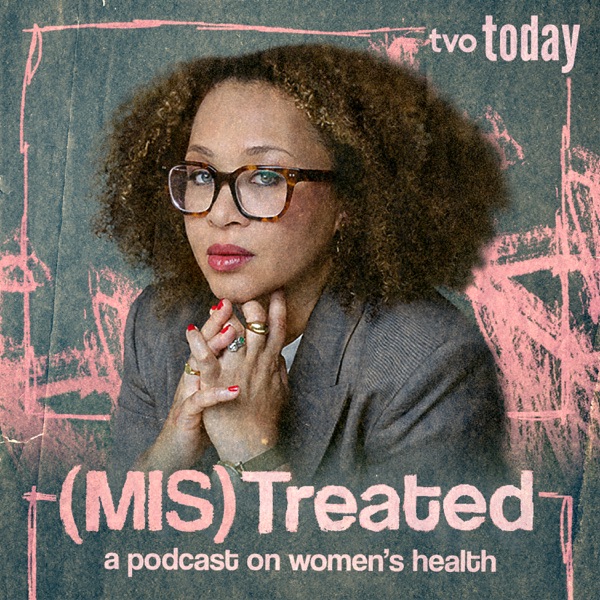
(MIS)Treated
(MIS)Treated, a TVO podcast, explores how medicine has – and still is – failing women and speaks to the people looking to make a difference. Join host Nam Kiwanuka to hear real life stories and expert interviews on how the mistreatment and misdiagnosis of women affects us all.
- Episodes
- 39
- Releases
- Weekly
- Typical length
- 38 min
- On air since
- 2025
- Latest episode
- 5 days ago
Episodes
39 episodes, newest first
-
52 min
Clara Hughes: How menopause "cracked me open"
Show notes
Clara Hughes is the only athlete to win multiple medals at both the Summer and Winter Olympic Games. But what the world didn't know was that as a child, she started smoking in grade 3 and by 12 years-old, she was drinking and partying. Why? In "Learning to Breathe: A Memoir" she writes about how pain had become a badge of honour, and how as a former elite athlete, she felt menopause as "an extra betrayal". She also shares some childhood secrets that were uncovered after she spent two years in intense and - what some could - consider as unconventional - therapy. We spoke to her in a conversation recorded in front of a live audience at the University of Toronto's Rotman School of Management. Please listen with care. Research Links: Inside Olympian Clara Hughes's unexpected health crisis - and how it led her down an LSD rabbit hole: https://www.thestar.com/news/canada/inside-olympian-clara-hughes-s-unexpected-health-crisis-and-how-it-led-her-down-an-lsd-rabbit-hole-edited/article_82c43a0b-3cbb-4a07-996b-c8ae16a955fc.html Three Americans among seven to win medals at Winter and Summer Olympics: https://www.nbcolympics.com/news/three-americans-among-seven-win-medals-winter-and-summer-olympics Clara Hughes is done being hot and bothered: https://www.theglobeandmail.com/life/article-clara-hughes-learning-to-breathe-memoir-menopause
See https://omnystudio.com/listener for privacy information.
-
32 min
(MIS)Treated investigates: Ehlers-Danlos Syndrome
Season 2, Episode 3
Show notes
When a story about one woman's search for care sparked a flood of messages, we began investigating Ontario's healthcare system and the possible obstacles facing people with Ehlers-Danlos syndrome (EDS), especially those with craniocervical instability (CCI).
For patients living with EDS, getting a diagnosis can take years. And when complex spinal conditions enter the picture, some patients and their families say they have been forced to look to the United States for help because they believe there is no surgeon in Canada able to provide the care they need. In this special episode of (Mis)Treated, we meet patients whose lives have been upended, families fighting for answers, and doctors who disagree about how these conditions should be treated.
See https://omnystudio.com/listener for privacy information.
-
30 min
Cynthia Mulligan on living a grateful life with breast cancer | (MIS)Treated
Season 2, Episode 2
Show notes
According to the Canadian Cancer Society, 1 in 8 women in Canada will develop breast cancer during their lifetime and in 2010, Canadian Broadcaster Cynthia Mulligan announced her diagnosis.
In 2020, days before Christmas, she found out that she had Stage 4 breast cancer. We speak to her about why she chose to go public with her diagnosis, how she navigated treatment as a forward facing person and we reminisce about our friend and former colleague, Mark Dailey.
Got a question or comment? Email us at: mistreatedpodcast@tvo.org
If you, or someone you know, is struggling with mental health, visit any of the following resources for support: Canada.ca/mental-health Kids Help Phone Call 1-800-668-6868 (toll-free) or text CONNECT to 686868.
See https://omnystudio.com/listener for privacy information.
-
1 hr
Why do autoimmune diseases impact women more?
Season 2, Episode 1
Show notes
Autoimmune disease is complicated. For one, there is no exact number of how many autoimmune conditions there are. We know that at least 80 of them exist and that globally, autoimmune impacts 1 in 10 people. While men also get autoimmune disease, women make up approximately 80% of patients. According to a 2021 study, women make up 75% of patients with MS. an autoimmune disease. And global cases of autoimmune disease are rising.
We speak to Dr. Gabor Maté who wrote more than 20 years ago about his observations on how autoimmune disease was impacting more women than men. We also speak to a neuroimmunologist on the connection of the Epstein-Barr virus and why women with some autoimmune diseases were once advised to not have children. Plus we talk to an epidemiologist who studies women's health on why autoimmune disease impacts women at such a staggering rate and we speak to a young woman with multiple sclerosis.
Got a question or comment? Email us at: mistreatedpodcast@tvo.org
If you, or someone you know, is struggling with mental health, visit any of the following resources for support: Canada.ca/mental-health Kids Help Phone Call 1-800-668-6868 (toll-free) or text CONNECT to 686868.
Research Links:
Incidence, prevalence, and co-occurrence of autoimmune disorders over time and by age, sex, and socioeconomic status: a population-based cohort study of 22 million individuals in the UK: https://www.thelancet.com/journals/lancet/article/PIIS0140-6736(23)00457-9/abstract
What Can We Learn from Sex Differences in MS?: https://pmc.ncbi.nlm.nih.gov/articles/PMC8537319/
Embodiment of structural racism and multiple sclerosis risk and outcomes in the USA: https://www.nature.com/articles/s41582-025-01096-5
How Is Céline Dion’s Health? What She’s Shared About Stiff Person Syndrome Battle: https://www.today.com/health/celine-dion-health-rcna98154
Celebrities and Medical Awareness—The Case of Celine Dion and Stiff-Person Syndrome: https://pmc.ncbi.nlm.nih.gov/articles/PMC9914970/
National study shows Indigenous patients with autoimmune liver disease face worse symptoms and outcomes: https://www.ualberta.ca/en/folio/2023/02/national-study-indigenous-patients-autoimmune-liver-disease.html
Indigenous people more prone to rare autoimmune liver disease, often misdiagnosed: https://globalnews.ca/video/9353047/indigenous-people-more-prone-to-rare-autoimmune-liver-disease-often-misdiagnosed-research/
Meet Dr. Dalia Rotstein, the St. Michael’s neurologist dedicated to improving care for women during pregnancy: https://unityhealth.to/2026/03/meet-the-neurologist-dedicated-to-improving-care-for-women-during-pregnancy/
Researcher studying link between pregnancy complications and autoimmune diseases with prestigious fellowship: https://utsc.utoronto.ca/news-events/our-community/researcher-studying-link-between-pregnancy-complications-and-autoimmune-diseases
An MS Diagnosis Led This Top Yogi to Evolve Her Practice: https://www.healthcentral.com/condition/multiple-sclerosis/an-ms-diagnosis-led-this-top-yoga-instructor-to-evolve-her-practice
See https://omnystudio.com/listener for privacy information.
-
2 min
(MIS)Treated: Season 2 Trailer Trailer
Season 2
Show notes
(MIS)Treated is back for season 2. Join host Nam Kiwanuka as she continues explores how medicine has – and still is – failing women and speaks to the people looking to make a difference.
This season we explore why women make up 80% of autoimmune patients, what it's like to access care for Ehlers-Danlos syndrome and we speak to award winning journalist Cynthia Mulligan about why she chose to reveal her breast cancer diagnosis and how its impacted her career. We also have conversations with Dr. Gabor Maté, Clara Hughes and speak to Dr. Mathew Leonardi about adenomyosis and the advances being made in endometriosis awareness.
See https://omnystudio.com/listener for privacy information.
-
50 min
Why do women make up 70% of chronic pain cases?
Season 1, Episode 32
Show notes
Unlike a broken arm, you can't see chronic pain. This makes it complicated to treat or diagnose because it's subjective. This has led chronic pain to be called a "silent epidemic" and while 70% of chronic pain sufferers are women, historically the majority of pain studies have been done on men or male mice. Many people with conditions like endometriosis, PMOS, migraines, fibroids and painful periods, live with chronic pain. And the World Health Organization officially classified it as a disease in 2022.
On the final episode of season 1, Nam Kiwanuka take a deeper dive on the history of pain research, what it is, the implicit bias towards women in medicine, and the research that's being done to combat that right here in Canada.
Nam speaks with Dr. Tania Di Renna, the president of the Canadian Pain Society (CPS) and Medical Director of the Toronto Academic Pain Medicine Institute (TAPMI) and Jennifer Daly-Cyr who has lived with chronic pain for more than a decade and is also co-chair of the Person with Lived Experience committee at the CPS.
Research links
Being A Woman Doesn’t Have To Be A (Chronic) Pain https://www.forbes.com/sites/evaepker/2023/04/05/why-is-being-a-woman-a-chronic-pain/
Women and pain: Disparities in experience and treatment: https://www.health.harvard.edu/blog/women-and-pain-disparities-in-experience-and-treatment-2017100912562
Mi'kmaw nurse explains how Indigenous pain often misunderstood: https://www.cbc.ca/news/canada/nova-scotia/mi-kmaw-nurse-1.5130067
Myths about physical racial differences were used to justify slavery — and are still believed by doctors today: https://www.nytimes.com/interactive/2019/08/14/magazine/racial-differences-doctors.html
Racial bias in pain assessment and treatment recommendations, and false beliefs about biological differences between blacks and whites: https://www.pnas.org/doi/10.1073/pnas.1516047113
Sex differences in the transition to chronic pain: https://pmc.ncbi.nlm.nih.gov/articles/PMC12126234/
“Brave Men” and “Emotional Women”: A Theory-Guided Literature Review on Gender Bias in Health Care and Gendered Norms towards Patients with Chronic Pain: https://onlinelibrary.wiley.com/doi/full/10.1155/2018/6358624
Yale psychologists find that adults take girls’ pain less seriously: https://news.yale.edu/2019/01/24/yale-psychologists-find-adults-take-girls-pain-less-seriously
Pain medication finally recommended in U.S. for IUD use. What about Canada?: https://globalnews.ca/news/10687785/iud-insertion-pain-management-guidance/
The science that changed how we study pain: https://www.mcgill.ca/science/channels/news/science-changed-how-we-study-pain-372651
Action On Pain podcast takes a closer look at the implementation of An Action Plan for Pain in Canada: https://redcircle.com/shows/action-on-pain
See https://omnystudio.com/listener for privacy information.
-
44 min
How girls and women with autism were missed
Season 1, Episode 31
Show notes
A recent study shows that autism is almost as prevalent in girls as it is in boys - so why have we been led to believe that autism is something that mostly impacts boys and men? The February 2026 study suggests that the difference, in part, is that girls are often diagnosed much later in life.
On today's episode, host and producer Nam Kiwanuka speaks with Julie M. Green about what it was like to be diagnosed with autism as a mother at age 44, while also raising a child on the spectrum. She documents this experience in her book, "Motherness: A Memoir of Generational Autism, Parenthood and Radical Acceptance."
Links:
• Towards the equal recognition of autism in girls and women https://www.bmj.com/content/392/bmj.s120.full
• Everyone thought autism mostly affected boys. This study says otherwise https://www.sciencedaily.com/releases/2026/02/260210082921.htm
• “I was always on the outside, watching quietly”: Autistic women reflect on school experiences https://www.nature.com/articles/s41599-024-03632-y
• Hans Asperger 'collaborated with Nazis' in WWII https://www.bbc.com/news/world-europe-43820794
• About Autism https://www.autismontario.com/about-autism
• Finding the True Number of Females with Autistic Spectrum Disorder by Estimating the Biases in Initial Recognition and Clinical Diagnosis https://pmc.ncbi.nlm.nih.gov/articles/PMC8870038/
• From the CDC: Understanding Autism Spectrum Disorder https://pmc.ncbi.nlm.nih.gov/articles/PMC8214927/
• Camouflaging and suicide behavior in adults with autism spectrum condition: A mixed methods systematic review https://www.sciencedirect.com/science/article/pii/S3050656525000124
• 8 Health Conditions Commonly Linked to Autism https://www.psychologytoday.com/us/blog/women-autism-spectrum-disorder/202108/8-health-conditions-commonly-linked-autism
• 10. A Systematic Review of the Relationship Between Neurodiversity and Psychosexual Functioning in Individuals with Autism Spectrum Disorder (ASD) or Attention-Deficit/Hyperactivity Disorder (ADHD) https://pmc.ncbi.nlm.nih.gov/articles/PMC10243356/See https://omnystudio.com/listener for privacy information.
-
30 min
Why Canada needs a national framework for women's health
Season 1, Episode 30
Show notes
A bill looking to establish a national framework for women's health is making its way through the Senate. What does Bill S-243 look to implement?
In Canada women represent 50% of the population, nearly half of the labour workforce, and make up 75% of health care professionals. But somehow when it comes to women's health, it's considered to be a niche topic. Not only has women's health been historically under researched, underfunded, and misunderstood, women working in healthcare also face additional barriers.
Under the leadership of Senator Danièle Henkel, a coalition of professionals in healthcare, FemTech, and research have come together to try to address gaps in women's health with this new bill.
Today, host and producer Nam Kiwanuka speaks with Dr. Jennifer Blake from the Pan-Canadian Women's Health Coalition about the bill, why Canada needs a national framework for women's health, the gaps that currently exist, and why women's health continues to be seen as niche.
Links:
• ‘It’s not my bill, it’s our bill’: Senator Henkel and 50 advocacy groups push for law calling for women’s health framework https://www.hilltimes.com/2026/03/01/its-not-my-bill-its-our-bill-senator-henkel-and-50-advocacy-groups-push-for-law-calling-for-womens-health-framework/493464/
• New study finds female family doctors spend more time caring for patients, yet earn less https://www.oma.org/newsroom/news-releases/2026/january/new-study-finds-female-family-doctors-spend-more-time-caring-for-patients-yet-earn-less/https://www.oma.org/newsroom/news-releases/2026/january/new-study-finds-female-family-doctors-spend-more-time-caring-for-patients-yet-earn-less/
• Health workforce in Canada: Overview https://www.cihi.ca/en/health-workforce-in-canada-overviewhttps://www.cihi.ca/en/health-workforce-in-canada-overview
• What’s the plan? New bill before Senate aims to provide a framework for women’s health https://canadianhealthcarenetwork.ca/whats-plan-new-bill-senate-aims-provide-framework-womens-healthhttps://canadianhealthcarenetwork.ca/whats-plan-new-bill-senate-aims-provide-framework-womens-health
• Federal health minister to launch strategy on men’s and boys’ health in 2026 https://www.ctvnews.ca/health/article/federal-health-minister-to-launch-strategy-on-mens-and-boys-health-in-2026/
• Opinion: Canada’s blind spot on drug safety in pregnancy https://montrealgazette.com/opinion/op-eds/opinion-canadas-blind-spot-on-drug-safety-in-pregnancy/See https://omnystudio.com/listener for privacy information.
-
44 min
The Big Business of IVF
Season 1, Episode 29
Show notes
What's it like to navigate fertility care as it becomes increasingly profit-driven in Ontario?
Infertility is considered a medical condition by the World Health Organization and in Canada, it's defined by age. A study from 2023 shows that a fifth of men believe that fertility is a "woman's problem," but the science says otherwise. Approximately one third of infertility is attributed to male factors, another third is attributed to female factors, and in one third of couples, there is no cause identified. This is known as unexplained infertility.
One of the key medical interventions for infertility is called in-vitro fertilization – or IVF. IVF has become a big business. In 2023, it was estimated at $50 billion and is projected to double in the next decade.
Today, host and producer Nam Kiwanuka is joined by journalist Caitlin Walsh-Miller and Irene Darrell-Austin, a Toronto-resident with lived experience navigating fertility care. They talk about how infertility impacts families, the growing disparity of who can access treatments and why this industry needs to be regulated.
Links:
• The High Price of Hope https://torontolife.com/deep-dives/inside-torontos-white-hot-fertility-market/
• Private equity piles into Canada's fertility clinics https://financialpost.com/feature/private-equity-piles-into-canada-fertility-clinics
• Disturbing errors at Ontario fertility clinics destroy couples’ baby dreams years after province abandoned oversight plans https://www.thestar.com/news/investigations/disturbing-errors-at-ontario-fertility-clinics-destroy-couples-baby-dreams-years-after-province-abandoned-oversight/article_502ba774-1f20-4fb0-b2e3-4fb7780e3e82.html#tncms-source=login
• Fertility is not just a 'women’s problem' but a fifth of men think it is, a new study finds https://www.euronews.com/health/2023/06/10/fertility-is-not-just-a-womens-problem-yet-a-fifth-of-men-think-it-is-study-finds
• Male Infertility is a Women’s Health Issue—Research and Clinical Evaluation of Male Infertility Is Needed https://pmc.ncbi.nlm.nih.gov/articles/PMC7226946/
• Yes, men have a biological clock too. But it’s not just age that affects male fertility https://theconversation.com/yes-men-have-a-biological-clock-too-but-its-not-just-age-that-affects-male-fertility-268298
• The female scientist who changed human fertility forever https://www.bbc.com/future/article/20200103-the-female-scientist-who-changed-human-fertility-forever
• Where Is the First ‘Test-Tube Baby’ Now? All About Louise Joy Brown, the First Child Ever Born via IVF https://people.com/where-is-louise-joy-brown-the-first-ivf-baby-now-8748006
• IVF: The women who helped make it happen https://pmc.ncbi.nlm.nih.gov/articles/PMC6352853/
• The Vatican’s Secret Role in the Science of IVF https://www.vanityfair.com/style/story/pope-secret-history-ivf?src=longreads
• How IVF has led to a record number of single moms in their 40s https://www.npr.org/2026/01/12/nx-s1-5647761/ivf-fertility-motherhood-40s-cost-donor-decision
• Ontario Connecting More Families to Fertility Supports https://news.ontario.ca/en/release/1007375/ontario-connecting-more-families-to-fertility-supports
• Celebs IVF: All the celebrities who had IVF, from Kourtney Kardashian to Jennifer Aniston https://www.cosmopolitan.com/uk/body/g39990713/celebs-ivf/See https://omnystudio.com/listener for privacy information.
-
54 min
What's it like to be a midwife in a conflict zone?
Season 1, Episode 28
Show notes
In this country, midwives "were once a cornerstone of every Indigenous community." What happened?
Before the 20th century, midwifery was essential for communities throughout Europe, Africa, Asia, and America. With the growth of western medicine in the late 1800s to early 1900s, midwives were instead accused of being unsanitary and unscientific. Midwifery became known as "the Midwife problem," and the practice was phased out and operated in legal "grey zones."
In 1994, after decades of midwives pushing back, Ontario became the first province in Canada to recognize and legalize midwives. In 2024, PEI became the final province in Canada to officially recognize midwifery. If the history of midwives is this complicated in the Global North, what is it like to practice as a midwife in places experiencing civil unrest or conflict?
A new documentary follows five midwives who are doing that work. On today's episode, host and producer Nam Kiwanuka speaks to two midwives, Ximena Rojas Garcia and Jay MacGillivray, as well as Nance Ackerman, the director of "The Delivery Line: Midwives on the Frontlines." Together, they speak about the challenges of the work that these midwives do, but also about the joy of catching a baby.
Links:
• Midwifery: A Woman's Labour, A Woman's Choice, 1994 CanLIIDocs 506 https://www.canlii.org/en/commentary/doc/1994CanLIIDocs506#!fragment//BQCwhgziBcwMYgK4DsDWszIQewE4BUBTADwBdoByCgSgBpltTCIBFRQ3AT0otokLC4EbDtyp8BQkAGU8pAELcASgFEAMioBqAQQByAYRW1SYAEbRS2ONWpA
• British Columbia to let midwives prescribe abortion pill and other drugs https://www.thestar.com/news/canada/british-columbia/british-columbia-to-let-midwives-prescribe-abortion-pill-and-other-drugs/article_f4b5639a-847f-5038-98a1-b82fb4208b00.html#tncms-source=login
• Indigenous communities across Canada have always had midwives https://indigenousmidwifery.ca/history-strategic-plan/
• A Brief History of Midwifery in America
https://www.ohsu.edu/womens-health/brief-history-midwifery-america
• THE MIDWIFE PROBLEM IN THE UNITED STATES
https://jamanetwork.com/journals/jama/article-abstract/236051
• Why Are We Asking Doctors If Women Should Have Midwives?
https://pathwaystofamilywellness.org/holistic-healthcare/why-are-we-asking-doctors-if-women-should-have-midwives.html
• Childbirth evacuation among rural and remote Indigenous communities in Canada: A scoping review
https://www.sciencedirect.com/science/article/abs/pii/S187151922100038X
• 25 years on: What midwifery in Canada has achieved and what it still needs https://theconversation.com/25-years-on-what-midwifery-in-canada-has-achieved-and-what-it-still-needs-120210
• The Destruction of Canadian Midwifery during the 20th Century
https://birthinternational.com/the-re-emergence-of-canadian-midwifery/?srsltid=AfmBOoq9ax0eNorpdo1FISNUjB2sOB7TlOFK1Mo79rbISeZ9DLcxZhHN
• After decades-long push, P.E.I. now offers midwifery to oversee pregnancies https://www.cbc.ca/news/canada/prince-edward-island/pei-midwifery-services-offered-1.7102229
• Georgia bans many midwives from practicing. Now, several are suing the state https://www.nbcnews.com/health/womens-health/midwives-sue-challenge-state-restrictions-rcna264951
• Facing rural realities and mistrust in hospitals, these women turned to home births
https://www.cbc.ca/radio/thecurrent/freebirthing-rural-maternal-medicine-9.7172199See https://omnystudio.com/listener for privacy information.
-
39 min
How Canada stops forced sterilization of Indigenous women
Season 1, Episode 27
Show notes
This episode is about forced and coerced sterilization of Indigenous women and girls in Canada. Please listen with care.
In 2025, Senator Yvonne Boyer, Ontario's first Indigenous senator, proposed a bill to criminalize forced and coerced sterilization. If passed, Bill S-228 will amend the Criminal Code to ensure that forced sterilization would be included in the definition of aggravated assault, punishable by up to 14 years in prison.
The bill follows Canada's Truth and Reconciliation Commission - the TRC. The TRC was meant to bring a "fair and lasting" resolution to the legacy of Indian residential schools, and by extension, Canadian colonialism. One of the Calls to Action from the TRC was for Canada to hold a national inquiry into the crisis of missing and murdered Indigenous women and girls. That Inquiry dealt with a wide range of concerns, including forced and coerced sterilizations.
This Red Dress Day, host and producer Nam Kiwanuka features Harmony Redsky from the Survivors Circle for Reproductive Justice. Harmony reveals how one survivor was sterilized as recently as 2024. The episode discusses the history of forced and coerced sterilization, the organization's survivor-led initiatives, and the current push for legislative change to criminalize these violations.
Special thanks to Pam Palmeter for production support.
Got a question or comment? Email us at: mistreatedpodcast@tvo.org
If you, or someone you know, is struggling with mental health, visit any of the following resources for support: Canada.ca/mental-health Kids Help Phone Call 1-800-668-6868 (toll-free) or text CONNECT to 686868.
Research links:
• Survivors Circle for Reproductive Justice
https://www.reproductivejusticesurvivors.ca/
• Indian Residential Schools Settlement Agreement
https://www.rcaanc-cirnac.gc.ca/eng/1100100015576/1571581687074
• UN Special Rapporteurs Highlight Forced Sterilization of Indigenous Women in Canada
https://cglj.org/2019/07/18/un-special-rapporteurs-highlight-forced-sterilization-of-indigenous-women-in-canada/
• Canada indigenous women were coerced into sterilisations, lawsuit says
https://www.theguardian.com/world/2017/oct/27/canada-indigenous-women-sterilisation-lawsuit
• National Inquiry into Missing and Murdered Indigenous Women and Girls
https://www.rcaanc-cirnac.gc.ca/eng/1448633299414/1534526479029
• Truth and Reconciliation Commission of Canada: Calls to Action
https://nctr.ca/about/truth-and-reconciliation-commission-of-canada-calls-to-action/
• Hundreds gather to celebrate Murray Sinclair's legacy with round dance in Winnipeg
https://www.cbc.ca/news/canada/manitoba/murray-sinclair-round-dance-9.7059423
• Report of the Special Rapporteur on torture and other cruel, inhuman or degrading treatment or punishment
https://documents.un.org/doc/undoc/gen/g16/000/97/pdf/g1600097.pdf?OpenElement
• A legacy of colonialism: Senate Bill S-228 aims to criminalize the forced sterilization of women
https://www.ipolitics.ca/2025/08/07/a-legacy-of-colonialism-senate-bill-s-228-aims-to-criminalize-the-forced-sterilization-of-women/
• Rather than a ‘chilling effect’, Bill S-228 provides protection from forced sterilization
https://healthydebate.ca/2026/04/topic/bill-s228-protection-forced-sterilization/
• A federal bill aimed at protecting women could actually cause harm
https://healthydebate.ca/2026/03/topic/bill-s228-sterilization-womens-health/See https://omnystudio.com/listener for privacy information.
-
27 min
How do hormonal changes impact women's brain health?
Season 1, Episode 26
Show notes
Only 3% of studies in neuroscience examine a female-only population, even though women make up 50% of the population. When it comes to neuroscience, research on women's brain health is greatly lacking.
Host and producer Nam Kiwanuka speaks with two scientists who are leading the research, not only on women's brain health but how hormonal changes impact women's brain health. Nam asks the experts about the latest findings, the gaps in research in this field, and the challenges that neuroscientists face when trying to get their work funded in the first place. Is Canada falling behind in women's brain health research? What opportunities are there in this research space?
In collaboration with MaRS Impact Health and recorded in front of a live audience at a conference putting women's health at the forefront, Nam interviews Dr. Liisa Galea from CAMH, The Galea Lab and Dr. Natasha Rajah from the Brain Health Equity in Aging and Memory (BHEAM) Lab at Toronto Metropolitan University.
Links:
• The Lab of Behavioral Neuroendocrinology: https://www.galealab.com/
• The Brain Health Equity in Aging & Memory (BHEAM) lab: https://www.bheamlab.ca/
• Mind the Gap: Hormonal Contraceptives and Brain Health
https://womenshealthresearchcluster.com/professional-development/conferences/mind-the-gap/
• Estradiol-based Menopausal Hormone Therapy is associated with improved episodic and prospective memory scores in the Canadian Longitudinal Study of Aging
https://www.medrxiv.org/content/10.1101/2025.01.13.25320471v1
• Biological sex & menopause effects on vascular health and rsFMRI connectivity in middle-aged adults
https://www.bheamlab.ca/downloads/AAIC_abstract_Kearley_2025.pdfSee https://omnystudio.com/listener for privacy information.
-
32 min
How to combat the Black maternal health crisis
Season 1, Episode 25
Show notes
In the U.S., Black women are more than three times as likely to die during childbirth as white women. In the U.K., Black women are more than twice as likely to die in childbirth, and babies born to Black mothers are at an increased risk of stillbirth. Here in Canada, stats to better understand health outcomes for Black mothers aren't even available. While there are provinces in Canada that collect race-based data, historically, this country hasn't tracked health outcomes by race, which means the picture for what Black maternal health looks like across the country is unclear. However, if statistics from other jurisdictions are any indication, birthing and pregnancy are a greater risk to Black mothers, no matter where they live or what their socioeconomic background is. On this episode, we speak with Jennifer Dockery and Jenelle Ambrose Dash about the work that the Black Maternal Health Collective is doing, including Toronto's Black Maternal Health Week taking place April 11-17th. We also talk about accountability, the concerns of collecting race-based data in Canada, and what action looks like.
Got a question or comment? Email us at: mistreatedpodcast@tvo.org
If you, or someone you know, is struggling with mental health, visit any of the following resources for support: Canada.ca/mental-health Kids Help Phone Call 1-800-668-6868 (toll-free) or text CONNECT to 686868.
Research links:
• The weathering hypothesis and the health of African-American women and infants: evidence and speculations
https://pubmed.ncbi.nlm.nih.gov/1467758/
• Weathering” and Age Patterns of Allostatic Load Scores Among Blacks and Whites in the United States
https://pmc.ncbi.nlm.nih.gov/articles/PMC1470581/
• Black Women Excluded from Critical Studies Due to ‘Weathering’
https://medicine.yale.edu/news-article/black-women-excluded-from-critical-studies-due-to-weathering/
• Childbirth Is Deadlier for Black Families Even When They’re Rich, Expansive Study Finds
https://www.nytimes.com/interactive/2023/02/12/upshot/child-maternal-mortality-rich-poor.html
• Black midwife's death highlights racial gap in maternal mortality
https://www.pbs.org/newshour/show/black-midwifes-death-highlights-racial-gap-in-maternal-mortality
• "Colorblind Care" Is Costing Lives. Meet The Woman Who Started Toronto’s First Black Maternal Health Week To Change That
https://www.essence.com/news/toronto-first-black-maternal-health-week/
• Racial variations of adverse perinatal outcomes: A population-based retrospective cohort study in Ontario, Canada
https://pmc.ncbi.nlm.nih.gov/articles/PMC9246499/
• Black Maternal Morbidity and Mortality
https://www.bornontario.ca/initiatives-resources/health-equity-and-indigenous-health/black-maternal-morbidity-and-mortality/https://www.bornontario.ca/initiatives-resources/health-equity-and-indigenous-health/black-maternal-morbidity-and-mortality/
• Beyonce opens up about pregnancy complications with twins
https://abcnews.com/GMA/Culture/beyonce-opens-pregnancy-complications-twins/story?id=62480855https://abcnews.com/GMA/Culture/beyonce-opens-pregnancy-complications-twins/story?id=62480855
• Serena Williams: What my life-threatening experience taught me about giving birth
https://www.cnn.com/2018/02/20/opinions/protect-mother-pregnancy-williams-opinion
• Systemic racism affects maternity care for black women in England, say MPs
https://www.theguardian.com/society/2025/sep/17/systemic-racism-affects-maternity-care-for-black-women-in-england-say-mps
• https://www.pbs.org/newshour/health/u-s-maternal-deaths-more-than-doubled-over-20-years-heres-who-fared-the-worst
• https://www.npr.org/2024/05/28/nx-s1-4977627/rachel-somerstein-invisible-labor-c-section
• https://sph.umich.edu/pursuit/2020posts/state-of-maternal-mortality-the-inequitable-burden-on-black-mothers.html
• https://www.sciencedirect.com/science/article/pii/S2667193X22002253
• https://www.communitysolutions.com/resources/medical-bias-weathering-deadly-impact-black-mothers
• https://nationalpost.com/news/maternal-death-injury-in-canada
• https://www.cbc.ca/documentaries/i-made-a-documentary-about-the-black-maternal-health-crisis-then-i-experienced-it-1.7101607
• https://www.cdc.gov/womens-health/features/maternal-mortality.html?CDC_AAref_Val=https://www.cdc.gov/healthequity/features/maternal-mortality/index.html
• https://www.mckinsey.com/institute-for-economic-mobility/our-insights/closing-the-black-maternal-health-gap-healthier-lives-stronger-economies
• https://www.milwaukeeindependent.com/newswire/black-maternal-mortality-rate-reaches-3-5-times-white-women-racial-gap-childbirth-widens/See https://omnystudio.com/listener for privacy information.
-
34 min
Can Canada still eliminate cervical cancer by 2040?
Season 1, Episode 24
Show notes
Doctors are calling for action. Cervical cancer is one of the most preventable cancers, and rates in Canada had been dropping for years. Canada had even pledged to eliminate it completely by 2040. Not anymore. Rates have plateaued, and cervical cancer is the fourth most diagnosed cancer and fourth leading cause of cancer death among females worldwide. Is Canada still on track? On this episode, we talk about the causes of cervical cancer, how prevention strategies fall short because of vaccine hesitancy, how under-served communities are at risk and what jurisdictions around the world are on track to eliminate cervical cancer. Guests: Michelle Halligan Director of the Canadian Partnership Against Cancer and Nakia Lee-Foon, a Health equity researcher at the Institute for Better Health, Trillium Health Partners.
Research links:
• Disparities in the allocation of research funding to gynecologic cancers by Funding to Lethality scores
https://www.gynecologiconcology-online.net/article/S0090-8258(18)31302-7/abstract
• Denmark could eradicate cervical cancer by 2040: study https://www.ctvnews.ca/health/article/denmark-could-eradicate-cervical-cancer-by-2040-study/
• Addressing Anxiety and Fear during the Female Pelvic Examination
https://journals.sagepub.com/doi/full/10.1177/2150132721992195
• Researchers redesign vaginal speculum to ease fear and pain
https://www.ctvnews.ca/health/article/researchers-redesign-vaginal-speculum-to-ease-fear-and-pain/
• New vaginal speculum design might motivate women to go for health checkups
https://www.tudelft.nl/en/ide/delft-design-stories/new-vaginal-speculum-design-might-motivate-women-to-go-for-health-checkups
• Cervical cancer is ‘fastest-rising’ form in Canada as doctors urge action
https://globalnews.ca/news/11698821/cervical-cancer-cases-rising-canada/
• Progress Against Cervical Cancer in Canada
https://health-infobase.canada.ca/cancer/progress-against-cancers/reports.html?type=1
• New Canadian Cancer Statistics report suggests Canada may fall short of its 2040 goal to eliminate cervical cancer
https://cancer.ca/en/about-us/media-releases/2025/canadian-cancer-statistics-2025
• https://www.instituteforbetterhealth.com/member/lee-foon-nakia/
• https://www.partnershipagainstcancer.ca/See https://omnystudio.com/listener for privacy information.
-
44 min
An Open Conversation On Pregnancy Loss
Season 1, Episode 23
Show notes
Pregnancy loss affects millions each year – so why do so many women have to suffer in silence after a miscarriage or stillbirth? According to a 2021 Lancet Study, an estimated 23 million miscarriages occur every year worldwide: 44 pregnancy losses each minute. For those who have experienced a miscarriage or a stillbirth, the joy of welcoming a child into the world can quickly turn into a nightmare of loss and isolation. On today's episode, host and producer Nam Kiwanuka speaks to Idalina Leandro about the motivations for her documentary, "An Open Conversation," which aims to destigmatize pregnancy and infant loss. The conversation explores how the silence around pregnancy loss impacts parents differently, why mothers blame themselves and how the healthcare system fails to support grieving families.
Got a question or comment? Email us at: mistreatedpodcast@tvo.org
If you, or someone you know, is struggling with mental health, visit any of the following resources for support: Canada.ca/mental-health Kids Help Phone Call 1-800-668-6868 (toll-free) or text CONNECT to 686868.
Research Links:
• Canadian gynecologists group issues new compassionate care guidelines for miscarriage patients https://www.theglobeandmail.com/canada/article-new-guidelines-early-pregnancy-loss-patients/
• Idalina Leandro’s ‘An Open Conversation’ Aims To Destigmatize Pregnancy & Infant Loss https://www.shedoesthecity.com/idalina-leandros-an-open-conversation-aims-to-de-stigmatize-pregnancy-infant-loss/
• Pregnancy, Infant & Child Loss Support Centre https://pilsc.org/
• Why those suffering miscarriages could benefit from specialized clinics https://www.cbc.ca/news/health/pregnancy-loss-sogc-1.7563527
• My wife and I were left on our own after miscarriage https://www.cbc.ca/news/canada/ottawa/mothers-day-miscarriage-pregnancy-loss-first-person-1.6836319
• New Zealand approves paid leave following miscarriage or still birth https://www.cbc.ca/news/world/new-zealand-paid-leave-miscarriage-still-birth-1.5964604
• Thousands of Canadians miscarry every year. For them, Mother's Day can be a reminder of loss https://www.cbc.ca/news/canada/british-columbia/mothers-day-grief-loss-1.7532302
• https://www.sciencedirect.com/science/article/pii/S0015028223017193
• https://www.thelancet.com/journals/lancet/article/PIIS0140-6736(21)00682-6/abstract
• https://www.jogc.com/article/S1701-2163(25)00154-9/fulltextSee https://omnystudio.com/listener for privacy information.
-
35 min
The Pink Pill: De-stigmatizing women's libido
Season 1, Episode 22
Show notes
You may know Viagra as the "blue pill" but what about Addyi, the "pink pill"?
Addyi was first approved in the U.S. in 2015 to treat hypoactive sexual desire disorder (HSDD) – the medical term for women experiencing low libidos. According to the National Institutes of Health, it is "the most commonly identified sexual problem among women." It was first identified in 1977 but getting drugs to market for women's sexual health faces unique challenges. Addyi is one of two approved drugs that help improve women's low libido, while 26 drugs have been approved for male sexual health by the U.S. Food and Drug Administration. On this episode, host and producer Nam Kiwanuka speaks with Aisling Chin-Yee about the history of how Addyi came to market and what making her documentary, "The Pink Pill: Sex, Drugs & Who Has Control", has taught her about how this pink pill is changing the conversation about women's libido.
Links:
How U.S. Tried but Failed to Wipe Out 70 Years of Global Consent on Women’s Rights
https://msmagazine.com/2026/03/19/usa-csw-70-women/
A Pill for Sexual Desire Reaches a New Group of Women
https://time.com/7341012/sexual-desire-pill-addyi-cindy-eckert/
The Pink Pill : New documentary exposes the long battle to bring Addyi — the first libido drug for women — to market
https://theconversation.com/the-pink-pill-new-documentary-exposes-the-long-battle-to-bring-addyi-th…
https://pmc.ncbi.nlm.nih.gov/articles/PMC8673442/
https://pubmed.ncbi.nlm.nih.gov/32301355/
https://jamanetwork.com/journals/jamainternalmedicine/fullarticle/414363
https://www.sproutpharmaceuticals.com/
See https://omnystudio.com/listener for privacy information.
-
40 min
What's it like to try and get diagnosed with endometriosis?
Season 1, Episode 21
Show notes
Because the male body has been the default in medicine, conditions that primarily impact women, like PCOS and endometriosis, are under researched, misunderstood and under funded. Even conditions that are commonly understood in men like autism, ADHD and cardiovascular disease are misunderstood, misdiagnosed and under diagnosed in women. On today's episode we speak with journalist Tracey Lindeman about her book, "Bleed: Destroying Myths and Misogyny in Endometriosis Care". We talk to her about how her pain was dismissed for decades and how it took 24 years to be diagnosed with endometriosis and adenomyosis.
Got a question or comment? Email us at: mistreatedpodcast@tvo.org
If you, or someone you know, is struggling with mental health, visit any of the following resources for support: Canada.ca/mental-health Kids Help Phone Call 1-800-668-6868 (toll-free) or text CONNECT to 686868.
Research links:
Endometriosis and Misogyny With Tracey Lindeman
https://canadianwomen.org/blog/endometriosis-and-misogyny-with-tracey-lindeman/https://www.cbc.ca/news/health/women-health-second-opinion-1.7531876
https://www.ellecanada.com/culture/society/the-gender-health-gap-misogyny-in-medicine
https://www.who.int/news-room/fact-sheets/detail/polycystic-ovary-syndrome
https://www.cfp.ca/content/72/1/e17
https://www.bmj.com/content/387/bmj.q2780.full
https://www.cbc.ca/news/canada/newfoundland-labrador/women-pain-dismissed-1.7390686
See https://omnystudio.com/listener for privacy information.
-
53 min
Why is it so hard to get care for the menopause transition?
Season 1, Episode 20
Show notes
In the last few years, menopause has become a big business and the global market for it is worth billions of dollars. Yet the people who need care during this transition are still struggling to get the help they need.
In a special live episode of (MIS)Treated, we talk about how women's health is having a moment. We talk about surgical menopause, the impact the family doctor crisis is having on those in the menopause transition, why one guest used AI to self-diagnose their cancer and the harms caused by misinformation in women's health.
Got a question or comment? Email us at: mistreatedpodcast@tvo.org
If you, or someone you know, is struggling with mental health, visit any of the following resources for support: Canada.ca/mental-health Kids Help Phone Call 1-800-668-6868 (toll-free) or text CONNECT to 686868.
The Government of Ontario's Mental Health Support Resources: https://www.ontario.ca/page/find-mental-health-support
Follow TVO on social: https://www.youtube.com/theagenda https://www.instagram.com/mistreatedtvo
Join our newsletter: https://www.tvo.org/newsletters
Visit the TVO Today website for current affairs journalism, documentaries and podcasts: https://www.tvo.org
Research links
The menopause gap: why some women suffer more and get less care: https://theconversation.com/the-menopause-gap-why-some-women-suffer-more-and-get-less-care-272753
What You Should Know About the Non-White Experience of Menopause: https://katiecouric.com/health/wellness/non-white-menopause-healthcare-gap/
Menopause: our study revealed how it affects the brain, cognition and mental health: https://theconversation.com/menopause-our-study-revealed-how-it-affects-the-brain-cognition-and-mental-health-275329
After Decades of Misunderstanding, Menopause is Finally Having Its Moment: https://medicine.yale.edu/news-article/after-decades-of-misunderstanding-menopause-is-finally-having-its-moment/
Managing menopause after cancer: https://www.thelancet.com/journals/lancet/article/PIIS0140-6736(23)02802-7/fulltext
https://obgyn.utoronto.ca/faculty/marie-christakis
https://possibilityseeds.ca/team/farrah-khan-she-her/
https://theconversation.com/profiles/michelle-cohen-1025333
See https://omnystudio.com/listener for privacy information.
-
33 min
'A Dream Realized': A conversation with Canada's menopause pioneer
Season 1, Episode 19
Show notes
Until recently, menopause was a whisper between friends and trusted ones. And if you were going through it, there was an unspoken secrecy about saying that you were. This stigma still exists in some communities. But menopause is more than just hot flashes. It is associated with increased risks of long-term health issues such as osteoporosis, heart disease, diabetes and impacts brain health.
Nam Kiwanuka speaks to Dr. Wendy Wolfman, a pioneer in Canada and an internationally renowned menopause expert, about the lack of funding in women's health, the impact of the Women's Health Initiative study and how Canada can become a world leader in women's health.
Got a question or comment? Email us at: mistreatedpodcast@tvo.org
If you, or someone you know, is struggling with mental health, visit any of the following resources for support: Canada.ca/mental-health Kids Help Phone Call 1-800-668-6868 (toll-free) or text CONNECT to 686868.
The Government of Ontario's Mental Health Support Resources: https://www.ontario.ca/page/find-mental-health-support
Follow TVO on social: https://www.youtube.com/theagenda https://www.instagram.com/mistreatedtvo
Join our newsletter: https://www.tvo.org/newsletters
Visit the TVO Today website for current affairs journalism, documentaries and podcasts: https://www.tvo.org
Research links
Behind the scenes with Dr. Wendy Wolfman: https://sinaimaturewomenshealth.ca/behind-the-scenes-with-dr-wendy-wolfman
Menopause: our study revealed how it affects the brain, cognition and mental health: https://theconversation.com/menopause-our-study-revealed-how-it-affects-the-brain-cognition-and-mental-health-275329
Halle Berry shouts 'I'm in menopause' on Capitol Hill as she fights for funding to improve women's care: https://abcnews.com/GMA/Wellness/halle-berry-shouts-im-menopause-capitol-hill-fights/story?id=109881356
After Decades of Misunderstanding, Menopause is Finally Having Its Moment: https://medicine.yale.edu/news-article/after-decades-of-misunderstanding-menopause-is-finally-having-its-moment/
What to know about menopause hormone therapy after FDA removed 'black box' warnings: https://www.pbs.org/newshour/health/what-to-know-about-menopause-hormone-therapy-after-fda-removed-black-box-warnings
Hormones for menopause are safe, study finds. Here's what changed: https://www.npr.org/sections/health-shots/2024/05/01/1248525256/hormones-menopause-hormone-therapy-hot-flashes
See https://omnystudio.com/listener for privacy information.
-
1 hr 3 min
Why researching sex and gender differences matters
Season 1, Episode 18
Show notes
Women are diagnosed on average 2 to 4 years later than men in over 1300 different disorders. These include conditions like depression and anxiety, and Alzheimer's disease, which disproportionately impact women. Most of our medical knowledge, including how to diagnose someone, is based mostly on symptoms for males or the experiences of men.
Nam Kiwanuka speaks to world-renowned neuroscientist, Dr. Liisa Galea from CAMH, the Centre for Addiction and Mental Health, about why researching sex and gender differences in health matters and how hormones influence the female brain, especially during pregnancy and postpartum.
Got a question or comment? Email us at: mistreatedpodcast@tvo.org
If you, or someone you know, is struggling with mental health, visit any of the following resources for support: Canada.ca/mental-health Kids Help Phone Call 1-800-668-6868 (toll-free) or text CONNECT to 686868.
The Government of Ontario's Mental Health Support Resources: https://www.ontario.ca/page/find-mental-health-support
Follow TVO on social: https://www.youtube.com/theagenda https://www.instagram.com/mistreatedtvo
Join our newsletter: https://www.tvo.org/newsletters
Visit the TVO Today website for current affairs journalism, documentaries and podcasts: https://www.tvo.org
Research links
Dr. Liisa Galea bio https://ims.utoronto.ca/faculty/liisa...
Women’s Health Research Cluster https://womenshealthresearchcluster.c...
Study: Across Diseases, Women Are Diagnosed Later Than Men https://www.cpr.ku.dk/cpr-news/2019/s...
Proper funding for women’s health research could save lives during pandemic https://policyoptions.irpp.org/2020/0...
Why women are bearing more of the impact of dementia https://www.alzheimersresearchuk.org/...
Women are diagnosed years later than men for same diseases, study finds https://www.nbcnews.com/health/health...
5 conditions that highlight the women’s health gap https://www.gavi.org/vaccineswork/5-c...
New report identifies a blueprint to close the womens health gap https://www.mckinsey.com/mhi/media-ce...
See https://omnystudio.com/listener for privacy information.
Medicine lists
More Medicine shows picked out from the charts









More in Medicine
Placed highest on Apple Podcasts' Medicine chart right now