Podcast
On The Pen GLP-1 News
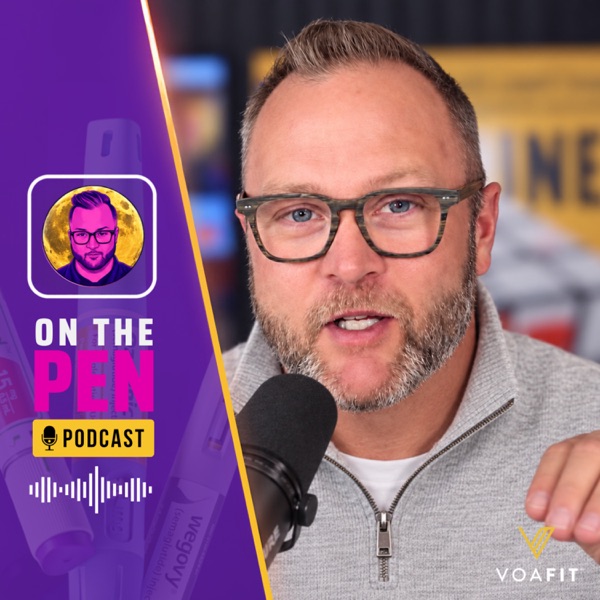
On The Pen is the leading GLP-1 news podcast and platform covering obesity medicine, FDA actions, drug shortages, access policy, and the business of NuSH therapies. The podcast is in the top 0.5% of all podcasts globally, and On The Pen is a top Substack best-seller.
- Medicine chart
- #135
- Episodes
- 215
- Releases
- Weekly
- Typical length
- 30 min
- On air since
- 2024
- Latest episode
- 1 week ago
Episodes
215 episodes, newest first
-
32 min
Retatrutide Phase 3 Results: What You Need to Know
Show notes
Retatrutide’s New Phase 3 Data, CagriSema in Menopause, and the Growing GLP‑1 Access CrisisHost Dave Knapp recaps major obesity-drug updates, focusing on Eli Lilly’s triple agonist retatrutide and Novo Nordisk’s CagriSema. He reviews Triumph 1 obesity results (up to 25% average weight loss at 80 weeks) and highlights New England Journal of Medicine Phase 3 data showing large reductions in obstructive sleep apnea events in people with and without type 2 diabetes, while noting uncertainty about weight-loss versus nervous-system mechanisms. He also covers TRANSCEND CKD Phase 2B kidney findings: no significant improvement in measured GFR, but favorable secondary markers including reduced urine albumin in a subset. Novo’s post hoc Redefine 1 analyses show strong CagriSema weight loss across pre-, peri-, and post-menopausal women. He discusses Zealand/Roche’s petrelintide Phase 2 results emphasizing low GI discontinuation and argues tolerability matters as much as potency. The episode closes on worsening affordability and coverage, including employers dropping benefits and Pennsylvania Medicaid GLP-1 spending rising to an estimated $1.3B, warning restricted access fuels the gray market.00:00 Big Week in Obesity Drugs00:53 Show Intro and Disclaimers02:03 Sponsor Spotlight VoaFit03:06 Retatrutide Weight Loss Context05:27 Sleep Apnea Phase 3 Results10:23 Beyond Weight Loss Benefits12:14 Kidney Study Nuance16:53 CagriSema Menopause Data19:20 Petrelintide Amylin Update23:33 Top Host Voting Pitch ( otplinks.com )25:29 Access and Coverage Crisis27:42 Medicaid Costs and Gray Market31:21 Wrap Up and Schedule
-
27 min
GLP-1 Recall Update: Why You Need to Check Your Vials
Show notes
Specific lots of compounded tirzepatide have been recalled over sterility concerns, another pharmacy recently recalled compounded semaglutide after particulate matter was identified, patients have reported visible strands and fibers in other compounded GLP-1 vials, and now FDA inspectors have documented black mold, insects, hidden paperwork, and questionable testing practices at facilities manufacturing GLP-1 active ingredients.So, should people taking compounded GLP-1s panic? No.Millions of people have used compounded semaglutide and tirzepatide, and these incidents still appear relatively uncommon compared with the enormous scale of use. But patients deserve transparency about who made their medication, where the active ingredient came from, what testing was performed, and what happens when something goes wrong.In this episode of On The Pen, we break down:- The Apothecary Pharma compounded tirzepatide recall- The affected lots and sterility concerns- Apollo Care and the compounded semaglutide “floaters”- The Hyalo/NewLife vials with reported visible strands or particulate- FDA findings involving black mold, insects, records, and GLP-1 API suppliers in China- Why these stories should not become Pharma vs. compounding- Why pharmaceutical manufacturers deserve scrutiny too- CagriSema, amylin, and why I’m watching January 2027- Lilly’s $1.1 billion METiS TechBio deal- Why the future of obesity and diabetes treatment needs to move beyond GLP-1s and weekly shots foreverAffected lot numbers and supporting links:👉 https://otplinks.comThe goal here is not fear. It is giving patients enough information to understand what they are actually injecting and enough context to put these stories into perspective.Subscribe to On The Pen for breaking GLP-1, obesity, diabetes, and metabolic health news.🔗 All my links: https://linktr.ee/manonthemounjaro#GLP1 #Tirzepatide #Semaglutide #Mounjaro #Zepbound #Ozempic #Wegovy #CompoundedGLP1 #CagriSema #WeightLossNews
-
25 min
Eli Lilly vs. The Grey Market: The Future of Peptide Medicine
Show notes
Eli Lilly’s fight over retatrutide may be about much more than one obesity drug.I’ve been covering retatrutide since early 2023, and since late 2024 I’ve been closely following the legal fight over whether reta should be treated as a biologic. From the beginning, I’ve argued that this case could have consequences far beyond retatrutide itself.In this episode, I break down the growing unauthorized retatrutide market, the serious adverse events and death reports now entering the conversation, Lilly’s repeated legal actions against sellers, the restricted Seventh Circuit filings, and new context I’ve heard from someone connected to senior HHS policy discussions.The biggest question is no longer simply what happens to retatrutide. It’s whether this case could help shape how future peptide medicines are classified, regulated, and protected.I’m continuing to track the Seventh Circuit docket and work on the restricted filings. If those documents become available or I can independently confirm what is in them, subscribers at obesity.news and OnThePen.com will hear about it first.This episode is brought to you by VoaFit and Trilogiii Daily Essentials. Check the links in the show notes, and use code OTP10 for Trilogiii.Visit Trilogiii: https://triii.life/tiers/daily-essentials?utm_source=onthepen&utm_medium=influencer&utm_campaign=dave_knappVisit Voafit: https://www.voafit.com/otp
-
25 min
Ozempic & Zepbound Are Changing America in Ways Nobody Expected
Show notes
Zepbound isn’t just changing people’s weight. GLP-1 medications are beginning to change America itself.
Restaurants are rethinking what they serve. Grocery baskets are changing. Food companies are paying attention to protein and portion size. Employers and insurers are wrestling with the enormous cost of covering obesity treatment. And pharmaceutical companies are spending billions trying to build the drugs that come after Zepbound.
This week on On The Pen, The Weekly Dose, we’re connecting those dots.
We get into the next generation of obesity medicines, including retatrutide, eloralintide, amylin combinations and oral GLP-1s, plus the growing race to preserve muscle while producing even greater weight loss.
But there is another side to this story.
As the science gets better, access may actually be getting worse. Coverage restrictions are forcing patients off medications that work, employers are reconsidering GLP-1 benefits, and we’re approaching a strange moment where medicine may finally have extraordinarily effective treatments for obesity while millions of people still can’t afford them.
And then there’s McDonald’s.
When one of the largest restaurant companies in the world starts thinking differently about what consumers want in the GLP-1 era, this isn’t just a pharmaceutical story anymore.
It’s a cultural one.
🎙️ On The Pen, The Weekly Dose
Recorded from the Bask Health Studios
This Episode is Brought to you by:
Voafit and the MyLevel App
Follow On The Pen and find everything I’m working on here:
linktr.ee/manonthemounjaro
In this episode: Retatrutide • Zepbound • Mounjaro • Ozempic • Wegovy • Eloralintide • Oral GLP-1s • Amylin • Muscle preservation • GLP-1 insurance coverage • The changing American food industry
This content is for informational purposes and is not medical advice.
-
31 min
They TRIPLED Wegovy Dose, Does it Beat Zepbound?
Show notes
This week on On The Pen, The Weekly Dose, we break down one of the biggest weeks in obesity medicine coming out of EASD 2026.Eli Lilly says Zepbound may still outperform Wegovy 7.2 mg, even after Novo Nordisk tripled the familiar maintenance dose, but the details are more complicated than the headline. We dig into the difference between the treatment-regimen and efficacy estimands, and why this was not a true head-to-head trial.We also cover Novo Nordisk’s $2.6 billion bet on a potential once-weekly oral GLP-1/GIP, new Foundayo data against high-dose oral semaglutide, Viatris and Mylan’s renewed patent fight over the future of generic Wegovy, and the full Phase 3 retatrutide publication in the New England Journal of Medicine.Plus, after weeks of concern over GLP-1 medications and NAION-related vision loss, we look at one practical thing patients may be able to do right now to better understand their own baseline risk.This episode is about more than who “wins” between Lilly and Novo. It is about what the data actually says, where the next generation of obesity treatment is headed, and what all of this means for patients trying to make informed decisions with their doctors.Covered in this episode: Zepbound vs. Wegovy 7.2 mg, retatrutide TRIUMPH-1 Phase 3 data, Foundayo/orforglipron, oral semaglutide, once-weekly oral GLP-1s, generic Wegovy patent litigation, NAION, GLP-1 vision risk, EASD 2026, Eli Lilly, Novo Nordisk, Viatris and Mylan.Subscribe for breaking GLP-1, obesity, diabetes and metabolic-health news, explained from the patient perspective.Get Exclusive OTP Savings and Resrouces:Https://www.otplinks.comGet Breaking Obesity Medicine News:HTTPS://www.onthepen.com
-
30 min
Retatrutide in Court, Compound GLP-1 Under Fire
Show notes
This week on On The Pen, The Weekly Dose Podcast, retatrutide heads into a major federal court fight as the Department of Justice gives FDA fresh legal ammunition just days before oral argument.
At the same time, FDA is escalating its scrutiny of mass GLP-1 compounding, with a warning letter to Empower Pharmacy that could have major implications for semaglutide, tirzepatide, telehealth prescribing, and patient access.
We also break down Viking Therapeutics’ new VK2735 maintenance data, including early weight-loss numbers that are starting to draw retatrutide comparisons and the possibility of every-other-week or even monthly maintenance dosing.
Plus, Roche’s enicepatide, formerly CT-388, just posted a 2.65 percentage-point A1C reduction and 15.5% weight loss in people with type 2 diabetes and obesity, raising new questions about how competitive the next generation of GLP-1/GIP drugs may become.
This episode is about more than one drug. It is about where obesity medicine is heading, who gets access, how regulators are drawing the lines, and why the next few years may look very different from the market we know today.
-
30 min
17% Weight Loss in 16 Weeks… Is This Better Than Retatrutide?
Show notes
Lilly just gave us a glimpse of what could come after today’s GLP-1s, and it may not be about simply pushing patients to stronger drugs and higher doses.
This week on On The Pen: The Weekly Dose, we break down Lilly’s surprising early data combining just 5 mg of tirzepatide with 3 mg of eloralintide, producing roughly 17% weight loss in only 16 weeks. Could combinations like this eventually approach retatrutide-level efficacy with better tolerability? And when retatrutide reaches the real world, how many patients will actually need or tolerate the higher doses responsible for its biggest clinical-trial numbers?
We’re also digging into the bigger stories shaping the future of obesity medicine, including new research suggesting semaglutide may influence aging beyond calorie restriction in mice, the emerging race to preserve lean mass during GLP-1 weight loss, apitegromab’s eye-popping price, Lilly’s legal battle over retatrutide’s classification, the underground market already selling unapproved Reta, and the latest development in Lilly’s lawsuit against Mochi.
The science is getting better incredibly quickly. The bigger question may be whether we can deliver enough efficacy, tolerability and muscle preservation at a price patients can actually access.
👍 Like, comment and subscribe if you want patient-centered GLP-1 news without the pharmaceutical press-release filter. If you listen to the podcast on Apple or Spotify, leaving a rating and review is one of the best ways to help more people find On The Pen.
🔗 Everything On The Pen: linktr.ee/manonthemounjaro
On The Pen: Empowering you to have better conversations with your doctor.
#GLP1 #Zepbound #Mounjaro #Retatrutide #Tirzepatide #Eloralintide #WeightLoss #ObesityMedicine #Ozempic #Wegovy
-
26 min
GLP-1 for 6 Year Olds? Here’s What the Trial Actually Found
Show notes
Is obesity still a disease worthy of treatment when the patient is six years old?
This week, Novo Nordisk released Phase 3 STEP Young data in children ages 6 to 11 with obesity. After 68 weeks, 40.4% of children treated with semaglutide moved below the obesity threshold, compared with 0% on placebo. More than 85% of the children entered the trial with class II or class III severe obesity, and both groups received lifestyle intervention.
That raises a harder question than whether people are comfortable with kids taking GLP-1s: compared with what? A nearly 90% chance that obesity present at age 3 persists into the teen years? An approximately 80% chance that a teen with obesity carries it into adulthood? Another decade of stigma, bullying, and metabolic disease while we keep telling families to try harder?
I’m unapologetically supportive of studying and treating severe childhood obesity. That does not mean ignoring long-term questions around growth, puberty, nutrition, lean mass, or what happens when treatment stops. It means recognizing that withholding treatment is also a decision with consequences.
We also break down the new Structure Therapeutics data, including aleniglipron, an oral small-molecule GLP-1 that produced up to 16.2% mean weight loss at 72 weeks, and ACCG-2671, an experimental oral amylin/calcitonin agonist that produced 3.3% mean weight loss after a single dose, with some important tolerability caveats.
Plus, we look at a preliminary semaglutide signal involving asthma and COPD, and one of the strangest Ozempic access stories of the week.
Recorded from the Bask Health Studios.
This episode is sponsored by VoaFit. Learn more about VoaFit here:
This episode was filmed in the Bask Health Studios, visit:
Follow On The Pen everywhere plus get special discounts:
Read more at:
-
25 min
We’re Solving Obesity. Now Who Pays for It?
Show notes
This week on On The Pen, the GLP-1 story is moving in two very different directions.
The Fifth Circuit handed FDA major wins in the fight over semaglutide and tirzepatide shortages, FDA updated its consumer guidance around compounded GLP-1 medications and multi-dose vials, and employers continue questioning whether they can afford obesity-drug coverage.
At the same time, the medical case for these medications keeps getting stronger.
We break down Mounjaro’s new cardiovascular indication and what preventing heart attacks and strokes could mean for the true long-term cost of GLP-1 treatment. We also look at 600,000 Medicare beneficiaries already enrolling in the $50 GLP-1 Bridge program, California’s effort to tackle affordability, the rapidly expanding oral GLP-1 market, and new real-world data on patients staying at lower doses of semaglutide and tirzepatide.
The science is expanding. Access is contracting.
And that may be the biggest challenge facing the next phase of the GLP-1 revolution.
In this episode:
• What the Fifth Circuit compounding decisions actually mean
• FDA’s updated language around compounded GLP-1 vials
• The 28-day multi-dose vial controversy
• Mounjaro’s new cardiovascular indication
• Why GLP-1s may reduce long-term healthcare costs
• Employers dropping obesity-drug coverage
• 600,000 people joining the Medicare GLP-1 Bridge
• California’s push for lower GLP-1 prices
• The oral GLP-1 race
• New data on lower-dose semaglutide and tirzepatideFollow everything On The Pen:
This episode is sponsored by VoaFit.
https://www.voafit.com/otpThis content is for informational and educational purposes only and is not medical advice. Always discuss medication and treatment decisions with a qualified healthcare professional.
-
35 min
GLP-1 Coverage Is COLLAPSING in 2027
Show notes
GLP-1 access is getting tighter just as obesity treatment is becoming more effective, more affordable, and more important to public health.
In this episode of the On The Pen Podcast, Dave Knapp breaks down two of the biggest GLP-1 stories of the week: why most states are opting out of the Trump administration’s new Medicaid obesity-drug coverage model, and why employers are preparing to cut GLP-1 coverage in 2027.
We also dig into the growing conversation around GLP-1 microdosing after Real Housewives of Orange County star Emily Simpson described using a lower-frequency maintenance strategy after losing around 50 pounds. Could lower-dose or intermittent GLP-1 therapy eventually become a legitimate maintenance tool? Could it help lower long-term healthcare costs? And could earlier, lower-intensity treatment eventually become a form of prophylaxis against obesity-related disease?
This episode covers Medicaid GLP-1 coverage, the BALANCE model, Zepbound coverage, Wegovy coverage, employer insurance changes, compounded GLP-1 access, GLP-1 microdosing, obesity maintenance, semaglutide, tirzepatide, metabolic disease prevention, obesity medicine, healthcare costs, and the future of GLP-1 treatment.
If you take Ozempic, Wegovy, Mounjaro, Zepbound, compounded semaglutide, compounded tirzepatide, or simply follow the rapidly changing world of obesity medicine, this is a conversation you need to hear.
Subscribe to On The Pen for breaking GLP-1 news, obesity medicine updates, access and insurance coverage news, new weight-loss drugs, clinical research, and patient advocacy.
More from On The Pen: https://linktr.ee/manonthemounjaro
#GLP1 #Ozempic #Wegovy #Mounjaro #Zepbound #Semaglutide #Tirzepatide #Microdosing #ObesityMedicine #WeightLoss #Medicaid #HealthInsurance #CompoundedGLP1 #Obesity #GLP1News
-
45 min
$50 Zepbound Incoming? China Has US in a GLP-1 “Chokehold”
Show notes
Could GLP-1 medications eventually cost just $40 to $50 per month? Hims & Hers CEO Andrew Dudum thinks so, and if he’s right, it could completely change access to obesity treatment in America.
But getting there may depend on something most patients have never heard of: the global peptide manufacturing supply chain.
In this episode of The Weekly Dose from On The Pen, Dave Knapp, Man on the Mounjaro, breaks down one of the biggest weeks in GLP-1 and obesity medicine news, including the surprising role of Chinese pharmaceutical manufacturer WuXi AppTec, which Bloomberg described as having a “GLP-1 chokehold” while U.S. policymakers wrestle with reducing America’s dependence on Chinese biotechnology.
We also dig into one of the strangest GLP-1 stories of the year. Amylyx Pharmaceuticals just reported positive Phase 3 results for avexitide, a GLP-1 receptor antagonist, meaning it actually BLOCKS GLP-1. The drug reduced serious hypoglycemic events by 55% in patients with post-bariatric hypoglycemia, a debilitating condition that can occur after gastric bypass surgery.
Then we get personal.
Online personality Clavicular recently described becoming apathetic while taking a high dose of retatrutide, renewing the conversation around GLP-1 medications, anhedonia, emotional blunting, dopamine and reward signaling. Dave has firsthand experience with anhedonia during GLP-1 treatment and previously discussed that experience as part of coverage on the Today Show.
At what point does turning down food noise start turning down everything else?
We also examine Serena Williams’ return to professional tennis while openly using Zepbound (tirzepatide) and the growing debate over whether GLP-1 medications could ever be considered performance-enhancing drugs in professional sports.
Plus, new research suggests GLP-1 medications and significant weight loss may improve testosterone levels and fertility markers in men with obesity-related low testosterone, raising important questions about metabolic health, hypogonadism and when testosterone replacement therapy may or may not be appropriate.
In this episode:
💉 Could Ozempic, Wegovy, Mounjaro and Zepbound eventually cost $40 to $50 per month?
🇨🇳 Why WuXi AppTec and China matter to the global GLP-1 supply chain
💰 How manufacturing capacity could determine future GLP-1 prices
🧬 Amylyx avexitide Phase 3 results and the “anti-GLP-1”
🩸 Post-bariatric hypoglycemia after gastric bypass surgery
🧠 Retatrutide, anhedonia, apathy and emotional blunting
⚖️ Why anecdotes about GLP-1 side effects still need scientific context
🎾 Serena Williams, Zepbound and the performance-enhancing drug debate
💪 GLP-1 medications, weight loss and testosterone in men
🧬 Obesity, metabolic health, fertility and hypogonadism
The goal here isn’t to cheerlead GLP-1 medications or scare patients away from them. It’s to understand what the headlines actually mean so patients can have better conversations with their healthcare providers.
If GLP-1 medications were available for $40 to $50 cash per month without insurance, would that change your ability to stay on treatment? Let me know in the comments.
And if you’ve experienced anhedonia or emotional flattening while taking a GLP-1 medication, particularly after increasing your dose, I’d be interested in hearing about your experience as well.
The Weekly Dose is shot live in the Bask Health Studio. Learn more at bask.health
Thanks to VoaFit and the MyLevel app for sponsoring the podcast. Learn more at voafit.com/otp
🔗 Follow On The Pen, find our newsletter, resources and all of my social channels: otplinks.com
On The Pen covers breaking news and patient-focused reporting on obesity medicine, GLP-1 medications, Ozempic, Wegovy, Mounjaro, Zepbound, tirzepatide, semaglutide, retatrutide, compounded GLP-1 medications, obesity treatment, type 2 diabetes, metabolic health and the next generation of obesity medications.
-
31 min
200 GLP-1 Deaths, Chrissy Metz & a Stunning Harvard Study
Show notes
Based on the transcript flow, here’s a clean YouTube description with chapter timestamps. The transcript itself doesn’t include timecodes, so these are estimated from speaking pace and topic position.
A GLP-1 Death_ Chrissy Metz & a Stunning Harvard Study.txt
More than 200 deaths in the UK have now been reported in association with GLP-1 medications, including the heartbreaking death of a 19-year-old woman taking tirzepatide.
But the headline does NOT tell the whole story.
Today, we unpack what those 216 reports actually mean, what investigators found in the death of Josephine Nassar, and why adverse-event reports are very different from proving a medication caused a death.
Plus, This Is Us star Chrissy Metz reveals she is using a GLP-1 to treat obesity, and I think what she did deserves a lot more respect than she’s getting.
Then we dig into a stunning new Harvard working paper examining what happened to women’s employment and relationship outcomes after starting GLP-1 treatment, and Starbucks becomes the latest major employer to pull GLP-1 coverage for obesity.
This is a BIG episode.
⏱️ CHAPTERS
00:00 The GLP-1 headlines you need to know
01:40 VoaFit / MyLevel
03:30 200+ GLP-1 deaths reported in the UK
04:25 The tragic death of 19-year-old Josephine Nassar
09:40 The hidden heart condition found after her death
12:30 Did tirzepatide contribute to her death?
15:35 What the UK’s 216 GLP-1 death reports actually mean
19:15 Pancreatitis and how regulators identify real safety signals
22:35 Chrissy Metz reveals she’s taking a GLP-1
24:35 Why Chrissy Metz’s decision to tell the truth was incredibly brave
27:05 Harvard’s stunning “Obesity Penalty” study
30:30 Starbucks drops GLP-1 coverage for obesity
33:10 What happens when employers stop paying for these drugs?
34:15 Final thoughts and your call to actionIf you’ve lost significant weight, I want to hear from you: Did people start treating you differently?
And if your employer stopped covering your GLP-1, would you consider changing jobs to keep access to treatment?
👇 Drop your experience in the comments.
🔗 Keep up with everything On The Pen:
http://linktr.ee/manonthemounjaroOn The Pen brings you the stories and information that empower you to have better conversations with your doctor.
Subscribe and join us live every Monday, Wednesday and Friday at 11 AM Central / 12 PM Eastern.
#GLP1 #Mounjaro #Zepbound #Ozempic #Wegovy #Tirzepatide #WeightLoss #Obesity #ChrissyMetz
If you give me the actual final runtime of the uploaded video, I can tighten those timestamps much closer to the real chapter breaks.
-
1 hr
Eli Lilly Earnings Call Recap: Retatrutide News
Show notes
-
19 min
Novo Nordisk Warned us For Years About Synthesized Semaglutide. Now They Want In.
Show notes
Novo Nordisk has spent years warning patients, regulators, lawmakers, and courts about the risks of synthetic semaglutide. Now, as patents begin to expire and China’s pharmaceutical industry becomes increasingly important, Novo may be staring at a very uncomfortable question: what happens if synthetic semaglutide suddenly makes sense when Novo is the one making it?
In this week’s episode of The Weekly Dose, I dig into Novo’s long-running recombinant-versus-synthetic semaglutide argument, the lawsuits and FDA petitions built around it, and a clip from more than 16 months ago showing that we were covering this exact issue long before it became part of the mainstream conversation. Novo Warned Us About Synthetic Semaglutide_ Now This_.txt
We also break down Pfizer’s decision to kill two clinical-stage obesity drugs, including an oral GLP-1 acquired through its $10 billion Metsera deal, the strange science behind GIP receptor antagonism, and why Pfizer’s remaining obesity pipeline still deserves attention. Plus, Wall Street is looking at Eli Lilly’s obesity-fueled rally and asking just how big this market can get.
In this episode:
00:00 Novo’s synthetic semaglutide problem
02:00 VoaFit sponsor message
03:30 The 16-month-old On The Pen receipt
05:00 Recombinant vs. synthetic semaglutide
07:00 Novo’s FDA, legal, and political strategy
09:00 Pfizer kills two obesity drugs
11:00 What happened to Metsera’s oral pipeline?
13:00 The GIP agonist vs. antagonist paradox
15:00 Why China matters to Pfizer and Novo
17:00 Could Novo eventually make synthetic semaglutide?
18:30 What comes next for Lilly, Novo, and Pfizer
The big question: If Novo Nordisk eventually launches its own synthetically manufactured semaglutide, does that change how you view the arguments it has made against compounded semaglutide over the last several years?
Comment below. I want to know where you land.
More obesity medicine news and analysis: OnThePen.com
All my links, socials, and resources: linktr.ee/manonthemounjaro
This episode is sponsored by VoaFit. Learn more at voafit.com/otp.
#GLP1 #Semaglutide #Ozempic #Wegovy #NovoNordisk #CompoundedSemaglutide #ObesityMedicine #Pfizer #EliLilly #Mounjaro #Zepbound #Metsera
-
21 min
Retatrutide Biologic Battle: The Story Gets Bigger
Show notes
https://www.otplinks.comhttps://www.voafit.com/otpEpisode Referenced: https://www.youtube.com/watch?v=K8kaSoFCZ0c&t=41sThe retatrutide biologic fight is bigger than folks understand.This breakdown covers the current situation surrounding the retatrutide discussion. If you have been following the narrative, this episode provides context on why this biologic fight is garnering a lot of attention, and more importantly why it matters to every person watching this space. I first reported on these developments two years ago and offer insights gained from direct conversations with industry experts.We analyze the trajectory of this controversy to help you separate the signal from the noise. This episode serves as a vital update for anyone trying to track the retatrutide saga as it continues to evolve.Subscribe for weekly internet news breakdowns and let me know in the comments if you want more updates on this story as it develops.
-
27 min
GLP-1 Showdown: Inside The High Stakes War over Patients
Show notes
Novo Nordisk just declared legal war on Eli Lilly as the battle over GLP-1 patients intensifies. But just because patients are being fought over does not mean they are being fought for.
In this episode, we break down Novo Nordisk’s lawsuit accusing Eli Lilly of misleading patients through advertisements comparing Zepbound and Mounjaro with Wegovy and Ozempic. The fight is not simply about which medication produces more weight loss. It is about who controls the information patients receive, which evidence gets highlighted, and what gets left in the fine print.
Then we examine STAT News’ investigation into LifeMD, a major telehealth company promoted by Novo as a legitimate pathway to GLP-1 treatment. Former employees alleged providers were pushed to process patients at breakneck speed, sometimes reviewing as many as 25 cases per hour, while refill queues, dose increases and patient messages piled up. LifeMD strongly disputes those allegations.
But this cannot become another simplistic story about telehealth being bad.
More than 100 million Americans are living with obesity, and only a small number of clinicians have dedicated obesity medicine expertise. The traditional healthcare system does not have enough specialists, appointment slots or geographic reach to provide every patient with an ideal, hour-long consultation.
So how altruistic can we afford to be about access?
Can we demand a perfect standard of care that most patients will never be able to reach? Or does scaling treatment too aggressively risk turning patients into transactions inside a prescription machine?
Access cannot become a shield for negligence. But perfection cannot become another form of gatekeeping.
The patient is being fought over. This episode asks what it would actually mean to fight for them.
Learn more and follow On The Pen: https://www.otplinks.com
This episode is sponsored by VoaFit, where I receive care for obesity and metabolic health.
https://www.voafit.com/otp to learn more!
-
32 min
Medicare, New Drugs, and a Surprising GLP-1 Trend, What Patients Need to Know
Show notes
What happens when patients stop taking a GLP-1? New real-world data reveals that more than half eventually come back, and it may completely change the way we think about obesity treatment.
In this week's On The Pen Podcast, we're breaking down one of the biggest shifts happening in obesity medicine. We dive into new research on GLP-1 persistence, the early challenges facing Medicare's obesity drug rollout, and why pharmaceutical companies are racing to solve the problems patients have been talking about for years.
We also discuss the next generation of obesity therapies, including oral GLP-1s, implantable medications, muscle-preserving treatments, and why the future of obesity medicine may be less about losing more weight and more about helping patients stay healthy for the long term.
In this episode:
• Why patients who stop GLP-1 therapy often return
• The first weeks of Medicare's obesity medication coverage
• The future of oral GLP-1 medications
• New implant technology from Novo Nordisk
• Muscle-preserving obesity treatments
• Why patient experience is becoming the next frontier in obesity medicineThe goal of On The Pen has always been simple: translate complex obesity and diabetes news into information that helps you have better conversations with your doctor.
👇 What has been your biggest obstacle to staying on treatment? Insurance? Cost? Side effects? Tell us in the comments.
📰 Read more obesity medicine news:
https://onthepen.com/📩 Subscribe to my free newsletter:
https://obesity.news/🔗 All my links:
https://OTPLINKS.com👍 If you found this helpful, please Like, Subscribe, and Share this episode with someone navigating obesity, diabetes, or GLP-1 treatment.
#GLP1 #Obesity #WeightLoss #Zepbound #Mounjaro #Ozempic #Wegovy #ObesityMedicine #Type2Diabetes #OnThePen #Healthcare #Medicare #Podcast
-
16 min
Compound GLP-1 Poll STUNS THE INTERNET!
Show notes
What If We've Been Asking the Wrong Question?Patients say compounded GLP-1s are more effective than branded medications. Dave explains why the answer may have nothing to do with the drug itself, and everything to do with the patient experience.
ALL OUR LINKS: http://www.otplinks.com
HEADLINE SPONSOR LINK: https://www.voafit.com/otp
ACCOMODATIONS BY: https://thepixellab.co
-
45 min
How To Get $50 GLP-1
Show notes
Millions of Medicare beneficiaries are about to gain access to GLP-1 weight loss medications for as little as $50 per month through the new Medicare Bridge Program, launching July 1. In this episode of On The Pen, Dave Knapp sits down with obesity medicine expert Angela Fitch to break down exactly who qualifies, how to apply, which medications are covered, and what this historic expansion of obesity treatment access means for patients across America.
We discuss:
✅ Medicare Bridge Program eligibility requirements
✅ Zepbound, Wegovy, Foundayo (orforglipron), and GLP-1 coverage updates
✅ BMI and comorbidity qualifications
✅ Prediabetes, sleep apnea, cardiovascular disease, and obesity treatment access
✅ How Medicare patients can obtain GLP-1 medications
✅ Why obesity is finally being treated as a chronic disease
✅ The future of obesity medicine and Medicare coverage
✅ Concerns about access to care vs access to medication
✅ Muscle loss, nutrition, strength training, and healthy weight loss
✅ The Treat and Reduce Obesity Act (TROA)This may be one of the most important developments in obesity treatment history, potentially opening the door for millions of Americans living with obesity, prediabetes, cardiovascular disease, and other weight-related conditions to receive evidence-based care.
📖 Read more obesity medicine news at Obesity.News
🔗 All links: linktr.ee/manonthemounjaro#GLP1 #Medicare #Zepbound #Wegovy #Obesity #WeightLoss #ObesityMedicine #MedicareBridgeProgram #Tirzepatide #Semaglutide #Foundayo #Orforglipron #Prediabetes #Type2Diabetes #WeightManagement #AngelaFitch #OnThePen #MedicareCoverage #GLP1News #ObesityTreatment #HealthcarePolicy #WeightLossMedication #ChronicDisease #Mounjaro #Retatrutide #Lilly #NovoNordisk #ObesityAdvocacy #GLP1Community #MedicarePatients
-
1 hr 15 min
What Comes After Zepbound? The Biggest ADA 2026 Obesity Drug Breakthroughs
Show notes
ADA 2026 delivered a massive wave of obesity and diabetes data, and in this episode of On The Pen, Dave Knapp (@manonthemounjaro) sits down with Jen (@JcanNuSH) to break down the molecules, clinical trials, weight loss results, and safety signals that could define the next generation of obesity and diabetes medicine.
We dive deep into Survodutide, Mazdutide, UBT251, Berobenatide (MET-097), CagriSema, Zenagamtide (formerly Amycretin), Petrelintide, and so much more!
From GLP-1/glucagon dual agonists to triple agonists targeting GLP-1, GIP, and glucagon, the obesity treatment landscape is becoming more competitive than ever. Which therapies showed the strongest weight loss? Which struggled with tolerability? And what do these results mean for patients living with obesity, type 2 diabetes, MASLD, sleep apnea, and other metabolic diseases?
In this episode:
✅ Survodutide obesity and liver fat reduction data
✅ Mazdutide Phase 3 obesity and diabetes results
✅ UBT251 triple agonist weight loss data
✅ Berobenatide (MET-097) long-acting GLP-1 updates
✅ CagriSema diabetes and obesity trial results
✅ Zenagamtide (Amycretin) injectable and oral development
✅ Petrelintide amylin agonist info
✅ Future GLP-1, GIP, glucagon, and amylin therapies
The future of obesity medicine is no longer just about who produces the most weight loss. It’s about matching the right therapy to the right patient, improving tolerability, and addressing metabolic disease beyond the number on the scale.
Read more obesity medicine news at obesity.news
🔗 Linktree: linktr.ee/manonthemounjaro
#ADA2026 #Retatrutide #CagriSema #Survodutide #Mazdutide #UBT251 #Berobenatide #MET097 #Zenagamtide #Amycretin #Petrelintide #Inisepatide #Elcaglipron #GLP1 #ObesityMedicine #WeightLoss #Type2Diabetes #Zepbound #Mounjaro #Wegovy #GLP1News #ObesityResearch #DiabetesResearch #OnThePen
Medicine lists
More Medicine shows picked out from the charts










More in Medicine
Placed highest on Apple Podcasts' Medicine chart right now