Podcast
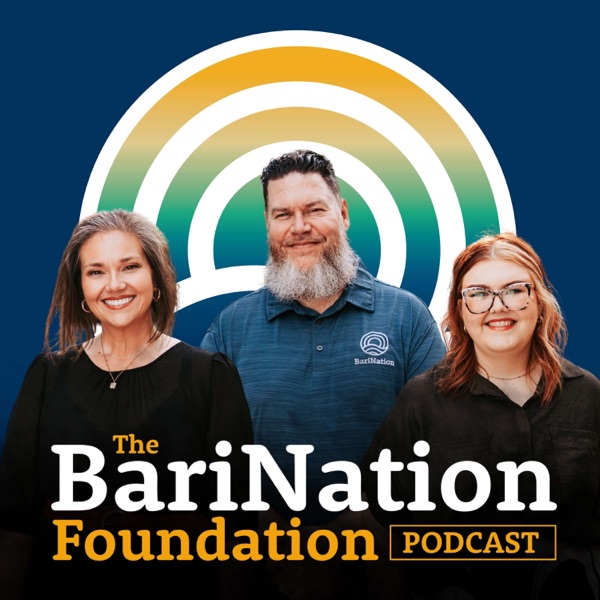
The BariNation Foundation Podcast
Welcome to The BariNation Foundation Podcast, where you’ll hear real talk about bariatric surgery, obesity medicine, medical weight loss, metabolic health, weight management, and lifelong obesity care. Whether you're considering bariatric surgery, preparing for weight loss surgery, recovering after surgery, or looking for evidence-based strategies to maintain long-term weight loss, this podcast gives you the education, support, and community you need to succeed.
Hosted by members of the bariatric community who are living the journey themselves, The BariNation Foundation Podcast brings together leading bariatric surgeons, obesity medicine physicians, registered dietitians, psychologists, exercise specialists, and real patients to share practical advice, inspiring stories, and the latest research in obesity treatment.
Obesity is a complex, chronic disease, and lasting success requires more than a procedure. Every episode explores the science, strategies, and mindset behind sustainable weight management. We discuss bariatric surgery, gastric bypass,vertical sleeve gastrectomy, duodenal switch SADI, revision/conversion surgeries, medical weight loss, bariatric nutrition, healthy weight loss, obesity medicine, lifestyle medicine, metabolic health, obesity care, emotional eating, body image, mental health, exercise, protein, vitamins, supplementation, meal planning, and long-term success after surgery.
You'll also hear honest conversations about the challenges that many people face, including weight reoccurrence, plateaus, transfer addiction, emotional health, relationships, loose skin, excess skin surgery, fertility, pregnancy after bariatric surgery, hormone changes, body confidence, and navigating life before and after surgery as well as GLP1’s. Our goal is to provide realistic expectations, expert guidance, and encouragement so you never feel like you're facing your journey alone.
As obesity treatment continues to evolve, we also explore the latest advances in obesity medicine, including GLP-1 medications such as Ozempic, Wegovy, Zepbound, Mounjaro, and emerging therapies, while helping you understand how these medications may fit alongside bariatric surgery and comprehensive medical weight loss. We break down the latest research into practical, easy-to-understand conversations that empower you to make informed decisions with your healthcare team.
Where ever you are in seeking treatment for the chronic disease of obesity, be it researching bariatric surgery for the first time, preparing for your procedure, celebrating major milestones, overcoming setbacks, or supporting a friend or family member through their journey, you'll find expert interviews, patient success stories, nutritional guidance, motivation, and actionable strategies that help you build healthy habits for life.
The BariNation Foundation Podcast is more than a podcast. It's a supportive community built on education, compassion, accountability, and hope. We believe every person deserves access to trusted information, meaningful support, and evidence-based resources that improve health and quality of life.
Subscribe on Apple Podcasts, Spotify, YouTube, Amazon or wherever you listen to podcasts, and join thousands of people committed to improving their metabolic health, achieving sustainable weight loss, and thriving after bariatric surgery. No matter where you are on your journey, BariNation is here to help you take the next step with confidence.
Website: https://www.barination.com
- Episodes
- 312
- Releases
- Every two weeks
- Typical length
- 1 hr
- On air since
- 2020
- Latest episode
- 1 week ago
Episodes
312 episodes, newest first
-
48 min
Movement As An Active Expression of Gratitude: Values, Behavior, and Long-Term Health with Dr. Dale Bond
Episode 296
Show notes
Movement is about more than weight loss, and struggling to exercise is not a personal failure. In this episode of the BariNation Foundation Podcast, April Williams sits down with obesity and bariatric researcher Dr. Dale Bond to explore why physical activity can feel so difficult and what science tells us about changing behavior. They discuss human evolution, individualized movement goals, internal motivation, and how connecting physical activity to personal values can make it more sustainable. Discover how to move beyond shame, rethink traditional exercise advice, and make movement a meaningful part of the life you want to live.
What You Will Learn in this Episode:
✅ Why humans didn't evolve to exercise for health and why understanding our biology can change how we approach movement.
✅ How to rethink the standard “move more” prescription and find accessible, individualized ways to increase physical activity.
✅ Why connecting movement to your personal values, relationships, and long-term goals can create more sustainable motivation.
✅ How acceptance and commitment therapy (ACT) can help you detach from self-critical thoughts and refocus on what matters.
This episode of the BariNation Podcast is produced by the BariNation Foundation, a 501 (c) (3) dedicated to advancing metabolic wellness for people living with obesity by providing evidence-based education, stigma-free support, and meaningful connections in the moments that shape daily life. Funding comes from generous donations to the BariNation Foundation from listeners and viewers like you, Johnson & Johnson, and the Texas Center for Bariatrics & Advanced Surgery led by Dr. Joe Cribbins and our newest sponsor, Lilly Obesity & Weight Loss Support Information | Eli Lilly and Company
TIMESTAMPS:
00:00 Why movement feels difficult and the challenge of changing behavior
02:51 Meet Dr. Dale Bond and his work in obesity and bariatric research
07:46 Why patient experiences and continuity of care matter to treatment outcomes
13:09 Why “move more” isn't enough and the importance of individualized movement goals
15:19 The evolutionary science behind why humans aren't naturally wired to exercise for health
18:06 How movement can improve mood, reduce stress, and make everyday life more rewarding
22:01 Finding your “why” and connecting physical activity to your personal values
24:45 Practical exercises for identifying values and building sustainable motivation
33:14 Managing self-critical thoughts, acceptance and commitment therapy, and treating movement as an expression of gratitude for being alive
40:59 Making physical activity more enjoyable by pairing it with things you love
42:33 Final reflections, a lighthearted conversation, and wrapping up the interview
44:09 Dr. Bond’s closing message: treating movement as an expression of gratitude for being alive
KEY TAKEAWAYS:
💎 Struggling with exercise isn't a character flaw. Changing behavior is difficult for most people. Recognizing that challenge can open the door to more compassionate, individualized approaches to movement.
💎 Movement doesn't have to look the same for everyone. For some people, getting out of a chair one additional time can be a meaningful step. Small, accessible changes can help build sustainable habits.
💎 Your motivation needs to mean something to you. External goals, such as following a doctor's prescription or reaching a particular weight, may help initially. Connecting movement to your personal values can provide a stronger foundation for long-term consistency.
💎 You don't have to believe every thought your brain produces. Acceptance and commitment therapy encourages people to notice thoughts without automatically judging or acting on them, then refocus on what matters.
ABOUT THE GUEST:
Dr. Dale Bond is Director of Research Integration at Hartford HealthCare and Co-Director of their Digestive Health Institute Center for Obesity Research, Innovation, and Education.
https://www.linkedin.com/in/dale-bond-55b91044/
https://hartfordhealthcare.org/services/digestive-health-institute/research
RESOURCES MENTIONED:
BariNation Community - $19 a month
BariNation - Email
BariNation’s How to Find an Obesity Specialist Guide
4 Steps to Find an Obesity Provider
Finding Your Holistic Obesity Care Team
Sign up for BariNation’s Newsletters
Our sponsors J&JMedTech; Texas Center for Bariatrics & Advanced Surgery; Lilly
Quote: "Catch, check it, change it." - Lora Grabow, LCSW
-
54 min
Everyone Was Wrong About Obesity: Dr. Michelle Gordon on Why Treatment Is Not Cheating
Episode 295
Show notes
What if some of the things you were taught about obesity were simply wrong? In this episode of the BariNation Foundation Podcast, April Williams sits down with obesity medicine physician Dr. Michelle Gordon and BariNation community member Tabitha Tyler to discuss what happens when patients and providers are willing to say, “I was wrong,” and follow the science forward. They discuss the physiology of obesity, why “eat less and move more” doesn't tell the whole story, how GLP-1 medication and bariatric surgery can be powerful treatment tools, and why menopause and whole-person care belong in the conversation. They also explore the identity shift that can happen after weight loss, the role of shame and self-belief, and how community and empathy can help people move beyond the stories that have kept them stuck.
What You Will Learn in this Episode:
✅ Why obesity needs to be understood as a chronic disease rooted in physiology rather than blame, and why being willing to change your mind is an important part of following the science.
✅ How Dr. Gordon's own experience with obesity, menopause medicine, coaching, surgery and GLP-1 treatment changed the way she approaches patient care.
✅ Why bariatric surgery and GLP-1 medications can be complementary tools, including how hunger and weight regain can change over time after surgery.
✅ How weight loss can create an unexpected identity shift and why changing the story you tell yourself can be an important part of long-term behavior change.
This episode of the BariNation Podcast is produced by the BariNation Foundation, a 501 (c) (3) dedicated to advancing metabolic wellness for people living with obesity by providing evidence-based education, stigma-free support, and meaningful connections in the moments that shape daily life. Funding comes from generous donations to the BariNation Foundation from listeners and viewers like you, Johnson & Johnson, and the Texas Center for Bariatrics & Advanced Surgery, led by Dr. Joe Cribbins and our newest sponsor, Lilly.
TIMESTAMPS:
00:00 – Dr. Michelle Gordon on obesity, weight loss and changing the story
05:28 – Why GLP-1 medication is treatment, not “cheating”
09:44 – The identity shift that can happen after weight loss
14:31 – Tabitha’s bariatric surgery journey and what changed beyond the scale
20:09 – Dr. Gordon’s evolution from surgeon to obesity medicine physician
31:28 – Why “eat less, move more” isn’t the whole story
37:22 – Finding reliable, evidence-based information about obesity treatment
43:38 – The role of empathy, community and support in the obesity journey
48:29 – GLP-1 medications, weight regain and when surgery may be the answer
KEY TAKEAWAYS:
💎 Being wrong isn't a failure. Dr. Gordon emphasizes that medicine evolves as new evidence becomes available, and patients and providers alike have to be willing to update what they believe.
💎 Obesity is a disease of physiology, not a moral failure. Treating it with medication or other evidence-based tools is treatment, not cheating.
💎 Weight loss can bring an unexpected identity shift. Changing how you see yourself and the story you tell yourself can be an important part of adapting to life after weight loss.
💎 Bariatric surgery and GLP-1 medications can both be important tools in obesity treatment. Dr. Gordon discusses how treatment decisions can change over time, including the potential role of medication after bariatric surgery.
ABOUT THE GUEST:
Board certified in obesity medicine, lifestyle medicine, and general surgery. Dr. Michelle Gordon spent fifteen years in surgical practice before specializing in women's metabolic health.
https://www.instagram.com/doctormichellegordon/?hl=en
RESOURCES MENTIONED:
BariNation Community - $19 a month
BariNation - Email
BariNation’s How to Find an Obesity Specialist Guide
4 Steps to Find an Obesity Provider
Finding Your Holistic Obesity Care Team
Sign up for BariNation’s Newsletters
Our sponsors J&JMedTech & Lilly
-
55 min
"I Thought It Was the Easy Way Out": A Therapist and His Wife Choose Sleeve Surgery
Episode 294
Show notes
What does it take to decide on weight loss surgery? Therapist Derek Colvin (@giant_therapist) and his wife Sheena share how they each chose sleeve gastrectomy, recorded just two days before their surgery together.
Derek is a former basketball player, six foot ten, and a licensed therapist. After three knee surgeries, years of intense workouts, calorie cutting, a carnivore diet, and serious thought about GLP-1 medications, he decided bariatric surgery was the right tool for him. He also had to unlearn two beliefs first: that surgery is "the easy way out," and that he wasn't "big enough" to need it.
Sheena wanted surgery for more than ten years. She spent hours at the gym and months on strict diets with results she couldn't see. The operation doesn't scare her. The changes afterward do.
Host Jason talks with them about:
• Getting denied by insurance the day before surgery, and what happened next
• Eating as part of your identity
• Why diet and exercise alone stopped working
• GLP-1 medications vs. bariatric surgery, and why both are valid treatments
• The myth that you have to reach a certain weight to "qualify" for help
• Surgery to protect joint health and avoid knee replacements - Sugar cravings and snacking on the pre-op diet
• Grieving food and the life you had before surgery
• Advice for anyone on the fence about weight loss surgeryWhether you're considering surgery, medication, or both, this episode is for anyone on an obesity treatment journey who's still deciding.
Follow Derek: @giant_therapist on Instagram and TikTok
Meet Derek and Sheena Colvin:
Derek and Sheena Colvin have been married for 26 years, raised seven children together, and have spent much of their lives taking care of the people around them. Now, they’re making a major decision together for themselves: undergoing VSG on August 7, 2026.
For Sheena, the decision has been years in the making. After four C-sections and struggling with her weight since the birth of their first child, she has also dealt with high blood pressure, sleep apnea, and what she openly recognizes as an unhealthy relationship with sugar.
For Derek, a former college basketball player, the decision took longer. At 6'10", being the big guy who could eat a lot had become part of his identity. But after years of trying to lose weight through diet and exercise, recurring knee injuries and three major knee surgeries repeatedly interrupted his progress. Eventually, worsening knee pain, sleep apnea, rising blood pressure, and the emotional toll of no longer recognizing or feeling comfortable with the person he saw in the mirror forced him to reconsider what getting healthy needed to look like.
After supporting friends through bariatric surgery and seeing firsthand how life-changing it could be, Derek and Sheena realized it was time to take their own next step. They enter this journey differently, but together—hoping not simply to lose weight, but to reclaim their health, mobility, confidence, and quality of life for themselves, each other, and the family they’ve spent 26 years building.
Support the show: The BariNation Podcast is produced by the BariNation Foundation, a 501(c)(3) nonprofit offering science-based, stigma-free education and peer support for people living with obesity.
Join our Fall Into Giving campaign and become a $10/month donor: https://www.barination.org
Join the community: https://barination.mn.co
Watch on YouTube: https://www.youtube.com/@BariNation
This episode is for educational purposes and is not medical advice. Talk with your healthcare team about the treatment options that are right for you.
-
1 hr 17 min
The Power of Movement: Hope Molecules, Joy & Healing with Dr. Kelly McGonigal & Charity Guerrero
Episode 293
Show notes
Movement can be so much more than a way to change your body. In this episode of the BariNation Foundation Podcast, April Williams sits down with psychologist, researcher, and movement expert Dr. Kelly McGonigal and BariNation community member Charity Guerrero to completely rethink the role of movement in the obesity health journey. They discuss the “comfort paradox,” why movement may require us to step into discomfort in service of a more meaningful life, and how reconnecting with our bodies can create hope, joy, confidence, and connection. Dr. McGonigal explains the science behind “hope molecules,” why the most important shift is from nothing to anything, why your brain may need time to learn to reward movement, and how supportive movement communities can help us feel like we belong.
What You Will Learn in this Episode:
✅ Why movement doesn't have to be about weight, appearance, burning calories, or “fixing” your body, and how it can instead create hope, meaning, joy, and connection.
✅ What the “comfort paradox” means and why choosing meaningful discomfort can sometimes open the door to a fuller, more accessible life.
✅ How “hope molecules” released by working muscles can support physical, metabolic, immune, cardiovascular, and brain health, and why movement is accessible regardless of age, size, or fitness level.
✅ Why the most important movement shift is from “nothing to anything,” how to give yourself space and grace while building a movement habit, and how community can make movement more rewarding.
This episode of the BariNation Podcast is produced by the BariNation Foundation, a 501 (c) (3) dedicated to advancing metabolic wellness for people living with obesity by providing evidence-based education, stigma-free support, and meaningful connections in the moments that shape daily life. Funding comes from generous donations to the BariNation Foundation from listeners and viewers like you, Johnson & Johnson, and the Texas Center for Bariatrics & Advanced Surgery, led by Dr. Joe Cribbins.
TIMESTAMPS:
00:00 Why the brain doesn't immediately reward movement and what it takes to experience the benefits
04:07 Meet Dr. Kelly McGonigal and why she sees movement as a vehicle for hope, meaning, and joy
08:03 The comfort paradox: why treating obesity for comfort can eventually require us to embrace discomfort
14:22 Choosing meaningful discomfort over a life limited by fear and physical discomfort
19:59 How the meaning we assign to physical sensations can change our experience of movement
24:13 Reconnecting with the body through proprioception and discovering what movement can help you feel
33:29 Learning to “befriend” a body that may have felt like a source of shame or betrayal
36:43 Hope molecules: how your muscles act like an internal pharmacy when you move
41:48 From nothing to anything: understanding the dose and intensity of movement
49:34 Why movement may take about six weeks before your brain begins rewarding you for it
51:25 The power of moving together: how supportive movement communities create belonging and connection
57:14 Finding the right movement community and giving yourself permission to keep looking
01:04:21 Rethinking what movement can look like and finding activities connected to your values
01:07:00 How movement can help unlock hope, possibility, belonging, and a sense of purpose
01:11:24 Dr. McGonigal previews her upcoming book, Joy Is a Risk Worth Taking
KEY TAKEAWAYS:
💎 Movement doesn't have to be about changing your weight or fixing your body. It can be a pathway to hope, joy, meaning, connection, and a greater sense of what your body can do.
💎 The most important movement shift is from nothing to anything. You don't have to go from the couch to a 5K to benefit from movement. Start with what your body is capable of doing today.
💎 “Hope molecules” are released when muscles contract, giving movement benefits that extend beyond physical fitness and into brain health, resilience, stress, and positive emotions.
💎 Your body may have been a source of shame, fear, or disconnection, but movement can help you rebuild a relationship with your body and experience it as a source of possibility rather than something to fight against.
ABOUT THE GUEST:
Kelly McGonigal, PhD, is a health psychologist and lecturer at Stanford University, and a leading expert in the new field of “science-help.” She is passionate about translating cutting-edge research from psychology, neuroscience, and medicine into practical strategies for health, happiness, and personal success.
https://www.kellymcgonigal.com/
https://www.instagram.com/kellymariemcgonigal/?hl=en
RESOURCES MENTIONED:
BariNation Community - $19 a month
BariNation - Email
BariNation’s How to Find an Obesity Specialist Guide
4 Steps to Find an Obesity Provider
Finding Your Holistic Obesity Care Team
-
45 min
TREO Foundation's Dr. Carlos Galvani: Funding the Future of Obesity Treatment
Episode 292
Show notes
What does it actually take to fund the future of obesity treatment? On this episode of The BariNation Podcast, host April Williams sits down with Dr. Carlos Galvani, a bariatric surgeon of over two decades and President of the TREO Foundation (Treatment, Research, and Education to end Obesity), formerly known as the ASMBS Foundation.
Click HERE to join our free, virtual TREO Walk team!
Dr. Galvani breaks down the three pillars of TREO's work: advocating for insurance access and utilization, funding original research (including the studies that first linked GLP-1 effects to gastric bypass surgery), and educating both patients and providers on obesity as a chronic, treatable disease. April and Dr. Galvani talk candidly about why so few people with obesity actually receive treatment, why obesity should be approached like cancer or diabetes with multiple, personalized treatment pathways, and why obesity walks struggle to draw the same crowds as breast cancer or ALS walks, even though obesity affects roughly 70% of American adults.
This conversation also covers TREO's flagship fundraiser, The Walk, including the free, no-pressure Virtual Walk happening September 26th under this year's theme, "No One Left Behind."
In this episode:
• What TREO stands for and how the organization evolved from the ASMBS Foundation
• How GLP-1 medications changed the conversation around obesity as a disease
• Why only 20 to 25% of people with obesity are receiving any treatment at all
• The research TREO has funded connecting bariatric surgery, GLP-1 medications, and cancer protection
• Why a standardized obesity treatment pathway (similar to breast cancer care) is coming
• How stigma keeps people from showing up to obesity awareness walks
• How to join the TREO Foundation's free Virtual Walk on September 26thObesity is a chronic disease that deserves the same research investment, treatment pathways, and community support as any other chronic condition. This episode is for anyone considering treatment, currently in treatment, or supporting someone who is.
Links:
TREO Foundation: www.treofoundation.org
Join BariNation's Virtual Walk team: https://fundraise.treofoundation.org/teams/7573
Find an in-person walk near you: https://fundraise.treofoundation.org/walk2026
Email us: hello@barination.org
If this episode resonated with you, subscribe to The BariNation Podcast for more conversations on obesity treatment, bariatric surgery, and GLP-1 care, and follow BariNation for community support, education, and events.
The BariNation Foundation is a federally recognized 501(c)(3). All donations are tax-deductible, and no services were exchanged in the production of this episode.
#ObesityTreatment #BariatricSurgery #TREOFoundation
Participation is the prescription. See you in The Nation, soon.
#BariNation #TREOFoundation #ObesityTreatment #BariatricSurgery #GLP1 #ObesityIsADisease #WeightRegain #NoOneLeftBehind
-
1 hr 6 min
Treatment with Soul: Dr.Monique Hassan M.D. and Jasmine Fernandez
Episode 291
Show notes
Obesity is a chronic, lifelong disease, not a failure of willpower. In this episode of the BariNation Foundation Podcast, April Williams sits down with bariatric surgeon Dr. Monique Hassan and BariNation community member Jasmine Fernandez to challenge the idea that one tool can treat obesity. They discuss the full range of surgical options: surgery, GLP-1s, mindset, movement, community, self-advocacy, and overcoming shame while treating obesity as a chronic, lifelong disease. If you've ever felt shame about needing more than one treatment, this conversation offers permission to stop apologizing and start healing.
What You Will Learn in this Episode:
✅ How bariatric surgery options like sleeve gastrectomy, gastric bypass, and duodenal switch compare, explained through a simple car analogy.
✅ Why GLP-1 medication works for some patients and not others, and how it fits into a full obesity treatment plan.
✅ How to build self-advocacy skills and find a comprehensive care team that treats the whole person.
✅ Why emotional eating, mindset work, and support groups matter just as much as any medical or surgical tool.
This episode of the BariNation Podcast is produced by the BariNation Foundation, a 501 (c) (3) dedicated to advancing metabolic wellness for people living with obesity by providing evidence-based education, stigma-free support, and meaningful connections in the moments that shape daily life. Funding comes from generous donations to the BariNation Foundation from listeners and viewers like you, Johnson & Johnson, and the Texas Center for Bariatrics & Advanced Surgery, led by Dr. Joe Cribbins.
TIMESTAMPS:
00:00 Bariatric surgeon Dr. Hassan shares her magic wand question for setting real weight loss goals
04:07 Why one thing is not enough to treat obesity
05:20 Meet Dr. Monique Hassan, a board-certified bariatric surgeon and Jasmine Fernandez, longtime BariNation member and gastric bypass patient
08:09 Why willpower alone never cures the chronic disease of obesity
10:47 Jasmine's winding path to gastric bypass surgery in 2021
14:54 Naming the inner critic and staying accountable after surgery
18:37 Walking through goals with your doctor and advocating for yourself
31:00 The “fight” and journey of obesity
43:42 Selecting the right tool for you to fight obesity
45:41 The car analogy: sleeve gastrectomy, gastric bypass, and duodenal switch compared
56:48 How to find a comprehensive bariatric surgery provider near you
KEY TAKEAWAYS:
💎 Obesity is a chronic, lifelong disease, so bariatric surgery, GLP-1 medication, and mindset work have to work together, not against each other.
💎 A good bariatric surgeon asks about your real-life goals before ever discussing a treatment plan.
💎 Naming your inner critic takes away its power and makes it easier to catch emotional eating before it starts.
💎 Progress over perfection matters more than any number on the scale, especially in long-term obesity treatment.
ABOUT THE GUEST:
Monique Hassan, MD, is a bariatric and metabolic surgeon who serves as the Division Director of Bariatric and General Surgery and Director of Obesity Medicine at Baylor Scott & White – Temple, and is an Associate Professor of Surgery in the Department of Surgery at The Baylor College of Medicine - Temple Campus.
Dr. Monique Hassan - Instagram
Jasmine Fernandez is a wife, mom of two, operations and logistics leader, and someone who completely transformed her health. Her journey hasn’t been about chasing perfection; it’s been about choosing herself every day. Through gastric bypass surgery, lifestyle changes, therapy, and perseverance, she discovered that lasting change comes from consistency, not quick fixes. “I hope that by sharing my story honestly, I can encourage others to believe that no matter where they start, a healthier and happier life is possible.”
RESOURCES MENTIONED:
BariNation Community - $19 a month
BariNation - Email
BariNation’s How to Find an Obesity Specialist Guide
4 Steps to Find an Obesity Provider
Finding Your Holistic Obesity Care Team
Sign up for BariNation’s Newsletters
BariNation, Bariatric Surgery, NSVS, GLP-1, VSG, Vertical Sleeve Gastrectomy, Lapband, Roux-en-Y, Gastric Bypass, Sadi-S, Obesity Treatment, GLP-1 Medication, Duodenal Switch, Weight Loss Surgery, Obesity Medicine, Chronic Disease, Metabolic Wellness, Emotional Eating, Inner Critic, Self Advocacy, weight loss mindset, obesity treatment options, BariNation Foundation
-
1 hr 6 min
The Levers of Control Episode 2: Whole Foods Heal Food Noise with Dr. Eric Smith
Episode 290
Show notes
Bariatric surgeon Dr. Eric Smith joins the BariNation Foundation Podcast to continue the six-part series on the Levers of Control. Today's episode is about the second lever: Whole Food Nutrition. Dr. Eric Smith speaks with April Williams and Melanie Lindell to reveal why whole foods quiet food noise, how ultra-processed foods were engineered for overconsumption, and what it takes to build a sustainable, whole-food nutrition-based life after bariatric surgery and while pursuing a medically based weight loss program.
Don’t miss our first episode in the Levers series: Ep 287 - Mastering Your Metabolic Health and Weight Management
What You Will Learn in this Episode:
✅ Why GLP-1 medications blunt cravings for most foods but not for whole foods, easing food noise
✅ How ultra-processed foods are engineered to keep cravings coming back
✅ The link between emotional eating and metabolic wellness, and how to tell comfort from nourishment
✅ Simple, budget-friendly ways to start whole food nutrition without overhauling your whole weight loss journey
This episode of the BariNation Podcast is produced by the BariNation Foundation, a 501 (c) (3) dedicated to advancing metabolic wellness for people living with obesity by providing evidence-based education, stigma-free support, and meaningful connections in the moments that shape daily life. Funding is provided by the generous donations to the BariNation Foundation from listeners and viewers like you, Johnson & Johnson, and the Texas Center for Bariatrics & Advanced Surgery, led by Dr. Joe Cribbins.
TIMESTAMPS:
00:00 Dr. Smith defines whole food nutrition as food with minimal change from nature, not a specific grocery store
07:27 Why the source of sugar changes how the body responds, not just the gram count
09:07 What makes a food ultra-processed, and how convenience and shelf life reshaped the American plate
15:36 Why everything in moderation only holds when the diet is built on whole foods, not engineered snacks
20:52 Food as comfort: unpacking emotional eating, addiction transfer and where cravings really come from
25:29 The Nature magazine study explained: GLP-1 medications blunt cravings for most foods except whole produce
35:46 The big tobacco parallel and why fixing the processed food industry matters as much as new treatments
38:51 Admitting some foods are eaten for pleasure, the results of taking on big tobacco and getting to the root of the problem
45:59 The cost of whole foods and the nutritional cost weighed
49:24 Examples of the perspective of eating
59:51 Practical, budget-friendly steps to start whole food nutrition today, one small swap at a time
KEY TAKEAWAYS:
💎 Diet soda and other zero-calorie tricks can quietly reignite cravings even without added calories
💎 Bariatric patients often lean on protein bars and shakes early on, but lasting health depends on shifting toward real food
💎 True healing from hedonic hunger means removing the trigger, not just numbing it with medication
💎 A foundation of healthy eating habits built on whole food nutrition is the best defense against obesity treatment relapse
ABOUT THE GUEST:
Eric F. Smith, DO, FASMBS, CAQ-MBS
Dr. Smith is a board-certified general, bariatric and robotic surgeon who has been in practice since 2006.
Kentucky Bariatric Institute - Website
Hyper-Palatable Foods: Development of a Quantitative Definition and Application to the US Food System Database - https://onlinelibrary.wiley.com/doi/10.1002/oby.22639
RESOURCES MENTIONED:
BariNation Community - $19 a month
BariNation - Email
-
1 hr 6 min
Weight Recurrence: Expert Insights with Dr. Saniea Majid
Episode 289
Show notes
Weight recurrence after bariatric surgery or GLP-1 treatment isn't a personal failure, it's often a natural part of treating the chronic disease of obesity. In this episode of the BariNation Foundation Podcast, April welcomes bariatric surgeon and obesity medicine specialist Dr. Saniea Majid to discuss her groundbreaking research on weight recurrence, why the medical community is moving away from the term "weight regain," and how ongoing, individualized care can improve long-term outcomes. Together, they explore the importance of eliminating shame, redefining success beyond the number on the scale, staying connected with your clinical care team, and empowering patients with practical strategies to navigate obesity treatment for life.
What You Will Learn in this Episode:
✅ Why weight recurrence after bariatric surgery is expected and why the word "failure" needs to be stricken from the conversation
✅ The three categories of response (partial, non, and clinically significant) and why each needs its own plan
✅ How consistent follow-up care and multidisciplinary care help prevent or reverse recurrence
✅ Practical ways to shift from shame to action while protecting metabolic wellness
This episode of the BariNation Podcast is produced by the BariNation Foundation, a 501 (c) (3) dedicated to advancing metabolic wellness for people living with obesity by providing evidence-based education, stigma-free support, and meaningful connections in the moments that shape daily life. Funding is provided by the generous donations to the BariNation Foundation from listeners and viewers like you, Johnson & Johnson, and the Texas Center for Bariatrics & Advanced Surgery, led by Dr. Joe Cribbins.
TIMESTAMPS:
00:00 Dr. Saniea Majid discusses weight recurrence after treatment and her research regarding standardizing terminology and data sets
04:42 Why patients avoid follow-up care after bariatric surgery
10:01 The wide range of reported weight recurrence after bariatric surgery rates
15:18 Health benefits that remain even with weight recurrence
24:19 The importance of follow-up care
29:15 Why the word failure is banned in modern obesity care
34:44 Recommended definitions for partial response and non-response
45:08 Advice for a listener stuck at limited weight loss two years later
50:32 Dr. Majid answers rapid fire questions related to obesity
01:00:57 Final thoughts on seeking the right team for lifelong care
KEY TAKEAWAYS:
💎 Weight recurrence signals the chronic nature of obesity and calls for more treatment, not self-blame
💎 Regular follow-up care with the right multidisciplinary team is the strongest tool against progression
💎 Revisional surgery and GLP-1 medications are part of continuum care, not last resorts
💎 Patients retain meaningful health gains even when some weight returns
ABOUT THE GUEST:
Dr. Saniea Majid is a board-certified bariatric surgeon and obesity medicine specialist, founder and Medical Director of the Weight Loss and Wellness Center in northern New Jersey. She has built multiple accredited metabolic and bariatric programs and was the first surgeon in the state to perform the SPATZ adjustable gastric balloon and endoscopic sleeve gastroplasty.
A national leader in the field, she just completed a 2 year term of the ASMBS Foundation TREO (Treatment, Research and Education to End Obesity), sits on the ASMBS Board of Directors, and is committed to comprehensive, compassionate care for patients of all ages, including adolescents.
Meet Dr. Majid – Award-Winning Weight Loss Doctor NJ | WLWC
RESOURCES MENTIONED:
BariNation Community - $19 a month
BariNation - Email
BariNation’s How to Find an Obesity Specialist Guide
Sign up for BariNation’s Newsletters
BariNation, Bariatric Surgery, NSVS, GLP-1, VSG, Vertical Sleeve Gastrectomy, Lapband, Roux-en-Y, Gastric Bypass, Sadi-S, Weight Regain After Bariatric Surgery, Weight Recurrence, Bariatric Surgery, Obesity Treatment, Metabolic Wellness, Follow Up Care, Chronic Disease, Multidisciplinary Care, Bariatric support, Bariatric patient education, Clinically Significant Weight Recurrence, Revisional Surgery, GLP 1 Medications, ASMBS, Shame And Blame, Weight Fluctuations, Surgical Success, Long-term weight loss maintenance
-
1 hr
You're Worthy of Treatment: Overcoming Shame, Finding Hope, and Healing Your Relationship with Your Body With Lora Grabow
Episode 288
Show notes
What if the biggest obstacle to getting the help you need isn't your body, but the belief that you have to earn it?
Even therapists struggle with shame, self-doubt, and asking for help. In this episode of the BariNation Foundation Podcast, April sits down with longtime therapist and BariNation supporter Lora Grabow, who shares her own journey through menopause, unexpected health changes, and the difficult decision to begin GLP-1 treatment. Despite decades of helping others heal their relationship with food, Lora discovered she had been holding herself to a different standard, believing she needed to "work harder" before deserving treatment. Together, April and Lora discuss the damaging myths surrounding obesity, menopause, self-worth, and medical care while exploring why community, self-compassion, and evidence-based treatment are essential for lasting health.
This conversation is a powerful reminder that you don't have to suffer in silence, you don't have to earn help, and hope begins the moment you allow yourself to receive the support you deserve.
What You Will Learn in this Episode:
Why obesity is a chronic disease, not a personal failing, and why that reframe lifts shame around GLP-1 weight loss
How menopause weight gain can stall even the healthiest habits, and why biology, not effort, is often the real barrier
Why self-compassion, not self-criticism, is the tool that actually leads to lasting behavior change
How community support helps people move past the belief that they must earn help before accepting it
This episode of the BariNation Podcast is produced by the BariNation Foundation, a 501 (c) (3) dedicated to advancing metabolic wellness for people living with obesity by providing evidence-based education, stigma-free support, and meaningful connections in the moments that shape daily life. Funding is provided by the generous donations to the BariNation Foundation from listeners and viewers like you, Johnson & Johnson, and the Texas Center for Bariatrics & Advanced Surgery, led by Dr. Joe Cribbins.
TIMESTAMPS:
00:00 Lora Grabow discusses her two decades in weight management and therapy
06:16 April sets the stage: doing everything right without results
07:48 Lora explains obesity as a chronic disease, not a decision
08:17 Lora shares her menopause weight gain and hormone therapy story
12:17 The friend who asked why Lora wasn't starting a GLP-1
17:15 Unpacking the belief that you must earn help before treatment and the power of community
26:48 Finding safe support in virtual spaces; April shares a personal story
31:20 How are we talking to ourselves and having self-compassion
41:57 Lora reflects on hope, healing, and life after starting Zepbound
46:04 Why it took Lora so long to go on a GLP-1, the many benefits of the drug
KEY TAKEAWAYS:
Shame keeps people stuck. Self-compassion is what actually opens the door to change.
Obesity is a chronic relapsing disease, and no one should have to manage it alone.
GLP-1 medications, like other metabolic wellness tools, aren't something you have to "earn."
ABOUT THE GUEST:
Lora Grabow, LMSW, is an obesity medicine therapist, coach, and professional speaker with over 20 years of experience working with patients in obesity medicine. Lora helps patients discover the missing piece of their treatment plan: A piece she calls Headwork™.
She is the owner of a thriving private practice serving patients affected by obesity. Her expertise includes providing individual therapy and 1:1 coaching, facilitating support groups, and engaging patients in her online course, Foundations in Headwork for Healthy Weight Loss. She is an active leader in the American Society for Metabolic and Bariatric Surgery. (ASMBS) She is a sought-after podcast guest and speaker at national provider and patient obesity medicine conferences.
RESOURCES MENTIONED:
BariNation Community - $19 a month
BariNation - Email
BariNation’s How to Find an Obesity Specialist Guide
-
1 hr 10 min
The Levers of Control: Mastering Your Metabolic Health and Weight Management - with Dr. Smith
Episode 287
Show notes
Episode 287: What if everything you believed about obesity was wrong? Bariatric surgeon Dr. Eric Smith joins the BariNation Foundation Podcast to launch a six-part series on Mastering Metabolic Health and Weight Management. Today's episode is about the first lever: Beyond the Scale...Obesity as a Chronic Disease. He explains why only 0.5 to 2% of people can lose enough weight through diet alone to no longer be classified as obese and what the hormones ghrelin and leptin have to do with it. Mental health therapist, bariatric patient and BariNation Foundation Board, Community member, and licensed expert, Melanie Lindell adds the emotional truth: accepting obesity as a chronic disease is not giving up; it is finally getting honest. This conversation will shift how you think about your body, your habits, and your future. Join us for this six-part series, Mastering Your Metabolic Health and Weight Management.
What You Will Learn in this Episode:
Why obesity as a chronic disease cannot be resolved through willpower alone, and what the actual success rates of diet and exercise reveal about the biology working against you
How the hormones ghrelin and leptin resistance change the way your body responds to calorie deficits, making sustainable weight loss far more complex than simply eating less
Why bariatric surgery and GLP-1 medications create the conditions for change but cannot replace the controllable habits that determine long-term metabolic health outcomes
How building consistent habits around sleep, whole food nutrition, and movement forms the true foundation of lasting obesity treatment success
This episode of the BariNation Podcast is produced by the BariNation Foundation, a 501c3 dedicated to advancing metabolic wellness for people living with obesity by providing evidence-based education, stigma-free support, and meaningful connections in the moments that shape daily life. Funding is provided by the generous donations to the BariNation Foundation from listeners and viewers like you, Johnson & Johnson, the Texas Center for Bariatrics & Advanced Surgery, led by Dr. Joe Cribbins.
TIMESTAMPS:
00:00 The psychology of results and why visible change drives obesity treatment commitment
04:00 Dr. Eric Smith and Melanie Lindell introduce themselves and the bariatric surgery series
08:04 The six levers of metabolic health and weight management are introduced
09:18 Why diet and exercise alone fail: success rates as low as 0.5% for obesity as a chronic disease
11:56 How triggering life events lead to obesity and why reversing behavior is not enough
23:44 The hormonal science of ghrelin and leptin resistance and their role in weight loss, and why the body fights back against calorie deficits
33:00 The golf analogy: why patients become complacent and stop applying controllable health habits
38:30 The danger of removing friction and how easy access to GLP-1 medications can backfire, and leaning into the idea that obesity is a lifelong disease
44:13 Sleep consistency as a lever: the real science behind sleep and weight loss, and the mental health part of finding joy in yourself
53:08 April's personal gut check and the honest conversation about stalled weight management
1:00:12 How KBI redesigned its entire approach to treating obesity as a chronic disease
KEY TAKEAWAYS:
Obesity as a chronic disease has a biological basis. With success rates of 0.5 to 2% for diet and exercise alone, this is not a failure of character but a failure of biology working against patients without proper obesity treatment.
Surgery and GLP-1 medications provide the spark, but they are not the solution on their own. Without the controllable levers such as whole-food nutrition, sleep, and movement, results will stall or reverse.
Leptin resistance and rising ghrelin levels mean that the longer someone has lived with obesity, the harder the body fights against weight loss, making medical intervention and habit-building both essential.
Goals bring short-term motivation, but habits create lifelong results. Celebrating the consistency of controllable health habits rather than only the scale is what sustains metabolic health over time.
ABOUT THE GUEST:
Eric F. Smith, DO, FASMBS, CAQ-MBS
Dr. Smith is a board-certified general, bariatric and robotic surgeon who has been in practice since 2006.
Kentucky Bariatric Institute - Website
RESOURCES MENTIONED:
BariNation Community- $19 a month
BariNation - Email
BariNation’s How to Find an Obesity Specialist Guide
-
1 hr 7 min
Summer, Swimsuits, BBQs & Bariatric Life: How to Celebrate Without Losing Ground
Episode 286
Show notes
Summer is here, and so is every barbecue, pool party, and 4th of July spread your family could throw at you. No judgment. We're gonna talk about all of it.
April and Nat are back together for a real one, a summer celebration episode built around the four BariNation pillars: movement, mindset, metabolic wellness, and community. They're sharing how they personally live these pillars when routines go out the window, the weather gets hot, and the paper plates get absolutely massive.
This one is for you whether you're six weeks post-op or six years out. Because bariatric life doesn't take a summer break, but it absolutely can feel like a party.
What we get into:
MOVEMENT: Why movement does not have to mean the gym, and how painting rocks, kayaking for the first time, and water balloon fights with your niece absolutely count. Nat shares how she's getting back to exploring outdoors after a really hard school year, and April talks about finally being able to show up at the lake without dreading every moment.
MINDSET: The brain gremlins don't stop just because it's summer. Nat (almost six years post-op!) gets real about still dealing with "what are people thinking about my plate" anxiety at social events. April walks through the "catch it, check it, change it" tool, a practical mindset skill from BariNation's licensed mental health support groups, and why the goal is never to stop having these thoughts, just to get better at catching them.
METABOLIC WELLNESS: Summer food is protein city if you think about it — burgers, ribs, brats. You're already set up. April and Nat talk about the plate size swap that changed everything at Nat's 4th of July prime rib dinner (yes, really), how to set up a buffet table so you naturally eat in the right order, and why 10 BBQ meals out of 400 summer eating occasions is not the thing that derails you.
COMMUNITY: Why the BariNation membership community is becoming both April and Nat's go-to over social media feeds packed with ads and AI content. Real humans, zero algorithm, no one selling you something. Plus, April is launching a summer Whole Food Learning series in the community every Tuesday night with experts and registered dietitians.
AND THE BIG NEWS: BariNation is officially becoming the BariNation Foundation, a 501(c)(3) nonprofit, as of July 1, 2026. That means the podcast is now a foundation production, your support is 100% tax-deductible, AND the BariNation membership community is dropping from $39/month to $19/month. Less than a dollar a day. We are not calm about this.
Links:
• Join the BariNation Community: https://barination.mn.co/plans/1983996?bundle_token=403d003e4d6e5c649341e4319c80a3d8
• BariNation Community Calender: https://calendar.google.com/calendar/embed?src=cqvlhco5fdmkk0lsuasl7ggdu88emhuc%40import.calendar.google.com&ctz=America%2FLos_Angeles
• Donate to the BariNation Foundation: https://barination.givecloud.co/fundraising/forms/8NDR96EK
• Follow April: @actively_april
• Follow Natalie: @breakingbari_ers
• Follow BariNation on Instagram: @bari.nation
• Follow BariNation on Facebook: @barination
• Get our weekly newsletter: https://lp.constantcontactpages.com/sl/O2S7vlT
• Visit our website: www.barination.org -
44 min
Your Metabolism Isn't Broken. Here's What's Actually Going On
Episode 285
Show notes
Your metabolism is not broken. It just might need a new strategy.
If you've had bariatric surgery (or started a GLP-1 medication like Ozempic or Mounjaro) and you've hit a wall, struggled with cravings, felt like you can't go more than two hours without eating, or watched the scale stop moving entirely, this episode is for you.
Registered dietitian and certified personal trainer Kayla Girgen, RD, CPT is back, and she's here to explain one of the most talked-about, least understood topics in the metabolic health space: metabolic flexibility. What it is, why it matters after weight loss surgery, and what you can actually do about it starting today.
In this episode, we cover:
• What metabolic flexibility actually means (in plain, real-person language)
• The interstate traffic analogy that makes insulin resistance finally make sense
• Why insulin resistance can make it nearly impossible to lose weight and how the disease of obesity is directly connected
• The difference between being metabolically flexible vs. stuck in what researchers call "metabolic gridlock"
• How movement, even a short walk after a meal, can bypass insulin resistance and get your metabolism moving again
• Why sleep is one of the most unsexy, underrated tools for improving metabolic health
• Whether a CGM (continuous glucose monitor) is worth it, and what you can do to balance your blood sugar if one isn't in your budget
• A real community member question about reactive hypoglycemia, weight gain on GLP-1s, and what strength training might do to helpKayla leads live meetups and classes inside the BariNation community every other month. Drop your questions in the comments or send us an email at hello@barination.org.
Find Kayla at @KaylaGirgenRD on Instagram or at KaylaGirgenRD.com.
BariNation is a 501(c)(3) nonprofit. Learn more and join the community at barination.org.
-
42 min
Ep 284: Years Out and Still Learning: The Long Game of Bariatric Life with Jason Smith and Natalie Tierney
Episode 284
Show notes
Nobody tells you that the hardest part of bariatric surgery isn't the surgery. It's year five, when life is full, and your bariatric brain goes quiet.
Jason and Natalie are back for a real, unfiltered catch-up and this one is for every patient who's thought, "I don't even think about it anymore." Because here's the thing: bariatrics doesn't stop asking things of you just because you stopped thinking about it.
Jason shares what happened when a routine gym session turned into an ER visit with a heart rate of 29. Yes, 29. And the wake-up call that followed: a medication he'd been on for years was quietly working against him, because his body had changed so dramatically that the prescription he was given as a very different person no longer fit the person he is now. A physician told him he needed a pacemaker. Another told him to go home and stop taking one pill. The lesson in between? You are a patient for life, not just for the first two years.
Natalie opens up about something a lot of long-term post-op patients feel but rarely say out loud: the guilt of not wanting to check in with the bariatric community anymore. Five years out, thriving in a new career as a teacher, and hitting the wall where bariatric life just isn't at the front of the line every single day. She calls it the "I just can't" season, and she wants you to know it's real, it's normal, and it doesn't mean you've failed.
Together they get into:
• Why your medications may need to change years after surgery (and why nobody is checking unless you ask)
• What "white coat syndrome" (a fear or anxiety around doctors and medical settings) looks like for people who've been heavy patients, and why it doesn't go away just because things are going well
• The difference between pre-op and post-op body literacy: knowing the difference between "I feel fine" and "I actually feel good"
• Why wins in the bariatric journey don't always look like the scale moving
• What it means to be a patient "forever" and how to hold that truth without burning out
• How bariatrics keeps handing you new lessons whether you asked for them or not (Jason's new analogy: an advent calendar of epiphanies that never ends)This episode is also a love letter to BariNation itself. While April is at ASMBS (the American Society for Metabolic and Bariatric Surgery, the largest professional organization in the field), big things are happening behind the scenes in the world of obesity treatment. The conversation is shifting. Patients are being centered. The gap between doctors and patients is getting a lot of attention, and BariNation is right in the middle of that work.
If you've ever been years out and felt like bariatric life snuck up behind you, this is your episode.
Want to be one of the first to know about our exciting, upcoming changes? Join our email list! Click HERE to join. And we promise- no spam, ever!
BariNation is now officially a nonprofit foundation. If this podcast, this community, or this conversation has ever helped you, consider supporting the mission at BariNation.org. Every dollar keeps the lights on and the mic hot. Become a donor at www.barination.org
Find us everywhere: Instagram, TikTok, YouTube, and the BariNation Community at BariNation.org.
-
1 hr 23 min
Ep 283: How to Find an Obesity Doctor Who Gets You with Dr. Charles Thompson
Episode 283
Show notes
You've been fighting your weight for years. You've tried everything. And now you're finally ready to find someone who can actually help. Where do you start? Your primary care doctor? The websites that offer you another miracle? Should you do what Serena Williams is doing and see a bot doc?
In this episode, April sits down with Dr. Charles Thompson, a bariatric surgeon practicing in Brooklyn and Queens, New York, to give you a real, practical roadmap for finding an obesity medicine provider who will treat you like the whole person you are, not just a number on a scale.
Here's what you'll walk away with:
• What to actually look for when evaluating a provider (hint: it's not the letters after their name)
• Where to search, including which websites are worth your time and which ones to approach with caution
• What to ask at your very first appointment, and why the best providers will ask you questions first
• Why it is absolutely okay to leave a provider relationship that isn't working for you, and why that is not a failureDr. Thompson also breaks down the real difference between having insurance coverage for bariatric surgery or obesity medications and actually being able to use it, including why so many patients with qualifying conditions are still being denied care and what you can do to fight back.
You'll also hear him say something that almost no surgeon ever says out loud: "It's not your fault." He means it, and he explains exactly why.
Plus: April shares the story of her own path to surgery, why word-of-mouth changed everything for her, and why she built BariNation for the exact moments when you need a Nation behind you.
Download and print our free step-by-step guide to finding your provider from the show notes. Use it, share it, come back to it. Click HERE to access it.
Obesity is a disease. You deserve care. And now you know how to go get it.
A Note About BariNation
BariNation is a nonprofit podcast and patient community built on the belief that obesity is a disease and that every person fighting it deserves education, community, and care. If this post helped you, consider supporting our mission at BariNation.org/donate. Your support makes conversations like this one possible.
Enjoyed this episode? Share it with someone who's been waiting for permission to take the first step. And if you're already in The Nation, you know what to do. See you in there.
Find Dr. Thompson: https://www.brooklynqueenssurgical.com/
Join the BariNation community: https://www.barination.mn.co
Support our mission: BariNation.org/donate
#BariNation #BariatricSurgery #ObesityMedicine #ObesityAwareness #WeightLossSurgery
#FindABariatricSurgeon #ObesityIsADisease #BariatricCommunity #InsuranceDenial #MetabolicHealth
#ASMBS #ObesityTreatment #BariatricProvider #WeightManagement
-
1 hr 14 min
Ep 282: The Not So Secret History of Obesity…Why Here & Now is The Best Time to Seek Treatment with Dr. Nini Peterson, PhD
Episode 282
Show notes
“We are built for scarcity, not abundance.” Most people think obesity is simply about willpower or lifestyle choices, yet its history reveals a long tradition of misconceptions, stigma, and ineffective, somewhat barbaric treatments. In this eye-opening episode, Dr. Nini Peterson, PhD, takes us on a fascinating journey through the history of obesity, showing how misconceptions have persisted for centuries despite advances in science and medicine. Discover how ancient carvings and medical texts from 30,000 years ago to the 19th century reveal haunting echoes of today’s struggles with weight and treatment. You’ll learn how old fallacies, like “eat less, move more,” have hampered progress and how biology, environment, and genetics play critical roles that modern science now understands better than ever.
We break down:
• The historical perceptions of obesity across cultures and eras and their impact on stigma, shame, and treatment.
• The evolution of treatment options, from ancient dieting and surgical experiments to today's promising medications and surgical innovations.
• The misconceptions that still influence doctor-patient relationships and how invalidating these myths can be detrimental to health.
• The importance of a holistic, individualized care team and why finding the right "fit" in treatment is crucial for long-term success.
• How understanding the disease’s history helps us combat shame, advocate for ourselves, and pursue effective, compassionate care.This episode is a must-listen for anyone living with obesity or those supporting loved ones in their journey. If you’re tired of outdated advice, want to cut through the stigma, and are eager to understand the true complexity of obesity, this conversation will inspire hope and empower action.
Join April Williams as she has a no-holds-barred conversation with Dr. Peterson, an experienced psychologist and obesity expert, who reveals how shifting our understanding of obesity from blame to compassion opens the door to better treatment, more support, and a brighter future.
You’ll leave with a new perspective on this chronic disease, fostering hope that meaningful change is possible, and it starts with knowledge. Perfect for patients, caregivers, clinicians, and advocates committed to a science-backed, patient-centered approach. The time to rethink obesity is now, are you ready?
Explore the rich history of obesity, its treatment evolution, and the importance of personalized care in managing this complex disease.
History of Obesity Presentation
Key Topics
• History of obesity and treatment
• Impact of environment and culture on obesity
• The role of behavioral health in obesity care
• Advances in obesity medications and surgery
• The importance of holistic, individualized treatmentThe BariNation Foundation
The BariNation Podcast is a production of the BariNation Foundation, a 501c3 nonprofit that advances metabolic wellness for people living with obesity by providing evidence-based education, stigma-free support, and meaningful connections in the moments that shape daily life. The Foundation's mission is to walk alongside individuals pursuing medical, surgical, and comprehensive care, supporting real decisions, challenges, and victories that influence long-term health with the support and guidance of obesity medicine experts.
Learn more about the BariNation Foundation and make a tax-deductible donation by going to http://barination.org
Sound Bites
"We are built for scarcity, not abundance."
“Most people overestimate the risk of bariatric surgery and underestimate the risk of living long-term with obesity.”
Chapters
00:00 The History of Obesity and Its Treatment
07:23 Understanding Obesity as a Disease
19:54 The Stigma of Obesity and Its Impact
26:45 Patient-Care Team Dynamics in Obesity Treatment
27:24 Navigating Life After Surgery
33:32 The Paradox of Treatment
40:15 Evolution of Obesity Treatments
42:56 Evolving Understanding of Health and Behavior Change
45:45 Redefining Success Beyond the Scale
49:44 The Complexity of Health Perception
53:17 The Importance of Seeking Help
55:51 Understanding the Risks of Obesity and Treatment
58:45 The Journey to Bariatric Surgery
01:03:34 Finding the Right Care Team
01:07:15 The Need for Integrated Health Approaches
Nini Peterson Bio
Ninoska "Nini" Peterson, PhD is a Staff Psychologist with the Cleveland Clinic’s Bariatric & Metabolic Institute (BMI) and an Adjunct Assistant Professor at the Cleveland Clinic Lerner College of Medicine of Case Western Reserve University in Cleveland, OH.
Her clinical and research interests include psychosocial MBS evaluations, lifestyle treatment of obesity, binge eating treatment, self-monitoring, body-image disturbance, and psychology group treatment/support groups. She has published in peer-reviewed journals on these topics, and has authored/co-authored 3 textbook chapters for SAGES and APA on the role of the behavioral health provider in MBS and pre-surgical psychological MBS evaluations, respectively.
She is the current Integrated Health - Director Elect (2025-2026), former Integrated Health Secretary (2024-2025) and has served on the IH Leadership Counsel since 2021. Nini is also a current member (2017-present) and past Chair (2023-2025 of the IH Support Group Committee, and member of the Health Equity Committee (2023-present). She is a proud member of the inaugural 2024 ASMBS-IH Fellowship class (FASMBS-IH).
Links
-
1 hr 12 min
Dr. Rachel Goldman, Ph.D. | When Life Happens: The Mindset Shift You Need to Manage Stress, Build Confidence and Break Free
Episode 281
Show notes
Clinical psychologist Dr. Rachel Goldman, PhD joins BariNation hosts April Williams and Jason Smith to discuss the psychological and behavioral tools every person needs to navigate life's hardest moments, especially those living with the chronic disease of obesity.
Drawing from her new book When Life Happens, Dr. Goldman breaks down CBT into accessible, actionable tools for building emotional resilience, managing stress, challenging unhelpful thoughts, and developing a growth mindset. Essential listening for bariatric surgery patients, anyone managing chronic illness, and anyone stuck between knowing what to do and actually doing it.
This episode is supported by AdventHealth Central Florida and the Metabolic Health Institute. If you've struggled with weight loss, you know it's a lifelong journey. At AdventHealth's Metabolic Health Institute, they address the root cause of weight gain with a whole-health approach, from lifestyle support and medication to bariatric surgery. Learn more at http://www.AdventHealthWeightLoss.com
What You'll Learn:
Build a Mental Health Toolbox — One tool is never enough. Dr. Goldman explains why you need at least three coping strategies and the critical difference between self-care tools (preventative) and stress management tools (acute), and why they're actually the same tools used with different intention.
The CBT Core: Your thoughts don't just feel bad, they directly shape your behavior. Dr. Goldman walks through how identifying unhelpful thoughts, examining the evidence, and reframing can rewire the brain over time through neuroplasticity. The goal isn't to eliminate negative thoughts; it's to reduce how long you stay in them. Cognitive Distortions That Keep
You Stuck — All-or-nothing thinking, jumping to conclusions, and "should" statements are three of the most common distortions in people with obesity. Dr. Goldman explains how CBT helps patients identify, challenge, and reframe these patterns instead of accepting them as truth. The Diet Failed You.
You Did Not Fail the Diet. — A powerful reframe Dr. Goldman used with bariatric patients at Bellevue: the surgery failed the patient, not the other way around. This directly challenges the internalized shame that comes from years of failed diets and reframes it through the lens of obesity as a complex, chronic, progressive disease.
Growth Mindset vs. Fixed Mindset — Years of "nothing works" can create an entrenched fixed mindset. Dr. Goldman connects Carol Dweck's research to the lived experience of obesity patients and explores how flexible thinking and self-compassion begin to shift the pattern.
Toxic Positivity: What It Is and Why It's Harmful — "Positive vibes only" invalidates real experience and suppresses important emotions. Dr. Goldman explains the spectrum from toxic positivity to toxic negativity, where healthy realistic optimism lives, and why body acceptance is more sustainable than body positivity for bariatric patients.
Self-Care Is Not a Bubble Bath — Self-care is anything you do for yourself that is preventative and builds you up before life happens. Showing up to a support group, listening to a podcast, sleeping, and breathing exercises all count. It's a non-negotiable daily practice, not a reward.
Imposter Syndrome as a Feature, Not a Bug — The most surprising reframe of the episode: imposter syndrome may actually be useful. Dr. Goldman explains eustress (positive, motivating stress) and why a measured level of imposter syndrome drives preparation, humility, and growth. April and Jason share deeply personal experiences of imposter syndrome in bariatric advocacy.
Community, Vulnerability, and Asking for Help — The people who feel they have no right to take up space in a support group are often the ones who need it most. Asking for help is brave, not weak.
Practice Your Tools Before You Need Them — Like a fire drill, tools must be practiced in calm moments so the response is automatic when life gets hard.
📖 When Life Happens by Dr. Rachel Goldman: whenlifehappensbook.com 🔗 Dr. Goldman: @DrRachelNYC | BariNation: barination.org | @bari.nation Hosts: April @actively_april | Jason @tha_smithsonian_
Supported by AdventHealth Central Florida and the Metabolic Health Institute. Whole-health obesity care from lifestyle support to bariatric surgery. AdventHealthWeightLoss.com
BariNation Foundation*is a 501c3 nonprofit advancing metabolic wellness through evidence-based education and stigma-free support. Donate at barination.org #BariatricSurgery
#MentalHealth #CBT #WhenLifeHappens #DrRachelGoldman #ObesityMedicine #BariNation #GrowthMindset #StressManagement #ToxicPositivity #ImposterSyndrome #BodyNeutrality #WeightLoss #BariatricSurgery #MentalHealth #CBT #GrowthMindset #wls #wlscommunity
-
46 min
Ep 280: Aimee Rothe, Bariatric Nurse and Patient, Talks Breaking Points and the Wild Ride of Obesity Treatment
Episode 280
Show notes
In this engaging conversation, Aimee Rothe, a board-certified bariatric nurse and post-op bariatric patient, shares her journey from being a medical provider who sought treatment for her obesity after a harrowing experience with a patient, when she was over 400 lbs, to being a provider in the field of obesity care.
She emphasizes the importance of normalizing obesity treatment, individualizing care for patients, and overcoming the stigma associated with weight loss surgery and onboarding adjunct treatments such as GLP-1’s. The discussion highlights the emotional challenges faced by patients post-surgery, the role of support groups, and the need for ongoing care and understanding from healthcare providers.
Aimee advocates for a compassionate approach to obesity treatment, encouraging patients to seek help and not feel ashamed of their journey.
Keywords
bariatric surgery, weight loss surgery, VSG, Gastric Bypass, metabolic syndrome, SADI-s, obesity care, individualized treatment, patient support, emotional health, chronic condition, healthcare, normalization, weight loss, patient-provider relationship, GLP-1, Type 2 diabetes remission, sleep apnea, PCOS, high blood pressure
Takeaways
Obesity is a chronic medical condition, not a failure of willpower.
Bariatric surgery should be viewed as a treatment, not a last resort.
Individualized care is crucial for effective obesity treatment.
Patients should not feel ashamed or stigmatized for seeking help.
Support groups play a vital role in the emotional journey post-surgery.
The journey of weight loss is a marathon, not a sprint.
It's important to normalize conversations about struggles with obesity.
Patients should maintain open communication with their providers.
Utilizing multiple treatment modalities is acceptable and necessary.
Healthcare providers must understand the complexities of obesity and support their patients.
Chapters
04:55 Meet Amy Rothe: A Journey from Patient to Provider
08:25 Understanding Obesity as a Chronic Condition
11:55 The Importance of Individualized Care in Obesity Treatment
16:06 Normalizing Conversations Around Obesity and Treatment
20:24 The Role of Support Groups in Bariatric Care
25:56 Navigating Body Image and Relationships Post-Surgery
30:12 The Emotional Journey of Bariatric Surgery
35:08 Understanding the Reality of Uncomfortable Situations
38:15 Breaking Points and the Decision for Surgery
42:34 The Importance of Individualized Care in Obesity Treatment
47:39 Normalizing Multiple Modalities of Treatment
Guest Bio
Aimee Rothe, BSN, RN, CBN, CEN, TCRN, NHDP-BC serves as the Hospital Program Director of Metabolic and Bariatric Surgery at a hospital in Birmingham, Alabama. Under her leadership, the program maintains multiple national recognitions, including designation as a BCBS Blue Distinction Plus Center for Bariatric Surgery, an Aetna Institute of Quality for Bariatric Surgery, an Optum Center of Excellence for Bariatric Surgery, and an American College of Surgeons Metabolic and Bariatric Surgery Accreditation and Quality Improvement Program Comprehensive Center. Aimee is a Certified Bariatric Nurse and is active within the American Society for Metabolic and Bariatric Surgery. She serves on multiple national committees, represents the nursing discipline as a Member-at-Large on the ASMBS Integrated Health Leadership Council, and acts as the Integrated Health Board Liaison for the ASMBS Alabama State Chapter. In 2017, Aimee underwent bariatric surgery to address her own chronic medical condition. That experience strengthened her commitment to guiding patients through the bariatric and obesity medicine journey while advocating for recognition of obesity as a chronic, treatable disease. Her work centers on improving patient outcomes, strengthening evidence-based education, and advancing best practices in metabolic health management. She is also focused on building stronger collaboration across medical specialties, expanding outreach efforts that encourage earlier intervention, coordinated care, and open dialogue about obesity and its associated conditions.
Links
Aimee Rothe Contact Information
mizzerrn@gmail.com
BariNation Membership Community: http://barination.mn.co
The BariNation Podcast is a production of the BariNation Foundation, a 501c3 nonprofit that advances metabolic wellness for people living with obesity by providing evidence-based education, stigma-free support, and meaningful connections in the moments that shape daily life. The Foundation's mission is to walk alongside individuals pursuing medical, surgical, and comprehensive care, supporting real decisions, challenges, and victories that influence long-term health with the support and guidance of obesity medicine experts.
Learn more about the BariNation Foundation and make a tax-deductible donation by going to http://barination.org
-
1 hr 19 min
Ep 279- The Connected Journey: Mind, Body, and Bariatrics with Katie Booker LCSW
Episode 279
Show notes
The BariNation Podcast is a production of the BariNation Foundation, a 501c3 nonprofit that advances metabolic wellness for people living with obesity by providing evidence-based education, stigma-free support, and meaningful connections in the moments that shape daily life. The Foundation's mission is to walk alongside individuals pursuing medical, surgical, and comprehensive care, supporting real decisions, challenges, and victories that influence long-term health with the support and guidance of obesity medicine experts.
Learn more about the BariNation Foundation and make a tax-deductible donation by clicking HERE going to http://barination.org
In this conversation, April Williams and Katie Booker, licensed therapist and bariatric patient, explore the critical connection between the mind and body, particularly in the context of bariatric surgery. They discuss the importance of recognizing disconnection, identifying signs of it, and the strategies to reconnect. The conversation emphasizes the role of community support in the healing journey and provides practical tips for movement and mindset. The overarching theme is that transformation is a continuous journey, requiring patience, self-compassion, and a willingness to engage with one's body and emotions.
Keywords
Obesity, Bariatric Surgery, Advocacy, Healthcare Barriers, Community Support, Patient Stories, BariNation Foundation, Metabolic Surgery, Roux-enY, Gastric Bypass, VSG, Gastric Sleeve, DS, Duodenal Switch, SADI-S, Obesity Medications, GLP1’s, Ozempic, Wegovy, Mounjaro, Zepbound, Mind-body Connection, emotional health, mindfulness, self-compassion, Healing Journey, Weight Loss, Disconnection, Personal Growth
Takeaways
Our bodies and minds are designed to be connected.
Disconnection can manifest in various ways, especially for bariatric patients.
Identifying signs of disconnection is crucial for healing.
Mindful movement can help re-establish the mind-body connection.
Community support is essential for emotional healing and growth.
Self-compassion is key in the journey of transformation.
It's important to recognize that transformation is a lifelong process.
You can always start again, no matter where you are in your journey.
Practicing mindfulness can enhance awareness of hunger and fullness cues.
It's okay to feel conflicting emotions at the same time.
Chapters
00:00 The Importance of Mind-Body Connection
08:43 Understanding Disconnection in Bariatric Patients
16:16 Identifying Signs of Disconnection
22:50 Strategies for Reconnecting Mind and Body
24:30 Understanding the Body-Mind Connection
30:22 Recognizing Trauma and Its Impact
35:42 The Journey of Reconnection
42:47 Embracing Self-Compassion and Healing
48:30 Navigating Emotions and Self-Compassion
50:00 The Four Pillars of Bariatric Success
52:04 Mindful Movement and Body Awareness
55:40 Mindset Strategies for Reconnection
01:01:22 The Role of Community in Healing
01:04:58 The Journey of Transformation and Patience
Katie Booker Bio
Katie is a mental health therapist in New York State that specializes in trauma. She is certified in EMDR, is a registered play therapist, and completes bariatric psychological evaluations for pre-surgery approval. She offers a unique perspective to the mindset work of bariatric surgery as a bariatric patient herself.
PDF of Katie's Class: https://drive.google.com/file/d/1IslQ-N59bmE7ZY7yaeni9K7O6IH_4rWw/view?usp=sharing
-
56 min
The Power of Representation and Advocating for Yourself and Each Other in Obesity Care with Monique Coleman, Ep 278
Episode 278
Show notes
The BariNation Foundation
The BariNation Podcast is a production of the BariNation Foundation, a 501c3 nonprofit that advances metabolic wellness for people living with obesity by providing evidence-based education, stigma-free support, and meaningful connections in the moments that shape daily life. The Foundation's mission is to walk alongside individuals pursuing medical, surgical, and comprehensive care, supporting real decisions, challenges, and victories that influence long-term health, with the guidance of obesity medicine experts.
Learn more about the BariNation Foundation and make a tax-deductible donation by going to http://barination.org
Episode Summary
In this episode, April Williams and Monique Coleman, a bariatric patient and Certified Fitness Instructor and BariNation community member, discuss the many barriers faced by women in the Black and Brown communities in navigating family and cultural bias in their journey to access bariatric care. The importance of representation, the power of community support in overcoming stigma and misconceptions about obesity, and treatment options are key to changing perceptions faced by those battling the disease now and for future generations.
Keywords
Obesity, Bariatric Surgery, Black and Brown Community, Representation, Advocacy, Healthcare Barriers, Community Support, Race and Health, Patient Stories, BariNation Foundation, Metabolic Surgery, Roux-enY, Gastric Bypass, VSG, Gastric Sleeve, DS, Duodenal Switch, SADI-S, Obesity Medications, GLP1’s, Ozempic, Wegovy, Mounjaro, Zepbound
Key Takeaways from the Conversation:
• Representation Matters: Individuals are more likely to engage with resources when they see others who share similar backgrounds and experiences.
• Breaking the Stigma: Obesity is a lifelong disease, not a moral failing. Treatment options like Roux-en-Y or VSG should be accessible and stigma-free.
• The Power of Advocacy: Sharing your personal story can empower others to reclaim their lives and advocate for the care they deserve.
• Community is Everything: Finding a safe space—like the BariNation Foundation—can help overcome the isolation often felt during a health journey.Guest Name & Bio
Monique Coleman is a Wellness & Motivation Coach for Women Over 40, founder of Curvy Fit Fitness & Healthy Living With Monique, and a bariatric surgery and GLP-1 wellness advocate. At 46, she empowers midlife women to stop procrastinating, move their bodies with confidence, and feel good in their skin again.
Five years post-bariatric surgery and navigating perimenopause, Monique combines mindset, movement, and real-life strategy to help women break free from shame, food noise, and self-doubt. Through fitness events, virtual programs, speaking, and community building, she creates safe spaces for women to heal, grow, and show up boldly in the second half of life.
Chapters
00:00 Introduction and Background
02:47 Representation and Community
06:37 Cultural Barriers to Treatment
10:50 Reclaiming Life After Surgery
12:42 The Journey of Self-Discovery
15:22 Overcoming Barriers to Care
17:45 The Role of Community Support
19:51 Understanding Obesity as a Disease
21:30 Advocating for Yourself
23:42 The Importance of Empathy in Healthcare
25:47 The Journey of Healing and Self-Discovery
27:45 Individualized Health Journeys
29:20 The Importance of Representation in Healthcare
31:21 Documenting the Bariatric Journey
33:38 Navigating Cultural Barriers in Health
35:16 Empowerment Through Advocacy
39:20 Understanding Obesity as a Disease
41:00 The Role of Community in Healing
44:08 Creating Safe Spaces for Conversations
52:31 Sharing Your Story as Empowerment
Resources
BariNation Foundation - http://barination.org
Support This Work, Become a Donor- https://barination.givecloud.co/fundraising/forms/8NDR96EK
BariNation Support Community- https://barination.mn.co
Monique Coleman's Social Media - IG @healthylivingwithmonique1
Community Room Zoom Link- https://us02web.zoom.us/j/84398962120
-
32 min
Ep 277- Introducing the BariNation Foundation: On a Mission Driven With Visions of Hope, Education and Building Bridges to Obesity Care
Episode 277
Show notes
Today changes everything.
In this special episode of the BariNation Podcast, we officially announce the launch of the BariNation Foundation, a federally recognized 501(c)(3) nonprofit organization dedicated to supporting people fighting the chronic disease of obesity.
Founded by patients, built by patients, and guided by experts, the BariNation Foundation exists to bring knowledge, community, and hope together, without barriers.
In this episode, April Williams is joined by co-founders Jason Smith and Natalie Tierney, along with Melanie Lindell, Christine Mason, and Lori Dustin, to share:
✔ Why BariNation transitioned into a nonprofit
✔ What 501(c)(3) status means for patients
✔ How this expands access to lifelong obesity care
✔ Why patient voice must remain central in obesity treatment
✔ The future of bariatric surgery, GLP-1 medications, and metabolic care
✔ How you can become a Foundational Donor
Our Mission
The BariNation Foundation exists to bring knowledge, community, and hope together to support people fighting the disease of obesity.
We are treatment-agnostic and committed to supporting individuals pursuing:
• Bariatric surgery
• GLP-1 medications
• Medical obesity treatment
• Lifestyle-based treatment
• Long-term metabolic careOur Vision
A future where there are no barriers to accessing lifelong obesity care and support, financial, educational, technological, or systemic.
Our Values
• People First
• Science Over Stigma
• Community as Care
• Access Without Barriers
• Partnership & Integrity
• Hope with HonestyWhy This Matters
More than 100 million Americans live with obesity.
Hundreds of thousands undergo bariatric surgery each year.
Millions are navigating GLP-1 medications and metabolic treatment.
And too many are doing it alone.
The BariNation Foundation is building a bridge between:
Patients
Clinicians
Researchers
Industry
And real-world lived experience
Support the Mission
As a 501(c)(3), donations are tax-deductible where state law allows.
Become a Foundational Donor and help eliminate barriers to obesity care.
🔗 https://barination.givecloud.co/fundraising/forms/8NDR96EK
Every deductible dollar goes directly toward:
• Podcast education
• Community support groups
• Advocacy
• Free educational resources
• Patient access initiativesThank you for watching, sharing, and supporting the BariNation Podcast and now, the BariNation Foundation. We could not do this without your support and we are deeply grateful for you.
⏱ Timestamps
00:00 – The Big Announcement
05:00 – Why Nonprofit Status Matters
10:00 – Patient Voice at ASMBS
15:00 – Expanding Support Beyond Bariatric Surgery
20:00 – Sustainability & Financial Stewardship
30:00 – Our Mission, Vision & Values
35:00 – How to Support the Foundation
On these lists
The BariNation Foundation Podcast is one of the shows picked out on this list


More in Alternative Health
Placed highest on Apple Podcasts' Alternative Health chart right now