Podcast
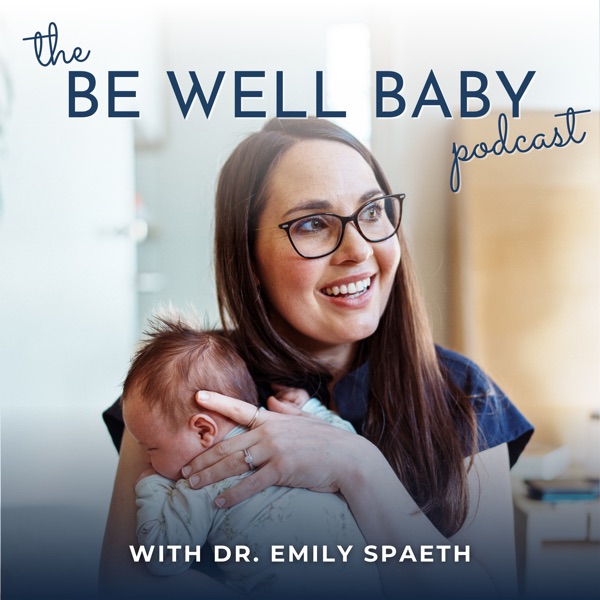
The Be Well Baby Podcast
The questions you're asking... answered.
• What should I really be asking my doctor during pregnancy?
• How can I balance trusting my intuition and following medical advice?
• What if things don’t go as planned—how do I stay grounded?
• What’s the difference between pain and suffering during labor?
• What really happens after birth—the part no one talks about?
• Will my body ever be the same?
• When should my baby roll, crawl, or sit—and when should I stop Googling it?
• Should breastfeeding be painful—or is that a sign something’s off?
• How do I return to work without losing myself—or my career identity?
• How do we find intimacy again when I’m touched out and exhausted?
• How do I stay connected to joy and possibility, even when pregnancy or postpartum feels hard?
• Who am I now that I’m someone’s mother?
• Who cares if my baby hates tummy time?
These are the things nobody tells you about pregnancy, birth, and postpartum...
Treat your pregnancy, birth, and postpartum like grad school—because you deserve to be completely prepared.
On The Be Well Baby Podcast, we ask all the hard questions of your providers so you don't have to figure this out alone. Hosted by Dr. Emily Spaeth: a Doctor of Physical Therapy, Board Certified Lactation Consultant, and certified trauma-informed professional who trains other providers, this isn't your typical pregnancy podcast.
From posture in pregnancy to feeding your baby to baby development to postpartum recovery, pelvic floor health, sex after birth, and navigating your career and identity; we dive deep into the topics nobody talks about openly—until now.
You'll discover what high-achieving women actually need to know about pregnancy, birth, and the fourth trimester. No fluff. No surprises. Just the evidence-based information, honest conversations, and real preparation that helps you feel confident, capable, and genuinely ready for this pivotal season of your life.
Whether you just found out you're pregnant, you're planning to return to work, navigating matrescence, or managing the incredible changes ahead, this is your space to get prepared, feel supported, and maybe even know more than your doctor does.
Ready to approach this season with intention?
• Follow @bewellbabypdx on Instagram Facebook and TikTok
• Join our email list - Notes from the Nest - for a good time!
- Episodes
- 51
- Releases
- Weekly
- Typical length
- 57 min
- On air since
- 2025
- Latest episode
- 1 month ago
Episodes
51 episodes, newest first
-
1 hr 3 min
How to Write a Birth Plan That Actually Works with Nina Spears of Baby Chick®
Season 1, Episode 50
Show notes
Your birth plan isn't a contract with the universe. It's a flow chart. In our Season 1 finale, doula and Baby Chick founder Nina Spears shares how to write birth preferences that prepare you for the birth you actually get.
Nina has supported over 800 families in person and attended more than 350 births over 15 years. She's the author of The Baby Chick Guide to a Positive Pregnancy and built Baby Chick into one of the most trusted pregnancy, birth, and postpartum resources out there.
In this conversation, we talk about:
• Why a birth plan should be a flow chart, not a wish list
• How "birth rehearsals" help you and your partner prepare for the what ifs
• What a doula actually does (and why we're not there to replace your partner)
• Why the invisible load starts the moment you see a positive pregnancy test
• Practical ways partners can share the load during pregnancy, from booking the prenatal massage to researching car seats
• What catches partners off guard in the first days postpartum 💛
• Why every pregnant person needs to unlearn being a "good girl" and a "good patient"Connect with Nina:
Website: baby-chick.com
Instagram: @thebabychickThank you for 50 episodes! 🎉 Season 2 is coming soon with shorter episodes built around the question every parent asks at least once a day: Who cares? Until then, go back and listen to Season 1 from the beginning.
If this episode helped you, share it with a pregnant friend or their partner, and leave a rating and review. It helps more families find the show.
Your host: Dr. Emily Spaeth, PT, DPT, IBCLC, is the founder of Be Well Baby®, a multidisciplinary perinatal and infant care practice in Portland, Oregon. She's spent her career helping families feel supported through pregnancy, feeding, and early development, starting in the NICU and spreading that expertise all over her community. Emily's mission is to change the way people think about preparing for having a baby, this podcast is part of that.
Stay connected while we're on break:
Join Notes from the Nest, the Be Well Baby newsletter, to get practical support for pregnancy, feeding, and your baby's development, plus the first listen when Season 2 drops. 💌 www.bewellbaby.org/#notesIf you'd like to schedule a virtual pregnancy or lactation visit visit www.bewellbaby.org/book-now
-
40 min
What Your Gut Is Telling You About Your Pelvic Floor with Dr. Val Brown
Season 1, Episode 49
Show notes
Pelvic floor physical therapist Val explains the surprising gut-pelvic floor connection, from bloating to bladder leaks, and how to spot the signs.
Most people don't think to connect their digestion with their pelvic floor, but Dr. Emily and pelvic floor physical therapist and functional nutrition practitioner Dr. Val Brown explain why the two are deeply linked. In this episode, they cover surprising symptoms that point back to gut health, from crumbling nails to hearing your heartbeat on your pillow at night, the connection between hypermobility and digestive issues, how the nervous system controls digestion and absorption, and why bladder leaks might have more to do with your diet than you think. Val also shares simple, doable shifts anyone can make to support better digestion and a healthier pelvic floor, starting tonight.
What You'll Learn in This Episode
• What functional nutrition is and how it differs from typical dietitian care
• Surprising symptoms (nails, eyebrows, sleep) that point to gut and hormone imbalances
• How chronic stress and the nervous system affect digestion and absorption
• The connection between hypermobility, EDS, and digestive issues
• How bladder and bowel habits relate to pelvic floor health
• One small, doable shift to improve digestion starting todayAbout Dr. Val
Val is a pelvic floor physical therapist and functional nutrition practitioner with nearly two decades of experience across pelvic health, neurology, orthopedics, and chronic pain. She brings together clinical training and lived, embodied understanding, having walked her own path from disconnection back to herself, which shapes how she shows up for her clients: not just as a clinician, but as someone who understands what it actually takes to trust your body again. Val's work integrates structure, sensation, and nervous system regulation as one system rather than separate interventions, with no fixed protocol. Instead, she teaches clients how their bodies actually work so they can learn to trust and respond to them in real time. She is the creator of the Vital Access Method, a framework centering the pelvic floor across conditions including hip and back pain, digestion, perinatal health, hypermobility, and more.
About Dr. Emily
Dr. Emily Spaeth is a physical therapist, IBCLC, certified neonatal therapist, and founder of Be Well Baby, a multidisciplinary perinatal and infant care practice in Portland, Oregon. Be Well Baby can help you prepare for an empowered birth, and offers the most comprehensive healthcare for tongue ties & torticollis. Emily is also the founder of the Perinatal Business Alliance, bringing healthcare providers to connect and collaborate so that we can change perinatal healthcare for the better!
Learn more:https://bewellbaby.orgA Note on This Episode
This podcast is for educational purposes only and isn't a substitute for personalized medical care. If you're experiencing pelvic floor symptoms, digestive issues, or disordered eating, please reach out to a provider you trust.
Enjoyed The Episode?
Leave us a review, it genuinely helps other families find this podcast. And if you know someone dealing with bloating, leaks, or gut issues that they haven't connected to their pelvic floor, send this one their way.
-
1 hr 3 min
Relationships After Baby: The Piggy Bank Theory with Miranda Bayard Clark
Season 1, Episode 48
Show notes
Struggling to stay connected after having a baby? Licensed counselor Miranda Bayard-Clark shares real tools for rebuilding your relationship postpartum.
Having a baby changes everything, including your relationship with your partner. In this episode, Dr. Emily Spaeth talks with licensed counselor and relationship coach Miranda Bayard-Clark about what really happens to couples after baby arrives, and how to protect your connection through it.
They cover rebuilding rituals after a baby, managing resentment and mismatched expectations, setting boundaries with extended family, and recognizing postpartum depression and anxiety from a partner's perspective. Miranda also introduces her "piggy bank theory," a simple framework for keeping your relationship's emotional reserves full before conflict hits.
If you're expecting, newly postpartum, or just trying to reconnect with your partner after the fog of early parenthood, this conversation is full of practical tools for marriage after having a baby that you can start using tonight.
What You'll Learn in This Episode
• Why "preparental" conversations matter as much as premarital ones
• How to rebuild connection rituals after a baby disrupts your routine
• Tools for navigating conflict and resentment between new parents
• How to recognize postpartum depression and anxiety symptoms in your partner
• What to say (and avoid saying) when your partner is struggling postpartum
• Setting healthy boundaries with extended family after babyAbout Miranda Bayard-Clark
Miranda is a Licensed Professional Counselor (Oregon #C4122), Gottman-trained Bringing Baby Home educator, and founder of Love After Lullabies, a coaching practice and podcast helping couples navigate the transition to parenthood. She holds a Master's in Counseling Psychology from Lewis & Clark College and has been in private practice since 2012, supporting adults and couples through life transitions and mental health challenges. Miranda lives in the Pacific Northwest with her partner and their two daughters.
Learn more:https://loveafterlullabies.comhttp://loveafterlullabies.comAbout Dr. Emily Spaeth
Dr. Emily Spaeth is a physical therapist, IBCLC, and certified neonatal therapist, and founder of Be Well Baby, a multidisciplinary perinatal and infant care practice in Portland, Oregon. Be Well Baby offers in-home physical therapy, occupational therapy, speech therapy, lactation support, craniosacral therapy, and infant massage for families navigating pregnancy through early parenthood.
Learn more:https://bewellbaby.orghttp://bewellbaby.orgA Note on This Episode
This podcast is for educational purposes only and isn't a substitute for personalized medical or mental health care. If anything in this episode brings up something you're struggling with, especially around postpartum mental health, please reach out to a provider you trust.
-
1 hr 4 min
Two OTs Are Changing The Way Hospitals Support Breastfeeding: Here's What Their Research Shows
Episode 47
Show notes
Were you asked if you wanted to breastfeed?
Emily sits down with Dr. Julia Farrell (OTD, IBCLC, OHSU Doernbecher, Pacific University adjunct) and Dr. Jairrah Godsil (OT, IBCLC, Children's Mercy Hospital) to talk about their mixed-methods research study on how occupational therapists support direct breastfeeding for medically complex infants. Julia and Jairrah share what pulled each of them into lactation work, walk through their survey and focus-group findings, and unpack the three major themes that emerged: holistic intervention, clinical challenges, and role expansion. The conversation covers what "direct breastfeeding" actually means clinically, why bottle-feeding swallow studies don't translate to breastfeeding safety, the systemic gaps that lead to missed breastfeeding opportunities, and what expecting parents can do to advocate for themselves before and during birth.
Key Topics Covered
• How Julia and Jairrah's individual research interests (feeding therapist education and medically complex dyads) merged into one combined study
• The finding that OTs with breastfeeding certifications were significantly more likely to intervene at the breast — and what that says about gaps in standard allied health training
• Theme 1 — Holistic Intervention
• Theme 2 — Clinical Challenges
• Theme 3 — Role Expansion
• Missed breastfeeding opportunities: the systemic and logistical reasons babies and parents miss early feeding windows, from lack of a documented feeding plan to delayed skin-to-skin after cesarean birth
• Practical advice for expecting parents: making a breastfeeding plan (including a backup plan), and considering colostrum harvesting in pregnancyGuest Bios
Dr. Jairrah Godsil, OT, IBCLC is an occupational therapist and International Board Certified Lactation Consultant who specializes in neonatal intensive care (NICU), and infant feeding/breastfeeding. She provides occupational therapy services in the neonatal, cardiac, and pediatric intensive care units and inpatient/outpatient swallow studies at Children’s Mercy Hospital in Kansas City, Missouri. She received a Bachelor of Arts in Psychology at the University of Missouri-Kansas City (UMKC) in 2012, Master of Occupational Therapy in 2015 at the University of Texas Health Science Center (UT Health), and Post-Professional Doctor of Occupational Therapy at Creighton University in 2023. She actively volunteers for the American Occupational Therapy Political Action Committee (AOTPAC) and serves as the AOTPAC Ambassador of Kansas. She actively participates in research to support neonatal development and feeding. She is inspired to help others and has had experience with breastfeeding and feeding issues.
Dr. Julia Farrell, OTD, IBCLC has practiced as an occupational therapist for 28 years. Julia has specialized in supporting families whose children have pediatric feeding, eating, and swallowing disorders since 2004 and has been an IBCLC since 2018. She is currently an Assistant Professor in the Department of Pediatrics’ Institute on Development and Disabilities at Oregon Health and Science University’s Doernbecher Children’s Hospital. In her academic work, she is instructor of record for the breastfeeding elective at OHSU’s School of Medicine and an adjunct instructor at Pacific University’s Occupational Therapy School. Clinically, she works in the Multidisciplinary Feeding Clinic Doernbecher Children’s Hospital, where she prioritizes supporting parent-child interactions to bolster parental confidence and self-efficacy in safely and responsively feeding their child. In addition to her paid positions, Julia volunteers with Feeding Matters and serves as the Legislative and Advocacy Co-Chair for the Occupational Therapy Association of Oregon.
-
20 min
"Wait and See" Isn't a Diagnosis with Dr. Emily Spaeth
Season 1, Episode 46
Show notes
"Wait and See" Isn't a Diagnosis: Baby Head Shape, Torticollis & Feeding Delays | Be Well Baby Podcast
Season 1 is wrapping up soon, and before Dr. Emily Spaeth steps away to prep Season 2, she's sharing a preview of what's coming: shorter episodes with one topic to care about. In this preview, Emily digs into a pattern she sees constantly in her work as a physical therapist and lactation consultant: parents being told "it's fine, don't worry about it" about things like head shape, body asymmetry, and feeding struggles, when a specialist's trained eye would catch something worth addressing early.
Emily breaks down three common examples (asymmetry, head shape, and feeding), explains why general pediatrics isn't built to catch every narrow, specific issue, and makes the case for why the first year of a baby's life is a window where small things are still small — and easy to fix. She also gives listeners a first look at Be Well Baby's brand-new Multidisciplinary Clinic, a low-pressure, community-style clinic launching September 11th in Portland, Oregon.
What You'll Learn in This Episode
• Why "it's fine, it'll even out" isn't always the full story on baby asymmetry, hitch-crawling, or head-turn preference
• The current torticollis screening guidelines most pediatricians haven't caught up on yet
• How a flat spot can quietly progress into a helmet conversation — and how to catch it earlier
• Why feeding struggles aren't always just "practice," and when to look deeper at alignment and oral function
• Why pediatricians are experts in reassurance and rule-out, not in narrow specialties like infant bodywork or lactation
• The difference between "not an emergency" and "nothing to look at" — and why that middle space matters
• A first look at Be Well Baby's new Multidisciplinary Clinic: what it is, who it's for, and how to join the first session on September 11thMultidisciplinary Clinic
Be Well Baby's new Multidisciplinary Clinic brings together an expert in infant development and a lactation consultant in the same room, at the same time, so families get both feeding and developmental perspectives in one visit. It's designed for families who are brand new to Be Well Baby and want a low-commitment way to get a screening, as well as families who've already completed a package of visits and want a check-in on new questions as their baby grows.
First clinic: September 11th at 10:30 AM Location: Be Well Baby, Portland, Oregon
Resources & Links
• Learn more or book with Be Well Baby: http://bewellbaby.org
• Follow along on Instagram:@bewellbabypdx
• Multidiscipinary Clnic: http://www.bewellbaby.org/clinic
• Interested providers: Perinatal Business Alliance, connecting perinatal providers across Portland Metro and Southwest Washington - http://www.bewellbaby.org/perinatal-business-allianceAbout Be Well Baby
Be Well Baby is a multidisciplinary perinatal and infant care practice in Portland, Oregon, founded by Dr. Emily Spaeth, PT, DPT, IBCLC, CNT, TIP. The team offers in-home and office visits for physical therapy, occupational therapy, lactation support, and craniosacral therapy for families navigating life with a new baby.
This episode is for educational purposes only and is not a substitute for personalized medical advice.
-
45 min
How to Build Confidence for Birth (and Trust Your Body) with Sivan Dirks
Season 1, Episode 45
Show notes
In this episode, Dr. Emily Spaeth sits down with Sivan Dirks, an acupuncturist, herbalist, and birth doula who specializes in prenatal, postpartum, and pediatric care. Sivan is the director of Wise Mama Collective and runs her own acupuncture practice, Rose City Baby.
Sivan path into birth work started organically. Clients kept asking her to be at their births long before she was trained as a doula. Through her own three pregnancies, including a cesarean birth and a VBAC, she developed a deep understanding of what actually builds confidence in labor: not blind trust, but real knowledge of how the nervous system works.
In this conversation, Emily and Sivan talk about:
• Why "just trust your body" isn't enough on its own, and what real confidence is built on instead
• How the nervous system acts as a "doorway" to birth, and why interrupting it is so much easier than supporting it
• The difference between sympathetic and parasympathetic states, and why birth is fundamentally a deactivating process
• A simple breathing tool you can use right now to create more choice and calm in stressful moments
• Why every provider interaction that leaves you scared or anxious is a communication failure, not a reflection of you
• How to start reconnecting with your own inner wisdom, even outside of pregnancyOne of the most powerful moments in the episode: Sivan shares a quote that's stuck with her for years — between stimulus and response, there is space, and in that space, we have choice, and in that choice, we have freedom. She unpacks what that means physiologically and how it applies directly to labor, parenting, and everyday life.
Connect with Sivan:
Wise Mama Collective - https://www.wisemamacollective.com/Resources mentioned:
Be Well Baby - https://www.bewellbaby.org
Oura Ring (Emily's sleep and recovery tracker) - https://ouraring.com/raf/aeac336b38 -
1 hr 4 min
Respond, Don't React: Sleep Training Your Baby with Felicia Nassif
Show notes
If you've ever found yourself Googling "why won't my baby sleep" at 3am, this episode is for you.
Felicia Nassif is a pediatric registered nurse with over 17 years of trauma and pediatric care experience, a certified lactation educator, parent coach, and pediatric sleep consultant. Through her practice, Conscious Living Coaching, she helps mothers build confidence, improve sleep, and create sustainable routines rooted in nervous system regulation.
In this conversation, Emily and Felicia talk about:
• Why nervous system regulation, not technique, is the real foundation of sustainable sleep
• Felicia's own journey through sleep deprivation, co-sleeping guilt, and being diagnosed with cystic fibrosis and hypermobile Ehlers-Danlos syndrome as an adult
• The sleep cues parents miss (and why waiting until your baby is rubbing their eyes is already too late)
• Safe co-sleeping and why refusing to talk about it openly can actually make things less safe
• Why moving feeding to the start of the bedtime routine (instead of the end) can change everything
• Responding versus reacting, and learning to trust your baby's ability to self-settleFelicia's program, The New Mom Reset, is for families who are done Googling and ready for a plan!
Visit Felicia's website: http://felicianassif.com
Book a free discovery call with Felicia: https://calendly.com/felicia-nassif/45min
Follow Felicia on Instagram: @felicianassif
More About Your Host
Emily Spaeth is a Doctor of Physical Therapy, International Board Certified Lactation Consultant, childbirth educator, and founder of Be Well Baby® in Portland, Oregon. With extensive NICU experience and training in craniosacral therapy, she leads a team providing home-based health care for families navigating the tricky parts of pregnancy and postpartum.
Emily is also a professor and offers mentorship and continuing education courses for professionals so that she can effect systemic change! She is also a mother of three and passionate about helping families move from surviving to thriving.
If this episode helped you, please send it to someone who's pregnant, postpartum, or supporting someone through birth — and if you have a minute, leaving a review helps us reach even more families. Thank you for being here.
-
1 hr
The Art of Doing Less: Reading Your Baby's Cues with Dr. Dairian Roberts
Season 1, Episode 43
Show notes
Sometimes parents want to know what to do to help their baby develop. I get it — I've wondered the same thing. And although there are so many ways we can help, sometimes the answer is to do less, observe more, and enjoy more.
Dairian is a dear friend of mine, and she'll forever go down in history as my inspiration and bravery booster to start Be Well Baby®.
Dr. Dairian Roberts is a licensed occupational therapist with over 10 years of experience and an International Board Certified Lactation Consultant. She's the owner of Humbled by Motherhood (I know I was), where her approach blends OT, lactation support, and manual therapy into holistic, evidence-based care for families. She also founded The Lactation OT Platform where OTs, PTs, and SLPs learn about breastfeeding and chestfeeding, and where I am honored to have my continuing education courses living!
In this conversation, we talk about:
• Learning your baby's cues, from cries to yawns to the "humming" sound that signals it's time to sleep
• Why doing less can be more: how overstimulation affects a baby's developing brain, and what a quiet, unstructured morning actually gives them
• The difference between an overstimulated baby who cries and one who shuts down and looks like they're sleeping
• Bottle aversion: what's really going on when a baby refuses, and how it differs from a baby who simply doesn't know how yet
• Dairian's work in USC's Lifestyle Redesign doctorate program and how it's shaping the way she thinks about habit change for postpartum families
• What it means to be an adult learner as a new parent, and why care plans need to meet families where they are
• The reminder that struggling with something new is a sign you're learning, not failingFind Dr. Dairian Roberts
• Work with Dairian: http://www.humbledbymotherhood.com
• Learn more about Dairian's continuing education platform for clinicians http://www.LactationOT.comMore About Your Host
Emily Spaeth is a Doctor of Physical Therapy, International Board Certified Lactation Consultant, childbirth educator, and founder of Be Well Baby® in Portland, Oregon. With extensive NICU experience and training in craniosacral therapy, she leads a team providing home-based health care for families navigating the tricky parts of pregnancy and postpartum.
She also hosts theBeyond Birth Blueprint (http://www.bewellbaby.org/beyond-birth-blueprint) an online birth and postpartum educational community available to families across the country—so no matter where you are, you have access to support, resources, and connection. Emily is also a mother of three and passionate about helping families move from surviving to thriving.
We have restructured Beyond Birth so that you can access it so easily. We close the doors at the end of September. I can’t wait to meet you on the inside!
Our mission is to fundamentally shift healthcare could look like for pregnancy, postpartum, and babies. Please help us spread the word by leaving a review! Every review matters!
If this episode helped you, please send it to someone who's pregnant, postpartum, or supporting someone through birth. Thank you for being here. 🤍
-
26 min
Wanting To Want It: Desire After Birth with Dr. Emily Spaeth
Season 1, Episode 42
Show notes
You're cleared at your six week checkup, but your body doesn't necessarily get that memo. If you're missing closeness with your partner, can't locate an ounce of desire, or wonder if something is wrong with you, this episode is for you.
In this solo episode, Dr. Emily Spaeth breaks down the physiology and psychology of postpartum desire, why low libido after baby is not a personal failure, and what you can actually do about it.
What we cover
• The hormone crash. Why the drop in estrogen and progesterone right after birth (and the effects of prolactin, oxytocin, and testosterone while chestfeeding) directly suppress desire and arousal, and why that's chemistry, not a reflection of your relationship
• The dual control model. Introducing the "accelerator and brakes" framework for the nervous system, and why low desire is usually a brakes problem (stress, sleep deprivation, feeling touched out) rather than an accelerator problem
• Responsive vs. spontaneous desire. Dr. Rosemary Basson's circular model of sexual response, where willingness and closeness come first and desire shows up after arousal has already started, not before
• Arousal nonconcordance. Why your body's physical response and your felt desire don't always match, and why that's normal, not dysfunction
• Touch saturation. Why being "touched out" by the end of a day with a baby is real and valid, and doesn't mean you don't love your partner
• Practical tools. Talking to your partner before baby arrives, building a "secret language" or signal system for initiating intimacy, and why lube and time (and possibly a vaginal estrogen cream) matter for the first postpartum penetrative experiences
• The big reframe. Postpartum intimacy isn't about finding your way back to how things used to be, it's about building something newFree workshop: Sex After Birth
Want more support with this topic? Join the free Sex After Birth workshop.
• When: Thursday, August 20th, 12–1pm (and check for future dates!)
• Who: Open to birthing bodies pregnant or postpartum, and partners, too!
• Details and future session dates: http://bewellbaby.org/sex-after-birth-classRelated episodes
• Sex After Baby, with Crystal Guard
Loved this episode?
If it helped you, send it to a friend who's pregnant, postpartum, or supporting someone who is. And if you have a minute, leaving a review helps other families find the show.
Connect with Be Well Baby
• Instagram: @BeWellBabyPDX
• Website: http://bewellbaby.org -
39 min
Witnessing Love With Doula and Birth Photographer Heidi Long
Season 1, Episode 41
Show notes
Heidi Long is a birth doula, postpartum doula, and birth photographer based in Portland, Oregon, and the owner of Grounded Hearts Doula. With a decade of experience supporting families through birth, Heidi pairs her doula work with professional photography, capturing births, newborn sessions, and family milestones for the same families she supports.
In this episode, Emily and Heidi break down:
• What a postpartum doula does and how postpartum doula support is different from hiring a nanny
• Why you need a birth doula, even if you already have a supportive OB or midwife in the room
• How to know a birth doula or postpartum doula is the right fit for your family, and why intuition matters as much as the interview
• How Heidi combines doula support and birth photography to capture authentic, unposed moments during labor and delivery
• What it's like to work with the same birth photographer across your maternity, newborn, and family milestone sessions
• Heidi's advice for anyone considering hiring a birth doula, postpartum doula, or birth photographer for the first timeReady to learn more about birth doula support, postpartum doula care, or birth photography? Find Heidi's links below to connect with Grounded Hearts Doula.
• https://www.groundedheartsdoula.com
• https://www.groundedheartsphotography.comHeidi has generously offered folks who mention this podcast will receive a 15 minute fall mini session in October of 2026 out in nature among the autumn foliage!
More About Your Host
Emily Spaeth is a Doctor of Physical Therapy, International Board Certified Lactation Consultant, childbirth educator, and founder of Be Well Baby® in Portland, Oregon. With extensive NICU experience and training in craniosacral therapy, she leads a team providing home-based health care for families navigating the tricky parts of pregnancy and postpartum.
She also hosts theBeyond Birth Blueprint (http://www.bewellbaby.org/beyond-birth-blueprint) an online birth and postpartum educational community available to families across the country—so no matter where you are, you have access to support, resources, and connection. Emily is also a mother of three and passionate about helping families move from surviving to thriving.
We have restructured Beyond Birth so that you can access it so easily. We close the doors at the end of September. I can’t wait to meet you on the inside!
Our mission is to fundamentally shift what healthcare could look like for pregnancy, postpartum, and babies. Please help us spread the word by leaving a review! Every review matters!
If this episode helped you, please send it to someone who's pregnant, postpartum, or supporting someone through birth. Thank you for being here. 🤍
-
43 min
Be The Lighthouse Not The Rescue Boat: Parenting with Belinda Tung
Season 1, Episode 40
Show notes
Emily sits down with Belinda Tung, founder of Perfect Child, to unpack what it really means to parent from a place of steadiness instead of fear. They dig into the "lighthouse" metaphor — staying present and connected without chasing, fixing, or controlling — and why Belinda deliberately uses the word perceive rather than believe or know when it comes to seeing a child as perfect.
The conversation moves through unmet needs hiding behind everyday behaviors (bus-window pouting, hide-and-seek transitions, meltdowns), journaling as a tool for self-reflection and co-regulation, and how parents' own upbringing and a rushed healthcare system can pull them away from trusting their instincts. They close with an invite to Belinda's in-person community event on August 8th.
No need to sign up. If you want wholesome family fun, just show up!
https://www.perfectchild.org/wholesomefamilyfestival
In This Episode:
• Why Belinda named her practice "Perfect Child" and the two very different reactions she gets to it
• The lighthouse metaphor: steady and present vs. reactive and fear-driven
• Why "perceive" is the intentional word choice over "believe" or "know"
• How to stay the lighthouse even during mundane moments like brushing teeth
• Reading subtler, quieter unmet needs (not just meltdowns) — boredom, disconnection, need for play
• Journaling as a self-reflection and nervous-system tool for parents
• How our own childhood conditioning and a rushed medical system pull parents away from trusting themselves
• Belinda's community event on August 8thConnect with Belinda Tung:
• https://www.perfectchild.org/
• The Perfect Child Podcast: https://www.perfectchild.org/podcasts/the-perfect-child-podcast
• https://www.perfectchild.org/wholesomefamilyfestivalMore About Your Host
Emily Spaeth is a Doctor of Physical Therapy, International Board Certified Lactation Consultant, childbirth educator, and founder of Be Well Baby® in Portland, Oregon. With extensive NICU experience and training in craniosacral therapy, she leads a team providing home-based health care for families navigating the tricky parts of pregnancy and postpartum.
She also hosts theBeyond Birth Blueprint, (http://www.bewellbaby.org/beyond-birth) an online birth and postpartum educational community available to families across the country—so no matter where you are, you have access to support, resources, and connection. Emily is also a mother of three and passionate about helping families move from surviving to thriving.
Our mission is to fundamentally shift healthcare could look like for pregnancy, postpartum, and babies. Please help us spread the word by leaving a review! Every review matters!
If this episode helped you, please send it to someone who's pregnant, postpartum, or supporting someone through birth. Thank you for being here.
-
57 min
Stop Saying “Just Relax!” To Your Pelvic Floor With Dr. Valerie Brown
Season 1, Episode 39
Show notes
What if the key to healing your pelvic floor, calming your nervous system, and reconnecting with your body was already inside you — and you just needed someone to help you access it?
In this episode, Emily sits down with Dr. Valerie Brown, PT — a pelvic floor physical therapist, embodiment educator, and creator of the Vital Access Program — for a conversation that goes far beyond kegels. Val blends pelvic floor awareness, nervous system regulation, somatic movement, and trauma-informed care into a holistic approach that meets women exactly where they are.
In this episode, we cover:
• What "embodiment" actually means — and why it's a felt experience, not a concept
• Why telling someone to "just relax" almost always backfires, and what to do instead
• The overlooked connection between hypermobility, Ehlers-Danlos Syndrome (EDS), and pelvic floor dysfunction
• Why a hypermobile body can still have a hypertonic (overly gripped) pelvic floor
• How pregnancy's relaxin hormone can unmask hypermobility that's been hiding in plain sight
• The often-missed role of the feet in pelvic floor health
• Why generic "strengthen your core" advice can backfire for hypermobile bodies
• Simple, accessible nervous system tools you can use in the car, in two minutes, or while brushing your teeth
• How imagination and visualization support better birth and recovery outcomesAbout Dr. Valerie Brown:
Dr. Valerie Brown is a pelvic floor physical therapist and embodiment educator based in Troutdale, Oregon, serving clients locally, online, and through workshops across California, Colorado, and the Pacific Northwest. Learn more about thehttps://alignwellnesspnw.comVital Axis Method.Connect with Val and learn about her program!
Website: http://www.vitalaxispt.comInstagram: @vital.axis.method
Val now offers home visits through Be Well Baby! Book a session with her at 971-351-2714.
-
49 min
What a NICU PT and Lactation Consultant Actually Puts on Her Baby Registry with Dr. Emily Spaeth
Season 1, Episode 38
Show notes
Baby registry must haves are everywhere, but most lists are written by influencers, not clinicians. In this solo episode, Dr. Emily, a NICU physical therapist and board certified lactation consultant, walks through what she actually recommends for your baby registry: the feeding supplies worth buying before birth, the baby gear that supports development (and the popular items that work against it), what NICU professionals know about safe sleep products, and the stuff you can absolutely skip.
Whether you're building your Babylist registry or just wondering what you really need for a newborn, this is the registry episode your pregnant friends will thank you for.
Check out everything I mention in this episode!
https://www.bewellbaby.org/blog/registry
SUPPORT: Put Be Well Baby on your registry! When you gift Be Well Baby, you are giving the gift of options. We have virtual lactation support, and a birth education platform called the Beyond Birth Blueprint that can answer all of your questions in real time.
https://www.bewellbaby.org/gift-cards-beyond-birth
More About Your Hostess:
Emily Spaeth is a Doctor of Physical Therapy, International Board Certified Lactation Consultant, and founder of Be Well Baby in Portland, Oregon. With extensive NICU experience and training in craniosacral therapy and trauma informed care, she leads a team providing home-based health care for families navigating the tricky parts of pregnancy and postpartum.
She also hosts theBeyond Birth Blueprint, an online birth and postpartum educational community available to families across the world—so no matter where you are, you have access to support, resources, and connection. Dr. Emily is also a mother of three and passionate about helping families transition from surviving to thriving.
Be Well Baby Podcast Episodes about topics I touch on here!
• Flange Sizes: We Are Not Cows https://podcasts.apple.com/us/podcast/we-are-not-cows-why-flange-size-matters-with-faith-samaan/id1851076558?i=1000739494852
• Nervous System Episode https://podcasts.apple.com/us/podcast/what-is-nervous-system-regulation-ill-tell-you-with-dr/id1851076558?i=1000746998854
• Containers! https://podcasts.apple.com/us/podcast/tummy-time-containers-and-functional-frustration-its/id1851076558?i=1000747993058
• Postpartum Support https://podcasts.apple.com/us/podcast/twins-birth-trauma-and-the-fourth-trimester-with/id1851076558?i=1000755928920
-
1 hr 4 min
Tongues Ties, Airways, and A Surgeon’s Case for Whole Human Care with Dr. Prashant Charugundla
Season 1, Episode 37
Show notes
What if the surgeon you finally found actually saw you as a whole, complex human and not just a line item on a sleep study? In this episode, Dr. Emily welcomes oral and maxillofacial surgeon Dr. Prashant Charugundla for a conversation that bridges Western surgical precision with a genuinely holistic, systems-level lens on care.
Prashant opens up about his own long journey before a myofunctional therapist and an osteopathic doctor finally pointed him toward what was really going on. That personal experience now fuels his deep compassion for the patients who arrive having already seen a dozen providers without answers.
Together, Emily and Prashant unpack the structural and nervous-system ripple effects of unaddressed tongue ties, why a "normal" sleep study doesn't mean nothing is wrong, and what's really happening to the airway during pregnancy and postpartum. It's a wide-ranging, validating conversation for anyone who has ever been dismissed and told they're "just tired."
In this episode, we cover:
• Prashant's personal health journey and how being a dismissed patient shaped his philosophy
• What myofunctional therapy actually is
• The tongue as a "relay station": how the genioglossus, hyoid, and the tent-pole effect connect the tongue to the whole body
• Downstream consequences of unreleased tongue ties in both a 3-year-old and a 30-year-old (airway resistance, postural compensation, voice tightness, gait changes)
• Upper airway resistance syndrome and why a clear sleep study can still miss real symptoms
• Nasal breathing, nitric oxide, and the cortisol/norepinephrine cascade of mouth breathing at night
• Phrenectomy vs. functional frenuloplasty vs. Z-plasty — and the windows of opportunity for intervention
• The "room before furniture" philosophy: expanding structure before removing tissue
• Why tongue ties remain controversial, and how to ask the right questions when choosing a provider
• What's happening to the airway during pregnancy
• Bridging Eastern and Western perspectives toward whole-human, collaborative careMore About Our Guest
Dr. Prashant Charugundla ("Dr. C") is a Board Certified Oral & Maxillofacial Surgeon and the founder of Summit Oral Surgery in Portland, Oregon. Bridging Western surgical precision with Eastern holistic philosophy, he treats the face/mouth not as an isolated tool, but as the gateway to the body’s overall health—linking structure to airway, sleep, and nervous system regulation.
With a background as a pediatric trauma surgeon and OHSU professor, Dr. C brings a gentle, safety-first approach to every case. However, his clinical focus is deeply rooted in adult skeletal and functional health. He specializes in helping adults who have lived with chronic airway obstruction, TMJ dysfunction, or sleep issues finally achieve true physiological release. Through nasomaxillary expansion and reconstructive surgery, he empowers patients to breathe better, sleep deeper, and thrive.
Off the clock, he explores the Pacific Northwest, embodying the active, vital lifestyle he helps his patients restore.
Learn more: http://portlandoralsurgeon.com
More About Your Host
Emily Spaeth is a Doctor of Physical Therapy, International Board Certified Lactation Consultant, childbirth educator, and founder of Be Well Baby® in Portland, Oregon. www.bewellbaby.org
Our mission is to fundamentally shift what healthcare could look like for pregnancy, postpartum, and babies. Please help us spread the word by leaving a review! Every review matters!
-
1 hr
Sex After Baby: Rebuilding Intimacy & Connection Postpartum with Krystle Gard
Season 1, Episode 36
Show notes
Nobody prepares you for how much intimacy and connection can shift after you have a baby — and yet it's one of the most common struggles new parents face. In this episode, Emily sits down with Krystle Gard, postpartum doula and Intimacy & Connection Coach, for an honest, shame-free conversation about what actually happens to your sex life after birth and what you can do about it.
Krystle's journey into this work is deeply personal. From a supported home birth in Alaska to having twins without a local support system, to serving as a surrogate three times — she has lived the full spectrum of postpartum experiences. That, combined with her work supporting families as a postpartum doula, showed her just how little guidance new parents receive about intimacy after birth.
In this episode, we cover:
• Why libido and desire commonly shift postpartum (and why that's not a failure)
• The role of sleep deprivation, hormones, and nervous system dysregulation in sexual desire
• Why self-pleasure is often the most overlooked tool in postpartum recovery
• The "three-minute game" from The Art of Giving and Receiving — and why it's a game changer for rebuilding connection
• The intimacy candle practice for keeping the simmer going without pressure
• Love languages, the red/yellow/green communication system, and the "favorite things list"
• Why lube is non-negotiable postpartum
• How birth trauma affects touch tolerance — and gentle ways to rebuild safety
• The importance of humor, playfulness, and letting go of how things used to beResources mentioned:
• The Art of Giving and Receiving by Harry Faddis
• Love Languages (Gary Chapman)
• Sex After Birth Workshops: http://www.bewellbaby.org/sex-after-birth-classFind Krystle:
• https://wholefamilydoulacare.com/
• krystlegard@gmail.comMore about our guest:
With a background in engineering, Krystle brings organization, intuition, and problem-solving to help families find systems and flow that make life easier. She loves teaching and educating new parents, offering hands-on newborn care guidance, household support, and a listening ear. She also provides Intimacy & Connection Coaching to help couples nurture their relationships after birth.
More about your host:
Emily Spaeth is a Doctor of Physical Therapy, International Board Certified Lactation Consultant, and founder of Be Well Baby in Portland, Oregon. With extensive NICU experience and training in craniosacral therapy, she leads a team providing home-based health care for families navigating the tricky parts of pregnancy and postpartum.
She also hosts theBeyond Birth Blueprint, an online birth and postpartum educational community available to families across the country—so no matter where you are, you have access to support, resources, and connection. Emily is also a mother of three and passionate about helping families move from surviving to thriving.
-
59 min
Consent, Cues, and Conscious Touch with Babies: The Perfect Child Podcast Takeover with Belinda Tung
Season 1, Episode 35
Show notes
What if your baby has been communicating with you all along — and you just needed the tools to hear them?
In this episode, Dr. Emily sits down with Belinda on the Perfect Child Podcast to talk about one of her favorite (and most misunderstood) topics: consent with babies. From the NICU to the changing table, Dr. Emily breaks down what infant communication actually looks like, why slowing down transforms your caregiving, and how small everyday rituals build the foundation for a deeply connected relationship with your child.
In this episode you'll learn:
• Why babies are whole, fully-present humans from the very beginning — and what Dr. Emily witnessed working with 23-weekers in the NICU that solidified this for her
• How to read your baby's body language: the cues that say this is too much vs. I'm ready
• What a finger splay, an arched back, and a full-body wiggle are actually communicating
• Why "gaining consent" from a newborn looks different than it does from a 6-month-old — and how to approach both
• The surprising benefits of infant massage (digestion, weight gain, brain development, bonding — and one story about a tumor caught early because of a daily massage routine)
• How to use deep pressure touch, slow movement, and oil to make massage more effective
• Why babies cannot self-soothe — and what co-regulation actually requires of you
• Dr. Emily's approach to the dreaded diaper change wrestling match (hint: you don't have to hold them down)
• How sign language gives babies a voice before they have words — and what Dr. Emily's 7-year-old still communicates across a crowded gym
• What it really means to advocate for your baby in the hospital, at family gatherings, and with well-meaning grandparents who want to hold your newbornResources mentioned:
• Beyond Birth Blueprint https://www.bewellbaby.org/beyond-birth
• Birth Partner Course (inside Beyond Birth)
• Infant massage mini course + video library (also inside Beyond Birth!)
• ASL classes (also inside Beyond Birth)
• The Perfect Child Podcast! https://www.perfectchild.org/aboutWe have restructured Beyond Birth so that you can access it so easily.
I can’t wait to meet you on the inside!
Emily Spaeth is a Doctor of Physical Therapy, International Board Certified Lactation Consultant, childbirth educator, and founder of Be Well Baby® in Portland, Oregon. With extensive NICU experience and training in craniosacral therapy, she leads a team providing home-based health care for families navigating the tricky parts of pregnancy and postpartum.
She also hosts theBeyond Birth Blueprint, an online birth and postpartum educational community available to families across the country—so no matter where you are, you have access to support, resources, and connection. Emily is also a mother of three and passionate about helping families move from surviving to thriving.
Our mission is to fundamentally shift healthcare could look like for pregnancy, postpartum, and babies. Please help us spread the word by leaving a review! Every review matters!
If this episode helped you, please send it to someone who's pregnant, postpartum, or supporting someone through birth. Thank you for being here. 🤍
-
49 min
Colic Isn't Real! Here's Why Your Baby Is Actually Uncomfortable With Pediatrician Dr. Kirin Palmer
Season 1, Episode 34
Show notes
Colic isn't real! I will die on that hill.
This week Dr. Emily Spaeth brings you Dr. Kirin Palmer, a pediatrician, functional medicine practitioner, and founder of Pure Joy Pediatrics in the Portland metro area in Oregon. Through her work in clinic and through her digital class, she helps expectant parents understand how maternal health during pregnancy can influence their baby’s digestion, immune system, and long-term wellness.
They talk about the one thing most pediatricians aren't yet doing: putting the gut microbiome at the center of newborn care.
If your baby has struggled with reflux, colic, eczema, gassy uncomfortable feeds, weird-colored poops, or just a general sense that something is off with no answers… this episode is for you.
We use the terms mother, mom & birthing person interchangeably in this episode. 🌈
In this episode, we cover:
• Why your microbiome as a pregnant person is your baby's literal starting point
• What actually happens in a newborn's gut in the first hours of life (hint: it's a clean canvas, and what you paint on it matters)
• The real reason so many babies are diagnosed with "colic" and "reflux"
• Why vaginal delivery and breastfeeding matter for gut health, and what to do if neither was possible for you
• How antibiotics during pregnancy (for UTIs, GBS, and more) affect your baby's microbiome — and how to recover
• What microbiome testing looks like, and when Dr. Palmer recommends it
• The cascade of interventions: swallow studies, MRIs, NG tubes, hospital admissions… that all could be prevented with early gut support
• Why not all probiotics are created equal, and why single-strain OTC probiotics often don't work
• What healthy newborn poop looks like and why poop color and consistency absolutely matter, no matter what social media says
• Dr. Palmer's Tiny Tummies program and how microbiome support is changing outcomes for familiesResources mentioned:
• Pure Joy Pediatrics:http://www.purejoypediatrics.com
• Dr. Kirin Palmer on Instagram: @purejoypediatrics and @kirinpalmermd
• Ninni Co Pacifier — code BEWELLBABY for 10% off
• Beyond Birth Blueprint membership (Nest, Bloom, Thrive): [http://bewellbaby.org/beyond-birth]
• Book a consult with the Be Well Baby team: [http://bewellbaby.org/book-now]Everything on this podcast is for educational purposes only and is not medical advice.
More About Your Host
Emily Spaeth is a Doctor of Physical Therapy, International Board Certified Lactation Consultant, childbirth educator, and founder of Be Well Baby® in Portland, Oregon. With extensive NICU experience and training in craniosacral therapy, she leads a team providing home-based health care for families navigating the tricky parts of pregnancy and postpartum.
She also hosts theBeyond Birth Blueprint, an online birth and postpartum educational community available to families across the country—so no matter where you are, you have access to support, resources, and connection. Emily is also a mother of three and passionate about helping families move from surviving to thriving.
If you’ve read this far… please leave us a review :) It helps spread the word more thank you could ever know. Love, Em
-
1 hr 2 min
Demystifying Induction & Cesarean with OB Hospitalist Dr. Jennifer Lincoln
Season 1, Episode 33
Show notes
One in three births in the US starts with an induction. Another one in three is a cesarean. And yet most people walk into those experiences confused, scared, or feeling like the decision just happened to them. This episode is here to change that.
Dr. Jennifer Lincoln is a board-certified OBGYN, OB hospitalist in Portland, Oregon, and one of the most trusted voices in evidence-based birth education online. She's the author of the brand-new The Birth Book: An OBGYN's Guide to Demystifying Labor and Delivery (out March 2026) and has spent her career making sure people walk into birth feeling informed — not afraid.
Emily and Jennifer have the honest, warm, non-judgmental conversation that so many people wish they could have with their own provider. Nothing is sugarcoated, and nothing is left out.
In this episode:
• Why social media birth content is often the worst-case scenario
• What an induction actually looks like, step by step (hint: it can take days, and that's normal)
• The ARRIVE Trial: what it actually showed, what it didn't, and the critical caveat almost nobody mentions
• How to know when to trust a provider's recommendation vs. when to ask more questions (and the magic questions to ask)
• The truth about Pitocin, hemorrhage risk, and why the uterus gets tired
• Advanced maternal age: what the data actually says and when age alone is a reason for induction
• A walk through what happens in the OR from the moment the C-section decision is made to when you're sewn back up
• Why cesarean recovery is a full year, not six weeks, and what to do differently
• The fundal massage nobody warns you about
• Postpartum mental health after an unexpected cesarean — what to watch for and why Jennifer brings it up in the discharge conversationResources mentioned:
• 📖 The Birth Book by Dr. Jennifer Lincoln — available wherever books are sold (audiobook available, read by Dr. Lincoln herself)
• Dr. Jennifer Lincoln online:http://drjenniferlincoln.com
• Follow Dr. Lincoln: @drjenniferlincoln on Instagram and TikTok
• 📍 Live event: Dr. Lincoln's book signing, June 14th, 4:15 PM at Vancouver Community Library, hosted by Childbirth Allies! Click the link or search "Childbirth Allies Jennifer Lincoln" on Eventbrite to register!
• The Ninni pacifier — use code BEWELLBABY for 10% offHelpful framework from this episode:
The BRAIN acronym for decision-making in labor:
B — Benefits
R — Risks
A — Alternatives
I — Intuition
N — Nothing (what if we wait?)
Connect with Be Well Baby:
📲 Instagram: @BeWellBabyPDX 🌐 http://bewellbaby.org
More About Your Host
Dr. Emily Spaeth, PT, DPT, IBCLC, is the founder of Be Well Baby® in Portland, Oregon. She leads a team specializing in home visits for the trickiest perinatal cases. She also mentors perinatal providers navigating complex clinical work. Mom of 3, passionate about helping families and clinicians move from surviving to thriving.
-
1 hr 19 min
Bacterial Vaginosis, Cervical Lips, & Nuchal Cords, Oh My! Lessons From My Three Home Births
Season 1, Episode 32
Show notes
This week, we're flipping the script. My doula, Alison Akan of the BirthLinked YouTube channel, sits down with me to talk through all three of my birth experiences, and nothing is off limits.
I went into each birth with more knowledge than the last, and somehow that made things both easier and harder. We talk about what it's like to plan for a home birth and end up in the hospital, what it means to truly surrender in labor, and why knowing too much can sometimes work against you.
Alison's passion for birth began in her teens in Sweden, where she went on to study medical assisting with a goal of midwifery. She supported her first birth at 22 in a high-risk labor and delivery unit in Lund, and brings experience from over 300 births to every family she serves.
After returning to the USA in 2017, she became a certified birth doula and hasn't looked back. Alison is deeply committed to evidence-based education, helping expectant parents understand their options and move from fear to excitement. Her goal is for every client to look back on their birth as empowering, even when it doesn't go as planned.
Alison always says that it's a true honor to be invited into such a sacred space, and that reverence is at the heart of everything she does.
BIRTH VIDEO: https://www.youtube.com/watch?v=pwSlgH3B1Do&list=PLbvrHEJRpfbj4TdUGNNcGPYJ6Dr67KTW8
In this episode we cover:
• How my first birth started with a yoga class in San Francisco — in Depends
• Undiagnosed bacterial vaginosis, prelabor rupture of membranes, and a four-day labor that ended in a hospital transfer
• What actually happens to your psoas muscles in labor — and why an epidural was the best clinical decision I made
• My second birth: swift, an uneventful nuchal cord with baby still en caul
• Deciding to have a third child on a hard parenting day — and what my partner said that made the decision for us
• Asynclitism, cervical lips, a birth tub filled with buckets, and a placenta that went rogue
• What my husband was most afraid of — and it wasn't pushing the baby out!People + Events Mentioned:
• Alison Akan: [BirthLinked YouTube Channel]
• Angela Truby: Glow Midwifery [midwife]
• Tami Lynn Kent / Holistic Pelvic Care™
• Katie Kanda
• Beyond Birth Community Calls
• Birth Prep. But Better. (https://www.bewellbaby.org/birth-prep-but-better)Want to keep the conversation going? Join me most Tuesdays at 10am PST/1pm EST/7pm in Sweden! Beyond Birth
-
48 min
The Word for What's Exhausting You: System-Keeping™ with Stassi Chaillé
Season 1, Episode 31
Show notes
Have you ever fallen into bed completely exhausted — only to lie there wide awake, running through everything you forgot to do, respond to, or organize? That bone-tired exhaustion that doesn't let you rest? There's actually a name for what's happening, and this week's guest coined it.
Stassi Chaillé, LPC is a therapist, educator, and founder of System-Keeping™ — the first framework to name the root cause of women's self-abandonment.
With dual master's degrees from Columbia University in Culturally Oppressive Systems and Psychological Counseling, Stassi coined System-Keeping™ to describe the invisible, anticipatory labor women perform to keep families, workplaces, marriages, and entire economies functioning — labor that was never consented to, never credited, and designed to be impossible to stop.
Through her monthly masterclass, private liberation container, and writing, Stassi works with high-functioning women who can't understand why burnout interventions keep failing — until they see that the system requiring their self-abandonment is still intact. System-Keeping™ is why.
Once a woman understands she was conditioned into this, the question stops being what's wrong with me and becomes what was I trained to carry.
By the end of our conversation, you'll see your life differently. We promise.
We cover:
• What System-Keeping™ is — and why "mental load" doesn't tell the whole story
• The three-part triangle: conditioning, invisible contracts, and the nervous system loop
• How System-Keeping™ shows up physically in your body — and what the research says
• The self-abandonment at the center of it all
• What one realistic first shift looks like when you're ready to start putting something downEvents mentioned:
Stassi's System Keeping™ Masterclass on the last Thursday of every month → Sign Up Here
Book a 1:1 30 minute consult with Stassi here!
🪺Birth Prep. But Better. with Dr. Emily May 30th at New Mom School® → https://www.bewellbaby.org/birth-prep-but-better
🎼 A Notion, A Scream! Choir Concert - May 31st in Portland!
About Dr. Emily:
Emily is on a mission to change the way we prepare for the chapter of welcoming a baby into our homes. Emily is a Doctor of Physical Therapy, International Board Certified Lactation Consultant, and the founder of Be Well Baby® — a multidisciplinary in-home practice in Portland, Oregon serving families from pregnancy through the early years with baby. She's also a mom of three, and creator of the online educational community the Beyond Birth Blueprint.
Medicine lists
More Medicine shows picked out from the charts







More in Medicine
Placed highest on Apple Podcasts' Medicine chart right now