Podcast
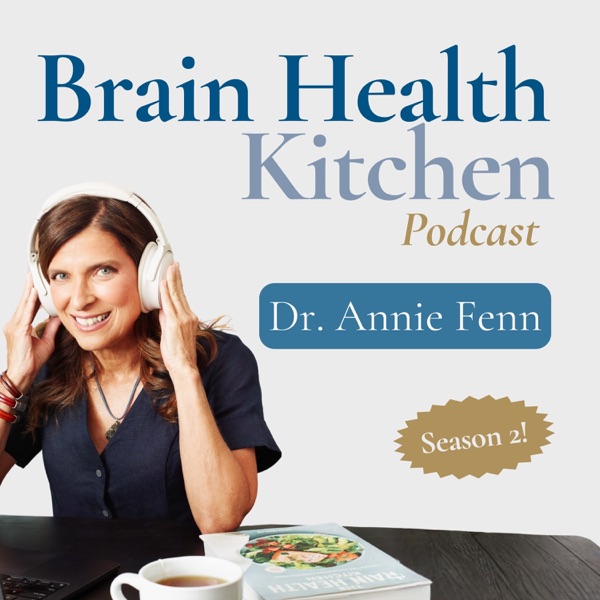
The Brain Health Kitchen Podcast
The Brain Health Kitchen Podcast brings together science, storytelling, and practical wisdom on how to protect and nourish your brain at any age. Hosted by physician and author Annie Fenn, MD, each episode dives into the habits that support lifelong cognition—food, movement, sleep, mindfulness, social connection, and more. Through conversations with researchers, clinicians, neuroscientists, and thought leaders, you’ll learn what the latest evidence actually means for your daily life. Whether you’re looking to lower your dementia risk, stay sharp as you age, or simply understand your brain better, this podcast offers the tools and inspiration to build a truly brain-healthy life.
- Medicine chart
- #115
- Episodes
- 28
- Releases
- Weekly
- Typical length
- 1 hr 6 min
- On air since
- 2026
- Latest episode
- 11 hours ago
Episodes
28 episodes, newest first
-
1 hr 9 min
Can Music Keep Your Brain Young? with Neurologist Dr. Josh Turknett
Season 2, Episode 3
Show notes
Neurologist and musician Dr. Josh Turknett on why trying new things, making mistakes, and staying curious matter for brain health.
What does it take to keep your brain learning and adapting as you age? In this episode of the Brain Health Kitchen podcast, Dr. Annie Fenn talks with neurologist and musician Dr. Josh Turknett about neuroplasticity, cognitive reserve, and why learning something new—especially something difficult—may be one of the most valuable ways to challenge an aging brain.
They explore why music and dance are such rich cognitive activities, how mistakes and feedback drive learning, and how to find the “Goldilocks zone” between too easy and too difficult. Josh also explains why our beliefs about talent can hold us back, how creativity benefits from periods of relaxation, and ways to bring more learning into everyday life.
About our guest: Josh Turknett, MD, is a board-certified neurologist, award-winning musician, and founder ofBrainjo and theInstitute for Performance Neurology. He is the author of Anyone Can Play Music and his latest book,The Genius and the Impostor: The Neuroscience of Unlocking Human Potential.
Chapters
04:18 — Meet Dr. Josh Turknett
15:40 — Music as a brain workout
23:35 — Learning and the aging brain
30:28 — Cognitive reserve
33:39 — Mistakes and the Goldilocks zone
40:19 — The genius and the impostor
53:08 — Creativity and aging
1:05:16 — Takeaways and what to tryLinks
Institute for Performance Neurology
The Genius and the Impostor: The Neuroscience of Unlocking Human Potential
Free Games at Geniusandimposter.com
Brains, Banjos, & Beyond on Substack
Better Brain Fitness on Substack
Raising the Threshold on Substack
Better Brain Fitness Podcast with Dr. Tommy Wood
NeuroReserveUse code BHKPodcast for 10% off.
Better Brain
Use code AFENN50 for $50 off your blood panel. -
1 hr 14 min
What Actually Protects Your Brain? with Dr. Jake Goodman
Season 2, Episode 2
Show notes
Brain Health Trends, Put to the Test: Creatine, magnesium, coffee, cannabis, sleep, supplements, and what the evidence really says.
Brain health has become a booming topic, with no shortage of advice about what we should be eating, taking, tracking, and doing to prevent cognitive decline. But how much of it is actually supported by science?
In this episode, Annie sits down with psychiatrist Dr. Jake Goodman to rank some of the most talked-about habits, foods, supplements, and medications for long-term brain health. Jake brings a unique perspective to dementia prevention through his work in psychiatry, where he often sees how depression, anxiety, sleep, and other aspects of mental health can affect memory and cognition.
Together, Annie and Jake look at the evidence behind strength training, walking, sleep, therapy, magnesium, extra virgin olive oil, creatine, omega-3s, coffee, cannabis, alcohol, ultra-processed foods, and common medications including benzodiazepines and Benadryl. Along the way, they explore why some of the simplest habits still have the strongest evidence, why something that helps in the short term may look very different when considering brain health over decades, and why recommendations should change as the science does.
Chapters
00:01 — Meet Dr. Jake Goodman
03:45 — Mental health, memory, and dementia prevention
07:35 — Why we need to talk about brain health before symptoms begin
10:20 — Ranking what actually works for brain health
12:25 — Strength training
15:00 — Walking
17:00 — Therapy and mental health
19:00 — Why sleep earns the highest ranking
21:00 — Magnesium and the brain
23:30 — Extra virgin olive oil
27:00 — Cannabis and long-term brain health
31:00 — Alcohol and the brain
35:00 — Benzodiazepines and cognitive health
40:00 — Benadryl and other anticholinergic medications
44:00 — Creatine: strong for muscle, promising for the brain
49:00 — Omega-3 supplements and testing your omega-3 index
54:00 — Coffee and dementia risk
57:00 — Ultra-processed foods
1:00:00 — Why brain health recommendations change with the scienceLinks
Dr. Jake Goodman on Instagram — @jakegoodmanmd
Goodman Psychiatry for Dementia Prevention
The Brain Health Movement on Substack
NeuroReservehttps://neuroreserve.com/Use code BHKPodcast for 10% off.
Better Brain
Use code AFENN50 for $50 off your blood panel. -
1 hr 6 min
Better Questions, Better Healthcare with Dr. Lucy McBride
Season 2, Episode 1
Show notes
What if getting better healthcare starts not with another test or tracker, but with knowing what you actually need from your doctor?
In this episode, Annie sits down with Dr. Lucy McBride to talk about how to become a more active participant in your own healthcare—without feeling like you have to become your own doctor.
Dr. Lucy McBride is a board-certified internist who has practiced primary care medicine in Washington, D.C., for more than two decades. She is the author of Beyond the Prescription: A Doctor’s Guide to Taking Charge of Your Health and writes the widely read Substack Are You Okay?
They talk about the growing amount of health information available to us, from wearables and continuous glucose monitors to genetic testing and newer Alzheimer’s biomarkers, and how to think about when that information is useful and when it may create more anxiety than clarity. They also discuss metabolic and cardiovascular health, GLP-1 medications, menopause and hormone therapy, and why good health advice has to fit the person and the life they actually live.
Chapters
05:08 — Why healthcare has to start with a conversation
06:18 — What is your “patient personality”?
09:10 — Asking the question underneath the question
13:31 — How to get more out of a short doctor’s appointment
18:56 — When health data becomes too much
23:18 — Alzheimer’s risk, APOE4, and genetic testing
28:06 — New blood-based biomarkers for Alzheimer’s
35:19 — Wearables, step trackers, and knowing when to stop tracking
39:25 — What continuous glucose monitors can—and can’t—tell us
44:21 — The metabolic health markers Lucy watches
49:37 — GLP-1 medications and brain health
55:02 — Making healthy habits fit your real life
59:42 — Menopause and hormone therapy
1:02:41 — Annie & Jenny’s Review & DoLinks
Dr. Lucy McBride
https://www.lucymcbride.com/Are You Okay? on Substack
https://lucymcbride.substack.com/Beyond the Prescription
https://www.beyondtheprescriptionbook.com/Brain Health Kitchen
https://brainhealthkitchen.substack.com/NeuroReserve
https://neuroreserve.com/Use code BHKPodcast for 10% off.Better Brain
https://betterbrain.com/annie -
25 min
Foods to Limit or Avoid for Brain Health
Season 1, Episode 24
Show notes
We talk often about the foods to add for brain health. But what about the foods and drinks that are better eaten less often?
In this Summer Highlights episode, Jenny revisits her conversation with Dr. Annie Fenn about six categories of foods to limit or avoid for healthier brain aging. Annie explains why fast and fried foods, packaged pastries and sweets, certain dairy products, sugary drinks, ultra-processed foods, and alcohol can work against the brain—and where the science is more nuanced than a simple “good” or “bad” label.
They also get practical: why plain yogurt and kefir are different from many sweetened dairy products, how to tell the difference between processed and ultra-processed foods, and why replacing butter with extra virgin olive oil may be one of the simplest upgrades you can make.
Plus, Annie explains what frequent sugary drinks can do to glucose and insulin regulation, and why current brain-health guidance on alcohol has moved away from the old idea that a daily glass of red wine is beneficial.
The goal isn’t a perfect diet. It’s recognizing which foods have become everyday habits and finding a few realistic swaps you can repeat.
Listen to thefull episode here.
CHAPTERS
00:09 Why talk about foods to limit?
03:16 Fast and fried foods
05:14 Pastries and sweets
08:05 Dairy: butter, cheese, yogurt, and kefir
12:30 The butter-to-olive-oil swap
13:28 Sugary and artificially sweetened drinks
18:14 Processed vs. ultra-processed foods
20:27 Alcohol and the changing brain-health guidance
22:33 One better swap to start withLinks & Resources
MIND Diet Study (Rush University):
https://www.ncbi.nlm.nih.gov/pmc/articles/PMC4581900/Brain Health Kitchen Substack:
https://brainhealthkitchen.substack.comFOUNDING SPONSORS
NeuroReserve creates science-backed brain health nutrition products, including RELEVATE, a brain-specific multivitamin with omega-3 fatty acids, Brain Health Kitchen Extra Virgin Olive Oil, and Revanta creatine. Visit http://NeuroReserve.com and use code BHKPODCAST for 10% off.
BetterBrain is a dementia-prevention program covered by insurance for most people, offering brain-health testing, expert coaching, and a personalized action plan. Learn more at http://betterbrain.com/annie.
-
25 min
Is It Normal Aging—or Something More with Dr. Kellyann Niotis?
Season 1, Episode 23
Show notes
In this Summer Highlights episode, Annie revisits her conversation with preventive neurologist Dr. Kellyann Niotis about what we can learn from our genes—and why they are only one part of dementia risk.
They talk about APOE4, why genetic risk is not destiny, and why midlife is such an important window for paying attention to brain health. Dr. Niotis also explains some of the earliest cognitive changes she looks for, including changes in language, problem-solving, sleep, and sense of smell—and why subjective cognitive decline can matter even when someone performs well on a standard cognitive test.
They also get practical about prevention: why Annie asks about ApoB in addition to a standard cholesterol panel, why a high HDL doesn’t necessarily cancel out a high LDL, and why hearing and vision checks belong on your brain health to-do list.
This is a conversation about knowing your risk without being defined by it—and using the information we have now to make better decisions for our brains.
Founding Sponsors
We are grateful to our founding sponsors for helping us keep the Brain Health Kitchen Podcast open to everyone.
NeuroReserve creates science-backed brain health nutrition products, including RELEVATE, a brain-specific multivitamin with omega-3 fatty acids, Brain Health Kitchen Extra Virgin Olive Oil, and REVANTA creatine. Visit http://NeuroReserve.com and use code BHKPODCAST for 10% off.
BetterBrain is a brain health and dementia prevention program covered by insurance for most people, offering brain health testing, expert coaching, and a personalized action plan. Learn more at http://betterbrain.com/annie.
-
24 min
45% of Dementia May Be Preventable. What Does That Mean For You?
Season 1, Episode 22
Show notes
Nearly half of dementia cases may be linked to risk factors we can change. That means there are meaningful steps we can take—through healthcare, lifestyle, and the choices we make every day—to help lower our risk over time.
In this Summer Highlights episode, Annie explains why midlife is such an important window for prevention and takes a closer look at hearing loss, LDL cholesterol, blood pressure, diabetes, smoking, alcohol, and physical inactivity. She also explains how vascular health and brain health are closely connected. We also go beyond those risk factors to talk about nutrition and exercise—two of the most important tools Annie recommends for protecting the brain—as well as sleep, stress, social connection, and preventive healthcare.
The takeaway: you don’t need to change everything at once. Know your numbers, get your hearing and vision checked, move your body, eat for brain health, and pick one place to begin.
Chapters
00:00 Dementia prevention and what we can change
02:01 What is a modifiable risk factor?
02:49 Why midlife matters
05:25 Hearing loss and brain health
07:55 LDL cholesterol and dementia risk
09:47 Blood pressure, smoking, and diabetes
13:49 Alcohol and the brain
15:46 Exercise as a brain-health tool
16:29 Why nutrition matters
18:47 Annie’s framework for protecting your brainLinks
Listen to thefull episode
Brain Health Kitchen
Lancet Commission Report on Dementia
Dr. Fenn’s paper in the Journal of Alzheimer’s Disease: Air Pollution and Alzheimer’s Disease Prevention: The Science and a Prevention Plan
-
36 min
The Gut-Brain Connection: Summer Highlights with Dr. Will Bulsiewicz and Dr. Trisha Pasricha
Season 1, Episode 21
Show notes
How fiber, the microbiome, stress, and the aging gut shape brain health.
In this Summer Highlights episode, Dr. Annie Fenn and Jenny Shilling revisit key moments from two season-one conversations about the gut-brain connection.
Gastroenterologist and microbiome expert Dr. Will Bulsiewicz explains how fiber feeds the gut microbiome, which then produces short-chain fatty acids with anti-inflammatory effects throughout the body and brain. He also describes how the microbiome helps maintain the gut barrier, regulate the immune system, and transform polyphenols from colorful plant foods into compounds the body can use.
Neurogastroenterologist Dr. Trisha Pasricha explains why the gut is much more than a digestive organ. It has its own nervous system, communicates constantly with the brain, and may even offer early clues about neurodegenerative diseases such as Parkinson’s.
Together, these conversations explore how stress affects digestion, why gut symptoms are never simply “all in your head,” what happens to the gut as it ages, and why constipation, sleep changes, and loss of smell may deserve attention when they occur together.
You’ll also learn why many of the same habits that support the brain—eating more whole plants, exercising, managing stress, and limiting ultra-processed foods—also support the gut.
Chapters
00:00 The gut-brain connection
03:48 Why a gastroenterologist studies Parkinson’s
06:24 How fiber feeds the microbiome
09:50 Stress, digestion, and the two-way gut-brain loop
15:26 The gut barrier, immunity, and inflammation
21:45 The aging gut and early Parkinson’s clues
31:44 Fiber, polyphenols, and eating the rainbow
34:22 What this means for brain healthLinks Mentioned
Full episode with Dr. Will Bulsiewicz
Full episode with Dr. Trisha Pasricha
NeuroReserve. Our founding sponsor NeuroReserve has a special discount code that can be applied to their brain health nutrition products: Relevate, Revanta creatine, and the new release of BHK EVOO Order hereand use code BHKPODCAST at checkout for 10% off.
BetterBrain. If you are curious about having a brain health check-up, our founding sponsor BetterBrain is offering BHK Podcast subscribers a special deal: use code AFENN50 for $50 off your assessment, which includes key biomarkers for brain health. Check them out at BetterBrain.com/annie.
-
24 min
Summer Highlights: Build a More Resilient Brain with Dr. Tommy Wood
Season 1, Episode 20
Show notes
How do we build a brain that can stay resilient as we age?
In this summer highlight, Dr. Annie Fenn revisits her conversation with Dr. Tommy Wood, author of The Stimulated Mind: Future-Proof Your Brain from Dementia and Stay Sharp at Any Age.
Tommy explains the idea of cognitive headroom: building more brain reserve and resilience now so we have a greater buffer against aging, stress, and disease later. He also shares why even brief “exercise snacks” can benefit the brain, especially when they break up long periods of sitting.
Finally, Annie and Tommy explore why many everyday memory lapses may begin with attention. Constant task-switching, scrolling, and information overload can make it harder for the brain to encode what we are trying to remember.
You’ll learn how small, practical choices—moving more often, taking real breaks, focusing on one thing at a time, and continuing to challenge the brain—can support cognitive health at any age.
Chapters
00:00 Introducing Summer Highlights
03:38 Building cognitive headroom
09:39 Exercise snacks and sedentary time
15:51 Memory, attention, and overstimulation
22:15 Three takeaways to use nowLinks Mentioned
Dr. Tommy Wood
https://www.drtommywood.com/The Stimulated Mind
https://www.penguinrandomhouse.com/books/751292/the-stimulated-mind-by-dr-tommy-wood/Better Brain Fitness Substack
https://hdrmdocs.substack.com/Full Brain Health Kitchen episode with Dr. Tommy Wood
https://podcasts.apple.com/us/podcast/how-to-build-a-brain-that-lasts-the-science/id1869700282?i=1000757728384Brain Health Kitchen Substack
https://brainhealthkitchen.substack.com/Thank you to our founding sponsors, NeuroReserve and BetterBrain, for helping keep the Brain Health Kitchen Podcast open to everyone.
NeuroReserve creates science-backed brain health nutrition products, including Relevate, Brain Health Kitchen Extra Virgin Olive Oil, and Revanta creatine. Visit http://neuroreserve.com and use code BHKPODCAST for 10% off.
BetterBrain provides brain health testing, expert coaching, and personalized action plans that are covered by insurance for most people. Learn more at http://betterbrain.com/annie.
-
1 hr 19 min
Omega-3s: Food, Supplements, and Brain Protection with Dr. Ed Park
Season 1, Episode 19
Show notes
What the latest research says about DHA, APOE4, cognitive decline—and the emerging science of creatine
Dr. Ed Park is Annie’s go-to expert for making sense of omega-3 research. In this episode, they break down what omega-3 fatty acids do in the brain, why DHA and EPA matter, and how food, supplements, genetics, and aging may affect how much we need.
They also examine two recent studies that generated conflicting headlines about omega-3 supplements and cognitive decline. Ed explains what the studies actually found, their important limitations, and why the broader body of research remains encouraging.
You’ll learn how APOE4 may affect the brain’s ability to transport and use DHA, why the form and dose of an omega-3 supplement matter, and how an omega-3 index test can help guide a more personalized approach. Annie and Ed also discuss practical intake targets, when supplementation may be useful, and why omega-3s should be considered as one part of a broader brain-healthy lifestyle.
Chapters
00:00 Meet Dr. Ed Park
02:20 A shared connection to neurodegenerative disease
05:26 Omega-3s explained
11:26 Why the brain needs DHA and EPA
15:59 Plant-based omega-3s
17:17 APOE4 and omega-3 metabolism
22:33 What the new PreventE4 study found
33:14 Do omega-3 supplements accelerate cognitive decline?
38:00 A different finding from the same research database
41:17 How much omega-3 do you need?
44:04 Omega-3s for people with APOE4 or other risk factors
45:32 Why supplement form and DHA-to-EPA ratio matter
47:51 How to test your omega-3 levels
52:10 Can you take too much?
53:49 The story behind NeuroReserve and Relevate
59:22 A new omega-3 product from NeuroReserve
1:02:54 Creatine for muscle and brain health
1:07:37 A more strategic approach to supplementationWe are grateful to our founding sponsors:
NeuroReserve: Use code BHKPodcast for 10% off:
• Relevate: a brain-specific blend of omega-3 fatty acids (DHA and EPA) and nutrients based on the Mediterranean and MIND diets
• Revanta Creatine: a highly dissolvable pure-grade creatine monohydrate
• BHKEVOO: our recent harvest of extra-virgin olive oil—organic, high in polyphenols, and sources from family friends in Tuscany, Italy
•Better Brain: Use code AFENN50 for $50 off your assessment, which brings the cost of a full brain health biomarker panel down to $39; most people pay $0 out of pocket for the coaching sessions. Check them out at BetterBrain.com/annie.
-
1 hr 16 min
The New Frontier of Dementia Prevention with Cédric Gousseau
Season 1, Episode 18
Show notes
In this episode of the Brain Health Kitchen podcast, Annie talks with Cédric Gousseau, co-founder of BetterBrain, about what it means to be proactive about brain health before symptoms begin.
Cédric came to this work personally after learning in his early twenties that he carries an APOE4 gene variant, which increases risk for late-onset Alzheimer’s disease. That discovery led him deep into the science of dementia prevention and the question so many people ask: if I care about my brain health, where do I start?
Annie and Cédric talk about the promise and complexity of genetic testing, why APOE4 is a risk factor but not a diagnosis, and how people may use that information to make more targeted choices. They also discuss brain health biomarkers that are not always included in a routine doctor’s visit, including homocysteine, APOB, Lp(a), B vitamins, inflammation markers, and newer tests like p-tau 217.
The bigger theme is what happens after testing. Cédric explains why numbers alone are not enough, and why interpretation, coaching, and follow-through matter if people are going to turn brain health information into real-life changes.
This episode is for anyone who wants to move from worry to a plan — and understand what proactive brain care may look like in the years ahead.
Chapters
07:07 — Discovering APOE4 in his early 20s
10:56 — The emotional impact of genetic risk
12:10 — Should you know your APOE4 status?
17:33 — From personal risk to building Better Brain
22:29 — How a personalized brain health system works
25:03 — Why testing alone is not enough
38:27 — APOE4 and p-tau217 testing
44:52 — Brain health labs beyond a standard panel
46:15 — Homocysteine and B vitamins
49:11 — ApoB, Lp(a), and vascular risk
52:42 — Can brain health become the next preventive cardiology?
56:08 — Preventive cognitive testing
1:00:30 — Personalized AI and brain health
1:04:09 — The future of dementia prevention
Links
About Better Brain and Cédric Gousseau
https://www.betterbrain.com/about-ushttp://betterbrain.com/about-usBrain Health Kitchen
https://brainhealthkitchen.substack.comhttp://brainhealthkitchen.substack.comWe are grateful to our Founding Sponsors.
NeuroReserve: Use code BHKPodcast for 10% off:
• Relevate: a brain-specific blend of omega-3 fatty acids (DHA and EPA) and nutrients based on the Mediterranean and MIND diets
• Revanta Creatine: a highly dissolvable pure-grade creatine monohydrate
• BHKEVOO: our recent harvest of extra-virgin olive oil—organic, high in polyphenols, and sources from family friends in Tuscany, ItalyBetter Brain: Use code AFENN50 for $50 off your assessment, which brings the cost of a full brain health biomarker panel down to $39; most people pay $0 out of pocket for the coaching sessions. Check them out at http://BetterBrain.com/annie.
-
1 hr 22 min
What Alzheimer's Taught Travis Macy About Family, Fear, Living Fully—and Healing After Concussion
Season 1, Episode 17
Show notes
In this episode of the Brain Health Kitchen podcast, Annie talks with Travis Macy — endurance athlete, coach, speaker, author, podcast host, and longtime Alzheimer’s advocate.
Travis’s father, Mark “Mace” Macy, was diagnosed with early-onset Alzheimer’s disease at age 64. Before his diagnosis, Mace was an accomplished attorney, endurance athlete, adventurer, and one of the few people to complete all eight original Eco-Challenge expedition races.
After his diagnosis, he became something else too: an extraordinary public example of what it can look like to live openly, bravely, and generously with Alzheimer’s.
Travis and Annie talk about the first signs his family noticed, the difficult conversations that led to diagnosis, and what happened when Mace responded not by retreating, but by sharing his story. They also discuss the father-son adventure that became Travis’s book, A Mile at a Time, about racing Eco-Challenge Fiji together after Mace’s diagnosis.
This conversation also gets into the reality of caregiving, the role shift that happens when adult children begin caring for parents, and the way Alzheimer’s can force families into hard but meaningful conversations.
Travis also shares how his father’s diagnosis changed the way he thinks about his own brain health, including sleep, nutrition, exercise, stress, connection, and genetic testing.
Later in the episode, he and Annie talk about Travis’s own concussion recovery, why he had to advocate for himself, and what helped him rebuild after a frightening period of post-concussion symptoms.
This is a conversation about Alzheimer’s, yes. But it is also about family, grief, courage, movement, friendship, and the reminder Mace gave his team in the middle of a canyon in Fiji: spend as much time as you can with your friends and family.
Chapters
00:00 — How Annie and Travis met through Alzheimer’s advocacy
02:44 — The first signs Travis noticed in his dad
05:24 — Mace’s early-onset Alzheimer’s diagnosis
10:16 — Why hard family conversations matter
12:03 — How Mace chose to speak openly about Alzheimer’s
14:37 — The Eco-Challenge adventure with Travis and Mace
20:57 — “Never quit”: what Mace wanted people to know
23:15 — When adult children become caregivers
29:34 — How Mace’s diagnosis changed Travis’s brain health habits
36:43 — Travis’s concussion and long recovery
44:13 — Nutrition, creatine, ketones, and brain injury recovery
51:22 — Meditation, connection, and slowing down
55:46 — Moving Mace into memory care
1:00:54 — Travis’s books, podcasts, and where to find him
1:03:22 — Annie’s practical advice for brain-healthy eating
1:08:21 — Why phones are for calling friendsLinks
Travis Macy
https://www.travismacy.comA Mile at a Time: A Father and Son’s Inspiring Alzheimer’s Journey of Love, Adventure, and Hope
https://www.travismacy.com/booksThe Travis Macy Show
https://www.travismacy.com/podcastMind What Matters
https://www.wearemindwhatmatters.orgBrain Health Kitchen
https://brainhealthkitchen.substack.com -
1 hr 1 min
Brain Games, Multitasking, and the Myth of Mental Rest with Dr. Julie Fratantoni
Season 1, Episode 16
Show notes
In this episode of the Brain Health Kitchen podcast, Annie talks with cognitive neuroscientist Dr. Julie Fratantoni about how to support cognitive longevity — the ability to keep thinking clearly, learning, remembering, and making good decisions across the lifespan.
Julie explains why brain health is not just about doing crossword puzzles or downloading another brain game. Instead, she helps us think about how we use our brains all day long: how we manage attention, rest, stress, distraction, social media, multitasking, memory, and habits.
They talk about cognitive reserve, cognitive capital, brain breaks, boredom, the problem with constant scrolling, and why rest is not the opposite of productivity — it is part of how the brain learns and adapts.
Julie also shares practical ways to support memory, including emotional regulation, monotasking, active engagement with information, and giving the brain time to consolidate what it has learned.
Chapters
00:00 Meet Dr. Julie Fratantoni
02:54 What it really means to study the brain
07:17 Cognitive longevity, explained
10:10 Brain games and cognitive reserve
13:20 What the ACTIVE trial actually showed
17:36 Do brain games really help?
19:25 Why your brain needs breaks
21:24 What counts as a true brain break
23:27 Social media, scrolling, and attention
26:27 Why multitasking drains the brain
29:38 Memory starts with attention
36:34 Finding your peak performance window
40:25 Julie’s book on cognitive longevity
42:40 Habits, environment, and brain health
47:44 Why we reach for our phones
50:35 Where to find Julie’s workLinks
Dr. Julie Fratantoni’s website:
https://www.drjuliefratantoni.com/https://www.drjuliefratantoni.com/Better Brain by Dr. Julie on Substack:
https://drjuliefratantoni.substack.com/https://drjuliefratantoni.substack.com/Dr. Julie Fratantoni on Instagram:
https://www.instagram.com/drjuliefratantoni/https://www.instagram.com/drjuliefratantoni/Dr. Julie Fratantoni on TikTok:
https://www.tiktok.com/@drjuliefratantoniBrain Health Kitchen on Substack:
https://brainhealthkitchen.substack.com/https://brainhealthkitchen.substack.com/Annie Fenn / Brain Health Kitchen:
https://www.brainhealthkitchen.com/ -
52 min
Food, Mood, and the Modern Brain with Dr. Drew Ramsey, Part 2
Season 1, Episode 15
Show notes
In Part 2 of this conversation, Dr. Annie Fenn continues her interview with Dr. Drew Ramsey, a psychiatrist, author, and pioneer in nutritional psychiatry.
This episode gets practical: how food, nutrients, the gut microbiome, and everyday habits shape mood, focus, energy, inflammation, and long-term brain health.
Annie and Drew also talk about how to support teens and young adults without shame or restriction, why food can be a tool for mood and focus, and how parents model wellness habits whether they realize it or not.
They also dig into seafood, omega-3 fats, microplastics, the gut microbiome, fermented foods, probiotics, prebiotic fiber, and why the most powerful brain-health strategies are often simple, accessible, and repeatable.
Chapters
00:00 — Intro
04:41 — Brain food and mental health
05:00 — The Antidepressant Food Scale
07:54 — Food categories, not one perfect diet
09:24 — Young adults, food, and mental health
11:44 — The brain food care package
14:03 — What kids learn from our wellness habits
16:16 — Journaling, self-awareness, and healing
18:10 — Seafood, omega-3s, and the brain
20:25 — Microplastics and how to think about seafood
23:31 — Wild salmon burgers and learning to like fish
28:57 — The gut microbiome as a zoo
31:50 — The gut-brain axis
33:34 — Fiber, plants, and ultra-processed foods
36:43 — Probiotics vs probiotic foods
39:06 — Prebiotic fiber and 30 plants a week
45:58 — Review & DoLinks & Resources
Salmon Slider Recipe https://drewramseymd.com/recipes/the-best-kid-friendly-salmon-recipe/
Antidepressant Food Scale https://drewramseymd.com/nutrients/the-antidepressant-food-scale/
Website:Drew Ramsey, MDInstagram:Drew Ramsey, MD
NeuroReserve: Use code BHKPodcast for 10% off:
• Relevate: a brain-specific blend of omega-3 fatty acids (DHA and EPA) and nutrients based on the Mediterranean and MIND diets
• Revanta Creatine: a highly dissolvable pure-grade creatine monohydrate
• BHKEVOO: our recent harvest of extra-virgin olive oil—organic, high in polyphenols, and sources from family friends in Tuscany, ItalyBetter Brain: Use code AFENN50 for $50 off your assessment, which brings the cost of a full brain health biomarker panel down to $39; most people pay $0 out of pocket for the coaching sessions. Check them out athttps://www.betterbrain.com/http://BetterBrain.com/annie.
-
53 min
Healing the Modern Brain with Dr. Drew Ramsey—Mental Fitness, Food, Connection & Attention
Season 1, Episode 14
Show notes
In this first part of a two-part conversation, Dr. Annie Fenn sits down with her friend and colleague Dr. Drew Ramsey, a board-certified psychiatrist, psychotherapist, author, and pioneer in nutritional psychiatry.
Drew is the founder of the Brain Food Clinic, a digital mental health practice, and Spruce Mental Health in Jackson, Wyoming. His latest book, Healing the Modern Brain: Nine Tenets to Build Mental Fitness and Revitalize Your Mind, lays out a practical framework for building mental fitness and supporting a healthier, more resilient brain.
Annie and Drew begin with the origin story of nutritional psychiatry: Drew’s childhood on a farm in Indiana, his training at Columbia, the early research on omega-3 fats and fish consumption, and the simple question he started asking patients that changed the way he practiced psychiatry: “What did you eat today?”
They also discuss why food belongs in the mental health conversation, how the brain-food movement has grown, and why the best health advice often starts with the basics we can actually agree on.
From there, the conversation moves into Drew’s framework for mental fitness: sleep, nutrition, movement, connection, engagement, grounding, unburdening, and purpose. Drew explains why mental fitness is something we can build over time, and why the modern world makes that both more difficult and more urgent.
One of the most timely parts of the episode is Drew’s take on doom scrolling, AI, and the algorithm. He explains why these tools may do more than distract us — they may change how we seek novelty, pleasure, connection, and reward.
Annie and Drew also explore the difference between connection and engagement, why social isolation matters for both mental health and brain health, and how unburdening past stress, grief, or trauma can be part of cultivating a healthier mind.
Chapters
00:00 — Intro
03:49 — Meet Dr. Drew Ramsey
04:23 — How Annie and Drew met
06:21 — The early days of nutritional psychiatry
11:25 — The question Drew started asking patients
15:08 — The brain-food movement grows
18:15 — Healing the Modern Brain
19:14 — What is mental fitness?
26:08 — Drew’s nine tenets
26:30 — Connection and engagement
29:21 — Doom scrolling, AI, and the algorithm
34:10 — A brain-healthy social media strategy
36:38 — Why mental health belongs in brain health
39:07 — Unburdening stress, grief, and trauma
46:09 — Review & DoWebsite: Drew Ramsey, MD
Instagram: Drew Ramsey, MDWe are grateful for our sponsors
NeuroReserve:https://neuroreserve.comUse code BHKPodcast for 10% off.
NeuroReserve makes science-backed brain health nutrition products, including Relevate, Revanta creatine, and Brain Health Kitchen Extra Virgin Olive Oil.
Better Brain:https://betterbrain.com/annieUse code AFENN50 for $50 off your assessment, bringing the cost of a full brain health biomarker panel down to $39. Most people pay $0 out of pocket for coaching.
-
52 min
14 Ways to Protect Your Brain — The Dementia Prevention Checklist Everyone Should Know
Season 1, Episode 13
Show notes
Dementia can feel frightening and inevitable, but the science tells a more hopeful story: many risk factors are modifiable, meaning they can be influenced by habits, health care, environment, and choices across the lifespan.
In this episode, Dr. Annie Fenn and Jenny Shilling discuss the Lancet Commission’s 14 modifiable risk factors for dementia, which may account for up to 45% of cases globally.
03:30 Modifiable risk factors
11:55 Midlife prevention
13:09 Hearing loss
16:18 LDL cholesterol
21:30 Blood pressure, smoking, diabetes
25:39 Alcohol
29:39 Nutrition
33:23 Women and Alzheimer’s
38:17 Isolation, air pollution, vision loss
45:23 What to do todayLinks
• The Lancet Commission 2024 report on dementia
• The Lancet dementia infographic
• Brain Health Kitchen Substack
• Annie’s post on the 2024 Lancet
• The Brain Health Kitchen Food Pyramid
• How To Talk To Your Doctor About Brain Health
• Why Brains Need Friends-Ben Rein, PhD
• The Parkinson’s Plan-Dorsey & Okun
• The Link Between Air Pollution and Brain Health• Menopause and the Brain-Dr. Lauren Streicher
• Caregiving-Emma Heming Willis
• Preventing Parkinson’s-Dr. Ray Dorsey
• The 14 Brain Health Takeaways, by College StudentsWe are grateful for our sponsors
NeuroReserve: https://neuroreserve.com
Use code BHKPodcast for 10% off Relevate, Revanta creatine, and Brain Health Kitchen Extra Virgin Olive Oil.Better Brain: https://betterbrain.com/annie
Use code AFENN50 for $50 off your assessment, bringing the cost of a brain health biomarker panel down to $39. Most people pay $0 out of pocket for coaching. -
1 hr 24 min
What Every Woman Should Ask Her Doctor About Brain Health with Barbie Boules, RDN
Season 1, Episode 12
Show notes
In this episode of the Brain Health Kitchen podcast, Annie talks with Barbie Boules, a registered dietitian specializing in women’s midlife brain health and Alzheimer’s prevention. Together, they explore how heart health, metabolic health, hormones, inflammation, and nutrition all shape the way the brain ages.
Barbie explains why midlife is such an important window for prevention, especially for women navigating perimenopause and menopause. They discuss the labs and biomarkers worth knowing, including LDL cholesterol, ApoB, lipoprotein(a), fasting insulin, hemoglobin A1c, hs-CRP, homocysteine, B12, vitamin D, and omega-3 status. They also talk about why HDL is more complicated than “good cholesterol,” why Alzheimer’s is not simply “type 3 diabetes,” and why women may need to advocate for more prevention-focused care.
This conversation is full of practical ways to think about brain health before symptoms begin — from blood sugar and visceral fat to exercise, supplements, pregnancy history, hot flashes, and how to partner with your healthcare provider.
Chapters
02:53 — Why a registered dietitian is different
06:26 — Why Barbie focuses on women’s brain health
09:54 — Why women are more vulnerable to Alzheimer’s
12:15 — What APOE4 can and can’t tell you
18:53 — Why heart health is brain health
21:21 — The blood sugar signs to catch early
27:12 — Should you use a continuous glucose monitor?
31:01 — The labs women should start tracking
33:23 — Why cholesterol is more complicated than “good” and “bad”
42:41 — What pregnancy can reveal about future risk
45:59 — What hot flashes may be telling you
49:41 — How visceral fat affects brain health
56:14 — Why eating for your brain supports everything else
59:49 — The supplements worth testing for
1:04:30 — When to consider seeing a cardiologist
1:09:02 — How to advocate for better care
1:12:43 — Barbie’s favorite exercise snacksLinks
Barbie Boules
https://www.barbieboules.comBarbie Boules on Instagram
https://www.instagram.com/the_cognition_dietitianThe Synapse by Barbie Boules
https://barbieboules.substack.comBrain Health Kitchen
https://brainhealthkitchen.substack.comWe are grateful for our sponsors
NeuroReserve: https://neuroreserve.com Use code BHKPodcast for 10% off:
• Relevate: a brain-specific blend of omega-3 fatty acids (DHA and EPA)
• Revanta Creatine: a highly dissolvable pure-grade creatine monohydrate
• BHKEVOO: our recent harvest of extra-virgin olive oilBetter Brain: https://betterbrain.com/annie Use code AFENN50 for $50 off your assessment, which brings the cost of a full brain health biomarker panel down to $39; most people pay $0 out of pocket for the coaching sessions.
-
1 hr 19 min
What You Can Do Now to Lower Your Risk of Alzheimer’s and Dementia with Dr. Kellyann Niotis
Season 1, Episode 11
Show notes
Dr. Kellyann Niotis is the first fellowship-trained preventive neurologist specializing in risk reduction strategies for neurodegenerative disorders including Alzheimer’s disease, Lewy body dementia, and Parkinson’s disease. In this episode, Annie talks with Dr. Niotis about what preventive neurology means, why neurodegenerative diseases often begin long before diagnosis, and how to think about risk in a more personalized and hopeful way.
They discuss APOE4 and genetics, early warning signs, new blood-based biomarkers, cholesterol and ApoB, metabolic health, hearing and vision loss, sleep, alcohol, muscle mass, and the lifestyle factors that may help reduce dementia risk. Annie also asks Dr. Niotis to rate some of the wellness trends we hear about all the time, from sauna and cold plunging to creatine, omega-3s, NAD infusions, red light therapy, brain games, and more.
Chapters
04:14 — What is a preventive neurologist?
13:38 — Why dementia is rarely just one thing
17:28 — Does genetics mean destiny?
24:47 — The early signs worth noticing
32:51 — The promise and limits of new blood tests
39:47 — Is HDL really “good” cholesterol?
50:01 — What hearing loss has to do with dementia
54:17 — Why blood sugar and muscle matter for the brain
57:13 — The sleep problem we may be missing
1:01:37 — What alcohol does to brain health
1:03:51 — Wellness trends: worth it or skip it?Links
Dr. Kellyann Niotis
https://drkellyannniotis.comDr. Kellyann Niotis on Instagram
https://www.instagram.com/drkellyannniotisBrain Health Kitchen
https://brainhealthkitchen.substack.comNeuroReserve
https://neuroreserve.comhttps://neuroreserve.com/Use code BHKPodcast for 10% off.Better Brain
https://betterbrain.com/annie -
1 hr 7 min
The 4 Nutrition Workhorses For Gut Health with Dr. Will Bulsiewicz Part 2
Season 1, Episode 10
Show notes
The Gut-Brain Connection, Part 2: What to Eat for a Healthier Gut and Brain with Dr. Will Bulsiewicz
In Part 2 of our conversation with Dr. Will Bulsiewicz, we move from understanding the gut microbiome to learning what we can do to support it. Dr. B walks us through the four nutrition “workhorses” he highlights in Plant Powered Plus: fiber, polyphenols, healthy fats, and fermented foods.
We talk about why polyphenols and fiber work better together, how omega-3s support both the gut and brain, and why fermented foods may help build a more resilient microbiome. We also go beyond food to explore how morning sunlight, meal timing, and consistent daily routines help regulate the gut microbiome and support brain health.
Dr. Will Bulsiewicz, known as Dr. B, is a triple board-certified gastroenterologist, lifestyle medicine physician, founder of the Gut and Microbiome Center for Excellence, co-founder and co-CEO of 38TERA, and author of Plant Powered Plus, Fiber Fueled, and The Fiber Fueled Cookbook.
Chapters
00:00 — The missing nutrients that could change your gut health
03:32 — Dr. B’s four nutrition workhorses
04:42 — Why your microbiome wants you to eat the rainbow
08:28 — The surprising teamwork between fiber and polyphenols
10:14 — The secret to choosing the right fats
14:44 — Are you getting the omega-3s your brain actually needs?
20:18 — What “leaky gut” can teach us about brain fog
28:10 — The fermented food habit your microbiome may be missing
33:46 — The hidden problem with some plant-based milks
40:26 — Why morning light is more powerful than you think
47:29 — How meal timing can improve your gut health
50:59 — Dr. B’s favorite gut-friendly recipes
54:06 — How to feed your gut after antibiotics
1:01:21 — Annie and Jenny’s Review & DoLinks
Dr. Will Bulsiewicz / The Gut Health MD
https://theguthealthmd.comhttps://theguthealthmd.comPlant Powered Plus
https://theguthealthmd.com/plantpoweredplushttps://theguthealthmd.com/plantpoweredplus38TERA
https://38tera.comBrain Health Kitchen
https://brainhealthkitchen.substack.comhttps://brainhealthkitchen.substack.comNeuroReserve
https://neuroreserve.com Use code BHKPodcast for 10% off.Better Brain
https://betterbrain.com/annie -
50 min
How Fiber Shapes Your Gut — and Your Brain with Dr. Will Bulsiewicz
Season 1, Episode 9
Show notes
This one dietary shift can influence gut health, inflammation, and cognition.
In this episode, Dr. Annie Fenn is joined by Will Bulsiewicz—known to many as Dr. B—to explore the powerful connection between the gut microbiome, inflammation, and brain health. Dr. B is a triple board-certified gastroenterologist, lifestyle medicine physician, and author of Fiber Fueled and Plant Powered Plus.
They discuss why fiber is one of the most important—and most overlooked—nutrients for long-term health, how gut microbes produce anti-inflammatory compounds that influence the brain, and why plant diversity matters more than obsessing over specific nutrients. Annie and Dr. B also explore the gut barrier, chronic inflammation, the vagus nerve, and how modern habits like ultra-processed foods and alcohol may disrupt gut and immune health over time.
This is part one of a two-part conversation focused on the gut-immune-brain connection and what everyday habits can do to support a healthier gut and brain.
Chapters
00:00 Introduction to Dr. Will Bulsiewicz
02:45 Why fiber became the missing piece of modern health
06:44 What fiber actually does in the gut
09:21 Short-chain fatty acids and brain inflammation
10:18 Why some people struggle with fiber-rich foods
11:57 Beans, resistant starch, and rebuilding the microbiome
15:52 Plant diversity and the “30 plant rule”
18:23 Fiber supplements and filling the gaps
24:00 How quickly the gut microbiome can change
26:13 The gut barrier, immune system, and inflammation
32:36 The vagus nerve and gut-brain communication
35:28 Leaky gut, LPS, and chronic inflammation
38:53 Alcohol’s impact on the gut microbiome
44:16 Jenny & Annie’s Review and Do
47:24 Practical steps to support gut and brain healthLinks & Resources
Dr. Will Bulsiewicz:
https://theplantfedgut.com/Plant Powered Plus:
https://theplantfedgut.com/book/Fiber Fueled:
https://theplantfedgut.com/fiber-fueled/38TERA:
https://38tera.com/Brain Health Kitchen Substack:
https://brainhealthkitchen.substack.com/https://brainhealthkitchen.substack.com/Better Brain:
https://betterbrain.com/annieNeuroReserve:
https://neuroreserve.com Code: BHKPodcast -
48 min
6 Foods that Accelerate Brain Aging
Season 1, Episode 8
Show notes
In this episode, Dr. Annie Fenn and Jenny Shilling shift the focus from what to add to a brain-healthy diet to what to limit. While most guidance emphasizes abundance—vegetables, beans, whole grains—this conversation tackles the question Annie hears most often: what should we actually be eating less of?
Drawing on research from the Rush University MIND diet and newer data, Annie walks through the major food patterns associated with increased dementia risk and poor brain aging over time. She explains how modern food environments—especially ultra-processed foods and so-called “health halo” products—can make it difficult to recognize what’s truly supportive for brain health.
They also discuss how everyday habits influence metabolic health, blood sugar, and long-term cognitive function. Throughout the episode, Annie offers practical ways to begin shifting patterns—without aiming for perfection or overhauling everything at once.
This episode provides a clear, realistic framework for understanding how what we limit can meaningfully shape brain health over time.
Chapters
00:00 Why “what to avoid” matters for brain health
02:00 Recap of brain-healthy eating patterns
05:00 What the MIND diet tells us about risk
07:00 The “health halo” problem
09:00 Alcohol and brain health
10:30 Everyday eating habits that add up
14:00 Blood sugar, spikes, and the brain
20:00 Where the science is evolving
31:00 Metabolic health and cognitive decline
36:00 The biggest drivers of poor brain agingLinks & Resources
MIND Diet Study (Rush University):
https://www.ncbi.nlm.nih.gov/pmc/articles/PMC4581900/Brain Health Kitchen Substack:
https://brainhealthkitchen.substack.comBetter Brain:
https://betterbrain.com/annieNeuroReserve:
https://neuroreserve.comhttps://neuroreserve.com/Code: BHKPodcast
Medicine lists
More Medicine shows picked out from the charts








More in Medicine
Placed highest on Apple Podcasts' Medicine chart right now