Podcast
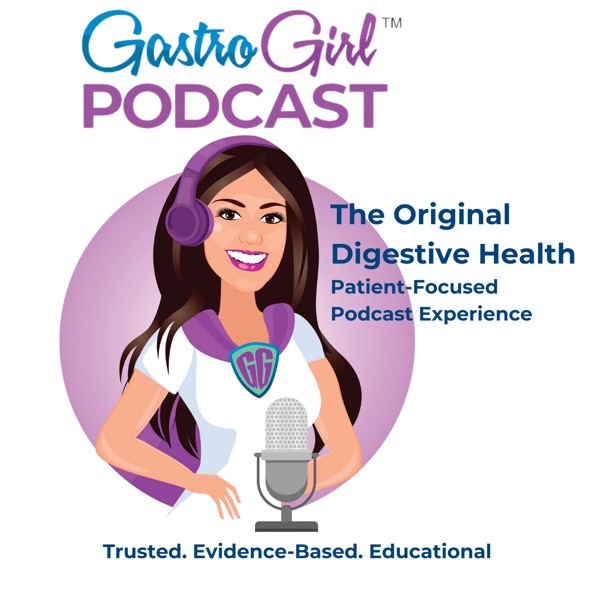
The Gastro Girl Podcast
If you're one of the millions of people living with a chronic digestive health condition, you're not alone. Whether you're newly diagnosed, in remission, or trying to understand what's happening in your body—and what you can do about it—The Gastro Girl Podcast is here to help.
Hosted by Jacqueline Gaulin, longtime patient advocate and founder of Gastro Girl, this podcast goes beyond surface-level conversations to deliver clear, compassionate, evidence-based insights into digestive health. Each episode is designed to help you feel more informed, confident, and empowered in managing your health and navigating conversations with your healthcare team.
You'll hear from leading gastroenterologists and healthcare experts, along with patient voices and practical guidance on topics across gastroenterology—from common GI symptoms and chronic conditions to emerging research, treatments, and trusted resources. The tone is engaging, supportive, and nonjudgmental—because digestive health deserves thoughtful, human-centered conversations.
Gastro Girl is the official patient education partner of the American College of Gastroenterology, and this podcast reflects that commitment to delivering reliable, actionable information patients can trust.
Follow The Gastro Girl Podcast on Apple Podcasts or Spotify so new episodes are delivered straight to your phone.
- On air since
- 2024
- Episodes
- 100
- Releases · typical length
- Weekly · 33 min
- Latest episode
- 6 days ago
Episodes
100 episodes, newest first
-
38 min
Fiber and Gut Health: What Every Patient Should Know | GI Dietitian Explains
Season 5, Episode 28
Show notes
What You Didn't Know About Fiber
Fiber is one of the most common recommendations for digestive health—but it can also be one of the most confusing. How much fiber do you really need? Is all fiber the same? Should you get fiber from food or supplements? And what if eating more fiber actually makes your digestive symptoms worse?
In this episode of the Gastro Girl Podcast, GI dietitian Beth Rosen, MS, RD, CDN, author of Gut Goals: A Practical Plan for Managing IBS, joins us to explain what patients need to know about fiber and digestive health.
In this episode, you'll learn:
•
The differences between soluble and insoluble fiber and common fiber supplements
•
How fiber can affect constipation, diarrhea, and bloating
•
What people with IBS, IBD, celiac disease, and diverticular disease should know about fiber
•
Whether fiber supplements are as beneficial as fiber-rich foods
•
Why increasing fiber isn't always the right approach for everyone
•
Common fiber myths, including whether people with diverticulosis need to avoid nuts, seeds, and popcorn
Whether you're trying to manage digestive symptoms or simply improve your gut health, this conversation will help you better understand fiber and make informed decisions with your healthcare provider.
Explore more trusted digestive health resources:
Gastro Girl: https://gastrogirl.com/
American College of Gastroenterology Patient Resources: https://gi.org/patients
This episode is produced in collaboration with the American College of Gastroenterology's Patient Care Committee.
-
27 min
Understanding obesity as a complex, inflammatory comorbidity in IBD
Season 5, Episode 27
Show notes
Obesity is increasingly recognized as a complex, inflammatory comorbidity in inflammatory bowel disease (IBD), with potential implications for disease activity, treatment response, and patient outcomes.
In this provider-focused episode, Gastro Girl host Jacqueline Gaulin speaks with Katherine Hudson, MD, of LSU Health New Orleans, about obesity as a complex, chronic disease and its relationship to IBD.
This episode explores the biological and metabolic factors that contribute to obesity, the relationship between obesity and inflammation, and important clinical considerations when obesity and IBD coexist. The discussion also highlights the importance of recognizing obesity as a chronic disease and approaching conversations about weight and health without stigma or blame.
Topics discussed include:
•
Obesity as a complex, chronic disease and inflammatory comorbidity
•
The relationship between obesity, inflammation, and IBD
•
Biological and metabolic factors contributing to obesity
•
Clinical considerations when obesity and IBD coexist
•
The importance of compassionate, stigma-free communication
•
Supporting individualized, patient-centered care
This episode is intended for healthcare professionals seeking to deepen their understanding of obesity in the context of IBD and support informed, shared decision-making with patients.
About This Educational Series
This episode is part of a 12-part Gastro Girl educational series, developed with support from Lilly, exploring the complex relationship between inflammatory bowel disease (IBD) and obesity/overweight. Featuring leading medical experts, the series examines emerging science, clinical considerations, and strategies to support informed, compassionate, patient-centered care.
This educational initiative is developed with support from Lilly.
-
47 min
Liver Disease Explained: What Is Fibrosis and Can It Lead to Cirrhosis?
Season 5, Episode 26
Show notes
Can liver damage be reversed? What does it mean if you've been told you have liver fibrosis, and does liver scarring always lead to cirrhosis?
Chronic liver disease can develop with few noticeable symptoms, making it difficult to recognize liver damage before the disease becomes more advanced.
In this episode, hepatologist Dr. Richard K. Sterling joins Gastro Girl to explain what patients need to know about chronic liver disease, liver fibrosis, and cirrhosis—including whether liver damage can improve and why identifying the underlying cause matters.
You'll learn:
•
What causes ongoing liver injury and how fibrosis develops
•
Whether liver fibrosis always progresses to cirrhosis
•
Whether liver damage can improve or potentially reverse
•
How healthcare providers identify and assess liver scarring
•
What common liver blood tests can—and cannot—tell you
•
How noninvasive tests help assess the risk of advanced fibrosis
•
Why identifying and treating the underlying cause of liver disease matters
Dr. Sterling also explains what patients should know about their liver test results, why early evaluation matters, and which questions to discuss with their healthcare team to help protect their long-term liver health.
This episode is produced in collaboration with the American College of Gastroenterology's Patient Care Committee.
For more trusted digestive health education, visit https://gastrogirl.com/https://gastrogirl.com/ or gi.org/patients.
-
57 min
Do Digestive Enzymes Really Help With Gas, Bloating and IBS?
Season 5, Episode 25
Show notes
Can digestive enzymes really help reduce gas, bloating, and other uncomfortable digestive symptoms? And why do certain foods trigger symptoms in some people but not others?
In this episode of Gastro Girl, GI dietitian Erin Judge, RDN, CSDH, explains how digestive enzymes work, why FODMAPs and other poorly absorbed carbohydrates can contribute to digestive symptoms, and when supplemental enzymes may be helpful.
In this episode, you'll learn:
•
What FODMAPs are and why they can trigger gas and bloating
•
How digestive enzymes help break down food
•
When supplemental digestive enzymes may be useful
•
What to know before eliminating foods from your diet
•
How to approach food-related digestive symptoms without unnecessary restrictions
We also discuss FODZYME, where Erin serves as Clinical Marketing Manager, including how the product works, how it's used with food, and what the available evidence suggests about targeted digestive enzymes.
Whether you're living with IBS, struggling with bloating, or wondering if digestive enzymes are worth trying, this conversation will help you better understand your options.
This episode is for educational purposes and is not a substitute for personalized medical advice.
Related resources:
•
Clinicians can request free FODZYME samples for patients at http://providers.fodzyme.com/hcp-sample-request
•
Customers can save 20% off your first FODZYME subscription order at http://fodzyme.com/foodfreedom
-
37 min
When IBD Treatment Isn't Working: How to Know When It's Time to Reassess
Season 5, Episode 24
Show notes
Living with inflammatory bowel disease (IBD) often means paying close attention to your symptoms and how well your treatment is controlling the disease. But what happens when you're still having symptoms; or a treatment that once worked doesn't seem to be working as well anymore?
In this episode, Dr. Corey Siegel, an IBD specialist and Director of the Center for Digestive Health at Dartmouth Hitchcock Medical Center, joins us to explain how patients and their healthcare teams can recognize when an IBD treatment may not be achieving its goals and when it may be time to reassess the treatment plan.
We discuss what successful IBD treatment can look like, why response to treatment may change over time, and how healthcare teams determine whether ongoing symptoms are caused by active IBD or something else.
In this episode, you'll learn:
•
What successful IBD treatment can look like
•
How long it may take to evaluate whether a treatment is working
•
Why a treatment that once worked may become less effective
•
How healthcare teams determine whether symptoms are caused by active IBD or something else
•
What treatment optimization means and when a different approach may be considered
•
Why your goals, concerns, and preferences matter when making treatment decisions with your healthcare team
Dr. Siegel also explains why ongoing monitoring and open communication with your healthcare team are important and how shared decision-making can help patients and clinicians determine the next steps in IBD care.
This episode was produced by Gastro Girl with support from Sanofi.
Alternative Health lists
More Alternative Health shows picked out from the charts