Podcast
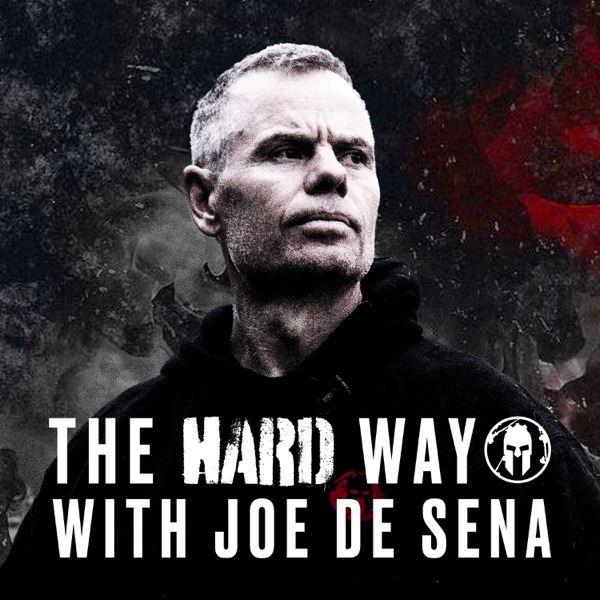
The Hard Way With Joe De Sena
Learn the Spartan mindset. Founder & CEO of Spartan Race and NY Times best-selling author, travels the globe seeking and answers authors, academics, athletes, adventurers, entrepreneurs, CEOs and thought leaders. It will shift your thinking, make you laugh and and give you the tools you need. He's on a mission to find the secrets to success in all aspects of life. Not only does Joe interview epic people, he has brought together an amazing panel to break down and analyze every aspect of these interviews. We give you the ultimate blueprint and action steps to assimilating these powerful conversations into your own life.
- On air since
- 2015
- Episodes
- 1,028
- Releases · typical length
- Weekly · 24 min
- Latest episode
- 6 days ago
Chart history since Oct 26
| Now | Chart | Peak | Since Oct 26 |
|---|---|---|---|
| Off | Self-Improvement Last on it Nov 19 at #182 | #182 |
Episodes
1,028 episodes, newest first
-
20 min
Jeff Garmire on 2,200 Miles in 45 Days, Losing His Food at Mile 1,900, and the Fix-It Mindset
Show notes
Jeff Garmire ran 50 miles a day for 45 consecutive days to set the Appalachian Trail speed record: 2,200 miles through some of the most demanding terrain on the East Coast. Then a shelter threw away his food box because a mouse got into their storeroom. He had no calories for the next 160 miles. Joe De Sena sits down with Garmire to talk about quitting his job at 25 to backpack 8,000 miles across the Appalachian Trail, Pacific Crest Trail, and Continental Divide Trail in a single year, surviving two feet of snow in the Smokies during week two of a 35-week expedition, and why he spent six months arranging his life just to attempt 45 days on the trail. Jeff breaks down his approach to staying present when a goal is too big to conceptualize, why writing your values on paper before picking a plan changes everything, and the one rule he follows in every crisis: solve the problem in front of you and trust that tomorrow handles itself. Things You Will Learn:
• Why writing your values on paper before choosing a plan makes you significantly harder to quit.
• The problem-solving mindset that kept Garmire moving when his food was thrown away 160 miles from the next resupply.
• Why trusting your own plan is the difference between finishing and falling apart.Tools & Frameworks Covered:
• Values-First Planning: Before signing up for anything, sit down with paper and pencil and write your true values. Align your goal to those values. The deeper the alignment, the harder you are to break.
• Present-Tense Execution: A 2,200-mile goal is too big to hold in your mind. Shrink it to today. Do the best you can so that future you does not regret a decision present you made.
• Hope as an Operating System: In every crisis, flip immediately to what you can fix. If you can get 30 miles, there is a store. Solve the next problem. Exhaust every option before you consider quitting.Chapters:
• 0:00 Intro: Jeff Garmire on 8,000 miles, presence, and trusting the plan
• 1:37 How Jeff discovered ultra-distance
• 4:30 The Appalachian Trail, Pacific Crest Trail, and Continental Divide Trail
• 5:14 Two feet of snow in the Smokies, week two of 35
• 6:50 Six months of setup for 45 days on the trail
• 8:32 Your brain is wired to avoid discomfort, and why that kills your potential
• 10:34 What is next?
• 11:17 Write your values on paper before you pick a plan
• 13:41 Go a mile deep, not a mile wide
• 14:46 How Jeff lost his food box and solved it in 30 miles
• 17:43 Trust your plan
• 18:33 Why it gets easier the more you have been throughJeff Garmire, known as "Legend," is a professional endurance athlete, author, and coach who built his reputation by choosing the hardest possible path: self-supported racing and adventure. From completing the Calendar Year Triple Crown in under 8 months to setting a self-supported Appalachian Trail FKT in 45 days, Jeff has made total self-reliance his identity. His story centers on endurance, personal accountability, and pushing beyond physical collapse. Fresh off a top-10 finish at the 2026 Cocodona 250, Jeff represents grit, discipline without external validation, and the mental toughness required to keep moving when nobody is coming to help. Connect to Jeff: Website: https://www.freeoutside.com/ Instagram: https://www.instagram.com/thefreeoutside/ Substack: https://freeoutside.substack.com/ YouTube: https://www.youtube.com/user/jgar1515
-
19 min
Dan Gronkowski on Growing Up Gronkowski, Getting Cut on the Last Day, and 30 Years of Training
Season 2026, Episode 42
Show notes
Four brothers from Buffalo played in the NFL. None of them got there through a training facility or a personal coaching staff. They got there because their dad sold fitness equipment, put it in the basement, and told them if they wanted to go further, the opportunity was downstairs. Nobody was going to babysit them through it. Dan Gronkowski, who played five seasons in the NFL, including time alongside his brother Rob on the Patriots, sits down with Joe De Sena to talk about what that basement built, what happened when he got cut on the last day of camp by Cleveland and questioned whether any of it was worth continuing, and why 30 years of consistent training still matters more than any single workout. Things You Will Learn:
• The specific parenting approach that produced four NFL players from one household without forcing any of them into the gym.
• Why muscle memory from years of consistent training still pays off at 41, and why starting late makes it harder to recover.
• The one question to ask yourself before buying any fitness equipment: will this make me actually do it?Tools & Frameworks Covered:
• Opportunity, Not Babysitting: Give access, set the standard, and step back. The Gronkowski dad did not monitor reps. He made the equipment available and said if you want to go further, this is what it takes.
• Consistency Over Intensity: Set a time. Show up. Get the blood moving. Results come from frequency, not from any single session. Most people fail because they stop, not because they trained wrong.
• The Best Equipment Rule: The best piece of equipment is the one that makes you use it the most. Not the most expensive. Not the most advanced. The one you will actually get on tomorrow morning.Chapters:
0:00 Intro: Dan Gronkowski, NFL player, fitness entrepreneur, and Gronk's brother 1:08 Growing up Gronkowski: competitive, fun, and always playing sports 1:59 How G&G Fitness started in 1990 3:33 "Get your ass in the basement" 5:08 90% of people who start working out do not stick with it 7:22 What to do when you are stuck 9:11 Check your screen time before you say you have no time 10:07 12 stores, thousands of commercial gym setups nationwide 11:54 Get outside first; equipment is second 14:08 The Gronkowski diet: protein, wings, pizza, and enjoying life 18:39 Football camp and injuries: the moments that test whether you keep going 20:44 Cut on the last day by Cleveland 21:47 The family support system behind every NFL season 23:34 The Eastern European mentality Dan Gronkowski played five seasons in the NFL, including time with the New England Patriots alongside his brother Rob. He is one of four Gronkowski brothers who played professional football, all raised in the same Buffalo household where their father started a fitness equipment company in 1990 and told his sons the path to the next level was in the basement. Dan now runs G&G Fitness, operating 12 retail stores and a nationwide commercial sales division that has equipped thousands of gyms, college rec centers, fire stations, and police departments. He has five kids, has been training consistently since seventh grade, and still believes the only thing that separates the people who get results from the people who do not is whether they show up tomorrow. Connect to Dan: Instagram: https://www.instagram.com/dangronk/?hl=en TikTok: https://www.tiktok.com/@dan_gronkowski Gronk Fitness Products: https://ggfitness.com/
-
26 min
Jason Fox "Foxy": Rebuilding After Special Forces
Season 2026, Episode 41
Show notes
Jason Fox "Foxy" spent 20 years in the UK military: 10 in the Royal Marines, 10 in the Special Boat Service, Britain's tier-one special forces. He deployed year after year through the post-9/11 era, working alongside US and allied forces in some of the most intense operations of that period. Then in the middle of a firefight, pinned in a ditch under heavy enemy fire, something broke. His mind defaulted to the last safe place he had ever known: being a boy at home with his mum. Joe De Sena sits down with "Foxy" to talk about what happened next: losing his mojo for the job he loved, getting medically discharged for PTSD, standing on a cliff considering ending it, and the moment he realized he had never quit anything before and was not going to start now. He shares the psychological timeline and the daily habits that keep him stable today: conscious check-ins, non-negotiable exercise, and living in the present like a toddler who does not carry yesterday's weight. His book Embrace the Chaos puts the practical framework around everything he learned the hard way. Things You Will Learn:
• The psychological timeline: a simple diagram that reveals where stress stacks up before it breaks you, and why "Foxy" wishes he had drawn it at 28.
• Why an elite operator who never quit anything lost his drive for the job he loved, and what it took to find a new reason to keep going.
• Three daily habits "Foxy" uses to stay stable after PTSD: conscious emotional check-ins, non-negotiable exercise, and present-moment awareness.Tools & Frameworks Covered:
• The Psychological Timeline: Draw your lifeline from birth to now. Add lines for career stress, relationships, finances, health, major events. Where the lines stack thickest is where the damage started. That is where you need to pay attention.
• The Monday Check-In: When you feel off, stop before you ruin the day. Sit down. Ask why. Identify the specific source. Name it. Manage it. Cut yourself some slack before it compounds.
• Toddler Mindset: Children live in the present. They do not carry what just happened or worry about what is next. Adults who can recover that presence stop feeding the cycle of rumination that drives psychological breakdown.Chapters:
0:00 Intro: Jason Fox, former UK Special Forces, still training for life 5:21 How the SAS and SBS were born 10:26 Why Spartan was built on chaos 13:20 Growing up in Luton 16:10 Twenty years in the military 18:27 The firefight that broke something 22:27 Losing his mojo 24:48 Therapy, denial, and the question that pissed him off 26:22 Standing on a cliff, and the one thought that made him turn around 27:38 The diagram that finally showed him where it all stacked up 32:24 Told never to mention mental health 34:13 Three books, one arc 36:37 Live like a toddler Jason Fox served 20 years in the British military: 10 in the Royal Marines and 10 in the Special Boat Service, the UK's tier-one maritime special forces unit. He deployed repeatedly through the post-9/11 era alongside US, Canadian, and Australian forces. After a tour defined by heavy combat, he came home and felt nothing: he lost his drive, got medically discharged for PTSD, and found himself standing on a cliff before deciding he had never quit anything and was not about to start. He has written three books: Battle Scars, Life Under Fire, and Embrace the Chaos. He is also known as Foxy on the show Special Forces: World's Toughest Test. Connect to Jason: Instagram: https://www.instagram.com/jason_carl_fox/ TikTok: https://www.tiktok.com/@jason_carl_fox Embrace the Chaos: https://www.amazon.com/dp/B0CKL3W9LZ?lv=shuf&channelId=500&plpRedirect=mhFallback
-
26 min
Dan Cnossen on Losing Both Legs in Afghanistan, Waking Up 12 Days Later, and Rebuilding From Zero
Season 2026, Episode 40
Show notes
Dan Cnossen spent twelve years training to become a Navy SEAL platoon commander. Forty-eight hours into his first operation in Afghanistan, an improvised explosive device on a hilltop took both of his legs. His teammates dragged him over rocks in the dark while clearing other explosives, and loaded him onto a helicopter that had less than one minute of fuel remaining before it would have left without him. Joe De Sena sits down with Dan to walk through the injury, the medically induced coma, the months of seven-to-ten-hour surgeries scheduled three days a week, and the moment at Walter Reed Army Medical Center when seeing triple and quadruple amputees broke through his self-pity and forced a permanent shift in perspective. Dan shares three frameworks from SEAL training and recovery that apply directly to anyone facing sustained difficulty: shrink your time horizon when intensity rises, examine hardship from more than one angle before the first angle hardens in your brain, and understand that external resources are necessary but willpower is the only sufficient condition. Things You Will Learn:
• Why shrinking your time horizon to the next five minutes is the most reliable way to survive sustained physical or emotional stress.
• The danger of letting your first interpretation of a setback harden into your only interpretation and how to force new angles.
• The difference between necessary conditions and sufficient conditions when rebuilding after a major loss.Tools & Frameworks Covered:
• Intensity-Time Horizon Inverse: When stress or difficulty spikes, collapse your focus to the next minute, the next obstacle, the next rep. Your brain will try to project long-term doubt. Pull it back to what is directly in front of you.
• Angle Shifting: The first way you frame a major setback will rigidify in your brain if you do not deliberately seek other angles. Force yourself to examine the event from multiple perspectives before the default interpretation locks in.
• Necessary vs. Sufficient: External support, resources, and community are necessary to rebuild. But they are not sufficient. The sufficient condition is your own willpower. No one can supply that for you.Chapters:
0:00 Intro: Dan Cnossen, former Navy SEAL, double amputee 1:14 The Naval Academy, choosing English, and the path to the SEAL teams 5:27 How SEAL officer selection works and what 9/11 changed 7:18 The blast that took both legs 11:11 Waking up 12 days later in the United States 13:39 Surgeries three days a week and why unconsciousness became a relief 15:25 Feeling sorry for yourself and how the first angle rigidifies 16:41 Seeing triple and quadruple amputees changed everything 18:22 Why "it could be worse" is theoretical until you have lived it 20:43 Voluntary suffering prepares you for involuntary suffering 22:38 Three lessons from SEAL training and recovery for anyone facing sustained difficulty Dan Cnossen graduated from the United States Naval Academy in 2002 as an English major, completed BUD/S, and spent six years training to become a Navy SEAL platoon commander. On September 8, 2009, 48 hours into his first operation in Afghanistan, an improvised explosive device took both of his legs above the knee. His teammates dragged him off a hilltop in the dark and loaded him onto a helicopter with less than one minute of fuel remaining. Every person on that hilltop was awarded the Silver Star. After a medically induced coma, more than three dozen surgeries, and months of recovery at Bethesda Naval Hospital and Walter Reed Army Medical Center, Dan rebuilt: first learning to walk on prosthetics, then to run, and eventually competing at the highest levels of adaptive sport. Connect to Dan: Website: https://dancnossen.com/ LinkedIn: https://www.linkedin.com/in/dan-cnossen-75b9181ab/
-
20 min
Connor Emeny on Ironman Antarctica: Hypothermia, Sea Lions, and 32 Hours on a Volcanic Island
Season 2026, Episode 39
Show notes
Connor Emeny is the first person to complete an Ironman triathlon on all seven continents. The seventh was Antarctica. Joe De Sena talks with Emeny about spending 23 days on a 45-foot sailboat crossing the Drake Passage, where 800 boats have sunk and 30,000 people have died, just to reach a start line that did not exist. On Deception Island, a volcanic range in Antarctica, Connor swam 3.86 kilometers in minus 1°C water for an hour and forty-two minutes until his body went hypothermic and his teeth froze shut. He biked 180 kilometers on a fat tire bike doing a 100-meter loop eighteen hundred times over twenty-one hours. Then he ran a marathon on volcanic ash and ice. Things You Will Learn:
• What two years of planning, cold-calling, and training in ice lanes look like when you are building something from zero with no blueprint.
• The physical reality of endurance in sub-zero water: how the body shuts down and what keeps you moving when it does.
• Why acting before you are fully ready can be the only way to make an extreme goal happen at all.Tools & Frameworks Covered:
• Cold-Call Your Way In: When no path exists, pick up the phone and start asking. Emeny cold-called tour operators and Antarctic explorers until he found Doug Stoup, who had been to the poles more than anyone alive and agreed to help.
• Choose Your Corner Over Your Crew: When resources forced a choice between a bigger film crew and bringing his brother and mother, Emeny chose the people who believed in him most. Support beats production value under extreme pressure.
• Window Thinking: There is a limited window to act on a goal. Spend too long perfecting the safety plan, and the opportunity fades. Emeny spent two years preparing, but committed before certainty arrived, because certainty was never coming.Chapters:
0:00 Intro: Connor Emeny completed Ironman Antarctica in thirty-two hours 1:03 Growing up in Toronto as the youngest of three brothers 3:40 How the seven-continent Ironman goal started 5:40 Why the continents mattered more than the races 7:19 Planning Antarctica and the Guinness World Record 10:42 Fat tire bike and marathon on volcanic ash 12:02 His body shut down 14:48 Choosing family over a bigger crew 15:57 Why acting before you are ready is the only way 16:53 The book All In and the documentary Chasing Antarctica Connor Emeny is the first person to complete an Ironman triathlon on all seven continents. He grew up in Toronto as the youngest of three brothers, found triathlon in university, and was employee number seventeen at Uber Eats before leaving to train full-time. He completed his first Ironman in New Zealand on March 7, 2020, seven days before the pandemic shut the world down. Stranded in New Zealand for sixty days, he conceived the seven-continent project and spent the next three years executing it, earning a Guinness World Record as the youngest person to complete Ironman on six continents by age twenty-six. The seventh took two years of planning, a 23-day sailboat crossing of the Drake Passage, and a 32-hour race on a volcanic island in minus 1°C water with no doctor and no hospital. His book All In is available now. His documentary Chasing Antarctica releases in November. Connect to Connor: Website: https://connoremeny.com Instagram: https://www.instagram.com/connor.emeny/ LinkedIn: https://www.linkedin.com/in/connoremeny
On these lists
The Hard Way With Joe De Sena is one of the shows picked out on each of these