Podcast
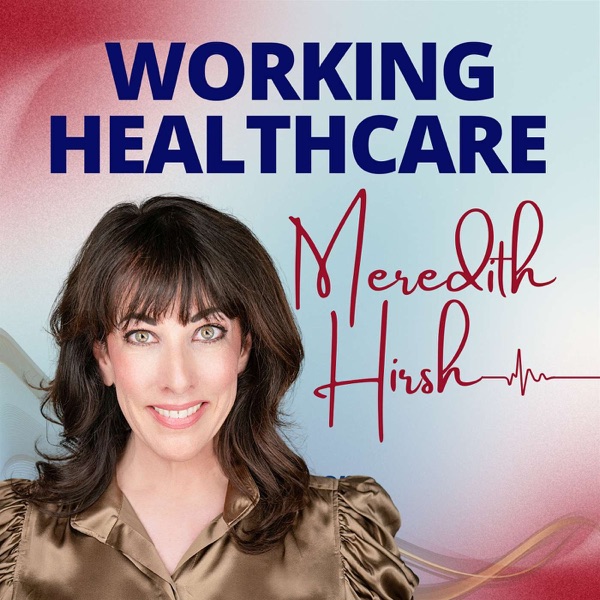
Working Healthcare
Who holds the power in American healthcare — and how can we change it? Working Healthcare takes you inside the business of medicine, revealing the policies, players and financial incentives shaping access to care.
Host Meredith Hirsh, a healthcare entrepreneur, educator, speaker and advocate, brings an insider’s perspective and a willingness to ask uncomfortable questions. Each week, she sits down with physicians, business leaders, policy experts and innovators to explore the system’s failures, the ideas challenging them and the personal journeys behind meaningful change.
From health insurance and pharmacy benefit managers (PBMs) to Medicare Advantage, private practice and healthcare leadership, these candid conversations connect money and policy to human consequences. Understand why care gets delayed, what threatens physician independence and how people are building better alternatives.
For everyone working in healthcare — and anyone curious enough to question how it works.
You can’t fix what you don’t understand.
Follow Working Healthcare for new episodes every Tuesday. Listen on your favorite podcast app or watch on Apple Podcasts, Spotify and YouTube.
Learn more: https://www.meredithhirsh.com/
Contact: workinghealthcarepodcast@gmail.com
- Episodes
- 129
- Releases
- Weekly
- Typical length
- 59 min
- On air since
- 2024
- Latest episode
- 23 hours ago
Episodes
129 episodes, newest first
-
1 hr 2 min
Ep. 127 - Is Healthcare Designed to Wear Us Down? (ft. Ken Segel)
Show notes
Physicians need support, not another initiative. Their staff needs fewer obstacles, not another workaround. Listen to learn how leaders can cut administrative sludge.
In this episode of Working Healthcare, guest Ken Segel, co-founder of Value Capture, examines healthcare’s administrative sludge: prior authorization battles, conflicting payer rules and workflows that send physicians home with unfinished charts.
Ken shares a telling example: A practice employs someone to fight denials for tests that ultimately win approval 97% of the time. That is not a staffing solution. That is a process demanding scrutiny.
We discuss how healthcare leaders can reduce administrative burden, address physician burnout and improve operations without adding another committee or buying another platform.
Ken explains why lasting improvement requires more than a project launch. Teams need real-time support, room to test better workflows and a routine for solving problems rather than repeatedly working around them.
We also tackle leadership resistance, succession planning and why CEOs should spend less time reviewing presentations and more time observing frontline care.
The question for leaders: Are you removing friction or asking your team to absorb it?
Join us for a candid conversation about healthcare leadership, operational improvement and the work leaders cannot delegate: making it easier for their teams to succeed.
Contact Ken:
Website:https://www.valuecapturellc.com/
Instagram:@wpadad
LinkedIn:@ken-segel
YouTube:@@ValueCaptureContact Meredith:
Website:https://www.meredithhirsh.com/
Instagram:@workinghealthcare
Facebook:WorkingHealthcare
LinkedIn:@meredithfhirsh
YouTube:@WorkingHealthcare -
54 min
Ep. 126 - When Medicaid Policy Meets a Broken Computer (ft. Rob Miller)
Show notes
A policy changes. A software system decides who keeps coverage. Listen to explore what happens when Medicaid rules become code.
In this episode of Working Healthcare, host Meredith Hirsh sits down with Rob Miller to unpack Medicaid work requirements, eligibility verification and the technology that helps determine who keeps coverage.
Meredith and Rob examine how confusing notices, disconnected records and difficult reporting portals can put coverage at risk—even when someone meets the requirements. Rob explains why states should check reliable data before asking members to prove information the government already holds.
For physicians and healthcare executives, this is more than a policy debate. It is a conversation about administrative burden, operational efficiency and who takes responsibility when software gets a decision wrong.
They also discuss where AI can help identify exemptions, flag conflicting records and reduce manual review. The goal: remove complexity rather than hand it to the next person.
Accountability cannot disappear behind an automated decision.\
Press play for a direct conversation about Medicaid, responsible automation and the leadership required to make healthcare technology work.Contact Rob:
LinkedIn:@robmillersftnContact Meredith:
Website:https://www.meredithhirsh.com/
Instagram:@workinghealthcare
Facebook:WorkingHealthcare
LinkedIn:@meredithfhirsh
YouTube:@WorkingHealthcare -
1 hr 1 min
Ep. 125 - Your Diagnosis Came With a Second Job (ft. Emily Egley)
Show notes
Tune in to learn why a serious diagnosis can turn a patient or family caregiver into an unpaid care coordinator, insurance expert and bill auditor. Board-certified patient advocate Emily Egley joins Meredith Hirsh to explain how people can navigate denied claims, confusing medical bills and disconnected care without losing sight of the doctor-patient relationship.
Emily draws on her experience managing her own care and supporting her husband, Jarrod, through seven years of colorectal cancer treatment. She shares practical ways to prepare for a doctor’s appointment, organize medications and test results, compare a medical bill with an explanation of benefits and speak with an insurer when care or payment hits a roadblock.
Their conversation asks a larger question for physicians and health care leaders: Why does the system place so much administrative work on people who are sick or caring for someone they love? Emily makes the case for clearer communication, stronger patient advocacy and health care that patients can actually navigate.
Share this episode with a caregiver, physician or practice leader who can help take that burden off patients.
Contact Emily:
Website:https://www.healthcareuncomplicated.com
Instagram:@healthcareuncomplicated
Facebook:HealthcareUncomplicated
LinkedIn:@emily-egleyContact Meredith:
Website:https://www.meredithhirsh.com/
Instagram:@workinghealthcare
Facebook:WorkingHealthcare
LinkedIn:@meredithfhirsh
YouTube:@WorkingHealthcare -
1 hr 1 min
Ep. 124 - The Doctor They Expected to Fail (ft. Dr. Carolina Sueldo)
Show notes
Listen now to hear fertility specialist Dr. Carolina Sueldo explain how she built an independent fertility practice around IVF transparency, physician autonomy and patient-centered care. In this Working Healthcare episode, Dr. Sueldo and Meredith Hirsh confront infertility, IVF costs, fertility preservation, egg freezing and the private equity pressures reshaping fertility clinics.
Dr. Sueldo, founder and CEO of Ceibo Fertility Center, shares why she left high-volume, investor-driven medicine to create a doctor-led practice where patients can ask questions, understand treatment options and navigate the emotional weight of infertility with more support. She also offers practical insight for patients who compare fertility clinics, consider IVF or ask when to seek help from a reproductive endocrinologist.
For physicians and health care leaders, this conversation explores the business of medicine: private practice, transparent pricing, cash flow, team building, physician burnout and how to scale without sacrificing meaningful care. Dr. Sueldo also shares how she self-funded her practice, recovered startup costs in her first year and built a four-day workweek while growing her fertility center.
Follow Working Healthcare and share this episode with a physician who seeks more autonomy, a health care leader rethinking fertility care or someone navigating infertility and IVF.
Contact Dr. Sueldo:
Instagram:@ceibofertility
Facebook:Ceibo Fertility Center
LinkedIn:@DrCarolinaSueldo
YouTube:@DrCarolinaSueldoContact Meredith:
Website:https://www.meredithhirsh.com/
Instagram:@workinghealthcare
Facebook:WorkingHealthcare
LinkedIn:@meredithfhirsh
YouTube:@WorkingHealthcare -
1 hr 4 min
Ep. 123 - What Your Closet Says About Your Confidence, Career and Power (ft. Paola Arencibia)
Show notes
Learn how your wardrobe can shape your confidence, communicate your authority and strengthen the way you show up at work, on camera and in everyday life.
In this vibrant episode of Working Healthcare, host Meredith Hirsh sits down with Paola Arencibia, personal stylist and founder of Serious Style Inc., for a candid conversation about clothing, self-esteem and executive presence. Paola explains why style reaches far beyond fashion trends: every outfit sends a message to the world, but it first speaks to the person wearing it.
Paola shares how she moved from teaching literature and creative writing to reading closets as emotional archives. Behind unworn dresses, tight jeans and inherited pieces, she often finds stories about identity, body image, ambition and major life changes. Her approach helps clients clear the visual noise and choose clothing that supports who they are now—not who they once were or who they think they should become.
The episode explores style archetypes, personal branding, confidence and the subtle power of color, proportion and posture. Paola also addresses an important challenge for women in healthcare: how to project credibility and authority without shrinking, camouflaging or apologizing for success. From white lab coats to Zoom meetings, she explains how intentional clothing can help professionals feel grounded, visible and ready to lead.
Paola closes with a simple closet audit: remove clothing that criticizes your body, try on pieces that still carry price tags and decide whether gifted items truly serve you.
Listen in for an empowering conversation about dressing with intention, claiming your presence and becoming the CEO of your wardrobe.
Contact Paola:
Website:https://serious-style.com/
Instagram:@seriousstyle_mia
LinkedIn:@paola-arencibiaContact Meredith:
Website:https://www.meredithhirsh.com/
Instagram:@workinghealthcare
Facebook:WorkingHealthcare
LinkedIn:@meredithfhirsh
YouTube:@WorkingHealthcare -
51 min
Ep. 122 - Get on the Bus: The Mammogram Should Come to You (ft. Dr. Ryan Polselli)
Show notes
Discover why breast cancer screening still falls behind busy schedules and how one physician is bringing 3D mammography directly to the women who need it.
In this Breast Cancer Awareness Month episode of Working Healthcare, host Meredith Hirsh speaks with Dr. Ryan Polselli, Navy veteran, fellowship-trained breast radiologist and founder of Mammolink. Dr. Polselli challenges the assumption that awareness alone drives screening. He argues that access creates the real barrier when women must navigate referrals, insurance questions, time away from work and multiple appointments before they can get a mammogram.
Dr. Polselli shares how Mammolink brings mobile 3D mammography to workplaces, schools and communities across Florida. His model aims to make screening faster, more convenient and more personal: women can schedule from their phones, step onto a mobile unit near work and receive results directly on their devices.
The conversation also explores dense breast tissue, follow-up imaging, patient communication, employer-supported screening and the role AI can play in reducing delays. Dr. Polselli explains why breast imaging needs more than new technology—it needs a patient-centered system that removes friction, shares information quickly and helps women stay on track year after year.
His message is clear: women should not have to fight the healthcare system to access a lifesaving screening.
Pull up a chair to hear how Mammolink is reimagining breast cancer screening and why easier access could save lives.
Contact Dr. Polselli:
Website:http://mammolink.com/
Instagram:@ryanpolselli
Facebook:3DMobileMammography
LinkedIn:@ryanpolselli
YouTube:@RyanPolselliContact Meredith:
Website:https://www.meredithhirsh.com/
Instagram:@workinghealthcare
Facebook:WorkingHealthcare
LinkedIn:@meredithfhirsh
YouTube:@WorkingHealthcare -
59 min
Ep. 121 - Medicare Advantage: The Payer Tactics Practices Need to Know (ft. Stephanie Allard)
Show notes
Listen now to uncover how Medicare Advantage plans can create costly barriers through restrictive networks, prior authorization, drug formularies and opaque coverage rules — and learn how your practice can protect patient access before, during and after the sale.
In this episode of Working Healthcare, host Meredith Hirsh speaks with healthcare compliance and reimbursement expert Stephanie Allard of Stephanie Allard Consulting about Medicare Advantage, Original Medicare, Medigap, claim denials and the rules that shape access to care.
Stephanie explains why low premiums and attractive extras like dental, vision, gym memberships or grocery benefits should not be the only factors driving a coverage decision. Listeners will learn what to review before enrolling, including provider networks, specialist access, prescription drug formularies, prior-authorization requirements, coverage limitations and appeal options.
The conversation also explores the challenges medical practices face when working with payers. Stephanie draws on her experience in coding, billing, audits and payer investigations to discuss downcoding, bundled services, changing payer policies, payment clawbacks and denial patterns. She shares practical insight on protecting practice revenue while maintaining compliance.
Press play for practical guidance on evaluating Medicare coverage, asking smarter questions and advocating for the care you or your loved one needs before accepting a plan’s promises—or a payer’s denial.
Contact Stephanie:
Website:https://www.stephanieallardconsulting.com/
Facebook:Stephanie Allard Consulting, LLC
LinkedIn:@stephanie-allard-cpc-cema-rhit
YouTube:@stephanieallardconsultingllcContact Meredith:
Website:https://www.meredithhirsh.com/
Instagram:@workinghealthcare
Facebook:WorkingHealthcare
LinkedIn:@meredithfhirsh
YouTube:@WorkingHealthcare -
49 min
Ep. 120 - When Doctors Lose Autonomy, Patients Lose More: Dr. Kayvan Amini on Saving Independent Medicine
Show notes
Listen to a doctor’s passionate case for protecting the physician-patient relationship and keeping care centered on people—not metrics, corporate targets or insurance barriers.
On this episode of Working Healthcare, host Meredith Hirsh speaks with Dr. Kayvan Amini—an independent cardiologist, physician advocate and leader in organized medicine—about the forces reshaping American healthcare and what is at stake when physicians lose autonomy.
Kayvan shares why independent medicine matters and why doctors need a meaningful voice in healthcare leadership. He discusses the pressures facing private practices, including physician burnout, workforce shortages, administrative demands and the growing movement toward employed care models.
The conversation also explores how healthcare organizations can better support and retain women physicians through more flexible workplace structures, creative practice models, and leadership opportunities that recognize the realities of rigorous training and family responsibilities.
Kayvan’s commitment to service and resilience is rooted in his personal story. After political exile disrupted his family’s life, he rebuilt from the ground up—an experience that strengthened his belief in independence, public service and building a medical practice around patients’ individual needs.
Press play for an honest conversation about compassionate care, physician leadership and the changes needed to preserve the human connection at the heart of medicine.
Contact Dr. Amini:
LinkedIn:@Kayvan Amini, DO, FACCContact Meredith:
Website:https://www.meredithhirsh.com/
Instagram:@workinghealthcare
Facebook:WorkingHealthcare
LinkedIn:@meredithfhirsh
YouTube:@WorkingHealthcare -
50 min
Ep. 119 - Who Really Controls Your Healthcare? Shelly Starks Exposes the Hidden Insurance Maze
Show notes
Shelly Starks knows the raw isolation that comes when healthcare leaves a patient with life-altering questions and no clear path forward. A breast cancer diagnosis in her 20s. More than 30 surgeries. Surgical menopause with little guidance and even less support.
Today, she sits on the other side of the system, helping employers, carriers and brokers shape benefit strategies that influence access, premiums and patient choices.
On this episode of Working Healthcare, host Meredith Hirsh sits down with Shelly for a candid, high-energy conversation about the hidden structure behind employer-sponsored health insurance. Shelly breaks down the maze of carriers, third-party administrators, managing general agencies, brokers and benefit plans that stands between an employee and care.
She explains why employers often select from limited options, why brokers may not know every available product and why rising premiums place intense pressure on both businesses and families. Shelly also translates Section 125 plans into plain English and explores how pre-tax benefits can help employees stretch healthcare dollars.
Then the conversation turns personal. Shelly shares the struggle to find menopause support after a radical hysterectomy, the frustration of being told she would simply “be fine” and the fierce drive that pushed her to search for better answers.
The healthcare system does not need another Band-Aid. It needs leaders who ask harder questions, demand better options and refuse to accept confusion as the cost of care.
Press play if you lead a business, manage benefits, work in healthcare or want to understand who makes the decisions behind your health insurance card.
Contact Shelly:
Website:https://inlineconsultingservices.com/
Instagram:@shellystarks
Facebook:ShellyStarksICS
LinkedIn:@shelly-starksContact Meredith:
Website:https://www.meredithhirsh.com/
Instagram:@workinghealthcare
Facebook:WorkingHealthcare
LinkedIn:@meredithfhirsh
YouTube:@WorkingHealthcare -
1 hr 1 min
Ep. 118 - The CEO, the Clinician and the Cost of Caring (ft. Ann Monis)
Show notes
Ann Monis knows how to build under pressure. She worked her way through college, tested out of courses to save tuition and carried that grit into healthcare. Today, she leads a growing behavioral health organization while raising two young sons and navigating life as a clinician, entrepreneur and CEO.
In this episode of Working Healthcare, host Meredith Hirsh sits down with Ann for a candid conversation about leadership, motherhood, mental health and the business realities behind patient care. Ann shares why no MBA or leadership book can prepare someone for a missed payroll, a home-backed line of credit or the lonely decisions that come with leading a healthcare organization.
Together, Meredith and Ann explore the pressure behind scaling behavioral healthcare, where rapid growth can threaten quality and insurance reimbursement fails to keep pace with inflation, labor costs and patient needs. They also tackle the double standard for powerful women, the sacrifice behind career ambition and the importance of building teams around skill rather than ego.
Ann makes one point crystal clear: doctors need the freedom to be doctors again. When reimbursement shrinks, debt rises and administrative burden grows, clinicians struggle and patients pay the price.
Listen in for a bold conversation about grit, leadership and protecting patient care in a strained healthcare system.
Contact Ann:
Website:https://www.drann.com/
Instagram:@drann____
Facebook:Dr-Ann-Monis
LinkedIn:@ann-monis-mba-psydContact Meredith:
Website:https://www.meredithhirsh.com/
Instagram:@workinghealthcare
Facebook:WorkingHealthcare
LinkedIn:@meredithfhirsh
YouTube:@WorkingHealthcare -
54 min
Ep. 117 - What American Healthcare Still Gets Wrong About Menopause (ft. Maryon Stewart)
Show notes
Listen for clear guidance on perimenopause, menopause and life after menopause—and learn why women deserve support that goes far beyond “just deal with it.”
In this episode of Working Healthcare, host Meredith Hirsh sits down with Maryon Stewart, a women’s health advocate and menopause expert, to challenge the silence, confusion and dismissal that surround perimenopause, menopause and life after menopause. Maryon brings four decades of experience and a fierce sense of justice to a conversation that reaches far beyond hot flashes.
Meredith shares her own search for answers after early menopause and a family history of breast cancer. Maryon explains why so many women feel blindsided, why credible guidance can feel impossible to find and why a short doctor visit rarely leaves room for the full story. They confront a healthcare system that often sends women home with vague advice, antidepressants or no clear path forward.
The conversation also exposes the high price of inaction. Women lose sleep, confidence, intimacy and momentum at work. Employers lose experienced leaders. Families carry the strain in quiet, painful ways. Yet Maryon offers hope through practical education, nutrition, movement, stress support and research-backed care that treats a woman as a whole person, not a list of symptoms.
This episode asks a vital question: Why does a life stage that affects millions of women still sit at the margins of healthcare?
Press play for a candid, compassionate conversation about menopause, medical blind spots and the urgent need for better support for women at every stage of life.
Contact Maryon:
Instagram:@femmar.hormonal.health
Facebook:@maryonstewart
LinkedIn:@maryon-stewart-bem
YouTube:@askmaryonstewartContact Meredith:
Website:https://www.meredithhirsh.com/
Instagram:@workinghealthcare
Facebook:WorkingHealthcare
LinkedIn:@meredithfhirsh
YouTube:@WorkingHealthcare -
1 hr
Ep. 116 - Workflow Secrets and a Patient Roadmap: How Allen Cooper Wants to Fix Healthcare
Show notes
A hospital runs on more than white coats and exam rooms. It runs on hidden workflows, clunky communication and quiet decisions that either protect patients or push them into delays and frustration. In this episode of Working Healthcare, host Meredith Hirsh sits down with Allen Cooper, founder and CEO of ReadyLit, Inc., to explore how smarter operations can heal the system behind the scenes.
Allen enters healthcare as a builder, not a clinician. He looks at outdated processes, fax-driven communication and scattered data and sees an opportunity to modernize back offices so nurses, schedulers and administrators spend less time chasing paperwork and more time supporting care. He explains why leaner, more thoughtful workflows matter in a world where hospitals stay short staffed and demand keeps rising.
Then Meredith hands him a “magic wand” and asks for one big change. Allen does not talk about a new app or a flashy device. He calls for better education for patients so they understand where to go, when to go and how to avoid costly trips to crowded emergency departments. Clear guidance, honest transparency and practical navigation tools could help families find the best value care instead of guessing in the dark.
If you worry about broken processes, overwhelmed staff and patients who feel lost in the maze, press play. Allen Cooper shows how fixing hidden workflows and teaching patients to navigate care can push American healthcare toward a more efficient, humane future.
Contact Allen:
LinkedIn:@allen-c00perContact Meredith:
Website:https://www.meredithhirsh.com/
Instagram:@workinghealthcare
Facebook:WorkingHealthcare
LinkedIn:@meredithfhirsh
YouTube:@WorkingHealthcare -
1 hr 4 min
Ep. 115 - Rural Hospitals Are Vanishing — Tom Campanella Explains Why It Matters
Show notes
Tom Campanella steps into Working Healthcare with a lifetime of battle-tested stories from the front lines of policy, payers and patients. He grew up in the inner city, walked into Cleveland City Council in his 20s and decided politics was not for him, yet he still craved real impact. He carried his law degree, CPA license and master’s in economics into healthcare and never looked back, trading campaign slogans for spreadsheets, contracts and community fights over access. Inside Blue Cross and Blue Shield of Ohio he watched managed care rise, hospital “golden years” collapse and payers gradually become the villain in every physician lounge.
Tom shares with host Meredith Hirsh why rural hospital closures should keep city dwellers up at night, how lobbying dollars mute small-town voices and why our blindness to power structures guarantee higher bills and weaker care. He exposes the structural flaws from the 1970s that still affect today’s premiums and deductibles. He also shares the joy of shaping future physicians, hosting a call-in radio show about healthcare history and helping families recognize the pattern hidden behind their medical statements. Tom does not rant; he connects dots and names the players.
If you want to understand what really happens when your local hospital shuts down, why your premiums spike every year or how we might finally tilt American healthcare back toward people instead of profit, you will not want to miss this conversation. Press play on this episode of Working Healthcare and hear Tom Campanella pull back the curtain on the system you live in every single day.
Contact Thomas:
LinkedIn:@thomascampanellaContact Meredith:
Website:https://www.meredithhirsh.com/
Instagram:@workinghealthcare
Facebook:WorkingHealthcare
LinkedIn:@meredithfhirsh
YouTube:@WorkingHealthcare -
1 hr 9 min
Ep. 114 - From Castro’s Cuba to Florida’s First Health Secretary: Dr. Ana Viamonte Ros Fights for the Invisible Patient
Show notes
We are back! During our brief July hiatus, Working Healthcare re-released four foundational episodes that reshaped how we see American healthcare. We now return with a powerful conversation about the people and forces moving care forward.
In this new episode, a little girl watches her parents practice medicine in Cuba, emigrates to Miami and grows into a fifth-generation physician who refuses to accept a health care system that treats some patients as second-class. Today, Dr. Ana Viamonte Ros teaches future doctors, leads care for people experiencing homelessness and still enters every clinic with one powerful question: Who feels invisible here, and why?
Guest Dr. Ana Viamonte Ros of Camillus Health and Florida International University joins host Meredith Hirsh for a conversation that moves from Medicaid to boardrooms to shelter clinics and back again. Together, they examine how “coverage” can fail to equal access, how subtle bias enters exam rooms, hospital corridors and payer policies, and what it takes to put dignity at the center of care.
Dr. Viamonte Ros shares her “platinum rule” for patient care, the moral cost of first-class–coach medicine and the quiet courage required to advocate for patients living in shelters, under bridges or in crowded apartments.
If you teach, train or lead in healthcare—and want a candid, hopeful conversation about fairness, legacy and what it truly means to serve every patient with respect—press play and share this episode with a colleague who still believes medicine can do better.
Contact Ana:
LinkedIn: @ana-viamonte-rosContact Meredith:
Website:https://www.meredithhirsh.com/
Instagram:@workinghealthcare
Facebook:WorkingHealthcare
LinkedIn:@meredithfhirsh
YouTube:@WorkingHealthcare -
1 hr 3 min
Ep. 113 - Ali Kaufman Is Tackling Youth Mental Health and Redefining Healthcare Boundaries - Re-release
Show notes
When the healthcare system fails kids, classrooms quietly turn into the new emergency rooms. In this re-release of a foundational episode, of Working Healthcare, Meredith Hirsh sits down with Ali Kaufman, founder and CEO of Space of Mind, to explore how education, mental health and family systems collide and how a school can transform into a healing environment instead of another pressure cooker.
Ali shares her journey from a Brandeis student who considers the rabbinate to a young woman who survives trauma, confronts undiagnosed ADHD and learns to treat her “busy brain” as a superpower rather than a flaw. She describes early work in cluttered kitchens, chaotic bedrooms and executive boardrooms, where she coaches families and CEOs through disorganization, anxiety and breakdown in communication. Meredith guides the conversation into the heart of Space of Mind, where Ali designs mental health-centered learning spaces that feel safe, flexible and creative instead of institutional. Ali explains how she trains educators to think like coaches, honors different processing styles and builds routines that support executive function without crushing individuality.
Together they dissect moral injury in schools, the national shortage of child psychiatrists and the reality that many kids now operate in a constant PTSD mode. Ali argues that schools must accept every student as they are, listen more deeply and measure success with simple but radical questions like, “Does your child get out of bed happy?” Meredith and Ali connect the dots between physician burnout, student distress and the erosion of critical thinking in an era of instant answers and digital shortcuts. They offer parents and clinicians practical insight on how to nurture purpose, curiosity and psychological safety even when traditional supports disappear.
If you care about the kids who slip through the cracks between healthcare and education, listen in to this episode of Working Healthcare and share it with a parent, teacher or clinician who wants school to heal rather than harm.
Contact Ali:
Linked In: @alikaufman
Website: https://findspaceofmind.com/Contact Meredith:
Website:https://www.meredithhirsh.com/
Instagram:@workinghealthcare
Facebook:WorkingHealthcare
LinkedIn:@meredithfhirsh
YouTube:@WorkingHealthcare -
1 hr 1 min
Ep. 112 - Justin Hand Unveils Insights on Healthcare's Private Equity Landscape - Re-release
Show notes
Physician burnout rises, administrative burdens pile up and private equity money floods into healthcare, but most doctors still ask one urgent question: “What are my real options?” In this re-release of a foundational episode of Working Healthcare, Meredith Hirsh sits down with Justin Hand, founder and managing director of Westcove Partners, to map those options with clear, pragmatic detail and a sharp eye for legacy.
Justin opens with the staggering scale of global healthcare private equity and explains why low- and middle-market practices draw such intense investor interest. He breaks down platform practices, bolt-ons and strategic acquirers, then shows how each path reshapes a physician’s autonomy, income and succession plan. Meredith pushes on the real-world pressure points, from ASC decisions and hospital affiliations to growing physician and administrator burnout, and Justin responds with candid stories from more than 90 healthcare transactions.
Together they explore “income repair,” MSO structures and equity rollover, translating finance jargon into concrete examples that matter to clinic owners who juggle payroll and patient care every day. Justin contrasts physician-owned success stories with groups that seek private equity partners to resolve friction, expand recruiting or survive in markets dominated by MA plans and hospital systems. The conversation returns again to legacy, as Meredith and Justin weigh the value of independence against the reality of shrinking margins and the responsibility to keep practices open for patients and staff.
If you lead a medical practice or advise one and you want a clear, narrative guide through private equity, MSOs and succession planning in today’s healthcare economy, listen in to this episode of Working Healthcare and share it with a colleague who wrestles with the same decisions.
Contact Justin:
LinkedIn: @justinhandContact Meredith:
Website:https://www.meredithhirsh.com/
Instagram:@workinghealthcare
Facebook:WorkingHealthcare
LinkedIn:@meredithfhirsh
YouTube:@WorkingHealthcare -
57 min
Ep. 111 - Chuck Melendi Unveils the Truth Behind Big Pharma - Re-release
Show notes
Drug prices soar, patient bills spike and everyone blames Big Pharma, but what if the real power players sit in the shadows behind your pharmacy counter? In the re-release of this foundational episode of Working Healthcare, Meredith Hirsh invites Chuck Melendi, founder of the Disruptive Dialogue podcast and veteran Johnson & Johnson insider, to walk straight into the fire and unpack the truth behind the industry’s most polarizing debates.
Chuck uses clear, punchy stories and hard numbers to show how “Big Pharma” no longer stands as the biggest giant in healthcare, then compares drug manufacturer revenue to the colossal income of insurers and PBMs that quietly control formularies, rebates and patient access. He explains how direct-to-consumer advertising evolves, why TV spots drive sales and why he still argues for unbranded education that keeps the conversation between physician and patient. Meredith presses him on drug pricing, and Chuck responds with an insider’s view of transparency reports, R&D budgets and the delicate balance between profit, innovation and public responsibility.
The episode then dives into the rebate game, formulary battles and the brutal leverage PBMs hold over both manufacturers and clinics, all in language that clinicians, patients and advocates can follow. Chuck shares vivid moments from decades of account management, including the tug-of-war between safety data, patient services and the raw economics that dictate which medications stay on a plan. He tells the personal story behind his decision to leave J&J, describes himself as “too knowledgeable to stay silent” and why he launched a mission-driven effort to disrupt the system through consulting, speaking and podcasting. Meredith and Chuck close with a bold wish: break up publicly traded insurers and PBMs and restore a healthcare landscape that serves patients instead of quarterly earnings.
If you want a candid, experienced voice to guide you through the real forces behind drug prices, PBMs and Big Pharma’s reputation, listen in to this episode of Working Healthcare and share it with someone who navigates those pressures every day.
Contact Chuck:
LinkedIn: @chuckmelendi
Website: https://www.disruptivedialogue.org/meet-chuck
Discruptive Dialogue podcast: Disruptive Dialogue with Chuck Melendi
Instagram: @chuckmelendi
Facebook: https://www.facebook.com/cmelendijr/
YouTube: @DisruptiveDialoguePodcastContact Meredith:
Website:https://www.meredithhirsh.com/
Instagram:@workinghealthcare
Facebook:WorkingHealthcare
LinkedIn:@meredithfhirsh
YouTube:@WorkingHealthcare -
47 min
Ep. 110 - Demystifying Pharmacy Benefit Managers (ft. Alerie Stiles) - Re-release
Show notes
Pharmacy benefit managers sit between your doctor and your drug, yet almost no one understands how they really operate. In this re-release of Episode 5, Meredith Hirsh and guest Alerie Stiles strip away the jargon and expose the vivid, real-world impact of PBMs on patients, physicians and independent practices.
Alerie shares her unconventional path from cold-calling EHR demos to shadowing more than a thousand physicians, then harnesses that frontline insight to build technology that frees doctors from clunky software and restores genuine face time with patients. Meredith and Alerie walk through the “vertically integrated” world where one parent company can own the insurer, the PBM, the pharmacy and even the clearinghouse, and they unpack what that structure means for coverage decisions and drug access.
The episode turns deeply personal with the story of a breast cancer prescription that takes three weeks to reach a patient, landing her in the hospital, and then contrasts that devastation with a medically integrated dispensing model that delivers specialty medications in just three days. They decode rebates and DIR fees in clear, concrete language and explain why independent clinics and hospitals fight so hard to keep dispensing power inside the care team. Alerie closes with a bold vision for immunology and rheumatology, where payers approve transformative biologics but only community practices can dispense them, not PBM-owned specialty pharmacies.
If you want sharper insight into who truly controls your prescriptions and how independent practices fight back for faster, safer access to life-changing drugs, listen in to this episode of Working Healthcare and share it with someone who navigates the PBM maze every day.
Contact Meredith:
Website:https://www.meredithhirsh.com/
Instagram:@workinghealthcare
Facebook:WorkingHealthcare
LinkedIn:@meredithfhirsh
YouTube:@WorkingHealthcare -
1 hr
Ep. 109 - Downcodes, Takebacks and Timely Filing: How Payers Really Win (ft. Chris Acevedo)
Show notes
Most people think a doctor’s visit ends when they walk out of the exam room. It doesn’t. That visit triggers a maze of prior authorizations, coverage rules, coding decisions and payer tactics that can make or break a medical practice months or even years later.
On this episode of Working Healthcare, host Meredith Hirsh sits down with Chris Acevedo, CEO of Acevedo Consulting, who grew up watching his mom run practices and now helps physicians across the country navigate the business side of medicine. Chris walks through what really happens before and after a visit—from front-desk data entry and benefit checks to denials, timely filing traps and surprise takebacks on claims that payers already processed and paid. He explains why one technical error can cost a practice both the drug it infused and the reimbursement it thought was safe, creating what he calls a double whammy.
They dig into downcoding policies, constantly shifting Medicare rules, ABN changes, and why “just because you got paid doesn’t mean you get to keep the money.” Chris shares how good doctors get pulled into fraud and abuse nets designed for true bad actors, and why practices who never intend to cut corners still wind up at risk when they ignore incident-to rules or skip basic reconciliation of fee schedules and payments.
Throughout the conversation, Chris argues that practices must treat compliance and revenue integrity like any other core expense—alongside cleaning crews, accountants and legal counsel—because no one else will protect the dollars that keep their doors open. He also makes the case for patients owning more responsibility for their care in a system where payers carry outsized leverage and physicians burn out under constant whack-a-mole regulation.
If you work in a practice, lead one or just wonder why your “paid” claim still looks shaky 18 months later, this episode gives you a clear, practical look at the rules behind the medicine.
Contact Chris:
Website: https://www.acevedoconsultinginc.com
LinkedIn: https://www.linkedin.com/in/christopher-acevedo-34b3579Contact Meredith:
Website:https://www.meredithhirsh.com/
Instagram:@workinghealthcare
Facebook:WorkingHealthcare
LinkedIn:@meredithfhirsh
YouTube:@WorkingHealthcare -
1 hr 2 min
Ep. 108 - Where Did All the Doctors Go? A Surgeon and Medical School Dean on What We’re Losing (ft. Dr. Chad Perlyn)
Show notes
When Chad Perlyn was four, his parents drove through the night to say goodbye to a baby who was not expected to live. A young pediatric surgeon walked into the waiting room, laid out an impossible choice then walked back out hours later with a smile that meant one thing: the baby survived. That moment set Chad’s life in motion.
On this episode of Working Healthcare, host Meredith Hirsh sits down with Dr. Chad Perlyn, a pediatric plastic surgeon, Oxford-trained scientist, MBA and dean of Nova Southeastern University’s allopathic medical school. Chad traces his path from a waiting room in Miami to Oxford labs and, after the earthquake in Haiti, to a children’s hospital where a pilot on the tarmac asked, “Who’s in charge?” Everyone turned to him.
From there, the conversation turns to the crisis hiding behind titles and credentials. Fewer physicians run their own practices. More young doctors enter a world of EMRs, system jobs, private equity rollups and patients who no longer automatically trust the white coat. Chad explains why hanging a shingle is getting harder every year, why more physicians now work for someone else and what that means for access, autonomy and the future of independent medicine.
He worries less about AI than about what medicine could lose if machines manage too much of the work: the human voice in a crisis and the hand on a parent’s shoulder when there is no cure, only presence.
If you wonder where all the independent doctors went or what kind of physician will be waiting on the other side of the exam room door 10 years from now, this episode asks the question medicine cannot afford to ignore.
Contact Chad:
Contact Meredith:
Website:https://www.meredithhirsh.com/
Instagram:@workinghealthcare
Facebook:WorkingHealthcare
LinkedIn:@meredithfhirsh
YouTube:@WorkingHealthcare
Medicine lists
More Medicine shows picked out from the charts







More in Medicine
Placed highest on Apple Podcasts' Medicine chart right now