Podcast
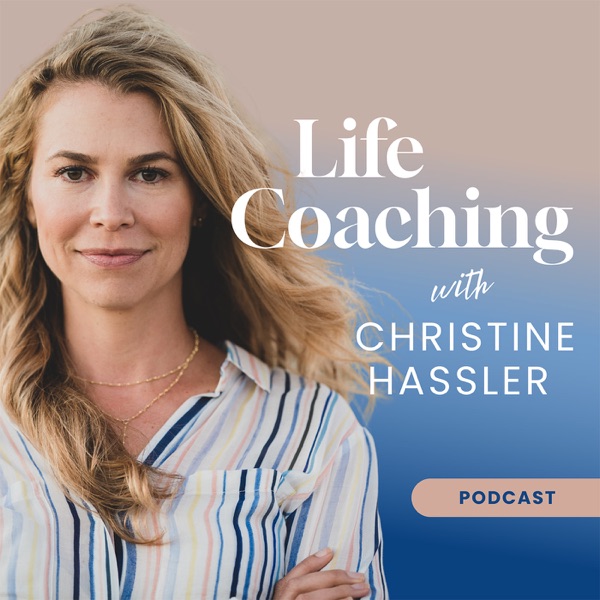
Life Coaching with Christine Hassler
Christine Hassler provides you with practical tools and spiritual principles to help you overcome whatever obstacles might be holding you back.
Each episode, Christine coaches callers live on the air offering them inspiration and guidance to heal their past, change their present and create what they really want. Topics include: relationships, career, health, transitions, finances, life purpose, spirituality and whatever else callers have questions about.
Christine coaches "regular people" on problems – and opportunities - we all face. It's a show that reminds you that you are not alone, while also teaching things you can implement in your own life.
- Episodes
- 1,069
- Releases
- Weekly
- Typical length
- 34 min
- On air since
- 2015
- Latest episode
- 6 days ago
Episodes
1,069 episodes, newest first
-
28 min
The Fear of Choosing the Wrong Partner with Victoria
Episode 561
Show notes
What if your biggest obstacle to finding the right partner isn't a lack of options—but a lack of trust in your own decisions?
In this coaching session, Christine works with Victoria, a 34-year-old woman who deeply desires marriage and motherhood but feels increasing pressure to find the right partner before time runs out.
Victoria has dated men who were interested in her, only to realize months later that the connection wasn't what she wanted. She often commits mentally too quickly, analyzes potential partners, and seeks reassurance from friends and family about whether she's making the right choice.
As Christine explores Victoria's childhood, a deeper pattern emerges: making mistakes never felt safe. Victoria learned to rely on other people's approval to determine whether her choices were right, gradually disconnecting from her own intuition and discernment.
Christine helps Victoria recognize the difference between being intentional about finding love and putting so much pressure on herself that dating becomes an exercise in avoiding mistakes.
Rather than trying harder to find the perfect partner, Victoria is encouraged to slow down, stop outsourcing her decisions, and rebuild trust in her own judgment—one small choice at a time.
If you've ever questioned your relationship decisions, worried about choosing the wrong person, or felt pressure to reach certain life milestones, this episode offers a powerful reminder: You don't build self-trust by always getting things right. You build it by trusting yourself to navigate whatever happens.
Consider / Ask Yourself
•
Are you approaching dating with intention or with pressure and urgency?
•
Do you worry so much about choosing the wrong partner that you struggle to recognize genuine connection?
•
Did making mistakes in childhood lead to shame, criticism, or disapproval?
•
Do you rely on friends, family, or outside opinions to validate your relationship decisions?
•
Are you more focused on finding what's wrong with someone than noticing how you genuinely feel around them?
•
What would change if you trusted yourself to make decisions without needing reassurance?
Key Insights and A-Ha's
•
Wanting marriage, partnership, or children is a beautiful intention, but pressure can interfere with the process of finding love.
•
Intentionality and urgency are not the same thing.
•
Childhood experiences of criticism or shame can create a lifelong fear of making mistakes.
•
When we learn to rely on external validation, we can lose touch with our own discernment.
•
Overanalyzing potential partners may be a protective strategy against choosing incorrectly.
•
Strong sexual chemistry doesn't necessarily mean someone is an emotionally aligned partner.
•
Slowing down allows relationships to unfold before we mentally commit to a future with someone.
•
Self-trust develops through making decisions, learning from mistakes, and trusting ourselves to handle the outcome.
•
The goal isn't to eliminate mistakes. It's to stop believing that making one means something is wrong with us.
How to Deepen the Work
•
Notice where you're putting unnecessary pressure on yourself to reach a particular milestone.
•
When dating someone new, slow down and allow the connection to develop before deciding they're your person.
•
Practice making small everyday decisions without consulting friends, family, or outside sources.
•
Before asking someone else's opinion, check in with your own feelings and intuition.
•
Give yourself permission to make mistakes without interpreting them as failures.
•
Notice when you're overthinking a decision because you're afraid of getting it wrong.
•
Reflect on past relationships as opportunities to develop discernment rather than evidence that you've made poor choices.
A Powerful Reframe: From External Validation to Self-Trust
One of the biggest breakthroughs in this conversation comes when Victoria recognizes how often she looks outside herself for reassurance.
Whether she's dating someone new, evaluating a relationship, or making everyday decisions, she frequently seeks confirmation that she's making the right choice.
But Christine reminds her that self-trust cannot develop when we're consistently outsourcing our decisions.
The invitation is to begin small.
Choose what to wear, what to order, or how to respond to someone without asking multiple people for their opinions.
Allow yourself to make a decision, experience the outcome, and learn from it.
The goal isn't to become someone who never makes mistakes. It's to become someone who trusts herself enough to know she'll be okay even when she does.
Resources Mentioned in This Episode Be the Queen
Christine discusses the 2026–2027 Be the Queen program, which she teaches with her husband for women who want to call in or call forward a healthy, conscious, soul-match relationship.
The program focuses on self-trust, discernment, releasing protective relationship patterns, and developing a more empowered approach to dating and partnership.
Christine shares that enrollment is still open, with live calls continuing through February. Payment plans and a money-back guarantee are also mentioned.
Learn more and apply for Be the Queen
For questions about the program, Christine mentions contacting Jill at Jill@ChristineHassler.com.
Love Magnet
Christine references Love Magnet, where she teaches about attraction, relationship patterns, and how chemistry can sometimes indicate an issue-based relationship rather than genuine compatibility.
Social Media + Resources
•
Christine Hassler — Take a Coaching Assessment
•
Christine Hassler Podcasts including Coaches Corner
•
Expectation Hangover by Christine Hassler
•
Facebook — Christine Hassler
•
Instagram — @ChristineHassler
•
Instagram — @SacredUnionCouples
•
Apply to be coached on the show
•
-
30 min
Calling in a Masculine Man with Nicoletta
Episode 560
Show notes
What if the reason you're struggling to receive the masculine partnership you desire isn't because you haven't found the right man—but because part of you still believes you have to do everything yourself to be safe?
In this deeply insightful coaching session, Christine works with Nicoletta, a divorced mother who has spent years navigating relationships where she never felt fully supported. Some partners were financially stable but emotionally unavailable, while others offered different qualities without providing the complete sense of partnership she desired.
Now, after taking time away from dating and doing significant personal growth work, Nicoletta knows she wants something different: a relationship with healthy masculine and feminine polarity, where she can feel cherished, emotionally supported, and safe enough to receive rather than constantly lead.
But underneath that desire is a deeply ingrained protective pattern.
Growing up, Nicoletta learned to prove her worth through pleasing others, giving more, and becoming who she thought her family wanted her to be. As an adult, she continued those patterns in her marriage and relationships, often putting other people's needs ahead of her own.
Christine helps Nicoletta recognize that her longing for a masculine partner may also reflect a deeper longing to finally feel supported in life—to step out of hypervigilance, over-functioning, and the exhausting belief that everything depends on her.
As they explore childhood experiences of emotional neglect, heartbreak, and sexual trauma, another important truth emerges: surrender and vulnerability can feel frightening when being vulnerable has previously led to pain.
Rather than encouraging Nicoletta to simply let her guard down, Christine offers a different starting point: reclaiming her discernment and learning to trust her own embodied wisdom.
Together, they explore feminine energy, emotional safety, protective patterns, self-worth, vulnerability, and the difference between being attracted to masculine leadership and choosing a partner who can remain grounded, accountable, and emotionally safe when life becomes difficult.
If you've ever longed for someone to take the lead but struggled to let go of control, or wondered why receiving support feels uncomfortable even when you deeply desire it, this conversation offers a compassionate path forward.
Press play to discover how shifting from protection to discernment can help you create more room for the kind of healthy, conscious love you truly want.
Consider / Ask Yourself
•
Do you desire a partner who can lead and support you, yet find it difficult to surrender control?
•
Did you learn early in life that you had to prove your worth or become someone else to receive love?
•
Are you longing for masculine partnership—or also longing to step out of chronic over-functioning and hypervigilance?
•
Does vulnerability feel unsafe because of experiences of heartbreak, abandonment, or betrayal?
•
Are your relationship standards rooted in embodied wisdom, or are they sometimes a way to protect yourself from being hurt?
•
Do you trust yourself to recognize a partner who is genuinely emotionally safe?
Key Insights and A-Ha's
•
Wanting a masculine partner may reflect a deeper desire to feel supported, safe, and free from constantly carrying everything alone.
•
Childhood experiences can teach us that love must be earned through proving, pleasing, or performing.
•
Protective strategies that once helped us survive can continue influencing how we approach relationships as adults.
•
Knowing intellectually that we're worthy of love is different from fully embodying that belief.
•
Surrender can feel threatening when our nervous system associates letting go with losing safety or stability.
•
We may become more invested in avoiding what we fear than in actively moving toward what we desire.
•
Vulnerability doesn't have to be the first step toward intimacy. Developing discernment and self-trust can come first.
•
Having high standards is valuable, but requiring absolute certainty or perfection can sometimes become another form of protection.
•
Healthy masculine energy involves more than leadership, attraction, or making plans. Emotional responsibility, accountability, and safety matter deeply.
•
Healing isn't about fixing something broken within ourselves. It's about remembering who we are and learning to trust ourselves again.
How to Deepen the Work
•
Notice where you may be over-functioning in your daily life and what you fear would happen if you allowed yourself to do less.
•
Explore the beliefs you developed in childhood about what you needed to do or become to receive love.
•
When the idea of surrender feels frightening, ask yourself: "What does a part of me believe I would lose if I let go?"
•
Instead of forcing yourself to be vulnerable, begin by strengthening your trust in your ability to recognize safe, emotionally available people.
•
Practice receiving support in ways that feel manageable rather than attempting to change all your protective patterns at once.
•
Examine whether your relationship standards are helping you recognize alignment or requiring an impossible level of certainty.
•
Notice the ways you already experience support, provision, and care in your daily life.
•
Shift your attention from constantly avoiding what you don't want toward taking aligned steps in the direction of what you do want.
A Powerful Reframe: From Protection to Discernment
One of the most important moments in this conversation comes when Christine asks Nicoletta to reconsider how she approaches vulnerability.
Nicoletta wants to open her heart, surrender, and receive love. But her history includes experiences where vulnerability was met with pain.
Rather than asking her to simply lower her defenses, Christine encourages her to develop something more sustainable: embodied wisdom.
The goal isn't to stop protecting yourself by becoming vulnerable with everyone.
It's to trust yourself enough to recognize who is safe to become vulnerable with.
That means learning to identify emotional availability, accountability, consistency, and the ability to remain grounded during difficult moments.
As Christine explains, the right masculine partner isn't simply someone who leads or makes plans. He's someone who can remain emotionally safe, even during stress, disagreement, or conflict.
You don't have to choose between protecting yourself and opening your heart. You can learn to protect yourself through wisdom rather than walls.
Resources Mentioned in This Episode Be the Queen
Christine and her husband are opening enrollment for the next live cohort of Be the Queen, their relationship program for women who want to call in—or call forward—a healthy, conscious, soul-match partnership.
The program explores feminine energy, protective patterns, emotional safety, self-worth, receiving support, and cultivating the discernment needed for healthy relationships.
Christine shares that the live cohort begins October 27 and continues through mid-February. An application is required to help determine whether the program is a good fit.
Learn more and apply for Be the Queen
For questions about the program, Christine also mentions contacting Jill at Jill@ChristineHassler.com.
Love Magnet
Christine references Love Magnet, the workshop she teaches with her husband, where they explore calling in healthy love, masculine and feminine polarity, and the protective patterns that can interfere with relationships.
Social Media + Resources
•
Christine Hassler — Take a Coaching Assessment
•
Christine Hassler Podcasts including Coaches Corner
•
Expectation Hangover by Christine Hassler
•
Facebook — Christine Hassler
•
Instagram — @ChristineHassler
•
Instagram — @SacredUnionCouples
•
Apply to be coached on the show
•
-
33 min
Changing Your Relationship Patterns with Darletha
Episode 559
Show notes
What if the relationship patterns you've been trying so hard to change have actually been protecting you all along?
In this special re-air episode, Christine revisits a powerful coaching conversation with Darletha, a woman who has spent years recognizing and working through patterns that keep her from experiencing the healthy, committed relationship she desires.
Darletha knows she wants love, but when someone begins getting too close, she often finds herself pulling away. She notices red flags, questions compatibility, and eventually ends relationships before they can deepen. Despite years of therapy, reading, and personal growth, she's frustrated that awareness alone hasn't been enough to change the pattern.
But Christine offers a surprising perspective: What if Darletha hasn't been sabotaging every relationship? What if some of those relationships genuinely weren't right for her?
As they explore Darletha's childhood experiences of abandonment, rejection, and witnessing emotionally abusive relationships, Christine helps her understand why control, hypervigilance, and emotional distance became protective strategies.
Together, they uncover the difference between fear-based avoidance and healthy discernment, the importance of reconnecting with the body, and how learning to feel safe expressing vulnerability can transform the way we experience intimacy.
Rather than focusing exclusively on what's wrong or what needs to be fixed, Christine encourages Darletha to recognize how much progress she's already made. Her ability to identify unhealthy relationships, invest in herself, and begin expressing her emotions demonstrates strength, courage, and growing self-worth.
If you've ever wondered why you keep attracting unavailable partners, why you pull away when intimacy develops, or whether your relationship standards are protecting you or holding you back, this conversation offers a compassionate new perspective.
Press play to discover how understanding your protective patterns—without judging them—can help you create more safety, connection, and openness to healthy love.
Consider / Ask Yourself
•
Do you find yourself pulling away when someone begins getting emotionally close?
•
Are you judging yourself for relationship patterns that may have originally developed to protect you?
•
Have you confused genuine incompatibility with self-sabotage?
•
Do you spend more time analyzing another person's behavior than noticing how you feel around them?
•
Does being in control make you feel safer in relationships?
•
Can you acknowledge how far you've come instead of focusing only on what you still want to change?
Key Insights and A-Ha's
•
Awareness of a relationship pattern is an important first step, but awareness alone doesn't necessarily heal the underlying wound.
•
Childhood abandonment and rejection can create protective responses around intimacy, vulnerability, and trust.
•
Not every relationship that ends is an example of self-sabotage. Sometimes discernment is helping us recognize genuine incompatibility.
•
When we understand our wounds, we can become overly critical of ourselves and attribute every relationship challenge to our own patterns.
•
Hypervigilance and the need for control are often attempts to protect ourselves from emotional pain.
•
Constantly monitoring another person's behavior can disconnect us from our own emotions and bodily awareness.
•
Healthy intimacy begins with learning to recognize, accept, and express our own feelings.
•
Vulnerability is not weakness. It can be an important part of creating emotional safety and connection.
•
We can recognize the protective purpose of old patterns while still learning new ways of relating.
•
Healing happens through love, understanding, and compassion—not judgment.
How to Deepen the Work
•
When reflecting on a past relationship, distinguish between genuine incompatibility and moments when fear may have influenced your decisions.
•
Instead of immediately analyzing someone's words or actions, ask yourself: "How do I actually feel around this person?"
•
Notice whether your body feels relaxed, excited, anxious, guarded, or uncomfortable as you spend time with someone.
•
Explore where your need for control originated and what you believe control is protecting you from.
•
Practice expressing your feelings with emotionally safe people, even when vulnerability feels unfamiliar.
•
When fears of rejection or abandonment arise, remind yourself that you have developed the inner resources to support yourself through difficult experiences.
•
Recognize your progress. Consider the unhealthy relationships you've chosen not to remain in and the ways you've already honored your values.
•
Replace self-criticism with curiosity and compassion for the younger parts of yourself that learned to stay protected.
A Powerful Reframe: Discernment vs. Self-Sabotage
One of the most important moments in this conversation comes when Christine challenges Darletha's belief that she has been pushing away every opportunity for love.
Darletha describes ending a relationship with a man who had three children and wasn't clearly aligned with her desire to have another child.
Initially, she views this as another example of her fear of intimacy.
But Christine points out that their differences around family planning were significant.
Recognizing that someone isn't aligned with your values isn't necessarily self-sabotage. It may be healthy discernment.
The invitation is to acknowledge both truths: you may have protective patterns around intimacy, and you may also have made wise decisions about relationships that weren't right for you.
You don't have to make yourself wrong for every relationship that didn't work out.
Resources Mentioned in This Episode Love Magnet — Free Workshop Replays
Christine shares that she and her husband have recently taught their free three-day Love Magnet workshop, focused on calling in healthy, lasting love.
The workshop explores protective relationship patterns, the different kinds of relationships, and what it means to call in a soul-aligned partnership.
Replays are available for those who missed the live workshop.
Access the Love Magnet workshop replays
Be the Queen
Christine also discusses Be the Queen, the three-month relationship program she teaches with her husband.
The program focuses on breaking protective patterns, strengthening self-worth, developing emotional safety, and becoming more available for healthy partnership.
In this episode, Christine mentions that the program begins October 27, with early-bird pricing available for applications submitted by October 17 or within 24 hours of watching the workshop replay.
Note: These dates and promotional details are from the re-air's introduction. Check the program website for current enrollment information.
Social Media + Resources
•
Christine Hassler — Take a Coaching Assessment
•
Christine Hassler Podcasts including Coaches Corner
•
Expectation Hangover by Christine Hassler
•
Facebook — Christine Hassler
•
Instagram — @ChristineHassler
•
Instagram — @SacredUnionCouples
•
Apply to be coached on the show
•
-
47 min
CC: What They Did to Call in Love
Show notes
In this episode, I'm sitting down with two women who went from struggling while single to calling in the love of their life. We talk honestly about what they learned about themselves, the patterns they couldn't see before, and what actually changed for them when it came to love and relationships.
If you're a woman who deeply desires partnership with a man who can truly meet you, and you want to feel safe, seen, loved and fully yourself in your relationship, join my husband Stef and me for LOVE MAGNET, our free 3-day workshop.
Join us at http://christinehassler.com/lovemagnet.
-
29 min
I'm Still Single. Is Love Not in the Cards for Me? with Meredith
Episode 558
Show notes
What if the reason love hasn't happened yet isn't because you're meant to be alone—but because part of you is still protecting you from the risk of losing it?
In this deeply insightful coaching session, Christine works with Meredith, a 44-year-old woman who has built a full and fulfilling life. She's dated throughout adulthood, had long-term relationships, and created a career and life she enjoys. But she's never been married or engaged, and she's beginning to wonder: Do I actually want partnership anymore, or should I simply accept that this is my life?
Yet underneath that question, the longing is still there.
Meredith wants companionship, attraction, shared interests, and the feeling of coming home to someone. At the same time, her history has taught her that loving someone can mean losing them.
Meredith suddenly lost her father when she was 13. Her mother was emotionally unavailable for many years, and just as their relationship eventually changed and Meredith began receiving more of the connection she needed, she lost her mother to cancer.
Christine helps Meredith recognize the competing intentions operating beneath the surface: one part deeply desires love, while another part has learned that love is risky because the people you love can disappear.
Rather than treating Meredith's relationship fears as evidence that she's broken or needs to fix herself before she can find love, Christine reframes them as protective parts doing exactly what they learned to do. The work isn't becoming perfectly healed before entering a relationship. It's understanding those parts, accepting them, and consciously deciding that love is worth the risk.
Together, they explore grief, fear of loss, subconscious protection, self-acceptance, relationship insecurity, and why healing is very different from fixing yourself.
If you've ever wondered whether you should give up on finding love, felt exhausted by the idea that you need to do more work on yourself before you're "ready," or found yourself simultaneously longing for intimacy and pulling away from it, this conversation offers a completely different perspective.
Press play to discover what can shift when you stop asking, "What's wrong with me?" and begin telling yourself: "I'm willing to risk it for love."
Consider / Ask Yourself
•
Do you genuinely no longer desire partnership, or have you become discouraged after years of disappointment?
•
Do you have one part that deeply wants intimacy while another part keeps its foot on the brake?
•
Have experiences of grief, abandonment, or loss taught you that loving someone isn't safe?
•
Are you afraid of the relationship itself—or are you actually afraid of losing the relationship?
•
Do you believe you have to completely heal or fix yourself before you're worthy of healthy love?
•
What happens inside your body when you say: "I'm willing to risk losing again to call in great love"?
Key Insights and A-Ha's
•
We can consciously desire something while subconscious protective parts are working hard to keep us from experiencing it.
•
When it comes to competing intentions, the protective parts often win because they're wired toward survival.
•
Meredith isn't necessarily afraid of love itself; she's afraid of experiencing love and then losing it.
•
Sudden loss and emotional unavailability in childhood can create powerful subconscious associations between intimacy, instability, and grief.
•
What we often label as insecurity may actually be fear that makes complete sense in the context of our history.
•
You don't need to fully love every part of yourself before you're capable of receiving healthy love.
•
Acceptance and compassion toward the parts of yourself you don't love can actually be powerful forms of self-love.
•
Healing is different from fixing. Fixing assumes you're broken; healing involves understanding your wounds and protective patterns.
•
You don't need to enter a relationship without any "scabs." You can take responsibility for your wounds while allowing someone to walk beside you.
•
Part of healthy intimacy is accepting that loving another person always involves some degree of risk.
•
The goal isn't to eliminate your desire for love so you won't be disappointed. It's learning to experience desire and longing without turning them into suffering.
How to Deepen the Work
•
Instead of asking whether you're destined to be single, become curious about the part of you that still wants partnership and the part that feels safer without it.
•
When insecurity appears, ask what fear may be underneath it.
•
Explore whether you're afraid of being in a relationship or afraid of eventually losing one.
•
Practice telling your protective parts: "I understand why you're scared, and I'm willing to risk loving again."
•
Stop treating your wounds as evidence that you're broken or unready for love.
•
Notice the difference between healing yourself and trying to fix yourself.
•
Practice accepting your fears and vulnerabilities rather than believing they must disappear before you're ready for partnership.
•
Allow yourself to desire love without judging yourself, becoming frustrated with yourself, or making the absence of partnership mean something is wrong with you.
Resources Mentioned in This Episode Love Magnet — Free Three-Day Workshop
Christine and her husband are teaching Love Magnet, a free three-day workshop taking place October 13, 14, and 15.
The workshop focuses on magnetizing healthy love, moving beyond the belief that you need to continually fix yourself, and creating more fulfillment and relief around dating, intimacy, and relationships.
Christine shares that the workshop has been refreshed with new material since she last taught it in February 2025. A VIP upgrade is also available.
Learn more and register for Love Magnet
Be the Queen
Christine also discusses Be the Queen, the deeper program she teaches with her husband for women who want to call in a healthy, side-by-side partnership.
In the program, Christine goes deeper into subconscious blocks, protective patterns, feminine magnetism, and the different kinds of relationships we can attract.
Social Media + Resources
•
Christine Hassler — Take a Coaching Assessment
•
Christine Hassler Podcasts including Coaches Corner
•
Expectation Hangover by Christine Hassler
•
Facebook — Christine Hassler
•
Instagram — @ChristineHassler
•
Instagram — @SacredUnionCouples
•
Apply to be coached on the show
•
-
31 min
Discovering What You Want After a Lifetime of Doing What Everyone Else Wants with Eliza
Episode 557
Show notes
Growing up, Eliza learned that having a stable job meant you were doing well—and that people who didn't have one could be viewed as lazy or unable to get their lives together. She also missed an important developmental stage: the freedom to discover what she liked, who she was, and how she naturally wanted to express herself.
Now, through raising her own children, Eliza has an opportunity to give herself something she didn't receive: permission to discover herself without pressure.
Together, Christine and Eliza explore identity, people-pleasing, parenting, boundaries, self-worth, generational patterns, and the difference between who you truly are and the roles you play in the world.
If you've ever thought, "I should know what I want by now," or felt ashamed because your career doesn't look the way you thought it would, this episode offers a powerful invitation: stop forcing yourself to have the answer and allow yourself to enter a season of discovery.
Press play to explore how reconnecting with your authentic self may bring far more clarity than trying to force yourself into another role.
Consider / Ask Yourself
•
Do you feel pressure to have your career or next chapter figured out?
•
Was your worth growing up connected to achievement, productivity, or having a "good" job?
•
Are you making choices based on what you genuinely want—or what you believe other people will approve of?
•
Did you have the freedom as a child to discover your interests, preferences, and authentic self?
•
Have you confused your job, career, or other roles with your identity?
•
Where might people-pleasing be making it harder to hear your own desires?
Key Insights and A-Ha's
•
Not knowing what you want doesn't necessarily mean something is wrong with you. You may never have been given enough space to discover it.
•
When worth becomes tied to productivity or employment, career uncertainty can trigger deep shame.
•
Feelings can be powerful without necessarily being facts.
•
Missing a developmental stage in childhood can create patterns that continue showing up in adulthood.
•
Parenting can provide an opportunity to reparent ourselves alongside our children.
•
Moving from authoritarian parenting to overly permissive parenting doesn't necessarily break the pattern; healthy boundaries still matter.
•
People-pleasing makes discovering yourself difficult because so much energy is spent monitoring what everyone else wants.
•
Setting boundaries doesn't mean you're dishonoring someone else's feelings or desires.
•
A career can be one expression of who you are, but it does not have to define your identity.
•
Sometimes clarity comes after discovery—not before it.
How to Deepen the Work
•
Give yourself permission to put the pressure of finding the "right" job aside for now.
•
Consider this season a discovery process rather than a problem you need to solve.
•
As your children explore what they enjoy, allow their curiosity and playfulness to reconnect you with younger parts of yourself.
•
Notice the qualities, interests, and forms of expression that begin coming back online.
•
Practice stronger boundaries while remembering that honoring someone else's desires doesn't mean always giving them what they want.
•
Notice when you're making a decision because you're afraid someone will be disappointed in you.
•
Explore who you are through your qualities and authentic expression rather than through your job title.
•
Release guilt or shame around making a self-honoring choice that works for your family during this stage of your life.
A Powerful Reframe on Identity
Christine offers Eliza a helpful metaphor for separating identity from the roles we play.
Think of your authentic identity as water.
Your roles—mother, wife, teacher, coach, podcaster, employee, entrepreneur, or anything else—are the different glasses that hold that water.
The glasses can change.
You are the water, not the glass.
Instead of asking a job to give you an identity, begin by discovering the authentic version of yourself. Then ask: What roles allow that version of me to express itself?
Resources Mentioned in This Episode Free Love Magnet Workshop
Christine and her husband, Stef, are teaching a free three-day virtual workshop on October 13, 14, and 15 for those who desire a healthy, aligned partnership.
Christine shares that they'll be teaching the work they did to call each other in and invites listeners who desire partnership to learn more and register.
Register for the free Love Magnet workshop
Social Media + Resources
•
Christine Hassler — Take a Coaching Assessment
•
Christine Hassler Podcasts including Coaches Corner
•
Expectation Hangover by Christine Hassler
•
Facebook — Christine Hassler
•
Instagram — @ChristineHassler
•
Instagram — @SacredUnionCouples
•
Apply to be coached on the show
•
Courses, retreats, and more resources
•
-
54 min
CC: What We Get Wrong About Trauma with My Former TV Co-Host Dr. Isaiah Pickens
Show notes
Dr. Isaiah Pickens is a clinical psychologist, organizational development specialist, and nationally recognized trauma expert. He is the founder and CEO of iOpening Enterprises, where he helps organizations create healthier, more emotionally intelligent work cultures without sacrificing productivity or well-being.
He previously served as Assistant Director at the UCLA-Duke National Center for Child Traumatic Stress and as a clinical assistant professor at NYU School of Medicine. He is also a Robert Wood Johnson Foundation Culture of Health Leader and Fellow, a Stanford-certified Compassion Specialist, and a recipient of the American Psychological Association Early Career Achievement Award.
He is the author of Trauma-Informed and Culturally Responsive Practices in Schools: Building a Climate of Compassion, and through his work, Dr. Pickens is helping individuals and organizations redefine success and unlock their potential through psychological science.
-
34 min
Why Do I Associate Success with Stress and Self-Sacrifice? with Maya
Episode 556
Show notes
What if part of you wants success—but another part believes achieving it will cost you your health, relationships, or well-being?
In this insightful coaching session, Christine works with Maya, an ambitious entrepreneur who knows she's capable of achieving big things in her career. But after years of professional success coincided with increasing health challenges, Maya has begun to associate achievement with stress, exhaustion, and physical suffering.
Now, as she intentionally slows down and prioritizes her health, she notices something surprising: the better she begins to feel, the more she slips back into old habits. It's almost as if part of her doesn't want to fully recover—because getting better might mean returning to the same version of success that depleted her in the first place.
Christine helps Maya reframe what looks like self-sabotage as protection.
As they explore Maya's childhood, another layer emerges. Health challenges were present from a young age, while success was modeled as something that required hard work and sacrifice. Maya also remembers desperately wanting friendship, belonging, and romantic attention as a young girl—only to experience rejection and disappointment.
Could a younger part of her have learned that putting herself out there isn't safe?
Together, Christine and Maya explore the connection between physical health and emotional patterns, subconscious protection, childhood experiences, belonging, success, relationships, and the possibility that we don't have to choose between thriving professionally and thriving personally.
If you've ever said, "I know what I want, so why do I keep getting in my own way?" this conversation offers a compassionate alternative: perhaps you aren't sabotaging yourself at all. Perhaps a younger part of you is simply trying to keep you safe using an outdated strategy.
Press play to explore how curiosity, compassion, and working with—not against—your protective parts can begin creating a new definition of success.
Consider / Ask Yourself
• Do you unconsciously associate success with stress, overworking, or self-sacrifice?
• Do you believe you have to choose between your health and your ambitions?
• Is there something you consciously want but continually find yourself resisting?
• When something fulfilling is followed by discomfort, do you automatically conclude that you shouldn't have done it?
• Could what you've labeled "self-sabotage" actually be a protective pattern trying to keep you safe?Key Insights and A-Ha's
• What looks like self-sabotage may actually be a subconscious attempt at protection.
• We can consciously want something while a younger part of us associates getting it with pain, rejection, exhaustion, or danger.
• Early health challenges can influence how safe or reliable we believe our bodies are.
• The way success was modeled in childhood can shape whether we associate achievement with ease or with sacrifice and overwork.
• Experiences of rejection and not belonging can create protective patterns around relationships, visibility, and putting ourselves out into the world.
• Physical and emotional experiences don't always have to be viewed separately; Christine encourages a holistic approach that considers both.
• When discomfort follows an enjoyable experience, immediately deciding "I shouldn't have done that" can reinforce an existing protective pattern.
• Both the part that wants expansion and the part that wants to retreat may ultimately be trying to create safety, health, and happiness.
• Our conscious adult self may feel ready for something while a younger part of us still needs reassurance.How to Deepen the Work
• When resistance appears, get curious instead of immediately trying to override it.
• Ask the protective part: "What are you afraid will happen if I do this?"
• Explore: "What does this remind you of?"
• When you're experiencing physical discomfort, focus on what your body needs rather than immediately connecting the symptoms to something enjoyable you recently did.
• Notice when you're telling yourself, "I shouldn't have done that," and consider whether that story is reinforcing an old pattern.
• Explore both physical and emotional avenues of support rather than assuming everything has a single cause.
• Begin creating a new definition of success that includes health, relationships, connection, and well-being rather than requiring sacrifice.Resources Mentioned in This Episode Love Block Quiz
Christine and her husband created a free Love Block Quiz to help identify subconscious blocks that may be getting in the way of calling in the relationship you desire.
Take Christine's free Love Block Quiz
Be the Queen
Christine and her husband teach Be the Queen for women who are ready to call in healthy, aligned partnership and explore the conscious, subconscious, energetic, and relational patterns that may be affecting their love lives.
Christine is currently taking names for the early-bird interest list, which includes access to a special early-bird discount before the program launches.
Join the Be the Queen interest list
One-on-One Coaching with Christine
Christine shares that she currently has space for a couple more private coaching clients for those interested in deeper individualized work.
Learn more about one-on-one coaching with Christine
Social Media + Resources
• Christine Hassler — Take a Coaching Assessment
• Christine Hassler Podcasts including Coaches Corner
• Expectation Hangover by Christine Hassler
• Facebook — Christine Hassler
• Instagram — @ChristineHassler
• Instagram — @SacredUnionCouples
• Apply to be coached on the show
• Courses, retreats, and more resources -
36 min
When You Thought They Changed, but an Old Pattern Comes Back with Haley
Episode 555
Show notes
What happens when someone you love finally seems to have changed—only for an old, painful pattern to suddenly come back?
In this deeply relatable coaching session, Christine works with Haley, who grew up with a verbally and emotionally abusive father. After a period of having no relationship with him, the two spent the last five years rebuilding their connection. Haley began to genuinely enjoy being around her father and finally felt loved and supported by him.
Then one painful conflict changed everything.
After Haley stood up for her younger sister, she saw a side of her father she hadn't seen in years. Suddenly, she was transported back to the fear, hurt, and confusion she experienced as a child. The relationship she thought had changed no longer felt as safe or stable as she believed.
Christine helps Haley explore the painful reality of what happens when someone shows signs of growth but reverts to old behaviors the moment we disagree, set a boundary, or stop behaving the way they want us to.
Together, they explore narcissistic traits, emotionally abusive family dynamics, accountability, boundaries, grieving the parent you wanted, and the difference between someone's potential and the reality of what they're actually capable of relationally.
For Haley, the deeper work may not be figuring out how to get her father to understand. It may be finding her own voice, trusting her inner authority, protecting her peace, and letting go of the hope that saying something perfectly will finally create the response she's always wanted.
If you've ever rebuilt a relationship only to have an old pattern return, this conversation is a powerful reminder that the good moments don't necessarily have to be fake—but they also don't erase what happens when conflict, boundaries, or individuation enter the relationship.
Press play to explore how accepting someone's limitations can help you stop fighting for their potential and start choosing your own peace.
Consider / Ask Yourself
• Have you believed someone changed, only to see an old painful behavior suddenly return?
• Are you still hoping that if you explain yourself clearly enough, someone will finally understand your perspective?
• Did you learn as a child that staying quiet was the safest way to avoid conflict?
• Are you investing more energy in someone's potential than in the reality of how they consistently show up?
• What would choosing your own peace look like if the other person never takes accountability or apologizes?Key Insights and A-Ha's
• People can have genuinely good periods and still have limited capacity for healthy conflict and repair.
• One of the clearest tests of a relationship can be what happens when you disagree, say no, set a boundary, or stop organizing yourself around another person's emotional needs.
• When a child grows up around emotionally abusive or narcissistic traits, speaking up may feel unsafe even in adulthood.
• Trying harder to make someone understand you can repeat the childhood pattern of fighting for validation and approval.
• Healthy relational repair requires the capacity for responsibility, accountability, empathy, and apology.
• Understanding someone's limitations can help you manage your expectations and make more self-honoring choices.
• The "good" moments don't necessarily mean someone has fundamentally changed—and the painful moments don't necessarily mean every good moment was fake.
• Sometimes peace comes from accepting what a relationship actually is rather than continuing to fight for what you wish it could become.
• Potential isn't the same thing as reality.How to Deepen the Work
• Learn more about narcissistic traits and emotionally unhealthy relationship patterns so you can better understand what may—and may not—be possible in the relationship.
• Ask yourself whether you're speaking because it's important for your own integrity or because you're hoping to finally make the other person understand.
• If repair is necessary, consider what you can genuinely take responsibility for without apologizing for something that would feel like self-betrayal.
• Notice when you're tempted to overexplain, defend yourself, or prove your perspective.
• Grieve the idealized version of the parent or relationship you hoped you could have.
• Redirect energy away from trying to change someone and toward relationships where accountability, empathy, and mutual effort are possible.
• Ask yourself: "What do I need to choose for my own peace?"Resources Mentioned in This Episode Be the Queen
Christine and her husband are opening the doors to Be the Queen again in April. The program is designed for women who want to call in healthy, soul-aligned partnership and stop unconsciously attracting relationships based on patterns from their past.
Join the early-bird notification list for special pricing and additional resources:
Coaches Corner with Rebecca Zung
Christine references her previous conversation with Rebecca Zung about narcissism and navigating relationships with high-conflict people. She recommends revisiting this episode for additional insight into why defending yourself may become an exhausting and unproductive use of your energy in certain relational dynamics.
Listen to Christine's Coaches Corner with Rebecca Zung
Dr. Ramani
Christine also recommends exploring the work of Dr. Ramani Durvasula for additional education about narcissism, narcissistic traits, and narcissistic relationships.
Social Media + Resources
• Christine Hassler — Take a Coaching Assessment
• Christine Hassler Podcasts including Coaches Corner
• Expectation Hangover by Christine Hassler
• Facebook — Christine Hassler
• Instagram — @ChristineHassler
• Instagram — @SacredUnionCouples
• Apply to be coached on the show
• Courses, retreats, and more resources -
37 min
When Everything Feels Hard and Nothing Feels Good with Jeni
Episode 554
Show notes
What do you do when everything feels hard, nothing feels particularly good, and you no longer trust that the things you've always wanted are actually going to happen?
In this deeply reflective coaching session, Christine works with Jeni, who has spent the last three years navigating an overwhelming season of loss and change. A relationship ended. A new relationship that made her feel truly seen also ended. The job she loved came to an end. Her beloved cat was diagnosed with cancer. Her friend group disappeared. And at the same time, hormonal changes and perimenopause made it harder to simply push through life the way she always had.
But as Christine explores Jeni's story, it becomes clear that this feeling didn't begin three years ago. Underneath the recent losses is a much older belief: that who Jeni naturally is isn't quite good enough.
Growing up, Jeni learned that love, approval, and connection often depended on behaving the "right" way. Over time, people-pleasing and self-judgment disconnected her from her own inner compass. When you're continually taught—directly or indirectly—that your preferences, feelings, or choices are wrong, it becomes difficult to trust yourself at all.
Christine helps Jeni recognize that what feels like being stuck may actually be an invitation to reclaim herself. Rather than searching for another external solution, this season may be asking her to stop relating to herself the way she was related to as a child.
And that doesn't require one enormous breakthrough.
Healing can happen through tiny moments of awareness, compassion, self-acceptance, and choosing differently. Sometimes the biggest transformation begins with simply noticing the pattern instead of automatically believing it.
If life has felt gray lately, if you've lost faith in what you once wanted, or if you're exhausted from trying to fix yourself, this episode offers a compassionate reminder that you don't have to figure everything out today.
Press play to explore how small, consistent acts of self-trust and self-love can begin reconnecting you with the person you've always been underneath the protective patterns.
Consider / Ask Yourself
• Does life feel harder or "grayer" than it used to?
• Did you grow up believing you needed to behave a certain way to receive love, approval, or acceptance?
• Do you struggle to trust your own desires, opinions, or decisions?
• Are you highly critical of yourself because you learned early that who you naturally were wasn't enough?
• Are you waiting for a massive breakthrough instead of acknowledging the smaller steps you're already taking?Key Insights and A-Ha's
• Major seasons of loss can reveal patterns and wounds that have been operating underneath the surface for years.
• People-pleasing can disconnect us from our own inner compass and make it difficult to know or trust what we truly want.
• When children don't feel fully accepted, they may conclude that something is wrong with them rather than recognizing the limitations of their caregivers.
• Constant self-judgment can develop from trying to figure out how to become "good enough" to receive love and validation.
• What feels like depression or emotional grayness can sometimes include years of repressed feelings and suppressed self-expression.
• Protective patterns may resist healing because familiar discomfort can feel safer than an unknown future.
• Healing doesn't require a dramatic breakthrough. Small moments of awareness and safety matter.
• Reparenting means choosing not to continue relating to yourself in the same ways you were related to as a child.
• Acceptance and forward movement can coexist: you can accept where you are while still committing to the next step.How to Deepen the Work
• Notice when you're criticizing yourself without immediately trying to stop the criticism. Begin simply with: "I'm criticizing myself right now."
• Once that awareness becomes easier, try adding: "I forgive myself for criticizing myself."
• Eventually, ask: "What else could I tell myself right now?"
• Write your own "parenting manual" for yourself. How do you want to respond when you're scared, triggered, disappointed, or judging yourself?
• When fear arises during deeper emotional work, consider whether the fear actually means "stop" or whether it's a protective part responding to something unfamiliar.
• Celebrate small moments when you stay present with a difficult emotion instead of expecting yourself to have a massive breakthrough.
• Practice giving yourself a little more love, understanding, compassion, and patience today than you did yesterday.Resources Mentioned in This Episode One-on-One Coaching with Christine
Christine has opened her roster to additional private coaching clients. If you're navigating a season where everything feels difficult, you're experiencing significant loss or transition, or you're ready to explore deeper patterns with personalized support, you can learn more about working directly with Christine.
Learn more about one-on-one coaching with Christine
Featured Sponsor: Peluva Barefoot Shoes
Christine shares more about Peluva, a five-toe minimalist shoe featuring individual toe articulation designed to support more natural movement and a barefoot-style experience.
Use code CHRISTINE for 10% off your first pair.
Shop Peluva through Christine's link
Social Media + Resources
• Christine Hassler — Take a Coaching Assessment
• Christine Hassler Podcasts including Coaches Corner
• Expectation Hangover by Christine Hassler
• Facebook — Christine Hassler
• Instagram — @ChristineHassler
• Instagram — @SacredUnionCouples
• Apply to be coached on the show
• Courses, retreats, and more resources -
36 min
When Being Direct Isn't Getting You the Connection You Want with Gaby
Episode 553
Show notes
What if you're saying exactly what you mean—but somehow you're still not getting the connection you want?
In this insightful coaching session, Christine works with Gaby, a self-described direct communicator who has become increasingly disappointed by the way friends and family respond when she tries to address hurt feelings or problems in their relationships.
After becoming a mother, Gaby found herself less willing to tolerate behaviors that didn't feel good to her. She began speaking up more clearly, expecting that honesty would open the door to deeper conversations and stronger relationships. Instead, many of the people closest to her seemed to retreat, become defensive, or avoid the conversation altogether.
That leaves Gaby wondering: If I'm the common denominator, am I the problem?
Christine offers a different perspective. Gaby's directness isn't necessarily the problem—but the order of her communication may be getting in the way of what she actually wants: connection.
Together, they explore emotional validation, vulnerability, defensiveness, motherhood, inner child healing, and the difference between communicating what's true and communicating it in a way another person can actually receive. Christine introduces a simple but powerful framework: connection first. Connect before you correct. Connect before you ask. Connect before you collaborate.
If you've ever thought, "But I'm just being honest," only to have someone become defensive or shut down, this conversation will help you understand why—and give you practical language for approaching difficult conversations differently.
Press play to learn how adding vulnerability, curiosity, and connection to your directness can help you communicate your needs without abandoning your truth.
Consider / Ask Yourself
• Do you pride yourself on being direct but often find that other people become defensive?
• When you're hurt, are you communicating because you want connection—or because you want the other person to understand what they did wrong?
• Did you grow up feeling emotionally validated, seen, and supported when someone hurt you?
• Are you offering solutions when the person in front of you may simply want to be heard?
• Are you asking the right people to meet your emotional needs—or going to the proverbial "Chinese restaurant when you want nachos"?Key Insights and A-Ha's
• Being direct doesn't automatically create connection.
• Sometimes what we want more than a solution is simply to feel seen.
• A lifetime of not feeling emotionally validated can make being understood feel especially important in adult relationships.
• Directness without enough vulnerability or curiosity can unintentionally activate defensiveness.
• The phrases "The story I'm making up in my head is..." and "What I'm making that mean is..." can help create personal responsibility while lowering another person's defensiveness.
• Connecting before correcting, asking, or collaborating can completely change the tone of a difficult conversation.
• Part of inner child healing is learning how to communicate as an adult in ways that make it more likely our needs will be met.
• Even excellent communication can't guarantee someone will meet you emotionally. Discernment about who is capable of giving you what you need still matters.How to Deepen the Work
• Before an important conversation, ask yourself: "How can I connect with this person first?"
• Experiment with replacing accusations or conclusions with curiosity: "The story I'm making up in my head is..."
• When someone shares a struggle with you, pause before offering a solution and consider whether they may simply need validation.
• Notice whether anger or hurt is leading your communication. Give those feelings a healthy place to be expressed before entering the conversation.
• Practice taking responsibility for your side of the communication without taking responsibility for the other person's response.
• Remember Christine's framework: connection first, connection first, connection first.Resources Mentioned in This Episode One-on-One Coaching with Christine
Christine has opened a few additional spots in her private coaching practice for people who want individualized support, validation, and transformational coaching.
Learn more and apply at:
christinehassler.com/coaching
Featured Sponsor: Peluva Barefoot Shoes
Christine shares why she loves Peluva, a five-toe minimalist shoe designed to provide a barefoot-style experience while still offering cushioning for everyday movement, fitness, and athletic activities. Its individual five-toe articulation allows each toe to move separately and supports more natural foot movement.
Use code CHRISTINE for 10% off your first pair.
Shop Peluva through Christine's link
Social Media + Resources
• Christine Hassler — Take a Coaching Assessment
• Christine Hassler Podcasts including Coaches Corner
• Expectation Hangover by Christine Hassler
• Facebook — Christine Hassler
• Instagram — @ChristineHassler
• Instagram — @SacredUnionCouples
• Apply to be coached on the show: christinehassler.com/waitlist
• Courses, retreats, and more resources: christinehassler.com -
52 min
CC: Why Moms Are Chronically Stress?ed — and How to Stop Overfunctioning with Sarah Tacy
Show notes
Sarah Tacy Tangredi is a nervous system specialist and somatic guide for moms who are done with burnout and overfunctioning. She helps clients move from urgency to choice, from survival patterns to deep self-trust, and into a more human pace where vitality, clarity, and mystery can coexist.
Her work blends neuroscience, somatic healing, and sacred strategy to support women in reclaiming their wholeness. She's the creator of Resourced a 12 Week nervous system repatterning journey, and host of the Threshold Moments podcast, known for her grounded presence and ability to hold space for what's real, raw, and ready to rise.
Sarah is an evolving mother, wife, and friend. She believes that the body is always speaking to us, and if we can create space and support on as many dimensions as possible, repair and transformation will unfold.
Join her for a free online event on Sept 10th called "Opting Out of Urgency" that will help you move from chronic over-responsibility and rush to choice and ease.
Register here: christinehassler.com/workshop
-
30 min
Allowing Yourself to Receive Support Without Feeling Guilty with Maryam
Episode 552
Show notes
What if receiving love and support feels almost as uncomfortable as the pain you're already carrying?
In this deeply compassionate coaching session, Christine works with Maryam, an Iranian woman living in Norway who is struggling with grief, fear, and guilt as she witnesses tremendous suffering in her homeland while her family remains in Iran.
At the same time, Maryam has built a beautiful life with a loving husband who consistently shows up for her. He listens, comforts her, walks with her, and gives her space to grieve. Yet instead of simply receiving his support, Maryam often finds herself apologizing for needing it.
Underneath that guilt is a powerful question: If people I love are suffering, is it okay for me to feel safe, supported, and loved?
Christine helps Maryam explore how trauma can condition the nervous system to expect chaos and suffering—making safety and love feel unfamiliar when they finally arrive. Sometimes, without realizing it, we may even add guilt to positive experiences as a way of recalibrating back toward what feels familiar.
Together, they explore collective grief, survivor's guilt, highly sensitive nervous systems, receiving in relationships, and the difference between compassionately witnessing suffering and believing you must suffer alongside someone in order to love them.
If you've ever felt guilty for having something another person doesn't, struggled to receive help without apologizing, or believed that your own happiness somehow minimizes someone else's pain, this conversation offers a powerful invitation to choose differently.
Press play to discover why your suffering doesn't relieve someone else's—and how allowing yourself to receive love may actually give you greater capacity to offer love in return.
Consider / Ask Yourself
• Do you feel guilty receiving support when other people are struggling?
• Is it easier for you to care for others than to allow someone to care for you?
• Do you unconsciously believe that suffering alongside someone proves how much you love them?
• When something good enters your life, do you find yourself waiting for something bad to happen or creating additional worry?
• Can you allow yourself to experience safety and love even when suffering exists elsewhere?Key Insights and A-Ha's
• Compassion for another person's suffering doesn't require adding unnecessary suffering to your own life.
• Trauma can orient the nervous system toward chaos, making love, safety, and support feel unfamiliar.
• Guilt can become a way of limiting how much goodness we're willing to receive.
• Receiving support doesn't make you less compassionate, committed, or connected to the people you care about.
• Rejecting support can also prevent someone you love from experiencing the gift and purpose of supporting you.
• Your suffering does not automatically lessen someone else's suffering.
• Receiving love can expand your capacity to give love.
• Sometimes healing means allowing your nervous system to recalibrate to safety instead of continually tethering itself to pain.How to Deepen the Work
• When you notice yourself apologizing for needing support, try replacing "I'm sorry" with "Thank you," "I love you," or "I'm grateful you're here with me."
• Notice what happens in your body when someone offers you love, comfort, or support without asking for anything in return.
• Remind yourself that it is safe to receive—even when other parts of your life or the world feel uncertain.
• Ask yourself whether your suffering is actually helping the situation you're concerned about.
• Give yourself permission to step away from collective pain at times and return to the reality of your own present moment.
• Practice receiving support without immediately feeling obligated to reciprocate it.Resources Mentioned in This Episode Featured Sponsor: Peluva Barefoot Shoes
Christine shares more about Peluva, a five-toe minimalist shoe featuring five-toe articulation, which gives each toe its own space and supports more natural movement while walking or running.
Use code CHRISTINE for 10% off your first pair.
Shop Peluva through Christine's link
Social Media + Resources
• Christine Hassler — Take a Coaching Assessment
• Christine Hassler Podcasts including Coaches Corner
• Expectation Hangover by Christine Hassler
• Facebook — Christine Hassler
• Instagram — @ChristineHassler
• Instagram — @SacredUnionCouples
• Apply to be coached on the show: christinehassler.com/waitlist
• Courses, retreats, and more resources: christinehassler.com -
49 min
CC: On our Knees with Regena Thomashauer
Show notes
Regena Thomashauer — better known as Mama Gena — is a bestselling author, teacher, feminist icon, and founder of the School of Womanly Arts, which she started in her living room in 1998 and has since grown into a global movement.
For more than three decades, Regena has helped women reconnect to the parts of themselves we've been taught to suppress — our bodies, our desires, our emotions, and our pleasure. At the heart of her work is the belief that pleasure is a form of power, and that when a woman is fully connected to herself and what she wants, it changes how she moves through every area of her life.
She is the author of five books, including the New York Times bestseller Pussy: A Reclamation, and her work has reached hundreds of thousands of women around the world. Her teachings are an invitation for women to reclaim their feminine power, raise their standards, and live with more truth, turn-on, and freedom.
Today we talk about her newest book: On Our Knees which offers a new map for navigating heartbreak, uncertainty, loss, and reinvention.
-
35 min
The Exhausting Drain of Feeling Responsible for Everyone You Love with Jessica
Episode 551
Show notes
What happens when loving the people in your life starts to feel like being responsible for keeping everyone okay?
In this deeply compassionate coaching session, Christine works with Jessica, who is navigating several major transitions at once: the end of a 10-year relationship with her best friend and business partner, building her own creative career, and watching her mother rapidly decline from Alzheimer's at a young age.
As the oldest of four siblings, Jessica has spent much of her life carrying a strong sense of responsibility and loyalty toward the people she loves. When someone is hurting, her instinct is to step in, protect them, fix the problem, or even put her own life on hold to make sure they're okay.
But that way of loving has become exhausting.
Christine helps Jessica recognize the difference between holding space for someone and trying to protect them from pain. What Jessica has understood as love and compassion is sometimes an old survival pattern—one that tells her she can only feel safe when everyone around her is okay.
Together, they explore over-responsibility, codependency, boundaries, grief, nervous system regulation, and the enormous amount of energy we can lose worrying about situations we simply cannot control.
If you've ever been the strong one, the caretaker, the oldest daughter, the empath, or the person everyone depends on, this episode will help you recognize where love may have become tangled with worry, guilt, fear, and responsibility.
Press play to discover how to love people deeply without carrying their pain—and how reclaiming that energy can help you finally have more capacity for your own life.
Consider / Ask Yourself
• Do you feel responsible for making sure the people you love are okay?
• When someone you care about is suffering, do you immediately feel compelled to fix or rescue them?
• Have you confused worrying about someone with loving them?
• Are you spending so much energy managing other people's feelings that you have little left for your own needs?
• Can you allow someone you love to experience pain without believing it's your responsibility to make it better?Key Insights and A-Ha's
• Holding space for someone is not the same as protecting them from pain.
• Over-responsibility can become an identity and survival pattern, especially when it begins early in life.
• Love can become unconsciously paired with worry, caretaking, fear, and control.
• Worry can create the illusion that we're doing something when we're facing a situation we cannot control.
• Constantly putting yourself in someone else's shoes can cause you to carry suffering that may not actually be yours.
• When we focus primarily on other people's discomfort, we can lose touch with our own grief and needs.
• Trying to fix everything may provide short-term relief but can lead to long-term exhaustion and burnout.
• Healthy boundaries aren't about becoming cold or disconnected—they allow love and truth to exist together.How to Deepen the Work
• When you feel the urge to rescue someone, pause and notice what is happening in your body before taking action.
• Remind yourself: "Someone I love is going through something I cannot control."
• When an old caretaking pattern activates, meet it with compassion instead of criticizing yourself for falling into it again.
• Practice giving the people you love the dignity of experiencing and moving through their own feelings.
• Pay attention to the "energy leaks" created by worry, guilt, overthinking, and trying to control what isn't yours to control.
• Ask yourself what you need emotionally before automatically turning your attention toward everyone else.Resources Mentioned in This Episode One-on-One Coaching with Christine
Christine has opened additional space in her calendar for private one-on-one coaching. She shares her continued passion for individualized coaching and supporting people through major transitions, healing, and personal growth.
Learn more about Christine's process and apply at:
christinehassler.com/coaching
Featured Sponsor: Peluva Barefoot Shoes
Christine shares more about Peluva, a five-toe minimalist shoe featuring five-toe articulation, allowing each toe to move independently and supporting more natural foot movement while walking or running.
Use code CHRISTINE for 10% off your first pair.
Shop Peluva through Christine's link
Social Media + Resources
• Christine Hassler — Take a Coaching Assessment
• Christine Hassler Podcasts including Coaches Corner
• Expectation Hangover by Christine Hassler
• Facebook — Christine Hassler
• Instagram — @ChristineHassler
• Instagram — @SacredUnionCouples
• Apply to be coached on the show: christinehassler.com/waitlist
• Courses, retreats, and more resources: christinehassler.com -
32 min
EP 550: Grieving the Father You Wanted While Caring for the One You Have with Kelli
Episode 550
Show notes
How do you care for an aging parent who never gave you what you needed as a child?
In this deeply relatable coaching session, Christine works with Kelli, whose elderly father is beginning to show signs of aging and short-term memory changes. As the firstborn daughter and the only medical professional in her family, Kelli feels much of the responsibility for preparing for what may come next.
But underneath the practical concerns is something much more complicated: grief for the father-daughter relationship she never had.
Family members have told Kelli that she can seem "cold" toward her father. Yet Christine offers another perspective—what looks like coldness may actually be protection. After years of disappointment, lack of accountability, and feeling emotionally unseen, Kelli learned that keeping her heart guarded was safer than continuing to hope her father would become the dad she needed.
Together, Christine and Kelli explore the father wound, caregiving, boundaries, resentment, grief, and how our relationships with our parents can influence the partners we choose and our ability to receive healthy love.
Christine encourages Kelli to find the "both/and": she doesn't have to pretend everything is okay or abandon the boundaries she's worked hard to create. But she can also ask herself how she wants to show up in the relationship now so that, when her father is gone, she can experience grief without guilt.
If you've ever struggled with an aging parent, felt guilty about keeping emotional distance from a family member, or wondered how your relationship with your father may be affecting your romantic relationships, this conversation will resonate deeply.
Press play to discover how you can honor your hurt, maintain your boundaries, and still choose truth and love in the relationships that matter most.
Consider / Ask Yourself
• Are you grieving the relationship you wish you could have had with one of your parents?
• Have others interpreted your emotional protection as being "cold" or distant?
• Are you caring for an aging parent while carrying unresolved hurt from childhood?
• How might your relationship with your father be influencing the way you relate to men or romantic partners?
• What would it look like to experience grief without guilt?Key Insights and A-Ha's
• What looks like emotional coldness may actually be a protective response to years of hurt and disappointment.
• You can accept who a parent is without pretending they gave you everything you needed.
• Healthy boundaries and love can coexist.
• Father wounds can influence worthiness, trust, vulnerability, and our relationships with men.
• We may unconsciously seek partners who give us what we didn't receive from our parents.
• Asking for help and delegating family responsibilities can prevent resentment and challenge the belief that everything falls on you.
• Self-love, truth, and authenticity can ultimately become stronger protection than emotional walls.How to Deepen the Work
• Ask yourself how you genuinely want to show up with an aging parent—not from guilt or obligation, but from your own values.
• Notice when hurt or protective patterns are leading your interactions and consider whether there's an authentic middle ground.
• Practice reminding your younger self that a parent's emotional limitations reflect their capacity, not your worth or lovability.
• Allow yourself to grieve the parent-child relationship you wanted without forcing the relationship you actually have to become something it isn't.
• Ask family members for help rather than automatically carrying the emotional and practical responsibility yourself.Resources Mentioned in This Episode Be the Queen
Christine and Stef are opening the next live cohort of Be the Queen in October, focused on helping women call in healthy, aligned partnership.
Join the waitlist for early access and the early-bird discount at:
christinehassler.com/queen
One-on-One Coaching with Christine
Christine has opened additional spots in her private coaching roster and is focusing more deeply on personalized, one-on-one transformational work.
Learn more and apply at:
christinehassler.com/coaching
Featured Sponsor: Peluva Barefoot Shoes
Christine shares more about Peluva, a five-toe minimalist shoe designed to allow more natural foot movement, strengthen the feet, and provide a barefoot-style experience with cushioning for everyday movement.
Use code CHRISTINE for 10% off your first pair.
Shop Peluva through Christine's link
Social Media + Resources:
• Christine Hassler — Take a Coaching Assessment
• Christine Hassler Podcasts Including Coaches Corner
• Christine on Facebook
• Expectation Hangover by Christine Hassler
• @ChristineHassler on Twitter
• @ChristineHassler on Instagram
• @SacredUnionCouples on Instagram
• Email: jill@christinehassler.com — For information on any of my services!
• Get on the waitlist to be coached on the show!
• Get on the list to be notified about the upcoming certification program for coaches! -
35 min
How Making Up Stories About Things Are Making Things So Much Worse with Shannon
Episode 549
Show notes
How often do you mistake the story in your head for the truth?
In this deeply insightful coaching session, Christine works with Shannon, who has spent much of her life feeling like she's waiting for people to leave her.
Growing up with a mother struggling with severe mental illness and a father who was absent for most of her life due to incarceration, Shannon learned to survive by becoming hypervigilant. Now, as an adult, those same survival strategies show up in her closest relationships.
A small comment from her partner becomes evidence that he's leaving.
A text message that goes unanswered becomes proof she's being rejected.
A misunderstanding quickly spirals into a painful story about not being enough.
Together, Christine and Shannon explore anxious attachment, abandonment wounds, childhood survival strategies, and one of the most powerful communication tools you can use to interrupt emotional spirals before they damage your relationships.
Christine reminds us that message sent is not always message received—and that many of the stories we create during moments of fear have far more to do with our past than with what's actually happening in the present.
If you've ever caught yourself assuming the worst, overthinking someone's words, or convincing yourself that people are pulling away without real evidence, this episode will help you slow down, seek clarity, and respond from your adult self instead of your wounded inner child.
Press play to learn how changing one simple phrase can transform your relationships—and your peace of mind.
Consider / Ask Yourself
• Do you often assume the worst when someone says or does something unexpected?
• Are you making decisions based on facts—or on stories your fear is creating?
• Do you struggle to know whether you're truly being hurt or simply being triggered?
• What would change if you asked for clarity instead of making assumptions?Key Insights and A-Ha's
• Childhood abandonment wounds can create hypervigilance in adult relationships.
• Survival strategies that once protected you may now be creating distance from the people you love.
• Triggers often distort reality, causing us to assign meaning that was never intended.
• Vulnerability creates connection; assumptions create isolation.
• Healthy relationships require clarification—not mind reading.How to Deepen the Work
• Practice using the phrases: "The story I'm making up in my head is..." and "What I'm making this mean is..."before reacting.
• Notice when your nervous system jumps to worst-case scenarios and pause before taking action.
• Give trusted people the opportunity to clarify their intentions before assuming rejection.
• Remember that seeking clarification is an act of self-advocacy, not weakness.Resources Mentioned in This Episode One-on-One Coaching with Christine
Christine shares that she's opening additional one-on-one coaching spots, returning to what she calls "the basics"—real human connection, personalized guidance, and transformational coaching.
To learn more, email:
Jill@ChristineHassler.com
Featured Sponsor: Peluva Barefoot Shoes
Christine shares why she loves Peluva, a five-toe minimalist shoe designed to support natural foot movement, strengthen the feet, and provide all-day comfort.
Use code CHRISTINE for 10% off your first pair.
Shop Peluva through Christine's link
Social Media + Resources:
• Christine Hassler — Take a Coaching Assessment
• Christine Hassler Podcasts Including Coaches Corner
• Christine on Facebook
• Expectation Hangover by Christine Hassler
• @ChristineHassler on Twitter
• @ChristineHassler on Instagram
• @SacredUnionCouples on Instagram
• Email: jill@christinehassler.com — For information on any of my services!
• Get on the waitlist to be coached on the show!
• Get on the list to be notified about the upcoming certification program for coaches! -
32 min
When Your Soul Part and Your Human Part, Seem to Have Different Priorities and Identities with Gihan
Episode 548
Show notes
What happens when the person you've always been no longer feels like the person you're becoming?
In this deeply thoughtful coaching session, Christine works with Gihan, who is navigating the space between her cultural and familial identity and the life her soul feels called to create.
Living with her mother in Cairo, Gihan has been on a healing journey that has challenged old patterns of people-pleasing and encouraged her to question what she truly wants. She feels drawn toward a simpler life—possibly living abroad, spending more time near the beach, and creating a life that feels authentic to her.
But that desire brings up a difficult question: Does she genuinely want a different life, or is she simply trying to escape the discomfort of becoming a different version of herself?
As Christine and Gihan explore that question, the conversation moves into belonging, identity, family, spirituality, and the tension that can arise when your soul seems to be pulling you in a direction that looks different from the life, culture, or expectations you were born into.
Christine offers an important reframe: transformation doesn't always have to be an either/or decision. Sometimes the path forward is both/and—honoring where you came from while also remaining loyal to where your soul is leading you.
If you've ever felt caught between who you've been and who you're becoming, questioned whether following your truth means leaving something—or someone—behind, or struggled to honor both your spirituality and your humanity, this conversation will resonate.
Press play to discover how you can follow your soul without abandoning the human parts of you that still need belonging, compassion, and connection.
Consider / Ask Yourself
• Do you feel caught between the identity you've always known and the person you're becoming?
• Are you questioning whether a desire for change is intuition—or an attempt to escape discomfort?
• Do you fear that choosing your own path could cost you belonging, connection, or approval?
• Where are you thinking in either/or terms when a both/and approach may be possible?Key Insights and A-Ha's
• Transformation often requires a period of not fully knowing who you're becoming.
• Choosing a different path can activate a primal fear of losing belonging.
• Your soul's desires and your human needs don't have to be mutually exclusive.
• Spiritual growth doesn't require bypassing difficult human emotions like judgment, fear, jealousy, or uncertainty.
• Authenticity isn't about becoming a perfect version of yourself—it's about becoming more genuine.
• Our judgments can become powerful teachers when we get curious about what they're reflecting back to us.How to Deepen the Work
• Notice when you're framing a decision as either/or and ask whether there's a both/and possibility.
• When judgment arises, practice acknowledging it without shame and asking what it may be showing you about yourself.
• Offer compassion to the human parts of you that feel afraid when your soul calls you toward something unfamiliar.
• Give yourself permission to be in the middle of transformation without needing to immediately define your new identity.Featured Sponsor: Peluva Barefoot Shoes
Christine shares why she loves Peluva, a minimalist five-toe shoe designed to encourage natural foot movement while providing cushioning for everyday movement, fitness, and athletic activities.
Use code CHRISTINE for 10% off your first pair.
Shop Peluva through Christine's link
Social Media + Resources:
• Christine Hassler — Take a Coaching Assessment
• Christine Hassler Podcasts Including Coaches Corner
• Christine on Facebook
• Expectation Hangover by Christine Hassler
• @ChristineHassler on Twitter
• @ChristineHassler on Instagram
• @SacredUnionCouples on Instagram
• Email: jill@christinehassler.com — For information on any of my services!
• Get on the waitlist to be coached on the show!
• Get on the list to be notified about the upcoming certification program for coaches! -
37 min
When Protecting Your Child Becomes Its Own Kind of Prison with Shelley
Episode 547
Show notes
How do you protect your child without living in constant fear?
In this deeply compassionate coaching session, Christine works with Shelley, whose journey through chronic illness, mold toxicity, Lyme disease, fertility challenges, and becoming a new mother has left her feeling trapped in a cycle of hypervigilance around environmental toxins.
What began as a genuine desire to keep her daughter safe has slowly become an exhausting mental prison.
Every trip to the grocery store feels overwhelming. Every product label raises questions. Every social media post from health experts seems to introduce a new threat. Instead of enjoying motherhood, Shelley finds herself consumed by worry and worst-case scenarios.
As Christine gently unpacks the deeper layers beneath the anxiety, a powerful truth emerges: Shelley's hypervigilance isn't the problem—it's a protective part of her that developed after years of trauma, illness, and uncertainty.
Together they explore Parts Work (Internal Family Systems), nervous system regulation, motherhood, chronic illness recovery, intuition, and the difference between living from awareness versus living from fear.
If you've ever found yourself obsessing over health, constantly researching the next thing to worry about, or feeling like your mind has become consumed by trying to control the uncontrollable, this episode offers a compassionate path back to peace.
Press play to discover how trusting yourself—and allowing love to become louder than fear—can help you step out of survival mode and back into your life.
Consider / Ask Yourself
• Do you spend so much time trying to protect yourself or your loved ones that it's difficult to enjoy the present moment?
• Has your search for health information become a source of anxiety instead of empowerment?
• Are you constantly scanning for what could go wrong instead of appreciating what is going well?
• What would change if you trusted your intuition more than your fear?Key Insights and A-Ha's
• Hypervigilance is often a protective response born from trauma—not a character flaw.
• Information becomes overwhelming when fear is driving the search for certainty.
• You don't need to eliminate your protective parts—you can simply give them a new role.
• Awareness is empowering; obsession is exhausting.
• Raising your inner sense of safety can be just as important as reducing external risks.How to Deepen the Work
• Notice when your protective part is taking over and gently thank it for trying to keep you safe.
• Limit exposure to fear-based content that keeps your nervous system activated.
• Spend intentional time strengthening the parts of yourself that feel creative, joyful, intuitive, and present.
• Practice speaking words of trust, health, and resilience over yourself and your loved ones.Resources Mentioned in This Episode Featured Sponsor: Peluva Barefoot Shoes
Christine shares why she loves Peluva, a minimalist five-toe shoe designed to strengthen the feet, encourage natural movement, and support overall foot health.
Use code CHRISTINE for 10% off your first pair.
Visit: https://affiliate.peluva.com/CHRISTINE
Social Media + Resources:
• Christine Hassler — Take a Coaching Assessment
• Christine Hassler Podcasts Including Coaches Corner
• Christine on Facebook
• Expectation Hangover by Christine Hassler
• @ChristineHassler on Twitter
• @ChristineHassler on Instagram
• @SacredUnionCouples on Instagram
• Email: jill@christinehassler.com — For information on any of my services!
• Get on the waitlist to be coached on the show!
• Get on the list to be notified about the upcoming certification program for coaches! -
29 min
How the Fear of Loss is Keeping You from Building Your Own Life with IIaria
Episode 546
Show notes
Have you ever felt like you've done all the inner work... yet one fear refuses to leave?
In this compassionate and eye-opening coaching session, Christine works with Ilaria, who has spent years in therapy, practicing breathwork, nervous system regulation, and inner child healing. Yet one fear continues to consume her: the overwhelming fear of losing her parents.
As she approaches her mid-thirties and begins thinking about creating a life of her own—finding a partner, becoming more independent, and stepping into her future—the fear grows even stronger.
Why?
Because underneath the anxiety isn't simply a fear of loss. It's a younger part of her that believes worrying is the only way to protect the people she loves.
Christine introduces Ilaria to the powerful framework of Internal Family Systems (IFS) and Parts Work, helping her recognize that this fear isn't all of who she is—it's one protective part that's been trying to keep her safe since childhood.
Together they explore acceptance, self-compassion, nervous system healing, and why sometimes the greatest breakthrough comes not from trying harder to fix ourselves, but from changing how we relate to the parts of us that are hurting.
If you've ever felt trapped by anxiety, worried constantly about the people you love, or wondered why years of healing haven't made a particular fear disappear, this episode offers a deeply hopeful new perspective.
Press play to discover how accepting your fear—rather than fighting it—may be the very thing that finally brings you peace.
Consider / Ask Yourself
• Is there a fear you've been trying to eliminate for years without success?
• Do you constantly worry about losing the people you love?
• Have you confused your anxiety with your identity?
• Could one protective part of you be trying to keep you safe in the only way it knows how?Key Insights and A-Ha's
• Anxiety doesn't define you—it may simply be one protective part of your inner world.
• Healing isn't always about eliminating fear; sometimes it's about changing your relationship to it.
• Love and fear often become intertwined, making it difficult to experience one without the other.
• Parts Work (IFS) helps create compassion for protective patterns instead of fighting against them.
• Nothing truly heals through judgment—acceptance creates space for transformation.How to Deepen the Work
• Notice when fear shows up, and gently ask yourself, "Which part of me is speaking right now?"
• Practice separating your identity from your anxious thoughts: "This is a part of me, not all of me."
• Explore Parts Work or Internal Family Systems with a trained practitioner if this approach resonates.
• Allow yourself to fully experience love without assuming fear must always accompany it.Resources Mentioned in This Episode Featured Sponsor: Peluva Barefoot Shoes
Christine shares why she loves Peluva, a minimalist five-toe shoe designed to strengthen the feet, encourage natural movement, and improve overall foot health.
Use code CHRISTINE for 10% off your first pair.
Visit: https://affiliate.peluva.com/CHRISTINE
Internal Family Systems (IFS)
Christine recommends learning more about Parts Work (Internal Family Systems) and references her previous podcast conversation with Richard Schwartz, the founder of IFS, along with his book:
No Bad Parts
These resources offer a deeper understanding of how protective parts shape our emotional lives and how compassion can create lasting healing.
Social Media + Resources:
• Christine Hassler — Take a Coaching Assessment
• Christine Hassler Podcasts Including Coaches Corner
• Christine on Facebook
• Expectation Hangover by Christine Hassler
• @ChristineHassler on Twitter
• @ChristineHassler on Instagram
• @SacredUnionCouples on Instagram
• Email: jill@christinehassler.com — For information on any of my services!
• Get on the waitlist to be coached on the show!
• Get on the list to be notified about the upcoming certification program for coaches!
On these lists
Life Coaching with Christine Hassler is one of the shows picked out on each of these










More in Mental Health
Placed highest on Apple Podcasts' Mental Health chart right now