Podcast
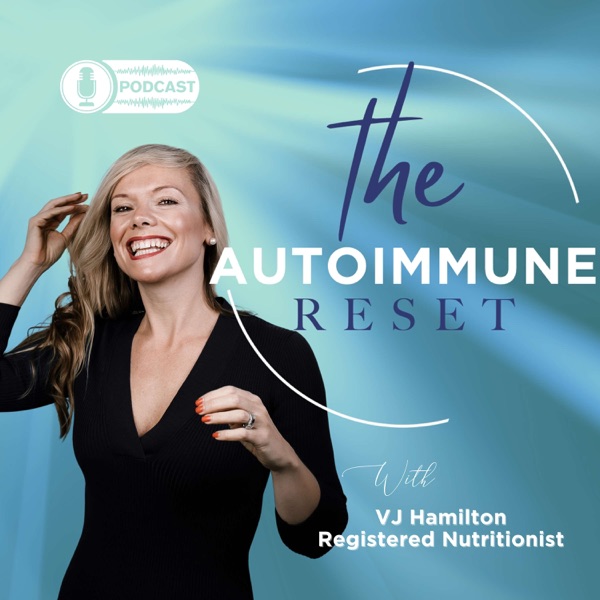
The Autoimmune RESET
VJ Hamilton is a nutritionist, scientist, and autoimmune disease expert who founded The Autoimmunity Nutritionist Clinic, a Nutritional Therapy and Functional Medicine clinic specialising in autoimmune disease.
VJ combines her lived experience overcoming autoimmune disease symptoms with her knowledge of nutrition, health, biochemistry, and immunology to provide you with the most up-to-date research on autoimmune disease.
The Autoimmune RESET aims to provide you with the education and resources to empower you to take steps to transform your health and feel better than ever.
In each episode, VJ will share simple ways to uplevel your diet and lifestyle, key learnings from her own journey reversing autoimmune disease, and inspirational stories from those who have reset their autoimmune symptoms and are now thriving in life.
Health practitioners, mind and body experts, and scientists will be joining VJ as guests on the show, as well as those who have inspirational stories to share and are now thriving in everyday life!
And don't miss the short episodes every Friday, The Friday 5, in which VJ shares five healthy must-haves for you to explore over the weekend.
- Episodes
- 249
- Releases
- Weekly
- Typical length
- 16 min
- On air since
- 2022
- Latest episode
- 2 days ago
Episodes
249 episodes, newest first
-
31 min
Why Your Body Struggles to Switch Off: Stress, Recovery and the Vagus Nerve with Jane Ollis
Episode 245
Show notes
What if managing stress were not simply about trying to relax, but about improving the body’s ability to move between activation and recovery?
In this episode of The Autoimmune RESET Podcast, VJ is joined by Jane Ollis, a medical biochemist, environmental scientist and health-tech entrepreneur exploring the science of stress, neuroplasticity and the vagus nerve.
Jane shares the personal story that led her into this field and explains why she became interested in developing technology designed to support the nervous system. Together, Jane and VJ explore what the vagus nerve does, how chronic stress can affect the brain and body, and why recovery is particularly relevant for people living with chronic or autoimmune symptoms.
They also discuss the emerging use of non-invasive vagus nerve stimulation, including how stimulation through the ear may influence nervous-system activity and neuroplasticity. Jane explains how measures such as heart rate variability and sleep can offer useful insights into stress and recovery, while also recognising that responses are highly individual.
This conversation is not about eliminating stress or promising an instant nervous-system “reset.” It is about understanding your own stress response and finding practical, sustainable ways to improve your capacity to recover.
In this episode, you’ll discover:
• What the vagus nerve is and how it communicates between the brain and body
• The difference between short-term stress and prolonged nervous-system activation
• How chronic stress may affect sleep, cognition, inflammation and wider health
• Why the ability to return to a calmer state matters as much as the initial stress response
• How vagus nerve stimulation technology is being developed
• The relationship between vagal stimulation and neuroplasticity
• What heart rate variability can—and cannot—tell us about stress and recovery
• Why sleep can be a valuable marker of nervous-system health
• How individual responses to nervous-system interventions can differ
• Practical ways to support recovery within everyday lifeThe aim is not to avoid every source of stress. A resilient nervous system is one that can respond when necessary and then return to a state of recovery. Technology may provide additional support, but sleep, movement, relationships, self-awareness and consistent daily habits remain important foundations.
SONA (HRV-guided nervous system retraining)
A more advanced, personalised device that tracks heart rate variability (HRV) and works with your breathing patterns to retrain the nervous system over time. You can find out morehere (use code VJ10 for a 10% discount).
📥 Ready for a more structured, personalised approach?
→ Apply to work with me
— we’ll create a clear, step-by-step plan tailored to your body, your symptoms, and your goals.📥 New to the podcast or need a starting point?
→ Download my free The Autoimmunity Recovery Plan
— a simple guide that outlines the steps I recommendThe information shared in this episode is for educational purposes only and is not intended to replace medical advice. Always consult your healthcare provider.
Thanks for listening! You can join The Autoimmune Forum on Facebook or find me on Instagram @theautoimmunitynutritionist.
-
14 min
Friday 5 - Are Your Bones at Risk? Five Factors Women Should Know
Episode 244
Show notes
Bone health is often something we only think about later in life—but the foundations are laid much earlier.
In this Friday Five episode, VJ explores five important influences on bone health, particularly for women living with autoimmune or chronic inflammatory conditions. She explains how bone is continually being broken down and rebuilt, and why factors such as declining oestrogen, inflammation, medication, nutrition and physical activity can disrupt this balance.
You’ll also learn why corticosteroid use deserves particular attention, how protein and key micronutrients contribute to bone strength, and why walking alone may not provide all the stimulus our bones need.
This episode is not about creating fear. It is about understanding your individual risk and taking practical, proactive steps to protect your bones before problems arise.
In this episode, you’ll discover:
• Why bone is living tissue that changes throughout your life
• How peak bone mass influences bone health later in life
• Why declining oestrogen during perimenopause and menopause can accelerate bone loss
• How autoimmune conditions and chronic inflammation may affect fracture risk
• The potential impact of corticosteroids and other medications on bone density
• Why protein, calcium, vitamin D and other nutrients all matter
• How weight-bearing movement and resistance training stimulate stronger bones
• When it may be helpful to discuss your personal risk or bone-density testing with a healthcare professionalStrong bones are not built through one supplement or a single lifestyle change. Bone health reflects the combined effects of hormones, inflammation, medication, nutrition and movement over time. The earlier we understand our own risk factors, the more opportunity we have to act proactively.
Chapters
00:00 Why Bone Health Matters
01:07 How Bone Remodelling Works
02:01 Peak Bone Mass and the Role of Oestrogen
03:11 Autoimmune Conditions and Bone Health
05:13 How Medication Can Affect Bone Density
07:23 Nutrition for Stronger Bones
09:05 Exercise and Mechanical Loading
11:17 Understanding Your Risk and Taking ActionVote for VJ
I have been nominated for a Flamingo Business Award in the Health and Wellness Warrior category. These awards recognise the impact we make through our work.
If my podcast, articles or clinical work have helped you in any way, I would be incredibly grateful for your vote:
Vote here: https://flamingobusiness.co.uk/fba-public-vote-2026
Thank you so much for your support.
Important: This episode is for educational purposes and isn't intended to diagnose the cause of your hair loss. Sudden, unexplained or significant hair loss should be medically assessed, and suspected scarring hair loss requires prompt specialist assessment.
🧘♀️ Need nervous system support?
→ I personally use and recommend SONA, a vagus nerve stimulation device clinically shown to support immune balance, inflammation, and stress recovery.
Use code VJ10 for 10% discount at checkout.📥 New to the podcast or need a starting point?
→ Download my free The Autoimmunity Recovery Plan
— a simple guide that outlines the steps I recommend to all clients as they begin calming the immune response and rebuilding resilience.Thanks for listening! You can join The Autoimmune Forum on Facebook or find me on Instagram @theautoimmunitynutritionist.
-
16 min
Friday 5 - Why Do My Joints Keep Aching? Five Things to Investigate
Episode 243
Show notes
Have your joints started aching more as the weather has become colder?
Although some people feel that they can sense changes in temperature or atmospheric pressure through their joints, the research remains mixed. Autumn also changes far more than the weather: we may move less, spend less time outside, experience different environmental exposures and enter one of the busiest periods of the year.
In this Friday Five episode of The Autoimmune RESET Podcast, I explore five areas I would investigate when joint or tendon pain keeps returning.
This subject is personal to me. Throughout my teens and twenties, I experienced significant pain around my wrists and hands, accompanied at times by itching, swelling and growing ganglion cysts. It was presented to me as tendonitis, despite the fact that I was also living with psoriasis.
I cannot retrospectively diagnose what was happening, but I now wonder whether those apparently separate symptoms formed part of the same wider immune and inflammatory picture. I wish somebody had stepped back and asked what else was happening within my body.
In this episode, I discuss:
• Why colder weather may not be the complete explanation for aching joints
• The difference between mechanical and classically inflammatory patterns of pain
• Why mechanical pain can still involve local inflammatory processes
• The clues to notice, including morning stiffness, swelling, warmth and night pain
• How psoriasis, nail changes and tendon pain may sometimes be connected
• Why pain around the heel, Achilles tendon or sole of the foot can be relevant
• The importance of looking beyond the joint at digestion, fatigue, skin, eye and mouth symptoms
• How to build a symptom timeline and identify what changed before the pain began
• The potential influence of infections, stress, sleep, exercise and hormonal changes
• Why joint pain during perimenopause should not automatically be dismissed as “just hormones”
• The roles of protein, omega-3 fatty acids, vitamin D and wider nutrient status
• When thyroid function, iron, vitamin B12 and folate may be worth exploring
• How gut health may fit into the picture without assuming that every joint problem begins in the gut
• Why both avoiding movement and pushing through significant pain can be unhelpful
• The importance of matching exercise to your present capacity to recoverThe five areas to investigate
• The pattern of the pain: When does it appear, what makes it better or worse, and is there swelling, warmth or prolonged morning stiffness?
• What else is happening in the body: Consider skin, nail, digestive, eye and energy changes alongside the joint symptoms.
• The timeline: Look at infections, injuries, medication, stress, sleep, hormones and changes in physical activity.
• Nutrition and gut health: Is the body receiving, digesting and absorbing the building blocks required to support muscles, connective tissue and immune regulation?
• Movement and recovery: Has the exercise changed—or has the body’s ability to recover from it changed?This is an example of Symptom Intelligence™: not assuming that every symptom has one cause, but remaining curious enough to ask whether apparently separate symptoms may belong to the same wider story.
Persistent joint pain should not automatically be dismissed as ageing, tendonitis or the weather. If you have ongoing swelling or warmth, prolonged morning stiffness, night pain, or joint and tendon symptoms alongside psoriasis or nail changes, speak to your doctor. A hot, suddenly swollen joint—particularly with a fever or feeling unwell—requires urgent medical assessment.
Vote for VJ
I have been nominated for a Flamingo Business Award in the Health and Wellness Warrior category. These awards recognise the impact we make through our work.
If my podcast, articles or clinical work have helped you in any way, I would be incredibly grateful for your vote:
Vote here: https://flamingobusiness.co.uk/fba-public-vote-2026
Thank you so much for your support.
Important: This episode is for educational purposes and isn't intended to diagnose the cause of your hair loss. Sudden, unexplained or significant hair loss should be medically assessed, and suspected scarring hair loss requires prompt specialist assessment.
🧘♀️ Need nervous system support?
→ I personally use and recommend SONA, a vagus nerve stimulation device clinically shown to support immune balance, inflammation, and stress recovery.
Use code VJ10 for 10% discount at checkout.📥 New to the podcast or need a starting point?
→ Download my free The Autoimmunity Recovery Plan
— a simple guide that outlines the steps I recommend to all clients as they begin calming the immune response and rebuilding resilience.Thanks for listening! You can join The Autoimmune Forum on Facebook or find me on Instagram @theautoimmunitynutritionist.
-
33 min
Psoriasis, Stress and the Mind–Body Connection with Dr Anik St. Martin
Episode 242
Show notes
Can changing the way we think influence what happens within the body?
In this episode of The Autoimmune RESET Podcast, I speak with Dr Anik St. Martin about her personal experience of psoriasis and the profound shift in mindset that she believes changed the course of her health.
After living with psoriasis for 20 years, Anik had become consumed by trying to find the next treatment, dietary change or intervention that might finally help. She describes the emotional toll of constantly trying to “fix” herself—and what happened when she began changing the way she thought and spoke about her body.
Within five days of focusing intently on a different internal narrative, Anik noticed a striking change in her skin. Although her wider journey had included dietary and lifestyle changes, this experience led her to explore the science of the mind–body connection more deeply.
We discuss how thoughts, beliefs and emotional stress may influence the nervous, endocrine and immune systems; what the placebo effect can teach us about the body’s response to expectation; and how neuroplasticity allows patterns of thought and behaviour to change.
This is not a conversation suggesting that psoriasis is “all in the mind”, that positive thinking can cure autoimmune disease or that someone is responsible for their illness. Psoriasis is a complex immune-mediated condition, and mindset is one part of a much wider picture. Instead, this episode explores why our internal environment may deserve consideration alongside nutrition, gut health, medical care and other aspects of physical health.
In this episode, we discuss:
• Anik’s experience of developing psoriasis and its emotional impact
• The circumstances she personally associates with the onset of her symptoms
• Why the search for healing can sometimes become another source of stress
• The moment she stopped fighting her body and changed her internal narrative
• What happened during her five-day mindset practice
• The relationship between the brain, nervous system and immune system
• What the placebo effect can—and cannot—tell us about healing
• How neuroplasticity may help us establish new patterns of thought
• Why mindset work should support rather than replace appropriate medical care
• The possible relationship between emotional stress, gut health and immune regulation
• Simple affirmations and daily practices that may help create a greater sense of safety
• Anik’s advice for somebody newly diagnosed with psoriasisConnect with Dr Anik St. Martin
Website: https://www.anikstmartin.com/skin-on-fire
Instagram: @psoriasis_healing_hubConnect with VJ
Instagram: @theautoimmunitynutritionist
Website: www.autoimmunehealthclinic.com
Listen and subscribe: The Autoimmune RESET PodcastIf this conversation helped you look at the relationship between your emotional and physical health differently, please follow the podcast and share the episode with someone who may find it helpful.
This episode is for educational purposes only and is not a substitute for personalised medical advice. Do not stop prescribed treatment or make significant changes to your healthcare without discussing them with an appropriately qualified professional.
Thanks for listening! You can join The Autoimmune Forum on Facebook or find me on Instagram @theautoimmunitynutritionist.
-
13 min
Friday 5 - Hair Loss: 5 Clues That Can Help You Understand What’s Going On
Episode 243
Show notes
September is Alopecia Awareness Month, so in this Friday Five episode of The Autoimmune RESET, I’m talking about a subject that is very close to my heart, both personally and professionally: hair loss.
Having experienced alopecia myself, and now working with women, men and children experiencing alopecia and other forms of hair loss in my clinic, I see how quickly the conversation can become focused on the hair itself.
Which shampoo should I use? Is my ferritin high enough? Should I take biotin? What can I do to make my hair grow back?
These are understandable questions. But hair loss isn't one single condition, and there are many different reasons why somebody's hair may begin shedding, thinning or disappearing in patches.
Hair loss isn't simply a cosmetic concern. Sometimes the most useful information comes when we stop looking only at the hair and start looking at the person experiencing it.
In this episode, you'll learn:
• Why identifying the type of hair loss should come first
• Why something that happened months ago may be relevant to shedding today
• Why ferritin isn't the only nutritional consideration for hair growth
• How inadequate calories and protein can affect the hair cycle
• Where thyroid, postpartum and perimenopausal changes may fit
• Why seemingly unrelated symptoms can provide useful clinical context
• How Symptom Intelligence™ can change the way we investigate hair lossImportant: This episode is for educational purposes and isn't intended to diagnose the cause of your hair loss. Sudden, unexplained or significant hair loss should be medically assessed, and suspected scarring hair loss requires prompt specialist assessment.
🧘♀️ Need nervous system support?
→ I personally use and recommend SONA, a vagus nerve stimulation device clinically shown to support immune balance, inflammation, and stress recovery.
Use code VJ10 for 10% discount at checkout.📥 New to the podcast or need a starting point?
→ Download my free The Autoimmunity Recovery Plan
— a simple guide that outlines the steps I recommend to all clients as they begin calming the immune response and rebuilding resilience.Thanks for listening! You can join The Autoimmune Forum on Facebook or find me on Instagram @theautoimmunitynutritionist.
-
37 min
The Responsibility Trap: Why Caring Doesn’t Mean Carrying Everything with Dr Rachel Morris
Episode 242
Show notes
Many of us have become so accustomed to being the capable one—the person who helps, fixes and takes responsibility—that we rarely stop to ask whether everything we are carrying is actually ours to carry.
In this episode of The Autoimmune RESET, I’m joined by Dr Rachel Morris, former GP, host of the You Are Not a Frog podcast and creator of The Shapes Toolkit.
Rachel introduces us to what she calls the responsibility trap: the gradual accumulation of responsibility without it ever being consciously or explicitly handed over. Although particularly common among healthcare professionals, it is a pattern that will resonate with anyone who feels responsible for keeping everything—and everyone—together.
We explore the three mechanisms that can keep us trapped: the silence gap, the helping reflex and the mismatch between control and responsibility. Rachel also explains why “just say no” is rarely useful advice when saying no feels like a failure of identity rather than a straightforward practical decision.
This is an important conversation about shame, boundaries, capacity and the difference between genuinely caring for others and automatically carrying responsibility for them.
In this episode, we discuss:
• Why caring about something does not necessarily make you responsible for it
• The subtle ways responsibility can land on us without being explicitly assigned
• The silence gap, the helping reflex and the control–responsibility mismatch
• Why shame often sits beneath an automatic “yes”
• Why logical advice about boundaries may not reach the real source of the problem
• How to distinguish what you care about from what you can genuinely control
• Why saying yes when you cannot sustain it may simply create a deferred let-down
• The limitations of telling people to become more resilient within structurally unhealthy systems
• How to begin making more conscious and sustainable choices about what you carryAbout Dr Rachel Morris
Dr Rachel Morris is a former GP, the host of the You Are Not a Frog podcast and the creator of The Shapes Toolkit. Her work helps healthcare professionals and other people working in high-pressure roles beat stress, set healthier boundaries and work more sustainably—without believing they simply need to become tougher or more resilient.
Connect with Rachel
Website: https://youarenotafrog.com/
Instagram and LinkedIn: @drrachelmorris
Free Overwhelm SOS Toolkit: https://youarenotafrog.com/overwhelm
Beat Stress and Thrive course: The Shapes ToolkitIf this episode resonates with you, please subscribe to The Autoimmune RESET, leave a review and share it with someone who may be carrying more than is truly theirs.
📥 Ready for a more structured, personalised approach?
→ Apply to work with me
— we’ll create a clear, step-by-step plan tailored to your body, your symptoms, and your goals.📥 New to the podcast or need a starting point?
→ Download my free The Autoimmunity Recovery Plan
— a simple guide that outlines the steps I recommendThe information shared in this episode is for educational purposes only and is not intended to replace medical advice. Always consult your healthcare provider.
Thanks for listening! You can join The Autoimmune Forum on Facebook or find me on Instagram @theautoimmunitynutritionist.
-
14 min
Friday 5 - Things to Investigate When You Have Hypothyroidism but Still Feel Exhausted
Episode 241
Show notes
If you have hypothyroidism, take thyroid medication and have been told that your blood tests are “normal”, it can be incredibly frustrating to still feel exhausted.
Sometimes your thyroid function or medication does need another look, but fatigue is not specific to hypothyroidism, and your thyroid does not operate in isolation. Thyroid hormones interact with your nutrient status, gut health, stress response, sex hormones, cellular energy production and whether you are eating enough to meet the demands being placed on your body.
I remember living with chronic fatigue and hoping that an endocrinologist would prescribe levothyroxine and everything would fall back into place. Although there were issues with my thyroid, there was far more contributing to how I felt.
In this Friday Five episode of The Autoimmune RESET Podcast, I explore five areas I would investigate when someone with hypothyroidism continues to feel exhausted.
In this episode, I discuss:
• Why TSH does not give us the complete thyroid picture
• The difference between T4 and the more metabolically active T3
• What can influence thyroid hormone conversion and utilisation
• Why it may be useful to consider free T4, free T3 and thyroid antibodies
• The relationship between iron stores, ferritin, fatigue and hair loss
• Other nutrients involved in thyroid function and energy production
• Why a “clean” diet is not necessarily a nutrient-dense one
• How restrictive eating and chronic under-fuelling can affect energy, recovery, hair and menstrual health
• Why more exercise and health optimisation are not always the answer
• The importance of considering your overall stress load and capacity to recover
• How gut health may affect nutrient absorption, immune health and thyroid hormone metabolism
• Why symptoms of hypothyroidism and perimenopause can be difficult to distinguish
• How apparently unrelated changes in digestion, sleep, skin, hair, periods and stress tolerance can help reveal the wider pictureIf you are still exhausted, the answer may not be to focus more intensely on your thyroid. It may be time to widen the lens and consider what else has changed around the same time.
Please continue to have your thyroid appropriately monitored and treated by your doctor, and never alter prescribed thyroid medication without speaking to the clinician responsible for your care.
🧘♀️ Need nervous system support?
→ I personally use and recommend SONA, a vagus nerve stimulation device clinically shown to support immune balance, inflammation, and stress recovery.
Use code VJ10 for 10% discount at checkout.📥 New to the podcast or need a starting point?
→ Download my free The Autoimmunity Recovery Plan
— a simple guide that outlines the steps I recommend to all clients as they begin calming the immune response and rebuilding resilience.The information shared in this episode is for educational purposes only and is not intended to replace medical advice. Always consult your healthcare provider.
Thanks for listening! You can join The Autoimmune Forum on Facebook or find me on Instagram @theautoimmunitynutritionist.
-
30 min
How to Stay Ambitious Without Sacrificing Your Health with Lisa Johnson
Episode 240
Show notes
What does success really mean if achieving it comes at the expense of your health?
In this episode of The Autoimmune RESET, I’m joined by business strategist and entrepreneur Lisa Johnson for an honest conversation about chronic illness, ambition and the pressure to keep going—even when your body is asking you to stop.
Lisa shares what it was like to build an extraordinarily successful business while dealing with persistent health problems and the uncertainty of not always knowing what was wrong. Despite feeling mentally motivated and capable, her body was telling a different story.
We explore why financial success does not necessarily translate into happiness or wellbeing, and how Lisa began to reconsider what “enough” looked like—not only financially, but across her work, relationships and health.
Lisa also discusses the small but significant changes she made to create a more sustainable life, the importance of asking for help and why being open about what we are experiencing can deepen relationships rather than weaken them.
This is a thoughtful conversation about recognising when the way you are living is no longer working, listening to the signals your body is sending you and finding a version of success that leaves room for your health.
In this episode, we discuss:
• Lisa’s experience of managing chronic illness while building a multimillion-pound business
• The disconnect between feeling mentally well and being physically unwell
• Why ambition can make it difficult to recognise—or respond to—the body’s warning signs
• The emotional impact of unexplained symptoms and diagnostic uncertainty
• How stress, pressure and perfectionism can affect our health
• Redefining success beyond income, growth and external achievement
• The question Lisa asked herself when deciding what needed to change
• Why one strategic change can sometimes have a positive effect across your entire life
• Balancing ambition with health, relationships and happiness
• The value of authenticity, vulnerability and asking other people for support
• Lisa’s advice for anyone considering leaving employment and starting a businessKey takeaway
Your body can be struggling even when your mind feels ready to keep going. Sustainable success is not simply about what you can achieve—it is also about creating a life that your health can support.
Chapters
00:00 — Introduction to Lisa Johnson and her journey
Meet Lisa and hear how her experiences with health and entrepreneurship began to intersect.02:08 — The intersection of health and ambition
Why being mentally driven does not always mean that your body has the same capacity.06:08 — Navigating chronic illness and business success
Lisa discusses ongoing symptoms, diagnostic uncertainty and building a highly successful business alongside chronic illness.12:00 — Redefining success and prioritising wellbeing
Why money and achievement alone were no longer enough—and what Lisa began to prioritise instead.17:46 — Finding balance: What is enough?
A conversation about ambition, growth and recognising when continually striving for more comes at a cost.23:57 — The power of authenticity and vulnerability
How honesty, asking for help and allowing other people in can strengthen relationships and create meaningful support.30:04 — Helping others transition into entrepreneurship
Lisa shares her perspective on starting a business and creating success in a more intentional and sustainable way.Listen now to discover how Lisa began redefining success, responding differently to her body and creating space for both ambition and wellbeing.
Connect with Lisa Johnson
You can find Lisa on Instagram at @lisajohnsonstrategist, where she shares more about business, success and building a career on your own terms. Lisa personally responds to her Instagram messages, so you can also contact her there with any questions.
📥 Ready for a more structured, personalised approach?
→ Apply to work with me
— we’ll create a clear, step-by-step plan tailored to your body, your symptoms, and your goals.📥 New to the podcast or need a starting point?
→ Download my free The Autoimmunity Recovery Plan
— a simple guide that outlines the steps I recommendThe information shared in this episode is for educational purposes only and is not intended to replace medical advice. Always consult your healthcare provider.
Thanks for listening! You can join The Autoimmune Forum on Facebook or find me on Instagram @theautoimmunitynutritionist.
-
16 min
Friday 5 - Signs Your Healthy Routine Might Be Working Against You
Episode 239
Show notes
We are constantly being told what we should be doing for our health: fasting, tracking our sleep, exercising more, cutting out certain foods, taking supplements, regulating our nervous system, improving our gut health…the list goes on.
But what happens when all those healthy habits actually start working against us?
In this episode, I explore something I see increasingly both online and in clinic: people doing all the right things for their health, yet feeling more stressed, more restricted and sometimes even worse than when they started.
I talk about why a health strategy that works brilliantly for one person may be completely wrong for another, and why even objectively “healthy” practices can become unhelpful when they stop matching what your body actually needs.
We look at everything from restrictive diets and gut health protocols to exercise, fasting, wearables and stress-management routines, and why more information doesn’t always lead to better health. In fact, sometimes the more data, rules and advice we accumulate, the further we move away from noticing our own responses.
Because your body is giving you information too.
The question is whether we are still listening to it.
In this episode, I discuss:
• Why healthy routines can sometimes make us feel worse rather than better
• How dietary restrictions can gradually become unnecessarily restrictive
• Why gut testing can be useful when it helps us personalise rather than guess
• How to recognise when your exercise intensity isn't right for your body
• Why stress-management practices shouldn't become another item on your stressful to-do list
• The influence of wellness trends, social media and conflicting health advice
• Why enjoying the things you do for your health actually matters
• How tracking and health data can be useful without allowing them to override how you feel
• Why reconnecting with your body's own signals can help you make better health decisionsResources mentioned in this episode
SONA — nervous system support
I mention SONA in this episode as one of the tools I use to support nervous system regulation and stress management.Use code VJ10 for a discount.
This is an affiliate link, which means I may receive a small commission if you purchase through it, at no additional cost to you.
Gut Health Test — GI Effects
If you want to understand more about what may be happening in your gut rather than continually removing foods or guessing which intervention you need, you can also explore the comprehensive gut health test I offer. It includes the functional stool test alongside analysis and interpretation of your results.Find out more about my Gut Health Test
📥 New to the podcast or need a starting point?
→ Download my free The Autoimmunity Recovery Plan
— a simple guide that outlines the steps I recommend to all clients as they begin calming the immune response and rebuilding resilience.The information shared in this episode is for educational purposes only and is not intended to replace medical advice. Always consult your healthcare provider.
Thanks for listening! You can join The Autoimmune Forum on Facebook or find me on Instagram @theautoimmunitynutritionist.
-
36 min
How Cellular Health Can Support Autoimmune Disease with Jess Berman
Episode 238
Show notes
What if supporting autoimmune health needs to start even deeper than the gut, hormones or immune system — at the level of the cell itself?
In this episode of The Autoimmune RESET, I’m joined by Jess Berman, co-owner of BodyBio, to explore the role cellular health plays in inflammation, immune function, energy and our overall resilience.
Jess shares her own health journey, including her experience with PCOS and Hashimoto’s, and how it shaped the way she thinks about nutrition and health today. We discuss why the integrity of our cell membranes matters, how modern diets and environmental exposures can affect cellular function, and why some of the nutrients we’ve been taught to fear — including omega-6 fatty acids — may deserve a more nuanced conversation.
We also get practical, talking about phospholipids, essential fatty acids, butyrate, minerals and hydration, alongside the foundational dietary and lifestyle changes that can make a meaningful difference before reaching for increasingly complex protocols.
In this episode, we cover:
• Jess’s personal experience with PCOS, Hashimoto’s and autoimmune health
• Why cellular health is an important piece of the autoimmune puzzle
• What cell membranes actually do and why their integrity matters
• Phospholipids and their role in cellular function
• Why omega-6 isn’t necessarily the inflammatory villain it has been made out to be
• The importance of balancing essential omega-6 and omega-3 fatty acids
• Butyrate, the gut barrier and the connection between gut and immune health
• Minerals, electrolytes and why hydration is about more than simply drinking water
• Environmental exposures, oxidative stress and detoxification
• Why Jess believes in getting the foundations right before moving into more intensive protocols
• Practical places to start if you’re living with an autoimmune conditionIf you’d like to explore some of the BodyBio products Jess and I discuss in this episode, including BodyBio PC, Balance Oil, Butyrate and e-Lyte, you can find them here:
UK: BodyBio UK
US: BodyBioUse my code VJ15 for 15% off.
If you enjoyed this episode, please subscribe, leave a review and share it with someone who has been searching for answers to seemingly unrelated symptoms.
📥 Ready for a more structured, personalised approach?
→ Apply to work with me
— we’ll create a clear, step-by-step plan tailored to your body, your symptoms, and your goals.🧪 Want to understand what’s happening beneath the surface?
→ I use functional testing in clinic to assess gut health, nutrient status, and digestion — including markers related to bile flow, microbial balance, and inflammation.
You can explore the tests I use here:
https://theautoimmunitynutritionist.com/functional-testing/📥 New to the podcast or need a starting point?
→ Download my free The Autoimmunity Recovery Plan
— a simple guide that outlines the steps I recommendThe information shared in this episode is for educational purposes only and is not intended to replace medical advice. Always consult your healthcare provider.
Please note: these are affiliate links, which means I may receive a small commission if you purchase through them, at no additional cost to you.
Thanks for listening! You can join The Autoimmune Forum on Facebook or find me on Instagram @theautoimmunitynutritionist.
-
19 min
Why Your IBS, Fatigue and Migraines Might Be Connected
Episode 237
Show notes
Have you ever felt like your symptoms don't quite fit together?
Perhaps you've struggled with IBS, migraines, chronic fatigue, dizziness, joint pain or food sensitivities, yet every symptom has been treated in isolation. What if they were all connected?
In this episode, I'm exploring the often-overlooked world of Ehlers-Danlos Syndrome (EDS) and Hypermobility Spectrum Disorders (HSD), and why being "double-jointed" is only a small part of the story.
We'll discuss how connective tissue influences almost every system in the body, why hypermobility can affect your gut, immune system and nervous system, and why so many people spend years searching for answers before receiving a diagnosis.
I also share why this topic has caught my attention recently, including reading Lena Dunham's memoir, where she describes how a reader recognised the signs of hypermobility after seeing a photograph of her bending her thumbs backwards. It's a powerful reminder that sometimes the clues have been there all along—we've just never been taught how to connect them.
We'll also look at the exciting changes coming to the diagnostic criteria for EDS and Hypermobility Spectrum Disorders, and what these updates could mean for improving recognition and diagnosis in the future.
Finally, I'll share some practical ways to support connective tissue, the nervous system and overall health through nutrition and lifestyle, regardless of whether you have a diagnosis.
In this episode, we discuss:
• Why EDS is about far more than flexible joints
• The overlooked signs and symptoms of hypermobility
• The connection between hypermobility, IBS, bloating and gut motility
• Why migraines, dizziness and fatigue may share a common thread
• The relationship between hypermobility, POTS and the autonomic nervous system
• Histamine, mast cells and why some people become increasingly reactive
• The upcoming changes to EDS and Hypermobility Spectrum Disorder diagnostic criteria
• Nutrition and lifestyle strategies to support connective tissue health
• Why understanding patterns—not just individual symptoms—can transform your health journeyIf you enjoyed this episode, please subscribe, leave a review and share it with someone who has been searching for answers to seemingly unrelated symptoms.
📥 Ready for a more structured, personalised approach?
→ Apply to work with me
— we’ll create a clear, step-by-step plan tailored to your body, your symptoms, and your goals.🧪 Want to understand what’s happening beneath the surface?
→ I use functional testing in clinic to assess gut health, nutrient status, and digestion — including markers related to bile flow, microbial balance, and inflammation.
You can explore the tests I use here:
https://theautoimmunitynutritionist.com/functional-testing/📥 New to the podcast or need a starting point?
→ Download my free The Autoimmunity Recovery Plan
— a simple guide that outlines the steps I recommendThe information shared in this episode is for educational purposes only and is not intended to replace medical advice. Always consult your healthcare provider.
Thanks for listening! You can join The Autoimmune Forum on Facebook or find me on Instagram @theautoimmunitynutritionist.
-
11 min
Friday 5 - Simple Ways to Boost Your Child's Nutrition
Episode 236
Show notes
If you've ever worried that your child isn't eating enough vegetables or wondered how to improve their diet without creating stress around food, this episode is for you.
In this short, practical episode, I share five simple ways to increase the nutrient density of your child's meals without focusing on restriction or perfection. Instead of asking, "What should I take away?" I encourage you to ask, "What can I add?" Small, consistent changes can make a remarkable difference to your child's nutrition, growth and long-term health.
We'll explore easy ways to include more nutrient-rich foods that support immune function, brain development and overall wellbeing, while keeping meals familiar and family-friendly.
In this episode, you'll learn:
• Why focusing on nourishment rather than restriction creates a healthier relationship with food.
• How to introduce organ meats in a way children are unlikely to notice.
• Simple ways to make smoothies far more nutrient-dense.
• How to incorporate extra vegetables into sauces and everyday meals.
• Easy swaps and additions that significantly improve the nutritional value of familiar family favourites.
• Why tiny changes, repeated consistently, have a much bigger impact than striving for perfection.Whether you're raising a toddler, feeding teenagers, or simply looking for realistic ways to improve your family's nutrition, this episode is packed with practical ideas you can start using today.
If you enjoyed this episode, I'd love it if you subscribed, left a review, or shared it with another parent who wants to support their child's health through nutrition. For more evidence-based advice on children's health and autoimmunity, visit my website or connect with me on Instagram.
🧘♀️ Need nervous system support?
→ I personally use and recommend SONA, a vagus nerve stimulation device clinically shown to support immune balance, inflammation, and stress recovery.
Use code VJ10 for 10% discount at checkout.📥 New to the podcast or need a starting point?
→ Download my free The Autoimmunity Recovery Plan
— a simple guide that outlines the steps I recommend to all clients as they begin calming the immune response and rebuilding resilience.The information shared in this episode is for educational purposes only and is not intended to replace medical advice. Always consult your healthcare provider.
Thanks for listening! You can join The Autoimmune Forum on Facebook or find me on Instagram @theautoimmunitynutritionist.
-
33 min
The Healing Power of Your Thoughts, Emotions & Beliefs, with Wendy Valentine
Episode 235
Show notes
What if healing is not just about changing your diet, but also changing the thoughts, beliefs and patterns that keep you stuck?
In this episode of The Autoimmune RESET, I am joined by Wendy Valentine, author, speaker and host of The Midlife Makeover Show, to discuss reinvention, self-worth and creating a life that truly supports your health.
After experiencing divorce, health challenges and major life changes, Wendy shares how she rebuilt her life by reconnecting with herself, shifting old beliefs and taking small steps towards the future she wanted to create.
We explore the connection between our thoughts, emotions, energy and physical wellbeing — and why healing often starts with becoming aware of what we are holding onto.
In this episode we discuss:
• Wendy’s journey of transformation and reinvention
• How beliefs and old stories can keep us stuck
• The role of mindset, emotions and energy in healing
• Why self-awareness is the first step towards change
• How to connect with your future self
• Why it is never too late to create a new chapterA powerful conversation about letting go of what no longer serves you and stepping into the life you truly want to live.
Connect with Wendy Valentine:
To continue your journey of reinvention, Wendy has created a range of free resources including her Happiness Hacks, Trigger to Treasure Technique, Emotional Master Manual and Superhero Quiz.You can access these here:
https://wendyvalentine.com/freebiesYou can also find Wendy’s book, Women Waking Up: The Midlife Manifesto for Passion, Purpose, and Play, where she shares her roadmap for creating more passion, purpose and joy in your next chapter.
Find out more here:
https://womenwakingup.com📥 New to the podcast or need a starting point?
→ Download my free The Autoimmunity Recovery Plan
— a simple guide that outlines the steps I recommendYou can also connect with me here:
Instagram: @theautoimmunitynutritionist
Website: www.autoimmunenutritionclinic.com
If you enjoyed this episode, I would be so grateful if you shared it with someone who may benefit from hearing it, or left a review on your podcast platform of choice.
The information shared in this episode is for educational purposes only and is not intended to replace medical advice. Always consult your healthcare provider.
Thanks for listening! You can join The Autoimmune Forum on Facebook or find me on Instagram @theautoimmunitynutritionist.
-
10 min
Friday 5 - Books To Calm Your Mind & Reset Your Nervous System
Episode 234
Show notes
In this solo episode of The Autoimmune RESET Podcast, VJ shares five of her favourite books for cultivating more calm, presence and mindfulness in everyday life.
While nutrition, movement and supplements can all play an important role in supporting health, learning how to slow down and create moments of safety is just as important for supporting the nervous system.
VJ shares the books she comes back to whenever life feels overwhelming — the ones you can pick up at any time for a little more perspective, self-compassion and inspiration.
In this episode, VJ explores:
• Why living in the present moment can help reduce stress and overwhelm
• The importance of creating simple rituals to pause and reset
• How self-compassion supports healing and personal growth
• Why small, ordinary moments often bring the most joy
• How letting go of control can create more peace and freedomBooks mentioned:
• The Power of Now by Eckhart Tolle
• Good Vibes, Good Life by Vex King
• The Pivot Year by Brianna Wiest
• The Unexpected Joy of the Ordinary by Catherine Gray
• The Let Them Theory by Mel RobbinsIf you’ve been feeling overwhelmed, constantly “on”, or simply craving a slower pace, this episode is your reminder to create space, reconnect with yourself and find moments of calm in everyday life.
🧘♀️ Need nervous system support?
→ I personally use and recommend SONA, a vagus nerve stimulation device clinically shown to support immune balance, inflammation, and stress recovery.
Use code VJ10 for 10% discount at checkout.📥 New to the podcast or need a starting point?
→ Download my free The Autoimmunity Recovery Plan
— a simple guide that outlines the steps I recommend to all clients as they begin calming the immune response and rebuilding resilience.The information shared in this episode is for educational purposes only and is not intended to replace medical advice. Always consult your healthcare provider.
Thanks for listening! You can join The Autoimmune Forum on Facebook or find me on Instagram @theautoimmunitynutritionist.
-
58 min
How to Support IBS and IBD Remission: 5 Key Strategies from Dane Johnson
Episode 233
Show notes
In this episode of The Autoimmune RESET Podcast, I’m joined once again by Dane Johnson, founder of Crohn’s Colitis Lifestyle, to explore what it really takes to move beyond symptom management and create long-term remission.
After nearly losing his life to Crohn’s and colitis complications, Dane rebuilt his health and has now been medication-free and in remission for over 10 years. Today, he helps others understand the deeper factors that may be driving chronic inflammation.
We discuss why medication can be an important tool, but why supporting the foundations of health is key — including digestion, the gut microbiome, the intestinal barrier, nervous system regulation and detoxification pathways.
We also explore hidden triggers that may keep the immune system activated, including infections, mould exposure, toxins and chronic stress, as well as why creating a healthier home environment can support recovery.
In this episode we cover:
• The five areas Dane believes are essential for staying in remission
• Why gut health influences autoimmune conditions beyond IBD
• How stress and the nervous system impact healing
• The importance of tracking your own symptoms and becoming the “CEO” of your health
• Simple daily strategies to support resilience and long-term wellbeingWhether you are living with Crohn’s, colitis, IBS, alopecia, Hashimoto’s or another autoimmune condition, this conversation will help you understand the bigger picture behind immune health and rebuilding balance.
Connect with Dane:
Website: https://crohnscolitislifestyle.com/Instagram: @crohnscolitis_lifestyle
📥 New to the podcast or need a starting point?
→ Download my free The Autoimmunity Recovery Plan
— a simple guide that outlines the steps I recommendYou can also connect with me here:
Instagram: @theautoimmunitynutritionist
Website: www.autoimmunenutritionclinic.com
If you enjoyed this episode, I would be so grateful if you shared it with someone who may benefit from hearing it, or left a review on your podcast platform of choice.
The information shared in this episode is for educational purposes only and is not intended to replace medical advice. Always consult your healthcare provider.
Thanks for listening! You can join The Autoimmune Forum on Facebook or find me on Instagram @theautoimmunitynutritionist.
-
11 min
Friday 5 - Tiny Habits That Can Calm Your Nervous System This Week
Episode 232
Show notes
When you're living with an autoimmune condition, chronic fatigue, or simply feeling overwhelmed, supporting your nervous system doesn't have to mean adding another hour to your day.
In this week's Friday Five, I'm sharing five simple habits that take just a few moments but can make a real difference to how you feel. These are practical tools you can weave into your day to help reduce stress, create a greater sense of calm, and gently encourage your body to spend more time in a state of rest and repair.
We explore why small, consistent moments of safety matter for nervous system regulation and how they may support healing alongside good nutrition, lifestyle and medical care.
In this episode, you'll learn:
• Why a slow exhale can help stimulate the vagus nerve and encourage a calmer state.
• How writing your thoughts down can reduce overwhelm and create mental clarity.
• Why creating a feel-good playlist can positively influence your mood and nervous system.
• A simple technique called orienting that helps bring you back into the present moment.
• How slowing down just one everyday activity can send reassuring signals of safety to your brain and body.Resources mentioned:
• BreathPod appfor guided breathing exercises
• Listen to my previous podcast episode with breathwork expert Dan Brulé
• Join The Autoimmune Forum for more practical tips and daily support
• Subscribe to The Autoimmune RESET Podcast so you never miss an episodeIf you enjoyed this episode, I'd be so grateful if you could subscribe, leave a review, or share it with someone who could benefit from a little more calm in their day.
🧘♀️ Need nervous system support?
→ I personally use and recommend SONA, a vagus nerve stimulation device clinically shown to support immune balance, inflammation, and stress recovery.
Use code VJ10 for 10% discount at checkout.📥 New to the podcast or need a starting point?
→ Download my free The Autoimmunity Recovery Plan
— a simple guide that outlines the steps I recommend to all clients as they begin calming the immune response and rebuilding resilience.The information shared in this episode is for educational purposes only and is not intended to replace medical advice. Always consult your healthcare provider.
Thanks for listening! You can join The Autoimmune Forum on Facebook or find me on Instagram @theautoimmunitynutritionist.
-
38 min
Rheumatoid Arthritis: Symptoms, Root Causes & Natural Therapies (2026 Update)
Episode 231
Show notes
Rheumatoid arthritis is often thought of as a condition that only affects the joints, but emerging research suggests the story begins much earlier and extends far beyond them.
In this episode of The Autoimmune RESET, registered nutritionist VJ Hamilton explores the latest evidence surrounding rheumatoid arthritis, including the fascinating links between the gut microbiome, intestinal barrier, oral health and immune regulation. You'll learn why researchers now believe that immune dysfunction may begin at mucosal surfaces such as the gut and mouth years before joint symptoms develop, and how factors including microbial diversity, nutrition, sleep and stress can influence immune resilience.
VJ explains the science in an accessible and practical way, covering the role of key bacteria such as Prevotella copri and Akkermansia muciniphila, why butyrate-producing bacteria are so important, and how oral bacteria may contribute to immune activation. She also discusses the gut-joint axis, why stool testing has become such a valuable tool in personalised nutrition, and the simple lifestyle changes that can support your immune system alongside conventional medical care.
Whether you've recently been diagnosed with rheumatoid arthritis, are supporting someone who has, or simply want to better understand autoimmune disease, this episode offers practical, evidence-based insights to help you look beyond symptom management and towards supporting the root causes of immune dysfunction.
The Root Reset® Intensive
A private, in-person experience designed to help you connect the dots, identify potential root causes, and create a personalised six-month strategy for improving your health.
The first Root Reset® Intensives will be taking place on Harley Street in London this summer.
You can apply here.
🧘♀️ Need nervous system support?
→ I personally use and recommend SONA, a vagus nerve stimulation device clinically shown to support immune balance, inflammation, and stress recovery.
Use the code VJ10 for 10% discount at checkout.📥 New to the podcast or need a starting point?
→ Download my free The Autoimmunity Recovery Plan
— a simple guide that outlines the steps I recommendYou can also connect with me here:
Instagram: @theautoimmunitynutritionist
Website: www.autoimmunenutritionclinic.com
If you enjoyed this episode, I would be so grateful if you shared it with someone who may benefit from hearing it, or left a review on your podcast platform of choice.
The information shared in this episode is for educational purposes only and is not intended to replace medical advice. Always consult your healthcare provider.
Thanks for listening! You can join The Autoimmune Forum on Facebook or find me on Instagram @theautoimmunitynutritionist.
-
14 min
Friday 5 - My Favourite Gluten-Free Swaps That Actually Taste Good
Episode 230
Show notes
Removing gluten can feel overwhelming at first, particularly when so much of our food culture revolves around bread, pasta, cereals, and convenience foods. Yet one of the biggest lessons I've learnt after more than a decade of being gluten-free is that success isn't about finding perfect gluten-free replacements for everything you used to eat.
It's about discovering new foods that you genuinely enjoy.
In this episode, I share five of my favourite gluten-free swaps that I use regularly in my own kitchen and recommend to clients. From courgetti and buckwheat to quinoa porridge and tamari, these simple alternatives can help you build a more varied, nutrient-dense diet without feeling restricted or deprived.
We also explore why some people don't tolerate oats as well as expected, where hidden sources of gluten can sneak into your diet, and why focusing on what you can add often makes dietary changes far more sustainable than focusing on what you're removing.
Whether you're newly gluten-free, supporting an autoimmune condition, or simply looking for fresh meal ideas, this episode is packed with practical inspiration.
In this episode, we discuss:
• Why gluten-free living doesn't have to feel restrictive
• The mindset shift that makes dietary changes easier to maintain
• Courgetti as an alternative to traditional pasta
• Why tamari and coconut aminos are useful gluten-free staples
• Quinoa porridge and chia pudding as alternatives to oats
• The nutritional benefits of buckwheat
• Nori wraps and lettuce wraps as alternatives to sandwiches
• Hidden sources of gluten that many people overlook
• How to build a naturally gluten-free diet using whole foods📥 New to the podcast or need a starting point?
→ Download my free The Autoimmunity Recovery Plan
— a simple guide that outlines the steps I recommendYou can also connect with me here:
Instagram: @theautoimmunitynutritionist
Website: www.autoimmunenutritionclinic.com
If you enjoyed this episode, I would be so grateful if you shared it with someone who may benefit from hearing it, or left a review on your podcast platform of choice.
The information shared in this episode is for educational purposes only and is not intended to replace medical advice. Always consult your healthcare provider.
Thanks for listening! You can join The Autoimmune Forum on Facebook or find me on Instagram @theautoimmunitynutritionist.
-
16 min
Friday 5 - Signs You Need a Health Strategy (Not Another Supplement)
Episode 229
Show notes
Have you ever found yourself wondering whether the next supplement, test, diet, or protocol might finally be the thing that helps you feel better?
If so, you're certainly not alone.
In this week's Friday 5, I explore one of the most common patterns I see in clinic: people who are highly motivated, incredibly knowledgeable, and doing all the "right" things, yet still feel stuck when it comes to their health.
The truth is that more information does not always lead to better health. Sometimes what we need most is clarity, prioritisation, and a strategy.
In this episode, I share five signs that you may need a health strategy rather than another supplement, along with practical tips to help you simplify your approach and focus on what matters most.
In this episode, we discuss:
• Why the search for the "missing piece" can sometimes keep us stuck
• The difference between collecting information and creating a strategy
• What an overflowing supplement cupboard may really be telling you
• Why trying to fix everything at once often slows progress
• The importance of looking for patterns rather than focusing on individual symptoms
• How to identify the areas of health that deserve your attention first
• Why clarity is often more powerful than complexity
Mentioned in this episode:
The Root Reset® Intensive
A private, in-person experience designed to help you connect the dots, identify potential root causes, and create a personalised six-month strategy for improving your health.
The first Root Reset® Intensives will be taking place on Harley Street in London this summer.
You can apply here.
🧘♀️ Need nervous system support?
→ I personally use and recommend SONA, a vagus nerve stimulation device clinically shown to support immune balance, inflammation, and stress recovery.
Use the code VJ10 for 10% discount at checkout.📥 New to the podcast or need a starting point?
→ Download my free The Autoimmunity Recovery Plan
— a simple guide that outlines the steps I recommendYou can also connect with me here:
Instagram: @theautoimmunitynutritionist
Website: www.autoimmunenutritionclinic.com
If you enjoyed this episode, I would be so grateful if you shared it with someone who may benefit from hearing it, or left a review on your podcast platform of choice.
The information shared in this episode is for educational purposes only and is not intended to replace medical advice. Always consult your healthcare provider.
Thanks for listening! You can join The Autoimmune Forum on Facebook or find me on Instagram @theautoimmunitynutritionist.
-
29 min
Breathing Your Body Out of Survival Mode with Dan Brulé
Episode 228
Show notes
Many people focus on nutrition, supplements, and lifestyle changes to improve their health, but often overlook one of the most powerful healing tools available to them: their breath.
In this episode, I am joined by breathwork pioneer and bestselling author Dan Brulé, whose book Just Breathe has helped thousands of people understand the profound connection between breathing, stress, energy, and wellbeing. Dan has spent decades teaching breath mastery to everyone from elite athletes and military personnel to individuals navigating chronic illness, anxiety, pain, and fatigue.
Together, we explore how breathing patterns influence the nervous system, why so many people unknowingly live in a state of chronic survival mode, and how simple breath awareness practices can help regulate stress, improve resilience, and support healing.
We discuss:
• Dan's remarkable journey into breathwork and the experiences that shaped his life's work
• The connection between breathing, stress, and nervous system regulation
• Why chronic stress can contribute to inflammation and immune dysregulation
• Common breathing mistakes, including mouth breathing and shallow chest breathing
• The importance of diaphragmatic and nasal breathing
• How breathwork may help with pain, fatigue, anxiety, brain fog, and chronic health challenges
• The role of carbon dioxide in health and why many people are over-breathing
• A simple breathing assessment you can try at home
• The power of sighing and yawning for relaxation and nervous system regulation
• Practical ways to become more aware of your breathing throughout the day
• Why breath awareness is often the first step towards lasting changeWhether you're living with an autoimmune condition, chronic fatigue, stress, or simply looking for a practical way to improve your wellbeing, this conversation offers simple yet powerful tools that you can begin using immediately.
Resources
🌐 Dan's website: https://breathmastery.com/
📱 Follow Dan on Instagram here
📥 New to the podcast or need a starting point?
→ Download my free The Autoimmunity Recovery Plan
— a simple guide that outlines the steps I recommendYou can also connect with me here:
Instagram: @theautoimmunitynutritionist
Website: www.autoimmunenutritionclinic.com
If you enjoyed this episode, I would be so grateful if you shared it with someone who may benefit from hearing it, or left a review on your podcast platform of choice.
The information shared in this episode is for educational purposes only and is not intended to replace medical advice. Always consult your healthcare provider.
Thanks for listening! You can join The Autoimmune Forum on Facebook or find me on Instagram @theautoimmunitynutritionist.
Nutrition lists
More Nutrition shows picked out from the charts










More in Nutrition
Placed highest on Apple Podcasts' Nutrition chart right now