Podcast
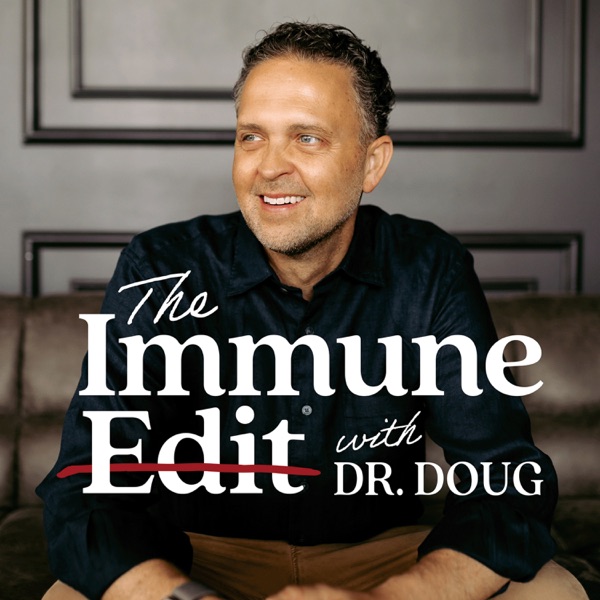
The Immune Edit
Tired of confusing advice about your immune system? So is Dr. Doug Jones.
In The Immune Edit, board-certified immunologist Dr. Doug Jones cuts through the hype, half-truths, and health fads to bring you real answers on food allergies, long COVID, autoimmune issues, and chronic inflammation.
Each episode delivers science-backed insights, practical strategies, and no-nonsense conversations to help you go from overwhelmed, to informed. Whether you’re newly diagnosed or deep into your health journey, this podcast is here to help you feel better—and live better.
- On air since
- 2025
- Episodes
- 64
- Releases · typical length
- Weekly · 34 min
- Latest episode
- 6 days ago
Chart history since Oct 26
| Now | Chart | Peak | Since Oct 26 |
|---|---|---|---|
| Off | Medicine Last on it Nov 5 at #165 | #149 |
Episodes
64 episodes, newest first
-
46 min
Why Exercise Can Make Chronic Illness Worse
Season 1, Episode 64
Show notes
Is exercise always the answer to feeling better? For people living with POTS, ME/CFS, and other complex chronic illnesses, the answer isn't always that simple.
In this episode of The Immune Edit, Dr. Doug Jones sits down with Clayton Powers, Doctor of Physical Therapy, to discuss why traditional exercise recommendations don't work for everyone and how pushing through symptoms can sometimes make people feel significantly worse.
They explore the difference between deconditioning, injury, and post-exertional malaise (PEM), why people with ME/CFS may experience debilitating crashes after even seemingly simple activities, and how individualized approaches to movement, pacing, and energy conservation can make a difference.
Clayton also shares real patient experiences, common misconceptions about chronic illness, and why normal test results don't necessarily mean nothing is wrong. They discuss the importance of looking beyond exercise to consider underlying immune issues, nutrition, sleep, environmental triggers, and other factors that may be contributing to symptoms.
Plus, they discuss:
• Why exercise isn't always the right prescription
• How to recognize post-exertional malaise
• The difference between fatigue and a PEM crash
• Pacing, energy conservation, and balancing activity with rest
• Why the right physical therapist matters
• Common myths about POTS and ME/CFS
• Resources for patients looking for support and answersThe goal isn't to stop moving or give up on progress. It's to understand what your body needs and find an approach that works for the individual, rather than forcing everyone into the same protocol.
Because healthcare should be about finding the right fit for the person, not making the person fit the protocol.
Bateman Horne Center Patient Resources: https://batemanhornecenter.org/outreach/patients/Bateman Horne Center YouTube: https://www.youtube.com/user/OFFERUtah
Coffee with a Clinician:
https://batemanhornecenter.org/event/coffee-with-a-clinician-11/
Clayton's Website: https://claytonpowers.com/
-
29 min
Food Allergies, Fear & Getting Your Life Back
Season 1, Episode 63
Show notes
Food allergies change more than what's on the plate. They can affect family routines, social experiences, relationships, sleep, travel, and the way children and parents experience everyday life.In this episode of The Immune Edit, Dr. Doug Jones explores the complicated relationship between food allergies, fear, and the instinct to protect the people we love. Drawing from experiences with families that changed the direction of his career, he discusses why traditional advice like avoiding trigger foods and carrying epinephrine, while important, doesn't always address the larger impact food allergies have on a person's life.He breaks down the differences between IgE-mediated food allergies, FPIES, eosinophilic esophagitis (EoE), ARFID, food sensitivities, and other conditions that can make eating difficult or frightening. He also explores how frightening experiences can shape future responses to food, why appropriate precautions shouldn't automatically be labeled as anxiety, and how families can find a better balance between safety and everyday life.Because the goal of treatment shouldn't just be preventing reactions. It should be helping people get their lives back.In this episode, we explore:- How food allergies affect the entire family, not just the person with the allergy- The differences between food allergy, FPIES, EoE, ARFID, and food sensitivities- Why fear after a real reaction is not irrational- How protective behaviors can gradually expand beyond the original danger- The importance of accurate diagnosis and individualized treatment- How to help children develop confidence without minimizing real risks- When safety can begin to turn into restrictionThe goal isn't to dismiss danger or eliminate every precaution. It's to understand the risk well enough to protect what matters while making room for life.
-
51 min
You're Not Imagining It: The Hidden Trauma of Chronic Illness
Season 1, Episode 62
Show notes
What happens when you know something is wrong, but no one seems to believe you?In this episode of The Immune Edit, Dr. Doug Jones sits down with Fallon Schultz, MSW, LCSW, CAM, founder of the International FPIES Association, to discuss the often-overlooked connection between chronic illness, medical trauma, and the psychosocial impact of living with complex health conditions.Fallon shares her personal journey navigating her son's severe FPIES diagnosis, the challenges of being dismissed by the medical system, and how that experience led her to become a leading advocate for patients and families.Together, Doug and Fallon explore how repeated medical dismissal, diagnostic uncertainty, and the constant demands of managing chronic illness can affect the nervous system, mental health, and entire family. They also discuss the importance of looking beyond diagnostic criteria, recognizing the overlap between physical and mental health, and building better collaboration between medical and mental health professionals.This conversation is about more than food allergies. It's about being heard, finding the right support, and understanding that patients deserve both clinical answers and compassion.Because you're not imagining it. And you matter.
-
25 min
The Protective Brain
Season 1, Episode 61
Show notes
Why can your body continue to feel threatened long after the original danger has passed? And how do you distinguish necessary protection from fear that has started to make your world smaller?In this episode of The Immune Edit, Dr. Doug Jones explores the protective brain and how our nervous system learns from frightening experiences, real physical symptoms, and uncertainty. From food allergies and medication reactions to mast cell disease, ME/CFS, and dysautonomia, these experiences can shape how we interpret sensations, anticipate danger, and make decisions about everyday life.But understanding the brain's protective responses doesn't mean dismissing the biology behind chronic illness. Real symptoms deserve real investigation, and necessary precautions matter. The challenge is recognizing when protection is tracking an actual threat and when it may be expanding beyond what the underlying biology requires.Dr. Jones breaks down how the brain learns through association, why reassurance alone often isn't enough, and how accurate information and carefully paced experiences can help us move forward without ignoring legitimate risks.The goal isn't to eliminate all fear or force ourselves through it. It's to build understanding, make informed decisions, and take the next step our bodies can actually tolerate.Because protection isn't weakness. And moving forward isn't about becoming careless. It's about becoming more accurate.
-
52 min
Food Allergy Treatment Has Changed. Here’s What Families Need to Know
Season 1, Episode 60
Show notes
Food allergies have come a long way, but many families still believe avoidance is their only option.
In this episode of The Immune Edit, Dr. Doug Jones sits down with Dr. Atul Shah, founder of the New York Food Allergy and Wellness Program, to discuss the evolution of food allergy treatment and the possibilities available to patients today.They explore oral immunotherapy (OIT), basophil activation testing (BAT), and how a more personalized approach can help guide treatment decisions. They also discuss the role of stress and anxiety in food allergy care, why accurate diagnosis matters, and how clinicians can better support patients and families navigating a confusing landscape of information.
The goal isn't to force every patient into the same treatment plan. It's to understand the individual, weigh the risks and benefits, and find the approach that best fits their needs and goals.
Because food allergy care should be about more than avoidance. It should be about understanding your options.
Medicine lists
More Medicine shows picked out from the charts