Podcast
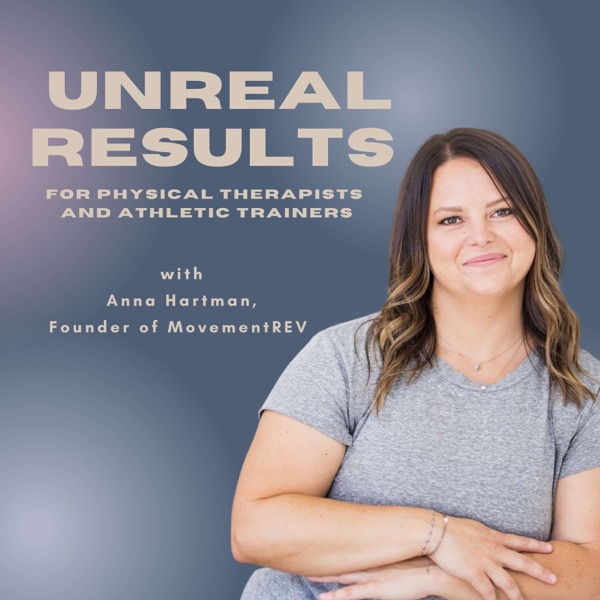
Unreal Results for Physical Therapists and Athletic Trainers
The Unreal Results podcast helps physical therapists and certified athletic trainers feel confident and get better outcomes for their clients by teaching about the influence of the viscera organs and the nervous system on human movement, pain, and injury. Explore how a visceral and neural-based lens of view can provide a new perspective to performance-based physical therapy, athletic training, and sports medicine.
- On air since
- 2022
- Episodes
- 158
- Releases · typical length
- Weekly · 41 min
- Latest episode
- 1 month ago
Episodes
158 episodes, newest first
-
55 min
How One Hip Mobilization Changed My Clinical Reasoning
Season 3, Episode 165
Show notes
In this episode of the Unreal Results podcast, I share how one hip mobilization technique led me down a rabbit hole of anatomy and ultimately changed the way I think about what we're actually affecting when we treat the hip.
What started as a way to address hip joint restrictions led me to explore the relationship between joint compression, hip centration, the pelvic floor, and the viscera. I explain how paying attention to treatment outcomes and consistently reassessing my athletes helped me recognize patterns that I might have otherwise missed.
I also catch you up on my recent experience with shingles and what it taught me about nerve pain, sensory symptoms, and the effects of stress on the body.
In This Episode, You'll Learn:
• Why I use medial and inferior hip glides for different hip mobility restrictions
• How joint compression may influence proprioception and movement
• The connections between the hip ligaments, obturator membrane, pelvic floor, and viscera
• Why recognizing patterns and reassessing treatment outcomes is essential for developing better clinical reasoningThis episode is a reminder that you don't need to have all the answers to be a great clinician, but you do need to stay curious and keep asking better questions.
Resources & Links Mentioned In This Episode:
Ep. 125: You're Already Treating The Viscera... You Just Don't Know It
Hip Mobility Video: Half-Kneeling Hip Medial Glide
Hip Mobility Video: Prone Supported Frog Hip Mobility
Hip Mobility Video: CKC Hip Rotation & Hip Abduction
Check out the Swelling Reduction Protocol Course Here!
Learn the LTAP® In-Person in one of my upcoming coursesConsidering the viscera as a source of musculoskeletal pain and dysfunction is a great way to ensure a more true whole body approach to care, however it can be a bit overwhelming on where to start, which is exactly why I created the Visceral Referral Cheat Sheet. This FREE download will help you to learn the most common visceral referral patterns affecting the musculoskeletal system. Download it at https://www.unrealresultspod.com
=================================================
Watch the podcast on YouTube and subscribe!Join the MovementREV email list to stay up to date on the Unreal Results Podcast and MovementREV education.
Be social and follow me:
Instagram | Facebook | Twitter | YouTube -
1 hr 9 min
Why Fascia Matters in Lymphatic Drainage with Leah Levitan
Season 3, Episode 164
Show notes
When we think about lymphatic drainage, we tend to focus on moving fluid out of an area. But what about the fascial restrictions, pressure changes, and nervous system responses that influence how that fluid moves?
In this episode of the Unreal Results podcast, I'm joined by Leah Levitan of The Lymph Love Club to explore the relationship between fascia and the lymphatic system and why it matters for manual therapy.
Leah shares how she's moved beyond traditional lymphatic drainage protocols to integrate myofascial release, lymphatic techniques, and nervous system regulation into her treatments. We also discuss the importance of the head, neck, and thoracic inlet, the differences between superficial and deep lymphatics, and how self-treatment can make us better practitioners.
Plus, Leah walks me through her five-phase head and neck lymphatic drainage routine, demonstrating how these systems can be addressed together.
In this episode, you'll learn:
• How fascia and lymphatics interact and why it matters for treatment
• Why improving fascial mobility may support lymphatic circulation
• How to move beyond rigid lymphatic drainage protocols
• How to integrate fascial work, lymphatic drainage, and self-treatmentOne of my favorite things about this conversation is how it reinforces that we don't always need another technique or protocol. Sometimes, we just need a better understanding of how the systems we're already treating work together.
Resources & Links Mentioned In This Episode:
Learn more about the Lymph Love Club here!
Connect with Leah on Instagram
Learn the LTAP® In-Person in one of my upcoming coursesConsidering the viscera as a source of musculoskeletal pain and dysfunction is a great way to ensure a more true whole body approach to care, however it can be a bit overwhelming on where to start, which is exactly why I created the Visceral Referral Cheat Sheet. This FREE download will help you to learn the most common visceral referral patterns affecting the musculoskeletal system. Download it at https://www.unrealresultspod.com
=================================================
Watch the podcast on YouTube and subscribe!Join the MovementREV email list to stay up to date on the Unreal Results Podcast and MovementREV education.
Be social and follow me:
Instagram | Facebook | Twitter | YouTube -
34 min
Sciatica Is a Symptom, Not a Diagnosis
Season 3, Episode 163
Show notes
Sciatica comes from the sciatic nerve, right… Right?
This episode of the Unreal Results podcast was inspired by a recent conversation with a friend of mine who had self-diagnosed herself with sciatica. And while sciatica is often given as a diagnosis, it’s actually more of a description of symptoms than anything else. In this episode, you’ll hear how I actually think through sciatica and why those symptoms can have very different drivers beyond the sciatic nerve or lumbar spine.
In This Episode, You’ll Learn:
• How to differentiate between several potential drivers of sciatica-like symptoms
• Where visceral, peripheral neurovascular, and CNS influences fit into your assessment
• How I use the symptom presentation and the LTAP® to narrow down the potential driverOdds are high that someone with sciatica symptoms is going to walk into your practice. This episode will give you a more connected framework for thinking through what to assess and ultimately, what to treat.
Resources & Links Mentioned In This Episode:
Get on the waitlist for the next cohort of the online LTAP® Level 1 course
Ep. 9: Left Side Sciatica or Right Side Shoulder Pain?
Ep. 27: Sciatica Secrets
Ep. 48: Small Intestine and Mesenteric Roots
Ep. 157: The Visceral Connection to Musculoskeletal Pain
Check out the Swelling Reduction Protocol Course Here!
Learn the LTAP® In-Person in one of my upcoming coursesConsidering the viscera as a source of musculoskeletal pain and dysfunction is a great way to ensure a more true whole body approach to care, however it can be a bit overwhelming on where to start, which is exactly why I created the Visceral Referral Cheat Sheet. This FREE download will help you to learn the most common visceral referral patterns affecting the musculoskeletal system. Download it at https://www.unrealresultspod.com
=================================================
Watch the podcast on YouTube and subscribe!Join the MovementREV email list to stay up to date on the Unreal Results Podcast and MovementREV education.
Be social and follow me:
Instagram | Facebook | Twitter | YouTube -
54 min
The Relationship Between Trust, Confidence, & Better Results
Season 3, Episode 162
Show notes
Get on the waitlist for the next cohort of the online LTAP® Level 1 course
In this episode of the Unreal Results podcast, I share some thoughts sparked by the Tactical Strength Coach Annual Training around building trust, getting people out of pain, and improving movement. I unpack what actually builds trust with your clients and why getting results is such an important piece of that relationship. I also challenge the common approach of using movement to correct movement and explore why understanding why the body is moving that way can completely change where you start treatment.
In This Episode, You’ll Learn:
• The three things I believe create trust between practitioners and clients
• How a better assessment can improve both your outcomes and your confidence as a practitioner
• Why where you start treatment may matter more than the treatment tool you chooseIf you want your clients to trust you, you have to be able to help them get results. But getting better results might require changing the way you think about the problem in the first place.
Resources & Links Mentioned In This Episode:
Get on the waitlist for the next cohort of the online LTAP® Level 1 course
Get on the waitlist for the REVitalize Mentorship (2026-2027)
Ep. 125: You're Already Treating The Viscera... You Just Don't Know It
Check out the Swelling Reduction Protocol Course Here!
Learn the LTAP® In-Person in one of my upcoming coursesConsidering the viscera as a source of musculoskeletal pain and dysfunction is a great way to ensure a more true whole body approach to care, however it can be a bit overwhelming on where to start, which is exactly why I created the Visceral Referral Cheat Sheet. This FREE download will help you to learn the most common visceral referral patterns affecting the musculoskeletal system. Download it at https://www.unrealresultspod.com
=================================================
Watch the podcast on YouTube and subscribe!Join the MovementREV email list to stay up to date on the Unreal Results Podcast and MovementREV education.
Be social and follow me:
Instagram | Facebook | Twitter | YouTube -
56 min
A Bad Massage and an Important Clinical Lesson
Season 3, Episode 161
Show notes
In this episode of the Unreal Results podcast, I share a personal story about a massage experience that sparked a much bigger conversation about clinical decision-making, practitioner ego, and why the lower leg deserves far more attention than it typically gets. I unpack the anatomy of the calf, the role of fluid congestion, nerve entrapment, and compartmental relationships. I also walk through the exact sequence I use to assess and treat the lower leg in my clients.
In This Episode, You'll Learn:
• Why lower leg congestion can influence pain, mobility, and treatment outcomes
• The key anatomical regions I assess before doing deep tissue calf work
• How I sequence lower leg treatment to improve lymphatic, venous, and neural function
• A practical framework for combining patient priorities with assessment findingsThis episode is a reminder that assessment should guide treatment, not habit, routine, or practitioner preference, and will challenge you to think differently about both the information your clients give you and the information their bodies are trying to communicate.
Resources & Links Mentioned In This Episode:
Ep. 3: Swelling Reduction Protocol That Works Like Magic
Ep. 8: Unlocking The Fibula
Ep. 14: The Stories We Tell: A Lesson From My Compartment Syndrome
Ep. 18: Lessons From My Back Surgery - Part 1
Ep. 19: Lessons From Back Surgery - Part 2
Ep. 20: Reflexive Core Stability: Lessons From My Back Surgery - Part 3
Ep. 25: The Peripheral Heart
Ep. 37: Swelling Protocol Update
Ep. 47: Always Check The Distal Pulses
Ep. 53: Shin Splints: Beyond Overtraining & Rest - Complete Guide
Ep. 138: The Link Between Potassium and Shin Splints
Ep. 149: Rethinking the Popliteus in Knee Rehab
Check out the Swelling Reduction Protocol Course Here!
Learn the LTAP® In-Person in one of my upcoming coursesConsidering the viscera as a source of musculoskeletal pain and dysfunction is a great way to ensure a more true whole body approach to care, however it can be a bit overwhelming on where to start, which is exactly why I created the Visceral Referral Cheat Sheet. This FREE download will help you to learn the most common visceral referral patterns affecting the musculoskeletal system. Download it at https://www.unrealresultspod.com
=================================================
Watch the podcast on YouTube and subscribe!Join the MovementREV email list to stay up to date on the Unreal Results Podcast and MovementREV education.
Be social and follow me:
Instagram | Facebook | Twitter | YouTube
Alternative Health lists
More Alternative Health shows picked out from the charts