Podcast
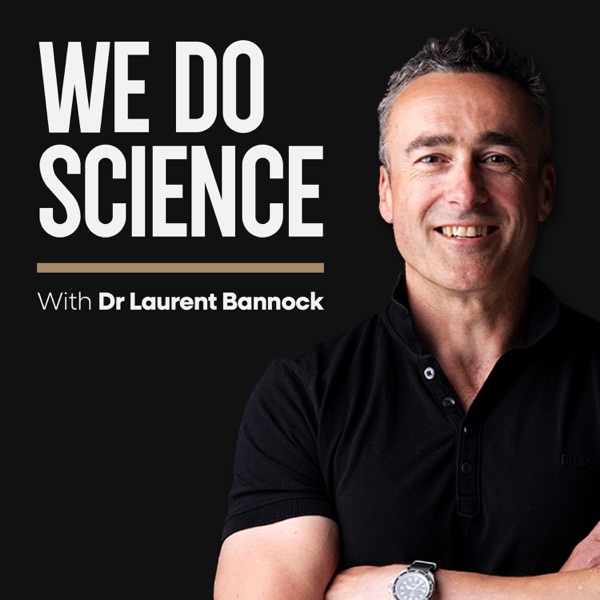
We Do Science
We Do Science is the sport and exercise nutrition podcast hosted by Dr Laurent Bannock, practitioner, educator, researcher, and Founder of The Institute of Performance Nutrition.
Relaunching in September 2026 for a new era, the show brings together leading researchers, elite practitioners, educators, and thinkers to explore the science, context, and real-world application of performance nutrition.
Each episode goes beyond headlines, protocols, and simplistic advice to examine how evidence is interpreted, challenged, and applied in practice. Topics include sport and exercise nutrition, body composition, protein and muscle, supplements, recovery, endurance nutrition, football nutrition, female athlete nutrition, behaviour change, practitioner development, and evidence-informed decision-making.
Originally launched as one of the leading podcasts in the sports nutrition field, We Do Science returns with the same core mission: to bridge the gap between science and practice.
Whether you are a sports nutritionist, dietitian, performance practitioner, coach, researcher, student, or serious health and fitness professional, this show is designed to help you think more critically, practise more effectively, and make better decisions in the real world.
Serious conversations in sport and exercise nutrition — from science to practice.
- Episodes
- 188
- Releases
- Weekly
- Typical length
- 1 hr 6 min
- On air since
- 2014
- Latest episode
- 4 days ago
Episodes
188 episodes, newest first
-
1 hr 6 min
Women's Training and Nutrition: What the Evidence Says | Dr. Lauren Colenso-Semple
Show notes
Should women train and eat differently from men? In this episode of We Do Science, I’m joined by Dr Lauren Colenso-Semple to explore female physiology, resistance training and how we translate research into practical recommendations.
Drawing on her experience as both a coach and a researcher, Lauren discusses her work examining muscle protein synthesis across menstrual cycle phases. We explore the evidence behind cycle syncing, the importance of measuring hormones accurately, and why findings from animal studies don’t automatically translate into training advice for humans.
We also discuss hormonal contraceptives, energy availability, injury-risk claims and resistance training across the menopause transition. Throughout, we distinguish between blanket recommendations for women and individual adjustments that account for symptoms, preferences, training goals and lived experience.
For nutrition practitioners, coaches, athletes and anyone interested in women’s training, this conversation examines which claims are supported by research, where uncertainty remains, and how to personalise an approach without adding unnecessary complexity.
Subscribe to We Do Science for more conversations on the science and practice of performance nutrition.
Connect with Lauren:
Website: www.drlaurencs.com
Instagram: @drlaurencs1
Connect with me:
Substack: @laurentbannock
Website: https://www.laurentbannock.com
Instagram: @laurent_bannockKey chapters
00:00 Episode preview and introduction
04:50 Lauren’s journey from coach to researcher
10:21 Studying women in exercise science
16:28 What research tells us about women’s training
26:26 Menstrual cycle hormones and muscle protein synthesis
36:15 Symptoms, lived experience and individualised coaching
39:32 Hormonal contraceptives and training adaptations
44:35 Energy availability and menstrual health
46:40 Cycle syncing, marketing and injury-risk claims
53:34 Menopause, resistance training and interpreting research
1:02:21 Main takeaways for practice -
1 hr 34 min
NFL Nutrition: From the Lab to the Pitch | Dr. Matt Frakes
Show notes
What does it take to deliver performance nutrition in the NFL? In this episode of We Do Science, I’m joined by Dr Matt Frakes of the New York Giants to explore the realities of supporting elite athletes and turning nutrition research into everyday practice.
Matt shares his journey from college football player and clinical dietitian to working in collegiate sport and the NFL. We discuss why qualifications alone don’t earn an athlete’s trust, how to build relationships with players and their support networks, and what individualised nutrition looks like within a team environment.
We also explore Matt’s doctoral research into nutrition and concussion recovery, his experience supporting an athlete during Ramadan, and the practical challenges of feeding players both inside and outside the training facility. Along the way, we discuss supplements, commercial testing and the demands of supporting recovery across a long, physically demanding season.
For sports nutrition practitioners, coaches and students, this conversation offers an honest look at the communication, collaboration and judgement involved in working at the highest level—and the lessons Matt would share with someone starting out.
Subscribe to We Do Science for more conversations on the science and practice of performance nutrition.
Connect with Matt:
Instagram: https://www.instagram.com/superiorfrakes/
Linkedin: https://www.linkedin.com/in/mrfrakes89/
Connect with me:
Substack: https://substack.com/@laurentbannock
Website: https://www.laurentbannock.com
Instagram: https://www.instagram.com/laurent_bannock
Chapters
00:00 Introduction and Matt’s journey to the NFL
09:00 From clinical nutrition to elite performance
16:47 Building trust and individualising athlete support
27:50 Nutrition and concussion research
33:27 Understanding the athlete: beliefs, habits and Ramadan
44:12 Delivering individualised nutrition across a team
50:02 Food provision and nutrition outside the facility
1:05:48 Supplements, commercial testing and player trust
1:14:05 The demands of NFL nutrition and recovery
1:24:23 Career lessons and advice for practitioners
-
1 hr 13 min
Can Muscle Adapt When You're Eating Less? | Dr Jose Areta
Show notes
What happens to your muscles when you exercise in a calorie deficit? In this episode of We Do Science, I’m joined by Dr José Areta, Associate Professor in Exercise Metabolism and Nutrition at Liverpool John Moores University, to explore how muscle responds when energy intake is reduced—and why muscle size is only part of the picture.
José takes us through his research examining five days of low energy availability alongside aerobic exercise in men. Looking beyond body weight and lean mass, his team tracked changes in individual muscle proteins to understand how the muscle was adapting.
We discuss what they found, including changes in proteins involved in energy production, and explore the distinction between muscle quantity and quality. We also consider how the body prioritises energy, the role of protein intake, and the relevance of these findings to athletes managing their body composition.
Throughout, we address the study’s limitations and why short-term changes shouldn’t be taken as evidence that prolonged energy restriction improves performance. For practitioners, coaches, athletes and students, this conversation offers a closer look at the relationship between nutrition, exercise and muscle adaptation.
CHAPTERS
00:00 Introduction and José’s background
06:43 Understanding energy availability
11:40 Why study muscle during an energy deficit?
22:23 How the body prioritises energy
35:36 The study: diet, exercise and muscle measurements
45:02 Key findings: hormones and muscle adaptation
51:06 Short-term versus prolonged energy restriction
54:27 The roles of protein and exercise
1:04:03 Main takeaways
Connect with Jose:
Instagram: https://www.instagram.com/jose_l_areta/
Linkedin: https://www.linkedin.com/in/jose-areta-8671738a/
Connect with Laurent:
Substack: https://substack.com/@laurentbannock
Website: https://www.laurentbannock.com
Instagram: https://www.instagram.com/laurent_bannock
Subscribe to We Do Science for more conversations on the science and practice of performance nutrition.
-
1 hr 7 min
The Food Matrix: Rethinking Protein Nutrition | Prof. Nick Burd
Show notes
Is more protein always better? In this episode of We Do Science, I’m joined by Professor Nick Burd to explore protein nutrition, muscle adaptation and why the amount of protein we eat is only part of the story.
Returning to the podcast after six years, Nick shares insights from his research at the University of Illinois into protein metabolism and the food matrix: how a food’s structure and surrounding nutrients influence the way our bodies respond to it. From eggs and salmon to whey and casein, we examine what we can learn from studying whole foods alongside isolated proteins and supplements.
We discuss the difference between maximal and optimal protein intake, why muscle protein synthesis shouldn’t automatically be equated with muscle growth, and how protein strategies may differ between strength and endurance athletes. We also explore anabolic resistance, muscle quality and the questions researchers are still working to answer.
Whether you’re a sports nutrition practitioner, coach, athlete or student, this conversation offers a closer look at how to interpret protein research and apply it in practice, with a reminder of the central role of consistent exercise in supporting muscle adaptation.
Subscribe to We Do Science for more conversations on the science and practice of performance nutrition.
Connect with Nick:
LinkedIn: https://www.linkedin.com/in/nicholasburd/
Connect with Laurent:
Substack: https://substack.com/@laurentbannock
Website: https://www.laurentbannock.com
Instagram: https://www.instagram.com/laurent_bannock
Chapters:
01:59 Protein, the food matrix and the questions ahead
03:03 Nick’s background and research
06:25 A career investigating protein metabolism
09:03 Making sense of muscle protein synthesis
12:28 Muscle remodelling versus muscle growth
14:30 How protein research shapes recommendations
16:52 Understanding the protein RDA
23:21 Individual responses and personalised nutrition
25:36 Maximal versus optimal protein intake
29:59 Food first, supplements and questions about timing
31:42 Strength versus endurance athletes
33:20 Looking beyond total protein intake
35:29 Understanding the food matrix
36:08 Lessons from eggs, salmon and minced meat
41:54 Whey, casein and attempts to improve the response
46:58 Exercise, protein and anabolic resistance
50:45 Anabolic resistance in different populations
54:45 Muscle size, strength and quality
59:52 Are we too focused on protein quantity?
-
1 hr 33 min
Nutrition for Pro Cycling: From Plate to Performance - Dr. Dana Lis & Nicki Strobel
Show notes
On this episode of We Do Science, Dr Laurent Bannock welcomes back Dr Dana Lis, registered dietitian and performance nutrition practitioner, alongside chef and nutritionist Nicki Strobel, to discuss their paper Plate to Performance: Culinary Nutrition Support for Professional Road Cycling, part of the UCI Sports Nutrition Project.
Drawing on years of experience in elite cycling, Dana and Nicki explain how the culinary nutrition team of nutritionists, chefs and soigneurs turns evidence into food riders will actually eat across Grand Tours, Classics and training camps. The conversation covers the chef–nutritionist relationship, on-bike fuelling, menu planning around stage demands, and how power meter data, doubly labelled water and continuous glucose monitors inform daily decisions.
Laurent, Dana and Nicki also discuss educating riders in a decentralised sport, building buy-in across the team, planning for illness, crashes and kitchens without power, and where the journey from science to plate most often breaks down. With lessons that apply well beyond cycling, this episode offers sports nutritionists, chefs, coaches, students and athletes a practical look at how performance nutrition is delivered in the real world.
Subscribe for more conversations exploring the science and practice of sports nutrition.
Read the paper:
Plate to Performance: Culinary Nutrition Support for Professional Road Cycling
https://journals.humankinetics.com/view/journals/ijsnem/36/3/article-p335.xml
Connect with Dana:
LinkedIn: https://www.linkedin.com/in/dr-dana-lis/
Connect with Nicki:
LinkedIn: https://www.linkedin.com/in/nicki-strobel-44b41347/
Connect with Laurent:
Substack: https://substack.com/@laurentbannock
LinkedIn: https://www.linkedin.com/in/laurentbannock/
Instagram: https://www.instagram.com/laurent_bannock
Website: https://www.laurentbannock.com
Chapters:
00:00 Introduction
03:13 Welcoming Dana and Nicki to We Do Science
04:31 Bridging the gap between science and practice
06:35 Dana's background and career
10:08 Nicki's journey from Michelin-star chef to pro cycling
15:20 How the Plate to Performance paper came about
20:38 Why chefs and nutritionists need a shared language
23:18 Cooking on the road: chefs, hotels and logistics
26:27 Prioritising nutrition interventions
28:41 The chef–nutritionist relationship
33:12 On-bike nutrition and the role of soigneurs
38:02 Keeping the evidence intact across the team
42:01 Planning menus around race demands
45:15 Day types, fuelling time points and daily adjustments
49:56 The data behind fuelling decisions
52:55 Energy availability and RED-S in the field
56:16 Turning precise numbers into real meals
59:36 Rider education in a decentralised sport
1:04:06 Building rider buy-in
1:07:11 Working through the rider's support network
1:11:04 Establishing yourself in a new team
1:15:25 When things go wrong on the road
1:17:26 Planning for illness and injury
1:22:09 Where the science breaks down in practice
1:24:47 What Dana and Nicki have changed their minds on
-
1 hr 13 min
How to Make Better Sports Nutrition Decisions | Prof. Michael Gleeson
Season 2, Episode 1
Show notes
We Do Science with Dr Laurent Bannock returns, now with video! In this first episode back, Laurent welcomes Professor Michael Gleeson, Emeritus Professor of Exercise Biochemistry at Loughborough University, to explore the four Ps of performance nutrition: personalise, periodise, pre-fuel and prepare.
Drawing on his research and experience in sports nutrition, Michael explains how this framework can help practitioners turn scientific evidence into practical decisions for their athletes. The conversation covers carbohydrate fuelling, hydration, gut training and supplements, alongside the importance of adapting nutrition strategies to training demands, individual preferences and the realities of competition.
Laurent and Michael also discuss the role of wearables and testing in personalised nutrition, the challenges of supplement marketing, and why more information doesn’t always lead to better decisions. With examples from football and endurance sport, this episode offers sports nutritionists, coaches, students and athletes a practical look at choosing, applying and evaluating nutrition strategies.
Subscribe for more conversations exploring the science and practice of sports nutrition.
Connect with Michael:
LinkedIn: https://www.linkedin.com/in/michael-gleeson-218565b9/
Connect with Laurent:
Substack: https://substack.com/@laurentbannock
LinkedIn: https://www.linkedin.com/in/laurentbannock/
Instagram: https://www.instagram.com/laurent_bannock
Website: https://www.laurentbannock.com
Chapters:
00:00 Introduction
02:47 Welcoming Michael back to We Do Science
04:18 Michael’s background and research
08:06 Why develop the four P's of performance nutrition?
14:18 Using the framework to guide decisions
19:40 Personalise: tailoring nutrition to the athlete
24:22 Personalisation, testing and getting the basics right
30:28 Periodise: matching nutrition to training demands
34:11 Gut training and rehearsing competition nutrition
37:23 Pre-fuel: preparing for competition
43:22 Prepare: hydration, fuelling and supplements
49:19 Athlete preferences and practical problem-solving
52:27 Cultural considerations and World Cup nutrition
55:29 Choosing what belongs in the framework
56:35 Supplement evidence and marketing
1:03:38 Applying and evaluating the four Ps
1:05:35 The future of personalised sports nutrition
1:09:05 The future of sports nutrition textbooks -
1 min
We Do Science Returns | Season 2 Trailer Trailer
Season 2
Show notes
We Do Science is back — and this time, you can watch as well as listen.
Launching Friday 25 September, Season 2 brings a new series of conversations exploring the science and practice of sport and exercise nutrition.
Following 182 audio episodes published between 2014 and 2023, this new chapter introduces video on Spotify, with audio available for listeners who prefer to tune in on the move.
Watch the trailer for a taste of what’s ahead, and follow We Do Science so you’re ready for the first episode.
Explore the original audio archive here on the show page.
-
1 hr 9 min
"Embracing the Ethos of Scientific Scepticism" with Dr Nick Tiller and Prof Stu Phillips
Show notes
Episode 188 of the Institute of Performance Nutrition's "We Do Science" podcast! In this episode, I (Laurent Bannock) discuss "Embracing the Ethos of Scientific Scepticism" with Dr Nick Tiller PhD (Harbor-UCLA, USA) and Prof Stu Phillips PhD (McMaster University, Canada)
Discussion Topics Include:
• Snake oil and fraudulent claims in the health, wellness and sports nutrition industry
• Bad science and its impact on research and practice
• Why being a responsible sceptic requires a comprehensive set of critical thinking skills
• Why having the courage to confront pseudoscience can potentially alter the paradigm, and reverse the current emphasis on marketing over scienceKey Paper(s) / Book(s) Referred to:
• How Skepticism (not Cynicism) Can Raise Scientific Standards and Reform the Health and Wellness Industry
• Baseless claims and pseudoscience in health and wellness: A call to action for the sports, exercise, and nutrition-science community
• The Skeptic's Guide to Sports ScienceRelated Podcast Episodes:
• #123 - "Nutrition and single-stage ultra-marathon" with Dr Nick Tiller PhD
Check out our other podcasts, publications, events, and professional education programs for current and aspiring sports nutritionists at http://www.theiopn.com/ and follow our social media outputs via @TheIOPN
-
54 min
"Creatine: Beyond Strength and Power" with Dr Scott Forbes
Show notes
Episode 187 of the Institute of Performance Nutrition's "We Do Science" podcast! In this episode, I (Laurent Bannock) discuss "Creatine: Beyond Strength and Power" with Dr Scott Forbes PhD (Brandon University, Canada)
Discussion Topics Include:
• Summary of dietary sources and mechanisms of action of Creatine Monohydrate and its potential impact on adaptions to resistance training, strength, power and muscle hypertrophy
• Emerging research for novel applications of Creatine on health, cognitive functions, immunity, glycogen storage, and in particular endurance training and performanceKey Paper(s) / Book(s) Referred to:
• Creatine Supplementation and Endurance Performance (paper currently in final review stage)
Related Podcast Episodes:
• #147 - "Creatine myths and common questions" with Dr Scott Forbes
Check out our other podcasts, publications, events, and professional education programs for current and aspiring sports nutritionists at http://www.theiopn.com/ and follow our social media outputs via @TheIOPN
-
1 hr 13 min
"Nutrition for the Prevention and Treatment of Sports Injuries in Athletes" with Professor Craig Sale
Show notes
Episode 186 of the Institute of Performance Nutrition's "We Do Science" podcast! In this episode, I (Laurent Bannock) discuss "Nutrition for the Prevention and Treatment of Sports Injuries in Athletes" with Professor Craig Sale PhD (Manchester Metropolitan University, UK)
Discussion Topics Include:
• Epidemiology of injuries in athletes
• The scientific evidence and relevance to athletes
• Nutrition to prevent and treat muscle injuries
• Nutrition to prevent and treat bone injuries
• Nutrition to prevent and treat tendon and ligament injuriesKey Paper(s) / Book(s) Referred to:
• Nutrition for the Prevention and Treatment of Injuries in Track and Field Athletes
Related Podcast Episodes:
• #110 - "Nutrition Support for Exercise Induced Injury" with Professor Kevin Tipton
• #159 - "Exercise induced muscle damage: What is it, what causes it and what are the nutritional solutions?" with Dr Daniel Owens and Professor Kevin TiptonCheck out our other podcasts, publications, events, and professional education programs for current and aspiring sports nutritionists at http://www.theiopn.com/ and follow our social media outputs via @TheIOPN
-
48 min
"Restricting Carbs and its Impact on Physical Activity & Metabolism" with Prof Javier Gonzalez
Show notes
Episode 185 of the Institute of Performance Nutrition's "We Do Science" podcast! In this episode, I (Laurent Bannock) discuss "Restricting Carbs and its Impact on Physical Activity & Metabolism" with Professor Javier Gonzalez PhD (University of Bath, UK)
Discussion Topics Include:
• Fuel use and changes during activity and rest
• Blood sugar and insulin responses to sugar and carbohydrate restriction
• Sugar restriction and blood lactate concentrations
• Fat oxidation rates after various types of meals
• Changes in metabolism as a result of sugar and carbohydrate restriction and wether that actually results in physical activity and total energy intake differences
• Pros and cons to sugar and carbohydrate restriction for health, body composition and performanceKey Paper(s) / Book(s) Referred to:
Related Podcast Episodes:
• #173: "CHO feeding formats: impact on CHO oxidation during exercise"with Dr Mark Hearris
• #170: "Nutrient timing and metabolic regulation"with Professor James BettsCheck out our other podcasts, publications, events, and professional education programs for current and aspiring sports nutritionists at http://www.theiopn.com/ and follow our social media outputs via @TheIOPN
-
1 hr 3 min
"Plant-Based Sports Nutrition" with Professor Enette Larson-Meyer
Show notes
Episode 184 of the Institute of Performance Nutrition's "We Do Science" podcast! In this episode, I (Laurent Bannock) discuss "Plant-Based Sports Nutrition" with Professor Enette Larson-Meyer PhD RD (Virginia Tech, VA, USA)
Discussion Topics Include:
• Defining "plant-based nutrition"
• Benefits of a plant-based diet and special considerations for athletes
• Nutrient absorption issues with plant-based diets
• REDs risks and getting adequate calories from plant-based foods
• Impact of plant-based diets on training adaptations and exercise performanceKey Paper(s) / Book(s) Referred to:
• Plant-Based Sports Nutrition (book)
• Benefits of a plant-based diet and considerations for the athleteRelated Podcast Episodes:
• #165 "Plant based and vegan diets in sport and exercise" with Dr Nanci Guest
Check out our other podcasts, publications, events, and professional education programs for current and aspiring sports nutritionists at http://www.theiopn.com/ and follow our social media outputs via @TheIOPN
-
1 hr 4 min
"Hormones, Health and Human Potential" with Dr Nicky Keay
Show notes
Episode 183 of the Institute of Performance Nutrition's "We Do Science" podcast! In this episode, I (Laurent Bannock) discuss "Hormones, Health and Human Potential" with Dr Nicky Keay MB BChir MRCP (Honorary Clinical Lecturer, Division of Medicine, University College London, UK).
Discussion Topics Include:
• How hormones play a crucial role in determining health
• How hormone networks provide the feedback mechanism by which our lifestyle and behaviours enable us to reach our personal (and athletic) potential.
• Lifestyle factors and their influence on health through hormone networks
• Harnessing hormones as preventative and supportive medicine
• Athlete performance mediated by hormones
• Imbalances in behaviours causing hormone dysregulationKey Paper(s) Discussed / Referred to:
• Hormones, Health and Human Potential (book)
Related Podcast Episodes:
• #148: "Relative energy deficiency: Research to practice"with Dr Nicky Keay
Check out our other podcasts, publications, events, and professional education programs for current and aspiring sports nutritionists at http://www.theiopn.com/ and follow our social media outputs via @TheIOPN
-
58 min
"Advising Nutritional Supplements" with Dr Floris Wardenaar
Show notes
Episode 182 of the Institute of Performance Nutrition's "We Do Science" podcast! In this episode, I (Laurent Bannock) discuss "Advising Nutritional Supplements" with Dr Floris Wardenaar PhD (Arizona State University, USA).
Discussion Topics Include:
• Considerations on how sports health professionals perceive and prescribe nutritional supplements
• Research into self-reported knowledge and attitudes on nutritional supplements and third-party testing
• Conveying the most appropriate knowledge on supplements to athletes and other sports health and fitness professionalsKey Paper(s) Discussed / Referred to:
• How Sports Health Professionals Perceive and Prescribe Nutritional Supplements to Olympic and Non-Olympic Athletes
• Nutritional Supplement Use by Dutch Elite and Sub-Elite Athletes: Does Receiving Dietary Counseling Make a Difference?Related Podcast Episodes:
• #169: "Food first, but not always food only" with Professor Graeme Close
Check out our other podcasts, publications, events, and professional education programs for current and aspiring sports nutritionists at http://www.theiopn.com/ and follow our social media outputs via @TheIOPN
-
58 min
"Flexible Dieting" with Alan Aragon MS
Show notes
Episode 181 of the Institute of Performance Nutrition's "We Do Science" podcast! In this episode, I (Laurent Bannock) discuss "Flexible Dieting" with Alan Aragon MS (California State University, USA).
Discussion Topics Include:
• Origins and evolution of flexible dieting as a field-tested method for achieving optimal body composition, health and performance
• Why the public are confused as to what we should eat, and why even experts disagree with each other
• Why scientific literacy is necessary to navigate the minefield of misinformation
• Why no single diet is for everyone
• Rigid versus flexible dietary control
• Dichotomous thinking: the backbone to rigid dietary control
• Discretionary calories: why all foods can fit when properly moderatedKey Paper(s) Discussed / Referred to:
• Flexible Dieting (book)
• International society of sports nutrition position stand: diets and body compositionRelated Podcast Episodes:
• #100 - "Diets and Body Composition" with Alan Aragon MS and Brad Schoenfeld PhD
Check out our other podcasts, publications, events, and professional education programs for current and aspiring sports nutritionists at http://www.theiopn.com/ and follow our social media outputs via @TheIOPN
-
1 hr
"Physiological and Nutritional Considerations for Training & Body Composition in Females" with Professor Abbie Smith-Ryan
Show notes
Episode 180 of the Institute of Performance Nutrition's "We Do Science" podcast! In this episode, I (Laurent Bannock) discuss "Physiological & Nutritional Considerations for Training and Body Composition in Females" with Professor Abbie Smith-Ryan (University of North Carolina, USA).
Discussion Topics Include:
• Gender as an important contextual consideration in training and nutrition recommendations for exercising females
• Research on females relevant to sport and exercise science and nutrition
• Issues with body composition assessment and manipulation in females
• The effects of nutrient timing on training adaptations in resistance-trained females
• The acute effect of exercise modality and nutrition manipulations on post-exercise resting energy expenditure and respiratory exchange ratio in womenPodcast Episode Transcript: Download PDF Copy
Key Paper(s) Discussed / Referred to:
• The effects of nutrient timing on training adaptations in resistance-trained females
• The acute effect of exercise modality andnutrition manipulations on post-exercise restingenergy expenditure and respiratory exchangeratio in women: a randomized trialRelated Podcast Episodes:
• #172: "Nutrition for female athletes' with Professor Kirsty Elliot-Sale & Dr Jose Areta
• #148: "Relative energy deficiency: Research to practice" with Dr Nicky Keay
• #132: "Nutrition and athlete bone health" with Prof Craig Sale and Dr Kirsty Elliot-SaleCheck out our other podcasts, publications, events, and professional education programs for current and aspiring sports nutritionists at http://www.theiopn.com/ and follow our social media outputs via @TheIOPN
-
59 min
"In the Trenches with a Performance Nutritionist" featuring Matt Jones MSc SENR
Show notes
Episode 179 of the Institute of Performance Nutrition's "We Do Science" podcast! In this episode, I (Laurent Bannock) discuss "In the Trenches with a Performance Nutritionist" with featuring Matt Jones MSc SENR, Nutrition Consultant with West Ham United FC and the Scottish FA (UK).
Discussion Topics Include:
• Matt's unique education pathway and career journey to his current role as a Nutrition Consultant with West Ham United FC and the Scottish FA.
• Reflections on standout moments over the years , that have helped shape him as a practitioner today.
• Insight into the role of a nutrition consultant working with elite men's football clubs and national teams.
• Thoughts, reflections, and advice to current and aspiring performance nutritionists.Podcast Episode Transcript: Download PDF Copy
Key Paper(s) & Resources Discussed / Referred to:
• N/A
Related Podcast Episodes:
• #168: "In the Trenches" with Aimee-Ellen O'Keeffe MSc SENR
• #166: In the trenches: How to build a career in professional sport with Dr James Morehen
• #161 - "In the Trenches" with Charles Ashford MSc SENR
• #157 - "In the Trenches" with Rich Chessor MSc SENR
• #120 - "American Football: In the Trenches - Performance Nutrition Practice Insights" with Pratik Patel MS RD
• #85 - 'High Performance Science & Practice: In the Trenches' with David Joyce MScCheck out our other podcasts, publications, events, and professional education programs for current and aspiring sports nutritionists at http://www.theiopn.com/ and follow our social media outputs via @TheIOPN
-
1 hr 14 min
"In the Kitchen with a Performance Chef" with Chef Rachel Muse
Show notes
Episode 177 of the Institute of Performance Nutrition's "We Do Science" podcast! In this episode, I (Laurent Bannock) discuss "In the Kitchen with a Performance Chef" with Chef Rachel Muse (Talk Eat Laugh, UK).
Discussion Topics Include:
• Chef Rachel's journey from studying mathematics to becoming a highly trained chef: from luxury hotel "haute cuisine" to working as a private chef to elite football players
• The private performance chef's perspective on performance nutrition: "science to plate" and client experiences that performance nutritionists should be aware of
• "Passing the baton": from nutritionist to chef as part of the athlete's support teamPodcast Episode Transcript: Download PDF Copy
Key Paper(s) Discussed / Referred to:
• N/A
Related Podcast Episodes:
• This is the first interview with a performance chef, with more planned!
Check out our other podcasts, publications, events, and professional education programs for current and aspiring sports nutritionists at http://www.theiopn.com/ and follow our social media outputs via @TheIOPN
-
1 hr 4 min
"Sport Supplements and the Athlete's Gut" with Dr Patrick Wilson PhD
Show notes
Episode 176 of the Institute of Performance Nutrition's "We Do Science" podcast! In this episode, I (Laurent Bannock) discuss "Sport Supplements and the Athlete's Gut" with Dr Patrick Wilson RD PhD (Old Dominion University, Norfolk, USA).
Discussion Topics Include:
• Why a well-functioning gut is a key, albeit sometimes overlooked, contributor to athlete performance and health
• Supplements purported to enhance gut function with exercise (probiotics, glutamine, bovine colostrum, other potential GI barrier enhancers, ginger)
• Supplements that cause gut symptoms (carbohydrate, caffeine, sodium bicarbonate, exogenous ketones)
• The evidence and effectiveness of supplements vs marketing and hypePodcast Episode Transcript: Download PDF Copy
Key Paper(s) Discussed / Referred to:
• Sport Supplements and the Athlete’s Gut: A Review
Related Podcast Episodes:
• #143: "The Athlete’s Gut" with Patrick Wilson RD PhD
• #155: "Probiotic Supplementation and Athletes" with Jamie Pugh PhD
• #135: "The Microbiome: Mind the gap" with Jens Walter PhD and Orla O'Sullivan PhDCheck out our other podcasts, publications, events, and professional education programs for current and aspiring sports nutritionists at http://www.theiopn.com/ and follow our social media outputs via @TheIOPN
-
59 min
"Muscle Glycogen in Elite Soccer" with Professor Magni Mohr
Show notes
Episode 175 of the Institute of Performance Nutrition's "We Do Science" podcast! In this episode, I (Laurent Bannock) discuss "Muscle Glycogen in Elite Soccer" with Professor Magni Mohr PhD (University of Southern Denmark).
Discussion Topics Include:
• Review of what we know, and likely don't know regarding muscle glycogen and football performance, fatigue, and recovery
• Physiological loading, end-game fatigue and glycogen depletion in soccer
• Muscle glycogen and potential fatiguing mechanisms
• Implications for between-game recovery
• Points to consider in future soccerPodcast Episode Transcript: Download PDF Copy
Key Paper(s) Discussed / Referred to:
Related Podcast Episodes:
• #167: Nutrition for football training, performance and recovery
Check out our other podcasts, publications, events, and professional education programs for current and aspiring sports nutritionists at http://www.theiopn.com/ and follow our social media outputs via @TheIOPN
Nutrition lists
More Nutrition shows picked out from the charts






More in Nutrition
Placed highest on Apple Podcasts' Nutrition chart right now