Podcast
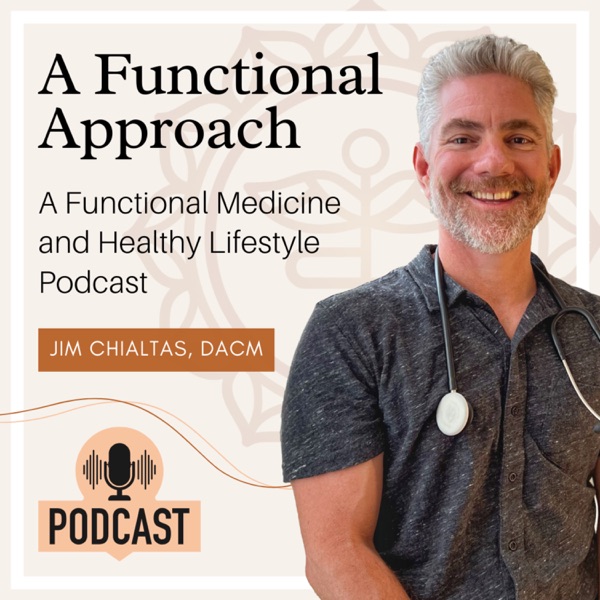
A Functional Approach with Dr. Jim Chialtas
In this Podcast we will discuss topics relating to Functional Medicine, Self Improvement, & Wellness.
Dr. Jim Chialtas has been in private practice in San Diego, CA since 2003 with a focus in Acupuncture & Functional Medicine. www.afunctionalapproach.net He designs and teaches continuing education courses on Functional Blood Chemistry for the online education company, Acupuncture Insights. He also designed and currently teaches two courses on Functional Blood Medicine for the Doctorate of Traditional Chinese Medicine (DTCM) program at Five Branches University.
- Episodes
- 189
- Releases
- Weekly
- Typical length
- 44 min
- On air since
- 2023
- Latest episode
- 6 hours ago
Episodes
189 episodes, newest first
-
55 min
The Revolution Against Aging: Redefining the Human Lifespan with James Strole
Episode 189
Show notes
Aging is often viewed as an inevitable, irreversibleprocess—a fundamental rule of being human. But what if we are wrong? What if aging is not a destiny, but a condition to be treated, managed, and eventually overcome?
In this 189th episode, I sit down with James Strole, the Executive Director of the Coalition for Radical Life Extension and the visionary founder of RAADfest (The Revolution Against Aging and Death).
James has dedicated his career to the pursuit of "vibrant unlimited human lifespans," bridging the gap between cutting-edge scientific potential and the philosophical shifts required to embrace a new era of existence.
We move beyond the basic concept of "living a littlelonger" to dive into the philosophy of Radical Life Extension. From actionable, daily strategies regarding diet, exercise, and supplementation to profound questions about spirituality, the role of joy, and the impact of AI on our future purpose. We also tackle the challenging ethical and societal questions, including how radical life extension might reshape our relationship with resources, the planet, and the very structure of our careers.
Whether you are looking for evidence-based practices tooptimize your current healthspan or are curious about the futuristic technologies that could redefine mortality, this conversation challenges us to rethink everything we know about aging.
Connect with James Strole
• X: https://x.com/JamesRstrole
• LinkedIn: https://www.linkedin.com/in/jamesstrole/
• Facebook: https://www.facebook.com/james.strole.520
• IG: https://www.instagram.com/james.strole/
• Youtube: https://www.youtube.com/@PeopleUnlimitedIncThe Gospel of Longevity
• Learn more about James’ book and purchase a copy here:https://www.thegospeloflongevity.com/
• Direct amazon link: https://www.amazon.com/Gospel-Longevity-James-R-Strole/dp/B0GWGP661R/ref=sr_1_1?crid=YRQ2CUSN56TZ&dib=eyJ2IjoiMSJ9.ffnyohKHIsVQac6eLWYIAGcDbmLGiLA5R3OBVB74Tz3GjHj071QN20LucGBJIEps.ZkK8gQ4hpcPUZUBHPoQEWzvctyjCn6IMEkeLl6eCt1o&dib_tag=se&keywords=the+gospel+of+longevity+by+james+strole&qid=1789512662&sprefix=the+gospel+of+lo%2Caps%2C224&sr=8-1 -
1 hr 3 min
Exploring our "Second Spring" with Dr. Kit Yoon
Episode 188
Show notes
In this 188th episode, I sit with my good friend and colleague, Dr. Kit Yoon. We have a lovely conversation about all things midlife... Our "second Spring," so to speak.
This is a time of life when many people believe, or accept, that it is all downhill from here. But is it? Or perhaps this time of life is a time for us to look at those things which are most important. Perhaps it is a time to refine or redefine our life goals, relationships, or philosophies.
Come and sit with Dr. Kit and I as we speak openly with each other about our Second Spring... And quite possibly, yours as well.
You can find Dr. Kit at the following:
https://www.instagram.com/drkityoon/
https://www.facebook.com/yoonacupunctureandcoaching?mibextid=wwXIfr
-
17 min
Giant Redwoods, Humpback Whales, Black Bears, oh my! A 51st birthday gift for me.
Episode 187
Show notes
In this 187th episode, I pop in quickly after a short trip to Northern California for my 51st birthday.
I discuss my feelings of surprise and awe, at what I saw up on the Lost Coast of California. And express my sincere believe that magic is there to help you heal if only you let it.
Please enjoy this short riff on living life in a way that supports our spirits.
-
55 min
Our caffeine fix - How caffeine effects your brain, body and habits
Episode 186
Show notes
In this 186th episode I discuss caffeine and the lovely beverages with which we consume it!
We will discuss how caffeine impacts our brain, blood pressure, energy levels, focus, etc. The good and the bad. How much caffeine is too much? Let's find out. And is there any net benefit from drinking things like coffee and tea aside from caffeine?
Caffeine is by far the most consumed drug worldwide. And most of us take it for granted. So sit back with a nice cup of coffee or tea and enjoy the discussion!
-
36 min
Five Brain-Support Compounds for Memory and Focus
Episode 185
Show notes
In this 185th episode, I discuss some herbs andnutritional compounds that the medical literature has shown to support brain health, memory, and cognition. Things mostof us would love to have a little more of!!
We’ll look at five compounds and herbs used for brainsupport: pregnenolone, Alpha-GPC, ginkgo biloba, breviscapine, and bacopa monnieri. How might pregnenolone relate to mood, memory, and neuroplasticity?
And what do you know… They are all in one handy formula!
-
1 hr 4 min
The Shortcut and the Cost: My Experience with the GLP-3 Peptide, Retatrutide
Episode 184
Show notes
What if I told you I could shed eight pounds, rediscover my defined abs, and significantly improve my blood markers in just five weeks? It sounds like the holy grail of fitness—but for me, it came with a significant price.
In this 184th episode, I’m pulling back the curtain on my personal case study with Retatrutide, an experimental 'GLP-3' peptide currently making waves in the weight loss and biohacking communities.
I’ll break down exactly what this compound is, how it differs from traditional GLP-1 drugs like Ozempic, and why I, for one, found it to be a powerful but double-edged sword.
I will share the raw data I collected—the dramatic changes in my body composition and lab results—balanced against the reality of significant GI distress, muscle fatigue, and an unsettling, yet interesting psychological pull of a 'shortcut' to body perfection.
Whether you’re curious about the science behind the next generation of weight-loss peptides, or you’ve been considering experimenting with them yourself, you need to hear this experience. I’m sharing the good, the bad, and the uncomfortable so you can make an informed decision. Let’s dive in.
-
36 min
Methylene Blue for Chronic Fatigue, Mitochondria support, & Energy with Dr. Scott Sherr
Episode 183
Show notes
In this 183rd episode, we take a closer look at a compound with a surprisingly long and fascinating history: methylene blue. Initially used as a textile dye in the 1800s, methylene blue has since found applications in medicine and surgery, and—more recently—conversations about mitochondrial function, energy production, and chronic illness.
My guest is Dr. Scott Sherr, an internal medicine physician, hyperbaric oxygen therapy specialist, Director of Education at HOMeHOPe, and Chief Medical and Health Education Officer at Troscriptions. Dr. Sherr brings a broad perspective to this topic, connecting the biochemistry of methylene blue with practical questions about chronic fatigue, fibromyalgia, autoimmunity, cancer-related fatigue, and mitochondrial support.
We’ll also discuss why Troscriptions uses a troche delivery system, how methylene blue may fit alongside hyperbaric oxygen therapy or red-light therapy, and—perhaps most importantly—where caution is needed. We’ll explore contraindications such as G6PD deficiency, potential medication and substance interactions, and questions surrounding methylene blue and psychedelic compounds, including classic psychedelics, ketamine, and MDMA.
And because wellness is never just about one molecule or one intervention, we’ll also talk about the nervous system. What does it mean to help someone move out of chronic sympathetic activation and toward a more parasympathetic, restorative state? And why might that shift be essential for healing, recovery, and resilience?
Let’s get into it with Dr. Scott Sherr.
If you would like to try out Troscriptions formulas, you can click this link!
https://hcp.troscriptions.com/join/71f20546-eff8-4ec2-9c6b-2757655e9618
Links & Websites:
Instagram: https://www.instagram.com/troscriptions/
https://www.instagram.com/drscottsherr/
https://www.instagram.com/onebasehealth/
https://www.instagram.com/homehopeorg/
Youtube: https://www.youtube.com/@troscriptions
https://www.youtube.com/@drscottsherr
Linked In: https://www.linkedin.com/in/drsherr/
-
32 min
Can Constipation Make You Anxious? The Gut–Brain Connection
Episode 182
Show notes
In this 182nd episode, I explore a more subtle connection between anxiety and constipation...
Have you ever felt anxious without knowing why—only to realize that your digestion has been stalled for days?
Constipation isn’t always just about how often you have a bowel movement. It can also involve a breakdown in communication between the gut and the brain. When gut movement slows, bloating and pressure can build. And when the body’s sensory signals are muted, you may not feel the usual urge—or even much pain.
At the same time, the nervous system may still be receiving subtle signals that something is wrong. When those signals aren’t clearly interpreted, they may show up as generalized anxiety, restlessness, or unease.
In this episode, we’ll explore the connection between constipation, the vagus nerve, interoception, and anxiety—and consider how digestion and emotional well-being are deeply connected.
Because sometimes, the question isn’t only, “Why can’t I go?” It’s also: What is my body trying to tell me?
-
23 min
The key to overcoming pain & suffering
Episode 181
Show notes
What if overcoming suffering isn’t about escaping pain, but learning how to meet it?
In this 181th episode, I explore ideas inspired by Buddhist teachings as interpreted by the Eastern philosopher Alan Watts, and consider whether our fear of suffering may sometimes become part of the suffering itself.
The Buddha taught that life includes dukkha—a kind of discomfort, dissatisfaction, and impermanence. We naturally seek pleasure and try to avoid pain, but perhaps peace comes not from choosing one over the other, but from learning to be present with both.
In this episode, we’ll explore what happens when we stop resisting discomfort and begin observing it directly. We’ll consider pain, childbirth, grief, illness, and even death—not as experiences to romanticize, but as natural parts of life that may hold the possibility of transformation.
Perhaps wellness isn’t the absence of suffering. Perhaps it’s the ability to remain present, grounded, and connected—even in the midst of it.
-
39 min
Is “Leaky Gut” Autoimmune? Understanding Intestinal Permeability and Immune Reactivity
Episode 180
Show notes
In this 180th episode, we explore intestinal permeability and the delicate gut barrier that helps separate the contents of the digestive tract from the rest of the body. We’ll discuss the role of tight-junction and barrier-associated proteins, including occludin, zonulin, and actomyosin, as well as the kinds of immune markers evaluated by tests such as Cyrex Labs Array 2.
We’ll also define autoimmunity: what happens when the immune system loses tolerance to the body’s own tissues. Using examples such as Hashimoto’s thyroiditis, multiple sclerosis, and lupus, we’ll consider whether antibodies against gut-barrier proteins necessarily indicate a direct autoimmune attack—or whether they may also reflect tissue damage, inflammation, and the immune system’s attempt to clean up injured tissue.
The conversation goes further, examining the close relationship between intestinal permeability and autoimmune disease. A compromised gut barrier may contribute to increased immune reactivity, while autoimmune conditions may themselves impair the gut’s ability to maintain a healthy barrier. Because proteins such as occludin and zonulin are also found in other barrier tissues—including the blood-brain barrier and lung barrier—this process may have implications for symptoms such as brain fog, environmental sensitivities, and systemic inflammation.
Finally, we’ll discuss ways to help interrupt this self-reinforcing cycle, including identifying dietary triggers, supporting gut-barrier integrity, improving immune regulation, and addressing the broader foundations of wellness.
Cyrex Labs: https://www.cyrexlabs.com/CyrexTestsArrays/tabid/136/Default.aspx
-
34 min
Does Eating Less Protein Help You Live Longer? The Science Behind the Longevity Headlines
Episode 179
Show notes
In this 179th episode, I offer a rebuttal to some recent headlines making a bit of a splash...
What if the headline telling you to “eat less protein to live longer” is getting far ahead of the actual science?
A recent article published by Cell Press, titled “The Hallmarks of Protein and Amino Acid Restriction in Aging and Longevity,” has generated significant media attention. Several major outlets interpreted the paper as evidence that reducing protein intake may improve healthspan and extend lifespan.
But there’s a problem: this was not a clinical trial. It was not a systematic review or meta-analysis. And it did not prove that humans should eat less protein.
In this episode, we’re going to unpack what the paper actually says—and what it does not say. We’ll look at the difference between a narrative review and stronger forms of clinical evidence, examine how findings from worms, flies, mice, and rats get translated into human nutrition headlines, and explore why protein restriction, amino acid restriction, and plant-versus-animal protein are not interchangeable concepts.
We’ll also talk about the special importance of protein for older adults, including its role in preserving muscle mass, strength, mobility, and independence. Because when protein intake goes down, something else has to replace those calories—and that makes the interpretation much more complicated than the headline suggests.
This isn’t an argument that protein restriction is necessarily wrong. It’s an argument for scientific humility. Interesting mechanisms involving mTOR, IGF-1, FGF21, and amino acid metabolism may generate important hypotheses—but a hypothesis is not the same thing as a clinical recommendation.
So today, we’re asking: Did the science really show that eating less protein helps humans live longer—or did the media turn a nuanced research review into a new dietary rule?
References:
The hallmarks of protein and amino acid restriction in aging and longevity
Selling sickness: the pharmaceutical industry and diseasemongering
https://www.bmj.com/content/324/7342/886.1.abstract
I also want to thank Dr. Robert Malone for his expertise and commentary on this topic. If you would like to read a more thorough retort of this topic written by Dr. Malone, you can find his article here:
-
49 min
Microplastics, Bile, and Cellular Aging
Episode 187
Show notes
In this 178th episode, I discuss what microplastics have to do with bile, gallstones, mitochondria, and cellular aging.
In this episode, we explore emerging research detecting microplastics in human bile—and the higher concentrations found in people with gallstones.
We’ll discuss how these particles may interact with biliary cells, contribute to mitochondrial stress, and promote a senescence-like “zombie cell” state.
We’ll also examine experimental findings on melatonin’s potential to protect mitochondrial function, while considering why healthy sleep may be more important than relying on supplementation.
From a functional medicine perspective, the conversation focuses on reducing avoidable plastic exposure, supporting liver and biliary function, maintaining healthy detoxification pathways, and building resilience through nutrition, movement, stress management, and restorative sleep.
Reference:
Zhan L, Fu L, Zeng Q, Liang R, Tang J, Liu J, Qian B, Xu Z,Che L. Microplastics accumulate in human bile and drive cholangiocytesenescence. Environ Sci Ecotechnol. 2026;31:100686.doi:10.1016/j.ese.2026.100686.
-
1 hr 2 min
Thriving Beyond Limits — Care, Community, and Integrative Medicine at the Chanda Center
Episode 177
Show notes
In this 177th episode, I sit down with Brian from the Chanda Center for Health to explore how integrative therapies — acupuncture, massage, chiropractic care, and physical therapy — are transforming care for people with long‑term physical disabilities, chronic pain, and spinal cord injuries. Brian shares his personal path from neuroscience to acupuncture and describes the Center’s origin, its founder Chanda Hinton’s advocacy to secure Medicaid coverage, and the real‑world impact of expanding services to address brain injury, MS, and other neurological conditions.
We discuss:
• How integrative care reduces hospitalizations and medication costs and why coverage matters for patients living on limited incomes
• The therapeutic benefits of acupuncture for spasm, nerve pain, sleep, and overall quality of life
• Practical clinic work: treating spasticity, bladder issues, peripheral and centralized neuropathic pain, and preventing serious complications
• Community‑building at the Chanda Center: accessible design, social programs, donor‑funded services, and adaptive recreation that help patients move from surviving to thriving
• Respectful ways to assist people with disabilities and the Center’s approach to dignity and independence
• Plans for program expansion, insurance integration, and how others can advocate for similar modelsWhether you’re a clinician, caregiver, patient, or advocate, this conversation highlights how thoughtful, integrated care and community support can change lives and save systems money. Tune in for practical insights, policy wins, and inspiring stories from a care model built by and for people with physical disabilities.
Contact Information for The Chanda Center for Health:
• Email: info@chandacenter.org
• Website: https://chandacenter.org/
• LinkedIn: https://www.linkedin.com/company/chandacenter/
• Facebook: https://www.facebook.com/chandacenterforhealth/
• Instagram: https://www.instagram.com/chandacenterforhealth/
• YouTube: https://www.youtube.com/channel/UCkfFrHS_XY600aMVT6FYGBg--
-
51 min
Psychedelics with Paul Austin
Episode 176
Show notes
In this 176th episode, I sit down with Paul Austin to discuss the exciting, controversial, and promising topic of psychedelics.
Paul is the CEO and founder of The Third Wave, which is a company focused on providing information and resources on the safe use of psychedelic therapies. He also trains and coaches upcoming facilitators, and offers retreats around the world for people to come together for this very important work.
In this episode, we discuss many topics ranging from legality, microdosing vs. macrodosing, different types of psychedelic medicines, psychedelic research, and the subtle yet important difference in the description of these medicines as "psychedelics" vs. "entheogens."
Join us in this dynamic conversation as we enter into a literal renaissance in psychedelic therapies going forward. This is no longer fringe stuff here. It is real medicine, recognized by the FDA, that can offer an individual deep insights not readily available in normal everyday life. I even share some of my personal experiences with psychedelic journeys. They have been game-changers in my life. And I put them squarely in the "A Functional Approach" category of health and wellness interventions for my personal wellness journey.
You can find Paul at:
Instagram:@thirdwaveishere
@psychedeliccoachinginstitute
@microdosingcollectiveLinkedIn:
-
22 min
When We Mourn the Wrong Things
Episode 175
Show notes
In this 175th episode, I get a bit vulnerable and share some personal experiences of loss. Why? Because we all experience similar loss. And we are all in this together. And sharing our experience with each other has the potential to heal. Communication, connection, and reflection are all so important for our health and wellbeing. It is truly a Functional Approach...
-
1 hr 44 min
Are you living with Mold? A frank conversation with Jason Earl from "Got Mold?"
Episode 174
Show notes
In this 174th episode, I revisit the topic of mold but in much more detail. Today I sit down with a true expert in the field, Jason Earl, who is the founder and CEO of the at-home mold testing company, Got Mold?
Our conversation covers a broad spectrum of topics from differences in mold testing, medical conditions typical of chronic mold exposure, the difference between mold spores, mycotoxins, and volatile organic compounds (VOCs).
Jason is a master as challenging myths around mold and offering a sober reality of mold exposures and testing.
Jason's expertice on the topic is immediately apparent, and I trust this man completely to tell it like it is.
You can find him by clicking the following link:https://gotmold.docsend.com/view/a5wvz2dh9cakehyu
Or at:
www.gotmold.com
questions@gotmold.com
Facebook: /gotmold
LinkedIn: in/jearl
And if you would like to get your home or office tested, you can click this link for a 10% off discount!
-
48 min
Epitalon: The wellness and longevity peptide!
Episode 173
Show notes
In this 137 episode, I showcase the peptide Epitalon. This amazing peptide has been shown to improve wellness and longevity by promoiting better sleep, improving immune function, improving endocrine function, improving immune function, and lowering cardiovascular and neurovascular risk.
And... It works even better when combined with Thymulin-Zinc, which I discussed in my last episode!
But don't just take my word for it! Here are some literature citations that are worth a read:
References:
• Al-Dulaimi S, Thomas R, Matta S, Roberts T. Epitalon increases telomere length in human cell lines through telomerase upregulation or ALT activity. Biogerontology. 2025;26:178. doi:10.1007/s10522-025-10315-x.
• Anisimov VN, Arutjunyan AV, Khavinson VK. Effects of epithalamin on free-radical processes in humans and animals. Neuro Endocrinol Lett. 2001;22(1):9–18.
• Anisimov VN, Khavinson VK, Alimova IN, Semchenko AV, Yashin AI. Epithalon decelerates aging and suppresses breast adenocarcinoma development in transgenic HER-2/neu mice. Bull Exp Biol Med. 2002;134(2):187–190. doi:10.1023/A:1021104819170. PMID:12459848.
• Anisimov VN, Khavinson VK, Mikhailova EG, Yashin AI. Effect of epitalon on the incidence and age of spontaneous mammary carcinomas in female C3H mice. Bull Exp Biol Med. 2002;133(4):391–395. doi:10.1023/A:1017676104877.
• Anisimov VN, Khavinson VK, Popovich IG, Zabezhinski MA, Alimova IN, Rosenfeld SV, et al. Effect of epitalon on biomarkers of aging, lifespan, and spontaneous tumor incidence in female SHR mice. Biogerontology. 2003;4(4):193–202. doi:10.1023/A:1025114230714. PMID:14501183.
• Anisimov VN, Khavinson VK, Provinciali M, Alimova IN, Baturin DA, Popovich IG, et al. Inhibitory effect of epitalon on spontaneous mammary tumors in HER-2/neu transgenic mice. Int J Cancer. 2002;101(1):7–10. doi:10.1002/ijc.10570. PMID:12209581.
• Araj SK, Brzezik J, Mądra-Gackowska K, Szeleszczuk Ł. Overview of epitalon—highly bioactive pineal tetrapeptide with promising properties. Int J Mol Sci. 2025;26(6):2691. doi:10.3390/ijms26062691.
• Gatta M, Dovizio M, Milillo C, Ruggieri AG, Sallese M, Antonucci I, Trofimov A, Khavinson V, Trofimova S, Bruno A, Ballerini P. The antioxidant tetrapeptide Epitalon enhances delayed wound healing in an in vitro model of diabetic retinopathy. Stem Cell Rev Rep. 2025;21(6):1822–1834. doi:10.1007/s12015-025-10911-x.
• Goncharova ND, Vengerina AA, Shmalii AV, Khavinson VK. Peptide correction of age-related pineal dysfunction in monkeys. Adv Gerontol. 2003;12:121–127. [Russian]
• Goncharova ND, Vengerina AA, Khavinson VK, Lapin BA. Peptide correction of pancreatic hormonal dysfunction in aging monkeys. Bull Exp Biol Med. 2004;138(1):80–83. doi:10.1023/B:BEBM.0000046946.25425.f5. -
43 min
Thymulin-Zinc: Rebalancing Immunity with Age
Episode 172
Show notes
In this 172nd episode I continue with my mini-series on peptide therapy with a focus on Thymulin-Zinc.
We will cover what the thymus gland is/does, how it changes with age, the mechanisms by which Thymulin‑Zinc supports immune‑endocrine communication and neuroimmune health, practical clinical uses and dosing, and safety considerations for integrating this peptide into longevity‑focused care.
If you’re curious about restoring immune coordination rather than just boosting immunity, or if you struggle with ongoing immune challenges including things like Post-COVID syndrome, chronic Epstein-Barr infection, etc., this episode is for you.
References:
• Bach JF, Dardenne M. Thymulin, a zinc-dependent hormone. Med Oncol Tumor Pharmacother. 1989;6:25–29. doi:10.1007/BF02985220.
• Chandratilleke D, Marsh JA. The effect of thymulin on avian IL-2 receptor expression. Int J Immunopharmacol. 2000;22(11):887–896. doi:10.1016/S0192-0561(00)00051-5.
• Chrousos GP, Kino T. Glucocorticoid signaling in the cell: expanding clinical implications to complex human behavioral and somatic disorders. Am J Physiol Endocrinol Metab. 2007;292(1):E9–E18. doi:10.1152/ajpendo.00085.2007.
• Goya RG, Scapagnini G, Veldhuis JD. Growth hormone-releasing activity of thymulin on rat pituitary cells in vitro. Neuroendocrinology. 1999;69(1):20–27. doi:10.1159/000054395.
• Goya RG, Scapagnini G, Veldhuis JD. Effects of growth hormone and thyroxine on thymulin secretion in aged rats. J Gerontol A Biol Sci Med Sci. 2000;55(4):B170–B176. doi:10.1093/gerona/55.4.B170.
• Haddad JJ. Thymulin and zinc-mediated inhibition of endotoxin-induced proinflammatory cytokines and NF-κB activation. Mol Immunol. 2009;47(2–3):205–214. doi:10.1016/j.molimm.2009.09.034.
• Khavinson VK, Kuznik BI, Linkova NS. Peptide regulation of immune system aging. Russ J Immunol. 2019;13(1):23–32. Available from:https://rusimmun.ru/jour/article/view/1209/en_US
• Khavinson VK, Malinin VV, Loginov VI, Nikitina AA. Effect of pineal peptide preparations on thymus-dependent immune reactions. Bull Exp Biol Med. 1989;108(2):204–206. doi:10.1007/BF00839241.
• Khavinson VK, Morozov VG. Peptides of the pineal gland and thymus: their role in aging and age-associated diseases. Expert Opin Biol Ther. 2009;9(12):1549–1560. doi:10.1517/14728220903512991.
• Lunin SM, Khrenov MO, Glushkova OV, et al. Extrathymic production of thymulin induced by oxidative stress and cell death. Int J Immunopathol Pharmacol. 2017;30(1):58–69. doi:10.1177/0394632017694625. -
46 min
To Treat or Not to Treat: Infections in Autoimmunity
Episode 171
Show notes
In this 171st episode, I discuss a messy, though fascinating paradox: Infections can trigger autoimmune disease, they can worsen existing autoimmunity, and—surprisingly—some infections can actually protect against it.
We’ll unpack the science, from molecular culprits and autoantibodies to the surprising role of helminths (parasitic worms) and peptides like tuftsin, and explore how clinicians decide when to treat an infection and when to let biology do its balancing act.
Citations:
Infections and autoimmunity--friends or foes?
https://pubmed.ncbi.nlm.nih.gov/19643667/
Infections: a double-edged sword in autoimmunity
https://pubmed.ncbi.nlm.nih.gov/29847440/
Parasitic worms and inflammatory diseases
https://pubmed.ncbi.nlm.nih.gov/16965287/
Helminth-Related Tuftsin-Phosphorylcholine Compound andits Interplay with Autoimmune Diseases
-
38 min
The DNF-10 Peptide: A safe and effective pick for weight loss support
Episode 170
Show notes
In this 170th episode, I continue with my mini-series on Peptide Therapy with a product called Lipotone which contains the peptide DNF-10.
This particular peptide can be a nice safe alternative to the Ozempic class of medications for things like weight loss. But it can also be a helpful player in reducing inflammation, improving blood sugar and insulin signaling, and more.
I will admit that I have avoided working directly with weight loss cases in my practice, and like to think of supporting weight loss as more of a positive side-effect of an otherwise successful wellness effort. But there are some real reasons to lose that extra weight, if it is something you are carrying around.
if you are struggling with those evening munchies, needing some assistance while on a dietary modification program, or just want to shed a few poinds, this episode may be for you!
Alternative Health lists
More Alternative Health shows picked out from the charts





More in Alternative Health
Placed highest on Apple Podcasts' Alternative Health chart right now