Podcast
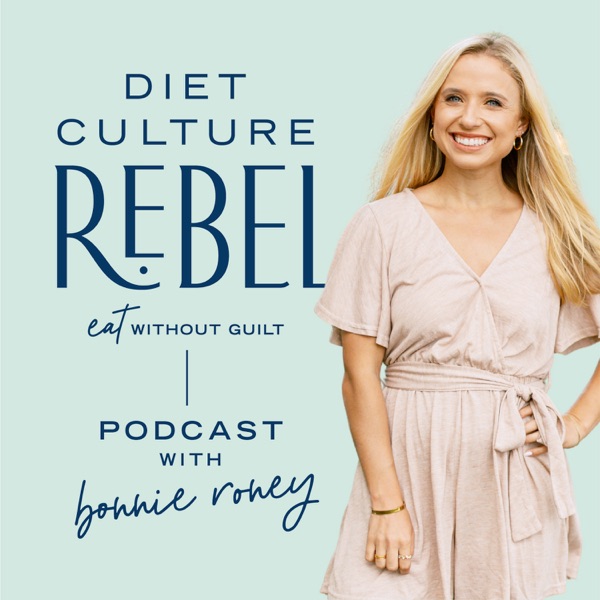
Diet Culture Rebel Podcast
Ready to eat without guilt, support your actual health, and start giving diet culture the middle finger? You’re in the right place.
The Diet Culture Rebel podcast is your trusted space for breaking free from food rules, healing your relationship with your body, and learning how to eat without shame, stress, or obsession - while honoring your health in a way that actually feels good.
Hosted by Registered Dietitian and Certified Intuitive Eating Counselor Bonnie Roney, each episode delivers straightforward, no-BS guidance to help you ditch diets for good. Through expert interviews and solo deep dives, Bonnie brings you health-promoting, mindset-shifting insights that leave you feeling empowered - not overwhelmed.
“I’ve learned what’s happening inside my brain and body, and [Bonnie] gives incredible suggestions and insights on how to start the process of healing my relationship with food.”
- Diet Culture Rebel listener
With over 200 episodes and thousands of weekly listeners, this podcast is your permission slip to trust your body, reject diet culture, and take your power back - one episode at a time.
Subscribe now and listen every Wednesday.
👉 Connect with Bonnie on Instagram @DietCultureRebel
👉 Learn more about working with the DCR team at DietCultureRebel.com
- Nutrition chart
- #19
- Episodes
- 277
- Releases
- Weekly
- Typical length
- 29 min
- On air since
- 2020
- Latest episode
- 6 days ago
Episodes
277 episodes, newest first
-
30 min
278. 5 Intuitive Eating Myths That Keep You Stuck
Episode 278
Show notes
“The reality is that the more you are eating consistently and enough, which is part of intuitive eating, that the more physiologically your brain will feel safe to feel less frantic around food.”
There is so much misinformation online about intuitive eating. I see it constantly getting watered down, oversimplified, and turned into things that it was never intended to be. In this episode, I’m busting five of the biggest intuitive eating myths, including the idea that it’s simply about eating when you’re hungry and stopping when you’re full, or that it means you’ll lose control around food or gain weight. My goal is to clear up some of the confusion and help you better understand what intuitive eating actually looks like in real life and how it can support a healthier relationship with food.
✅ What You'll Learn:
• Why intuitive eating is about much more than simply following hunger and fullness cues
• How dieting and restriction can disconnect you from your body's hunger and fullness signals
• How intuitive eating incorporates satisfaction and nutrition
• Why feeling out of control around food can actually be a result of restriction and dieting
• Why the scale isn't a measure of success or failure with intuitive eating
• How intuitive eating can be adapted to work alongside medical conditions and individualized nutrition needs🔗 Resources:
• Episode 238. Carbs Aren’t the Problem: What Actually Affects Insulin Resistance with Kristie Messerli
• Grab the Hunger & Fullness Scale Guide at http://dietculturerebel.com/hungerfullnessscale and take your next step toward building trust with your body and food
• Connect with me over on Instagram at @diet.culture.rebelStruggling with food, but not sure where to start?
You don’t have to feel 100% ready to get support. If you're tired of obsessing over food or feeling stuck in the diet cycle, my team of Registered Dietitians is here to help. We offer one-on-one nutrition counseling—and we accept insurance! Spots are limited, so head to https://dietculturerebel.com/insurance to see if we’re covered in your state and learn how to get started.
-
41 min
277. She Ate Sweets Every Day. So Why Did She Still Feel Out of Control? Kelsey's Story
Episode 277
Show notes
“It’s not that the food’s bringing me any emotions. It’s that I’m actually able to feel the emotions of the place that I’m at and the thing that I’m doing.”
How many people in your life really know about your struggles with food? In this episode, I’m talking with Kelsey, a Diet Culture Rebel client, about the food guilt, restriction, and diet culture rules she spent years navigating behind the scenes. She shares what her journey with intuitive eating has looked like and how working with a dietitian has helped her find more flexibility, trust, and enjoyment around food. Her story is a reminder that healing your relationship with food doesn’t have to be perfect, and it starts with one small step at a time.
✅ What You'll Learn:
• How food guilt and restriction can become a cycle that feels difficult to break
• The ways diet culture can influence what we think “healthy eating” should look like
• Why intuitive eating can feel unfamiliar when you’ve spent years following food rules
• How working with a dietitian can support you in creating a different relationship with food
• What it can look like to move toward more neutrality and flexibility with eating
• Why healing your relationship with food doesn’t have to mean doing it perfectly🔗 Resources:
• Learn more about working with a Diet Culture Rebel dietitian at https://dietculturerebel.com/insurance
• Grab the Hunger & Fullness Scale Guide at http://dietculturerebel.com/hungerfullnessscale and take your next step toward building trust with your body and food
• Connect with me over on Instagram at @diet.culture.rebelStruggling with food, but not sure where to start?
You don’t have to feel 100% ready to get support. If you're tired of obsessing over food or feeling stuck in the diet cycle, my team of Registered Dietitians is here to help. We offer one-on-one nutrition counseling—and we accept insurance! Spots are limited, so head to https://dietculturerebel.com/insurance to see if we’re covered in your state and learn how to get started.
-
25 min
276. Calorie Deficits, Hating Exercise, and the Health Benefits of Intuitive Eating (Q&A)
Episode 276
Show notes
“If someone believes that the body they have today, at this very moment, is a good body that deserves kindness and respect and care, then they’re more likely to make choices nutritionally that help their body feel good or engage in movement to feel good in their body without punishment.”
What if some of the things you’ve been taught about weight loss, movement, and health aren’t quite as straightforward as they seem? In this episode, I’m answering three juicy intuitive eating and anti-diet questions from my Rebel listeners, covering calorie deficits and the risks of restriction, finding movement you actually enjoy, and whether intuitive eating and body positivity can support physical health. My answers might surprise you, but my goal is always to give you the information and tools to feel more empowered in the choices you make around food, movement, and your body.
✅ What You'll Learn:
• Why a calorie deficit isn’t as simple or risk-free as diet culture makes it seem
• How restriction can affect hunger, food thoughts, energy, and disordered eating behaviors
• What might be underneath a negative relationship with movement
• How to shift exercise away from punishment, guilt, shame, and body control
• How intuitive eating and a more neutral relationship with your body can support physical health
• Why it’s important to release the expectation that there’s one “right” way to eat, move, or care for your body🔗 Resources:
• Episode 246: What If You Just Try? Jessamyn Stanley on Yoga and Body Acceptance
• Episode 249: Movement Shouldn’t Feel Like Punishment with Coach Tyler Bramlett
• Grab the Hunger & Fullness Scale Guide at http://dietculturerebel.com/hungerfullnessscale and take your next step toward building trust with your body and food
• Connect with me over on Instagram at @diet.culture.rebelStruggling with food, but not sure where to start?
You don’t have to feel 100% ready to get support. If you're tired of obsessing over food or feeling stuck in the diet cycle, my team of Registered Dietitians is here to help. We offer one-on-one nutrition counseling—and we accept insurance! Spots are limited, so head to https://dietculturerebel.com/insurance to see if we’re covered in your state and learn how to get started.
-
29 min
275. Can You Love Fitness But Hate Fitness Culture?
Episode 275
Show notes
“Taking the first step is always intimidating, whether it’s to therapy, or whether it’s to finding a non-traditional fitness space for you to feel safe, heard, and acknowledged in.”
You can love fitness, but hate the anti-fat bias and weight stigma that is baked into so much of it. Today I’m talking with Wendy Welsher, a USA Weightlifting Level Two coach, masters athlete, and founder of My Jam, about finding your way back to fitness and building a healthier relationship with movement. Wendy shares her experiences with weight stigma, anti-fat bias, diet culture, and eating disorder recovery, and how she created a safe fitness space for people who have felt excluded or harmed by traditional fitness environments. Wendy reminds us that there isn’t a single right way to move your body, and showing curiosity instead of judgment is the first step toward building strength.
✅ What You'll Learn:
• How anti-fat bias and weight stigma can affect your relationship with exercise and fitness spaces
• Why movement doesn't have to be punishment
• Using rest, recovery, fueling, and body awareness to better support your relationship with movement
• How strength training can help you feel strong, capable, and more connected to your body
• Why there is no single "right" way for movement to look, and how to experiment with what works for your body
• Practical ways to find fitness spaces and practitioners that align with your values and help you feel safe, supported, and welcome🔗 Resources:
• Regain Chastain
• Wendy’s Fat Athlete Journal
• Grab the Hunger & Fullness Scale Guide at http://dietculturerebel.com/hungerfullnessscale and take your next step toward building trust with your body and food
• Connect with me over on Instagram at @diet.culture.rebelStruggling with food, but not sure where to start?
You don’t have to feel 100% ready to get support. If you're tired of obsessing over food or feeling stuck in the diet cycle, my team of Registered Dietitians is here to help. We offer one-on-one nutrition counseling—and we accept insurance! Spots are limited, so head to https://dietculturerebel.com/insurance to see if we’re covered in your state and learn how to get started.
-
21 min
274. How to Read a Nutrition Label Without It Feeling Diet-y
Episode 274
Show notes
“A nutrition facts label for one particular food cannot take the context of your meal or day of eating into account.”
Nutrition labels can provide useful information, but they can also become a source of food rules, guilt, and shame when diet culture takes over. In this episode, I’m breaking down where the 2,000-calorie reference point came from, why serving sizes are not recommendations for how much you should eat, and how to use nutrition labels in a way that supports nourishment rather than restriction. We’ll also talk about when nutrition labels can be helpful, when they may be doing more harm than good, and how to let your body’s hunger, fullness, and energy cues have a say in how you eat.
✅ What You'll Learn:
• Why the 2,000-calorie reference point on nutrition labels does not represent the individual energy needs of most people
• Why a serving size is a reference amount, not a rule or recommendation for how much you should eat
• How to use nutrition labels to help you add nutrition, energy, fiber, or protein instead of focusing on what you should restrict
• How to recognize when nutrition labels are overriding your hunger and fullness cues or contributing to guilt, shame, and food rules
• Why the information on a nutrition label lacks the context of your individual needs, hunger, fullness, and overall meal or day of eating
• How food neutrality and body attunement can help you decide whether nutrition labels are actually supportive for you right now🔗 Resources:
• Read the article about Nutrition Facts Labels
• Grab the Hunger & Fullness Scale Guide at http://dietculturerebel.com/hungerfullnessscale and take your next step toward building trust with your body and food
• Connect with me over on Instagram at @diet.culture.rebelStruggling with food, but not sure where to start?
You don’t have to feel 100% ready to get support. If you're tired of obsessing over food or feeling stuck in the diet cycle, my team of Registered Dietitians is here to help. We offer one-on-one nutrition counseling—and we accept insurance! Spots are limited, so head to https://dietculturerebel.com/insurance to see if we’re covered in your state and learn how to get started.
-
38 min
273. How to Set Realistic Expectations When Healing Your Relationship with Food with Dr. Rachel Millner
Episode 273
Show notes
“As human beings, we’re complex. There’s lots of nuance in all of this. Healing takes time, it’s not linear.”
In this replay episode, I’m joined by Dr. Rachel Millner to talk about setting realistic expectations about what healing your relationship with food and your body can really look like. As a psychotherapist and fat activist helping others recover from chronic dieting, disordered eating, and eating disorders, she explains why healing often isn’t linear, and why letting go of food rules can feel so uncomfortable. She also shares what to look for when choosing a therapist, and the three things that were most helpful in her own recovery from food struggles. It’s a realistic but encouraging conversation that will help you see what’s possible when food no longer takes up so much mental space!
✅ What You'll Learn:
• Why healing your relationship with food is not a linear process
• How letting go of food rules can feel uncomfortable, even when it’s helping you heal
• What realistic expectations for healing your relationship with food and your body can look like
• What to look for when choosing a therapist or dietitian
• The three things that were most helpful in Dr. Rachel’s own recovery
• What becomes possible when food no longer takes up so much mental space🔗 Resources:
• Connect with Dr. Rachel Millner at https://rachelmillnertherapy.com/ or on IG @drrachelmillner
• Grab the Hunger & Fullness Scale Guide at http://dietculturerebel.com/hungerfullnessscale and take your next step toward building trust with your body and food
• Connect with me over on Instagram at @diet.culture.rebelStruggling with food, but not sure where to start?
You don’t have to feel 100% ready to get support. If you're tired of obsessing over food or feeling stuck in the diet cycle, my team of Registered Dietitians is here to help. We offer one-on-one nutrition counseling—and we accept insurance! Spots are limited, so head to https://dietculturerebel.com/insurance to see if we’re covered in your state and learn how to get started.
-
25 min
272. Food Noise, Food Tracking, and Social Eating: Your Questions Answered
Episode 272
Show notes
“The goal is not to never think about food. Food is a part of life, we have to think about food sometimes. The goal instead is for food thoughts to take up an appropriate amount of space in your brain, instead of feeling constant, urgent, critical, or all-consuming.”
In this Q&A episode, I’m answering three questions that come up often when people are trying to break free from diet culture: Can you reduce food noise without medication? How do you let go of weighing, measuring, and tracking your food? And how can you navigate anxiety and overeating when you’re eating around other people? I’m breaking down how restriction and food rules can contribute to constant thoughts about food, why stepping away from tracking can feel so uncomfortable, and how to begin rebuilding trust in your hunger and fullness cues. I also share practical strategies for social situations, including how to get curious about what’s driving overeating and challenge the beliefs that keep you stuck in the cycle.
✅ What You'll Learn:
• Why food noise can be connected to restriction, inconsistent nourishment, and deeply ingrained food rules
• How to distinguish normal thoughts about food from food noise that feels constant, critical, or all-consuming
• Practical steps for gradually moving away from weighing, measuring, and tracking food while rebuilding trust with your body
• How hunger and fullness check-ins can help you develop the skills needed for more intuitive eating
• Why you might overeat or experience food anxiety in social situations, and how to identify what is driving it
• Mindset shifts and practical strategies for eating around other people with more confidence and less pressure to control your food🔗 Resources:
• Grab the Hunger & Fullness Scale Guide at http://dietculturerebel.com/hungerfullnessscale and take your next step toward building trust with your body and food
• Connect with me over on Instagram at @diet.culture.rebelStruggling with food, but not sure where to start?
You don’t have to feel 100% ready to get support. If you're tired of obsessing over food or feeling stuck in the diet cycle, my team of Registered Dietitians is here to help. We offer one-on-one nutrition counseling—and we accept insurance! Spots are limited, so head to https://dietculturerebel.com/insurance to see if we’re covered in your state and learn how to get started.
-
40 min
271. Kids and Body Image: What to Say When Your Child Says They Are Ugly with Zoë Bisbing
Episode 271
Show notes
“That safety to talk to your parent about anything, including bodies and appearances, it’s an essential ingredient to then being able to have body confidence.”
I’m joined by Zoë Bisbing, a certified family-based treatment practitioner and founder of Body Positive Therapy NYC, to talk about how we can navigate difficult body image conversations with our kids. We discuss what to say when a child says they feel ugly or fat, why immediately reassuring them may not be the most helpful response, and how curiosity and connection can keep the conversation open. Zoë also shares how to teach kids that their bodies are not the problem when someone makes a hurtful comment, how to talk about body size and differences without reinforcing diet culture, and how these challenging moments can actually help build body image resilience.
✅ What You'll Learn:
• Why reassurance isn’t always the most helpful first response
• How to stay curious and create space for your child to share what’s really going on
• Ways to teach kids that their bodies are not the problem when others make hurtful comments
• How to navigate conversations about body size, shape, and differences without reinforcing diet culture
• How these difficult moments can become opportunities to build body image resilience and recognize potential red flags for disordered eating🔗 Resources:
• Connect with Zoe on IG @mybodypositivehome
• Grab the Hunger & Fullness Scale Guide at http://dietculturerebel.com/hungerfullnessscale and take your next step toward building trust with your body and food
• Connect with me over on Instagram at @diet.culture.rebelStruggling with food, but not sure where to start?
You don’t have to feel 100% ready to get support. If you're tired of obsessing over food or feeling stuck in the diet cycle, my team of Registered Dietitians is here to help. We offer one-on-one nutrition counseling—and we accept insurance! Spots are limited, so head to https://dietculturerebel.com/insurance to see if we’re covered in your state and learn how to get started.
-
26 min
270. Rethinking Nutrition: 3 Simple Ways to Add More, Not Take Away
Episode 270
Show notes
“When we approach nutrition from a place of addition rather than restriction, I think it can become so much more approachable, doable, and honestly, fun.”
In this episode, I’m sharing a different approach to nutrition: focusing on what you can add rather than what you should cut out. I walk through three of my favorite ways to add nutrition while emphasizing that eating enough comes before focusing on variety or optimization. I also talk about how healing your relationship with food can give you more freedom to consider nutrition alongside taste and satisfaction, rather than letting calories or diet culture make every decision. The goal is to make nutrition feel enjoyable, flexible, and supportive, not restrictive or rigid.
✅ What You'll Learn:
• Why eating enough is the foundation of nutrition before focusing on variety and micronutrients
• Simple ways to add plant-based micronutrients to various dishes
• How to add more fiber in ways that feel enjoyable and approachable, using every day foods
• How smoothies can be an easy and fun way to combine a variety of foods, flavors, and nutrients
• Why healing your relationship with food allows you to consider nutrition alongside taste, satisfaction, convenience, preferences, and your body's needs
• How to approach nutrition without turning it into another rigid set of rules, tracking system, or source of food guilt and anxiety🔗 Resources:
• My smoothie guide: http://dietculturerebel.com/smoothie
• Sunfiber supplement: https://amzn.to/3X0dtcx
• Grab the Hunger & Fullness Scale Guide at http://dietculturerebel.com/hungerfullnessscale and take your next step toward building trust with your body and food
• Connect with me over on Instagram at @diet.culture.rebelStruggling with food, but not sure where to start?
You don’t have to feel 100% ready to get support. If you're tired of obsessing over food or feeling stuck in the diet cycle, my team of Registered Dietitians is here to help. We offer one-on-one nutrition counseling—and we accept insurance! Spots are limited, so head to https://dietculturerebel.com/insurance to see if we’re covered in your state and learn how to get started.
-
20 min
269. How to Stop Feeling Guilty When You Can’t Exercise
Episode 269
Show notes
"I really tried to pay attention to the messages my body was giving me in terms of my foot’s recovery, and honor every stage of recovery I was at."
After breaking my foot and needing to take an unexpected break from exercise, I realized how much my relationship with food and movement had changed over the years. In this episode, I share five mindset shifts that helped me navigate rest without guilt or spiraling, including understanding my metabolism, finding the positives in slowing down, and listening to my body’s signals. I also talk about how building a healthier relationship with food and exercise has helped me adapt when life changes what my body needs, and why true progress is being able to navigate those unexpected seasons without falling back into old diet culture patterns.
✅ What You'll Learn:
• Why understanding metabolism can help us feel more comfortable fueling our bodies when our activity levels change
• How finding the positives in rest can shift our perspective when we’re unable to exercise
• What body attunement can teach us about when to slow down, ease back into movement, and respond to our bodies’ signals
• How building our capacity to tolerate difficult emotions can help us cope without relying on restrictive or disconnected eating behaviors
• Why trusting our hunger, fullness, and how food makes us feel can create more confidence around eating
• How a healthy relationship with food and exercise can help us navigate unexpected changes without returning to old diet culture patterns🔗 Resources:
• Grab the Hunger & Fullness Scale Guide at http://dietculturerebel.com/hungerfullnessscale and take your next step toward building trust with your body and food
• Episode 218: What Decades of Overexercising Taught Me About Rest
• Connect with me over on Instagram at @diet.culture.rebelStruggling with food, but not sure where to start?
You don’t have to feel 100% ready to get support. If you're tired of obsessing over food or feeling stuck in the diet cycle, my team of Registered Dietitians is here to help. We offer one-on-one nutrition counseling—and we accept insurance! Spots are limited, so head to https://dietculturerebel.com/insurance to see if we’re covered in your state and learn how to get started.
-
42 min
268. When Your Mom Struggles With Food with Joshua Hills
Episode 268
Show notes
“Okay, if these people believe in me, then I need to maybe learn to believe in myself, even just a little bit, or at least have hope that things can change.”
In this episode, I'm joined by registered associate nutritionist and author Joshua Hills for a heartfelt conversation about how his mom's decades-long battle with anorexia shaped their family, and how recovery has transformed their lives. Together, we explore the far-reaching impact of food struggles, the role diet culture plays in fueling shame and disordered eating, and why healing is about so much more than food. Joshua shares powerful lessons about compassion, open conversations, and hope, reminding us that no matter where we fall on the spectrum of food struggles, recovery can lead to greater freedom, deeper connection, and a life filled with joy instead of fear.
✅ What You'll Learn:
• Why food struggles affect far more than just what we eat
• How opening up about food struggles can create connection, reduce shame, and become a powerful step toward healing
• What recovery can make possible, from enjoying family meals and social events to rediscovering excitement for life and food
• How to approach difficult conversations with loved ones about food using compassion, empathy, and healthy boundaries
• The role diet culture plays in reinforcing food guilt, body judgment, and the belief that food must be earned🔗 Resources:
• Connect with Joshua @joshuhillsnutrition
• Read Joshua’s book You Can Eat That
• Grab the Hunger & Fullness Scale Guide at http://dietculturerebel.com/hungerfullnessscale and take your next step toward building trust with your body and food
• Connect with me over on Instagram at @diet.culture.rebelStruggling with food, but not sure where to start?
You don’t have to feel 100% ready to get support. If you're tired of obsessing over food or feeling stuck in the diet cycle, my team of Registered Dietitians is here to help. We offer one-on-one nutrition counseling—and we accept insurance! Spots are limited, so head to https://dietculturerebel.com/insurance to see if we’re covered in your state and learn how to get started.
-
24 min
267. 5 Nutrition Truths to Undo Your Diet Culture Brainwashing
Episode 267
Show notes
“We need food to survive. We become more food-seeking when our access to food is limited.”
What if some of the things you believe about food, metabolism, and your body aren't facts at all, but messages you've absorbed from diet culture? In this episode, I unpack five nutrition truths that challenge common misconceptions about metabolism, calorie needs, hunger, and body diversity. You'll learn why eating enough supports your metabolism, why restrictive dieting often backfires, and how recognizing diet culture beliefs can help you build a more trusting, peaceful relationship with food.
✅ What You'll Learn:
• Why your metabolism is working around the clock, and what that means for your body's energy needs
• How eating enough and eating consistently supports a healthy metabolism
• Why the popular 1,200-calorie diet is not enough for most adult women and how diet culture has normalized undereating
• What really happens when you go too long without eating, including why intense hunger, food cravings, and rebound eating are normal biological responses
• Why eating and exercising exactly like someone else will never guarantee the same body, and how embracing body diversity can help you build trust with yourself🔗 Resources:
• Grab the Hunger & Fullness Scale Guide at http://dietculturerebel.com/hungerfullnessscale and take your next step toward building trust with your body and food
• Connect with me over on Instagram at @diet.culture.rebelStruggling with food, but not sure where to start?
You don’t have to feel 100% ready to get support. If you're tired of obsessing over food or feeling stuck in the diet cycle, my team of Registered Dietitians is here to help. We offer one-on-one nutrition counseling—and we accept insurance! Spots are limited, so head to https://dietculturerebel.com/insurance to see if we’re covered in your state and learn how to get started.
-
23 min
266. 3 Ways To Reduce Food Guilt
Episode 266
Show notes
“Food neutrality does not mean every food is nutritionally identical. It simply means your worth as a person does not change based on whether you ate bread, broccoli, brownies, or whatever else.”
Food guilt can steal the joy from eating and leave you second-guessing every meal. But the good news is that you have the power to change it. In this episode, I explain why food guilt isn't actually about the food itself, how diet culture and food rules can fuel those guilty feelings, and three practical strategies to help you reconnect with your body's cues, challenge unhelpful beliefs, and approach eating with more confidence and peace.
✅ What You'll Learn:
• Why food guilt has more to do with internalized food rules than the food itself
• How to separate feelings of guilt from your body's actual hunger, fullness, and satisfaction cues
• Why checking in with your body's experience can help you make more confident, grounded food decisions
• How to identify and challenge the diet culture messages that fuel food guilt
• What food neutrality is and how it can help you enjoy food without labeling it as "good" or "bad"
• Practical strategies to build trust with your body and create a more peaceful, guilt-free relationship with food🔗 Resources:
• Grab the Hunger & Fullness Scale Guide at http://dietculturerebel.com/hungerfullnessscale and take your next step toward building trust with your body and food
• Connect with me over on Instagram at @diet.culture.rebelStruggling with food, but not sure where to start?
You don’t have to feel 100% ready to get support. If you're tired of obsessing over food or feeling stuck in the diet cycle, my team of Registered Dietitians is here to help. We offer one-on-one nutrition counseling—and we accept insurance! Spots are limited, so head to https://dietculturerebel.com/insurance to see if we’re covered in your state and learn how to get started.
-
47 min
265. How to Build Positive Body Image in a World Obsessed with Thinness with Kenzie Brenna
Episode 265
Show notes
When body image feels harder than ever in today's culture, it can be easy to believe your body is the problem. This episode revisits a powerful conversation with motivational speaker Kenzie Brenna about overcoming diet culture, navigating difficult body image days, and building resilience instead of chasing perfection. Kenzie explains why body image healing isn't about reaching a place where you love your body every day. It's about building resilience so that difficult body image moments no longer define your life.
✅ What You'll Learn:
• Why positive body image doesn't mean loving your body every day, and what real healing actually looks like
• How dieting can damage your relationship with food, your body, and your sense of self, even when it seems "healthy"
• Practical ways to navigate difficult body image days, including curating your social media feed and building a supportive community
• How to cope with the fear of weight gain and stop letting your body size determine your worth or hold you back from living your life
• Mindset shifts that can help you become more resilient to diet culture, body criticism, and unrealistic beauty standards🔗 Resources:
• Connect with Kenzie on IG @kenziebrenna
• Grab the Hunger & Fullness Scale Guide at http://dietculturerebel.com/hungerfullnessscale and take your next step toward building trust with your body and food
• Connect with me over on Instagram at @diet.culture.rebelStruggling with food, but not sure where to start?
You don’t have to feel 100% ready to get support. If you're tired of obsessing over food or feeling stuck in the diet cycle, my team of Registered Dietitians is here to help. We offer one-on-one nutrition counseling—and we accept insurance! Spots are limited, so head to https://dietculturerebel.com/insurance to see if we’re covered in your state and learn how to get started.
-
29 min
264. Finding Balance with "Healthy" and "Junk" Food, Weighing Yourself, and My Missing Period Story (Q&A)
Episode 264
Show notes
"Creating a more positive relationship with food often requires us to challenge the things diet culture has taught us to normalize."
Diet culture leaves us with so many questions, especially when we're trying to heal our relationship with food and our bodies. In this Q&A episode, I'm answering three questions from Rebels in our community about balancing "healthy" and "junk" foods, my experience with hypothalamic amenorrhea, and how to stop letting the number on the scale control your thoughts and food choices. You'll hear practical mindset shifts that can help you build more trust with your body and challenge the beliefs diet culture has taught us to accept as normal!
✅ What You'll Learn:
• How to find balance between eating foods diet culture labels as "junk" and foods that support your health
• Why food neutrality can help you build a more peaceful relationship with eating
• My personal experience with losing my period and what it taught me about underfueling
• How to recognize when the scale is affecting your mood, food choices, or self-worth
• Questions to ask yourself to decide whether weighing yourself is helping or hurting your healing
• One small action step you can take today to build more trust with your body🔗 Resources:
• Cadbury eggs Instagram reel
• Episode 242: Is Your Cycle Trying to Tell You Something? Hypothalamic Amenorrhea and the Impact of Disrupted Periods with Dr. Nicola Skyes
• Grab the Hunger & Fullness Scale Guide at http://dietculturerebel.com/hungerfullnessscale and take your next step toward building trust with your body and food.
• Connect with me over on Instagram at @diet.culture.rebel.Struggling with food, but not sure where to start?
You don’t have to feel 100% ready to get support. If you're tired of obsessing over food or feeling stuck in the diet cycle, my team of Registered Dietitians is here to help. We offer one-on-one nutrition counseling—and we accept insurance! Spots are limited, so head to https://dietculturerebel.com/insurance to see if we’re covered in your state and learn how to get started.
-
35 min
263. Healing Your “I’m Too Much” Story: Self-Worth and Body Image with Lily Womble
Episode 263
Show notes
So many of us have spent years believing we're too much. Too emotional. Too sensitive. Too needy. Too loud. Or maybe we've believed we need to make ourselves smaller (physically or emotionally) to finally deserve love, acceptance, and belonging. In this conversation, author and founder of Date Brazen, Lily Womble, shares how those beliefs shaped her body image, relationships, and self-worth after years of dieting and questioning whether she was enough. Together, we explore why your body isn't what stands between you and love, how the weight loss fantasy keeps us stuck, and what it looks like to stop shrinking yourself and trust that you are already enough.
✅ What You'll Learn:
• Why believing you're "too much" can affect your body image, confidence, and relationship with food
• How internalized messages about worth shape the way we show up in our relationships
• What the "weight loss fantasy" is and why it keeps so many women stuck
• How body neutrality can help you build a healthier relationship with yourself
• Practical ways to build self-compassion and become more resilient in the face of rejection
• Why you don't have to change your body to be worthy of love, belonging, or a fulfilling life🔗 Resources:
• Lily's book: Thank You, More Please
• Date Brazen
• Grab the Hunger & Fullness Scale Guide at http://dietculturerebel.com/hungerfullnessscale and take your next step toward building trust with your body and food.
• Connect with me over on Instagram at @diet.culture.rebel.Struggling with food, but not sure where to start?
You don’t have to feel 100% ready to get support. If you're tired of obsessing over food or feeling stuck in the diet cycle, my team of Registered Dietitians is here to help. We offer one-on-one nutrition counseling—and we accept insurance! Spots are limited, so head to https://dietculturerebel.com/insurance to see if we’re covered in your state and learn how to get started.
-
30 min
262. 5 Tips for Improving Your Health Without Going on a Diet
Episode 262
Show notes
"Health extends far beyond what we eat and how we move."
Trying to be healthier often comes with a long list of diet rules, food fears, and pressure to do everything perfectly. But what if pursuing health actually meant doing less of what diet culture tells you to do? In this episode, I'm sharing five surprising ways to pursue health without dieting, including why letting go of comparison, managing stress, questioning nutrition myths, and embracing intuitive eating can support your health far better than another set of food rules.
✅ What You'll Learn:
• Why comparing your food choices and body to other people keeps you stuck
• How an unhealthy relationship with food can become a major source of stress
• The nutrition myths that may be standing in the way of your health
• Why a growth mindset matters when you're healing your relationship with food
• What the research says about intuitive eating and long-term health
• Five practical ways to pursue health without dieting🔗 Resources:
• Grab the Hunger & Fullness Scale Guide at http://dietculturerebel.com/hungerfullnessscale and take your next step toward building trust with your body and food.
• Episode 111: Everyone Benefits When Your Doctor Supports Your Healthy Relationship with Food and Your Body
• Episode 116: How Nicole is Breaking Generational Dieting While Healing from 30 Years of Food Issues
• Episode 120: 3 Risks of Buying Into Diet Culture That We Don't Talk About Enough
• Connect with me over on Instagram at @diet.culture.rebel.Struggling with food, but not sure where to start?
You don’t have to feel 100% ready to get support. If you're tired of obsessing over food or feeling stuck in the diet cycle, my team of Registered Dietitians is here to help. We offer one-on-one nutrition counseling—and we accept insurance! Spots are limited, so head to https://dietculturerebel.com/insurance to see if we’re covered in your state and learn how to get started.
-
23 min
261. Food Order and the Glucose Scaries That Social Media Created
Episode 261
Show notes
"The more unnecessary food rules we follow, the harder it becomes to trust ourselves around food."
Are blood sugar hacks creating more fear than freedom? In this episode, I take a closer look at the research behind food order and the popular advice to eat carbohydrates last for better blood sugar control. We explore what the science actually says, some important limitations that often get left out of social media conversations, and why many of these studies don't reflect how people typically eat in real life. Most importantly, I share why body attunement matters more than following another food rule and how to navigate blood sugar conversations with less fear and more trust in your body.
✅ What You'll Learn:
• What "food order" or "food sequencing" actually means
• What the current research says about eating carbohydrates first versus last
• Why many food order studies may not reflect real-life eating patterns
• The difference between short-term blood sugar responses and long-term health outcomes
• How rigid food rules can interfere with body attunement and trust around food
• Why a balanced approach to eating carbohydrates can support both health and a positive relationship with food🔗 Resources:
• Grab the Hunger & Fullness Scale Guide at http://dietculturerebel.com/hungerfullnessscale and take your next step toward building trust with your body and food.
• Nutrient intake order on metabolic outcomes in type 2 diabetes: a systematic review and meta-analysis
• Episode 238, Carbs Aren't the Problem: What Actually Affects Insulin Resistance with Kristie Messerli
• Connect with me over on Instagram at @diet.culture.rebel.Struggling with food, but not sure where to start?
You don’t have to feel 100% ready to get support. If you're tired of obsessing over food or feeling stuck in the diet cycle, my team of Registered Dietitians is here to help. We offer one-on-one nutrition counseling—and we accept insurance! Spots are limited, so head to https://dietculturerebel.com/insurance to see if we’re covered in your state and learn how to get started.
-
1 hr
260. Tigress Osborn on the Jillian Michaels Jubilee Debate and Fat Activism
Episode 260
Show notes
"Our worth as human beings should not be dependent on our health profile."
Millions of people watched Jillian Michaels debate body positivity advocates on Jubilee, but the version we saw on YouTube was only part of the story. In this episode, I sit down with Tigress Osborn to discuss what happened behind the scenes, why she chose to participate, and what viewers didn't get to see. We also dive into bigger conversations about body positivity, fat activism, weight stigma, size discrimination, and the differences between mainstream body positivity and fat liberation. Whether you've already watched the debate or are hearing about it for the first time, this conversation offers important context and challenges some of the assumptions our culture makes about bodies, health, and worth.
✅ What You'll Learn:
• Why Tigress ultimately decided to participate in the Jubilee debate with Jillian Michaels
• What happened behind the scenes before, during, and after the viral debate
• How Tigress defines body positivity, fat activism, and fat liberation
• Common misconceptions people have about the body positivity movement
• How weight stigma and size discrimination impact people's daily lives
• Why civil rights protections for people in larger bodies remain an important part of the conversation🔗 Resources:
• NAAFA Website
• NAAFA Instagram: @naafaofficial
• Tigress' Instagram: @iofthetigress
• William Hornby on Substack
• Episode 223: Have You Watched Fit for TV? Here are My Honest Thoughts on The Biggest Loser Documentary
• Jillian Michaels vs. The Body Positivity Movement
• Grab the Hunger & Fullness Scale Guide at http://dietculturerebel.com/hungerfullnessscale and take your next step toward building trust with your body and food.
• Connect with me over on Instagram at @diet.culture.rebel.Struggling with food, but not sure where to start?
You don’t have to feel 100% ready to get support. If you're tired of obsessing over food or feeling stuck in the diet cycle, my team of Registered Dietitians is here to help. We offer one-on-one nutrition counseling—and we accept insurance! Spots are limited, so head to https://dietculturerebel.com/insurance to see if we’re covered in your state and learn how to get started.
-
21 min
259. Is Fasting Healthy or Just Another Diet Trend?
Episode 259
Show notes
“Diet culture loves to exaggerate grains of truth and turn them into something extremely blown out of proportion.”
Fasting is everywhere right now, but what does the research actually say? In this episode, I break down the claims, benefits, and red flags surrounding fasting, including why short-term results don’t always tell the whole story. We’ll also explore how fasting can impact your relationship with food, why it may function as another form of dieting, and the important difference between restrictive fasting protocols and meal spacing that may support certain health needs.
What You'll Learn:
• What the current research does (and doesn’t) tell us about fasting
• Why short-term health improvements don’t always translate into long-term results
• How fasting can affect food noise, binge eating risk, and your relationship with food
• Why many forms of fasting function as another form of calorie restriction
• When meal spacing may support gut health and how it differs from popular fasting trends
• Why the best approach to nutrition depends on your unique needs, health history, and relationship with foodResources:
• Grab the Hunger & Fullness Scale Guide at http://dietculturerebel.com/hungerfullnessscale and take your next step toward building trust with your body and food.
• Episode 207: What Diet Culture Gets Wrong About Gut Healthy (with Dr. Heather Finley)
• Connect with me over on Instagram at @diet.culture.rebel.Struggling with food, but not sure where to start?
You don’t have to feel 100% ready to get support. If you're tired of obsessing over food or feeling stuck in the diet cycle, my team of Registered Dietitians is here to help. We offer one-on-one nutrition counseling—and we accept insurance! Spots are limited, so head to https://dietculturerebel.com/insurance to see if we’re covered in your state and learn how to get started.
Alternative Health lists
More Alternative Health shows picked out from the charts








More in Alternative Health
Placed highest on Apple Podcasts' Alternative Health chart right now