Podcast
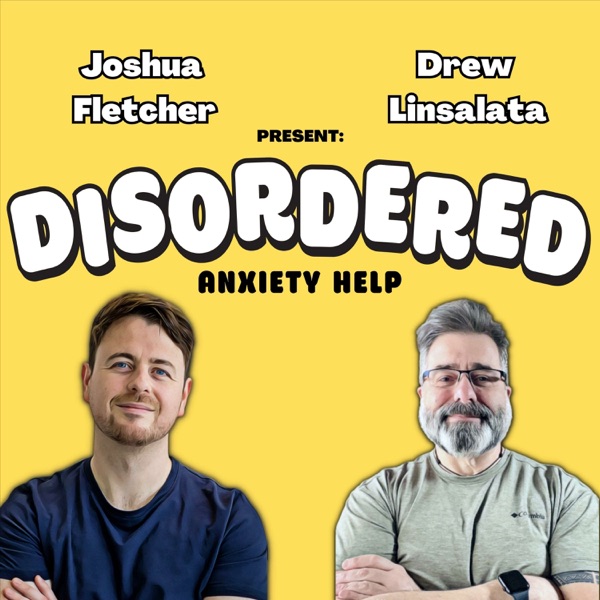
Disordered: Anxiety Help
Disordered is the podcast that delivers real, evidence-based, actionable talk about anxiety disorders and anxiety recovery in a kind, compassionate, community-oriented environment. Josh Fletcher is a qualified psychotherapist in the UK. Drew Linsalata is a therapist practicing under supervision in the US. They're both bestselling authors in the anxiety and mental health space. Josh and Drew are funny, friendly, and they have a knack for combining lived experience, formal training, and professional experience in an encouraging, inspiring, and compassionate mental health message.
- Mental Health chart
- #96
- Episodes
- 182
- Releases
- Weekly
- Typical length
- 40 min
- On air since
- 2023
- Latest episode
- 4 days ago
Episodes
182 episodes, newest first
-
45 min
Anxiety and The Obsession With Optimizing EVERYTHING (Episode 179)
Show notes
Send a question or comment via text message
Optimization OCD seems to be a thing. Actually, across a large number of anxious people, the pull to get recovery, sleep, food, fitness, and even your own feelings exactly right is pretty common. This week we're talking about the drive to optimize recovery ... or anything.
We talk about how "I should" is an anxious thought, why optimizing can mean sending yourself dozens of daily messages that you're not good enough as you are, and why "am I doing this right?" quietly treats some feelings as unwelcome. We also get into resource gathering, tracking devices, outsourcing discomfort to AI, and why you can't optimize your way out of uncertainty. None of this applies to medical conditions that need active management, and what we share about tracking, AI, and wellness culture is our clinical opinion.
Plus Did It Anyway wins, including opening the shop on an anxious Monday, a panic attack in a conference room followed by a packed stadium, and a wedding speech given anxious.
----
Want to talk about this episode, interact with us, and communicate with others that are sharing your experience? We're hanging out in the Disordered Community Space
https://disordered.fm/community
----
The Disordered Guide to Health Anxiety is available now:
https://www.disordered.fm/the-disordered-guide-to-health-anxiety/
---
Struggling with worry and rumination that you feel you can't stop or control? Check out Worry and Rumination Explained, a two hour pre-recorded workshop produced by Josh and Drew.
-----
Got questions or did it anyways to share? Send us an email or voicemail on our website.
---
Disclaimer: Disordered is not therapy or a replacement for therapy. Listening to Disordered does not create a therapeutic relationship between you and the hosts or guests of the podcast. Information here is provided for psychoeducational purposes. As always, please consult your mental health and/or medical care providers. If you are having a mental health crisis, always reach out immediately for in-person help.
-
40 min
Courage When Anxiety Feels Really Bad (Episode 178)
Show notes
Send a question or comment via text message
"Yeah, but it feels so bad."
We hear it constantly, and this week we answer it directly. When panic, dread, or intrusive thoughts are at full volume, how do you practice willful tolerance?
This is where courage enters the chat.
We talk about why waiting to feel less scared first keeps the cycle going, why brave people are usually terrified, and why fear and danger only feel linked when you have an anxiety disorder.
We also get into what courage can look like in practice: softening instead of bracing, letting tears and shaking happen, and treating the moment you feel anxious as the moment the practice begins. A listener asks what to do when they try to induce panic for exposure and nothing happens. We share our take on that, which is our opinion and not individual treatment advice.
Plus Did It Anyway wins, including a wedding day with anxiety along for the ride and a 100K ultramarathon with a heart rate scare.
----
Want to talk about this episode, interact with us, and communicate with others that are sharing your experience? We're hanging out in the Disordered Community Space
https://disordered.fm/community
----
The Disordered Guide to Health Anxiety is available now:
https://www.disordered.fm/the-disordered-guide-to-health-anxiety/
---
Struggling with worry and rumination that you feel you can't stop or control? Check out Worry and Rumination Explained, a two hour pre-recorded workshop produced by Josh and Drew.
-----
Got questions or did it anyways to share? Send us an email or voicemail on our website.
---
Disclaimer: Disordered is not therapy or a replacement for therapy. Listening to Disordered does not create a therapeutic relationship between you and the hosts or guests of the podcast. Information here is provided for psychoeducational purposes. As always, please consult your mental health and/or medical care providers. If you are having a mental health crisis, always reach out immediately for in-person help.
-
43 min
Depersonalization and Derealization w/Dr. Claudia Hallett (Episode 177)
Show notes
Send a question or comment via text message
Depersonalization and derealization (DPDR) can feel like not recognizing yourself in the mirror, or like living behind a pane of glass. This week, clinical psychologist Dr. Claudia Hallett joins us. She leads a specialist DPDR clinic in London and works with this condition full time.
We talk about why the experience is so hard to describe, and why that makes it fertile ground for catastrophic interpretation (“I’m losing my mind,” “I’ve broken my brain”). We get into how fear of the symptom keeps it front and center, the OCD-style loops of checking and monitoring that often sit underneath, and why some people experience it episodically while others have lived with it for decades. We also cover why DPDR is so often missed or misdiagnosed, what the word “disorder” does and doesn’t mean, and when a trauma explanation fits and when searching for one becomes part of the problem. Dr. Hallett also explains why there is no “just follow these steps” fix, and why anyone selling one deserves scrutiny.
To find Dr Claudia Hallet online:
Unreal Charity - DPDR Support and Resources
----
Want to talk about this episode, interact with us, and communicate with others that are sharing your experience? We're hanging out in the Disordered Community Space
https://disordered.fm/community
----
The Disordered Guide to Health Anxiety is available now:
https://www.disordered.fm/the-disordered-guide-to-health-anxiety/
---
Struggling with worry and rumination that you feel you can't stop or control? Check out Worry and Rumination Explained, a two hour pre-recorded workshop produced by Josh and Drew.
-----
Got questions or did it anyways to share? Send us an email or voicemail on our website.
---
Disclaimer: Disordered is not therapy or a replacement for therapy. Listening to Disordered does not create a therapeutic relationship between you and the hosts or guests of the podcast. Information here is provided for psychoeducational purposes. As always, please consult your mental health and/or medical care providers. If you are having a mental health crisis, always reach out immediately for in-person help.
-
41 min
Cognitive Reframing in Anxiety Disorders (Episode 176)
Show notes
Send a question or comment via text message
Cognitive reframing in anxiety disorders is not about arguing with a thought until it loses. This week we take some of the most common phrases we hear in this community and look at them from a slightly different angle, without trying to prove them wrong or talk anyone into feeling safe.
We work through "I'm spiraling," "what if," "I'm back to square one," "I'm a burden to my family," and "what if I lose my progress," and talk about why a reframe you don't believe usually fails. We also get into why "here's an opportunity to practice" keeps coming up, how a panic attack on a treadmill can be described two very different ways, and a listener question about the highly sensitive person label and where sensitivity ends and anxiety begins. That part is our opinion, and we say so.
Plus Did It Anyway wins, including taking a feared migraine medication after hours of Reddit, and choosing not to Google a body symptom.
----
Want to talk about this episode, interact with us, and communicate with others that are sharing your experience? We're hanging out in the Disordered Community Space
https://disordered.fm/community
----
The Disordered Guide to Health Anxiety is available now:
https://www.disordered.fm/the-disordered-guide-to-health-anxiety/
---
Struggling with worry and rumination that you feel you can't stop or control? Check out Worry and Rumination Explained, a two hour pre-recorded workshop produced by Josh and Drew.
-----
Got questions or did it anyways to share? Send us an email or voicemail on our website.
---
Disclaimer: Disordered is not therapy or a replacement for therapy. Listening to Disordered does not create a therapeutic relationship between you and the hosts or guests of the podcast. Information here is provided for psychoeducational purposes. As always, please consult your mental health and/or medical care providers. If you are having a mental health crisis, always reach out immediately for in-person help.
-
41 min
Meditations on Anxiety Medications (Episode 175)
Show notes
Send a question or comment via text message
175 episodes in, we're finally talking about medication. This week we get into questions we hear constantly: if I take medication for my anxiety, does that mean I'm failing, or that I'll never really recover? Is medication cheating? Is it evil? Is there even an answer to these questions?
We talk about why these questions don't even really hold up, why medication combined with therapy is genuinely the gold standard for treating some anxiety disorders, and why using meds to get to a place where you can do exposure work isn't cheating anyone. We also get into what "working" actually means, since everyone gets to define that differently, why informed consent conversations with your prescriber matter, and why the fear of taking a pill can become its own exposure. As always, we're sharing our own experiences and opinions here, not medical advice, so talk to your doctor or psychiatrist about your own treatment.
Plus Did It Anyway wins, including a 30 year avoidance of a trail beaten with a 15 minute timer, and a first train ride in three and a half months.
----
Want to talk about this episode, interact with us, and communicate with others that are sharing your experience? We're hanging out in the Disordered Community Space
https://disordered.fm/community
----
The Disordered Guide to Health Anxiety is available now:
https://www.disordered.fm/the-disordered-guide-to-health-anxiety/
---
Struggling with worry and rumination that you feel you can't stop or control? Check out Worry and Rumination Explained, a two hour pre-recorded workshop produced by Josh and Drew.
-----
Got questions or did it anyways to share? Send us an email or voicemail on our website.
---
Disclaimer: Disordered is not therapy or a replacement for therapy. Listening to Disordered does not create a therapeutic relationship between you and the hosts or guests of the podcast. Information here is provided for psychoeducational purposes. As always, please consult your mental health and/or medical care providers. If you are having a mental health crisis, always reach out immediately for in-person help.
-
47 min
Exposure Is Learning To Be Uncomfortable (Episode 174)
Show notes
Send a question or comment via text message
Exposure isn't about proving you can sit in traffic, go to the supermarket, or make it through dinner with a friend. This week we talk about what exposure is actually for: practicing being uncomfortable, on purpose, without trying to fix or manage the feeling once it shows up.
We get into why the specific trigger, whether it's a bridge, a dentist's office, or a work presentation, barely matters compared to the discomfort underneath it, why reaching for certainty before you act keeps the cycle going, and why "I'm practicing with uncertainty" works better than trying to talk yourself into feeling safe first. We also talk about why sticking to the same few "safe" exposures can quietly become its own safety behavior, and why recovery is measured by what you still do, not by how anxious you feel doing it.
Plus Did It Anyway wins, including a clogged toilet on a school camping trip and a first exposure that ended in a panic attack anyway.
----
Want to talk about this episode, interact with us, and communicate with others that are sharing your experience? We're hanging out in the Disordered Community Space
https://disordered.fm/community
----
The Disordered Guide to Health Anxiety is available now:
https://www.disordered.fm/the-disordered-guide-to-health-anxiety/
---
Struggling with worry and rumination that you feel you can't stop or control? Check out Worry and Rumination Explained, a two hour pre-recorded workshop produced by Josh and Drew.
-----
Got questions or did it anyways to share? Send us an email or voicemail on our website.
---
Disclaimer: Disordered is not therapy or a replacement for therapy. Listening to Disordered does not create a therapeutic relationship between you and the hosts or guests of the podcast. Information here is provided for psychoeducational purposes. As always, please consult your mental health and/or medical care providers. If you are having a mental health crisis, always reach out immediately for in-person help.
-
40 min
Making It Right Once You're Better? (Episode 173)
Show notes
Send a question or comment via text message
Once you're better, desensitized, and living your life again, a different feeling can show up: guilt over the years you lost, the plans you canceled, the people you pushed away. This week we talk about the urge to "make it right," and why that instinct deserves a closer look before you act on it.
We get into the difference between amends that actually help and rumination dressed up as responsibility, why some of that guilt simply has to be carried rather than fixed, and why the people around you sometimes owe you compassion instead of the other way around. We also talk about parents worried they've damaged their kids, what forgiving yourself actually looks like, and why living your life is often the only real answer.
Plus Did It Anyway wins, including a solo cabin trip across two countries and a pregnancy and postpartum period carried through serious health anxiety.
----
Want to talk about this episode, interact with us, and communicate with others that are sharing your experience? We're hanging out in the Disordered Community Space
https://disordered.fm/community
----
The Disordered Guide to Health Anxiety is available now:
https://www.disordered.fm/the-disordered-guide-to-health-anxiety/
---
Struggling with worry and rumination that you feel you can't stop or control? Check out Worry and Rumination Explained, a two hour pre-recorded workshop produced by Josh and Drew.
-----
Got questions or did it anyways to share? Send us an email or voicemail on our website.
---
Disclaimer: Disordered is not therapy or a replacement for therapy. Listening to Disordered does not create a therapeutic relationship between you and the hosts or guests of the podcast. Information here is provided for psychoeducational purposes. As always, please consult your mental health and/or medical care providers. If you are having a mental health crisis, always reach out immediately for in-person help.
-
49 min
CBT For Anxiety Disorders Explained (Episode 172)
Show notes
Send a question or comment via text message
"I tried CBT and it didn't work" is a lot like saying "I tried food and it didn't work." CBT is a massive umbrella, and what you actually got depends heavily on which version of it you were given.
This week we break down what CBT for anxiety disorders actually looks like, from the older, content-driven approach built around thought challenging and thought replacement, to the third-wave, mindfulness and acceptance-based approach we rely on most, which is also CBT. We talk about why arguing someone out of a triggered state rarely works, where ERP, ACT, DBT, and metacognitive therapy all fit under the same umbrella, and what questions to ask a prospective therapist to find out what you're actually getting.
Plus Did It Anyway wins, including a solo trip to a music festival, an interoceptive exposure that turned into a massage, and studying through an OCD attack.
----
Want to talk about this episode, interact with us, and communicate with others that are sharing your experience? We're hanging out in the Disordered Community Space
https://disordered.fm/community
----
The Disordered Guide to Health Anxiety is available now:
https://www.disordered.fm/the-disordered-guide-to-health-anxiety/
---
Struggling with worry and rumination that you feel you can't stop or control? Check out Worry and Rumination Explained, a two hour pre-recorded workshop produced by Josh and Drew.
-----
Got questions or did it anyways to share? Send us an email or voicemail on our website.
---
Disclaimer: Disordered is not therapy or a replacement for therapy. Listening to Disordered does not create a therapeutic relationship between you and the hosts or guests of the podcast. Information here is provided for psychoeducational purposes. As always, please consult your mental health and/or medical care providers. If you are having a mental health crisis, always reach out immediately for in-person help.
-
39 min
Anxiety And The "Yeah But" (Episode 171)
Show notes
Send a question or comment via text message
"Yeah, but." Two words that show up constantly in anxiety recovery, right after a win. You did the thing, and before it can count, the mind adds a condition: yeah, but I had my water bottle with me, yeah, but I still felt anxious, yeah, but a real doctor might find something the others missed.
This week we break down why "yeah, but" is one of anxiety's most effective tools, using misapplied logic, hypothetical scenarios, and stories that have nothing to do with you to keep the argument going and hold your attention. We talk about how it shows up differently across panic, health anxiety, OCD, and social anxiety, why the content of the yeah, but never really matters, and how to flip the phrase back on itself instead of arguing with it.
Plus Did It Anyway wins, including a first dentist visit in four years, a slow jog after a year of heart-rate monitoring, and a 1,600 mile trip taken through panic and OCD.
----
Want to talk about this episode, interact with us, and communicate with others that are sharing your experience? We're hanging out in the Disordered Community Space
https://disordered.fm/community
----
The Disordered Guide to Health Anxiety is available now:
https://www.disordered.fm/the-disordered-guide-to-health-anxiety/
---
Struggling with worry and rumination that you feel you can't stop or control? Check out Worry and Rumination Explained, a two hour pre-recorded workshop produced by Josh and Drew.
-----
Got questions or did it anyways to share? Send us an email or voicemail on our website.
---
Disclaimer: Disordered is not therapy or a replacement for therapy. Listening to Disordered does not create a therapeutic relationship between you and the hosts or guests of the podcast. Information here is provided for psychoeducational purposes. As always, please consult your mental health and/or medical care providers. If you are having a mental health crisis, always reach out immediately for in-person help.
-
50 min
Anxiety, People Pleasing, and Self-Esteem (Episode 170)
Show notes
Send a question or comment via text message
Not everything is an anxiety disorder, but people pleasing and low self-esteem feed into it constantly. This week we talk about why the two overlap so heavily, and why learning to desensitize almost always requires putting yourself first, which can feel like the least safe thing in the world if pleasing people is how you've kept yourself safe.
We get into what people pleasing actually looks like, from constant scanning of other people's moods to guilt as a baseline feeling, why it's usually a learned response rather than a personality trait, and why exposure work doesn't work without some baseline self-acceptance. We also talk about why the values underneath people pleasing, kindness, cooperation, and community, aren't the problem. It's when they become the only way you're allowed to exist.
Plus Did It Anyway wins, including six flights taken through a lifelong fear of flying.
----
Want to talk about this episode, interact with us, and communicate with others that are sharing your experience? We're hanging out in the Disordered Community Space
https://disordered.fm/community
----
The Disordered Guide to Health Anxiety is available now:
https://www.disordered.fm/the-disordered-guide-to-health-anxiety/
---
Struggling with worry and rumination that you feel you can't stop or control? Check out Worry and Rumination Explained, a two hour pre-recorded workshop produced by Josh and Drew.
-----
Got questions or did it anyways to share? Send us an email or voicemail on our website.
---
Disclaimer: Disordered is not therapy or a replacement for therapy. Listening to Disordered does not create a therapeutic relationship between you and the hosts or guests of the podcast. Information here is provided for psychoeducational purposes. As always, please consult your mental health and/or medical care providers. If you are having a mental health crisis, always reach out immediately for in-person help.
-
49 min
Common Anxiety Recovery "Mistakes" (Episode 169)
Show notes
Send a question or comment via text message
This week we go through the most common mistakes people make while trying to recover from anxiety disorders, the ones that feel intuitive in the moment but end up keeping the cycle going.
We cover minimizing your own wins, thinking a place or situation is the actual exposure instead of the feeling underneath it, overestimating anxiety's importance while underestimating your own ability to handle it, and treating a thought that feels true as if it is true. We also talk about why trying to prevent the bad thing from happening during exposure defeats the purpose, why crediting safety behaviors instead of yourself keeps you stuck, and why arguing with anxious thoughts or trying to think your way out of anxiety almost never works.
Plus Did It Anyway wins from Canada, Sweden, and Turkey, including one that involves scuba diving.
----
Want to talk about this episode, interact with us, and communicate with others that are sharing your experience? We're hanging out in the Disordered Community Space
https://disordered.fm/community
----
The Disordered Guide to Health Anxiety is available now:
https://www.disordered.fm/the-disordered-guide-to-health-anxiety/
---
Struggling with worry and rumination that you feel you can't stop or control? Check out Worry and Rumination Explained, a two hour pre-recorded workshop produced by Josh and Drew.
-----
Got questions or did it anyways to share? Send us an email or voicemail on our website.
---
Disclaimer: Disordered is not therapy or a replacement for therapy. Listening to Disordered does not create a therapeutic relationship between you and the hosts or guests of the podcast. Information here is provided for psychoeducational purposes. As always, please consult your mental health and/or medical care providers. If you are having a mental health crisis, always reach out immediately for in-person help.
-
37 min
Anxiety, Distraction, and "Running From Feelings" (Episode 168)
Show notes
Send a question or comment via text message
Is distraction the same thing as running from your feelings? This week we answer a listener question about where that line actually is, and why the answer isn't as simple as always sit with it.
We talk about why attention plays such a big role in anxiety disorders, why getting caught up in your life is not automatically avoidance, and why the real question isn't am I distracting myself but what am I actually running from. We also get into why every emotion, not just anxiety, deserves room, and why treating fear as the only feeling that matters can quietly shut down curiosity about everything else you feel.
Plus Did It Anyway wins, including a tattoo appointment survived and a listener who fell asleep during a 90 minute MRI.
----
Want to talk about this episode, interact with us, and communicate with others that are sharing your experience? We're hanging out in the Disordered Community Space
https://disordered.fm/community
----
The Disordered Guide to Health Anxiety is available now:
https://www.disordered.fm/the-disordered-guide-to-health-anxiety/
---
Struggling with worry and rumination that you feel you can't stop or control? Check out Worry and Rumination Explained, a two hour pre-recorded workshop produced by Josh and Drew.
-----
Got questions or did it anyways to share? Send us an email or voicemail on our website.
---
Disclaimer: Disordered is not therapy or a replacement for therapy. Listening to Disordered does not create a therapeutic relationship between you and the hosts or guests of the podcast. Information here is provided for psychoeducational purposes. As always, please consult your mental health and/or medical care providers. If you are having a mental health crisis, always reach out immediately for in-person help.
-
46 min
Popular But Dangerous Anxiety Advice (Episode 167)
Show notes
Send a question or comment via text message
Anxiety recovery attracts an entire industry, and not all of it is safe. This week we talk about popular but dangerous anxiety cures, the methods and trends that get recommended constantly but that our community says actually made things worse.
We cover the trauma narrative that convinces people their panic and OCD are rooted in trauma stored in the body, nervous system regulation and vagus nerve claims built on debunked science, tapping and EFT marketed as evidence based when it isn't, coaching programs that blame you when their method fails, and wellness grifts like parasite cleanses and heavy metal detoxes. We also talk about why well meaning therapists and coaches can cause real harm even when they believe they're helping.
Plus Did It Anyway wins from Sydney and Saudi Arabia.
----
Want to talk about this episode, interact with us, and communicate with others that are sharing your experience? We're hanging out in the Disordered Community Space
https://disordered.fm/community
----
The Disordered Guide to Health Anxiety is available now:
https://www.disordered.fm/the-disordered-guide-to-health-anxiety/
---
Struggling with worry and rumination that you feel you can't stop or control? Check out Worry and Rumination Explained, a two hour pre-recorded workshop produced by Josh and Drew.
-----
Got questions or did it anyways to share? Send us an email or voicemail on our website.
---
Disclaimer: Disordered is not therapy or a replacement for therapy. Listening to Disordered does not create a therapeutic relationship between you and the hosts or guests of the podcast. Information here is provided for psychoeducational purposes. As always, please consult your mental health and/or medical care providers. If you are having a mental health crisis, always reach out immediately for in-person help.
-
41 min
Anxiety Questions and Answers (Episode 166)
Show notes
Send a question or comment via text message
This is our anxiety latest questions and answers episode, where we go straight to the community and tackle real listener questions about panic disorder, OCD, GAD, and health anxiety.
We get into what to do when anxiety symptoms show up all day without fitting a specific diagnosis, why worrying about something you live with, like an aging house, does not count as exposure on its own, and how to tell the difference between doing real exposure work and quietly avoiding it. We also cover what to do when your own therapist contradicts what you hear on this podcast, and why food avoidance driven by fear, including emetophobia, usually needs a different approach than logic and willpower.
Plus several Did It Anyway wins from the community, including a three hour movie and a three night trip taken despite dread and derealization.
----
Want to talk about this episode, interact with us, and communicate with others that are sharing your experience? We're hanging out in the Disordered Community Space
https://disordered.fm/community
----
The Disordered Guide to Health Anxiety is available now:
https://www.disordered.fm/the-disordered-guide-to-health-anxiety/
---
Struggling with worry and rumination that you feel you can't stop or control? Check out Worry and Rumination Explained, a two hour pre-recorded workshop produced by Josh and Drew.
-----
Got questions or did it anyways to share? Send us an email or voicemail on our website.
---
Disclaimer: Disordered is not therapy or a replacement for therapy. Listening to Disordered does not create a therapeutic relationship between you and the hosts or guests of the podcast. Information here is provided for psychoeducational purposes. As always, please consult your mental health and/or medical care providers. If you are having a mental health crisis, always reach out immediately for in-person help.
-
40 min
Anxiety Always Has A Strategy, and Its Nonsense (Episode 165)
Show notes
Send a question or comment via text message
Anxiety always seems to have a strategy for you, doesn't it?
• Check it, prepare for it, watch it closely so nothing bad happens
• Stay on top of things so you can be the fixer, the predictor, the protector, the engineer of experiences
• Do not take your eyes off the worry because worry is proof of how good you are and how loving you are.This week we're picking that strategy apart and showing why it almost never holds up.
We're talking about:
• The nocebo effect and why anticipating symptoms can create them
• Why anxiety takes credit for bad things not happening even when the worry and avoidance did nothing
• Why so many strategies anxiety hands you, from monitoring intrusive thoughts to rehearsing what you'll say to a stranger, are solving a problem that was never actually there to begin withWe also get into why restarting exercise after a period of anxiety can bring on new physical stress, and what that means.
----
Want to talk about this episode, interact with us, and communicate with others that are sharing your experience? We're hanging out in the Disordered Community Space
https://disordered.fm/community
----
The Disordered Guide to Health Anxiety is available now:
https://www.disordered.fm/the-disordered-guide-to-health-anxiety/
---
Struggling with worry and rumination that you feel you can't stop or control? Check out Worry and Rumination Explained, a two hour pre-recorded workshop produced by Josh and Drew.
-----
Got questions or did it anyways to share? Send us an email or voicemail on our website.
---
Disclaimer: Disordered is not therapy or a replacement for therapy. Listening to Disordered does not create a therapeutic relationship between you and the hosts or guests of the podcast. Information here is provided for psychoeducational purposes. As always, please consult your mental health and/or medical care providers. If you are having a mental health crisis, always reach out immediately for in-person help.
-
38 min
Anxiety And Releasing Tension (Episode 164)
Show notes
Send a question or comment via text message
Everyone tells you to release tension. But if you live with panic disorder, OCD, or health anxiety, that advice can backfire fast. This week we're digging into why chasing relaxation as a goal often makes tension worse, and what actually helps instead.
We're talking about why physical tension is a normal response to stress and fear, not a problem to fix. Why techniques like jaw stretches, massage, and meditation can turn into more monitoring and checking. And why sometimes the fastest way through tension is to stop trying to manage how you feel and put your attention somewhere else entirely.
Plus listener Did It Anyway stories from Florida, Estonia, and Germany, because sometimes the only way through is to just do the thing anyway.
----
Want to talk about this episode, interact with us, and communicate with others that are sharing your experience? We're hanging out in the Disordered Community Space
https://disordered.fm/community
----
The Disordered Guide to Health Anxiety is available now:
https://www.disordered.fm/the-disordered-guide-to-health-anxiety/
---
Struggling with worry and rumination that you feel you can't stop or control? Check out Worry and Rumination Explained, a two hour pre-recorded workshop produced by Josh and Drew.
-----
Got questions or did it anyways to share? Send us an email or voicemail on our website.
---
Disclaimer: Disordered is not therapy or a replacement for therapy. Listening to Disordered does not create a therapeutic relationship between you and the hosts or guests of the podcast. Information here is provided for psychoeducational purposes. As always, please consult your mental health and/or medical care providers. If you are having a mental health crisis, always reach out immediately for in-person help.
-
38 min
When Anxiety Says You're The Exception (Episode 163)
Show notes
Send a question or comment via text message
Anxiety has a favorite move. It doesn't argue that acceptance and exposure don't work. It just convinces you they don't apply to you specifically. This thought, this sensation, this situation, is the one exception to every rule you already understand.
This week we break down what fuels that exception: possibility, intensity, and importance, plus the urgency that makes an unlikely outcome feel like it's already happening. A 1 in 5,000 chance means nothing until anxiety puts your name on it. The same pattern shows up everywhere: the one OCD ritual someone insists they can't skip, the health scare that supposedly voids all the usual rules, the flight or the dentist visit where the real fear isn't the obvious one but some elaborate scenario your brain built from nothing.
We also get into the meta version of this:
• I've had it longer than anyone
• I have more going on than anyone else
• no one is as scared as I am.It's the same doubt wearing a different story, and it isn't true. You don't want to be special here.
Plus listener wins from the community: a woman who pushed through agoraphobia and fresh grief to make it to her grandmother's funeral, and another who felt a wave of panic build in a crowded arcade and chose to stay instead of running.
----
Want to talk about this episode, interact with us, and communicate with others that are sharing your experience? We're hanging out in the Disordered Community Space
https://disordered.fm/community
----
The Disordered Guide to Health Anxiety is available now:
https://www.disordered.fm/the-disordered-guide-to-health-anxiety/
---
Struggling with worry and rumination that you feel you can't stop or control? Check out Worry and Rumination Explained, a two hour pre-recorded workshop produced by Josh and Drew.
-----
Got questions or did it anyways to share? Send us an email or voicemail on our website.
---
Disclaimer: Disordered is not therapy or a replacement for therapy. Listening to Disordered does not create a therapeutic relationship between you and the hosts or guests of the podcast. Information here is provided for psychoeducational purposes. As always, please consult your mental health and/or medical care providers. If you are having a mental health crisis, always reach out immediately for in-person help.
-
36 min
Anxiety Recovery PROCESS vs CONTENT (Episode 162)
Show notes
Send a question or comment via text message
It's your heart. Or the dizziness. Or the one thought you can't get to leave you alone. If you could just solve that specific thing, you'd finally be okay. This week we push back on that.
The subject of your fear, the heartbeat, the health scare, the intrusive thought, the situation you're avoiding, is the content. What's actually running underneath it, the same threat response, the same doubt, the same physical symptoms no matter what story your brain attaches them to this week, is the process. Chase the content and it just moves. Solve one fear and another takes its place, because you were never fighting the fear itself. We also get into the exception clause, the "yeah, but what about" that convinces you your specific situation is somehow different from every other anxious thought you've ever had, and why treating it that way only teaches your brain the opposite of what you're trying to teach it.
None of this means the content doesn't matter. Your health matters. Your relationships matter. That's exactly why it's so easy to get pulled into trying to fix it directly instead of doing the harder, less obvious work underneath. Plus, listener updates from the community:
* a mom who kept walking with her kids through a wave of panic in the heat
* someone who worked a full shift through dizziness instead of stopping to check it
* a listener who took a long-planned trip anyway, only to get a Meniere's diagnosis right after, and found she could hold both the diagnosis and the proof that she'd handled the trip.
----
Want to talk about this episode, interact with us, and communicate with others that are sharing your experience? We're hanging out in the Disordered Community Space
https://disordered.fm/community
----
The Disordered Guide to Health Anxiety is available now:
https://www.disordered.fm/the-disordered-guide-to-health-anxiety/
---
Struggling with worry and rumination that you feel you can't stop or control? Check out Worry and Rumination Explained, a two hour pre-recorded workshop produced by Josh and Drew.
-----
Got questions or did it anyways to share? Send us an email or voicemail on our website.
---
Disclaimer: Disordered is not therapy or a replacement for therapy. Listening to Disordered does not create a therapeutic relationship between you and the hosts or guests of the podcast. Information here is provided for psychoeducational purposes. As always, please consult your mental health and/or medical care providers. If you are having a mental health crisis, always reach out immediately for in-person help.
-
35 min
Anxiety Recovery: Bring ALL Versions Of You (Episode 161)
Show notes
Send a question or comment via text message
You want to do the acceptance thing. You've read the books, you've listened to the podcasts, you intellectually get it. And then you get triggered, and suddenly the version of you that's anxious, scared, or doubting gets the door slammed in its face. That version of you is broken. That version shouldn't be here. That version needs to go.
But that's the version of you that actually has to learn the lesson.
In this episode we dig into one of the most common ways people unknowingly block their own recovery - conditional self-acceptance. Accepting yourself when you're calm and feeling OK, but turning on yourself the moment anxiety shows up, is not acceptance. It's a condition. You cannot do genuine tolerance, surrender, or desensitization while simultaneously trying to kick the anxious part of you out of the room.
Come as you are - tired, scared, doubting, not optimal - because that's who has to do the work. We also take apart the "80 days to become the person you want to be" optimization culture that's quietly telling anxious people they're broken, and why understanding your anxiety intellectually is necessary but nowhere near sufficient on its own. Plus real listener wins from the community, including a mom with emetophobia who used her son getting sick in the car as an accidental (and very successful) exposure.
----
Want to talk about this episode, interact with us, and communicate with others that are sharing your experience? We're hanging out in the Disordered Community Space
https://disordered.fm/community
----
The Disordered Guide to Health Anxiety is available now:
https://www.disordered.fm/the-disordered-guide-to-health-anxiety/
---
Struggling with worry and rumination that you feel you can't stop or control? Check out Worry and Rumination Explained, a two hour pre-recorded workshop produced by Josh and Drew.
-----
Got questions or did it anyways to share? Send us an email or voicemail on our website.
---
Disclaimer: Disordered is not therapy or a replacement for therapy. Listening to Disordered does not create a therapeutic relationship between you and the hosts or guests of the podcast. Information here is provided for psychoeducational purposes. As always, please consult your mental health and/or medical care providers. If you are having a mental health crisis, always reach out immediately for in-person help.
-
42 min
Anxiety: It's All About Attention, Baby! (Episode 160)
Show notes
Send a question or comment via text message
This week we're talking about attention. Specifically, how where you place your focus directly impacts your anxiety and your recovery.
We discuss how an anxiety disorder naturally hijacks your attention, pulling it inward to scan for threats inside your own body and mind. While checking in on how you feel might seem like the safest thing to do, it actually feeds the sensitization process. We look at the role of the locus coeruleus and the cognitive attentional syndrome, explaining why trying to constantly monitor, soothe, or "fix" your internal state keeps you stuck in a loop.
Recovery isn't about clearing the room or making the anxiety disappear before you can live your life; it is about practicing attentional control even when you are triggered. We share real-life examples from our community, including a 16-hour road trip and navigating a stressful work meeting, to show what happens when you bring your anxiety along for the ride instead of waiting for it to vanish.
Tune in to learn why shifting your focus toward meaningful action is a skill you can build, and how changing your relationship with your attention changes your recovery.
----
Want to talk about this episode, interact with us, and communicate with others that are sharing your experience? We're hanging out in the Disordered Community Space
https://disordered.fm/community
----
The Disordered Guide to Health Anxiety is available now:
https://www.disordered.fm/the-disordered-guide-to-health-anxiety/
---
Struggling with worry and rumination that you feel you can't stop or control? Check out Worry and Rumination Explained, a two hour pre-recorded workshop produced by Josh and Drew.
-----
Got questions or did it anyways to share? Send us an email or voicemail on our website.
---
Disclaimer: Disordered is not therapy or a replacement for therapy. Listening to Disordered does not create a therapeutic relationship between you and the hosts or guests of the podcast. Information here is provided for psychoeducational purposes. As always, please consult your mental health and/or medical care providers. If you are having a mental health crisis, always reach out immediately for in-person help.
Mental Health lists
More Mental Health shows picked out from the charts










More in Mental Health
Placed highest on Apple Podcasts' Mental Health chart right now