Podcast
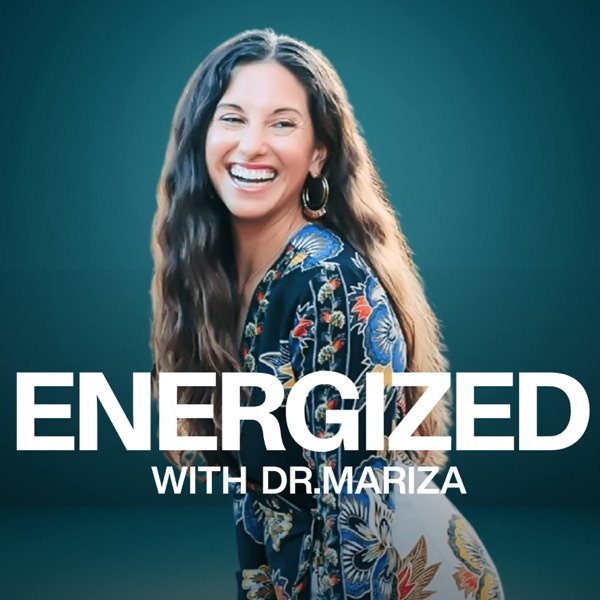
Energized with Dr. Mariza
Energized host and bestselling author Dr. Mariza Snyder puts the power back in your hands so that you can age powerfully and live life to the fullest. Get ready to navigate your hormone and metabolic journey with wisdom and grace throughout your forties and beyond.
Each episode will leave you feeling empowered with the knowledge of how your body actually works by providing root-cause explanations for the symptoms you’re facing (with a side of real talk) along with proven, research-driven solutions to reset your metabolism, fatigue, and hormones. In each information-packed episode, you will discover solutions designed to reclaim your energy and aliveness so that you can feel ENERGIZED in your body and become the CEO of your health.
Visit www.drmariza.com for hundreds of free recipes and resources, plus game-changing programs, products, and incredible support designed to optimize your metabolism, energy, and brain function as you powerfully navigate the second half of your life.
This podcast was formerly named "Essentially You with Dr. Mariza".
- Alternative Health chart
- #80
- Episodes
- 839
- Releases
- Twice a week
- Typical length
- 56 min
- On air since
- 2018
- Latest episode
- 18 hours ago
Episodes
839 episodes, newest first
-
50 min
787: Are You Abandoning Yourself to Keep Everyone Else Happy? With Hilary Silver
Show notes
You’re dependable. Capable. Successful. The one everyone calls because they know you’ll handle it.
But somewhere along the way, did you learn to leave yourself behind?
In this episode, Dr. Mariza sits down with former couples therapist and women’s identity coach Hilary Silver to explore self-abandonment: the subtle ways women silence their needs, overfunction, people-please, carry everyone else’s load, and become whoever they believe they need to be to keep the peace.
They unpack why these patterns often begin long before adulthood, how they become intertwined with identity and self-worth, and why simply taking a vacation, delegating, or setting a few boundaries may not create lasting change if the underlying beliefs remain intact.
Hilary shares how women can begin questioning the “I have to” and “I should” stories running their lives, consciously choose a different identity, reclaim their time, and stop measuring their worth by how much they can carry.
Because midlife may be the moment you finally ask:
What do I actually want?
HILARY SILVER
Hilary Silver is a former couples therapist, coach, and founder of Ready for Love and Ready for More.
Her work focuses on helping high-achieving women transform their relationship with themselves, identify the beliefs and patterns driving overfunctioning and self-abandonment, and consciously create a life that reflects who they actually want to become.
In this conversation, Hilary brings more than two decades of experience working with women and relationships to a deeper discussion about identity, boundaries, self-worth, and putting yourself back at the center of your own life.
IN THIS EPISODE
• What self-abandonment actually looks like in everyday life
• Why people-pleasing and shape-shifting often begin in childhood
• How high-achieving women can tie their worth to being indispensable
• Why boundaries and delegation alone may not change deeply rooted patterns
• How identity drives overfunctioning, rushing, and constantly carrying the load
• Why midlife can become a powerful moment for questioning what you’re no longer willing to carry
• How to challenge beliefs that feel like facts but may simply be old conditioning
• Why Hilary reframes repetition as devotion rather than discipline
• The question that can help you start putting yourself back at the center of your life
QUOTES
“Our beliefs are not fact.”
“It’s not vigilance and discipline, it’s devotion.”
“Doing nothing is doing something.”
RESOURCES MENTIONED
Stop surviving and start thriving, join Midlife on Fire Collective now
Use code ENERGIZED and get 10% off on your MitoQ Order
https://www.mitoq.com/energized%C2%A0
Hilary Silver Website
Hilary Silver Podcast
https://podcasts.apple.com/us/podcast/id1739660144
RELATED EPISODES
777: What We Know Now: The Midlife Lessons No One Taught Us with Jenn Pike
760: The Mindset Shift That Helps You Stop Feeling Stuck with Dr. Rachel Goldman
170: Saying NO to People Pleasing and Establishing Effective Boundaries with Amy Smith
-
51 min
786: Doing Everything Right for Your Hormones but Still Feel Terrible? Here’s What You’re Missing with Jessica Kane Berman
Show notes
You’re eating more protein, taking your supplements, prioritizing sleep, working out, and managing your stress. Maybe you’ve even started HRT. And yet you’re still exhausted, your brain feels foggy, and none of it is making the difference you hoped for.
In this episode, Dr. Mariza sits down with Jessica Kane Berman, Co-Owner and Chief Brand Officer of BodyBio, to look past your hormone levels to the cells those hormones are trying to reach.
Jessica explains that hormones are messengers, and their message lands on the cell membrane. When that membrane is disrupted, even the right hormones, or the right HRT, can fall flat. And as women head toward menopause, they lose some of their ability to make the phospholipids that build those membranes from food.
They unpack what “leaky cells” are and how microplastics, heavy metals, and environmental toxins get inside, why the brain and the lining of the gut both depend on phosphatidylcholine (PC), and why so few women get enough phospholipids from their diet.
They also explore why fish oil may not be the answer it’s sold as, why a supplement’s quality and form decide whether it ever reaches your cells, the simple foundation Jessica would start with, and how the liver and bile flow fit in. Dr. Mariza also shares why BodyBio has been part of her own protocol since back-to-back concussions left her fighting to get her brain back.
Listen now to learn what your cells may be missing, and how to build a foundation that helps everything else you do for your hormones actually work.
JESSICA KANE BERMAN
Jessica Kane Berman is Co-Owner and Chief Brand Officer of BodyBio, the third-generation, family-owned cellular health company founded by her grandfather, Ed Kane. She leads BodyBio’s brand strategy, education, and global growth, translating the science of cell membranes, phospholipids, and mitochondrial health into practical steps people can use to feel their best.
BodyBio’s approach starts at the cell membrane, with phospholipids, essential fatty acids, and minerals that support how cells communicate, make energy, and clear toxins. Its products are trusted by more than 40,000 healthcare providers across the U.S. and U.K., and the company supports ongoing clinical research with institutions including the NIH.
In this conversation, Jessica shares her own hormonal history, from polycystic ovaries and being told she’d need Clomid and metformin to get pregnant, to three healthy babies and the shift she felt after her last pregnancy, and why she now looks at her hormones and her cells together.
IN THIS EPISODE
• Why the health of your cells matters as much as your hormone levels
• How a hormone’s message lands on the cell membrane, and why a disrupted membrane can leave HRT falling flat
• Why women lose some of their ability to make phospholipids from food as they head toward menopause
• What “leaky cells” are, and how microplastics, heavy metals, and environmental toxins get in
• Why phosphatidylcholine (PC) matters for brain health, mom brain, and the lining of your gut
• Why fish oil may not be giving your cells the fats they need, and better ways to get DHA
• How a supplement’s quality and form decide whether it ever reaches your cells
• The foundation Jessica would start with: healthy fats, minerals, and B vitamins
• How the liver, bile flow, and TUDCA help your body process hormones and clear toxins
QUOTES
“Hormones are messengers, essentially. And the message lands on the cell membrane.”
“Everything ties back into how it functions on a cellular level.”
“They’re not supplements. These are essential nutrients that we need.”
RESOURCES MENTIONED
Use code DRMARIZA for 20% off BodyBio Hormone Essentials: The Hormone Health StackFind inspiration, connection, and meaningful reads. Join the Book Club now!
BodyBio Website
RELATED EPISODES
779: How Did We Get Hormones So Wrong? The HRT Story Every Woman Should Know with Dr. Louise Newson
-
43 min
785: We Were Warned About Hot Flashes. Nobody Prepared Us for the Rest Of Perimenopause
Show notes
If you've started to feel blindsided [and totally frustrated!] by energy crashes, brain fog, or mood swings in midlife, you're not alone.
But here’s what no one’s talking about… this isn’t something to ignore or just power through. Perimenopause in midlife is a MASSIVE transition.
And the choices you make right NOW will determine your health for the next 40+ years.
In this episode, I’m sharing some science-backed strategies straight from my new book, The Perimenopause Revolution, to help you reclaim your energy, feel more like yourself again, and confidently navigate this powerful midlife transition.
We’re diving into the surprising connections between your current symptoms and your long-term health, why consistency matters more than perfection, and how to future-proof your body with smart, supportive habits.
Don't let another day go by accepting less than you deserve. Listen here for all my tips and join the thousands of women who are already transforming their midlife experience with my perimenopause Freebies!
IN THIS EPISODE
•
• The drastic changes we go through during perimenopause
•
• The knowledge gap in women’s health research
•
• How your choices now impact the quality of the rest of your life
•
• How your hormones can bottom out during perimenopause
•
• Essential biomarkers to monitor in perimenopause and beyond
•
• Non-negotiable lifestyle strategies for optimal health
•
• How to Pre-order The Menopause Revolution book and get tons of FREE bonuses!QUOTES
“Once you understand what's happening in your body during this profound transition… You can transform perimenopause from something that happens to you to something you navigate with power, knowledge, and most importantly, the right support.”
“8 out of 10 of the most common perimenopausal symptoms are brain-related. We're talking sleep issues, brain fog, rage, mood swings, irritability, night sweats, zero stress tolerance, mental fatigue, anxiety, hot flashes…”
“It's everything you need to get the results that you deserve. Perimenopause isn't the beginning of your decline. It's your wake-up call to step into the most vibrant, confident, unapologetic version of yourself for the next 40+ years.”
RESOURCES MENTIONED
Order my newest book: The Perimenopause Revolution
Thriving in Perimenopause FREE Survival Guide
https://go.drmariza.com/lp/perimenopause-survival-guide/
Melani Sanders We Do No Care Club on TikTok
https://www.tiktok.com/discover/melani-sanders-we-do-not-care
RELATED EPISODES
#648: This Changes Everything: The Perimenopause Revolution Every Woman Needs Now
-
53 min
784: How to Feel Like Yourself Again When Life Won't Let Up, Or Slow Down with Mona Sharma
Show notes
What happens when the version of you who could always push harder suddenly isn’t available anymore?
For Mona Sharma, perimenopause arrived in a way she never expected. After navigating mold exposure, long COVID, gut issues, disrupted sleep, hair loss, and an experience with testosterone pellet therapy, an unexpected frozen shoulder became one of the clues that made her finally consider declining estrogen and perimenopause.
But this conversation goes much deeper than hormones.
Mona and Dr. Mariza explore the emotional reckoning that can happen when your old capacity changes, the routines that once worked stop working, and the high-functioning woman you’ve known for decades starts asking for a completely different way of living.
They talk about HRT, stress, gut health, morning rituals, embodiment, intuition, sisterhood, aging, self-criticism, and the grief that can come with letting go of an earlier version of yourself.
Most importantly, Mona reframes perimenopause as a metamorphosis: a season that asks for more grace, deeper self-trust, and the courage to come home to the body you’re in now.
MONA SHARMA
Mona Sharma is a nutritionist, wellness practitioner, entrepreneur, and host of the Rooted in Wellness podcast.
Her approach blends nutrition and lifestyle practices with mindfulness, embodiment, Eastern traditions, and a deeply personalized approach to healing.
In this conversation, Mona shares her own experience navigating perimenopause while raising children, growing businesses, supporting aging parents, healing her gut, managing significant stress, and learning how to listen to a body that no longer responds the way it once did.
IN THIS EPISODE
• The unexpected symptoms that first made Mona realize she might be in perimenopause
• What her experience with testosterone pellet therapy taught her about individualized hormone care
• Why HRT is not a cookie-cutter solution and may require patience, experimentation, and self-awareness
• How chronic stress and gut health can complicate the way you feel during perimenopause
• Why protecting one grounding ritual can matter more than creating a perfect wellness routine
• How to approach prevention from possibility and purpose instead of fear
• Why embodiment and intuition can become powerful tools when your mind feels scattered or overwhelmed
• The grief of letting go of the high-capacity woman you used to be
• How perimenopause can become a rite of passage into deeper wisdom, self-trust, and a new identity
QUOTES
“Finding the practice or the ritual every day that brings you home to your body is key.”
“This transition is metamorphosis.”
“It’s okay to drift, it’s part of life, but you always have to remember how to anchor yourself home in your body.”
RESOURCES MENTIONED
Stop surviving and start thriving, join Midlife on Fire Collective now
Mona Sharma Website
Rooted in Wellness Podcast
https://www.monasharma.com/podcast
Join Rooted Academy with Mona Sharma
https://www.monasharma.com/rooted-academy
RELATED EPISODES
777: What We Know Now: The Midlife Lessons No One Taught Us with Jenn Pike
776: What Changes When Your Body Can’t Keep Pushing Like It Used To? with Dr. Taz Bhatia
774: Training for Your Grandma Self: How to Build a Body That Lasts with Dr. Stephanie Estima
717: “I Don’t Feel Like Myself Anymore”: The Mental & Emotional Reality of Perimenopause
-
1 hr 1 min
783: Why Your Vaginal Health Changes After 40 (And What You're Missing) with Wendy Strgar
Show notes
Recurring UTIs. Vaginal dryness. Burning. Painful sex. BV that comes back again and again.
So many women are dealing with these symptoms, especially during perimenopause and menopause, yet vaginal health remains one of the least discussed areas of women’s healthcare.
In this episode, Dr. Mariza sits down with Good Clean Love founder Wendy Stragar for a candid conversation about the vaginal microbiome, what can disrupt it, and why declining estrogen can leave vaginal and urinary tissues more vulnerable to dryness, irritation, pain, and recurrent symptoms.
Wendy shares how her own experience with painful sex and severe irritation after pelvic surgery led her to begin investigating the ingredients in common personal care products and eventually build Good Clean Love.
They unpack the importance of vaginal pH, protective bacteria, the vaginal epithelial barrier, and why simply treating every recurrence as another yeast infection or prescribing the same medication repeatedly may not address what is actually happening.
They also explore what happens as estrogen declines, why symptoms can become especially severe after cancer treatment or chemical menopause, and why women deserve better language, education, testing, treatment options, and clinicians willing to take vaginal pain seriously.
Because vaginal discomfort, recurrent infections, painful sex, and dryness should never simply be dismissed as the inevitable price of getting older.
WENDY STRAGAR
Wendy Stragar is the founder of Good Clean Love, a women’s intimate and vaginal health company that grew out of her own search for products she could comfortably use after experiencing significant pain and irritation following childbirth and pelvic surgery.
Over the years, Wendy has focused her work on vaginal microbiome health, product formulation, education, clinical research, and expanding access to vaginal healthcare.
In this conversation, she shares what she has learned from working with researchers, clinicians, and women struggling with chronic vaginal symptoms and why she believes vaginal microbiome health deserves a much larger role in women’s healthcare.
IN THIS EPISODE
• How Wendy’s own experience with painful sex and irritation led to the creation of Good Clean Love
• Why the vaginal microbiome deserves the same attention we increasingly give the gut microbiome
• How declining estrogen can contribute to dryness, irritation, pain, and changes in vaginal and urinary health
• Why recurrent BV, yeast symptoms, and UTIs may require a deeper look at what organisms are actually present
• The role vaginal pH and the epithelial barrier play in maintaining a healthy vaginal environment
• Why some personal lubricants and vaginal products may aggravate already-sensitive tissue
• What women should know about vaginal changes during perimenopause, postpartum, and chemical menopause
• Why recurrent symptoms deserve more than another round of the same treatment
• How better language, testing, and access to knowledgeable clinicians could transform vaginal healthcare
QUOTES
“The problem is that you need to create the environment for that healthy bacteria to survive.”
“We like to say restore and maintain.”
“Quality of life after you go through something like that, we deserve that.”
RESOURCES MENTIONED
Find inspiration, connection, and meaningful reads. Join the Book Club now!
Use code DRMARIZA and get 10% off on your Womeness Order
https://www.womaness.com/DRMARIZA
Improve your Vaginal Health: Subscribe to Wendy Strgar Substack
https://wendystrgar.substack.com/
Good Clean Love Clinic Website
https://goodcleanclinicalcare.com/
Good Clean Love Pages
https://goodcleanlove.com/pages/meet-ceo-wendy-strgar
RELATED EPISODES
779: How Did We Get Hormones So Wrong? The HRT Story Every Woman Should Know with Dr. Louise Newson
769: Is It Perimenopause or Something Else? How to Finally Connect the Dots with Dr. Mariza
661: When “Normal” Isn’t Normal: How to Be Heard (and Taken Seriously) at the Doctor’s Office
-
56 min
782: Your Eyes Are Fine. So Why Is Your Brain So Exhausted? with Dr. Bryce Applebaum
Show notes
Have you ever gotten to the end of a long day on your computer and felt like your brain was simply done?
Your eyes are tired. You can’t focus. Light feels irritating. Reading takes more effort. Maybe you even start avoiding your phone because you cannot look at another screen.
Most of us assume that means our eyesight is getting worse.
But in this episode, Dr. Mariza sits down with neuro-optometrist Dr. Bryce Applebaum to explain why eyesight and vision are not the same thing.
Eyesight describes how clearly you see. Vision involves how your brain receives, filters, processes, coordinates, and responds to the information coming through your eyes. And when that eye-brain connection isn’t functioning efficiently, symptoms can show up as headaches, motion sickness, dizziness, trouble focusing, sensory overload, brain fatigue, and even ADHD-like behaviors.
Dr. Bryce also explains why screens place such unusual demands on the visual system, why functional vision issues can become more noticeable during midlife, and how concussion and other brain injuries can disrupt vision even when standard eye exams look normal.
The encouraging part?
The brain remains adaptable.
Through targeted vision training and the right evaluation, Dr. Bryce explains that the eye-brain connection can often be retrained and strengthened at almost any age.
DR. BRYCE APPLEBAUM
Dr. Bryce Applebaum is a neuro-optometrist specializing in vision performance and helping people improve how their eyes, brain, and body work together.
His work focuses on functional vision, visual processing, traumatic brain injury, concussion recovery, learning challenges, screen-related visual stress, and vision performance training.
In this conversation, Dr. Bryce explains why a traditional eye exam may miss important functional vision problems and why improving vision can involve far more than simply changing a glasses or contact lens prescription.
IN THIS EPISODE
•
Why eyesight and vision are two very different things
•
How functional vision problems can cause brain fog, headaches, motion sickness, and sensory overload
•
Why visual processing problems can sometimes look like ADHD
•
How changing hormones and screen exposure can increase visual strain in midlife
•
Why screen time places unusual demands on the eye-brain connection
•
The childhood signs that may point to an undiagnosed functional vision problem
•
Why concussion and traumatic brain injury can affect vision even when eyesight appears normal
•
How vision performance training uses neuroplasticity to retrain the brain
•
Practical ways to reduce screen strain and support healthier visual development
QUOTES
“Any brain at any age has the opportunity to be trained and rewired.”
“There’s neuroplasticity for vision at every age.”
“If we’re testing, we’re not guessing.”
RESOURCES MENTIONED
Stop surviving and start thriving, join Midlife on Fire Collective now
Dr. Bryce Applebaum Website
ScreenFit online vision training program
RELATED EPISODES
744: The Midlife Brain Reset: How to Protect Your Memory, Focus, and Mental Sharpness Starting Now
668: Your Brain on Perimenopause: The Hidden Neurological Transition No One Warns You About
728: Why Brain Fog Isn’t Random: The Hormone Shift Behind It
769: Is It Perimenopause or Something Else? How to Finally Connect the Dots with Dr. Mariza
-
1 hr 3 min
781: What If It’s Not Anxiety, Burnout, or “Just Your Hormones”? The Hidden Signs of ADHD in Women with Dr. Jolene Brighten
Show notes
What if the brain fog, overwhelm, time blindness, racing thoughts, and shorter emotional fuse showing up in your 40s aren’t just perimenopause?
For many women, ADHD has been hiding in plain sight for decades.
In this episode, Dr. Mariza sits down with women’s hormone expert and author Dr. Jolene Brighten to unpack why ADHD looks so different in women, why so many girls learn to mask their symptoms, and why changing estrogen levels during perimenopause can make those coping strategies suddenly stop working.
Dr. Brighten explains how ADHD in women may look less like the stereotypical hyperactive child and more like people-pleasing, perfectionism, constantly running mental lists, interrupting because you’re afraid you’ll forget your thought, chronic overwhelm, and appearing completely put together while internally struggling.
They also dive into the fascinating overlap between ADHD, perimenopause, PMDD, sleep, mitochondrial function, glucose metabolism, neuroinflammation, and emotional regulation.
And perhaps most importantly, they discuss what women can actually do: how movement can support brain energy, why sleep matters so much for the ADHD brain, how to build habits that work with your executive function instead of against it, and exactly how to advocate for a proper evaluation when your concerns are dismissed.
Because if your brain suddenly feels harder to manage in midlife, there may be more going on than “just hormones.”
DR. JOLENE BRIGHTEN
Dr. Jolene Brighten is a board-certified naturopathic endocrinologist, women’s hormone expert, educator, and bestselling author whose work focuses on helping women better understand the relationship between their hormones, brain, and overall health.
Her newest book, ADHD and Women: A Guide to Optimizing Your Hormones and Thriving with ADHD, explores how female hormones can influence ADHD symptoms throughout puberty, the menstrual cycle, pregnancy, postpartum, and perimenopause.
In this conversation, Dr. Brighten brings both clinical expertise and personal experience to the complicated intersection of ADHD, hormonal transitions, PMDD, emotional regulation, sleep, and women finally receiving answers after decades of believing they simply needed to try harder.
IN THIS EPISODE
• Why ADHD in women can hide behind people-pleasing, perfectionism, and looking “high-functioning”
• How declining estrogen in perimenopause can make masking ADHD symptoms much harder
• Why girls with ADHD are often diagnosed with anxiety or depression instead
• The connection between ADHD, mitochondrial function, brain glucose metabolism, and neuroinflammation
• Why movement can temporarily improve focus and cognitive performance in the ADHD brain
• How sleep disruption can compound brain fog, emotional dysregulation, and ADHD symptoms
• Why ADHD and PMDD so often overlap and may worsen during perimenopause
• How hormones may influence impulsivity, mood, executive function, and premenstrual ADHD symptoms
• What to track and say to your doctor if you suspect ADHD but keep getting dismissed
QUOTES
“Build pleasure into your day.”
“It is not just a hormone story.”
“High functioning is the label that society puts on women so that they can feel comfortable asking for more from her.”
RESOURCES MENTIONED
Stop surviving and start thriving! Join the Midlife on Fire Collective and get 30 days free:
Join my brand-new Substack: for the woman everyone depends on who is wondering why everything feels harder in midlife:
https://drmariza.substack.com/
ADHD and Women by Dr. Jolene Brighten:
Dr. Jolene Brighten Website
Dr. Jolene Brighten Substack:
https://drbrighten.substack.com/
RELATED EPISODES
769: Is It Perimenopause or Something Else? How to Finally Connect the Dots with Dr. Mariza
744: The Midlife Brain Reset: How to Protect Your Memory, Focus, and Mental Sharpness Starting Now
661: When “Normal” Isn’t Normal: How to Be Heard (and Taken Seriously) at the Doctor’s Office
-
48 min
780: The New Rules of Resilience: Energy, Recovery & Thriving in a Full Life with Angela Foster
Show notes
What if you’re not burned out?
You’re still working. Still exercising. Still taking care of your family. Still getting everything done.
From the outside, you look like you’re handling it all.
But underneath that competence, your body may be keeping a very different score through your sleep, recovery, energy, mood, stress tolerance, and heart rate variability.
In this episode, Dr. Mariza sits down with nutritionist, health and performance coach, and High Performance Health podcast host Angela Foster to unpack the difference between true resilience and simply becoming incredibly good at pushing through.
Angela explains why changing hormones in midlife can expose the cost of years of chronic under-recovery, how HRV can offer clues about whether your training and lifestyle actually match your capacity, and why the workout that once energized you may now leave you depleted for days.
They also share practical ways to build more recovery into a full life without abandoning your ambition, including walking, strength training, strategic HIIT, box breathing, the physiological sigh, morning light, intentional pauses, boundaries, and what Dr. Mariza calls “mindfulness snacks.”
Because the goal isn’t to build a smaller life.
It’s to build the energy, resilience, and capacity to keep living the big life you’ve worked so hard to create.
ANGELA FOSTER
Angela Foster is a nutritionist, health and performance coach, and host of the High Performance Health podcast. Her work focuses on helping ambitious women optimize their energy, hormones, resilience, and longevity without sacrificing the full lives they love.
Drawing from her own journey through major depressive disorder and perimenopause, Angela combines lifestyle medicine, exercise, recovery, nervous system regulation, and performance data such as HRV to help women understand their individual capacity and build greater resilience.
IN THIS EPISODE
• How to distinguish true resilience from simply getting really good at pushing through
• Why hormonal changes in midlife can expose years of chronic under-recovery
• How HRV can reveal whether your training load actually matches your recovery capacity
• Why HIIT may energize some women while leaving others depleted for days
• How walking, strength training, box breathing, and intentional recovery can support resilience
• Why small “mindfulness snacks” throughout the day can help regulate your nervous system
• What to investigate when you’re doing everything right but your HRV still isn’t improving
• How boundaries, asking for help, and taking things off your plate can actually expand your future capacity
• Why sustainable ambition doesn’t require giving up the career or life you’ve worked hard to build
QUOTES
“The biggest stress for us is when we don’t feel that sense of self-agency.”“When you put intentional pauses into your day, you can slow that down and be present.”
“Where in your life can you put an anchor in your day that just grounds you back to what’s important?”
RESOURCES MENTIONED
Find inspiration, connection, and meaningful reads. Join the Book Club now!
Join my brand-new Substack: for the woman everyone depends on who is wondering why everything feels harder in midlife:
https://drmariza.substack.com/
High Performance Health Podcast
https://angelafosterperformance.com/podcasts/
Angela Foster Website
https://angelafosterperformance.com/
RELATED EPISODES
776: What Changes When Your Body Can’t Keep Pushing Like It Used To? with Dr. Taz Bhatia
-
49 min
779: How Did We Get Hormones So Wrong? The HRT Story Every Woman Should Know with Dr. Louise Newson
Show notes
How did hormones become something women were taught to fear?
For decades, hormone therapy has been surrounded by confusion, conflicting recommendations, and sweeping assumptions that lump very different hormones and formulations together. Meanwhile, women continue walking into doctors’ offices saying, “I don’t feel like myself anymore,” and too often leave without answers or options.
In this episode, Dr. Mariza sits down in London with physician, women’s hormone specialist, educator, bestselling author, and advocate Dr. Louise Newson for a powerful conversation about how women’s hormone care got here and what needs to change.
They unpack why menopause has been reduced to hot flashes and night sweats, why estrogen, progesterone, and testosterone need far more nuance, and why Dr. Newson believes hormones deserve a place in the conversation about long-term health, not simply symptom relief.
They also go deep into one of the most controversial areas of women’s hormone care: testosterone, why the conversation so often begins and ends with libido, and what Dr. Newson has observed in women taking it for broader symptoms.
Most importantly, this episode is about informed choice: giving women accurate information, acknowledging where evidence is strong or still evolving, and creating healthcare relationships where women can participate fully in decisions about their own bodies.
DR. LOUISE NEWSON
Dr. Louise Newson is a physician, women’s hormone specialist, educator, bestselling author, and advocate working to transform the way women understand and access hormone care.
Her newest book, The Power of Hormones, explores the history of estrogen, progesterone, testosterone, hormone therapy, inflammation, and the medical decisions that have shaped women’s healthcare. Dr. Newson also focuses heavily on helping women understand their options and participate more actively in decisions about their health.
IN THIS EPISODE
• Why menopause and hormone loss need to be viewed as more than hot flashes and night sweats
• How decades of medical history shaped today’s fear and confusion around hormone therapy
• Why lifestyle and hormone therapy should not be treated as an either-or decision
• The controversy around testosterone for women and why the conversation extends beyond libido
• Why the specific hormone and formulation matter when discussing benefits and risks
• How hormone changes may influence metabolic health, inflammation, and healthy aging
• The differences Dr. Newson draws between bioidentical hormones and synthetic hormone formulations
• Why younger women with hormonal conditions such as PMDD deserve a deeper hormone conversation
• How women can use knowledge, evidence, and informed choice to advocate for better healthcare
QUOTES
“You can only decide when you’ve got knowledge.”
“It’s all about choice based on evidence and fact.”
“We really need to grow up and think we need to prevent disease.”
RESOURCES MENTIONED
Order my newest book: The Perimenopause Revolution
Stop surviving and start thriving, join Midlife on Fire Collective now
Join my brand-new Substack: for the woman everyone depends on who is wondering why everything feels harder in midlife:
https://drmariza.substack.com/
Stop guessing, start testing. Explore Joi & Blokes personalized labs with code DRMARIZA.
https://joiandblokes.com/labs-with-dr-mariza-snyder/
Use code ENERGIZED and get 10% off on your MitoQ Order
https://www.mitoq.com/energized
The Power of Hormones by Dr. Louise Newson
https://www.amazon.co.uk/Power-Hormones-misinformation-hormones-healthier
Dr. Louise Newson Website
https://www.drlouisenewson.co.uk/
RELATED EPISODES
592: Menopause, HRT, and Breast Cancer + How to Advocate for Yourself with Dr. Suzanne Gilberg-Lenz
-
36 min
778: The Fatigue Problem No One Is Solving for Women Over 40 (And The Labs I Order First)
Show notes
You’re exhausted by 2 or 3 PM. Your workouts suddenly wipe you out. Your hair is shedding, your brain feels foggy, and even climbing a flight of stairs leaves you more winded than it used to.
Then you finally ask for help and hear: “Your labs are normal.”
In this solo episode, Dr. Mariza breaks down one of the most commonly missed contributors to persistent fatigue in women: iron deficiency, even before anemia develops. She explains newly released American Society of Hematology ferritin thresholds and why women who were previously told their iron was “normal” may deserve a closer look.
But iron is only one part of the conversation.
Dr. Mariza walks through the bigger clinical picture she considers when a woman says, “I don’t feel like myself anymore,” including thyroid function, mitochondrial energy production, blood sugar, sleep, nutrition, stress physiology, and HPA-axis regulation.
Most importantly, she explains why fatigue is a symptom, not a diagnosis and why neither stress, aging, nor perimenopause should automatically become the explanation for everything you’re experiencing.
Listen now to learn what may be hiding behind your exhaustion and how to have a more productive conversation with your healthcare provider.
IN THIS EPISODE
• Why iron deficiency can exist before you become anemic
• The new ferritin thresholds women should know about
• Why a lab’s reference range and a diagnostic threshold are not always the same thing
• Why heavy perimenopausal periods can increase your risk of depleted iron stores
• The fatigue, brain fog, headaches, hair shedding, and exercise intolerance that can overlap with perimenopause
• How iron, thyroid hormones, nutrition, blood sugar, sleep, and recovery influence mitochondrial energy production
• Why “adrenal fatigue” oversimplifies what may actually be happening with the HPA axis
• How under-fueling, over-training, poor sleep, circadian disruption, illness, and caffeine can add to the body’s total stress load
• The questions to ask when you know something has changed but your labs keep coming back “normal”
QUOTES
“You can be iron deficient before you ever become anemic.”
“Two things can be true at once.”
“I don’t want mitochondrial dysfunction to become another vague label we give an exhausted woman.”
RESOURCES MENTIONED
Find inspiration, connection, and meaningful reads. Join the Book Club now!
Order my newest book: The Perimenopause Revolution
Stop surviving and start thriving, join Midlife on Fire Collective now
RELATED EPISODES
769: Is It Perimenopause or Something Else? How to Finally Connect the Dots with Dr. Mariza
661: When “Normal” Isn’t Normal: How to Be Heard (and Taken Seriously) at the Doctor’s Office
-
52 min
777: What We Know Now: The Midlife Lessons No One Taught Us with Jenn Pike
Show notes
What happens when the woman who has always been able to handle everything suddenly realizes her body won’t let her operate that way anymore?
In this episode, Dr. Mariza sits down with functional diagnostic nutritionist, medical exercise specialist, bestselling author, and women’s health educator Jenn Pike for a deeply personal conversation about the capacity shift that can happen in perimenopause.
Jenn shares the subtle signs she noticed in her late 30s: alcohol suddenly disrupting her sleep, slower workout recovery, increased soreness, less patience, and a shorter emotional fuse. Eventually, she realized she wasn’t simply stressed. Her body needed her to operate differently.
They unpack what happened when Jenn stopped forcing intense workouts, began respecting her changing energy, reduced her workload, asked for help, and started saying no, even when disappointing people felt uncomfortable.
But this conversation goes even deeper into the identity so many high-functioning women carry: “I’ve got this. I don’t need help.”
Listen now to discover why perimenopause may be an invitation to protect your energy, trust your body, and stop treating exhaustion as the price of a full life.
JENN PIKE
Jenn Pike is a functional diagnostic nutritionist, medical exercise specialist, bestselling author, and women’s health educator who has spent years helping women in perimenopause and menopause better understand their hormones and bodies.
She is also the host of The Simplicity Sessions podcast. In this conversation, Jenn shares her own experience of entering perimenopause in her late 30s and how it forced her to rethink exercise, work, motherhood, boundaries, identity, and the belief that she always had to be the one who could handle everything.
IN THIS EPISODE
• The subtle perimenopause signs Jenn started noticing before age 40
• Why intense workouts stopped feeling good and how she changed her training
• What overstimulation and a shorter emotional fuse revealed about her capacity
• How overcommitment and constantly being needed contributed to burnout
• Why Jenn had to dramatically rethink how much she could put on her calendar
• Learning to ask for help, delegate, and disappoint people without falling apart
• Why perimenopause can bring your deepest patterns around productivity and self-worth back up for review
• How Jenn moved from being “smart” to feeling wiser, calmer, and more trusting of herself
QUOTES
“The nutrient is actually doing less, and figuring out how to do less better.”
“I taught people to expect that of me.”
“I don't have to be that person to be loved.”
RESOURCES MENTIONED
Order my newest book: The Perimenopause Revolution:
Join my brand new Substack: for the woman everyone depends on who is wondering why everything feels harder in midlife >>
https://drmariza.substack.com/
The Simplicity Sessions Podcast:
Jenn Pike Website
RELATED EPISODES
776: What Changes When Your Body Can’t Keep Pushing Like It Used To? With Dr. Taz Bhatia
775: Wide Awake at 3 A.M.? What’s Really Disrupting Your Sleep in Midlife with Morgan Adams
774: Training for Your Grandma Self: How to Build a Body That Lasts
769: Is It Perimenopause or Something Else? How to Finally Connect the Dots with Dr. Mariza
-
55 min
776: What Changes When Your Body Can’t Keep Pushing Like It Used To? With Dr. Taz Bhatia
Show notes
What if perimenopause isn’t simply changing your hormones, but revealing everything your body has been compensating for for years?
In this episode, Dr. Mariza sits down with integrative medicine physician and women’s health expert Dr. Taz Bhatia for an incredibly personal conversation about what happens when the strategies that helped high-functioning women push through for decades suddenly stop working.
Dr. Taz shares how her own perimenopause began with incredibly heavy periods, fatigue, anemia, hair loss, mood changes, and unexpected weight gain.
But one of her biggest surprises came later: as progesterone and estrogen declined, her blood sugar, insulin, cholesterol, A1C, and liver enzymes began creeping upward, revealing just how interconnected hormones and metabolic health really are.
They also explore the emotional transformation of midlife: letting go of people-pleasing, protecting your energy, releasing the need to be the “good girl,” and becoming clearer about who you are and what deserves your attention.
Listen now to rethink perimenopause as an opportunity to understand your body, protect your health, and step powerfully into what comes next.
DR. TAZ BHATIA
Dr. Taz Bhatia is a board-certified integrative medicine physician, women’s health expert, and bestselling author of several books, including The Hormone Shift. Her work explores the connections between hormones, metabolism, stress, nutrition, and whole-body health.
Through her Whole Plus clinics and podcast, Dr. Taz advocates for a more collaborative approach to women’s health that looks beyond symptoms to cognitive, metabolic, cardiovascular, bone, mental, and hormonal health.
IN THIS EPISODE
• How extremely heavy periods became Dr. Taz’s first undeniable sign of perimenopause
• Why weight gain in midlife isn’t necessarily something women simply have to accept
• How estrogen and progesterone shifts can intersect with blood sugar, insulin, cholesterol, and visceral fat
• Why the “silent” cardiometabolic changes of menopause deserve more attention
• Why your body may stop tolerating the stress, sleep debt, and depletion you once pushed through
• How perimenopause helped Dr. Taz stop people-pleasing and build stronger boundaries
• Why knowing your own patterns and tracking changes can help you advocate for yourself
• How midlife can become an opportunity to redefine your identity, purpose, and power
QUOTES
Perimenopause is really where women come into their own.”
“These are not my battles. This is not my fight.”
“We gotta redefine what fine is.”
RESOURCES MENTIONED
Find inspiration, connection, and meaningful reads: Join my Soulful Shelf Book Club (no cost) here:
Join my brand-new Substack: for the woman everyone depends on who is wondering why everything feels harder in midlife:
https://drmariza.substack.com/
The Hormone Shift by Dr. Taz Bhatia:
The Superwoman Rx by Dr. Taz Bhatia:
Dr. Taz Website:
RELATED EPISODES
775: Wide Awake at 3 A.M.? What’s Really Disrupting Your Sleep in Midlife with Morgan Adams
774: Training for Your Grandma Self: How to Build a Body That Lasts
771: Beyond Hot Flashes: The 103 Symptoms of Perimenopause No One Talks About with Andrea Donsky
769: Is It Perimenopause or Something Else? How to Finally Connect the Dots with Dr. Mariza
-
1 hr 7 min
775: Wide Awake at 3 A.M.? What’s Really Disrupting Your Sleep in Midlife with Morgan Adams
Show notes
If you keep waking up at 2:00, 3:00, or 4:00 AM and can’t fall back asleep, your hormones may only be one piece of the puzzle.
In this episode, Dr. Mariza sits down with sleep expert Morgan Adams to unpack why sleep can suddenly fall apart in midlife and what you can actually do about it.
Morgan explains three major forces affecting women’s sleep: declining estrogen and progesterone, rising anxiety and depression, and the enormous demands of being part of the “sandwich generation,” often juggling a career, children, and aging parents simultaneously.
They dig into one of the biggest complaints among midlife women: middle-of-the-night wake-ups. From blood sugar dysregulation and overheating to overlooked breathing issues, Morgan reveals why repeatedly waking at the same time deserves a closer look.
You’ll also learn what not to do when you wake up, the cognitive trick that may interrupt 3 AM rumination, why your wearable can’t replace a sleep study, and whether sleeping separately from your partner could actually protect your health and your relationship.
Listen now for practical strategies to finally get the deeper, more restorative sleep your body needs.
MORGAN ADAMS
Morgan Adams is a sleep coach who helps women struggling with insomnia and disrupted sleep improve their sleep using evidence-based behavioral strategies.
Her work includes cognitive behavioral therapy for insomnia (CBT-I) principles and practical approaches to middle-of-the-night wake-ups, rumination, evening routines, and sleep optimization. In the episode, she also offers listeners a guide specifically for 3 AM wake-ups and an opportunity to connect with her about insomnia support.
IN THIS EPISODE
• Why sleep can suddenly fall apart for women in midlife
• What “revenge bedtime procrastination” is and why busy women do it
• The surprising reasons you may keep waking up around 3 AM
• How blood sugar dysregulation may contribute to nighttime wake-ups
• Why overheating may be disrupting your sleep even without night sweats
• The overlooked breathing problems that can leave healthy women exhausted
• What to do when your brain starts spiraling in the middle of the night
• Why a “sleep divorce” might actually become a sleep alliance
QUOTES
“My big thing is mindfulness snacks.”“Sleeping separately doesn’t mean the marriage has failed.”
“It’s not a template. It’s really an individualized kind of puzzle that you kinda have to put together for yourself.”
RESOURCES MENTIONED
Find inspiration, connection, and meaningful reads. Join the Book Club now!
Awake Again at 3am by Morgan Adams
RELATED EPISODES
774: Training for Your Grandma Self: How to Build a Body That Lasts
771: Beyond Hot Flashes: The 103 Symptoms of Perimenopause No One Talks About with Andrea Donsky
769: Is It Perimenopause or Something Else? How to Finally Connect the Dots with Dr. Mariza
-
58 min
774: Training for Your Grandma Self: How to Build a Body That Lasts with Dr. Stephanie Estima
Show notes
What if one of the biggest questions of perimenopause isn’t simply “How do I feel better right now?” but “Who do I want to be 20, 30, or 40 years from now?”
In this deeply personal conversation, Dr. Mariza sits down with women’s health expert Dr. Stephanie Estima to talk about the side of midlife that rarely makes it into conversations about hormones.
They explore what happens when the high-functioning woman who has always been able to handle everything begins to notice that her capacity has changed. Stephanie shares how she can no longer work the same 10- or 12-hour days she once could, why movement has become essential for her mental clarity, and how perimenopause has made her more discerning about where she puts her energy.
But this conversation goes much deeper than symptoms.
From female friendship and motherhood to living according to your values, Stephanie and Mariza ask what it actually means to build a life and body capable of carrying you through the second half of your life.
You’ll also hear Stephanie’s non-negotiables for longevity, including strength, mobility, joint health, pelvic floor health, and the small habits that compound over decades.
Listen now and start training for the woman you still want to become.
DR. STEPHANIE ESTIMA
Dr. Stephanie Estima is a women’s health expert, chiropractor, bestselling author of The Betty Body, and host of the Better with Dr. Stephanie podcast.
Her work focuses on helping women understand their bodies, optimize health and performance, and build strength and resilience throughout the different stages of life.
In this conversation, Stephanie gets especially personal about her own experience of midlife, motherhood, changing capacity, friendship, fitness, and becoming increasingly comfortable being fully herself.
IN THIS EPISODE
• Why your mental and work capacity can feel different in perimenopause
• The emotional reality of motherhood as your children grow up
• Why female friendship and connection matter more in midlife
• The powerful realization that your mid-40s may represent your halfway point
• How to tell if your calendar actually reflects what you say you value
• Why strength training is one of Stephanie’s longevity non-negotiables
• The overlooked role of mobility and joint health as you age
• Why pelvic floor health deserves your attention long before older age
QUOTES
“I think I have, like, lactic acid of the soul.”“I really do need people.”
“Are you living in alignment with the things that you say are important to you?”
RESOURCES MENTIONED
Order my newest book: The Perimenopause Revolution
Stop surviving and start thriving, join Midlife on Fire Collective now
The Betty Body by Dr. Stephanie Estima
Better with Dr. Stephanie Podcast
RELATED EPISODES
773: What’s Really Driving How Fast You Age? The Science of Biological Aging with Nikolina Lauc
771: Beyond Hot Flashes: The 103 Symptoms of Perimenopause No One Talks About with Andrea Donsky
769: Is It Perimenopause or Something Else? How to Finally Connect the Dots with Dr. Mariza
-
58 min
773: What’s Really Driving How Fast You Age? The Science of Biological Aging with Nikolina Lauc
Show notes
What if perimenopause isn’t only changing your hormones, but also changing how your body is aging underneath the surface?
In this episode, Dr. Mariza sits down with Nikolina Lauc, CEO and co-founder of GlycanAge, to explore emerging research on immune aging, chronic low-grade inflammation, and the menopause transition.
Nikolina shares research showing just how dramatically markers of “inflammaging” can shift when estrogen declines. In one hormone-blocking study, women gained 9.1 years on GlycanAge markers within six months, while research following twins found the rate of immune aging accelerated during the transition from perimenopause to menopause.
They unpack why this inflammation may be happening even when your traditional labs look normal, what glycans can reveal about how your immune system is functioning, and why biological age is more complex than a single number.
They also explore the research around HRT, exercise, weight loss, fasting, GLP-1 medications, nutrition, and why the same intervention doesn’t work the same way for every woman.
Listen now to discover what may be happening beneath the surface in perimenopause and how better data could help you become more proactive about how you age.
NIKOLINA LAUC
Nikolina Lauc is the CEO and co-founder of GlycanAge, a longevity biotechnology company focused on glycans, immune aging, chronic inflammation, and biological age.
GlycanAge’s research focuses specifically on “inflammaging,” the chronic, low-grade systemic inflammation associated with aging. Its work examines glycan structures on antibodies to better understand whether the immune system is behaving in a more pro-inflammatory or anti-inflammatory way.
IN THIS EPISODE
• What biological age actually means and why there isn’t one universal biological-age number
• How chronic low-grade inflammation can develop without obvious symptoms
• Why immune-aging markers may accelerate during the menopause transition
• How declining estrogen influences inflammation and immune function
• Why your hormone and traditional inflammatory labs can look normal while something is shifting
• What glycans can reveal about your immune system and inflammaging
• What the research suggests about HRT, exercise, weight loss, fasting, and GLP-1s
• Why interventions for healthy aging need to be personalized
QUOTES
“There’s never going to be one biological age.”
“Not everybody experiences perimenopause in the same way.”
“There’s no universal diet.”
RESOURCES MENTIONED
Use Code ENERGIZED and Get 10% Off on your GlycanAge Single Order or Subscription
https://www.glycanage.com/dashboard/shop
RELATED EPISODES
771: Beyond Hot Flashes: The 103 Symptoms of Perimenopause No One Talks About with Andrea Donsky
769: Is It Perimenopause or Something Else? How to Finally Connect the Dots with Dr. Mariza
-
44 min
772: The Cost of Holding It All Together: How Overfunctioning Changes Your Hormones, Brain & Metabolism with Dr. Mariza
Show notes
Have you ever looked at the same life you were managing a year ago and wondered, “Why does everything suddenly feel so hard?”
You’re still ambitious. You’re still capable. You’re still the woman everyone depends on. But the stress you once brushed off gets under your skin. Your brain doesn’t feel as sharp. Sleep is changing. Your patience is shorter. And keeping all those plates spinning suddenly requires far more energy.
In this solo episode, Dr. Mariza explores what happens when the profound hormonal and neurological changes of perimenopause collide with decades of over-functioning.
She introduces what she calls the midlife capacity gap: the disconnect between the enormous load many women are carrying and the biological capacity they currently have to sustain it.
You’ll learn why simply pushing harder may widen that gap, how Dr. Mariza is redefining resilience, and why supporting your hormones, brain, metabolism, muscle, and sleep is only part of the conversation.
Because the goal isn’t to make your life smaller. It’s to build a body capable of sustaining the life you actually want while becoming far more discerning about what deserves your energy.
Listen now to rethink what resilience looks like in midlife and start protecting your capacity for what truly matters.
IN THIS EPISODE
• Why high-functioning women can feel blindsided by perimenopause
• What happens when the woman who always handles everything suddenly has less capacity
• How estrogen and progesterone shifts can affect your brain, sleep, mood, and stress response
• What over-functioning looks like and why it often gets rewarded
• The midlife capacity gap between the load you carry and your biological capacity
• Why pushing harder and becoming more disciplined may not be the answer
• How to redefine resilience around adapting, recovering, restoring, and thriving
• The question Dr. Mariza wants you asking: “Is this actually mine to carry?”
QUOTES
“Perimenopause doesn’t arrive in a vacuum.”
“Endurance is not resilience.”
“Doing less isn’t the same as caring less.”
RESOURCES MENTIONED
Order my newest book: The Perimenopause Revolution
Stop surviving and start thriving, join Midlife on Fire Collective now
The High Functioning Woman on Substack
RELATED EPISODES
771: Beyond Hot Flashes: The 103 Symptoms of Perimenopause No One Talks About with Andrea Donsky
769: Is It Perimenopause or Something Else? How to Finally Connect the Dots with Dr. Mariza
-
1 hr 5 min
771: Beyond Hot Flashes: The 103 Symptoms of Perimenopause No One Talks About with Andrea Donsky
Show notes
What if the symptoms disrupting your life are connected to perimenopause, even if you’ve never had a hot flash?
Andrea Donsky spent 14 years in perimenopause and 11 of them with no idea what was happening to her body. Now, as a seven-time published menopause researcher, nutritionist, and bestselling author of Nourishing Menopause, she’s helping women put language to experiences that have been overlooked for far too long.
In this episode, Andrea joins Dr. Mariza to unpack her research into 103+ reported symptoms of perimenopause and menopause and why hot flashes aren’t even among the most common. Fatigue ranks #1, while nine of the top 10 symptoms are cognitive or mental-health related.
They also discuss why women are still being dismissed by healthcare providers, the foundational role of nutrition, blood sugar, sleep, movement, and stress management, and why perimenopause deserves to be viewed as an opportunity to protect your long-term health.
Most importantly, you’ll learn why this transition rarely looks the same from one woman to the next and why having the right vocabulary can completely change how you advocate for yourself.
Listen now to better understand what your changing body may be trying to tell you and the tools that can help you feel like yourself again.
ANDREA DONSKY
Andrea Donsky is a nutritionist, menopause researcher, bestselling author, and co-founder of We Are Morphus. She has worked in health and wellness for 26 years and has spent nearly a decade focused specifically on perimenopause and menopause.
Her research explores women’s real-world experiences during the menopause transition, including more than 100 reported symptoms and women’s experiences seeking care. She is the author of Nourishing Menopause, a research-backed guide combining nutrition, lifestyle, holistic health, and conventional approaches to help women feel their best through this transition.
IN THIS EPISODE
• Why Andrea spent 11 years in perimenopause without realizing it
• The 103+ symptoms women have reported during perimenopause and menopause
• Why fatigue is the #1 reported symptom, not hot flashes
• The surprising dominance of brain, cognitive, and mental-health symptoms
• Why 40% of women in Andrea’s research reported feeling dismissed by healthcare providers
• How nutrition, blood sugar, sleep, movement, and stress support women through this transition
• Why HRT can be one valuable tool alongside foundational lifestyle strategies
• How perimenopause can become a window of opportunity for protecting long-term health
QUOTES
“I was in perimenopause for 14 years total, 11 of which I had no idea.”
“We know that there’s 103 different symptoms of perimenopause and menopause.”
“The number one symptom across the board is fatigue.”
RESOURCES MENTIONED
Use code DRMARIZA and get 10% off on your Womeness Order
Nourishing Menopause by Andrea Donsky
Sign up now to receive your bonus: "The Nourishing Menopause Bonuses"
RELATED EPISODES
769: Is It Perimenopause or Something Else? How to Finally Connect the Dots with Dr. Mariza
-
55 min
770: The Heart Disease Risk Factor Most Women Aren't Watching: What Your Blood Sugar and Insulin Can Reveal with Dr. Philip Ovadia
Show notes
What if the cholesterol numbers you’ve been watching aren’t telling you the whole story about your heart?
In this episode, Dr. Mariza sits down with cardiothoracic surgeon Dr. Philip Ovadia to explore why he believes metabolic dysfunction and insulin resistance deserve far more attention when assessing cardiovascular risk, especially for women entering perimenopause and menopause.
Dr. Ovadia shares what he’s learned after 25 years in heart surgery, including why he’s now routinely operating on patients in their 40s and even 30s. They break down the metabolic warning signs that can appear decades before advanced heart disease, from rising blood pressure and waist circumference to fasting insulin, glucose, triglycerides, and HDL.
You’ll also hear their discussion about cholesterol and advanced lipid testing, how changing hormones can affect women’s cardiometabolic health, and why resistance training, real food, muscle, sleep, and blood sugar stability matter.
Plus, Dr. Ovadia explains how continuous glucose monitors can provide real-time insight into your metabolic health and the heart imaging he recommends women discuss with their healthcare providers.
Listen now to discover the metabolic clues your body may be giving you today and how to start protecting your heart for decades to come.
DR. PHILIP OVADIA
Dr. Philip Ovadia is a board-certified cardiothoracic surgeon, founder of Ovadia Heart Health Center, and author of Stay Off My Operating Table and Stay Off My Kitchen Table.
After performing thousands of heart surgeries, Dr. Ovadia shifted part of his work toward prevention, helping patients identify and address metabolic dysfunction before it progresses to advanced cardiovascular disease. His virtual practice focuses on improving metabolic health as a strategy for reducing heart disease risk.
IN THIS EPISODE
• Why Dr. Ovadia believes insulin resistance deserves more attention in heart disease prevention
• The five basic metabolic markers he wants women tracking
• Why your personal blood pressure baseline matters in midlife
• What fasting insulin can reveal before blood sugar becomes obviously abnormal
• Why cholesterol alone may not give you the complete picture of cardiovascular risk
• How muscle and resistance training support metabolic and heart health
• What a continuous glucose monitor can teach you about food, energy, and blood sugar
• When Dr. Ovadia recommends considering coronary artery calcium imaging
QUOTES
“It's never too early to start thinking about this, but it's also never too late.”
“Cholesterol is not the main thing driving heart disease.”
“Low-fat diets, they simply don't work.”
RESOURCES MENTIONED
Order my newest book: The Perimenopause Revolution
Stop surviving and start thriving, join Midlife on Fire Collective now
Stay Off My Operating Table by Dr. Philip Ovadia
https://www.youtube.com/channel/UCu8xppo0Y7mJz4uqkc7o7TQ
RELATED EPISODES769: Is It Perimenopause or Something Else? How to Finally Connect the Dots with Dr. Mariza
650: Unlock Your Health: The Ultimate Biomarker & Lab Blueprint to Thrive in Midlife and Beyond
-
33 min
769: Is It Perimenopause or Something Else? How to Finally Connect the Dots with Dr. Mariza
Show notes
Is this perimenopause… or is something else going on?
It’s one of the most common questions Dr. Mariza hears from women in their late 30s and early 40s, especially when their periods are still regular and they’ve never experienced a hot flash.
In this solo episode, Dr. Mariza breaks down why early perimenopause can be so difficult to recognize and the less obvious signs that often appear first, including exhaustion, anxiety, irritability, brain fog, sleep changes, worsening PMS, migraines, and changes in stress tolerance.
She shares three important clues for identifying a possible perimenopause pattern: looking for clusters of symptoms, noticing changes from your normal baseline, and tracking how symptoms change throughout your cycle.
But hormones aren’t always the entire story. Dr. Mariza also explains why thyroid dysfunction, low iron, metabolic issues, nutrient deficiencies, sleep problems, and other conditions deserve investigation, even when perimenopause is part of the picture.
Plus, you’ll learn how to track your symptoms and walk into your next healthcare appointment prepared to ask better questions.
Listen now to connect the dots, understand what your body is telling you, and get clearer on your next steps.
IN THIS EPISODE
• Why so many women over 35 aren’t sure whether they’re in perimenopause
• The early perimenopause symptoms women often mistake for stress or burnout
• Why you can be in perimenopause while still having regular periods
• The three clues Dr. Mariza uses to recognize a perimenopause pattern
• Why tracking changes from your personal baseline matters
• How your menstrual cycle can reveal patterns in mood, sleep, migraines, and energy
• What else to investigate, including thyroid, iron, metabolic health, and sleep
• How to advocate for yourself when your labs look “normal” but you don’t feel like yourself
QUOTES
“Stop looking at the one symptom that proves you’re in perimenopause. Start looking at the collection of clues and patterns that your body is exposing.”
“Perimenopause doesn’t usually show up with a giant flashing sign.”
“Hormones may be a huge part of the picture without being the entire picture.”
RESOURCES MENTIONED
Order my newest book: The Perimenopause Revolution
Comprehensive Perimenopause Lab Guide
Stop surviving and start thriving, join Midlife on Fire Collective now
RELATED EPISODES
650: Unlock Your Health: The Ultimate Biomarker & Lab Blueprint to Thrive in Midlife and Beyond
-
1 hr 18 min
768: Why Your Period Gets So Weird in Perimenopause + What Actually Helps with Kaya and Yasmin Purohit
Show notes
Has your period suddenly started behaving completely differently?
Maybe your cycles are shorter or longer. PMS hits harder. Your breasts are sore, cravings are stronger, your mood changes dramatically, or your libido seems to have disappeared.
In this episode, Dr. Mariza sits down with Beeya co-founders Kaya and Yasmin Purohit to explore what your changing cycle may be telling you, especially as you move into your late 30s and 40s.
Yasmin shares her experience coming off birth control after 15 years and struggling for two years with anxiety, painful cramps, breast tenderness, and acne. Together, they explore why these symptoms deserve attention and how foundational habits like sleep, movement, whole foods, and blood sugar stability can support hormone health.
They also unpack seed cycling, including exactly how it works, the nutrients different seeds provide throughout the menstrual cycle, what the research currently supports, and why women in perimenopause have become an especially important part of Beeya’s community.
Most importantly, this conversation is a reminder that your changing cycle is information.
Listen now to learn how to recognize the clues your body is giving you and support your hormones without making wellness another overwhelming job.
KAYA & YASMIN PUROHIT
Kaya and Yasmin Purohit are the co-founders of Beeya, a women’s wellness brand focused on helping women support their bodies through PMS, perimenopause, irregular cycles, fertility, and beyond.
After Yasmin struggled with severe symptoms following 15 years on birth control, she and Kaya discovered seed cycling and set out to make the practice simpler and more accessible for modern women.
Their work combines nutrition, education, and practical daily rituals designed to help women better understand and support their cycles.
IN THIS EPISODE
• Why changing periods can be an early clue that you’re entering perimenopause
• Yasmin’s experience after coming off birth control following 15 years on the pill
• How sleep, movement, and whole-food nutrition can affect your cycle
• The surprising connection between blood sugar, progesterone, PMS, anxiety, and rage
• What seed cycling is and how to use different seeds throughout your cycle
• Why women in perimenopause may benefit from additional nutritional support
• How postpartum and perimenopause can overlap for women having children later
• Why community, joy, and flexibility belong in the conversation about women’s health
QUOTES
“Your cycle is information. It’s always giving you information.”
“Not every day is going to be a winner.”
“Annoyance is the price you pay for community.”
RESOURCES MENTIONED
Stop surviving and start thriving, join Midlife on Fire Collective now
RELATED EPISODES
Alternative Health lists
More Alternative Health shows picked out from the charts










More in Alternative Health
Placed highest on Apple Podcasts' Alternative Health chart right now