Podcast
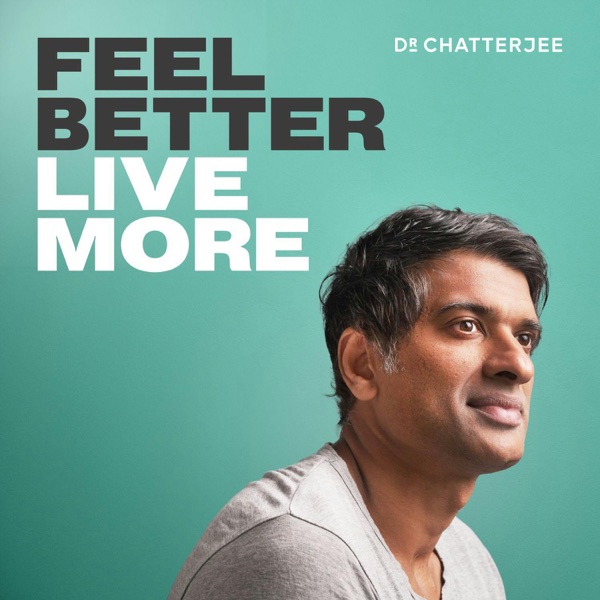
Feel Better, Live More with Dr Rangan Chatterjee
“Health has become overcomplicated. I aim to simplify it” In this podcast, we hear stories from leading health experts and exciting personalities who offer easy health life-hacks, expert advice and debunk common health myths giving you the tools to revolutionise how you eat, sleep, move and relax. Hosted by Dr Chatterjee - one of the most influential GPs in the country with nearly 20 years experience, star of BBC 1’s Doctor In the House, and author of 6 internationally best-selling books, including ‘The 4 Pillar Plan’ – Feel Better, Live More aims to inspire, empower and transform the way we feel. When we are healthier, we are happier because when we feel better, we live more.
Support the podcast and enjoy Ad-Free episodes. Try FREE for 7 days on Apple Podcasts https://apple.co/feelbetterlivemore. For other podcast platforms go to https://fblm.supercast.com.
https://www.drchatterjee.com/podcast
https://www.instagram.com/drchatterjee
https://www.twitter.com/drchatterjeeuk
https://www.facebook.com/DrChatterjee
- Alternative Health chart
- #14
- Episodes
- 688
- Releases
- Weekly
- Typical length
- 1 hr 57 min
- On air since
- 2018
- Latest episode
- 5 days ago
Episodes
688 episodes, newest first
-
25 min
BITESIZE | Why Modern Relationships Feel So Hard (And What We've Been Getting Wrong) | Alain de Botton #692 Bonus
Season 10, Episode 692
Show notes
We live in a culture that often celebrates the ‘perfect’ relationship but does little to prepare us for the reality of long-term commitment. Modern life is filled with idealised images of love and marriage – but the truth, as today’s guest suggests, is far more human, messy and ultimately hopeful.
Today’s Bitesize is from episode 574 of the podcast with author, internationally renowned philosopher, and founder of The School of Life, the wonderful Alain de Botton.
In this clip, Alain shares a refreshing perspective on relationships, why he believes love is a skill rather than just a feeling, and how changing our expectations could help us build deeper, more lasting connections.
There’s something deeply reassuring in knowing that love doesn’t have to look like the stories we grew up with. And by letting go of these cultural myths and by embracing each other’s flaws, we improve not only our relationships, but also how happy and contented we feel.
Thanks to our sponsor https://heights.com/livemore
Show notes and the full podcast are available at http://drchatterjee.com/574
Support the podcast and enjoy Ad-Free episodes. Try FREE for 7 days on Apple Podcasts https://apple.co/feelbetterlivemore
For other podcast platforms go to https://fblm.supercast.com.
DISCLAIMER: The content in the podcast and on this webpage is not intended to constitute or be a substitute for professional medical advice, diagnosis, or treatment. Always seek the advice of your doctor or other qualified health care provider with any questions you may have regarding a medical condition. Never disregard professional medical advice or delay in seeking it because of something you have heard on the podcast or on my website.
Learn more about your ad choices. Visit https://podcastchoices.com/adchoices
-
2 hr 1 min
How to Calm Your Nervous System: 4 Ways to Sleep Better, Stress Less and Build Resilience with Dr Kristen Holmes #691
Season 10, Episode 691
Show notes
Are you in control of your nervous system – or is it in control of you? It's a question that deserves your attention, because the answer affects everything from how well you sleep to how you react when life is hard. And my guest this week believes most of us have more agency than we realise.
Dr Kristen Holmes is Global Head of Human Performance and Principal Scientist at the wearable-tech company WHOOP. She’s also a former US national field hockey player and one of the most successful coaches in Ivy League history. In her new book, Aligned, she argues that a well-regulated nervous system is the foundation for our health, performance and relationships.
We start by exploring what a balanced nervous system looks like in daily life, why some people need to begin with their body and others with their mind, and why Kristen prefers the word agency to control.
Kristen then talks me through a study she led with WHOOP, in which 39,000 of its members tried four simple, free daily behaviours, and what happened to their sleep and heart health as a result. She explains why most of us have no idea when our body naturally wants to fall asleep, why sleep consistency predicts health more strongly than sleep quantity or quality – and the single metric she believes reveals most about someone’s health.
We also cover why variety matters in how we move, why eating earlier suits our metabolism, and why so many of us fall ill as soon as we go on holiday. And Kristen shares a powerful 72-hour exercise for auditing your daily actions against your values.
In the second half, the conversation becomes deeply personal. Kristen talks about growing up around alcoholism, the trauma she experienced as a child, and how she found her way to forgiveness through curiosity. We discuss emotions rooted in trust versus fear, the role of nostalgia, and how joy differs from happiness. She also shares the meditation practice that helped her learn to love herself, and the science showing how it benefits the body.
This is a conversation for anyone who wants practical, evidence-based steps to better sleep, energy and resilience. But, perhaps more importantly, it’s for anyone who senses that lasting change also requires some inner work. Kristen brings both the data and the lived experience – and I think everyone will find something here to carry into their own life.
The Thrive Tour: Transform Your Health and Happiness, a live show: Book Your Tickets https://drchatterjee.com/live
Thanks to our sponsors:
https://boncharge.com/livemore
https://thewayapp.com/livemore
https://hellolingo.com/livemore
Show notes https://drchatterjee.com/691
DISCLAIMER: The content in the podcast and on this webpage is not intended to be a substitute for professional medical advice, diagnosis, or treatment. Always seek the advice of your doctor or qualified healthcare provider. Never disregard professional medical advice or delay in seeking it because of something you have heard on the podcast or on my website.
Learn more about your ad choices. Visit https://podcastchoices.com/adchoices
-
27 min
BITESIZE | Simple Changes That Could Help You Burn Fat & Support Your Metabolism | Dr William Li #690 Bonus
Season 10, Episode 690
Show notes
You probably already know that your diet can hugely influence how well you feel, but how much power do your food choices really have over your health?
Today’s Bitesize is from episode 376 of the podcast with physician and author, Dr William Li.
In his book, Eat To Beat Your Diet, Dr Li explores some of the science around how we can harness the power of food to activate our innate fat-burning systems and transform our health.
In this clip, he shares some common foods that aren't necessarily as healthy as we might think, the important role that our gut bacteria play in our metabolism, and reveals some of his favourite foods that have fat-burning potential.
Dr Li is really keen not to villainise any food – there are many reasons why humans choose to eat certain foods and drink certain drinks, from our innate sweet tooth to cultural, social or religious traditions. He just wants us to be mindful of what we’re consuming, how and why.
Show notes and the full podcast are available at drchatterjee.com/376
Thanks to our sponsor https://thewayapp.com/livemore
Built To Thrive Community https://drchatterjee.com/community
Support the podcast and enjoy Ad-Free episodes. Try FREE for 7 days on Apple Podcasts https://apple.co/feelbetterlivemore
For other podcast platforms go to https://fblm.supercast.com.
DISCLAIMER: The content in the podcast and on this webpage is not intended to constitute or be a substitute for professional medical advice, diagnosis, or treatment. Always seek the advice of your doctor or other qualified health care provider with any questions you may have regarding a medical condition. Never disregard professional medical advice or delay in seeking it because of something you have heard on the podcast or on my website.
Learn more about your ad choices. Visit https://podcastchoices.com/adchoices
-
1 hr 57 min
How to Find the Extraordinary in the Ordinary: Why Meaning Comes From Within with Henry Shukman #689
Season 10, Episode 689
Show notes
What happens when the boundary between you and the world around you dissolves? It’s something I experienced myself recently, and this week I sat down with Zen Master Henry Shukman to try and make sense of it. What results is a conversation that moves from the practicalities of a sitting practice, to the outer edges of what meditation can reveal about who we really are.
Henry has been meditating for almost 40 years and is the guide behind The Way, the meditation app I use myself and have long recommended to you. He’s Director of the Mountain Cloud Zen Center in Santa Fe, New Mexico, an award-winning poet and the author of several books. This is his third appearance on the podcast, but our conversation this time goes somewhere we've never been before.
We begin by talking about how meaning, purpose and happiness are found within us, not externally. Our culture may measure worth through outward achievement, but meditation can show us a deeper reality beneath the striving – a natural, open heart that doesn't need to prove itself.
I share the deeply affecting experience I had at a retreat earlier this year – one that changed how I understand connection, identity and what it means to feel truly at peace. Henry helps unpack it, drawing on Buddhist teaching, his own blissful awakening at 19, and decades of guiding others through similar moments. We talk honestly about what this means for people living ordinary, busy lives, and why none of it requires stepping away from our responsibilities.
Our conversation also touches on ageing and independence, prompted by reflections on my own parents and what they taught me about serenity in circumstances that looked far from peaceful. And in the second half, I invite Henry to answer some of your most-asked questions. Among many useful topics, we cover building a consistent meditation habit, fitting it into family life, coping with shame, cravings and addiction, and how to stay grounded in a difficult relationship.
This episode moves effortlessly between the practical and the profound, and I think it will mean something different depending on where you are in your own life right now. But whether you're new to meditation or have been practising for years, rest assured there's a powerful message here for you.
The Thrive Tour: Transform Your Health and Happiness, a live show: Book Your Tickets https://drchatterjee.com/live
Thanks to our sponsors:
https://thewayapp.com/livemore
Show notes https://drchatterjee.com/689
DISCLAIMER: The content in the podcast and on this webpage is not intended to be a substitute for professional medical advice, diagnosis, or treatment. Always seek the advice of your doctor or qualified healthcare provider. Never disregard professional medical advice or delay in seeking it because of something you have heard on the podcast or on my website.
Learn more about your ad choices. Visit https://podcastchoices.com/adchoices
-
19 min
BITESIZE | Dr Gabor Maté: 3 Life Lessons People Learn Too Late #688 Bonus
Season 10, Episode 688
Show notes
Today’s guest brings warmth and wisdom to every conversation we have.
Today’s Bitesize is from episode 440 of the podcast with fellow physician, author, speaker and friend, the incredible Dr Gabor Maté.
Gabor is respected the world over as an expert on trauma, stress, addiction and childhood development. He has worked as a family doctor as well as in palliative (end of life) care.
In a previous episode, I had a wonderful conversation with Bronnie Ware, author of The Top Five Regrets of the Dying.
And, in this clip, I explore some of those life regrets with Gabor, and he offers some thought-provoking insights into what they can teach us about the way we live our lives.
We also talk about regret. Gabor says that living life with ‘no regrets’ is about learning and understanding from your perceived mistakes, but not being unkind to who you were then. Instead we should recognise that we did the best we could do at the time.
Like all of my previous episodes with Gabor, this is a conversation full of compassion, knowledge and wisdom. I hope you enjoy listening.
Thanks to our sponsor https://drinkag1.com/livemore
Show notes and the full podcast are available at drchatterjee.com/440
Feel Better, Live More Bitesize is your weekly dose of inspiration, insights and practical ideas to help you live well and thrive. Each episode brings you some of my favourite moments, useful tools and inspiring ideas from the many incredible conversations I’ve had on my podcast.
Support the podcast and enjoy Ad-Free episodes. Try FREE for 7 days on Apple Podcasts https://apple.co/feelbetterlivemore
For other podcast platforms go to https://fblm.supercast.com.
DISCLAIMER: The content in the podcast and on this webpage is not intended to constitute or be a substitute for professional medical advice, diagnosis, or treatment. Always seek the advice of your doctor or other qualified health care provider with any questions you may have regarding a medical condition. Never disregard professional medical advice or delay in seeking it because of something you have heard on the podcast or on my website.
Learn more about your ad choices. Visit https://podcastchoices.com/adchoices
-
49 min
How to Stay Curious, Playful & Intimate, Decades After You Meet with Esther Perel #687
Season 10, Episode 687
Show notes
Twenty years ago, leading psychotherapist Esther Perel asked whether desire could survive marriage and children. Today, she highlights a new relationship threat: our frictionless, convenient lives – and offers a wealth of wisdom to keep love alive.
This conversation was recorded live on stage at SXSW London, where Esther was speaking to mark the 20th anniversary of her groundbreaking bestseller, Mating in Captivity. It’s her third time on the podcast and I was honoured that she asked me to interview her for this wide-ranging episode – to which the audience reactions add a real energy.
Esther is one of the world’s most insightful and original voices on modern love. And it’s her parents, Holocaust survivors who rebuilt their lives through relationships, whom she credits for the idea that underpins her work: that our relationship quality ultimately determines our life quality.
We begin with something simple: the habit of appreciation, and why we tend to be better at criticising the people we live with than thanking them. Esther reminds us that a romantic partner is simply ‘on loan, with an option to renew’, so we need to make each other feel valued. She makes the case for ditching relationship checklists, explains why perfectionism and a lack of obstacles are starving modern intimacy, and defines the ‘digital lag’ that’s destroying our ability to be physically present with others.
We also talk about eroticism as a form of vitality and curiosity, while loneliness is more about societal failings than individual malaise. And Esther makes a key point that wanting our partners to be ‘our village’, instead of looking to a wider community, is a modern pressure that’s too much for any relationship to bear. To illustrate this, she reveals what happened during her therapy session between a human and their ‘perfect’ AI companion. It was a threshold moment for her industry – and it’s a lesson for us all.
This warm and witty episode is packed with quick-fire Q and As as well as deeper observations and meaningful advice. Esther offers a way of thinking about desire, connection and expectations that carries well beyond romantic relationships, touching on friendships, family and the way we show up for everyone around us.
The Thrive Tour: Transform Your Health and Happiness, a live show: Book Your Tickets https://drchatterjee.com/live
Thanks to our sponsors:
https://hellolingo.com/livemore
Show notes https://drchatterjee.com/687
DISCLAIMER: The content in the podcast and on this webpage is not intended to be a substitute for professional medical advice, diagnosis, or treatment. Always seek the advice of your doctor or qualified healthcare provider. Never disregard professional medical advice or delay in seeking it because of something you have heard on the podcast or on my website.
Learn more about your ad choices. Visit https://podcastchoices.com/adchoices
-
25 min
BITESIZE | The Life Changing Magic Of Walking for Your Health, Happiness & Relationships | Dr Courtney Conley #686 Bonus
Season 10, Episode 686
Show notes
Most of us walk every day without really thinking about it – but this episode is guaranteed to change that. Because this simple, free, radical act is one of the most powerful things you can do for your body, your brain and your longevity.
Today’s Bitesize is from episode 660 of the podcast with movement specialist and co-author of the brilliant book ‘Walk: Your Life Depends On It’, Dr Courtney Conley.
We unpack how many steps a day the research shows we really need to make a difference to our mood and our health. Courtney shares simple ways to get more from every walk, and reveals how something as simple as walking together could strengthen our relationships as well as our health.
All of us, whatever our age or starting point, can benefit from walking more or better – and this episode will help you do that, one step at a time.
Thanks to our sponsor https://thewayapp.com/livemore
Show notes and the full podcast are available at http://drchatterjee.com/660
Support the podcast and enjoy Ad-Free episodes. Try FREE for 7 days on Apple Podcasts https://apple.co/feelbetterlivemore
For other podcast platforms go to https://fblm.supercast.com.
DISCLAIMER: The content in the podcast and on this webpage is not intended to constitute or be a substitute for professional medical advice, diagnosis, or treatment. Always seek the advice of your doctor or other qualified health care provider with any questions you may have regarding a medical condition. Never disregard professional medical advice or delay in seeking it because of something you have heard on the podcast or on my website.
Learn more about your ad choices. Visit https://podcastchoices.com/adchoices
-
1 hr 59 min
How To Beat Distraction, Live Intentionally & Have No Regrets with Nir Eyal #685
Season 10, Episode 685
Show notes
Why do we grab our phones the moment we feel bored, lonely or overwhelmed, even when we know it’s unlikely to help? Returning guest, Nir Eyal, breaks down the psychology behind distraction and reveals a surprisingly simple truth: the pull isn't coming from your phone. It's coming from inside you.
Nir is a behavioural design expert who writes, consults, and teaches about the intersection of psychology, technology, and human potential. He’s a former Stanford lecturer and is the author of the international bestsellers Hooked and Indistractable, alongside his latest book, Beyond Belief. This is his third appearance on Feel Better, Live More.
In this conversation, Nir explains the remarkable truth that only around 10 per cent of phone checks are triggered by an external notification. The other 90 per cent come from within, from stress, fatigue or discomfort we're trying to escape. We discuss why treating technology as inherently addictive lets us off the hook, and what to do instead: his easy, repeatable four-step framework for noticing your internal triggers before they take hold.
Nir believes that the real opposite of distraction isn’t focus, it’s traction – a sense of being pulled towards the life you actually want, rather than away from it. And crucially, the same activity, whether reading a book, gaming or checking email, can be traction or distraction depending on whether it was planned. The answer to our scattered attention isn't to eliminate leisure and rest, he says, but to plan each day in advance around our values.
We talk about children and screentime. Nir introduces the idea of psychological nutrients, the basic needs for competency, autonomy and connection that every child requires to thrive. When these needs aren't met in daily life, children look for them elsewhere, often in the digital world. Understanding this changes the conversation around kids and technology, moving it away from blame and towards something far more useful: giving children what they truly need.
We also explore why to-do lists can make us feel like failures – and why scheduling your time (including your rest and leisure) is the antidote to distraction. Plus, Nir reveals why a small, low-effort commitment made in advance can be more powerful than willpower alone, when it comes to living intentionally.
This is a powerful and reassuring conversation for anyone who’s ever questioned their ability to focus, worried about phone addiction, or who simply wants a more meaningful, values-led life.
The Thrive Tour: Transform Your Health and Happiness, a live show: Book Your Tickets https://drchatterjee.com/live
Thanks to our sponsors:
https://boncharge.com/livemore
Show notes https://drchatterjee.com/685
DISCLAIMER: The content in the podcast and on this webpage is not intended to be a substitute for professional medical advice, diagnosis, or treatment. Always seek the advice of your doctor or qualified healthcare provider. Never disregard professional medical advice or delay in seeking it because of something you have heard on the podcast or on my website.
Learn more about your ad choices. Visit https://podcastchoices.com/adchoices
-
25 min
BITESIZE | The Science of Sunlight: How 20 Minutes a Day Could Transform Your Mood, Energy & Sleep | Dr Roger Seheult #684 Bonus
Season 10, Episode 684
Show notes
When we think of sunlight, vitamin D is usually the first thing that comes to mind. But the truth is, the full spectrum of light that we get exposed to when we spend time outside plays a vital role in how we sleep, how we feel and even how our cells create energy.
Today’s Bitesize is from episode 586 of the podcast with quadruple board-certified physician, Dr Roger Seheult.
Most of us know that getting outside is good for us, but we may not realise just how powerful sunlight can be for our health.
Roger shares why spending 20 minutes a day outside - even on a cloudy day - could make a real difference to your mood, your energy and your sleep.
This Bitesize is a powerful reminder that sometimes the simplest habits, like stepping outside, can have the biggest impact on how we feel.
Sunlight isn’t just something that makes us feel good – it’s a fundamental part of how our bodies stay healthy. And the best part? It’s free and available to us all. I hope you enjoy listening.
Thanks to our sponsor https://drinkag1.com/livemore
Show notes and the full podcast are available at http://drchatterjee.com/586
Support the podcast and enjoy Ad-Free episodes. Try FREE for 7 days on Apple Podcasts https://apple.co/feelbetterlivemore
For other podcast platforms go to https://fblm.supercast.com.
DISCLAIMER: The content in the podcast and on this webpage is not intended to constitute or be a substitute for professional medical advice, diagnosis, or treatment. Always seek the advice of your doctor or other qualified health care provider with any questions you may have regarding a medical condition. Never disregard professional medical advice or delay in seeking it because of something you have heard on the podcast or on my website.
Learn more about your ad choices. Visit https://podcastchoices.com/adchoices
-
2 hr 3 min
The Science of Happiness, Love & Human Connection with Professor Sonja Lyubomirsky #683
Season 10, Episode 683
Show notes
If you can’t shake the idea that happiness lies just around the corner, that you’ll ‘be happy when…’ you achieve X, Y or Z, then this conversation will bring you into the present. Because as my guest reveals, the secret to happiness isn't your future success, money or health, but something far simpler (which you can change today). It’s feeling loved.
That's the conclusion happiness researcher Sonja Lyubomirsky has arrived at after 36 years studying what makes us content, and it's the focus of this week's episode. Sonja is Distinguished Professor of Psychology at the University of California, Riverside, and the author of several bestselling books on happiness. Her latest, written with relationship scientist Harry Reis, is called How to Feel Loved. It makes the case that being loved is not the same as feeling loved – and the latter is key to individual happiness and societal wellbeing.
During this warm and inspiring conversation, Sonja sets out her five mindsets – including Radical Curiosity, Sharing, and the Multiplicity Mindset – which can help us feel more loved. She demonstrates how we can all adopt them to forge better relationships with everyone from friends, partners and family members to colleagues and strangers.
We explore the idea of hedonic adaptation – why those things we assume will make us happy (good looks, a better job, a bigger house) bring short-lived rewards. We discuss why happier people tend to become more successful, rather than the other way round, and Sonja reveals fascinating research linking happiness to physical health and immunity.
Our conversation also takes in cultural attitudes to happiness, from Sonja's early years in Russia to her decades living in the US, and what these differences reveal about the assumptions many of us hold without realising. Sonja shares a moving account of meeting the Dalai Lama, including his own definition of happiness. And we try out some of the exercises from her book live in the studio, including her Fast Friends questions designed to dissolve barriers and build closeness in minutes.
By the end of this powerful episode, you'll understand why forgiveness, curiosity and honest conversation matter more to your happiness than almost anything else. You'll feel more optimistic about your potential to feel loved. And you’ll come away with practical ways to bring valuable connections into your life, starting with your very next conversation.
The Thrive Tour: Transform Your Health and Happiness, a live show: Book Your Tickets https://drchatterjee.com/live
Thanks to our sponsors:
https://boncharge.com/livemore
Show notes https://drchatterjee.com/683
DISCLAIMER: The content in the podcast and on this webpage is not intended to be a substitute for professional medical advice, diagnosis, or treatment. Always seek the advice of your doctor or qualified healthcare provider. Never disregard professional medical advice or delay in seeking it because of something you have heard on the podcast or on my website.
Learn more about your ad choices. Visit https://podcastchoices.com/adchoices
-
26 min
BITESIZE | The Truth About Stress: How to Reduce Overwhelm & Feel Calmer Every Day | Dr Rangan Chatterjee #682 Bonus
Season 10, Episode 682
Show notes
What has the biggest impact on your health and happiness today? Perhaps you’re thinking it’s work, money, what you eat, how you sleep… Maybe it’s your friends and family and how you interact with them… These are all valid answers. But let me put it to you that I think there’s one factor that is linked to, but overrides, all of these things: stress.
Today’s Bitesize is from episode 607 of the podcast which was a solo episode I recorded all about stress.
While some stress is just part of life, if it starts to accumulate it can have negative consequences for our health and happiness.
I explain what stress is, how “micro stress doses” can build up and impact on our lives, and I share some simple strategies that can help you de-stress and re-set your day.
I genuinely hope this episode helps you see stress differently and reminds you that small, consistent changes can have a profound impact. A little stress is part of life – but chronic stress doesn’t have to be.
Thanks to our sponsor https://heights.com/livemore
In my free guide, Break Free From Stress, I share three simple tools you can start using today to help calm your nervous system and feel more in control – https://drchatterjee.com/FeelCalmer
Show notes and the full podcast are available at http://drchatterjee.com/607
Support the podcast and enjoy Ad-Free episodes. Try FREE for 7 days on Apple Podcasts https://apple.co/feelbetterlivemore
For other podcast platforms go to https://fblm.supercast.com.
DISCLAIMER: The content in the podcast and on this webpage is not intended to constitute or be a substitute for professional medical advice, diagnosis, or treatment. Always seek the advice of your doctor or other qualified health care provider with any questions you may have regarding a medical condition. Never disregard professional medical advice or delay in seeking it because of something you have heard on the podcast or on my website.
Learn more about your ad choices. Visit https://podcastchoices.com/adchoices
-
2 hr 4 min
Protect Your Brain, Extend Your Life: 7 Mistakes to Avoid for Better Cognitive Health with Dr Tommy Wood #681
Season 10, Episode 681
Show notes
Why would you want to live longer, if not to spend more time with the people you love? That question sits at the heart of this conversation with brain health expert Dr Tommy Wood. And today, we tackle the biggest mistakes people make when it comes to protecting their brain and longevity.
Tommy is Assistant Professor of Paediatrics and Neuroscience at the University of Washington, where his research spans brain development, cognitive decline and dementia prevention. He’s also worked with elite athletes and Formula One drivers as a performance coach. And in his must-read book The Stimulated Mind, he combines that breadth and specialism to make understanding brain health easier – and more fun – than you might think.
We start with mindset, and the surprising research findings that how you feel about ageing can shape how you go on to age. As someone in his 40s, I was delighted to hear Tommy cite a paper called Humans Peak in Midlife, showing that increasing wisdom, emotional intelligence and moral reasoning could make age 55 to 65 my best brain decade yet!
We talk about the risk of becoming so focused on optimising your own health that you neglect what matters most, your relationships with other people. And Tommy points out why chasing longevity without that connection is missing the entire point.
From there we get practical. We discuss mistakes like ignoring your blood pressure (and the implications for dementia) and what testing markers like homocysteine early, rather than waiting until something goes wrong, means for your long-term brain health. I also ask Tommy which supplements are worth considering, including the latest evidence on creatine and basic multivitamins. And he reveals the surprisingly strong link between your oral health and your brain.
Finally, we consider the toxic load of modern life, from microplastics to air pollution, and whether you should filter your water. Tommy’s balanced, evidence-based perspective avoids scaremongering while still taking these issues seriously.
Whether you’ve listened to every one of Tommy's previous appearances or you’re new to the podcast, this conversation is packed with practical ideas you can act on today, whatever your stage of life. As Tommy reminds us, it is never too late to start.
The Thrive Tour: Transform Your Health and Happiness, a live show: Book Your Tickets https://drchatterjee.com/live
Thanks to our sponsors:
https://thewayapp.com/livemore
https://exhalecoffee.com/livemore
Show notes https://drchatterjee.com/681
DISCLAIMER: The content in the podcast and on this webpage is not intended to be a substitute for professional medical advice, diagnosis, or treatment. Always seek the advice of your doctor or qualified healthcare provider. Never disregard professional medical advice or delay in seeking it because of something you have heard on the podcast or on my website.
Learn more about your ad choices. Visit https://podcastchoices.com/adchoices
-
25 min
BITESIZE | How to Age Well, Stay Independent & “Unbreakable” | Dr Vonda Wright #680 Bonus
Season 10, Episode 680
Show notes
“When you invest in your health and mobility every single day, you are going to age in a different way!” Dr Vonda Wright.
Bone health is something most of us don’t think about until much later in life, but the reality is that the foundation for strong, healthy bones is built much, much earlier - and the sooner you start to build this foundation the better.
Today's Bitesize is from episode 588 of the podcast with orthopaedic surgeon and internationally recognised authority on active ageing and mobility, Dr Vonda Wright.
Vonda explains why we have more control over our bone health than we might realise, why our mid-30s to mid-40s are such a pivotal window for investing in our future health, and she shares some simple, practical strategies that could help protect our bones and keep us strong.
Vonda shares her vision of ageing with strength, independence, and vitality - and why she believes we can all take proactive steps to remain unbreakable. By taking simple, consistent steps today, we could build the strength, independence and confidence to live in the way we want for years to come.
Thanks to our sponsor https://thewayapp.com/livemore
Show notes and the full podcast are available at http://drchatterjee.com/588
Support the podcast and enjoy Ad-Free episodes. Try FREE for 7 days on Apple Podcasts https://apple.co/feelbetterlivemore
For other podcast platforms go to https://fblm.supercast.com.
DISCLAIMER: The content in the podcast and on this webpage is not intended to constitute or be a substitute for professional medical advice, diagnosis, or treatment. Always seek the advice of your doctor or other qualified health care provider with any questions you may have regarding a medical condition. Never disregard professional medical advice or delay in seeking it because of something you have heard on the podcast or on my website.
Learn more about your ad choices. Visit https://podcastchoices.com/adchoices
-
1 hr 54 min
How To Have More Meaningful & Intimate Relationships: A Fresh Approach That Really Works with Terry Real #679
Season 10, Episode 679
Show notes
If there were a health marker guaranteed to shape your happiness, your health and your children’s wellbeing, wouldn’t you want to optimise it?
According to today’s guest there is: your relationships. And in this episode, the world-renowned couples’ therapist Terry Real reveals the one skill he believes matters more than any other for lasting love – while showing you exactly how to use it.
Nicknamed ‘the turnaround guy’, Terry has spent decades helping couples who’ve tried it all find their way back to connection. His latest bestseller Us: Getting Past You and Me to Build a More Loving Relationship, features a foreword from one-such happy customer, Bruce Springsteen. Terry’s unconventional yet hugely successful approach, Relational Life Therapy (RLT), has trained thousands of therapists worldwide. He believes a good therapist should take sides, and that lasting change often means helping someone come down from grandiosity, not just raising them up from shame.
This is one of those conversations that blends big, new ideas with nuggets of advice you’ll be itching to put into practice. We discuss how expectations of love and romance have changed over the generations – and why so many of us are trying to build modern, intimate partnerships using skills we were never actually taught. And Terry explains why the real measure of a strong relationship isn’t how rarely you argue, but which of your ‘three selves’ you use to do it.
He introduces the idea of the adaptive child, an old survival pattern that hijacks our behaviour the moment we feel threatened, and explains how learning to recognise it can transform the way we handle conflict. We also discuss the patriarchy and the need to move beyond it for humankind – but this is not about blaming men or women, rather showing how both can and must shift to help each other and the world.
So, what is that one skill we need for lasting love? Terry calls it repair, and his bold idea is that it’s not a two-way conversation. When someone we love is hurt or upset with us, our job is not to explain ourselves, but to help them feel heard first. The ability to repair, more than the ability to swerve an argument altogether, is what determines relationship success – and, crucially, he reveals how to do it. It’s a simple reframe, and one that could change how you handle your very next disagreement.
Whether you are single, married, co-parenting, or navigating a difficult patch with someone you care about, this conversation is full of practical strategies you can start using today. I have a feeling you’ll want to share this episode, so everyone you love can do the same.
The Thrive Tour: Transform Your Health and Happiness, a live show: Book Your Tickets https://drchatterjee.com/live
Thanks to our sponsors:
https://hellolingo.com/livemore
Show notes https://drchatterjee.com/679
DISCLAIMER: The content in the podcast and on this webpage is not intended to be a substitute for professional medical advice, diagnosis, or treatment. Always seek the advice of your doctor or qualified healthcare provider. Never disregard professional medical advice or delay in seeking it because of something you have heard on the podcast or on my website.
Learn more about your ad choices. Visit https://podcastchoices.com/adchoices
-
23 min
BITESIZE | A Monk’s Guide To Finding Happiness & Thriving in Hard Times | Gelong Thubten #678 Bonus
Season 10, Episode 678
Show notes
What if the most courageous, compassionate thing you could do in life, was to learn how to be with yourself? It’s a powerful, perhaps surprising idea put forward by today’s guest.
Today’s Bitesize is from episode 387 of the podcast with Gelong Thubten - Buddhist monk, meditation teacher and author of the fantastic book 'A Handbook for Hard Times: A Monk’s Guide to Fearless Living’.
Thubten became a monk back in 1993 after suffering from severe physical and mental burnout whilst following his dream of becoming an actor in New York City.
We begin by talking about distraction and addiction, two states that are very closely linked. He explains that when we distract ourselves by scrolling, overeating, or drinking for example, we’re pushing away emotional pain or discomfort - even if we may not realise it. But the discomfort is really in the pushing. If we can learn instead to sit with what’s making us uncomfortable, those emotions start to transform.
Thanks to our sponsor https://thewayapp.com/livemore
Show notes and the full podcast are available at http://drchatterjee.com/387
Support the podcast and enjoy Ad-Free episodes. Try FREE for 7 days on Apple Podcasts https://apple.co/feelbetterlivemore
For other podcast platforms go to https://fblm.supercast.com.
DISCLAIMER: The content in the podcast and on this webpage is not intended to constitute or be a substitute for professional medical advice, diagnosis, or treatment. Always seek the advice of your doctor or other qualified health care provider with any questions you may have regarding a medical condition. Never disregard professional medical advice or delay in seeking it because of something you have heard on the podcast or on my website.
Learn more about your ad choices. Visit https://podcastchoices.com/adchoices
-
2 hr 1 min
The 4 Food Types That Repair Your Gut Barrier: A Gastroenterologist's Guide To Beating Inflammation For Good with Dr Will Bulsiewicz #677
Season 10, Episode 677
Show notes
Could the food you ate yesterday already be reshaping your gut, your immune system and your risk of chronic disease? This week’s guest says yes, and he’s spent his career demonstrating why that matters so much.
Dr Will Bulsiewicz is an award-winning gastroenterologist and the author of the new book, Plant Powered Plus. And few people can explain the science of gut health as clearly, or as compassionately, as Will does in this conversation. If you think you already know everything there is to know about digestion, fibre and plant foods, this episode will change your mind – and deliver a great deal more.
Will has identified four nutrition ‘workhorses’ that feed and protect our guts and, unsurprisingly, fibre is one of them. We get into the specifics of how the fibre we eat turns into short-chain fatty acids like butyrate, which Will describes as the most anti-inflammatory substance he has ever come across. He makes the case for fibre as the true longevity nutrient. We talk about resistant starch, found in cooled potatoes and green bananas, and why it feeds a completely different part of your gut microbiome to other fibres. Will shares the research behind the ‘30 plants a week’ target, and why he thinks the exact figure matters far less than most people assume. And he covers the importance of polyphenols, healthy fats and fermented foods.
There’s a fascinating section on the different ways our gut microbiomes are shaped by our closest relationships, including some research findings even Will found surprising. We bust some myths around the term ‘leaky gut’. And we discuss why he no longer sees Crohn's disease and ulcerative colitis as straightforward autoimmune conditions, but more like the immune system turning against the microbiome.
Will is refreshingly honest about the limits of diet alone. He talks candidly about the patients he could not help through nutrition or medication, and about a period in his own life when food became a coping mechanism for something he wasn’t able to face. It is a reminder that lasting health often asks more of us than simply eating better.
Whether you’re new to the topic of gut health or well acquainted, this episode brings a new perspective. It’s packed with valuable and actionable moments – and it’s one you’ll come back to again and again.
The Thrive Tour: Transform Your Health and Happiness, a live show: Book Your Tickets https://drchatterjee.com/live
Thanks to our sponsors:
https://hellolingo.com/livemore
https://thewayapp.com/livemore
Show notes https://drchatterjee.com/677
DISCLAIMER: The content in the podcast and on this webpage is not intended to be a substitute for professional medical advice, diagnosis, or treatment. Always seek the advice of your doctor or qualified healthcare provider. Never disregard professional medical advice or delay in seeking it because of something you have heard on the podcast or on my website.
Learn more about your ad choices. Visit https://podcastchoices.com/adchoices
-
24 min
BITESIZE | How to Train Your Eyes & Rewire Your Brain for Better Focus & Less Stress | Dr Bryce Appelbaum #676 Bonus
Season 10, Episode 676
Show notes
When we think about improving our health, we often think about changing our diet, increasing how much we move, improving the quality of our sleep and lowering stress, but how many of us think about ‘working’ on our vision?
Every day, many of us experience symptoms like brain fog, fatigue, headaches or poor concentration – and never realise that our eyes might be playing a central role.
In today’s Bitesize, pioneering neuro-optometrist Dr Bryce Appelbaum explains why our visual system is about far more than simply how well we can see. Many of us don’t realise just how much our vision influences how we think, feel and perform.
We explore the surprising connection between vision and stress, and Bryce shares some simple, practical exercises we can all use today to better support our visual system and our wider health.
Show notes and the full podcast are available at https://drchatterjee.com/576
Thanks to our sponsor https://drinkag1.com/livemore
Support the podcast and enjoy Ad-Free episodes. Try FREE for 7 days on Apple Podcasts https://apple.co/feelbetterlivemore
For other podcast platforms go to https://fblm.supercast.com.
DISCLAIMER: The content in the podcast and on this webpage is not intended to constitute or be a substitute for professional medical advice, diagnosis, or treatment. Always seek the advice of your doctor or other qualified health care provider with any questions you may have regarding a medical condition. Never disregard professional medical advice or delay in seeking it because of something you have heard on the podcast or on my website.
Learn more about your ad choices. Visit https://podcastchoices.com/adchoices
-
1 hr 55 min
How To Find Purpose In An Age Of Emptiness with Arthur Brooks #675
Season 10, Episode 675
Show notes
Why does struggling for something make it more satisfying? And why can getting what you want leave you feeling flat? In this episode, I sit down with Arthur Brooks, one of the world's leading voices on the science of happiness, for a conversation that might change how you feel about your life.
Arthur is a professor at Vanderbilt University, senior fellow of Harvard Business School and bestselling author of multiple books, including new title, The Meaning Of Your Life. He walked away from a successful career when he realised that despite a happy marriage, strong faith and good income, he struggled to feel happy. That personal reckoning led him to years of research into what really makes people thrive – and in this conversation, he shares the framework he developed to explain it.
Using an analogy from nutrition science, Arthur describes happiness as requiring three macronutrients: enjoyment, satisfaction and meaning. We talk about why so many high achievers get the first one wrong. Suffering and struggle, he says, aren’t obstacles to a fulfilling life but essential ingredients of it – hence removing all friction from our lives can leave us feeling empty rather than content.
We also get into goals, and why reaching them tends not to deliver the lasting happiness we expect. Arthur calls this the arrival fallacy, and understanding might change how you approach your next big challenge.
On relationships, Arthur shares research showing that the healthiest marriages are not the ones with the least conflict, but the ones with the most honesty. We talk frankly about what that has looked like in our own marriages, what we can all learn from our parents when it comes to happiness, and the best (and easiest) way to send a positive message to our children. Arthur also shares what he’s learned about presence, faith and love from his relationship and his daily practices.
We explore the difference between solitude and loneliness and how levels of social connection can be individual. And I hope you’ll pay attention to the section on why leisure needs to be treated as seriously as work.
This is a warm, honest and personal conversation with someone who’s spent decades studying happiness – but who’s candid about how hard he’s worked to feel it himself. By reframing happiness as a direction not a destination, I think it could be a life-changing listen for you.
The Thrive Tour: Transform Your Health and Happiness, a live show: Book Your Tickets https://drchatterjee.com/live
Thanks to our sponsors:
https://exhalecoffee.com/livemore
https://boncharge.com/livemore
Show notes https://drchatterjee.com/675
DISCLAIMER: The content in the podcast and on this webpage is not intended to be a substitute for professional medical advice, diagnosis, or treatment. Always seek the advice of your doctor or qualified healthcare provider. Never disregard professional medical advice or delay in seeking it because of something you have heard on the podcast or on my website.
Learn more about your ad choices. Visit https://podcastchoices.com/adchoices
-
1 hr 50 min
The Daily Habits That Protect Your Brain At Any Age: The New Science Of Dementia Prevention with Dr David Perlmutter #674
Season 9, Episode 674
Show notes
Most of us assume that memory loss and cognitive decline are just part of getting older. In this episode, a world-leading neurologist says that’s simply not true. That, far from being inevitable, Alzheimer's and other neurodegenerative diseases result from decades of metabolic damage – which we have the power to prevent and even reverse.
I’m speaking with Dr David Perlmutter, a board-certified neurologist, six-time New York Times bestselling author, and one of the world's leading experts on brain health. And in this fascinating conversation, we discuss the single biological mechanism that sits at the heart of virtually every neurodegenerative condition, from Alzheimer's and Parkinson's to long Covid and depression, and why understanding it changes everything about how you approach your lifestyle.
David’s key insight is that our brain's own immune cells, called microglial cells, have the power to make or break our future brain health. Keep them in their protective state through diet, exercise, and metabolic testing, and we can safeguard our brain for life. Feed them with ultra-processed food and they will shift into a destructive state that drives neuroinflammation.
We discuss how, exactly, ultra-processed food damages the brain, why metabolic health is the key to cognitive longevity, and why the diagnosis of Alzheimer's is really the end stage of a process that began decades earlier. The choices you make right now, in your 30s, 40s and 50s, are already shaping the brain you will have in your 70s and beyond.
If this all sounds science-heavy, rest assured David approaches it, just as he does in his new book, Brain Defenders, with clarity and plenty of practical takeaway. He outlines the specific blood biomarkers he believes everyone should be tracking, including fasting insulin, homocysteine and uric acid, for a remarkable window into your long-term brain health. We discuss why knowing your numbers is one of the most empowering steps you can take, how to go about getting tested, and how to act on what you find.
There is a great deal of fear around dementia, and understandably so. But what I hope you take from this episode is something David emphasises: we needn’t be scared because we have agency. The research is clear that lifestyle choices have a profound impact on your risk, and it is never too early, or too late, to start making them.
This is one of the most distinct and important conversations I’ve had about the future of your brain, and I think you will find it incredibly useful, thought-provoking and, above all, hopeful.
The Thrive Tour: Transform Your Health and Happiness, a live show: Book Your Tickets https://drchatterjee.com/live
Thanks to our sponsors:
https://thesleepreset.com/podcast
https://boncharge.com/livemore
https://exhalecoffee.com/livemore
Show notes https://drchatterjee.com/674
DISCLAIMER: The content in the podcast and on this webpage is not intended to be a substitute for professional medical advice, diagnosis, or treatment. Always seek the advice of your doctor or qualified healthcare provider. Never disregard professional medical advice or delay in seeking it because of something you have heard on the podcast or on my website.
Learn more about your ad choices. Visit https://podcastchoices.com/adchoices
-
30 min
BITESIZE | What You Need To Know About Strength, Menopause & Healthy Ageing | Dr Stacy Sims #673 Bonus
Season 9, Episode 673
Show notes
As we get older, have you ever wondered why the exercise advice we’ve been given doesn’t seem to work as well as it once did? As we move into our 40s and beyond, our physiology changes in ways that can often feel confusing and frustrating. But what if we could harness those changes to feel stronger, healthier and more resilient than ever before?
Feel Better Live More Bitesize is my weekly podcast for your mind, body, and heart. Each week I’ll be featuring inspirational stories and practical tips from some of my former guests.
Today’s clip is from episode 578 of the podcast with exercise physiologist and nutritional scientist, Dr Stacy Sims.
Stacy is dedicated to helping active women – and the people who support them – take back control of their bodies, health and lives through science-based knowledge and practical tools.
In this clip, Stacy shares why conventional fitness advice often fails women in midlife, and what many of us may be missing when it comes to improving our health, vitality and resilience as we age.
Stacy’s insights remind us that with the right information and support, we can build strength, confidence and better health at any stage of life.
Thanks to our sponsor https://heights.com/livemore
Show notes and the full podcast are available at http://drchatterjee.com/578
Support the podcast and enjoy Ad-Free episodes. Try FREE for 7 days on Apple Podcasts https://apple.co/feelbetterlivemore
For other podcast platforms go to https://fblm.supercast.com.
DISCLAIMER: The content in the podcast and on this webpage is not intended to constitute or be a substitute for professional medical advice, diagnosis, or treatment. Always seek the advice of your doctor or other qualified health care provider with any questions you may have regarding a medical condition. Never disregard professional medical advice or delay in seeking it because of something you have heard on the podcast or on my website.
Learn more about your ad choices. Visit https://podcastchoices.com/adchoices
Alternative Health lists
More Alternative Health shows picked out from the charts








More in Alternative Health
Placed highest on Apple Podcasts' Alternative Health chart right now