Podcast
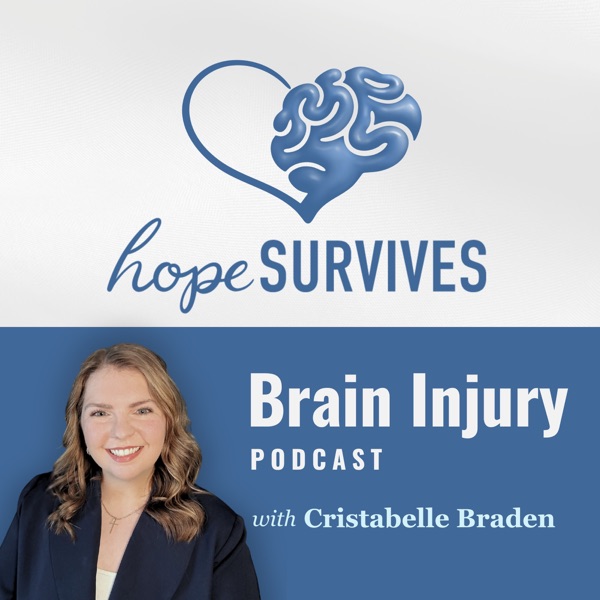
Hope Survives | Brain Injury Podcast
Have you or a loved one experienced a traumatic brain injury, stroke, concussion, or ABI? This podcast is for you. Providing practical tools and inspirational interviews to equip, educate, and encourage the brain injury community. Hosted by TBI survivor, advocate, and singer/songwriter Cristabelle Braden, this is an uplifting podcast to bring hope to your darkest days.
The Official Podcast of Hope Survives, a nonprofit organization for brain injury support: https://www.hopesurvives.org
- Episodes
- 149
- Releases
- Weekly
- Typical length
- 34 min
- On air since
- 2020
- Latest episode
- 16 hours ago
Episodes
149 episodes, newest first
-
35 min
Improving Cognitive Function after Brain Injury (with Dr. Ryan Harvey)
Season 6, Episode 149
Show notes
Struggling with cognitive function after a brain injury can make everyday life feel exhausting, leaving you overwhelmed by tasks that used to be automatic. When your brain is constantly forced to expend energy just to balance, track visually, or coordinate movement, it can be hard to keep up. Higher-level thinking like focus, working memory, and following conversations can quickly break down, leading to an experience of frustration. Today, we are diving into what cognitive function truly is, the importance of rebuilding foundational neurological systems, and how targeted, playful strategies can help retrain your brain.
In this episode, host Cristabelle Braden interviews Dr. Ryan Harvey from The Functional Neurology Center to break down how to improve cognitive function after brain injury. Listen to discover practical ways to step down complex tasks, the benefits of dual-tasking and gamifying your cognitive rehab, and why learning to "control the controllables" is essential for sustainable progress.
✅ *FREE ON-DEMAND COURSE & LIVE Q&A: Access now and go at your own pace - PLUS, ask Dr. Harvey your questions at the Q&A Webinar on November 17. Sign up here: http://hopesurvives.org/cognitive-series
🧠 In this episode:
• Understanding cognition as a multi-system network.
• Why people are commonly frustrated after a brain injury in doing “normal” daily tasks.
• Addressing reduced processing speed, conversational fatigue, and working memory challenges.
• Why rehabilitation requires proper sequencing to establish basic motor and visual baselines before tackling complex tasks.
• How gamifying cognitive exercises and incorporating motor-cognitive dual-tasking builds real-world stamina.
• Cultivating resilience by focusing on what remains within your control.CONNECT
Follow @hopesurvives
Visithttps://www.hopesurvives.org/hopesurvives.org
Join a support group at hopesurvives.org/community
Reach out to us anytime: hi@hopesurvives.org
Hosted by Cristabelle Braden: @cristabellebraden | http://cristabellebraden.com
-------
Sponsor
Thank you to The Functional Neurology Center for sponsoring this podcast - The FNC offers personalized neuro-recovery programs for anyone going through brain injury and a wide range of neurological conditions. Learn more:thefnc.com
0:00 Intro
1:47 Welcome with Cristabelle
6:39 Introducing Dr. Ryan Harvey
9:45 Starting Steps if Overwhelmed
16:25 Defining Cognitive Function
22:45 Identifying Your Needs
25:00 Things that Can Help
33:26 Words of Hope
-------
Disclaimer
This podcast is for education and informational purposes only and is not medical advice. Please consult your physician for individualized care. More: hopesurvives.org/podcast
-
34 min
How Adjusting Food and Nutrition Helped Reduce Concussion Symptoms (with Chelsea Tuttle)
Season 6, Episode 148
Show notes
After a concussion, it can be hard to find answers to reduce symptoms, especially when you “look fine” on the outside. Even conventional evaluations can fail to provide clear answers. Today, we are exploring the powerful connection between nutrition and brain function, and how targeted, holistic choices can calm inflammation and put recovery back into your hands.
In this episode, host Cristabelle Braden interviews Chelsea Tuttle, who shares her journey navigating post-concussion syndrome following a car accident and a delayed onset of life-altering symptoms. Chelsea details how discovering persistent neuro-inflammation on her brain scans led her to partner with a nutritionist to trial an anti-inflammatory elimination diet, producing a night-and-day shift in her cognitive clarity, headaches, and physical stamina. We also talk about sensory overload while driving, identifying individual food triggers, and learning to measure progress by celebrating small daily wins rather than fixating on limitations.
🥑*Access Our FREE Downloadable Resources on Brain Nutrition: https://hopesurvives.org/resource-hub/nutrition-physical-health
This week’s spotlight with Dr. Jeremy Schmoe from The Functional Neurology Center is on movement and nutrition in neuro-recovery. Dr. Schmoe explains how intentional movement activates cerebellar, basal ganglia, and frontal lobe pathways, how targeted therapies can engage neural circuits when movement is restricted from injury, and why adopting a brain healthy diet can significantly reduce migraine frequency and systemic inflammation.
🧠 In this episode:
• Navigating delayed concussion symptoms, driving-related sensory overload, and the frustration of "invisible" injuries.
• How brain scans revealed lingering neuro-inflammation when other tests came back normal.
• The science of anti-inflammatory eating: choosing foods that require less digestive energy so the body can prioritize brain healing.
• Reframing recovery by focusing on what you can do today and documenting small daily victories.CONNECT
Follow @hopesurvives
Visithttps://www.hopesurvives.org/hopesurvives.org
Join a support group at hopesurvives.org/community
Reach out to us anytime: hi@hopesurvives.org
Hosted by Cristabelle Braden: @cristabellebraden | http://cristabellebraden.com
-------
Sponsor
Thank you to The Functional Neurology Center for sponsoring this podcast - The FNC offers personalized neuro-recovery programs for anyone going through brain injury and a wide range of neurological conditions. Learn more:thefnc.com
0:00 Intro
1:54 Welcome with Cristabelle
3:30 Movement and Nutrition for Brain Recovery - Dr. Jeremy Schmoe
9:24 Chelsea’s Concussion Story
15:45 Invisible Symptoms and Inflammation
18:52 Finding Nutrition for Concussion Symptoms
23:45 Changes and Improvements
25:30 Encouragement & Small Steps
31:36 Words of Hope
-------
Disclaimer
This podcast is for education and informational purposes only and is not medical advice. Please consult your physician for individualized care. More: hopesurvives.org/podcast
-
33 min
Redefining Life and Exploring Identity Post-Stroke (with Trent Peterson)
Season 6, Episode 147
Show notes
A sudden stroke can alter everything in an instant. For many who have experienced brain injuries and strokes, the hardest battles aren't just physical, but the invisible challenges of neuro-fatigue, unpredictable cognitive stamina, and wrestling with who you are when your career and daily routines change overnight.
In this episode, host Cristabelle Braden interviews stroke survivor and founder of The Broken Road Project, Trent Peterson, who shares his journey following a life-altering brainstem stroke. Listen to discover how Trent navigated the sudden loss of independence, managed invisible symptoms like double vision and cognitive flooding, and had to come to big questions about his identity. We talk about the power of redefining your life after an injury like this, and how embracing a "broken road" can open the door to redefining your life and purpose.
We also feature a spotlight with Dr. Jeremy Schmoe from The Functional Neurology Center on hope for post-stroke rehabilitation. Dr. Schmoe discusses emerging therapeutic strategies that go beyond traditional motor rehab, including gut barrier support, photobiomodulation, virtual reality mirror therapy to stimulate mirror neurons, and pulsed electromagnetic field (PEMF) therapy to drive neuroplasticity and blood flow.
🧠 In this episode:
• Navigating the sudden shift of life after a stroke or brain injury.
• Understanding invisible deficits and why cognitive stamina can feel like an unpredictable "moving target" day to day.
• The process of redefining, reinventing, and realizing the changes in identity.
• Practical self-advocacy: recognizing communication limitations, asking for accommodations, and extending grace to yourself.
• The mission of The Broken Road Project and how supporting others in the brain injury community and giving back can bring purpose.CONNECT
Follow @hopesurvives
Visithttps://www.hopesurvives.org/hopesurvives.org
Join a support group at hopesurvives.org/community
Reach out to us anytime: hi@hopesurvives.org
Hosted by Cristabelle Braden: @cristabellebraden | http://cristabellebraden.com
Connect with Trent: http://thebrokenroad.org
-------
Sponsor
Thank you to The Functional Neurology Center for sponsoring this podcast - The FNC offers personalized neuro-recovery programs for anyone going through brain injury and a wide range of neurological conditions. Learn more:thefnc.com
0:00 Intro
2:12 Welcome with Cristabelle
4:48 Hope for Stroke Rehab - Dr. Jeremy Schmoe
7:40 Trent’s Stroke Story
12:25 Invisible and Identity Changes
16:02 Redefining and Reinventing
21:10 Adjusting Pacing & Advocating For Yourself
24:25 Broken Road Project & Giving Back
30:52 Words of Hope
-------
Disclaimer
This podcast is for education and informational purposes only and is not medical advice. Please consult your physician for individualized care. More: hopesurvives.org/podcast
-
34 min
Ways to Strengthen Resilience on the Brain Recovery Journey (with Wendy Ellmo, CCC-SLP)
Season 6, Episode 146
Show notes
Recovering from any type of concussion or brain injury can feel like a really long journey. But what if you have been developing a resilience you didn’t know you had all along? Whether you’ve had the injury yourself, or if you are a loved one - join us in this episode for some encouragement.
In this episode, host Cristabelle Braden interviews Speech-Language Pathologist Wendy Ellmo, who shares both her professional expertise and personal insight after sustaining a severe traumatic brain injury at age 17. Wendy breaks down the foundations of cognitive recovery, offering practical tools to reframe accommodations and strategies as empowering safety nets rather than limitations. Listen for practical ways to foster resilience and find purpose along the journey.
We also feature a spotlight with Dr. Jeremy Schmoe from The Functional Neurology Center on neurological resilience and neuroplasticity. Dr. Schmoe shares how intentional stimulation, including quick eye movements, visualization, breath mechanics, and cognitive dual-tasking, helps neurons fire and wire together while calming microglial neuro-inflammation.
🧠 In this episode:
• Recognizing attention as the foundational building block for memory, word-finding, and cognitive organization.
• Overcoming resistance to compensatory strategies and embracing accommodations as supportive tools.
• Making the crucial mental shift from "rehab mode" into "living mode" after brain injury.
• How gratitude and tracking small daily victories physically alter brain chemistry and elevate mood.
• Navigating the grief of changed identity and learning to give yourself grace on tough days.
• How family members and friends of the brain injured person can adapt communication and stay connected to prevent isolation.The Hope Collective: read and share reflections on life after brain injury: http://hopesurvives.org/thehopecollective
CONNECT
Follow @hopesurvives
Visithttps://www.hopesurvives.org/hopesurvives.org
Join a support group at hopesurvives.org/community
Reach out to us anytime: hi@hopesurvives.org
Hosted by Cristabelle Braden: @cristabellebraden | http://cristabellebraden.com
-------
Sponsor
Thank you to The Functional Neurology Center for sponsoring this podcast - The FNC offers personalized neuro-recovery programs for anyone going through brain injury and a wide range of neurological conditions. Learn more:thefnc.com
-------
0:00 Intro
1:55 Welcome with Cristabelle
2:50 Neuroplasticity & Brain Resilience - Dr. Jeremy Schmoe
7:07 Introducing Wendy
11:45 How Personal TBI Experience Helped in SLP Practice
13:15 Common Changes after Brain Injury
16:48 Ways to Strengthen Resilience
25:04 Small, Practical Steps
29:08 Encouragement for Family Members
31:18 Words of Hope
-------
Disclaimer
This podcast is for education and informational purposes only and is not medical advice. Please consult your physician for individualized care. More: hopesurvives.org/podcast
-
34 min
Finding Peace in the Uncertainty of Post-Concussion (with Tara L. Banks)
Season 6, Episode 145
Show notes
Living with post-concussion syndrome often means navigating a disorienting loss of identity, unpredictable symptoms, and the frustration of feeling like a stranger to yourself. When a good day is suddenly followed by an overwhelming crash, the uncertainty of recovery can make finding a clear path forward feel impossible. Today, we are exploring how to navigate the emotional and physical toll of lingering symptoms, adapt to an invisible injury, and discover true peace in the midst of life's chaos.
Today, host Cristabelle Braden interviews author and speaker Tara L. Banks, who candidly shares her personal experience recovering from multiple concussions. Listen as Tara opens up about grappling with a shifted sense of self, managing light and sound sensitivity, dizziness, and brain fog, and learning to advocate for herself when her struggles aren't visible to others. We also discuss redefining victory through the "little wins" of daily life, leaning on faith and supportive community, and cultivating internal peace when external circumstances remain uncertain.
We also feature a spotlight with Dr. Jeremy Schmoe from The Functional Neurology Center on hope for post-concussion syndrome. Dr. Schmoe shares the importance of looking beyond traditional rehab to explore blood chemistry, gut health, neuro-inflammation, and supporting the brain's glymphatic system.
🧠 In this episode:
• Navigating the deep sense of losing your identity and feeling disconnected from yourself after a concussion.
• Managing unpredictable day-to-day symptoms, light and sound sensitivity, and "invisible" recovery struggles.
• Learning self-advocacy and extending patience toward loved ones who may not fully understand post-concussion syndrome.
• Redefining resilience, embracing vulnerability, and celebrating the "small victories" in daily healing.
• Finding peace through faith and community support.The Hope Collective: read and share reflections on life after brain injury: http://hopesurvives.org/thehopecollective
CONNECT
Follow @hopesurvives
Visithttps://www.hopesurvives.org/hopesurvives.org
Join a support group at hopesurvives.org/community
Reach out to us anytime: hi@hopesurvives.org
Hosted by Cristabelle Braden: @cristabellebraden | http://cristabellebraden.com
Connect with Tara:.taralbanks.com
-------
Sponsor
Thank you to The Functional Neurology Center for sponsoring this podcast - The FNC offers personalized neuro-recovery programs for anyone going through brain injury and a wide range of neurological conditions. Learn more:thefnc.com
-------
0:00 Intro
2:05 Welcome with Cristabelle
4:24 Hope for PCS - Spotlight with Dr. Jeremy Schmoe
8:26 Tara’s Concussion Story
15:14 “Looking Fine” - Not Feeling Fine
20:18 Finding Peace in Post-Concussion
23:25 Sense of Self & Not Giving Up
31:10 Finding Everyday Fruit - Tara’s Book
32:22 Words of Hope
-------
Disclaimer
This podcast is for education and informational purposes only and is not medical advice. Please consult your physician for individualized care. More: hopesurvives.org/podcast
-
34 min
How the 6 Pillars of Brain Health Transform TBI Recovery (with Luke Bohnenberger)
Season 6, Episode 144
Show notes
Have you ever felt stuck and unsure how to move forward in your recovery journey? Today, as we kick off Season 6, we are talking about how learning about brain health can make a huge impact - and giving you some practical tools to take with you.
In this episode, host Cristabelle Braden interviews Luke Bohnenberger, known as Luke Speaks TBI, who shares his powerful journey from a severe car accident and mental health struggles to becoming an advocate for others. Listen to discover how understanding your brain’s needs on a neurological level can remove shame, empower recovery, and help you regain a sense of control over your life and recovery journey.
We also feature a spotlight on brain health with Dr. Jeremy Schmoe from The Functional Neurology Center. Dr. Schmoe explains practical, daily habits for supporting your neurology, focusing on blood sugar regulation, hydration, and simple ways to activate your brain through movement, visualization, and stress reduction.
🧠 In this episode:
• Reframing post-injury symptoms as "signals" and learning to listen to your brain before it reaches an overload state.
• Exploring 6 pillars of brain health: connections, movement, diet, novelty, environment, and rest.
• Why establishing a sense of neurological safety is a required foundation for deep healing.
• How to navigate the "push and pace" dynamic to challenge your brain without causing a setback.CONNECT
Follow @hopesurvives
Visithttps://www.hopesurvives.org/hopesurvives.org
Join a support group at hopesurvives.org/community
Reach out to us anytime: hi@hopesurvives.org
Hosted by Cristabelle Braden: @cristabellebraden | http://cristabellebraden.com
Connect with Luke: lukespeakstbi.com
-------
Sponsor
Thank you to The Functional Neurology Center for sponsoring this podcast - The FNC offers personalized neuro-recovery programs for anyone going through brain injury and a wide range of neurological conditions. Learn more:https://www.thefnc.com
-------
0:00 Intro
1:45 Welcome with Cristabelle
2:59 Brain Health - Spotlight with Dr. Jeremy Schmoe
6:02 Introducing Luke
8:45 The TBI Journey
14:35 Foundation of Brain Health
23:00 Understanding Safety in Nervous System
26:45 Takeaways and Small Steps
31:35 Final Words of Hope
-------
Disclaimer
This podcast is for education and informational purposes only and is not medical advice. Please consult your physician for individualized care. More: hopesurvives.org/podcast
-
5 min
Hope through Life with Brain Injury | Season 6 First Look Bonus
Season 6
Show notes
At Hope Survives, we know that life with brain injury isn’t easy - so we're here to talk all about the ups, downs, and in-betweens, and offer some encouragement and practical tools to help you on your journey. Today we're sharing a preview of where we're going in Season 6.
This season, we’re having thoughtful conversations with clinicians and individuals impacted by brain injury: connecting expert insight with the real-life, day-to-day experience of life after brain injury. Today’s preview episode includes a first look at some of our conversations. Subscribe and stay tuned for the official premiere!
CONNECT
Follow @hopesurvives
Visithttps://www.hopesurvives.org/hopesurvives.org
Join a support group at hopesurvives.org/community
Reach out to us anytime: hi@hopesurvives.org
Hosted by Cristabelle Braden: @cristabellebraden | http://cristabellebraden.com
-------
Sponsor
Thank you to The Functional Neurology Center for sponsoring this podcast - The FNC offers personalized neuro-recovery programs for anyone going through brain injury and a wide range of neurological conditions. Learn more:https://www.thefnc.com
-------
Disclaimer
This podcast is for education and informational purposes only and is not medical advice. Please consult your physician for individualized care. More: hopesurvives.org/podcast
-
43 min
How to Regulate Your Nervous System after Brain Injury with Mindfulness and Grounding Techniques (with Shelley Latendresse)
Season 5, Episode 143
Show notes
It’s easy to feel overwhelmed after a brain injury, with the mix of symptoms, daily stress, and simply coping with how your life has changed. It’s also common after brain injury to end up in survival mode, feeling disconnected from your body, and pushing yourself - which may be okay short term, but can add to long term stress and chronic symptoms. Today, we are diving into the topics of grounding, mindfulness, and how learning to regulate your nervous system can help you to move forward with healing after a brain injury.
In this episode, host Cristabelle Braden interviews Occupational Therapist Shelley Latendresse, who shares practical insights on how mindfulness and grounding techniques can aid recovery from a brain injury. Listen to discover how simple daily practices can help manage symptoms, reduce cognitive load, and promote healing. We also talk about coexisting with pain, symptoms, and the ways that we can acknowledge where we are at while also moving forward.
We also feature a spotlight with Dr. Jeremy Schmoe from The Functional Neurology Center. Dr. Schmoe explains how to bring your nervous system out of a hyper-sympathetic "fight-or-flight" state using targeted neurological stimulation as well as ways to do it at home.
This is also our Season 5 finale! We are so grateful for the conversations we've had this season and we look forward to staying connected as we enter a break to prepare for the next season.
🧠 In this episode:
• Navigating the process of managing symptoms, pain, and cognitive load post-concussion.
• Why focusing on simple, everyday habits can bring forward healing after brain injury.
• Understanding mindfulness as a core skill for present moment awareness to reduce stress after brain injury.
• Exploring grounding techniques that actively involve your senses and nature.
• Ways to stimulate your vagus nerve for nervous system regulation.CONNECT
Follow @hopesurvives
Visithttps://www.hopesurvives.org/hopesurvives.org
Join a support group at hopesurvives.org/community
Reach out to us anytime: hi@hopesurvives.org
Hosted by Cristabelle Braden: @cristabellebraden | http://cristabellebraden.com
-------
Sponsor
Thank you to The Functional Neurology Center for sponsoring this podcast - The FNC offers personalized neuro-recovery programs for anyone going through brain injury and a wide range of neurological conditions. Learn more:https://www.thefnc.com
-------
0:00 Intro
1:53 Welcome with Cristabelle
3:00 Season 5 Finale
7:15 Nervous System Regulation - Spotlight with Dr. Jeremy Schmoe
13:00 Introducing Shelley Latendresse, OT
17:51 Why Mindfulness Matters
19:55 Feeling Disconnected from Your Body & Mind
21:40 Ways to Connect to the Moment
31:30 Grounding for Coexisting with Pain and Symptoms
40:44 Finding Beauty in the Everyday
42:22 Words of Hope
-------
Disclaimer
This podcast is for education and informational purposes only and is not medical advice. Please consult your physician for individualized care. More: hopesurvives.org/podcast
-
38 min
How to Actually Complete Tasks after Brain Injury (with Stacia Bissell and Katya Bowen)
Season 5, Episode 142
Show notes
When you are recovering from a brain injury, simply trying to get through a daily task can feel like an absolute mountain to climb. Executive dysfunction can make it incredibly frustrating to finish what you start: you might find yourself losing your place mid-task, getting easily distracted, or completely forgetting what you were doing in the first place, leaving behind a trail of half-finished projects and not knowing how to continue.
In this episode, host Cristabelle Braden sits down for a full interview with Stacia Bissell and Katya Bowen to discuss the ins and outs of task completion after brain injury - and how you can map out a plan to get your focus back.
We also feature a spotlight with Dr. Jeremy Schmoe from The Functional Neurology Center all about some of the neurological and metabolic reasons behind executive dysfunction.
*Join the Maps for Task Completion Live Virtual Workshop - coming up on September 18 - register now! https://hopesurvives.org/maps-workshop
🧠 In this episode:
• Why a brain injury makes it incredibly difficult to stay organized, manage your time, and follow through on daily tasks.
• How to create your own “map” to finish your task.
• How setting a simple, repeating alarm can systematically interrupt distractions and pull your focus back to the job at hand.
• Importance of breaking the cycle of self-criticism and internal pressure, which actively drains the cognitive energy you desperately need to get things done.
• Encouragement to step forward into initiation when it can feel like a struggle to just start.CONNECT
Follow @hopesurvives
Visithttps://www.hopesurvives.org/hopesurvives.org
Join a support group at hopesurvives.org/community
Reach out to us anytime: hi@hopesurvives.org
Hosted by Cristabelle Braden: @cristabellebraden | http://cristabellebraden.com
-------
Sponsor
Thank you to The Functional Neurology Center for sponsoring this podcast - The FNC offers personalized neuro-recovery programs for anyone going through brain injury and a wide range of neurological conditions. Learn more:https://www.thefnc.com
-------
0:00 Intro
2:10 Welcome with Cristabelle
5:00 Executive Dysfunction - Spotlight with Dr. Jeremy Schmoe
8:45 Introducing Stacia & Katya
16:55 Task Completion
19:25 Creating Your Map
26:00 Setting Yourself Up for Success
34:35 Encouragement
36:25 Words of Hope
-------
Disclaimer
This podcast is for education and informational purposes only and is not medical advice. Please consult your physician for individualized care. More: hopesurvives.org/podcast
-
30 min
The Future of Healing: How Cutting-Edge Tech is Redefining Brain Injury Rehab (with Dr. Jeremy Schmoe)
Season 5, Episode 141
Show notes
Imagine a world where brain injury recovery isn't a frustrating game of trial and error, but a precisely mapped, tech-driven path designed for how your unique brain heals. The future of neuro-rehabilitation is no longer a distant dream - it is happening right now, and it brings so much hope.
In this episode, host Cristabelle Braden sits down with Dr. Jeremy Schmoe from The Functional Neurology Center to unpack some of the recent groundbreaking technology advancements reshaping rehabilitation. If you or a loved one has ever been stuck in survival mode or told your scans look "normal" despite a daily battle with brain fog and fatigue, this conversation is an exciting look at the advanced care happening across the globe.
🧠 In this episode:
• Why the most effective way to spark neuroplasticity and rewire the brain is by activating multiple systems at once.
• A look at a cutting-edge tablet technology out of Paris that measures how your eyes converge and diverge using light and sound cues in a natural, active environment.
• How functional near-infrared spectroscopy from South Korea images real-time blood flow changes in the frontal and temporal cortex during everyday movements.
• Why interactive testing in free space uncovers subtle visual and tracking deficits that standard, stationary medical testing completely overlooks.CONNECT
Follow @hopesurvives
Visithttps://www.hopesurvives.org/hopesurvives.org
Join a support group at hopesurvives.org/community
Reach out to us anytime: hi@hopesurvives.org
Hosted by Cristabelle Braden: @cristabellebraden | http://cristabellebraden.com
-------
Sponsor
Thank you to The Functional Neurology Center for sponsoring this podcast - The FNC offers personalized neuro-recovery programs for anyone going through brain injury and a wide range of neurological conditions. Learn more:https://www.thefnc.com
-------
0:00 Intro
1:47 Welcome with Cristabelle
6:05 Introducing Dr. Schmoe
12:25 New Visual Tablet Tech - REMOBI
21:20 New VR Assessment Tech - NESPLORA
24:52 New Brain Imaging Tech - NIRSIT
28:20 Words of Hope
-------
Disclaimer
This podcast is for education and informational purposes only and is not medical advice. Please consult your physician for individualized care. More: hopesurvives.org/podcast
-
38 min
The Power of Music in Brain Injury Recovery (with Serenna Wagner and Alice Collier)
Season 5, Episode 140
Show notes
Music has a unique ability to reach parts of the brain that regular speech or traditional therapies sometimes cannot. For those who have experienced a brain injury, the rhythmic and multi-sensory nature of music can bridge neurological gaps and provide a distinct pathway toward healing. In this episode, host Cristabelle Braden sits down with neurologic music therapist Serenna Wagner and her client, Alice Collier, who has experienced a brain injury to talk about the profound impact of music therapy on recovery.
We also feature a spotlight with Dr. Ryan Harvey from The Functional Neurology Center. Dr. Harvey explains the mechanics of auditory stimulation and music, breaking down how it triggers multi-sensory integration to stimulate neural pathways without overloading a recovering patient's sensory system.
🧠 In this episode:
• Understanding Neurologic Music Therapy (NMT) - how specific, standardized techniques use music to manipulate brain activity, join the brain's hemispheres, and circumvent damaged networks.
• A story of resilience and finding new dreams after Alice survived a traumatic brain injury from a bike accident
• How matching auditory cues to visual and physical actions drives the brain's timing and sequencing networks.
• How music therapy can be dynamically paired with physical therapy to make repetitive, challenging, or tedious physical movements highly motivating.
• Host Cristabelle shares how music and songwriting helped her reclaim her emotions, speech and motor skills following her own brain injury.Connect with Serenna: https://thisinnervoice.com/
CONNECT
Follow @hopesurvives
Visithttps://www.hopesurvives.org/hopesurvives.org
Join a support group at hopesurvives.org/community
Reach out to us anytime: hi@hopesurvives.org
Hosted by Cristabelle Braden: @cristabellebraden | http://cristabellebraden.com
-------
Sponsor
Thank you to The Functional Neurology Center for sponsoring this podcast - The FNC offers personalized neuro-recovery programs for anyone going through brain injury and a wide range of neurological conditions. Learn more:https://www.thefnc.com
-------
0:00 Intro
1:53 Music on Cristabelle’s Journey
6:10 Music and Multi-Sensory Integration in Brain Injury Rehabilitation with Dr. Harvey - Spotlight
9:43 Introducing Alice and Serenna
15:05 Finding New Life after Brain Injury
18:15 Understanding Music Therapy
23:05 How Music Brings Growth after Brain Injury
27:27 Creativity in Brain Injury Recovery
32:45 Playing “The Drunken Sailor”
35:28 Words of Hope
-------
Disclaimer
This podcast is for education and informational purposes only and is not medical advice. Please consult your physician for individualized care. More: hopesurvives.org/podcast
-
36 min
Concussion Phenotypes: Unpacking the Multi-System Reality of Brain Injuries (with Dr. Melissa Biscardi)
Season 5, Episode 139
Show notes
Concussions are incredibly complex, and because they can disrupt up several systems in your body at once, recovery never looks the same for any two people. If you have ever felt like your (or your loved one’s) symptoms are completely overlapping, today we are going to help you understand why - and what to do about it.
In this episode, host Cristabelle Braden is joined by neuro-rehabilitation specialist and clinician Dr. Melissa Biscardi to break down "concussion phenotypes,” which are the distinct categories of symptoms that can present in concussion. From visual and vestibular disruptions to autonomic and cervical triggers, Melissa offers a path forward in reading the body's post-injury baseline and creating an order of operations for physical, cognitive, and emotional recovery.
We also feature an expert clinical spotlight with Dr. Jeremy Schmoe from The Functional Neurology Center. Dr. Schmoe helps us understand concussion rehabilitation, including explaining why pairing multi-system tasks (such as combining cognitive tracking with physical movement) drives neuroplasticity and can safely accelerate healing.
🧠 In this episode:
• A breakdown of the core concussion phenotypes and how they constantly interact.
• Why your nervous system must feel foundationally stable and safe before you can successfully rehabilitate through targeted cognitive therapy.
• How subtle formatting issues or structural injury in the neck directly spark secondary symptoms like nausea, blurry vision, and tracking headaches.
• Honoring the intense identity shifts, irritability, and anxiety that naturally occur when an unexpected injury flips your daily life upside down.
• How physical movement, even a simple sequence of marching in your bedroom for 10 seconds, drives essential oxygen and blood flow straight to a healing brain.
• Why changing or rotating clinicians as your baseline improves is a sign of therapeutic progress, not failure; different phases of recovery demand different clinical specialties.Melissa's previous episodes with us:
57- Female Hormones after TBI/Concussion: https://hopesurvives.org/podcast/57
54- Pillars of Concussion Care + Holistic Approach: https://hopesurvives.org/podcast/54
CONNECT
Follow @hopesurvives
Visithttps://www.hopesurvives.org/hopesurvives.org
Join a support group at hopesurvives.org/community
Reach out to us anytime: hi@hopesurvives.org
Hosted by Cristabelle Braden: @cristabellebraden | http://cristabellebraden.com
-------
Sponsor
Thank you to The Functional Neurology Center for sponsoring this podcast - The FNC offers personalized neuro-recovery programs for anyone going through brain injury and a wide range of neurological conditions. Learn more:https://www.thefnc.com
-------
0:00 Intro
1:55 Welcome with Cristabelle
3:10 How to Treat Concussion with Dr. Schmoe - Spotlight
8:00 Introducing Dr. Melissa Biscardi
12:12 Breaking Down Concussion Phenotypes
20:50 How Symptoms Show Up in Everyday Life
27:18 Intentional Movement
29:24 Metabolic Factors
33:25 Words of Hope
-------
Disclaimer
This podcast is for education and informational purposes only and is not medical advice. Please consult your physician for individualized care. More: hopesurvives.org/podcast
-
38 min
Writing with Courage and Hope - Small Steps for Sharing Your Brain Injury Story (with Laura Conaway)
Season 5, Episode 138
Show notes
Have you ever wanted to share more about your story, but weren’t sure how to start? The hidden realities of living with brain injury can feel overwhelming to explain, especially to people in your life - and it can feel daunting to know where to start with sharing. In this episode, our host Cristabelle sits down with bestselling author Laura Conaway to explore the vulnerable journey of living with POTS and dysautonomia following a childhood concussion. Laura shares personal insights on breaking the cycle of shame, the struggle with sharing symptoms with people around you, learning to give yourself grace during unpredictable flare-ups, and how the act of writing can become a powerful vehicle for healing.
We are also introducing The Hope Collective: a space on the Hope Survives website that gathers the voices and creative expressions of our community reflecting the complexity and resilience of life after brain injury.This space is designed specifically for you to read and share your own reflections, stories, and triumphs whenever you feel ready. Whether you want to process your own healing, provide comfort to someone else walking a similar path, or take advantage of the opportunity to be officially published on Hope Survives, The Hope Collective is here for you. Learn more: http://hopesurvives.org/thehopecollective
*FREE ACCESS to Laura’s Writing With Hope On-Demand Course: https://hopesurvives.org/writingwithhope
Plus, we feature a spotlight with Dr. Ryan Harvey from The Functional Neurology Center. Dr. Harvey explains the fascinating relationship between creative writing, fine motor skills, and neuroplasticity, showing how putting your thoughts on paper actively re-wires the cerebellum and strengthens emotional control.
🧠 In this episode:
• Processing the difficult feelings of looking “fine” on the outside while managing symptoms internally.
• The struggle with feeling initial shame in sharing your limitations with others - and learning to give yourself grace and take small steps forward.
• How creative writing and fine motor expression stimulates core neural pathways to enhance recovery.
• Why stepping out of isolation and linking arms with a community can calm an overactive nervous system.
• Encouragement for why your story matters, and some small steps forward towards sharing.
• Practical tips on breaking through the fear of writing, setting aside rigid formatting, and letting your authentic voice shine.CONNECT
Follow @hopesurvives
Visithttps://www.hopesurvives.org/hopesurvives.org
Join a support group at hopesurvives.org/community
Reach out to us anytime: hi@hopesurvives.org
Hosted by Cristabelle Braden: @cristabellebraden | http://cristabellebraden.com
-------
Sponsor
Thank you to The Functional Neurology Center for sponsoring this podcast - The FNC offers personalized neuro-recovery programs for anyone going through brain injury and a wide range of neurological conditions. Learn more:https://www.thefnc.com
-------
0:00 Intro
2:20 Welcome with Cristabelle
6:40 The Value of Writing after Brain Injury - Spotlight with Dr. Ryan Harvey
9:30 Introducing Laura
12:56 Managing Symptoms
16:04 Processing Shame & Sharing with Others
20:50 Courage to Start Writing
26:33 Encouragement to Try Writing & Sharing
34:30 Words of Hope
-------
Disclaimer
This podcast is for education and informational purposes only and is not medical advice. Please consult your physician for individualized care. More: hopesurvives.org/podcast
-
32 min
Turning Trauma into Purpose - from TBI to Ironman (with Jackson Davis)
Season 5, Episode 137
Show notes
When you are dealing with the overwhelming changes of a brain injury, it can easily feel like you are stuck in constant survival mode. There are so many changes in identity, dreams, and goals. So how do you move forward and find purpose? In this episode, Cristabelle sits down with Jackson Davis, who shares his powerful story of turning trauma into a deeper purpose. After surviving a catastrophic car accident that left him in a multi-month coma with severe physical and brain injuries, Jackson had to completely rebuild his life, reframe his goals, and discover what it truly means to endure - even becoming an ultra-endurance Ironman athlete.
We also feature a special spotlight with Dr. Ryan Harvey from The Functional Neurology Center on finding meaning during recovery. Dr. Harvey discusses the vital psychological shift from focusing on feeling "broken" to intentionally making yourself whole again, and how a purpose-driven perspective can actively build your neurological resilience.
🧠 In this episode:
• Navigating survival mode & why it is completely okay to just focus on getting through the day one moment at a time when your system is overwhelmed.
• Coping with the sudden loss of your old life plans and learning to accept and love the person you are today.
• How finding new purpose doesn't have to look like a massive plan right away; it can be found in the small ways you choose to show up for yourself and your community each day.
• Ways that Jackson defied medical expectations, overcame severe physical limitations, and trained to compete in multiple long-distance triathlons.
• The importance setting goals for yourself to take those small steps forward - even if it’s pacing your daily actions one hour at a time.CONNECT
Follow @hopesurvives
Visithttps://www.hopesurvives.org/hopesurvives.org
Join a support group at hopesurvives.org/community
Reach out to us anytime: hi@hopesurvives.org
Hosted by Cristabelle Braden: @cristabellebraden | http://cristabellebraden.com
-------
Sponsor
Thank you to The Functional Neurology Center for sponsoring this podcast - The FNC offers personalized neuro-recovery programs for anyone going through brain injury and a wide range of neurological conditions. Learn more:https://www.thefnc.com
-------
0:00 Intro
2:00 Welcome with Cristabelle
4:55 Spotlight - Finding Purpose within Recovery - Dr. Ryan Harvey
7:55 Introducing Jackson Davis
9:30 Jackson’s TBI Story
19:30 Emotional & Physical Recovery
21:50 Finding New Dreams & Goals
23:13 Defining Purpose
25:05 Journey to Ironman
27:45 Encouragement in Walking in Purpose
30:10 Words of Hope
-------
Disclaimer
This podcast is for education and informational purposes only and is not medical advice. Please consult your physician for individualized care. More: hopesurvives.org/podcast
-
38 min
Mindset, Learning, and Return to School after Brain Injury / Concussion (with Jenny Traver)
Season 5, Episode 136
Show notes
When facing cognitive challenges after a brain injury, your mindset has a massive impact on your overall recovery. Today, Cristabelle talks with speech-language pathologist Jenny Traver about mindset, learning, emotional recovery, and returning to school after a brain injury. Whether you are a student trying to go back to a busy school, a parent figuring out how to guide your child, or anyone navigating a unique path to wellness, this episode offers practical tips for your journey.
We also have a spotlight with Dr. Jeremy Schmoe from The Functional Neurology Center on learning and neuroplasticity. He explains how the brain rewires itself when you learn new tasks, especially when you mix brain exercises with simple body movements to get blood flowing.
🧠 In this episode:
• How changing your self-talk helps your brain heal when facing difficult days.
• Why managing brain fatigue is just as important as studying or working.
• Learning to speak up for your needs is a skill you can practice and build over time.
• Coping with the hard emotional shift when your daily abilities suddenly change.
• Practical tips for parents and students returning to loud classrooms and managing mental fatigue.
• Navigating school accommodations and learning to move forward step-by-step.
• Caregivers don't need all the answers; just being a calm, supportive presence is a powerful tool.
• Taking it one day at a time will help you get back to what matters most.CONNECT
Follow @hopesurvives
Visithttps://www.hopesurvives.org/hopesurvives.org
Join a support group at hopesurvives.org/community
Reach out to us anytime: hi@hopesurvives.org
Hosted by Cristabelle Braden: @cristabellebraden | http://cristabellebraden.com
-------
Sponsor
Thank you to The Functional Neurology Center for sponsoring this podcast - The FNC offers personalized neuro-recovery programs for anyone going through brain injury and a wide range of neurological conditions. Learn more:https://www.thefnc.com
-------
0:00 Intro
2:10 Welcome with Cristabelle
3:45 Spotlight with Dr. Schmoe
6:35 Introducing Jenny Traver
11:55 The Intertwined Picture of Recovery
13:15 Cognitive Challenges of Returning to School
18:30 Mindset Shifts & Gentle Reframing
25:20 Importance of the Right Support
29:55 Self-Advocacy and Executive Functioning
33:30 Asking for Help
35:40 Words of Hope
-------
Disclaimer
This podcast is for education and informational purposes only and is not medical advice. Please consult your physician for individualized care. More: hopesurvives.org/podcast
-
35 min
Fighting for Global Brain Injury Recognition - The New TBI Resolution for the World Health Organization (with Paul Dubetz)
Season 5, Episode 135
Show notes
Traumatic Brain Injury (TBI) is one of the leading causes of death and disability globally, yet it has never received distinct, individualized attention from the world’s largest health policy bodies. For years, TBI has been treated as a "footnote" in broader neurological discussions, but that is about to change.
In this episode, our host Cristabelle is joined by Paul Dubetz, whose lived experience with traumatic brain injury eventually led to working with a global coalition to bring a historic resolution before the World Health Organization (WHO). Paul also shares his story of survival after a catastrophic accident in Italy, and explains why reclassifying brain injury as a chronic condition is the key to unlocking global standards of care.
🌏 This conversation arrives at a pivotal moment as the 79th World Health Assembly convenes in Geneva, Switzerland, this May 2026. As the supreme decision-making body of the WHO, this Assembly has the power to approve programs and set the international health policies that will define the future of neurological care. Paul is part of leading a critical effort at a side event during the Assembly, where a panel of individuals with lived experience will advocate directly to member states to ensure that TBI is officially recognized as a chronic and notifiable condition on the world stage in 2027.
🧠 In this episode:
• Why the World Health Organization is the essential vehicle for setting international health policies for TBI.
• Paul’s personal account of a severe TBI and the advanced neurosurgeries that saved his life in Milan.
• Understanding how labeling TBI as a "chronic and notifiable condition" will allow member states to implement long-term surveillance and treatment.
• A glimpse into the legislative process behind the World Health Assembly and the target for adoption in 2027.CONNECT
Follow @hopesurvives
Visithttps://www.hopesurvives.org/hopesurvives.org
Join a support group at hopesurvives.org/community
Reach out to us anytime: hi@hopesurvives.org
Hosted by Cristabelle Braden: @cristabellebraden | http://cristabellebraden.com
-------
Sponsor
Thank you to The Functional Neurology Center for sponsoring this podcast - The FNC offers personalized neuro-recovery programs for anyone going through brain injury and a wide range of neurological conditions. Learn more:https://www.thefnc.com
-------
0:00 Intro
1:53 Welcome with Cristabelle
6:34 Introducing Paul Dubetz
8:50 The Life Changing Accident
18:05 Effects of the TBI
22:32 Involvement with the World Health Organization
26:10 Resolution for TBI Recognition
32:58 Words of Hope
-------
Disclaimer
This podcast is for education and informational purposes only and is not medical advice. Please consult your physician for individualized care. More: hopesurvives.org/podcast
-
32 min
Dysautonomia Explained - Autonomic Nervous System Dysfunction Post-Brain Injury (with Dr. Ryan Harvey)
Season 5, Episode 134
Show notes
Recovery after a brain injury can feel like solving a puzzle, uncovering the pieces and trying to put it all together. For many, dysautonomia is the missing piece of the puzzle that explains why symptoms like brain fog, lightheadedness, and extreme fatigue persist long after the initial impact.
In this episode, Cristabelle sits down with Dr. Ryan Harvey from The Functional Neurology Center to pull back the curtain on the autonomic nervous system and explain why a problem with the autonomic nervous system and blood flow might be the real reason you’re struggling to find stability. Dr. Harvey also shares his powerful personal journey from a child experiencing mysterious fainting episodes to becoming a lead clinician helping others navigate the same complex neurological dysfunctions.
🧠 In this episode:
• Understanding dysautonomia as a dysfunction in how your brain signals blood flow throughout the body.
• Neurogenic inflammation from a head injury can last much longer than typical body inflammation, often triggering autonomic issues.
• Identifying the wide range of symptoms of dysautonomia, from cold hands and feet to GI issues and exercise intolerance.
• Why simple positional changes, like standing up or showering, can become major hurdles for cerebral perfusion.
• Practical, controllable strategies for taking the next step forward.
• How to move from a state of overstimulation into a multimodal rehabilitation plan where life eventually becomes your therapy.CONNECT
Follow @hopesurvives
Visithttps://www.hopesurvives.org/hopesurvives.org
Join a support group at hopesurvives.org/community
Reach out to us anytime: hi@hopesurvives.org
Hosted by Cristabelle Braden: @cristabellebraden | http://cristabellebraden.com
-------
Sponsor
Thank you to The Functional Neurology Center for sponsoring this podcast - The FNC offers personalized neuro-recovery programs for anyone going through brain injury and a wide range of neurological conditions. Learn more:https://www.thefnc.com
-------
0:00 Intro
2:00 Welcome with Cristabelle
6:20 Introducing Dr. Harvey
11:40 Explaining Dysautonomia
15:50 POTS & Other Forms
18:20 What to Look Out For
20:50 Exercise Intolerance
23:18 Where to Start to Regulate Nervous System
27:07 Dysautonomia vs. Post-Injury Dysfunction
30:20 Words of Hope
-------
Disclaimer
This podcast is for education and informational purposes only and is not medical advice. Please consult your physician for individualized care. More: hopesurvives.org/podcast
-
37 min
What Gets Missed: The Hidden Tension Between Brain Injury and Mental Health (with Dr. Edie Zusman)
Season 5, Episode 133
Show notes
Navigating life after brain injury often means managing a complex overlap of symptoms where the lines between neurological changes and mental health can become blurred. Too often, individuals find their very real neurological symptoms misdiagnosed as purely psychological issues, leaving them without the comprehensive care they need. Or there can be mental health needs that go overlooked due to the brain injury, leading to things getting missed.
In this episode, we sit down with trauma neurosurgeon Dr. Edie Zusman to discuss the often-overlooked mental health aspects of brain injury and the necessity of a holistic approach that integrates both neurological and psychological support. Dr. Zusman is also the Founder and CEO of Safe Living Space, a nonprofit organization dedicated to brain injury awareness, education, and advancing brain injury research where it is most frequently overlooked.
🧠 In this episode:
• Understanding both the cognitive and emotional aspects of an injury is vital for effective recovery.
• Many neurological symptoms are frequently misdiagnosed as psychological issues, highlighting the need for specialized expertise.
• Brain injury symptoms can create barriers in interpersonal relationships that require patience and understanding.
• Recognizing the neurological basis of symptoms can lead to more validated experiences and better treatment outcomes.
• The path to wellness is unique for everyone and requires a high degree of patience with the process.
• Prioritizing safety and preventing further brain injuries is essential for long-term health and stability.CONNECT
Follow @hopesurvives
Visithttps://www.hopesurvives.org/hopesurvives.org
Join a support group at hopesurvives.org/community
Reach out to us anytime: hi@hopesurvives.org
Hosted by Cristabelle Braden: @cristabellebraden | http://cristabellebraden.com
-------
Sponsor
Thank you to The Functional Neurology Center for sponsoring this podcast - The FNC offers personalized neuro-recovery programs for anyone going through brain injury and a wide range of neurological conditions. Learn more:https://www.thefnc.com
-------
0:00 Intro
1:58 Welcome with Cristabelle
6:45 Introducing Dr. Zusman
10:15 Common Gaps with Brain Injury
15:00 When Symptoms Get Missed or Misdiagnosed
20:00 The Effect on Sense of Self and Relationships
22:40 Understanding Brings Empowerment
33:20 Takeaways
34:45 Words of Hope
-------
Disclaimer
This podcast is for education and informational purposes only and is not medical advice. Please consult your physician for individualized care. More: hopesurvives.org/podcast
-
34 min
The Wide Reaching Impact of Brain Injury
Season 5, Episode 132
Show notes
One moment can alter the course of a lifetime, but no one should have to navigate that new reality alone. Brain injury is a journey that impacts the entire family, often requiring a level of patience and resilience that must be discovered along the way.
In this special episode, Cristabelle leads us on a look back on Brain Injury Awareness Month by sharing a diverse range of perspectives- including an introduction to the conversations happening on a broader scale in the current landscape of brain injury as well as deeply personal stories shared during our recent virtual concert. Hear from Chrys Dolcé (Daughter Perspective of Father’s Stroke), David Colby (Story of Multiple Concussions), Lindy Boone Michaelis (Parent Perspective of Son’s TBI), and Tameka Wolfe (Spouse Perspective + VP of Board).
We also feature a spotlight with Dr. Jeremy Schmoe from The Functional Neurology Center on the neurological basics of brain injury and how understanding the underlying physical changes can lead to more targeted and effective recovery.
🧠 In this episode:
• Understanding how brain injury affects everyone: from children and adults to the entire family support system.
• An overview of current national conversations around language used to describe brain injury (moving beyond “mild” “moderate” and “severe”), the need for standardization of care, and the push to reclassify brain injury as a chronic condition.
• Brain injury recovery is dynamic; there is a need for better awareness of shifting symptoms over time.
• Neurology of brain injury and why it’s important to understand underlying neurological changes for effective recovery.
• Why building a supportive network is vital for reducing isolation and maintaining hope during the long-term recovery journey.
• There is always hope for new life and joy after an injury, no matter how much the trajectory has changed.CONNECT
Follow @hopesurvives
Visithttps://www.hopesurvives.org/hopesurvives.org
Join a support group at hopesurvives.org/community
Reach out to us anytime: hi@hopesurvives.org
Hosted by Cristabelle Braden: @cristabellebraden | http://cristabellebraden.com
-------
Sponsor
Thank you to The Functional Neurology Center for sponsoring this podcast - The FNC offers personalized neuro-recovery programs for anyone going through brain injury and a wide range of neurological conditions. Learn more:https://www.thefnc.com
-------
0:00 Intro
2:19 Why it Matters
11:58 Neurological Basics of Brain Injury - Dr. Jeremy Schmoe
17:29 Daughter Perspective of Father’s Stroke - Chrys Dolcé
20:47 Story of Multiple Concussions - David Colby
23:09 Parent Perspective of Son’s TBI - Lindy Boone Michaelis
29:06 Spouse Perspective + VP of Board - Tameka Wolfe
32:26 The Journey Continues
-------
Disclaimer
This podcast is for education and informational purposes only and is not medical advice. Please consult your physician for individualized care. More: hopesurvives.org/podcast
-
31 min
Navigating Aphasia and Loss of Language after Brain Injury & Stroke (with Tawni Ballinger, CCC-SLP)
Season 5, Episode 131
Show notes
When words feel out of reach, the frustration and isolation of aphasia can become one of the most challenging parts of the recovery journey, especially because maintaining communication is essential for the social connections that fuel our healing. So how do we navigate this?
In this episode, Cristabelle sits down with Tawni Ballinger (M.A., CCC-SLP), a speech-language pathologist specializing in aphasia, to explore the deep impact of language challenges on individuals and families and to share practical strategies for finding your voice again.
We also feature a special spotlight with Dr. Jeremy Schmoe, founder and director of The Functional Neurology Center, about the neurological explanation of aphasia.
🧠 In this episode:
• Understanding the emotional impact of aphasia and the frustration of communication hurdles.
• Practical tips for using describing words to help express your needs clearly.
• How loved ones can best support someone with aphasia through patience and understanding.
• The importance of seeking evidence-based speech therapy focused on meaningful, real-life tasks.
• Neuroplasticity & how the brain can adapt and recover through targeted effort.*REGISTER FOR APHASIA VIRTUAL WORKSHOP - May 19, 2026 - https://hopesurvives.org/aphasia-workshop
CONNECT
Follow @hopesurvives
Visithttps://www.hopesurvives.org/hopesurvives.org
Join a support group at hopesurvives.org/community
Reach out to us anytime: hi@hopesurvives.org
Hosted by Cristabelle Braden: @cristabellebraden | http://cristabellebraden.com
-------
Sponsor
Thank you to The Functional Neurology Center for sponsoring this podcast - The FNC offers personalized neuro-recovery programs for anyone going through brain injury and a wide range of neurological conditions. Learn more:https://www.thefnc.com
-------
0:00 Intro
1:54 Welcome with Cristabelle
4:04 The Neurological Side of Aphasia - Dr. Jeremy Schmoe
7:47 Introducing Tawni Ballinger
12:39 Impact of Loss of Language
16:24 Strategies to Help
21:28 Advice for Loved Ones
24:54 Understanding SLP for Aphasia
28:06 Words of Hope
-------
Disclaimer
This podcast is for education and informational purposes only and is not medical advice. Please consult your physician for individualized care. More: hopesurvives.org/podcast
Alternative Health lists
More Alternative Health shows picked out from the charts







More in Alternative Health
Placed highest on Apple Podcasts' Alternative Health chart right now