Podcast
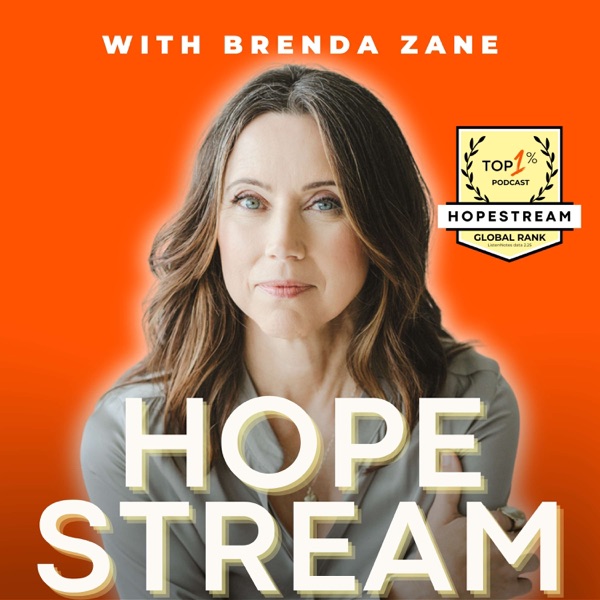
Hopestream: Parenting Kids Through Addiction & Mental Health
When your teen or young adult is misusing drugs or alcohol, you need more than just tactics—you need hope, healing, and a path forward for your entire family.
Hopestream delivers expert guidance and emotional support for parents navigating their child's substance use and mental health struggles. Hosted by Brenda Zane, Mayo Clinic Certified health coach and CRAFT-trained Parent Coach who nearly lost her son to addiction, this podcast goes beyond "how to get them into treatment" to address the full ecosystem of this journey.
Episodes features:
• Leading addiction, prevention, and treatment experts
• Real stories from families who've been there
• Evidence-based strategies for helping your child
• Self-care and coping tools for parents
• Deeper conversations about finding meaning, joy, and even unexpected blessings through the hardest times
Whether you're dealing with a teen or young adult's drug use, alcohol misuse, or co-occurring mental health challenges, Hopestream offers the comprehensive support other parenting and addiction podcasts miss. This is your safe space to heal, learn, and discover you're not alone.
New episodes weekly. Join us between the episodes at hopestreamcommunity.org.
- Parenting chart
- #92
- Episodes
- 348
- Releases
- Weekly
- Typical length
- 56 min
- On air since
- 2020
- Latest episode
- 5 days ago
Episodes
348 episodes, newest first
-
39 min
Communicate Your Boundary With Calm, Confidence And Clarity, with Brenda Zane
Season 1, Episode 349
Show notes
ABOUT THE EPISODE:
You did it the way we practice it. You listened, you validated, you said the compassionate and true thing, and then named your boundary. Your kid looked at you like you had never understood them a day in their life. “You’re selfish. You just want to control me.” And there you are, feeling that familiar pull to explain it one more time, in different words, until they finally get it.
Seven years into the podcast and The Stream, how to set and hold a boundary is still the question I hear more than any other. So this week it is just you and me, talking about the part that so often goes missing, which is the moment right after you say it.
I share a few tools you can tuck into your back pocket, including one with a name that might make you laugh, a visualization that keeps you from playing verbal pickleball with your kid, and a line from a trial lawyer that has become one of my all time favorites. There are scripts too, including one for the holiday plans that are probably already humming in the back of your mind.
We also talk honestly about safety, because confidence looks very different when your child is escalating. And I tell you about the day I went to an ATM to help my son pay back a dealer, knowing in my gut it was not the true story.
If you have caved before, you have not erased your progress. Confidence tends to show up after the practice, not before it, and the first change you notice will most likely be in you.
If you are tired of defending a decision you already know is right, this one is for you.
YOU’LL LEARN:
• The small word in the middle of your sentence that quietly cancels out your empathy
• A three step way to name a boundary without opening a negotiation
• What to do with your kid’s words while they are still talking
• The one sentence I want you to get comfortable saying when your child is upset
• What to say when you gave in last time and want to go back to your original answerEPISODE RESOURCES:
• The Surprising Power of Non-Reactivity When Your Child Is Struggling, with Cathy Cioth
• Brook McKenzie on Hopestream episode 342
• You’re Waiting On Youby Brook McKenzie
• The Next Conversation: Argue Less, Talk More by Jefferson Fisher
• 988 Suicide & Crisis Lifeline:https://988lifeline.org
• The Stream, free two-week trial:https://hopestreamcommunity.org/try
• Worried Sick free ebook:https://hopestreamcommunity.org/worriedThis podcast is part of a nonprofit called Hopestream Community
Learn about The Stream, our private online community for moms
Find us on Instagram here
Watch the podcast on YouTube here
Download a free e-book, Worried Sick: A Compassionate Guide For Parents When Your Teen or Young Adult Child Misuses Drugs and AlcoholHopestream Community is a registered 501(c)3 nonprofit organization and an Amazon Associate. We may make a small commission if you purchase from our links.
-
56 min
Hope and Heartbreak: A Nurse Mom Couldn’t Fix Her Son’s Addiction, with Tara Norbeck
Season 1, Episode 348
Show notes
ABOUT THE EPISODE:
You know the mantra, even if you have never said it out loud: I can only be as happy as my unhappiest child. I held that one fiercely for years, and so did Tara Norbeck, until a therapist at her son’s rehab said something to her that rearranged the whole equation.
Tara spent her career as a level one trauma ICU nurse, the steady presence families leaned on in the worst hours of their lives. She knew how to assess, intervene, and fix. Then the script flipped, and she was the mom at the bedside holding her own son’s hand, with nothing in all that training that could fix what was happening to him.
Tara and I are two moms with plenty of scar tissue, and we talk about the things so many of us carry quietly. Grieving the future you pictured the first time they placed that baby in your arms. The shame that metastasizes when everything stays a secret. The way your child’s addiction can become your own, until it governs your mornings, your marriage, and every thought in between. She also shares a story about her youngest daughter, told years after the worst had passed, that gave me chills and may change how you see your other kids.
Tara is a woman of deep faith, and she offers a line about where to place your hope when nothing around your child looks hopeful that I will be holding onto for a long time. Her book, “Dear Mom of an Addict” was written because she needed it when her son was struggling, when she was lying awake at 2 AM, waiting for the phone to ring and dreading it at the same time.
If your own peace has been moored to your child’s worst day, this one is for you.
YOU’LL LEARN
• What a rehab therapist told Tara about her tears that changed how she showed up for her son
• The difference between anonymity and secrecy, and why only one of them protects your family
• Why joy and happiness are not the same thing when your child is struggling
• How the neuroscience of addiction can soften the “we didn’t raise you like this” reaction
• What Tara wishes she had done differently with her other childrenEPISODE RESOURCES:
• Tara’s book: Dear Mom of an Addict: Ten Truths You Need to Know to Parent Your Addicted Child and Reclaim Hope
• Tara Norbeck’s website
• Tara Norbeck’s website:https://taranorbeck.com
• God Loves You Most (Tara’s children’s book)
• Free resources from Tara:https://taranorbeck.com/freebies
• Tara on Instagram:https://www.instagram.com/taranorbeckThis podcast is part of a nonprofit called Hopestream Community
Learn about The Stream, our private online community for moms
Find us on Instagram here
Watch the podcast on YouTube here
Download a free e-book, Worried Sick: A Compassionate Guide For Parents When Your Teen or Young Adult Child Misuses Drugs and AlcoholHopestream Community is a registered 501(c)3 nonprofit organization and an Amazon Associate. We may make a small commission if you purchase from our links.
-
55 min
Strategies For Parenting A Stuck Young Adult, with Kim Muench
Season 1, Episode 347
Show notes
ABOUT THE EPISODE:
You have probably been scanning for it for a while. The one consequence that will finally get your 25-year-old out of their room and into a life that looks like forward motion. You can't ground them. You can't take the phone. And you've already decided you will not make them homeless, so what's left?
Kim Muench knows that question from both sides of the kitchen table. She's a Jai Institute for Parenting certified coach, the founder of Real Life Parent Guide, and a mom of five whose oldest son's drinking in his early twenties sent her back to college and into coaching parents of young adults who are stuck. Hundreds of thousands of parents follow her on Instagram and TikTok, and her new book, Lost in Place: How to Support, Motivate, and Launch an Adult Child, comes out November 24.
Kim doesn't hand out the perfect consequence, because she doesn't believe there is one. What she offers instead is a shorter list of what is actually yours to control, and a way of sorting helping from enabling that I kept turning over long after we hung up. She also tells a dog-sitting story that is so ordinary and so telling that every one of us will see ourselves in it.
We talk about the fear that keeps so many of us frozen, especially when self-harm has been part of the picture, and Kim asks a question I had never heard framed this way: why is it only our kids who get to hit rock bottom?
She also explains why she refuses to use the phrase "failure to launch," and her reason made me exhale a little.
If you have a 20-something at home who seems to be standing still while you do all the running, this one is for you.
YOU'LL LEARN:
• The three things Kim says are truly yours to control once your child is an adult, and what's missing from that list
• One simple question that helps you tell whether you're helping or enabling
• What a family dog revealed about how one mom was over-functioning for her son
• The four C's Kim teaches parents who have lost their footing
• Why Kim believes parents are allowed to hit their own rock bottomEPISODE RESOURCES:
• Real Life Parent Guide:https://www.reallifeparentguide.com
• Work with Kim, coaching and parent support group:https://www.reallifeparentguide.com/services
• Kim's free downloads, including Setting Boundaries That Stick:https://www.reallifeparentguide.com/free-downloads
• Lost in Place: How to Support, Motivate, and Launch an Adult Child:https://www.amazon.com/Lost-Place-Support-Motivate-Launch/dp/1394422407
• Kim on Instagram:https://www.instagram.com/kimmuenchparentcoach
• Kim on TikTok:https://www.tiktok.com/@kimmuenchparentcoach
• The Stream, free two-week trial:https://hopestreamcommunity.org/try
• Worried Sick free ebook:https://hopestreamcommunity.org/worriedThis podcast is part of a nonprofit called Hopestream Community
Learn about The Stream, our private online community for moms
Find us on Instagram here
Watch the podcast on YouTube here
Download a free e-book, Worried Sick: A Compassionate Guide For Parents When Your Teen or Young Adult Child Misuses Drugs and AlcoholHopestream Community is a registered 501(c)3 nonprofit organization and an Amazon Associate. We may make a small commission if you purchase from our links.
-
52 min
Kratom, 7-OH and Gas Station Drugs: What Every Parent Needs to Know, with Dean Francis
Season 1, Episode 346
Show notes
ABOUT THE EPISODE:
It's the green powder in the shaker bottle, the little blue shot by the register, the "herbal supplement" your kid bought for focus. If you've been quietly wondering whether kratom is something to worry about, drop everything and tune in.
Dean Francis's son Cameron was an elite college runner, closing in on a sub four-minute mile, when he found kratom online, sold as a plant-based boost for energy and focus. For a few months it did exactly what the marketing promised. Then his running slid, the anxiety showed up, and nobody in the family connected any of it to the powder he was shaking into his water bottle every day. It took an ER doctor in 2021 to say it plainly: this is an opioid, he’s addicted, and it's serious.
Dean got mad, and then he got busy. He founded End Kratom Addiction, and he showed up to this conversation with a mountain of knowledge (and a few products to hold up on camera, so the YouTube version is worth a watch). We talk about what kratom actually does in the body, the forms kids are buying it in, why the "safe natural leaf" story isn’t all it’s been touted as, and the Billion-dollar business keeping it on gas station shelves. He also gets honest about what treatment looked like for Cameron, and the gap in care that cost him more than anyone expected.
This is an educational episode, and it's also the wake-up call I think every parent needs, whether or not your child is struggling right now. What's sold at the corner store down the street may not be what you or your child thinks it is.
YOU'LL LEARN
• What kratom turns into once it reaches the liver, and why that changes everything
• The popular "energy shot" Dean held up that most parents would never look at twice
• Why the "used safely for centuries in Southeast Asia" story should be taken with a grain of salt
• The treatment mistake Dean wishes someone had warned his family about
• How you can add your voice to the push to make kratom a controlled substanceEPISODE RESOURCES:
• End Kratom Addiction website
• Stop the Magicians campaign, petition, and End Kratom Addiction film
• Dopesick series on Apple TV or Disney Plus
• http://kratomquitters.com
• Free parent PDF: What Kratom Products Look LikeThis podcast is part of a nonprofit called Hopestream Community
Learn about The Stream, our private online community for moms
Find us on Instagram here
Watch the podcast on YouTube here
Download a free e-book, Worried Sick: A Compassionate Guide For Parents When Your Teen or Young Adult Child Misuses Drugs and AlcoholHopestream Community is a registered 501(c)3 nonprofit organization and an Amazon Associate. We may make a small commission if you purchase from our links.
-
56 min
The Surprising Power Of Non-Reactivity, with Cathy Cioth
Season 1, Episode 345
Show notes
ABOUT THE EPISODE:
The morning of our move, the pods were in the driveway, my dad had shown up ready to work, and my son was barely awake and in no shape to lift a box. Half an hour in, he asked if we were almost done. I felt the butterflies start up in my chest, and within seconds I was matching his drama word for word, with my dad standing right there taking it all in.
Cathy has her own version of that moment - and I’m sure you do as well. We can laugh about it now, but both of us spent years believing we were responding to our kids when we were really just adding fuel to their fire.
This episode is about non-reactivity, the piece of the Invitation to Change approach that I think quietly gets left behind while we focus on more concrete things like boundaries and natural consequences. Chaos needs two participants, so when you stop supplying your half, something shifts, and it has nothing to do with controlling your child.
Cathy and I talk about where reactivity shows up in your body before your brain catches up, why the rules every "good family" follows can pull you into the wrong fight, and what to do when the demands and gaslighting leave you wondering who the parent is in your house. We also talk about safety, because sometimes that pounding heart is telling you something real.
And we re-share a line from our friend Dina Cannizzaro that I think every parent should memorize. Put it on a sticky note, or your forearm, or bathroom mirror - it’s pure gold.
If your home has started to revolve around your child's moods and you’re tired of losing the same argument over and over, this one is for you.
YOU'LL LEARN:
• What Cathy and I each finally did mid-blowup that changed the relationship dynamics
• The early warning signs your body sends before you say something you regret
• Why the small things you care about most can be the perfect distraction for your kid
• Two questions to ask yourself when you feel triggered, and why one of them is about your safety
• The powerful line Dina recommends to step away from a fight without walking away from your childEPISODE RESOURCES:
• Hopestream podcast episode 297 with Dina Cannizzaro
This podcast is part of a nonprofit called Hopestream Community
Learn about The Stream, our private online community for moms
Find us on Instagram here
Watch the podcast on YouTube here
Download a free e-book, Worried Sick: A Compassionate Guide For Parents When Your Teen or Young Adult Child Misuses Drugs and AlcoholHopestream Community is a registered 501(c)3 nonprofit organization and an Amazon Associate. We may make a small commission if you purchase from our links.
-
1 hr 1 min
What Recovery Looks Like For Parents, with Janice
Season 1, Episode 344
Show notes
ABOUT THE EPISODE:
If you’re parenting a young person struggling with substance and someone tells you that you need recovery too, it can land sideways since you're not the one using. You're just trying to hold everything together while your kid gets better. And you're already doing so much: the books, therapy, podcasts, late-night Googling.
Janice asked that question anyway. A member of The Stream and mom of two adult kids now in recovery, she used to be the one everyone called to get things done not for a hug. When she Googled what drugs her son was using, she chose to get educated instead of feeling sorry for herself. That education pointed straight back at her.
We talk about the two biggest shifts she had to make (one starts before you say a word), the small non-negotiable practices she keeps no matter what's happening with her kids, and a standoff over the air conditioning that taught her more than she expected plus the question she asks herself when her own recovery feels like walking away from her child.
It felt like the right way to close out Recovery Month, with the parent who so often gets left out of the conversation. If you've poured everything into your child's recovery and nothing into your own, this one's for you.
YOU'LL LEARN:
• What "doing the work" meant for Janice, after months of research
• The two biggest shifts she had to make and why one starts before a word is spoken
• The small, unglamorous practices she keeps non-negotiable, no matter what
• What a standoff over the air conditioning taught her about the rope she kept picking up
• The question she asks when her own recovery feels like abandoning her childEPISODE RESOURCES:
• Beyond Addiction: How Science and Kindness Help People Change, by Jeffrey Foote, Carrie Wilkens, and Nicole Kosanke
• Co-Dependency Isn't What You Think, with Rawly Glass, LCSW: Hopestream podcast episode 324
• Hopestream Community free two-week trial of The Stream:https://hopestreamcommunity.org/try
• Free e-book: Worried Sick by Brenda Zane:https://hopestreamcommunity.org/worriedThis podcast is part of a nonprofit called Hopestream Community
Learn about The Stream, our private online community for moms
Find us on Instagram here
Watch the podcast on YouTube here
Download a free e-book, Worried Sick: A Compassionate Guide For Parents When Your Teen or Young Adult Child Misuses Drugs and AlcoholHopestream Community is a registered 501(c)3 nonprofit organization and an Amazon Associate. We may make a small commission if you purchase from our links.
-
59 min
From Self-Harm to Healing: A Highly Sensitive Girl’s Path to Recovery, with Ciara Fanlo
Season 1, Episode 343
Show notes
ABOUT THE EPISODE:
You’ve heard some version of it: Leave me alone! I know what I am doing! You don't understand me!” Ciara Fanlo said all of that to her mother, but what her mom didn’t know was that those statements were hiding a plea…please help me.
Ciara was a sensitive kid in San Francisco, the kind who felt everything the world hurled at her at full volume before she had language or coping skills for it. Her parents divorced and she started self-harming by age ten, before she’d ever seen anyone else do it. She just knew she needed to displace the emotional pain she felt.
By high school she had been through therapists, medications, and a residential program. She came home on a contract and broke every rule on it in one afternoon, which ended with a wrecked car, police, and her mother angrier than she had ever seen. On the drive home they passed a church, and her mom pulled into the parking lot.
That stop at the church led to a life-changing wilderness therapy experience where she spent three months getting to know and love herself. One night in the wild of Colorado she looked up at the moon and felt something she had never felt in her life, and it changed what she thought was possible. Today she mentors teen girls through her practice, Homing Instinct.
This is a recovery story, and it is also the closest thing to a translation I can hand you. Ciara says out loud what our kids cannot, including one line about hope that will especially resonate if your child currently feels out of control and beyond reach.
If your child is pushing you away with both hands, this one is for you.
YOU'LL LEARN
• The second message running underneath every angry "leave me alone," and why parents almost never hear it
• What Ciara wanted an adult to say to her to felt heard vs. diagnosed
• How she unraveled a home contract in a single afternoon, and her mom’s reaction
• Why her mom got the worst of her, and why that was never about her momEPISODE RESOURCES:
• Homing Instinct:https://www.hominginstinct.org/
• Work with Ciara, start here for parents:https://www.hominginstinct.org/mentorship
• Peer support groups:https://www.hominginstinct.org/peer-support-groups
• Ciara's essays:https://www.hominginstinct.org/blog
• Homing Instinct parent support group on Facebook:https://www.facebook.com/groups/hominginstinct
• Ciara on Instagram:https://www.instagram.com/ciarafanlo
• The Stream, free two-week trial:https://hopestreamcommunity.org/try
• Worried Sick free ebook:https://hopestreamcommunity.org/worriedThis podcast is part of a nonprofit called Hopestream Community
Learn about The Stream, our private online community for moms
Find us on Instagram here
Watch the podcast on YouTube here
Download a free e-book, Worried Sick: A Compassionate Guide For Parents When Your Teen or Young Adult Child Misuses Drugs and AlcoholHopestream Community is a registered 501(c)3 nonprofit organization and an Amazon Associate. We may make a small commission if you purchase from our links.
-
1 hr 11 min
Parents: You Change First, Then Them, with Brook McKenzie
Season 1, Episode 342
Show notes
ABOUT THE EPISODE:
You might already know what needs to change - or at least that something definitely needs to change in the dynamic with your child. Underneath the crisis calls, the covered debts, the conversations you soften before you have them, there’s a quiet voice telling you, “this has to stop.” But how?
Brook McKenzie says that voice is right, and then says the harder part. You must go first.
Brook is a Licensed Chemical Dependency Counselor, the CEO of Burning Tree Programs, and a person in long-term recovery. He’s also the author of the field guide parents truly need, “You’re Waiting On You: Why Real Recovery Starts With You - Not Them.”
Brook didn’t find recovery until his thirties, and he’s clear about why. His parents loved him fiercely and did what most of us do. They softened the truth, absorbed the consequences, and kept the peace. He describes what that felt like from the inside, and it’s not what you might expect.
The moms in The Stream talked about Brook’s book for months before I finally read it, in an hour and a half, and emailed him that same day.
What lands here is that Brook does not perform sympathy. He highlights that the things that feel hardest are usually the effective ones, and the things that feel like relief are usually what keeps everyone stuck. He has his own word for what parents are doing when they rescue, and spoiler alert, it is not enabling. He also has an answer to the question that is in the back of every parent’s head, the one that starts with "but what if they die?"
I asked about the sixteen year old you still have to house and feed, and what belongs on the list of what you will and will not do. He answered both without flinching.
If you have been waiting for your child to be ready and change, this one might sting, and then it will help.
YOU'LL LEARN
• Why Brook doesn’t use the word enabling, and the word he uses instead
• The two things he says sit underneath every ineffective parenting decision, without exception
• What he says to parents who tell him they will not put their child on the street
• The one change in how you talk to your child that he has watched work in months, sometimes weeks
• What you’re really telling your child when you fix their problems, clean up their mess and make decisions for them
• The specific thing he wants you to bring to your next therapy sessionEPISODE RESOURCES:
• Brook McKenzie’s website
• Get the book, “You’re Waiting On You, Why Real Recovery Starts With YOU, Not Them”
• Burning Tree Ranch websiteThis podcast is part of a nonprofit called Hopestream Community
Learn about The Stream, our private online community for moms
Find us on Instagram here
Watch the podcast on YouTube here
Download a free e-book, Worried Sick: A Compassionate Guide For Parents When Your Teen or Young Adult Child Misuses Drugs and AlcoholHopestream Community is a registered 501(c)3 nonprofit organization and an Amazon Associate. We may make a small commission if you purchase from our links.
-
1 hr 22 min
His Mom’s Hard Boundary Drove His Recovery, with Darren Hobbs
Season 1, Episode 341
Show notes
ABOUT THE EPISODE:
You‘ve probably watched your child make a decision so obviously terrible you could not understand how it made sense to them. Darren Hobbs can tell you exactly how it looked, because he made that decision. He had done treatment. He had a sponsor, a home group, a year chip. Then he took some cash he made, drove back to his old dealer, and fully believed he could be the sober cocaine dealer in a small college town.
His story starts at 14, with a Vicodin prescription after surgery and the discovery that with substances in him, everything was better, easier and more fun. It runs through years of drinking and cocaine, wrecked cars, stolen money, and parents who kept trying to love him out of it. It ends, or maybe begins, on the floor of a Nashville bar with undercover detectives on top of him, staring at 20 years in prison.
What changed him was not the arrest. It was a phone call from his mother, and one sentence she said that I know broke her heart - and drove his recovery.
Darren is a Certified Intervention Professional, founder of The Firm Addiction Consulting in Nashville, and a cast member on A&E's Intervention. He has taken hundreds of families through interventions, and he is blunt about what parents do that keeps their kids stuck. He also told me the most extraordinary story of divine timing I have heard on this show. If you watch on YouTube, you will see the goosebumps on both of us.
This is the first of four recovery stories this month, and I started here because Darren says out loud the things our kids cannot.
If you are watching your child choose the things that will hurt them and cannot make sense of it, this one is for you.
YOU'LL LEARN
• What Darren told himself the day he decided he could sell cocaine and stay sober
• The one sentence his mother said on the phone that did what years of crime, jail and chaos never did
• Why he says parents are the ones who installed the buttons their kids know how to push
• The two things he sees in almost every family who calls him at crisis point
• The tool he calls an industry guarded secret for families who cannot get in a room togetherEPISODE RESOURCES:
• The Firm Intervention and Addiction Consulting, Nashville, TN
• Darren on Instagram
• Die Sober Podcast, hosted by Darren Hobbs and Zach Livingston:https://www.thefirmaddictionconsulting.com/podcast
• The Stream, free two-week trial:https://hopestreamcommunity.org/try
• Worried Sick free ebook:https://hopestreamcommunity.org/worriedThis podcast is part of a nonprofit called Hopestream Community
Learn about The Stream, our private online community for moms
Find us on Instagram here
Watch the podcast on YouTube here
Download a free e-book, Worried Sick: A Compassionate Guide For Parents When Your Teen or Young Adult Child Misuses Drugs and AlcoholHopestream Community is a registered 501(c)3 nonprofit organization and an Amazon Associate. We may make a small commission if you purchase from our links.
-
48 min
What Are Boundaries and Why Parents Need Them, with Cathy Cioth
Season 1, Episode 340
Show notes
ABOUT THE EPISODE:
This week's episode is a Summer Replay originally aired in 2023.
You have rules. You have said them out loud, more than once. And somehow your kid is still doing exactly what they want, and you are the one lying awake wondering why nothing you say seems to land.
Before I knew the word boundaries, that was my whole life. I felt invisible in my own house. Like a doormat. Like the rules I set were something my son found funny. The anger built until I was short with everyone, and I once yanked the cord out of the wall and threw an Xbox across a room. I'm definitely not proud of that reaction and never thought I'd be that mom.
What changed things for me was learning that a boundary has nothing to do with controlling how someone else behaves. That distinction sounds small but it's not.
Cathy and I sat down for this one because we watch parents struggle with it constantly. Not with coming up with the boundary. The hard part is holding it, and there is one specific reason we see people fold, and it is probably not what you think.
We get honest about our own attempts, including the ones that went badly. Cathy shares the boundary she was too scared to enforce for a long time. I share the one that took therapy to get through; the day the moving pods were packed and my son was in a sleeping bag in an empty room.
Fair warning. When you start holding boundaries after years of not holding them, things usually get more uncomfortable before they get better. We talk about that too.
If you feel like you have lost your footing in your own home, start here.
YOU'LL LEARN
• The one reason we see parents abandon boundaries they have already set, and why willpower has nothing to do with it
• Why an ultimatum and a boundary can sound identical out loud and do opposite things
• The picket fence and the hula hoop, and which one you need for which kind of boundary
• The boundary Cathy was too afraid to enforce, and the conversation with her husband that finally made it possible
• What it actually cost me to hold the hardest boundary of my life, and who I needed around me to do itEPISODE RESOURCES:
• Setting and Holding Healthy Boundaries workshop
• Original episode: Ep. 174
• Learn about The Stream, our private online community for moms
• Download a free e-book, Worried Sick: A Compassionate Guide For Parents When Your Teen or Young Adult Child Misuses Drugs and AlcoholThis podcast is part of a nonprofit called Hopestream Community
Learn about The Stream, our private online community for moms
Find us on Instagram here
Watch the podcast on YouTube here
Download a free e-book, Worried Sick: A Compassionate Guide For Parents When Your Teen or Young Adult Child Misuses Drugs and AlcoholHopestream Community is a registered 501(c)3 nonprofit organization and an Amazon Associate. We may make a small commission if you purchase from our links.
-
44 min
Sending Your Struggling Kid To College, with Cathy Cioth
Season 1, Episode 339
Show notes
ABOUT THE EPISODE:
This week's episode is a Summer Replay from 2025.
There is a version of August that has been living in your head since they were small. The car packed to the roof. The drive. Target for the bedding, the sweatshirt, the bumper sticker, the parent barbecue where everybody's kid looks fine. Except it is three weeks out and you are not picturing it anymore. You are watching them.
Cathy and I both know what it costs to send them anyway. The tuition is paid. The housing is paid. Somebody in the family belongs to that fraternity. And underneath all of it sits the thing almost nobody says out loud, which is that you are tired, and you need your house to be quiet again. We understand that. We have both wanted the break badly enough to talk ourselves past our own gut.
Cathy's son told her two weeks before he left that he did not think he wanted to go. They chalked it up to nerves. He was right, and what followed was not one crisis. It was months of them, and eventually two of her kids were struggling under the same roof at the same time.
So we get into what we would each do differently now. The paperwork almost no parent thinks about until they are standing in a hospital hallway being told nothing. What is already sitting on that campus that you could call and ask about before move-in day. Why deferring a year is not the punishment it feels like. And the grief, which is real, of a fall you do not get to have.
If your kid is leaving in a few weeks and something in you has not settled, listen before you load the car.
YOU'LL LEARN
• What Cathy's son said two weeks before move-in, and what she and her husband decided it meant
• The document most parents never think about until a hospital will not tell them anything
• What is already available on most campuses that almost nobody calls to ask for
• Why the money you think is locked in probably is not
• What Cathy and I both got instead of the college experience we wantedEPISODE RESOURCES:
• Success is Subjective podcast
• Treatment locator -https://www.allkindsoftherapy.com/
• Assoc. Of Recovery in Higher Education - Collegiate Recovery Programs
• Learn about The Stream, our private online community for moms
• Download a free e-book, Worried Sick: A Compassionate Guide For Parents When Your Teen or Young Adult Child Misuses Drugs and AlcoholThis podcast is part of a nonprofit called Hopestream Community
Learn about The Stream, our private online community for moms
Find us on Instagram here
Watch the podcast on YouTube here
Download a free e-book, Worried Sick: A Compassionate Guide For Parents When Your Teen or Young Adult Child Misuses Drugs and AlcoholHopestream Community is a registered 501(c)3 nonprofit organization and an Amazon Associate. We may make a small commission if you purchase from our links.
-
54 min
Substance Use Isn't the Whole Story, with Dr. Graham Husick
Season 1, Episode 338
Show notes
ABOUT THE EPISODE:
Your kid has been to a program. Maybe two. Maybe four. Each one handed back a diagnosis list a little longer than the last, and none of it ever explained why nothing is sticking.
My guest uses a comparison in this one that stopped me cold. If your child had stomach pain, no surgeon would just open them up and look around. They would scan first. And yet with our kids we tend to go straight to treatment, treatment, treatment, without asking who this person actually is underneath the substance use. He calls it treating the problem inside the person instead of the person with the problem, and once you hear it you cannot unhear it.
Dr. Graham Husick is a clinical psychologist in Coeur d'Alene, Idaho, and the director of clinical assessment at the Lakeside Independence Program, which works with severe and complex mental health cases. Part of his job is reading the evaluations other people wrote about kids like ours, and he can tell you precisely what keeps getting left out of them.
We get into why he includes IQ testing in every evaluation, what your child's preferred substance choice tells him that they could never say out loud, and why he will usually steer a family toward paying out of pocket rather than running a psych eval through insurance. He also names something I had never heard put into words: why a kid who is finally doing well will sometimes walk straight back into the thing that nearly took them out. I did not have any of this intelligence when my son was in it, and I have thought about that a lot since.
If your child has cycled through program after program and you still cannot answer the question "but what is actually going on with them," start here.
YOU'LL LEARN:
• Why Dr. Husick recommends not testing in active addiction, and the window he actually wants
• What a diagnosis list eight items long tells you, and what it can never tell you
• Why he includes IQ testing every time, even when nobody asked for it
• What the substance your child reaches for most says about what they may be needing
• The recommendation he sometimes has to put in writing that parents least want to readEPISODE RESOURCES:
• Dr. Husick’s website
• Lakeside Independence Program websiteThis podcast is part of a nonprofit called Hopestream Community
Learn about The Stream, our private online community for moms
Find us on Instagram here
Watch the podcast on YouTube here
Download a free e-book, Worried Sick: A Compassionate Guide For Parents When Your Teen or Young Adult Child Misuses Drugs and AlcoholHopestream Community is a registered 501(c)3 nonprofit organization and an Amazon Associate. We may make a small commission if you purchase from our links.
-
1 hr 1 min
Becoming Emotionally Sturdy When Your Child Struggles, with Cathy Cioth
Season 1, Episode 337
Show notes
ABOUT THE EPISODE:
There is a version of a house where everyone moves quietly. You time your questions. You read the door slam before you read the room. You have gotten so good at it that you barely notice you are doing it anymore, and somewhere in there, one person's mood started running the whole place.
Cathy and I both lived there. I matched my son's emotional state toe to toe and had no skills to separate the two. Cathy handed so much authority over to her kids that her husband walked in the door every night and had to be the heavy, which put a wedge between them that added to their home’s dysfunction.
What we talk about in this episode is what pulled us out, and the term ‘emotional regulation’doesn’t adequately cover it. I made a decision while I was outlining this episode not to use that phrase, because I think it gets thrown around in a way that misses what you’re up against in the real world. Regulating is one thing. Planting your feet while a young person rages at you - and not picking up the rope - that takes something closer to durability. Stamina. Sturdiness.
Here is why we chose this topic: it is one of the most powerful things in this entire experience you are completely in charge of. You can’t control whether they show up for work, school or court. But this one is yours, and you can start on it today and feel something shift by the end of the week.
I also tell a story involving ten dollars and a vacuum, as a real world example of why emotional durability is crucial for your sanity and your child’s growth.
If you’re exhausted and need something to change this week, this is for you.
YOU'LL LEARN:
• Why I stopped using the phrase emotional regulation, and what Cathy and I use in its place
• The moment Cathy realized she had handed her parental authority over, and what it cost at home
• The ten dollar story with the vacuum that I still cringe about
• Where dysregulation shows up in your body first, and why that is the signal to work with
• Why the low stakes moments are where this can start growing in youEPISODE RESOURCES:
• Self coaching questions, Hopestream podcast Episode 333
• Self coaching questions, Hopestream podcast Episode 328
• Beyond Addiction: How Science and Kindness Help People Change
• Beyond Addiction Workbook
• Free e-book, Worried Sick: hopestreamcommunity.org/worried
• Free two-week trial of The Stream: https://hopestreamcommunity.org/try/This podcast is part of a nonprofit called Hopestream Community
Learn about The Stream, our private online community for moms
Find us on Instagram here
Watch the podcast on YouTube here
Download a free e-book, Worried Sick: A Compassionate Guide For Parents When Your Teen or Young Adult Child Misuses Drugs and AlcoholHopestream Community is a registered 501(c)3 nonprofit organization and an Amazon Associate. We may make a small commission if you purchase from our links.
-
18 min
The Guilt That Helps You and The Guilt That Just Hurts, with Brenda Zane
Season 1, Episode 336
Show notes
ABOUT THE EPISODE:
You have probably rehearsed the apology. I'm sorry I didn't catch this sooner. I'm sorry I wasn't a better parent. I'm sorry this is happening to you. If some version of that speech runs on a loop in your head, this quick solo episode is me asking you to put it down.
Real accountability matters. If there is something you actually did that caused harm, owning it is valid and important. But that is not the same as taking responsibility for your kid's choices, their biology, a disease you didn't cause, or life's timing. Most of the guilt I hear from parents lives in that second category, and it is quietly stealing the energy you need for what's sitting right in front of you.
In this episode I talk about why so much of what we call guilt is actually something else wearing a disguise, and I give you a litmus test that tells you in one question whether you're making a real apology or doing something else entirely.
I also take you back to one of the heaviest seasons of my own life, when my son was transported to wilderness therapy at 16 and I spent months buried under a mountain of shame. What I was doing during that time, and what I wasn't doing, taught me the difference between guilt that sharpens how you show up and guilt that just corrodes. I close with a short pen and paper exercise that might leave you staring at a nearly empty page, in the best possible way.
There is no award for the most guilt-ridden parent on the planet. If there were, I would have already won it. Consider this your permission slip.
YOU'LL LEARN:
• Why "I'm sorry I didn't catch it sooner" is not the apology you think it is
• The difference between real accountability and misdirected responsibility, and why collapsing the two keeps you stuck
• The two emotions parents often carry that get mistaken for guilt
• A one-question litmus test that separates a real apology from self punishment
• A five minute writing exercise that shows you how much of your self blame is actually yoursEPISODE RESOURCES:
• Free e-book, Worried Sick
• Try The Stream free for two weeks
• Anger Solo - Podcast Episode 335This podcast is part of a nonprofit called Hopestream Community
Learn about The Stream, our private online community for moms
Find us on Instagram here
Watch the podcast on YouTube here
Download a free e-book, Worried Sick: A Compassionate Guide For Parents When Your Teen or Young Adult Child Misuses Drugs and AlcoholHopestream Community is a registered 501(c)3 nonprofit organization and an Amazon Associate. We may make a small commission if you purchase from our links.
-
30 min
Anger: The Emotion You're Not Supposed To Feel But Definitely Do
Season 1, Episode 335
Show notes
ABOUT THE EPISODE:
There's an emotion most of us are carrying that we don't talk about, because we're pretty sure we're not allowed to feel it. Anger. Anger at where our kid's choices have led our family. Anger at what they're doing to themselves. And underneath it, a heavy layer of guilt for feeling any of it at all.
In this solo episode, I'm getting honest about it, starting with a distinction that changes everything: anger at your child is not the same as anger at the situation. One of them usually isn't anger at all. It's grief wearing a really convincing mask, and it needs a completely different response.
There's a cultural script that says good parents don't get angry at a struggling kid. We're supposed to be endlessly patient, compassionate, calm. I have yet to meet one person who pulls that off all the time. So the anger goes underground, and it leaks out sideways: sarcasm, silence, blowups over nothing, or shame that quietly eats at you while you look perfectly fine on the outside.
I'm also telling you my McDonald's parking lot story, the day my anger completely took the wheel and I said things to my son I never meant. I'm not exempt from any of this. Nobody is.
Then I'll walk you through a different way to see anger entirely, one that turns it from something that owns you into something that informs you, plus real things you can do with it starting today.
If you've been carrying anger and beating yourself up for feeling it, come listen. You are so.not.alone.
YOU'LL LEARN
• The one distinction that determines whether your anger needs a boundary or something much softer
• Where buried anger actually goes, and who ends up paying the price for it
• A reframe that turns anger from a character flaw into useful information
• What happened in a McDonald's parking lot that taught me how emotional reactivity can wreck a moment (or longer)
• How to tell the difference between releasing your anger and just avoiding itEPISODE RESOURCES:
• The Dance of Anger, Harriet Lerner
• Hopestream Resources
• Episode 174This podcast is part of a nonprofit called Hopestream Community
Learn about The Stream, our private online community for moms
Find us on Instagram here
Watch the podcast on YouTube here
Download a free e-book, Worried Sick: A Compassionate Guide For Parents When Your Teen or Young Adult Child Misuses Drugs and AlcoholHopestream Community is a registered 501(c)3 nonprofit organization and an Amazon Associate. We may make a small commission if you purchase from our links.
-
1 hr 33 min
THC-Induced Psychosis: What Parents Need to Know Now
Season 1, Episode 334
Show notes
ABOUT THE EPISODE:
This episode is long overdue, and I know many of you have been waiting for it. Over the past two to three years, the conversations in our community have shifted. It used to be all about opiates and fentanyl. Now a huge number of our moms are watching their kids change right in front of them because of high-potency THC products, and it is happening fast. So I brought together three people with very different vantage points on THC-induced psychosis and what it is doing to developing brains.
First you'll hear from Lynne, a battle-tested mom from The Stream who is living this right now with her son. She shares what the early signs looked like in her home, what she wishes she had known, and the one shift that changed her conversations with him.
Then I sat down with Dr. David Rowe, Director of Neuropsychology at United Assessment. He explains what psychosis actually looks like (it is rarely what you see in the movies), when it becomes a medical emergency, and how a solid psychological evaluation can finally answer the question every parent asks: what is driving the bus?
Finally, Stefan Bate, co-CEO of Jaywalker Lodge, returns to the show. He has spent almost two decades in this field, and what he is seeing in treatment today stopped me in my tracks. The product your kid is using is not the marijuana you remember. Not even close.
This is a heavy topic, but you will leave with real information and real hope, because recovery is possible. My guests see it happen every day.
If you have ever looked at your child and wondered, what am I actually seeing right now, this episode is for you.
YOU'LL LEARN
• Why “it’s just weed” no longer means what it did a generation ago
• The subtle signs of psychosis that are easy to explain away as something else
• What a psychological evaluation can reveal, and the sobriety myth that stops families from getting one
• The reason THC-related psychosis is catching even seasoned treatment providers off guard
• A reframe that could change how urgently you respond to your child’s useEPISODE RESOURCES:
• Dave Rowe, Ph.D., United Assessment website
• Stefan Bate, Jaywalker Lodge website
• Download our THC Guide For Parents
• Free e-book, Worried Sick
• Try The Stream free for two weeks
• Hopestream episode 259 with Stefan Bate on recovery captialThis podcast is part of a nonprofit called Hopestream Community
Learn about The Stream, our private online community for moms
Find us on Instagram here
Watch the podcast on YouTube here
Download a free e-book, Worried Sick: A Compassionate Guide For Parents When Your Teen or Young Adult Child Misuses Drugs and AlcoholHopestream Community is a registered 501(c)3 nonprofit organization and an Amazon Associate. We may make a small commission if you purchase from our links.
-
1 hr 6 min
Practical Ways To Coach Yourself When Your Child Struggles With Alcohol or Drugs, With Cathy Cioth
Season 1, Episode 333
Show notes
You find the vape pen, or the pills, or the empty bottle at the bottom of the laundry basket. You take it, because that was the boundary. Within minutes your house goes from zero to two hundred: threats, slammed doors, a kid you barely recognize. Every instinct says respond right now, and if you are like Cathy and me, you do. Then you spend the next day trying to undo everything you said.
This episode is the practical companion to the self-coaching questions I shared in episode 328. Cathy and I walk through what we are calling Stream Vignettes, composite scenarios pulled from years of coaching calls, community posts, and our own homes. The confiscation that explodes. The natural consequence you have to sit through with your heart in your throat. The suicide threat that arrives attached to a demand for money. The family vacation you keep hoping will fix things.
For each one, we get into the questions that slow you down before you react, starting with the one we ask first every single time. We also cover what these questions are not for, which is a conversation I clearly needed about fifteen years ago.
What stayed with me most is something we kept circling back to: there is no expiration date on your response. Nothing requires you to handle the worst moment of your week at three in the morning. Cathy and I both have stories about what happens when you try.
If your home has a moment like this coming, and most of ours do, keep this one where you can find it.
YOU'LL LEARN:
• The question Cathy and I ask first in every single scenario, before anything else
• What your child's explosion over a confiscated substance is actually telling you
• The advice therapists gave us about suicide threats, even when you’re pretty sure it’s a negotiation tactic
• Who you are really rescuing when you cannot let a natural consequence play out
• Why there is no expiration date on your response, and what to say while you figure it outEPISODE RESOURCES:
• Hopestream podcast ep. 328 - 10 Self-Coaching Questions - Part 1
• Rawly Glass on Hopestream podcast 324 - consequences don’t workThis podcast is part of a nonprofit called Hopestream Community
Learn about The Stream, our private online community for moms
Find us on Instagram here
Watch the podcast on YouTube here
Download a free e-book, Worried Sick: A Compassionate Guide For Parents When Your Teen or Young Adult Child Misuses Drugs and AlcoholHopestream Community is a registered 501(c)3 nonprofit organization and an Amazon Associate. We may make a small commission if you purchase from our links.
-
45 min
Hard Conversations: Have Them Today, with Cathy Cioth
Season 1, Episode 332
Show notes
Trigger Warning: this episode discusses loss of a child due to substance use. Please decide if this is the right time to listen.
A few weeks before this episode was recorded, one of the moms in our community lost her son. He had been through treatment, through sober living and had the most supportive family. His parents had done everything possible, with grace and with love, and he still lost his battle with addiction. Cathy and I went back and forth about whether to talk about it - because we never want to add to the fear that already lives in your chest every single day.
But we’re asking you to do hard things, and that means we have to do the same. This is the reality of what our kids are facing. High-potency THC is not the weed of twenty years ago, and we are talking to parents every week whose kids are in crisis from it, not from fentanyl, not from meth, but from what many still consider the ‘safe one’.
We also talk about something we haven’t directly addressed on this show: vicarious trauma in our kids. The bullying on their phones where we can’t see it. The friend who overdosed in front of them. The violence at school they never mention. These are often the invisible fire under the behaviors that make no sense to you.
One thing stayed with me after we finished recording: the idea of speaking to your child as if every word might be the last they ever hear from you. Not in a morbid way, but as a filter. As a way back to what matters most.
If you have been putting something off because it feels too hard, or not quite urgent enough yet, this one is for you.
YOU’LL LEARN:
• Why Cathy and I almost did not share what happened, and what changed our minds
• What high-potency THC is doing to adolescent brains and why parents shouldn’t dismiss it as ‘safer’ than other substances
• The invisible traumas your kid may be carrying that explain the behaviors you can’t make sense of
• How to not pick up the rope when every instinct tells you to
• What one parent said about speaking to your child that might change your next interaction with themEPISODE RESOURCES:
• Stages of Addiction: Hopestream podcast episode 322
This podcast is part of a nonprofit called Hopestream Community
Learn about The Stream, our private online community for moms
Find us on Instagram here
Watch the podcast on YouTube here
Download a free e-book, Worried Sick: A Compassionate Guide For Parents When Your Teen or Young Adult Child Misuses Drugs and AlcoholHopestream Community is a registered 501(c)3 nonprofit organization and an Amazon Associate. We may make a small commission if you purchase from our links.
-
56 min
After Treatment: What the First 90 Days Really Look Like, with Beth Hillman
Season 7, Episode 331
Show notes
When Beth Hillman's son came home from wilderness treatment, the first crisis didn’t come from him. It came from her. Standing in the driveway, anxious and spiraling, she watched her teenage son look at her calmly and say, "Mom, look at me. I'm gonna be okay." Her first thought was not relief. It was, oh! I’m in big trouble.
Her son had come home with more access to his thinking brain than she had. He also came home to a mother who had not yet done her own work and was carrying expectations she could not even name. When he finally told her, "Mom, your expectations of how this is gonna go are going to wreck me," Beth had to get honest about what she was really asking of him.
Today Beth is a double certified life and parent coach, host of the Parenting Post-Wilderness podcast, and a familiar voice in our community, where she leads sessions and groups for parents in the fragile season after treatment.
In this conversation, we get real about the first 90 days after a child comes home, from both sides. Why kids may agree to everything just to get home, why pushback on a home plan might be the best sign you can get, and what your child is actually walking back into when they return to the house where the holes in the doors are. Beth names the piece most home plans are missing, and I think it will change how you prepare.
If your child is coming home from treatment soon, or is already home and wobbling, this episode was made for you.
YOU’LL LEARN:
• The driveway moment that convinced Beth she was the one in trouble
• Why kids check every box to get home, and why that is not manipulation
• What her son said about her expectations that stopped Beth cold
• The green flag most parents mistake for defiance
• The almost too simple practice Beth reached for when her brain went offlineEPISODE RESOURCES:
• Beth’s website - http://www.bethhillmancoaching.com
• Beth’s podcast, Parenting Post Wilderness
• Beth on Hopestream podcast episode 279
• Information onPAWS (post-acute withdrawal syndrome)This podcast is part of a nonprofit called Hopestream Community
Learn about The Stream, our private online community for moms
Find us on Instagram here
Watch the podcast on YouTube here
Download a free e-book, Worried Sick: A Compassionate Guide For Parents When Your Teen or Young Adult Child Misuses Drugs and AlcoholHopestream Community is a registered 501(c)3 nonprofit organization and an Amazon Associate. We may make a small commission if you purchase from our links.
-
16 min
A Love Letter for Parenting Kids Through Addiction, with Brenda Zane
Season 1, Episode 330
Show notes
ABOUT THE EPISODE:
There are days in this journey when the weight of it all becomes almost too much to carry. You are still showing up, still trying, still breathing through a kind of pain most people around you will never fully understand. A few years ago, I sat down and wrote something for you, for the mom and the dad and the grandparent in the thick of it, and I tucked it away. Today I pulled it back out.
This piece first appeared on Insight Timer, and it became the most-listened-to content there. I dusted it off because I needed something creative, and because I believe these words may land with where you are today. The world I recorded it in and the community we are now are not so different, and what I felt then, I still feel now.
This is not an interview. There is no guest, no framework, no five-step plan. It is just me, speaking out loud the things I wanted every struggling parent to hear in a heavy moment.
In this episode I ask you to set down, just for a few minutes, the weight you have been carrying. Not forever. Not in denial. Just long enough to breathe, to remember who you are outside of this fight, and to hear something true: this is not your whole life. You are still in there. And you are stronger than this feels right now.
If you are exhausted and need someone to remind you that you are not alone, this one is for you.
EPISODE RESOURCES:
• Free ebook Worried Sick
• Brenda’s content on Insight TimerThis podcast is part of a nonprofit called Hopestream Community
Learn about The Stream, our private online community for moms
Find us on Instagram here
Watch the podcast on YouTube here
Download a free e-book, Worried Sick: A Compassionate Guide For Parents When Your Teen or Young Adult Child Misuses Drugs and AlcoholHopestream Community is a registered 501(c)3 nonprofit organization and an Amazon Associate. We may make a small commission if you purchase from our links.
Mental Health lists
More Mental Health shows picked out from the charts












More in Mental Health
Placed highest on Apple Podcasts' Mental Health chart right now