Podcast
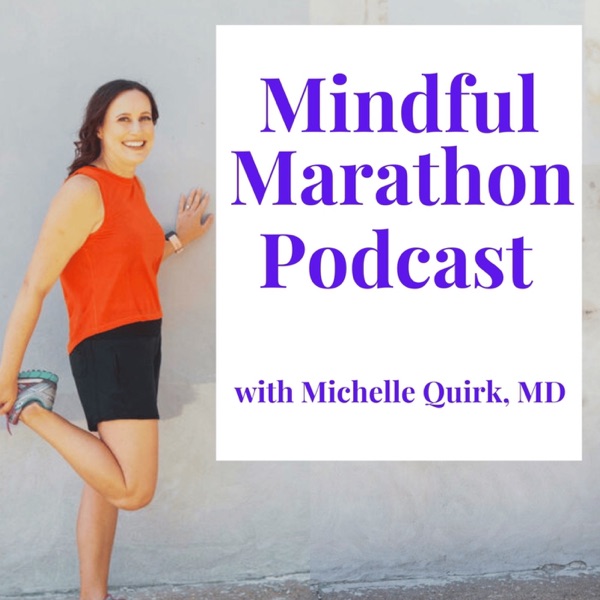
Mindful Marathon Podcast
A podcast helping runners to run their own race. In each episode, you will hear how to get started, fuel better, keep going, recover, or simply enjoy running a little bit more. Hosted by Running Coach Michelle Quirk, MD. Find out more about the program at Mindful-Marathon.com.
- Episodes
- 103
- Releases
- Weekly
- Typical length
- 21 min
- On air since
- 2024
- Latest episode
- 1 day ago
Episodes
103 episodes, newest first
-
23 min
Ep 112: Cheering from the Sidelines - How to Be a Great Race Spectator, with Dr. Michelle Quirk of Mindful Marathon
Episode 112
Show notes
Being a great race spectator is about so much more than showing up at the finish line.
A few weeks ago, I traveled to Wilmington, North Carolina, to cheer on my husband, Tony, as he completed Ironman 70.3 North Carolina. Between the complicated race logistics, unpredictable weather, hours of cheering, and figuring out where to be along the course, I came away with plenty of thoughts about what makes someone a great race-day support person.
Whether you're cheering for someone running their first 5k, tackling a half marathon or marathon, or taking on an Ironman event, this episode is full of practical ways to support your athlete while making the experience more enjoyable for yourself, too.
In this episode, I share 6 tips for being a great race spectator:
•
Be your athlete's second brain. Learn the race logistics, read the athlete guide, and help your athlete stay organized before race day.
•
Have a communication plan. Talk through where you'll meet, where you'll spectate, and how you'll stay connected throughout the race. If there's an athlete tracking app, download it ahead of time.
•
Be present, cheer, and adapt. Prepare for the weather, wear comfortable shoes, bring snacks and water, and be flexible when plans change.
•
Be an encouraging presence. Find out what kind of encouragement your athlete appreciates, make a sign, bring your cowbell, and cheer for the other athletes, too!
•
Take care of yourself. Bring what you need to stay comfortable, plan for breaks, and remember that you don't have to see every mile to be a great spectator.
•
Celebrate your athlete after the finish. Have a meeting plan, consider bringing dry clothes or a snack, and give your athlete a little time to recover before asking all the race-day questions.
A few things to remember: Being a great spectator doesn't mean having the perfect plan or seeing your athlete at every possible location. It's about showing up, being flexible, and reminding them that they're not doing this alone.
Connect with Mindful Marathon:
•
Sign up for my free weekly newsletter for running tips, training advice, and inspiration https://mailchi.mp/6061ab0452d7/newsletter
•
Interested in personalized support with your running? Learn more about 1:1 coaching.
•
Follow along on Instagram: @mindful.marathon
*** The information contained in this podcast is intended to serve as educational information and is not intended or implied to be a substitute for professional medical advice, diagnosis or treatment. You should consult your primary care physician before undertaking any fitness regimen or exercise, which can pose serious health risks if undertaken or performed improperly. All content, including text, graphics, images, and information, contained in the videos is for general information purposes only and does not replace a consultation with your own doctor/advanced practice provider. ***
-
17 min
Ep 111: Packing for A Destination Race - Weather, Fuel, & A Flexible Mindset, with Dr. Michelle Quirk of Mindful Marathon
Episode 111
Show notes
Heading out of town for your next race? Packing for a destination race or run-cation takes a little extra planning, especially when you're preparing for unfamiliar weather, making sure you have the fuel that works for you, and navigating the unexpected twists of travel.
In this episode of the Mindful Marathon Podcast, Coach Michelle shares practical tips for preparing for your next race away from home, inspired by her own recent travels.
In this episode, we cover:
•
Pack for the weather, not just the race: What to consider when preparing for heat and sun, cold start lines, and rainy race conditions.
•
Bring your own fuel and hydration: Why it's helpful to pack the gels, chews, snacks, and water bottle you're familiar with, and how to plan for race-day fueling when traveling.
•
Pack a positive attitude: How to focus on what you can control, adapt when plans change, and remember why you signed up for the race in the first place.
•
Keep your essentials accessible: Why your running shoes and race-day gear belong in your carry-on when possible.
•
Think beyond race day: Remember to pack for the expo, exploring your destination, and the trip home.
•
Do a final gear check: Give yourself time to double-check your packing list before leaving home.
Michelle shares a real-life destination race packing mishap that proves even an experienced runner and traveler can forget something important!
The bottom line? You don't have to prepare for every possible scenario or have everything go perfectly to enjoy a destination race. Pack what you need, bring what works for you, stay flexible, and leave room to enjoy the experience.
Where are you headed for your next destination race, and what do you want to remember about the experience beyond your finish time?
Keep up with Coach Michelle's adventures over on Instagram: https://www.instagram.com/Mindful.Marathon
*** The information contained in this podcast is intended to serve as educational information and is not intended or implied to be a substitute for professional medical advice, diagnosis or treatment. You should consult your primary care physician before undertaking any fitness regimen or exercise, which can pose serious health risks if undertaken or performed improperly. All content, including text, graphics, images, and information, contained in the videos is for general information purposes only and does not replace a consultation with your own doctor/advanced practice provider. ***
-
24 min
Ep 110: Beyond The Bell - Breast Cancer, Running, and The Journey After Treatment, with Mel Ramsey & Dr. Michelle Quirk
Episode 110
Show notes
What happens when cancer treatment ends, but the journey to feeling like yourself again is far from over?
In this episode of the Mindful Marathon Podcast, I’m joined by my friend Mel Ramsey, a breast cancer survivor and extreme endurance athlete who is speaking openly about life during and after cancer treatment.
Mel was diagnosed with breast cancer just weeks before her 46th birthday. An experienced runner and endurance athlete, she remained remarkably active throughout treatment, supported by her medical team and an incredible community of fellow athletes. But after ringing the bell and completing treatment, she faced unexpected challenges, including changes in her strength and endurance, shifts in her identity, and post-treatment PTSD.
Together, we talk about the realities of life after cancer treatment, the pressure of comparing yourself to who you were before, and the importance of finding support when your recovery doesn't look the way you expected.
Mel also shares how movement, community, cancer support organizations, and advocacy have helped her navigate this next chapter. Her story is a powerful reminder that survivorship is a journey of its own, and that we don't have to navigate difficult seasons alone.
In this episode, we discuss:
•
Mel's journey from a non-athlete to a runner and extreme endurance athlete
•
Her breast cancer diagnosis and experience navigating surgery, chemotherapy, and radiation
•
How her athletic community supported her throughout treatment
•
The unexpected physical and emotional challenges that followed treatment
•
Navigating post-treatment PTSD and the struggle to reconnect with your athletic identity
•
Why we need to talk more about life after cancer
•
The role of movement, connection, and community in finding your way forward
•
How to find support for yourself or someone you love who is navigating cancer
Resources mentioned in this episode:
•
Breast Cancer Research Foundation: Learn more about breast cancer research and support Mel's ongoing fundraising efforts. https://give.bcrf.org/melspage
•
Cancer Support Community Greater Philadelphia: Learn about free support groups, wellness programs, and resources for people affected by cancer and their families. https://cancersupportphiladelphia.org/
•
Beat Breast Cancer: Move for A Purpose: A community pop-up event at FDR Park in Philadelphia on October 25, 2026 from 10 a.m. to noon, featuring an awareness walk, an optional boxing class, and guest speakers. https://www.eventbrite.com/e/beat-breast-cancer-move-for-a-purpose-tickets-2000530214725
•
Connect with Mel: Follow Mel on Instagram for her full cancer journey, including both the hard days and the milestones. https://www.instagram.com/melissarrrrgh/
A reminder from Mel and Michelle: Stay up to date with your recommended health screenings, and talk with your primary care clinician about what is appropriate for you. If you or someone you love is navigating cancer, remember that support is available, and you don't have to go through it alone.
Thanks for listening to the Mindful Marathon Podcast. If this episode resonates with you, please share it with someone who might need to hear Mel's story.
Keep up with Coach Michelle's adventures over on Instagram: https://www.instagram.com/Mindful.Marathon
*** The information contained in this podcast is intended to serve as educational information and is not intended or implied to be a substitute for professional medical advice, diagnosis or treatment. You should consult your primary care physician before undertaking any fitness regimen or exercise, which can pose serious health risks if undertaken or performed improperly. All content, including text, graphics, images, and information, contained in the videos is for general information purposes only and does not replace a consultation with your own doctor/advanced practice provider. ***
-
24 min
Ep 109: What Does Rest Really Mean? Lessons from the RestRx Retreat in Cape May, with Dr. Michelle Quirk
Episode 109
Show notes
What does rest actually mean to you? Are the things you call “rest” leaving you feeling genuinely restored?
In this reflective episode of the Mindful Marathon Podcast, I'm taking you inside our recent RestRx Retreat in Cape May, where a group of women physicians gathered for a weekend of movement, yoga, writing, a sound bath, meaningful conversations, and something that can be surprisingly difficult to make room for: unstructured time.
The weather may have been rainy and windy, but the weekend gave us the opportunity to slow down, notice what we needed, and explore our individual relationships with rest.
Rather than simply sharing a recap, I'm inviting you to experience a little piece of the retreat yourself. Grab a journal or open the Notes app on your phone, and join me for a few guided reflection questions. There will be pauses throughout the episode so you can think, write, and reconnect with yourself.
In this episode, we explore:
•
Why our relationship with rest can be more complicated than it seems
•
What genuinely restores us and what we sometimes call rest that leaves us feeling just as depleted
•
Why rest isn't only about finding more time on the calendar
•
How the rhythms of giving, receiving, connection, and solitude affect our well-being
•
How to create a personal movement and rest prescription that fits your actual life
•
Why intentionally creating open space matters
•
How writing a letter to your future self can help you remember what you need
Reflection questions from this episode
If you'd like to revisit the journaling exercise, start here:
•
What does rest mean to me?
•
What do I sometimes call rest that doesn't actually leave me feeling rested?
•
If I gave myself permission to rest without needing to justify it, what might that look like?
•
What do I want movement or rest to give me?
•
What actually feels nourishing to me right now?
•
When could I realistically make space for it?
•
What would I want my future self to remember about what I need right now?
You don't need to answer every question or figure everything out today. Start by noticing.
Wherever you are today, I hope you can find even five minutes to notice what you need.
Ready to make more space for yourself?
If this episode leaves you wishing you had more than a few minutes with your notebook, I'd love to invite you to my RestRx Spring Reset, a one-day retreat created specifically for women physicians.
Join me on Saturday, March 6, 2027, at Normandy Farm in Blue Bell, Pennsylvania, for a day of movement, rest, reflection, and connection with women who understand the particular demands of this life and profession.
You don't have to arrive feeling rested, be good at mindfulness, or know exactly what you need. That's what the day is for.
Explore the retreat and reserve your spot here: https://mindful-marathon.com/restrxreset
Early-bird pricing is available through October 22, 2026.
Keep up with Coach Michelle's adventures over on Instagram: https://www.instagram.com/Mindful.Marathon
*** The information contained in this podcast is intended to serve as educational information and is not intended or implied to be a substitute for professional medical advice, diagnosis or treatment. You should consult your primary care physician before undertaking any fitness regimen or exercise, which can pose serious health risks if undertaken or performed improperly. All content, including text, graphics, images, and information, contained in the videos is for general information purposes only and does not replace a consultation with your own doctor/advanced practice provider. ***
-
23 min
Ep 108: Yes, You Can Run with Asthma - Tips for Training Through Triggers & Cold Weather, with Dr. Gina Dapul-Hidalgo & Dr. Michelle Quirk
Episode 108
Show notes
Can you run if you have asthma? Yes.
If you've ever struggled to breathe while running, been told that running "isn't for you," or found yourself avoiding exercise because you're afraid of triggering your asthma, this episode is for you.
In this episode of the Mindful Marathon Podcast, I'm joined by Dr. Gina Dapul-Hidalgo, a board-certified adult and pediatric allergist and asthma specialist, to talk about what runners with asthma need to know.
This conversation is personal for both of us. Dr. Gina was diagnosed with asthma during residency after experiencing nighttime coughing and eventually went on to train for and complete a half marathon, despite being told that long-distance running might not be for her. She has since completed 5ks, 10ks, multiple half marathons, and a full marathon.
We talk about:
• What actually happens in your airways when exercise triggers asthma symptoms
• The most common symptoms of asthma during running, including shortness of breath, coughing, chest tightness, and wheezing
• What well-controlled asthma should look like for a runner
• The difference between rescue medications and preventative/controller medications
• When frequent symptoms or frequent use of a rescue inhaler may be a reason to check in with your healthcare provider
• Common asthma triggers, including exercise, respiratory infections, pollen, cold air, pet dander, and air pollution
• Why cold, dry air can be particularly challenging for some runners
• Ways to modify your training around your individual asthma and allergy triggers
• How pollen, traffic, and air quality can affect outdoor running
• Why run-walk training can be a helpful way to ease into running and monitor your effort
• What to do if you've been told that you shouldn't run because of your asthma
• And perhaps most importantly, how to shift from "I can't do this" to "How can I do this?"As we head into cold and flu season, it's especially worth paying attention to your individual triggers. Respiratory infections and cold air can both contribute to asthma symptoms, so having a plan before you head out for a run can make a big difference.
If you're someone who has been holding yourself back because of asthma, I hope this conversation leaves you with a little more hope.
You don't necessarily have to give up the activities you love. You may just need the right plan, the right adaptations, and the right people in your corner.
Important: This episode is for education and general information and is not a substitute for individualized medical advice. Talk with your own healthcare provider about your asthma management plan, medications, symptoms, and exercise goals.
Connect with Dr. Gina on her website https://www.dapulallergy.com or on Instagram at https://www.instagram.com/drdapul.allergy
You can get free running tips, motivation, and mindset support by signing up for Coach Michelle's weekly Friday newsletter here: https://mailchi.mp/6061ab0452d7/newsletter
Keep up with Coach Michelle's adventures over on Instagram: https://www.instagram.com/Mindful.Marathon
*** The information contained in this podcast is intended to serve as educational information and is not intended or implied to be a substitute for professional medical advice, diagnosis or treatment. You should consult your primary care physician before undertaking any fitness regimen or exercise, which can pose serious health risks if undertaken or performed improperly. All content, including text, graphics, images, and information, contained in the videos is for general information purposes only and does not replace a consultation with your own doctor/advanced practice provider. ***
-
30 min
Ep 107: More than Miles - The Healing Power of Running, with Ultrarunner Maggie Grehlinger and Dr. Michelle Quirk
Episode 107
Show notes
What can ultrarunning teach us about healing, accessibility, and listening to our bodies?
In this episode of the Mindful Marathon Podcast, I’m joined by Maggie Grehlinger, an ultrarunner based in Philadelphia, school-based occupational therapist, and adaptive fitness coach. Maggie works with neurodivergent individuals and uses trauma-competent approaches in her work. She also believes deeply in the power of movement to support healing and well-being.
Maggie shares how she went from being a former high-school athlete who didn't particularly enjoy running to discovering road running during the pandemic, recovering from a femoral neck stress fracture, and eventually finding her way into trail and ultrarunning. Her injury changed the way she thought about running, not simply as a sport or a way to chase PRs, but as something meaningful that could bring more to her life.
We talk about:
• What Maggie loves about trail and ultrarunning, and why slowing down can actually be part of the appeal
• One of the biggest misconceptions about ultrarunning: that you have to run enormous amounts of mileage to train for an ultra
• How her injury and a difficult season of life changed her relationship with running
• What it means to use movement as a way to process emotions rather than trying to outrun them
• Why traditional fitness culture can make movement feel inaccessible or unwelcoming
• The importance of seeing people who look like you represented in endurance sports
• How we can make existing fitness spaces more inclusive rather than creating separate spaces that may be inaccessible because of cost
• The tricky distinction between challenging yourself and overriding your body's signals
• The importance of sleep, fueling, flexibility, and being willing to rearrange a training plan when life gets in the wayOne of my favorite parts of our conversation was our discussion of the tendency many high-achieving women, including women physicians, to simply push through. Maggie is refreshingly honest that listening to your body is something she is still practicing herself. We talk about recognizing fatigue sooner, creating actual rest rather than simply labeling a busy day a “rest day,” and giving yourself permission to move things around when your body or your life needs something different.
And if you've ever felt like you don't quite fit the picture of what an “ultrarunner” or “athlete” is supposed to look like, I think you'll especially enjoy Maggie's perspective on representation and accessibility in endurance sports. Sometimes seeing someone who looks like you doing something you thought wasn't for you is exactly what makes it feel possible.
Connect with Maggie on Instagram at https://www.instagram.com/magrehlinger where she shares her running journey, resources, and tips.
Coach Michelle's Ready, Set, Run program for newer runners or runners who haven't run in awhile begins October 5th! Time is running out to join. More info here: https://mindful-marathon.com/readysetrun
Keep up with Coach Michelle's adventures over on Instagram: https://www.instagram.com/Mindful.Marathon
*** The information contained in this podcast is intended to serve as educational information and is not intended or implied to be a substitute for professional medical advice, diagnosis or treatment. You should consult your primary care physician before undertaking any fitness regimen or exercise, which can pose serious health risks if undertaken or performed improperly. All content, including text, graphics, images, and information, contained in the videos is for general information purposes only and does not replace a consultation with your own doctor/advanced practice provider. ***
-
15 min
Ep 106: Sharing Love for the Turkey Trot - Why a Thanksgiving 5k is a Great Goal for Fall, with Dr. Michelle Quirk
Episode 106
Show notes
What If You Ran a Turkey Trot This Year?
Thanksgiving is about two months away, and if you’ve been thinking about starting or restarting running, my question for you is What if you chose a Turkey Trot as your goal this fall?
You might be thinking, “Coach Michelle, I can barely run for five minutes.”
And that is okay. You don’t have to be a runner today to decide that you’d like to cross the finish line of a 5k on Thanksgiving morning.
In this episode, we’re talking about why I love the Turkey Trot as a beginner-friendly running goal, and how you can use the next 8 weeks to work toward one in a way that is realistic, sustainable, and actually fits your life.
In this episode, I talk about:
• Why Turkey Trots are such a fun, family-friendly, low-pressure introduction to running and races
• Why a 5k is such an approachable goal for newer runners
• Why your goal doesn’t have to be running 3.1 miles without stopping
• What to do if you’re starting from the couch, from walking, or from years away from running
• How run/walk intervals, easy effort, rest, and gradual progression can get you moving toward a 5k
• Why your training needs to fit the life you’re actually living, not the imaginary life where nobody gets sick and work never runs late
• How to think about the Turkey Trot as a celebration and community experience rather than another performance testPlus, I have some homework for you which is to find your Turkey Trot. Pick a race, put it on your calendar, and then ask yourself, What would it feel like to cross that finish line on Thanksgiving morning?
Ready to train for your Turkey Trot?
If you’re thinking, “Okay Coach Michelle, I love this idea, but I have no idea how to get from where I am right now to a Turkey Trot in two months,” that’s exactly why I created Ready, Set, Run.
Ready, Set, Run is an 8-week, small group program offering a kinder, gentler approach to building toward a Thanksgiving-week 5k.
You do not need to arrive as a runner, run the whole time, or know how to build your own training plan. I’ll help you start where you are and gradually build toward the goal with a personalized run/walk training plan, live coaching sessions, and support and encouragement in our private Telegram group between calls.
Ready, Set, Run begins October 5th and runs through November 29th. The early-bird discount is available through September 30th.
If a Turkey Trot sounds like a goal you'd love to work toward this year, check out Ready, Set, Run at this link: https://mindful-marathon.com/readysetrun
This Thanksgiving, instead of saying, “I should really start running someday,” you’ll get to say, “I crossed the finish line of a Turkey Trot.”
Keep up with Coach Michelle's adventures over on Instagram: https://www.instagram.com/Mindful.Marathon
*** The information contained in this podcast is intended to serve as educational information and is not intended or implied to be a substitute for professional medical advice, diagnosis or treatment. You should consult your primary care physician before undertaking any fitness regimen or exercise, which can pose serious health risks if undertaken or performed improperly. All content, including text, graphics, images, and information, contained in the videos is for general information purposes only and does not replace a consultation with your own doctor/advanced practice provider. ***
-
15 min
Ep 105: Your Pace is Not a Grade - A Kinder Approach for Newer Runners, with Dr. Michelle Quirk of Mindful Marathon
Episode 105
Show notes
Do I really have to run the whole time? Do you feel like you’re “not really running” if you have to slow down or take a walk break?
Or maybe you’ve started running, only to find yourself huffing and puffing a few minutes in, wondering how everyone else seems to make this look so easy.
If you’re a new runner, returning to running after some time away, or simply curious about getting started, this episode is for you.
We’re talking all about run/walk and level of effort, two tools that can make running feel much more approachable and sustainable.
In this episode, I’m breaking down five things I want every beginner runner to understand:
• Walking isn’t a failure. Run/walk is a legitimate way to train, and walk breaks can be a strategic tool for managing your effort.
• You’re probably running faster than you need to. For newer runners, a conversational effort around 2–3 out of 10 is a great place to start.
• Pace and effort are not the same thing. Your pace can change based on weather, hills, terrain, sleep, stress, and how you’re feeling that day. Your pace is data and not a grade.
• You don’t have to wait until you’re exhausted to walk. Using walk intervals proactively can help you manage your effort and finish feeling like you could do it again.
• The goal is to finish wanting to come back. Your beginner run doesn’t need to be your hardest run. It needs to be sustainable enough that you want to put your sneakers back on a couple of days later.Ultimately, we’re not trying to prove how much discomfort you can tolerate. We’re teaching your body that running is something it can do, and something you can actually enjoy.
Ready to put this into practice?
Join me for my free live workshop, Start Running & Make It Stick, on Thursday, September 17th at 7:00 PM Eastern on Zoom.
We’ll go beyond the concepts in this episode and talk about the practical questions: How long should you run? How long should you walk? How often should you run? And how do you actually fit running into your week?
The workshop is free, and a replay will be sent to everyone who registers.
Sign up for the workshop here: https://mailchi.mp/mindful-marathon/startrunning
If you’re ready for more structure and support, I’ll also be sharing more in the workshop about Ready, Set, Run, my 8-week kinder, gentler approach to building toward a Thanksgiving Turkey Trot 5k.
Keep up with Coach Michelle's adventures over on Instagram: https://www.instagram.com/Mindful.Marathon
*** The information contained in this podcast is intended to serve as educational information and is not intended or implied to be a substitute for professional medical advice, diagnosis or treatment. You should consult your primary care physician before undertaking any fitness regimen or exercise, which can pose serious health risks if undertaken or performed improperly. All content, including text, graphics, images, and information, contained in the videos is for general information purposes only and does not replace a consultation with your own doctor/advanced practice provider. ***
-
18 min
Ep 104: How to Make Running Stick When Life Gets in the Way, with Dr. Michelle Quirk of Mindful Marathon
Episode 104
Show notes
Have you ever decided you're finally going to start running, made a plan, bought the sneakers, and then life happened?
A sick kid. A late night. A long day at work. A weekend that somehow disappeared.
Then suddenly you're thinking, "I guess I'm just not consistent enough."
What if the problem isn't your motivation?
In this episode, I'm talking to newer runners, people who haven't run in a while, and anyone who is feeling a little "run curious." I'll share five things that can help you make running actually stick, especially when you have a busy, unpredictable schedule.
We'll talk about:
• Why starting smaller than you think you need to can actually help you build the habit
• How to create a running routine around your real life instead of your fantasy life
• Why consistency doesn't mean perfection and why having a Plan B can be a game changer
• How to become a student of your own body instead of becoming obsessed with what your watch says
• Why having a meaningful goal, like a Thanksgiving Turkey Trot, can give your running some structureWhen I first started running in 2012, I began with just five minutes, three times a week. It didn't feel like I was doing very much, but that small beginning helped me approach running differently and eventually, it stuck.
If you've been thinking about starting or restarting running, I hope this episode reminds you that you don't have to do it perfectly. You just need a place to begin.
Want some help getting started?
Join me for Start Running & Make It Stick, my free live workshop for newer and aspiring runners.
We'll talk about how to build a running routine that works for your life, how to approach run/walk intervals, how hard you should actually be running, and the mindset traps that can make running harder than it needs to be.
Thursday, September 17 at 7:00 PM Eastern , live on Zoom
You can find the details and register through this link: https://mailchi.mp/mindful-marathon/startrunning
Keep up with Coach Michelle's adventures over on Instagram: https://www.instagram.com/Mindful.Marathon
*** The information contained in this podcast is intended to serve as educational information and is not intended or implied to be a substitute for professional medical advice, diagnosis or treatment. You should consult your primary care physician before undertaking any fitness regimen or exercise, which can pose serious health risks if undertaken or performed improperly. All content, including text, graphics, images, and information, contained in the videos is for general information purposes only and does not replace a consultation with your own doctor/advanced practice provider. ***
-
16 min
Ep 103: From Should to Could - An Episode in the Mindfulness Moments Series, with Dr. Michelle Quirk
Episode 103
Show notes
How often do you hear the word should in your own head?
I should go for my run.
I should run farther.
I should be faster.
I should answer those emails.
I should finish my notes.
I should spend more time with my family.
I should make more time for myself.
I should be able to handle this.
I should be doing more.
I should be doing better.For women physicians and other high-achieving women, the list of "shoulds" can feel endless.
In this Mindfulness Moments episode, we're exploring what happens when we replace should with could.
"Should" can sound like a rule. It can leave very little room for curiosity, compassion, or choice. But "could" creates an opening.
I could go for a run.
I could take a rest day.
I could ask for help.
I could choose one thing that matters most today.
I could make some space for myself.The goal isn't to eliminate responsibility or always choose the easiest option. It's to pause long enough to make a choice rather than automatically obeying every "should" our brains offer us.
In this episode, I'll guide you through a short mindfulness practice to help you notice your own "shoulds," soften the language, and ask, What would support me today?
In this episode:
• Why "should" can be such an exhausting word
• The difference between "should" and "could"
• How productivity and achievement can make it difficult to tolerate blank space
• A guided practice for noticing the pressure you're carrying
• Reframing "I should" into "I could"
• Giving yourself permission to make choices without comparison or justificationRestRx Spring Reset
If this practice leaves you longing for more space to slow down, reconnect with yourself, and explore what you actually need, that's exactly the kind of space we're creating at my RestRx retreats.
The next RestRx retreat will be a one-day Spring Reset on March 6, 2027, at Normandy Farm in Blue Bell, PA, created specifically for women physicians.
The September RestRx retreat is sold out, but the VIP waitlist is now open for the Spring Reset. Join the waitlist to be the first to hear when registration opens. https://mailchi.mp/9db5f7f1130c/retreat
Keep up with Coach Michelle's adventures over on Instagram: https://www.instagram.com/Mindful.Marathon
*** The information contained in this podcast is intended to serve as educational information and is not intended or implied to be a substitute for professional medical advice, diagnosis or treatment. You should consult your primary care physician before undertaking any fitness regimen or exercise, which can pose serious health risks if undertaken or performed improperly. All content, including text, graphics, images, and information, contained in the videos is for general information purposes only and does not replace a consultation with your own doctor/advanced practice provider. ***
-
28 min
Ep 102: Movement as a Path Through Burnout - Finding Your Way Back to Yourself, with Dr. Sue Daniels and Dr. Michelle Quirk
Episode 102
Show notes
What happens when a career you once loved starts to feel like something you need to escape from?
In this episode, I'm joined by my colleague in medicine, Dr. Susan Daniels, a pediatrician in Bozeman, Montana, and founding president of the Montana Mindfulness Project. Dr. Daniels and I originally connected around the topic of movement as a pathway through burnout, and our conversation took us from her identity as an “awkward runner” to a much deeper discussion about burnout, joy, mindfulness, and what it means to make space for yourself again.
Dr. Daniels shares her journey of experiencing burnout during the pandemic, despite having built a medical practice she genuinely loved. She talks honestly about reaching a point where she felt she had given too much of her time and energy to work and couldn't imagine another way forward.
We talk about what changed when she began to recognize burnout for what it was, and how she started intentionally crafting a life that made room for things that brought her joy and nourishment. For Dr. Daniels, that meant getting back into the water, spending time outside, and learning that movement doesn't have to be intense or structured to be meaningful.
If you've ever felt like your career, your responsibilities, or a demanding season of life has slowly pushed everything else to the margins, this conversation is a reminder that making room for movement, fun, connection, and the things that make you feel like yourself isn't selfish, but may actually be essential.
In this episode, we talk about:
• Dr. Sue's experience of being an “awkward runner”
• Why you don't have to look like a stereotypical runner to be a runner
• How burnout showed up during the pandemic
• Making space for movement, nature, hobbies, and joy during recovery from burnout
• Why slow movement and time outdoors can be restorative
• The connection between swimming, running, and mindfulness
• How mindfulness can help us become better “noticers” of our internal experience
• Simple mindfulness practices that can be incorporated into everyday life
• Why making time for the things that nourish you isn't selfish
• Dr. Sue's plans to get back into running and why RunDisney may be her gatewayYou can connect with Dr. Daniels on Instagram: https://www.instagram.com/SueDanielsMD
And listen to her new podcast, Still Practicing, where she talks with clinicians about burnout, career crafting, joy, nourishment, and what helps sustain us in medicine. https://www.stillpracticingpod.com/
Keep up with Coach Michelle's adventures over on Instagram: https://www.instagram.com/Mindful.Marathon
If you'd like help with your training, reach out on Coach Michelle's website, and let's explore working together for personalized support. https://mindful-marathon.com
*** The information contained in this podcast is intended to serve as educational information and is not intended or implied to be a substitute for professional medical advice, diagnosis or treatment. You should consult your primary care physician before undertaking any fitness regimen or exercise, which can pose serious health risks if undertaken or performed improperly. All content, including text, graphics, images, and information, contained in the videos is for general information purposes only and does not replace a consultation with your own doctor/advanced practice provider. ***
-
25 min
Ep 101: Sleep is Part of Your Training, Why Runners Need More Recovery, with Dr. Funke Afolabi-Brown & Dr. Michelle Quirk
Episode 101
Show notes
What if the most important thing you can do for your running today is sleep?
As runners, we spend a lot of time thinking about training: how many miles we're running, what pace we're targeting, whether we need more strength training, and how we're going to fit it all into our already-busy lives. There's another piece of the training equation that is easy to push aside which is sleep.
In this episode of the Mindful Marathon Podcast, I'm joined by my friend and fellow physician, Dr. Funke Afolabi-Brown, a triple board-certified sleep physician and founder of Restful Sleep MD, for a conversation about sleep, recovery, and running.
We talk about why sleep is such an active process and why it's foundational to everything from muscle recovery and immune function to mood, cognition, and performance.
We also get into some of the questions I hear from runners all the time:
• How does inadequate sleep affect running performance and recovery?
• Do runners actually need more sleep when they're training hard?
• Is it okay to take a nap after a long run?
• When does a nap become too long or too late in the day?
• If you've had a terrible night's sleep, should you still get up for your morning run?
• When should you choose sleep over your workout?
• What can you do if you're having trouble falling asleep?
• Do supplements like melatonin or magnesium actually help?
• What can runners do to create a better bedtime routine?One of my favorite takeaways from our conversation is Dr. Funke's reminder that sleep is foundational. If you're constantly trying to train while running on an empty tank, eventually your body is going to let you know.
We also talk about moving away from the all-or-nothing mentality that can make runners feel like they have to follow their training plan perfectly, even when life, stress, or poor sleep are telling them they need something different.
If you've ever wondered whether you should get up and run or sleep for another hour, this episode is for you. Your training plan is a guide. Your body gets a vote, too.
Connect with Dr. Funke on her website: https://www.restfulsleepmd.com/
And on Instagram: https://www.instagram.com/restfulsleepmd/
Keep up with Coach Michelle's adventures over on Instagram: https://www.instagram.com/Mindful.Marathon
If you have questions about your own training, reach out on Coach Michelle's website, and let's explore working together for personalized support.https://mindful-marathon.com
*** The information contained in this podcast is intended to serve as educational information and is not intended or implied to be a substitute for professional medical advice, diagnosis or treatment. You should consult your primary care physician before undertaking any fitness regimen or exercise, which can pose serious health risks if undertaken or performed improperly. All content, including text, graphics, images, and information, contained in the videos is for general information purposes only and does not replace a consultation with your own doctor/advanced practice provider. ***
-
15 min
Ep 100: The August Running Reset - Recover, Reconnect, and Get Ready for What’s Next, with Dr. Michelle Quirk of Mindful Marathon
Episode 100
Show notes
What if August didn’t have to be the month when you suddenly “get serious” about your fall running?
Instead, what if you used this in-between season to recover, reconnect with running, and get clear on what you actually want from your next training cycle?
In this episode of the Mindful Marathon Podcast, I’m bringing an older episode back from the archives because the message feels especially relevant right now.
After a big race or training cycle, it’s completely normal to feel a little lost when the goal is behind you. You may feel unmotivated, directionless, or even tempted to immediately sign up for another race just to have something on the calendar. I experienced this myself after my first marathon, but the space between training cycles can be incredibly valuable.
In this episode, I share five ways to make the most of your running off-season, plus two bonus ideas to help you use this time for reflection, exploration, and reconnecting with the joy of running.
In this episode, we talk about:
• Why you might feel a little lost after completing a big race
• How to embrace joyful, low-pressure running during your off-season
• Using a local 5k as a fun, family-friendly running experience
• When a shorter race can be a useful fitness check-in before a fall training cycle
• How to incorporate a destination race into your summer travel plans
• Why the off-season is the perfect time to focus on strength, mobility, flexibility, and sleep
• What it means to practice “mindful maintenance mode” with your running
• Running by feel and using a level-of-effort scale instead of relying entirely on your watch
• Exploring new routes and reconnecting with why you started running
• Creative running goals to keep things interesting
• Three questions to help you reflect on your last training cycle and think about what you want to experience nextYour August Running Reset
If you’re in an in-between season right now, take a little time to ask yourself:
What went well in my last training cycle?
What did I learn?
What do I want to experience next?
You may not have an answer to that last question yet. That’s okay. You don’t have to immediately replace one goal with another. Give yourself some space and see what emerges.
And if you’re a woman physician trying to balance running with a demanding career, family, and everything else on your plate, remember that you don’t have to make every season of running about doing more.
Sometimes the most productive thing you can do for your running is to recover, slow down, and reconnect with what you actually want.
Ready for your next training cycle?
If you’re thinking about a fall race and want support building a training plan that works with your life and not against it, I’d love to help.
I offer personalized run coaching for women physicians who want to train thoughtfully, sustainably, and with a little more intention.
Learn more about coaching at https://www.mindful-marathon.com
Keep up with Coach Michelle's adventures over on Instagram: https://www.instagram.com/Mindful.Marathon
*** The information contained in this podcast is intended to serve as educational information and is not intended or implied to be a substitute for professional medical advice, diagnosis or treatment. You should consult your primary care physician before undertaking any fitness regimen or exercise, which can pose serious health risks if undertaken or performed improperly. All content, including text, graphics, images, and information, contained in the videos is for general information purposes only and does not replace a consultation with your own doctor/advanced practice provider. ***
-
18 min
Ep 99: The Treadmill Isn't the Problem. Perfectionism Is. Why Waiting for Perfect Running Conditions Is Holding You Back, with Dr. Michelle Quirk of Mindful Marathon
Episode 99
Show notes
Have you ever finished a treadmill run feeling like it somehow didn't "count"?
Maybe you've told yourself you should have gone outside. Maybe you've wondered if choosing the treadmill was taking the easy way out.
In this episode of the Mindful Marathon Podcast, I'm challenging that belief.
After hearing several athletes apologize for running on the treadmill, I realized we weren't really talking about treadmills at all. We were talking about perfectionism, all-or-none thinking, and the stories we tell ourselves when life doesn't go according to plan.
If you're a busy professional trying to balance work, family, and training, this episode is a reminder that consistency is what gets you to the starting line.
In this episode, we'll discuss:
• Why so many runners feel guilty choosing the treadmill
• The hidden perfectionism behind "I should have run outside"
• Why your body adapts to effort
• How the treadmill can be one of the smartest tools in your training toolbox
• Why consistency matters far more than perfect conditions
• The cost of waiting for the "right" time to train
• How flexible training helps busy runners continue making progress, even when life gets messyKey Takeaway
The treadmill isn't second best.
It's simply another tool that allows you to honor your commitment to yourself when weather, work, family, or life make outdoor running difficult.
Your body isn't keeping score of where you ran.
What matters is that you kept showing up.
Ready to Stop Waiting?
If you've been putting off your first or your next race because life never seems to settle down, you don't have to figure it out alone.
I help women physicians and busy professionals build flexible training plans that fit real life, not an ideal schedule. Together, we'll adapt your training around work, travel, family, weather, and everything else life throws your way, so you can confidently reach the starting line.
Learn more about coaching at https://www.mindful-marathon.com
Keep up with Coach Michelle's adventures over on Instagram: https://www.instagram.com/Mindful.Marathon
*** The information contained in this podcast is intended to serve as educational information and is not intended or implied to be a substitute for professional medical advice, diagnosis or treatment. You should consult your primary care physician before undertaking any fitness regimen or exercise, which can pose serious health risks if undertaken or performed improperly. All content, including text, graphics, images, and information, contained in the videos is for general information purposes only and does not replace a consultation with your own doctor/advanced practice provider. ***
-
31 min
Ep 98: Chasing Big Goals Without Burning Out - How One Mom Trained for a 230-mile Appalachian Trail Record, with Kathrine Bright & Dr. Michelle Quirk
Episode 98
Show notes
What does it take to pursue an extraordinary goal without letting it consume your life?
This week, I'm joined by strength coach, ultrarunner, and fellow Pennsylvanian Kathrine Bright, who recently set the supported Fastest Known Time (FKT) on the Pennsylvania section of the Appalachian Trail, covering 230 rocky miles in just over 98 hours.
This conversation isn't just about ultrarunning. Kat is also a wife, mom of two, business owner, and coach who helps women build strength through every season of life. We talk about balancing ambitious goals with family and work, recognizing the difference between resilience and burnout, and why sustainable training always beats perfection.
Whether you're dreaming of your first 5k, training for your next marathon, or simply trying to make running fit into a busy life, this episode is full of practical wisdom and encouragement.
In this episode, we discuss:
• What a Fastest Known Time (FKT) is and why Kat chose the Pennsylvania Appalachian Trail
• The biggest lessons she learned during nearly 100 hours on the trail
• How her family became part of the journey toward a 230-mile goal
• Why time-based training helped her stay consistent and avoid burnout
• The importance of strength training for endurance athletes, especially women
• How to recognize the difference between healthy resilience and pushing too far
• Why scheduling recovery is just as important as scheduling workouts
• Advice for runners returning after a long break or preparing for their first race
• A simple mindset shift that can help you tackle any intimidating goal, which is to focus on the next stepConnect with Kat by listening to her podcast Miles From Her View https://podcasts.apple.com/us/podcast/milesfromherview/id1750510425
And on Instagram: https://www.instagram.com/katfitstrength and https://www.instagram.com/milesfromherview
Keep up with Coach Michelle's adventures over on Instagram: https://www.instagram.com/Mindful.Marathon
If you have questions about your own training, reach out on Coach Michelle's website, and let's explore working together for personalized support.https://mindful-marathon.com
*** The information contained in this podcast is intended to serve as educational information and is not intended or implied to be a substitute for professional medical advice, diagnosis or treatment. You should consult your primary care physician before undertaking any fitness regimen or exercise, which can pose serious health risks if undertaken or performed improperly. All content, including text, graphics, images, and information, contained in the videos is for general information purposes only and does not replace a consultation with your own doctor/advanced practice provider. ***
-
21 min
Ep 97: Should you race a runDisney race? What to Consider before Chasing a Fast Time at Disney, with Dr. Michelle Quirk of Mindful Marathon
Episode 97
Show notes
Can you run a personal best at a runDisney race? Is the Walt Disney World Marathon a good choice if you're hoping to qualify for Boston? The answer might surprise you.
In this episode, I'm diving into one of the most common questions I receive about runDisney: Should I race a runDisney race, or should I slow down and soak in the magic?
We'll explore the unique factors that make runDisney races different from other road races including the flat courses, Florida weather, corral placement, crowd support, character stops, and the incredible energy of the runDisney community. Whether your goal is a fast Disney finish, making lifelong memories with friends and family, or a little bit of both, this episode will help you decide which race strategy is right for you.
In this episode, we'll discuss:
• The advantages (and challenges) of racing on Disney property
• Why proof of time and corral placement can make a huge difference to a fast finish time
• Florida weather and how it can impact race day
• How the incredible atmosphere can either fuel a fast race or encourage you to slow down and enjoy every mile
• Deciding whether to chase a finish time, stop for character photos, or find a balance between the two
• Why defining success before race morning leads to a more meaningful experienceMentioned in this episode:
Looking for a personalized runDisney training plan? I create custom training plans designed around your race weekend, schedule, experience level, and goals. Whether you're training for your first Disney race, running the challenge weekend, or hoping to race your fastest, we'll build a plan that fits your life.
Learn more here:
https://mindful-marathon.com/rundisneyIn case you missed it, Episode 78 is all about submitting Proof of Time for runDisney races.
If you enjoyed this episode, I'd be so grateful if you'd subscribe, leave a review, and share it with a friend who's training for a RunDisney race.
Keep up with Coach Michelle's adventures over on Instagram: https://www.instagram.com/Mindful.Marathon
*** The information contained in this podcast is intended to serve as educational information and is not intended or implied to be a substitute for professional medical advice, diagnosis or treatment. You should consult your primary care physician before undertaking any fitness regimen or exercise, which can pose serious health risks if undertaken or performed improperly. All content, including text, graphics, images, and information, contained in the videos is for general information purposes only and does not replace a consultation with your own doctor/advanced practice provider. ***
-
21 min
Ep 96: Ask a Run Coach - 5 Questions I Get Asked Most Often, with Dr. Michelle Quirk of Mindful Marathon
Episode 96
Show notes
In this first installment of a new Ask a Run Coach series, I'm answering five of the questions I hear most often from runners. Whether you're just getting started or thinking about your next big goal, this episode is filled with practical advice to help you train with more confidence and a little less second-guessing.
We'll talk about why there isn't one "perfect" running shoe, how slowing down can actually make you a stronger runner, and why recovery and walk breaks deserve a place in every runner's toolbox.
In this episode, we discuss:
• Why the best running shoe is the one that fits your foot
• How to know if you're ready for a half marathon
• Why most runners should slow down on easy days
• The important role of rest and recovery in training
• Why walk breaks don't make you "less of a runner"Free Resources
If today's episode inspired you to take the next step, I've created two free workshops to help you get started:
Start Running and Make It Stick A beginner-friendly workshop designed to help you build a sustainable running habit.
Half Marathon Success: Thoughtful Strategies for Every Runner Practical guidance to help you train for your first (or next) half marathon with confidence.
If you have a question you'd like answered in a future Ask a Run Coach episode, send me a message on Instagram.
https://www.instagram.com/Mindful.Marathon
If you have questions about your own training, reach out on Coach Michelle's website, and let's explore working together for personalized support. https://mindful-marathon.com
*** The information contained in this podcast is intended to serve as educational information and is not intended or implied to be a substitute for professional medical advice, diagnosis or treatment. You should consult your primary care physician before undertaking any fitness regimen or exercise, which can pose serious health risks if undertaken or performed improperly. All content, including text, graphics, images, and information, contained in the videos is for general information purposes only and does not replace a consultation with your own doctor/advanced practice provider. ***
-
18 min
Ep 95: Running Smart in the Sun - Protecting Your Skin for the Long Run, with Dr. Stephanie Campbell & Dr. Michelle Quirk
Episode 95
Show notes
As runners, we spend a lot of time thinking about hydration, fueling, and training plans, but how often do we think about protecting our skin?
In this Summer Replay episode of the Mindful Marathon Podcast, I'm joined by board-certified dermatologist, dermatologic surgeon, and fellow runner, Dr. Stephanie Campbell. Together, we discuss simple, practical strategies to help runners protect their skin while continuing to enjoy the miles they love.
Whether you're in summer training or spending long hours outdoors this summer, these tips can help you reduce your risk of sun damage while staying comfortable on the run.
In this episode, you'll learn:
• Why runners are at increased risk for sun damage and skin cancer
• How to choose a sunscreen that provides the best protection
• Why broad-spectrum SPF 30 or higher is recommended
• The importance of reapplying sunscreen during long runs and easy ways to carry it with you
• Tips for choosing hats and visors that provide better sun protectionAs physicians, we're passionate about prevention for our patients. This episode is a reminder that we deserve that same preventive care ourselves.
I hope this conversation encourages you to make sun protection part of your running routine so you can continue enjoying healthy miles for years to come.
You can connect with Dr. Campbell on her website https://campbellderm.comand on Instagram https://www.instagram.com/campbelldermdoc/
Resources Mentioned
• Episode 90: Heat, Humidity, & Expectations - A Smarter Way to Train.
• Runner Support Day, Sunday, July 12, at Road Runner Sports, King of Prussia. Sign up here: https://tidycal.com/mindfulmarathon/popup
• RestRx Mindful Movement Retreat for Women Physicians Waitlist. Next Retreat will be Spring 2027. Sign up here: https://mailchi.mp/9db5f7f1130c/retreatConnect with Coach Michelle
Follow Coach Michelle on Instagram. https://www.instagram.com/Mindful.Marathon
If you have questions about your own training, reach out on Coach Michelle's website, and let's explore working together for personalized support. https://mindful-marathon.com
*** The information contained in this podcast is intended to serve as educational information and is not intended or implied to be a substitute for professional medical advice, diagnosis or treatment. You should consult your primary care physician before undertaking any fitness regimen or exercise, which can pose serious health risks if undertaken or performed improperly. All content, including text, graphics, images, and information, contained in the videos is for general information purposes only and does not replace a consultation with your own doctor/advanced practice provider. ***
-
18 min
Ep 94: Stepping off the Treadmill - An Episode in the Mindfulness Moments Series, with Dr. Michelle Quirk of Mindful Marathon
Episode 94
Show notes
Have you ever felt like you're living on a treadmill?
There's always another race to train for, project to finish, patient to see, and responsibility waiting for your attention. For many high achievers, the finish line keeps moving.
In this Mindfulness Moments episode, I invite you to slow down and step off that treadmill, if only for a few minutes.
Inspired by my recent conversation with performance coach Michael Allison, this guided reflection explores what we're truly chasing, why rest can feel uncomfortable, and how reconnecting with our past experiences of courage and resilience can help us navigate whatever comes next.
Whether you're out for an easy run, taking a walk, or sitting quietly with a cup of coffee, this practice is an invitation to pause, breathe, and remember that your worth isn't determined by how much you accomplish.
In This Episode
• Why high achievers often feel like they're constantly chasing the next finish line
• The power of intentionally stepping off the "treadmill" of achievement
• A guided reflection to help you reconnect with your inner resilience
• Why rest isn't weakness and recovery isn't falling behind
• Questions to help you carry more presence and self-compassion into your weekReflection Questions
• What am I chasing right now?
• What do I believe will happen when I finally get there?
• What feeling am I hoping that achievement will give me?
• What challenge have I already overcome that reminds me of my own strength?
• What would it look like to step off the treadmill, even briefly, this week?If this guided reflection resonated with you, I'd love to hear from you. Send me a message, leave a review, or share this episode with a friend who could use a reminder that it's okay to pause.
Resources Mentioned
• Episode 93: Performing Under Pressure Without Losing Yourself: Running, Resilience, and the Nervous System, with Michael Allison
• RestRx Mindful Movement Retreat for Women Physicians Waitlist. Next Retreat will be Spring 2027. Sign up here: https://mailchi.mp/9db5f7f1130c/retreatConnect with Coach Michelle
Follow Coach Michelle on Instagram. https://www.instagram.com/Mindful.Marathon
If you have questions about your own training, reach out on Coach Michelle's website, and let's explore working together for personalized support. https://mindful-marathon.com
*** The information contained in this podcast is intended to serve as educational information and is not intended or implied to be a substitute for professional medical advice, diagnosis or treatment. You should consult your primary care physician before undertaking any fitness regimen or exercise, which can pose serious health risks if undertaken or performed improperly. All content, including text, graphics, images, and information, contained in the videos is for general information purposes only and does not replace a consultation with your own doctor/advanced practice provider. ***
-
48 min
Ep 93: Performing Under Pressure Without Losing Yourself - Running, Resilience, and the Nervous System, with Michael Allison and Dr. Michelle Quirk
Episode 93
Show notes
What if peak performance isn't about pushing harder?
In this episode, I sit down with performance coach, educator, and author Michael Allison to explore how our nervous system shapes performance, resilience, recovery, and even our enjoyment of running.
Michael is the creator of The Play Zone and has trained hundreds of coaches, therapists, and leaders worldwide in applying Polyvagal Theory to performance, health, leadership, and wellbeing. Together, we discuss what happens when we find ourselves stuck on the treadmill of achievement, why connection matters for performance, and how understanding our nervous system can help us navigate pressure without losing ourselves in the process.
We also share personal stories from endurance sports, including Michael's first Boston Marathon and my experience navigating a challenging Half Ironman swim using many of the principles we discuss in this conversation.
Whether you're training for a race, navigating a demanding career, or simply trying to move through life with more awareness, this episode offers a different perspective on what it means to perform well under pressure.
In This Episode We Discuss:
• What Polyvagal Theory is and why it matters for runners and high achievers
• The concept of the Play Zone and how it applies to performance
• Why pre-race nerves are a normal part of preparation
• Michael's reflections on running the Boston Marathon before discovering Polyvagal Theory
• The role of connection, community, and play in endurance sports
• Lessons from a challenging Half Ironman swim
• How to recognize when your nervous system is overwhelmed
• The difference between fighting your experience and working with it
• Why many high achievers feel stuck on a treadmill that never stops
• The importance of awareness, acceptance, and intentional recovery
• How running can become a path to self-discovery and healingMemorable Quotes
"Are you running toward something, or running away from something?"
"It's not about being happy. It's about being with."
"We have to step off the treadmill from time to time."
Resources Mentioned
• The Play Zone https://www.theplayzone.com
• Polyvagal Institute https://www.polyvagal.org
• Michael Allison's upcoming book: The Performance Code: The New Science of Achieving Under Pressure https://www.theperformancecode.com/
• Follow Michael on Instagram. https://www.instagram.com/playzoneproConnect with Coach Michelle
Follow Coach Michelle on Instagram. https://www.instagram.com/Mindful.Marathon
If you have questions about your own training, reach out on Coach Michelle's website, and let's explore working together for personalized support. https://mindful-marathon.com
*** The information contained in this podcast is intended to serve as educational information and is not intended or implied to be a substitute for professional medical advice, diagnosis or treatment. You should consult your primary care physician before undertaking any fitness regimen or exercise, which can pose serious health risks if undertaken or performed improperly. All content, including text, graphics, images, and information, contained in the videos is for general information purposes only and does not replace a consultation with your own doctor/advanced practice provider. ***
Fitness lists
More Fitness shows picked out from the charts










More in Fitness
Placed highest on Apple Podcasts' Fitness chart right now