Podcast
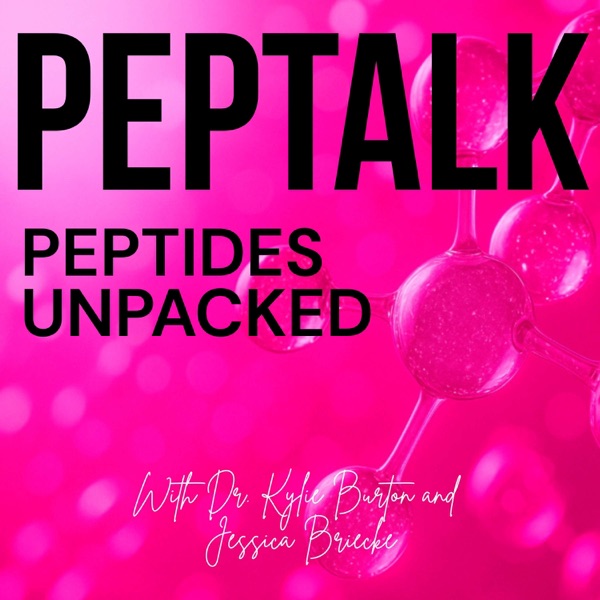
Peptalk: Peptides Unpacked
Peptides are revolutionizing modern medicine—but the science can feel overwhelming. That's where we come in.
Join Dr. Kylie Burton, Functional Medicine Practitioner, and Jessica Briecke, Functional Nutritionist and Licensed Massage Therapist, as they demystify peptide therapy with clarity, compassion, and real-world insight. Whether you're curious about peptides for your own health journey or you're a practitioner looking to expand your toolkit, this limited series breaks down complex science into actionable understanding.
Inside this limited series podcast, we explore:
• What peptides are and how they can support your health goals
• Real stories from people who've experienced peptide therapy
• How to navigate peptide options safely and make informed decisions
• How practitioners can confidently integrate peptides into their practice
• Creating sustainable income streams through peptide therapy services
This podcast is designed for the curious health optimizer, the wellness practitioner ready to level up, and anyone who believes healing should be both cutting-edge and grounded in fundamentals.
Ready to explore advanced peptide therapy? Get started at drkylieburton.com
Legal Disclaimer: This podcast is for educational and informational purposes only and is not intended as medical advice, diagnosis, or treatment. Always consult with a qualified healthcare provider before starting any new health protocol. Dr. Kylie Burton and Jessica Briecke are affiliates and may receive compensation for referrals. Individual results may vary.
- Alternative Health chart
- #59
- Episodes
- 80
- Releases
- Twice a week
- Typical length
- 34 min
- On air since
- 2025
- Latest episode
- 23 hours ago
Episodes
80 episodes, newest first
-
45 min
#66 From Knee Pain to Finish Line: Dr. Kylie’s Half Marathon Recap and the Wolverine Stack
Show notes
Fourteen years ago, Kylie ran Ragnar with almost no training, and her knee popped as she climbed out of the van at the finish. Since then, she’s never been able to run past three or four miles without it locking up. So when she decided to run the St. George half marathon this October, with only about four weeks of real training, something had to change.
In this race-report episode, Kylie shares the full story. She tried the Wolverine Stack (BPC-157 + TB-500) after months of hesitation. She found out the needle was “nothing.” She worked training runs around three kids, including a runaway three-year-old on a tricycle. And she used one mental shift to carry her through 12 pain-free miles. She also covers race-day hydration for someone who’s notoriously bad at it, both calves locking up in the final mile, and the brother drama behind the finish line. Then there’s the recovery: a five-hour drive home the next day, and a sign-up for her next half marathon just five days later.
Jess explains why hydration and mindset matter so much on race day. Then the two shift to the KLOW stack. Jess shares her first week on GHK-Cu, what an injection-site reaction can feel like, and why rotating your injection sites matters, especially if you’ve hit a plateau on a GLP.
In this episode
• 00:00 – Intro: Kylie’s race report
• 02:05 – Why the Wolverine Stack matters (plus a state tennis champion’s shoulder story)
• 04:35 – The knee injury that never left
• 10:19 – Training reality and a sold-out bib
• 15:55 – Daily injections and staying consistent
• 18:52 – Race-day mindset and hydration
• 23:30 – The final mile, when both calves locked
• 28:06 – Family finish line and brother drama
• 33:58 – Recovery results and plans for the next half
• 39:59 – GHK-Cu reactions and injection-site rotation
• 44:32 – Where to find usKey takeaways
• Fear of needles is often bigger than the needle itself.
• Having a goal (and having invested in something) is what turns “I should” into actually following through.
• Your words matter. Kylie credits telling herself “I feel great” with carrying her through the middle miles.
• Hydration and electrolytes in the days before a race are a big deal, especially if you’re not usually good at them.
• The Wolverine Stack is dosed daily, not weekly like a GLP. Kylie used five days on and two days off.
• Rotate injection sites. Jess uses eight: both quads, the backs of both arms, and four spots around the belly button, about two inches out.
• Short-half-life peptides like GHK-Cu need frequent dosing. Some people notice a delayed sore or itchy spot at the injection site.
• Sourcing and medical supervision matter. As Kylie told a fellow runner: not trusting random sources is the right instinct.Where do you start with peptide therapy? What do you add next? If you're a go-getter, check out Dr. Kylie's new program AMPLIFY. You'll find it on the homepage of her website: https://drkylieburton.com
Ready to explore peptide therapy for yourself? Join through Jessica's platform at https://b2bwithjess.com/peptides or through Dr. Kylie's platform at https://drkylieburton.com/shop.
Want to offer peptide therapy in your business? Whether you're adding it to your existing practice or building something new, learn how to get started—and how we'll mentor you along the way—at https://drkylieburton.com/peptidesaffiliate. You can also get started through Jessica's platform at https://B2BwithJess.com.
Legal Disclaimer: This podcast is for educational and informational purposes only and is not intended as medical advice, diagnosis, or treatment. Always consult with a qualified healthcare provider before starting any new health protocol. Dr. Kylie Burton and Jessica Briecke are affiliates and may receive compensation for referrals. Individual results may vary.
You have the science. You have the tools. Now it's time to take the next step.
This is PepTalk: Peptides Unpacked—science made simple, re...
-
45 min
#65 This Gut Conversation Got a Little Derailed - You've Been Warned
Show notes
You can take all the peptides in the world and still feel stuck if your gut is quietly driving the problem.
On this episode, we sit down with Samantha Lander, a functional diagnostic nutrition practitioner, to talk about the unglamorous basics that change everything:
• daily elimination,
• gut infections that hide behind “no symptoms,”
• and why we refuse to treat gut health like an afterthought when someone wants to start peptides or a GLP-1.Inside, Samantha takes us behind scenes to what she's seen in practice with semaglutide and tirzepatide. Curious to discuss the side effects of GLP-1 use, this is the conversation to tune in: slowed motility can be a real advantage for appetite, but it can also create the perfect setup for bacterial overgrowth, SIBO patterns, and Candida issues when the terrain is already off.
The most important piece of GLP-1 use: never self-direct a protocol. That's where the side effects occur. For best results, focus on keeping your drainage pathways open (we'll explain inside) and what normal bowel movements actually look like.
If you have ever wondered why a GLP dose makes you feel awful, this conversation gives you a framework to investigate rather than guess.
Just when you think our conversation can't get any spicier, think again. Jump inside and see what I mean. You've been warned.
Subscribe for more science-made-simple peptide education, share this with a friend who is considering GLP-1s, and leave a review if you enjoy what you hear on this podcast. We certainly appreciate it!
Where do you start with peptide therapy? What do you add next? If you're a go-getter, check out Dr. Kylie's new program AMPLIFY. You'll find it on the homepage of her website: https://drkylieburton.com
Ready to explore peptide therapy for yourself? Join through Jessica's platform at https://b2bwithjess.com/peptides or through Dr. Kylie's platform at https://drkylieburton.com/shop.
Want to offer peptide therapy in your business? Whether you're adding it to your existing practice or building something new, learn how to get started—and how we'll mentor you along the way—at https://drkylieburton.com/peptidesaffiliate. You can also get started through Jessica's platform at https://B2BwithJess.com.
Legal Disclaimer: This podcast is for educational and informational purposes only and is not intended as medical advice, diagnosis, or treatment. Always consult with a qualified healthcare provider before starting any new health protocol. Dr. Kylie Burton and Jessica Briecke are affiliates and may receive compensation for referrals. Individual results may vary.
You have the science. You have the tools. Now it's time to take the next step.
This is PepTalk: Peptides Unpacked—science made simple, re...
-
32 min
#64 Grab Your Labs: Jen on Numbers, Plateaus, and Peptides for Women
Show notes
For over a decade, Jen has worked with midlife women whose bodies stopped responding the way they used to — women doing everything "right" and still struggling with sleep, weight, mood, and energy. A functional medicine practitioner and former educator for Functional Diagnostic Nutrition (FDN), Jennifer joins Dr. Kylie Burton and Jessica Briecke to talk about what she calls a genuine revolution in women's healthcare, and why the biggest win she sees in her clients isn't a number on the scale — it's confidence.
Jennifer explains her core philosophy: functional lab testing (hormones, minerals, thyroid markers, food sensitivities) can get most clients most of the way there, but there's often a stubborn last 10% that no amount of clean eating or willpower resolves. That's where peptides have changed the picture for the women — and increasingly men — she works with. She talks candidly about moving away from large, expensive supplement protocols in favor of simpler, more targeted peptide use, and reframes what real progress looks like: confidence in their bodies, their relationships, and their sense of control over their own health after years of feeling dismissed.
The back half of the episode is a practical, detailed breakdown of weight-loss plateaus: what a metabolic "set point" actually is, why traditional dieting fights against it, and three concrete areas Jennifer looks at first when a client stalls — protein and fat balance, meal timing tied to circadian rhythm, and (counterintuitively) adding more fruit, not less. She also makes the case for GLP-1 therapy as a longer-term intervention rather than a one-month quick fix, and explains why hormone-related changes can take a full 90 days (roughly three menstrual cycles) to show up in the data.
What You'll Learn
• Jennifer's core philosophy: functional medicine can get most clients 90% of the way, but a stubborn last 10% often needs a different tool
• Why she's shifted away from large, expensive supplement protocols toward simpler, more targeted peptide use
• Why confidence — not the number on the scale — is the benefit she sees most consistently in her clients
• What a metabolic "set point" is, and why traditional calorie-restriction dieting tends to fail against it long-term
• Why GLP-1 medications may help shift that set point by improving insulin sensitivity and reducing cravings — without pushing the body to an unhealthy extreme
• The four other biomarkers Jennifer tells clients to track beyond weight: mood, energy, sleep, and digestion
• Her three go-to fixes for a genuine weight-loss plateau: adjusting the protein-to-fat ratio, aligning meal timing with circadian rhythm, and adding fruit back into the diet
• Why she encourages clients to eat breakfast soon after waking (and to eat before coffee, not instead of it)
• Why hormone-related changes from any intervention can take roughly 90 days to show up — tied to the length of an ovarian follicle's maturation cycle
• The case for treating GLP-1 therapy as a longer-term intervention (based on 48–72 week clinical trials) rather than a short-term fix
• Why functional lab testing (Dutch test, hair tissue mineral analysis, GI mapping, food sensitivity panels, full thyroid panels) is Jennifer's starting point before adjusting anyone's peptide regimenOur Guest: Jennifer Woodward is a functional medicine health practitioner who has worked with over 1,400 midlife women over the past decade. She is a former educator for Functional Diagnostic Nutrition (FDN), has taught advanced lab interpretation at the university level, and hosts the podcast Peptides for Women. She is the author of Easy Perimenopause, with a second book on peptides forthcoming.
Find Jennifer: Instagram @JenniferWoodwardNutrition | jenniferwoodwardnutrition.com
Where do you start with peptide therapy? What do you add next? If you're a go-getter, check out Dr. Kylie's new program AMPLIFY. You'll find it on the homepage of her website: https://drkylieburton.com
Ready to explore peptide therapy for yourself? Join through Jessica's platform at https://b2bwithjess.com/peptides or through Dr. Kylie's platform at https://drkylieburton.com/shop.
Want to offer peptide therapy in your business? Whether you're adding it to your existing practice or building something new, learn how to get started—and how we'll mentor you along the way—at https://drkylieburton.com/peptidesaffiliate. You can also get started through Jessica's platform at https://B2BwithJess.com.
Legal Disclaimer: This podcast is for educational and informational purposes only and is not intended as medical advice, diagnosis, or treatment. Always consult with a qualified healthcare provider before starting any new health protocol. Dr. Kylie Burton and Jessica Briecke are affiliates and may receive compensation for referrals. Individual results may vary.
You have the science. You have the tools. Now it's time to take the next step.
This is PepTalk: Peptides Unpacked—science made simple, re...
-
44 min
#63 Diagnosed at 34: Isaac on Parkinson's, Peptides, and Staying Strong For His Family
Show notes
About 1 million Americans are living with Parkinson's disease, and only 4% are diagnosed before age 50. Isaac S. — Army veteran, former Division I linebacker, father of four, and husband to past guest Karli S. — is one of them. Diagnosed at 34, Isaac joins Dr. Kylie Burton and Jessica Briecke to walk through his path to diagnosis, what daily life with early-onset Parkinson's actually looks like, and how he's built a personal regimen — combining prescribed medication, exercise, and peptides — to stay as functional as possible.
Isaac describes the early, easy-to-dismiss symptoms (a weakening grip, subtle uneasiness) that were initially written off as stress, and the second opinion — pushed by his wife — that led to a DAT scan and diagnosis. He explains the basics of Parkinson's in plain terms: a decline in dopamine production that disrupts the brain-body signal for smooth movement, and the difference between bradykinesia (slowed movement) and dyskinesia (tremor-like breaks in movement). He's candid about the frustration of losing fine motor control for everyday tasks like brushing his teeth or changing the baby's diaper.
The conversation then turns to his personal management approach: prescribed medications (carbidopa-levodopa and selegiline), Botox for foot muscle control, daily exercise, and a peptide stack that includes microdosed tirzepatide, NAD+, glutathione, and MOTS-C. The hosts are careful to frame all of this as Isaac's individual experience and combination of care, not a treatment protocol for Parkinson's, and the episode closes with a conversation about the financial side of the peptide industry and the hosts' peptide provider network for healthcare professionals.
What You'll Learn
• Parkinson's disease basics, explained in plain terms: dopamine's role in movement, and the difference between bradykinesia (slowed movement) and dyskinesia (tremor-like breaks in movement)
• Isaac's path to diagnosis: early symptoms dismissed as stress, a second opinion, and the DAT scan that confirmed it
• What daily life with early-onset Parkinson's looks like, including the frustration of losing fine motor control for routine tasks
• Isaac's prescribed medical treatment may surprise you
• Why exercise — specifically a mix of intense cardio and weight training — is one of the most impactful tools for managing Parkinson's symptoms
• Isaac's personal peptide regimen alongside his prescribed care: microdosed tirzepatide (for inflammation), NAD+, glutathione, and MOTS-C, and what he noticed (and didn't) with each
• The importance of building a peptide stack with individualized guidance, since what worked for Isaac didn't work the same way for everyone
• The financial side of the story: how the peptide business helped stabilize the family's finances after Isaac's military salary alone couldn't sustain their mortgageFind Isaac: Instagram @isaac_sine
Find his wife Karli: Instagram @karli__sine
Ready to join us as an affiliate? Learn more at https://drkylieburton.com/peptidesaffiliate
Where do you start with peptide therapy? What do you add next? If you're a go-getter, check out Dr. Kylie's new program AMPLIFY. You'll find it on the homepage of her website: https://drkylieburton.com
Ready to explore peptide therapy for yourself? Join through Jessica's platform at https://b2bwithjess.com/peptides or through Dr. Kylie's platform at https://drkylieburton.com/shop.
Want to offer peptide therapy in your business? Whether you're adding it to your existing practice or building something new, learn how to get started—and how we'll mentor you along the way—at https://drkylieburton.com/peptidesaffiliate. You can also get started through Jessica's platform at https://B2BwithJess.com.
Legal Disclaimer: This podcast is for educational and informational purposes only and is not intended as medical advice, diagnosis, or treatment. Always consult with a qualified healthcare provider before starting any new health protocol. Dr. Kylie Burton and Jessica Briecke are affiliates and may receive compensation for referrals. Individual results may vary.
You have the science. You have the tools. Now it's time to take the next step.
This is PepTalk: Peptides Unpacked—science made simple, re...
-
38 min
#62 The Peptide for Anyone Whose Sleep Schedule Is Wrecked: Epitalon
Show notes
Attention shift workers, new parents, chronic insomniacs, anyone whose internal clock feels permanently out of sync — this episode is for you.
Attention to all those who want to reverse the aging clock — this episode is for you.
Attention daylight savings time clock change haters — this episode is for you.
Dr. Kylie Burton and Jessica Briecke introduce Epitalon, a tiny, four-amino-acid peptide derived from pineal gland extract that's become one of the most studied peptides in longevity research, with roughly three decades of research history out of Russia's Institute of St. Petersburg. Its most commonly reported real-world benefit is exactly what a wrecked sleep schedule needs: restored melatonin production and a reset circadian rhythm.
Epitalon goes beyond sleep. It's used in the Longevity space to hack the aging clock — the growing gap between lifespan and healthspan. How does it do that? The core mechanisms is activating telomerase (the enzyme responsible for rebuilding telomeres — the protective caps on the ends of chromosomes that shorten with age and stress).
Listen in as we separate what's well-documented (telomere lengthening in human cell lines, extended lifespan in fruit flies and rodents in lab studies) from what's still early-stage (large, controlled human trials, which remain limited for most peptides in this space).
The episode also revisits the FDA hearing the hosts discussed in an earlier episode, since Epitalon was one of six peptides recommended to return to Category 1 compounding status. They're clear that this is a recommendation, not a finalized rule, and reiterate their emphasis on regulated, physician-guided sourcing over unregulated gray-market products.
What You'll Learn
• What Epitalon is: a four-amino-acid peptide derived from pineal gland extract, researched for three decades by Russian gerontologist Vladimir Khavinson
• How telomeres work — using the shoelace-tip analogy — and why their length is tied to cellular aging and senescence
• Epitalon's proposed mechanism: activating telomerase to help rebuild and protect telomeres
• What the current research actually shows: strong lab and animal data (human cell lines, fruit flies, rodents), with human clinical trials still in early stages
• An update on Epitalon's regulatory status — one of six peptides recommended (not yet finalized) to return to Category 1 compounding status after the FDA's advisory hearing
• Why the hosts continue to emphasize regulated, physician-guided sourcing over unregulated gray-market peptides
• The most commonly reported real-world benefit: improved sleep quality and circadian rhythm via restored melatonin production
• Who tends to explore Epitalon: people with declining sleep quality, shift workers, and anyone looking to reset rather than just treat symptoms
• The 10-day, twice-a-year protocol — a notably different cadence from most peptides discussed on the show, and why the hosts suggest timing it around seasonal changes or daylight saving time shifts
• How Epitalon pairs with other peptides discussed on the show, including DSIP (for sleep) and growth hormone peptides like sermorelin, tesamorelin, and ipamorelin
• Contraindications and conservative precautions: active cancer, recent cancer history (within five years), pregnancy/breastfeeding, and uncontrolled autoimmune or adrenal conditions — discussed as precautionary rather than evidence of harmJump inside and learn a peptide that's rarely discussed but has dramatic shifts for certain groups of individuals. Are you one of them?
Where do you start with peptide therapy? What do you add next? If you're a go-getter, check out Dr. Kylie's new program AMPLIFY. You'll find it on the homepage of her website: https://drkylieburton.com
Ready to explore peptide therapy for yourself? Join through Jessica's platform at https://b2bwithjess.com/peptides or through Dr. Kylie's platform at https://drkylieburton.com/shop.
Want to offer peptide therapy in your business? Whether you're adding it to your existing practice or building something new, learn how to get started—and how we'll mentor you along the way—at https://drkylieburton.com/peptidesaffiliate. You can also get started through Jessica's platform at https://B2BwithJess.com.
Legal Disclaimer: This podcast is for educational and informational purposes only and is not intended as medical advice, diagnosis, or treatment. Always consult with a qualified healthcare provider before starting any new health protocol. Dr. Kylie Burton and Jessica Briecke are affiliates and may receive compensation for referrals. Individual results may vary.
You have the science. You have the tools. Now it's time to take the next step.
This is PepTalk: Peptides Unpacked—science made simple, re...
-
34 min
#61 How GLP-1s Are Helping People Break Free From Addictive Behaviors, with Christine
Show notes
If you have what you'd call an "addictive brain" — or you love someone who does — this episode is for you. Dr. Kylie Burton and Jessica Brickie welcome Christine Johnson, a mom of three, advanced yoga instructor, peptide educator, and telemedicine advanced director, to talk about her own journey and what she's seen GLP-1 peptides do for people well outside the weight-loss conversation.
Christine shares her path to eight years of sobriety, and how a family history of early-onset Alzheimer's pushed her to research inflammation and brain health long before she ever tried a GLP-1 herself. She talks candidly about microdosing tirzepatide for longevity rather than weight loss, the changes she noticed in her relationship with sugar and caffeine, and her broader peptide regimen, including NAD+, MOTS-C, and BPC-157. The conversation also touches on her experience with sexual wellness peptides (PT-141, Elate, and the troche).
The heart of the episode, though, is a discussion of "food noise," obsessive thinking, and addictive patterns more broadly — including two friend stories Christine shares about sobriety and disordered eating that she says shifted dramatically with microdosed GLP-1 use. The hosts are careful to frame this as personal experience and anecdote, not a treatment protocol, and the episode closes with practical, go-slow guidance for anyone considering trying a GLP-1 for the first time.
What You'll Learn
• Christine's personal story: culinary background, sobriety at 39, and a family history of early-onset Alzheimer's that shaped her focus on inflammation and brain health
• Why she started microdosing a GLP-1 for longevity and brain health goals, not weight loss — and the unexpected side effect of losing weight anyway
• The shift she and others describe in relationship to sugar, caffeine, and "food noise" — the constant background thinking about food or a craving
• Two anecdotal stories shared in the episode — one involving long-term sobriety and intrusive thoughts, another involving a friend's experience with bulimia — that the guest describes as dramatic turning points
• Why the hosts and guest are careful to frame these as individual stories, not guarantees or a treatment plan
• The difference between ordering a GLP-1 for a weight-loss goal versus a longevity goal, and why microdosing changes the experience
• Semaglutide vs. tirzepatide: Christine's side-by-side experience with both
• How Christine's broader peptide stack (NAD+, MOTS-C, BPC-157) supports energy, recovery, and gut health alongside her GLP-1 use
• Go-slow, low-dose guidance for anyone nervous about starting, and the importance of doing independent research and understanding who funds a given study
• What peptide Christine recommends next depending on someone's goal (muscle maintenance, sleep, energy, or recovery)Segment Breakdown
• Christine's Sobriety and Why GLPs — Her path to sobriety and how brain-health research led her to GLP-1s
• NAD+ and MOTS-C for Energy — Christine's experience with both and how they complement her GLP-1 use
• Sexual Wellness Peptides and Real Talk — Candid discussion of PT-141, Elate, and the troche
• Semaglutide vs. Tirzepatide Microdosing — Side-by-side comparison of her own experience
• Addictive Brain Stories and Food Noise — Personal and secondhand stories about sobriety, intrusive thoughts, and disordered eating
• Why So Many People Need GLPs — A broader conversation about the modern food system and inflammation
• How to Start Safely and What's Next — Go-slow guidance and peptide recommendations based on individual goalsGuest
Christine Johnson is a mom of three, advanced yoga instructor, peptide educator, and advanced director with the hosts' telemedicine partner company. After a career in the culinary world, she now focuses on wellness, brain health, and longevity.
Find Christine: Instagram (@morning_christine) | TikTok (@PerryMenopauseMama)
Where do you start with peptide therapy? What do you add next? If you're a go-getter, check out Dr. Kylie's new program AMPLIFY. You'll find it on the homepage of her website: https://drkylieburton.com
Ready to explore peptide therapy for yourself? Join through Jessica's platform at https://b2bwithjess.com/peptides or through Dr. Kylie's platform at https://drkylieburton.com/shop.
Want to offer peptide therapy in your business? Whether you're adding it to your existing practice or building something new, learn how to get started—and how we'll mentor you along the way—at https://drkylieburton.com/peptidesaffiliate. You can also get started through Jessica's platform at https://B2BwithJess.com.
Legal Disclaimer: This podcast is for educational and informational purposes only and is not intended as medical advice, diagnosis, or treatment. Always consult with a qualified healthcare provider before starting any new health protocol. Dr. Kylie Burton and Jessica Briecke are affiliates and may receive compensation for referrals. Individual results may vary.
You have the science. You have the tools. Now it's time to take the next step.
This is PepTalk: Peptides Unpacked—science made simple, re...
-
26 min
#60 Not a Peptide, Still a Powerhouse: The Real Story on NAD+
Show notes
One in eight adults report feeling exhausted almost every day for months at a time — and for women 18-44, it's closer to one in five. That's the jumping-off point for this episode, where Dr. Kylie Burton and Jessica Brickie tackle a molecule that shows up on nearly every peptide company's menu, even though it isn't technically a peptide at all: NAD+.
The hosts break down what NAD+ actually is (a dinucleotide, not a peptide), why it gets grouped in with peptide therapy anyway, and the two jobs it does at the cellular level — powering ATP production and driving DNA repair. From there, the conversation moves into why NAD+ levels decline starting in your 20s, what the current research does and doesn't support, and why delivery method (IV, subcutaneous injection, or nasal spray) makes or breaks whether it actually works. Along the way, Kylie shares her own first-time, slightly nerve-wracking experience trying NAD+ nasal spray at a wellness convention in Texas — burn and all — and what she noticed in the hours afterward.
This one comes with an upfront disclaimer worth calling out: neither host holds prescribing rights, and the conversation is explicit that this isn't medical advice, chronic fatigue can have other root causes, and any decision on whether NAD+ is right for you belongs with a licensed provider.
What You'll Learn
• Why NAD+ isn't a peptide — and why it still lives in the same conversation and the same clinics
• The two core jobs NAD+ does inside every cell: energy production (ATP) and DNA repair
• What sirtuins are and why the longevity space pays so much attention to them
• Why NAD+ levels start declining in your 20s — and what that decline feels like by your 40s, 50s, and 60s
• What the current research actually shows: strong animal data, more mixed human clinical data
• Why delivery method matters — why oral NAD+ largely doesn't work, and why IV, subcutaneous, and nasal spray routes are used instead
• Kylie's first-time nasal spray experience at a peptide convention — and what changed the second time
• Why NAD+ feels different from caffeine: not a stimulant buzz, but "restoring the machinery" behind energy
• Who NAD+ tends to be a fit for: fatigue relief, longevity/anti-aging, and athletic recovery alongside peptides like BPC-157 and TB-500
• Important root-cause context: why chronic fatigue should be worked up with a provider first, since thyroid issues, anemia, blood sugar imbalances, sleep apnea, and autoimmune conditions can all mimic what NAD+ is being asked to fixSegment Breakdown
• What NAD+ Actually Is — Nicotinamide adenine dinucleotide, why the "plus" matters, and why it's not a peptide
• Cellular Energy & ATP Basics — Mitochondria, ATP, and why NAD+ is non-negotiable for cell function
• DNA Repair & Why Levels Drop — Sirtuins, cellular stress, and the age-related decline starting in your 20s
• Research Reality & Medical Disclaimer — What the human trials actually show, and an honest disclosure about scope of practice
• Why Delivery Method Changes Results — Why oral NAD+ largely fails and what routes actually work
• The Texas Convention Nasal Spray Test — Kylie's real-time first experience trying NAD+
• Who NAD+ Is For — Fatigue, longevity, and athletic recovery, and how it pairs with peptide stacksWhere do you start with peptide therapy? What do you add next? If you're a go-getter, check out Dr. Kylie's new program AMPLIFY. You'll find it on the homepage of her website: https://drkylieburton.com
Ready to explore peptide therapy for yourself? Join through Jessica's platform at https://b2bwithjess.com/peptides or through Dr. Kylie's platform at https://drkylieburton.com/shop.
Want to offer peptide therapy in your business? Whether you're adding it to your existing practice or building something new, learn how to get started—and how we'll mentor you along the way—at https://drkylieburton.com/peptidesaffiliate. You can also get started through Jessica's platform at https://B2BwithJess.com.
Legal Disclaimer: This podcast is for educational and informational purposes only and is not intended as medical advice, diagnosis, or treatment. Always consult with a qualified healthcare provider before starting any new health protocol. Dr. Kylie Burton and Jessica Briecke are affiliates and may receive compensation for referrals. Individual results may vary.
You have the science. You have the tools. Now it's time to take the next step.
This is PepTalk: Peptides Unpacked—science made simple, re...
-
1 hr 7 min
BONUS: How To Build Recurring Income With Safe Telehealth Peptides
Show notes
Interested in the Business of Peptides? This episode is for you.
Peptides keep getting louder online, but the business side is where people get confused fast, especially when safety, regulations, and “gray market” sourcing are in the mix. We’re sharing a gold-level recording from a live call where we get specific about how a legitimate telehealth peptide company works, what “referral” really means, and how someone can build recurring income without stocking inventory or pretending to be a prescriber.
You’ll hear real stories from women (and a clear invitation for men, too):
• a pharmacist who refuses to ignore the research,
• a stay-at-home mom who used GLP-1 support after pregnancy weight gain,
• a partner who leaned on microdosing and inflammation support after cancer treatment,
• and the perspective shift that happens when peptides become a tool for longevity, brain health, and quality of life, not just the scale.We also keep the message grounded: you cannot out-optimize a poor lifestyle, and foundations like nutrition, movement, sleep, stress, and hormones still drive outcomes.
But if you're interested in starting the business aspect of this, listen up! We will address your (potential) main concerns:
• how customers use a branded link,
• complete product-specific medical questionnaires,
• get reviewed by licensed clinicians,
• and receive direct-to-door pharmacy fulfillment.We get into the details this time. Learn affiliate marketing basics, how the monthly rolling commissions work, and why compounding changes the math over time. We also address quality safeguards like third-party testing, purification standards, and why “research grade” shortcuts can be risky.
If you’re curious about the business of peptides, GLP-1 programs like tirzepatide, and the fastest-growing shift in telehealth wellness, press play and take notes.
Where do you start with peptide therapy? What do you add next? If you're a go-getter, check out Dr. Kylie's new program AMPLIFY. You'll find it on the homepage of her website: https://drkylieburton.com
Ready to explore peptide therapy for yourself? Join through Jessica's platform at https://b2bwithjess.com/peptides or through Dr. Kylie's platform at https://drkylieburton.com/shop.
Want to offer peptide therapy in your business? Whether you're adding it to your existing practice or building something new, learn how to get started—and how we'll mentor you along the way—at https://drkylieburton.com/peptidesaffiliate. You can also get started through Jessica's platform at https://B2BwithJess.com.
Legal Disclaimer: This podcast is for educational and informational purposes only and is not intended as medical advice, diagnosis, or treatment. Always consult with a qualified healthcare provider before starting any new health protocol. Dr. Kylie Burton and Jessica Briecke are affiliates and may receive compensation for referrals. Individual results may vary.
You have the science. You have the tools. Now it's time to take the next step.
This is PepTalk: Peptides Unpacked—science made simple, re...
-
34 min
#59 Do Oral Peptides Actually Work + Dr. Kylie's Experience Starting the Injections
Show notes
Your gut doesn’t know the difference between a peptide and a piece of chicken breast, and that one sentence changes how you should think about “oral peptides” forever.
We’re Kylie Burton and Jessica Briecke, and we’re unpacking what actually happens when a peptide hits stomach acid, digestive enzymes, and then the small intestine. If you’ve ever wondered why a capsule, powder, or drink mix can sound so convincing yet deliver underwhelming results, the answer is often simple: digestion is a demolition site for protein bonds.
Push pause when you see all these marketing tactics for peptides that under perform. We explain why: oral peptide bioavailability, including the uncomfortable stat that many peptide drugs show under 1 to 2% oral absorption.
What about the exceptions? Oral GLP-1 therapy with oral semaglutide exists because of serious delivery engineering, including an absorption enhancer (SNAC) that protects the molecule and creates a short window for uptake, even though absorption still stays under 1%.
Knowing the facts behind the marketing is very important when comparing telehealth offers, “introductory prices,” and internet products that don’t disclose any absorption technology or testing.
Once you understand the science, let's dive into Dr. Kylie's first experience on the injections - why did she wait so long?
Are you still waiting? Don't. Order your peptides from our trusted source today.
Where do you start with peptide therapy? What do you add next? If you're a go-getter, check out Dr. Kylie's new program AMPLIFY. You'll find it on the homepage of her website: https://drkylieburton.com
Ready to explore peptide therapy for yourself? Join through Jessica's platform at https://b2bwithjess.com/peptides or through Dr. Kylie's platform at https://drkylieburton.com/shop.
Want to offer peptide therapy in your business? Whether you're adding it to your existing practice or building something new, learn how to get started—and how we'll mentor you along the way—at https://drkylieburton.com/peptidesaffiliate. You can also get started through Jessica's platform at https://B2BwithJess.com.
Legal Disclaimer: This podcast is for educational and informational purposes only and is not intended as medical advice, diagnosis, or treatment. Always consult with a qualified healthcare provider before starting any new health protocol. Dr. Kylie Burton and Jessica Briecke are affiliates and may receive compensation for referrals. Individual results may vary.
You have the science. You have the tools. Now it's time to take the next step.
This is PepTalk: Peptides Unpacked—science made simple, re...
-
31 min
BONUS: Mary Kay Built a Business Model with No Ceiling and No Limits. Why?
Show notes
This is a business episode, not a science one — and it starts with a woman most people only know for a pink Cadillac. Dr. Kylie Burton and Jessica Brickie tell the story of Mary Kay Ash: 25 years in corporate sales, passed over for a promotion in favor of a man she'd personally trained, and once awarded a fisherman's flashlight as a prize for being one of the company's top performers. At 45, newly widowed just a month before launch, and against the advice of her own lawyer and accountant, she opened Beauty by Mary Kay anyway — built on a simple idea: a place where a woman could earn based on effort, not gender.
From there, the hosts connect that history to their own path into network marketing — a business model they both once swore off. Jessica shares how her own journey started with FOMO over a friend's results with a wellness product, and Kylie describes being "anti" peptides and this business model entirely before coming around to both. They talk candidly about why the industry earns a reputation for pressure and cold DMs, how their own approach differs (education-first, safe sourcing, real medical guidance), and who tends to find this kind of flexible income model appealing — from a respiratory therapist done working weekends, to a paramedic building income ahead of becoming his adult daughter's full-time caregiver.
If you've ever cringed at the words "network marketing," this episode is the hosts' case for why the model itself isn't the problem — and why they built their version of it differently.
What You'll Learn
• The story of Mary Kay Ash: her corporate sales career, the pay gap and glass ceiling she faced, and how she built Beauty by Mary Kay from her kitchen table at 45
• How the "no territory, no ceiling, earn what you put in" structure of network marketing traces back to Mary Kay's original design
• Jessica's and Kylie's personal paths into this business model — including their own initial skepticism
• Why the hosts see network marketing and corporate structures as shaped the same but rewarded differently — effort vs. review-cycle permission
• Real examples of who this model tends to appeal to: parents wanting schedule flexibility, healthcare professionals facing burnout, and caregivers building income around a loved one's needs
• A candid acknowledgment of why network marketing gets an "ick" reputation — and what the hosts say they do differently (education-first approach, no pressure tactics)
• A quick tour of other women who built direct-sales businesses before them: Brownie Wise (Tupperware), Mary Crowley (Home Interiors), Doris Christopher (Pampered Chef), Shelli Gardner (Stampin' Up), and Cindy Monroe (Thirty-One Gifts)
• What the hosts say sets their specific peptide business apart: pharmaceutical-grade, triple-purified, third-party-tested products, with an ongoing push toward U.S.-sourced raw materials
• Practical logistics: U.S. citizenship and U.S.-based selling requirements, and how to get started with either hostHave you been thinking about joining us as a affiliate? Come join us on September 22nd for a LIVE zoom session to learn more and get started. Register and get the details here: https://drkylieburton.com/register
Where do you start with peptide therapy? What do you add next? If you're a go-getter, check out Dr. Kylie's new program AMPLIFY. You'll find it on the homepage of her website: https://drkylieburton.com
Ready to explore peptide therapy for yourself? Join through Jessica's platform at https://b2bwithjess.com/peptides or through Dr. Kylie's platform at https://drkylieburton.com/shop.
Want to offer peptide therapy in your business? Whether you're adding it to your existing practice or building something new, learn how to get started—and how we'll mentor you along the way—at https://drkylieburton.com/peptidesaffiliate. You can also get started through Jessica's platform at https://B2BwithJess.com.
Legal Disclaimer: This podcast is for educational and informational purposes only and is not intended as medical advice, diagnosis, or treatment. Always consult with a qualified healthcare provider before starting any new health protocol. Dr. Kylie Burton and Jessica Briecke are affiliates and may receive compensation for referrals. Individual results may vary.
You have the science. You have the tools. Now it's time to take the next step.
This is PepTalk: Peptides Unpacked—science made simple, re...
-
17 min
#58 Inside the FDA Hearing — We Were the ONLY Company to Show Up in DC to Fight for Peptides
Show notes
In early July, the FDA held a major hearing near Washington, DC, addressing the regulatory status of a group of compounded peptides — and Jessica was there. In this episode, Dr. Kylie Burton and Jessica Briecke break down what actually happened at the hearing (as opposed to the wave of secondhand opinions that circulated online afterward).
And shocker, we were the ONLY company who showed up! And we showed up in full force.
So what happened and what did the FDA hearing mean to the peptide industry? Jessica explains as she was there.
Jessica explains the regulatory shift at the center of the issue: twelve peptides were reclassified from a "Category 1" to "Category 2" status for compounding pharmacies, a change that significantly limits legal access. The hosts argue that restricting supply doesn't reduce demand — it pushes people toward unregulated "gray market" and research-chemical sites, where testing has reportedly turned up contaminants like arsenic and lead, and in some cases, no actual peptide at all in the product. They also talk about the risks of at-home reconstitution using instructions found on social media or generated by AI, done without pharmacist training or a sterile environment.
The episode closes with a recap of the advocacy work itself — testimony at the hearing, meetings with congressional offices, and a broader case for regulation (not elimination) of compounded peptides — plus an invitation to a live business information session for anyone interested in partnering with the hosts' telemedicine company.
What You'll Learn
• What changed: twelve peptides were moved from Category 1 to Category 2 status for compounding pharmacies, restricting legal access
• Why the hosts argue that restricting legal, regulated supply pushes demand toward the gray/black market instead of eliminating it
• What third-party testing has reportedly found in unregulated "research-grade" peptide powders — including contaminants and products containing no actual peptide
• The risks of at-home reconstitution using unofficial instructions, without pharmacist training or a sterile environment
• The distinction the hosts draw between eliminating access and pushing for regulation, medical oversight, and domestic manufacturing standards
• A firsthand account of the hearing itself, including testimony from the company's CEO and returning guest Dr. Joelle OsiasHave you been thinking about joining us as a affiliate? Come join us on September 22nd for a LIVE zoom session to learn more and get started. Register and get the details here: https://drkylieburton.com/register
You can also always connect withConnect With Us
• Jessica Brickie: Instagram @jessb.talkshealth | b2bwithjess.com
• Dr. Kylie Burton: drkylieburton.com | Amplify ProgramWhere do you start with peptide therapy? What do you add next? If you're a go-getter, check out Dr. Kylie's new program AMPLIFY. You'll find it on the homepage of her website: https://drkylieburton.com
Ready to explore peptide therapy for yourself? Join through Jessica's platform at https://b2bwithjess.com/peptides or through Dr. Kylie's platform at https://drkylieburton.com/shop.
Want to offer peptide therapy in your business? Whether you're adding it to your existing practice or building something new, learn how to get started—and how we'll mentor you along the way—at https://drkylieburton.com/peptidesaffiliate. You can also get started through Jessica's platform at https://B2BwithJess.com.
Legal Disclaimer: This podcast is for educational and informational purposes only and is not intended as medical advice, diagnosis, or treatment. Always consult with a qualified healthcare provider before starting any new health protocol. Dr. Kylie Burton and Jessica Briecke are affiliates and may receive compensation for referrals. Individual results may vary.
You have the science. You have the tools. Now it's time to take the next step.
This is PepTalk: Peptides Unpacked—science made simple, re...
-
46 min
#57 Reclaiming Desire, Rebuilding Connection: Jen's experience on PT-141 and Marriage
Show notes
Sexual wellness and libido are often treated as taboo topics — something couples quietly struggle with instead of talking about, and often something one partner mistakenly internalizes as their own fault. In this episode, Dr. Kylie Burton and Jessica Brickie sit down with returning guest Jennifer Wersland for an unusually candid conversation about desire, connection, and what actually helped her and her husband rebuild intimacy in their marriage.
Jennifer's story includes a serious health chapter — triple-positive breast cancer, a full hysterectomy, and abrupt surgical menopause in her late 40s — but the heart of this episode is what came after: years of low-to-zero libido that quietly strained her marriage, and the turning point when she decided to try PT-141, alongside other products like the "Thrill" pill and "Elate" nasal spray.
The conversation moves well past just one product, though. The hosts and Jennifer dig into what "normal" libido even means (spoiler: there isn't one universal answer), the emotional and relational side of low desire — including how partners often internalize it personally — and the importance of giving these therapies time to build rather than judging them after one use. Jennifer also walks through her current peptide regimen, built in coordination with her care team given her cancer history, and the two hosts add their own perspective on hormone optimization, perimenopause, and why libido is often the "last symptom standing" even after other hormone issues are addressed.
What You'll Learn
• Jennifer's health journey: triple-positive breast cancer, hysterectomy, and sudden surgical menopause
• Why it's so hard to tell chemo side effects apart from menopause symptoms in the moment
• A grounded discussion of what "normal" libido actually means — and why there's no single right answer
• How low libido affects both partners emotionally, including how men often internalize it as something being wrong with them
• Jennifer's experience trying three different products — the Thrill pill, Elate spray, and PT-141 injection — and why response varied between them
• Why therapies like Elate spray are build-over-time, not instant, and why judging them after one dose can be misleading
• The importance of working with a knowledgeable provider when navigating peptide use alongside a hormone-sensitive cancer history
• How hormone optimization and libido-specific treatment can work together — and why libido is sometimes "symptom #8" that hormone therapy alone doesn't fully resolve
• Jennifer's current regimen (developed with her care team) and how she approaches documentation/approval for peptide use given her medical history
• Practical, real-talk advice on dosing, timing, and patience when starting PT-141 or similar therapiesSegment Breakdown
• Jennifer's Cancer and Surgical Menopause — Diagnosis, treatment timeline, and the abrupt onset of menopause
• What "Normal Libido" Really Means — The hosts and guest compare notes on desire across different life stages
• PT-141 First Try and Timing — Jennifer's first experience and what to expect timing-wise
• Desire, Touch, and Relationship Repair — How low libido affects a marriage, and rebuilding connection
• Stress, Perimenopause, and the Mental Load — Why women's and men's experiences of desire diverge, especially in the parenting years
• Elate Spray Expectations and Building Effects — Why patience and consistency matter more than a single dose
• Hormones, Testosterone, and Self-Advocacy — Navigating hormone-sensitive cancer history with an informed care team
• Peptide Stack, Dosing, and Next Steps — Jennifer's current regimen and practical advice for getting startedGuest
Jennifer Worsland is a triple-positive breast cancer survivor based in Montana. She is an advocate for women's health and hormone wellness, sharing her experience with peptide therapy, menopause, and libido recovery within cancer support communities.
Find Jennifer: Facebook (Jennifer Gifford Wersland) | Instagram (@ThrivingAfterBreastCancer) | Facebook Group: Thrive Again Wellness
Where do you start with peptide therapy? What do you add next? If you're a go-getter, check out Dr. Kylie's new program AMPLIFY. You'll find it on the homepage of her website: https://drkylieburton.com
Ready to explore peptide therapy for yourself? Join through Jessica's platform at https://b2bwithjess.com/peptides or through Dr. Kylie's platform at https://drkylieburton.com/shop.
Want to offer peptide therapy in your business? Whether you're adding it to your existing practice or building something new, learn how to get started—and how we'll mentor you along the way—at https://drkylieburton.com/peptidesaffiliate. You can also get started through Jessica's platform at https://B2BwithJess.com.
Legal Disclaimer: This podcast is for educational and informational purposes only and is not intended as medical advice, diagnosis, or treatment. Always consult with a qualified healthcare provider before starting any new health protocol. Dr. Kylie Burton and Jessica Briecke are affiliates and may receive compensation for referrals. Individual results may vary.
You have the science. You have the tools. Now it's time to take the next step.
This is PepTalk: Peptides Unpacked—science made simple, re...
-
1 hr 19 min
#56 Unlearning the Standard of Care: Dr. Joelle Osias (a Gynecologist) Makes the Case for Peptides and Root-Cause Healing
Show notes
Why do so many patients — not just those with endometriosis — end up cycling through specialists, labs, and prescriptions without ever getting a real answer? In this episode, Dr. Kylie Burton and Jessica Brickie sit down with gynecologist and women's health advocate Dr. Joelle Osias to make the case for a different model of medicine altogether: one built on root causes, individualized labs, and tools like peptides and GLP-1s that fall outside the standard playbook.
Dr. Osias uses her own path — from Stanford- and Johns Hopkins-trained gynecologist to outspoken advocate for personalized medicine — to explain why "standard of care" so often means algorithmic, one-size-fits-all treatment, and what changes when a physician is willing to look at the whole body instead of just their assigned specialty. She and the hosts trace that thinking through endometriosis as a case study (its whole-body, autoimmune nature, the limits of hormones and repeat surgery), but the conversation ranges well beyond it — into gut health and food sensitivities, thyroid testing gaps, vitamin D, peptides like BPC-157 and KPV, and the growing off-label use of GLP-1s for inflammation, PCOS, cardiovascular risk, and even cancer prevention. Jessica also shares her own diagnosis story from 1990, grounding the discussion in just how far — and how little — medicine has moved in three decades.
Whether or not endometriosis is part of your story, this episode is really about a bigger question: what does it look like to treat the whole patient, and what tools exist for that once you step outside the standard of care?
What You'll Learn
• Why "standard of care" is often algorithmic by design — and what gets lost when medicine treats patients as a protocol instead of an individual
• How Dr. Osias started incorporating peptides (including BPC-157 and KPV) into patient care, and the regulatory hurdles around off-label and non-FDA-indicated treatments
• GLP-1 microdosing for inflammation, PCOS, cardiovascular risk, and more — including why standard pharmaceutical dosing doesn't fit every patient
• The gut-immune connection, food sensitivities, and why 80% of the immune system lives in the gut
• Commonly missed labs: free T3, reverse T3, vitamin D, ferritin — and why standard panels can miss real dysfunction
• The challenges of accessing peptide and GLP-1 therapy for adolescent patients
• Endometriosis as a case study: what it actually is, why it's better understood as a whole-body autoimmune-inflammatory condition, and why surgery and hormones alone so often fall short
• The risks of early hysterectomy and why Dr. Osias considers it a last resort, not a first-line fix
• Why Dr. Osias believes personalized medicine, not algorithmic standard-of-care protocols, is the future of healthcare — for women and men alikeSegment Breakdown
• What Endometriosis Really Is — Redefining endometriosis as a whole-body, autoimmune-inflammatory condition
• Genetics, Toxins & Immune Clues — Family patterns, environmental exposures, and immune dysfunction
• Why Surgery Alone Falls Short — The limits of the "medicate and operate" cycle
• Standard of Care & the Patient Runaround — How patients get bounced between specialists without answers
• Learning Peptides Beyond the Rules — Dr. Osias's journey into BPC-157, patient-driven discovery, and the FDA approval process
• GLP-1 Microdosing for Inflammation — Off-label use, dosing challenges, and stigma around GLP-1 therapy
• Gut, Thyroid, Vitamin D & Root Causes — The labs conventional care often skips
• Peptides for Teens: Safety & Access — Navigating age restrictions and adolescent care
• Personalized Care & Patient Agency — Why patients need to be partners, not passengers, in their own treatmentGuest
Dr. Joelle Osias is a gynecologist, entrepreneur, and women's health advocate based in Menlo Park, California. She trained at Tufts University and Stanford University School of Medicine, completed her residency at Johns Hopkins, and pursued advanced training through the Royal College of Obstetricians and Gynecologists and Stanford Graduate School of Business. Her practice focuses on endometriosis, menopausal care, weight management, and personalized, longevity-focused medicine.
Learn more: https://foreviva.com/
Where do you start with peptide therapy? What do you add next? If you're a go-getter, check out Dr. Kylie's new program AMPLIFY. You'll find it on the homepage of her website: https://drkylieburton.com
Ready to explore peptide therapy for yourself? Join through Jessica's platform at https://b2bwithjess.com/peptides or through Dr. Kylie's platform at https://drkylieburton.com/shop.
Want to offer peptide therapy in your business? Whether you're adding it to your existing practice or building something new, learn how to get started—and how we'll mentor you along the way—at https://drkylieburton.com/peptidesaffiliate. You can also get started through Jessica's platform at https://B2BwithJess.com.
Legal Disclaimer: This podcast is for educational and informational purposes only and is not intended as medical advice, diagnosis, or treatment. Always consult with a qualified healthcare provider before starting any new health protocol. Dr. Kylie Burton and Jessica Briecke are affiliates and may receive compensation for referrals. Individual results may vary.
You have the science. You have the tools. Now it's time to take the next step.
This is PepTalk: Peptides Unpacked—science made simple, re...
-
11 min
#55 Better Sleep, More Energy, Stronger Bones: The Gentle Peptide For Menopausal Women
Show notes
Sermorelin has a half-life of just 10 to 12 minutes — so how does something that leaves your system that fast do anything at all? That's the question Dr. Kylie Burton and Jessica Brickie open with in this episode, using it as the jumping-off point for a side-by-side look at two related growth hormone peptides: sermorelin and tesamorelin.
The hosts explain sermorelin's core mechanism — a "gentle nudge" to the pituitary gland that prompts the body to release its own growth hormone in its natural pulsing rhythm, rather than forcing a large spike. They contrast that with tesamorelin, the more potent, FDA-approved (for HIV-associated lipodystrophy) option that's more targeted toward visceral fat. Both are used off-label in adult wellness for goals well beyond their approved indications, and the hosts are upfront about that distinction throughout.
From there, the conversation moves into what people actually notice when starting sermorelin — deeper, more restorative sleep; a general sense of vitality; and steadier energy without the afternoon crash — along with an honest look at what's well-established research versus what's still associated/anecdotal.
The hosts also spend meaningful time on one of their favorite applications: perimenopausal and postmenopausal women, where growth hormone decline compounds with the broader hormonal shifts of menopause, affecting sleep, energy, recovery, and bone density.
What You'll Learn
• Why sermorelin's short half-life is the point, not a limitation — it restores a natural release rhythm instead of forcing a spike
• The mechanism behind sermorelin: mimicking GHRH to stimulate the pituitary gland's own growth hormone release
• Sermorelin vs. tesamorelin, side by side: potency, FDA-approved indications, off-label adult use, side effect profile, and cost
• Why tesamorelin is often thought of as the sharper, more targeted tool (visceral fat), while sermorelin functions more like a daily foundation
• The three things people notice first: deeper sleep, overall vitality, and steadier energy
• How sermorelin's energy mechanism differs from other options like MOT-C or NAD+ — and why it might be worth trying if those haven't worked for you
• What's backed by solid mechanistic research versus what's associated/anecdotal — and why this is a conversation to have with your own provider
• Why sermorelin is often described as a good "front door" peptide for people new to peptide therapy or nervous about starting with something stronger
• Why growth hormone decline hits an extra inflection point during the menopause transition — and how that ties into sleep, energy, recovery, and bone density for women in perimenopause and postmenopauseSegment Breakdown
• The 12-Minute Half-Life Mystery — Why sermorelin's fast clearance is actually the mechanism, not a flaw
• Gentle Nudge Versus Big Push — How sermorelin restores natural GH pulsing rather than forcing a spike
• Sermorelin Versus Tesamorelin — FDA-approved indications, off-label use, potency, and cost comparison
• What People Notice First — Sleep, vitality, and energy as the three most common reported effects
• What We Know and Don't — Separating established mechanism from anecdotal, individual-level outcomes
• Menopause, Bone Density, Recovery — Why this life stage is one of the hosts' favorite applications for sermorelin
• Medical Oversight and Where to Find Us — Why provider oversight matters and where to connect with the hostsWhere do you start with peptide therapy? What do you add next? If you're a go-getter, check out Dr. Kylie's new program AMPLIFY. You'll find it on the homepage of her website: https://drkylieburton.com
Ready to explore peptide therapy for yourself? Join through Jessica's platform at https://b2bwithjess.com/peptides or through Dr. Kylie's platform at https://drkylieburton.com/shop.
Want to offer peptide therapy in your business? Whether you're adding it to your existing practice or building something new, learn how to get started—and how we'll mentor you along the way—at https://drkylieburton.com/peptidesaffiliate. You can also get started through Jessica's platform at https://B2BwithJess.com.
Legal Disclaimer: This podcast is for educational and informational purposes only and is not intended as medical advice, diagnosis, or treatment. Always consult with a qualified healthcare provider before starting any new health protocol. Dr. Kylie Burton and Jessica Briecke are affiliates and may receive compensation for referrals. Individual results may vary.
You have the science. You have the tools. Now it's time to take the next step.
This is PepTalk: Peptides Unpacked—science made simple, re...
-
34 min
#54 Callie's Miracle: An Unexpected Path to Pregnancy
Show notes
Callie Isley is 36, lives in Texas, and spent five years trying to become a mother — multiple fertility evaluations, IUIs, and a looming $25,000 IVF bill — before her story took an unexpected turn. In this deeply personal episode, Dr. Kylie Burton and Jessica Brickie sit down with Callie to talk through the emotional weight of infertility, the lifestyle changes that came before her pregnancy, and the surprise that changed everything.
Callie walks through her and her husband's fertility journey: a low egg reserve diagnosis, her husband's low sperm motility, two failed rounds of IUI, and the sticker shock of IVF pricing with no insurance coverage. She's candid about the depression that set in as the years passed and friends around her started families of their own. A visit to her mother's holistic doctor — prompted by her mom, not her own initiative — led to bloodwork, a hard look at her lifestyle (including what she calls her "DoorDash diet"), and a recommendation to try microdosed tirzepatide. Six months and about 50 pounds later, she'd planned to come off the medication to prepare for IVF — and discovered she was pregnant instead.
The conversation doesn't stop at the pregnancy news. Callie, Kylie, and Jessica dig into the emotional and relational toll infertility takes, the stigma around GLP-1 use that kept Callie from trying it sooner, and the broader idea that these peptides may be addressing an underlying metabolic picture — not just facilitating weight loss. The hosts are careful throughout to frame this as one woman's story and not a guarantee or a fertility treatment protocol.
What You'll Learn
• Callie and her husband's fertility journey: a low egg reserve diagnosis, male factor infertility, two failed IUI attempts, and the cost gap between IUI and IVF
• The emotional toll of infertility — including depression, strain on the marriage, and the isolation of watching friends start families first
• How a visit to a holistic doctor (at her mother's urging) led to bloodwork, lifestyle changes, and a recommendation to try microdosed tirzepatide
• Callie's six-month experience microdosing, including the protein-and-hydration-focused approach she took alongside it
• Why she decided to come off the medication in preparation for IVF — and the timing of her subsequent pregnancy
• A discussion of period and cycle changes she noticed over the years, and how that fits into a broader conversation about metabolic and hormonal health
• Why the hosts frame stories like this as pointing to an underlying metabolic or inflammatory picture, not just a weight-loss outcome
• The role stigma and algorithm-driven social media played in delaying Callie's decision to try a GLP-1 in the first place
• A candid, supportive conversation about how partners are affected differently by infertility, and how to talk about itSegment Breakdown
• Low Egg Reserve and Male Factor — The diagnostic journey for both Callie and her husband
• IUI Attempts and IVF Sticker Shock — Treatment history and the financial reality of fertility care
• Holistic Labs, Lifestyle, and Inflammation — The appointment that changed her approach
• Microdosing Tirzepatide and Rapid Change — Callie's six-month experience and the changes she noticed
• Off the Shot, Suddenly Pregnant — The timeline of stopping the medication and the pregnancy that followed
• Period Changes, COVID Stress, and Endometriosis — A closer look at her cycle history and possible underlying factors
• Algorithms, Education, and Sharing the Win — How social media shaped (and delayed) her decision to try a GLP-1Guest
Callie Isley lives in Texas with her husband. After a five-year fertility journey, she is now expecting and has chosen to share her story to support others navigating infertility.
Find Callie: Instagram, Facebook, and TikTok — @Callieeisele (spelled C-A-L-L-I-E E-I-S-E-L-E)
Where do you start with peptide therapy? What do you add next? If you're a go-getter, check out Dr. Kylie's new program AMPLIFY. You'll find it on the homepage of her website: https://drkylieburton.com
Ready to explore peptide therapy for yourself? Join through Jessica's platform at https://b2bwithjess.com/peptides or through Dr. Kylie's platform at https://drkylieburton.com/shop.
Want to offer peptide therapy in your business? Whether you're adding it to your existing practice or building something new, learn how to get started—and how we'll mentor you along the way—at https://drkylieburton.com/peptidesaffiliate. You can also get started through Jessica's platform at https://B2BwithJess.com.
Legal Disclaimer: This podcast is for educational and informational purposes only and is not intended as medical advice, diagnosis, or treatment. Always consult with a qualified healthcare provider before starting any new health protocol. Dr. Kylie Burton and Jessica Briecke are affiliates and may receive compensation for referrals. Individual results may vary.
You have the science. You have the tools. Now it's time to take the next step.
This is PepTalk: Peptides Unpacked—science made simple, re...
-
19 min
#53 The Peptide Combo For Beat-Up Bodies: The Wolverine Stack
Show notes
The peptide world is full of hype, half-truths, and confusing acronyms, so we’re slowing down and getting specific about two names that keep showing up: BPC-157 and TB-500.
Ready to understand BPC-157 (Body Protection Compound) in plain English and why its headline is tissue repair? Next up is the peptide it's often combined with: TB-500, a thymosin beta 4 fragment. It works with actin inside your cells, helping the “right” cells migrate to the “right” place when your body is trying to recover.
Our favorite way to remember this Wolverine Stack and the first peptide Dr. Kylie started is: TB-500 directs traffic, BPC-157 does the road work.
From there, we bring it to real life with stories from past guests and our own experiences using this peptide combination:
• severe shoulder history,
• chronic illness,
• fitness recovery,
• and even the kind of stubborn ankle pain that just won’t budge.Not ready for injections? Dr. Kylie wasn't either. Capsules are available.
If you’re curious about the Wolverine Stack (BPC-157 and TB-500)as it helps with recovery, are peptides for tendon and ligament support, and peptides for gut health, tune in. Then share it with your audience so they can benefit from this peptide stack too.
BPC-157 and TB-500 are the peptides that'll have you saying "is it possible to feel this good at this age?"
Where do you start with peptide therapy? What do you add next? If you're a go-getter, check out Dr. Kylie's new program AMPLIFY. You'll find it on the homepage of her website: https://drkylieburton.com
Ready to explore peptide therapy for yourself? Join through Jessica's platform at https://b2bwithjess.com/peptides or through Dr. Kylie's platform at https://drkylieburton.com/shop.
Want to offer peptide therapy in your business? Whether you're adding it to your existing practice or building something new, learn how to get started—and how we'll mentor you along the way—at https://drkylieburton.com/peptidesaffiliate. You can also get started through Jessica's platform at https://B2BwithJess.com.
Legal Disclaimer: This podcast is for educational and informational purposes only and is not intended as medical advice, diagnosis, or treatment. Always consult with a qualified healthcare provider before starting any new health protocol. Dr. Kylie Burton and Jessica Briecke are affiliates and may receive compensation for referrals. Individual results may vary.
You have the science. You have the tools. Now it's time to take the next step.
This is PepTalk: Peptides Unpacked—science made simple, re...
-
41 min
#52 For GLP-1 Skeptics (and Lovers): They do Much More than Assist with Weight Loss
Show notes
Why do GLP-1 peptides keep showing up in places like heart health, kidney function, inflammation, sleep apnea, joint pain, cravings, and even long-range conversations about aging? Yet, most people believe they only have a positive impact on weight loss.
If you believe GLP-1s are only good for weight loss, think again.
We make the science simple without dumbing it down:
• We explain randomized controlled trials versus observational cohort studies, why both matter, and how to spot the difference between a proven outcome and a promising pattern.
• We walk through major areas where GLP-1 receptor agonists are being studied beyond blood sugar and the scale, including cardiovascular protection signals, kidney outcomes, and inflammation improvements.We also slow way down for the most sensitive topic: cancer. We share what large observational datasets are suggesting, why that is not the same as proof, and why this is never a reason to gamble with gray market peptides or start anything without your oncology or medical team involved.
Studies have also shown improvements in two areas nobody saw coming: improved obstructive sleep apnea results in trials, and shifts in the brain’s reward loop that may affect alcohol, nicotine, gambling, opioids, and disordered eating.
If this conversation helps you think more clearly about GLP-1 medications, peptides, and evidence-based wellness, subscribe, share this with a friend who only hears the commercials and fear tactics. Help everyone you know understand GLP's go far beyond weight loss and the benefits just keep stacking up.
Where do you start with peptide therapy? What do you add next? If you're a go-getter, check out Dr. Kylie's new program AMPLIFY. You'll find it on the homepage of her website: https://drkylieburton.com
Ready to explore peptide therapy for yourself? Join through Jessica's platform at https://b2bwithjess.com/peptides or through Dr. Kylie's platform at https://drkylieburton.com/shop.
Want to offer peptide therapy in your business? Whether you're adding it to your existing practice or building something new, learn how to get started—and how we'll mentor you along the way—at https://drkylieburton.com/peptidesaffiliate. You can also get started through Jessica's platform at https://B2BwithJess.com.
Legal Disclaimer: This podcast is for educational and informational purposes only and is not intended as medical advice, diagnosis, or treatment. Always consult with a qualified healthcare provider before starting any new health protocol. Dr. Kylie Burton and Jessica Briecke are affiliates and may receive compensation for referrals. Individual results may vary.
You have the science. You have the tools. Now it's time to take the next step.
This is PepTalk: Peptides Unpacked—science made simple, re...
-
45 min
#51 Understanding Menopause and How HRT Can Help with Crystal (an NP)
Show notes
Why are we talking about Hormone Replacement Therapy on a Peptide Podcast? Well, peptides and hormones go great together and now, you have access to BOTH with our telemedicine company.
The topic is needed too. 80% of women show up to a menopause-related doctor visit and walk out with no treatment. Not “no hormones” no treatment at all.
That stat frames a bigger problem we see every day: when you say “I don’t feel like myself,” the system often has no place to put you unless your labs or imaging scream in black and white.
We sit down with the Nurse Practitioner Jess works with, Crystal Harter, an HRT expert who built her practice around the opposite model: more time, more listening, and real follow-up. We talk through:
• Why perimenopause can start years earlier than most people realize,
• Why menopause is literally one date (one year without bleeding),
• Why the years before menopause can feel like living in hormone limbo.What about adding hormones to your blood work panel? Crystal days "don't bother." It's misleading during perimenopause because fluctuations make “in range” results meaningless for many patients.
We also get practical about hormone replacement therapy: why it’s rarely one-and-done, how dosing and delivery routes matter (oral vs transdermal), and why “HRT didn’t work for me” often just means the plan wasn’t managed long enough or tailored well enough. We cover prevention benefits like bone health and osteoporosis prevention, plus the bigger picture of cardiovascular disease, insulin resistance, and brain health.
Men, we can't leave you out of the picture either. Men can be affected by low testosterone, low libido, and more. When possible we highly recommend when you're in a partnership, both couples take a look at their hormones. We don't want either one of them to be out of sync.
If you’ve been told you’re too young, your labs look fine, or your symptoms are “just stress,” press play and take notes. Subscribe, share with a friend who needs this conversation, and leave a review so more people can find real menopause and perimenopause help using hormones and peptides.
To connect with Crystal, visit her website at https://www.hudsonvalleybeautylab.com/estheticians-in-newburgh/1465-2/ or her Instagram at https://www.instagram.com/crystal_harter_np/
Where do you start with peptide therapy? What do you add next? If you're a go-getter, check out Dr. Kylie's new program AMPLIFY. You'll find it on the homepage of her website: https://drkylieburton.com
Ready to explore peptide therapy for yourself? Join through Jessica's platform at https://b2bwithjess.com/peptides or through Dr. Kylie's platform at https://drkylieburton.com/shop.
Want to offer peptide therapy in your business? Whether you're adding it to your existing practice or building something new, learn how to get started—and how we'll mentor you along the way—at https://drkylieburton.com/peptidesaffiliate. You can also get started through Jessica's platform at https://B2BwithJess.com.
Legal Disclaimer: This podcast is for educational and informational purposes only and is not intended as medical advice, diagnosis, or treatment. Always consult with a qualified healthcare provider before starting any new health protocol. Dr. Kylie Burton and Jessica Briecke are affiliates and may receive compensation for referrals. Individual results may vary.
You have the science. You have the tools. Now it's time to take the next step.
This is PepTalk: Peptides Unpacked—science made simple, re...
-
18 min
BONUS: You Don't Have to Be an Expert — Tanya Proves Anyone Can Do This
Show notes
What if you didn't need a certification, a finished weight loss journey, or even a full understanding of peptides to build a thriving business around them? Tanya from Sydney, Montana is proof that all you really need is a source, a system, and the willingness to show up.
In this bonus business episode, Dr. Kylie Burton and Jessica Briecke sit down with Tanya Candy, RN, whose peptide business journey started with a cold DM she almost dismissed — and a handmade sign in her front yard that stopped traffic in a town with one stoplight.
In this episode you'll hear:
• How a cold DM from a stranger turned into a business Tanya couldn't say no to fast enough
• Why she didn't wait for her own transformation story before getting started — and why you don't have to either
• How a front yard sign in a small Montana town became one of the most effective marketing tools she's ever used
• What happened when her tax guy saw her first month's earnings and didn't believe it
• Why her clients are winning in ways she could never get them winning before
• The difference between this business model and every other MLM she'd tried
• Why rural communities are actually a massive untapped opportunity
• How three rank advances in one month made her finally believe this was real
• What's coming next from this company — and why even Tanya can't keep up with the innovations
• The simplest ways to start: a sign, a hat, a DM, or a conversationYou don't need to be an expert. You don't need a finished story. You just need to start.
Find Tanya: Website: awakenwellnesslc.com Facebook, Instagram, TikTok & YouTube: Tanya Candy, RN Located in Sydney, Montana
Where do you start with peptide therapy? What do you add next? If you're a go-getter, check out Dr. Kylie's new program AMPLIFY. You'll find it on the homepage of her website: https://drkylieburton.com
Ready to explore peptide therapy for yourself? Join through Jessica's platform at https://b2bwithjess.com/peptides or through Dr. Kylie's platform at https://drkylieburton.com/shop.
Want to offer peptide therapy in your business? Whether you're adding it to your existing practice or building something new, learn how to get started—and how we'll mentor you along the way—at https://drkylieburton.com/peptidesaffiliate. You can also get started through Jessica's platform at https://B2BwithJess.com.
Legal Disclaimer: This podcast is for educational and informational purposes only and is not intended as medical advice, diagnosis, or treatment. Always consult with a qualified healthcare provider before starting any new health protocol. Dr. Kylie Burton and Jessica Briecke are affiliates and may receive compensation for referrals. Individual results may vary.
You have the science. You have the tools. Now it's time to take the next step.
This is PepTalk: Peptides Unpacked—science made simple, re...
-
8 min
BONUS: How A Second Home Became Possible Without More Office Hours
Show notes
Ready to make money when you leave the office? This isn't just a dream for Jessica anymore. It's reality.
Peptides get talked about like a trend, but what we really want is lasting change: more energy, more options, and a life that isn’t chained to the clock. We open with a simple idea that hits hard, we don’t work only to pay bills. We work to build dreams, and today Jess shares what it feels like when a decades-long goal finally becomes real.
Jess gets emotional walking us through closing on a second home in Florida, just minutes from the beach! Her dream has become a reality. All from saying yes to an opportunity that she could get behind and going after it.
35 years as a massage therapist, she knows the reality of a physically demanding, time-for-money career, and why longevity matters when your income depends on you being in the office.
Dive inside as we learn what brought her the income to step away from the office and at the same time, what pays for the second home in her dream location.
But this story goes deeper than real estate. This decision also supports their son’s transfer to flight school, giving him stable housing and helping the family avoid throwing money away on rent while he trains for a career that’s long and expensive.
Leave it to Dr Kylie to leave you with a mindset reminder: work smart AND hard.
Share this with a friend and if you haven't yet, subscribe for more. We drop episodes at random. Pep Talk, share this with a friend chasing a big goal, and leave a review telling us: what dream are you ready to fund next?
Where do you start with peptide therapy? What do you add next? If you're a go-getter, check out Dr. Kylie's new program AMPLIFY. You'll find it on the homepage of her website: https://drkylieburton.com
Ready to explore peptide therapy for yourself? Join through Jessica's platform at https://b2bwithjess.com/peptides or through Dr. Kylie's platform at https://drkylieburton.com/shop.
Want to offer peptide therapy in your business? Whether you're adding it to your existing practice or building something new, learn how to get started—and how we'll mentor you along the way—at https://drkylieburton.com/peptidesaffiliate. You can also get started through Jessica's platform at https://B2BwithJess.com.
Legal Disclaimer: This podcast is for educational and informational purposes only and is not intended as medical advice, diagnosis, or treatment. Always consult with a qualified healthcare provider before starting any new health protocol. Dr. Kylie Burton and Jessica Briecke are affiliates and may receive compensation for referrals. Individual results may vary.
You have the science. You have the tools. Now it's time to take the next step.
This is PepTalk: Peptides Unpacked—science made simple, re...
Alternative Health lists
More Alternative Health shows picked out from the charts






More in Alternative Health
Placed highest on Apple Podcasts' Alternative Health chart right now