Podcast
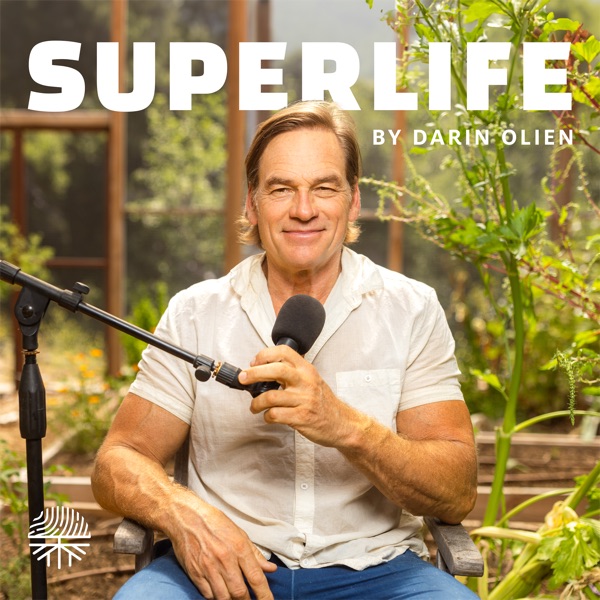
SuperLife with Darin Olien
I'm Darin Olien, the "Superfood Hunter."
If you're looking for motivation to take the next step towards a happier, healthier life then you're in the right place.
On this podcast, you'll hear honest conversations with extraordinary people that educate and inspire me. We cover everything from nutrition and mental health to sustainable ways of living.
We also dive into life's Fatal Conveniences™. These are the things that we're doing or consuming in our day-to-day life that may actually be harming us, or the Earth.
- Alternative Health chart
- #9
- Episodes
- 504
- Releases
- Daily
- Typical length
- 58 min
- On air since
- 2021
- Latest episode
- 4 days ago
Episodes
504 episodes, newest first
-
1 hr 11 min
Luke Storey: Healing Childhood Trauma, Overcoming Addiction & Discovering the Truth About Consciousness
Show notes
What happens when the pain you've spent your entire life trying to escape becomes the very thing that leads you toward freedom?
What if healing isn't about erasing your past, defeating your ego, or becoming someone new, but discovering who you were before the world taught you to believe you were broken?
In this deeply personal and thought-provoking episode of the SuperLife Podcast, Darin Olien sits down with longtime friend, fellow podcaster, and consciousness explorer Luke Story for an extraordinary conversation about childhood trauma, addiction, forgiveness, spiritual awakening, and the transformative power of surrender.
Luke's journey is one of profound transformation. After experiencing childhood sexual abuse, growing up amid family dysfunction, and eventually descending into destructive patterns of drug and alcohol addiction, he reached a point of complete desperation at just 26 years old.
In 1997, with his life seemingly in ruins, Luke made a decision that would change everything.
He got sober.
But sobriety was only the beginning.
Over the following decades, Luke embarked on an intensive journey of self-examination, spiritual exploration, meditation, and personal transformation. Through recovery programs, spiritual teachings, and a willingness to confront the darkest aspects of his past, he gradually began dismantling the beliefs and behavioral patterns that had shaped his suffering.
Now, in his deeply vulnerable memoir, The Alchemist, Luke revisits those experiences with a level of honesty that even he found difficult to navigate.
He reveals how writing the book forced him to confront memories he believed he had already processed, including the lasting emotional consequences of childhood sexual abuse, the shame associated with his behavior during addiction, and the complicated relationship between forgiveness and personal responsibility.
But one of the most challenging discoveries came when Luke began questioning what it truly means to forgive.
Is forgiveness simply understanding that someone who hurt you was probably carrying pain of their own? Is it possible to forgive someone who never acknowledges what they did? And how do you reconcile the existence of suffering with a belief in a loving universe?
Luke shares his deeply personal process of moving beyond intellectual forgiveness toward what he describes as unconditional acceptance. He even recounts hiring a private investigator to locate someone who abused him as a child, only to realize that making contact might not be necessary for his own healing.
Throughout the conversation, Darin and Luke explore the difference between taking responsibility for your life and blaming yourself for the things that happened to you.
They discuss how adopting a victim identity can leave people feeling powerless, while developing greater awareness of their reactions, beliefs, and choices can create opportunities for meaningful change.
And that leads to one of the episode's most fascinating themes: the relationship between consciousness, identity, and loneliness.
Luke believes that much of human suffering comes from a fundamental sense of separation. We identify so strongly with our bodies, personalities, thoughts, and experiences that we forget there may be a deeper dimension to who we are.
In his spiritual framework, loneliness isn't simply the absence of other people. It's the experience of feeling disconnected from something greater than ourselves.
He explains why someone can feel completely isolated in a crowded room and how his decades of meditation have helped him develop a different relationship with his thoughts, emotions, and sense of identity.
Rather than trying to silence his mind, Luke has learned to observe it.
Rather than fighting every uncomfortable emotion, he practices allowing it to exist without letting it dictate his behavior.
And rather than spending his life chasing an idealized state of enlightenment, he's discovering that genuine spiritual growth may require something surprisingly simple.
Stop striving. Start surrendering.
Luke also discusses his experiences with psychedelic substances, including 5-MeO-DMT, and how those experiences influenced his personal understanding of consciousness. He emphasizes that extraordinary altered states are not a substitute for integrating spiritual principles into everyday life.
The conversation becomes especially practical when Darin asks how someone overwhelmed by ordinary responsibilities, financial pressure, relationship struggles, or emotional exhaustion can begin developing greater inner peace.
Luke reflects on the early days of his recovery, the influence of spiritual teachers such as Byron Katie and Wayne Dyer, the foundational role of the 12-step program, and the importance of repeatedly exposing yourself to healthier ways of thinking.
He explains how studying spiritual principles gradually changed his internal dialogue, but that real transformation began when he stopped merely collecting information and started applying those principles to his behavior.
The two also explore the power of community, meaningful relationships, and the extraordinary growth that can happen when people come together with a shared intention.
Luke acknowledges that although he has often preferred to navigate his spiritual journey alone, some of his most important breakthroughs came from being surrounded by people who modeled the qualities he wanted to develop.
And in one of the episode's most moving moments, Luke shares a realization that fundamentally changed his relationship with spiritual achievement.
After years of desperately pursuing enlightenment, he describes an inner message that told him he already had what he was seeking.
The realization allowed him to loosen his attachment to constantly improving himself and begin appreciating the extraordinary distance he had already traveled.
Because perhaps the ultimate purpose of spiritual growth isn't to become perfect.
Perhaps it's simply to become more capable of love.
This episode is an invitation to examine the stories that shape your identity, question the beliefs that keep you trapped in suffering, and discover what might become possible when you stop fighting your past and begin relating to your life with greater awareness, compassion, and acceptance.
Your past may have shaped you, but it doesn't have to determine who you become.
What You'll Learn
•
How Luke Story transformed his life after childhood trauma, family dysfunction, and severe drug and alcohol addiction
•
Why writing his memoir forced Luke to revisit painful experiences and confront deeper layers of vulnerability, shame, and self-acceptance
•
What unconditional forgiveness means to Luke and why forgiving someone doesn't necessarily require an apology, acknowledgment, or confrontation
•
How taking responsibility for your reactions and choices can help restore personal agency without blaming yourself for trauma
•
Why Luke believes loneliness is connected to a deeper spiritual sense of separation and mistaken identity
•
How nearly 30 years of meditation have helped Luke observe his thoughts, interrupt automatic reactions, and develop greater emotional awareness
•
What Luke's experiences with altered states of consciousness taught him about the difference between spiritual insight and everyday integration
•
How the 12 steps, spiritual teachers, and conscious repetition helped Luke replace destructive thinking patterns with healthier perspectives
•
Why supportive communities, trustworthy mentors, and meaningful relationships can accelerate personal and spiritual growth
•
How surrendering the relentless pursuit of enlightenment helped Luke recognize that love, presence, and service may be the deepest expressions of spiritual fulfillment
Thank You to Our Sponsors MYCODog
Our dogs are family, and they deserve the same attention to quality and ingredients that we give to our own health.
That's why Darin is excited to share MYCO Dog, a company creating mushroom-based wellness products for dogs using naturally grown, wild-harvested mushrooms sourced in the United States.
MYCO Dog's tinctures are made from mushroom fruiting bodies using dual extraction and contain no synthetic fillers. Their formulations feature functional mushrooms such as turkey tail and lion's mane, along with ingredients such as ashwagandha, intended to support canine immune function, cognitive health, and overall vitality.
Darin shares that he has incorporated MYCO Dog's Vitality formula into his own dog's daily routine.
Visit https://mycodog.com/superlife/ and use code SUPERLIFE for 15% off your first order.
MANNA Vitality
Darin has spent more than 25 years exploring the world of wellness, and MANNA Vitality is a brand he highlights for its approach to mineral-based formulations.
Inspired by ancient alchemical traditions, MANNA Vitality combines ingredients such as shilajit, Ormus, beta-glucans, and gold nanoparticles in products marketed to support energy, balance, immune function, and overall vitality.
Darin shares his personal experience using MANNA Vitality and describes the improvements he has perceived in his sleep, energy, skin, and general well-being.
The company emphasizes its approach to bioavailability and mineral delivery, drawing on traditional ingredients and contemporary wellness concepts.
Visit https://mannavitality.com/ and use promo code DARIN for 20% off your order.
Chapters
00:00:03 – Welcome to the SuperLife Podcast
00:00:34 – Thank You to Our Sponsors: MYCO Dog
00:02:01 – Introducing Luke Story and his journey from addiction to spiritual transformation
00:02:33 – Childhood trauma, forgiveness, and the process of writing his memoir
00:03:12 – Loneliness, consciousness, surrender, and the freedom to choose your reactions
00:03:40 – Darin and Luke reflect on their friendship and the loss of Darin's home
00:04:26 – The impermanence of life and learning to release attachment
00:04:51 – Finding acceptance in suffering and difficult experiences
00:05:45 – How childhood conditioning shapes our relationship with struggle
00:06:18 – Darin reflects on the courage and vulnerability behind Luke's book
00:07:22 – Why writing the memoir became an emotionally exhausting process
00:08:09 – Excavating the past to uncover truth beneath limiting beliefs
00:08:37 – How our interpretation of events creates our experience of reality
00:09:33 – Luke's struggle with negativity after getting sober in 1997
00:09:55 – Meditation and discovering the space between instinct and reaction
00:10:31 – Why freedom begins in the gap between thoughts and responses
00:11:14 – The emotional challenge of revisiting traumatic memories
00:12:10 – Repeatedly confronting the past through writing and editing
00:13:03 – Self-doubt, vulnerability, and the fear of being judged
00:13:51 – Why Luke nearly removed deeply personal stories from his book
00:15:08 – Choosing authenticity instead of protecting the ego
00:16:00 – Writing responsibly about childhood sexual abuse and trauma
00:17:35 – Why forgiveness became the most difficult part of Luke's journey
00:18:25 – Forgiving the person versus forgiving the harm
00:19:13 – The spiritual struggle of reconciling suffering with a loving universe
00:19:50 – How childhood abuse shaped Luke's emotional development
00:20:49 – Revisiting the deepest wounds of childhood
00:21:47 – The search for unconditional forgiveness and spiritual acceptance
00:22:11 – Luke's personal reflections on karma, reincarnation, and suffering
00:23:07 – How Luke's past behavior influenced his understanding of accountability
00:24:16 – Changing your values, behavior, and the people you surround yourself with
00:25:13 – Taking responsibility for your life without blaming yourself for trauma
00:26:40 – Transforming personal suffering into wisdom that can help others
00:27:26 – Why accountability became essential to Luke's self-forgiveness
00:28:44 – Releasing the need for an apology from someone who hurt you
00:29:38 – Luke hires a private investigator to find his childhood abuser
00:30:40 – Considering whether confronting his abuser would bring closure
00:31:25 – Why Luke ultimately chose not to make contact
00:31:47 – The importance of discernment, support, and emotional boundaries
00:32:48 – Luke's views on government and an unexpected discovery
00:34:45 – How searching for his abuser connected to the deeper themes of his memoir
00:35:06 – Why loneliness became the central theme of Luke's book
00:35:28 – Exploring loneliness as a symptom of spiritual separation
00:36:10 – How childhood experiences reinforce the feeling of disconnection
00:36:44 – The search for a deeper experience of oneness
00:37:27 – Thank You to Our Sponsors: MANNA Vitality
00:39:22 – Why Luke describes loneliness as a case of mistaken identity
00:39:58 – Feeling disconnected even when surrounded by people
00:40:42 – Luke's perspective on consciousness and the illusion of separation
00:41:04 – Darin asks how Luke began changing his sense of identity
00:42:08 – Why meditation became the foundation of Luke's spiritual life
00:42:43 – Discovering the awareness that observes thoughts and emotions
00:43:34 – How decades of daily meditation changed Luke's relationship with his mind
00:44:23 – The formation of ego and the influence of social conditioning
00:44:49 – The question that changed everything: Who is watching your thoughts?
00:45:15 – Exploring identity beyond the physical body and thinking mind
00:45:59 – How meditation helped Luke develop a deeper sense of connection
00:46:18 – Why meditation should extend beyond sitting with your eyes closed
00:46:43 – Turning everyday life into a continuous practice of awareness
00:47:11 – Becoming less reactive and more curious about uncomfortable experiences
00:48:19 – Luke reflects on his experiences with 5-MeO-DMT
00:49:03 – Why extraordinary states of consciousness are not the same as everyday integration
00:49:55 – Balancing spiritual exploration with the responsibilities of daily life
00:50:37 – Why people seek altered states of consciousness
00:51:28 – The challenges of exploring psychedelics after a history of addiction
00:51:50 – Where to begin when your life feels chaotic and overwhelming
00:53:01 – Why Luke doesn't claim to have achieved permanent enlightenment
00:53:22 – Hitting rock bottom with drugs and alcohol at age 26
00:53:44 – How desperation made surrender possible
00:54:12 – Why external achievements often fail to provide lasting fulfillment
00:55:10 – Finding spiritual guidance when you're struggling to discover purpose
00:55:55 – The influence of Byron Katie, Wayne Dyer, and other spiritual teachers
00:56:18 – Replacing destructive inner dialogue through repeated exposure to new ideas
00:57:00 – Recognizing the beliefs and conditioning that shape your behavior
00:58:08 – Reprogramming the mind through curiosity and healthier perspectives
00:58:38 – Neuroplasticity and the possibility of changing habitual thinking
00:59:05 – How the 12 steps became Luke's introduction to spiritual principles
00:59:38 – Exploring timeless spiritual teachings and metaphysical philosophy
00:59:59 – Moving beyond intellectual understanding into real-world application
01:00:23 – How practicing spiritual principles transformed Luke's character
01:01:09 – The difference between reading for information and reading for contemplation
01:01:33 – Why knowledge alone wasn't enough to change Luke's life
01:01:58 – How spiritual study led to a deeper commitment to meditation
01:02:53 – Darin asks about group work and the 12-step experience
01:03:03 – The transformative power of reflection within conscious groups
01:03:59 – Why meaningful relationships can accelerate personal growth
01:05:20 – Luke discusses the power of unity and shared intention
01:05:50 – Why spiritual development can happen more quickly in supportive communities
01:06:28 – Learning from trustworthy mentors and people further along the path
01:07:03 – Balancing independent spiritual practice with community support
01:07:30 – Why surrender can be more powerful than striving
01:07:54 – Luke's relentless pursuit of spiritual awakening
01:08:17 – The realization that changed his relationship with enlightenment
01:08:39 – You already have it all: Learning to relax into the present moment
01:09:04 – Recognizing how far you've come instead of constantly chasing the next breakthrough
01:09:25 – Discovering that what you're searching for may already be here
01:09:51 – Why service to others creates a deeper sense of fulfillment
01:10:16 – Gratitude, friendship, and learning to receive support
01:10:32 – Why allowing others to help can be a gift in itself
01:10:46 – Final reflections and closing the conversation
Find More from Luke Storey:
•
Website: https://www.lukestorey.com/
•
Instagram: @lukestorey
•
Podcast: The Life Stylist
• Book: A Horse Named Lonesome
Find More From Darin Olien:
•
Website: https://darinolien.com
•
Instagram: @darinolien
•
Book: Fatal Conveniences
•
Platform & Products: http://superlife.com
•
New Show: Roadmap to Happiness
Key Takeaway
"For most of my life, I believed that peace was something I had to achieve. I thought if I could just heal enough trauma, overcome enough limitations, understand enough spiritual teachings, or reach some extraordinary state of consciousness, I would finally arrive at a place where everything made sense. But what I've discovered through addiction, recovery, meditation, forgiveness, and decades of looking inward is that the very act of striving can become another obstacle. We become so attached to the idea of becoming someone better that we forget to recognize the awareness that's already here beneath our thoughts, our fears, and our stories. I spent years identifying with my suffering, believing that the things that happened to me and the things I had done defined who I was. But slowly, through taking responsibility for my choices and learning to observe my mind instead of obeying every thought, I began to experience a different kind of freedom. Forgiveness became less about what other people deserved and more about what I was willing to release. Meditation became less about escaping life and more about being fully present for it. And spiritual growth became less about reaching some distant destination and more about learning how to love without so many conditions. One of the most profound realizations I've had is that maybe the thing we're desperately searching for isn't missing at all. Maybe we've simply become so distracted by our identities, our expectations, and our attachments that we've forgotten how to recognize it. And when you begin to loosen your grip on those things, something beautiful happens. You stop fighting life quite so much. You become more curious, more compassionate, and more willing to serve. You realize that your past can become a source of wisdom without having to remain the center of your identity. And perhaps most importantly, you begin to understand that the purpose of all this work isn't to become perfect. It's to become more capable of love, connection, and presence in the life you're already living."
-
29 min
Your Body Is a Miracle: The Incredible Science of How Your Body Heals Itself Every Day
Show notes
What if your body isn't something that needs to be fixed, but an extraordinary living system that's been working to protect, repair, and rebuild you every second of your life?
What if the secret to better health isn't forcing your body to change, but understanding the incredible biological intelligence already working inside you?
In this eye-opening solo episode of the SuperLife Podcast, Darin Olien explores the extraordinary science behind the human body's natural ability to regenerate, repair, and renew itself. From the trillions of cells working tirelessly beneath your skin to the remarkable processes that rebuild your organs, repair damaged DNA, and restore your brain while you sleep, Darin reveals why the human body deserves far more appreciation than we typically give it.
And the numbers are almost impossible to comprehend.
Your body contains approximately 36 trillion human cells, and researchers estimate that it replaces roughly 330 billion cells every single day. That's millions of cells being renewed every second without you consciously directing a single one of them.
Your intestinal lining regenerates in a matter of days. Your skin continually replaces damaged cells. Your bones are constantly being broken down and rebuilt. Even your heart, once believed to have virtually no regenerative capacity, slowly renews some of its muscle cells throughout adulthood.
And perhaps most remarkably, your liver possesses an extraordinary ability to regenerate after losing a substantial portion of its tissue.
But the body's renewal doesn't stop there.
Darin explores the Nobel Prize-winning discoveries behind DNA repair and autophagy, the cellular recycling process that helps break down damaged components and reuse their materials. He also examines the fascinating relationship between sleep and brain restoration, including research into the movement of fluid through the brain during sleep and the potential role this process plays in clearing metabolic waste.
These aren't futuristic technologies or experimental medical breakthroughs.
They're processes happening inside your body right now.
Yet despite this extraordinary capacity for renewal, Darin believes we've become disconnected from the intelligence of our own biology.
We often treat our bodies as machines that break down, malfunction, and require constant intervention. But what if a more empowering approach is to recognize that our bodies are continually responding to the environments and conditions we create?
Darin connects modern scientific discoveries with ancient healing traditions, including the Greek concept of the healing power of nature, Chinese qi, and Ayurvedic prana. He explores how different cultures have long recognized the body's tendency to seek balance and how contemporary research is helping explain some of the biological processes involved.
The conversation also examines the profound relationship between stress, the nervous system, and physical health.
Darin explains why chronic activation of the body's fight-or-flight response can interfere with recovery, while practices that encourage relaxation, such as breathing exercises, time in nature, meditation, and restorative sleep, may support healthier physiological functioning.
He also discusses fascinating research into the relationship between beliefs and physical outcomes, including a Harvard study involving hotel housekeepers who experienced measurable changes after learning that their daily work qualified as exercise.
But the most important question Darin asks is deceptively simple:
If your body is constantly rebuilding itself, what are you giving it to rebuild with?
Every meal provides materials your body can use. Every walk influences your muscles, bones, and cardiovascular system. Every night of sleep creates an opportunity for essential maintenance. And every meaningful relationship contributes to the social and emotional conditions that influence your well-being.
Drawing on research into nutrition, exercise, longevity, sleep, and social connection, Darin shares practical ways to support your body's natural repair processes.
From eating a diverse range of plant foods and incorporating daily movement to prioritizing seven to nine hours of sleep, managing stress, and nurturing meaningful relationships, he reminds listeners that supporting their health doesn't require perfection.
It requires consistency.
And sometimes the most powerful changes begin with the smallest decisions.
This episode is an invitation to stop viewing your body as an adversary and begin appreciating the extraordinary living system that's been supporting you since the beginning of your life.
Because you aren't simply living inside a body.
You are a living, breathing, constantly renewing miracle.
What You'll Learn
•
How your body replaces approximately 330 billion cells every day and why cellular turnover is essential to maintaining life
•
Why your intestinal lining regenerates within days and how dietary changes can rapidly influence your gut microbiome
•
How your skin, blood, bones, heart, and liver continually undergo different forms of repair and renewal
•
What Nobel Prize-winning discoveries reveal about DNA repair and autophagy, the body's cellular recycling system
•
Why sleep is essential for brain restoration, memory processing, and the body's maintenance processes
•
How movement and exercise influence bone remodeling, cardiovascular health, mitochondria, and brain function
•
What ancient healing traditions understood about the body's natural tendency toward balance and recovery
•
How chronic stress, the parasympathetic nervous system, and the vagus nerve influence physiological conditions associated with recovery
•
Why nutrition, sleep, movement, meaningful relationships, and reducing harmful exposures are foundational to long-term health
•
How small, consistent daily choices can help create better conditions for your body's natural healing processes
Chapters
00:00 – Welcome to the SuperLife Podcast
00:34 – Sponsor: Alkemis Wellness Paint
03:26 – Your body creates millions of new cells without you realizing it
03:40 – The extraordinary repair processes happening inside your body right now
04:17 – Why your body's natural healing systems never take a day off
04:21 – Stop focusing on what's wrong with your body
04:52 – Why Darin believes your body is your greatest ally
05:09 – Introducing the miracle of human cellular regeneration
05:28 – The science behind replacing approximately 330 billion cells every day
06:10 – Understanding the scale of cellular turnover
06:27 – Why different cells regenerate at different rates
06:37 – Your body is a constantly changing, living system
07:11 – Why your daily choices influence the body you're rebuilding
07:37 – The extraordinary intelligence of trillions of cooperating cells
07:43 – How your body's natural repair crews work together
08:30 – Your intestinal lining regenerates approximately every three to five days
08:58 – How stem cells continuously renew your gut
09:03 – How quickly your microbiome can respond to dietary changes
09:29 – Skin regeneration, wound healing, and the immune response
10:00 – Your bone marrow produces millions of red blood cells every second
10:30 – How your skeleton continually remodels itself
10:39 – Why walking, lifting weights, and movement strengthen your bones
11:19 – The surprising discovery that heart muscle cells can regenerate
11:59 – Ancient Greek mythology and the regenerative power of the liver
12:18 – How the liver regrows and your cells repair DNA damage
13:08 – The Nobel Prize-winning discoveries behind DNA repair and autophagy
13:47 – Why sleep is essential for brain maintenance and restoration
14:22 – How sleep supports the body's recovery processes
14:36 – Sponsor: MANNA Vitality
16:31 – How regular walking can influence the brain's memory center
16:57 – The healing power of nature and the wisdom of Hippocrates
17:31 – Ancient healing traditions, qi, and prana
18:03 – How modern science and traditional healing philosophies intersect
18:44 – The parasympathetic nervous system and the body's restorative state
19:22 – Why chronic fight-or-flight activation can undermine recovery
19:58 – The Harvard housekeeper study and the influence of mindset
20:25 – Reframing fever, inflammation, and fatigue as biological signals
21:00 – Your body is constantly communicating with you
21:33 – How food and movement provide the materials and signals for renewal
21:49 – Creating conditions that support your body's healing processes
22:10 – Prioritizing seven to nine hours of sleep and healthy circadian rhythms
22:39 – Supporting gut health with whole foods, fiber, and plant diversity
23:16 – The relationship between daily steps and longevity
23:52 – Weight-bearing exercise, interval training, and mitochondrial health
24:23 – Breathing, meditation, nature, and calming the nervous system
24:55 – Why rest and recovery deserve a place in your daily routine
25:07 – The remarkable relationship between social connection and longevity
25:29 – Love, community, and reducing unnecessary burdens on your body
26:00 – Why small, consistent habits are more powerful than perfection
26:29 – Darin's reminder to appreciate your body's extraordinary capabilities
27:01 – Working with nature and supporting your body's biological intelligence
27:25 – Darin's challenge: Choose one healthy habit this week
27:29 – Sleep earlier, walk after dinner, eat more plants, or reconnect with someone
28:00 – Why gratitude can change your relationship with your body
28:14 – You are a living miracle: Final reflections
28:23 – Closing thoughts and the importance of making every choice matter
Thank You to Our Sponsors Alkemis
We spend so much time thinking about the food we eat, the water we drink, and the products we put on our bodies, but what about the air we're breathing inside our own homes?
Conventional paints can release volatile organic compounds into indoor air, making the materials surrounding us an important part of creating a healthier living environment.
That's why Darin is excited to introduce Alkemis, a mineral-based wellness paint designed with human health and environmental sustainability in mind.
According to the company, its paints are VOC-free, PFAS-free, naturally resistant to mold and fungi, and Class A fire resistant. Alkemis also emphasizes its Cradle to Cradle certification and commitment to considering the environmental impact of its products throughout their life cycle.
Whether you're repainting a bedroom, renovating your home, or building something new, Alkemis offers an alternative to conventional petrochemical-based paints.
Visit https://alkemispaint.com/ and use promo code DARIN10.
MANNA Vitality
Darin has spent decades exploring products and practices that support physical, mental, and emotional well-being. MANNA Vitality is a brand he highlights for its approach to mineral-based wellness formulations.
Drawing inspiration from ancient alchemical traditions, MANNA Vitality incorporates ingredients such as shilajit, beta-glucans, gold nanoparticles, and Ormus into its products.
Darin shares his personal experience with the brand, including perceived improvements in sleep, energy, skin appearance, and overall well-being.
MANNA Vitality focuses on formulations intended to support balance, vitality, and cellular wellness, combining traditional ingredients with its approach to mineral delivery.
Visit https://mannavitality.com/ and use promo code DARIN for 20% off your order.
Find More from Darin Olien:
•
Website: https://darinolien.com
•
Instagram: @darinolien
•
Book: Fatal Conveniences
•
Platform & Products: http://superlife.com
•
New Show: Roadmap to Happiness
Key Takeaway
"Your body is doing something extraordinary every second of every day, whether you're paying attention to it or not. Trillions of cells are working together to keep you alive. Your gut is rebuilding itself. Your bones are remodeling. Your liver is regenerating. Your cells are repairing damaged DNA, recycling worn-out components, and responding to the environment you create through your daily choices. And the most remarkable part is that you don't have to consciously direct any of it. This intelligence has been working on your behalf since the moment you came into existence. But here's where your responsibility begins. Your body can only work with the materials and conditions you give it. The food you eat, the sleep you prioritize, the way you move, the stress you carry, and the relationships you nurture all influence the environment in which these incredible processes take place. You don't have to control every biological process or chase every new wellness trend. You can start by supporting the foundations that allow your body to function at its best. Eat real food. Move every day. Get restorative sleep. Spend time in nature. Connect with people you love. And stop expecting yourself to be perfect. One healthy meal, one walk, one good night's sleep, and one meaningful connection at a time, you're creating better conditions for the body you're constantly becoming. So tonight, before you go to sleep, put your hand on your heart and recognize what it's done for you today. Appreciate the miracle that's been working inside you your entire life. Your body deserves your gratitude, your attention, and your care. You are a living miracle. Start treating yourself like one."
Bibliography/Sources Cell Count and Renewal
•
Sender, R., & Milo, R. (2021). The distribution of cellular turnover in the human body. Nature Medicine, 27, 45–48. https://doi.org/10.1038/s41591-020-01182-9
•
Hatton, I. A., et al. (2023). The human cell count and size distribution. Proceedings of the National Academy of Sciences, 120(39), e2303077120. https://doi.org/10.1073/pnas.2303077120
Gut
•
Darwich, A. S., et al. (2014). Meta-analysis of the turnover of intestinal epithelia in preclinical animal species and humans. Drug Metabolism and Disposition, 42(12), 2016–2022. https://doi.org/10.1124/dmd.114.058404
•
David, L. A., et al. (2014). Diet rapidly and reproducibly alters the human gut microbiome. Nature, 505, 559–563. https://doi.org/10.1038/nature12820
•
Koh, A., et al. (2016). From dietary fiber to host physiology: Short-chain fatty acids as key bacterial metabolites. Cell, 165(6), 1332–1345. https://doi.org/10.1016/j.cell.2016.05.041
Skin and Wound Healing
•
Gurtner, G. C., et al. (2008). Wound repair and regeneration. Nature, 453, 314–321. https://doi.org/10.1038/nature07039
Bone
•
Manolagas, S. C. (2000). Birth and death of bone cells: Basic regulatory mechanisms and implications for the pathogenesis and treatment of osteoporosis. Endocrine Reviews, 21(2), 115–137. https://doi.org/10.1210/edrv.21.2.0395
Heart
•
Bergmann, O., et al. (2009). Evidence for cardiomyocyte renewal in humans. Science, 324(5923), 98–102.
Liver
•
Michalopoulos, G. K. (2007). Liver regeneration. Journal of Cellular Physiology, 213(2), 286–300. https://doi.org/10.1002/jcp.21172
DNA Repair and Autophagy
•
Lindahl, T. (1993). Instability and decay of the primary structure of DNA. Nature, 362, 709–715. https://doi.org/10.1038/362709a0
•
Nobel Media AB. (2015). The Nobel Prize in Chemistry 2015. NobelPrize.org.
•
Nobel Media AB. (2016). The Nobel Prize in Physiology or Medicine 2016. NobelPrize.org.
Brain and Sleep
•
Xie, L., et al. (2013). Sleep drives metabolite clearance from the adult brain. Science, 342(6156), 373–377. https://doi.org/10.1126/science.1241224
•
Fultz, N. E., et al. (2019). Coupled electrophysiological, hemodynamic, and cerebrospinal fluid oscillations in human sleep. Science, 366(6465), 628–631. https://doi.org/10.1126/science.aax5440
•
Miao, A., et al. (2024). Brain clearance is reduced during sleep and anesthesia. Nature Neuroscience, 27, 1046–1050. https://www.ncbi.nlm.nih.gov/pmc/articles/PMC11156584/
•
Erickson, K. I., et al. (2011). Exercise training increases size of hippocampus and improves memory. Proceedings of the National Academy of Sciences, 108(7), 3017–3022. https://doi.org/10.1073/pnas.1015950108
Mind, Movement and Connection
•
Crum, A. J., & Langer, E. J. (2007). Mind-set matters: Exercise and the placebo effect. Psychological Science, 18(2), 165–171. https://doi.org/10.1111/j.1467-9280.2007.01867.x
•
Paluch, A. E., et al. (2022). Daily steps and all-cause mortality: A meta-analysis of 15 international cohorts. The Lancet Public Health, 7(3), e219–e228. https://doi.org/10.1016/S2468-2667(21)00302-9
•
Robinson, M. M., et al. (2017). Enhanced protein translation underlies improved metabolic and physical adaptations to different exercise training modes in young and old humans. Cell Metabolism, 25(3), 581–592. https://doi.org/10.1016/j.cmet.2017.02.009
•
Holt-Lunstad, J., Smith, T. B., & Layton, J. B. (2010). Social relationships and mortality risk: A meta-analytic review. PLoS Medicine, 7(7), e1000316. https://doi.org/10.1371/journal.pmed.1000316
•
U.S. Department of Health and Human Services. (2020). Smoking cessation: A report of the Surgeon General.
-
1 hr 15 min
Sean Callagy: How to Master Your Mind, Overcome Any Obstacle & Create the Life You Want
Show notes
What if the greatest obstacle standing between you and the life you want isn't your circumstances, your genetics, your financial situation, or even your physical limitations, but your ability to recognize and create possibilities that others cannot see?
What if success wasn't something you were born with, but something you could systematically learn, practice, and master?
In this powerful episode of the SuperLife Podcast, Darin Olien sits down with Sean Callagy, an entrepreneur, attorney, peak performance expert, and founder of Unblinded, whose extraordinary journey challenges nearly everything we've been taught about adversity, achievement, and human potential.
At just 17 years old, Sean learned that he had a degenerative eye condition that would eventually leave him blind. Instead of allowing that diagnosis to define his future, he transformed his fear of becoming blind and financially dependent into an extraordinary drive to succeed.
From being an undersized, overlooked young athlete to playing Division I college baseball, attending Columbia Law School, and eventually building multimillion-dollar businesses, Sean's life has been a relentless pursuit of one fundamental question: What separates people who achieve extraordinary results from those who don't?
But his journey was anything but straightforward.
After failing to be drafted into professional baseball, Sean found himself working an unfulfilling corporate job, confronting the reality of his deteriorating vision and questioning everything he believed about success.
Law school seemed like the answer, until he discovered that even a prestigious degree and a high-paying corporate position couldn't provide the financial freedom, time, and fulfillment he desperately wanted.
Everything changed when Sean began studying the psychology of peak performance, the power of language, and the principles of influence.
Inspired by Tony Robbins, renowned trial attorney Gerry Spence, and the coaches who shaped his athletic career, Sean developed a completely different understanding of marketing, selling, leadership, and human connection.
He calls it "Yes Causing."
Rather than viewing sales as manipulation, Sean reframes influence as the ability to create meaningful agreements, solve problems, and help people make decisions that genuinely serve their interests.
He explains how this shift in perspective helped him leave corporate law, launch his own firm with virtually no resources, and eventually build businesses that generated substantial financial success while giving him the freedom to be present for his children.
Together, Darin and Sean explore the three pillars of Sean's Unblinded Formula: Influence Mastery, Process Mastery, and Self-Mastery.
They discuss why mastering your psychology is only the beginning, how to identify and model people who have already achieved the results you want, and why the quality of your life may ultimately depend on the quality of the agreements and opportunities you create.
Sean also shares the deeply emotional realities of progressively losing his sight, including the heartbreaking fact that he has never seen his youngest daughter's face.
Yet he refuses to define his life by what he has lost.
Instead, he sees his experiences as the foundation of a mission to help others overcome limitations, create financial freedom, reclaim their time, and build lives filled with meaning.
This conversation is about far more than business, money, or personal development.
It's about responsibility. Integrity. Resilience. Leadership. Family. And discovering that the ability to change your life may be far more learnable than you've ever imagined.
Because the most powerful transformation begins when you stop asking what's possible for someone like you and start asking what you can learn to make possible.
What You'll Learn
•
How Sean Callagy transformed a degenerative eye condition into the motivation to pursue extraordinary success
•
Why his journey from overlooked young athlete to Division I baseball player shaped his understanding of peak performance
•
How losing his dream of professional baseball forced Sean to completely reinvent his future
•
Why graduating from Columbia Law School and securing a prestigious corporate job failed to deliver the freedom he expected
•
How Tony Robbins and Gerry Spence helped Sean redefine marketing, selling, and the power of language
•
What "Yes Causing" means and how ethical influence can transform relationships, leadership, business, and personal opportunities
•
How Sean built his first successful law firm and later scaled another firm to 100 employees in two years
•
The three pillars of the Unblinded Formula: Influence Mastery, Process Mastery, and Self-Mastery
•
Why modeling people who have already achieved the results you want is essential to developing genuine mastery
•
How to create more money, more time, and more meaning without sacrificing integrity, family, or personal fulfillment
Thank You to Our Sponsors MYCO Dog
Darin believes the supplements he gives his dogs should meet the same standards he expects from products he uses himself.
MYCO Dog offers mushroom-based tinctures featuring ingredients such as turkey tail, lion's mane, and adaptogens including ashwagandha.
Darin highlights the company's focus on wild-harvested mushrooms, fruiting bodies, dual extraction, and ingredient quality. He also shares how the company's Vitality formula has become part of his daily routine with his dog.
Visit https://mycodog.com/superlife and use promo code SUPERLIFE for 15% off your first order.
MANNA Vitality
Darin discusses his experience with MANNA Vitality and its mineral-focused formulations, including shilajit and other ingredients.
He shares his personal experience with the products and the company's approach to mineral delivery and wellness.
Visit https://mannavitality.com/ and use promo code DARIN for 20% off your order.
Chapters
00:00:03 – Welcome to SuperLife
00:00:34 – Sponsor: MYCO Dog
00:02:01 – Introducing Sean Callagy and his extraordinary journey
00:02:58 – The Unblinded Formula and the three pillars of mastery
00:03:58 – How Jennifer Cohen connected Darin and Sean
00:04:45 – From an overlooked young athlete to Division I college baseball
00:05:37 – Why Sean became obsessed with understanding peak performance
00:06:19 – How athletics shaped his philosophy of self-improvement
00:07:03 – Growing up in Jersey City and finding inspiration in Batman
00:08:02 – Muhammad Ali, the Miracle on Ice, and the psychology of winning
00:08:48 – How coaches and role models taught Sean the power of systems
00:09:18 – Overcoming physical disadvantages through training and discipline
00:09:36 – The unforgettable championship moment that changed Sean's perspective
00:10:45 – Why Sean began searching for a formula for extraordinary results
00:11:20 – Reflecting on family, ambition, and the possibilities of life
00:13:32 – The heartbreak of not being drafted into professional baseball
00:14:14 – Why Sean considers his blindness one of his greatest gifts
00:14:51 – The unfulfilling corporate job that left him questioning his future
00:15:09 – Escaping a life of quiet desperation
00:15:35 – Why Sean chose law school despite never dreaming of becoming a lawyer
00:16:11 – The family history behind Sean's degenerative eye condition
00:16:33 – Discovering at 17 that he would eventually lose his sight
00:17:18 – What progressive vision loss actually feels like
00:18:10 – Losing his ability to see baseballs, read, and navigate everyday life
00:19:16 – The heartbreaking reality of never seeing his youngest daughter's face
00:19:51 – Sponsor: MANNA Vitality
00:21:45 – How Sean made radically different choices despite enormous obstacles
00:22:41 – Why his family believed becoming a lawyer was the path to financial security
00:23:35 – Questioning the traditional educational system
00:24:25 – The limitations Sean discovered inside prestigious legal education
00:25:13 – Why a high-paying corporate law job didn't create financial freedom
00:25:49 – Discovering the importance of marketing, selling, and entrepreneurship
00:26:44 – Breaking free from the conventional definition of success
00:27:02 – Overcoming negative beliefs about money, marketing, and sales
00:27:39 – The two books that completely transformed Sean's perspective
00:28:26 – Reframing sales and discovering the extraordinary power of language
00:29:13 – Why Sean walked away from corporate law
00:29:58 – Starting his own law firm without a traditional business blueprint
00:30:40 – Building a business on a credit card and surviving the hardest year of his life
00:31:23 – Sean's philosophy: If someone else can learn it, so can you
00:32:28 – Darin challenges the manipulative nature of conventional sales
00:33:18 – Introducing Yes Causing: A new way to understand influence
00:33:50 – Why integrity changes everything about marketing and selling
00:34:41 – The responsibility of offering genuine value to people who need help
00:35:39 – How Sean transformed his approach to attracting clients
00:36:43 – Turning an ethical philosophy into a scalable business
00:37:24 – What does Yes Causing actually mean?
00:37:55 – Why the quality of your life depends on the quality of your YESes
00:38:25 – How influence and perspective shape major decisions
00:39:07 – A World War II story illustrating the stakes of influence
00:39:55 – Why everything Sean has created begins with a YES
00:40:02 – Learning which opportunities are worth pursuing
00:40:28 – The unexpected opportunity that launched Sean's legal business
00:41:19 – Building a business by understanding where ideal clients gather
00:41:44 – Growing from $2,500 a month to $100,000 a month
00:42:15 – Creating more money, time, and magic through ethical influence
00:43:13 – Darin reflects on Sean's commitment to solving real problems
00:43:36 – Why Sean made a promise to dedicate his life to teaching others
00:44:27 – Selling his first law firm to pursue a greater purpose
00:45:10 – The formula for more money, less time, and more magic
00:45:28 – Why being present for his children's lives became a priority
00:46:08 – Coaching more than a thousand games and preparing for a new chapter
00:46:45 – Building a second law firm and scaling to 100 employees
00:47:25 – Why influence is a trainable skill, not a genetic gift
00:47:48 – Overcoming the fear of rejection and public speaking
00:48:15 – Building financial freedom without sacrificing family
00:48:55 – Why Sean deliberately raised his children in a middle-class community
00:50:29 – Keeping financial success private while raising a family
00:51:06 – Why other parents thought Sean was an unemployed gym teacher
00:51:58 – Living below his means and teaching his children humility
00:52:37 – Darin reflects on the values Sean instilled in his family
00:53:50 – Why Sean only takes advice from people who have achieved the results he wants
00:54:56 – Learning different lessons from different role models
00:55:35 – How Sean used Muhammad Ali and his coaches as models for mastery
00:56:55 – What Tony Robbins taught Sean about self-mastery
00:57:37 – How Sean applies modeling to leadership and organizational culture
00:58:37 – Choosing role models for money, family, spirituality, and integrity
00:59:16 – Why Sean rejects flashy displays of wealth
01:00:06 – Exploring Influence Mastery and Process Mastery
01:01:29 – Sean explains his mission to bring Unblinded to the world
01:02:18 – The origins of the Unblinded Formula
01:02:52 – Why everything begins with the ability to create agreement
01:03:18 – Influence as a science and Sean's challenge to famous sales experts
01:04:27 – Why ethical influence isn't about manipulating or defeating people
01:04:51 – Understanding someone's needs before attempting to influence them
01:05:11 – Why Sean rejects conventional pitching, hooking, and closing
01:05:32 – The seven-step approach to Process Mastery
01:06:05 – Self-Mastery: Getting yourself to do what you know is best
01:06:33 – How Sean began bringing Unblinded to a wider audience
01:07:23 – The challenges of finding integrity in online marketing
01:08:52 – Darin's vision for a world that truly works for everyone
01:09:26 – Creating solutions for health, wealth, food, water, and shelter
01:10:34 – Why this conversation represents something bigger than a podcast
01:11:30 – Sean reflects on authenticity, integrity, and genuine human connection
01:11:54 – Why true abundance goes far beyond money
01:12:20 – Bringing together financial freedom, time, and meaningful purpose
01:12:44 – How influence can help address humanity's greatest challenges
01:13:09 – How listeners can learn more about Sean and Unblinded
01:13:34 – Sean explains his mission and the purpose behind Unblinded
01:14:08 – Training influence like an athlete trains for competition
01:14:41 – Growth-driven, heart-centered people committed to integrity and mastery
01:15:04 – Final reflections and closing
Find More from Sean Callagy:
•
Website: https://unblindedmastery.com/
•
Instagram: @seanrcallagy
•
Podcast: The Unblinded Podcast
• Join Athena: Athena
Find More From Darin Olien:
•
Website: https://darinolien.com
•
Instagram: @darinolien
•
Book: Fatal Conveniences
•
Platform & Products: http://superlife.com
•
New Show: Roadmap to Happiness
Key Takeaway
"The quality of your life is determined by far more than your genetics, your circumstances, your education, or the obstacles standing in your way. I was told at 17 years old that I was going blind. I watched my dream of becoming a professional baseball player disappear. I worked jobs that left me feeling trapped, and I followed a traditional path to success only to discover that it wasn't giving me the freedom I wanted. But through athletics, through extraordinary coaches, through failure, and through learning from people who had already achieved remarkable things, I discovered something that changed everything. Success isn't just about working harder. It's about mastering the processes that create results. It's about learning how to influence with integrity, how to create meaningful agreements, and how to get yourself to do the things you know are best for you. Every relationship, every business, every opportunity, every transformation begins with the quality of the YESes we create. And when you learn to combine influence mastery, process mastery, and self-mastery, you begin to see possibilities that were invisible to you before. Your greatest limitations don't have to determine your future. You can learn. You can grow. You can create. And you can build a life with more money, more time, more freedom, and more magic without sacrificing the things that matter most."
-
30 min
The Food Label Scam: Why "Natural," "Clean," and "Superfood" Might Mean Nothing
Show notes
What if some of the most convincing words on your favorite foods, supplements, and wellness products are nothing more than clever marketing?
Every day, millions of people spend their hard-earned money on products labeled natural, clean, superfood, pharmaceutical grade, and clinically proven, believing these terms guarantee something healthier, safer, or higher quality.
But what if many of these labels don't actually mean what you think they do?
In this eye-opening solo episode of the SuperLife Podcast, Darin Olien exposes the world of misleading food labels, questionable supplement claims, and marketing language that creates the illusion of quality without necessarily delivering it.
It all starts with a surprising revelation about matcha. The phrase "ceremonial grade", widely used to sell premium matcha in Western markets, isn't an officially standardized Japanese grading system. Despite its associations with ancient tea ceremonies and exceptional quality, the term itself doesn't guarantee anything about how the tea was grown, harvested, processed, or tested.
And according to Darin, that's just the beginning.
Drawing on decades of experience traveling the world as a superfood hunter, visiting manufacturing facilities, sourcing medicinal plants, and developing nutritional products, Darin breaks down the marketing language that dominates grocery stores, supplement aisles, and online wellness brands.
He explores why natural doesn't necessarily mean pesticide-free, why multigrain doesn't automatically mean whole grain, why free-range animals may have limited outdoor access, and why a supplement advertised as clinically studied may not have been tested in its finished form.
Darin also examines the regulatory differences between terms such as healthy, organic, grass-fed, pasture-raised, and pharmaceutical grade, revealing how easily consumers can mistake a persuasive phrase for a meaningful certification.
But this episode isn't simply about exposing misleading claims. It's about giving you the tools to recognize genuine quality.
Darin explains which certifications and verification programs deserve closer attention, including USDA Organic, Certified Humane, USP Verified, and NSF certification. He also shares why ingredient transparency, independent testing, disclosed dosages, and traceable sourcing are often more valuable than the biggest words printed on the front of a package.
Finally, he challenges listeners to conduct a simple experiment with three products already sitting in their kitchens.
Because when it comes to your health, the front of the package is designed to sell you something. The back is where you begin asking better questions.
It's time to stop buying the story and start investigating the substance.
What You'll Learn
•
Why "ceremonial grade" matcha isn't an officially regulated Japanese quality classification
•
How food manufacturers use words like "natural," "clean," "superfood," and "farm fresh" to influence purchasing decisions
•
What the FDA's updated definition of "healthy" means and why implementation deadlines matter
•
Why "made with real fruit," "multigrain," and "detox" can create misleading impressions about nutritional value
•
What "free-range," "grass-fed," "pasture-raised," and "no hormones added" actually tell you about animal products
•
Why "pharmaceutical grade," "clinically proven," and "doctor recommended" deserve closer scrutiny on supplement labels
•
How proprietary blends can make it difficult to determine the amounts of individual supplement ingredients
•
Which certifications and verification programs provide more meaningful information about product quality
•
Why transparent sourcing, ingredient testing, and fully disclosed dosages are important when evaluating supplements
•
Darin's three-product label challenge for becoming a more informed, empowered consumer
Thank You to Our Sponsors MYCO Dog
Darin believes the supplements he gives his dogs should meet the same quality standards he expects from products he uses himself.
MYCO Dog offers mushroom-based tinctures made with mushroom fruiting bodies, featuring ingredients such as turkey tail and lion's mane, along with adaptogens including ashwagandha.
Darin discusses the company's focus on sourcing, extraction methods, and ingredient quality, and shares how MYCO Dog's Vitality formula has become part of his routine with his dog, Chaga.
Visit mycodog.com/superlife and use promo code SUPERLIFE for 15% off your first order.
Bite
Darin discusses the environmental impact of disposable toothpaste tubes and the unnecessary plastic waste associated with conventional oral care products.
Bite offers toothpaste tablets in reusable glass containers, with refill options designed to reduce plastic packaging.
Darin shares why he prefers Bite's convenient tablets, particularly when traveling, and how small changes in daily routines can help reduce unnecessary waste.
Visit trybite.com and use promo code DARIN20 for 20% off your first order.
Chapters
00:00:03 – Welcome to SuperLife
00:00:33 – Sponsor: MYCO Dog
00:01:35 – The surprising truth about "ceremonial grade" matcha
00:02:09 – Why premium-sounding matcha labels can be misleading
00:02:46 – The absence of an official ceremonial-grade certification
00:03:21 – How traditional Japanese tea producers evaluate matcha quality
00:03:51 – Harvesting, origin, and the difference between thick and thin tea
00:04:29 – How many other food labels are equally misleading?
00:05:08 – Marketing language as a modern fatal convenience
00:05:37 – Why shoppers instinctively trust words like "natural" and "clean"
00:06:01 – The difference between front-of-package marketing and regulated labeling
00:06:26 – Why the smallest words on the package may matter most
00:06:55 – Darin's experience inside hundreds of manufacturing facilities
00:07:34 – How misleading marketing inspired Darin's work in nutritional formulation
00:08:09 – Three categories of misleading claims: Food, animal products, and supplements
00:08:37 – What does "natural" actually mean under FDA policy?
00:09:12 – Why natural foods can still contain added sugar and pesticide residues
00:09:45 – The FDA's updated definition of "healthy" and its compliance timeline
00:10:39 – Sponsor: Bite
00:12:43 – Why "superfood" has no standardized definition in the United States
00:13:16 – Darin's journey as the original superfood hunter
00:13:47 – How brands can use "superfood" without an official grading system
00:14:14 – Differences between U.S. and U.K. rules for superfood advertising
00:14:49 – The truth about "clean," "made with real fruit," and "multigrain"
00:15:21 – Why "detox," "artisan," "farm fresh," and "small batch" can be misleading
00:15:52 – What "free-range" really means for chickens
00:16:24 – Why outdoor access doesn't necessarily mean meaningful outdoor living
00:16:58 – The misleading implications of "no hormones added" on poultry and pork
00:17:50 – Why "grass-fed" doesn't always mean grass-finished
00:18:25 – What "natural" means on meat packaging
00:19:23 – Why "pharmaceutical grade" isn't an official supplement classification
00:19:57 – The difference between "clinically studied" and clinically proven effectiveness
00:20:32 – How proprietary blends can conceal individual ingredient dosages
00:21:12 – What "immune support" and similar supplement claims actually mean
00:21:45 – Understanding FDA disclaimers on dietary supplements
00:22:17 – The problem with "doctor formulated" and "doctor recommended"
00:22:57 – Why real certifications matter more than persuasive marketing
00:23:32 – Understanding USDA Organic certification and ingredient thresholds
00:24:16 – The difference between organic and made with organic ingredients
00:24:46 – Why wild-harvested plants can present unique certification challenges
00:25:19 – The meaning of pasture-raised and Certified Humane labels
00:25:53 – Comparing independently certified animal welfare claims with generic labels
00:26:31 – USP Verified, NSF certification, and third-party supplement testing
00:27:06 – Why transparent supplement dosages and certificates of analysis matter
00:27:32 – How to evaluate matcha using origin, harvest information, color, and aroma
00:28:04 – Darin's essential rules for reading labels and demanding transparency
00:28:43 – The three-product challenge: Flip the package and investigate the claims
00:29:15 – Taking back consumer power through awareness and education
00:29:38 – Final thoughts and closing
Understanding the Labels: What Actually Matters? 1. "Natural" Doesn't Automatically Mean Healthy
Darin explains that the FDA has historically applied a limited policy to the use of "natural" on food labels.
The term doesn't automatically guarantee that a product is organic, minimally processed, free from pesticide residues, or nutritionally beneficial.
The lesson: Don't let one attractive word replace a closer look at the ingredients.
2. "Ceremonial Grade" Isn't an Official Japanese Matcha Standard
Although widely used in Western marketing, "ceremonial grade" isn't a universally defined or government-certified Japanese quality category.
Darin recommends investigating the tea's origin, harvest timing, processing, freshness, and producer instead.
3. "Superfood" and "Clean" Are Not Reliable Quality Guarantees
Darin has spent decades sourcing nutrient-dense plants, yet acknowledges that "superfood" has no standardized regulatory definition in the United States.
Similarly, "clean" is often a brand-defined marketing term rather than a formal certification.
4. Animal Product Labels Require Context
Terms such as "free-range," "grass-fed," and "pasture-raised" can differ in their definitions, verification, and practical implications.
Darin also points out that federal law already prohibits the use of hormones in poultry and pork production, meaning "no hormones added" may not distinguish one product from another.
5. Supplement Claims Aren't All Created Equal
"Pharmaceutical grade" is not a standardized legal grade for dietary supplements.
Claims such as "clinically studied" should prompt questions about what was tested, how it was tested, and whether the evidence applies to the actual product and dosage being sold.
Darin encourages consumers to look beyond marketing language and investigate the evidence.
6. Certifications Can Provide More Meaningful Information
Darin highlights several programs and labels worth understanding:
•
USDA Organic: A regulated certification with defined production and labeling requirements.
•
Certified Humane: An independent animal welfare certification with specific standards.
•
USP Verified: A verification program that evaluates certain dietary supplements against defined quality criteria.
•
NSF Certification: Independent testing and certification programs for product quality and, in some cases, sports-related banned substances.
Each program verifies different things, so understanding the scope of a certification is just as important as recognizing its seal.
7. Transparency Is More Important Than Impressive Language
Darin encourages consumers to seek products that provide meaningful information about sourcing, testing, ingredient identity, and dosages.
For supplements, a certificate of analysis and clear disclosure of ingredient amounts can help consumers evaluate what they're purchasing.
No single seal guarantees that a product is effective or appropriate for everyone, but credible verification provides more substance than unsupported marketing language.
Darin's Three-Product Label Challenge
Choose three packaged products from your kitchen, pantry, bathroom, or supplement cabinet.
Step 1: Identify the most persuasive claim on the front of each package.
Step 2: Turn the package around and read the ingredient list, nutrition information, or supplement facts.
Step 3: Look for an actual certification, independent testing, or specific evidence supporting the claim.
Step 4: Ask whether the marketing language accurately reflects what the product contains.
Step 5: Use what you discover to make a more informed decision the next time you shop.
The goal isn't to become suspicious of everything. It's to become more aware of the difference between a compelling story and verifiable quality.
Find More From Darin Olien:
•
Website: https://darinolien.com
•
Instagram: @darinolien
•
Book: Fatal Conveniences
•
Platform & Products: http://superlife.com
•
New Show: Roadmap to Happiness
Key Takeaway
"We've been conditioned to trust the words printed on the front of a package. Natural. Clean. Superfood. Pharmaceutical grade. Clinically proven. Ceremonial. They sound powerful. They sound trustworthy. They sound like somebody has done the work to guarantee that what you're buying is better for you. But here's the problem: A beautiful word doesn't automatically represent a meaningful standard. I've spent decades traveling the world, visiting manufacturing facilities, sourcing ingredients, and seeing firsthand the enormous difference between what companies promise and what they actually deliver. And the more I've learned, the more I've realized that we have to become our own advocates. Stop letting the front of the package make the decision for you. Turn it around. Read the ingredients. Ask where something came from. Ask how it was tested. Ask whether a certification actually means anything. Demand transparency. Because this is your health, your family, and your hard-earned money. You have every right to know what you're putting into your body. And the moment you stop blindly trusting marketing and start asking better questions, you begin taking back your power. That's sovereignty. That's awareness. And that's how we create a healthier life."
Bibliography/Sources Matcha
•
Ippodo Tea. "Is Ippodo's Matcha 'Ceremonial Grade?'" Ippodo Tea .
•
The Tea Letter. "Behind Ceremonial Grade" .
•
Tezumi. "Why 'Ceremonial Grade' Is Meaningless." Tezumi .
•
VinePair. "Do Matcha Grades Mean Anything?" VinePair .
Food and Animal Labels
•
Advertising Standards Authority. "ASA Adjudication on Pharmacare (Europe) Ltd." 2014
•
Agricultural Marketing Service. "Organic Labeling Guide." U.S. Department of Agriculture .
•
Covington & Burling LLP. "FDA Delays Effective Date for 'Healthy' Final Rule." Covington .
•
Food Dive. "USDA AMS Withdraws Grass-Fed Standard." Jan. 2016 .
•
Food Safety and Inspection Service. "Meat and Poultry Labeling Terms." U.S. Department of Agriculture
•
FoodNavigator. "'Natural,' the Most Meaningless Word on Your Food Label?" .
•
The Poultry Site. "Free Range and Pasture Raised Officially Defined" .
https://www.thepoultrysite.com
Supplements
•
The National Law Review. "FTC Issues New Health Products Compliance Guidance." Dec. 2022
•
U.S. Food and Drug Administration. "Small Entity Compliance Guide for Dietary Supplement Labeling" .
•
U.S. Pharmacopeia. "The USP Verified Mark" .
-
1 hr 9 min
Carleigh Bodrug: Why Eating More Plants Could Change Your Health, Your Family & the Planet
Show notes
What if transforming your health didn't require an extreme diet, expensive supplements, or spending hours in the kitchen? What if the most powerful changes began with something as simple as putting more plants on your plate?
In this episode of the SuperLife Podcast, Darin Olien sits down with Carleigh Bodrug, the creator behind the massively popular PlantYou platform and bestselling cookbook author who has inspired millions of people to rethink what healthy eating can look like.
Carleigh has built an extraordinary community by making plant-based cooking accessible, delicious, and, most importantly, free from judgment. Rather than telling people what they should never eat again, she encourages them to focus on what they can add to their plates. Her philosophy is refreshingly simple: You don't have to be vegan to benefit from eating more plants.
Together, Darin and Carleigh explore why the modern obsession with protein may be distracting us from a much bigger nutritional problem: the overwhelming majority of Americans aren't eating enough fiber. They discuss the importance of feeding the gut microbiome, the power of whole-food nutrition, and why a more diverse plant-based diet can support long-term health.
The conversation also takes a fascinating turn into the hidden dangers of everyday conveniences. From microplastics in tea bags and plastic-lined coffee cups to PFAS in food packaging, Darin explains how seemingly harmless products may contribute to unnecessary chemical exposure. But rather than leaving listeners feeling powerless, they highlight emerging alternatives, including algae-based packaging technologies, and simple changes consumers can make immediately.
Carleigh also opens up about how becoming a mother completely transformed her relationship with food, time, and purpose. Her latest cookbook, PlantYou Quickies, was born from the realization that most people don't lack the motivation to eat healthier. They lack the time. She shares practical recipes, meal-planning strategies, and kitchen shortcuts designed to make nourishing meals possible even on the busiest days.
Beyond nutrition, the discussion becomes deeply personal. Carleigh reflects on losing her mother to lung cancer, witnessing her father's battle with colon cancer, and how those experiences strengthened her commitment to helping people improve their healthspan. Darin shares his own journey into nutrition, the importance of living in harmony with nature, and why community, family, and connection are fundamental to a meaningful life.
They also explore the growing peptide craze, the importance of sleep and exercise, the benefits of sprouting, and the extraordinary abundance that can come from growing even a small amount of your own food.
At its heart, this conversation is about making healthy living easier, more inclusive, and more sustainable.
You don't have to change everything overnight. You don't have to be perfect. And you certainly don't have to spend hours preparing every meal.
Sometimes, changing your life starts with changing what's on your plate.
What You'll Learn
•
Why Carleigh Bodrug believes eating more plants is more effective than shaming people into becoming vegan
•
How the modern obsession with protein distracts from widespread fiber deficiencies and the importance of gut health
•
Why Carleigh's PlantYou Quickies cookbook focuses on fast, affordable, whole-food meals for busy families
•
The potential risks of microplastics, PFAS, plastic-lined packaging, and other everyday environmental exposures
•
How innovative companies are developing algae-based alternatives to conventional food packaging
•
Why Darin is cautious about the growing peptide craze and the risks of unregulated injectable products
•
How to make delicious plant-based cheeses, curries, stir-fries, and high-fiber meals without expensive ingredients
•
Why sleep consistency, regular exercise, and whole-food nutrition remain essential foundations of health
•
How gardening and sprouting can make nutrient-dense foods more accessible and affordable
•
How motherhood, personal loss, and the desire for a longer healthspan have shaped Carleigh's mission
Thank You to Our Sponsors MYCO Dog
Darin discusses why he holds the supplements he gives his dogs to the same quality standards he expects from products he uses himself.
MYCO Dog produces mushroom-based supplements featuring ingredients such as turkey tail, lion's mane, and adaptogens, including ashwagandha. Darin highlights the company's emphasis on mushroom fruiting bodies, extraction methods, and ingredient sourcing.
He also shares that MYCO Dog's Vitality formula has become part of his daily routine with his dogs.
Visit mycodog.com/superlife and use promo code SUPERLIFE for 15% off your first order.
Bite
Darin discusses the environmental impact of disposable toothpaste tubes and why he's switched to Bite's toothpaste tablets.
Bite offers toothpaste tablets packaged in reusable glass containers with refill options designed to reduce unnecessary plastic waste.
Visit trybite.com and use promo code DARIN20 for 20% off your first order.
Chapters
00:00:03 – Welcome to SuperLife
00:00:34 – Sponsor: MYCO Dog
00:02:01 – Introducing Carleigh Bodrug, founder of PlantYou
00:02:13 – Making plant-based eating accessible, fun, and shame-free
00:02:41 – How motherhood inspired PlantYou Quickies
00:02:46 – Fatal conveniences, PFAS, and microplastics in everyday products
00:03:03 – Fiber deficiency, sprouting, peptides, and leading by example
00:03:33 – Darin's journey toward creating a healthier home
00:04:25 – Life in nature with Darin's dogs, Chaga and Ella
00:04:51 – Medicinal mushrooms and supplements for dogs
00:05:48 – Darin reveals his upcoming human medicinal mushroom line
00:06:41 – Why adaptogens remain underutilized
00:07:12 – The growing peptide craze and concerns about safety
00:08:22 – Why Darin prefers foundational health over shortcuts
00:09:19 – Plant nutrition, amino acids, and the role of animal products
00:09:53 – Plant proteins and muscle recovery
00:10:17 – How PlantYou built an audience of millions
00:10:42 – Why Carleigh wants everyone to eat more plants, not necessarily become vegan
00:11:30 – Moving beyond shame and judgment in food conversations
00:12:15 – Creating a welcoming community around plant-based eating
00:12:40 – Why positive encouragement can be more effective than anger
00:13:32 – Making plant-based food irresistible through taste and presentation
00:13:53 – Darin's unforgettable plant-based pizza night
00:14:36 – Exploring the evolution of vegan cheeses
00:15:38 – How to make delicious plant-based cheese at home
00:16:40 – Why experimenting with different plant-based alternatives matters
00:16:59 – Tofu, tempeh, and finding balance with protein
00:17:51 – Darin's experience developing Shakeology
00:18:36 – Why Darin has become less obsessive about protein
00:19:03 – Understanding amino acids and the protein conversation
00:19:59 – Why every meal doesn't need a perfectly matched protein combination
00:20:46 – Sponsor: Bite
00:23:01 – Why most Americans aren't getting enough fiber
00:23:13 – The importance of vegetables, whole foods, and digestive health
00:23:44 – How dietary fiber feeds the gut microbiome
00:24:06 – The symbiotic relationship between gut bacteria and human health
00:24:39 – How gut health can influence energy and well-being
00:25:12 – How motherhood transformed Carleigh's approach to nutrition
00:25:49 – Rethinking childhood nutrition and feeding the next generation
00:26:12 – Balancing motherhood, entrepreneurship, and creativity
00:26:32 – Why busy parents need healthy meals that are ready fast
00:26:53 – Writing PlantYou Quickies while pregnant
00:27:18 – How Carleigh's husband made dinner in just 20 minutes
00:27:38 – Darin opens up about fatherhood and finding the right partner
00:28:24 – Making healthy cooking realistic for everyday families
00:28:55 – Why people don't lack motivation, they lack time
00:29:18 – Removing the barriers to cooking healthy meals at home
00:29:41 – The overlooked problems with takeout containers
00:30:03 – Plastic packaging, hot food, and unnecessary exposure
00:30:20 – The surprising problem with plastic-containing tea bags
00:30:56 – PFAS chemicals hiding in food wrappers
00:31:34 – Innovative algae-based alternatives to PFAS-containing packaging
00:32:14 – How entrepreneurs and consumers can help change entire industries
00:32:46 – Simple swaps: loose-leaf tea and reusable containers
00:33:07 – The hidden plastic lining inside disposable coffee cups
00:33:26 – Darin's travel routine for cleaner water and daily nutrition
00:34:18 – Why Darin prefers cacao and adaptogens to coffee
00:34:42 – Heavy metals, cacao sourcing, and ingredient testing
00:35:25 – Trust, transparency, and the future of food products
00:35:54 – Canadian parental leave and supporting new families
00:36:30 – Why modern work culture can undermine family and community
00:36:52 – The importance of connection for happiness and longevity
00:37:22 – How eating whole foods can simplify healthy living
00:38:01 – Why Darin prioritizes food before supplements
00:38:29 – The three foundations: nutrition, sleep, and exercise
00:39:10 – How travel and changing time zones affect recovery
00:39:31 – Why sleep consistency matters alongside sleep duration
00:40:22 – Building a healthier nighttime routine
00:41:13 – The surprising impact of sleeping with pets
00:41:28 – Darin's emotional story about losing Ella in the rain
00:42:41 – Finding Ella and strengthening their bond
00:43:23 – Why every family needs a rotation of easy, reliable meals
00:44:15 – Carleigh's favorite edamame pesto pasta
00:44:55 – Simple curries, cashew cream, and plant-based comfort food
00:45:32 – Easy miso tofu stir-fry and why plant-based cooking is forgiving
00:46:15 – Darin shares his everyday eating routine
00:46:36 – Watermelon, wildlife, and connecting with nature
00:47:19 – How Darin's dogs coexist with the animals on his property
00:47:46 – Darin's nutrient-dense meals after exercise
00:48:49 – Why Darin prefers lighter dinners
00:49:44 – Meal prepping versus cooking fresh
00:50:03 – Doubling recipes and making soups that last for days
00:50:42 – Introducing bitter greens and vegetables to young children
00:51:26 – The responsibility of shaping a child's relationship with food
00:52:10 – Darin discusses relationships, fatherhood, and his happiness docuseries
00:53:03 – Living close to nature and raising children with awareness
00:53:58 – Finding the balance between protecting children and letting them explore
00:54:43 – Raising an energetic toddler and encouraging healthy play
00:55:55 – Why children need movement, exploration, and physical activity
00:56:44 – How becoming a parent changes everything
00:57:28 – Carleigh's first experience growing her own vegetables
00:58:19 – The abundance of nature and sharing food with neighbors
00:58:42 – Is plant-based eating really more expensive?
00:59:23 – The incredible simplicity of growing sprouts at home
00:59:40 – How to sprout lentils and seeds using a jar
01:00:04 – Broccoli sprouts, sulforaphane, and plant compounds
01:00:29 – Why Darin treats sprouts as a main ingredient, not a garnish
01:00:50 – The injury that changed Darin's life and led him toward nutrition
01:01:17 – How studying physiology and nutrition shaped Darin's career
01:01:47 – Discovering ingredient quality and traveling to meet farmers
01:02:10 – Why Darin transitioned to a plant-based lifestyle
01:02:57 – Aligning personal health with compassion for animals
01:03:21 – Carleigh's pregnancy, iron levels, and preeclampsia experience
01:03:45 – How her parents' cancer diagnoses changed her perspective
01:04:29 – Why witnessing cancer treatment strengthened her commitment to prevention
01:04:57 – Building resilience and supporting long-term health
01:05:22 – The emotional importance of healthspan and being there for your children
01:05:45 – Darin reflects on his mother's health struggles
01:06:41 – Why motherhood provides Carleigh with even more motivation to stay healthy
01:07:21 – How quickly the gut microbiome can respond to dietary changes
01:07:46 – Supporting the body's natural capacity for resilience
01:08:08 – Carleigh shares her famous Tuscan beans recipe
01:08:29 – The simple ingredients behind her comforting chickpea dish
01:08:49 – Final thoughts and closing
Practical Takeaways 1. Add More Plants Instead of Focusing on Restrictions
Carleigh's approach isn't about forcing everyone to become vegan. It's about helping people increase the amount and variety of plant foods they eat.
Start by adding vegetables to familiar meals, swapping some animal proteins for beans or lentils, and experimenting with plant-based versions of foods you already enjoy.
2. Prioritize Fiber, Not Just Protein
Darin and Carleigh challenge the disproportionate attention given to protein while dietary fiber remains underconsumed.
Beans, lentils, vegetables, fruits, whole grains, nuts, and seeds provide fiber that supports digestion and helps nourish beneficial gut microorganisms.
3. Make Healthy Cooking Convenient
Healthy food doesn't have to be complicated.
Carleigh recommends developing a reliable rotation of simple meals, doubling recipes, preparing soups and stews in larger batches, and keeping versatile ingredients on hand.
Her philosophy is that convenience should help people eat better, not push them toward less nourishing choices.
4. Reduce Unnecessary Plastic Exposure
Consider replacing plastic-containing tea bags with loose-leaf tea, avoiding heating food in plastic containers, and bringing reusable drink containers when practical.
Darin also highlights emerging alternatives to conventional PFAS-containing food packaging.
5. Focus on Foundational Health
Before pursuing complicated wellness interventions, Darin and Carleigh emphasize the importance of consistent sleep, regular physical activity, and nutrient-dense whole foods.
They also discuss the risks associated with some unregulated peptide products and why medical treatments deserve careful evaluation rather than blanket enthusiasm or rejection.
6. Grow Something, Even If It's Small
Carleigh shares how surprised she was by the amount of food she could produce in her first home garden.
For people without outdoor space, sprouting certain seeds and legumes offers another inexpensive way to grow fresh food at home. Use seeds intended for sprouting and follow appropriate food-safety practices.
7. Think Beyond Lifespan to Healthspan
Carleigh's experiences with her parents' illnesses have strengthened her commitment to protecting her long-term health and being present for her son.
The goal isn't simply to live longer. It's to build habits that support vitality, independence, and meaningful connections throughout life.
Find More from Carleigh Bodrug:
•
Website: https://plantyou.com/
•
Instagram: @plantyou
•
Buy His New Book: PlantYou Quickies
Find More From Darin Olien:
•
Website: https://darinolien.com
•
Instagram: @darinolien
•
Book: Fatal Conveniences
•
Platform & Products: http://superlife.com
•
New Show: Roadmap to Happiness
Key Takeaway
"You don't have to be vegan to start changing your health. You don't have to be a professional chef, spend hundreds of dollars on supplements, or prepare some elaborate meal every night. Sometimes the biggest transformation begins with the simplest decision: putting more plants on your plate. We've become so obsessed with protein, convenience, and finding the next shortcut that we've forgotten how powerful real food can be. We're missing fiber. We're disconnected from where our food comes from. We're surrounded by products and packaging that we rarely stop to question. But the beautiful thing is that we can begin changing those habits right now. Cook something simple. Add beans to your dinner. Grow sprouts on your countertop. Get outside. Sleep well. Spend time with the people you love. And don't underestimate the power of small, consistent choices. Because ultimately, health isn't just about avoiding disease or living as long as possible. It's about having the energy, resilience, and freedom to enjoy your life, to be there for your family, and to create a better world for the generations coming after us. You don't have to be perfect. You just have to start."
-
28 min
Your Hormones Aren't Broken: 7 Ways to Restore Balance Naturally
Show notes
What if the reason your hormones are struggling isn't because your body is broken, but because the modern world is constantly interfering with the signals your body needs to function?
Testosterone levels are declining. Sperm counts have fallen dramatically over recent decades. Women are experiencing hormonal challenges involving irregular menstrual cycles, PCOS, and reproductive health. And millions of people are struggling with exhaustion, poor sleep, chronic stress, and a growing sense that something inside their bodies isn't working the way it should.
But what if we've been asking the wrong question?
In this powerful solo episode of the SuperLife Podcast, Darin Olien explores the growing concerns surrounding hormonal health and the everyday environmental and lifestyle factors that may be contributing to these changes. Drawing on research into endocrine-disrupting chemicals, circadian biology, metabolic health, nutrition, and stress, Darin challenges the idea that hormonal health can be restored through a single supplement, injection, or expensive treatment.
Instead, he introduces a radically simple concept: Hormones are chemical messengers, and modern life is creating unprecedented amounts of noise in the body's communication systems.
From artificial light and constant phone notifications to ultra-processed foods, plastic packaging, synthetic fragrances, and chronic stress, Darin examines how the conveniences we've normalized may be interfering with the biological rhythms that regulate our energy, metabolism, reproduction, and overall well-being.
He also explores the differences between male and female hormonal health, including the relationship between insulin resistance and PCOS, the importance of adequate nutrition for reproductive function, and why excessive exercise without sufficient recovery can sometimes do more harm than good.
But this episode isn't about fear. It's about reclaiming control.
Darin shares seven foundational practices designed to support hormonal health without requiring expensive protocols or dozens of supplements. These include restoring natural light and sleep rhythms, stabilizing blood sugar, reducing exposure to certain environmental chemicals, eating nutrient-dense whole foods, building strength, managing chronic stress, and incorporating supportive plant-based nutrition.
He finishes with a practical seven-day challenge to help you begin making these changes immediately.
The central message is simple: You don't need to overhaul your entire life overnight. You need to start creating an environment that supports the biological systems already working to keep you healthy.
Your hormones are listening. What are you telling them?
What You'll Learn
•
Why testosterone levels and sperm counts have declined across populations, and what researchers are investigating as possible contributors
•
How hormones function as chemical messengers and why modern lifestyle habits can interfere with their regulation
•
The relationship between artificial light, disrupted sleep, circadian rhythms, and reproductive hormones
•
Why insulin resistance and blood sugar regulation are especially important in conditions such as PCOS
•
How endocrine-disrupting chemicals found in plastics, fragrances, receipts, and personal care products may affect hormonal pathways
•
Why reducing certain everyday chemical exposures can produce measurable changes in exposure biomarkers within days
•
How healthy fats, fiber, zinc, selenium, vitamin D, and whole-food nutrition support normal hormonal function
•
Why resistance training supports metabolic health, but excessive exercise combined with inadequate nutrition can disrupt menstrual function
•
How chronic stress, cortisol, and constant digital stimulation can affect the body's regulatory systems
•
Darin's seven foundational practices and seven-day challenge for building a healthier lifestyle
Chapters
00:00:03 – Welcome to SuperLife
00:00:34 – Sponsor: Shakeology
00:02:21 – Why are testosterone levels declining across generations?
00:02:41 – The dramatic decline in sperm counts
00:02:52 – Rising concerns about women's hormonal health
00:03:06 – Did the human body suddenly forget how to make hormones?
00:03:21 – Why Darin believes our changing environment matters
00:03:39 – An important note about medical conditions and hormone therapy
00:03:52 – Introducing the seven foundations of hormonal health
00:04:15 – What exactly is a hormone?
00:04:22 – Hormones as the body's chemical communication system
00:04:50 – How modern life creates interference in hormonal signaling
00:05:18 – Constant notifications, stress, and the body's alarm systems
00:05:47 – The cumulative effects of everyday conveniences
00:06:18 – Reducing interference instead of adding more treatments
00:06:23 – How male and female hormonal systems compare
00:06:42 – What population studies reveal about testosterone decline
00:07:21 – The global research on falling sperm counts
00:07:50 – Why this episode focuses on practical foundations
00:07:56 – Insulin resistance, PCOS, and women's reproductive health
00:08:27 – What the Endocrine Society says about endocrine-disrupting chemicals
00:09:03 – How reducing packaged food exposure affected BPA levels
00:09:25 – What happened when teenagers changed their personal care products
00:09:40 – Why reducing exposure can make a measurable difference
00:09:58 – Seven practical ways to support hormonal health
00:10:00 – Foundation #1: Reclaim your light and sleep
00:10:07 – How insufficient sleep can affect testosterone levels
00:10:48 – Circadian rhythms, menstrual health, and the power of natural light
00:11:22 – Morning sunlight, evening darkness, and better sleep habits
00:11:51 – Foundation #2: Stop the blood sugar roller coaster
00:12:07 – Sponsor: Fatty15
00:15:49 – Why chronically elevated insulin matters
00:16:00 – Insulin resistance, PCOS, abdominal fat, and testosterone
00:16:33 – Building balanced meals and walking after eating
00:17:03 – Foundation #3: Clear the chemical noise
00:17:39 – Thermal receipts, hand sanitizer, and BPA exposure
00:18:01 – Why everyday exposure reduction deserves attention
00:18:24 – Switching from plastic to glass and stainless steel
00:18:38 – Filtered water, receipts, and simple household changes
00:18:47 – Choosing fragrance-free personal care products
00:19:00 – Foundation #4: Give your body the raw materials it needs
00:19:33 – The role of dietary fats in hormonal health
00:20:07 – Zinc, vitamin D, and hormone-related research
00:20:35 – Fiber, gut bacteria, and estrogen metabolism
00:21:15 – Why whole soy foods don't automatically lower testosterone
00:21:50 – Practical foods for fiber, minerals, and healthy fats
00:22:13 – Foundation #5: Move like a human and build strength
00:22:43 – Relative energy deficiency and the dangers of under-fueling
00:22:49 – Strength training, daily movement, and adequate recovery
00:23:17 – Foundation #6: Calm down the body's alarm system
00:23:44 – How chronic stress can affect reproductive function
00:23:52 – Why your inbox has become the modern-day lion
00:24:13 – Breathing exercises, morning routines, and time in nature
00:24:40 – Human connection, touch, and managing stress
00:25:08 – Foundation #7: Plant allies and supportive nutrition
00:25:15 – Adaptogens, medicinal mushrooms, and the seven foundations
00:25:33 – Why Darin prioritizes fundamentals over expensive protocols
00:26:05 – Introducing the seven-day hormone health challenge
00:26:19 – Day 1: Morning sunlight and delaying phone use
00:26:31 – Days 2–5: Fiber, movement, reducing plastics, and healthy fats
00:27:01 – Days 6–7: Strength training, breathing, and screen-free connection
00:27:11 – Tracking changes in sleep, energy, mood, and well-being
00:27:22 – Why Darin encourages personal action instead of waiting for change
00:27:43 – Taking responsibility for your daily environment
00:27:49 – Reclaiming control of what goes into and onto your body
00:28:04 – Final thoughts and closing
The Seven Foundations of Hormonal Health 1. Reclaim Your Light and Sleep
Your body's hormonal systems are closely connected to circadian rhythms.
Darin encourages getting outside shortly after waking, reducing artificial light in the evening, keeping a consistent sleep schedule, and prioritizing seven to nine hours of sleep.
2. Stabilize Your Blood Sugar
Build meals around fiber-rich whole foods, balanced protein, and healthy fats.
Reduce constant snacking and heavily sweetened drinks, and consider taking a short walk after meals to support healthy glucose regulation.
3. Reduce Unnecessary Chemical Exposure
Replace plastic food storage containers with glass or stainless steel, especially for heating food.
Choose fragrance-free personal care products where practical, reduce unnecessary contact with thermal receipts, and consider appropriate drinking-water filtration.
4. Nourish Your Body With Whole Foods
Prioritize vegetables, legumes, nuts, seeds, whole grains, and healthy dietary fats.
Darin emphasizes fiber, zinc, selenium, and vitamin D, while encouraging appropriate testing to identify genuine nutritional deficiencies rather than supplementing blindly.
5. Move, Lift, and Recover
Incorporate regular resistance training and daily walking.
Darin recommends strength training two to three times per week while emphasizing adequate food intake and recovery, particularly for women who may be vulnerable to low energy availability.
6. Calm Your Nervous System
Reduce unnecessary notifications and constant digital stimulation.
Practice slow breathing, spend time outdoors, and prioritize meaningful human connection to support stress management.
7. Explore Supportive Plant Nutrition
Darin discusses plant foods, herbs, and adaptogens, including ashwagandha, tulsi, reishi, and chaga.
These should be considered potential additions rather than replacements for foundational health practices, and individual herbs may have interactions or contraindications.
Darin's Seven-Day Challenge
•
Day 1: Get morning sunlight and avoid checking your phone for the first hour.
•
Day 2: Build meals around fiber and add a walk after eating.
•
Day 3: Replace plastic food containers and stop heating food in plastic.
•
Day 4: Audit your bathroom products and switch one daily-use item to a fragrance-free alternative.
•
Day 5: Add healthy fats, seeds, and more fiber-rich whole foods.
•
Day 6: Complete a strength-training session and take a 20-minute outdoor walk.
•
Day 7: Practice slow breathing and spend an evening without screens, connecting with someone you love.
Continue each previous day's practice as you introduce the next one.
At the end of the week, reflect on your sleep, energy, mood, stress, and overall well-being. These changes may support health, but one week is not enough to establish that hormone levels have normalized.
Thank You to Our Sponsors
•
Fatty15: Get an additional 15% off their 90-day subscription Starter Kit by going to http://fatty15.com/DARIN and using code DARIN at checkout.
•
Shakeology: Get 15% off with code SUPERLIFE at Shakeology.com.
Find More from Darin Olien:
•
Instagram: @darinolien
•
Podcast: SuperLife Podcast
•
Website: https://superlife.com
•
Book: Fatal Conveniences
•
New Show: Roadmap to Happiness
Key Takeaway
"Your hormones are chemical messengers, constantly responding to information from your environment, your food, your sleep, your movement, and your daily habits. And the modern world is sending an enormous amount of noise into that system. Artificial light when your body expects darkness. Processed food when your body needs nourishment. Constant notifications when your nervous system needs rest. Environmental chemicals that may interfere with normal biological signaling. We keep searching for the next supplement, injection, or expensive treatment, but what if some of the most meaningful changes begin with the things we can control every single day? Get outside. Sleep deeply. Eat real food. Move your body. Build strength. Reduce unnecessary exposures. Calm your nervous system. Connect with people you love. You don't have to change everything overnight, and you don't have to chase every new health trend. Start with the foundations. Create an environment that supports your biology, and give your body the opportunity to function at its best. Your hormones are listening. Give them something good to hear."
Bibliography/Sources
Endocrine Disruption & Chemicals
•
Gore, A. C., Chappell, V. A., Fenton, S. E., et al. (2015). EDC-2: The Endocrine Society's second scientific statement on endocrine-disrupting chemicals. Endocrine Reviews, 36(6), E1–E150.
https://academic.oup.com/edrv/article/36/6/E1/2354738
•
Harley, K. G., Kogut, K., Madrigal, D. S., et al. (2016). Reducing phthalate, paraben, and phenol exposure from personal care products in adolescent girls: Findings from the HERMOSA intervention study. Environmental Health Perspectives, 124(10), 1600–1607.
https://ehp.niehs.nih.gov/doi/10.1289/ehp.1510514
•
Hormann, A. M., vom Saal, F. S., Nagel, S. C., et al. (2014). Holding thermal receipt paper and eating food after using hand sanitizer results in high serum bioactive and urine total levels of bisphenol A (BPA). PLoS One, 9(10), e110509.
https://journals.plos.org/plosone/article?id=10.1371/journal.pone.0110509
•
Rudel, R. A., Gray, J. M., Engel, C. L., et al. (2011). Food packaging and bisphenol A and bis(2-ethylhexyl) phthalate exposure: Findings from a dietary intervention. Environmental Health Perspectives, 119(7), 914–920.
https://ehp.niehs.nih.gov/doi/10.1289/ehp.1003170
•
Swan, S. H., Main, K. M., Liu, F., et al. (2005). Decrease in anogenital distance among male infants with prenatal phthalate exposure. Environmental Health Perspectives, 113(8), 1056–1061.
https://ehp.niehs.nih.gov/doi/10.1289/ehp.8100
Sleep & Light
•
Kloss, J. D., Perlis, M. L., Zamzow, J. A., Culnan, E. J., & Gracia, C. R. (2015). Sleep, sleep disturbance, and fertility in women. Sleep Medicine Reviews, 22, 78–87.
https://doi.org/10.1016/j.smrv.2014.10.005
•
Leproult, R., & Van Cauter, E. (2011). Effect of 1 week of sleep restriction on testosterone levels in young healthy men. JAMA, 305(21), 2173–2174.
https://jamanetwork.com/journals/jama/fullarticle/1029127
•
Wright, K. P., Jr., McHill, A. W., Birks, B. R., Griffin, B. R., Rusterholz, T., & Chinoy, E. D. (2013). Entrainment of the human circadian clock to the natural light-dark cycle. Current Biology, 23(16), 1554–1558.
https://doi.org/10.1016/j.cub.2013.06.039
Diet, Nutrients & Botanicals
•
Baker, J. M., Al-Nakkash, L., & Herbst-Kralovetz, M. M. (2017). Estrogen–gut microbiome axis: Physiological and clinical implications. Maturitas, 103, 45–53.
https://doi.org/10.1016/j.maturitas.2017.06.025
•
Brooks, N. A., Wilcox, G., Walker, K. Z., Ashton, J. F., Cox, M. B., & Stojanovska, L. (2008). Beneficial effects of Lepidium meyenii (Maca) on psychological symptoms and measures of sexual dysfunction in postmenopausal women are not related to estrogen or androgen content. Menopause, 15(6), 1157–1162.
https://doi.org/10.1097/gme.0b013e3181732953
•
Chandrasekhar, K., Kapoor, J., & Anishetty, S. (2012). A prospective, randomized double-blind, placebo-controlled study of safety and efficacy of a high-concentration full-spectrum extract of ashwagandha root in reducing stress and anxiety in adults. Indian Journal of Psychological Medicine, 34(3), 255–262.
https://doi.org/10.4103/0253-7176.106022
•
Dongre, S., Langade, D., & Bhattacharyya, S. (2015). Efficacy and safety of ashwagandha (Withania somnifera) root extract in improving sexual function in women: A pilot study. BioMed Research International.
https://doi.org/10.1155/2015/284154
•
Gaskins, A. J., Mumford, S. L., Zhang, C., et al. (2009). Effect of daily fiber intake on reproductive function: The BioCycle Study. The American Journal of Clinical Nutrition, 90(4), 1061–1069.
https://academic.oup.com/ajcn/article/90/4/1061/4597086
•
Gonzales, G. F., Córdova, A., Vega, K., et al. (2002). Effect of Lepidium meyenii (Maca) on sexual desire and its absent relationship with serum testosterone levels in adult healthy men. Andrologia, 34(6), 367–372.
https://doi.org/10.1046/j.1439-0272.2002.00519.x
•
Lopresti, A. L., Drummond, P. D., & Smith, S. J. (2019). A randomized, double-blind, placebo-controlled, crossover study examining the hormonal and vitality effects of ashwagandha (Withania somnifera) in aging, overweight males. American Journal of Men's Health, 13(2).
https://doi.org/10.1177/1557988319835985
•
Pilz, S., Frisch, S., Koertke, H., et al. (2011). Effect of vitamin D supplementation on testosterone levels in men. Hormone and Metabolic Research, 43(3), 223–225.
https://doi.org/10.1055/s-0030-1269854
•
Prasad, A. S., Mantzoros, C. S., Beck, F. W., Hess, J. W., & Brewer, G. J. (1996). Zinc status and serum testosterone levels of healthy adults. Nutrition, 12(5), 344–348.
https://doi.org/10.1016/s0899-9007(96)80058-x
•
Reed, K. E., Camargo, J., Hamilton-Reeves, J., Kurzer, M., & Messina, M. (2021). Neither soy nor isoflavone intake affects male reproductive hormones: An expanded and updated meta-analysis of clinical studies. Reproductive Toxicology, 100, 60–67.
https://doi.org/10.1016/j.reprotox.2020.12.019
•
Whittaker, J., & Wu, K. (2021). Low-fat diets and testosterone in men: Systematic review and meta-analysis of intervention studies. The Journal of Steroid Biochemistry and Molecular Biology, 210, 105878.
https://doi.org/10.1016/j.jsbmb.2021.105878
Training, Stress & Metabolic Health
•
Diamanti-Kandarakis, E., & Dunaif, A. (2012). Insulin resistance and the polycystic ovary syndrome revisited: An update on mechanisms and implications. Endocrine Reviews, 33(6), 981–1030.
https://academic.oup.com/edrv/article/33/6/981/2354836
•
Hunter, M. R., Gillespie, B. W., & Chen, S. Y. (2019). Urban nature experiences reduce stress in the context of daily life based on salivary biomarkers. Frontiers in Psychology, 10, 722.
https://www.frontiersin.org/articles/10.3389/fpsyg.2019.00722/full
•
Kraemer, W. J., & Ratamess, N. A. (2005). Hormonal responses and adaptations to resistance exercise and training. Sports Medicine, 35(4), 339–361.
https://doi.org/10.2165/00007256-200535040-00004
•
Mountjoy, M., Ackerman, K. E., Bailey, D. M., et al. (2023). 2023 International Olympic Committee's (IOC) consensus statement on Relative Energy Deficiency in Sport (REDs). British Journal of Sports Medicine, 57(17), 1073–1097.
https://bjsm.bmj.com/content/57/17/1073
•
Whirledge, S., & Cidlowski, J. A. (2010). Glucocorticoids, stress, and fertility. Minerva Endocrinologica, 35(2), 109–125.
https://pmc.ncbi.nlm.nih.gov/articles/PMC3052120/
Population Trends
•
Levine, H., Jørgensen, N., Martino-Andrade, A., et al. (2017). Temporal trends in sperm count: A systematic review and meta-regression analysis. Human Reproduction Update, 23(6), 646–659.
https://academic.oup.com/humupd/article/23/6/646/4035689
•
Levine, H., Jørgensen, N., Martino-Andrade, A., et al. (2023). Temporal trends in sperm count: A systematic review and meta-regression analysis of samples collected globally in the 20th and 21st centuries. Human Reproduction Update, 29(2), 157–176.
https://academic.oup.com/humupd/article/29/2/157/6824414
•
Travison, T. G., Araujo, A. B., O'Donnell, A. B., Kupelian, V., & McKinlay, J. B. (2007). A population-level decline in serum testosterone levels in American men. The Journal of Clinical Endocrinology & Metabolism, 92(1), 196–202.
-
1 hr 9 min
William Gaunitz: The Truth About Hair Loss, Regrowth & Why Most Treatments Fail
Show notes
What if everything you've been told about hair loss is missing the most important piece of the puzzle? What if expensive hair transplants, injections, miracle shampoos, and even prescription medications aren't addressing the actual reasons your hair is falling out?
In this episode of the SuperLife Podcast, Darin Olien sits down with certified trichologist and hair loss specialist William Gaunitz, who has spent more than two decades studying the science of hair and scalp health. After experiencing aggressive hair loss himself at just 17 years old, William began searching for answers that conventional approaches weren't providing. His personal journey led him to study trichology internationally and open his first hair clinic at 23.
William shares his approach to understanding hair loss through three major factors: DHT (dihydrotestosterone), nutritional deficiencies, and inflammation. Rather than treating every case with the same product or procedure, he explains why identifying the underlying contributors is essential, especially when multiple issues are occurring simultaneously.
The conversation reveals why hair loss isn't just a men's issue. William estimates that approximately 65% of his clients are women, many dealing with hormonal fluctuations, postpartum changes, low ferritin, nutritional deficiencies, and chronic inflammation. He shares the story of a young woman who spent thousands on unsuccessful treatments before testing revealed a significant iron deficiency.
Darin and William also explore the science behind low-level laser therapy, saw palmetto extracts, scalp health, PRP, hair transplants, and other emerging treatments. They discuss why more aggressive treatment isn't necessarily better, why hair growth requires patience, and how microscopic imaging may help identify changes before they're visible to the naked eye.
William introduces Katya, his developing AI-powered hair and scalp health platform, designed to combine health history, bloodwork, and at-home microscopic scalp images to help users track progress and better understand their options.
Beyond hair loss, the conversation expands into regenerative medicine, stem cells, joint injuries, and the importance of creating the right conditions for the body to recover.
Ultimately, this episode challenges the quick-fix mentality dominating the hair loss industry and makes the case for a more personalized, evidence-informed approach that begins with understanding the problem before choosing a treatment.
What You'll Learn
•
The three major contributors to hair loss that William focuses on: DHT, nutritional deficiencies, and inflammation
•
Why hair loss affects so many women, particularly during postpartum and hormonal transitions
•
How ferritin, zinc, copper, vitamin B12, and vitamin D levels can influence hair health
•
The differences between prescription DHT blockers and certain saw palmetto extracts
•
Why low-level laser therapy requires appropriate dosing, consistency, and realistic expectations
•
How scalp inflammation, product buildup, and environmental exposures may complicate hair loss
•
Why hair transplants, PRP, exosomes, and other treatments may not address ongoing underlying problems
•
How microscopic scalp imaging can help track changes before visible regrowth
•
How William's AI-powered Katya platform aims to make hair and scalp assessments more accessible
•
Why Darin and William believe foundational health, patience, and individualized care matter more than chasing miracle products
Chapters
00:00:03 – Welcome to SuperLife
00:00:34 – Sponsor: Bite
00:02:49 – Introducing William Gaunitz and the science of hair loss
00:03:16 – The three major contributors to hair loss
00:03:40 – Laser therapy, hair transplants, and the problem with quick fixes
00:04:27 – Darin's personal experience with William's hair care approach
00:05:20 – William's hair loss journey begins at age 17
00:06:28 – Trying minoxidil and watching his hair disappear
00:07:21 – What is trichology, and why is it important?
00:08:10 – William's international training in hair and scalp science
00:08:53 – Discovering the missing pieces in conventional hair treatments
00:09:21 – William's first experience with low-level laser therapy
00:10:10 – An unexpected scalp reaction and the search for answers
00:11:00 – Understanding William's inflammatory hair loss
00:11:44 – Opening his first hair clinic at 23
00:12:10 – Why more laser diodes don't necessarily mean better results
00:12:57 – Finding the right treatment intensity
00:13:22 – Why bloodwork and nutritional foundations come first
00:13:42 – Ferritin, zinc, copper, B12, vitamin D, and DHT
00:14:03 – William's approach to gradually increasing laser treatment
00:14:49 – Combining the right tools for hair regrowth
00:15:40 – The problem with miracle hair loss products
00:16:59 – How DHT contributes to genetic hair loss
00:17:34 – Finasteride, dutasteride, and potential side effects
00:18:26 – The research behind specific saw palmetto extracts
00:19:29 – Comparing approaches to DHT management
00:19:57 – Why approximately 65% of William's clients are women
00:20:22 – Hormones, estrogen, and the complexity of female hair loss
00:21:34 – A young woman's overlooked iron deficiency
00:22:08 – Sponsor: Fatty15
00:25:49 – How identifying low ferritin changed one client's treatment
00:26:21 – Darin's perspective: the body responds for a reason
00:27:18 – Why a holistic assessment matters more than a quick fix
00:27:44 – Darin discovers the effects of scalp oil buildup
00:28:36 – How changing his scalp care routine affected his hair
00:29:20 – Why consumers are losing faith in hair loss marketing
00:30:19 – The importance of diagnostics before choosing products
00:30:49 – William's plans to expand internationally
00:31:13 – The biggest misconceptions about hair loss
00:31:41 – DHT, nutrition, and inflammation: William's three-part framework
00:32:26 – Recognizing different patterns of hair shedding
00:32:47 – Nutritional versus inflammatory hair loss symptoms
00:33:08 – Why multiple underlying contributors need attention
00:33:34 – Environmental chemicals and chronic exposure concerns
00:34:36 – Darin discusses the cumulative effects of everyday stressors
00:35:19 – Why one supplement cannot replace foundational health
00:35:40 – The complexities of postpartum hair loss
00:36:21 – Hormonal shifts, ferritin, and nutritional demands after pregnancy
00:36:53 – How inherited susceptibility can complicate female hair loss
00:37:18 – Hair extensions, breakage, and masking thinning hair
00:38:05 – Hair products, fragrances, and chemical exposure
00:38:40 – William's approach to simplifying topical ingredients
00:39:17 – Why people respond differently to hair care treatments
00:39:43 – The relationship between lifestyle, nutrition, and hair health
00:40:13 – William's vision for making hair loss diagnostics accessible
00:40:41 – Bloodwork, scalp microscopy, and the development of Katya
00:41:28 – Using an affordable microscope to examine your scalp at home
00:41:45 – How the AI-powered Katya platform is designed to work
00:42:15 – Building consistent habits and tracking progress
00:42:34 – Why visible hair growth takes time
00:43:01 – Detecting microscopic changes before they become obvious
00:43:23 – When patients think nothing is working but new hairs are growing
00:44:04 – Expanding access to William's knowledge and expertise
00:44:52 – Helping people understand their options before treatment
00:45:17 – Why diagnostics can prevent wasted time and money
00:45:43 – Taking action before hair thinning becomes severe
00:46:20 – William's online hair loss assessment
00:46:40 – Why different people need different levels of intervention
00:47:09 – The young actor who wanted to prevent inherited hair loss
00:47:48 – How William uses a hair pull test
00:48:22 – Identifying shedding before it becomes visually noticeable
00:49:01 – The emotional impact of finding an effective treatment
00:49:24 – A client whose hair loss involved mold exposure and inflammation
00:49:46 – Why commitment and consistency matter
00:50:30 – Hair transplants, PRP, exosomes, and other procedures
00:51:02 – Why hair transplants don't necessarily stop future hair loss
00:51:31 – The limitations of donor hair and growth-stimulating treatments
00:51:55 – Why William prioritizes nutritional status before stimulation
00:52:20 – Building a foundation before adding advanced treatments
00:52:46 – Different approaches to PRP and scalp injections
00:53:20 – Combining treatments and setting realistic expectations
00:53:52 – When a hair transplant may still have a role
00:54:37 – Why hair treatments require the same patience as fitness
00:55:01 – The problem with expecting results after three weeks
00:55:20 – Understanding the timeline for visible hair regrowth
00:55:39 – William reflects on more than two decades of teaching the same principles
00:56:24 – Why foundational approaches are gaining attention
00:56:47 – Changing your mindset about hair loss and recovery
00:57:07 – Darin's philosophy of possibility and problem-solving
00:57:34 – Darin opens up about his old ACL injury
00:58:22 – His personal experience exploring regenerative treatments
00:59:10 – William's experience with PRP and joint injuries
00:59:52 – Cartilage regeneration and emerging procedures
01:00:42 – Discussing prolotherapy and joint rehabilitation
01:01:44 – Meniscus injuries and the desire to avoid replacement surgery
01:02:35 – The possible effects of surgery and antibiotics on overall health
01:03:05 – Why regenerative medicine requires careful oversight
01:03:42 – Stem cells, healing signals, and emerging theories
01:04:15 – Darin discusses electrical signaling and tissue recovery
01:05:08 – Nutrition, lifestyle, and preparing for regenerative treatments
01:05:50 – Blueberries, algae, and claims about endogenous stem cells
01:06:40 – Exploring historical research into stem cell biology
01:07:31 – Could regenerative approaches eventually complement hair treatments?
01:07:54 – Why Darin values whole foods alongside advanced interventions
01:08:17 – Returning to practical, foundational health principles
01:08:40 – Final thoughts and closing
Thank You to Our Sponsors
•
Bite Toothpaste: Go to trybite.com/DARIN20 or use code DARIN20 for 20% off your first order.
•
Fatty15: Get an additional 15% off their 90-day subscription Starter Kit by going to http://fatty15.com/DARIN and using code DARIN at checkout.
Find More from William Gaunitz
•
Website: https://thetrichologist.com/
•
Instagram: @advancedtrichology
•
Subscribe on YouTube: @WilliamGaunitzTrichologist
Find More from Darin Olien:
•
Website: https://darinolien.com
•
Instagram: @darinolien
•
Book: Fatal Conveniences
•
Platform & Products: http://superlife.com
•
New Show: Roadmap to Happiness
Key Takeaway
"Hair loss is not always one problem with one solution. It's a signal that deserves to be understood. You can spend thousands of dollars on injections, transplants, laser devices, supplements, and miracle products, but if you haven't identified what's contributing to the hair loss in the first place, you may be treating the wrong thing. Genetics matter. Hormones matter. Nutrition matters. Inflammation matters. And sometimes several of these factors are happening at once. The goal isn't to throw every possible treatment at your scalp and hope something works. It's to understand your individual situation, investigate what needs attention, and build a thoughtful plan around that information. Real change takes patience, consistency, and the willingness to address your health as a whole. Stop chasing shortcuts. Start asking better questions. The more you understand about what's happening in your body, the better equipped you are to make decisions that actually support it."
-
25 min
The Most Ignored Muscle in Your Body Could Be Affecting Your Sleep, Breathing & Health
Show notes
What if one of the most overlooked parts of your body was influencing far more than your ability to speak, chew, and taste?
Right now, without changing anything, notice where your tongue is resting. Is it pressed against the roof of your mouth? Sitting behind your bottom teeth? Is your jaw clenched? Are your lips apart?
Most people have never consciously thought about their tongue's resting position. Yet in this solo episode of the SuperLife Podcast, Darin Olien explores the surprising connections between the tongue, breathing, facial development, sleep, blood pressure, posture, and even the way we experience food.
Darin argues that four modern conveniences have fundamentally changed how we use our tongues: soft processed foods, habitual mouth breathing, antiseptic mouthwash, and forward-head posture from excessive screen use. He explores research into jaw development, the oral microbiome, nitric oxide production, sleep apnea, and the intricate muscular and fascial connections throughout the body.
From the long-debunked tongue taste map to the relationship between oral bacteria and blood pressure, Darin reveals how much we still have to learn about this remarkable muscular structure. He also discusses why chewing real food matters, how nasal breathing supports normal airway function, and why tongue exercises are being investigated as a complementary approach to certain breathing and sleep problems.
Most importantly, this episode is about taking action. Darin shares practical habits for improving tongue awareness, supporting oral health, reducing unnecessary jaw tension, and becoming more conscious of how you breathe throughout the day.
He finishes with a guided two-minute tongue exercise routine that you can begin practicing immediately.
Your tongue works for you every single day. Maybe it's time to start paying attention to it.
What You'll Learn
•
Why your tongue's resting position matters for breathing, swallowing, and oral function
•
The four modern conveniences Darin believes have changed how we use our tongues
•
How softer, highly processed diets may influence chewing habits and jaw development
•
Why mouth breathing and tongue posture are important considerations in growing children
•
How bacteria on the tongue help convert dietary nitrates into compounds involved in blood pressure regulation
•
Why frequent antiseptic mouthwash use may interfere with beneficial oral bacteria
•
The relationship between tongue function, airway obstruction, snoring, and sleep apnea
•
Why the traditional tongue taste map is wrong and how taste preferences can change
•
Practical ways to support tongue function through food, posture, breathing, and oral hygiene
•
Darin's guided two-minute tongue exercise routine for building awareness and movement
Chapters
00:00:03 – Welcome to SuperLife
00:00:34 – Sponsor: Bite
00:02:49 – Where is your tongue resting right now?
00:03:14 – The overlooked connections between your tongue, face, and airway
00:03:36 – Why the tongue deserves more attention
00:03:47 – Introducing the two-minute tongue routine
00:04:01 – Four modern conveniences that changed how we use our tongues
00:04:14 – #1: How soft processed foods changed the way we chew
00:04:49 – Why your face was built to chew
00:05:01 – #2: Mouth breathing and facial development
00:05:19 – #3: Antiseptic mouthwash and beneficial tongue bacteria
00:05:51 – #4: Screen posture and its effects on the jaw and neck
00:06:21 – The science and myths surrounding the tongue
00:06:26 – Why the tongue taste map you learned in school was wrong
00:06:45 – The remarkable anatomy of the tongue
00:07:20 – How the tongue functions as a muscular hydrostat
00:07:54 – The hyoid bone and the body's deep front fascial line
00:08:36 – The surprising discovery of taste receptors in the airways
00:09:10 – How tongue bacteria help produce nitric oxide
00:09:30 – Sponsor: Fatty15
00:13:11 – What studies suggest about antiseptic mouthwash and blood pressure
00:13:26 – Dietary nitrates, oral bacteria, and cardiovascular health
00:14:05 – Tongue fat, airway obstruction, and sleep apnea
00:14:37 – Can tongue exercises and didgeridoo playing improve breathing?
00:15:06 – Why tongue posture matters during childhood development
00:15:24 – What mewing can and cannot do for your jawline
00:15:40 – How your taste preferences can be retrained
00:16:08 – Why awareness matters more than another health gadget
00:16:26 – How to improve your tongue's resting posture
00:16:31 – Lips closed, teeth apart, tongue resting against the palate
00:16:54 – Nasal breathing and recognizing airway obstructions
00:17:22 – Why chewing real, fibrous foods matters
00:17:48 – Supporting beneficial bacteria on your tongue
00:18:20 – Tongue scraping and the ancient Ayurvedic tradition
00:18:59 – Why you want a healthy oral ecosystem, not a sterile mouth
00:19:25 – When snoring and suspected sleep apnea need professional evaluation
00:19:52 – Releasing tension in the jaw, face, and surrounding muscles
00:20:21 – Resetting your taste preferences and supporting tongue health
00:20:51 – How to recognize possible tongue-tie symptoms
00:21:19 – Darin's guided two-minute tongue exercise routine
00:21:46 – Exercise 1: Tongue suction holds
00:22:12 – Exercise 2: Tongue clicks and palate slides
00:22:40 – Exercise 3: Tongue stretches and directional movements
00:23:12 – Exercise 4: Cheek resistance and humming
00:23:31 – Feeling the vibration and returning to your resting position
00:23:37 – How to incorporate tongue exercises into your daily routine
00:24:03 – Why this hardworking muscle is so often ignored
00:24:32 – Four simple habits to begin practicing today
00:24:41 – Reclaiming the function modern conveniences have neglected
00:24:57 – Final thoughts and closing
Practical Takeaways: Supporting Your Tongue Every Day 1. Become Aware of Your Resting Position
Notice where your tongue naturally sits throughout the day. Darin recommends practicing a relaxed resting position with the tongue against the palate, lips gently closed, and teeth slightly apart, without clenching or forcing the position.
2. Pay Attention to Your Breathing
Become conscious of habitual mouth breathing and whether your nasal passages are consistently obstructed. Persistent difficulty breathing through the nose deserves evaluation rather than simply forcing the mouth closed.
3. Chew Real, Fibrous Foods
Incorporate foods that require normal chewing, including apples, carrots, nuts, seeds, and fibrous vegetables, as appropriate for your individual dental and swallowing needs.
4. Support Your Oral Microbiome
Eat a variety of vegetables, including nitrate-rich foods such as beets, arugula, spinach, and celery. Discuss routine antiseptic mouthwash use with your dental professional, particularly if it was prescribed for a specific condition.
5. Practice Gentle Tongue Hygiene
Darin recommends gentle tongue scraping to help remove surface buildup associated with bad breath. Avoid aggressive scraping or irritating the tongue.
6. Release Jaw and Facial Tension
Notice when you clench your teeth or tense your jaw, particularly during stressful situations or extended screen use. Gentle relaxation and posture awareness may help reduce unnecessary muscle tension.
7. Try the Two-Minute Tongue Routine
Darin demonstrates a short sequence involving tongue placement, gentle suction holds, tongue clicks, palate slides, directional stretches, cheek resistance, and humming.
Practice gently and stop if anything causes pain or breathing difficulty. These exercises are not a substitute for assessment or treatment of sleep apnea or other airway conditions.
Thank You to Our Sponsors:
•
Bite Toothpaste: Go to trybite.com/DARIN20 or use code DARIN20 for 20% off your first order.
•
Fatty15: Get an additional 15% off their 90-day subscription Starter Kit by going to fatty15.com/DARIN and using code DARIN at checkout.
Join the SuperLife Patreon:
This is where Darin now shares the deeper work: - weekly voice notes - ingredient trackers - wellness challenges - extended conversations - community accountability - sovereignty practices
Join now for only $7.49/month at https://patreon.com/darinolien
Connect with Darin Olien:
•
Website: https://darinolien.com
•
Instagram: @darinolien
•
Book: Fatal Conveniences
•
Platform & Products: http://superlife.com
•
New Show: Roadmap to Happiness
Key Takeaway
"One of the hardest-working muscles in your body is also one of the most ignored. We spend so much time thinking about what we eat, how we exercise, how we sleep, and which supplements we take, but how often do we stop to consider the muscle that helps us chew, swallow, speak, taste, and maintain normal oral function? Modern life has changed so much about the way we use our bodies. Our food has become softer, our attention has moved toward screens, and many of us have developed habits we barely notice anymore. But awareness is where change begins. Pay attention to where your tongue rests. Notice how you breathe. Chew real food. Take care of your oral microbiome. Practice gentle movement and release unnecessary tension. You don't need another expensive gadget to begin reconnecting with your body. Sometimes improving your health starts with noticing something that has been there all along."
Bibliography/Sources
Here is the fully formatted bibliography for "The Most Ignored Muscle in Your Body.docx" . It is organized by the core physiological topics discussed in your script, formatted in strict APA Style (7th Edition), and includes the relevant, verifiable scientific studies :
Taste Receptors, Cells & Adaptation
Beauchamp, G. K., & Engelman, K. (1982). Long-term reduction in dietary sodium alters the taste of salt. The American Journal of Clinical Nutrition, 36, 1134–1144. https://doi.org/10.1093/ajcn/36.6.1134
Cited by: 543
Beidler, L. M., & Smallman, R. L. (1965). RENEWAL OF CELLS WITHIN TASTE BUDS. The Journal of Cell Biology, 27, 263–272. https://doi.org/10.1083/jcb.27.2.263
Cited by: 858
Chandrashekar, J., Hoon, M. A., Ryba, N. J. P., & Zuker, C. S. (2006). The receptors and cells for mammalian taste. Nature, 444, 288–294. https://doi.org/10.1038/nature05401
Cited by: 2295
Wise, P. M., Nattress, L., Flammer, L. J., & Beauchamp, G. K. (2016). Reduced dietary intake of simple sugars alters perceived sweet taste intensity but not perceived pleasantness. The American Journal of Clinical Nutrition, 103, 50–60. https://doi.org/10.3945/ajcn.115.112300
Cited by: 210
Oral Bacteria, Nitric Oxide & Blood Pressure
Bondonno, C. P., Liu, A. H., Croft, K. D., et al. (2014). Antibacterial Mouthwash Blunts Oral Nitrate Reduction and Increases Blood Pressure in Treated Hypertensive Men and Women. American Journal of Hypertension, 28, 572–575. https://doi.org/10.1093/ajh/hpu192
Cited by: 263
Joshipura, K., Muñoz-Torres, F., Fernández-Santiago, J., Patel, R. P., & Lopez-Candales, A. (2019). Over-the-counter mouthwash use, nitric oxide and hypertension risk. Blood Pressure, 29, 103–112. https://doi.org/10.1080/08037051.2019.1680270
Cited by: 99
Kapil, V., Haydar, S. M. A., Pearl, V., et al. (2013). Physiological role for nitrate-reducing oral bacteria in blood pressure control. Free Radical Biology and Medicine, 55, 93–100. https://doi.org/10.1016/j.freeradbiomed.2012.11.013
Cited by: 561
Airway Anatomy, Sleep Apnea & Respiration
Camacho, M., Certal, V., Abdullatif, J., et al. (2015). Myofunctional Therapy to Treat Obstructive Sleep Apnea: A Systematic Review and Meta-analysis. Sleep, 38, 669–675. https://doi.org/10.5665/sleep.4652
Cited by: 637
Harvold, E. P., Tomer, B. S., Vargervik, K., & Chierici, G. (1981). Primate experiments on oral respiration. American Journal of Orthodontics, 79, 359–372. https://doi.org/10.1016/0002-9416(81)90379-1
Cited by: 792
Wang, S. H., Keenan, B. T., Wiemken, A., et al. (2020). Effect of Weight Loss on Upper Airway Anatomy and the Apnea–Hypopnea Index. The Importance of Tongue Fat. American Journal of Respiratory and Critical Care Medicine, 201, 718–727. https://doi.org/10.1164/rccm.201903-0692oc
Cited by: 294
Tongue Cleaning, Senses & Immunity
Bach-y-Rita, P., Collins, C. C., Saunders, F. A., White, B., & Scadden, L. (1969). Vision Substitution by Tactile Image Projection. Nature, 221, 963–964. https://doi.org/10.1038/221963a0
Cited by: 1256
Lee, R. J., Kofonow, J. M., Rosen, P. L., et al. (2014). Bitter and sweet taste receptors regulate human upper respiratory innate immunity. Journal of Clinical Investigation, 124, 1393–1405. https://doi.org/10.1172/jci72094
Cited by: 499
Lee, R. J., Xiong, G., Kofonow, J. M., et al. (2012). T2R38 taste receptor polymorphisms underlie susceptibility to upper respiratory infection. Journal of Clinical Investigation, 122, 4145–4159. https://doi.org/10.1172/jci64240
Cited by: 670
Pedrazzi, V., Sato, S., de Mattos, M. d. G. C., Lara, E. H. G., & Panzeri, H. (2004). Tongue‐Cleaning Methods: A Comparative Clinical Trial Employing a Toothbrush and a Tongue Scraper. Journal of Periodontology, 75, 1009–1012. https://doi.org/10.1902/jop.2004.75.7.1009
Cited by: 168
-
1 hr 29 min
Dr. Max Butterfield: Why Modern Relationships Are Becoming Harder Than Ever
Show notes
Dating apps. Social media. Attachment styles. Pheromones. Love languages. AI. Phones. Trauma. Conflict avoidance. We have more information about relationships than any generation before us, yet all of that information may actually be making relationships harder to navigate.
In this return conversation, Darin sits down with psychologist, professor emeritus, and relationship expert Dr. Max Butterfield to cut through the noise surrounding modern love, dating, marriage, parenting, and human connection. Max brings a research-backed perspective to everything from whether pheromones really influence attraction to why physical touch can feel electric, why dating apps cannot fully recreate organic connection, and why we may be overcomplicating relationships that ultimately depend on a few surprisingly simple things.
But the conversation goes much deeper than dating. Darin and Max explore why unresolved conflict can quietly erode a relationship, why learning to tolerate discomfort may be one of the most important skills we can develop, and why self-regulation has to come before conflict resolution. They discuss trauma, attachment styles, the danger of turning psychological labels into identities, and why understanding your past matters only if it helps you move forward.
They also turn toward the next generation. After two decades in college classrooms, Max shares what he has witnessed as technology and AI rapidly reshape education, attention, independence, and problem-solving. They explore why children need safe opportunities to struggle, why parents can't eliminate every uncomfortable experience, and why changing a child's relationship with technology often requires parents to change their own behavior first.
Ultimately, this is a conversation about returning to something increasingly rare: real human connection. Looking someone in the eyes. Having the uncomfortable conversation. Letting children solve problems. Knowing your neighbors. Spending time with people who think differently from you. And remembering that beneath all the algorithms, labels, disagreements, and screens, we may have far more in common than the modern world encourages us to believe.
What You'll Learn
•
Why social media has magnified misinformation and confusion around relationships
•
What the research actually suggests about pheromones, attraction, and physical touch
•
The three questions Max uses to simplify romantic relationships
•
Why dating apps can never completely replace real-world connection and accountability
•
Why unresolved conflict can quietly destroy relationships over time
•
How self-regulation changes the way couples navigate difficult conversations
•
Why attachment styles and love languages can become harmful when treated as fixed identities
•
How safe discomfort helps children build confidence, independence, and problem-solving skills
•
Why AI forced Max to radically rethink how he taught college students
•
How rebuilding real-world community could restore trust and genuine human connection
Chapters
00:00:03 – Welcome to SuperLife
00:00:34 – Sponsor: Fatty15
00:04:16 – Welcome back to the podcast
00:04:18 – Introducing Dr. Max Butterfield
00:05:42 – Part two begins
00:06:42 – What has become so strange about modern dating?
00:07:10 – How Instagram became a dating app
00:07:30 – Social media's endless stream of relationship misinformation
00:08:18 – When personal experience becomes universal advice
00:09:06 – The problem with turning anecdotes into relationship rules
00:09:27 – What's actually true about pheromones?
00:10:19 – Why the size of an effect matters more than whether it exists
00:10:57 – Max's surprising research into smell and human behavior
00:11:40 – What happens when science corrects itself
00:12:17 – Attraction, smell, physical appearance, and kindness
00:12:50 – What men and women say they want versus who they actually choose
00:13:32 – Why physical touch can feel electric
00:14:25 – Is our response to touch physical or psychological?
00:15:33 – Why everyone experiences touch differently
00:16:20 – How modern life interferes with our instincts
00:17:42 – How do you figure out what you actually need?
00:18:32 – Why relationships need the equivalent of "whole foods"
00:18:51 – We are massively overthinking relationships
00:19:10 – Max's three fundamentals of a relationship
00:19:31 – What gets lost when communication moves onto a screen
00:20:20 – Why emojis can't recreate face-to-face connection
00:20:57 – Are we becoming too interconnected?
00:21:14 – How constant connection fuels overthinking
00:21:40 – What modern relationships lost when community disappeared
00:22:44 – Are dating apps helping or hurting us?
00:23:18 – Dating apps as a modern solution to a modern problem
00:23:38 – Getting back to the "sweet potatoes" of relationships
00:24:09 – Why being introduced by someone you trust feels different
00:25:00 – When algorithms replace your community's matchmaking
00:25:22 – Sponsor: Shakeology
00:27:09 – Why ghosting is easier when there's no accountability
00:27:49 – What healthy relationships do differently with conflict
00:29:06 – The two foundations of a good relationship
00:29:52 – Why cooling down isn't the same as resolving the problem
00:30:13 – You have to become willing to tolerate discomfort
00:31:09 – Discomfort is a skill you can train
00:31:57 – Why Darin chooses to have the conversation he doesn't want to have
00:32:27 – Passive aggression and the hidden conflict underneath it
00:33:20 – Don't assume unresolved problems simply disappear
00:33:59 – The difference between healthy confrontation and being a jerk
00:34:18 – Self-regulation comes before conflict resolution
00:34:43 – Why your partner may not be ready just because you are
00:35:20 – Being married for decades doesn't mean you've learned relationship skills
00:36:08 – Teaching emotional awareness from childhood
00:36:29 – Trauma, triggers, and what we bring into relationships
00:38:22 – Big-T trauma versus everyday emotional wounds
00:39:11 – Why different approaches work for different people
00:39:52 – Darin opens up about his childhood and family
00:41:12 – How childhood abandonment can reappear in adult relationships
00:42:09 – When healing turns into endless rumination
00:42:50 – Stop studying the bus and start healing the broken leg
00:43:31 – What does the science actually say about attachment styles?
00:43:55 – The danger of putting yourself inside a psychological box
00:44:45 – Why labeling your partner "avoidant" can stop self-reflection
00:45:08 – How information overload creates oversimplified answers
00:46:38 – What 25 years of marriage taught Max about relationships
00:47:22 – Growing together instead of expecting perfection
00:47:42 – Why influencer relationship advice can be misleading
00:48:26 – How infinite choices are reshaping our brains
00:49:14 – Why nobody fully knows what technology is doing to the next generation
00:50:01 – Are "digital natives" actually better with technology?
00:50:54 – Max becomes a psychology professor emeritus
00:51:37 – How AI instantly changed the classroom
00:52:21 – The life skills traditional education isn't teaching
00:53:10 – Why young people are struggling with basic social interactions
00:54:09 – Are children reaching independence later than previous generations?
00:54:33 – Why protecting children from discomfort can backfire
00:54:55 – How Max deliberately lets his children struggle
00:55:52 – Safe discomfort and building confidence early
00:56:13 – Why achievement creates self-confidence
00:57:06 – Parents have to tolerate watching their children fail
00:57:51 – Teaching children to make decisions instead of making every decision for them
00:58:27 – What happens when young adults can't resolve simple conflicts
00:59:26 – Frustration isn't always something to escape
00:59:57 – When should children get phones and tablets?
01:00:49 – Teaching healthy technology use instead of pretending it doesn't exist
01:01:41 – Why every child needs a different approach to technology
01:02:23 – What to do when your child is already addicted to their phone
01:03:27 – Why removing technology without replacing it doesn't work
01:04:05 – Finding replacement behaviors your child actually enjoys
01:04:57 – Parents have to model the behavior they expect
01:05:41 – If you want to change your child, change yourself first
01:06:00 – Max's first book and what's coming next
01:06:21 – Why content creation feels like a pie-eating contest
01:06:50 – You won the internet today. Now do it again tomorrow.
01:07:31 – Why Max never wanted to become famous
01:08:20 – Combining education and entertainment
01:09:21 – Bots, online negativity, and the illusion of the internet
01:10:16 – You may be arguing online with a fifth grader
01:11:02 – Max's upcoming book on healthy relationships
01:12:26 – Creating without knowing whether people will love it
01:13:23 – Why education works better when it's entertaining
01:13:50 – The battle for human attention
01:14:30 – How Max learned to keep students engaged
01:15:39 – The sleeping student Max moved an entire classroom away from
01:16:14 – How AI forced Max to completely redesign his classes
01:17:13 – Going backward technologically to move education forward
01:17:44 – Why students performed better when the classroom went low-tech
01:18:06 – Technology as the junk food we struggle to resist
01:18:50 – Why Max still has faith in the next generation
01:19:12 – Trusting people in an age of concentrated technological power
01:19:52 – Happiness, kindness, and the importance of trust
01:21:22 – Why trust in your community matters
01:22:10 – Have we lost part of the fabric of humanity?
01:22:35 – What disappears when accountability disappears
01:22:56 – Being neighbors with someone whose politics you disagree with
01:23:41 – We have more in common than algorithms make us believe
01:24:06 – Disagreement doesn't have to divide us
01:24:29 – Rebuilding "village" communities in modern life
01:25:01 – Are people fundamentally good?
01:25:41 – Why the worst behavior gets the most attention
01:26:12 – What traveling taught Darin about humanity
01:26:44 – Meeting people different from you can change everything
01:27:25 – How travel changed Max's worldview
01:27:47 – Different cultures, common humanity
01:28:16 – Creating without knowing what tomorrow brings
01:28:31 – Closing
Thank You to Our Sponsors:
•
Fatty15: Get an additional 15% off their 90-day subscription Starter Kit by going to http://fatty15.com/DARIN and using code DARIN at checkout.
•
Shakeology: Get 15% off with code DARINO1BODI at Shakeology.com.
Join the SuperLife Community:
Get Darin's deeper wellness breakdowns, beyond social media restrictions:
•
Weekly voice notes
•
Ingredient deep dives
•
Wellness challenges
•
Energy + consciousness tools
•
Community accountability
•
Extended episodes
Join for $7.49/month → https://patreon.com/darinolien
Find More from Dr. Max Butterfield:
•
Instagram: @drmaxbutterfield
•
Website: drmaxwellness.co
•
Download his Long-Distance Relationship Survival Guide
Find More From Darin Olien:
•
Website: https://darinolien.com
•
Instagram: @darinolien
•
Book: Fatal Conveniences
•
Platform & Products: http://superlife.com
•
New Show: Roadmap to Happiness
Key Takeaway
"We have more information about relationships, psychology, parenting, and human behavior than ever before, but information isn't the same thing as wisdom. We can label ourselves avoidant, analyze every text, outsource dating to an algorithm, avoid every uncomfortable conversation, and protect our children from every struggle, but eventually we still have to learn how to be human with each other. Healthy relationships require discomfort. They require self-regulation, accountability, honesty, presence, and the willingness to repair what has been damaged instead of pretending it disappeared. Our children need the freedom to struggle safely enough to discover that they are capable. And all of us need real communities where people know us beyond a profile, a political belief, or an algorithm. Technology can connect us to almost everyone, but the deeper challenge is remembering how to truly connect with the person standing right in front of us."
-
26 min
The 5 Things That Matter More Than Every Health Hack
Show notes
Wellness has become a full-time job.
Cold plunges. Red light panels. Supplements. Glucose monitors. Smart rings. Watches. New powders, protocols, influencers, and optimization trends arriving every week. With so much information coming from every direction, getting healthy can start to feel so complicated that people become overwhelmed before they even begin.
In this solo episode of the SuperLife Podcast, Darin strips wellness back to the five fundamentals he believes do the most work: sleep, light, movement, real food, and human connection. After decades studying exercise physiology, nutrition, kinesiology, movement, superfoods, and longevity cultures around the world, Darin says his own approach to health has become simpler than ever.
The message is simple: supplements, wearables, and biohacking tools can have value, but they aren't the foundation. They're the paint and furniture. Sleep, light, movement, food, and connection are the foundation holding the house up.
Darin walks through the research behind each fundamental and, more importantly, gives you something practical you can begin doing tomorrow. From consistent sleep and morning sunlight to one-minute movement bursts, eating recognizable whole foods, and spending actual face-to-face time with people you love, this episode is a recalibration for anyone drowning in wellness advice.
You don't need to optimize everything. Start by getting the basics right.
What You'll Learn
•
Why wellness has become unnecessarily complicated and anxiety-inducing
•
The five fundamentals Darin believes matter most for long-term health
•
Why sleep consistency may matter as much as how many hours you get
•
How bright days and dark nights help support your body's natural rhythms
•
Why you don't need a gym to meaningfully increase daily movement
•
How small bursts of vigorous activity can add up throughout the day
•
Why ultra-processed food can make it easier to consume more without realizing it
•
How adding more whole plants can naturally crowd out less nutritious foods
•
Why human connection belongs alongside sleep, movement, and nutrition
•
Five simple actions you can begin tomorrow without buying another health gadget
The 5 Fundamentals 1. Sleep
Darin's first principle is simple: be boring with your sleep. He discusses research suggesting that sleep regularity is meaningfully associated with health outcomes and explains why maintaining a consistent wake time can help reinforce the body's circadian rhythm.
SuperLife Upgrade: Pick one wake time and keep it seven days a week. Make your bedroom cool, dark, and quiet, limit late caffeine and large meals, and reduce unnecessary technology around your sleep environment.
2. Light
Your biology evolved around bright days and dark nights, but modern life has largely reversed that relationship. Darin discusses research connecting daytime and nighttime light exposure with mental health outcomes and explains why getting outdoors early in the day is one of his foundational practices.
SuperLife Upgrade: Get outside within the first hour after waking. Take your morning coffee or tea outside, walk the dog, or simply spend a few minutes under the morning sky before checking your messages.
3. Movement
You don't need a perfect workout program to start moving more. Darin discusses research on short bursts of vigorous activity and explains why walking, carrying, climbing, squatting, stretching, and occasionally breathing hard can all be incorporated into normal life.
SuperLife Upgrade: Think in terms of "exercise snacks." Take the stairs, walk after eating, stand up regularly, carry something heavy, play hard with your kids or dog, or find a few moments throughout the day to deliberately move.
4. Real Food
Darin breaks down research comparing ultra-processed and minimally processed diets and explains why his nutrition philosophy keeps returning to a straightforward principle: eat food your great-grandmother would recognize.
SuperLife Upgrade: Make real, minimally processed food the majority of what you eat. Add more vegetables, fruits, beans, nuts, seeds, herbs, and spices, aim for greater plant diversity, and slow down while eating.
5. Connection
The final fundamental may be one of the most overlooked. Darin discusses research linking strong social relationships with longevity and argues that human beings can optimize their food, sleep, and training while still being starved for genuine connection.
SuperLife Upgrade: Call someone instead of texting them. Share a phone-free meal. Walk with a friend. Join a recurring group. Volunteer. Help someone. Spend time face-to-face with people who matter to you.
Chapters
00:00:03 – Welcome to SuperLife
00:00:34 – Sponsor: Alkemis
00:03:26 – The five health fundamentals that do the most work
00:03:50 – Why human connection belongs on the list
00:04:01 – Cold plunges, red light, supplements, wearables, and the basics
00:04:18 – When wellness becomes a full-time job
00:04:46 – How optimization can create anxiety and confusion
00:05:10 – Darin's decades studying health, nutrition, and movement
00:05:26 – Why Darin's own approach has become simpler than ever
00:06:03 – What traveling to more than 30 countries taught Darin about health
00:06:26 – The healthiest people Darin met didn't need gadgets
00:06:43 – The five things most of your health comes down to
00:07:20 – The fatal convenience hiding inside wellness
00:07:50 – Supplements and biohacks are not the foundation
00:08:19 – Why getting the basics right changes everything
00:08:46 – #1: Sleep – be boring with consistency
00:09:06 – Are we asking the wrong question about sleep?
00:09:45 – Why your body wants rhythm
00:10:30 – Are you giving yourself weekend jet lag?
00:10:50 – Make your bedroom a cave
00:11:01 – Caffeine, late meals, phones, and nighttime technology
00:11:22 – The one sleep habit to start tomorrow
00:11:50 – #2: Light – bright days and dark nights
00:12:34 – Daytime light, nighttime light, and mental health
00:13:13 – How modern life flipped our light exposure upside down
00:13:45 – How much morning outdoor light should you get?
00:14:07 – Rebuilding bright days and dark nights
00:14:37 – Let the sky be the first screen you look at
00:15:03 – Sponsor: Manna Vitality
00:16:58 – #3: Movement – you don't need a gym
00:17:14 – The potential power of one-minute bursts of vigorous activity
00:17:34 – The surprising origin of the 10,000-step target
00:18:03 – Four minutes of breathing hard throughout your day
00:18:28 – How modern convenience engineered movement out of life
00:18:50 – Turn movement into "exercise snacks"
00:19:08 – Why Darin walks after eating
00:19:14 – Get up, stand, stretch, and walk
00:19:35 – Carry and lift something heavy
00:19:56 – Darin's unconventional approach to moving his body
00:20:20 – #4: Real food – eat what your great-grandmother would recognize
00:20:54 – What happened when people ate more ultra-processed food
00:21:21 – Why ultra-processed food can push you beyond fullness
00:22:02 – Food built for the shelf instead of your life
00:22:22 – Simplifying your grocery shopping
00:22:37 – Don't start by banning foods
00:22:48 – Eat the rainbow and aim for 30 different plants
00:23:17 – Slow down and actually experience your food
00:23:44 – #5: Connection – the health fundamental we keep forgetting
00:24:13 – The extraordinary relationship between social connection and longevity
00:24:48 – You can optimize everything and still be starving
00:25:18 – Why texting isn't the same as being together
00:25:32 – Build recurring community into your life
00:25:43 – Movement, light, and connection in one habit
00:26:06 – The foundational habits no gadget can replace
Your Five Steps for Tomorrow
•
Sleep: Wake up at the same time.
•
Light: Get outside before checking your messages.
•
Movement: Find opportunities to move hard and move often.
•
Food: Make at least half your plate whole plants.
•
Connection: Call, meet, walk with, eat with, or help another person.
Thank You to Our Sponsors
•
Alkemis: Go to https://alkemispaint.com/ and use code DARIN10 for 10% off your order.
•
Manna Vitality: Go to http://mannavitality.com/ and use code DARIN12 for 12% off your order.
Join the SuperLife Patreon:
This is where Darin now shares the deeper work: - weekly voice notes - ingredient trackers - wellness challenges - extended conversations - community accountability - sovereignty practices
Join now for only $7.49/month at https://patreon.com/darinolien
Find More from Darin Olien:
•
Website: https://darinolien.com
•
Instagram: @darinolien
•
Book: Fatal Conveniences
•
Platform & Products: http://superlife.com
•
New Show: Roadmap to Happiness
Key Takeaway
"We've turned health into shopping. There's always another powder, gadget, supplement, wearable, protocol, or person online telling you that you're doing everything wrong. But none of those things can replace the foundation. Sleep. Light. Movement. Real food. Connection. That's the house. Everything else is paint and furniture. If your foundation is cracked, the most expensive optimization in the world isn't going to hold you up. So before you buy another gadget or chase another trend, come back to what your biology has always needed. Sleep consistently. Get outside. Move your body. Eat real food. Spend time with people you love. Health doesn't have to become another full-time job. Sometimes the most powerful thing you can do is return to the basics."
Bibliography/Sources: 1. Sleep
•
Windred, D. P., et al. (2024). Sleep regularity is a stronger predictor of mortality risk than sleep duration: A prospective cohort study. Sleep, 47(1), zsad253 .
https://academic.oup.com/sleep/article/47/1/zsad253/7221302
2. Light
•
Burns, A. C., et al. (2023). Day and night light exposure are associated with psychiatric disorders: An objective light study in >85,000 UK Biobank participants. Nature Mental Health, 1, 853–864 .
https://www.nature.com/articles/s44220-023-00135-8
3. Movement
•
Paluch, A. E., et al. (2022). Daily steps and all-cause mortality: A meta-analysis of 15 international cohorts. The Lancet Public Health, 7(3), e219-e228 .
https://www.thelancet.com/journals/lanpub/article/PIIS2468-2667(21)00302-9/fulltext
•
Stamatakis, E., et al. (2022). Association of wearable device-measured vigorous lifestyle physical activity with mortality. Nature Medicine, 28, 2521–2529 .
https://www.nature.com/articles/s41591-022-02100-x
4. Real Food
•
Hall, K. D., et al. (2019). Ultra-processed diets cause excess calorie intake and weight gain: An inpatient randomized controlled trial of ad libitum food intake. Cell Metabolism, 30(1), 67-77.e3 .
https://www.cell.com/cell-metabolism/fulltext/S1550-4131(19)30248-7
•
Lane, M. M., et al. (2024). Ultra-processed food exposure and adverse health outcomes: Umbrella review of epidemiological meta-analyses. BMJ, 384, e077310 .
https://www.bmj.com/content/384/bmj-2023-077310
•
McDonald, D., et al. (2018). American Gut: An open platform for citizen science microbiome research. mSystems, 3(3), e00031-18 .
https://journals.asm.org/doi/10.1128/msystems.00031-18
5. Connection
•
Holt-Lunstad, J., Smith, T. B., & Layton, J. B. (2010). Social relationships and mortality risk: A meta-analytic review. PLoS Medicine, 7(7), e1000316 .
https://journals.plos.org/plosmedicine/article?id=10.1371/journal.pmed.1000316
-
58 min
Nimai Delgado: I Walked Away From $200K a Year to Follow My Purpose as a Vegan Bodybuilder
Show notes
bWhat happens when you stop living the life that looks safe on paper and start following the life that actually feels true to you?
In this episode of the SuperLife Podcast, Darin sits down with vegan bodybuilder, entrepreneur, and former engineer Nimai Delgado for a conversation about spirituality, plant-based performance, purpose, community, and having the courage to walk away from a life that no longer aligns with who you are.
Nimai's story begins in an unlikely place: a Hare Krishna spiritual community in rural Mississippi. Born to Argentinian parents who devoted themselves to their spiritual practice, Nimai grew up vegetarian, surrounded by community, faith, and a worldview radically different from the culture outside of it. After his family left the community, financial hardship, Hurricane Katrina, and the struggle to survive in the modern world eventually pushed him toward what seemed like the safest possible path: engineering.
But despite earning a strong salary in the oil and gas industry, Nimai knew almost immediately that the career wasn't for him. Fitness became an escape, and after transitioning from vegetarian to fully vegan, he entered his first natural bodybuilding competition and won every category he entered. The victory challenged one of bodybuilding's most deeply ingrained assumptions: that building an elite physique requires eating meat.
Then one interaction changed everything. After speaking at an event in London, a man approached Nimai in tears and told him that discovering plant-based eating through Nimai had helped his mother regain her health. Days later, Nimai walked out of a meeting, entered his boss's office, and quit his nearly $200,000-a-year engineering career to pursue his purpose full-time.
Darin and Nimai go far beyond diet, exploring why money can never replace time, how spiritual intuition can guide decisions that don't make logical sense, why social media is losing its appeal, the growing importance of real human connection, and why Nimai's definition of impact has shifted from reaching millions of strangers toward deeply affecting the people directly in front of him.
This is a conversation about questioning the stories you've inherited, becoming an example rather than preaching, and building a life that aligns your actions with your values.
What You'll Learn
•
What it was like growing up inside a Hare Krishna spiritual community in Mississippi
•
How Nimai learned to question inherited beliefs and make spirituality his own
•
Why financial instability pushed him toward a career in engineering
•
How bodybuilding became an unexpected escape from a career that felt soul-crushing
•
How Nimai built and competed with a completely vegan physique
•
The encounter that convinced him to walk away from a nearly $200K engineering career
•
Why Nimai believes time is ultimately more valuable than financial security
•
How spiritual intuition has guided some of the biggest decisions of his life
•
Why his definition of impact has shifted from millions of followers toward real-world community
•
How leading by example can open people to plant-based living without dogma or perfectionism
Chapters
00:00:02 – Welcome to SuperLife
00:00:32 – Sponsor: MYCO Dog
00:02:03 – Introducing Nimai Delgado
00:03:17 – From spiritual upbringing to bodybuilding and finding his own path
00:03:47 – Growing up with Argentinian parents in rural Mississippi
00:04:31 – Why Nimai's parents renounced their former lives and joined an ashram
00:05:19 – The beauty and challenges of growing up in an unconventional community
00:05:49 – Why outsiders thought Nimai was growing up in a cult
00:06:13 – Standing out in Mississippi wearing traditional spiritual clothing
00:06:49 – Learning to question beliefs instead of blindly inheriting them
00:07:51 – Living between the spiritual world and the "matrix"
00:08:36 – Leaving the community and moving into a trailer park
00:09:31 – "We upgraded from a shack to a trailer park"
00:10:09 – Watching his immigrant parents struggle financially
00:11:25 – Hurricane Katrina wipes out his parents' vegetarian restaurant
00:12:12 – Why financial fear pushed Nimai toward engineering
00:12:55 – Moving away from the South and finally discovering himself
00:13:15 – Learning to openly own being vegetarian
00:14:12 – Realizing immediately that engineering wasn't his path
00:15:04 – The pressure of keeping an oil and gas operation safe
00:16:24 – Six figures of student debt and feeling chained to a soul-crushing career
00:17:15 – How fitness became Nimai's escape
00:17:32 – The breakup that pushed him deeper into training
00:18:31 – Why someone convinced him to enter his first bodybuilding competition
00:19:05 – Going fully vegan while preparing for his first show
00:19:34 – Winning every category he entered
00:20:35 – Why people refused to believe he built his physique without meat
00:20:58 – Showing the bodybuilding world another path was possible
00:22:39 – The breakup that led to another massive leap
00:23:22 – Transferring to Long Beach while still clinging to engineering
00:23:57 – Golden handcuffs, raises, stock options, and financial security
00:24:14 – Becoming a professional vegan bodybuilder
00:24:44 – The stranger whose story completely changed Nimai's life
00:24:59 – "Because of you, I believe you saved my mom's life"
00:25:49 – The flight home where Nimai decided to quit
00:26:10 – Why he almost backed out Monday morning
00:26:34 – The meeting that made staying impossible
00:27:20 – Walking into his boss's office and quitting on the spot
00:27:53 – Leaving an almost $200K salary to become a vegan entrepreneur
00:28:21 – Sponsor: Manna Vitality
00:30:15 – Why sharing your dreams with the wrong people can create doubt
00:30:33 – Paying thousands of dollars just to leave his career
00:31:01 – Money can be replaced; time cannot
00:31:28 – When your impact comes back and changes your own life
00:31:52 – The people you influence without ever realizing it
00:32:13 – Why purpose became more important than security
00:32:49 – You don't get the script, but sometimes you know what you need to do
00:33:57 – Who is Nimai after a decade of bodybuilding and advocacy?
00:35:53 – The spiritual connection that has guided Nimai throughout his life
00:36:14 – Following guidance that doesn't always make logical sense
00:37:30 – Why being an online personality has lost some of its appeal
00:38:15 – Finding a way to make an impact without living completely online
00:39:00 – Social media's endless fight for your time and attention
00:39:25 – Why real human connection will never disappear
00:40:25 – What millions of followers teach you about human interaction
00:41:14 – Nimai's definition of success completely changes
00:41:31 – From changing millions of lives to helping the person beside you
00:42:17 – Why community may be more powerful than any supplement
00:43:31 – Loneliness and the desperate need for face-to-face connection
00:44:18 – Why Nimai treats every conversation as something meaningful
00:44:55 – You never know how simply being yourself could change someone's life
00:45:44 – Presence dissolves status, relevance, and the need to impress
00:46:21 – Returning to the community values Nimai grew up with
00:47:13 – Why privilege creates responsibility
00:47:38 – Using modern abundance to create more compassionate systems
00:48:24 – Inspiring young men to rethink what strength requires
00:49:28 – Plants, performance, and eliminating the middleman
00:50:49 – "I didn't give anything up when I became plant-based"
00:51:17 – Nimai's strategy of "top-of-funnel activism"
00:52:01 – Showing what's possible instead of telling people how to live
00:52:36 – Why no scientific paper can erase Nimai's lived experience
00:53:04 – "I became exceptional"
00:54:18 – The one dietary change Darin believes nearly everyone can make
00:54:43 – Why plant-based living doesn't require perfectionism
00:55:36 – Encouragement works better than preaching
00:56:38 – Compassion, animals, and questioning the stories we use to justify our choices
00:57:07 – Darin and Nimai reflect on their first conversation
00:57:37 – Continue sharing your gifts with the world
00:57:57 – Closing
Thank You to Our Sponsors:
•
MycoDog: Go to https://mycodog.com/ and use code SUPERLIFE for 15% off your order.
•
Manna Vitality: Go to http://mannavitality.com/ and use code DARIN12 for 12% off your order.
Join the SuperLife Community:
Get Darin's deeper wellness breakdowns — beyond social media restrictions:
•
Weekly voice notes
•
Ingredient deep dives
•
Wellness challenges
•
Energy + consciousness tools
•
Community accountability
•
Extended episodes
Join for $7.49/month → https://patreon.com/darinolien
Find More from Nimai Delgado:
•
Private Coaching: Apply Here!
•
Instagram: @nimai_delgado
•
YouTube: https://www.youtube.com/c/NimaiDelgado
Find More From Darin Olien:
•
Website: https://darinolien.com
•
Instagram: @darinolien
•
Book: Fatal Conveniences
•
Platform & Products: http://superlife.com
•
New Show: Roadmap to Happiness
Key Takeaway
"You don't always get a roadmap for the life you're supposed to live. Sometimes you only get a feeling that the life you're living is no longer yours. Nimai spent years pursuing security because instability taught him that money would make him safe, only to discover that no salary could replace the one resource he could never earn back: his time. By following the things that felt alive, bodybuilding, plant-based living, service, spirituality, and eventually community, he created a path that didn't make sense on paper but felt aligned in his soul. And maybe that's the larger lesson: you don't have to convince everyone, preach to everyone, or reach millions of people. Live what you believe. Be present with the person in front of you. Follow what feels true. You may never know whose life your example changes, and sometimes the life it changes most profoundly will be your own.
-
24 min
Why You Should Only Check Your Health Data Once a Week
Show notes
What if the device you bought to improve your health is actually teaching you to trust your body less?
In this solo episode of the SuperLife Podcast, Darin explores the hidden downside of our obsession with tracking everything: sleep scores, readiness, recovery, steps, heart rate, strain, and countless other metrics. He makes one thing clear from the beginning: he isn't anti-technology or anti-data. Used correctly, health data can be incredibly valuable. The problem begins when the number on the screen becomes more authoritative than the signals coming from your own body.
Darin breaks down five traps hiding inside health tracking, including research suggesting that simply being told you slept poorly can affect how tired and alert you feel, the growing phenomenon of obsessing over perfect sleep data, inaccuracies in wearable sleep-stage measurements, anxiety triggered by health alerts, and arbitrary targets that can turn useful information into another source of stress.
But this episode isn't about throwing away your smartwatch. It's about changing the relationship you have with it. Darin introduces the body's built-in sensing system, interoception, and lays out a practical seven-step plan to rebuild trust in your own internal signals while still allowing technology to serve you when it answers a meaningful question.
The goal isn't to become data-free. It's to become sovereign enough that data informs you without defining you.
What You'll Learn
• How a health score can potentially influence how you actually feel
• Why more health data doesn't automatically create better health
• How wearables can weaken trust in your body's internal signals
• What "orthosomnia" reveals about becoming obsessed with perfect sleep
• Why sleep-stage measurements from wearables aren't always exact
• How health alerts can sometimes create additional anxiety
• The surprising origin of the 10,000-step target
• What interoception is and why Darin calls it your "original wearable"
• Seven practical ways to rebuild your ability to listen to your body
• How to use health technology without allowing a number to control your dayChapters
00:00:02 – Welcome to SuperLife
00:00:32 – Sponsor: MycoDog
00:01:58 – Are we measuring more and feeling worse?
00:02:23 – Can a number on your wrist actually make you tired?
00:02:48 – The experiment where fake sleep feedback changed performance
00:03:15 – Why Darin doesn't wear a smartwatch or health ring
00:03:45 – More health data doesn't automatically mean better health
00:04:05 – Are we becoming data rich and health poor?
00:04:21 – The five traps hiding inside your health data
00:04:37 – Fatal Convenience: outsourcing your body to a number
00:05:01 – Why Darin isn't anti-technology
00:05:26 – When convenience comes at the cost of something deeper
00:05:51 – Are wearables costing us trust in our own bodies?
00:06:15 – How humans recognized stress and recovery before health trackers
00:06:40 – Letting a readiness score decide how your day feels
00:07:10 – Goodhart's Law and what happens when a measure becomes the target
00:07:37 – Darin's larger vision for health and vitality
00:08:12 – Stop chasing scores and start chasing vitality
00:08:35 – Trap #1: When the number becomes the feeling
00:08:58 – The 2014 experiment using fake REM sleep scores
00:09:28 – What happened when people with insomnia received fake sleep feedback
00:09:52 – When the watch doesn't measure how you feel but influences it
00:10:01 – Sponsor: Bite
00:12:15 – Darin's idea for an app that tells you you're going to have an incredible day
00:12:35 – Trap #2: Losing sleep over your sleep score
00:13:09 – Trap #3: Your wearable's number might not be right
00:13:36 – Deep sleep, REM, and the limitations of wearable tracking
00:14:03 – Why you may be worrying about a number that wasn't exact
00:14:39 – Trap #4: When a health alert creates the alarm
00:15:10 – Trap #5: Chasing a target somebody else invented
00:15:37 – The surprising story behind 10,000 steps
00:16:12 – Your body already has an incredibly advanced sensor
00:16:46 – Interoception: your original wearable
00:17:12 – How outsourcing your internal awareness can weaken the signal
00:17:28 – Mindfulness and rebuilding trust in your body's signals
00:17:48 – Your inner sensor isn't broken, it's out of practice
00:18:13 – The 30-day body reboot: seven ways to take back control
00:18:40 – #1: Play "Beat the Ring"
00:19:06 – #2: Stop checking your readiness score every morning
00:19:38 – Why trends are information and one bad night is gossip
00:19:56 – #3: Check in with your body three times a day
00:20:05 – #4: Learn to feel your heartbeat without a device
00:20:29 – #5: Take one completely tracker-free day every week
00:21:02 – #6: Replace arbitrary targets with how your body actually feels
00:21:26 – #7: Make the device serve you
00:21:55 – If the number doesn't change what you do, it's just noise
00:22:18 – Stop waiting for an app to give you permission to trust yourself
00:22:44 – Tomorrow morning, ask yourself one question before checking anything
00:23:05 – Never let a number tell you who you are
00:23:28 – Listening to your body can teach you to hear your heart, dreams, and vision
00:23:47 – Take your sovereignty back
Thank You to Our Sponsors:
•
Bite Toothpaste: Go to http://trybite.com/DARIN20 or use code DARIN20 for 20% off your first order.
•
MycoDog: Go to https://mycodog.com/superlife and use code SUPERLIFE for 15% off your order.
Join the SuperLife Community:
Get Darin's deeper wellness breakdowns, beyond social media restrictions:
•
Weekly voice notes
•
Ingredient deep dives
•
Wellness challenges
•
Energy + consciousness tools
•
Community accountability
• Extended episodes
Join for $7.49/month → https://patreon.com/darinolien
Find More from Darin Olien:
•
Website: https://darinolien.com
•
Instagram: @darinolien
•
Book: Fatal Conveniences
•
Platform & Products: http://superlife.com
•
New Show: Roadmap to Happiness
Key Takeaway
"Your body has been communicating with you every second of your life. Every heartbeat, every breath, every gut feeling, every sensation, every instinct is information. Technology can be useful, but the moment you allow a number on a screen to become more authoritative than your own experience, you begin outsourcing something incredibly powerful. Don't throw away the data. Put it back in its proper place. Before you check the score, check yourself. Before an app tells you how you slept, ask how you feel. Before a device tells you whether you're ready for your life, remember that you get to choose how you show up. Your inner sensor isn't broken. It's waiting for you to start listening again."
Bibliography/Sources Sleep & Cognitive Outcomes (The Placebo Effect)
•
Draganich, C., & Erdal, K. (2014). Placebo sleep affects cognitive functioning. Journal of Experimental Psychology: Learning, Memory, and Cognition, 40(3), 857–864 .
•
Gavriloff, D., Sheaves, B., Juss, A., Espie, C. A., Miller, C. B., & Kyle, S. D. (2018). Sham sleep feedback delivered via actigraphy biases daytime symptom reports in people with insomnia. Journal of Sleep Research, 27(6), e12726 .
Orthosomnia & Wearable Accuracy
•
Baron, K. G., Abbott, S., Jao, N., Manalo, N., & Mullen, R. (2017). Orthosomnia: Are some patients taking the quantified self too far? Journal of Clinical Sleep Medicine, 13(2), 351–354 .
•
Robbins, R., et al. (2024). Accuracy of three commercial wearable devices for sleep tracking in healthy adults. Sensors, 24(20), 6532 .
Wearables & Anxiety / Healthcare Use
•
Rosman, L., et al. (2024). Wearable devices, health care use, and psychological well-being in patients with atrial fibrillation. Journal of the American Heart Association .
The 10,000 Step Myth & Mortality
•
Lee, I. M., Shiroma, E. J., Kamada, M., Bassett, D. R., Matthews, C. E., & Buring, J. E. (2019). Association of step volume and intensity with all-cause mortality in older women. JAMA Internal Medicine, 179(8), 1105–1112 .
Interoception & Mindfulness
•
Treves, I. N., et al. (2025). A meta-analysis of the effects of mindfulness meditation training on self-reported interoception. Scientific Reports .
Wellness Trends
•
GWI. (n.d.). 7 lifestyle and wellness trends to have on your radar .
-
1 hr 10 min
Dr. Shefali: Why Modern Parenting Is Failing (And What to Do Instead)
Show notes
What happens when the most powerful influence in your child's life is no longer their parent, their community, or even another human being, but an algorithm engineered to capture their attention?
In this urgent conversation, Darin sits down with clinical psychologist, wisdom teacher, and conscious parenting pioneer Dr. Shefali Tsabary to confront what she sees as a crisis facing modern parents and children. Drawing from her work and her books Raising Conscious Daughters and Raising Conscious Sons, Dr. Shefali explains why connection and attunement between parent and child have become increasingly difficult in a world dominated by smartphones, social media, gaming, endless scrolling, pornography, algorithms, and AI.
Dr. Shefali argues that parenting begins with the parent. Children look to their caregivers to understand themselves and regulate their internal worlds, but when adults themselves are distracted, overstimulated, and dysregulated, that connection becomes harder to create. She explains why simply taking a device away isn't enough: parents have to become willing to put down their own devices and replace digital stimulation with actual human presence.
The conversation explores the different pressures Dr. Shefali sees affecting boys and girls, from image and self-worth pressures among girls to overstimulation, lack of direction, and questions around masculinity among boys. They also dive into the roots of conscious parenting, why becoming a mother forced Dr. Shefali to confront her own unresolved wounds, the parental ego, Darin's relationship with his father, generational pain, healthy masculinity, and why children need real-world friction to develop resilience and competence.
Ultimately, this episode isn't only about changing children's behavior. It's about adults doing the difficult work of becoming more conscious themselves so children can grow up with connection, presence, responsibility, and the freedom to become who they actually are.
What You'll Learn
• Why attachment and genuine connection are the foundation of a parent's influence
• How parents' own technology habits can affect their ability to be present with their children
• Why Dr. Shefali believes algorithms affect boys and girls in different ways
• How social media can distort girls' perceptions of beauty, identity, and self-worth
• Why boys need real-world movement, risk, purpose, contribution, and healthy models of masculinity
• Why removing a child's device without changing the family's environment may not solve the deeper problem
• How becoming a parent can expose unresolved childhood wounds and unconscious patterns
• Why conscious parenting begins with raising and healing yourself
• How Darin's relationship with his father shaped his understanding of masculinity and accountability
• Why children need friction, rejection, responsibility, and real-world experience to develop competenceChapters
00:00:00 – Introducing Dr. Shefali Tsabary
00:01:50 – Sponsor: Shakeology
00:03:37 – The crisis facing modern parenthood
00:04:11 – What has changed since Dr. Shefali began conscious parenting
00:04:42 – Algorithms, AI, gaming, and the fight for childhood
00:05:13 – Why losing attachment means losing influence
00:05:47 – Children need connection, not simply parents who are physically nearby
00:06:21 – When AI becomes more emotionally available than a parent
00:07:19 – Developing brains in an age of constant stimulation
00:07:54 – How a parent's dysregulated nervous system affects the child
00:08:22 – Children discover themselves through the way parents mirror them
00:09:15 – Why real parenting requires attunement and presence
00:09:46 – The uncomfortable truth: parenting can be boring
00:10:07 – Why play is a child's work
00:10:45 – Parenting without the village we were designed to have
00:11:04 – Social media and the pressure facing modern mothers
00:11:25 – Why girls may be especially vulnerable to image pressure
00:12:21 – Growing up inside an impossible digital mirror
00:13:12 – Boys, dopamine, purpose, and the crisis of masculinity
00:13:39 – Where does a boy's aggressive and adventurous energy go?
00:14:01 – The primal desire for freedom, brotherhood, risk, and real experience
00:14:27 – What technology cannot replace in the physical world
00:15:22 – Boys, testosterone, movement, and suppressed energy
00:16:09 – Why Dr. Shefali wrote Raising Conscious Sons
00:16:43 – The red flags parents can still do something about
00:17:23 – How algorithms target girls
00:17:38 – How Dr. Shefali says algorithms target boys differently
00:18:07 – Technology may understand your child's vulnerabilities better than you do
00:18:56 – Why screen boundaries have become a battle
00:19:23 – Why Dr. Shefali warns against abruptly removing an addictive technology
00:20:03 – What Dr. Shefali wishes she knew before giving her daughter a phone
00:20:28 – "By 16, I lost my daughter"
00:21:12 – The neurochemical loop behind compulsive phone checking
00:21:34 – What parents can learn from social media restrictions
00:22:20 – When screens entered the classroom
00:23:00 – Why television looks different compared with infinite scrolling
00:23:42 – Training the brain to constantly demand the next hit
00:24:40 – Don't let your children disappear into the matrix
00:25:40 – Parents must change their own behavior first
00:26:03 – Taking responsibility for your nervous system and your devices
00:26:39 – Sponsor: Fatty15
00:30:19 – What happens when today's screen-addicted generation becomes parents?
00:30:49 – Moodiness, irritability, and the dysregulated child's brain
00:31:12 – Dr. Shefali takes away her daughter's phone
00:31:36 – What happened after the withdrawal passed
00:32:11 – The price parents must pay for genuine connection
00:32:59 – Why Dr. Shefali believes intervention needs to happen now
00:33:45 – How conscious parenting began
00:34:14 – Meditation, psychology, and the false self
00:35:05 – Becoming a mother shattered Dr. Shefali's expectations
00:35:46 – "What happened to your unconditional love?"
00:36:09 – Parenthood exposes the parts of yourself you thought were healed
00:36:34 – The inner toddler and teenager hiding inside the parent
00:36:57 – The unchecked power of the parental ego
00:37:47 – Why parents need to turn the spotlight on themselves
00:38:09 – The foundation of conscious parenting: raise yourself first
00:38:42 – How Oprah helped bring conscious parenting to a wider audience
00:39:27 – Your child becomes a mirror for your ego
00:40:11 – The wounded children hiding inside adults
00:41:01 – Compassion doesn't mean ignoring the consequences of unhealed pain
00:41:27 – The beliefs and prejudices parents unconsciously pass down
00:44:31 – Children's disappearing relationship with the natural world
00:45:01 – Join SuperLife Patreon
00:46:33 – Why protecting children requires adults to step up
00:47:23 – Parenting is presence, attunement, sacrifice, and responsibility
00:48:06 – Why children need abundant presence rather than becoming trophies
00:49:20 – The parental "God complex"
00:50:05 – Dr. Shefali's daughter calls out her projection
00:51:03 – Why boys need conscious models of masculinity
00:51:30 – The missing initiation into manhood
00:51:58 – When social media, gaming, and pornography fill the emotional void
00:52:47 – Why helping boys also matters for the future of girls and women
00:53:19 – Darin reflects on how he developed his own masculinity
00:53:46 – The security Darin received from his mother's love
00:54:10 – Growing up with an alcoholic father
00:54:37 – How Darin's relationship with his father changed during adolescence
00:55:42 – Entitlement, accountability, and being corrected by others
00:56:43 – Protection, contribution, and standing for something beyond yourself
00:57:16 – Dr. Shefali on giving boys meaningful responsibility
00:57:41 – Integrating emotion, strength, and masculinity
00:58:37 – Darin's unresolved need for love from his father
00:59:18 – Taking 100% responsibility for your life
01:00:09 – The energy spent searching outside yourself for soothing
01:00:53 – Darin's emotional release of generational pain
01:01:23 – Realizing you don't have to carry your family's pain forever
01:02:00 – Vulnerability, protection, openness, and healthy masculinity
01:02:59 – Why the beautiful parts of masculinity deserve to be nurtured
01:03:42 – Helping sons discover purpose through contribution
01:04:08 – What writing Raising Conscious Daughters taught Dr. Shefali about her own child
01:04:46 – Understanding girls' emotional sensitivity with greater compassion
01:05:42 – Why adolescence extends much further than we once thought
01:06:11 – Children need healthy separation from their parents
01:06:35 – Stop removing every source of friction from your child's life
01:07:22 – Convenience is changing how young people experience the real world
01:08:01 – Seeing something online is not the same as experiencing it
01:08:28 – What happens when children never learn how to handle rejection
01:09:10 – Why boys need men willing to talk openly about masculinity
01:09:31 – Final thoughts
Thank You to Our Sponsors:
•
Fatty15: Get an additional 15% off their 90-day subscription Starter Kit by going to http://fatty15.com/DARIN and using code DARIN at checkout.
•
Shakeology: Get 15% off with code DARINO1BODI at Shakeology.com.
Join the SuperLife Community:
Get Darin's deeper wellness breakdowns — beyond social media restrictions:
•
Weekly voice notes
•
Ingredient deep dives
•
Wellness challenges
•
Energy + consciousness tools
•
Community accountability
•
Extended episodes
Join for $7.49/month → https://patreon.com/darinolien
Find More from Dr. Shefali Tsabary:
•
Website: https://www.drshefali.com/
•
Instagram: @doctorshefali
•
Buy Her New Book (for Girl Parents): Raising Conscious Daughters
• Buy Her New Book (for Boy Parents): Raising Conscious Sons
Find More From Darin Olien:
•
Website: https://darinolien.com
•
Instagram: @darinolien
•
Book: Fatal Conveniences
•
Platform & Products: http://superlife.com
•
New Show: Roadmap to Happiness
Key Takeaway
"The greatest thing you can give your child isn't the perfect school, the newest device, endless opportunities, or a life protected from every disappointment. It's your presence. Your attunement. Your willingness to look at your own wounds before unconsciously handing them to the next generation. Technology can entertain your child, algorithms can learn what captures their attention, and AI can simulate being endlessly available, but none of those things can replace the embodied experience of being deeply seen by another human being. If we want conscious children, we have to become conscious adults. Put down the device. Heal what belongs to you. Let your children experience friction, responsibility, nature, rejection, play, purpose, and real connection. We don't protect the next generation by controlling who they become. We protect them by creating the environment in which they can discover who they already are."
-
29 min
My Exact Daily Routine for Energy, Longevity & Optimal Health
Show notes
What if the biggest improvements to your health aren't hiding inside another supplement, expensive biohack, or complicated protocol, but in the signals you're sending your body every single day?
In this special episode of the SuperLife Podcast, Darin walks through his personal daily routine from the moment he wakes up, explaining not only what he does, but why he does it. From getting outside before touching his phone to morning light, hydration, meditation, breathwork, journaling, cacao, movement, food, and eventually shutting off the breaker to his bedroom at night, Darin breaks down the practices he has built into the rhythm of his life.
But this isn't a prescription to copy Darin's routine. It's an invitation to understand the biological signals behind it and build your own. Darin's central idea is simple: food is information, light is information, breath is information. Every input you give your body becomes a set of instructions your cells have to respond to.
Drawing from research on circadian biology, hydration, meditation, nervous system regulation, expressive writing, cacao flavanols, resistance training, cardiovascular health, and longevity, Darin explains how simple behaviors compound over decades. The healthiest and longest-lived people he has encountered around the world didn't necessarily follow elaborate protocols. Their health was embedded into a rhythm of light, movement, real food, darkness, and sleep.
This is a practical look inside the habits Darin actually uses, and a reminder that your health isn't created by one massive intervention. It's built through the seemingly insignificant decisions you repeat every day.
What You'll Learn
• What Darin does from the moment he wakes up each morning
• Why he goes outside before looking at his phone
• How morning light helps synchronize your circadian rhythm and nighttime sleep
• Why hydration comes before coffee or other stimulants
• How meditation and conscious breathing can change your relationship with stress
• Why Darin considers breath one of the fastest ways to influence your nervous system
• How journaling can help process emotions, gratitude, grief, and mental stress
• Why cacao has become part of Darin's morning ritual
• How resistance training and aerobic movement support long-term health
• Why Darin believes health is ultimately about creating a biological rhythm rather than blindly following someone else's protocolChapters
00:00:03 – Welcome to SuperLife
00:00:34 – Sponsor: Bite
00:02:49 – What Darin does before touching his phone every morning
00:03:11 – Why your biology is waiting for the signal of morning light
00:03:44 – The purpose behind Darin's daily routine
00:04:12 – Why you shouldn't simply copy someone else's protocol
00:04:37 – Food, light, and breath are information
00:05:06 – How the modern day disrupts your natural biology
00:05:51 – The danger of stacking small "fatal conveniences" for decades
00:06:20 – Why Darin built his life around biological rhythm
00:06:47 – Darin's morning hydration routine
00:07:11 – Why Darin wakes up between 4 and 5 A.M.
00:07:38 – Morning sunlight, no sunglasses, and no screens
00:07:48 – Your body's master circadian clock
00:08:40 – What research says about morning sunlight and sleep
00:09:21 – The cheapest thing you can do tonight for better sleep
00:09:44 – Why Darin drinks water before anything else
00:10:22 – Darin's daily meditation practice
00:10:54 – What research shows about mindfulness, anxiety, depression, and pain
00:11:33 – Sponsor: Fatty15
00:15:14 – Training yourself not to be hijacked by the modern world
00:15:43 – Your breath is the steering wheel of your nervous system
00:16:33 – The five-minute breathing practice that changed mood and respiratory rate
00:17:13 – How conscious breathing can shift your nervous system
00:17:42 – Darin's journaling and gratitude practice
00:18:15 – Journaling through grief after losing his mother
00:18:44 – What expressive writing research reveals about mental health
00:19:17 – Why an unprocessed thought can become physiological stress
00:19:30 – The sequence Darin follows before consuming anything stimulating
00:19:39 – Why cacao is part of Darin's morning ritual
00:20:06 – Darin reveals the cacao project he's developing
00:20:32 – The massive COSMOS cacao study
00:21:36 – Cacao and potential cognitive benefits
00:22:13 – Flavanols, nitric oxide, theobromine, magnesium, and polyphenols
00:22:50 – What to avoid when choosing cacao
00:23:19 – Darin's approach to resistance training
00:23:43 – Why movement doesn't need to be complicated
00:24:19 – Resistance training and longevity
00:24:54 – The powerful combination of strength training and aerobic activity
00:25:17 – Why walking may be one of the simplest longevity tools
00:25:46 – Muscle, blood sugar, myokines, and grip strength
00:26:15 – How injury changed Darin's relationship with training
00:26:51 – Training to experience more of life
00:27:14 – The principle the entire episode builds toward: food is information
00:27:26 – What you've learned from Darin's morning routine
00:27:49 – What Darin eats every day and his nighttime routine
00:28:18 – Continue Darin's complete daily protocol on Patreon
Thank You to Our Sponsors:
•
Bite Toothpaste: Go to trybite.com/DARIN20 or use code DARIN20 for 20% off your first order.
•
Fatty15: Get an additional 15% off their 90-day subscription Starter Kit by going to fatty15.com/DARIN and using code DARIN at checkout.
Join the SuperLife Patreon:
This is where Darin now shares the deeper work: - weekly voice notes - ingredient trackers - wellness challenges - extended conversations - community accountability - sovereignty practices
Join now for only $7.49/month at https://patreon.com/darinolien
Connect with Darin Olien:
•
Website: https://darinolien.com
•
Instagram: @darinolien
•
Book: Fatal Conveniences
•
Platform & Products: http://superlife.com
•
New Show: Roadmap to Happiness
Key Takeaway
"Your health isn't built from one perfect supplement, workout, meal, or morning routine. It's built from the information you repeatedly give your body. Light is information. Breath is information. Food is information. Movement is information. Darkness is information. Every day, your cells are listening to the signals you send them, whether you're consciously choosing those signals or allowing the modern world to choose them for you. You don't need to copy my routine. Understand why these practices matter, listen to your own body, and build a rhythm that works for your life. Because the seemingly insignificant things you do every morning, every afternoon, and every night eventually become your biology."
Bibliography/Sources Morning Light
•
Anderson, et al. (2025). Does sunlight exposure predict next-night sleep? A daily diary study among U.S. adults. Journal of Health Psychology .
https://pubmed.ncbi.nlm.nih.gov/39077837/
•
Silva, et al. (2025). The role of sunlight in sleep regulation: Analysis of morning, evening and late exposure. BMC Public Health .
https://link.springer.com/article/10.1186/s12889-025-24618-8
Meditation, Breath, Journaling
•
Balban, et al. (2023). Brief structured respiration practices enhance mood and reduce physiological arousal. Cell Reports Medicine, 4(1), 100895 .
https://www.cell.com/cell-reports-medicine/fulltext/S2666-3791(22)00474-8
•
Goyal, et al. (2014). Meditation programs for psychological stress and well-being: A systematic review and meta-analysis. JAMA Internal Medicine, 174(3), 357–368 .
https://jamanetwork.com/journals/jamainternalmedicine/fullarticle/1809754
•
Pennebaker, J. W., & Beall, S. K. (1986). Confronting a traumatic event. Journal of Abnormal Psychology, 95(3), 274–281 .
•
Smyth, et al. (2018). Online positive affect journaling… a preliminary randomized controlled trial. JMIR Mental Health, 5(4), e11290 .
Cacao
•
Sesso, et al. (2022). Effect of cocoa flavanol supplementation for the prevention of cardiovascular disease events: COSMOS. The American Journal of Clinical Nutrition, 115(6), 1490–1500 .
https://ajcn.nutrition.org/article/S0002-9165(22)00275-1/fulltext
•
Vyas, et al. (2023). Cocoa extract and cognitive function: COSMOS clinic subcohort. The American Journal of Clinical Nutrition, 117(1), 40–52 .
https://ajcn.nutrition.org/article/S0002-9165(23)66275-6/fulltext
Resistance Training
•
Saeidifard, et al. (2019). The association of resistance training with mortality. European Journal of Preventive Cardiology, 26(15), 1647–1665 .
https://pubmed.ncbi.nlm.nih.gov/31104484/
•
Shailendra, et al. (2022). Resistance training and mortality risk: A systematic review and meta-analysis. American Journal of Preventive Medicine, 63(2), 277–285 .
https://pubmed.ncbi.nlm.nih.gov/35599175/
Fruit, Nuts, Plant Diversity
•
Aune, et al. (2016). Nut consumption and risk of CVD, cancer, all-cause mortality. BMC Medicine, 14, 207 .
•
Aune, et al. (2017). Fruit and vegetable intake and the risk of CVD, cancer and all-cause mortality. International Journal of Epidemiology, 46(3), 1029–1056 .
•
McDonald, et al. (2018). American Gut. mSystems, 3(3), e00031-18 .
Tempeh
•
Effects of fermented soy on cognition in older adults: RCT. (2025). .
https://pmc.ncbi.nlm.nih.gov/articles/PMC12472887/
•
Stephanie, et al. (2018). Tempeh consumption enhanced beneficial bacteria in the human gut .
https://www.researchgate.net/publication/328100975
Baru Nut
•
Baru almond oil supplementation in hemodialysis patients: RCT. (2021). Clinical Nutrition .
https://www.sciencedirect.com/science/article/abs/pii/S0965229920303575
•
de Souza, et al. (2019). Baru almonds increase the activity of glutathione peroxidase in overweight and obese women: RCT. Nutrients, 11(8), 1750 .
https://www.mdpi.com/2072-6643/11/8/1750
•
Phenolic and flavonoid content, antioxidant capacity of baru almond. (2021). .
https://pmc.ncbi.nlm.nih.gov/articles/PMC8181485/
Pumpkin Seeds
•
Dotto, J., & Chacha, J. (2020). Pumpkin seeds as a functional food ingredient. Scientific African, 10, e00575 .
•
U.S. Department of Agriculture. (n.d.). FoodData Central: Pumpkin seed kernels, dried .
Avocado
•
HAT: Life's Essential 8 ancillary. (2025). Journal of the American Heart Association .
https://www.ahajournals.org/doi/10.1161/JAHA.124.039130
•
Lichtenstein, et al. (2022). HAT: 1 avocado/day vs habitual diet on visceral adiposity. Journal of the American Heart Association .
https://pubmed.ncbi.nlm.nih.gov/35861827/
•
Unlu, et al. (2005). Carotenoid absorption enhanced by avocado. The Journal of Nutrition, 135(3), 431–436 .
Evening Light, Sleep Environment
•
Gooley, et al. (2011). Room light before bedtime suppresses melatonin onset. The Journal of Clinical Endocrinology & Metabolism, 96(3), E463–E472 .
https://pubmed.ncbi.nlm.nih.gov/21193540/
•
Greco, et al. (2023). Eye mask during overnight sleep improves episodic learning and alertness. Sleep, 46(3) & Sleep, 46(8) .
https://academic.oup.com/sleep/article/46/3/zsac305/6912219
https://academic.oup.com/sleep/article/46/8/zsad105/7143720
•
Hu, et al. (2010). Earplugs and eye masks on nocturnal sleep, melatonin and cortisol. Critical Care, 14(2), R66 .
•
Mason, et al. (2022). Light exposure during sleep impairs cardiometabolic function. Proceedings of the National Academy of Sciences, 119(12) .
https://www.pnas.org/doi/10.1073/pnas.2113290119
•
World Health Organization. (2018). Environmental noise guidelines for the European region .
RF-EMF and Sleep
•
Does radiofrequency radiation impact sleep? Double-blind, randomised, placebo-controlled crossover pilot. (2024). Frontiers in Public Health .
https://www.frontiersin.org/journals/public-health/articles/10.3389/fpubh.2024.1481537/full
•
Loughran, et al. (2005). Mobile phone EMF and human sleep. NeuroReport, 16(17), 1973–1976 .
•
Mohler, et al. (2012). RF-EMF exposure and sleep quality: Prospective cohort. PLOS One, 7(5), e37455 .
-
1 hr 14 min
Jules Horn: Why Pushing Your Body Harder Could Be Keeping You Stuck
Show notes
What if the very habits you believe are making you stronger are actually keeping your nervous system trapped in stress, disconnecting you from your intuition, and preventing you from becoming who you really are?
In this deeply personal conversation, Darin sits down with holistic health and movement practitioner, coach, former international fashion model, and new father Jules Horn. After years of pushing his body through grueling workouts, rigid routines, and relentless physical discipline, Jules began questioning whether the modern obsession with hustle, extreme fitness, and constant optimization was actually another socially acceptable form of escape.
Together, Darin and Jules explore the difference between working out and working in: constantly spending energy versus learning how to cultivate it. Jules explains how marriage and fatherhood have forced him to reconsider routines that once defined his identity and ask a radically different question: instead of seeing how much his body can endure, how can he create enough energy, presence, and inner peace to give more to the people he loves?
The conversation moves far beyond physical fitness into childhood programming, nervous system regulation, addiction, grief, self-love, spirituality, stillness, and the extraordinary difficulty modern humans have simply sitting with themselves. Jules shares how revisiting childhood experiences from a regulated state helped him recognize that much of what we experience in the present is being filtered through memories and emotional programs created years or even decades earlier.
Ultimately, this episode challenges one of the dominant messages of modern culture: that becoming better requires doing more. Jules argues that some of the greatest transformations may come from doing less, listening more deeply, cultivating self-love, regulating the nervous system, and realizing that the "inner wealth" we're constantly searching for outside ourselves may already be within us.
What You'll Learn
• Why extreme fitness and hustle culture can become socially acceptable forms of escape
• The difference between discipline and control
• Why Jules traded constant physical breakdown for energy cultivation
• How marriage and fatherhood completely changed his relationship with fitness and routine
• Why addiction can move from drugs or alcohol into exercise, work, food, or self-improvement
• How childhood experiences can continue programming our choices decades later
• Why regulating the nervous system can help us confront unresolved emotional patterns
• How silence, breathwork, and doing nothing can become powerful tools for self-awareness
• Why cultivating self-love may allow you to become more present for everyone around you
• How to stop searching outside yourself and begin developing genuine "inner wealth"Chapters
00:00:03 – Welcome to SuperLife
00:00:32 – Sponsor: Alkemis
00:03:24 – Introducing Jules Horn
00:04:50 – Outwitting the Devil and the systems that keep people trapped
00:06:43 – Fear, control, and how populations become easier to influence
00:07:50 – Free thinking, vision, and purpose as the antidote
00:08:46 – Setting your direction when the world throws obstacles at you
00:09:38 – The traffic lesson: surrendering what you cannot control
00:10:02 – Jules realizes his morning routine has become another prison
00:11:03 – The dangerous line between discipline and control
00:11:57 – Why meaningful creation requires boring consistency
00:13:18 – Fasting, energy cultivation, and questioning conventional wisdom
00:14:13 – Is the human body really designed to be pushed this hard?
00:14:58 – When fitness becomes obsession and escape
00:15:19 – Fatherhood changes Jules' definition of what matters
00:16:00 – Why Jules' body started resisting extreme workouts
00:16:34 – Qigong, Tai Chi, and cultivating rather than spending energy
00:18:03 – Does constantly pushing yourself make you easier to control?
00:18:55 – The insanity of modern hustle culture
00:19:17 – How to cultivate more energy than you expend
00:20:12 – The inner peace Darin sees developing in Jules
00:20:41 – Why everyone you meet can become a mirror
00:22:22 – The question everyone should ask before exercising
00:22:45 – When addiction simply changes its disguise
00:23:27 – Sponsor: Shakeology
00:25:15 – Why the pattern matters more than the substance
00:25:37 – Love, fear, and learning to sit with yourself
00:26:49 – The boxes we're placed inside from childhood
00:28:01 – How early labels can prevent us from reaching our potential
00:28:24 – Wake up, grow up, and clean up emotionally
00:28:54 – Jules revisits a terrifying childhood memory
00:29:35 – Are you experiencing today through the lens of your past?
00:30:33 – Why so many of our choices may be driven by old programming
00:31:37 – The incredibly simple thing almost nobody wants to do
00:32:50 – How unresolved childhood pain can shape adult behavior
00:33:32 – Stop fighting the past and start facing it
00:35:35 – Turning problems into opportunities to create something better
00:35:53 – Why freedom requires taking 100% responsibility
00:36:25 – Grief, death, surrender, and our desire for control
00:38:23 – How tiny daily choices change the trajectory of your life
00:38:47 – Jules' process for regulating the nervous system
00:39:11 – Using breathwork to revisit childhood memories
00:39:53 – Speaking to your inner child from the present moment
00:41:00 – Releasing the emotional baggage you've carried for decades
00:41:55 – Disrupting subconscious automation
00:42:40 – Darin's own journey through pain and unresolved trauma
00:43:43 – The ten-second challenge almost nobody will do
00:44:16 – Turn off your phone and reclaim your attention
00:44:49 – Are you outsourcing your mind to apps and AI?
00:45:29 – Where your energy goes when you wake up reacting to the world
00:45:57 – Why we've become addicted to noise
00:46:38 – What happens when you finally experience emotional lightness
00:47:21 – When healing itself becomes another obsession
00:47:48 – Self-love as the foundation for changing your inner environment
00:48:47 – Becoming a better human for the people around you
00:49:14 – Working in instead of constantly working out
00:50:26 – The ego screams while intuition whispers
00:51:24 – Learning to hear the quiet voice that actually guides you
00:52:37 – Why taking care of yourself allows you to contribute more
00:53:21 – Don't ignore the small fractures in your relationships
00:53:49 – Your stress cup versus your self-love cup
00:54:41 – What if your life was 80% rest-and-digest?
00:55:37 – Why external solutions can't fix an internal problem
00:56:31 – Your body may already be telling you to stop
00:57:18 – Why the simplest practices can produce the biggest changes
00:58:04 – Sovereignty begins with recognizing that you have a choice
00:59:09 – Awareness is what makes choice possible
00:59:29 – Why people spend thousands to avoid something that's free
01:00:16 – What happens when you ignore your body's signals for decades
01:00:58 – The noise that keeps you from hearing the whisper
01:01:20 – What becomes possible when you finally start listening
01:02:01 – The truth behind the "overnight success"
01:02:26 – Five minutes of breathing can change your state
01:03:14 – Stop feeding everything that's wrong with the world
01:03:47 – Self-love as the starting point for helping others
01:04:39 – Presence, nature, sunshine, silence, and the basics we've forgotten
01:05:36 – Darin feels his own energy shift during the conversation
01:06:09 – Why there is no single perfect path for everyone
01:07:38 – Moving beyond health as a purely physical pursuit
01:08:20 – Everything you're looking for outside may actually be within
01:08:46 – Living with an open heart and a clear mind
01:09:28 – Fatherhood teaches Jules that slowing down can be the practice
01:10:21 – Life itself is the practice
01:10:47 – Your path cannot be found outside yourself
01:11:09 – From telling people how to live to leading by example
01:11:34 – The inner wealth successful people are actually searching for
01:11:58 – What happens when you genuinely want to serve others
01:12:34 – Moving from trust into knowing
01:12:59 – The gut instinct almost nobody listens to
01:13:18 – Why difficulty gives meaning to the good
01:13:38 – Closing thoughts
Thank You to Our Sponsors
•
Alkemis: Go to https://alkemispaint.com/ and use code DARIN10 for 10% off your order.
•
Shakeology: Get 15% off with code DARINO1BODI at https://bit.ly/3FIjeYqhttp://shakeology.com.
Join the Superlife Community
Get Darin's deeper wellness breakdowns — beyond social media restrictions:
•
Weekly voice notes
•
Ingredient deep dives
•
Wellness challenges
•
Energy + consciousness tools
•
Community accountability
•
Extended episodes
Join for $7.49/month → https://patreon.com/darinolien
Find More from Jules Horn
•
Website: https://www.mindfulmovemend.com/
•
Instagram: @jules_horn
Connect with Darin Olien:
•
Website: https://darinolien.com/
•
Instagram: @darinolien
•
Book: Fatal Conveniences
•
Platform & Products: http://superlife.com/
•
New Show: Roadmap to Happiness
Key Takeaway
"We have been conditioned to believe that becoming better means doing more, pushing harder, training longer, waking up earlier, achieving more, and constantly searching outside ourselves for the next answer. But eventually you have to ask whether all that movement is actually growth or whether you're simply running from yourself. The deeper work is quieter. Regulate your nervous system. Sit still. Breathe. Listen. Face the memories and patterns you've been carrying. Cultivate enough love and energy within yourself that you actually have something left to give to the people you love. Your path doesn't come from another workout, another device, another guru, or another voice screaming for your attention. The real work begins when everything gets quiet enough for you to finally hear what's already inside you."
-
22 min
Forever Chemicals: The 60-Year PFAS Cover-Up Hiding in Your Drinking Water
Show notes
What if the water coming out of your kitchen faucet contains chemicals specifically engineered not to break down, and the protections designed to remove them are now being rolled back?
In this Fatal Conveniences episode, Darin dives into PFAS, the so-called "forever chemicals" used for decades in nonstick cookware, waterproof clothing, food packaging, firefighting foam, and countless everyday products. Their incredibly strong carbon-fluorine bonds make them extraordinarily useful, but also allow them to persist in the environment and human body for years.
Darin breaks down the regulatory battle surrounding America's first legally enforceable federal drinking-water standards for several PFAS chemicals. He walks through the original 2024 EPA rule, subsequent efforts to delay or rescind portions of those protections, the court battle surrounding those changes, and why he believes the story represents something much larger than bureaucratic policy.
He then traces the history back decades, discussing internal industry documents, early toxicology findings, allegations that companies withheld troubling information, and a 2018 controversy involving a federal PFAS health assessment. For Darin, it's another example of a familiar pattern: dangerous information emerging slowly while the public continues to be exposed.
But this episode isn't about becoming afraid of your faucet. It's about understanding the problem so you can take action. Darin's message is simple: don't wait for corporations, regulators, or politicians to protect your health. Understand your exposure, learn what the science says, and take practical steps to protect yourself and your family.
What You'll Learn
• What PFAS "forever chemicals" are and why they persist for so long
• How PFAS became embedded in everyday products and the environment
• Why the carbon-fluorine bond makes these chemicals so difficult to break down
• How PFAS can accumulate in the human body over time
• What the EPA's original 2024 drinking-water standards attempted to regulate
• Why parts of those federal PFAS protections became the subject of a regulatory and legal battle
• How proposed changes could delay compliance and eliminate several PFAS limits
• What historical internal documents revealed about early industry knowledge of PFAS toxicity
• Why Darin sees today's regulatory battle as part of a decades-long pattern
• Why understanding your own exposure and taking action matters regardless of what happens in WashingtonChapters
00:00:03 – Welcome to SuperLife
00:00:34 – Sponsor: Bite
00:02:49 – Forever chemicals may already be in your blood
00:03:13 – The federal PFAS drinking-water rule and what happened next
00:03:44 – Why this episode isn't about being afraid of your faucet
00:04:07 – Stop waiting for someone else to protect your health
00:04:30 – PFAS as the ultimate Fatal Convenience
00:05:22 – The nearly unbreakable chemistry behind forever chemicals
00:05:57 – How PFAS entered everyday life
00:06:27 – Why your body struggles to eliminate these chemicals
00:06:57 – How long PFAS can remain in the body
00:07:20 – We built a civilization around a molecule with no exit plan
00:07:46 – PFAS contamination in America's drinking water
00:08:15 – The EPA's historic 2024 drinking-water standards
00:08:48 – How little PFAS it takes to trigger regulatory concern
00:09:56 – The original deadline for water utilities to comply
00:10:54 – Sponsor: Manna Vitality
00:12:49 – The PFAS rollback and what happened behind the scenes
00:13:16 – The attempt to erase standards through the courts
00:13:42 – The Safe Drinking Water Act's anti-backsliding protection
00:14:18 – The court refuses the EPA's request
00:14:49 – The 2026 proposed PFAS rule changes
00:15:33 – Why delaying compliance could affect millions of Americans
00:15:59 – The bigger story behind the PFAS rollback
00:16:35 – What internal DuPont documents revealed
00:17:12 – Toxicity findings, birth defects, and what the public was told
00:17:49 – The historic EPA penalty against DuPont
00:18:24 – The 2018 federal PFAS report controversy
00:19:03 – Why Darin believes the same pattern continues today
00:19:53 – The 60-year history of PFAS exposure
00:20:18 – What are forever chemicals actually doing to your body?
00:20:26 – Cancer risk, immune suppression, and the science coming next
00:20:36 – Can PFAS exposure happen through your shower?
00:20:44 – How to filter your home and protect your family
00:20:50 – Why Darin says we can't wait for government action
00:20:58 – Continue the full PFAS investigation on Patreon
00:21:19 – Take back control of your health
Thank You to Our Sponsors
•
Bite Toothpaste: Go to http://trybite.com/DARIN20 or use code DARIN20 for 20% off your first order
•
Manna Vitality: Go to http://mannavitality.com/ and use code DARIN12 for 12% off your order.
Join the SuperLife Patreon:
This is where Darin now shares the deeper work: - weekly voice notes - ingredient trackers - wellness challenges - extended conversations - community accountability - sovereignty practices
Join now for only $7.49/month at https://patreon.com/darinolien
Find More from Darin Olien:
•
Website: https://darinolien.com
•
Instagram: @darinolien
•
Book: Fatal Conveniences
•
Platform & Products: http://superlife.com
•
New Show: Roadmap to Happiness
Key Takeaway
"We built an entire civilization around chemicals designed to never break down, and now they're in our water, our environment, and our bodies. But the answer isn't fear. It's awareness followed by action. We cannot control what a chemical company knew decades ago, what regulators decide tomorrow, or how quickly government moves. We can control what we bring into our homes, what we put into our bodies, how we filter our water, and how seriously we take our own health. Don't wait for someone else to save you. Learn what's happening, find the solutions available to you, and take your health back into your own hands."
Bibliography/Sources: The 2024 Rule and the Rollback
•
E&E News / POLITICO. (2026, May). EPA to roll back PFAS limits for drinking water .
https://www.eenews.net/articles/epa-to-roll-back-pfas-limits-for-drinking-water/
•
Harvard Law School Environmental & Energy Law Program. (n.d.). EPA issued first national drinking water standard to protect against PFAS exposure .
•
U.S. Environmental Protection Agency. (2024, April 10). Biden-Harris administration finalizes first-ever national drinking water standard to protect 100M people from PFAS pollution [Press release] .
•
U.S. Environmental Protection Agency. (2025, May 14). EPA announces it will keep maximum contaminant levels for PFOA, PFOS [Press release] .
https://www.epa.gov/newsreleases/epa-announces-it-will-keep-maximum-contaminant-levels-pfoa-pfos
•
U.S. Environmental Protection Agency. (2026, May). Proposed PFAS rescission rule .
https://www.epa.gov/sdwa/proposed-pfas-rescission-rule
•
U.S. Environmental Protection Agency. (2026, May). Proposed PFOA and PFOS compliance extension rule .
https://www.epa.gov/sdwa/proposed-pfoa-and-pfos-compliance-extension-rule
•
U.S. Environmental Protection Agency. (2026, May 11). Pre-publication Federal Register notice, PFAS rescission NPRM .
The Court Fight
•
Association of State Drinking Water Administrators. (2026, January 22). DC court denies EPA's motion to vacate hazard index PFAS from drinking water rule .
•
Fox Rothschild. (2026, March). Court denies EPA's motion to sever and stay challenges to MCLs for four index PFAS. Fox Rothschild PFAS Blog .
•
National Law Review. (2026). PFAS drinking water rule case lingers in DC circuit for 18 months .
https://natlawreview.com/article/pfas-drinking-water-rule-not-vacated-yet
•
Natural Resources Defense Council. (n.d.). American Water Works Association et al. v. EPA ('Forever Chemicals' in tap water) .
•
Natural Resources Defense Council. (n.d.). What to expect in key EPA cases on PFAS and lead in drinking water .
https://www.nrdc.org/media/what-expect-key-epa-cases-pfas-and-lead-drinking-water
Opposition, Exposure Estimates, and Process Criticism
•
Arizona Attorney General. (2026). Attorney General Mayes opposes EPA's rollback of PFAS limits in drinking water .
•
Earthjustice. (2025). EPA seeks to eliminate critical PFAS drinking water protections .
•
Environmental Protection Network. (2025, December). EPA moves to roll back PFAS drinking water protections .
https://www.environmentalprotectionnetwork.org/20251209_pfas-rollback/
•
Environmental Protection Network. (2026, May 18). EPA's PFAS promises undermined by safeguard delays & rollbacks, along with weakened scientific capacity .
https://www.environmentalprotectionnetwork.org/20260518_epa-pfas-announcement_release/
•
Environmental Working Group. (2026, March). New data shows 176M exposed to 'forever chemicals' as Trump EPA rolls back drinking water limits .
•
Environmental Working Group. (2026, May). Trump EPA guts landmark PFAS tap water protections, leaving millions at risk of harm .
•
Office of Minnesota Attorney General Keith Ellison. (2026, July 21). Attorney General Ellison opposes Trump rollback of PFAS limits in drinking water .
https://www.ag.state.mn.us/Office/Communications/2026/07/21_Drinking-Water.asp
•
The New Lede. (2026, August). The EPA says they want 'PFAS out.' Their policies are allowing more of them in .
The History of Suppression
•
EcoWatch. (2018, May 15). Trump admin. blocked toxic chemicals study fearing 'public relations nightmare' .
https://www.ecowatch.com/toxic-chemicals-study-blocked-2569008321.html
•
Gaber, N., Bero, L., & Woodruff, T. J. (2023). The devil they knew: Chemical documents analysis of industry influence on PFAS science. Annals of Global Health, 89(1), 37 .
https://annalsofglobalhealth.org/articles/10.5334/aogh.4013
•
Union of Concerned Scientists. (2018). Bipartisan outrage as EPA, White House try to cover up chemical health assessment .
•
Union of Concerned Scientists. (n.d.). How the chemical industry deployed the disinformation playbook on PFAS .
•
University of California, San Francisco. (2023, May 31). Makers of PFAS 'forever chemicals' covered up the dangers .
https://www.ucsf.edu/news/2023/05/425451/makers-pfas-forever-chemicals-covered-dangers
Health Science
•
IARC Monographs Working Group. (2023, November 30). Carcinogenicity of perfluorooctanoic acid and perfluorooctanesulfonic acid. The Lancet Oncology .
https://www.thelancet.com/journals/lanonc/article/PIIS1470-2045(23)00622-8/abstract
•
International Agency for Research on Cancer. (2023, December 1). IARC Monographs evaluate the carcinogenicity of PFOA and PFOS .
•
Ragnarsdóttir, O., Abdallah, M. A.-E., & Harrad, S. (2024). Dermal bioavailability of perfluoroalkyl substances using in vitro 3D human skin equivalent models. Environment International .
•
University of Birmingham. (2024, June). New study confirms forever chemicals are absorbed through human skin .
•
U.S. Environmental Protection Agency. (2024, April). PFAS national primary drinking water regulation — Questions and answers .
https://www.epa.gov/system/files/documents/2024-04/pfas-npdwr_qa_general_4.9.24v1.pdf
Home Filtration Evidence and How-to
•
Duke University. (2020, February 5). Not all in-home drinking water filters completely remove toxic PFAS [Press release]. EurekAlert .
https://www.eurekalert.org/news-releases/694230
•
Environmental Working Group. (2025, September). PFAS in drinking water: What you need to know .
https://www.ewg.org/news-insights/news/2025/09/pfas-drinking-water-what-you-need-know
•
Herkert, N. J., Merrill, J., Peters, C., et al. (2020). Assessing the effectiveness of point-of-use residential drinking water filters for perfluoroalkyl substances (PFASs). Environmental Science & Technology Letters, 7(3), 178–184 .
https://pubs.acs.org/doi/10.1021/acs.estlett.0c00004
•
Tap Score. (n.d.). Quick guide to NSF certified filters for PFAS .
https://mytapscore.com/blogs/tips-for-taps/quick-guide-to-certified-filters-for-pfas
State Action
•
Ballard Spahr. (2026, June). EPA rolls back PFAS regulations, states fill the gap .
•
Bryan Cave Leighton Paisner. (n.d.). PFAS drinking water standards: State-by-state regulations .
-
1 hr 14 min
Brandon Jenner: What Becoming a Father Forced Me to Finally Face About My Childhood
Show notes
What happens when the two things you love most seem to demand completely different versions of you?
In this deeply personal conversation, Darin sits down with his longtime friend, musician and father of four Brandon Jenner to explore the tension between showing up fully for your family and honoring the creative part of yourself that still needs space to exist. After years in which fatherhood became the centerpiece of his life, Brandon recently carved out three intense months to record a ten-song album in his home studio.
Brandon opens up about the reality of raising four children, including twin boys, and the constant feeling that there are more balls in the air than any parent can possibly catch. He shares how becoming a father forced him to confront parts of his own childhood, including the emotions that surfaced when his sons reached the age he was when his own father stopped being consistently present.
The conversation expands into creativity, vulnerability, regret, family relationships, and legacy. Darin shares the powerful story of discovering unmarked cassette tapes of his late father singing while cleaning out his mother's home after her death. That discovery creates a new perspective for Brandon: the music he makes isn't taking something away from his children. It's also leaving them a piece of their father they may carry for the rest of their lives.
Together, Darin and Brandon explore what it means to stop filtering yourself through other people's opinions, repair relationships before it's too late, transform regret into wisdom, and give the people you love permission to see who you really are.
What You'll Learn
• How Brandon balances being a father of four with the need to create
• Why he recorded an entire ten-song album in only three months
• How becoming a parent brought unresolved parts of Brandon's childhood back to the surface
• Why boredom, silence, and daydreaming can be essential ingredients for creativity
• How songwriting became a deeply therapeutic form of emotional expression
• Why vulnerability is at the center of the music Brandon wants to create
• How the art you make can become part of the legacy your children inherit
• Why Darin believes unresolved tension in relationships should be addressed immediately
• How Brandon thinks about regret and his past marijuana use
• Why authentic self-expression matters more than filtering yourself through other people's opinionsChapters
00:00:02 – Welcome to SuperLife
00:00:32 – Sponsor: Fatty15
00:04:12 – Introducing Brandon Jenner
00:05:47 – Inside the studio where Brandon created his new album
00:06:36 – Making a ten-song record in only three months
00:07:12 – The tension between fatherhood and being an artist
00:08:19 – The moment Brandon decided it was finally time to create
00:09:01 – How not wanting to let people down has shaped Brandon's life
00:09:37 – Why parenthood has defined the last decade
00:10:28 – Four kids and constantly feeling like you're dropping a ball
00:11:09 – Why creativity requires boredom, silence, and space
00:12:36 – Finding joy through service to others
00:13:06 – There is never a perfect time to create
00:14:35 – Why your children also need to see you pursue what you love
00:15:14 – When Brandon's sons reached the age he stopped seeing his father
00:16:14 – Daydreaming as a creative superpower
00:17:38 – Asking his wife for the space to disappear creatively
00:18:37 – Sponsor: Shakeology
00:20:24 – Making an album is like going out to sea
00:21:05 – Why albums still matter in an eight-second-attention world
00:22:16 – Songwriting as therapy
00:23:05 – Creating from feeling instead of analysis
00:24:13 – The story hidden behind every lyric
00:25:37 – Music as a transmission of emotion
00:26:33 – How songs help us process experiences we can't explain
00:27:21 – Why vulnerability makes music powerful
00:28:20 – The unique energetic fingerprint of every artist
00:29:27 – Darin discovers recordings of his late father
00:30:19 – Hearing his father's voice after losing his mother
00:31:14 – Grief, music, memory, and emotional release
00:32:26 – Why Brandon may have needed to make this album now
00:33:30 – Creativity as something Brandon did for himself
00:33:57 – Entering the creative flow state
00:35:27 – The moments that become permanently etched into our lives
00:36:18 – How music transcended Darin's parents' difficult history
00:36:57 – Sharing his father's voice with siblings who barely knew him
00:38:23 – The art you create becomes part of your children's inheritance
00:39:32 – Music, vulnerability, and legacy
00:40:27 – What Brandon's children will remember about making this album
00:41:37 – What Darin wishes he'd done differently before losing his mom
00:42:56 – The conversations that changed Darin's family before his mother's death
00:44:26 – Don't wait to repair the relationships that matter
00:45:08 – Take off the masks and tell people how you really feel
00:46:14 – How tiny unresolved conflicts become separation
00:47:13 – Breaking the roles we unconsciously play inside our families
00:48:12 – Why honesty is often hardest with the people closest to us
00:49:58 – Grief, siblings, and preparing relationships before loss
00:51:22 – Parenthood goes faster than you think
00:52:01 – What will actually matter when you look back?
00:53:32 – The truth about regret
00:54:31 – Turning past choices into awareness
00:55:32 – Darin on continuing to feel his parents after their deaths
00:56:21 – Looking back at the roads you didn't take
00:58:08 – Brandon's regret about smoking marijuana when he was young
00:59:17 – Turning regret into something useful
01:00:18 – Quitting marijuana and what Brandon wants his children to learn
01:00:42 – How people can hear Brandon's new music
01:01:08 – What happened to the traditional music business
01:02:18 – Why streaming changed the economics of being an artist
01:03:10 – Technology made music more democratic
01:04:04 – Why artists no longer need permission from the industry
01:04:51 – Social media's enormous influence on music today
01:05:35 – Adapting instead of complaining about a changing industry
01:05:59 – Brandon's strategy for sharing the meaning behind his songs
01:06:47 – Stop filtering yourself through other people's opinions
01:07:27 – The courage to say what you actually mean
01:08:06 – Teaching his children that creativity is a safe space
01:08:46 – Why music gives us permission to be completely vulnerable
01:09:38 – Teaching children to express what they're really feeling
01:10:26 – Brandon reflects on Darin's discipline and commitment
01:11:27 – Friendship, support, and walking the walk
01:12:25 – The beautiful insanity of raising twin boys
01:13:11 – Brandon's album, fatherhood, and final thoughts
Thank You to Our Sponsors:
•
Fatty15: Get an additional 15% off their 90-day subscription Starter Kit by going to http://fatty15.com/DARIN and using code DARIN at checkout.
•
Shakeology: Get 15% off with code DARINO1BODI at Shakeology.com.
Join the SuperLife Community:
Get Darin's deeper wellness breakdowns — beyond social media restrictions:
•
Weekly voice notes
•
Ingredient deep dives
•
Wellness challenges
•
Energy + consciousness tools
•
Community accountability
•
Extended episodes
Join for $7.49/month → https://patreon.com/darinolien
Find More from Brandon Jenner:
•
Stream the New Album: Full Circle
•
Instagram: @brandonjenner
•
Youtube: @BrandonJenner
Find More From Darin Olien:
•
Website: https://darinolien.com
•
Instagram: @darinolien
•
Book: Fatal Conveniences
•
Platform & Products: http://superlife.com
•
New Show: Roadmap to Happiness
Key Takeaway
"Showing up for the people you love doesn't require erasing the parts of yourself that make you who you are. Your children don't only need your time. They need to see your passion, your creativity, your vulnerability, and your willingness to express what is inside you. The art you make today may become part of what they carry when you're no longer here. So have the difficult conversation. Clear the resentment. Tell people you love them. Make the thing you're called to make. Stop filtering yourself through everyone else's opinions, because the most personal expression of who you are may ultimately become the greatest legacy you leave behind."
-
17 min
Your Brain in the Wild: Why Nature Is Essential for Your Nervous System
Show notes
What if spending time in nature isn't simply good for you, but something your brain is biologically designed to need?
In this solo episode, Darin explores the sensory neuroscience of nature and the growing research suggesting that our increasingly indoor lives may be fundamentally mismatched with the environments our brains and nervous systems evolved to experience. From walls and screens to fluorescent lights, traffic, right angles, and constant notifications, modern environments bombard us with sensory inputs our ancestors never encountered at this scale.
The numbers put that mismatch into perspective. Darin highlights research suggesting the average American spends roughly 87% of life indoors and another 6% inside vehicles. In other words, we've effectively become an indoor species living inside outdoor-evolved bodies, brains, eyes, and nervous systems.
Darin breaks down why this isn't merely another reminder to "go outside." He explores how modern environments place continuous demands on executive attention, why sustained attention can eventually give way to rumination and mental chatter, and what more than 100 brain-imaging studies may reveal about what happens when we finally return our brains to natural environments.
This episode ultimately asks a surprisingly important question: What if nature isn't a luxury or lifestyle preference, but a biological input we've slowly removed from our lives?
What You'll Learn
• Why your brain evolved for branches, coastlines, clouds, mountains, and irregular natural geometry instead of straight lines
• How much of the average American's life is now spent indoors or inside vehicles
• Why Darin describes modern life as an evolutionary mismatch for the nervous system
• How artificial environments continually demand processing from your executive attention system
• Why sustained directed attention can eventually lead to fatigue, rumination, and mental chatter
• How light, sound, movement, visual patterns, and circadian cues shaped the human nervous system
• Why simply telling people to "go outside more" may underestimate what's happening neurologically
• What researchers mean by high-load visual and auditory environments
• What a review of more than 100 brain-imaging studies investigated about nature exposure
• What the brain scans reveal about nature, fractal patterns, rumination, and neural restoration in the second half of the episodeChapters
00:00:03 – Welcome to SuperLife
00:00:34 – Sponsor: Alkemis
00:03:25 – When was the last time you stopped seeing straight lines?
00:03:49 – Your brain wasn't designed for the geometry of modern life
00:04:44 – The sensory neuroscience of nature
00:05:14 – Why your nervous system may be starving indoors
00:05:49 – Darin records the episode outside
00:06:04 – How much of our lives do we actually spend indoors?
00:06:48 – Outdoor-evolved humans have become an indoor species
00:07:47 – Why "go outside" is more than feel-good advice
00:08:22 – The evolutionary mismatch affecting your nervous system
00:09:33 – Ancient biological hardware in a radically modern environment
00:09:49 – How indoor environments overload your attention system
00:10:47 – Sponsor: Manna Vitality
00:12:42 – Your attention system wasn't built for infinite stimulation
00:13:00 – Rumination, looping thoughts, and mental chatter
00:13:24 – The fatal convenience of modern civilization
00:13:58 – What we've removed from the human sensory environment
00:14:19 – The neuroscience deep dive begins
00:14:40 – More than 100 brain-imaging studies on nature exposure
00:15:18 – The question researchers wanted to answer
00:15:19 – Why the rest of the neuroscience matters
00:15:34 – What do brain scans actually show when you enter nature?
00:15:49 – Continue the full episode on Patreon
00:15:52 – The four-stage neurological cascade coming next
00:16:02 – Fractal fluency and the hidden geometry of nature
00:16:07 – Nature, the brain, and depressive rumination
00:16:18 – How much nature does your brain actually need?
00:16:31 – Final thoughts and Patreon continuation
Thank You to Our Sponsors
•
Alkemis: Go to https://alkemispaint.com/ and use code DARIN10 for 10% off your order.
•
Manna Vitality: Go to http://mannavitality.com/ and use code DARIN12 for 12% off your order.
Join the SuperLife Patreon:
This is where Darin now shares the deeper work: - weekly voice notes - ingredient trackers - wellness challenges - extended conversations - community accountability - sovereignty practices
Join now for only $7.49/month at https://patreon.com/darinolien
Find More from Darin Olien:
•
Website: https://darinolien.com
•
Instagram: @darinolien
•
Book: Fatal Conveniences
•
Platform & Products: http://superlife.com
•
New Show: Roadmap to Happiness
Key Takeaway
"We've become an indoor species living inside outdoor-evolved bodies and brains. Your nervous system developed over hundreds of thousands of years surrounded by sunlight, wind, trees, irregular sounds, natural rhythms, and complex patterns, yet we've replaced much of that environment with walls, screens, fluorescent lights, traffic, notifications, and straight lines. Going outside isn't simply a nice thing to do when you have extra time. Nature may be one of the fundamental sensory inputs your brain has been waiting for you to put back into your life."
Bibliography/Sources: Primary Neuroscience & Brain Imaging
•
Bratman, G. N., Hamilton, J. P., Hahn, K. S., Daily, G. C., & Gross, J. J. (2015). Nature experience reduces rumination and subgenual prefrontal cortex activation. Proceedings of the National Academy of Sciences, 112(28), 8567–8572 .
https://www.pnas.org/doi/10.1073/pnas.1510459112
•
Estarellas, M., et al. (2026). Your brain on nature: A scoping review of the neuroscience of nature exposure. Neuroscience & Biobehavioral Reviews .
https://www.sciencedirect.com/science/article/pii/S0149763426000205
Environmental Psychology & Physiological Stress
•
Antonelli, M., Barbieri, G., & Donelli, D. (2019). Effects of forest bathing (shinrin-yoku) on levels of cortisol as a stress biomarker: A systematic review and meta-analysis. International Journal of Biometeorology, 63(8), 1117–1134 .
https://pubmed.ncbi.nlm.nih.gov/31001682/
•
Kaplan, S. (1995). The restorative benefits of nature: Toward an integrative framework. Journal of Environmental Psychology, 15(3), 169–182 .
•
Klepeis, N. E., et al. (2001). The National Human Activity Pattern Survey (NHAPS): A resource for assessing exposure to environmental pollutants. Lawrence Berkeley National Laboratory / U.S. EPA .
•
Lee, M. S., Lee, J., Park, B. J., & Miyazaki, Y. (2015). Interaction with indoor plants may reduce psychological and physiological stress by suppressing autonomic nervous system activity in young adults: A randomized crossover study. Journal of Physiological Anthropology, 34, Article 21 .
https://link.springer.com/article/10.1186/s40101-015-0060-8
•
Ulrich, R. S. (1984). View through a window may influence recovery from surgery. Science, 224(4647), 420–421 .
https://www.science.org/doi/10.1126/science.6143402
News Coverage & Summaries
•
BuildingGreen. (n.d.). We spend 90% of our time indoors. Says who? .
https://www.buildinggreen.com/blog/we-spend-90-our-time-indoors-says-who
•
McGill Newsroom. (n.d.). How stepping into nature affects the brain .
https://www.mcgill.ca/newsroom/channels/news/how-stepping-nature-affects-brain-371263
•
Nolan, K. (n.d.). Fractal patterns in nature and art are aesthetically pleasing and stress-reducing. Smithsonian Magazine .
-
1 hr 4 min
Jim Curtis: Break Your Programming, Change Your Identity & Become the Possibility
Show notes
What if the biggest thing standing between you and the life you want isn't your circumstances, your past, or your limitations, but the identity you've been programmed to believe is you?
In this powerful conversation, Darin sits down with health entrepreneur, coach, and author Jim Curtis to explore what it really takes to release the past, reclaim personal responsibility, and consciously become a new version of yourself. After developing a spinal cord lesion at just 19 that eventually left him unable to walk, Jim spent years searching everywhere from major medical institutions to shamans, healers, hypnosis, and spiritual teachers for someone who could fix him. Eventually, his search brought him back to himself.
Jim shares the framework behind his new book, The Book of Possibility: Release, Align, Become. Together, he and Darin unpack how childhood programming becomes adult identity, why awareness is the first step toward freedom, how resentment keeps us attached to old versions of ourselves, and why changing your life often requires having the courage to become someone your current identity doesn't yet recognize.
They also explore the dangers of outsourcing your spiritual growth, psychedelics as tools rather than destinations, radical responsibility, forgiveness, purpose, human connection, and why the coming age of AI and automation may make genuine face-to-face connection more important than ever.
Ultimately, this is a conversation about possibility: not waiting for someone to save you, but realizing that you are the possibility you've been searching for.
What You'll Learn
• Why Jim believes you need to become your own guru instead of constantly searching for someone to fix you
• How a spinal cord lesion at 19 completely changed the trajectory of Jim's life
• Why pain and suffering can become gateways to transformation
• How childhood experiences and subconscious programming shape adult identity
• Jim's Release, Align, Become framework for creating lasting change
• Why forgiveness can free you without requiring reconciliation
• How radical responsibility breaks the victim-villain dynamic
• Why changing your identity can feel terrifying even when your current life is making you miserable
• The difference between using psychedelics as transformational tools and using them to escape
• Why human connection, purpose, curiosity, and presence may become increasingly valuable in an automated worldChapters
00:00:03 – Welcome to SuperLife
00:00:34 – Sponsor: MycoDog
00:02:01 – Meet Jim Curtis and The Book of Possibility
00:04:00 – What if you are the possibility?
00:05:17 – Why people stop themselves from dreaming
00:05:50 – Stop outsourcing your spiritual growth
00:07:05 – No one is coming to save you
00:08:28 – Ego, shadow work, and creating space to choose
00:09:10 – Why you should question the guru
00:10:11 – Ram Dass and the reality of being human
00:11:15 – Darin's first experience with ayahuasca
00:12:17 – Psychedelics can open the door, but then what?
00:13:02 – Sponsor: Manna Vitality
00:14:57 – Psychedelics, ibogaine, and bringing the lessons back to life
00:16:48 – Powerful tools aren't meant to become an escape
00:17:13 – Hypno-meditation and changing yourself from within
00:18:23 – Why Jim wouldn't take away your pain
00:19:09 – Jim's beliefs about trauma, illness, and healing
00:20:05 – The spinal cord lesion that changed Jim's life
00:20:55 – Losing his ability to walk and searching the world for healing
00:21:44 – Discovering hypnosis, meditation, and altered states
00:22:39 – Meeting Dr. Brian Weiss and experiencing past-life regression
00:23:11 – Wall Street, WebMD, and walking away from the wrong identity
00:24:10 – Jim's health collapses again
00:25:25 – The wake-up call that completely changed his future
00:26:02 – How radically changing your identity changes your life
00:27:31 – The Release, Align, Become method
00:28:12 – How childhood programming becomes adult identity
00:29:01 – You have to see the cage before you can escape it
00:29:24 – Forgiveness as a tool for releasing the past
00:30:02 – Escaping the cage of resentment
00:30:57 – Are adults still reacting from their eight-year-old selves?
00:31:25 – You are not your thoughts, emotions, or identity
00:32:05 – Why becoming someone new feels terrifying
00:33:24 – On the other side of pain is possibility
00:35:10 – Darin takes responsibility for the end of his marriage
00:37:14 – Breaking the villain-victim dynamic
00:38:01 – The small conversations that create enormous change
00:39:12 – Releasing the old self
00:39:44 – Aligning with what you actually want
00:40:30 – Who must you become to create that life?
00:41:15 – Creating and embodying a new identity
00:41:54 – Why healthy choices become acts of self-honor
00:42:37 – Building health into your identity instead of obsessing over it
00:44:07 – Expanding your consciousness and seeing new possibilities
00:45:26 – Reprogramming the brain through Jim's book and hypno-meditations
00:46:10 – What happens when possibilities start opening
00:46:51 – The possibility isn't outside you. It's you.
00:47:52 – Breaking your personal Matrix
00:48:39 – Your mind finds what you're looking for
00:49:23 – Why giving more can create greater fulfillment
00:49:51 – AI, social media, and the return to human connection
00:51:26 – Loneliness and our need to reconnect
00:52:17 – How one interaction with a stranger can change your day
00:53:26 – The simple human connection challenge
00:55:38 – What automation takes away from everyday life
00:56:04 – Alec Baldwin, celebrity, trauma, and humanity
00:58:00 – The hilarious Jim Curtis mistaken-identity story
00:59:15 – Staying kind when notoriety arrives
01:00:14 – Purpose is the only thing that lasts
01:00:34 – Darin on losing his first docuseries and part of his identity
01:01:25 – Turning loss into a new mission
01:03:08 – The Book of Possibility and taking control of your life
01:03:38 – Creating something from love instead of outcomes
01:04:06 – Final thoughts
Thank You to Our Sponsors:
•
MycoDog: Go to https://mycodog.com/ and use code SUPERLIFE for 15% off your order.
• Manna Vitality: Go to http://mannavitality.com/ and use code DARIN12 for 12% off your order.
Join the SuperLife Community:
Get Darin's deeper wellness breakdowns — beyond social media restrictions:
•
Weekly voice notes
•
Ingredient deep dives
•
Wellness challenges
•
Energy + consciousness tools
•
Community accountability
•
Extended episodes
Join for $7.49/month → https://patreon.com/darinolien
Find More from Jim Curtis:
•
Website: https://www.jimcurtiscoaching.com/
•
Instagram: @jimcurtis1
•
Buy His New Book: The Book of Possibility
Find More from Darin Olien:
•
Website: https://darinolien.com
•
Instagram: @darinolien
•
Book: Fatal Conveniences
•
Platform & Products: http://superlife.com
•
New Show: Roadmap to Happiness
Key Takeaway
"There are unlimited possibilities, but the possibility is you. You don't have to spend your entire life searching for the next guru, healer, relationship, achievement, or external thing that will finally make you whole. Become aware of the programming you absorbed, release the identity that no longer serves you, align with what you actually want, and start becoming the person capable of living it. The moment you stop waiting to be saved and recognize that you are the source, possibility stops being something somewhere in the future. It becomes who you are."
-
18 min
Holding Your Breath Might Be the Ultimate Cardio Shortcut
Show notes
What if one of the most powerful tools for improving your cardiovascular resilience was already built into your body—and completely free?
In this science-forward solo episode, Darin dives into the fascinating physiology of breath holding and the mammalian dive response, an ancient survival mechanism humans share with seals, whales, and dolphins. Simply holding your breath triggers an extraordinary cascade inside the body: your heart rate slows, blood vessels constrict to preserve oxygen for vital organs, and your spleen contracts to release oxygen-rich red blood cells into circulation.
Darin explores research on elite freedivers, Southeast Asian sea nomads, cardiac hypoxic resistance, and the remarkable ways the human body can adapt to repeated breath-hold training. But he also separates the evidence from the hype, explaining why breath holding alone isn't a miracle intervention and why some of the most promising benefits appear when hypoxic stress is combined with movement and resistance exercise.
This episode is a reminder that some of the most extraordinary tools for improving human performance aren't expensive supplements or complicated technologies—they're capacities your body has possessed all along.
What You'll Learn
• What happens inside your body the moment you hold your breath
• How the mammalian dive response slows your heart rate and redirects blood flow
• Why your spleen acts like a biological reservoir for oxygen-rich red blood cells
• How humans share this ancient survival mechanism with marine mammals
• Why Southeast Asian sea nomads developed remarkable adaptations for freediving
• How breath-hold training can amplify the body's natural dive response
• What researchers discovered when elite divers reached extraordinarily low blood oxygen levels
• How repeated training may create greater hypoxic resilience in the heart
• Why the long-term benefits of breath-hold training in everyday people are still being studied
• Why combining hypoxic stress with movement may be more powerful than breath holding aloneChapters
00:00:03 – Welcome to SuperLife
00:00:34 – Sponsor: Alkemis
00:03:26 – The incredible thing happening when you hold your breath
00:03:57 – The ancient survival program you share with dolphins and whales
00:04:31 – The hidden cardiovascular tool almost nobody trains
00:05:03 – A free physiological capacity already built into your body
00:05:38 – What the science actually says about breath-hold training
00:06:09 – Understanding the mammalian dive response
00:06:37 – Your heart, blood vessels, and spleen react within seconds
00:07:11 – Your spleen is a biological oxygen reservoir
00:08:05 – Sponsor: Manna Vitality
00:09:59 – Why cold water amplifies the dive response
00:10:07 – The extraordinary physiology of Southeast Asian sea nomads
00:10:39 – Humans performing underwater like marine mammals
00:11:14 – The mammalian dive response is trainable
00:11:54 – What happened when elite divers reached extremely low blood oxygen
00:12:30 – How the heart adapts during extreme breath holds
00:13:08 – Cardiac hypoxic resistance and a stronger trained heart
00:13:55 – The important limitations of the current research
00:14:41 – Why breath holding alone isn't a miracle
00:15:09 – Combining hypoxic stress with resistance exercise
00:15:42 – Breath holding as a multiplier, not a replacement
00:16:33 – Practical takeaways for training the dive response
00:17:48 – Final thoughts and closing
Thank You to Our Sponsors
•
Alkemis: Go to https://alkemispaint.com/ and use code DARIN10 for 10% off your order.
•
Manna Vitality: Go to http://mannavitality.com/ and use code DARIN12 for 12% off your order.
Join the SuperLife Patreon:
This is where Darin now shares the deeper work: - weekly voice notes - ingredient trackers - wellness challenges - extended conversations - community accountability - sovereignty practices
Join now for only $7.49/month at https://patreon.com/darinolien
Find More from Darin Olien:
•
Website: https://darinolien.com
•
Instagram: @darinolien
•
Book: Fatal Conveniences
•
Platform & Products: http://superlife.com
•
New Show: Roadmap to Happiness
Key Takeaway
"You already have an ancient cardiovascular survival mechanism built into your body. Breath holding can trigger measurable changes in heart rate, blood flow, oxygen availability, and the body's response to hypoxic stress—and with training, that response appears capable of adapting. The goal isn't to treat breath holding like a miracle hack. It's to recognize it as another powerful physiological tool that may become even more effective when intelligently combined with movement and training.
*]:pointer-events-auto R6Vx5W_threadScrollVars scroll-mb-[calc(var(--scroll-root-safe-area-inset-bottom,0px)+var(--thread-response-height))] scroll-mt-[calc(var(--header-height)+min(200px,max(70px,20svh)))]" dir="auto" data-turn-id= "request-698abc9b-7598-832b-a15d-46344c28abef-0" data-turn-id-container= "request-698abc9b-7598-832b-a15d-46344c28abef-0" data-testid= "conversation-turn-406" data-turn="assistant"> Bibliography/Sources Hypoxic Training & Cardiovascular Adaptation
•
Bosco, G., et al. (2021). Effect of apnea-induced hypoxia on cardiovascular adaptation and circulating biomarkers of oxidative stress in elite breath-hold divers. Frontiers in Physiology .
https://pmc.ncbi.nlm.nih.gov/articles/PMC8458773/
•
Combined training in hypoxic environments improves cardiometabolic health in older adults: A systematic review and meta-analysis of randomized controlled trials. (2025). Frontiers in Medicine .
https://www.frontiersin.org/journals/medicine/articles/10.3389/fmed.2025.1728637/full
•
Costalat, G., et al. (2021). Physiology, pathophysiology and (mal)adaptations to chronic apnoeic training: A state-of-the-art review. European Journal of Applied Physiology, 121, 2669–2685 .
https://link.springer.com/article/10.1007/s00421-021-04664-x
•
Palada, I., Bakovic, D., Valic, Z., et al. (2007). Cardiovascular regulation during apnea in elite divers. Hypertension, 50(2) .
https://www.ahajournals.org/doi/10.1161/hypertensionaha.108.127530
•
Patrizio, I., et al. (2021). Cardiac hypoxic resistance and decreasing lactate during maximum apnea in elite breath-hold divers. Scientific Reports, 11, 3676 .
https://www.nature.com/articles/s41598-021-81797-1
The Mammalian Dive Reflex & Genetic Adaptations
•
Ilardo, M. A., Moltke, I., Korneliussen, T. S., et al. (2018). Physiological and genetic adaptations to diving in sea nomads. Cell, 173(3), 569–580 .
https://news.berkeley.edu/2018/04/19/enlarged-spleen-key-to-diving-endurance-of-sea-nomads/
•
Schagatay, E. (2000). Studies on trained apnea divers' amplification of the diving response. Mid Sweden University .
https://freedivecafe.com/2019/06/04/42-transcript-erika-schagatay-the-science-of-freediving/
•
Speck, D. F., & Bruce, D. S. (1978). Effects of varying thermal and apneic conditions on the human diving reflex. Undersea Biomedical Research .
https://www.scientificamerican.com/article/breath-holding-dive-reflex-extends/
Inspiratory Muscle Strength Training (IMST)
•
Craighead, D. H., Heinbockel, T. C., Freeberg, K. A., et al. (2021). Time-efficient inspiratory muscle strength training lowers blood pressure and improves endothelial function, NO bioavailability, and oxidative stress in midlife/older adults with above-normal blood pressure. Journal of the American Heart Association, 10(13) .
Alternative Health lists
More Alternative Health shows picked out from the charts









More in Alternative Health
Placed highest on Apple Podcasts' Alternative Health chart right now